
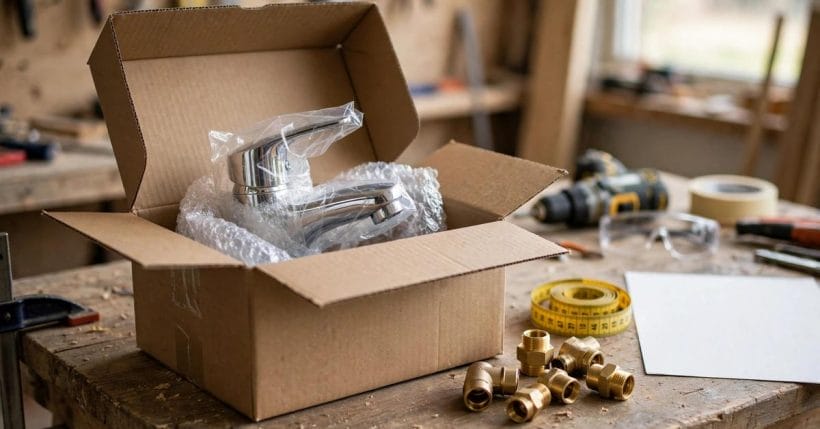
Ordering a faucet, a light fitting, a cabinet handle or any other home improvement product online feels simple until the parcel arrives and something does not fit, does not match, or does not include the part you assumed was in the box. A photograph cannot tell you how a finish will look beside your tiles, whether a fitting suits the connections already in your home, or what happens if the item arrives damaged. The checks in this guide slow the order down just enough to catch those problems while they are still easy to fix, before money has changed hands and before a fitter is standing in your hallway with the wrong part.
The central idea is plain: judge the listing, not the storefront. A polished shop page says nothing about whether measurements are complete, materials honestly described, or delivery and returns terms written plainly. Work through the ten checks below in order, keep notes as you go, and save every listing and terms page you rely on. Small homes reward this discipline most of all, because every centimetre of wall, worktop and doorway matters twice over in a compact plan, and our interior design ideas show how carefully chosen fittings shape a room once they are in place.
1. Start from the Job, Not the Listing
Before you compare sellers at all, write down what you actually need. Name the product, the room it will live in, the job it must do, and the limits it must respect: the wall it mounts on, the surface it sits beside, the walkways that must stay clear, and the other fittings it must live alongside. A seller cannot help you choose well until you know these things yourself, and a listing that tempts you toward a handsome piece that fails your room is doing you no favour, however attractive its presentation.
Keep that brief short enough to carry with you as you browse, and refuse to let a striking photograph talk you out of it. Note the existing fitting you are replacing, the finish of the fittings nearby, and anything the new piece must connect to. If you are ordering furniture rather than fittings, the same discipline applies, and our companion guide to ordering furniture online sets out the piece-level checks that pair with the seller-level checks here. With the brief in hand, you can judge every listing against the same standard instead of judging each one by its photographs alone.

2. Read the Listing Like an Inspector
A complete listing answers questions before you have to ask them. Look for measurements stated for the product itself and for the parts that connect to it, materials named in plain words rather than vague praise, and a clear statement of what comes in the box. Watch for listings that describe only the visible face of a product and stay silent about fixings, connectors, or parts you will need to complete the job. Silence on a practical point is information too, and it should prompt a question, not a purchase.
Read the whole listing, including the small print about care, cleaning and use. A finish that needs gentle cleaning, a fitting that suits only certain surfaces, or a product meant for sheltered indoor use will usually say so somewhere in the text, even when the headline photographs suggest otherwise. Compare listings side by side on the same points: measurements, materials, contents, care and terms. The listing that answers all of them plainly earns attention; the listing that leaves your basic questions unanswered does not. Our guide to furniture buying checks applies the same reading habit to larger pieces, and it is a useful rehearsal for the smaller fittings covered here.
3. Measure the Space and the Route In
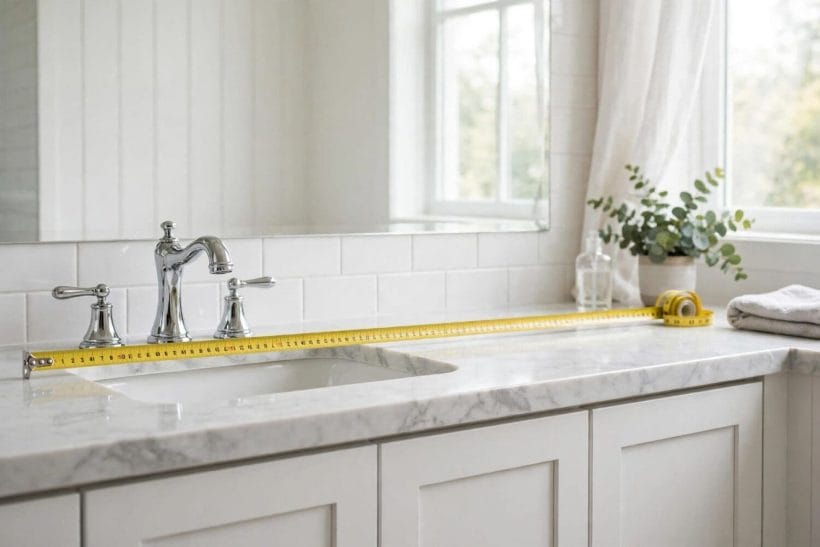
Measure the space where the product will live, and measure it twice, with the tape held where the product will actually sit rather than where it is convenient to measure. Note the width, height and depth available, the distance to neighbouring fittings, and any projection such as a door swing, a drawer front or a mirror that could clash with the new piece. Photograph the existing fitting and the space around it, with the tape visible in the photograph, so you can compare the listing against reality rather than against memory.
Also measure the route the parcel must travel once it arrives: doorways, stair turns, narrow halls and the final room itself. A long light fitting, a wide mirror or a tall cabinet piece can pass every measurement at its destination and still struggle through the entrance. Compact homes make this step doubly important, and our tiny house designs are a reminder of how much good planning matters when every surface must earn its place. If any measurement is uncertain, resolve it before ordering, because a guessed measurement is simply a return waiting to happen.
4. Check Compatibility Before You Order
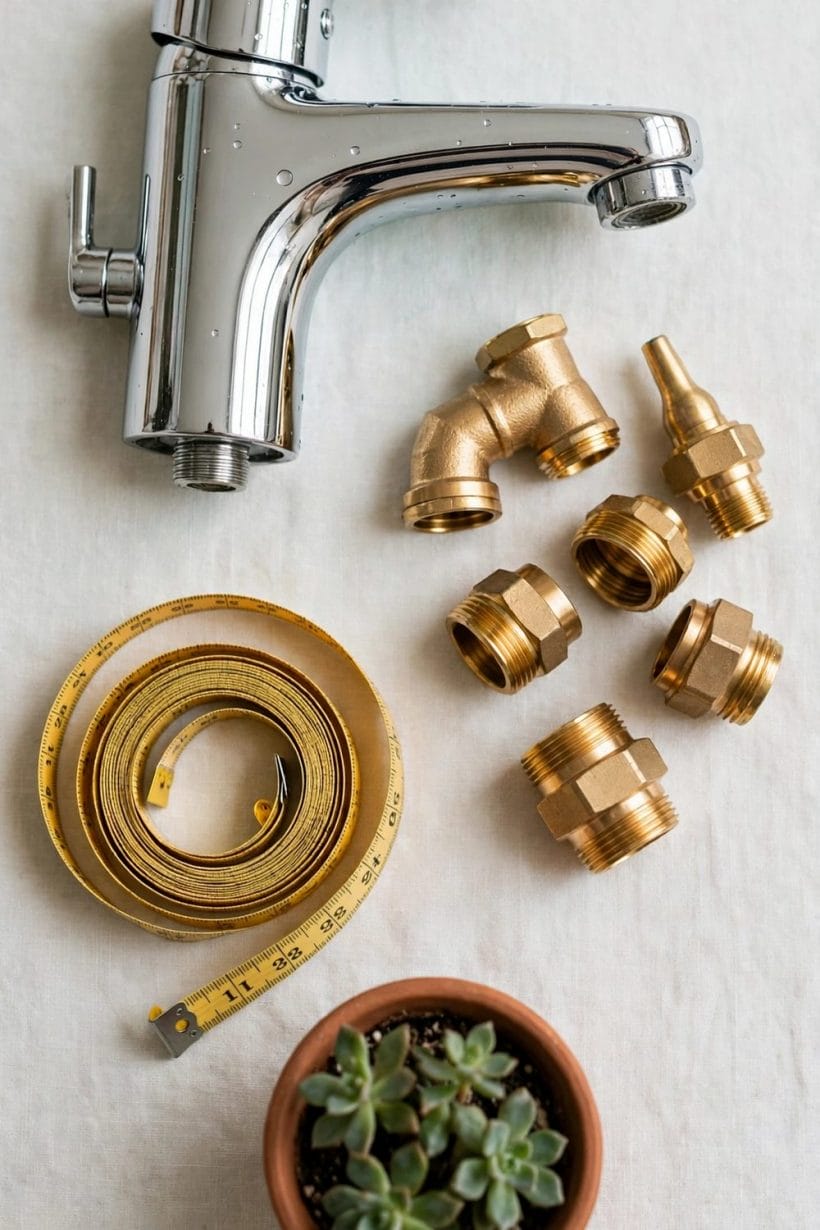
Compatibility is where online orders most often go wrong, because a product can be well made and still be wrong for your home. Check how the product connects, mounts or fixes, and compare that against what is already in place. For anything that joins water, power or gas supplies, this check belongs to a qualified professional: describe the existing setup, ask what must match, and order only what that advice supports. Never guess at a connection type from a photograph, and never assume that a fitting that looks like yours connects like yours.
Check the less obvious matches too. A handle must suit the thickness of the door or drawer it fixes to. A light fitting must suit the mounting and the room it will light. A bathroom fitting must suit the basin, bath or shower it pairs with, including spacing between holes and clearance around moving parts. Where a product family offers several variants that look alike, confirm the exact variant you need from its measurements and its mounting description, not from its picture. Our guide to ordering plumbing fixtures online works through the same compatibility habit for taps, showers and fittings in detail, and it pairs naturally with this general guide.
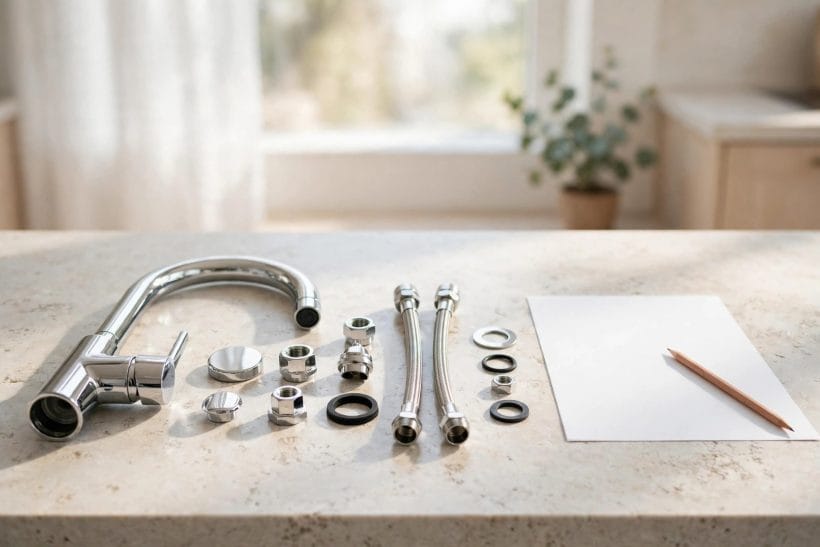
5. Compare Finishes in Your Own Light
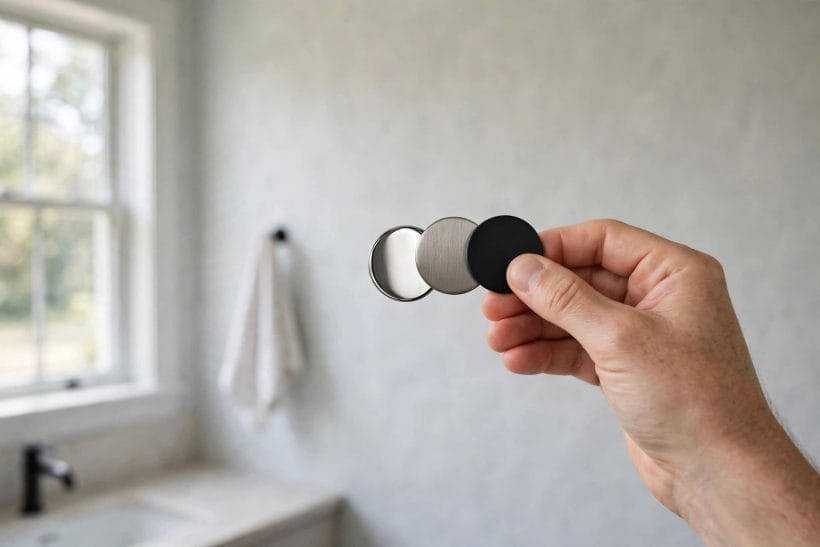
Finishes are notoriously hard to judge on a screen. Chrome, brushed nickel, matte black, brass and painted finishes all shift with the light in the room, and a photograph taken under studio lighting can flatter a finish that looks harsh or dull beside your tiles. Where a sample is offered, ask for one, and view it in the room where the product will live, in daylight and again in the evening under your own lighting. Hold it against the neighbouring fittings, not against a white background, because finishes are judged by their neighbours.
If samples are not offered, narrow the risk another way. Order every visible fitting for one room in a single order where possible, so all pieces come from the same batch and the same finish description. Keep a note of the finish name exactly as the listing states it, and keep the sample beside that note. When the parcel arrives, compare the finish against the sample and the note before fitting anything, because a mismatch spotted at the unpacking stage is far easier to resolve than one spotted after installation. A finish that matches its neighbours quietly is worth more than a finish that merely photographs well.
6. Read Delivery Terms in Writing
Delivery terms deserve the same careful reading as the listing itself. Find out, in the seller’s own written terms, how the item is packed, how arrival is arranged, what happens if you are out, and what to do if the parcel arrives damaged or visibly opened. Do not rely on a headline promise about speed or care; rely on the written terms page, saved alongside the listing. If the terms are vague about damage, handling or missed arrival, treat that vagueness as a reason to ask a question before ordering rather than after.
Think about the parcel itself as well. Heavy, fragile or awkwardly shaped products need packing that protects corners, finishes and glass, and a parcel that arrives with its corners crushed has already told you something about its journey. Plan where a large parcel will be received and stored, and who will be there to accept it. Judging a seller by its written terms rather than its storefront is a habit worth carrying into every kind of online order, and our guide to online furniture stores checks applies the same test to larger sellers. A seller whose terms are plain and complete is a seller you can hold to its word.
7. Read Returns and Damage Terms in Writing
Returns terms are easy to skip and painful to discover late, so read them before you pay, not after a problem appears. Find out, in writing, how a return is started, what condition the product must be in, who arranges collection or postage, and what happens if only part of an order is returned. Pay special attention to the difference between changing your mind and reporting damage or a wrong item, because sellers commonly treat those two situations differently, and the steps for each should be stated separately and plainly.
Also check what the terms say about time. Note the window for reporting damage and for starting a return, and note it in your order record the day the parcel arrives rather than trusting yourself to remember it later. Keep the original packing until the product has been checked and, where fitting is involved, until a qualified professional has confirmed the fit. A return that fails because packing was discarded or a window was missed is a preventable loss, and the whole point of this guide is to prevent exactly that kind of loss by moving the reading to the front of the process.
8. Check What Comes in the Box
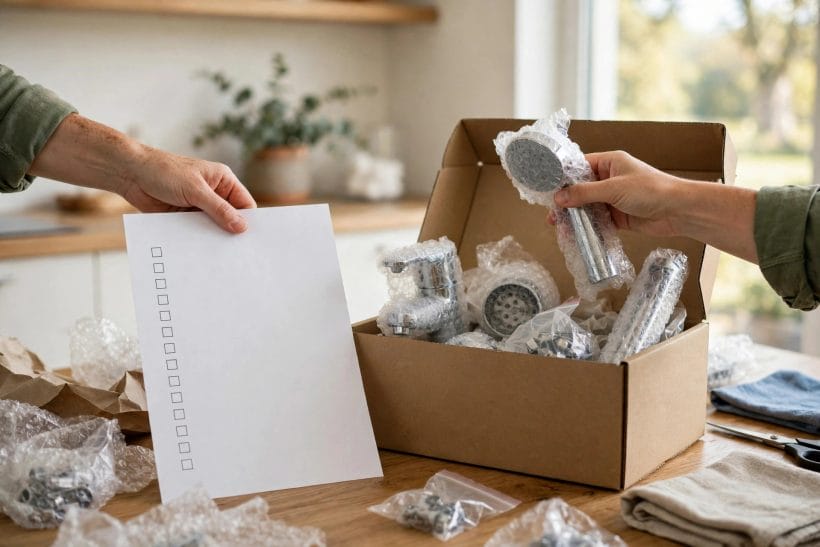
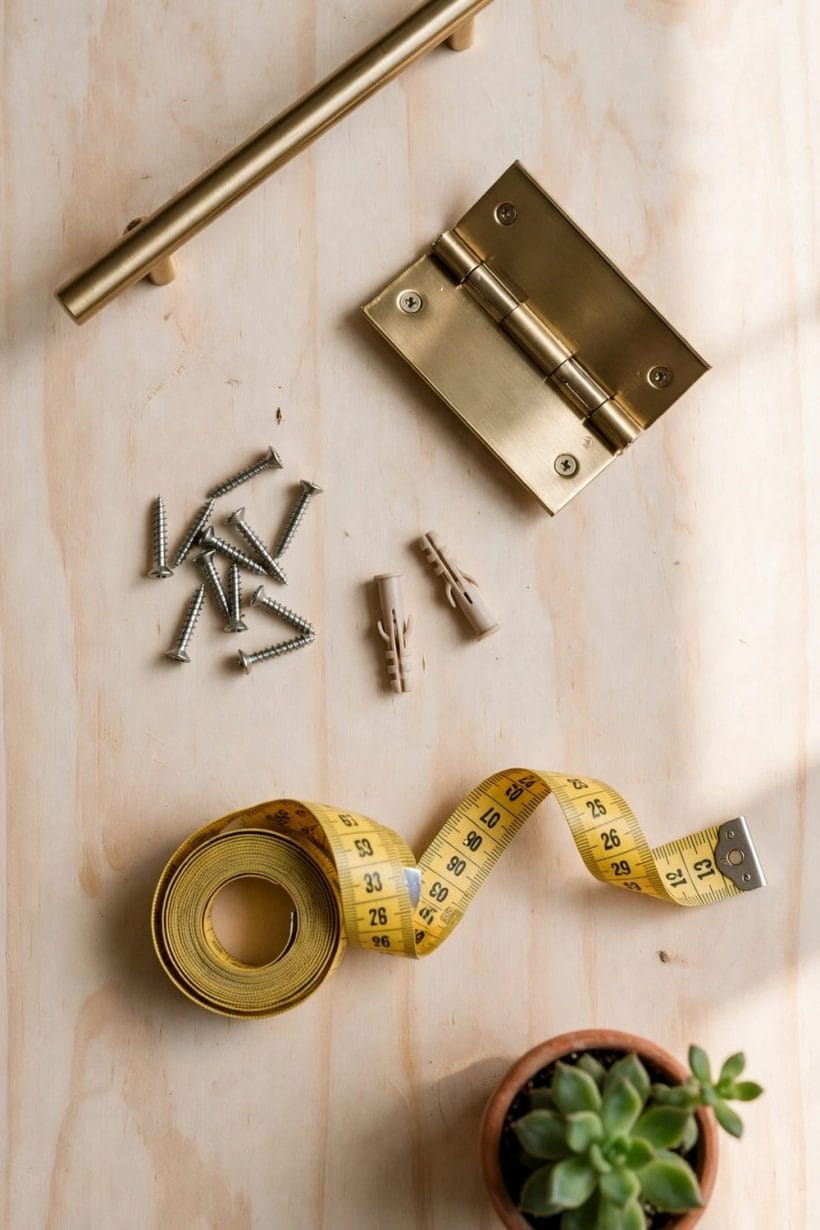
Before ordering, write down everything the job needs, then check the listing against that list item by item. Fixings, connectors, seals, templates, instructions and any tool the listing mentions should each be accounted for, and anything missing from the listing should be treated as missing from the box until the seller confirms otherwise in writing. A product that arrives without a small but essential connector can stall a whole job, and the cost of that delay is rarely limited to the price of the missing part.
Ask the same question about instructions. Clear fitting instructions, written for the product in front of you rather than for a whole family of lookalike products, save time and prevent mistakes. Where fitting work involves water, power, gas or structural fixings, the instructions should still be read, but the work itself belongs to a qualified professional, and no online listing replaces that judgement. If the listing is silent about contents or instructions, ask before ordering, and save the answer with the listing. A complete box, honestly described, is one of the strongest signs of a seller worth ordering from.
9. Save the Order Record
From the moment you order, keep a single record that holds everything together: the listing as it stood when you ordered, the written delivery and returns terms, the order confirmation, and any messages exchanged with the seller. Save pages as files or printouts rather than relying on links, because listings and terms pages can change after an order is placed, and a dispute about what was promised should rest on text you kept, not on memory. Note the finish name, the variant, and the measurements you relied on, alongside the record.
This record also protects you in the quieter ways. If a second matching piece is needed months later, the finish name and variant in your record let you order its match without guessing. If a part needs attention under a maker’s guarantee, the confirmation and the listing together show what was bought and when. Treat the record as part of the purchase, not as paperwork after it, and keep it where you can find it when the parcel arrives. A tidy record turns a worrying delivery into a simple comparison between what arrived and what was promised.
10. Inspect on Arrival and Keep the Packing
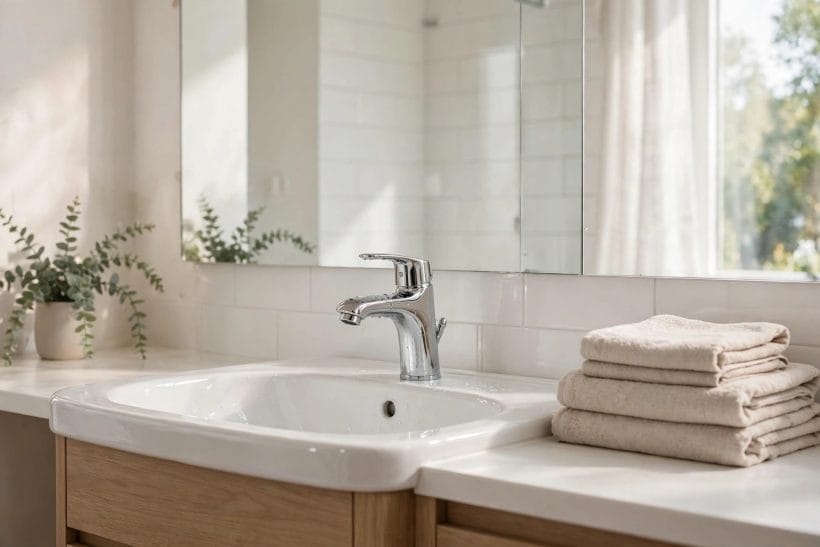
When the parcel arrives, inspect it before signing anything you do not need to sign, and photograph the parcel as it arrived if the outer packing is damaged. Open the box carefully, keep the packing intact, and check the contents against your list and against the listing: the right product, the right variant, the right finish, and every connector, fixing and instruction the listing promised. Check the finish in your own room light, beside its neighbours, before anything is fitted.
If anything is wrong, stop there. Do not fit a damaged or incorrect product in the hope that the problem will resolve itself, because fitting can complicate a return and can mask the original fault. Report the problem through the route the written terms describe, attach the photographs you took, and refer to the saved listing and terms rather than to a summary from memory. A calm, documented report, made promptly and within the stated window, gives the seller everything needed to put the order right, and it gives you a clear record if the matter needs to be pursued further.
Final Considerations
None of these checks requires special knowledge, and none of them asks you to trust a ranking, a photograph or a storefront. They ask you to measure honestly, read fully, and keep what you read. That routine protects the order itself, and it also protects the room the product will live in, because a fitting that matches, connects properly and arrives intact is a fitting that will look settled from the day it is installed rather than merely new.
Run the checks in order for every online order, not only for the large ones, because small fittings cause just as much disruption when they are wrong. Start from the job, read the listing like an inspector, measure twice, confirm compatibility with qualified advice where supplies or fixings are involved, compare finishes in your own light, read delivery and returns terms in writing, confirm the box contents, save the record, and inspect on arrival. For a companion routine that covers larger pieces ordered the same way, our buying furniture online guide applies the same discipline at furniture scale. Ordered this way, home improvement products bought online arrive as planned additions to a room, not as surprises to be solved after the parcel is opened.




0 Comments