

Ordering furniture sight unseen asks you to judge a physical object from pictures and paragraphs. That can work well, provided you treat the listing as a set of claims to be checked rather than a finished impression to be trusted. The photograph shows the piece at its best angle, in its best light, in a room that is not yours. The measurements, the materials, the construction, and the terms that govern delivery and return are what turn that picture into a piece you can live with. This guide sets out ten checks to run before you order, in general terms that apply to any piece and any seller. It names no retailer and no maker, and it states no policy, price, or availability claim about any seller, because those details sit in each seller’s own written terms at the time of buying and they change. What it gives you instead is a way of looking, measuring, and reading that keeps the decision in your hands.
The checks below follow the order in which a mistake usually happens. First the piece does not fit, then it does not feel right, then its finish looks different at home, and finally the terms around delivery or return turn out to be different from what was assumed. Working through the list in order catches each of those problems while it is still cheap to fix, which is before the order is placed. Keep a notebook beside you as you go, and write down the measurements, the material descriptions, and the terms you find, so that what arrives can be compared with what was promised. That written record is the quiet backbone of the whole process, and it matters most on the day the boxes arrive.

1. Measure the Room and Every Doorway on the Way In
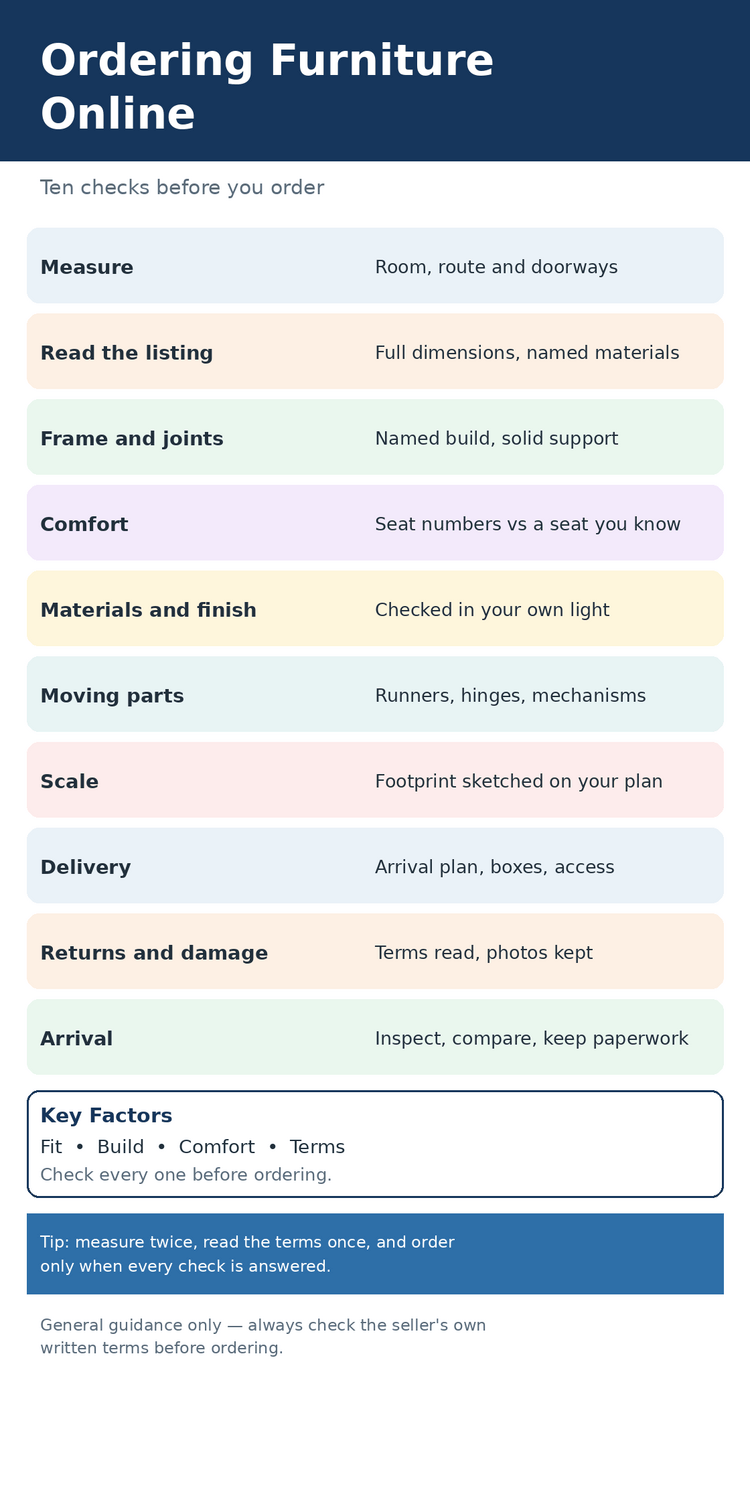
Start with the room, not the catalogue. Measure the wall the piece will stand against, the floor area it will occupy, and the space that must stay clear around it for walking, for opening doors and drawers, and for pulling out a chair. A piece that fits its wall can still fail its room if it leaves no comfortable path past it, and a room that looks generous when empty shrinks quickly once seating, tables, and storage are all in place. Sketch the footprint on paper, mark the clearances you want to keep, and carry those measurements with you as you browse. They are the first filter for every piece you consider, and they save you from falling for something that was never going to fit.
Then measure the route in. Doorways, hallways, stair turns, and lift doors all set limits that the room itself does not, and a piece that passes the room test can still fail at the front door. Note the narrowest point on the way in, including any turn where a long piece must pivot, and compare it with the piece’s longest dimension and with its packaging if it arrives boxed. Removable legs, detachable sections, and flat-packed forms change this calculation, so find out how the piece arrives and what comes apart before assuming it will pass. A few minutes with a tape measure at home beats a difficult afternoon at the threshold, and it is the single most common reason a delivery turns into a problem.
Finally, measure the height as well as the width. A tall bookcase that clears the ceiling by a finger’s breadth leaves no room to tilt it upright, and a wide sideboard that fits its wall may still block a light switch, a vent, or a radiator. Stand in the room and picture the piece in place, then check the things the photograph never shows: the switch positions, the vent covers, the curtain swing, and the door arc. A piece that respects all of those earns its place; a piece that fights even one of them will irritate you daily, and no bargain feeling survives daily irritation.
2. Read the Listing Like an Inspector, Not a Shopper
A listing is written to sell, so read it against its own claims. Look first for the measurements, and check that they are complete: width, depth, and height for the piece itself, and seat height, seat depth, and arm height for seating. A listing that gives only one or two dimensions is asking you to guess the rest, and guessing is how a sofa arrives deeper than the room allows. Compare the stated measurements with the ones you took in section one, and write down any gap between them. If a dimension is missing, treat that as an open question to resolve before ordering, not as a detail that will sort itself out later.
Next, read the materials section with the same care. Note what each part is made of: the frame, the legs, the seat support, the filling, and the covering fabric or finish. A listing that names a material for the visible parts and stays silent about the hidden parts is telling you something by omission, and the hidden parts are often where a piece succeeds or fails over years of use. Look for the same level of detail on weight limits, on whether cushions are fixed or loose, and on whether covers can be removed for cleaning. Vague wording is not a reason to reject a piece outright, but it is a reason to ask a sharper question before committing.
Read the small print with the same attention you gave the photographs. Assembly requirements, the number of boxes, and any note about colour variation between screens and real life all sit in the quieter lines of a listing, and each of them changes what arrival day looks like. Colour in particular deserves caution: screens shift tones, and a warm wood in the photograph can read cooler in your room’s light. If the exact shade matters to you, look for a sample option or a finish description you can compare with something already in your home, and read how other buyers describe the colour in general terms, without treating any single account as a verdict on the piece.
3. Check the Frame and Joints Before Anything Else
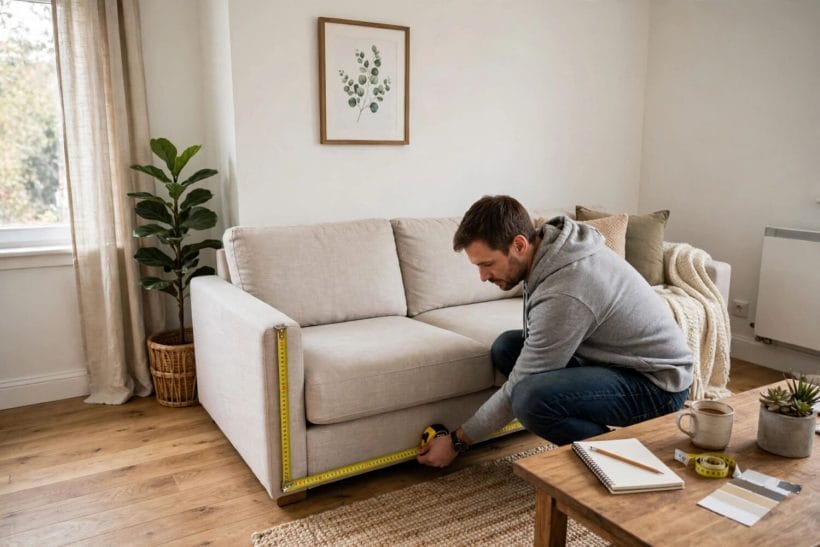
The frame is the piece, in the sense that everything else hangs from it. A good frame holds its shape through years of sitting, shifting, and cleaning, while a weak one loosens quietly and then all at once. When you cannot handle the piece yourself, the listing and the construction description are your only window into the frame, so use them well. Look for a clear statement of the frame material and of how the joints are made, and be wary of descriptions that praise sturdiness in general terms without naming anything specific. Specifics can be checked; adjectives cannot.
For seating, the seat support matters as much as the frame. Springs, webbing, and solid platforms each give a different kind of support and a different lifespan, and the listing should say which one is used. For tables and storage, look at the leg attachment and the way shelves and panels are fixed, since a table that wobbles on day one rarely improves. If the construction description is thin, that thinness is itself information: it tells you the seller is not competing on construction, and you should weigh the piece accordingly rather than assuming the best.
Weight is a useful, honest signal. A piece that is unusually light for its size may be built from thinner material, while a piece with real heft usually carries denser framing and panels. Compare the stated weight with pieces of similar size that you already own, and treat a large gap as a prompt for another question, not as a conclusion. The companion guide on furniture buying checks goes deeper into frames, joints, and cushions, and it is worth reading alongside this one if you want to sharpen this part of your judgement.
4. Judge Comfort from Construction, Not Photographs
Comfort cannot be photographed, which is why it is the easiest thing to get wrong from a listing. A sofa can look deep and welcoming while sitting shallow, and a chair can look upright and formal while sloping gently back. The numbers that predict comfort are seat height, seat depth, back height, and arm height, and they deserve the same attention you gave the room measurements. Compare them with a seat you already find comfortable, and write down the differences. A seat an inch lower or a back an inch shorter than you expected changes how a piece feels every single day.
Cushion filling is the second half of comfort. Foam, fibre, feather blends, and combinations of them each behave differently: some hold their shape and spring back, some soften and settle, and some need regular plumping to look their best. The listing should name the filling in general terms, and you should ask yourself honestly how much upkeep you will actually do. A cushion that needs daily attention in a household that cannot give it will look tired within months, through no fault of the piece. Match the filling to your habits, not to the photograph.
Finally, think about who will use the piece and how. A dining chair that suits a long evening suits a different shape from one used for quick breakfasts, and a reading chair earns its place by supporting the back and the arms at the right heights. If the piece will be used by children, by older relatives, or by anyone with limited mobility, seat height and arm support matter more than style, and a firm, higher seat is often kinder than a low, soft one. Comfort is personal, and the only honest test is comparison with what your body already knows.

5. Compare Materials and Finishes in Your Own Light
Materials decide how a piece ages, how it cleans, and how it sits beside what you already own. Solid wood, veneer, metal, and manufactured boards each have their own strengths and their own care needs, and the listing should distinguish them plainly. A veneer surface can look beautiful and wear well when it is thick and well applied, while a thin veneer over a weak core can chip at the edges. The question is never which material is best in the abstract, but which one suits the room, the use, and the care you are willing to give. A kitchen table that will meet hot plates and wet glasses needs a different finish from a bedroom side table that will meet little more than a lamp.
Fabric deserves the same practical thinking. Tight weaves resist wear, loose weaves catch and snag, and pale colours show marks that darker ones hide. If the piece will live with pets or small children, look for a fabric description that mentions cleanability and wear in plain language, and consider whether removable covers would make life easier. Leather and leather-look coverings age differently again, softening and marking with use in ways some households love and others regret. There is no wrong answer here, only a mismatch between a material and a household, and the listing is where that mismatch can be caught early.
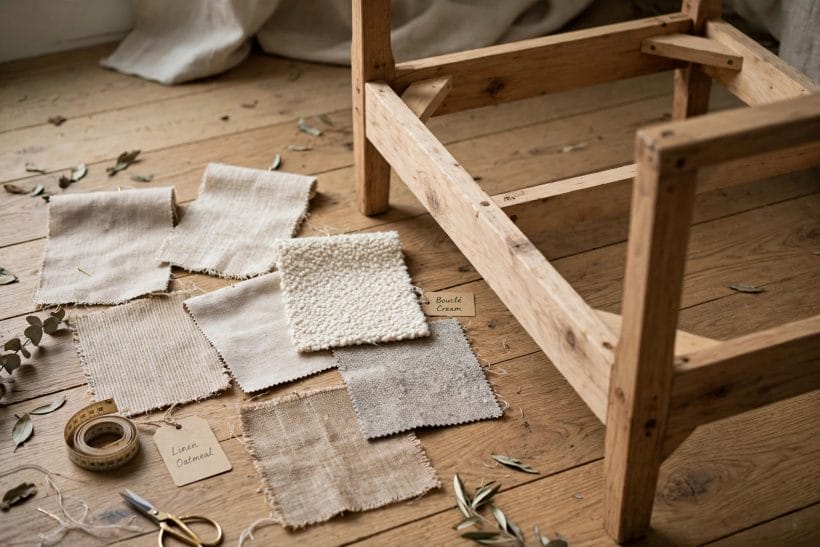
Finish is where the photograph misleads most. Wood tones shift with light, and the warm oak of a studio photograph can read grey under cool daylight or yellow under warm bulbs. Hold a sample, a swatch, or an existing piece of similar finish up in your own room’s light before deciding, and look at the piece’s colour description alongside the colours already in the room. The guide to furniture and decor buying checks covers this meeting of piece and room in more detail, including how scale and light change what a finish looks like once it is home.

6. Test Drawers, Doors and Moving Parts
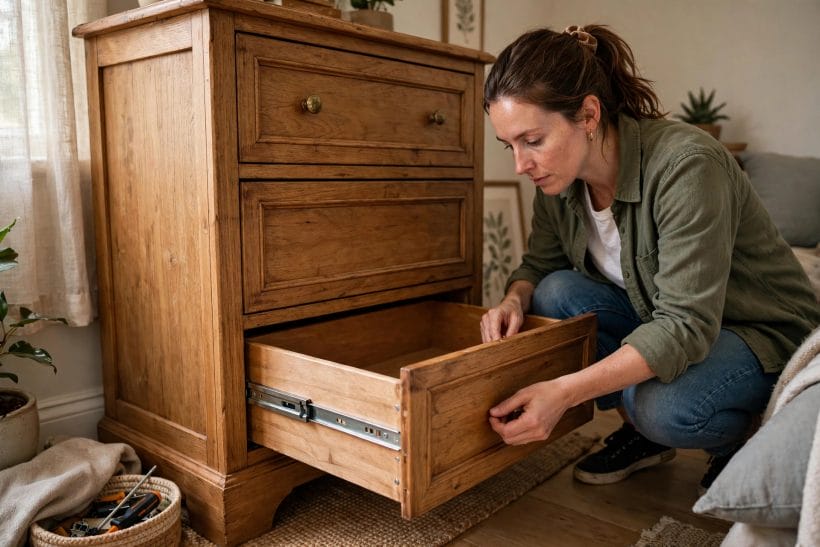
A piece with moving parts should be judged by those parts. Drawers, doors, hinges, runners, and reclining or extending mechanisms are where daily use concentrates, and they are where a weak piece shows itself first. Since you cannot slide a drawer you have not yet bought, read the listing for how those parts are made: the runner type, the hinge style, and whether drawers are dovetailed, glued, or stapled. A listing that says nothing about moving parts is asking you to trust them blind, and blind trust is a poor basis for a piece you will open dozens of times a week.
Think about the weight the moving parts will carry. A drawer that will hold cutlery needs less strength than one that will hold books or files, and a wardrobe door that will swing daily needs sturdier hinges than a cabinet door opened once a month. Match the mechanism to the load, and be honest about how full the piece will actually get. Overloaded drawers sag and stick regardless of how well they were made, so part of this check is a check on your own habits: plan the load, and choose the piece that can carry it.
Extension and transformation features deserve extra care. A table that extends, a sofa that converts, or a bed that folds away adds convenience and adds failure points in equal measure, so the mechanism should be described clearly and operated simply. If the description is vague about how the mechanism works, or if it needs tools and patience every time it is used, that convenience may go unused, and an unused feature is wasted money and wasted space. Simple mechanisms, honestly described, are the ones that still work in year five.

7. Check Scale Against the Room, Not the Catalogue Picture
Catalogue pictures flatter scale. A compact armchair photographed alone looks generous, and a long sideboard photographed in a loft looks modest, because the camera removes the room that gives a piece its true size. The defence is the footprint sketch from section one: lay the piece’s measurements onto your room plan and see what remains. Walkways, door arcs, and the space needed to pull out a chair or open a drawer all come out of the same floor area, and a piece that leaves those pinched will feel wrong even if it fits its wall exactly.
Height matters as much as footprint. A tall bookcase can dominate a low-ceilinged room, while a low console can disappear beneath a large window or a high picture rail. Compare the piece’s height with the other furniture in the room and with the window sills, and picture the sightlines from the places you actually sit. A room feels balanced when its pieces share a rough height family, and it feels restless when one piece towers over the rest for no reason. The photograph will never show you this, because the photograph has no ceiling.
Small rooms punish scale mistakes hardest, and they reward the same careful measuring most. A compact space shaped by the thinking behind many tiny house designs shows how a smaller piece, chosen to fit, can make a room feel larger than a grander piece that crowds it. If your room is small, favour pieces with visible legs and open bases, which let the floor show through and keep the room feeling airy, and be stricter than usual about the clearances you keep. Scale is not about buying small; it is about buying right for the room you have.
8. Read Delivery Terms as a Physical Plan
Delivery is a physical event, not a date on a screen. Before ordering, read the delivery terms as a plan for your home: how the piece arrives, how many boxes it comes in, whether it is carried to the room or left at the door, and what happens if no one is home. Each of those details changes what arrival day demands of you, and each of them is worth knowing before the order is placed rather than discovering on the doorstep. If the terms say the piece arrives flat-packed, plan the assembly time and the tools; if they say it arrives assembled, plan the route in from section one with extra care.
Timing language deserves a careful reading. Terms that speak in ranges, in working days, or in stages describe a process with moving parts, and a delivery that involves several stages can slip at any of them. Read whether tracking is offered, whether a delivery window is given, and what contact is expected from you along the way. None of this is a promise about any particular seller, and this guide makes no claim about any seller’s timing; it is simply the set of questions that lets you plan your week honestly instead of waiting hopefully.
Finally, plan the space for arrival itself. Boxes need floor area, packaging needs a route out, and an old piece being replaced needs a plan for removal. Clear the path from the door to the room, protect floors and corners along the way, and decide in advance where the packaging will go. Arrival day goes smoothly when the home is ready for it, and it goes badly when a large piece meets a cluttered hallway and no plan at all. The furniture seller checks guide covers delivery and paperwork from the seller’s side, and it pairs naturally with this physical reading of the same event.
9. Read Returns and Damage Terms Before You Order
Returns terms are easy to skip and expensive to discover late, so read them before ordering, in full, and in the seller’s own words. Look for how a return is started, who arranges collection, what condition the piece must be in, and what time limit applies. Read the same terms for damaged or faulty arrivals: how damage should be reported, what evidence is asked for, and what remedy is offered. This guide states no seller’s terms, because terms differ between sellers and change over time; the point is that you should know the terms that will govern your order, not assume the terms you wish governed it.
Photograph everything on arrival, before assembly and before disposal of packaging. A dated photograph of each box, of the piece as unpacked, and of any mark or defect is the simplest record you can keep, and it settles most disagreements before they begin. Keep the packaging until you are sure the piece is right, because a return usually needs the piece packed again, and repacking without the original protection is difficult and sometimes impossible. A few photographs and a kept box cost nothing and protect everything.
Think about the return journey in physical terms as well. A large piece that came in through a narrow stair turn must go out the same way, and a piece that was assembled in the room may need to be partly taken apart again. Weigh that effort honestly before ordering, and let it inform how certain you want to be. The more certain you are before ordering, the less these terms will ever matter, which is why the earlier checks in this guide are the real protection and the terms are only the safety net beneath them.
10. Keep the Paperwork and Inspect on Arrival
When the piece arrives, inspect it before the delivery moment passes. Check the boxes for visible damage, then check the piece itself against the listing: the measurements, the colour, the material, and the features you noted in your notebook. Sit in it, open it, extend it, and load it as you intend to use it, and do all of this while the packaging is still in the house. A defect found on arrival day is a different conversation from one found a month later, and the photographs from section nine make that conversation simple.
Keep every piece of paperwork that came with the order: the order confirmation, the delivery note, the assembly instructions, and any care guidance. Care guidance in particular is worth reading rather than filing, since it tells you how the material and finish should be cleaned and what will damage them. A finish ruined by the wrong cleaner is not a fault in the piece, and a fabric faded by strong sunlight is not a surprise the care notes failed to warn about. Reading those notes is part of owning the piece well.
Live with the piece for a few weeks before judging it finally. Cushions settle, wood adjusts to the room’s humidity, and a piece that felt unfamiliar on day one can feel inevitable by day twenty. Equally, a flaw that seems small on arrival can grow irritating with daily use, and the inspection habit from arrival day should continue in quiet form: notice the drawer that sticks, the joint that creaks, and the cushion that flattens, and act on them while the order is still fresh. The furniture quality checks guide offers a longer inspection routine for readers who want to go further, and the buying furniture online guide covers the same ground from the buying side.

Final Considerations
Ordering furniture online rewards patience and punishes haste, and the difference between the two is usually one evening of measuring and reading. Measure the room and the route, read the listing like an inspector, weigh the frame and the joints, judge comfort from numbers rather than photographs, compare materials in your own light, test the moving parts on paper, check scale against the room, and read the delivery and return terms before you order. None of these checks requires expertise, and together they replace guesswork with a short, repeatable routine that works for any piece, in any home, and for any seller’s listing.
If one check leaves you uncertain, let that uncertainty decide the timing rather than the purchase. A missing dimension, a vague material description, or an unclear term is a reason to ask a question or to keep looking, not a reason to hope for the best. The right piece, found through this routine, will fit its room, suit its household, and age gracefully, and it will do so because it was chosen by measurement and judgement rather than by photograph alone. For the room around the piece, the broader collection of interior design ideas offers plenty of starting points once the furniture itself is settled.




0 Comments