

Buying furniture from a maker or retailer you have not used before raises the same question whatever the name on the label: is this piece well made, honestly described and worth its place in your home? The answer never comes from a review, a rating or a reputation alone. It comes from checks you can make yourself — frame, joints, cushions, fabric, drawers, finish and fit — applied to the actual piece in front of you, whether in a showroom, a warehouse or your own living room on delivery day.
This guide names no maker, no retailer and no price, because makers change, retailers change and prices change, while good construction does not. It offers no verdict on any brand and no recommendation of any source. What follows is what to check before buying furniture, in general terms, so the piece you choose earns its keep for years rather than months.

1. The Frame: What Holds Everything Up
The frame is the furniture’s skeleton, and everything else hangs from it. A good frame feels solid and heavy for its size, does not flex when pushed from a corner, and shows no twist when lifted by one end. Hardwood frames generally outlast softwood and engineered boards, but the material matters less than the construction: a well-joined softwood frame beats a poorly joined hardwood one.
Ask what the frame is made of and how it is joined, and be wary of vague answers. A seller who can name the frame material and describe the joinery is selling a piece they understand; one who cannot is selling a photograph. Weight is a useful proxy — lift a corner and feel it — but it is only a proxy, and the joints below matter more than the kilograms.
Furniture quality checks cover the same frame-and-joint discipline in full, and this guide builds on those checks for the specific case of buying from an unfamiliar source.

The infographic above summarises the five checks that carry a furniture purchase: frame for the skeleton, joints for the strength, cushions for the comfort, fabric for the durability, and fit for the room.
2. The Joints: Where Furniture Fails First
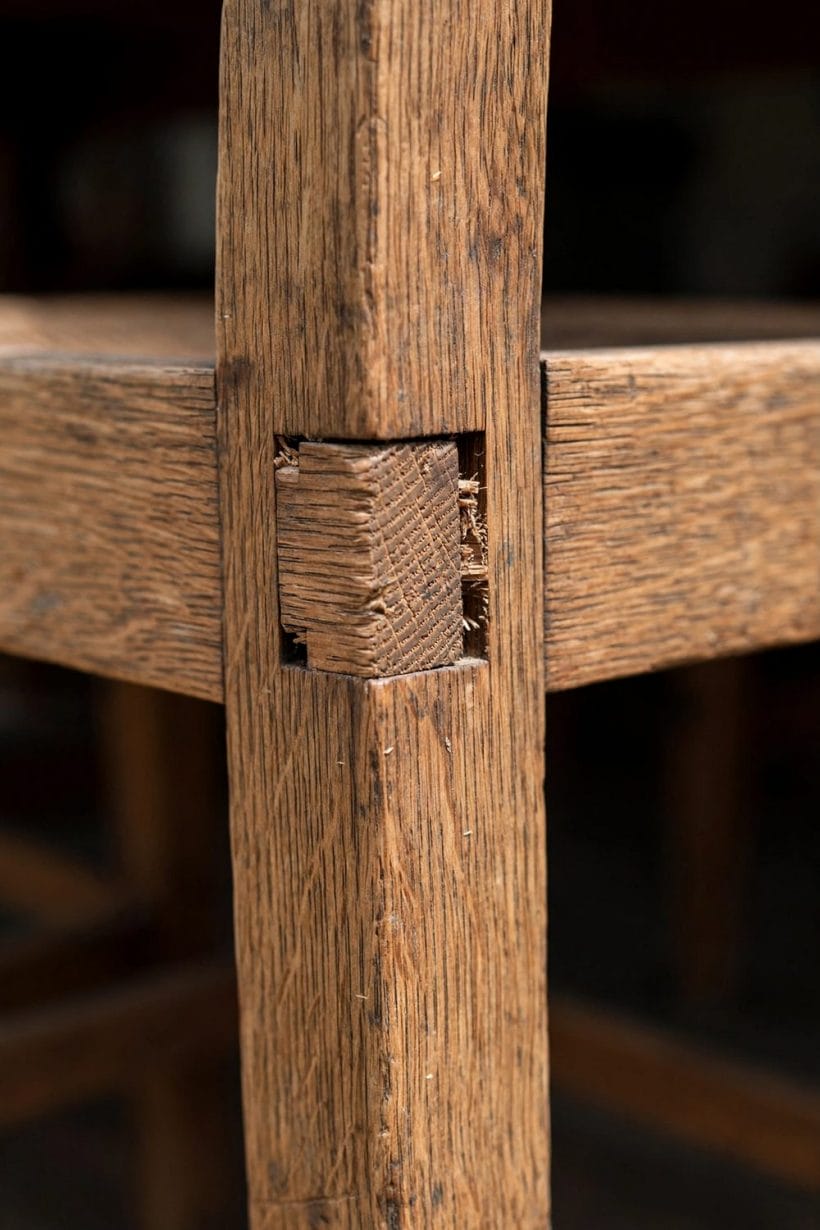
Furniture rarely fails in the middle of a board; it fails at the joints, where pieces meet and forces concentrate. Good joints — mortise and tenon, dovetail, corner-blocked and glued — hold for decades. Weak joints — staples alone, unglued dowels, thin brackets — loosen within a year of daily use, and the wobble that follows is rarely worth repairing.
Test joints directly. Rock a chair gently from side to side and feel for play at the legs. Open and close a drawer and feel whether it runs true or racks. Lift a table by one corner and watch whether the far legs stay planted. A piece that moves at its joints in the showroom will move more at home, and no discount compensates for a joint that was never sound.
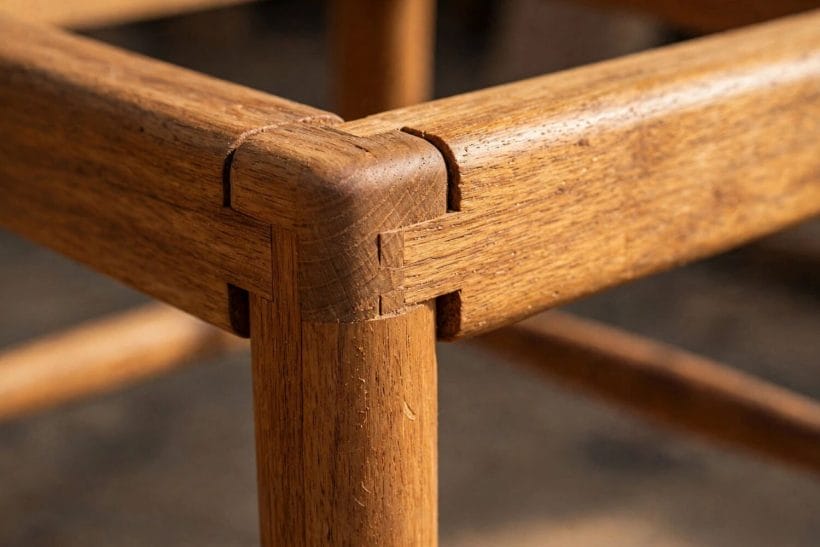
The weight test is the simplest check in furniture buying and one of the most revealing. Lift a corner of the piece: a well-made frame has a reassuring heft that speaks of solid timber and proper joints, while a piece that feels suspiciously light for its size is usually telling you about hollow cores, thin panels or lightweight substitutes. Weight alone proves nothing — a heavy piece can still be badly joined — but weight combined with the rock test and the joint inspection builds a picture no description can fake. Trust your hands as much as your eyes, and be suspicious of any large piece that lifts like a small one.
3. The Cushions: Comfort That Lasts
Cushions decide whether a sofa or chair is comfortable in year three as well as week one. Press a cushion firmly and watch how it recovers: good foam springs back promptly and evenly, while tired or cheap foam recovers slowly or not at all. Sit for several minutes, not seconds, and notice whether you sink through to the frame or stay supported.
Ask about cushion construction — foam density in general terms, whether springs or webbing support the seat, whether cushion covers are removable for cleaning. Removable covers are a practical blessing in households with children or pets, and a cushion that can be flipped or rotated will wear more evenly than one that cannot. Comfort is not a luxury in furniture; it is the whole point, and it should be tested, not assumed.

4. The Fabric and Finish: Surfaces That Live With You
Upholstery fabric should be tight, even and firmly attached, with seams that are straight, matched at pattern joins, and free of puckering. Rub a hidden area briskly and check for pilling or colour transfer. Ask how the fabric cleans — some weaves forgive spills and pets, others punish them — and match the fabric to the household, not to the showroom lighting.
Wood finishes deserve the same scrutiny. A good finish feels smooth and even, with no rough patches, drips or thin spots at edges and corners. It should resist a damp cloth without clouding, and it should be consistent across the piece — a tabletop that differs from its legs suggests rushed work. Finish is where makers cut corners most invisibly, so look closely, in good light, at the parts nobody photographs.
Patio furniture checks apply the same surface discipline outdoors, where weather punishes weak finishes faster than any living room can.
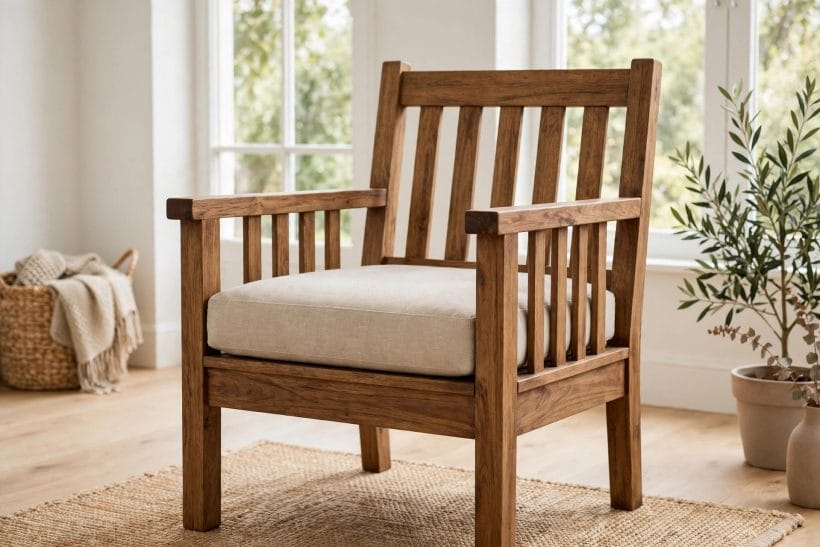
The smell and sound checks are easy to forget and hard to unlearn once noticed. A new piece should smell of timber, fabric or leather, not of harsh chemicals, and a strong chemical smell in a showroom is worth asking about, since it often fades slowly in a closed room at home. Sound matters too: knock on panels and listen for a solid, dull response rather than a hollow drum, and open and close every door and drawer listening for rattles, squeaks or uneven catches. A piece that sounds solid and smells clean has usually been made with care, while one that drums hollow or reeks of solvent is telling you something its price tag is not.
5. The Drawers and Doors: Movement That Tells the Truth
Drawers and doors reveal construction quality instantly. A good drawer slides smoothly on its full travel, stays level when extended, and closes without a slam or a gap. Dovetailed drawer boxes, solid drawer bottoms and full-extension runners all signal care; thin stapled boxes and short runners signal the opposite.
Doors should hang straight, close flush and stay closed, with hinges that feel firm rather than loose. Open every drawer and door in the showroom — not just one — because makers finish the display drawer best and the rest however they finish them. A piece is only as good as its worst drawer, and you will use all of them.
6. The Fit: Measuring Before Money Changes Hands
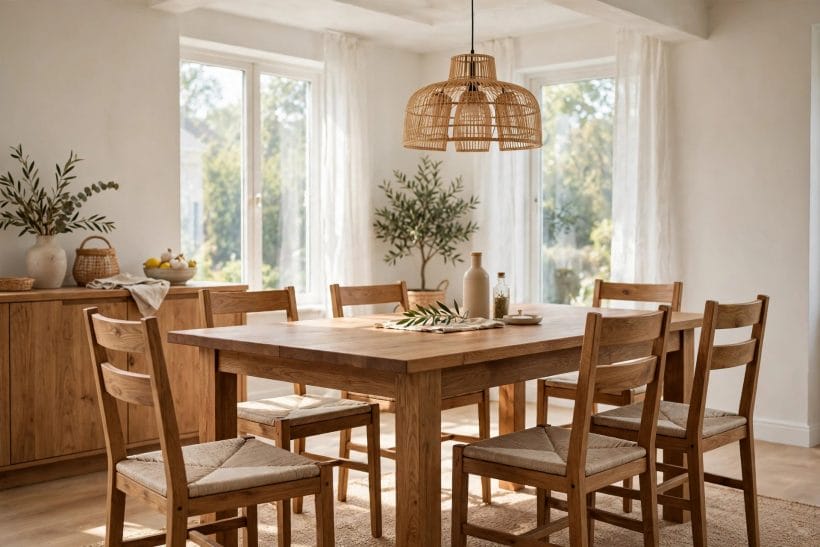
The most avoidable furniture disaster is a piece that does not fit. Measure the room, the doorways, the stair turns and the lift, and measure the piece — height, width, depth, and diagonal for awkward turns. A sofa that cannot pass the front door is not a bargain at any price, and a table that crowds its room will annoy daily.
Fit is also about the room’s life: clearance to walk around a table, space to pull out a chair, room to open a drawer fully, distance from a radiator or a sunny window that will fade fabric. Tape the footprint on the floor before buying if you can — an hour with a tape measure prevents years of shuffling around a piece that never belonged.

7. The Delivery: Checking the Piece That Actually Arrives
The piece in the showroom is not always the piece that arrives, so delivery day is a second inspection, not a formality. Check the delivered piece against what you ordered — size, colour, fabric, finish — and inspect it in daylight before signing anything. Look for transit damage, mismatched parts, and any difference from the showroom piece you tested.
Know the return and repair terms before delivery, not after a problem appears. How long do you have to report damage? Who collects a faulty piece? What does the warranty actually cover, and for how long? These are unglamorous questions, but they are the difference between a problem solved and a problem lived with, and they should be answered in writing.
Coffee table pictures show how a single piece must fit a room’s scale and style, and the delivery check is where that fit is finally proven, not promised.
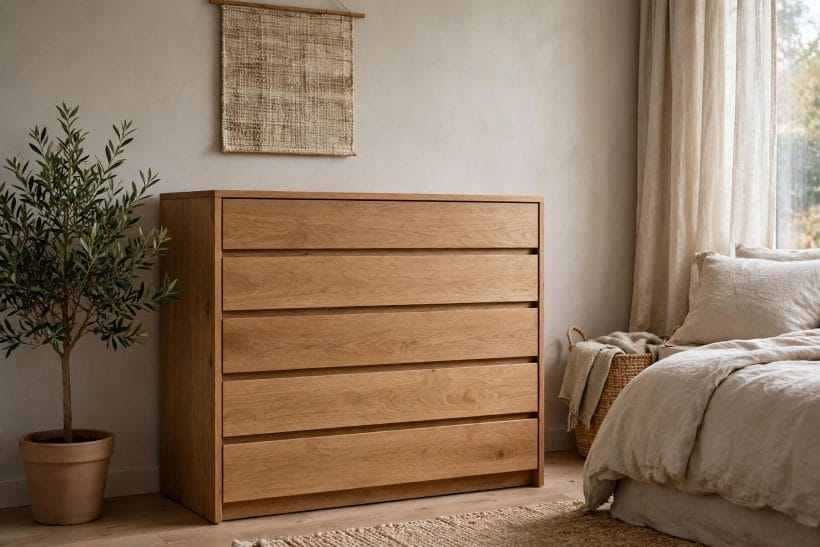
The showroom trap is the gap between the piece on display and the piece that arrives, and it catches more buyers than any other furniture pitfall. Showroom pieces are often the best examples of a line, handled gently and displayed under flattering light, while the delivered piece may come from a different batch, a different factory run or simply a rougher day. Protect yourself by inspecting the delivered piece with the same rigour you applied in the showroom, by photographing any damage before signing, and by refusing delivery of a piece that does not match what you chose. The showroom is a promise; delivery day is when the promise is kept or broken.
8. The Description: Reading What Is Actually Promised
Read the product description as a contract, not as poetry. Words like solid, genuine, hardwood, hand-finished and premium have specific meanings, and a description that avoids them while implying them deserves scepticism. Ask what is solid and what is veneer, what is hardwood and what is engineered board, what is stitched and what is glued — and get the answers in writing where they matter.
Photographs deserve the same scepticism. A photograph flatters: it hides joints, flattens texture, corrects colour and removes scale. Treat photographs as an invitation to inspect, never as the inspection itself. If you cannot see the piece in person, ask for photographs of the joints, the underside, the back and the drawer interiors — the parts a seller photographs only when they have nothing to hide.
9. The Price: Value Without Verdicts
Price alone says little about furniture value. A cheap piece that lasts two years costs more per year than a dearer one that lasts twenty, while an expensive piece badly made is simply an expensive mistake. Judge value by the checks in this guide — frame, joints, cushions, fabric, movement, fit — and let the price be weighed against what those checks reveal, not against a brand name or a discount percentage.
Be cautious with dramatic discounts: a price cut means little without knowing the starting price’s honesty, and urgency — closing sales, today-only offers, limited stock — is a selling technique, not information about the furniture. The right time to buy a piece is when it passes the checks and fits the room, not when a calendar tells you to hurry.

The repair question is worth asking before buying, because even good furniture eventually needs attention: a cushion re-stuffed, a joint re-glued, a finish touched up, a leg re-levelled. Ask whether the piece can be repaired by an ordinary furniture repairer, whether its covers come off, whether its cushions can be re-filled, and whether spare parts such as drawer runners or castors are standard sizes. A piece designed to be repaired is a piece designed to last, while a piece sealed shut, glued beyond disassembly or dependent on a single proprietary part is a piece with a built-in expiry date. Repairability is the quietest form of quality, and one of the most valuable.
10. The Long View: Furniture That Earns Its Place
Good furniture improves with use: wood deepens, leather softens, fabric settles, and a well-made piece becomes part of a household’s memory. Poor furniture does the opposite, loosening, sagging and staining until it is endured rather than enjoyed. The difference is almost always visible at purchase to anyone who checks — in the joints, the cushions, the drawers, the finish and the fit.
Buy slowly, check thoroughly, and favour pieces that can be repaired: a frame that can be re-glued, a cushion that can be re-filled, a cover that can be replaced, a finish that can be refreshed. Repairable furniture is sustainable furniture, and it is also the furniture that stays in a home long enough to matter. No name on a label guarantees that; only the checks do.
Bookcase ideas and interior design ideas both reward the same patient approach — choose pieces that fit the room and the household, and the room will repay the patience for years.
The piece you keep is the piece that passed the checks and then disappeared into daily life, becoming the chair everyone reaches for, the table every meal gathers around, the chest that holds a decade of linens without complaint. That is the real test of furniture, and it cannot be passed in a showroom in an afternoon — but the checks in this guide are the closest approximation available, and they catch most bad purchases before money changes hands. Buy slowly, check thoroughly, and then stop checking: the best furniture is the furniture you no longer think about, because it simply works, every day, for years.
Final Considerations
Buying furniture from an unfamiliar source is not a gamble when the checks are applied: frame, joints, cushions, fabric, drawers, fit, delivery, description, price and longevity, each tested on the actual piece. No brand name substitutes for a sound joint, no review substitutes for sitting down, and no discount substitutes for a drawer that runs true. Check first, buy once, and let the furniture earn its place the quiet way — by lasting. Tiny house designs demand the same fit-first discipline, since a piece that does not fit a tiny house does not fit at all.



0 Comments