
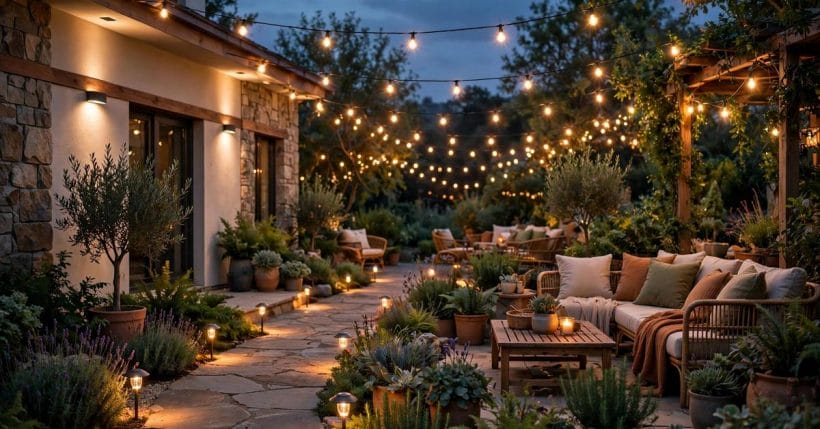
Outdoor lighting ideas change a garden more after dark than almost any other single choice. In daylight, a garden is judged by its planting, its paths and its furniture. Once the sun goes down, it is judged by where light falls, where shadow gathers and whether the walk from the gate to the door feels easy and welcoming. A garden that is beautifully planted but dark after sunset is a garden that closes early. A garden with thoughtful lighting stays useful, stays sociable and stays pleasant to look at from indoors long after the evening has begun.
This guide works through outdoor lighting as a whole picture rather than as a shopping list of fittings. It looks at paths, walls, patios, planting, porches and seating areas in turn, and at the mood that ties them together. The aim is not to flood a garden with light. The aim is to place gentle pools of light where they help, to keep glare out of eyes, to respect neighbours and wildlife, and to make the outdoor rooms of a home feel as considered at night as they do by day. One important boundary runs through the whole guide: outdoor electrical work is work for a qualified electrician. This article describes looks, layouts and decisions to discuss with a professional. It gives no instructions for electrical work of any kind, and local rules and requirements vary, so what applies where you live should be confirmed by someone qualified to advise on it.
| Item | What it is |
|---|---|
| Start With How You Use the Garden After Dark | Before choosing a single fitting, spend a few evenings noticing how the garden is actually used once daylight fades. |
| Path Lights That Guide Without Glare | Path lighting is the workhorse of outdoor lighting ideas, and it is also the easiest to get wrong. |
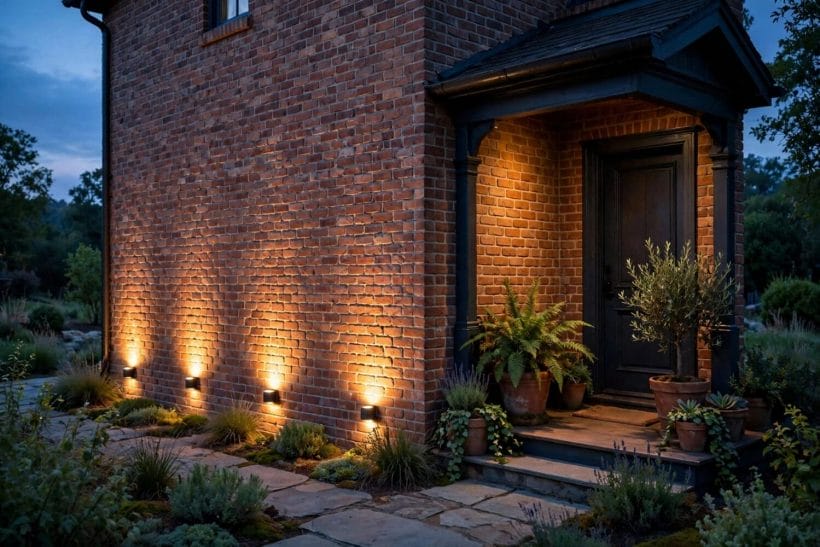
| Wall Washers for a Warm Welcome | Washing a wall with light is one of the simplest ways to make a house feel welcoming after dark. |
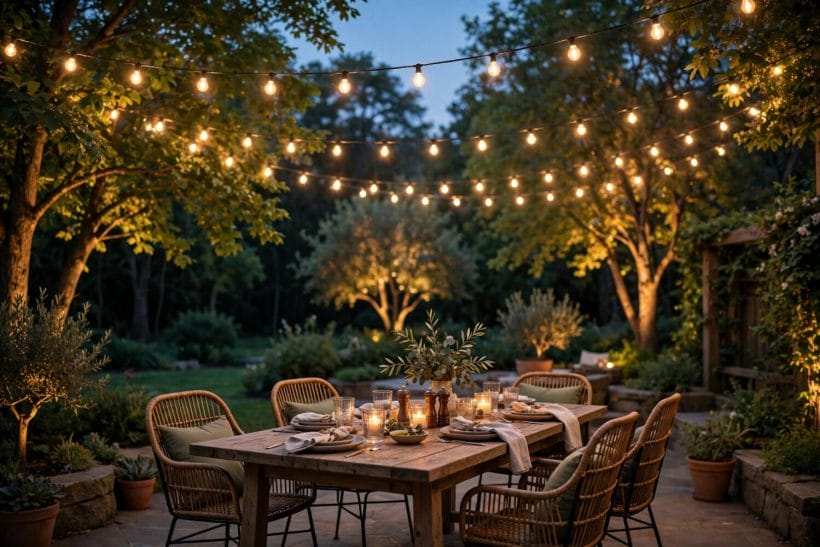
| String Lights for Patios and Dining Spaces | String lights, often called festoon lights, are the most sociable form of outdoor lighting. |
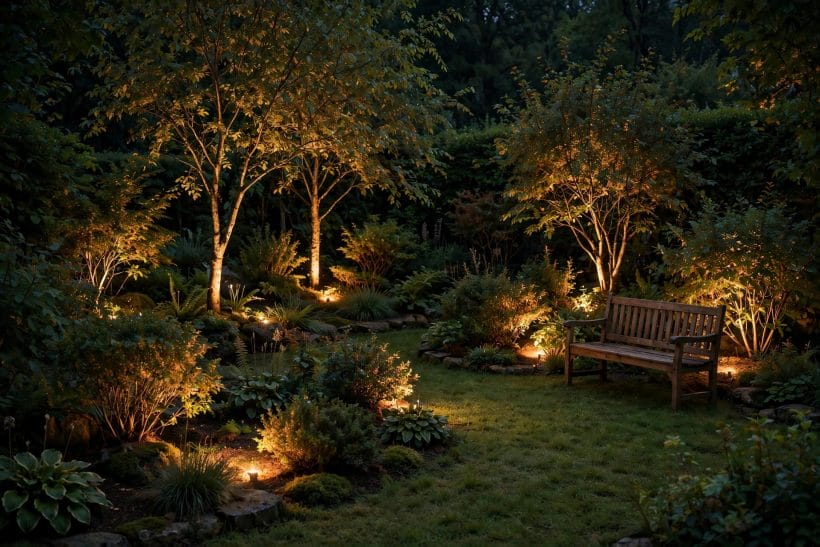
| Uplighting Trees, Shrubs and Garden Features | Uplighting is the technique of placing light low and aiming it upward into planting, and it is what gives a garden its drama after dark. |
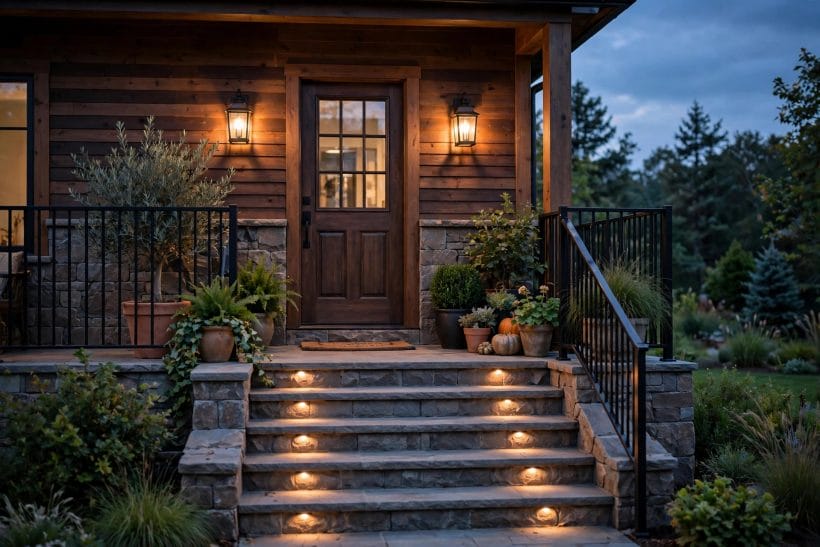
| Porch and Step Lighting for Safer Entries | The entrance to a home deserves some of the most careful lighting in the whole garden, because it is where visitors arrive, where keys are found, where steps are negotiated and where first impressions are formed. |
| Seating Areas and Fire Pit Circles | Seating areas are where outdoor lighting earns its social keep. |
| Colour Temperature and Mood | Colour temperature is a plain-language way of describing whether light looks warm or cool. |
| Planning Layers, Controls and Everyday Use | The most satisfying garden lighting is layered, in the same way that a good room has more than one source of light. |
| Costs, Upkeep and What to Ask a Professional | Costs for outdoor lighting vary so widely that a single figure would mislead more than it helps, so this guide deals in the drivers of cost rather than in prices. |
1. Start With How You Use the Garden After Dark
Before choosing a single fitting, spend a few evenings noticing how the garden is actually used once daylight fades. Which path is walked most often after dark, from the gate to the front door or from the back door to a seating area? Where do people sit, where do they eat, and which corners are never visited in the evening at all? The answers shape the whole layout. A path that is walked daily deserves steady, even light. A corner that is only admired from a window needs only enough glow to read as planting rather than as darkness. Lighting that follows real use feels natural, while lighting spread evenly everywhere can feel flat and wasteful.
Walk the garden at dusk with fresh eyes and notice the dark patches that matter. A step that disappears into shadow, a turn in a path that hides a low wall, or a stretch of lawn between two lit areas can all make a garden feel uncertain underfoot. Those are the places where light earns its keep. By contrast, areas that are already lit by spill from indoors, by a porch light or by a neighbour’s garden may need little or nothing added. For smaller plots, the same thinking still applies, and a browse through tiny backyard ideas can help to see how compact outdoor rooms are arranged before the lighting is planned around them.
It also helps to think about the view from inside the house. On many evenings, the garden is enjoyed through glass rather than from a chair outdoors, and a dark garden beyond a lit room can feel like a blank wall. A softly lit tree, a glowing path or a warm patch of wall visible from the main living spaces keeps the garden present in the evening and makes rooms feel larger. Plan the lighting for both audiences: the person walking outside and the person looking out from within.

2. Path Lights That Guide Without Glare
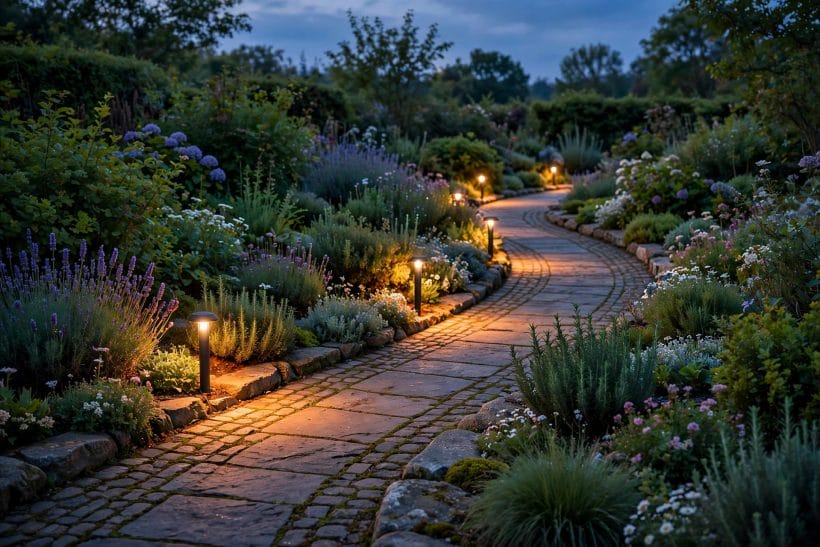
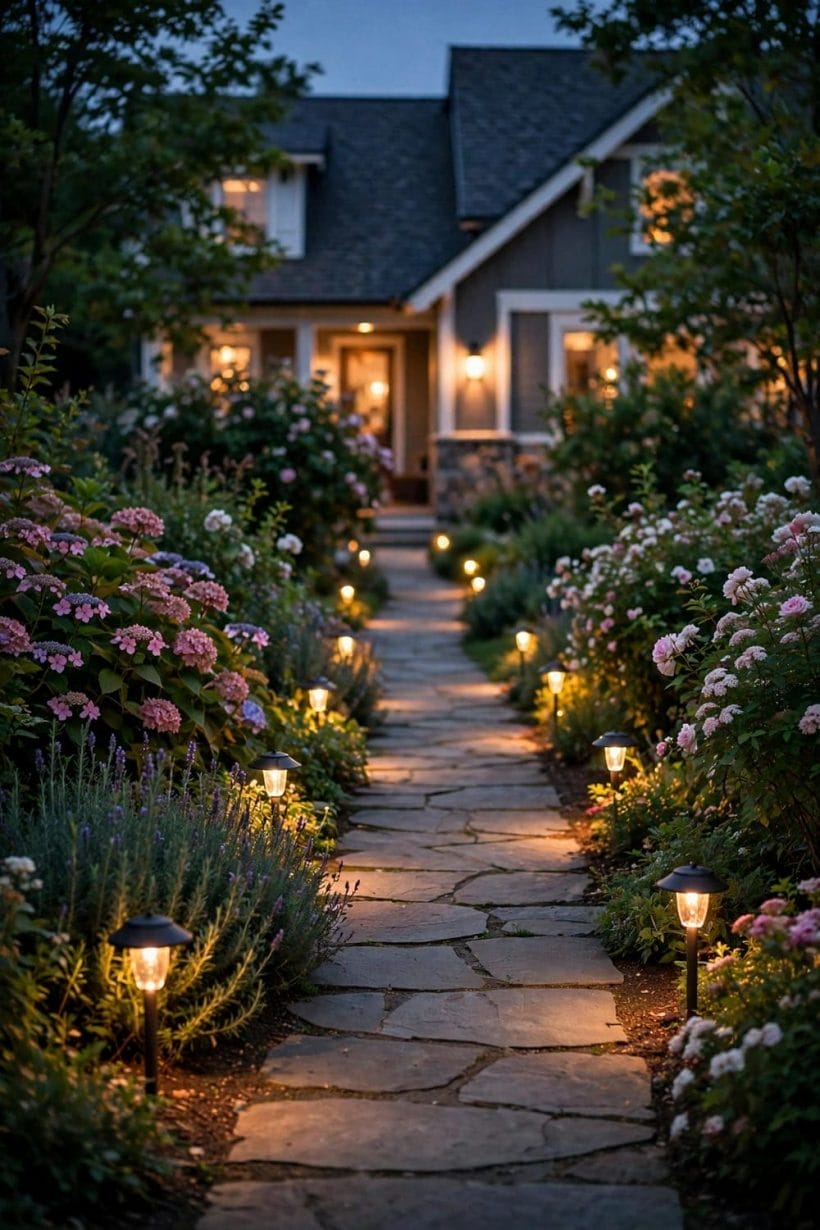
Path lighting is the workhorse of outdoor lighting ideas, and it is also the easiest to get wrong. The purpose of a path light is to show the way, not to announce itself. The best path lighting reads as a gentle ribbon of light along the ground, marking edges, steps and turns so that walking feels easy and unhurried. When fittings are too bright, too tall or too closely packed, the path becomes a runway and the glare draws the eye to the fittings themselves rather than to the way ahead. Softer light, placed with restraint, does the job better and leaves the garden looking like a garden rather than a stage.
Think of path lighting in terms of rhythm rather than coverage. A steady, unhurried rhythm of light along a path feels calm, while a single bright pool followed by darkness feels jumpy and can make the dark stretches feel darker still. Curves and junctions deserve a little attention, because that is where a walker needs to know which way the path turns. Straight stretches can be lit more lightly, since the way ahead is already clear. Where a path meets steps, a change of level or a low wall, light matters most, because that is where a misstep is most likely. The goal throughout is confidence underfoot, not brightness for its own sake.
Style matters here too, though quietly. Path fittings come in many characters, from slim modern posts to lantern forms that suit older houses, and the fitting should sit comfortably with the house and the planting rather than competing with them. Dark finishes tend to disappear into planting by day, which is usually a virtue. During the day, path fittings are garden objects like any other, so choose forms that look at home in daylight as well as after dark. And because these fittings live outdoors year-round, durability against rain, soil and garden work is worth more than novelty.
3. Wall Washers for a Warm Welcome
Washing a wall with light is one of the simplest ways to make a house feel welcoming after dark. A soft wash of light across brick, stone, render or timber gives the eye something to rest on, defines the shape of the house and makes an entrance feel intentional rather than accidental. It also provides useful spill light for the area in front of the house without the harshness of a single bright source pointed at visitors. The effect should feel like moonlight made warmer: even, gentle and free of hard edges.
The character of the wall itself shapes the result. Rough stone and brick catch light beautifully, with texture and shadow giving the wash depth and interest. Smooth render shows a more even glow, which can look calm and modern. Either way, the aim is a wash that flatters the material rather than flattening it. Too much light on a wall can bleach it out and throw the rest of the garden into deeper darkness by comparison, so restraint is part of the craft. A wall that glows softly will do more for a front garden than a wall that blazes.
Wall washing also helps the house read as a whole from the street and from the garden. It connects the entrance to the rest of the facade and gives visitors a sense of arrival before they reach the door. When planning the exterior as a whole, it is worth looking at tiny house exterior ideas alongside the lighting, since the colour of the walls, the style of the porch and the planting around the house all change how light behaves on them. A lighting plan that suits the house will always look better than one pasted on regardless of it.
4. String Lights for Patios and Dining Spaces
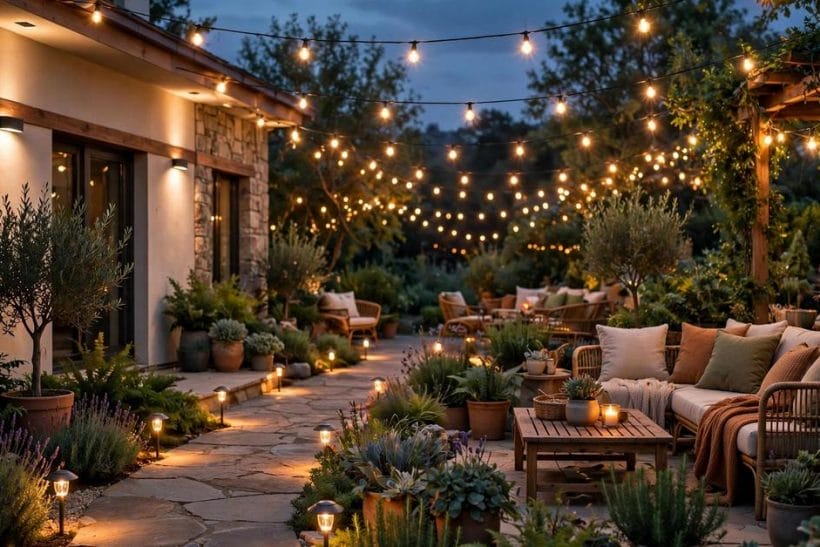
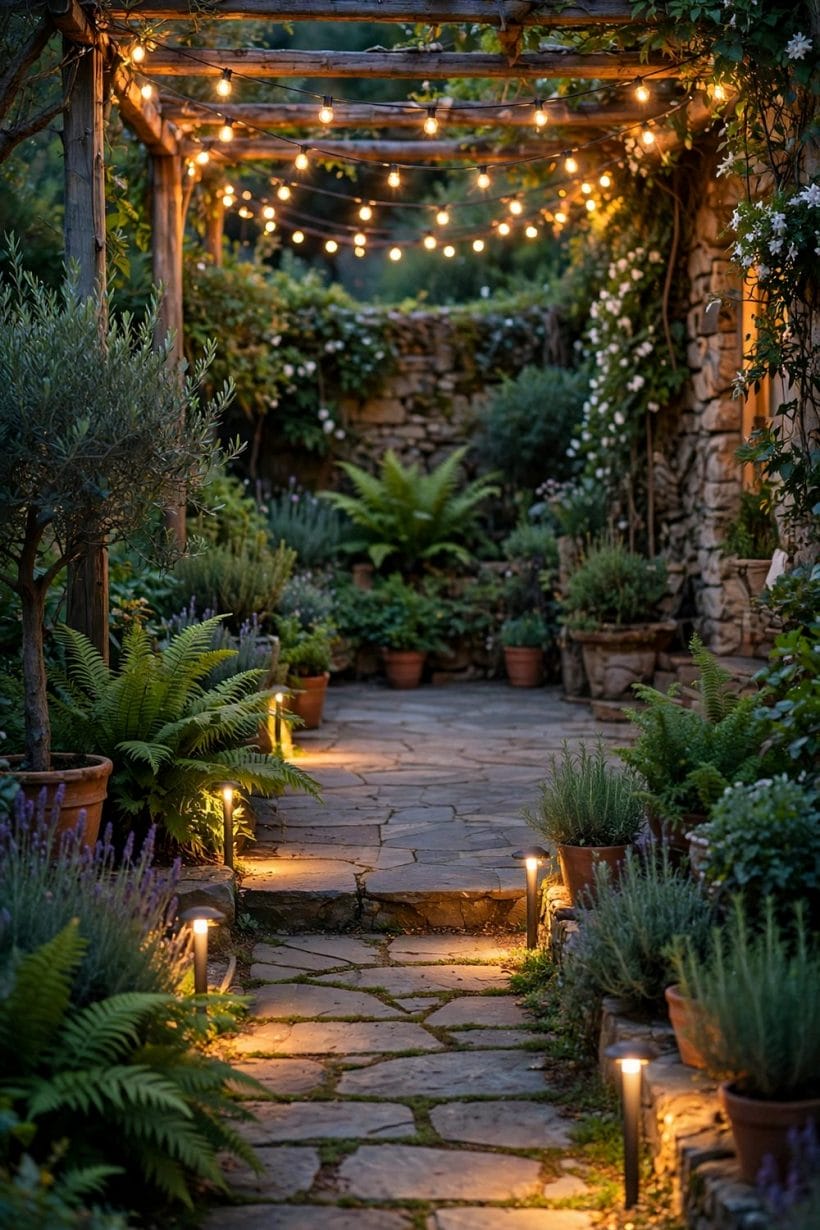
String lights, often called festoon lights, are the most sociable form of outdoor lighting. Strung overhead across a patio, a courtyard or a dining area, they create a ceiling of warm points of light that makes an outdoor room feel enclosed and festive even when the sky above is dark. They suit meals outdoors, long conversations and summer evenings better than almost any other fitting, because the light comes from above and all around rather than from a single source. The result is flattering, relaxed and forgiving, which is exactly what an evening outdoors should feel like.
The layout of string lights changes their character completely. Strung in straight parallel lines, they feel orderly and calm. Draped in swags or criss-crossed overhead, they feel celebratory and informal. Draped around a pergola or along a fence, they follow the shape of the space and make its boundaries glow. Whichever pattern is chosen, the lights should hang high enough to walk beneath comfortably and clear of walkways, seating and anything that could catch on them. Their charm lies in looking effortless, and that ease disappears if anyone has to duck or dodge them.
String lights also pair naturally with outdoor dining. A table lit from overhead feels intimate in a way that a table lit from the side rarely does, because faces are lit softly and the table itself becomes the centre of the scene. For homes where the kitchen opens onto the patio, this indoor-outdoor link is worth planning as one space, and tiny house kitchens show how compact kitchens connect to the rooms and patios around them. Keep the dining glow warm and gentle, and let the rest of the garden sit a little darker beyond it, so the table feels like a room within the night rather than a display.
5. Uplighting Trees, Shrubs and Garden Features
Uplighting is the technique of placing light low and aiming it upward into planting, and it is what gives a garden its drama after dark. A tree lit from below becomes a sculpture, its canopy glowing against the night sky and its trunk casting long, interesting shadows. Shrubs lit from beneath gain depth and presence, turning from dark masses into layered shapes. Even a single well-placed uplight can transform a garden view from a window, giving the eye a destination in the darkness and making the whole garden feel larger and more intentional.
Not every plant suits uplighting, and choosing which plants to feature is part of the design. Trees with interesting bark, open branch structures or striking silhouettes reward uplighting most, because the light has something to reveal. Dense, shapeless shrubs may simply glow as blobs, which is less satisfying. Ornamental grasses catch light beautifully, their fine blades shimmering at the edges of a pool of light. Sculptures, water features and garden structures such as pergolas and arbours also make good subjects, since they already have form and the light simply gives that form an evening presence.
Uplighting should be used with a light hand. A garden where every tree is lit can feel busy and theatrical, while a garden where one or two features glow and the rest rests in shadow feels calm and composed. Shadow is not the enemy of garden lighting; it is part of it, giving depth and contrast that flat, even light cannot. The same thinking applies across the whole outdoor space, and ideas for outdoor rooms beyond the garden, such as simple outdoor shower ideas, show how a single outdoor feature can anchor a whole corner of a garden when it is given its own presence. Choose a few heroes, light them well, and let the rest of the garden breathe.
6. Porch and Step Lighting for Safer Entries
The entrance to a home deserves some of the most careful lighting in the whole garden, because it is where visitors arrive, where keys are found, where steps are negotiated and where first impressions are formed. A porch that is warmly lit feels safe and welcoming. A porch that is dark feels uncertain, however beautiful the house may be by day. Porch lighting should make the door easy to find, the steps easy to read and the faces of visitors easy to see, all without blinding anyone approaching the house.
Lantern-style fittings beside a door are a classic choice for good reason. Placed on either side of the entrance, they frame the door symmetrically and give even, flattering light. A single fitting can work well for a narrow porch, while wider entrances suit a pair. Step lights, set low into walls or stair risers, are equally valuable, because they mark each change of level directly where the foot lands. Together, porch and step lighting remove the guesswork from arriving home after dark, which is the whole point of entrance lighting.
It is also worth considering how the entrance looks from inside the house and from the street. A porch light that spills harshly onto the street can dazzle passers-by and disturb neighbours, while a porch light that is shielded and directed downward gives light where it is needed and nowhere else. Glare control matters at entrances more than anywhere, because visitors walk toward the light and look directly at it. Fittings that hide their source behind glass, shades or careful aiming are kinder to the eye and more welcoming as a result. A good entrance light is one that visitors notice for the welcome it gives, not for the glare it causes.
7. Seating Areas and Fire Pit Circles
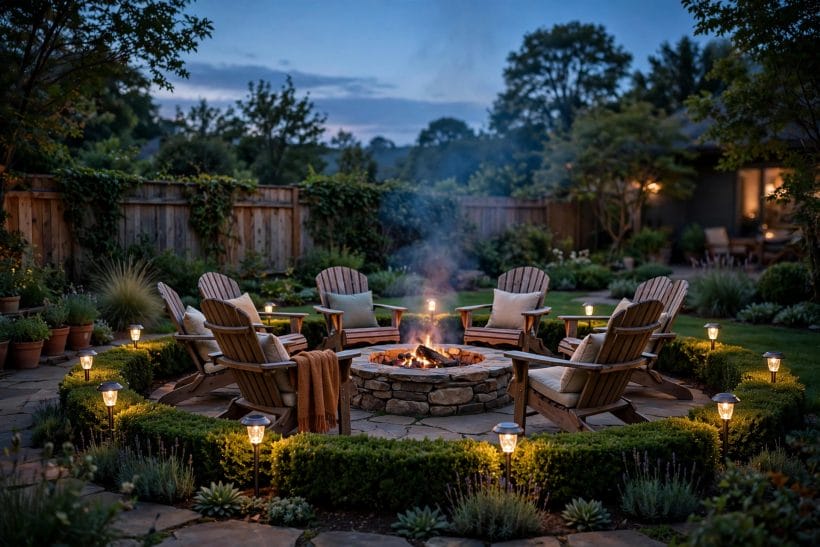
Seating areas are where outdoor lighting earns its social keep. A seating area that is lit warmly and gently invites people to linger, while one that is lit harshly or left dark tends to empty as soon as the sun sets. The light in a seating area should be low, warm and close to the people using it, creating a sense of enclosure without walls. Table lights, low garden lights around the edges of the space and soft glow from nearby planting all contribute to this feeling, and the combination matters more than any single fitting.
Fire pit circles have their own lighting character, since the fire itself provides flickering light at the centre of the gathering. The role of additional lighting around a fire pit is modest: enough glow on the path to reach the circle safely, enough light on the seating edges to make chairs easy to find, and enough restraint to let the fire remain the star. Too much added light around a fire pit flattens the very atmosphere that makes firelight special. Let the fire do the talking, and let the surrounding light play a supporting role.
Comfort is the test of seating lighting. If people can see each other’s faces, find their drinks and move around the seating area without stumbling, the lighting is working. If they are squinting, shielding their eyes or moving chairs to escape a bright source, it is not. Seating areas also link the indoors and the outdoors, and the view from a living room toward a lit seating area is one of the great pleasures of a house with a garden. The relationship between inside and outside rooms is part of what makes small living room ideas relevant even outdoors, since a compact living space often borrows its sense of size from a garden that is visible and inviting after dark.
8. Colour Temperature and Mood
Colour temperature is a plain-language way of describing whether light looks warm or cool. Warm light has a golden, candle-like quality that flatters skin, timber, brick and planting, and it is the usual choice for gardens meant for relaxing and gathering. Cool light looks crisper and whiter, and it can feel clean and modern, but it can also feel stark in a garden, especially against planting, where it may make foliage look cold and uninviting. Most gardens feel most welcoming in warm tones, with cooler tones used sparingly if at all.
Consistency matters as much as the choice itself. A garden where path lights glow warmly, wall lights shine coolly and string lights sit somewhere in between can feel unsettled, even if no one can name why. The eye reads mixed colour temperatures as visual noise. Choosing one prevailing warmth for the garden, and keeping feature lighting within the same family, gives the whole space a composed, intentional feeling. If a cooler tone is wanted for a particular purpose, such as a work area or a security light, keeping it clearly separate from the relaxing areas avoids the clash.
Mood also changes with the seasons, and lighting that suits a summer evening may feel different on a winter night. In summer, gardens are used late and socially, and the lighting can be fuller and more festive. In winter, gardens are more often viewed from indoors, and a few glowing features seen through glass can matter more than a fully lit garden. A lighting scheme that can be dimmed, or that has separate groups for different areas, adapts to these changes gracefully. Dimming and grouping are matters to discuss with a qualified electrician, who can advise on what is possible for a given home and what local rules require.
9. Planning Layers, Controls and Everyday Use
The most satisfying garden lighting is layered, in the same way that a good room has more than one source of light. A garden lit only by path lights can feel like a corridor. A garden lit only by wall washers can feel like a facade with nothing behind it. A garden that combines path light, wall light, planting light and overhead light, each at a gentle level, feels like a real place with depth and variety. Layers give the eye places to travel, and they let different areas of the garden have different characters within one coherent whole.
Controls are what make layers practical day to day. Being able to switch on the path lights alone for a quick trip to the gate, the seating lights alone for an evening outdoors, or the whole garden for a gathering makes the lighting fit the occasion rather than forcing every occasion to fit the lighting. Timers and sensors can help, bringing lights on at dusk or when someone approaches, but they should be set thoughtfully so that lights do not flare on needlessly or stay on all night when no one is using them. Simple, intuitive controls are used more often and enjoyed more than complicated ones, and a system that is easy for everyone in the household to operate is a system that will actually be used.
Planning layers and controls is also where the layout of the home itself comes into view. Which rooms look onto the garden, where the main doors open, and how people move between indoors and outdoors all shape where light is needed and where switches and controls are most useful. Thinking about the whole home together, as in tiny house floor plans, helps the lighting serve the way the house is lived in rather than sitting as an afterthought. A lighting plan drawn on a simple sketch of the garden, marking paths, seating, planting features and entrances, is worth more than a long list of fittings bought without a plan.
10. Costs, Upkeep and What to Ask a Professional
Costs for outdoor lighting vary so widely that a single figure would mislead more than it helps, so this guide deals in the drivers of cost rather than in prices. The size of the garden is the first driver, since a larger garden needs more fittings and more work to connect them. The type of fitting is the second, since simple garden lights and elaborate feature fittings sit at very different ends of the range. The ground itself is a third driver, since paths, rock, established planting and long distances all affect the work involved. Professional labour is a fourth, and it is work worth paying for properly, since outdoor electrical work done well lasts and outdoor electrical work done poorly can be unsafe.
Ongoing costs deserve a place in the budget too. Outdoor fittings live in rain, sun, soil and frost, and they need occasional cleaning, lamp replacement and attention to finishes. Planting grows and can swallow a fitting or block its light, so a yearly walk around the garden to check that lights are still visible and still aimed where intended is time well spent. Choosing fittings that are easy to clean and maintain, and placing them where they can be reached without trampling planting, makes upkeep a small job rather than a chore. Durability and ease of maintenance often matter more over the years than the first impression of a fitting in a catalogue.
When the time comes to involve a professional, a short list of questions helps the conversation. Ask what local rules apply to outdoor electrical work at the property, and what approvals or inspections may be needed. Ask how the proposed layout will look from the rooms that face the garden, not just from the garden itself. Ask how glare will be controlled for visitors and neighbours, and how the lighting will be grouped and controlled for everyday use. Ask what maintenance the chosen fittings will need and how long they can reasonably be expected to last outdoors. A good professional will welcome these questions, because they show a homeowner thinking about the garden as a place to live in rather than as a product to buy. Outdoor electrical work stays with the professional throughout: this guide describes the look and the layout to aim for, and the qualified electrician decides how it is safely achieved under the rules that apply.
Final Considerations
Good outdoor lighting is quiet work. It does not shout, it does not dazzle and it does not try to turn night into day. It marks the path, warms the wall, gathers people around a table and gives a tree a second life after dark. The gardens that glow best are rarely the brightest gardens. They are the gardens where light has been placed with thought, where shadow has been allowed its own role, and where every fitting has a reason to be where it is.
Start small if the garden is currently dark. Light the path that is walked most, warm the entrance, and add one glowing feature that can be seen from indoors, perhaps a tree viewed from a bedroom window in the evening, a pleasure that tiny house bedroom ideas capture in miniature when sleeping spaces borrow their outlook from the garden beyond. Live with that first layer for a while before adding more, and notice what still feels dark and what already feels complete. Gardens grow, habits change and lighting can grow with them, layer by layer, season by season. Planned this way, outdoor lighting becomes less of a project and more of a habit of care: a garden that welcomes people home, keeps them safe underfoot and stays beautiful long after the sun has gone down.


0 Comments