
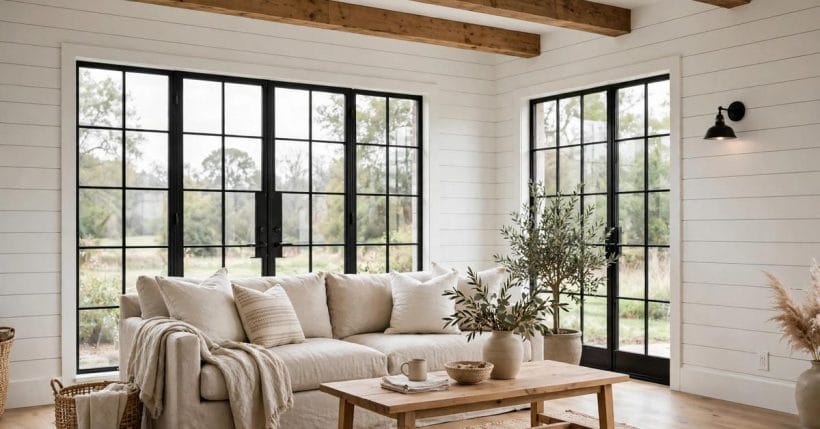
This post is about the pieces, not the whole house. It looks closely at the individual details that give this style its character: the wall boards, the timber, the black iron, the doors, the windows, the kitchen fittings, the lighting and the fabrics. Each detail is treated on its own terms, so you can judge it, place it and live with it before you commit to a full room. The style works when these pieces agree with each other, and it falls apart when too many loud details compete in the same space.
One phrase sets the scope. This is a modern farmhouse companion piece: it covers style elements only, and it points readers who want the whole-house picture to the general survey of this style, which walks through the house from the porch to the back bedroom. What follows here stays with the elements themselves, how they look, where they belong, how they wear, and what they ask of the person who chooses them.
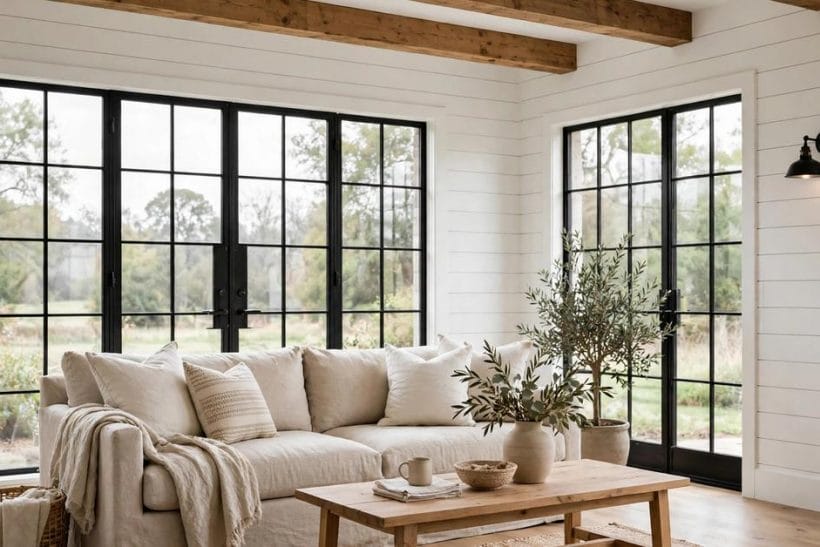
| Item | What it is |
|---|---|
| The Palette: White, Timber and Black | Every element in this style answers to a small palette, and the palette is what makes the elements read as one family rather than a collection of farm-themed purchases. |
| Wall Treatments: Shiplap and Board-and-Batten | Shiplap and board-and-batten are the two wall treatments most closely tied to this style, and they do different jobs. |
| Timber Beams and Trim | Timber in this style should look like it belongs to the building, not like it was ordered as decoration. |
| Black Iron: Frames, Hardware and Rails | Black iron is the style's punctuation mark, and like punctuation it works best in small, deliberate doses. |
| Doors: Barn Doors and Panel Doors | Doors carry more of this style than most people expect, because a door is a large flat surface that the eye cannot avoid. |
| Windows: Frames, Glass and Dressing | Windows are where this style meets the outside world, and the frame is the element that does the talking. |
| Kitchen Elements: Sinks, Shelves and Taps | The kitchen is where farmhouse elements work hardest, and the apron-front sink is the piece most people picture first. |
| Lighting: Lanterns, Pendants and Shades | Lighting in this style leans warm, simple and a little bit outdoor in spirit. |
| Textiles and Soft Furnishings | Textiles are what stop this style from feeling like a showroom, because they add softness, wear and a human scale to rooms full of timber and iron. |
1. The Palette: White, Timber and Black
Every element in this style answers to a small palette, and the palette is what makes the elements read as one family rather than a collection of farm-themed purchases. Soft white does most of the work: it covers walls, ceilings and painted woodwork, and it gives the eye somewhere calm to rest. Warm mid-tone timber supplies the second note, appearing in beams, shelves, benches and door leaves, while black iron acts as the punctuation, showing up in frames, pulls, rails and taps. Nothing else in the room needs to shout, because these three notes already carry the tune.
Restraint matters more than richness here. A white that leans too cold will make timber look orange, and a black used on every surface will turn a calm room into a graphic poster. The usual balance is generous white, a comfortable amount of timber, and black kept to lines and small fittings: a window frame here, a row of pulls there, a rail above a door. When the black stays in that supporting role, the room feels warm rather than themed, and individual pieces can be changed later without unravelling the whole look.
Colour beyond the palette should arrive quietly, through things that are easy to move. Linen cushions, a woven throw, a clay pot or a stack of books can carry a muted green, a dusty blue or a warm ochre without asking the walls to change. Painted furniture is the one place where a soft colour earns a permanent spot, and even there a single piece per room is usually enough. If a room starts to feel busy, the cure is almost always subtraction: take one strong colour out, and the white, timber and black underneath will settle the space again.
2. Wall Treatments: Shiplap and Board-and-Batten
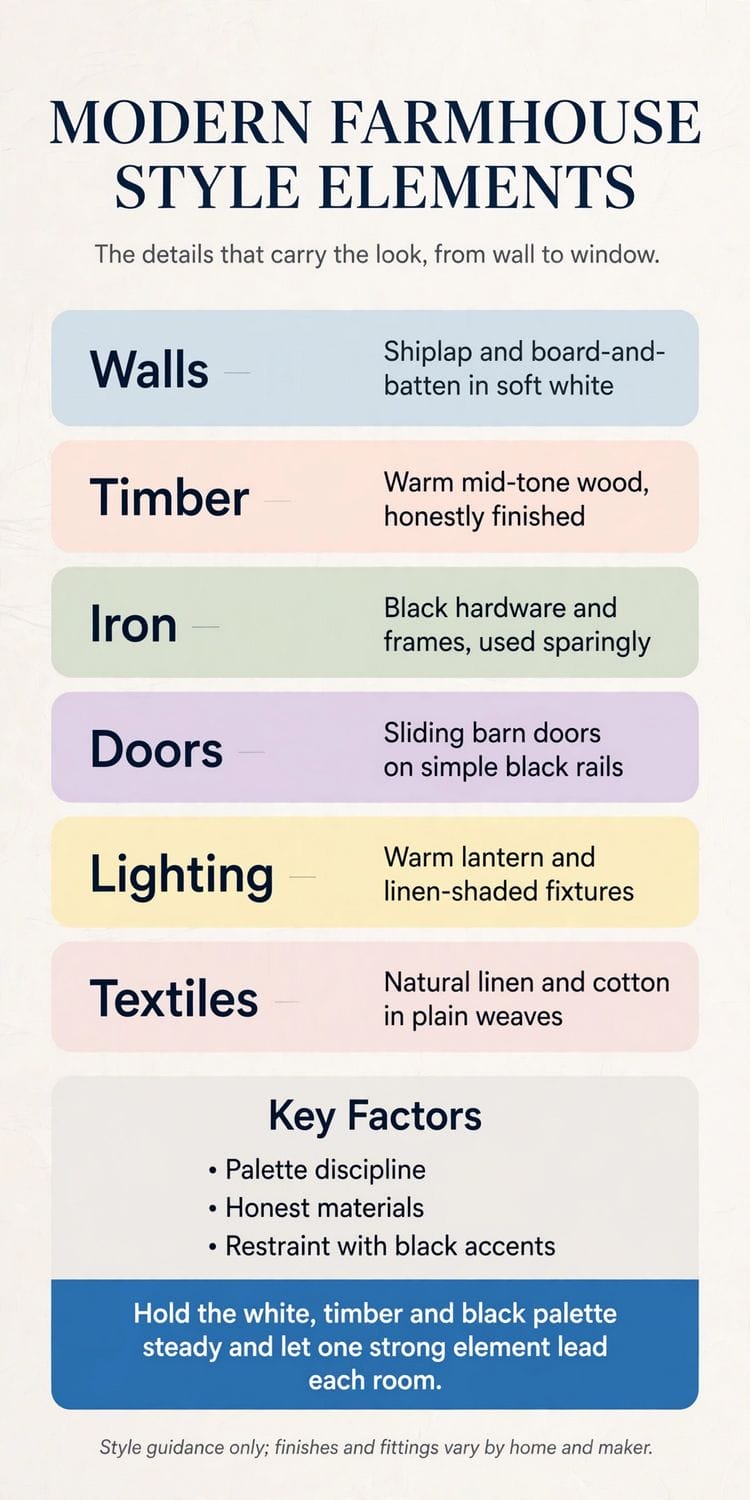
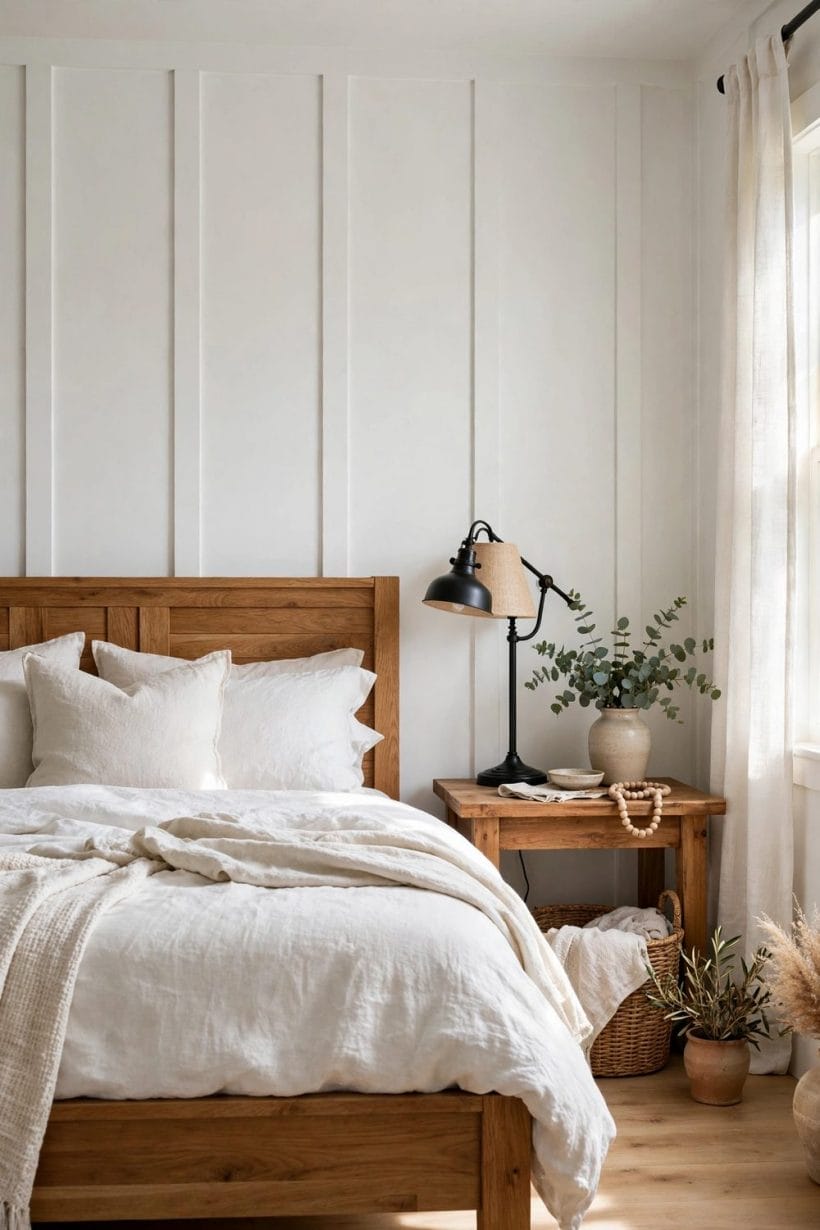
Shiplap and board-and-batten are the two wall treatments most closely tied to this style, and they do different jobs. Shiplap is horizontal boarding with a narrow shadow line between boards, and it reads as relaxed and coastal when painted soft white. Board-and-batten is vertical: wide boards with narrow battens over the joints, and it reads as taller, more formal and more architectural. Both add texture to a plain plaster wall, and both catch light in a way that flat paint cannot, which is why a room with either treatment photographs so well and feels so much warmer in person.
Placement decides whether the treatment helps or overwhelms. A single wall behind a bed, a sofa or a dining table gives the room a focal point without turning it into a timber box. Wrapping every wall in boarding, especially in a small room, can feel heavy and can make furniture placement awkward, since every wall then demands attention. Hallways and stair walls are forgiving places for boarding, because people pass through them rather than sitting against them, and a porch wall in board-and-batten sets the tone before anyone steps inside.
Practical points deserve attention before the first board goes up. Painted boards show dust and scuffs more readily than flat walls, and the shadow lines collect dust in a way that a quick wipe will not always reach, so a home with pets or a busy back door should expect a little more cleaning. Boards also sit proud of the wall, which means skirting, sockets and door frames need careful detailing at the edges. Done well, the edges look crisp and intentional; done hastily, they look like an afterthought, and the eye goes straight to the gap.
3. Timber Beams and Trim
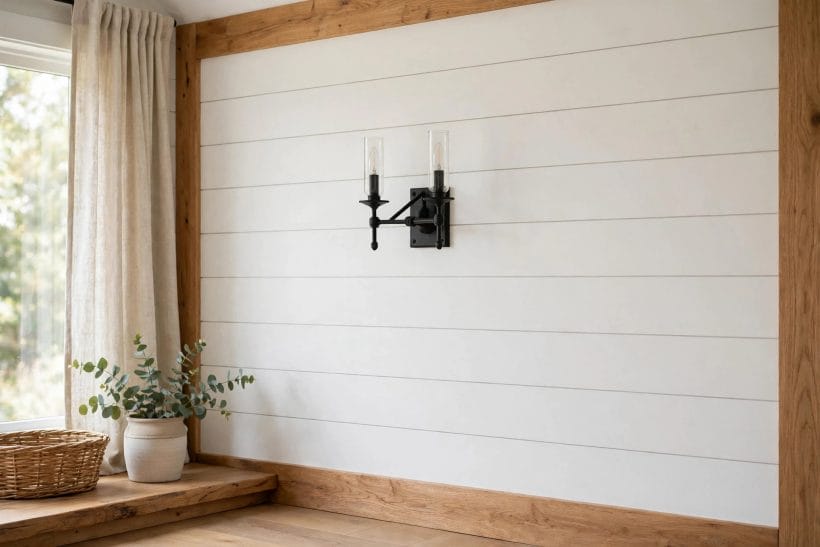
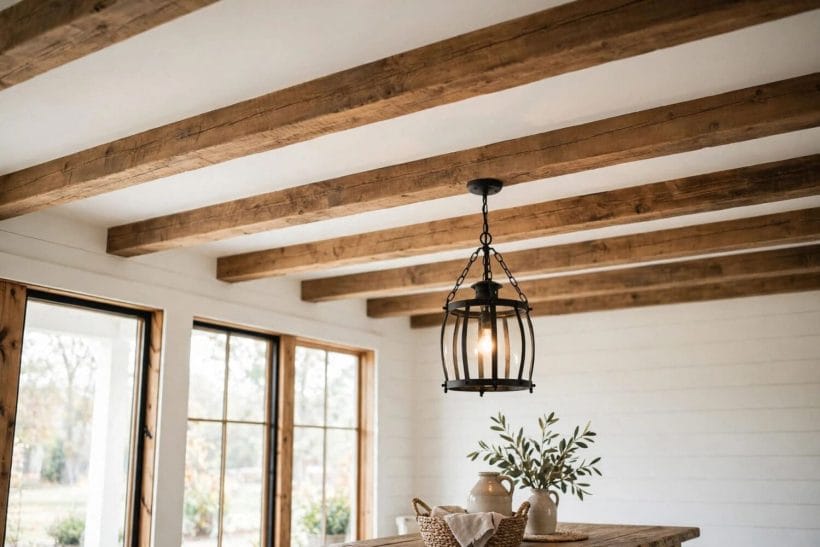
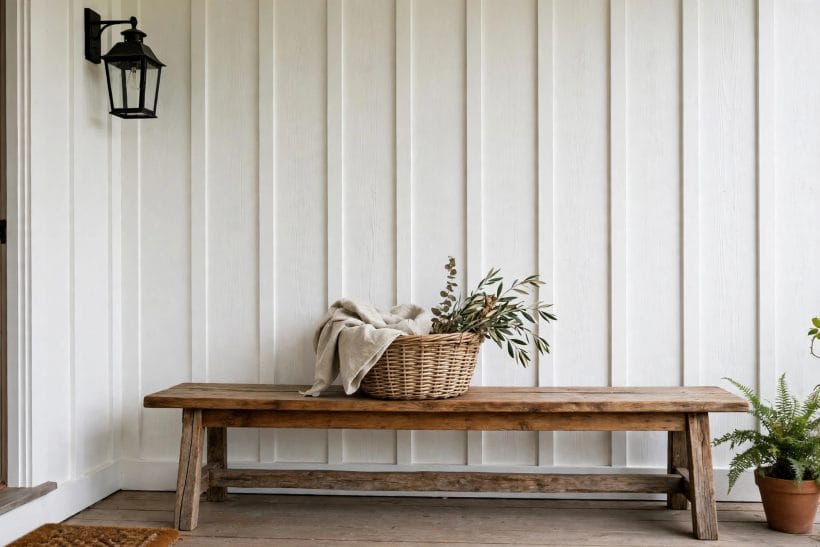
Timber in this style should look like it belongs to the building, not like it was ordered as decoration. Exposed ceiling beams, a chunky mantel shelf, a deep windowsill or a simple timber bench all work when the wood reads as honest material: visible grain, a warm mid-tone finish, and joints that look made rather than moulded. Reclaimed-look finishes can suit the style, but a finish that pretends to be old while feeling plasticky under the hand will undermine the room faster than plain painted wood would.
Scale is the detail most often got wrong. A beam that is too slim for the span it crosses looks like a strip of trim, while a beam that is too deep for a low ceiling will press the room down and make tall furniture feel cramped. In rooms with generous ceiling height, beams can run the full span and carry real visual weight; in lower rooms, a single beam or a pair of beams, rather than a full grid, usually gives the timber note without crowding the space. Trim follows the same rule: a deep skirting board and a simple architrave suit the style, but layering moulding upon moulding belongs to a different look entirely.
Upkeep for timber is straightforward and worth planning for. Oiled or waxed finishes need refreshing from time to time, especially on surfaces that get touched daily, such as stair rails and bench tops, while varnished finishes last longer but show scratches more plainly when they do mark. Kitchens and bathrooms ask more of timber than bedrooms do, because steam and splashes find unsealed end grain quickly, so timber near a sink or a cooker should be sealed with care and wiped down as a habit rather than as an occasional rescue.
4. Black Iron: Frames, Hardware and Rails
Black iron is the style’s punctuation mark, and like punctuation it works best in small, deliberate doses. Window frames in black give a white wall its crisp outline and make the view outside read as a picture. Cabinet pulls, door handles, tap fittings and curtain rods in black tie those outlines together, so the eye travels around the room and finds the same dark note repeated at sensible intervals. The material itself can be iron, steel with a dark finish, or a powder-coated metal; what matters is that the finish stays matte or softly satin, because a high gloss black will read as modern-industrial rather than farmhouse.
Consistency across fittings is what separates a considered room from a mixed one. Pulls, hinges, taps and light fittings do not need to come from one maker, but they should share a finish family, so that a warm blackened bronze does not sit next to a cold blue-black steel and argue quietly all day. It helps to choose the finish early, before the first fitting is bought, and to carry a sample when shopping for later pieces. Rooms that ignore this step often end up with three near-blacks that look fine individually and restless together.
Wear shows on black finishes in particular ways. Frequently touched pulls and handles will polish bright at the edges over time, and hard water will leave pale marks on black taps if they are left to dry. Neither flaw ruins the look, and many owners accept the softening as part of the material’s character, but it is worth knowing before choosing black for a hard-working kitchen tap or a front door handle that every visitor grips. A quick wipe after use and a gentle cleaner, rather than anything abrasive, will keep the finish even for much longer.
5. Doors: Barn Doors and Panel Doors
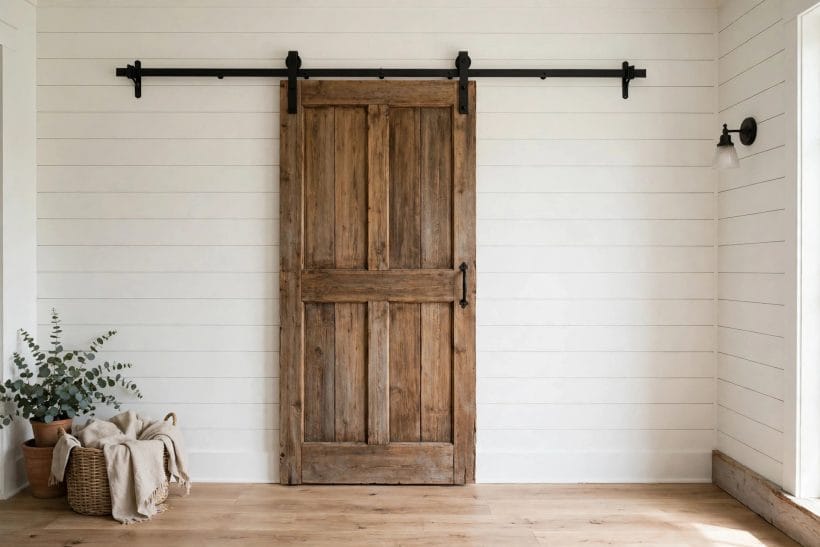
Doors carry more of this style than most people expect, because a door is a large flat surface that the eye cannot avoid. The sliding barn door is the signature piece: a timber leaf hung from a black rail above the opening, sliding sideways rather than swinging. It suits wide openings between living spaces, pantries and laundry rooms, and it adds a workshop honesty to rooms that might otherwise feel too polished. The panel door is its quieter cousin: a simple timber or painted door with recessed panels, no glazing bars, no fussy moulding, and it suits bedrooms and bathrooms where privacy and a clean face matter more than theatre.
The practical case for each type is different, and choosing on looks alone leads to regret. A barn door needs clear wall space beside the opening for the leaf to slide onto, and it never seals sound or draughts as tightly as a swinging door, so it is a poor choice for a bedroom or a bathroom that needs real privacy. It also needs a rail fixed into solid structure, not just plasterboard, because a heavy timber leaf will pull weak fixings out over time. A panel door asks for less: a standard frame, ordinary hinges, and a handle that matches the rest of the room’s ironwork.
Detailing makes or breaks both types. A barn door hung too high leaves an awkward gap at the floor, while one hung too low drags on rugs and thresholds. Gaps around a panel door should be even, and the handle height should match the other doors in the house, because a single odd handle height is something the hand notices every day even when the eye does not. Painted panel doors in soft white blend with shiplap walls beautifully, while a timber leaf with visible grain gives a white hallway a warm focal point at its end.
6. Windows: Frames, Glass and Dressing
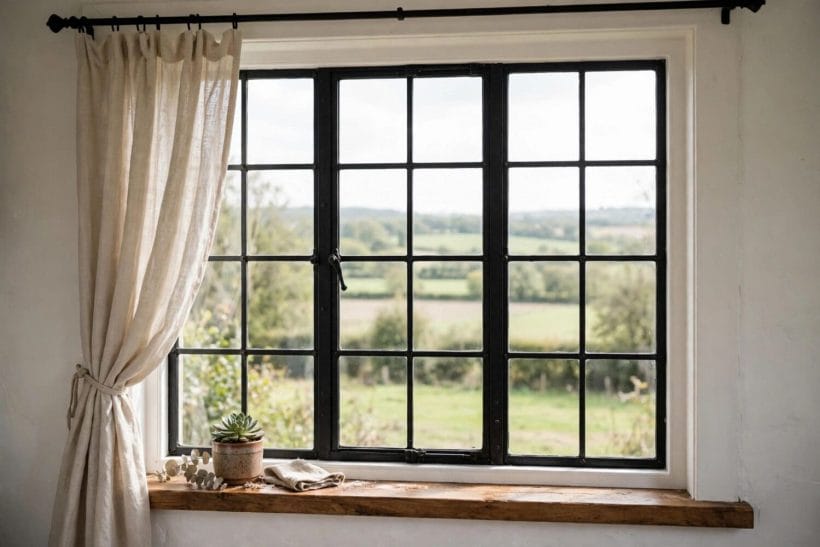
Windows are where this style meets the outside world, and the frame is the element that does the talking. Black frames against white walls give the clearest farmhouse read, especially in a simple grid pattern with a small number of panes rather than a fussy lattice. White frames can work just as well in a softer version of the look, particularly in rooms where the timber and textiles already carry plenty of warmth, but the frame colour should be chosen for the whole house at once, not window by window, or the exterior will look patched together from different renovations.
Glass and glazing bars deserve the same care as the frame. Clear glass keeps the connection to the garden or the street, which is part of the style’s appeal, while heavily patterned or tinted glass fights the honest-materials idea and dulls the daylight the style depends on. Grilles between the panes are easier to clean than grilles on the surface, and they suit homes where windows are opened often, since surface grilles collect dust at every joint. In older houses, keeping the original window proportions matters more than any new frame colour: a tall, well-proportioned opening in white will always beat a resized opening in black.
Dressing should stay simple. Plain linen curtains in a natural tone, hung high and wide so the fabric clears the glass when open, suit the style better than heavy drapes or patterned blinds. A simple timber or black rod, rings that slide freely, and a hem that just brushes the sill or the floor complete the picture without fuss. Roller blinds in a natural weave work in kitchens and bathrooms where curtains would stain, and a woven shade adds texture without adding pattern. Whatever the dressing, it should frame the window rather than cover it, because daylight is doing most of the decorating in this style.
7. Kitchen Elements: Sinks, Shelves and Taps
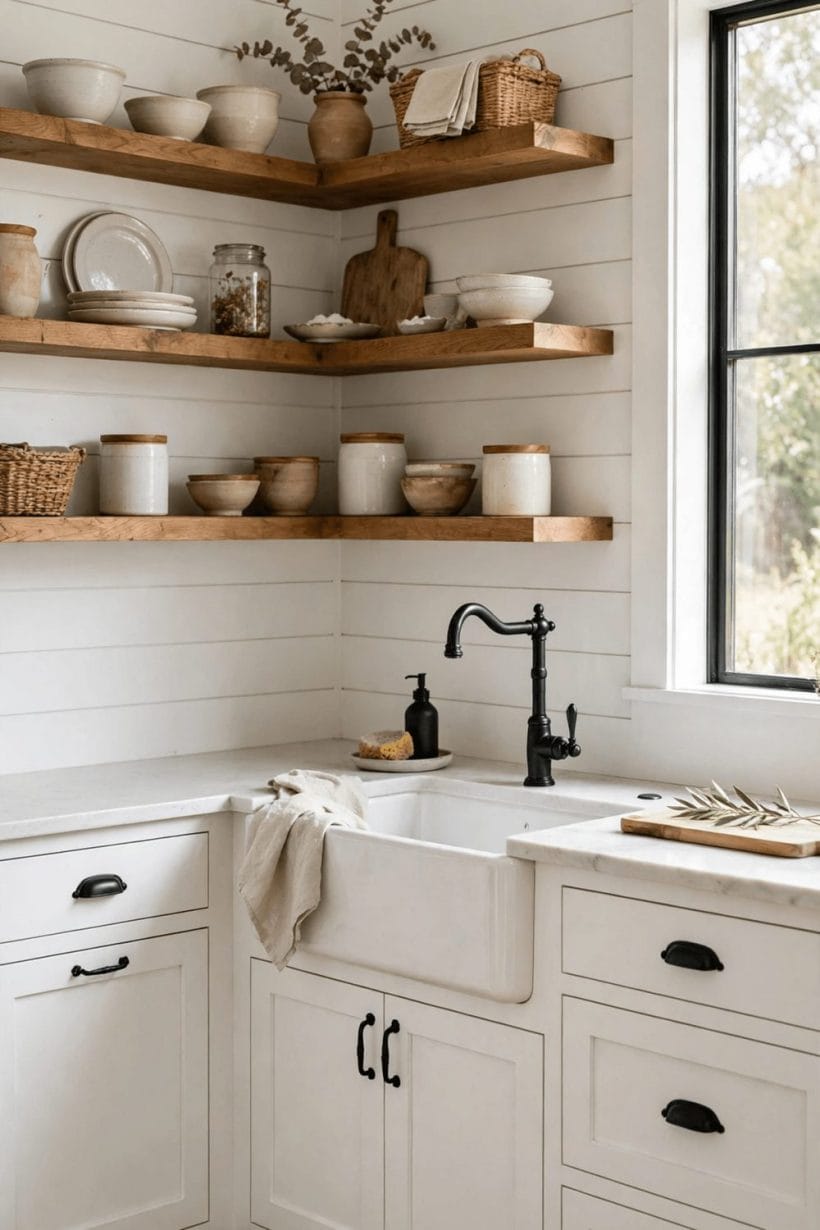
The kitchen is where farmhouse elements work hardest, and the apron-front sink is the piece most people picture first. Its deep bowl and exposed front panel suit a working kitchen: large pots fit, the front panel gives the run of cabinets a furniture-like face, and the style reads instantly even in a kitchen that is otherwise plain. It does ask for a cabinet built or adapted to carry it, and for a tap tall enough to clear its depth, so it is a decision to make early in a kitchen plan rather than a swap at the end. For readers planning the wider room, the kitchen ideas survey puts this element alongside other kitchen layouts and finishes.
Open timber shelving is the second kitchen element that defines the look, and it is also the one that most tests daily habits. Shelves in warm timber with black brackets display everyday plates, bowls and jars beautifully, and they keep the kitchen feeling open where wall cabinets would close it in. They also show dust, grease and clutter without mercy, so they suit households that keep a small, well-used set of dishes and put the rest behind closed doors. A common compromise keeps open shelves to one run, above a preparation area or beside a window, with closed storage carrying the bulk of the kitchen elsewhere.
Taps, pulls and handles finish the kitchen’s farmhouse read. A bridge tap or a simple high-arc tap in black or brushed dark metal pairs naturally with an apron sink, while cup pulls on drawers and knobs on doors give hands something solid to grip. As with the rest of the house, one dark finish across the kitchen’s metalwork keeps the room calm, and mixing in a second metal should be a deliberate choice, such as a single brass light fitting, rather than an accident of separate shopping trips. Surfaces around the sink and cooker should be chosen for wiping clean first and for looks second, because a beautiful surface that stains on first contact will not stay beautiful for long.
8. Lighting: Lanterns, Pendants and Shades
Lighting in this style leans warm, simple and a little bit outdoor in spirit. Lantern fittings, whether hanging over a table or fixed beside a door, borrow their shape from farm and porch lights: a clear or seeded glass enclosure, a simple metal frame in black, and a warm bulb inside. Pendant lights over a kitchen island or a dining table follow the same logic at a larger scale, often in the form of a metal dome, a woven shade or a linen drum, hung low enough to pool light on the table and high enough to see across it. The aim is light that feels like evening lamplight rather than office daylight.
Placement matters as much as the fitting itself. A single pendant over a small table, a row of pendants spaced evenly over a long island, and a pair of wall lights flanking a bed or a mirror all follow the same rule: light where people actually sit, work and look, not light spread thinly across a ceiling for its own sake. Dimmer controls suit this style particularly well, because they let one fitting serve both a working kitchen in the morning and a quiet dining room at night. Warm-toned bulbs complete the effect; a cool white bulb inside a lantern fitting will fight the timber and linen around it and make the whole room feel clinical.
Shades soften the style and give it a domestic note. Linen drum shades on table lamps and floor lamps diffuse light gently and add a textile layer to rooms that might otherwise feel hard with all their timber and iron. Woven shades in rattan or seagrass add a natural texture that sits comfortably beside timber beams, though they cast patterned shadows that some people love and others find distracting. Whatever the shade, the bulb inside should stay hidden from normal seated eye level where possible, because glare is the one lighting fault that no beautiful fitting can excuse.
9. Textiles and Soft Furnishings
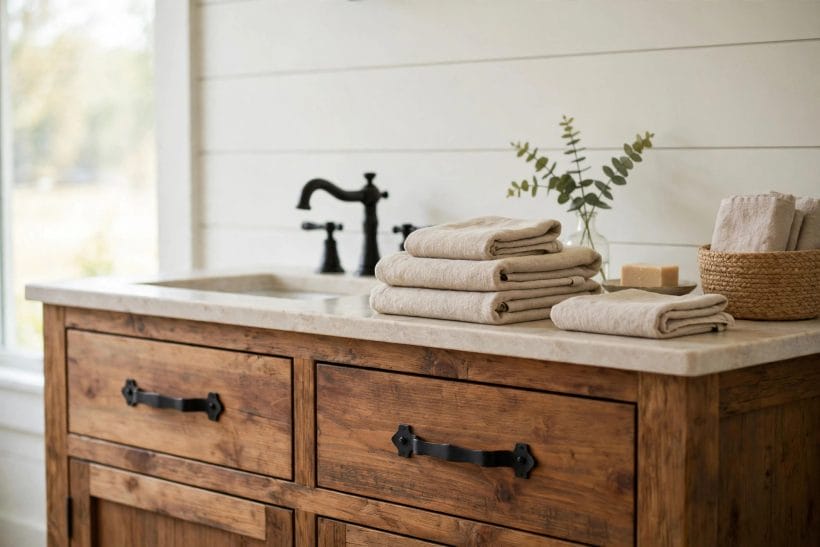
Textiles are what stop this style from feeling like a showroom, because they add softness, wear and a human scale to rooms full of timber and iron. Natural linen and cotton in plain weaves are the core fabrics: sofa covers, cushion covers, curtains, table linen and bedding all read more farmhouse in a matte natural fibre than in anything shiny or heavily patterned. Colour stays muted, with soft white, oatmeal, stone and faded blue or green doing most of the work, and pattern, when it appears, tends toward simple stripes, checks or small botanical prints rather than bold geometrics.
The practical virtue of these fabrics is washability, and it should guide buying as much as looks do. Loose sofa covers that come off and wash will outlast fixed upholstery in a house with children, pets or a muddy back door, and cotton cushion covers are far easier to live with than dry-clean-only fabrics in a room that is actually used. Bedding follows the same logic: layered white and natural linen, a woven throw at the foot of the bed, and cushions kept to a number that can be moved without a production each night. Readers shaping a restful bedroom around these fabrics may also like the tiny house bedroom ideas survey, which treats small sleeping rooms on their own terms.
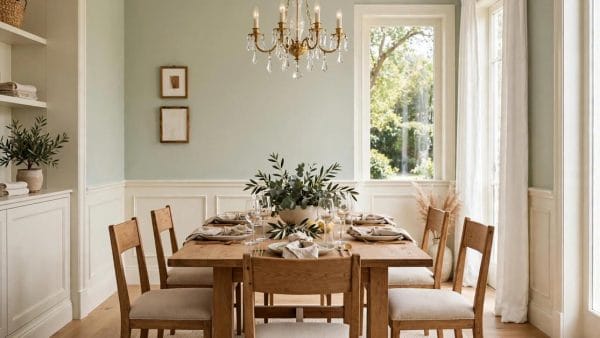
Living rooms and dining rooms ask slightly different things of textiles, and the distinction is worth keeping. A living room can carry deeper cushions, a generous throw and a rug underfoot that softens timber floors, and the farmhouse living room ideas survey shows how those layers sit in a full room. A dining room needs textiles that survive food and drink, so washable table linen, chair pads that wipe clean, and a rug that can be lifted and beaten will serve better than anything precious. The tiny dining room ideas survey is useful where the table sits in a small footprint. In both rooms, the rule is the same: textiles should invite use, not guard against it.
10. Layouts, Costs and Practical Details
Laying out these elements is a matter of giving each one room to breathe. A feature wall of shiplap, a barn door on its rail, a row of pendants over a table and a timber bench in a hallway each need clear space around them, and crowding them together in one corner will make the room feel like a shop display rather than a home. It helps to sketch the room on paper first, marking where each strong element will sit, and to check that no wall carries two loud details at once. The tiny living room ideas survey is a good check for smaller rooms, where one strong element per wall is often the right limit.
Costs in this style are driven by a handful of general factors rather than by any single price tag. The area covered matters first: a single feature wall asks far less than a whole room of boarding, and a single barn door far less than replacing every door in the house. Material grade matters next, since solid timber, well-finished ironwork and natural linen all sit above their lookalike versions in effort and expense, while painted boards and simple fittings keep the same look within easier reach. The condition of the existing walls and openings matters too, because straightening a wonky wall or rebuilding a door frame adds labour before any visible element appears.
Labour and finish level complete the picture. Work that a confident homeowner can do at weekends, such as painting boards or fitting simple shelves, sits at one end of the scale, while work that needs a joiner, an electrician or a plasterer, such as fitting beams, moving a door opening or rewiring pendants, sits at the other. Finish level pushes costs in the same direction: a hand-painted, sealed and carefully detailed result takes longer than a quick coat, but it also lasts longer and looks better for it. Phasing the work helps: start with paint and textiles, add wall treatment and lighting next, and leave structural pieces such as beams and door openings until the look of the room is already proven by the simpler layers.
Practical details at the end of a project are where good rooms separate from disappointing ones. Check that barn door rails are fixed into solid structure, that black taps are wiped after use, that linen covers are washed before they stain permanently, and that spare paint and finish are kept for touch-ups. Keep the palette samples from the project together, so a later repair or a new piece of furniture can be matched without guesswork. A room built this way will not date quickly, because it was never built on novelty: it was built on white walls, honest timber, quiet black lines and fabrics that invite sitting down.
Final Considerations
The elements in this post work as a kit of parts, and the best way to use them is to choose slowly. Pick the palette first and hold it steady, then choose one strong element per room — a shiplap wall, a barn door, a run of pendants, a timber bench — and let the quieter pieces gather around it. Rooms that follow that order feel calm and collected rather than decorated, and they leave room for the house to change over time without a full refit. The home design ideas survey is a useful place to compare this kit of parts with other styles before committing.
For the wider picture, return to the general survey of this style, which sets these elements inside the whole house, from the porch to the back bedroom. This post has deliberately stayed with the elements alone, so the two pieces sit side by side without repeating each other: one for the house as a whole, one for the details that make it. Start with the detail you will touch every day, get that one right, and let the rest of the style follow from it.


0 Comments