
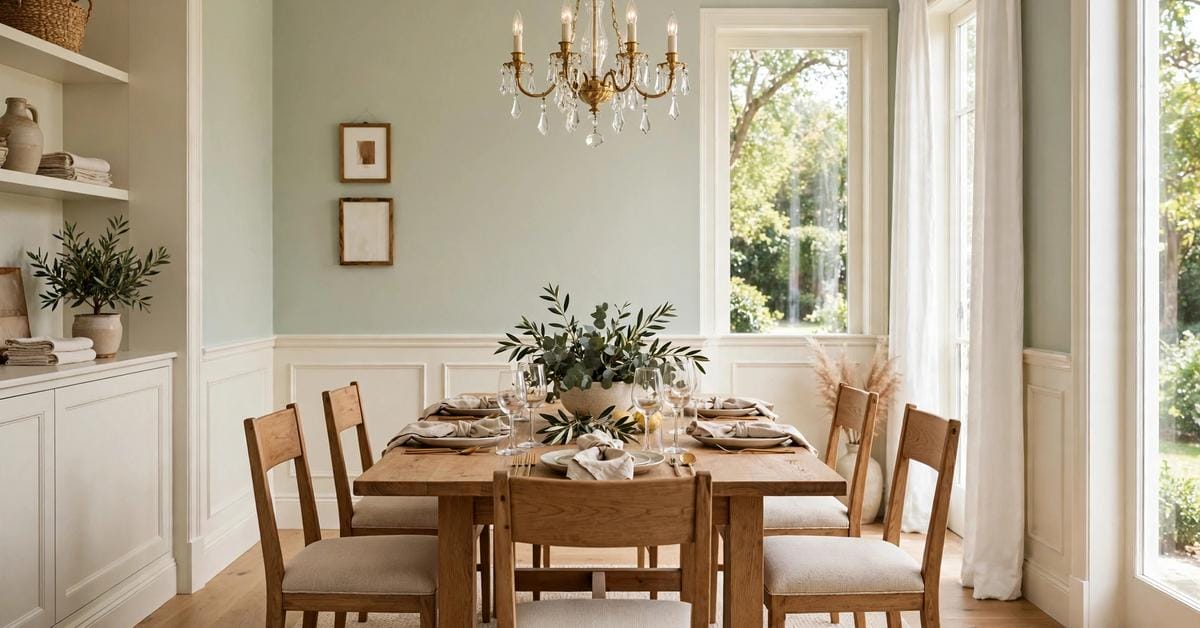
A chair rail is one of the quietest pieces of joinery in a house, and that is why it works so well. It is a horizontal strip of molding that runs around a room, dividing the wall into a lower part and an upper part, and in doing so it changes how the whole room reads. The wall gains a sense of order, the lower portion gains protection and structure, and the upper portion gains a frame that makes colour and artwork sit more calmly. Nothing about it shouts, yet a room without it can feel oddly unfinished beside a room that has it.
This post is about chair rail molding in general: the profiles available, the rooms where it earns its place, the colour combinations that suit it, how it relates to the panel work below it, and what drives its cost and care. It is not a fitting manual, and it does not teach installation. Where fitting is mentioned, it is in general terms only, with complex or awkward work framed as a job for a skilled carpenter. It is also a general post, not a room-specific guide, so no single room type is given special rules here.
1. Chair Rail Molding at a Glance
Before choosing a profile or a colour, it helps to see the whole subject in miniature. A chair rail is defined less by any single shape than by its position and its job: a continuous horizontal molding at a comfortable viewing height, strong enough to read as a deliberate division of the wall, slim enough not to dominate the room. Around that simple idea, a wide range of profiles, finishes and room treatments has grown up, from plain modern strips to richly shaped traditional moldings.
| Element | What it looks like | What to watch |
|---|---|---|
| Profile | Plain, shaped or layered strips | A shape that suits the room's style |
| Position | A level line around the room | A line that stays calm and continuous |
| Lower wall | Paint, panels or paper below | A finish that relates to the rail |
| Upper wall | Paint or paper above | Colour that sits well with the rail |
| Finish | Painted, stained or natural | A finish that suits the rest of the trim |
| Care | Wiping and occasional repainting | Scuffs at the rail line itself |

The table above is the post in miniature. If a rail has a profile that suits its room, a level and continuous line, a lower wall that relates to it, and a finish that matches the rest of the woodwork, it will usually look right, whatever the style of the house. The sections below unpack each of those points in turn, beginning with what a chair rail actually does in a room, because its name gives only part of the story.
2. What a Chair Rail Actually Does
The name comes from an old practical purpose: a rail fixed to the wall at about the height where the back of a chair might strike it, so that the wall itself was protected from scuffs and dents. That purpose is still real in dining rooms and other rooms where chairs are pulled in and out, and it remains one of the best reasons to fit a rail. But protection is only the beginning of what a rail does, and in many rooms it is not even the main reason it is chosen.
Visually, a rail gives a wall a horizon. A tall, plain wall can feel like a large blank surface, and colour applied to it can feel unanchored. A rail breaks that surface into two related parts, and each part can then be treated with more confidence. The lower part can carry a deeper colour, a panelled treatment, or a tougher finish, while the upper part can stay lighter and calmer. The rail itself, usually painted to match the surrounding woodwork, acts as the hinge between the two.
A rail also gives a room a sense of scale. In a room with generous ceiling height, it can bring the eye down to a comfortable level and make the space feel more intimate. In a smaller room, a slim rail in a quiet colour can add structure without crowding the walls. The effect depends on the profile chosen and on how boldly the two wall sections are contrasted, which is why colour and profile decisions are best made together rather than one after the other.
There is a practical benefit too, beyond chair protection. The lower wall is the part of a room that takes the most wear: passing feet, bags set down, pets, children, and everyday knocks all happen near the floor. A rail, especially where it caps panel work below, turns that vulnerable zone into something designed to be looked at and touched, rather than a plain surface that shows every mark. It does not make a wall indestructible, but it does give the hardworking part of the wall a proper finish.
For the wider family of wall trim, of which the chair rail is only one member, trim molding ideas sets out the full range, from crown moldings at the ceiling to baseboards at the floor, and shows where a chair rail sits within that family. That broader view is useful before settling on a single rail, because a rail that matches the rest of the trim will always look more settled than one chosen in isolation.
3. Profiles and Shapes to Choose From
Chair rail profiles range from the very plain to the richly shaped, and the choice is largely a matter of the room’s character. A plain, flat-topped strip with a softly rounded edge suits modern and pared-back rooms, where the rail is meant to read as a clean line rather than a decoration in its own right. It is quiet, it is easy to paint, and it does not compete with artwork or furniture. In a room that is already busy, plain is often the wiser choice.
At the other end of the range are shaped profiles with curves, steps and beads worked into their face. These suit traditional rooms, rooms with existing ornate trim, and rooms where the woodwork is meant to be enjoyed for itself. A shaped profile catches light and shadow along its length, which gives the wall more life, but it also asks for a room that can carry that amount of detail. In a very plain room, a heavily shaped rail can look like it wandered in from another house.
Between those poles sit many middle options: a strip with a single bead, a gentle curve, or a stepped edge that gives a little shadow without a great deal of fuss. These are often the most versatile choices, because they read as considered without reading as grand. They also tend to sit well beside both plain and shaped neighbours, which matters where a rail meets door casings, window trim, or other moldings that already have their own profiles.
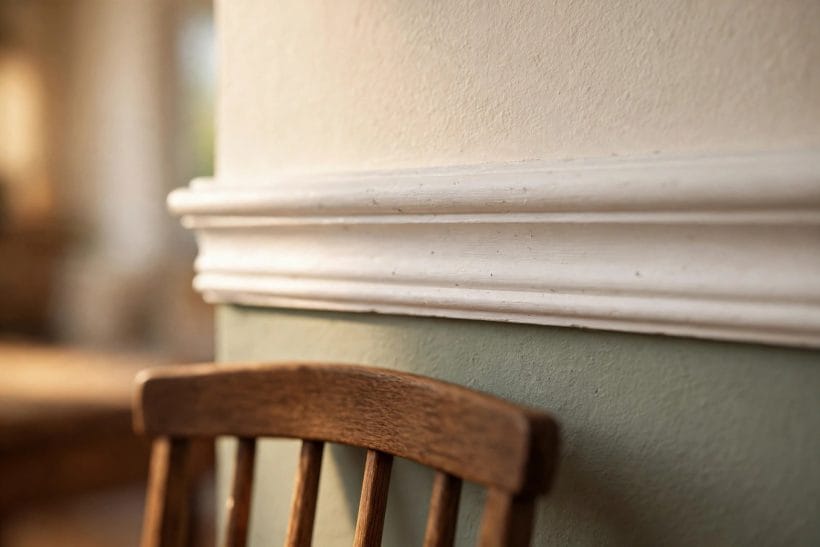
Layered rails are a further option, where a slimmer strip is fixed above or below a broader one to build up a deeper, more architectural line. Layering can be beautiful in rooms with generous proportions and traditional trim, but it adds visual weight, and it asks for careful handling at corners and joins. Where a room is small or its trim is already slim, a single well-chosen profile will usually serve better than a built-up one.
Material matters as well as shape, though in general terms rather than in fine detail. Painted wood and painted composite moldings are the common choices, because they take paint evenly and match painted woodwork elsewhere in the house. Stained timber rails suit rooms where the wood itself is part of the decoration, and they ask for a stain that relates to doors, floors or furniture rather than competing with them. Whatever the material, the rail should be finished to the same standard as the rest of the trim, since a rail at eye level is not a place where a rough finish goes unnoticed.
One more consideration is how the profile meets the rest of the room. A rail that is bolder than the baseboards below it can look top-heavy, while a rail that is far slimmer than the door casings beside it can look lost. The happiest results come when the whole set of moldings in a room feels like one family: not identical, but related in weight and in finish. That sense of family is what makes a room feel designed rather than assembled.
4. Chair Rails in Dining Rooms
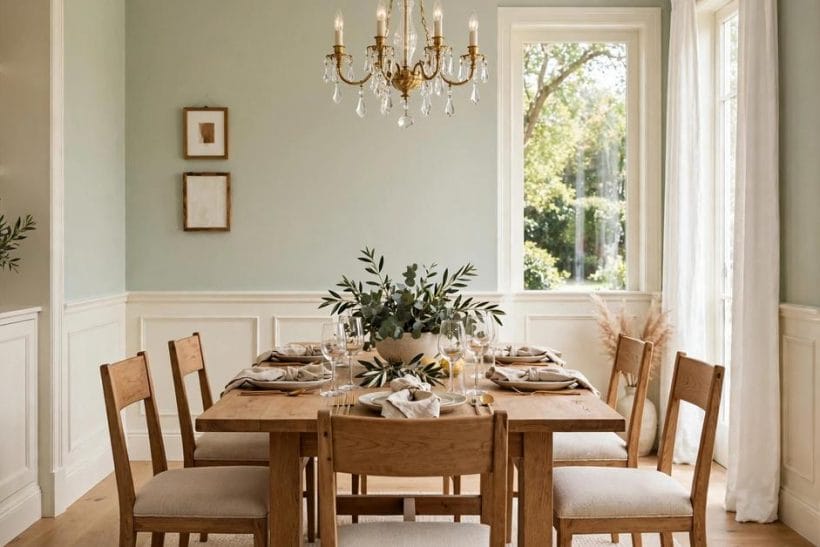
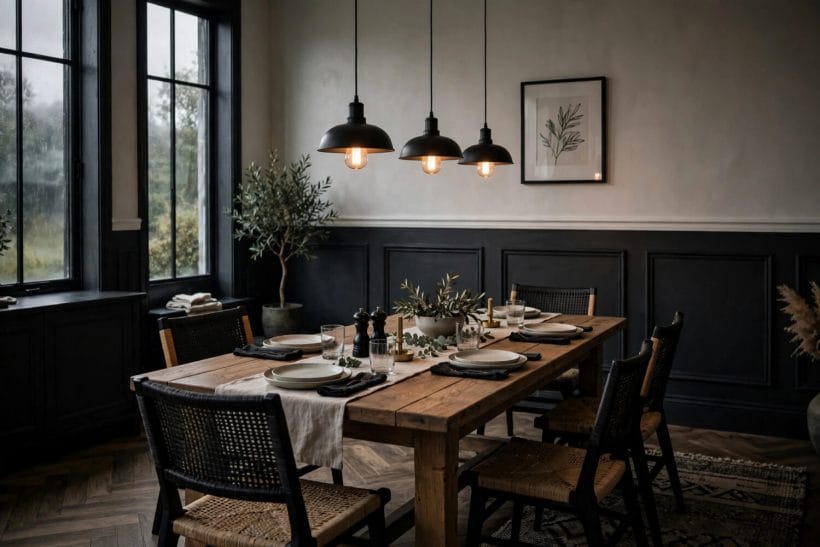
The dining room is the chair rail’s natural home, and it is where the original protective purpose is most obvious. Chairs are pulled out, pushed back, and shifted around a table, and the wall behind them takes the consequences. A rail at chair-back level turns that contact zone into a designed feature, and it gives the room a finished formality that suits shared meals. It is no accident that the feature image for this post is a dining room, with a white rail and panel moulding below sage upper walls: that combination is a classic for a reason.
In a dining room, the lower wall can carry a good deal of the room’s character. Painted panels below the rail give a sense of occasion without needing elaborate decoration, and they provide a calm backdrop for a table, chairs and a sideboard. A deeper colour below the rail can make the room feel warm and enclosed in the evening, while a lighter treatment keeps it bright for daytime use. The rail itself, usually in the same finish as the other woodwork, holds the two parts together.
Colour in a dining room deserves unhurried thought, because the room is used in very different light at different times of day. A combination that looks crisp in daylight may feel cold under evening light, and a combination that glows in the evening may feel heavy at breakfast. Looking at samples in the room itself, in both kinds of light, is worth more than any general advice, and it is a step that should never be skipped for a room where people gather to eat and talk.
Artwork and mirrors sit naturally above a dining room rail, because the rail gives them a lower edge to relate to. A mirror above a sideboard, for example, reads as part of a composed wall rather than an object hung at random, when its lower edge has a rail to answer to. The same is true of a group of framed prints: the rail provides a baseline that keeps the arrangement feeling orderly, even where the frames themselves vary.
For dining rooms more broadly, beyond the rail itself, tiny dining room ideas covers the wider questions of layout and furnishing in compact dining spaces, where a rail has to earn its place without crowding the walls. In a small dining room, a slim rail in a quiet finish is usually the safer choice, and the panel work below it, if any, should be kept simple so that the room does not feel divided into too many small pieces.
5. Living Rooms, Hallways and Entries
In living rooms, a chair rail plays a different role from its dining room one. Chairs are less likely to strike the wall, so the rail is chosen mainly for its visual effect: it gives a large wall structure, it frames a seating arrangement, and it can carry a colour change that would otherwise feel abrupt. A living room rail often works best when it is quiet, a slim profile in the same finish as the baseboards, so that it structures the wall without competing with sofas, artwork and windows.
Living rooms also test a rail’s ability to run around obstacles. A rail may need to pass a fireplace wall, a large window, a bookcase, or a doorway, and each of those interruptions asks for a decision: does the rail stop, turn, or continue in a simplified form? There is no single right answer, and the best answer depends on the room. What matters is that the decisions are consistent around the room, so that the rail reads as one considered line rather than a series of unrelated fragments.
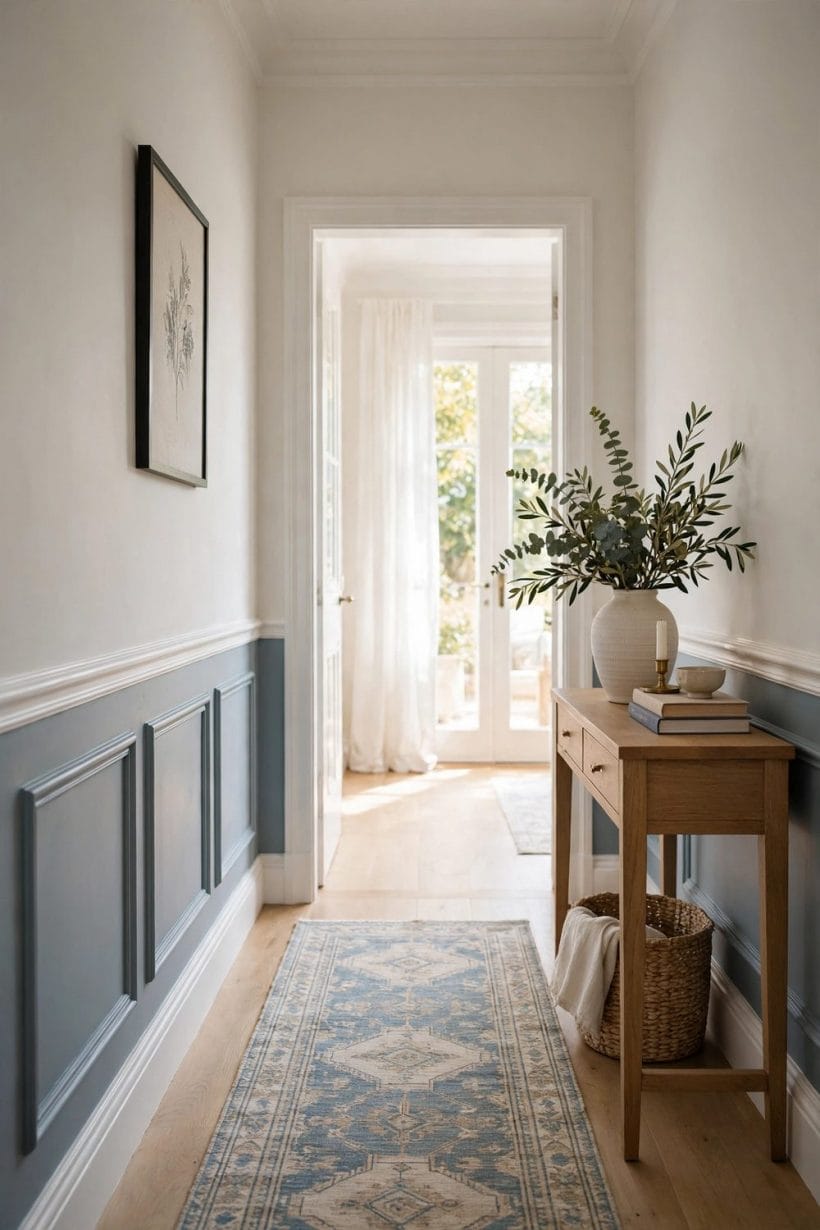
Hallways and entries are strong places for a rail, because they are narrow spaces where the lower wall takes a great deal of wear and where a plain wall can feel like a corridor rather than a room. A rail gives a hallway a sense of being a finished space in its own right, and it provides a natural place for a colour change that can make a long passage feel less tunnel-like. In an entry, a rail also gives coats, bags and everyday traffic a finished backdrop, which is a small dignity that is noticed more than it is remarked upon.
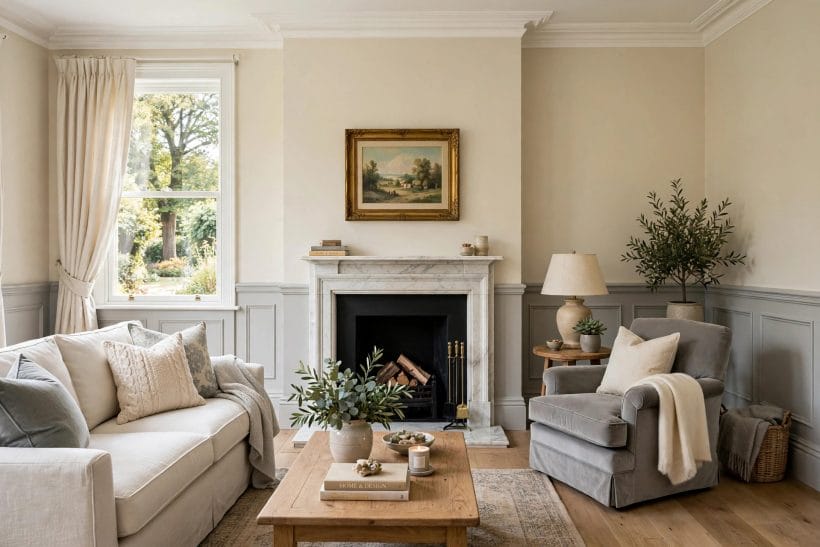
Where a rail runs through several connected spaces, such as an entry opening into a living room, keeping the same profile and finish through both spaces helps the house feel coherent. A change of profile at every doorway can make a home feel piecemeal, while a single rail carried calmly from room to room ties the spaces together. The colour above and below the rail may change from room to room, but the rail itself is best kept as a constant.
For living rooms in general, tiny living room ideas looks at how compact living spaces are composed, and its lessons about keeping wall treatments simple apply directly to rails. A small living room does not need a bold rail to feel finished; often a slim rail, well painted and well placed, does more than a grand one that overwhelms the wall it was meant to improve.
Small rooms of every kind raise the same question in a sharper form, and small living room ideas is a useful companion here, because it shows how wall divisions, colour and furniture work together when space is limited. The rail lesson is the same in both places: in a small room, restraint in profile and in contrast usually gives the calmest result.
6. Bedrooms and Smaller Rooms
Bedrooms suit chair rails well, though for different reasons from dining rooms and hallways. A bedroom rail can frame the wall behind a bed, giving the headboard a composed backdrop rather than a blank wall, and it can carry a colour change that makes the room feel restful rather than flat. Because bedrooms are private rooms, they also allow a little more personality in colour: a soft contrast below the rail, a patterned paper above it, or a painted finish that would feel too strong in a hallway can all work in a bedroom.
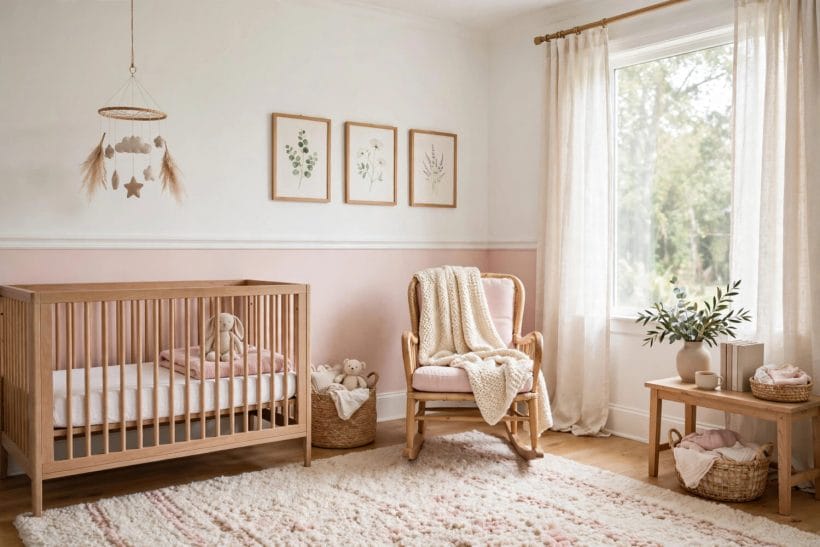
Smaller rooms, such as studies, nurseries in general terms, and spare rooms, also benefit, but they ask for restraint. A small room divided by a bold rail with strongly contrasting colours above and below can feel chopped in half, while the same room with a slim rail and a gentle contrast can feel structured and calm. The smaller the room, the more the rail should whisper rather than speak, and the more the colours above and below it should relate to each other rather than oppose each other.
In a bedroom, the wall behind the bed deserves particular attention, because it is the wall most often seen from the doorway and from the bed itself. A rail that runs across that wall, with the headboard in front of it, needs to sit comfortably with the headboard’s height and shape. A tall, upholstered headboard may hide much of the rail, which is not a fault, but it does mean the rail’s main contribution on that wall is at the sides, where it continues past the bed. Planning the rail with the furniture in mind, rather than as an abstract line, avoids awkward collisions.
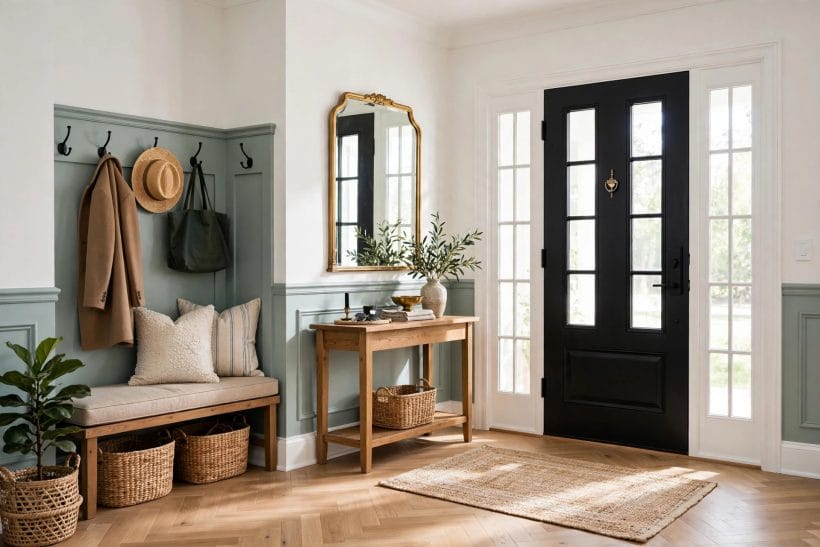
Children’s rooms and guest rooms raise the wear question again, since beds are moved, bags are set down, and walls are touched more than in a formal room. A rail with panel work below it can be a practical choice here, because the lower wall is given a finish that is easier to keep looking well than plain painted plaster. The finish should still be chosen for the room as a whole, not only for its toughness, since a bedroom that feels like a corridor will not be restful however practical it is.
For bedrooms more broadly, tiny bedroom ideas covers compact bedroom layouts, where a rail must share wall space with wardrobes, windows and beds without making the room feel crowded. The lesson there, as here, is to let the rail be one calm element among others, not the loudest voice on the wall.
7. Colour Combinations That Work
Colour is where a chair rail either succeeds quietly or fails loudly, and the decisions are best made with samples in the room itself. The classic combination is a white or off-white rail with a coloured wall, and it remains popular because it is forgiving: the rail reads as woodwork, the wall colour does the talking, and the two do not compete. White rails also have the practical advantage of matching other painted woodwork in most houses, which keeps the whole trim family coherent.
A second classic is the tone-on-tone treatment, where the rail and both wall sections are painted in closely related shades, or the entire wall including the rail is painted in a single colour. This is a calm, modern-looking choice, and it suits rooms where the rail is meant to add texture and shadow rather than contrast. It also suits rooms with strong furniture or artwork, since the walls step back and let those pieces lead. Tone-on-tone does not mean featureless: the rail’s profile still casts a shadow line, and that shadow is often enough to give the wall its structure.
Contrasting colours above and below the rail are the boldest option, and they need the most care. A deep colour below and a light colour above is the traditional pairing, and it works because it echoes the way rooms are naturally read: a darker, weightier lower part and a lighter upper part. The reverse pairing, light below and dark above, can work in rooms with generous light, but it can also feel top-heavy, and it should be tested in the room before it is committed to. Whatever the pairing, the rail colour itself should relate to one side or to the surrounding woodwork, so that it does not become a third, unrelated colour floating across the wall.
Wallpaper adds another layer of choice. Paper above the rail with paint below it is a long-standing combination, and it works because the rail gives the paper a clean lower edge. Paper below the rail is less common and more demanding, since the lower wall takes more wear, but it can suit a formal room where the lower wall is protected by panel work or furniture. In either case, the rail’s colour should be chosen with the paper in mind, not after it, since a rail that clashes with the paper will fight it along the whole length of the wall.
Stained rails ask for a different kind of colour thinking. A timber rail carries its own colour, grain and warmth, and the wall colours around it should let that timber speak without competing with it. Neutral, muted wall colours usually serve stained timber best, while very strong wall colours can make the timber look either lost or brash. Where stained timber is used elsewhere in the room, in doors or furniture, the rail stain should relate to those timbers, so that the room’s wood reads as one family.
For colour more broadly, tiny house interior paint colors covers how paint colours behave in compact interiors, and its advice about testing samples in the room’s own light applies with full force to chair rails. A rail colour that looks perfect on a sample card can look quite different once it runs around a whole room, so testing at scale, on a length of wall, is always worth the time.
8. Panel Work Below the Rail
A chair rail on its own divides a wall, but a chair rail with panel work below it composes a wall. The panels below the rail, formed by applied moldings on the wall surface, give the lower wall a rhythm and a sense of craftsmanship that plain paint cannot match. They are the reason many chair rail rooms look so considered: the rail is not a lone line, but the top edge of a designed lower wall.
Panel shapes vary, and the choice should follow the room. Rectangular panels are the most versatile, suiting rooms of almost any style, while square panels suit rooms where the wall is broken into shorter runs by doors and windows. The panels should be proportioned to the wall they sit on, with margins that feel even rather than cramped, and they should be consistent around the room. A wall where panels change size without reason looks unsettled, while a wall where panels repeat calmly looks designed even before colour is applied.
The relationship between the rail and the panels matters. The rail usually caps the panels, forming their top edge, and the panels’ vertical moldings meet the rail cleanly. Where that meeting is handled well, the lower wall reads as one piece of joinery. Where it is handled carelessly, with gaps or mismatched profiles, the eye catches the fault immediately, because the rail line is at eye level and the panels sit just below it. This is one reason panel work is best treated as skilled work rather than a casual addition.
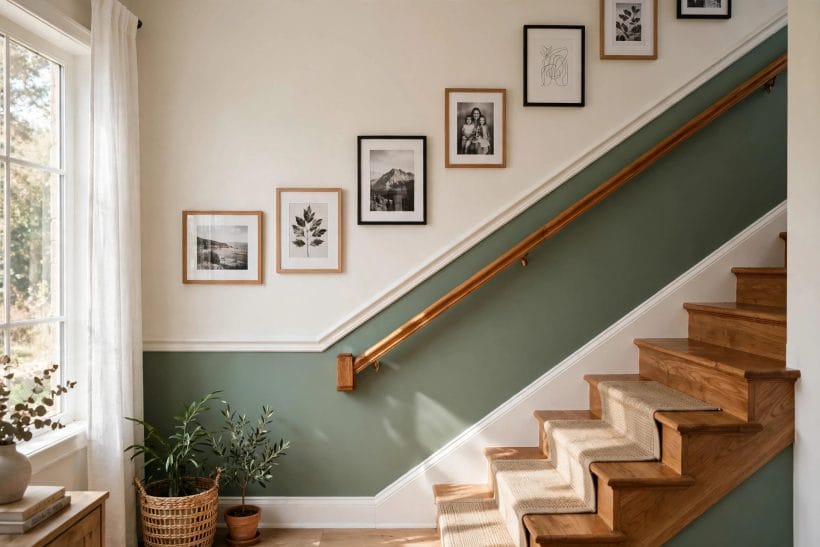
Not every room needs panels below its rail, and some rooms are better without them. A modern room with a plain rail may look cleaner with a plain lower wall, and a small room may feel less crowded without panel moldings dividing its lower walls into further pieces. Panels are an addition to be chosen, not an obligation that comes with the rail, and a room with a good rail and a well-painted lower wall is a complete room in its own right.
Where panels are used, their finish should match the rail. Painted panels in the same finish as the rail give a unified lower wall, while a different finish for panels and rail can look like two unrelated ideas sharing a wall. The same applies to the wall colour inside the panels: it may match the wall above the rail, or it may be a slightly different shade, but it should be chosen as part of one scheme, not as an afterthought once the panels are already fixed.
Crown molding at the ceiling is the natural counterpart to a chair rail at mid-wall, and simple crown molding ideas covers that upper trim in its own right. Thinking about the ceiling trim and the chair rail together, as the top and middle lines of the same room, helps the whole wall composition feel intentional, rather than a rail added to a room that was never designed to receive one.
9. Layouts, Corners and Interruptions
A chair rail layout is decided room by room, and the decisions are mostly about continuity: where the rail runs, where it stops, and how it handles the things that interrupt a wall. The simplest layout is a continuous run around a room with few interruptions, where the rail can be appreciated as a single calm line. Rooms with many doors and windows ask for more judgement, because each opening breaks the line, and the breaks need to feel deliberate.
Doors are the most common interruption. A rail may stop at a door casing, with the casing itself acting as the end of the run, or it may return into the casing in a small, finished detail. Either approach can look well, provided it is used consistently around the room. What looks poor is a rail that simply ends in mid-air, or one that stops at some doors and not at others without a reason. Consistency, again, is the quiet virtue that makes a rail layout succeed.
Windows raise a similar question, and the answer depends on how the window sits in the wall. A window that reaches low may interrupt the rail line, while a window set higher may sit entirely above it, leaving the rail free to run beneath. Where a rail passes below a window, the window’s apron or sill and the rail need to sit comfortably together, without crowding each other. Where the rail is interrupted by a window, the interruption should be handled as cleanly as at a door, with a finished end rather than a raw cut.
Corners are where a rail’s quality shows. An internal corner, where two walls meet inward, and an external corner, where a wall turns outward, each ask for a neat joint that keeps the profile continuous around the turn. Poorly handled corners are visible from across a room, because the rail line draws the eye along the wall and straight into the corner. Good corners, by contrast, are almost invisible, which is exactly as it should be: the rail should be noticed as a line, not as a series of joints.
Long walls ask for a different kind of care. A rail that runs a long way without interruption can show any unevenness in the wall or any wavering in its line, so the line must be set with care and checked along its whole length. Furniture placement also matters on long walls: a rail that disappears behind a long sideboard for most of its length may be better simplified on that wall, or the furniture may be better placed so that the rail remains visible. A rail that is mostly hidden is not necessarily wasted, since it still shows at the ends, but its contribution should be weighed honestly.
Open-plan spaces raise the continuity question at a larger scale. Where a living space flows into a dining space without a wall between them, a rail may run around the outer walls of both areas, tying them together, or it may be confined to one area, marking that area as distinct. Either choice can work, but the choice should be made for the whole space at once, not room by room in isolation, since an open-plan rail that changes its mind halfway around the room will look indecisive.
10. Costs, Fitting and Care
Cost is best understood in terms of drivers rather than figures, because the same rail can vary widely in cost depending on circumstances that have nothing to do with the rail itself. The profile chosen is one driver: a plain strip costs less in material and in labour than a richly shaped or layered profile, because it is simpler to make and simpler to fit. The material is another driver, with painted moldings, stained timber, and composite options each carrying their own material and finishing costs.
The extent of the work is a larger driver still. A single small room with few interruptions is a modest job, while a whole floor of rooms, with many doors, windows and corners, is a substantially larger one, because each interruption and each corner asks for time and care. Panel work below the rail adds further cost, since it multiplies the length of molding and the number of joints, and it asks for the same careful finishing as the rail itself. A room with panel work should therefore be budgeted as a different kind of job from a room with a rail alone.
Labour is the remaining major driver, and it varies with the skill the job asks for. Straightforward runs in rooms with square corners are one kind of job; rooms with awkward corners, uneven walls, or many interruptions are another, and they reward an experienced carpenter. It is worth being honest about which kind of room is being worked on, because a rail fitted poorly will be visible every day, while a rail fitted well will be enjoyed without being noticed as work at all. Complex or awkward fitting is best left to a skilled carpenter, and any work that involves altering walls, electrics or structure belongs with the appropriate professional.
Care after fitting is modest. A painted rail can be wiped clean with a soft cloth, and scuffs at the rail line, which are inevitable in rooms where chairs move, can be touched up with matching paint. Stained rails can be wiped in the same way, with any deeper marks left to a professional rather than treated with a home remedy that might alter the finish. Repainting the whole rail from time to time, as part of repainting the room, keeps it looking fresh, and it is a good moment to check joints and corners for any movement.
Common mistakes are worth naming, because they are easy to avoid once they are seen. Choosing a profile that fights the room’s other trim is the first, and it is avoided by looking at the whole trim family together. Choosing colours without testing them in the room is the second, and it is avoided by sampling at scale. Running a rail inconsistently around interruptions is the third, and it is avoided by deciding the treatment of doors, windows and corners before work begins. And fitting panel work that is out of proportion to the wall is the fourth, avoided by planning panel sizes on the wall itself before anything is fixed.
Final Considerations
A chair rail succeeds when it is chosen as part of a room, not as an isolated decoration. Its profile should suit the room’s other trim, its colour should be tested in the room’s own light, its line should run consistently around doors, windows and corners, and its lower wall, whether plain or panelled, should be planned as part of the same scheme. When those things are in place, the rail does its work quietly: it protects the wall, it structures the colour, and it gives the room a finished, composed feeling that is hard to achieve with paint alone.
Start with the room rather than the rail. Look at the trim that is already there, at the furniture that will sit against the walls, and at the light the room receives through the day. Choose a profile that belongs with that trim, a colour scheme that has been tested at scale, and a layout that handles every interruption in the same way. If the rail still looks right after those checks, it is likely to look right for years, because a well-chosen rail is not a fashion statement. It is a piece of joinery that makes a room feel properly finished, and that feeling does not date.


0 Comments