
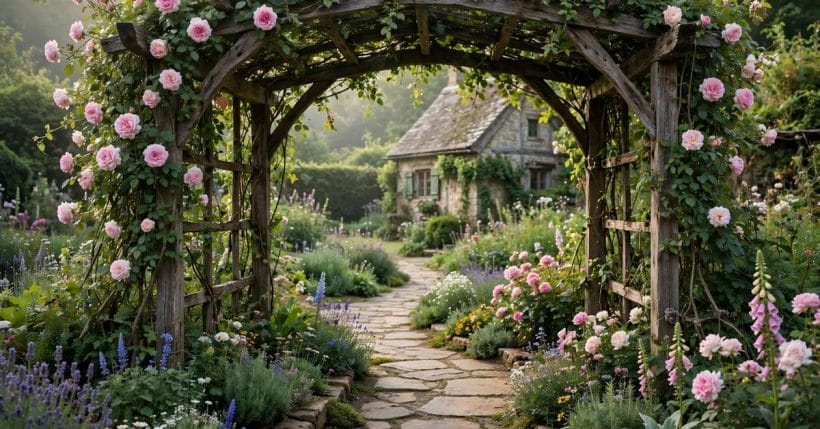
A garden arbor is a small structure with an outsized effect. It is an arch over a path, open at the sides and often softened by climbing plants, and it changes how a garden feels to walk through. Instead of one open space, the garden gains a threshold: a moment of shade, a frame for a view, and a reason to slow down. If you are browsing arbor pictures for inspiration, you will notice how often the same simple ingredients appear — a well-placed arch, a path that invites you through, planting that suits the spot, and beds that tie the whole scene together.
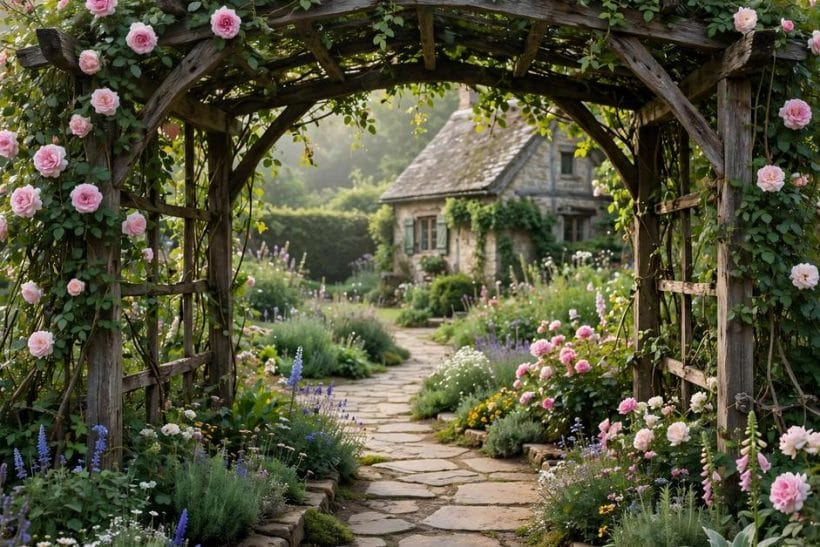
This guide stays with the arbor itself and the planting, paths and beds around it. It looks at where an arbor sits best, what it can be made from, how climbers are chosen and trained, and how the garden around it can be kept looking good through the seasons. Nothing here promises a particular result in any one garden, because soil, light, rainfall and climate all shape what thrives. The aim is to help you make choices that suit your own plot, and to enjoy the slow process of watching an arch fill in over time.
1. Choosing the Right Spot
An arbor works best where a path already wants to go. That might be the turn from a front garden into a back garden, the entrance to a vegetable patch, the step from a lawn into a wooded corner, or the point where a long straight path could use a pause. Placing the arch where people naturally walk means it is used every day rather than admired from a distance. It also means the structure has a job: marking a change from one part of the garden to another.
Light matters as much as position. Most climbing plants that suit an arbor enjoy a good amount of sun during the day, while the gardener walking beneath appreciates a little shade in summer. A spot that catches morning sun and afternoon shade can suit both, though the balance will differ from one garden to the next. Wind is worth noticing too. An open, exposed corner may suit a sturdier arch and tougher climbers, while a sheltered spot may let more tender growth settle in. Spend a few days watching where the sun falls and where the wind runs before fixing the position.
Scale is the other quiet decision. A narrow arch over a narrow path can feel charming, but it should still let a person walk through comfortably, even when plants have grown in from the sides. A very wide arch over a modest path can look out of proportion and lose the sense of enclosure that makes an arbor appealing. As a general guide, let the width of the path lead the choice, and leave room for growth on both sides so the walkway never feels pinched in high summer.
2. Timber, Metal and Painted Arbors
Timber arbors are the most familiar kind, and they suit cottage gardens, country gardens and many small town plots. Wood weathers gently, it can be left natural or painted, and it is easy to fix a trellis panel or a wire to for training climbers. Over time, timber may silver or darken, and that weathered look often suits a planted garden better than a brand-new finish. Regular checks for soft spots, loose joints and wobbly posts help a wooden arch stay sound, and any repairs are usually simple work with ordinary tools.
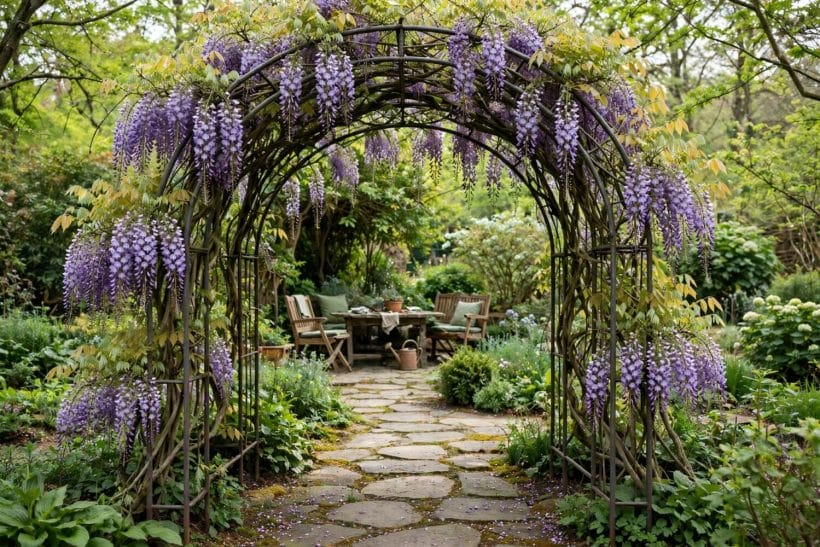
Metal arbors bring a different character. A slim steel or iron arch can look light and elegant, especially where the planting is meant to do most of the talking. Metal frames often last well when their finish is looked after, and they can suit a more formal garden or a modern planting scheme. In a hot, sunny spot, metal can warm up in summer, so it is worth thinking about how much of the frame will be covered by leaves when you choose climbers for it.
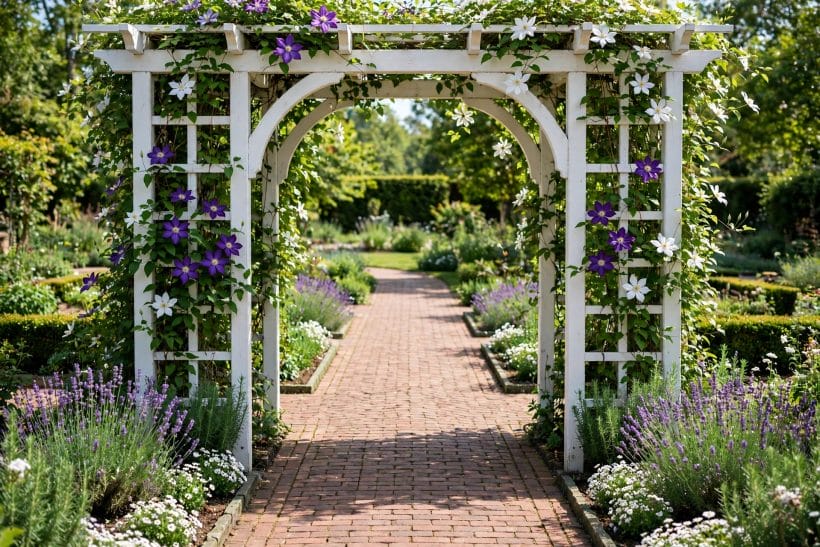
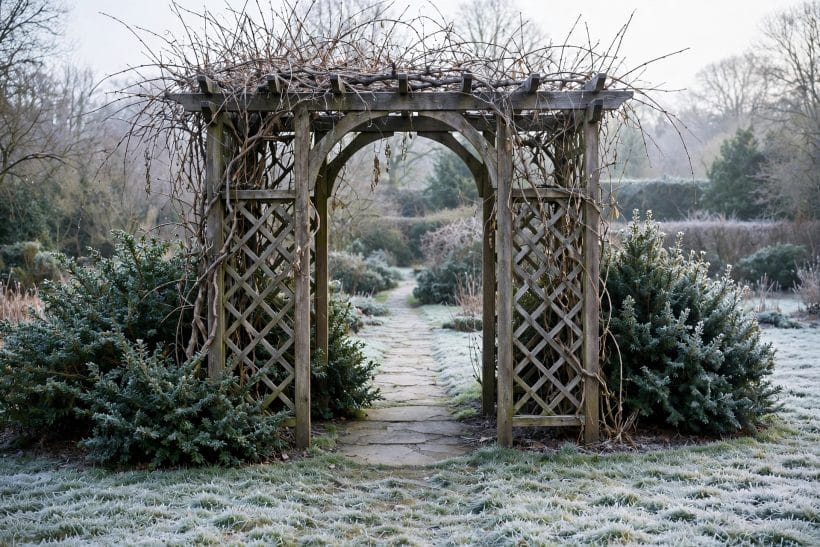
Painted arbors, often in white or a soft colour, stand out against green foliage and can brighten a shady corner. Paint needs refreshing from time to time, and the colour you choose will change how the arch reads in winter when the leaves have gone. A white arch can look crisp against bare branches and evergreen shrubs, while a green or grey arch may blend more quietly into the planting. There is no single right choice here. The best finish is the one that suits your house, your garden and the amount of upkeep you are happy to give.
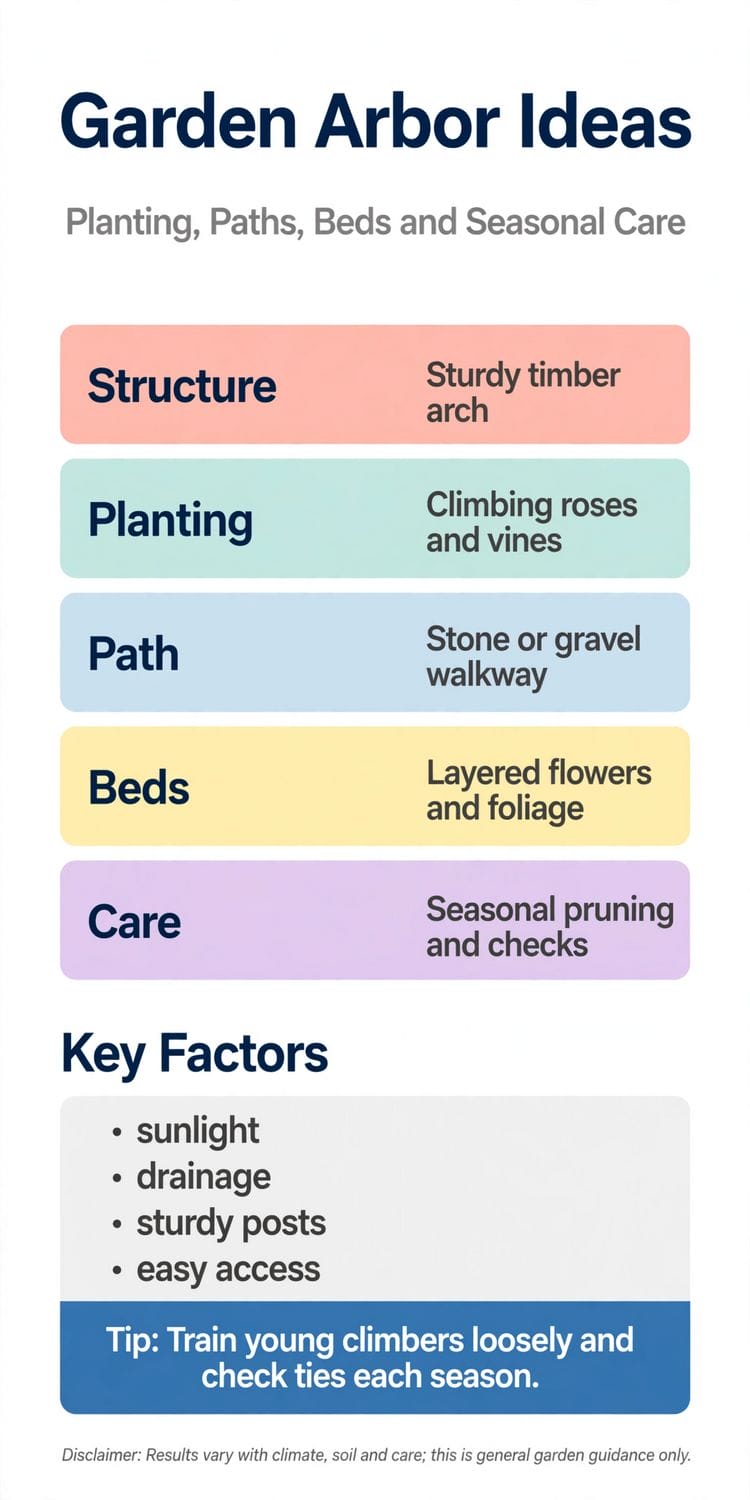
3. Planting Climbers for Soft Cover
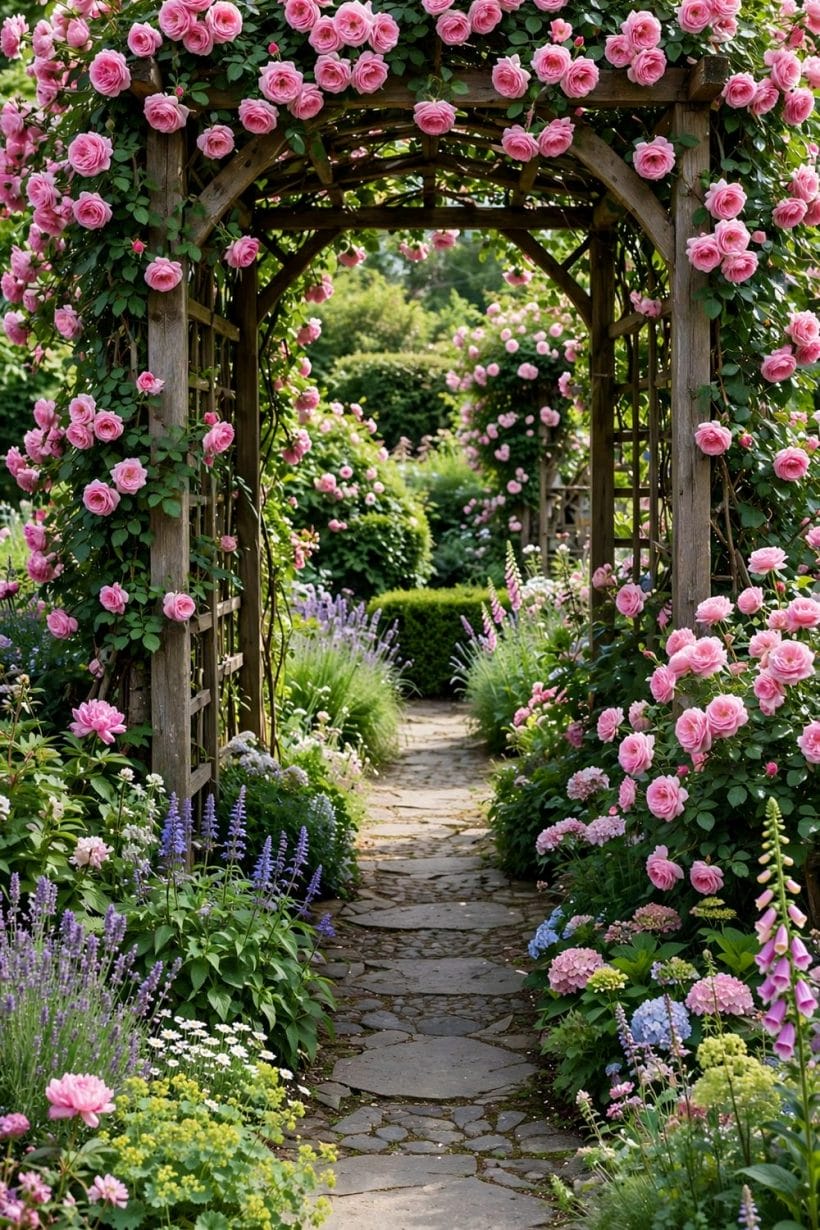
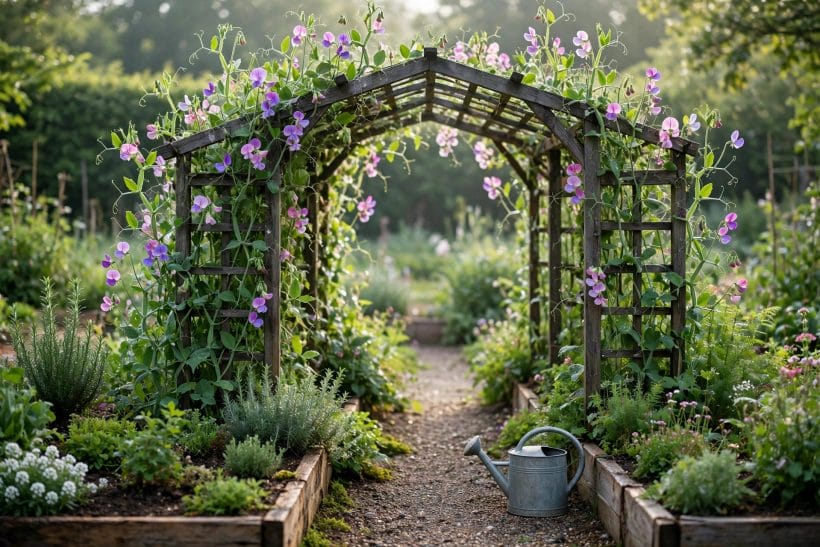
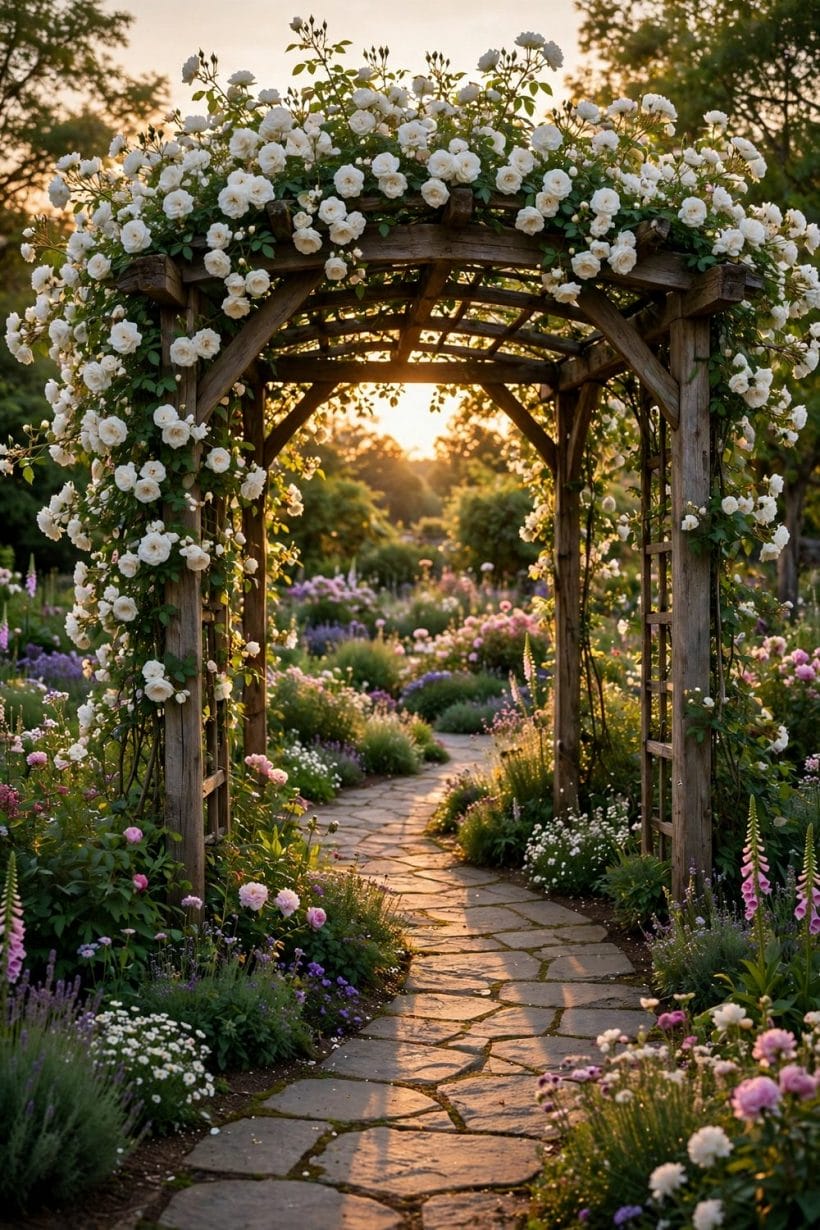
Climbers are what turn a bare arch into a garden arbor. Roses are the classic choice, and for good reason: they flower generously, they scent the air on a warm day, and many varieties are well suited to training over an arch. Clematis is another favourite, with flowers in a wide range of colours and seasons, and it often pairs happily with roses on the same structure. Jasmine, honeysuckle and wisteria each bring their own character, from scent to dramatic hanging flower clusters, and each suits a different kind of garden and climate.
When choosing climbers, it helps to think about more than flowers. Leaf cover through the seasons, the weight of the plant when it is mature, and how much pruning it may need all affect how the arbor looks and how much work it asks for. A vigorous climber may cover an arch quickly but need regular attention to keep the path clear, while a slower grower may take longer to fill in but stay easier to manage. Mixing two climbers with different flowering times can stretch the season of interest, though it is worth checking that their vigour is reasonably matched so one does not overwhelm the other.
Planting position matters for climbers too. Plants set a little way out from the posts, rather than jammed against them, often establish more easily because their roots have room and air can move around the stems. Watering well in the first season, while roots are settling in, is often more important than any later feeding routine. A mulch of compost or bark around the base can help the soil hold moisture, though it should be kept clear of the stems themselves. Patience is part of the bargain: a newly planted arbor can look sparse for a season or two before it begins to fill.
4. Paths That Lead Through the Arch
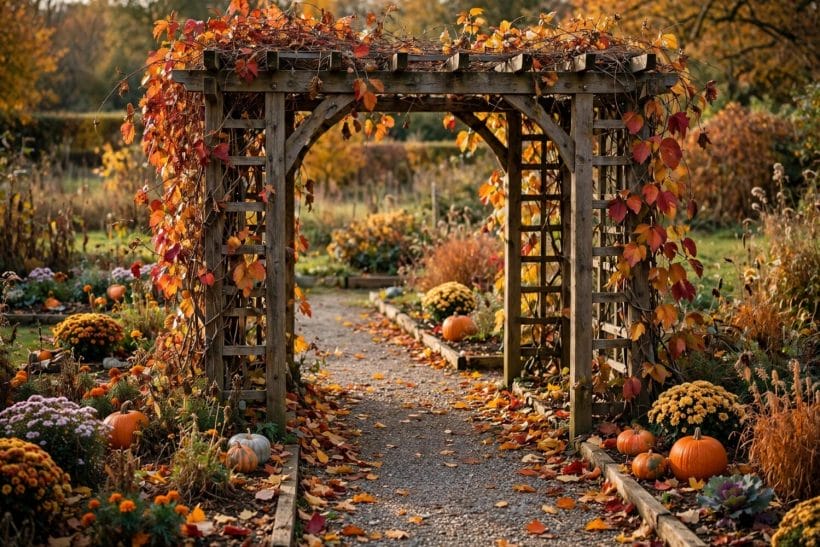
The path beneath an arbor is half the picture. Stone slabs, gravel, brick and bark all suit different gardens, and each changes the feeling of walking through. Stone gives a firm, settled surface that suits a main route through the garden. Gravel crunches gently underfoot and can suit a cottage or country style, though it may need raking back into place from time to time. Brick brings warmth and pattern, while bark suits a woodland corner where a softer, quieter surface feels right.
Whatever surface you choose, the path should feel generous enough for comfortable walking, even when plants spill over the edges in summer. A path that narrows sharply at the arch can feel awkward, while a path that widens slightly as it approaches the arch can make the entrance feel welcoming. Edging, whether stone, timber or simply a neatly cut turf edge, helps keep the surface in place and gives the beds beside it a clean line.
Drainage is worth a thought at the planning stage. A path that holds puddles after rain is less pleasant to use and can make the ground around the arbor posts stay damp. A gentle fall away from the house, or a surface that lets water through, can help rain drain away naturally. This is one of those details that is much easier to get right before the arbor is built than after, so it is worth walking the route after heavy rain and noticing where water gathers.
5. Beds on Both Sides
Beds on either side of an arbor do more than decorate it. They anchor the arch in the garden, soften the base of the posts, and give the eye something to enjoy at ground level while the climbers do their work overhead. Low shrubs, perennials and bulbs can all play a part, and a layered planting — taller plants toward the back, lower ones toward the path — often looks more natural than a single row of one plant.
Colour and scent can be planned to complement the climbers rather than compete with them. If the arch carries pink roses, for example, beds of lavender, soft blue perennials and white flowers may sit happily alongside. If the climbers are strongly scented, beds of foliage plants and grasses may give the nose a rest and the eye a calm backdrop. There is no rule that beds must match the arch exactly. A gentle echo of colour, or a contrast that still feels calm, can both work well.
Keeping beds manageable matters over the long term. Plants that suit your soil and light, and that do not need constant division or staking, will leave more time for enjoying the arbor itself. A mix of evergreen structure and seasonal flowers can help the beds look considered even in winter, when the climbers are bare and the arch itself is on show. For ideas on shaping the wider planting around an arbor, a look at natural garden style may help you think about looser, more relaxed planting that still feels intentional.
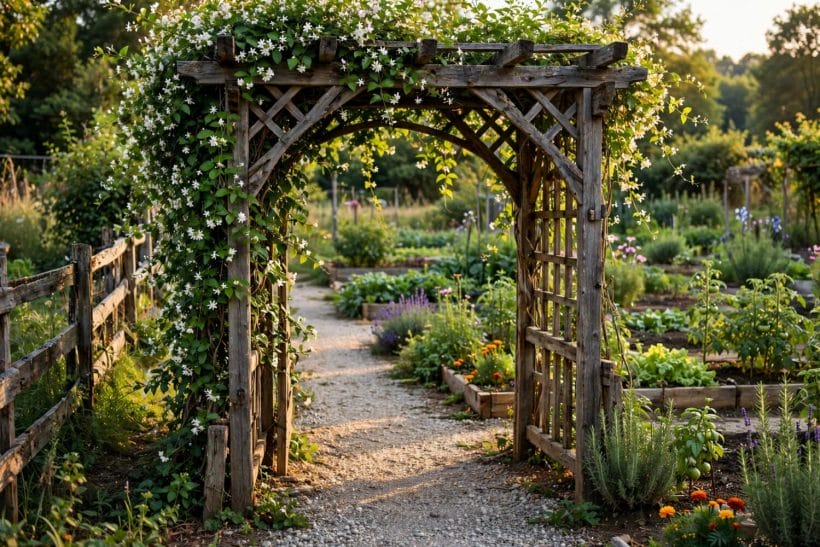
6. Shaping the View Beyond the Arbor
One of the quiet pleasures of an arbor is the view it frames. Standing on one side, you look through the arch to whatever lies beyond: a lawn, a seating area, a pond, a favourite tree, or simply a bend in the path. Thinking about that framed view when you place the arch can turn an ordinary walk into a small moment of delight. Even a modest garden can gain from this, because the arch narrows the view and gives it a sense of purpose.
The view does not need to be grand. A single shapely shrub, a bird bath, a bench in dappled shade, or a patch of late-afternoon light on a lawn can all reward a second look through an arch. What matters is that something draws the eye onward, so the arbor feels like a doorway rather than a decoration standing alone. If the view beyond is less appealing, planting or a simple screen of shrubs beyond the arch can gently redirect attention.
Height plays a part here too. A taller arch frames a wider sweep of garden, while a lower arch gives a more intimate, enclosed feeling. The right height often depends on the garden around it and on the people who will walk beneath it. As with width, leaving room for climbers to grow in from above, without brushing the heads of passers-by, keeps the walk comfortable through the growing season.
7. Shade, Shelter and Seating Nearby
An arbor often becomes a favourite pause in the garden, especially when a seat sits nearby. A simple bench just beyond the arch, or a small seating nook to one side, invites people to linger rather than hurry through. In summer, the shade of the climbers can make that seat one of the coolest spots in the garden. In spring and autumn, a sunny seat near the arch can catch the gentler light of the day.
Seating does not need to be elaborate. A wooden bench, a pair of chairs, or even a flat-topped stone can all serve, as long as the spot feels settled and the ground beneath is firm. Placing the seat where it looks back through the arch, or out over a favourite part of the garden, can make it feel considered rather than incidental. A small table nearby is handy for a drink or a book, though it is worth keeping the area around the path clear so the walkway stays easy to use.
Shelter from wind can make a seating spot usable on more days of the year. A hedge, a group of shrubs, or the lee of a wall can all soften a breeze without closing the garden in. This is another place where the wider garden shapes the arbor experience: a sheltered arch with a seat nearby may become a daily habit, while an exposed arch on a windy corner may be admired in passing rather than sat beneath. For a companion structure in a garden walk, a garden bridge can offer a similar sense of pause and passage over water or a low-lying part of the garden.
8. Seasonal Care Through the Year
An arbor garden changes with the seasons, and part of its charm is watching that change. In spring, new growth appears on the climbers, bulbs in the beds begin to show, and the arch starts to green up. This is a good time to check ties, clear winter debris from the path, and refresh mulch around the beds. It is also a good time to notice which plants have come through winter well and which may need a little extra attention.
Summer is the season of full cover, when the arbor is at its leafiest and most fragrant. Paths may need a sweep, climbers may need gentle guidance back over the arch rather than across the walkway, and beds may need watering in dry spells. The aim in summer is usually light-touch care: keeping the walkway clear, enjoying the shade, and letting the planting do most of the work. Over-tidying in high summer can remove flowers and buds that are part of the display.
Autumn brings colour to many climbers, and it is a natural time for a more thorough tidy. Fallen leaves can be cleared from the path and added to a compost heap, beds can be cut back where plants have finished, and the structure itself can be checked before winter. Winter, in turn, shows the bones of the garden: the arch itself, the evergreen planting, and the shape of the beds. A well-placed arbor can look beautiful in winter too, especially with frost on its frame or evergreen climbers giving it year-round cover.
9. Pruning, Ties and Gentle Training
Training a climber over an arbor is a slow, satisfying job. Young stems are usually guided loosely along the frame and tied in with soft ties that will not cut into growing bark. As the plant grows, new shoots are woven or tied in the direction you want cover, and any stems that wander across the path are gently redirected. The goal is an even cover that leaves the walkway clear and the arch well balanced, rather than a heavy mass on one side.
Pruning needs vary a great deal between climbers, and it is worth checking the habits of the particular plants you have chosen. Some climbers flower on new growth and are pruned in late winter or early spring, while others flower on older wood and are better left until after flowering. A general habit of removing dead, damaged or crossing stems, and of keeping the path clear, will serve most arbors well. If you are unsure about a particular plant, local garden advice or a reputable gardening reference can help you time pruning to suit it.
Ties deserve a regular check, especially on fast-growing climbers. A tie that was loose in spring may become tight by autumn as stems thicken, and a tight tie can damage bark over time. Replacing worn ties and loosening any that have become snug is a small job that helps the plant stay healthy. It is also a chance to step back and look at the arch as a whole, noticing where cover is thin and where a stem could be guided to fill a gap. The shape of the ground around an arbor can add to this picture too: a raised garden bank nearby, for example, can give height and structure to planting that sits beside a level path.
10. Lighting and Evening Enjoyment
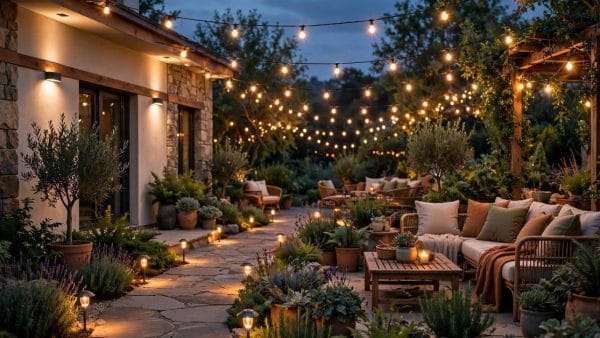
An arbor does not have to close at dusk. A little lighting can turn it into an evening feature, whether that means soft lights along the path, a lantern hung from the arch, or gentle uplighting on the planting nearby. The aim is usually a warm, low glow rather than bright light, so the garden still feels like a garden after dark and neighbours are not dazzled. Solar lights along a path can be a simple starting point, though their brightness will vary with the season and the amount of daylight they receive.
Lighting also changes how the arbor is seen from indoors. A softly lit arch glimpsed through a window on a summer evening can be a pleasure in itself, and it can make the garden feel larger and more inviting after dark. Festoon lights or fairy lights woven carefully through the frame can suit a celebration or a summer gathering, though they are best kept loose and easy to remove so they do not strangle growing stems. For a fuller look at garden lighting, outdoor lighting ideas cover paths, walls, patios and planting in more detail.
Safety is part of evening enjoyment too. A well-lit path through an arbor is easier and more pleasant to use than a dark one, especially where steps or uneven surfaces are nearby. Any mains-powered lighting is work for a qualified electrician, and cables should be kept clear of the walkway. With those basics in place, an arbor can be a place for a quiet evening walk, a drink on a nearby bench, or simply a view from the house as the light fades.
Final Considerations
A garden arbor rewards patience more than perfection. The first year may look sparse, the second year fuller, and by the third year the arch may be carrying the kind of cover that first caught your eye in the arbor pictures that inspired you. That slow filling-in is part of the pleasure, and it leaves room to adjust planting, paths and beds as you learn what suits your garden.
It also helps to keep the arbor in proportion to the rest of the garden. A single well-placed arch often does more than several arches competing for attention, and a simple planting scheme often looks calmer than a crowded one. If your garden already has other garden structures, think about how the arbor sits alongside them: a hidden garden wall can shape a boundary without blocking a view, and warm timber elsewhere in the garden, such as a cedar fence, can echo the material of a wooden arch without taking attention from it.
Finally, remember that an arbor is a garden feature to be used, not only looked at. Walk through it in different seasons, sit nearby when you can, and notice how the light, scent and planting change. The best arbors are the ones that become part of daily life: a threshold on the way to the vegetable patch, a shady pause on a summer walk, or a frame for a view you never tire of. Built with care, planted thoughtfully and tended gently through the year, a garden arbor can give a garden structure, scent and a sense of arrival for many seasons to come.

0 Comments