

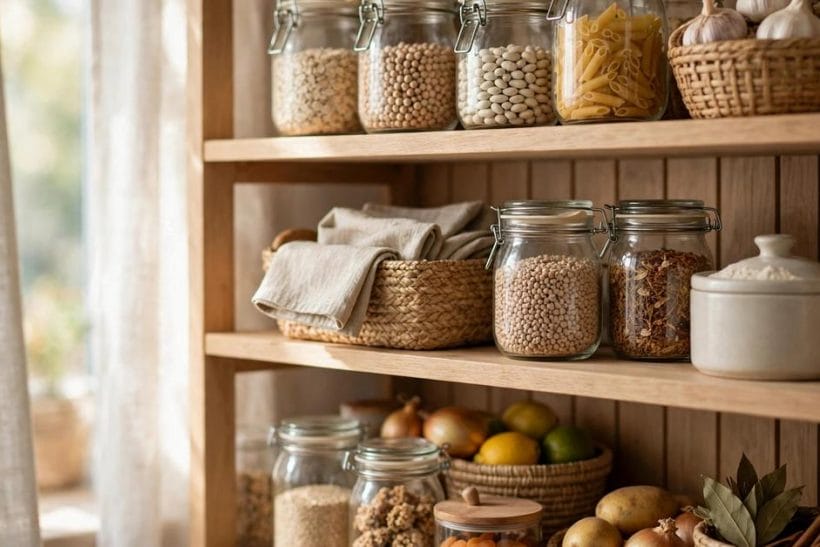
A pantry that works quietly is easy to overlook until something stops working: a jar that will not fit beneath the shelf above it, a board that bows under everyday weight, a tin that hides at the back for months and is found only when it is past its best.
This guide gathers the checks that matter before changing pantry shelves, so the finished storage fits the food you actually keep, the room you actually have, and the way your household cooks from day to day. Nothing here recommends a product or a maker; the checks apply to any shelf in any kitchen, and they deserve a run-through before any fitting is ordered or any wall is touched.
Start with what you store, then look at the space, then think about reach, air, light and upkeep. A shelf that passes every check below will feel calm to use, while a shelf that fails even one of them will quietly annoy its household for years.
1. Measure the Space and the Tallest Items
Every good pantry plan begins with honest measurements of the space itself: the full height, width and depth of the cupboard or alcove, the swing of any door, and the position of pipes, sockets and vents that cannot move. Measure more than once, and measure with the doors closed as well as open, because a shelf that fits a bare opening may still foul a door frame, a hinge or a handle when the room is in daily use.
Then measure what you store, starting with the tallest items in the household: bottles, cereal boxes, oil containers and any tall jars that must stand upright. A shelf gap that suits most containers but not the tallest ones forces an awkward compromise, with tall items banished to a worktop or laid on their sides where they leak, spill or disappear from view. Leave comfortable lifting room above every tall item, so it can be taken out and put back without tilting, dragging or removing the shelf above.
Depth matters as much as height. A very deep shelf holds a great deal, but the rows at the back become hard to see and harder still to reach, so food drifts out of sight and out of rotation. These small kitchen ideas show how shallow, well-planned storage can keep a compact kitchen calm, and the same thinking applies inside a pantry: depth should serve the household, not swallow its supplies.
2. Check What the Shelves Must Carry
Shelves fail most often because nobody asked, before fitting, what weight they would carry every single day. Jars of preserves, tins, bags of flour and bottles of oil are heavy in combination, and a board that looks sturdy when empty can bow, creak or pull away from its supports once it is loaded for real. Think in terms of the heaviest shelf in the pantry, not the average one, because the heaviest shelf is where any weakness will show first.
Place the heaviest items low, where they are easiest to lift safely and where their weight presses down through the strongest part of the structure. Keep lighter goods higher, and avoid loading any high shelf with dense jars that must be lifted down at arm’s length. If a shelf already sags, creaks or feels springy under its normal load, treat that as a warning rather than a quirk: the supports, the board or the fixing may all need attention from someone qualified to judge them.
Grouping helps as well as strength. Keep baking goods together, breakfast goods together, and cooking staples together, so each shelf has a clear job and nothing heavy ends up stored high simply because a gap was free. These storage ideas for small homes show how grouping by use keeps even a modest store easy to navigate, and a pantry planned the same way stays orderly without constant tidying.
3. Put Daily Items Within Easy Reach
A pantry serves the household best when the items used every day sit where hands fall naturally: at comfortable standing height, without stretching, crouching or climbing. Tea, coffee, breakfast goods and everyday cooking staples belong in this easy zone, while rarely used items, seasonal goods and bulk reserves can live higher or lower, where reaching them is an occasional effort rather than a daily strain.
Think about who uses the pantry, not just about the person planning it. Children reaching for snacks, older relatives cooking a familiar meal, and guests helping in the kitchen all benefit when everyday items sit at a natural height and heavy items never demand a stretch. A shelf that only suits one person will frustrate everyone else, so plan reach for the whole household and for the way it genuinely cooks, including early mornings and tired evenings when patience is short.
Reach also shapes the rooms around the kitchen. When pantry goods are easy to find and put away, cooking stays relaxed and the adjoining rooms stay free of overflow, because nothing needs to live on a worktop or a hallway table for want of a proper home. These small living room ideas show how calm adjoining spaces support a calm kitchen, and a pantry planned for easy reach is part of that same household rhythm.
4. Make the Back of Every Shelf Reachable
The back of a shelf is where pantries quietly fail. Items pushed to the rear slip out of sight, duplicates get bought, and food lingers until it is no longer good to use. Before choosing any shelf form, ask how the back of each shelf will be reached, seen and kept in rotation, because a shelf whose rear cannot be used is a shelf that wastes a large part of its own capacity.
Pull-out trays, sliding baskets and full-extension drawers answer this question well in many kitchens, since they bring the rear of the shelf out into the light where it can be seen and used. Open shelving answers it differently, by keeping everything visible at a glance, provided the shelves stay shallow enough that nothing hides behind a front row. Either approach can work; what matters is that the household can honestly reach and see the back without moving a crowd of other items out of the way first.
Rotation deserves a place in the plan as well. Store newer items behind older ones only where the rear stays genuinely reachable, and keep a simple habit of checking the back rows when shopping lists are written. A pantry that makes rotation easy wastes less food, needs fewer duplicate purchases, and feels smaller than its size suggests, because every item in it earns its place.
5. Choose Materials That Suit a Kitchen
Pantry materials live in a kitchen climate: steam, spills, warmth, crumbs and the occasional splash of oil or sauce. A shelf surface should wipe clean without fuss, resist staining from everyday spills, and keep its finish after repeated cleaning with ordinary household care. Rough, unfinished surfaces trap dust and crumbs, while smooth, sealed surfaces stay hygienic with far less effort, which matters in a space that holds food.
Moisture deserves particular attention near sinks, kettles and exterior walls, where damp air can linger. Boards that swell, warp or soften in damp conditions will not hold their shape, and metal fittings that rust will stain everything they touch. Ask how each material behaves in a warm, sometimes steamy room, and favour finishes that stay stable, sealed and easy to dry after a spill, rather than surfaces chosen for appearance alone.
Appearance still matters, but it should follow suitability rather than lead it. A pantry that looks beautiful on the day it is fitted and tired within a season has been planned backwards. These kitchen ideas show how durable, easy-care surfaces carry a kitchen through years of daily use, and shelves chosen the same way will look calm and cared for long after the novelty fades.
6. Keep Air Moving and Food Dry
Food stores best in a cool, dry place with gentle air movement, and shelves should support that rather than fight it. Tightly packed shelves with no gaps trap warm, still air, while shelves with breathing room let air circulate around containers and keep the whole store fresher. Leave small gaps between groups of items, and avoid filling any shelf edge to edge with containers that seal the space behind them.
Ventilation matters most where the pantry sits against an exterior wall, near a heat source, or inside a closed cupboard that rarely opens. A door left ajar now and then, a vent kept clear, or a shelf layout that avoids blocking airflow can all help, but persistent damp, condensation or musty smells deserve investigation rather than decoration: they may point to a ventilation or damp problem in the room itself, which a new shelf alone will never solve.
Containers play their part too. Sealed jars and lidded boxes protect dry goods from moisture, dust and pantry visitors, while open bags invite spills and staleness. Decant only what the household genuinely uses, label containers clearly, and keep anything prone to damp away from the lowest shelf, where spills and mopping water are most likely to reach it.
7. Plan Lighting So Nothing Hides
Shelves are only as useful as their lighting allows. A dark cupboard hides its contents no matter how well it is organised, and householders end up buying duplicates of items they already own simply because they could not see them. Before changing any shelf, check how light reaches each level: daylight from a nearby window, a ceiling light, or a small fitting inside the cupboard itself, and whether tall items cast shadows over the rows behind them.
Light should fall across the front of every shelf, not merely into the room beyond the pantry door. Pale shelf surfaces and pale interior walls bounce light further into the space, while very dark finishes swallow it and make the rear rows harder to read. If the pantry sits in a windowless corner, lighting becomes even more important, and it is wise to plan the light at the same time as the shelves rather than treating it as an afterthought.
Any electrical work for pantry lighting belongs to a qualified electrician, including new fittings, switches and wiring inside cupboards, where heat and close storage raise the stakes. A well-lit pantry is a genuine daily pleasure, but only when its lighting has been fitted safely, with fittings suited to enclosed spaces and cables kept clear of heat, moisture and stored goods.
8. Compare Fitted, Freestanding and Adjustable Forms
Pantry storage comes in broad forms, and each suits a different household. Fitted shelving uses a cupboard or alcove fully, with boards cut to the space and fixed in place, which suits a settled household that knows exactly what it stores. Freestanding shelving stands alone, moves with the household, and suits renters or anyone whose storage needs may change, though it needs a level floor and a stable position to stay safe.
Adjustable shelving splits the difference, with shelf heights that can move as storage changes: tall gaps for bottles in one season, closer gaps for jars and tins in another. This flexibility suits households whose cooking changes through the year, or whose storage grows and shrinks with the seasons. Whichever form appeals, test it against the checks above rather than against appearance alone: fit, load, reach, access, air and finish all matter more than the shape of the unit in a showroom.
Think about the life of the kitchen as well as the life of the shelf. A fitted pantry may suit a home that will stay unchanged for years, while a freestanding or adjustable arrangement suits a home in transition. These kitchen design ideas show how storage choices shape the whole room, and a pantry decision made with the wider kitchen in mind will age far more gracefully than one made in isolation.
9. Check Fixings, Walls and Doors Before Committing
Before any shelf is ordered, look closely at the walls it will rely on. Solid walls, stud walls and plasterboard all hold fixings differently, and a shelf that is safe on one wall type may be unsafe on another. Heavy pantry loads make this check essential rather than optional, because a fixing failure drops jars, tins and glass onto feet, floors and anything stored below.
All fixing, wall and structural work should be left to qualified professionals, who can judge the wall, choose suitable fixings, and confirm that the structure will carry the intended load. This is not work to improvise: a professional will also spot hidden pipes, cables and vents that a householder cannot see, and will know when a wall needs reinforcement or when a freestanding arrangement is simply the safer answer. Doors deserve the same attention, since a pantry door that swings into a shelf, a walkway or a neighbouring unit will annoy its household daily.
Planning permission and building rules may also apply where a pantry change alters structure, ventilation or fire separation, and a professional can advise whether any approval is needed before work begins. These house building and design ideas show how structural decisions ripple through a whole home, and pantry work planned with that wider view avoids expensive corrections later.
10. Compare Options Calmly and Ask the Right Questions
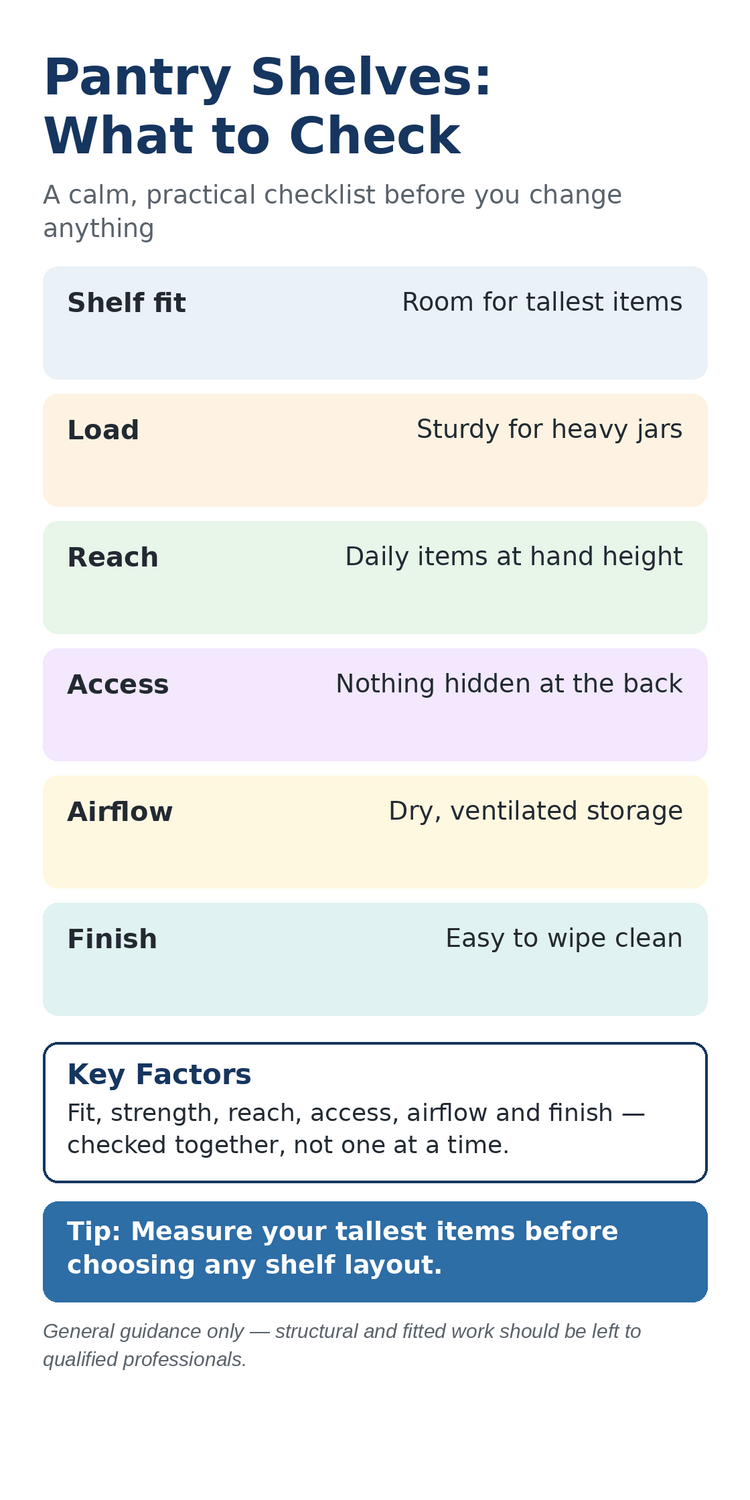
When options are compared, the calmest comparison is usually the most useful one. Lay each option against the same checks: does it fit the tallest items, carry the heaviest loads, keep daily goods within reach, reveal the back rows, suit a kitchen climate, stay dry and well lit, and survive the walls it will rely on? An option that passes most checks honestly deserves more attention than one that merely looks impressive, while an option that fails a load or reach check should be set aside no matter how attractive it seems.
Questions matter more than claims. Ask what the shelves are made from, how the finish handles spills and steam, how shelf heights can change over time, what the fixings rely on, and what upkeep the arrangement will need year after year. Ask how the arrangement will be serviced if a fitting loosens or a board warps, and what happens to stored food while any repair is carried out. Clear answers to plain questions tell a household far more than glossy descriptions ever will.
Overall spend usually reflects scope, materials and labour together, so compare options of genuinely similar scope rather than unlike with unlike, and allow for the professional fitting that heavy or wall-fixed storage requires. A comparison that keeps scope, materials and fitting in view at once will feel fair to everyone involved, and it leaves the household free to choose on fit and function rather than on pressure or haste.
Final Considerations
Pantry shelves earn their keep quietly, day after day, and the best test of any arrangement is ordinary life: cooking on a tired evening, putting shopping away in a hurry, finding a spice without emptying a shelf. If an arrangement passes that test, it will serve the household well; if it fails, no amount of tidying will rescue it for long.
Work through the checks in this guide before committing to any change, and involve a qualified professional wherever walls, structure, electrics or heavy loads are concerned. A pantry planned with patience — measured honestly, loaded sensibly, lit properly and kept dry — becomes one of the calmest corners of the home, and a small daily pleasure rather than a small daily frustration. These house exterior ideas close the wider picture, reminding every planner that good storage inside the home sits within a home cared for as a whole.
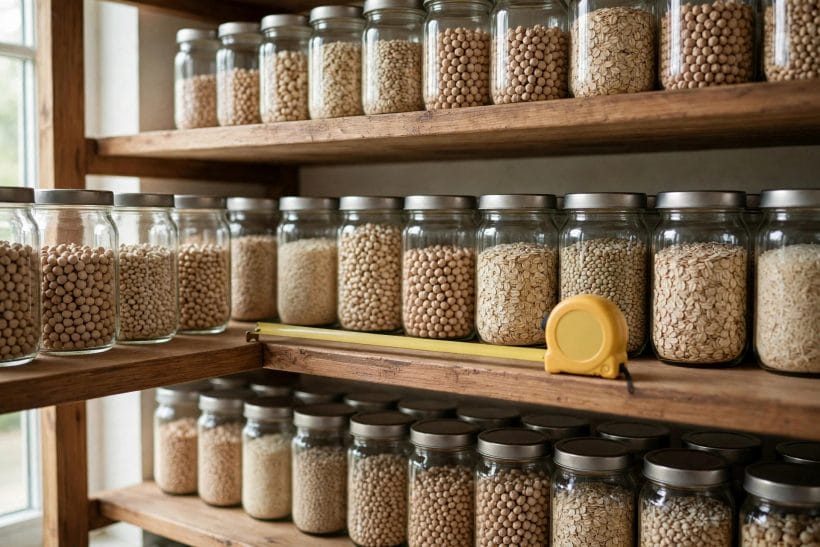
Measuring comes before buying, and it repays the effort many times over. Take the tallest items from the pantry and stand them beside the space, check the depth that keeps rear rows reachable, and note every pipe, socket and door swing that limits the plan. A short measuring session prevents the commonest pantry disappointment: shelves that look right on paper and fight their household from the first week.
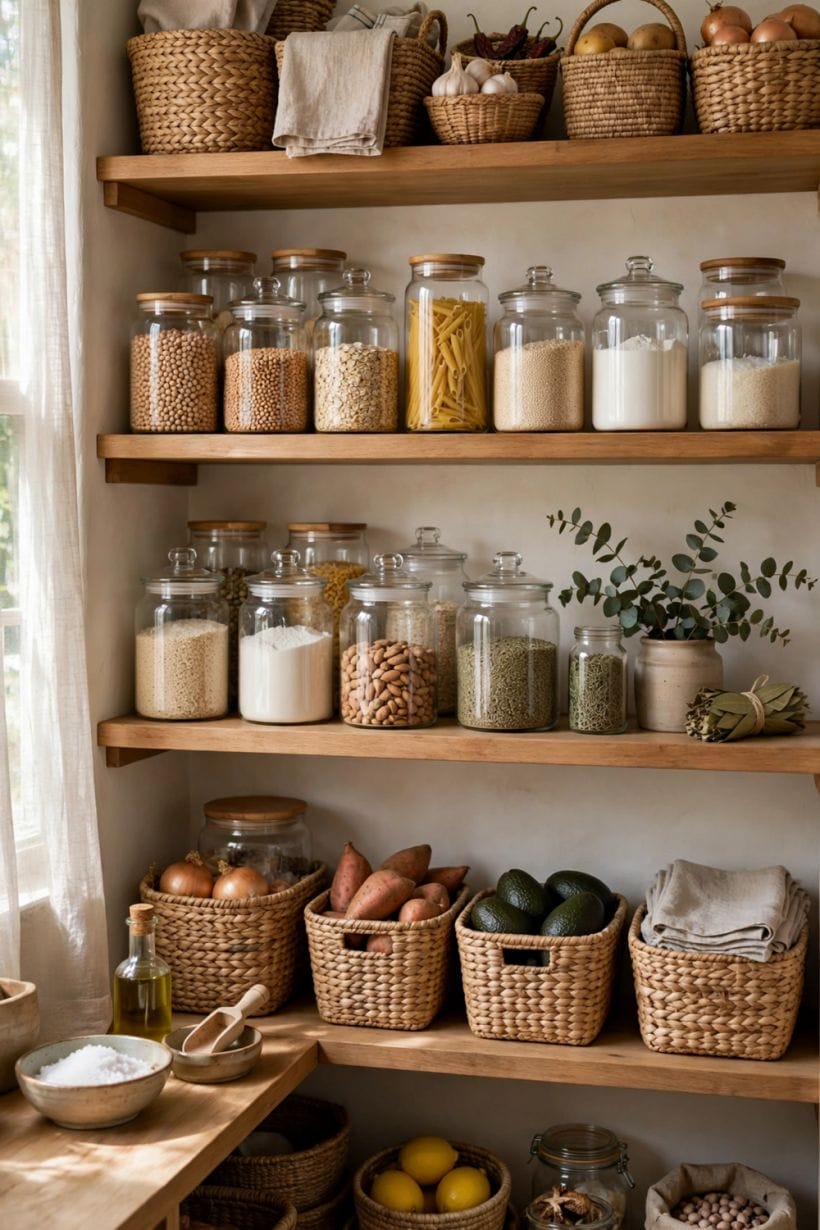
Organisation follows measurement, not the other way around. Group goods by use, place heavy items low, keep daily goods at a natural height, and leave breathing room between groups so air moves and rear rows stay visible. A pantry organised this way needs little upkeep, because everything has a place that matches how it is actually used.
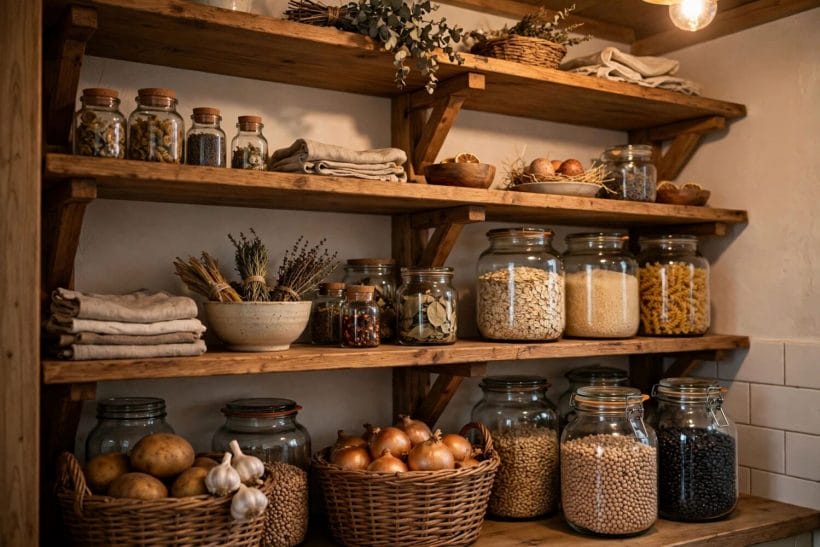
Strength is easy to overlook and hard to retrofit. Heavy jars and tins belong low, where lifting stays safe and weight presses through the strongest part of the structure, while lighter goods can live higher without strain. If any shelf bows, creaks or feels springy under its normal load, ask a qualified professional to judge the board, the supports and the fixings before the problem grows.
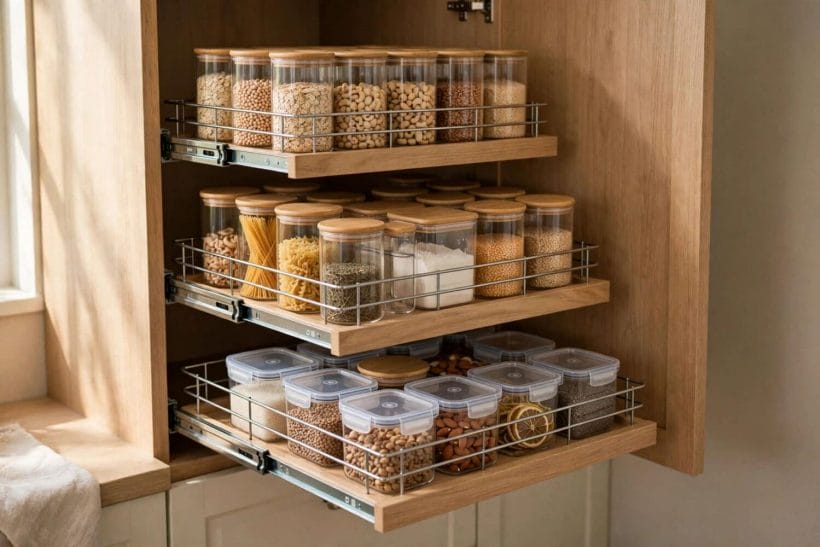
Reach decides whether a pantry wastes food or saves it. Pull-out trays and sliding baskets bring rear items into the light, while shallow open shelves keep everything visible at a glance, and either approach beats a deep shelf whose back rows drift out of sight. Choose the approach that the whole household can use comfortably, including on tired evenings when patience runs short.
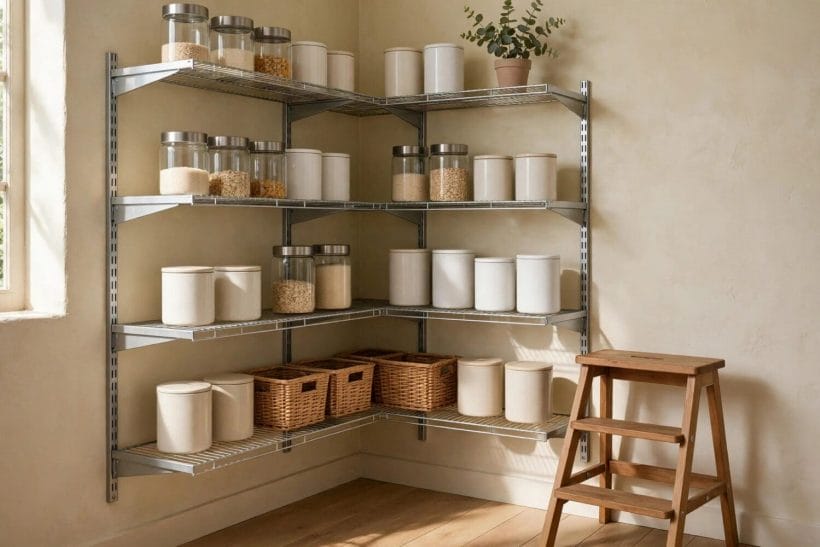
Adjustability suits a household whose storage changes with the seasons. Shelf heights that move can serve tall bottles in one season and close rows of jars in another, keeping the pantry useful as cooking habits change. In a small corner, adjustable shelves paired with a stable step for high items keep every level genuinely usable rather than merely filled.
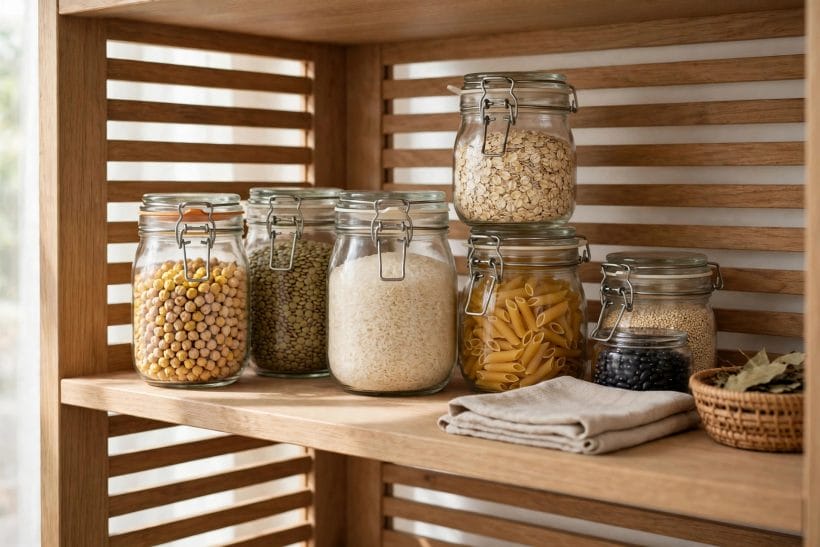
Dry, ventilated storage protects food far better than a sealed, stuffy cupboard. Sealed jars guard dry goods against moisture and dust, small gaps between groups let air circulate, and the lowest shelf stays clear of anything that damp or spills could reach. Persistent damp or musty smells, though, point to a room problem that shelves alone cannot solve and that deserves investigation.
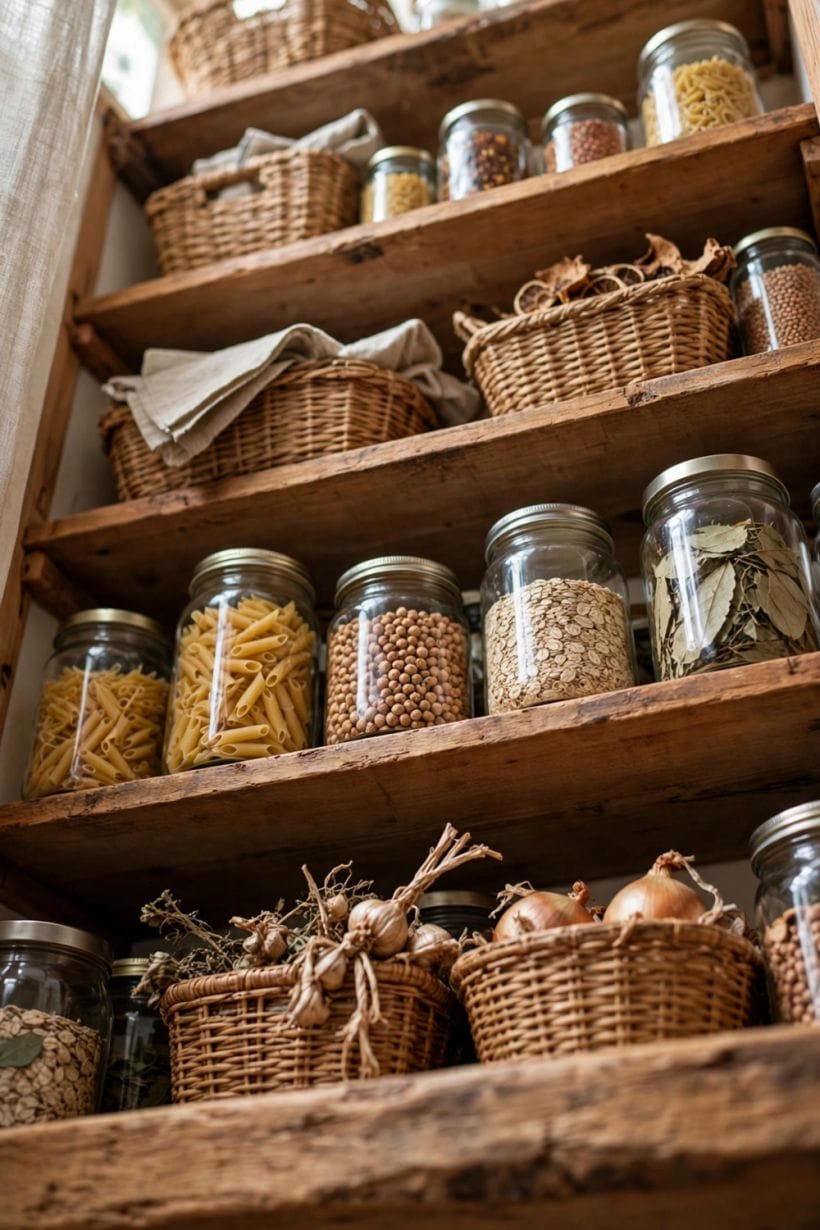
Looking at a pantry from a fresh angle often reveals what daily habit hides: a shelf loaded too high, a dark corner where items gather, a gap that could serve a whole group of goods. Step back now and then, check the rear rows, and let the pantry earn its space by serving the household rather than simply storing its overflow.
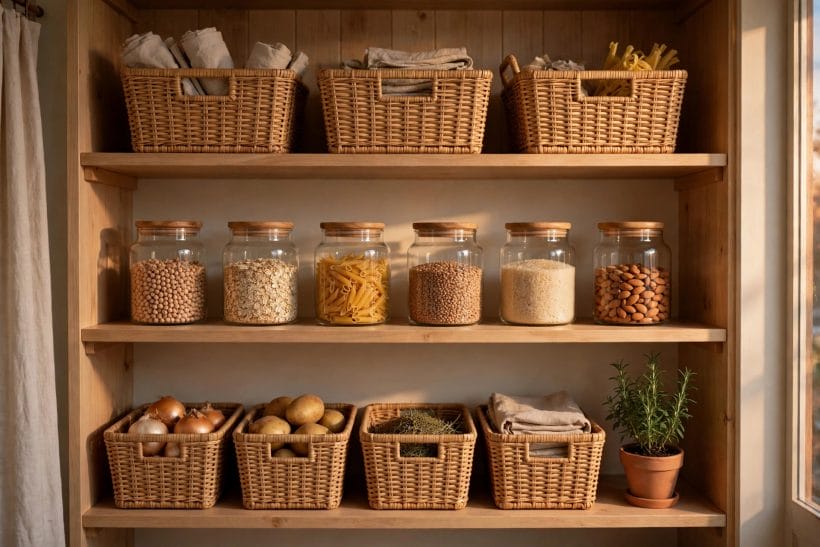
A finished pantry should feel calm the moment its door opens: matching containers, heavy goods low, daily items at hand height, and nothing hidden, damp or out of reach. Keep that calm with a simple habit of checking rear rows when shopping lists are written, and the pantry will stay a pleasure to use for years.


0 Comments