
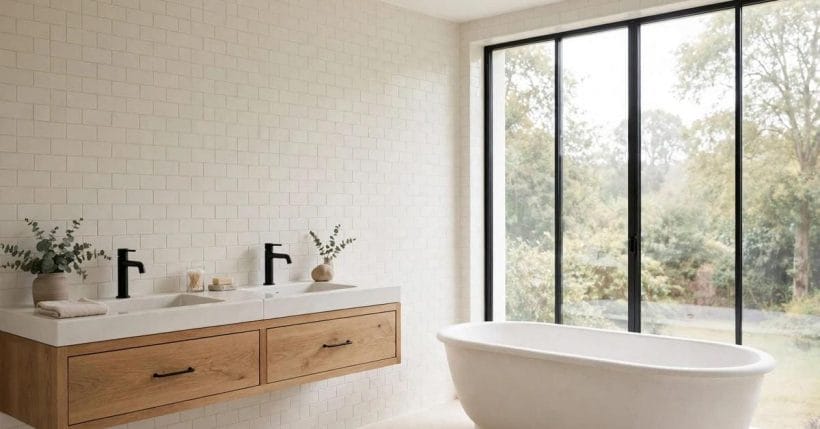
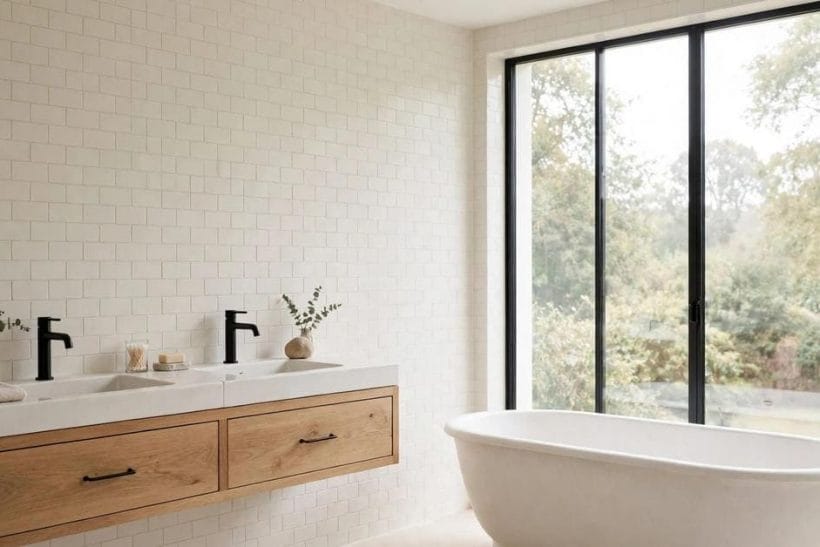
A new bathroom is a chance to start again with light, layout and calm. The best new bathrooms do not chase novelty for its own sake. They get the everyday things right first: a door that opens without a clash, a shower that drains well, a mirror at a comfortable height, and storage that keeps counters clear.
This survey gathers twenty new bathroom ideas, from layouts and showers to baths, vanities, storage, light and finishing details, so you can pick the ideas that fit your room and leave the rest. Each idea stands on its own, and together they show how a bathroom can feel fresh without feeling fussy.
1. Layouts That Make Mornings Easier
Layout comes before everything else in a new bathroom, because pipes, drains, doors and windows are far harder to move once walls are closed. A good layout gives each fixture breathing room, keeps wet areas together, and leaves a clear path from the door to every part of the room.
Small rooms benefit most from a clear plan, and these tiny bathroom ideas show how compact layouts can still feel generous when every fixture earns its place.
| Item | What it is |
|---|---|
| A Single-Wall Layout for a Tidy Room | A single-wall layout lines the bath or shower, basin and toilet along one wall, leaving the rest of the room open and easy to clean. |
| A Galley Plan With a Clear Centre | A galley plan places fixtures on two facing walls with a clear walkway down the middle, much like a galley kitchen. |
| A Walk-In Shower With a Glass Screen | A walk-in shower with a single glass screen replaces a closed cubicle with an open corner of the room, and the change in feeling is immediate. |
| A Rainfall Showerhead With a Built-In Niche | A large rainfall showerhead turns an ordinary shower into a gentle, even downpour, and it pairs naturally with a tiled niche set into the wall. |
| A Freestanding Tub Beside a Window | A freestanding oval tub beside a large window gives the bathroom a focal point that needs no decoration. |
| A Deep Soaking Tub in a Soft, Quiet Room | A deep soaking tub in a room of soft sage and white feels like a retreat, even in an ordinary house. |
| A Twin Vanity for Shared Mornings | A twin vanity with two basins and a long mirror turns shared mornings from a negotiation into a routine. |
| A Wall-Hung Vanity for a Compact Room | A wall-hung vanity floats above the floor, and that small gap underneath changes how a compact bathroom feels. |
| Tall Cabinets That Swallow the Clutter | Tall cabinets beside the vanity or along a free wall swallow towels, toiletries, cleaning supplies and spare rolls in one tidy run, leaving counters clear and mornings calmer. |
| Open Shelves and Baskets for Everyday Things | Open shelves with folded towels and plain baskets give a bathroom a lived-in warmth that closed cabinets alone cannot provide. |
| Daylight Through a Frosted Window | A frosted window brings generous daylight into a bathroom while keeping privacy intact, and it is one of the simplest upgrades a new bathroom can offer. |
| A Round Mirror With Warm Layered Light | A round mirror softens a bathroom full of straight lines, and warm layered light around it makes the mirror genuinely useful rather than merely decorative. |
| Large-Format Pale Tiles for a Calm Floor | Large-format pale tiles give a bathroom floor a quiet, continuous feel, because fewer grout lines break the surface and the eye travels smoothly across the room. |
| A Patterned Floor Tile as a Quiet Feature | A patterned floor tile adds personality to a bathroom without asking the walls to do any work. |
| A Compact Plan With a Glass Shower Screen | A compact plan with a glass shower screen, a white vanity and a round mirror shows how little a small bathroom needs to feel complete. |
| A Floating Vanity With a Backlit Mirror | A floating vanity with a backlit round mirror gives a small bathroom a sense of lightness that a floor-standing unit cannot match. |
| A Spa Corner With a Tub, Tray and Plant | A spa corner with a freestanding tub, a wooden bath tray and a potted plant turns one corner of the bathroom into a place to unwind. |
| Fresh Towels, Plants and Gentle Scent | Fresh towels, a plant or two, and a gentle scent are the smallest spa touches, and often the most effective. |
| Timber Warmth Against a Pale Palette | Timber warmth against a pale palette is one of the most forgiving combinations a new bathroom can offer. |
| Handles, Hooks and Towel Rails in the Right Places | Handles, hooks and towel rails in the right places are the details that make a bathroom easy to use every day. |
1. A Single-Wall Layout for a Tidy Room
A single-wall layout lines the bath or shower, basin and toilet along one wall, leaving the rest of the room open and easy to clean. The arrangement suits narrow rooms especially well, because nothing juts into the walking path, and the open side of the room can hold a towel rail, a plant or a laundry basket without crowding the fixtures. Keep the wettest fixture nearest the existing drains where the structure allows, and let a qualified plumber advise on any pipe moves, since drainage falls and venting are professional work. A long mirror above the basin stretches the wall visually, and a single run of pale tile ties the whole wall together. The result is a bathroom that feels calm because everything has a clear place, and nothing competes for attention.
2. A Galley Plan With a Clear Centre
A galley plan places fixtures on two facing walls with a clear walkway down the middle, much like a galley kitchen. The plan works well in a long, narrow room, because it uses both walls without wasting the middle, and the walkway keeps the room feeling open even when both sides are in use. Place the basin on one side and the shower or bath on the other so two people can use the room without stepping around each other, and keep the walkway free of mats, stools and baskets that could trip bare feet. Sliding or outward-opening doors help here, since an inward door can eat into the walkway. Good lighting on both walls stops the galley feeling like a corridor, and a pale floor running the length of the room draws the eye forward and makes the space feel longer.
2. Showers That Feel Open
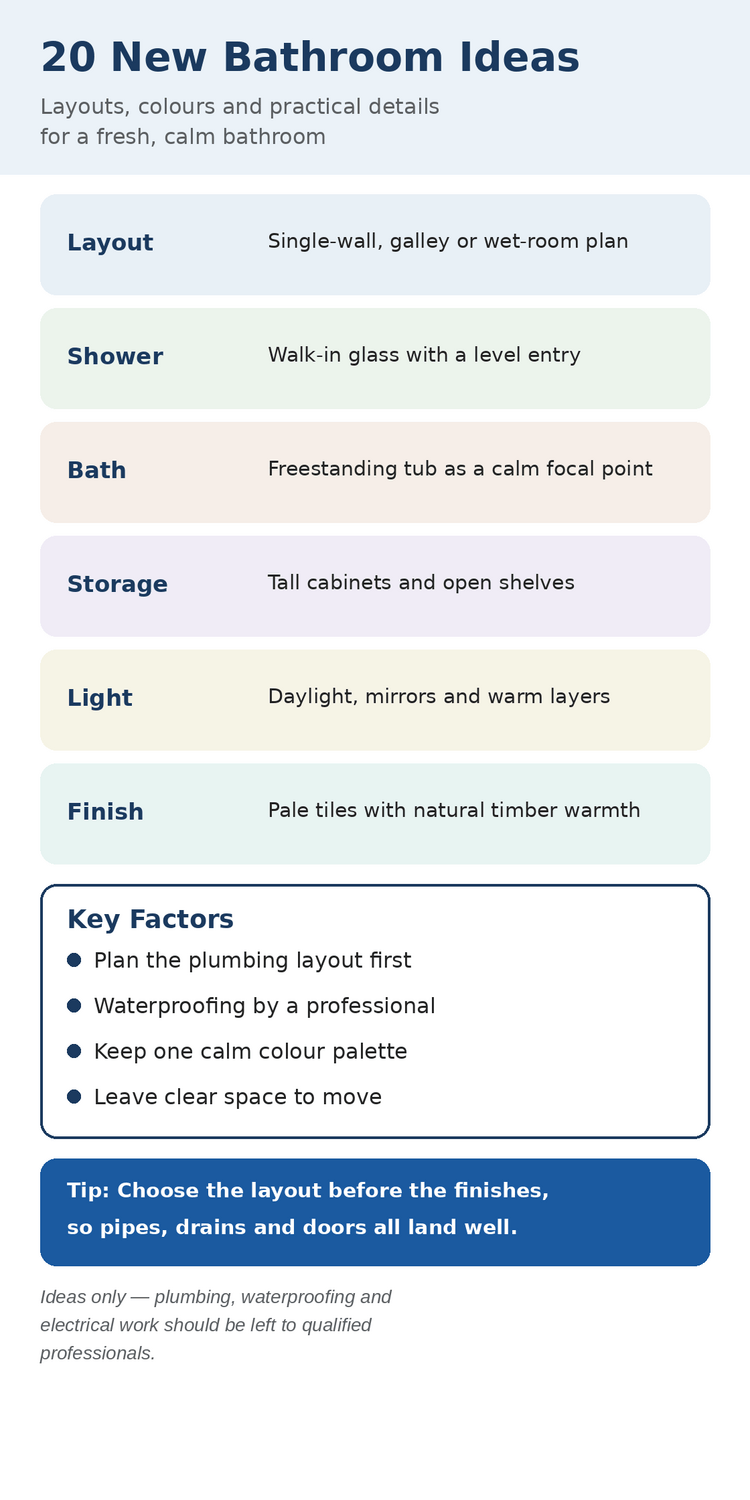
A shower can set the tone of the whole bathroom. An open, well-drained shower makes the room feel larger and fresher, while a cramped or gloomy one drags the whole space down. Glass, level entries and good drainage all help, and waterproofing must be handled by a qualified professional, since a leak behind tiles can cause damage that stays hidden for a long time.
Planning the shower position early pays off, and these tiny house bathroom layouts show how shower, basin and toilet can share a small footprint without crowding each other.
3. A Walk-In Shower With a Glass Screen
A walk-in shower with a single glass screen replaces a closed cubicle with an open corner of the room, and the change in feeling is immediate. Without a door frame and a raised tray edge, the floor runs through in one surface, the room looks wider, and stepping in and out feels easy. The glass keeps splashes contained while letting light travel across the room, and a clear screen shows off the tile behind it rather than hiding it. Drainage and falls must be set correctly by a qualified tradesperson, and the screen should be fixed so it never wobbles or leaks at its edges. A wall niche for bottles keeps the floor of the shower clear, and a small bench or ledge gives a place to rest a foot or a washcloth. Keep the glass clean with a quick wipe after use, and the shower will stay as bright as the day it was finished.
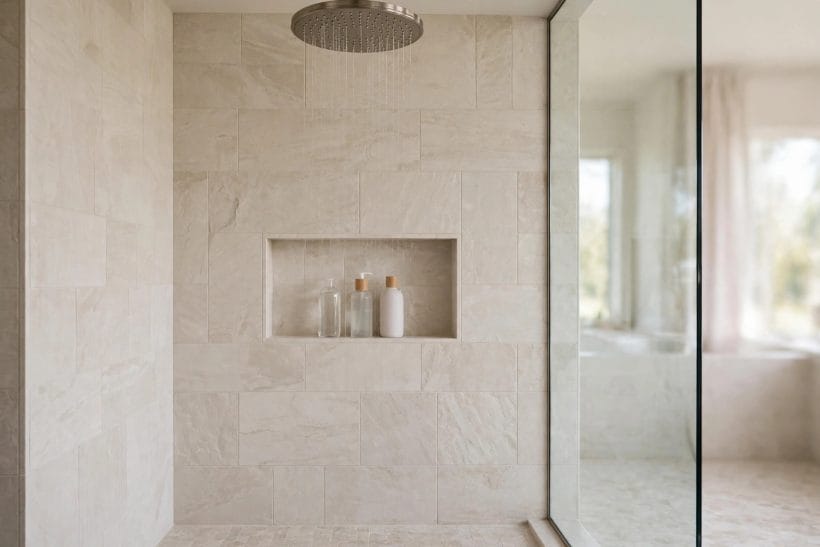
4. A Rainfall Showerhead With a Built-In Niche
A large rainfall showerhead turns an ordinary shower into a gentle, even downpour, and it pairs naturally with a tiled niche set into the wall. The niche holds bottles and soap at hand height without a caddy hanging from the showerhead or bottles lined along the floor, so the shower stays tidy and easy to clean. Choose a head that suits your water supply, and let a qualified plumber check the fitting and the pipework, since a heavy head needs a firm fixing and a sound supply. Keep the niche shallow enough that bottles sit securely, and slope its base slightly so water drains back into the shower rather than pooling. Pale stone-look tiles around the niche make the whole shower feel calm, and a single row of contrasting tile can mark the niche without turning it into a feature that shouts. The result is a shower that feels considered rather than crowded.
3. Baths as a Calm Focal Point
A bath can be the quiet centre of a new bathroom, a place to slow down at the end of the day. Freestanding and soaking tubs work best when they have room to breathe, with clear floor around them and a view or a window to rest the eyes on. Floor strength and drainage for a filled tub belong to qualified professionals, so the calm of the bath never comes at the expense of the structure below it.
5. A Freestanding Tub Beside a Window
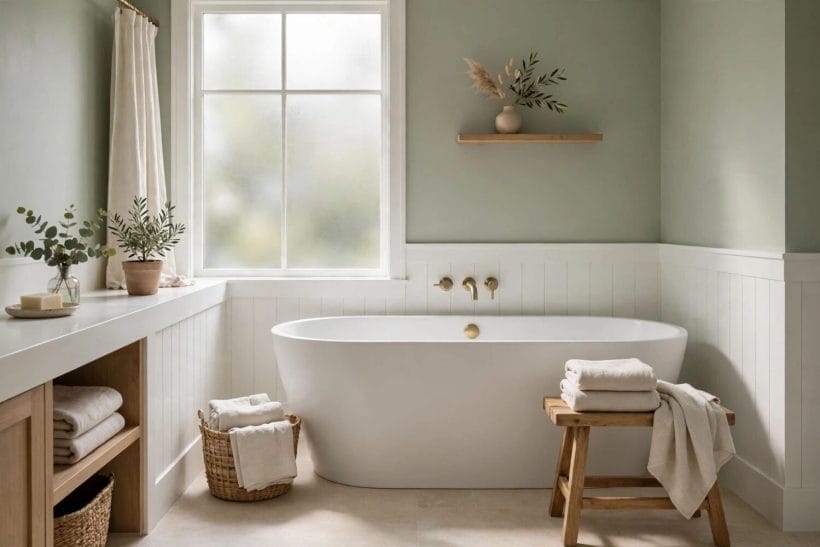
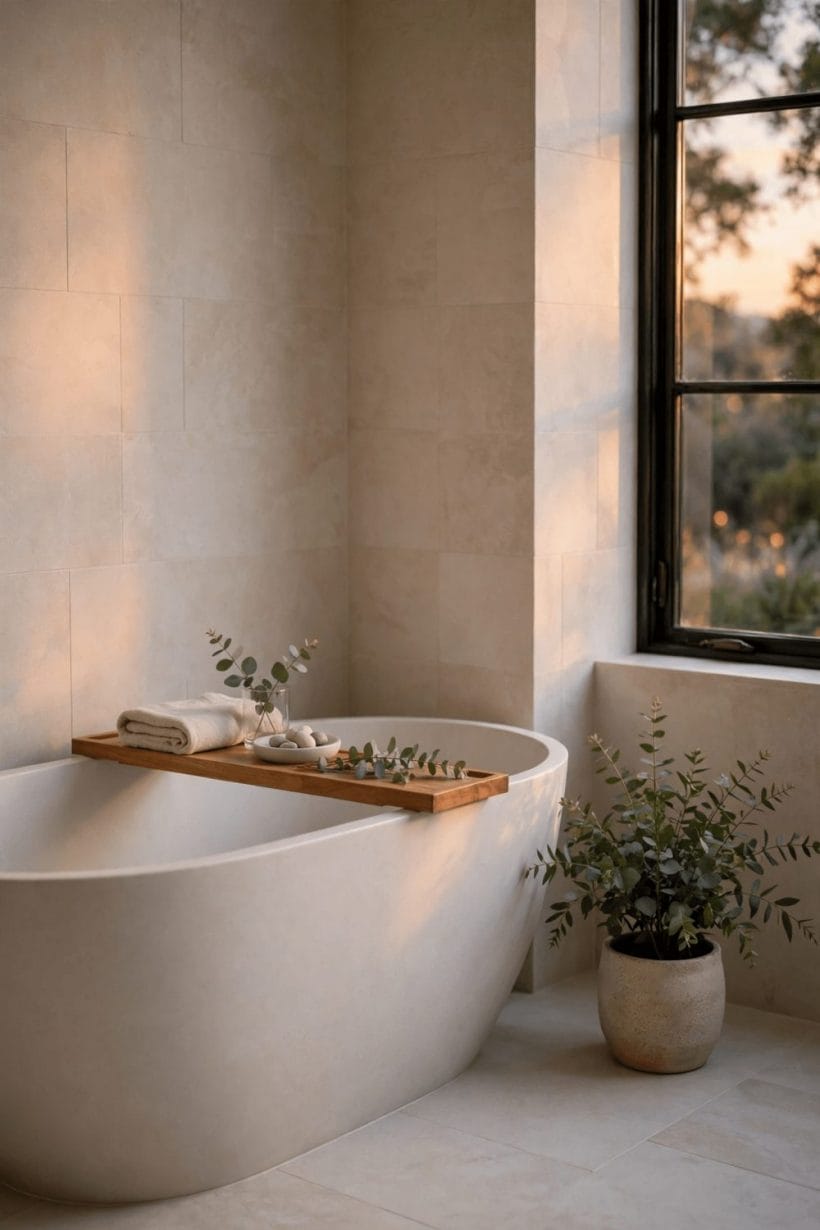
A freestanding oval tub beside a large window gives the bathroom a focal point that needs no decoration. Daylight falls across the water, the tub’s curved shape softens the straight lines of the room, and the window gives bathers something pleasant to look at. Keep the tub clear of the window frame so cleaning stays easy, and choose a window treatment that gives privacy without blocking the light, such as frosted glass or a blind that lifts fully. A small timber stool or tray beside the tub holds a towel and a book, and a plant on the sill adds life without clutter. Check with a qualified tradesperson that the floor can carry a filled tub and that the waste and overflow are fitted correctly. Done well, this single idea can carry the whole room.
6. A Deep Soaking Tub in a Soft, Quiet Room
A deep soaking tub in a room of soft sage and white feels like a retreat, even in an ordinary house. The pale walls and gentle colour keep the room restful, the timber stool adds warmth, and linen towels folded nearby make the room feel cared for. A soaking tub suits slower baths, with the water deep enough to cover the shoulders, so choose the tub shape with comfort in mind rather than looks alone. Sit the tub where it catches soft daylight but not a draught, and keep a basket of towels within reach so nobody drips across the floor after a bath. A frosted window protects privacy while letting daylight in, and a washable rug or mat beside the tub keeps feet warm and safe. The room asks for little else, and that restraint is the whole point.
4. Vanities That Carry the Room
The vanity is the hardest-working piece of furniture in the bathroom, holding basins, taps, toiletries and towels in one place. A good vanity gives enough counter space for daily use, storage that keeps clutter out of sight, and a mirror arrangement that makes mornings easier. Timber brings warmth, while pale counters keep the room bright.
Vanity storage deserves the same care as the rest of the room, and these tiny house storage ideas show how wall and cabinet storage can carry a household without crowding the space.
7. A Twin Vanity for Shared Mornings
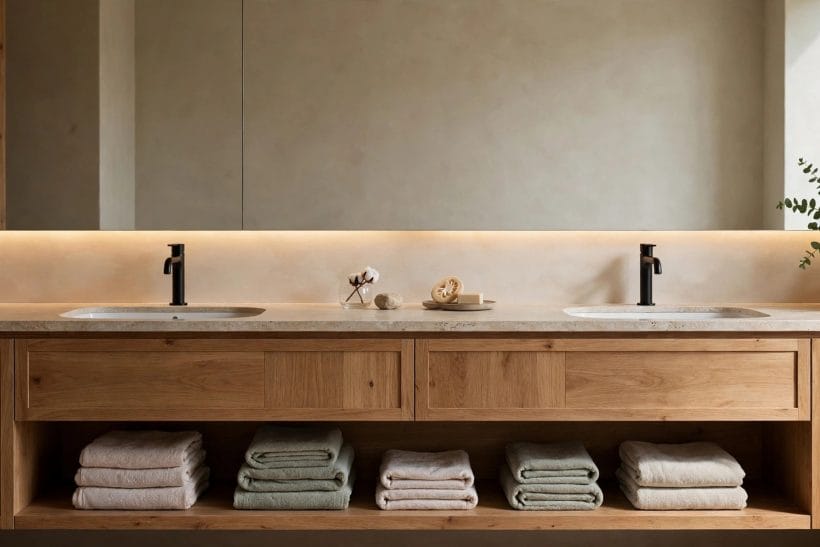
A twin vanity with two basins and a long mirror turns shared mornings from a negotiation into a routine. Each person gets a basin, a stretch of counter and a patch of mirror, and nobody waits while the other finishes brushing teeth. Timber cabinetry warms the room, and open shelving below the counter holds folded towels where they are easy to reach. Keep the basins far enough apart that elbows do not clash, and give each basin its own light so one person’s shadow never falls across the other’s mirror. Plumbing for two basins belongs to a qualified plumber, who can confirm the supply and waste runs. A long mirror above both basins ties the vanity together, and matching taps and handles keep the whole run looking like one piece of furniture rather than two basins that happen to share a wall.
8. A Wall-Hung Vanity for a Compact Room
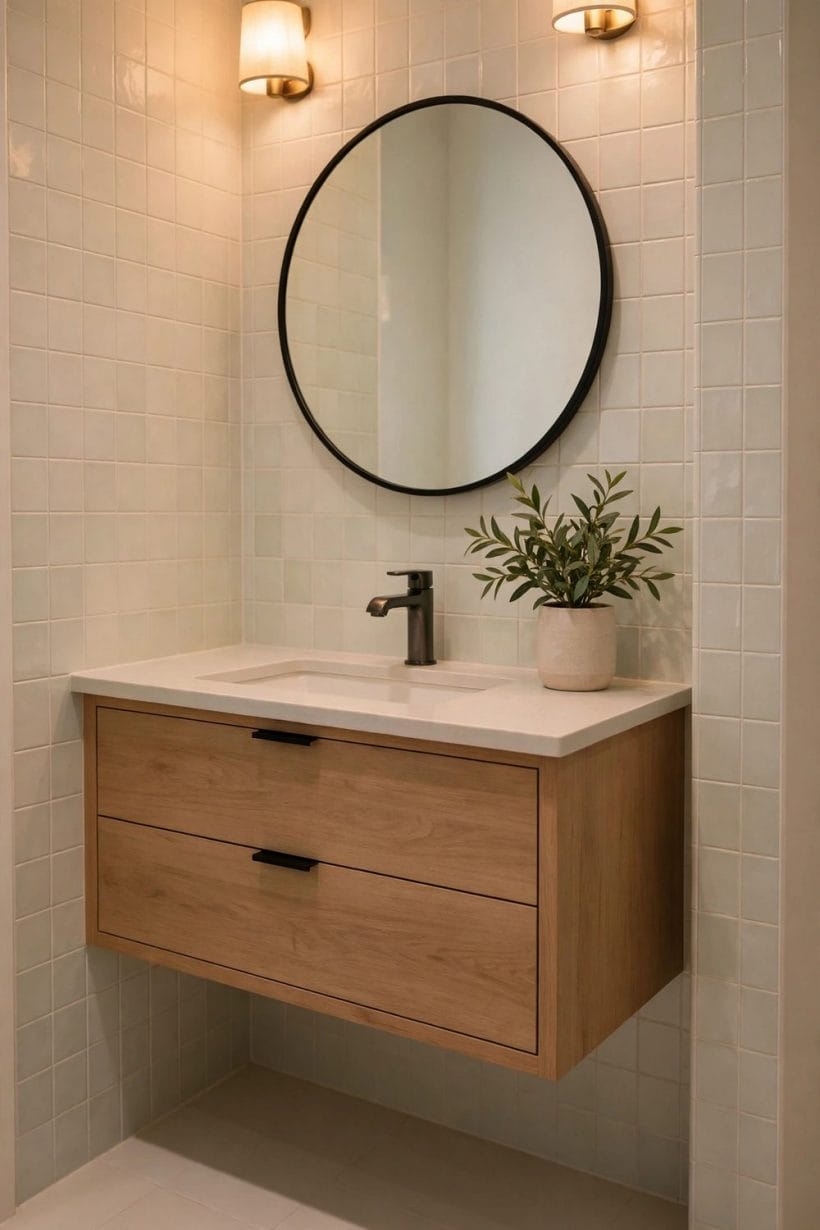
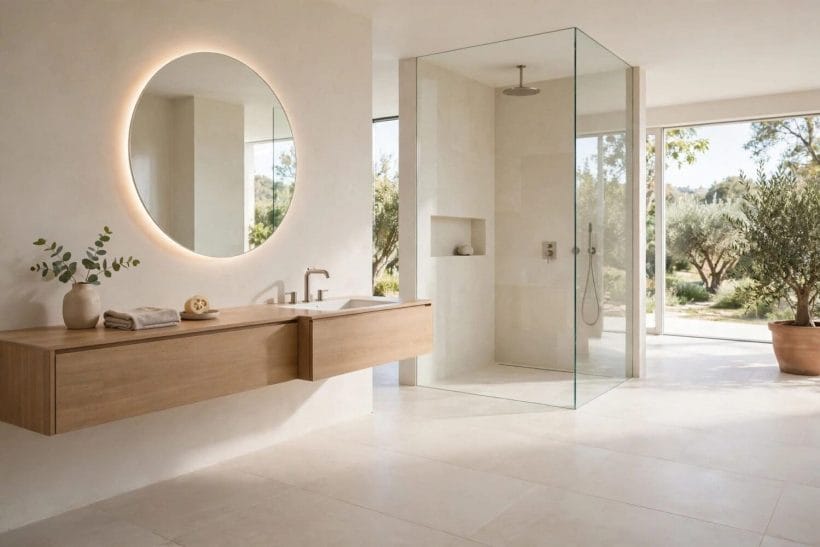
A wall-hung vanity floats above the floor, and that small gap underneath changes how a compact bathroom feels. The visible floor runs beneath the vanity, so the room looks larger, cleaning underneath becomes a quick sweep, and the vanity itself feels lighter than a unit standing on the floor. A round mirror above softens the straight lines, and warm lighting around the mirror makes evening routines gentler on the eyes. Keep the vanity deep enough for a basin and a few daily items, but shallow enough that it never crowds the walkway. Fixing must go into solid structure, so let a qualified tradesperson handle the mounting and the plumbing. A small plant on the counter and a single tray for bottles keep the surface calm, and the floating vanity quietly makes a small room feel like a considered one.
5. Storage Without Clutter
Bathroom clutter builds quietly: bottles multiply, towels pile, and cleaning supplies colonise every flat surface. Storage that is planned with the room, rather than added afterwards, keeps the bathroom calm with little daily effort. Tall cabinets, open shelves and baskets each have a role, and the best rooms use a mix of closed storage for clutter and open storage for the things that look good on display.
9. Tall Cabinets That Swallow the Clutter
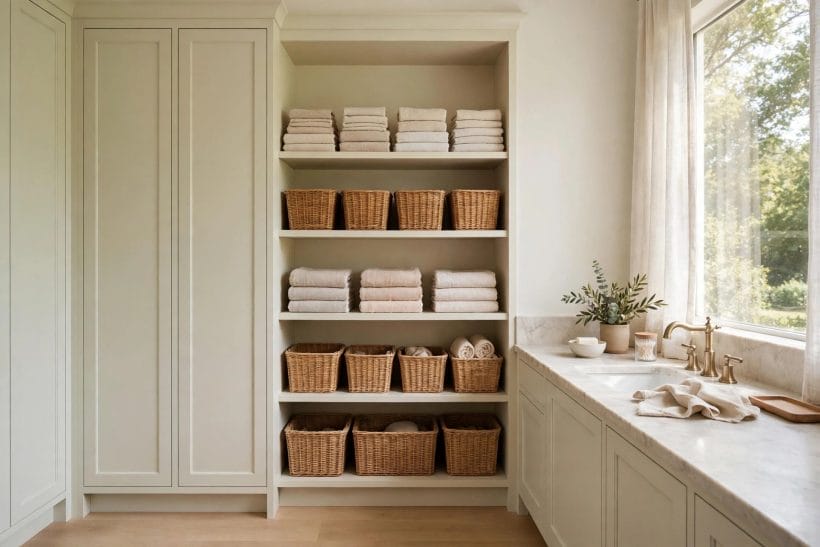
Tall cabinets beside the vanity or along a free wall swallow towels, toiletries, cleaning supplies and spare rolls in one tidy run, leaving counters clear and mornings calmer. Pale cabinet fronts keep a tall run from looming over the room, and handles matched to the taps tie the cabinets to the rest of the bathroom. Keep everyday items at hand height, bulky towels in the middle, and rarely used supplies up high, so the cabinet serves the daily routine rather than fighting it. Ventilation matters inside a bathroom cabinet, so leave a little air around stored towels and avoid packing damp items straight from the shower into a closed cupboard. A tall cabinet also hides the visual noise of mismatched bottles and boxes, which is half the battle in keeping a bathroom feeling fresh long after the newness wears off.
10. Open Shelves and Baskets for Everyday Things
Open shelves with folded towels and plain baskets give a bathroom a lived-in warmth that closed cabinets alone cannot provide. Towels folded in neat stacks look inviting, baskets hide smaller items while staying easy to grab, and a shelf at eye level puts the things you reach for daily exactly where your hand expects them. Keep the shelves shallow so nothing hides behind a front row, and limit each shelf to a few items so the display stays calm rather than crowded. Baskets in natural fibres suit timber and pale tile, and they can be lifted out for cleaning or carried to the laundry without fuss. Balance is the key: open shelves for the handsome everyday things, closed cabinets for everything else, and the bathroom stays tidy without feeling like a showroom.
6. Light, Mirrors and Colour
Light shapes how a bathroom feels more than any single fixture. Daylight flatters tile and timber, mirrors double the light, and warm layers of artificial light keep the room welcoming after dark. Colour should support the light, not fight it: pale walls bounce daylight around, while one gentle accent colour gives the room character without shrinking it.
Colour and finish choices travel across the whole home, and these tiny house exterior ideas show how matched finishes keep a home looking calm and considered from every angle.
11. Daylight Through a Frosted Window
A frosted window brings generous daylight into a bathroom while keeping privacy intact, and it is one of the simplest upgrades a new bathroom can offer. Daylight makes tile colours true, keeps the room feeling fresh, and reduces the need for artificial light during the day. Frosted or textured glass obscures the view without dimming the room, and a window that opens gives fresh air that helps the room dry after showers. Keep the window clear of heavy treatments so the light is never blocked, and place the mirror where it can catch and bounce the daylight deeper into the room. Electrical work for any window-side lighting belongs to a qualified electrician, especially near water. A bright bathroom is easier to clean, pleasanter to use, and kinder to every colour in it.
12. A Round Mirror With Warm Layered Light
A round mirror softens a bathroom full of straight lines, and warm layered light around it makes the mirror genuinely useful rather than merely decorative. Wall lights beside or above the mirror light the face evenly, while a dimmer or a second, softer light lets the room shift from bright mornings to calm evenings. Keep the mirror large enough to be useful but modest enough that it never dominates the wall, and hang it at a height that suits the people who use it most. A black or timber frame can echo other details in the room, such as taps or cabinet handles, and tie the mirror into the whole design. Electrical work near water belongs to a qualified electrician, who can confirm safe positions and fittings. The mirror then becomes a quiet centrepiece, flattering the room every time the light is switched on.
7. Tiles and Floors That Last Visually
Tile choices outlive most other bathroom decisions, so they deserve a slow, careful eye. Large-format tiles reduce grout lines and make a room feel calmer, while a patterned floor adds character underfoot without demanding attention from every wall. Pale floors keep small rooms bright, and a single feature tile can lift an otherwise quiet scheme.
Floor finishes set the tone underfoot, and these tiny house flooring ideas show how pale, hard-wearing floors keep small homes feeling bright and easy to clean.
13. Large-Format Pale Tiles for a Calm Floor
Large-format pale tiles give a bathroom floor a quiet, continuous feel, because fewer grout lines break the surface and the eye travels smoothly across the room. The calm floor lets the vanity, mirror and shower take the visual lead, and it makes a modest room feel more generous than a busy pattern would. Choose a tile with enough grip for wet feet, and let a qualified tiler confirm the falls to the drain and the waterproofing beneath, since a beautiful floor over poor preparation will not stay beautiful. Pale tiles also show dust and hair early, which is a gentle prompt to sweep before grime builds up. Pair the floor with timber cabinetry and a backlit mirror, and the room gains warmth without losing its calm, a combination that ages gracefully rather than dating quickly.
14. A Patterned Floor Tile as a Quiet Feature
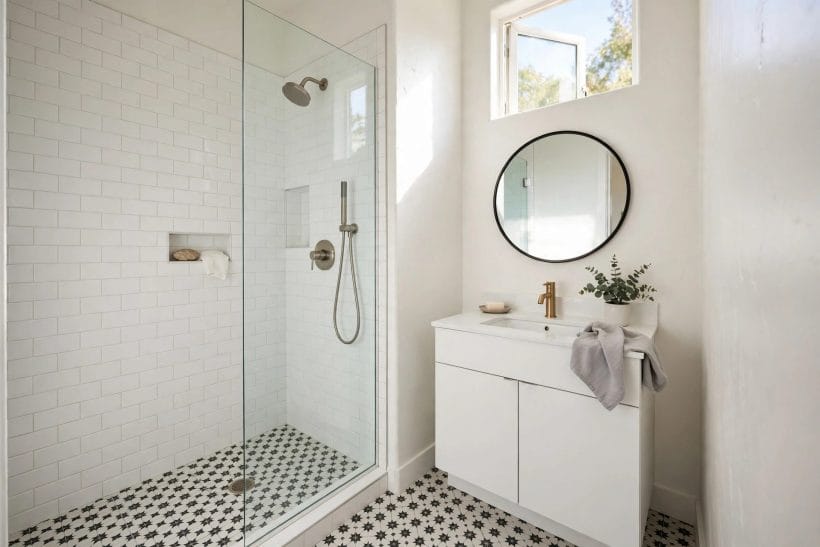
A patterned floor tile adds personality to a bathroom without asking the walls to do any work. A small repeated motif in soft tones gives the floor interest underfoot, while plain walls and a simple vanity keep the room from feeling busy. The pattern suits a small bathroom especially well, because the floor is one of the largest visible surfaces, and a thoughtful pattern turns it into a feature rather than an afterthought. Keep the pattern gentle in colour so it sits comfortably with towels and accessories that change over time, and let a qualified tiler set it out so the pattern centres neatly in the room. A glass shower screen shows the pattern off instead of hiding it, and a plain white vanity beside it keeps the balance. The result is a bathroom with character that never shouts.
8. Small Bathrooms Done Well
Small bathrooms reward the clearest thinking of all, because every choice must earn its space. Glass instead of curtains, floating furniture, and mirrors that borrow light all help a small room feel larger than its footprint. The goal is not to cram more in, but to choose fewer things and choose them well.
Compact rooms need the same careful layout thinking as larger ones, and these tiny house building design ideas show how careful planning keeps small homes feeling generous and well ordered.
15. A Compact Plan With a Glass Shower Screen
A compact plan with a glass shower screen, a white vanity and a round mirror shows how little a small bathroom needs to feel complete. The glass screen keeps the shower open to the room, so the eye travels the full width of the space instead of stopping at a curtain or a solid wall. A white vanity recedes against pale walls, and the round mirror above it adds a soft shape that stops the room feeling boxy. Keep the floor pattern continuous through the shower where the design allows, so the room reads as one space rather than two cramped halves. Drainage and waterproofing belong to qualified professionals, and the screen must be fixed securely. With nothing extra in the way, the small bathroom feels bright, honest and easy to keep clean.
16. A Floating Vanity With a Backlit Mirror
A floating vanity with a backlit round mirror gives a small bathroom a sense of lightness that a floor-standing unit cannot match. The vanity hovers above the floor, the mirror glows softly, and the glass shower beyond stays visible, so the room feels layered rather than crowded. The backlight removes harsh shadows and makes the mirror useful in the evening, while the floating vanity leaves the floor clear for cleaning. Electrical work for the mirror light belongs to a qualified electrician, and the vanity fixing and plumbing belong to qualified tradespeople. Keep the counter to daily essentials, with a small plant or a single tray for warmth, and let the light do the decorating. In a small room, this pairing of floating furniture and gentle light is one of the most reliable ways to make the space feel larger.
9. Spa Touches at Home
A spa feeling at home does not need special equipment or elaborate rituals. It comes from soft light, natural materials, fresh towels, a plant or two, and a room that stays tidy without effort. The best spa touches are the ones that fit into an ordinary routine, so the bathroom feels like a retreat on a normal weekday, not only on a special occasion.
17. A Spa Corner With a Tub, Tray and Plant
A spa corner with a freestanding tub, a wooden bath tray and a potted plant turns one corner of the bathroom into a place to unwind. The tray holds a towel and a book within reach, the plant softens the hard surfaces, and warm evening light makes the corner glow. Keep the tray simple and the plant in a pot that drains well, so the corner stays easy to wipe down and never gathers standing water. A small stool nearby holds extra towels, and a folded towel on the tray signals that the corner is meant to be used, not just admired. Floor and drainage checks for the tub belong to qualified professionals. The corner asks for little, and that simplicity is what makes it feel like a spa rather than a display.
18. Fresh Towels, Plants and Gentle Scent
Fresh towels, a plant or two, and a gentle scent are the smallest spa touches, and often the most effective. Thick towels folded on an open shelf or a heated rail feel welcoming, plants thrive in the humidity of a bathroom if they suit the light available, and a mild natural scent from soap or a diffuser keeps the room smelling clean without overpowering it. Keep plants clear of taps and drains so watering never splashes into fixtures, and choose pots with saucers to protect timber and tile. Rotate towels often so the display always looks fresh, and keep scent subtle, since a bathroom should smell clean rather than perfumed. These touches ask little attention and repay it daily, turning an ordinary bathroom into a room that feels cared for every time the door opens.
10. Finishing Details That Tie It Together
Finishing details are the quiet stitching that holds a new bathroom together. Matched handles, thoughtful hooks, a towel rail in the right place, and a consistent palette across fixtures all signal that the room was planned as a whole. None of these details needs to be grand; together, they make the difference between a room full of fixtures and a room that feels finished.
19. Timber Warmth Against a Pale Palette
Timber warmth against a pale palette is one of the most forgiving combinations a new bathroom can offer. Pale tiles and walls keep the room bright, while timber on the vanity, stool or tray adds a natural warmth that stops the room feeling clinical. The combination suits almost any style, from calm and minimal to soft and traditional, and it lets towels and accessories change colour over time without clashing with the room itself. Keep timber sealed and wiped dry, especially near basins and baths, so it ages gracefully rather than marking. A single timber tone used consistently looks more considered than several competing woods, and a pale palette lets that one tone shine. The room feels fresh, warm and easy to live with, year after year.
20. Handles, Hooks and Towel Rails in the Right Places
Handles, hooks and towel rails in the right places are the details that make a bathroom easy to use every day. A hook by the shower for a towel, a rail within reach of the basin, and handles that match the taps all remove small daily frictions that add up over time. Fix hooks and rails into solid structure so they never pull loose, and place them where wet towels can drip without soaking timber or pooling on the floor. Keep the finishes consistent across the room, so the details read as one family rather than a collection of afterthoughts. A small shelf near the basin for daily items completes the picture, and the bathroom feels finished because every daily action has a place designed for it. These small decisions are the final step in turning twenty good ideas into one good room.
Final Considerations
A new bathroom works best when the layout is settled first, the wet areas are handled by qualified professionals, and the finishes are chosen as one calm family. Start with how the room will be used each morning, plan storage for the things you actually own, and let light and mirrors do much of the decorating. Keep the palette pale and the timber warm, choose tiles that will still please you in years to come, and leave clear space to move around every fixture. The ideas in this survey can be mixed freely, and the best bathroom is rarely the one with the most features. It is the one where everything has a place, everything is easy to clean, and the room feels calm the moment the door opens. Rooms that join onto living spaces benefit from the same calm thinking, and these small living room ideas show how adjoining rooms can share a palette and a sense of order with the bathroom beside them.

0 Comments