
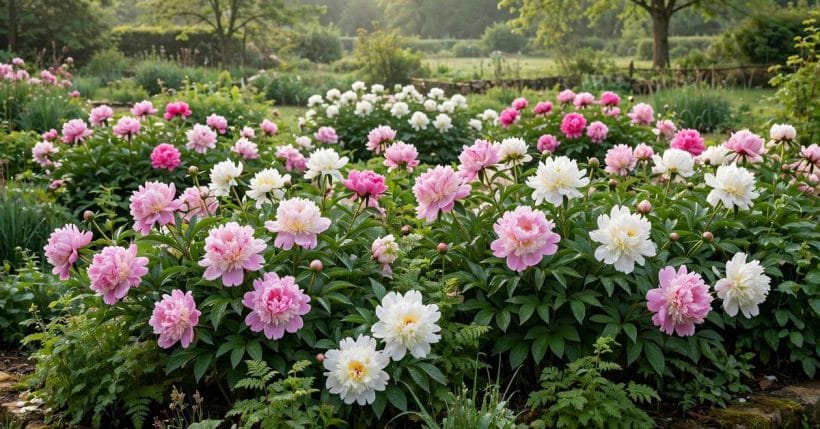
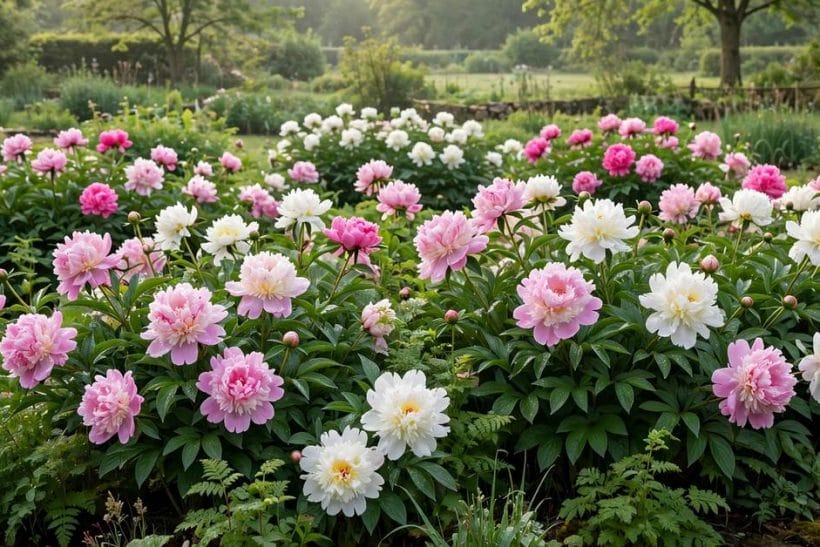
There is a particular kind of garden joy that arrives when a peony finally opens. One morning the buds are tight and secretive, and the next the whole plant seems to glow.
This peony growing guide walks through planting, everyday care, and seasonal colour, so you can give these long-lived plants a fair start and enjoy them for years to come.
1. Peony Growing at a Glance
Peonies are herbaceous perennials in most gardens, which means the leafy growth dies back in the cold months and fresh shoots return when the weather warms. They are known for large, soft blooms and for staying put once they are happy, so choosing the spot well at the start matters more than fussing over them later. Gardeners who are patient with a new plant are often rewarded, since peonies can take a little while to settle before they flower freely.
| Topic | What to keep in mind |
|---|---|
| Light | A sunny, sheltered spot suits most plants |
| Soil | Rich soil that drains freely |
| Planting | Settled at a shallow depth, with growing points near the surface |
| Water | Steady moisture without soggy ground |
| Support | Help for heavy blooms before they open |
| Patience | Allow new plants time to establish |
| Seasonal care | Light tidying as the seasons turn |
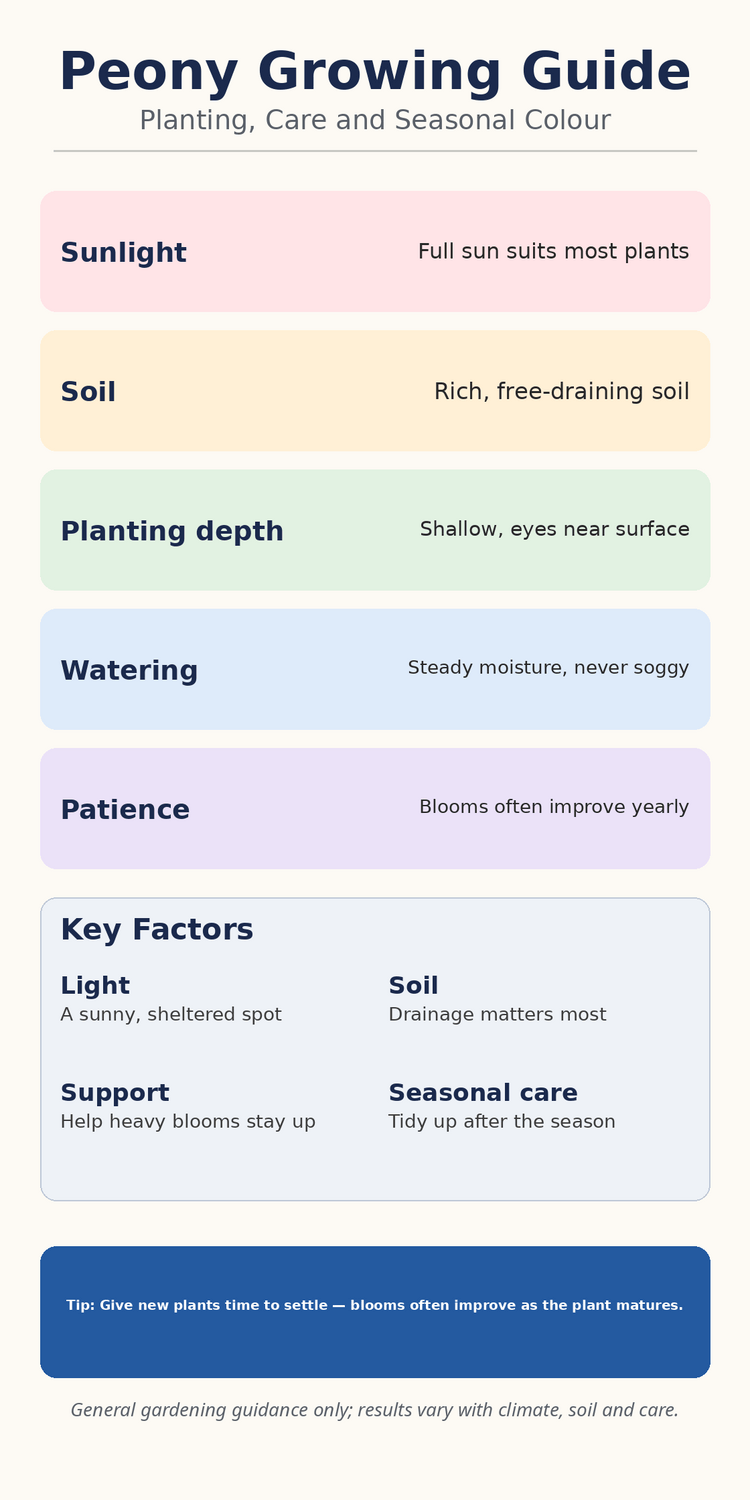
The table above is a quick orientation, not a set of promises. Gardens differ in soil, shade, wind, and rainfall, and peonies respond to those local conditions in their own time. The rest of this guide unpacks each point in turn, with the emphasis on steady, simple care rather than complicated routines.
2. Getting to Know Peony Types
Most garden peonies fall into a few broad groups, and knowing which kind you have helps you understand what to expect from it. Herbaceous peonies are the familiar kind: soft stems rise each spring, carry the flowers, and then die back as winter approaches. They suit mixed borders and cottage-style planting, where their bold foliage fills gaps between neighbours.
Tree peonies are different in habit, keeping woody stems through the year and growing into a more shrub-like shape over time. Their flowers can be strikingly large, and they tend to suit a sheltered corner where their structure can be appreciated even out of bloom. Intersectional peonies sit between the two groups, combining herbaceous vigour with some of the flower character of tree types. For a first plant, a herbaceous peony is usually the simplest choice, since its yearly cycle is easy to follow and its care is straightforward.
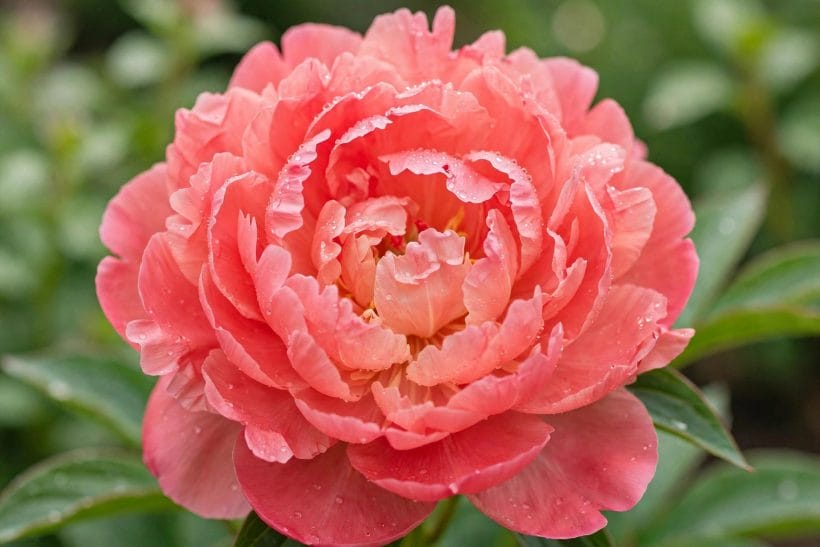
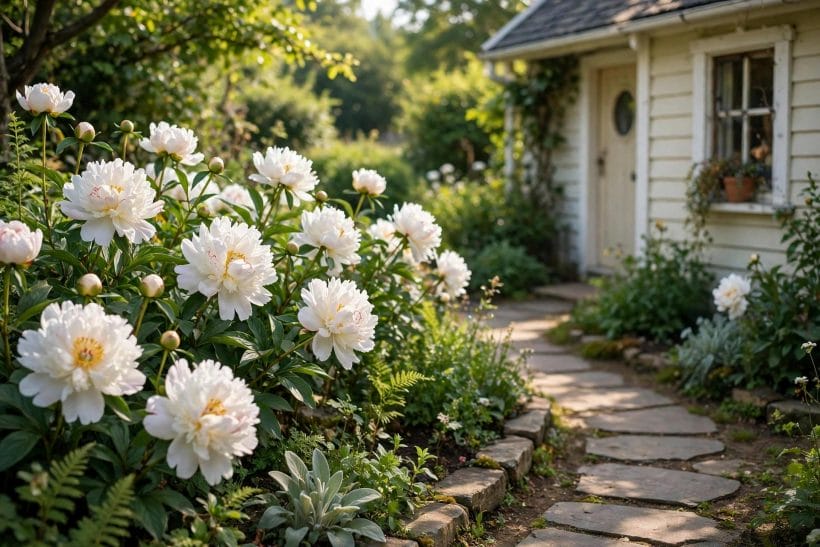
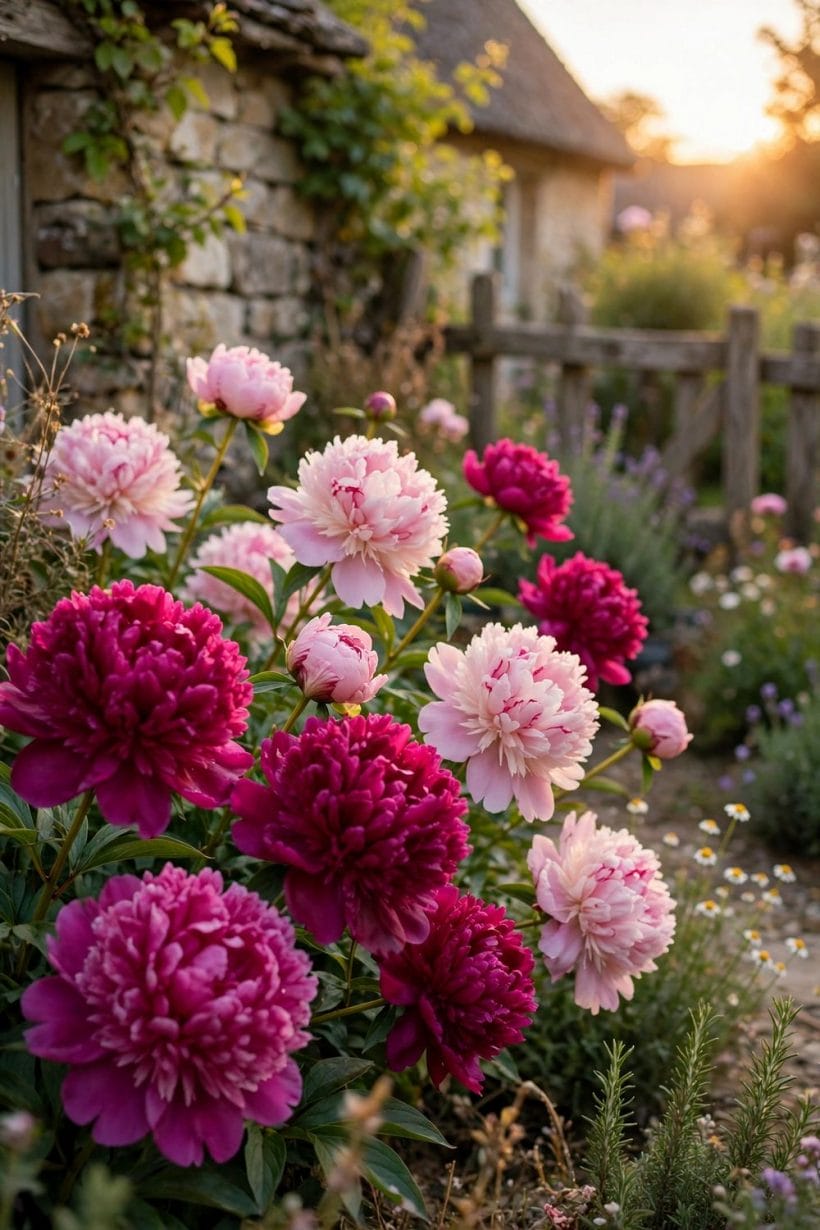
Colour is another part of the pleasure. Peonies come in soft blush pinks, deep magentas, clean whites, and warm coral tones, with single, semi-double, and fully double flower forms. Single forms show their centres openly and can look lovely with pollinators visiting, while double forms give that full, ruffled look many gardeners picture first. There is no right answer here; the best choice is the colour and form that makes you smile when you look out of the window.
3. Choosing a Spot in the Garden
Light is the first thing to get right. Peonies generally flower best where they receive generous sunshine through the day, though a little light shade in very hot gardens can be welcome. A spot that stays shaded for most of the day is less likely to give the abundant flowering gardeners hope for, so it is worth watching how sunlight moves across your garden before you dig. Morning sun with some afternoon shelter is a pleasant compromise in many plots.
Shelter matters too, especially where spring winds are strong. Tall blooms on soft stems can be knocked about by gusts, and a position near a fence, hedge, or wall can soften the worst of the weather without blocking the light. At the same time, air should still move freely around the plant, since still, damp corners can encourage problems. A balance of sun, shelter, and airflow is the aim.
Think about the space around the plant as well. Peonies grow into generous clumps, and they dislike being crowded by vigorous neighbours that compete for water and nutrients. Give the plant room to spread its foliage, and plan the border so that later-flowering plants can take over the display once the peony blooms fade. That way the bed keeps looking good all season, and the peony foliage itself becomes a handsome backdrop. If you are planning the wider layout of your outdoor space, these backyard landscaping ideas can help you think about how flower beds sit alongside paths, seating, and lawns.
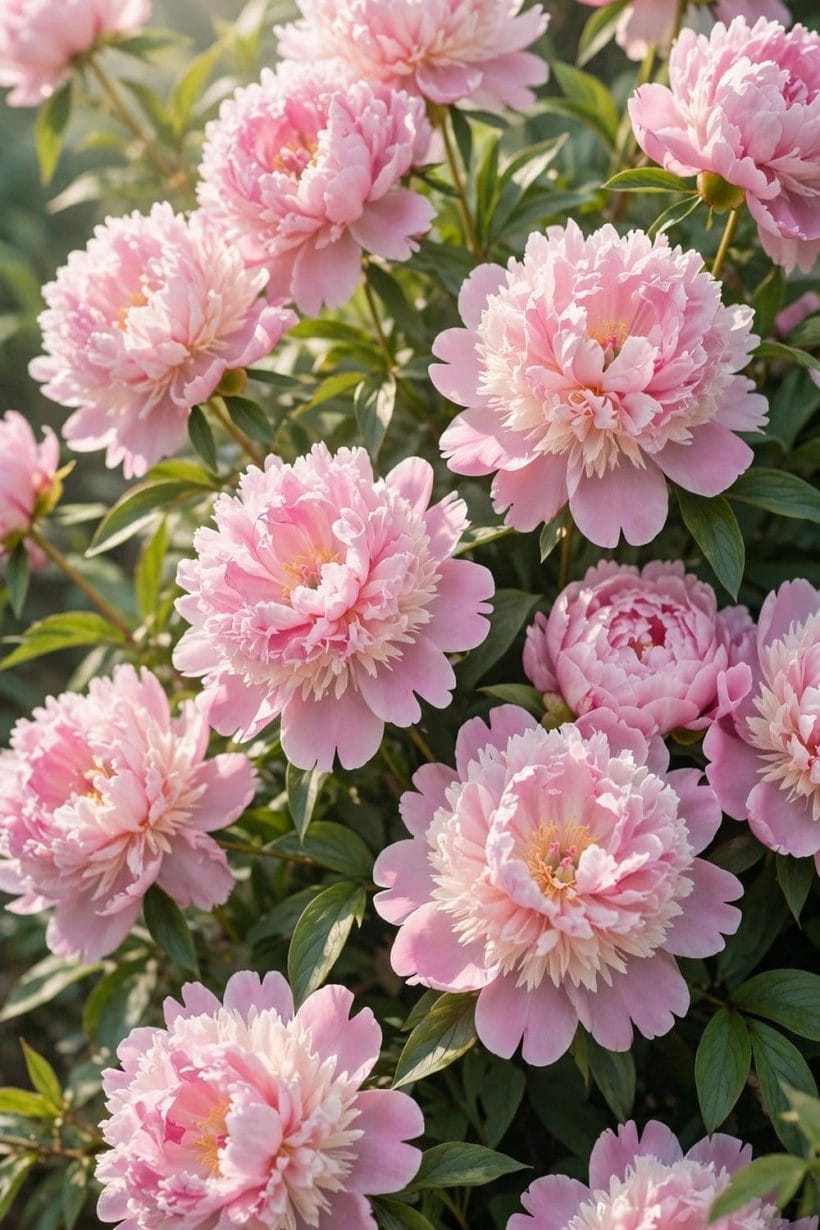
Finally, consider how you will see the plant. Peonies are at their best viewed from a path, a seating area, or a window, where their brief but glorious flowering can be enjoyed up close. Planting them where you pass every day means you will notice the buds swelling, catch the first opening bloom, and remember to give them a little attention at the right moments.
4. Preparing the Ground
Peonies appreciate soil that holds some richness yet drains freely. Heavy ground that stays wet for long stretches is the main thing to avoid, since roots sitting in waterlogged soil are unlikely to thrive. If your soil is dense, working in plenty of well-rotted organic matter can help open its structure, and raising the bed slightly can improve drainage in the wettest spots. Sandy soil, by contrast, may benefit from the same organic matter, which helps it hold moisture a little longer.
It is worth taking time over preparation rather than rushing the planting. Dig the area over, remove persistent weeds and their roots, and break up any compacted layers so young roots can spread. A generous planting hole, wider than the root itself, gives the plant a good start, and backfilling with the improved soil around it avoids a sharp change between the hole and the surrounding ground. This is also a good moment to think about the bed as a whole: paths, edging, and neighbouring plants all shape how easy the peony will be to care for later. For beds edged with stone or gravel, these rock landscaping ideas show how hard materials and planting can sit comfortably together.
Avoid planting peonies where water collects after rain, such as at the bottom of a slope or beside a downpipe outlet. If the only available spot is damp, a raised bed is often a better answer than hoping the plant will adapt. Equally, avoid ground that has recently held another peony in the same place without refreshing the soil, since replanting in tired soil can slow establishment. Fresh ground, well prepared, gives a new plant the kindest possible beginning.
5. Planting Peonies Well
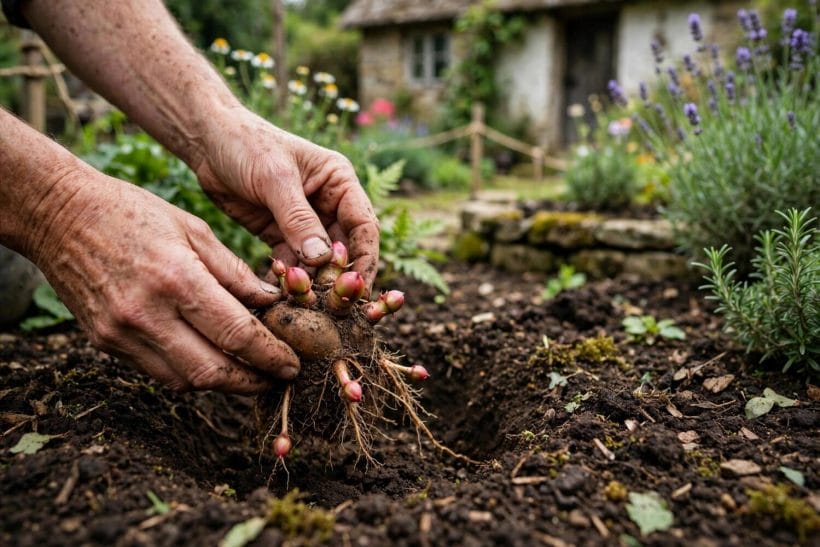
Planting depth is the detail most often linked with shy flowering, and it is worth getting right. Peony roots carry small growing points, sometimes called eyes, and these should sit just below the soil surface rather than buried deeply. Planted too deep, a peony may grow leaves happily while producing few flowers, which can be puzzling until the depth is checked. Planted at a shallow depth, with the eyes near the surface, the plant is better placed to flower in its own time.
When you set the plant in place, spread the roots gently outward and settle soil around them, firming lightly so the plant sits steady without being compacted. Water well after planting so the soil makes good contact with the roots, and add a light mulch of organic material around the plant, kept clear of the crown itself. Mulch helps the soil hold moisture and keeps weeds down, but piling it against the stems can trap damp where it is not wanted.
Timing is flexible, but many gardeners plant in the cooler months when the plant is dormant, since the roots can settle before spring growth begins. Container-grown plants can be planted through much of the growing season if they are watered carefully afterwards, though hot, dry spells are best avoided for new planting. Whatever the timing, the first season is about establishment: roots first, flowers second. If you are short of border space, container gardening ideas offer a way to enjoy flowering plants in pots and planters while you plan a permanent bed.
A newly planted peony may flower lightly in its first year, or it may wait. Both are normal, and neither is a reason to dig the plant up or move it. Peonies are known for disliking disturbance, and a plant that is moved repeatedly can take even longer to settle. Patience at this stage is not neglect; it is the care the plant actually needs.
6. Watering and Feeding Gently
Water is best given steadily rather than in occasional floods. During dry spells, a thorough soaking that reaches the roots is more useful than a light sprinkle that wets only the surface, and watering in the cooler parts of the day helps the moisture soak in rather than evaporate. Established peonies are often fairly tolerant once their roots run deep, but young plants need more regular attention until they are settled.
Feeding should be equally gentle. A dressing of well-rotted organic matter around the plant in the cooler months, or a general garden feed used as directed in spring, is usually enough for plants in reasonable soil. Overfeeding can push soft, leafy growth that flops easily and flowers less well, so restraint is wiser than enthusiasm. If your soil is already rich, a plant may need very little extra feeding at all, and observing the plant across a season will tell you more than any fixed routine.
Watch the foliage as your guide. Lush, healthy leaves through the growing season suggest the plant is content, while pale or sparse growth may mean it is competing with neighbours, short of water, or planted in ground that needs improving. Rather than reaching for a quick fix, check the basics first: light, drainage, crowding, and moisture. Most peony troubles trace back to one of those simple factors, and adjusting them gradually is kinder than dramatic intervention.
7. Supporting Heavy Blooms
Peony flowers are generous, and that generosity can be their undoing in wind or heavy rain. A plant in full bloom, especially a double-flowered kind, can bow under the weight of its own flowers, and stems may bend or snap just when the display is at its peak. Support put in place early, before the stems grow tall, is far easier than trying to rescue a flopping plant later.
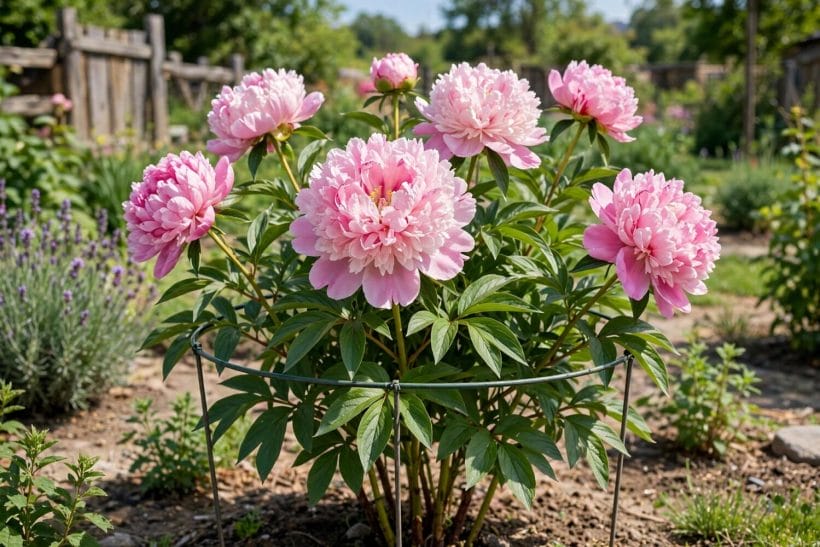
Simple supports work well. A ring support, a few unobtrusive stakes with soft ties, or a low framework set over the young shoots in spring lets the foliage grow through and hide the structure by flowering time. The aim is to hold the stems upright without strangling them, so ties should be loose and checked as the plant grows. For gardeners who keep tools and supports tidy between seasons, these garden shed ideas can help with storing stakes, rings, and twine where they are easy to find next spring.
If a stem does flop, it is not a disaster. You can cut it for the vase and enjoy the bloom indoors, which is one of the great pleasures of growing peonies. The plant itself will keep growing, and the lesson for next year is simply to support a little earlier or a little more generously. Over time you will learn which of your plants need help and which stand happily on their own.
8. Seasonal Care Through the Year
Spring is the season of watching. New shoots push through the soil, sometimes in a deep red colour that is lovely in its own right, and the plant grows quickly as days lengthen. This is the time to put supports in place, clear away any debris from winter, and make sure the plant is not being crowded by fast-growing neighbours. A light mulch, kept clear of the crown, can help the soil hold spring moisture.
Summer belongs to the flowers, and then to the foliage. Once blooms fade, remove the spent flower heads so the plant puts its energy into leaves and roots rather than seed. Leave the foliage standing through summer and into autumn, since those leaves are feeding the roots for next year’s display. Cutting the plant down while it is still green would weaken it, so patience is needed even when the border starts to look tired.
Autumn is tidying time. As the foliage yellows and dies back, it can be cut down to ground level and removed, which helps keep the bed clean over winter. This is also a good moment to refresh mulch, check supports for damage, and note anything you want to change next year, such as moving a neighbour that crowded the peony or adding a new plant nearby. Winter itself asks little of the gardener: the dormant plant rests underground, and a mulch layer can offer some protection in the coldest gardens. Planning the wider bed for next year can draw on herb garden layouts, which show how to organise planting beds by use and season.
9. Enjoying Cut Blooms Indoors
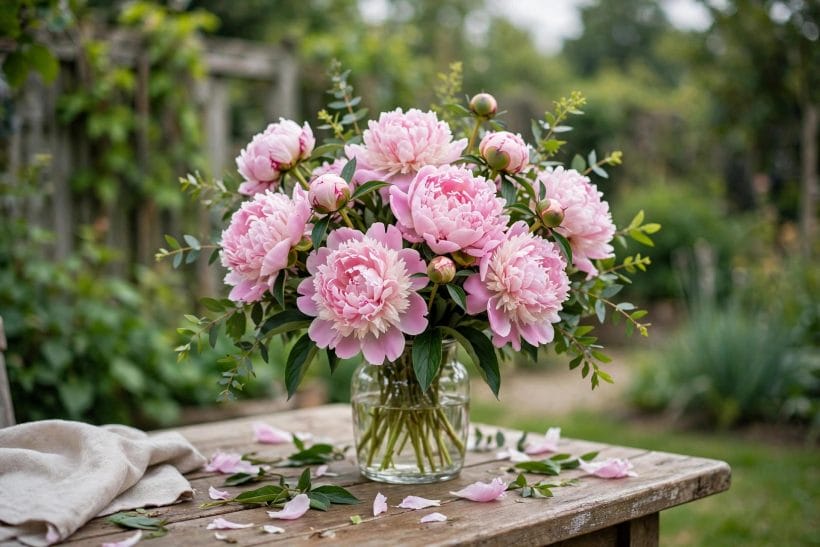
Peonies make wonderful cut flowers, and cutting a few stems will not harm an established plant. Choose stems where the bud feels soft and shows colour, cut in the cooler part of the day with clean, sharp secateurs, and place them in water straight away. Indoors, strip any leaves that would sit below the waterline, use a clean vase, and change the water regularly to keep the display fresh.
Buds that feel firm and tight may open slowly, while softer buds usually open sooner, so cutting a mix of stages can stretch the display over more days. Keep the vase out of direct sun and away from ripening fruit and heat sources, both of which can shorten the life of cut flowers. If a bloom opens fully and begins to drop petals, that is simply the flower finishing its natural span; enjoy it while it lasts and compost the remains.
Cutting is also a way to enjoy peonies from a plant that is flopping outdoors, as noted earlier. Rather than seeing a bent stem as a loss, bring it inside where it can be admired at eye level. A single peony in a small vase can be just as delightful as a large arrangement, and it is a lovely way to share the garden with visitors or brighten a kitchen table.
10. Troubleshooting Common Disappointments
The most common disappointment is a peony that grows leaves but produces few flowers. Planting depth is the first thing to check, since eyes buried too deeply are a frequent cause. A plant that is too shaded, too crowded, or recently moved may also flower lightly while it adjusts. In each case the remedy is gentle: improve the light if you can, ease competition from neighbours, and give the plant another season before judging it.
Floppy stems are usually a support question rather than a sign of poor health. Early supports, as described above, solve most cases, and choosing a position with some shelter helps too. If the same plant flops every year despite support, it may simply be a heavy-flowered kind that needs a sturdier framework, or it may be growing in soil so rich that its stems grow soft. A lighter touch with feeding can help over time.

Spots on leaves or buds that fail to open can have several causes, and it is best not to guess at a single explanation. Good airflow, clean autumn tidying, and avoiding overhead watering in damp weather all reduce the conditions that encourage trouble. For persistent or spreading problems, a local nursery or experienced gardener who can see the plant is a better source of advice than any general guide, since they can look at the actual foliage and soil. Most peony troubles are manageable with simple care, and many plants recover well with a season of steady attention.
Final Considerations
Peonies reward a gardener who plans well, plants carefully, and then steps back a little. They ask for sunshine, soil that drains, a shallow planting depth, and time to settle, and in return they offer some of the most generous flowers a temperate garden can grow. Their season of bloom may be brief, but their foliage carries the border for months, and their return each spring becomes a small annual celebration.
If you are deciding where to start, choose one plant in a colour you love, give it a sunny, sheltered spot with room to grow, and enjoy learning its habits across a full year. For storing the tools and supports you will gather along the way, these metal shed ideas are worth a look. However your peony journey begins, may your first blooms be worth the wait, and may your garden grow more beautiful with every season.




0 Comments