
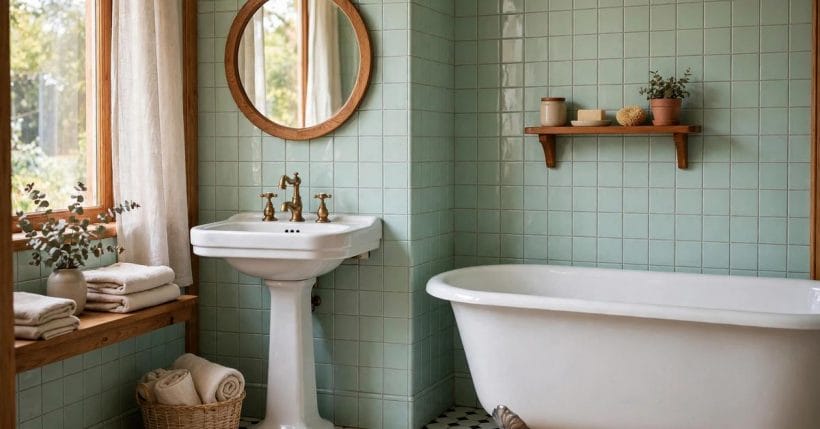
Retro bathroom ideas bring the charm of earlier decades into a room that still has to work hard every day, pairing soft colour, curved shapes and patterned tile with layouts that suit modern routines. The appeal lies in the balance: a freestanding tub or a pedestal basin can set the period mood, while thoughtful storage, sensible lighting and well-chosen fixtures keep the room practical for busy mornings and quiet evenings alike. Retro style here means the look and feel of the past, not a copy of an old plumbing system, and every idea below keeps that distinction in view.
This guide gathers retro bathroom ideas across layouts, vanities, tiles and space-saving fixtures, so a small washroom and a generous family bathroom can both find something useful. Colour palettes, bath shapes, tap styles, mirrors, lighting and finishing layers each get their own section, and the sections work together as a whole-room plan rather than a list of unrelated purchases. Any plumbing, waterproofing or electrical work mentioned stays firmly in professional hands, and the focus throughout remains on choices that can be seen, touched and lived with.
| Item | What it is |
|---|---|
| Retro Colour Palettes and Period Character | Colour does more than any other single choice to set a retro mood, because pastel greens, soft pinks, warm creams and powder blues instantly recall bathrooms from earlier decades. |
| Layouts That Suit a Retro Bathroom | A retro bathroom layout works best when the statement piece gets room to breathe and the everyday fixtures stay easy to reach. |
| Freestanding Tubs and Classic Bath Shapes | The freestanding tub is the centrepiece of many retro bathroom ideas, and its shape sets the tone for everything around it. |
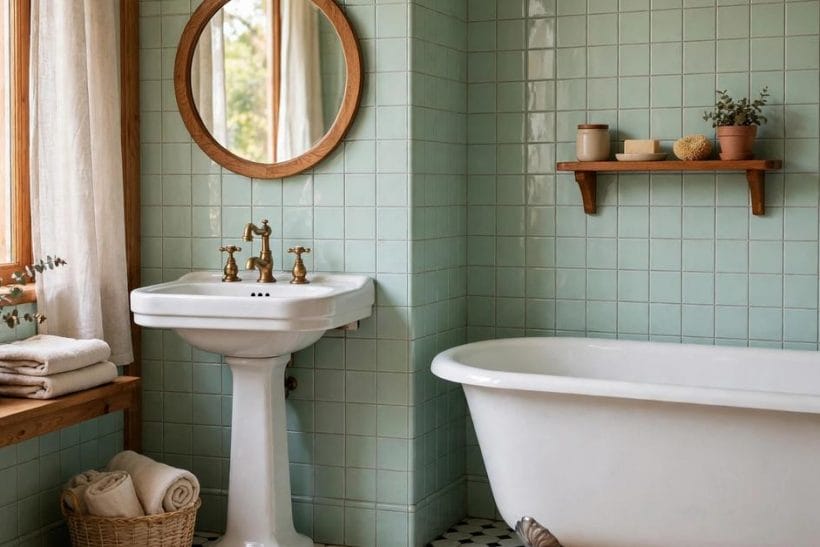
| Pedestal and Console Vanities with Retro Detailing | Vanities carry much of the retro character at basin height, and pedestal and console forms suit the style particularly well. |
| Retro Tiles: Pattern, Colour and Grout Choices | Tile is where retro bathrooms earn their pattern, from small square mosaics and classic subway layouts to bolder geometric floors in soft period colours. |
| Taps, Showers and Fixtures with a Vintage Feel | Taps and shower fittings give a retro bathroom its jewellery, and warm metal finishes with cross or lever handles read instantly as period pieces. |
| Mirrors, Lighting and Glass Details | Mirrors and lighting shape how a retro bathroom feels at every hour, and period forms suit both. |
| Storage and Space-Saving Fixtures for Small Retro Bathrooms | Small retro bathrooms need storage that respects the period look while hiding modern clutter. |
| Flooring, Walls and Finishing Layers | Flooring grounds a retro bathroom, and period floors range from small mosaic tiles and patterned geometric layouts to warm wood-look boards in a larger room. |
| Keeping a Retro Bathroom Practical Day to Day | A retro bathroom stays enjoyable when daily care is simple. |
1. Retro Colour Palettes and Period Character
Colour does more than any other single choice to set a retro mood, because pastel greens, soft pinks, warm creams and powder blues instantly recall bathrooms from earlier decades. A restrained palette works best: one leading pastel on the walls or the tiles, a warm white for the sanitaryware, and a darker accent on the floor or the vanity to ground the room. Too many competing pastels can make a small room feel busy, while a disciplined palette lets each period detail stand out.
Period character also comes from the way colour is placed rather than the shade alone. A dado line of coloured tile, a painted vanity in a soft tone, or a patterned floor can carry the retro message while the upper walls stay calm and light. Darker wood tones, brushed metal finishes and cream ceramics soften the sweetness of pastels and keep the room feeling grown-up rather than costume-like. The aim is a room that feels collected over time, not decorated for a single theme day.
Light changes how retro colours read, so a palette worth testing under both daylight and evening light before it is committed to tile or paint. North-facing rooms tend to cool pastels down, while warm artificial light can deepen creams and pinks in the evening. Samples held against the actual floor and the chosen sanitaryware give a truer preview than a shade seen in isolation, and a palette that still pleases in both lights is the one to carry through the whole room.
2. Layouts That Suit a Retro Bathroom
A retro bathroom layout works best when the statement piece gets room to breathe and the everyday fixtures stay easy to reach. Placing a freestanding tub where it can be seen from the doorway gives the room an instant focal point, while the basin and toilet sit along the walls where plumbing runs are simplest. In a compact room, the same idea scales down: a shorter tub or a well-proportioned basin takes the starring role, and clear walking space is protected rather than filled with extra furniture.
Zoning helps a retro layout feel calm instead of crowded. Wet areas gather near the bath or shower, dry areas hold the vanity, mirror and storage, and a clear path links the door to each zone without crossing another. A generous mirror above the basin can make a narrow room feel wider, and a light colour on the upper walls lifts a low ceiling. These are layout decisions rather than decoration, and they shape how comfortable the room feels long after the novelty of the period details has settled.
Small retro bathrooms benefit most from honest layout choices. A wall-hung basin or a compact vanity frees floor space, a shower over the bath serves two purposes in one footprint, and tall, shallow storage uses wall height instead of floor area. For broader inspiration on compact washrooms, see tiny bathroom ideas and tiny house bathroom designs, which cover small-room planning in general terms. Every layout change that moves waste pipes, water supplies or waterproofed areas belongs to a licensed professional, and a layout that avoids moving those services is often the most sensible retro plan of all.
3. Freestanding Tubs and Classic Bath Shapes
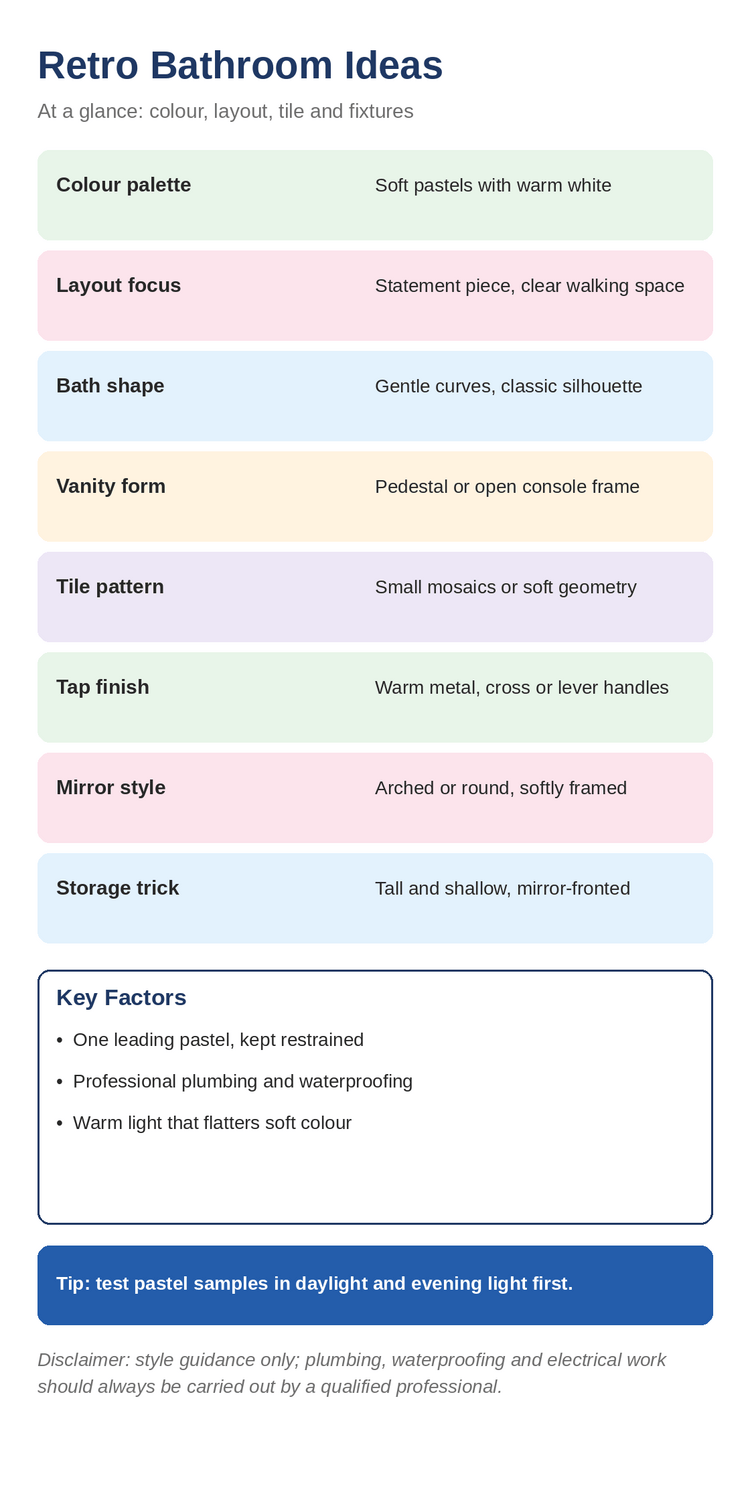
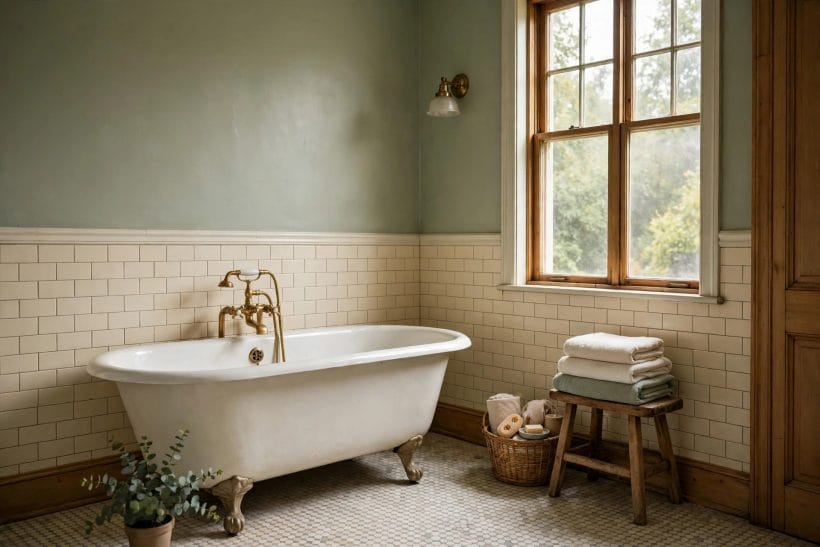
The freestanding tub is the centrepiece of many retro bathroom ideas, and its shape sets the tone for everything around it. A gently curved roll-top form reads soft and traditional, while a sleeker oval tub leans toward a later, more streamlined period feel. Either shape pairs well with pastel tiles and warm metal taps, and the tub itself needs little else beside it: a small stool, a towel rail within reach, and a floor that can handle splashes without fuss.
Choosing a tub shape also means thinking about how the room is used day to day. A deeper tub suits long soaks, a shorter tub suits a compact room, and a tub with a flat side that sits against a wall can save space while still looking freestanding from the front. The surround matters too: tiled walls behind the tub protect the plaster, a simple shelf holds everyday items, and a curtain or screen keeps water where it belongs. All supply, waste and sealing work around a tub is professional work, never a weekend experiment.
Where a full freestanding tub is not practical, a classic built-in tub with a tiled or panelled front can carry the same retro feeling. A panelled front in painted wood, a tiled apron that matches the wall tiles, or a simple curved front all nod to earlier decades without demanding extra floor space. The bath remains the visual anchor, and the rest of the room — basin, mirror, lighting — can stay quieter so the tub keeps its starring role.
4. Pedestal and Console Vanities with Retro Detailing
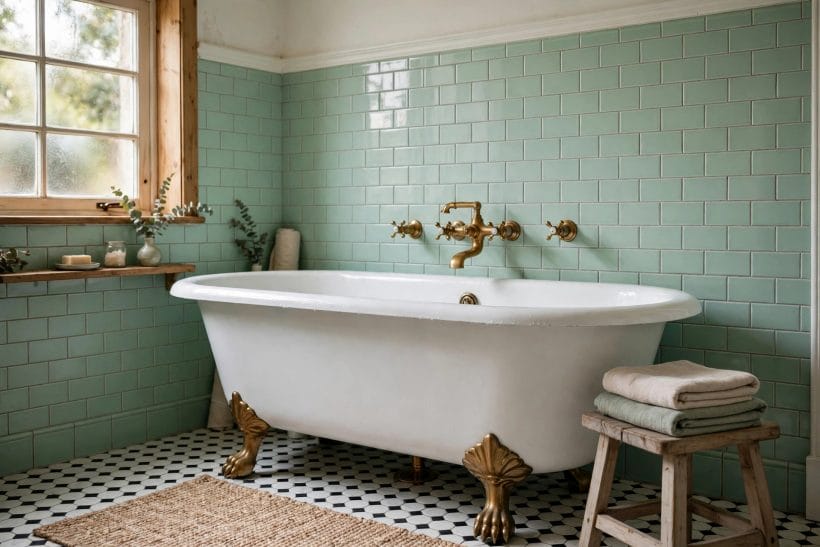
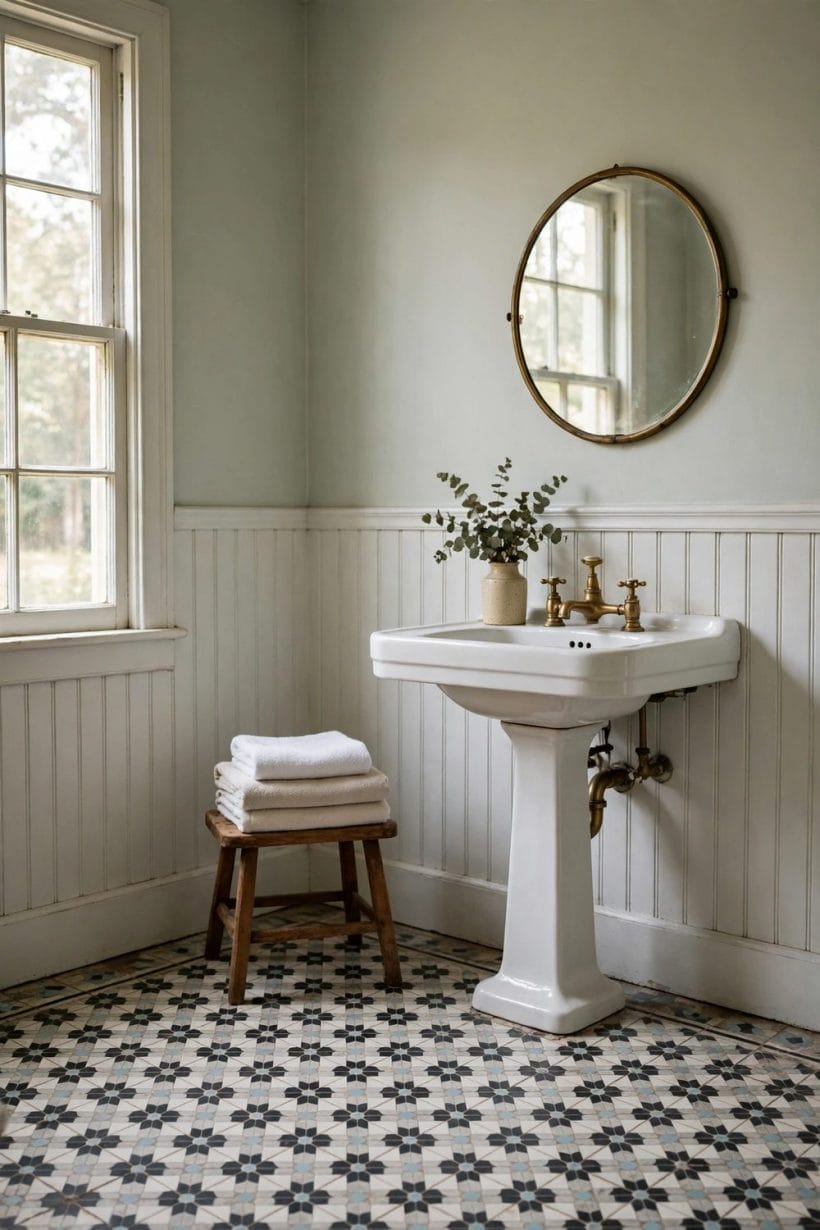
Vanities carry much of the retro character at basin height, and pedestal and console forms suit the style particularly well. A pedestal basin shows its curved stem proudly, keeps the floor visible beneath, and pairs naturally with a round or arched mirror. A console vanity, with its open metal frame and basin set into the top, adds a lighter, more elegant line and leaves space below for a basket or folded towels. Both forms keep the room feeling open, which matters in smaller bathrooms.
Retro detailing on a vanity lives in the small decisions: a ceramic basin with a gentle curve, taps with cross handles or lever handles in a warm metal finish, and a mirror frame that echoes the basin shape. A wooden vanity with panelled doors offers a warmer, furniture-like alternative, and a painted finish in a soft pastel can tie the vanity to the wall colour. Whatever the form, the basin height and the mirror position should suit the people who use the room daily, and any change to supplies or waste pipes stays with a professional.
Storage around a retro vanity works best when it stays discreet. A mirrored cabinet above the basin hides everyday items behind a period-appropriate front, a small shelf beside the mirror holds the few things reached for daily, and a basket or stool below a console vanity handles the rest without cluttering the floor. For wider decorating context, tiny house interiors shows how compact rooms balance furniture-like pieces with open floor space. The vanity should look like it belongs to the room, not like a display piece that cannot be used.
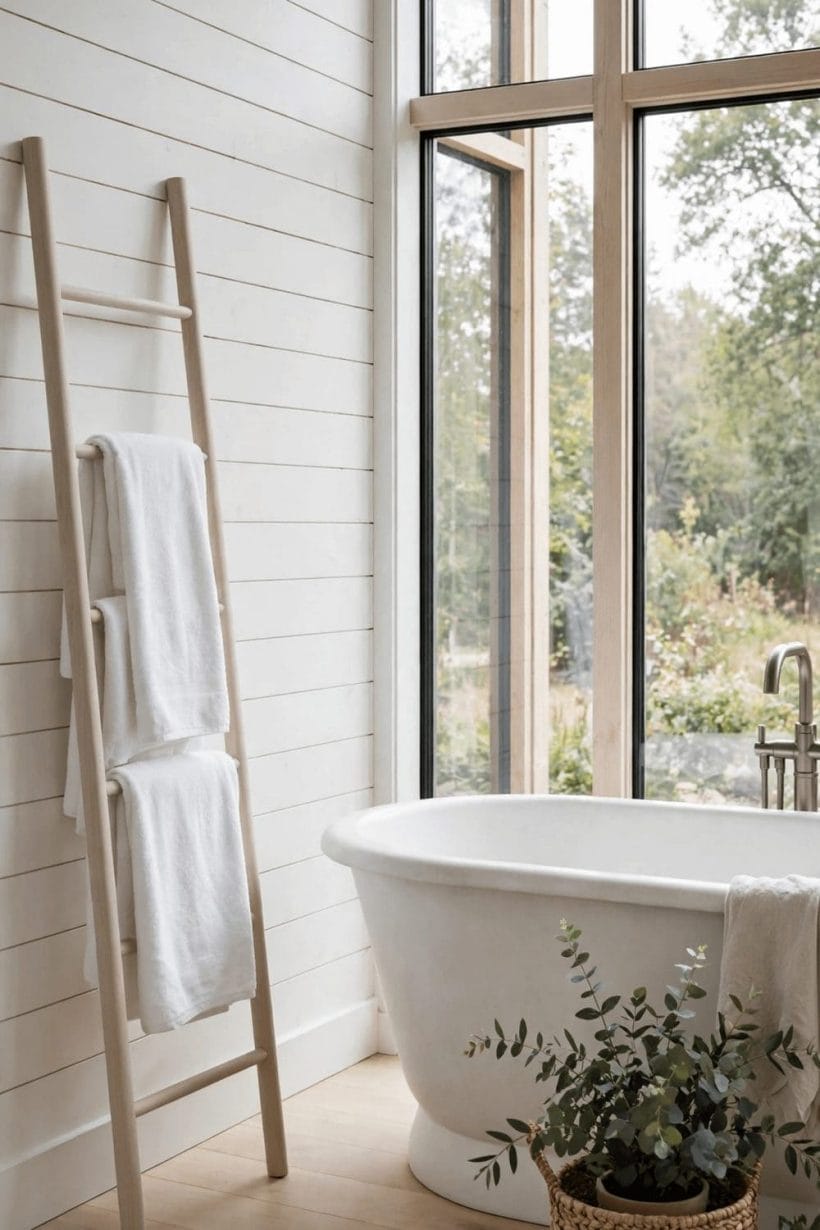
5. Retro Tiles: Pattern, Colour and Grout Choices
Tile is where retro bathrooms earn their pattern, from small square mosaics and classic subway layouts to bolder geometric floors in soft period colours. A patterned floor in muted tones can anchor the whole room, while plain wall tiles in a pastel shade let the floor pattern shine. Alternatively, a decorative border or a feature strip at dado height adds period detail without covering every wall in pattern, which keeps the room calm and easier to live with.
Colour and grout choices change how retro tile reads. A soft grey or warm white grout lets coloured tiles sit quietly, while a contrasting grout picks out the pattern of a mosaic or a geometric floor and makes the layout itself the decoration. Glossy wall tiles bounce light around a small room, and a matt floor tile gives surer footing underfoot. Samples viewed together — floor tile, wall tile and grout — prevent a combination that looks fine apart and clashes once laid.
Tile also needs practical thinking behind the pretty surface. Walls around baths and showers need proper waterproofing beneath the tile, grout lines need sealing where makers advise it, and damaged tiles should be replaced before water finds its way behind them. All waterproofing and tiling in wet areas is professional work, and a well-laid retro tile scheme rewards that care by lasting for years. For general wall-decor context, tiny house wall decor covers how wall finishes shape a small room.
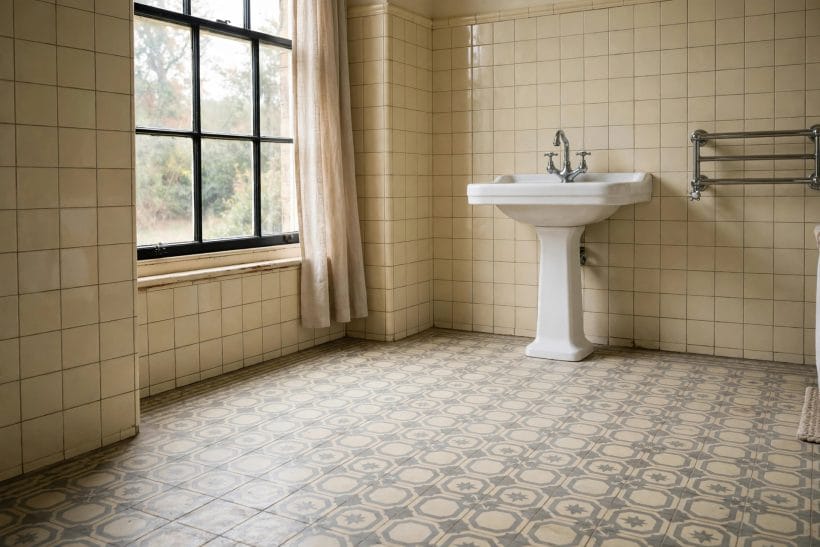
6. Taps, Showers and Fixtures with a Vintage Feel
Taps and shower fittings give a retro bathroom its jewellery, and warm metal finishes with cross or lever handles read instantly as period pieces. A deck-mounted bath filler, a high-rising basin tap, or an exposed shower pipe with a generous shower head can each set the era, and matching the finish across taps, towel rails and light fittings keeps the room coherent. Mixed metals can work, but a single warm finish is the safer route to a calm, collected look.
A shower in a retro bathroom can be a period feature in its own right, with an exposed riser, a traditional shower head and tiled walls that match the rest of the room. A shower over the bath remains the most space-efficient arrangement in a small room, while a separate shower enclosure suits a larger room where the bath already holds the spotlight. Whichever arrangement is chosen, water pressure, drainage and waterproofing all need professional assessment, and period-style fittings must suit the home’s actual water system rather than being chosen on looks alone.
Smaller fixtures complete the vintage feel without demanding attention. A traditional toilet with a high-level cistern or a classic close-coupled form, a ceramic soap dish set into the tiles, and a towel ring in the same metal finish as the taps all reinforce the period without clutter. The guiding rule is restraint: a few well-chosen vintage-style fixtures read as retro, while every surface crowded with period pieces can tip the room toward pastiche.
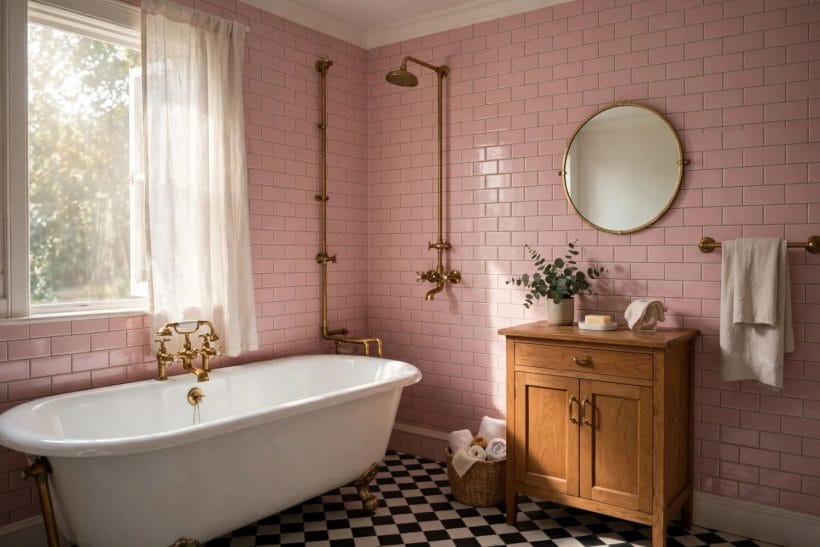
7. Mirrors, Lighting and Glass Details
Mirrors and lighting shape how a retro bathroom feels at every hour, and period forms suit both. An arched or round mirror above the basin softens the straight lines of tiles and vanities, while a mirrored cabinet adds hidden storage behind a classic front. A pair of wall lights flanking the mirror gives even, flattering light for daily routines, and a central pendant or flush fitting in a warm metal or opal glass finish completes the period ceiling picture.
Glass details add sparkle without adding colour. A fluted or reeded glass panel on a shower screen or a cabinet door diffuses light softly, a glass shelf beside the mirror holds everyday items without visual weight, and a simple glass pendant shade warms the ceiling light. These details work best in moderation: one or two glass accents catch the light, while too many reflective surfaces can make the room feel cold and hard.
Lighting layers matter more than any single fitting. Bright, even light around the mirror serves morning routines, a softer ceiling light suits evening baths, and a dimmer — fitted by a qualified electrician — lets one room serve both moods. Warm-toned bulbs flatter pastel tiles and warm metal finishes, and they keep the retro palette glowing rather than washed out. For broader decorating ideas, tiny house decorating ideas covers lighting and mirror placement in compact rooms.
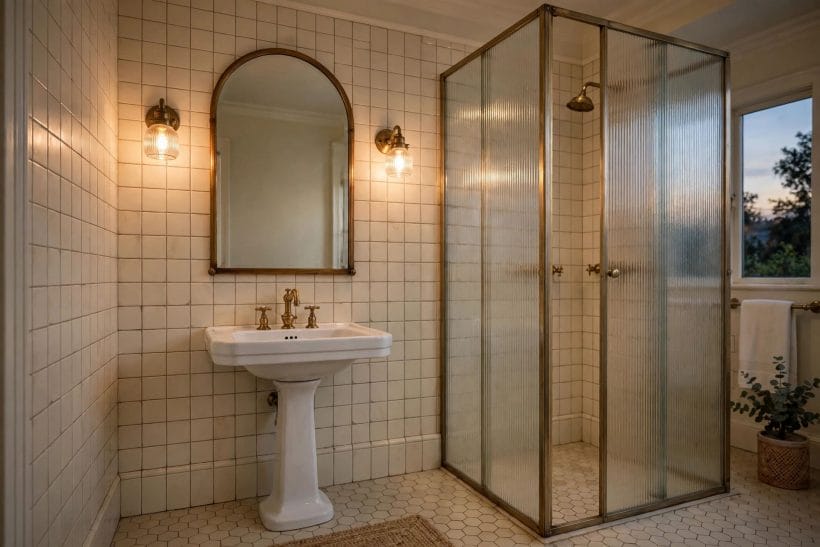
8. Storage and Space-Saving Fixtures for Small Retro Bathrooms
Small retro bathrooms need storage that respects the period look while hiding modern clutter. Tall, shallow cabinets use wall height without stealing floor space, a mirrored cabinet above the basin doubles as mirror and medicine store, and a slim stool or ladder shelf beside the bath holds towels where they are reached for. Open shelving suits decorative items and folded towels, while closed cabinets hide cleaning products and spare supplies.
Space-saving fixtures earn their place by doing two jobs at once. A shower over the bath serves bathing and showering in one footprint, a wall-hung basin or a compact console vanity frees visible floor, and a heated towel rail warms towels while drying the room. A small stool that tucks under a console vanity, a basket that slides beneath it, and a hook rail on the back of the door all add capacity without adding furniture. The room stays retro because the fixtures look period, not because storage was sacrificed.
Editing matters as much as adding. A retro bathroom feels generous when only daily essentials sit on display and everything else lives behind a cabinet door. A weekly reset — clearing surfaces, refolding towels, returning items to their cabinet — keeps the period details visible instead of buried under clutter. General small-space planning guidance appears in tiny house small space interior design, which treats storage as part of the layout rather than an afterthought.
9. Flooring, Walls and Finishing Layers
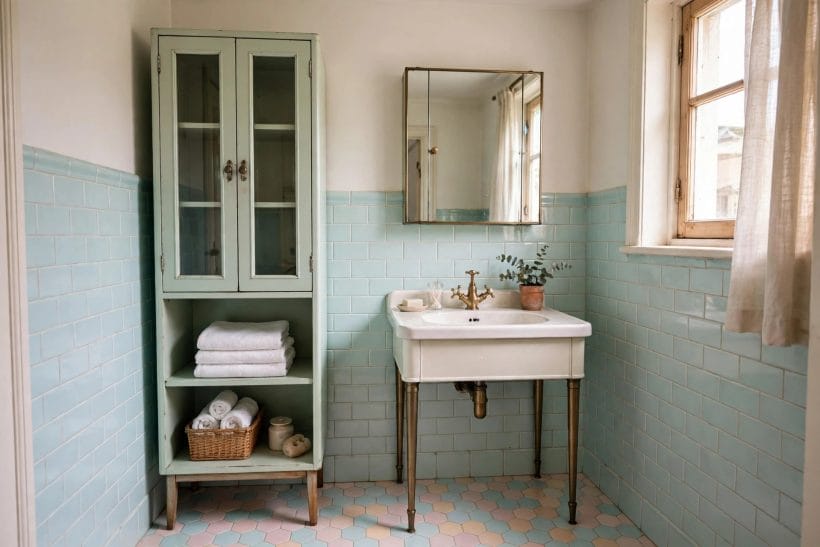
Flooring grounds a retro bathroom, and period floors range from small mosaic tiles and patterned geometric layouts to warm wood-look boards in a larger room. A patterned floor can carry the retro message alone, letting walls stay plain, while a quiet floor lets a decorative wall border or a coloured vanity take the lead. Whichever leads, the floor must suit a wet room: sure footing, sealed grout where makers advise it, and a finish that tolerates splashes without staining.
Walls finish the room in layers. Painted upper walls in a soft white or pale pastel keep the room light, tiled lower walls protect against splashes, and a painted ceiling in warm white lifts the whole scheme. A dado rail or a tile border marks the change between layers and adds a crafted, period line. Where walls meet floors, a simple skirting or tile trim finishes the junction cleanly and protects the wall base from water.
Finishing layers are the details that make a retro bathroom feel complete rather than newly assembled. A wooden bath mat or a woven rug softens a tiled floor, a ceramic tray corrals everyday bottles on the vanity, and a framed print or a small plant adds life without competing with the tiles. For interior-design context across rooms, tiny house interior designs shows how finishing layers tie a whole home together. Each finishing touch should earn its place by being used, not merely displayed.
10. Keeping a Retro Bathroom Practical Day to Day
A retro bathroom stays enjoyable when daily care is simple. Smooth ceramic surfaces wipe clean easily, sealed grout resists staining, and a squeegee kept by the shower helps glass and tiles dry without streaks. Towels hung on a heated rail dry faster and keep the room fresher, and a small ventilation routine — opening a window or running an extractor fan — protects paint, grout and wood from damp. These habits preserve the period look far better than any single product.
Practicality also means planning for change. A classic tile and a neutral sanitaryware colour accept new towels, new artwork and new accessories without clashing, so the room can evolve without a refit. A spare tile kept from the original batch repairs chips invisibly, and a note of paint and grout shades used makes future touch-ups straightforward. Retro style lasts longest when the room is built on timeless choices rather than a single fashionable detail.
Finally, a practical retro bathroom respects the limits of older homes and older fittings. Water systems, drainage and electrical circuits should be assessed by qualified professionals before period-style fixtures are fitted, and any sign of leaks, damp or failing seals deserves professional attention promptly. A room that looks charming and works reliably is the true goal of retro bathroom ideas, and professional care behind the scenes is what lets the period charm shine in front of them.
Final Considerations
Retro bathroom ideas succeed when colour, shape and pattern work together as one calm room rather than competing for attention. A leading pastel, a classic tub or basin form, a well-chosen tile pattern and warm metal details can carry the period feeling, while quiet storage, sensible lighting and a layout that protects clear space keep the room easy to live in. The strongest retro rooms feel collected and comfortable, not staged, and they invite daily use rather than admiration from the doorway.
Start with the layout and the largest pieces, then let colour, tile and fittings follow in that order, and keep plumbing, waterproofing and electrical work in professional hands throughout. A retro bathroom built on those priorities will look charming on the day it is finished and still feel right years later, because its period character comes from enduring shapes and colours rather than passing novelty. That lasting quality is the real charm of retro bathroom ideas, and it is available to bathrooms of every size.

0 Comments