

Choosing a floor is a slow decision, and rigid core vinyl plank flooring rewards a slow approach. The planks look simple on a showroom wall, yet the choice touches the room, the light, the way the floor is fitted, and the way it is cared for afterwards. A short period of careful research, done before any order is placed, helps a household compare like with like and notice the details that matter in daily life rather than only the colour that catches the eye at first glance.
This guide sets out what to look at when researching rigid core vinyl plank flooring, in general terms. It does not rank products, recommend a maker, or settle which plank suits a particular home. Instead it walks through the core, the surface, the joints, the subfloor, the room itself, samples, care, and the written terms, so that a reader can ask clear questions and weigh answers calmly. Where an earlier survey already covers one part of the subject in depth, this guide points to it rather than repeating it, keeping the focus here firmly on the research itself.

1. What Rigid Core Means in Plain Terms
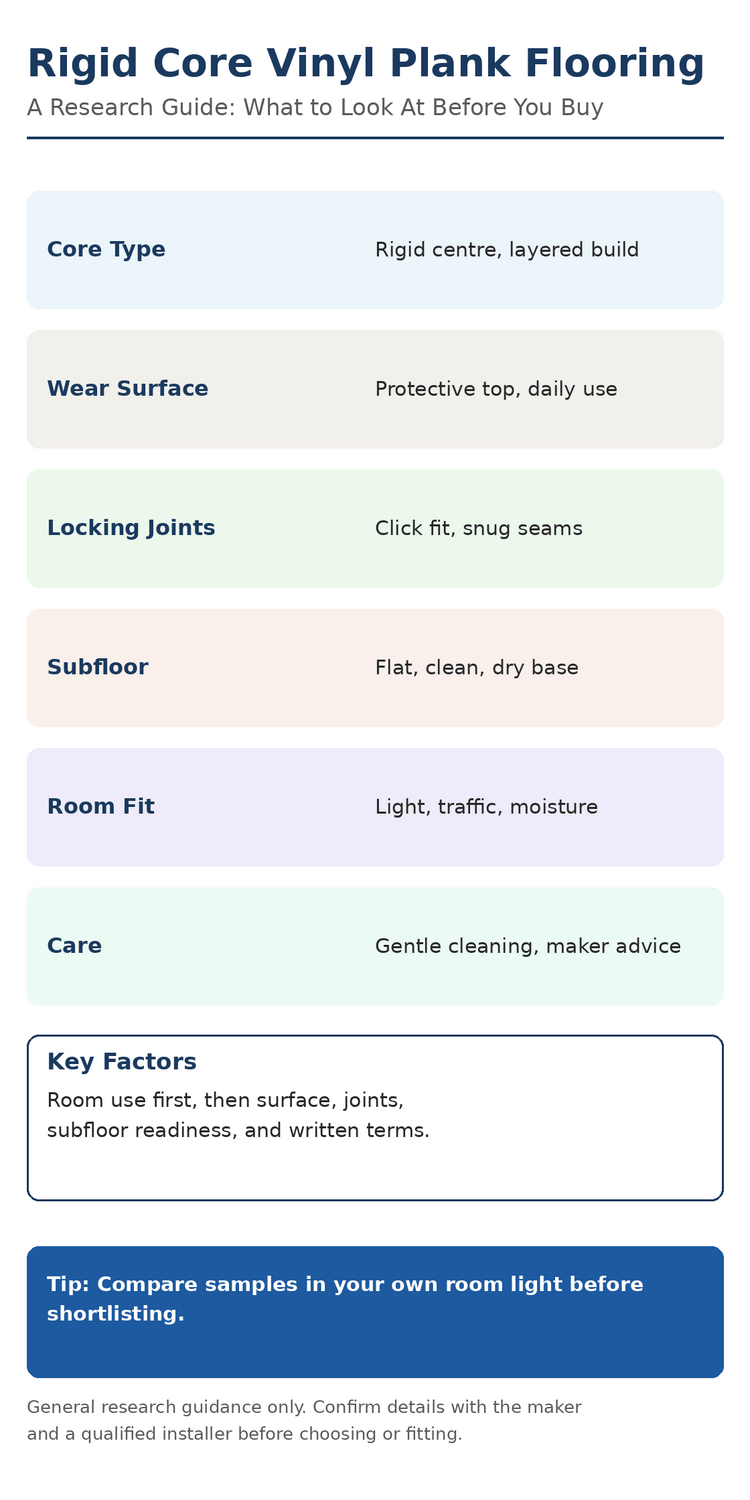
A vinyl plank is built in layers, and the rigid core is the firm centre that gives the plank its shape. Around that centre sit a printed surface that carries the wood look, a protective top layer that faces daily wear, and a backing that sits against the floor below. Understanding that layered build helps a reader make sense of product descriptions, because each layer answers a different question about how the plank behaves in a room.
The core matters because it affects how flat the plank lies and how it responds to changes in the room around it. A rigid centre tends to hold its shape more firmly than a softer plank, which can matter on a floor that sees steady foot traffic or furniture that stays in one place for a long time. The surface, meanwhile, decides the look and the feel underfoot, while the protective top layer faces scuffs, spills, and the small accidents of everyday living. Keeping those roles separate prevents a single attractive feature from standing in for the whole product.
When reading descriptions, look for plain language about each layer rather than praise for the plank as a whole. A description that names the core, the surface, and the protective layer separately is easier to compare with another description written the same way. Where a description is vague about one layer, that vagueness is itself useful information, because it shows where a further question is needed before the plank can be judged fairly against its rivals.
2. Start With the Room, Not the Sample
Research begins most usefully with the room that will receive the floor, not with a sample held under showroom lights. A living room that opens onto a garden, a kitchen where spills are part of cooking, a hallway that every visitor crosses, and a bedroom that stays quiet through the day each place different demands on a floor. Naming the room, its traffic, and its daily habits gives the research a shape, and it stops a plank chosen for one setting from being carried unthinkingly into another.
Light belongs at the start of that thinking as well. A plank that looks warm under a shop ceiling can look cooler beside a north-facing window, and a pale plank can glow in a sunny room while seeming washed out in a dim corner. The size of the room matters too, because plank width, plank length, and laying direction all change how a floor reads across a space. In a compact home, where rooms are small and sightlines run from one space into the next, the floor often needs to work across several rooms at once, and that wider view is worth holding from the beginning. The tiny house flooring ideas collection shows how floors are planned when every room must earn its place.
Existing features of the room deserve the same early attention. Door thresholds, fitted furniture, heating outlets, and the level of the floor at doorways all affect how a new floor will sit, and they are easier to note before samples arrive than to discover during fitting. A short walk around the room with a notebook, listing what stays, what moves, and where the light falls at different times of day, turns vague preference into a working brief that any later comparison can be measured against.
3. The Wear Surface and Everyday Durability
The top of the plank is the part that lives with the household, so it deserves a patient look. The protective layer faces shoes, chair legs, dropped objects, pet claws, and the grit that comes in on wet days. A surface that suits a quiet bedroom may not suit a busy entrance, and a surface chosen for a kitchen may be more than a spare room needs. Matching the surface to the room, rather than choosing the toughest surface on offer for every space, keeps the decision grounded in real use.
Texture is part of that judgement. Some surfaces feel smooth underfoot, while others carry a grain that echoes the printed wood look and gives a little grip. Colour and pattern matter here as well, because a busy grain can hide everyday marks more readily than a plain pale surface, while a darker surface can show dust and light marks that a mid-tone surface would soften. None of these observations settles a choice on its own, but together they explain why the same plank can feel right in one home and wrong in another.
Ask how the surface is meant to be cleaned, and what care the maker advises against, before the plank is shortlisted. Gentle cleaning, suited to the maker’s advice, is the safe frame for this whole subject, and anything that needs harsh treatment or special handling deserves a second thought in a busy household. The kitchen ideas collection is a useful companion here, because kitchens show more clearly than any other room how a floor meets daily life.
4. Core, Locking Joints and How Planks Join
Planks join to one another along their edges, and the quality of that join shapes how the finished floor looks and feels. A snug join gives a smooth surface and a clean line between planks, while a loose or uneven join can catch the eye and the foot. When samples are handled, the edges deserve as much attention as the face, because the face is what is photographed and the edges are what must live together across a whole room.
The core and the joint work together. A firm core helps the plank hold its edge, and a well-formed joint helps the planks stay aligned once laid. Handling two sample planks side by side, joining and separating them gently, shows more about the fit than a photograph can, and it raises useful questions about how the floor will behave if a single plank ever needs attention later. Fitting itself is work for a qualified installer, and any question about cutting, joining, or levelling belongs in that professional conversation rather than in a home experiment.
It is also worth asking how the joint is described in the written material. Descriptions that speak plainly about the join, and about what the installer should check before laying begins, are easier to trust than descriptions that praise the system without explaining it. A careful reader treats a clear, modest description as a strength, because it gives the installer something concrete to work with and the household something concrete to check.
5. Colour and Plank Look in Real Light
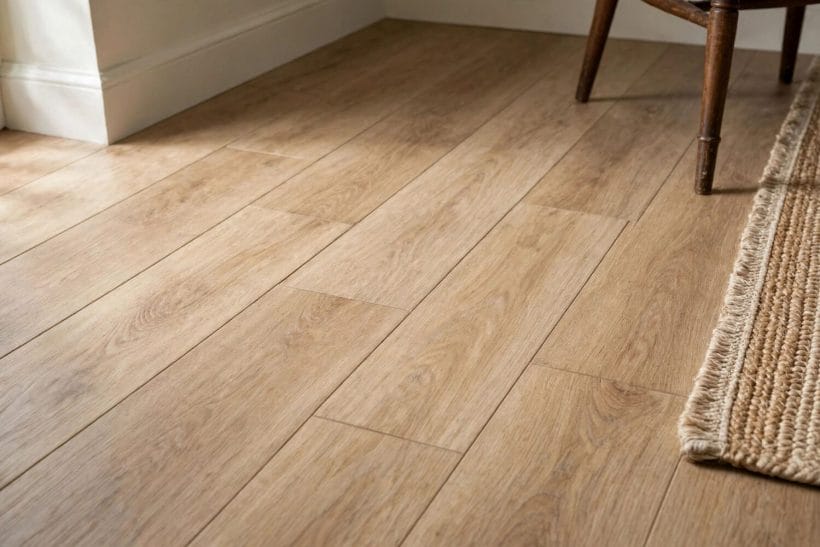
Colour is where research most often goes astray, because a small sample under bright lights flatters almost any plank. The remedy is simple and unglamorous: look at samples in the room itself, at different times of day, beside the furniture and wall colours they will live with. A warm oak that glows in the morning may turn cooler by evening, and a grey plank that looks calm in daylight may feel cold under evening lamps. The room, not the shop, is the honest test.
Plank size and laying pattern change the look as surely as colour does. Longer planks can make a room feel calmer and more continuous, while shorter planks can give a busier, more traditional rhythm. Laying direction matters too, because planks running toward the main window draw the eye one way, while planks running across the room draw it another. Trying a few loose planks on the existing floor, in different directions, costs nothing and often settles a question that hours of looking at pictures cannot.
For a wider sense of how plank looks play out across rooms, the luxury vinyl plank flooring ideas survey gathers layouts, colours, and room ideas in one place, while this guide stays with the research questions that come before a look is chosen. The small living room ideas collection is equally useful, because small rooms show most sharply how a plank colour can open a space up or close it down.
6. Subfloor Readiness and Professional Fitting
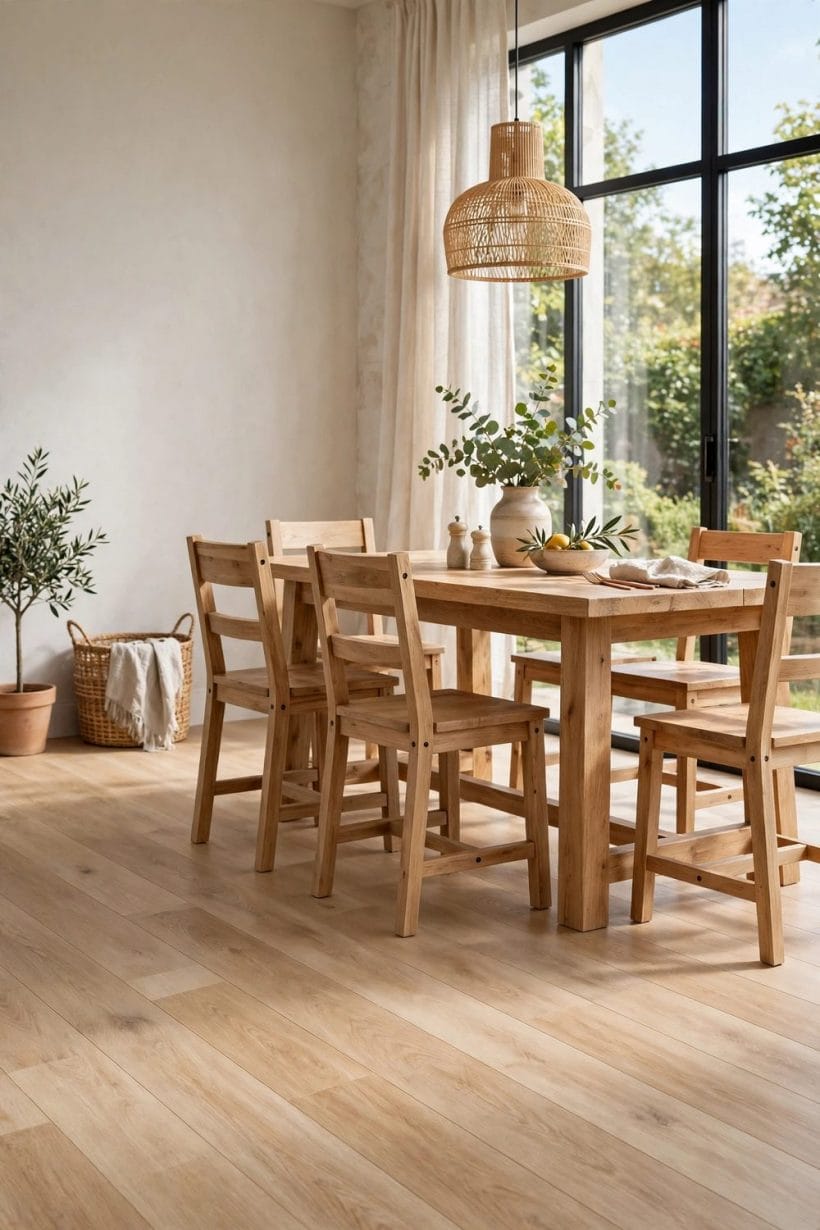
No plank, however well chosen, can rescue a subfloor that is not ready for it. The surface below must be flat, clean, and dry, and any unevenness, loose material, or dampness should be found and dealt with before laying begins. That preparation is not a detail to be left to the day of fitting, because it shapes which planks are suitable and how the finished floor will feel underfoot for years afterwards.
Fitting, levelling, and subfloor preparation are work for a qualified installer throughout, and this guide gives no fitting instructions of its own. The household’s part is to ask good questions: what the installer will check, what preparation the room needs, how thresholds and door clearances will be handled, and what should happen if an uneven patch or a damp spot is found. A professional who welcomes those questions, and who explains the preparation in plain terms, is giving the household exactly the information that careful research is meant to surface.
Timing belongs in the same conversation. A floor that is laid before the room is ready, or before other dusty work is finished, risks marks and damage that no later cleaning can undo. Asking about the order of work, and about how the finished floor should be protected while the rest of the room is completed, is a small step that protects a large investment of time and attention.
7. Water, Sunlight and Room Conditions
Every room has its own conditions, and a plank should be judged against the conditions of the room it will actually serve. Rooms near entrances meet wet shoes and grit, rooms with large windows meet strong sunlight through the day, and rooms beside kitchens and bathrooms meet splashes and steam. Naming those conditions honestly, room by room, keeps a plank from being chosen for its looks alone and then asked to cope with a setting it was never meant to meet.
Sunlight deserves particular care, because its effect is slow and easy to overlook during a short visit to a showroom. A floor that receives direct sun for much of the day will age differently from a floor in a shaded room, and the window coverings, the direction the room faces, and the hours of direct sun all belong in the research notes. The same patient approach suits rooms where moisture is part of daily life, where the right question is not whether a plank can survive a single spill but how it is meant to be cared for when spills happen often.
Where a room’s conditions are unusual, or where an earlier floor has shown problems in that room, those facts should be put to the installer and to the maker in plain terms before a choice is made. A careful answer, grounded in the room as it is, is worth far more than a general assurance, and a question that cannot be answered clearly is a reason to pause rather than to press ahead.
8. Samples, Shortlists and Comparing Like With Like
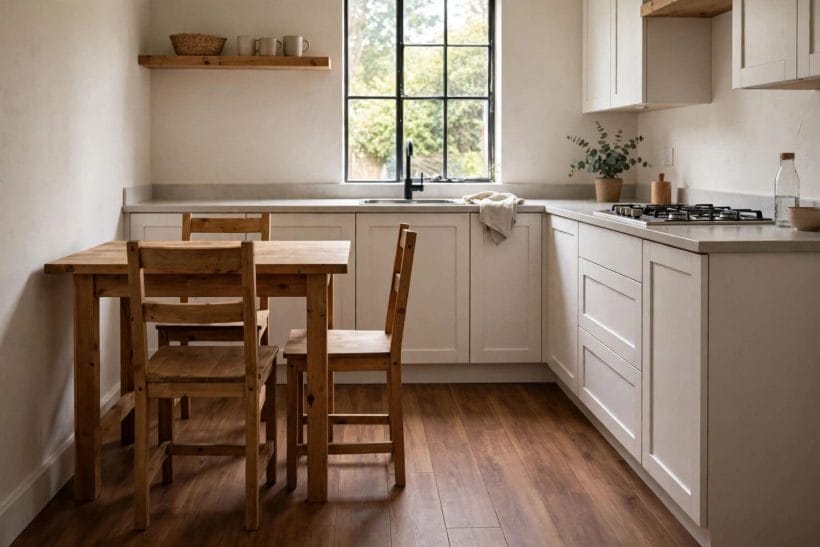
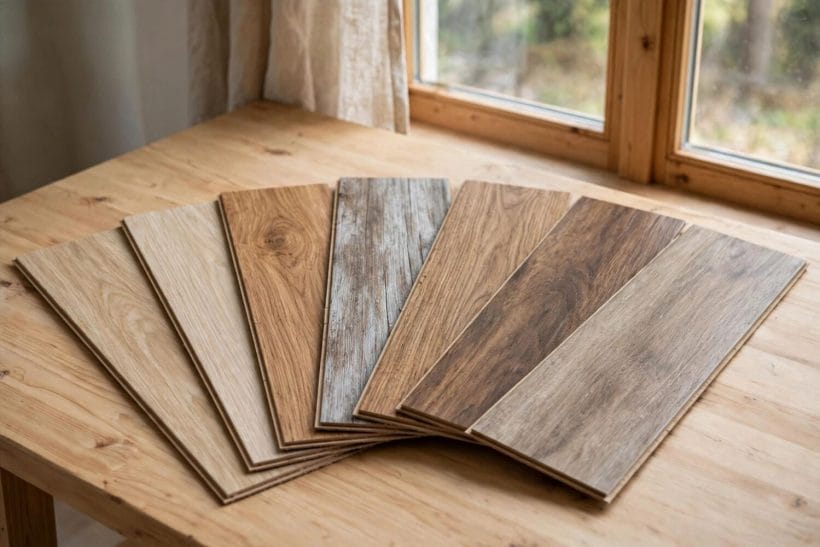
Samples turn research from reading into seeing, and a shortlist keeps that seeing honest. Gather samples only for planks that have already passed the room test, the surface test, and the subfloor conversation, then compare them side by side in the room itself, under its own light, beside its own furniture. A sample viewed alone always looks better than the same sample viewed beside its rivals, which is why the side-by-side step matters so much.
A simple comparison sheet helps. For each sample, note the core as described, the surface feel, the joint fit, the colour in morning and evening light, the care the maker advises, and any question still unanswered. Keeping the same headings for every sample stops a strong colour from outweighing a weak joint, or a smooth sales description from outweighing a missing answer. The vinyl plank floors checks guide covers the what-to-check ground in full, and this guide points there rather than repeating its detail.
Shortlisting is also the moment to slow down. A plank that survives a week of looking, in different lights and beside different furniture, has earned its place in a way that a plank chosen in an afternoon has not. Living with samples for a while, walking past them daily, and noticing which one still pleases the eye after the novelty fades, is research of the most practical kind.
9. Care, Warranties and the Fine Print
Care begins the day the floor is laid, so it belongs in the research rather than after it. Ask what gentle cleaning the maker advises, what should be avoided, how furniture should be protected, and how spills should be dealt with. A floor whose care suits the household’s real habits will stay pleasing far longer than a floor whose care demands a routine nobody in the house will keep.
The written terms deserve the same patient reading as the sample deserves patient looking. Warranties, conditions, and exclusions are written in careful language, and the useful questions are simple ones: what is covered, what is not, what the household must do to keep cover in place, and who should be contacted if a problem appears. Reading those terms before ordering, rather than after a problem, turns a document that is easy to ignore into a genuine part of the decision.
Keeping the paperwork matters as well. The product description, the care advice, the installer’s notes, and the warranty should be filed together, where they can be found years later when a question arises. A household that can lay its hand on the exact terms it agreed to is in a far stronger position than one relying on memory, and that small administrative habit is part of what careful research buys. The tiny house designs collection shows how compact homes plan for the long life of a floor, not only for the day it is laid.
10. Questions to Ask Before You Decide
A short list of questions, asked of every candidate in the same words, is the simplest guard against a rushed choice. Ask how the core is described, how the surface is meant to be cared for, how the joints fit, what subfloor preparation the room needs, how the plank behaves in the room’s light and moisture, and what the written terms cover. The same questions, put plainly each time, make answers comparable, and comparable answers make a fair decision possible.
Ask the installer the same kind of plain questions. What will be checked before laying, how thresholds and levels will be handled, what order of work is planned, and how the finished floor will be protected while other work continues. A professional who answers clearly, and who names anything the room needs before work begins, is helping the household as much as any sample or description can.
Finally, ask the household itself a question that no description can answer: which plank still pleases the eye after a week of living with its sample, in the room’s own light, beside the furniture it will live with. A floor is lived with daily, in the morning rush and the quiet evening alike, and the plank that earns that quiet approval has passed the most honest test research can set. The tiny bedroom ideas collection shows how that daily-life test plays out in the smallest rooms of all.
Final Considerations
Researching rigid core vinyl plank flooring is less about finding a single winning plank than about building a clear picture of the room, the surface, the joints, the subfloor, and the terms, and then letting that picture guide the choice. A household that begins with the room, looks at samples in its own light, compares like with like, and reads the written terms before ordering has done the work that matters, whatever plank it finally chooses.
Where this guide has pointed elsewhere, it has done so on purpose. The ideas survey covers looks and layouts, the what-to-check guides cover the detailed checks, and the room collections show how floors behave in kitchens, bedrooms, living rooms, and compact homes generally. Reading those alongside this guide gives a fuller picture without any one page trying to teach everything at once, and it keeps each part of the subject with the guide that owns it.
Before any work begins, confirm the plan with a qualified installer. Subfloor preparation, levelling, and fitting carry consequences that are costly to undo, and local requirements vary, so professional advice at the planning stage protects both the floor and the room around it. With that care taken, a well-researched floor rewards its household daily: a surface that suits the room, a colour that holds its appeal in changing light, and a choice made calmly rather than in haste.




0 Comments