
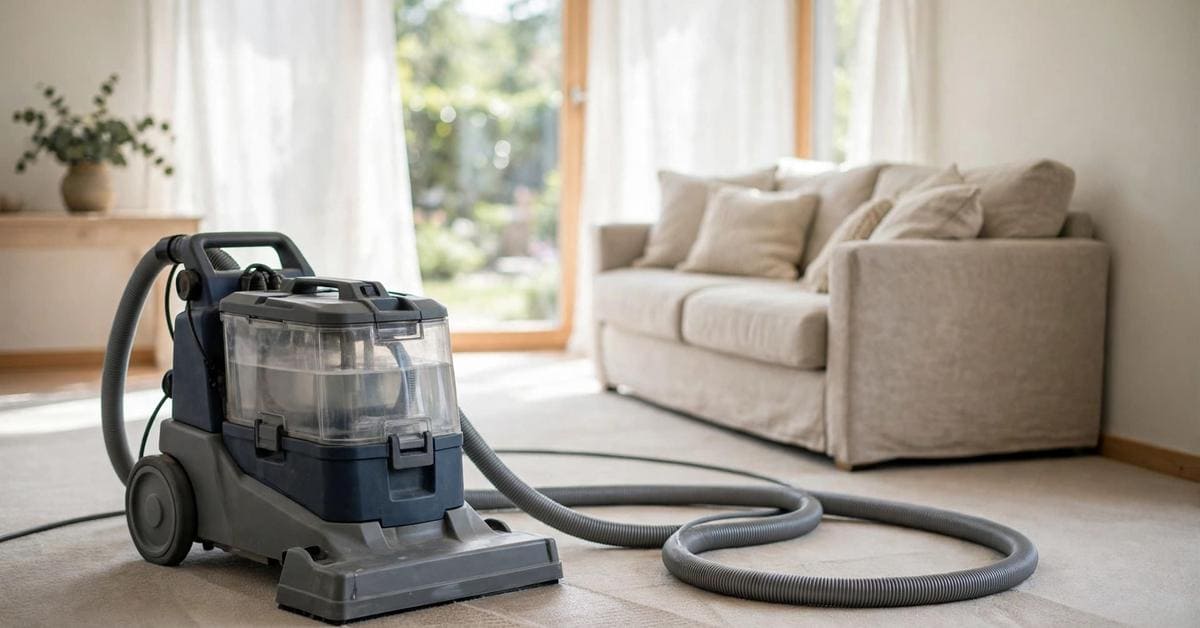
A carpet carries a home’s daily life in a way few other surfaces do. It softens footsteps, warms a room in cold weather, and quietly collects dust, crumbs, pet hair and the marks of every journey from the door to the sofa. Regular vacuuming keeps the surface tidy, but there comes a point when a deeper clean is the honest next step, and that is where professional carpet cleaning earns its place. This guide looks at the whole subject in plain terms: how the work is done, what to check about your own carpet first, how to prepare, and how to choose a service with confidence.
The sections below treat one carpet-cleaning visit as a single connected job, from the first questions you ask to the moment the carpet is dry and back in daily use. Each section stands on its own, so you can read the method that suits your home, or work through the guide in order when you are planning a first booking. Where a related survey already covers one element in depth, this guide points to it rather than repeating it, keeping the focus here firmly on the cleaning visit itself. For the carpet itself, the carpet checks survey covers fibre, pile, backing and fit before you buy, which is useful background when you are describing your carpet to a service.
1. How Professional Carpet Cleaning Works
At its simplest, a professional carpet clean has the same shape whatever method is used. The cleaner looks over the rooms, notes the carpet type and the areas of wear, loosens the dirt held in the pile, lifts it away with the cleaning equipment, and leaves the carpet to dry. The differences between services lie in how much moisture is used, how the dirt is lifted, and how long drying takes, and those differences matter because carpets are not all alike. A thick, soft pile behaves differently from a short, firm loop, and a carpet in a busy hallway faces different demands from one in a quiet bedroom.
The visit usually begins with a walk through the rooms, and that walk is worth taking seriously. Point out the spots that trouble you, the places where furniture has left marks, the doorway areas that see the most traffic, and any part of the carpet that has changed colour or texture over time. A cleaner who has seen the whole picture can match the method to each room rather than treating the whole house as one identical surface, and can tell you honestly where a deep clean will make a real difference and where wear has simply become part of the carpet’s life.
What a professional clean does not do is just as important to understand. It refreshes the pile, lifts embedded dirt that vacuuming leaves behind, and leaves the carpet looking and feeling cared for, but it cannot undo damage, restore worn fibres, or make a threadbare area new again. Going in with that honest expectation is what separates a satisfying visit from a disappointing one, and it is the reason this guide spends as much time on checking and choosing as it does on the cleaning itself.
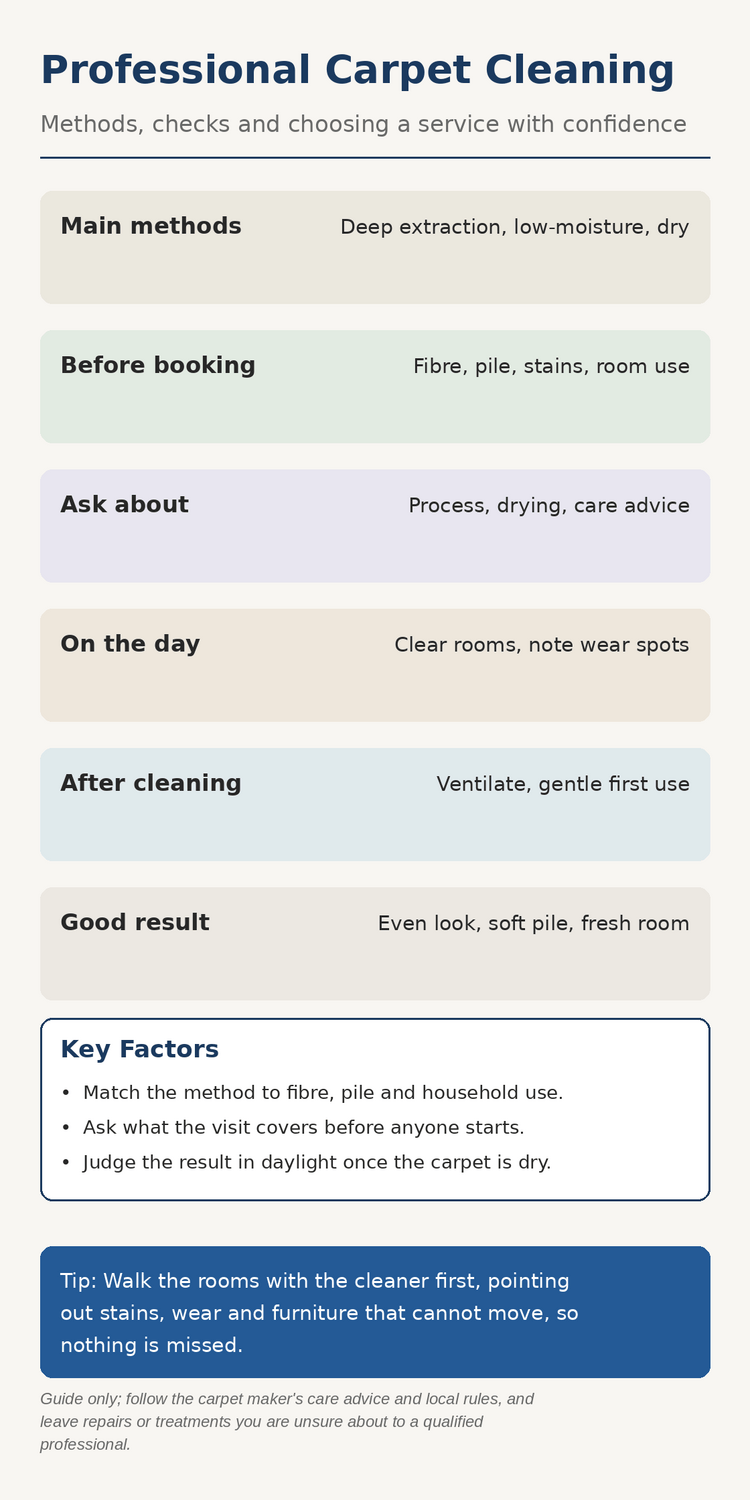
2. The Main Cleaning Methods Explained
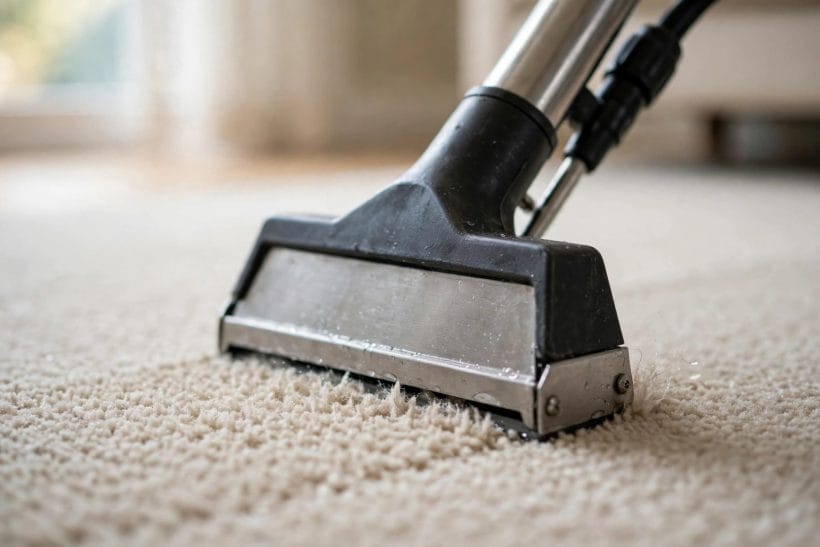
The most widely used method is the deep extraction clean, in which a cleaning solution is worked into the pile and then drawn back out together with the loosened dirt. It suits carpets that have seen heavy use, because the extraction step reaches dirt that sits deep in the fibres rather than only at the surface. Drying takes longer with this method than with drier approaches, so it suits homes where rooms can be left undisturbed for a while afterwards, with air moving gently through the space.
Low-moisture methods use far less water and rely on a cleaning compound or a light mist that is worked through the pile and then removed, often with a machine that agitates the fibres rather than soaking them. They suit carpets that need a refresh without a long drying period, rooms that must return to use quickly, and homes where keeping moisture low matters. The trade-off is honest: a low-moisture clean refreshes the surface and the upper pile well, but it is not the same as a deep extraction for dirt that has settled far down.
Dry methods go further in the same direction, using a dry compound that is brushed into the carpet, left to attract dirt, and then removed by thorough vacuuming. They suit delicate fibres, rooms that cannot be out of use, and situations where a fast return to normal matters most. The right method is rarely a matter of one being simply better than the others; it is a matter of matching moisture, depth of clean and drying time to your carpet, your rooms and your household’s routine.
3. What to Note About Your Carpet First
Before anyone arrives, it helps to know your own carpet in general terms. What is it made of, in broad terms, and how is it put together: a soft cut pile, a firm loop, a patterned weave, or a natural fibre? The maker’s care advice, if you still have it, is the best starting point, because it tells you what the carpet was designed to tolerate. If the advice is long gone, a cleaner who can identify the fibre and pile by look and touch is worth more than any promise made before the carpet has been seen.
Walk each room slowly and note what you find. Where are the traffic lanes darkest, where do shoes turn at the doorway, where does sunlight fall across the pile, and where have spills left their mark? Note too where furniture sits permanently, because the carpet beneath a heavy bookcase or a bed will look different from the open floor when the furniture is eventually moved. This is not about judging your own housekeeping; it is about giving the cleaner a true picture so the method and the effort go where they will do the most good.
Stains deserve a special note, and honesty about them helps everyone. Tell the cleaner what caused a mark if you know, and how long it has been there, because a fresh mark and an old, set mark are different problems. Some marks lift well, some fade only partly, and some have changed the fibre itself so that no cleaning will remove them fully. A service that explains this plainly before starting is a better sign than one that promises a perfect result for every mark in the house.
4. Questions Worth Asking Before Booking
A good booking conversation covers the practical shape of the visit, not just the date. Ask which method the service would use for your carpet and why, what the visit covers room by room, and what is not included, so there are no surprises on the day. Ask how the rooms should be prepared, how long drying usually takes for that method in a home like yours, and what care the carpet needs in the days after the clean. The answers should be clear and specific to your home, not a recital of general claims.
It is also fair to ask about the people who will do the work and the equipment they bring. Will the same team handle the whole visit, what happens if a room needs a second pass, and how are delicate areas such as stairs, edges and fitted thresholds treated? Ask how furniture is handled, which pieces the team will move and which should be moved beforehand, and what protection is given to hard floors, skirting and door frames where equipment passes through. These are ordinary questions, and a professional service will welcome them.
Finally, ask about the result itself and how it will be judged. A sensible service will suggest looking at the carpet together in daylight once it is dry, rather than under artificial light while it is still damp, because damp pile always looks different from dry pile. Agreeing that simple check in advance, and agreeing what happens if an area needs attention after drying, turns the visit from a transaction into a job done properly, and it gives both sides a fair standard to work to.
5. Preparing Rooms for the Visit
Preparation is mostly about giving the cleaner clear, open floors to work on. Move small furniture, floor cushions, toys, baskets and anything that sits on the carpet out of the rooms being cleaned, and lift curtains or drapes that brush the floor. For larger pieces, check with the service beforehand which items they will move and which should stay, and move anything fragile, valuable or awkward out of the way yourself. A room that is ready when the team arrives gets more of their time spent on the carpet itself.
Pets and children need a plan for the day, because cleaning equipment is noisy, hoses run through doorways, and doors may stand open while air moves through the rooms. A quiet room elsewhere in the house, a garden visit, or time with a neighbour keeps everyone safe and lets the team work without stopping to manage foot traffic across damp carpet. The same applies to the carpet itself: once a room has been cleaned, keeping feet off it until it is dry protects the result you have just paid for.
A quick vacuum before the visit is worth doing even though the professionals will clean thoroughly. It lifts surface dust and loose dirt, and it shows the cleaner the carpet’s true condition rather than a layer of recent debris. It also gives you one last look at the rooms, which is the right moment to note any mark you had forgotten, any loose edge, or any area where the carpet has pulled away from a threshold, so those can be pointed out rather than discovered mid-visit.
6. What Happens on the Day
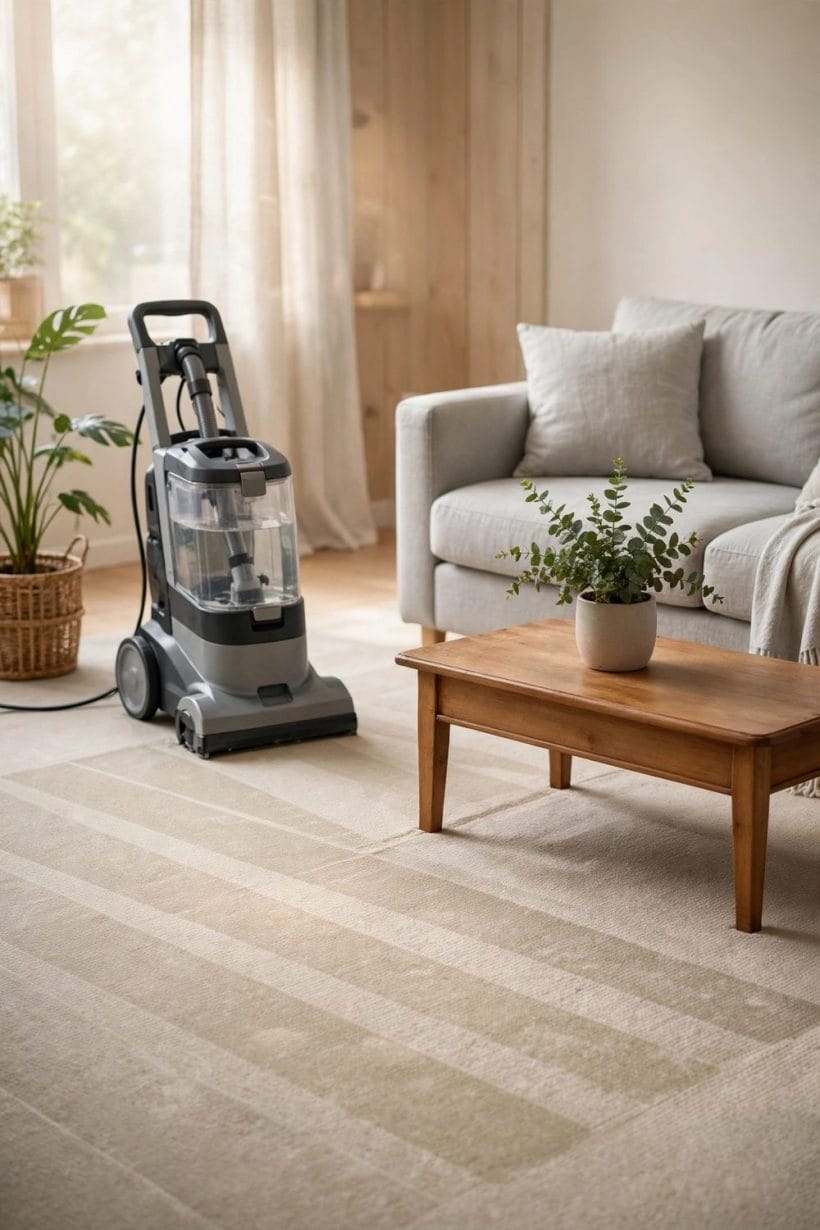
On the day itself, expect the visit to start with the walk-through described earlier, even if you have already discussed the rooms by phone. The cleaner will confirm the method for each room, agree which furniture moves, and settle where equipment will stand and how hoses will run. This is the moment to repeat anything that matters: the mark by the doorway, the worn patch at the top of the stairs, the rug that should not be moved. A short conversation at the start saves a long correction later.
The cleaning itself follows a steady pattern. The carpet is prepared, the cleaning step is worked through room by room, and the extraction or removal step follows, with extra attention to traffic lanes, entrances and the areas you pointed out. Stairs and edges take care and time, because the equipment handles differently there and the pile wears hardest at the nose of each tread. A team that works steadily and explains what it is doing as it goes is easier to trust than one that rushes through in silence.
Before the team leaves, walk the rooms together while the carpet is still damp enough to show the work, and agree what you are looking at. Damp carpet looks darker and flatter than dry carpet, so this walk is about coverage and care, not the final appearance: has every agreed room been done, are edges and corners tidy, is furniture back where it belongs with protection beneath its feet where needed? The final judgement belongs to the daylight check once the carpet is dry, which the next section covers.
7. Drying and First Use After Cleaning
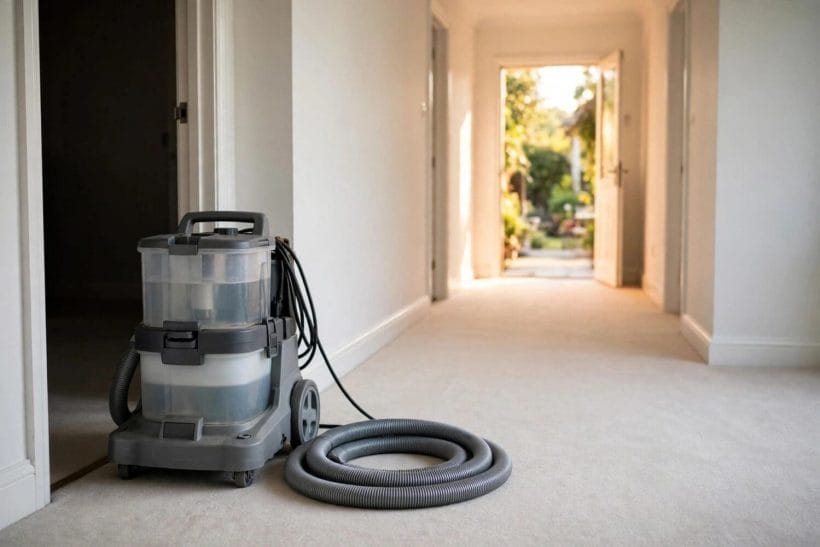
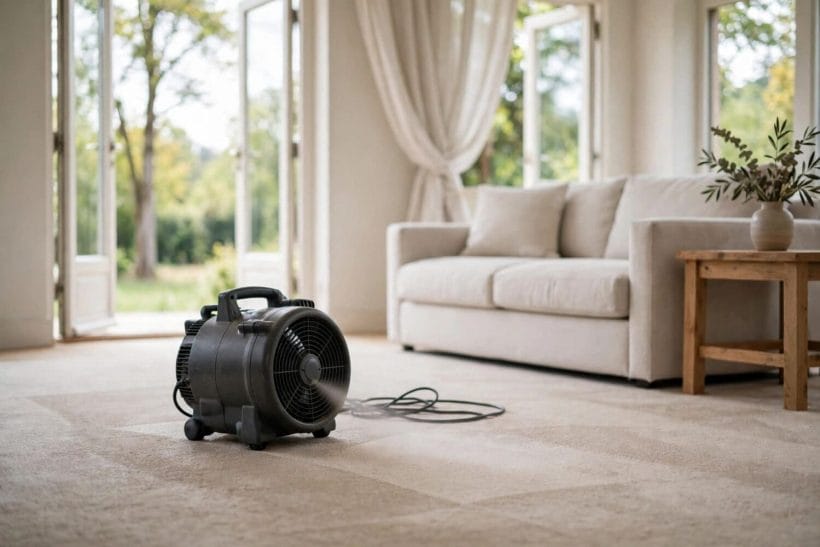
Drying is part of the clean, not an afterthought, and the method you chose decides how it goes. A deep extraction clean leaves the most moisture behind, so it needs the longest rest, while low-moisture and dry methods return rooms to use much sooner. Whatever the method, gentle air movement helps: open windows where the weather allows, run the home’s usual ventilation, and keep the room free of foot traffic while the pile dries. Avoid the temptation to judge the result while the carpet is still damp, because damp fibres lie flatter and darker than they will once dry.
Furniture needs a little care during drying too. Feet that sat in damp pile can leave marks, and wooden or metal feet can transfer colour to a wet carpet, so protection beneath furniture feet, where the service provides it, should stay in place until the carpet is fully dry. If you moved furniture out of a room yourself, wait until the carpet feels dry through the pile before bringing it back, and check beneath each piece as you do. A patient return to normal protects the clean far better than any shortcut.
The right moment to judge the work is the daylight check: walk the rooms in natural light once the carpet is completely dry, and look at the areas you pointed out at the start. Traffic lanes should look even, the pile should feel soft and upright rather than matted, and the room should smell fresh rather than damp. If an area still troubles you, raise it with the service promptly and plainly, while the visit is still recent, and agree together whether a further pass or another approach is the fair next step.
8. Looking After Carpet Between Visits
Between professional visits, regular vacuuming does most of the work, and it works best when it is slow rather than hurried. A steady pass over traffic lanes, with extra attention at entrances and in front of seating, lifts the surface dirt before it works down into the pile. Door mats at every entrance earn their keep many times over, because they catch the grit that wears carpet fastest, and a simple habit of removing shoes indoors, where the household accepts it, extends the time between deep cleans noticeably.
Spills should be dealt with promptly and gently, following the carpet maker’s care advice rather than improvising. Blot rather than scrub, work from the outside of a mark inward, and leave any treatment you are unsure about for a professional rather than risking a fix that sets the mark or damages the fibre. The same restraint applies to the carpet’s edges and thresholds: if an edge lifts, a gripper loosens, or a seam opens, it is a repair job for a qualified fitter, not a cleaning problem, and it should be fixed before the next clean rather than cleaned over.
Rotation and rearrangement help too, where the room allows. Moving a rug, shifting a chair, or changing the path through a room spreads wear more evenly across the pile, so no single lane bears the whole household’s traffic. Rugs laid over carpet need their own care and sizing thought, and the rug buying checks survey covers size, fibre, fit and the pad beneath, which matters because a rug without the right pad can slip, bunch and wear the carpet underneath unevenly.
9. Carpet in Bedrooms, Hallways and Living Rooms
Different rooms ask different things of a carpet, and a cleaning plan should reflect that. Bedrooms are usually the gentlest rooms, with light traffic and soft use, so they often need the least intensive method and they dry and recover quickly. Living rooms bear the household’s social life: seating areas, play, pets and guests, so their traffic lanes and seating marks deserve the closest attention during the walk-through. Hallways and stairs are the hardest-working surfaces in the house, narrow, constantly walked, and shaped by every entrance, so they often need the deepest clean of all.
Small homes bring their own considerations, because rooms serve several purposes at once and carpet must work harder in less space. A living room that is also a workspace, a bedroom that doubles as a dressing room, or a hallway that holds coats, shoes and storage will all show wear sooner, and a cleaning plan that treats each room by its real use rather than its label will serve the home better. In a compact home, drying matters more too, because a damp room cannot simply be closed off while the rest of the house carries on around it.
Rugs deserve a note in every room, because a rug changes how the carpet beneath it wears and how the room is cleaned. A rug that is too small for its seating group leaves carpet exposed exactly where feet land, while one that fits the room properly protects the pile beneath it. The guide to rug size for a typical room shows how size and shape are worked out in general terms, and the same thinking applies whether the room is large or small: the rug should suit the furniture it serves, not merely fill the floor.
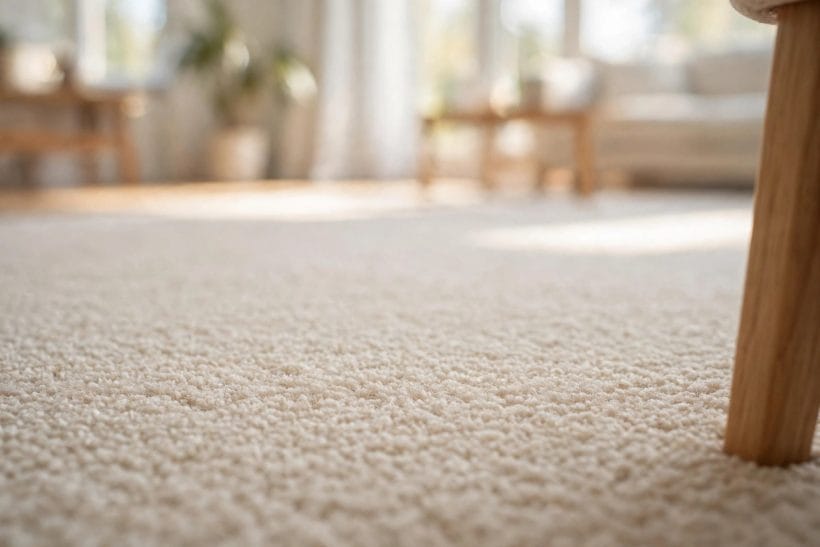
10. Choosing a Service With Confidence
Choosing well comes down to a handful of plain tests. Does the service ask about your carpet before quoting a method, or does it offer one method for every home? Does it explain what the visit covers, how drying works, and how the result will be judged, in language you can follow? Does it welcome your questions about furniture, pets, stairs and delicate areas, and answer them specifically rather than generally? A service that passes those tests has usually thought about the work properly, and a service that hurries past them has told you something too.
Written details matter as much as a friendly conversation. Ask for the agreed rooms, the method for each, the preparation expected of you, and the drying guidance in writing before the visit, so both sides share the same understanding. Keep the maker’s care advice to hand, and be wary of any approach that contradicts it without a clear, specific reason tied to your carpet. Where anything about the visit is unclear, a short clarifying question beforehand is always cheaper than a misunderstanding on the day.
Finally, trust the evidence of the visit itself over any claim made before it. A careful walk-through, steady work, tidy edges and thresholds, furniture returned with care, and a prompt, plain response to any concern after drying are the real marks of a service worth inviting back. Book the next visit by the state of the carpet rather than by habit: when traffic lanes dull again, when the pile feels matted despite vacuuming, or when the rooms simply stop feeling fresh, the carpet is telling you it is time.
Final Considerations
Professional carpet cleaning is at its best when it is treated as a planned part of looking after a home, not as a rescue for a neglected floor. Know your carpet, match the method to the room and the household, prepare the rooms properly, give drying the time it needs, and judge the result in daylight once the carpet is dry. Done in that order, a cleaning visit refreshes the whole house: rooms look cared for, the pile feels soft underfoot, and the carpet’s life is genuinely extended.
The same care that suits carpet does not suit every floor in the house, and the guides for other surfaces are worth reading alongside this one. Hardwood needs its own approach, covered in how to clean hardwood floors, while laminate has different care again, covered in how to clean laminate wood floors. For homes weighing a change of surface altogether, the vinyl plank flooring checks survey and the laminate flooring checks survey cover what to look at before buying, so the next floor can be chosen with the same care this guide brings to cleaning the one you have.
Before any work begins, confirm the plan with the service and keep the carpet maker’s care advice close at hand. Repairs, loose edges, damaged thresholds and any treatment you are unsure about belong to qualified professionals, not to improvisation, and local requirements vary, so a professional’s advice at the planning stage protects both the carpet and the rooms around it. With that care taken, professional carpet cleaning repays its household quietly every day: a fresh, soft, well-kept floor underfoot, in rooms that feel properly looked after.




0 Comments