

A floor has to earn its keep in a small home. It is walked on, cooked on, dragged across and looked at all day, every single day.
This guide walks through the checks that matter before this popular big-box vinyl line goes in your basket: what is in the box, how it joins together, and what to confirm on the label, so there are no surprises once the first plank is down.
1. Start With the Short Answer
TrafficMaster Allure is best described in soft, public terms: it is a widely sold own-brand vinyl flooring line, offered through a large home-improvement retailer, with looks that imitate wood planks and stone tiles. Ranges under a big own-brand umbrella change over time, and the box on the shelf today is the only version that counts. Treat every general description, including this one, as a starting point. The checks below help you judge the exact product in front of you, in the exact colour you are considering, for the exact room you are flooring. If you are comparing trafficmaster allure reviews before buying, use them to build a checklist, then verify each point against the packaging and the store’s current product information.
| Question | What to check before you buy |
|---|---|
| What is it, in plain terms? | An own-brand vinyl flooring line sold through a big-box home-improvement retailer, in wood-look plank and stone-look tile styles. Confirm the current range, colours and format in store or on the retailer’s current listing. |
| Which rooms does it suit? | Check the packaging for the rooms and conditions the maker allows. Kitchens, hallways and living spaces are common vinyl territory, but the word of the exact box always wins over general advice. |
| How does it install? | Joining methods vary between ranges. Some vinyl floors float and lock together, others use different systems. Open the instructions for the exact product and follow that method, not a video about a different range. |
| What should I measure first? | Measure the room carefully, note awkward corners and doorways, then work out how many packs the pack coverage says you need, with a sensible allowance for cuts and mistakes. |
| What about preparation? | Check the printed guidance on subfloor condition, acclimatisation and any underlay requirements for the exact product, and ask the store if anything on the pack is unclear. |
| What should I keep afterwards? | Keep the receipt, a note of the colour and batch details from the pack, and any leftover planks. Spares from the same batch are gold if a section is ever damaged. |
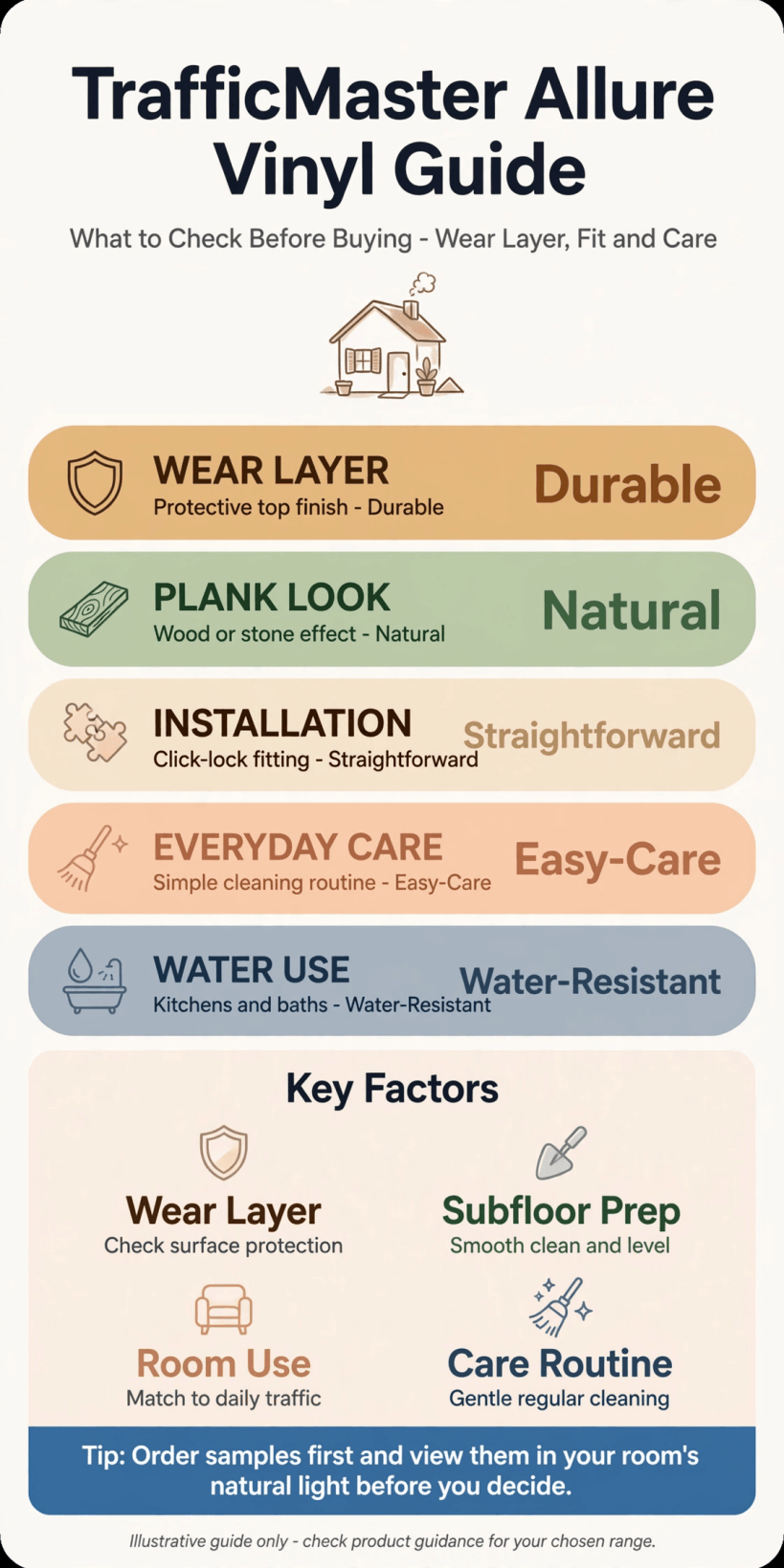
The quick checks at a glance: what the line is, where it suits, how it installs and what to verify on the pack before you pay.
That short version already explains why careful buyers slow down at the shelf. Vinyl flooring looks simple because the finished surface is smooth and quiet, yet everything that decides whether it still looks good in five years is hidden: the subfloor beneath it, the expansion space around it and the way each piece joins its neighbour. A small home actually makes the decision easier in one way, because you are rarely buying for a huge area. You can afford to be fussy. You can open a pack, handle the planks, lay a few loose on the floor and live with the colour for a day before committing. Take that time. Flooring is the one finish you cannot swap on a whim, and the hour you spend checking now is far cheaper than relaying a room later.
2. Look Closely at What Is in the Box
Start where the product starts: inside the pack. Ask the store if a sample or opened pack is available, and if you are already fairly committed, buy one pack first rather than the whole room. Lift a plank out and look at it properly. Check the edges for damage, because corners and joining profiles are the delicate parts of any vinyl plank. Run your hand over the surface and look along its length for warping. A plank that does not sit flat on a flat floor in the store deserves a question before it comes home with you.
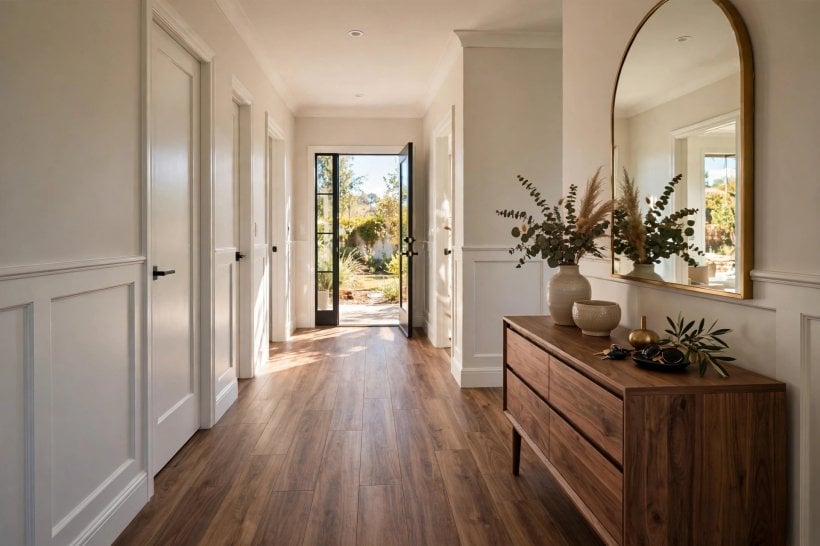
Colour deserves the same suspicion. Shelf lighting flatters everything, and a warm grey in the aisle can turn cold and blue beside your window. Carry the plank to the store entrance or hold it under a different light if staff allow, then judge it again at home in morning and evening light. Look at several planks together, not just one, because the pattern repeat tells you how natural the finished floor will feel. In a small room a strong repeat shows quickly. Finally, compare packs. If you are choosing flooring while shopping the tiny houses for sale and rent buyer’s guide route, the same rule applies as with the home itself: inspect the actual item, not the brochure picture.
- Flex the plank gently; it should feel firm and consistent, not brittle.
- Check all four edges of several pieces for chips and crushed corners.
- Lay three or four planks together to see the pattern repeat honestly.
- Read the pack front and back, including coverage and batch information.
- Photograph the label with your phone so details survive the trip home.
3. Check the Joining System by Hand
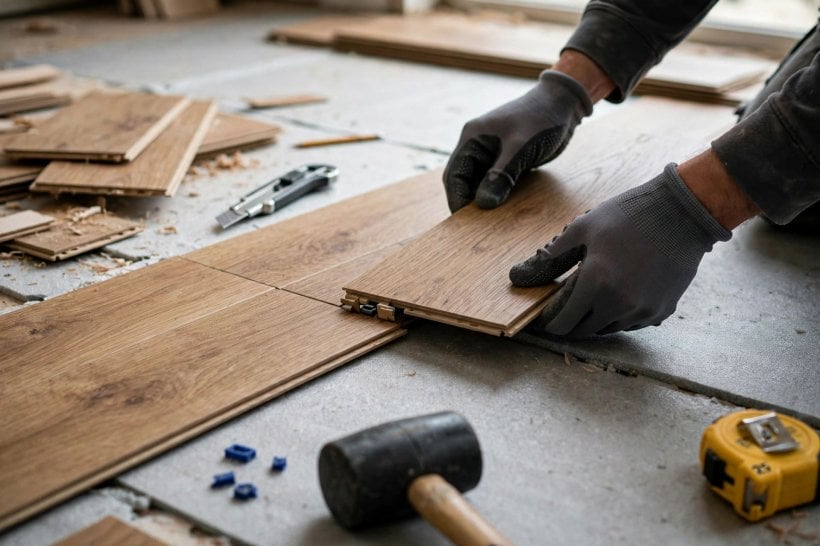
Words like click, lock and float are easy to print and harder to judge, so judge them with your hands. Take two sample planks and join them the way the instructions describe. A good joint comes together with firm, even pressure and sits flush, with no lip you can catch a fingernail on and no gap that opens when you flex the pair slightly. Then take them apart and do it again. Some systems are designed to be lifted and re-laid, others are effectively one-way, and it is much better to learn which you have in the aisle than halfway across your kitchen.
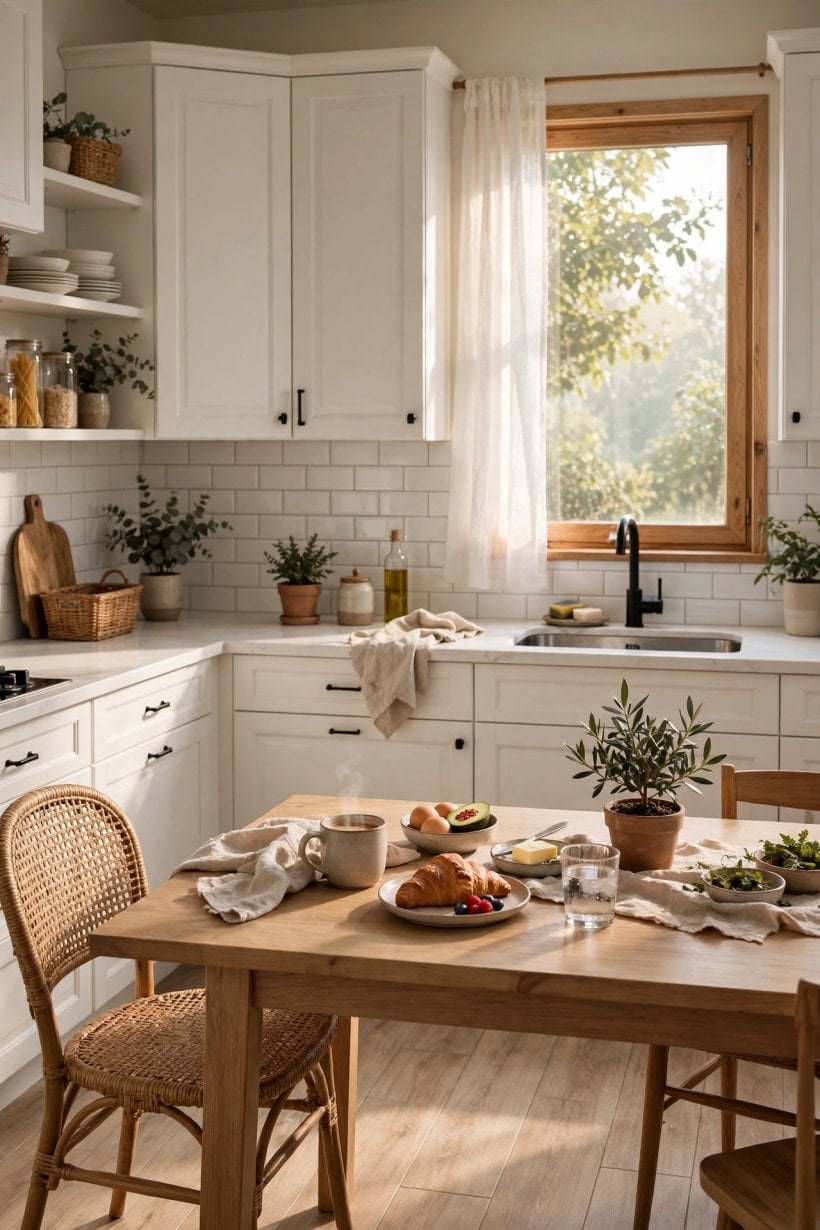
Think, too, about where joints will fall in your room. Short planks in a long, narrow space create many seams, and seams across a doorway or in front of a sink get the hardest wear. Ask whether the range offers longer or wider formats that reduce joins in your layout, and check what the instructions say about staggering joints from row to row. If a salesperson demonstrates the joint, ask them to let you try it yourself. Your hands will tell you more in ten seconds than a shelf-edge sign will in ten minutes. Note also whether the system needs the planks to be angled, tapped or simply pressed, because that decides what tools and patience the job will ask of you on the day.
4. Read the Label, the Whole Label
Every important promise about a floor is either on the packaging or in the fitting instructions, and the time to read both is before money changes hands. Work through the pack methodically. What rooms and conditions does it name? What does it say about moisture, underfloor heating if you have it, and the state of the floor beneath? What does it ask for at edges and doorways? If a detail you care about is not covered, that is a question for the store or the retailer’s product team, not a gap to fill with hope. This is exactly where trafficmaster allure reviews can mislead when they describe a different, older range, so trust the current printed word over any summary, including ours.
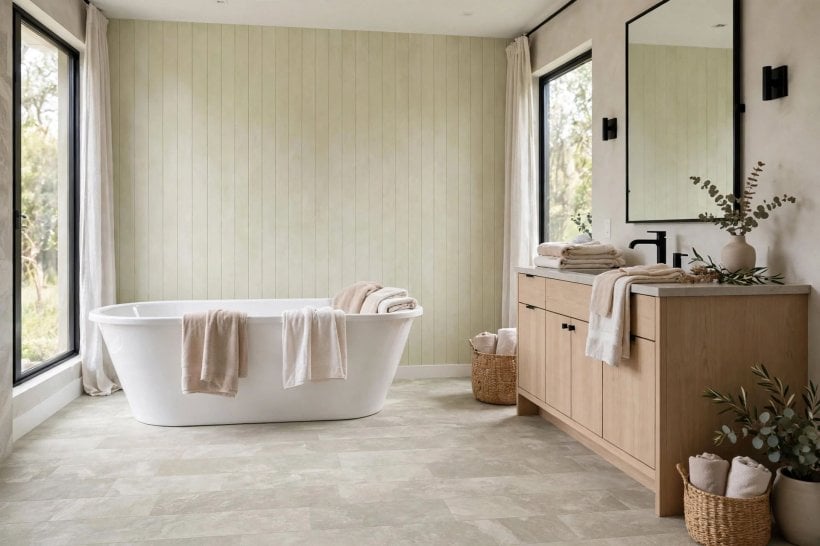
Pay special attention to anything about cleaning and care. Vinyl has a reputation for being wipe-clean and forgiving, but individual ranges still have their own do and do not lists, and using the wrong product or method can be an expensive way to learn. Note what the maker says about sunlight, heavy furniture and castors if those apply to your room. While you are reading, you may find it helps to think about the floor as one layer in a bigger project, the way the how to build your own tiny house guide treats every layer of a small build: each one has to suit the ones above and below it. Write down any pack wording you do not understand and ask about it in store, while the product and the staff are both in front of you.
5. Measure the Room Properly
Most flooring regrets begin with a tape measure, not with the product. Measure the room twice, in both directions, and write the numbers down rather than trusting your memory in the aisle. Sketch the shape on paper, including alcoves, hearths, fitted furniture and the swing of doors. Then work out the area honestly and compare it with the coverage printed on the pack. Buy with an allowance for cuts, mistakes and the odd damaged plank, because running one pack short near the end of a job, and finding the shelf restocked from a different batch, is a classic and avoidable frustration.
Small spaces reward extra care here. A tiny room can still eat planks if it is an awkward shape, full of corners and short cuts. Plan the direction of the planks before you buy, because direction changes how many cuts you make and how the light falls across the joints. The layout thinking in our tiny house on wheels floor plan basics applies neatly: draw it, walk it in your head, then buy for it. If two rooms run together, decide now whether the floor should flow through both, and measure them as one project. Also check thresholds and adjoining floor heights while you measure, because a few millimetres of difference at a doorway is simple to solve on paper and annoying to solve on your knees.
- Measure twice, in metres and millimetres, and keep the sketch.
- Add a sensible cutting allowance before rounding up to whole packs.
- Decide plank direction and starting wall before you order.
- Count doorways, alcoves and obstacles as part of the layout.
- Check adjoining floor heights so transitions can be planned, not improvised.
6. Think About Life Underfoot
A floor is not a picture; it is a working surface, and the best test is to imagine an ordinary Tuesday on it. Shoes come in from the rain. A chair scrapes back. Something heavy and hot gets put down in a hurry. In a small home all of that happens in a tighter area, so wear concentrates on the same few paths: door to sofa, sofa to kitchen, bed to bathroom. When you handle a sample, think about those paths. Does the surface feel reassuring underfoot or plasticky? Does the texture that looks so convincing in a showroom risk trapping dirt in a busy hallway? There are no universal answers, only honest questions about your household.
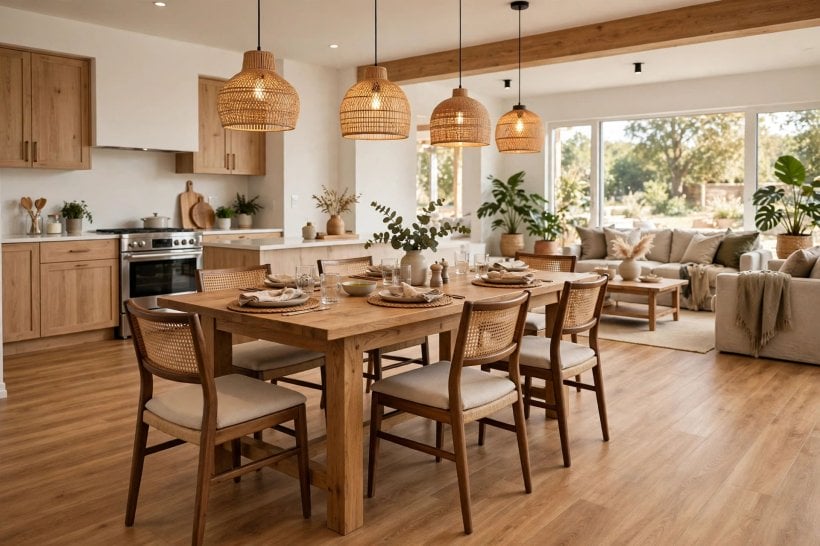
Sound matters as well, especially in compact homes where one room does several jobs. A floor that clicks and echoes under heels can make a calm space feel restless, and the remedy often sits in correct preparation and whatever underlay approach the maker allows, which is another reason the printed guidance matters. The broader lesson from our tiny house and small-space interior design ideas is that comfort in a small home is mostly decided by these unglamorous surfaces: the floor you stand on to cook, work and unwind. If you can, stand on a laid sample area in store, in your usual indoor footwear and in bare feet, and take your time deciding whether it feels like home.
7. Plan Edges, Thresholds and Trims Early
Rooms rarely fail in the middle; they fail at the edges. Vinyl floors that float need room to move, and the gap that allows that movement has to be covered neatly or the whole job looks unfinished. Before you buy a single pack, list every edge in the room: skirting boards, door frames, hearths, kitchen units, pipes and the junction with every adjoining floor. For each one, know your plan. Will skirting come off and go back over the gap, will a trim or bead cover it, and does the range or the store offer a matching profile for thresholds and stairs if you need them?
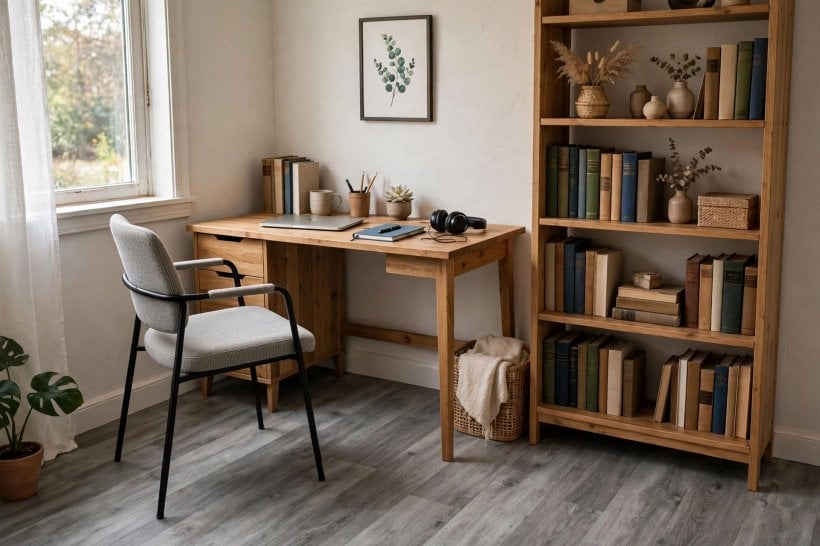
Colour matching is the sneaky part. A threshold strip that is nearly the same colour as the floor can look worse than one that clearly contrasts, and the time to discover that is at the shelf with a plank in your hand, not at home with glue open. Check whether trims are sold in the same range and colour family, and photograph them next to the plank under the store lights and near the door. Ask also about end profiles for exposed edges, for example where the floor meets a step or a patio door. Put the trims on the same receipt as the flooring if you can, because ranges and colours get renamed, and hunting a matching strip a year later is nobody’s idea of fun.
8. Ask About Returns, Batches and Spares
Before you pay, have the slightly awkward conversation about what happens if you buy too much, too little or the wrong colour. Stores differ, and own-brand ranges move on, so ask plainly: can unopened packs go back, and for how long? If you need one more pack next month, how likely is the same colour and batch to still be there? None of this is pessimism. It is how professionals buy flooring, because colour can vary subtly between production batches and a patchwork floor in two near-matching shades is very hard to unsee.
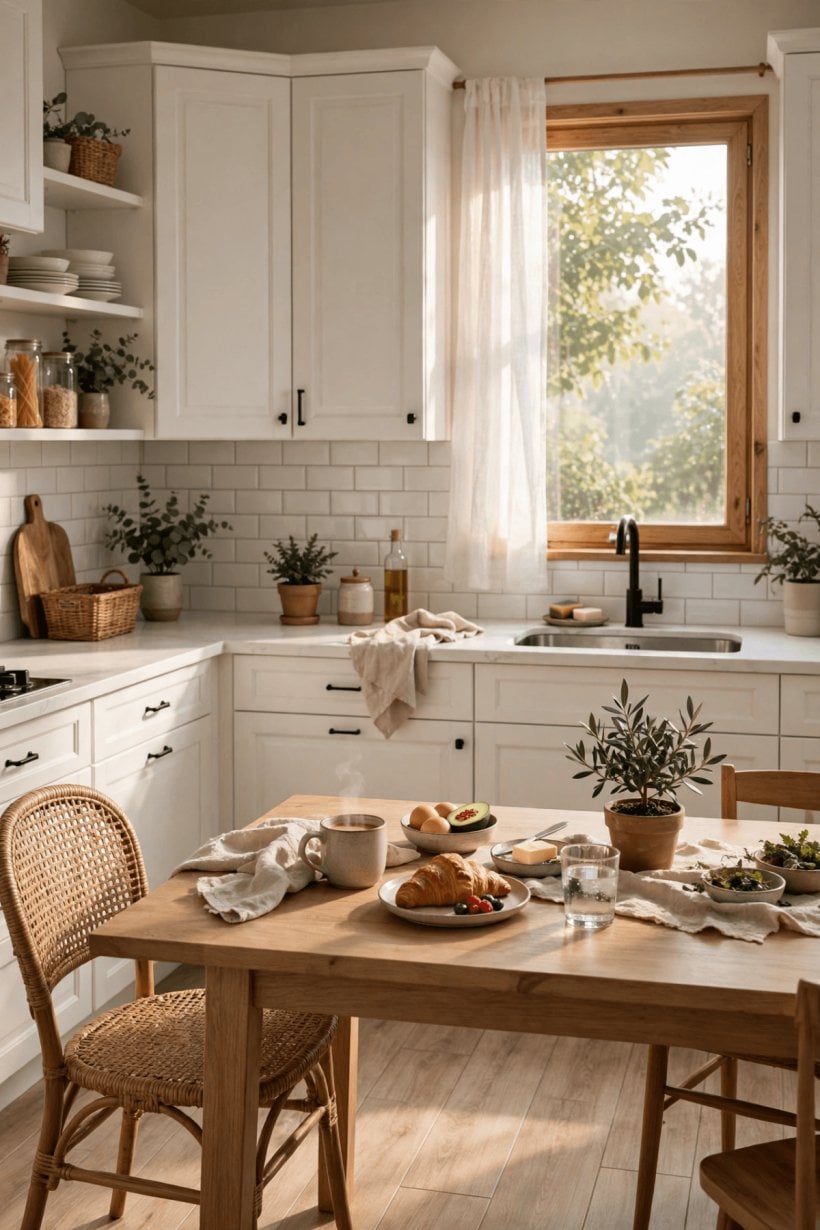
The spares question belongs in the same conversation. Keeping a small number of leftover planks from your batch, stored flat somewhere dry, turns a future accident from a crisis into a repair. Ask the store what they would advise for your room size, and write the batch details from your packs in the same notebook or phone note as your measurements. Kitchens deserve a special mention because they combine water, heat and heavy appliances; if this floor is headed for a kitchen, the layout lessons in our tiny house kitchen design ideas will help you plan appliance spaces and work zones before the floor goes down and moving anything becomes a major operation.
- Ask the returns position on unopened packs before you buy, not after.
- Buy the full job in one go where you can, from the same batch.
- Keep spares from your own batch, stored flat, dry and out of the way.
- Record colour name, batch details and purchase date in one place.
- Photograph a laid area once finished, for future matching questions.
9. Prepare the Subfloor Honestly
No vinyl floor can hide a bad subfloor for long. Bumps telegraph through, hollows flex and bounce, and joints that are asked to bridge dips will complain in the language of clicks and gaps. Before the new floor arrives, get down at floor level and look across the surface in raking light from a window or torch; it shows every ridge and dip that standing height hides. Feel for movement in boards, listen for squeaks, and be honest about what needs levelling, fixing down or replacing. The product’s own instructions set the standard for flatness and preparation, so measure your floor against that document, not against optimism.
Moisture is the other silent issue. A subfloor that is still damp, whether from a recent repair, a slow leak or simple condensation in an older property, is a reason to pause rather than press on, and the packaging guidance plus local professional advice will tell you how to test and when to wait. This is a check-with-the-store, check-the-instructions moment, not a guess. While the room is empty, also do the boring jobs: take doors off if they need trimming for the new floor height, and confirm they still clear it. Inspiration for the rest of the room can wait; our new interior design ideas for tiny houses will still be there when the floor is down, clean and ready to build a scheme on.
10. Decide With a Sample, Not a Screen
The last check is the simplest and the most skipped: live with the colour before you commit. Screens lie cheerfully about colour, and so do showroom lights. Take the sample or your first pack home and look at the planks where they will actually live. Prop them against the wall, lay them where the sofa will sit, and check them beside your existing furniture, curtains and wall colour in daylight and lamplight. A floor that harmonises with what you already own will look expensive even if it was not, while a near-miss colour will argue with the room every day.
Let other eyes help. Someone who does not have to justify the purchase will often spot in seconds that a wood look is too orange for your oak table or too grey for your warm white walls. Then, once you are sure, commit completely and buy the whole job in one visit, so batch, colour and trims all come from the same place at the same time. Flooring is a background decision that you notice most when it is wrong. A calm, well-chosen surface lets everything else in a small home shine, from the rug you layer over it to the wall colour above it, and our guide to tiny house interior paint colors is a good next read once the underfoot part is settled and you are choosing what goes on the walls around it.
Final Considerations
None of the checks in this guide needs special tools or trade knowledge. They need a tape measure, a sample plank, the patience to read a label in full and the confidence to ask a store direct questions before paying. Do those things and this popular own-brand vinyl line can be judged on its merits for your room, rather than on the strength of anyone’s summary. Measure honestly, prepare the subfloor properly, buy the job in one batch, keep spares and paperwork, and follow the fitting instructions for the exact product you brought home.
Finally, remember what the floor is for. It is the stage for everything else in a small home: morning coffee, muddy paws, dropped toys and quiet evenings. Choose the option that still makes sense when you imagine it under all of that ordinary life, and you will have made the decision the way experienced buyers do, slowly at the shelf and happily ever after.




0 Comments