
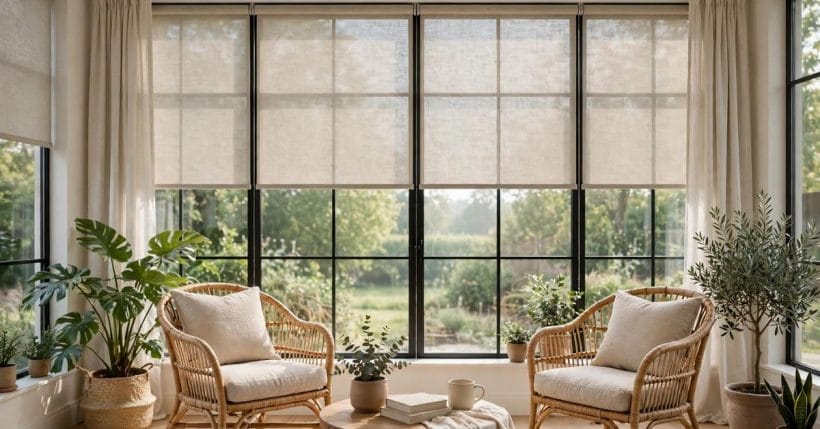
A sunroom is a room made of glass, and that changes everything about how its windows should be dressed. Where an ordinary room has one or two windows to soften, a sunroom can have glass on several sides at once, sometimes with glass overhead as well, so light arrives from more than one direction and moves across the room through the day. The ideas below treat the sunroom as its own kind of room, with treatments chosen for tall walls of glass, angled roof glass, bay windows and wide openings, rather than borrowed straight from a bedroom or a living room. Whether the room is used for morning coffee, long lunches, reading, growing plants or quiet evenings, the right treatment lets the room stay bright without glare, open without feeling exposed, and comfortable to sit in from morning to night.
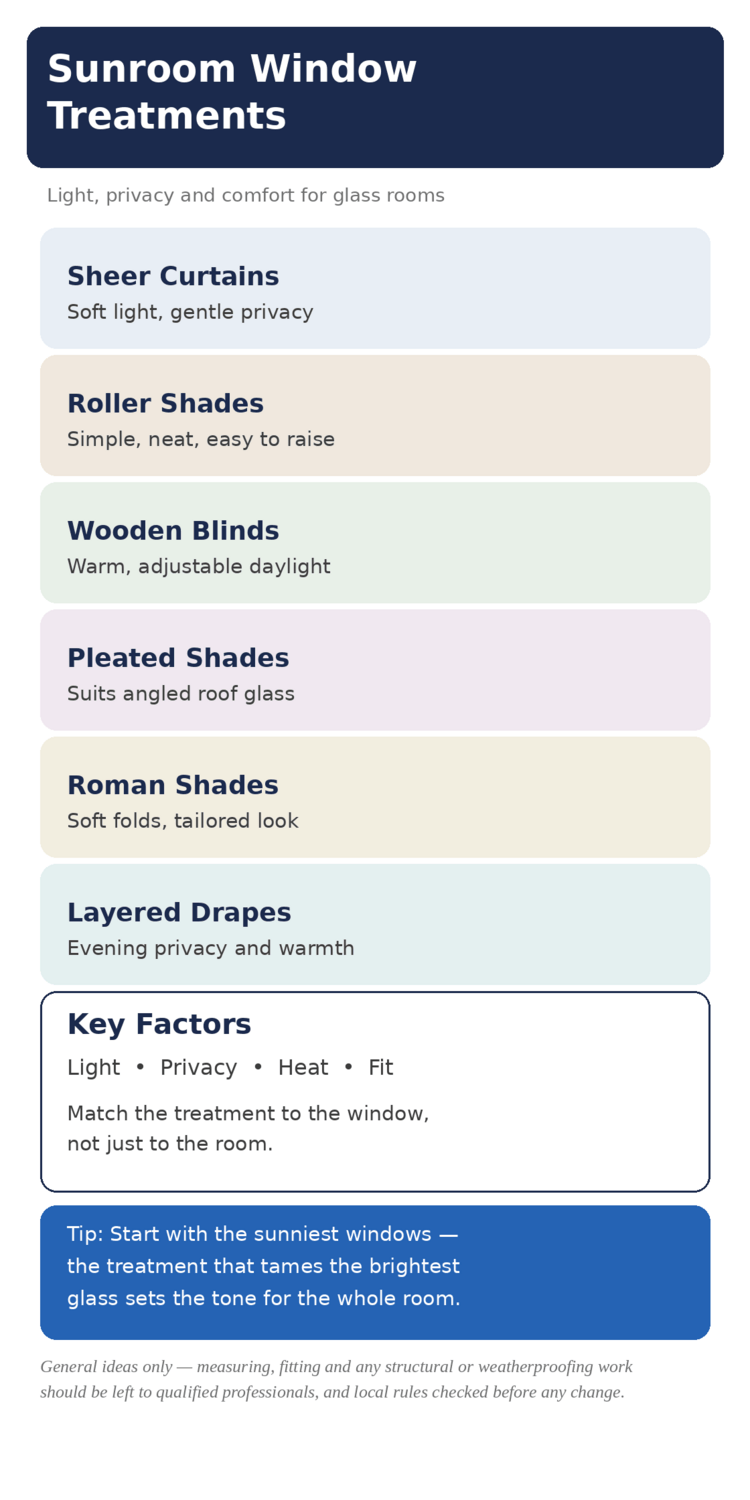
| Item | What it is |
|---|---|
| Sheer Curtains for Soft, Even Daylight | Sheer curtains are often the first layer people picture in a sunroom, and for good reason. |
| Roller Shades for a Clean, Simple Line | Where sheers bring softness, roller shades bring order. |
| Wooden Blinds for Light You Can Adjust | Wooden blinds give a sunroom something neither sheers nor roller shades quite offer, which is fine control over the direction of light. |
| Pleated Shades for Angled Roof Glass | Roof glass is the part of a sunroom that most often gets forgotten, yet it can be the brightest surface in the room. |
| Roman Shades for a Tailored Bay Window | A bay window gives a sunroom one of its most loved spots, a seat or a shelf of cushions set into the glass itself, and Roman shades suit that shape particularly well. |
| Layered Treatments for Evening Privacy | As daylight fades, a sunroom changes character. |
1. Why Sunroom Glass Needs Its Own Approach
The first thing to notice about a sunroom is how much glass it carries compared with wall. A treatment that looks generous on a single window can look lost across a whole wall of glass, while a treatment that suits a tall window may not suit a low one beside it, and nothing made for a flat wall will simply transfer to a sloping roof panel. Thinking of the room as a set of different glass shapes, rather than one big window, makes the choices easier, because each shape can have the treatment that suits it best while the whole room still reads as one calm space.
Light is the other reason sunrooms need their own approach. Morning light and evening light enter from different sides, and the brightest glass at breakfast may not be the brightest glass at supper. A treatment that can be adjusted through the day, or layered so one layer stays in place while another moves, suits that changing light better than a single fixed covering. Plants, books, cushions and wooden furniture all live in this light too, so softening the harshest hours of sun is part of looking after the room itself, not only of making it comfortable to sit in. How the room itself is planned shapes what any treatment can do, since the position of glass walls, doors and seating decides where light falls, which is why tiny house floor plans are worth glancing at alongside the fabrics and slats shown here.
2. Sheer Curtains for Soft, Even Daylight
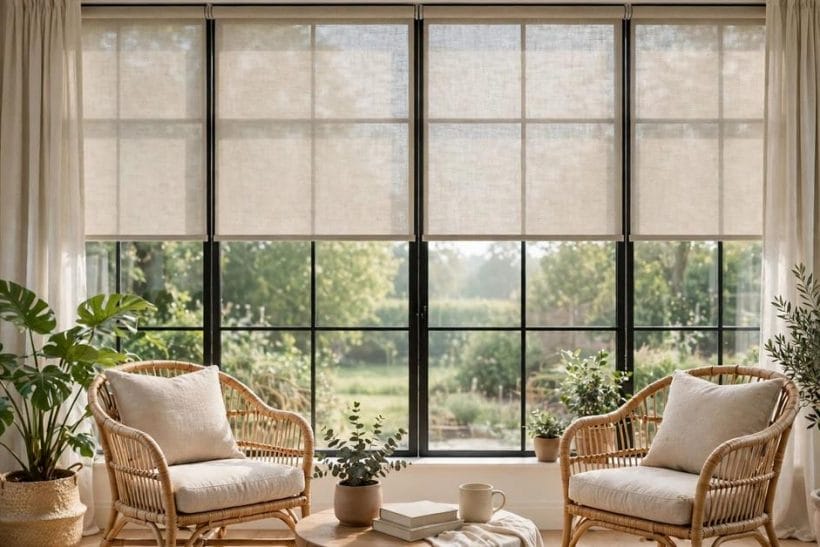
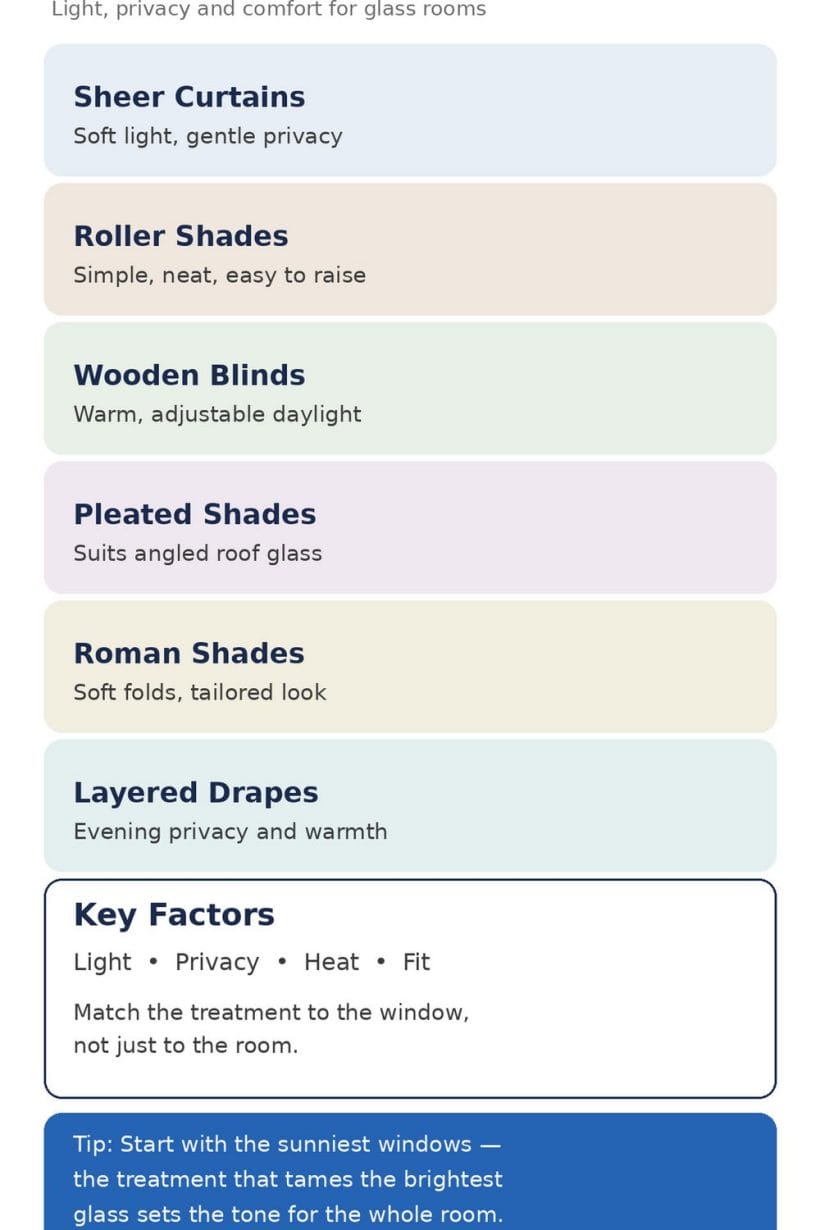
Sheer curtains are often the first layer people picture in a sunroom, and for good reason. A sheer softens daylight across a whole wall of glass without shutting the garden out, so the room keeps its bright, open feeling while the hardest edges of the light are taken off. On tall windows they fall in long, gentle lines that suit the height of the glass, and on a run of windows they give the whole wall one continuous look, which helps a glass room feel settled rather than busy.
Sheers work best when they are allowed to be generous. A sheer that only just covers the glass can look stretched, while one with room to gather reads as soft and intentional, and the way it moves in a breeze becomes part of the room. Pale, plain fabrics keep the effect calm, and they sit well beside plants and natural furniture, which are often the stars of a sunroom. For a room used as a second sitting room, sheers also give a gentle sense of enclosure during the day, so people inside can relax without feeling on display, while the view outward stays open. When the room is used for reading or for sitting with friends, that soft, even light is easy on the eyes and kind to the whole space, and small living room ideas show how the same gentle approach shapes rooms that are meant for lingering.
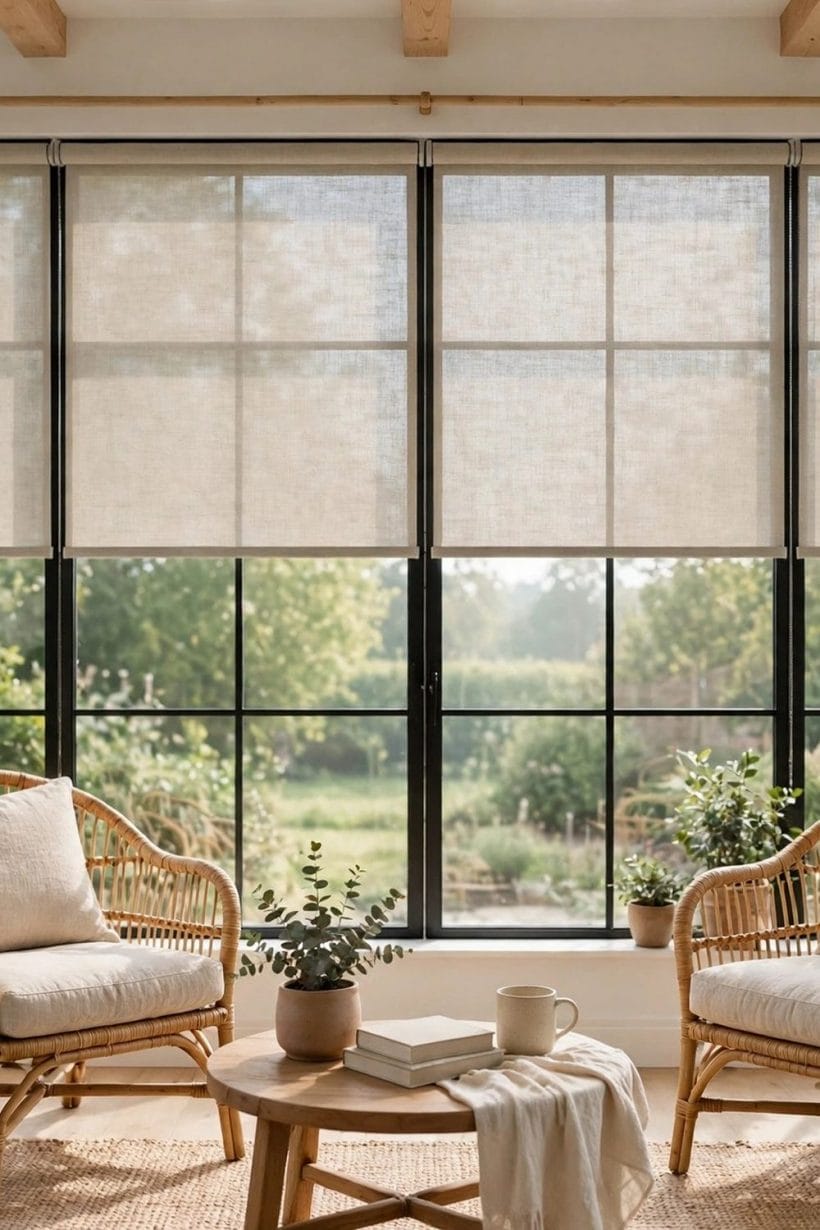
3. Roller Shades for a Clean, Simple Line
Where sheers bring softness, roller shades bring order. A roller shade sits neatly at the top of the window and rolls down in a single flat panel, so a wall of glass keeps a crisp, uncluttered line, and each window can be set on its own. That independence matters in a sunroom, because one side of the room may face strong sun while another sits in shade, and being able to lower one shade while leaving the next raised lets the room respond to the light as it moves.
Light-filtering fabrics suit daytime use, since they dim glare while still letting daylight through, and they keep the room feeling bright even with the shades down. A plain, pale fabric keeps the look quiet across a long run of glass, while a slightly warmer tone can tie the windows to wooden furniture or a natural floor. Roller shades also sit close to the glass, which helps on windows beside doors or walkways, where a fuller curtain might get in the way. They are a practical choice for a sunroom that is used every day, because they are simple to raise in the morning and lower again when the sun swings round, and their flat line leaves the shape of the windows themselves clearly visible.
4. Wooden Blinds for Light You Can Adjust
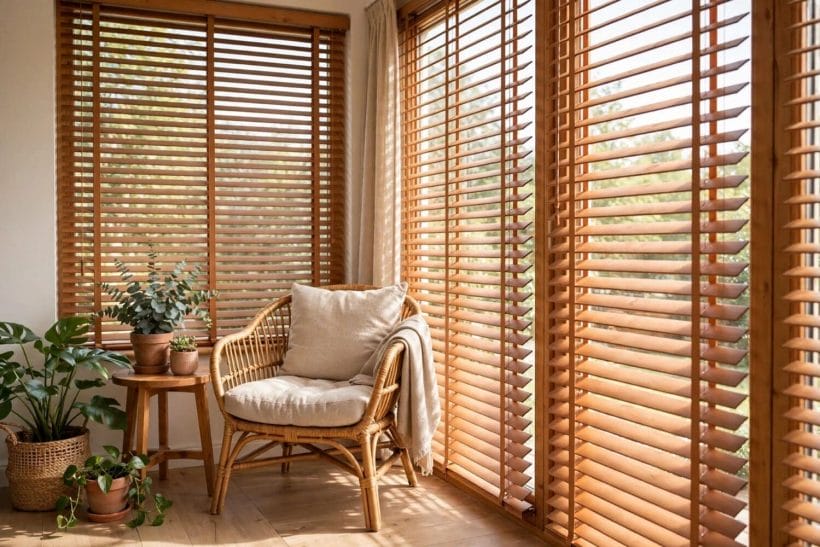
Wooden blinds give a sunroom something neither sheers nor roller shades quite offer, which is fine control over the direction of light. Tilting the slats lets daylight in while turning glare away from a chair or a table, and a small adjustment can change the whole feeling of a corner without darkening the room. That control is useful in a sunroom because the sun moves so much through the day, and a seating spot that is perfect in the morning may need shade by the afternoon.
Wood also brings warmth to a room that can otherwise feel all glass and light. The natural tone of the slats sits comfortably beside rattan, timber and plants, and the rhythm of the slats gives a long wall of windows a pleasing structure. In a reading corner, blinds can be tilted to keep light on the page without glare, and in a dining spot beside the kitchen they can be set to soften the brightest glass while leaving the view open, a balance familiar from tiny kitchen ideas, where light and outlook matter just as much. Wooden blinds suit sunrooms where the furniture is natural and the planting is generous, because they add texture without competing with the garden outside, and they pair well with a sheer behind or beside them when a softer layer is wanted as well.
5. Pleated Shades for Angled Roof Glass
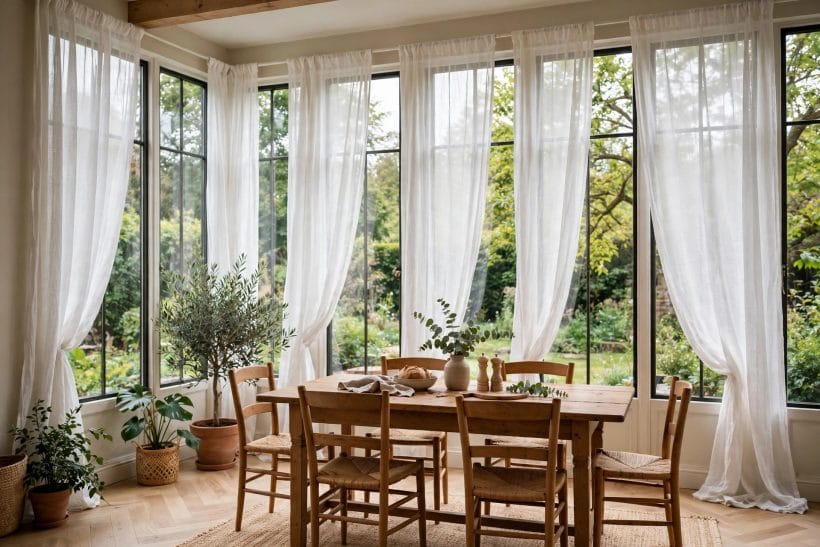
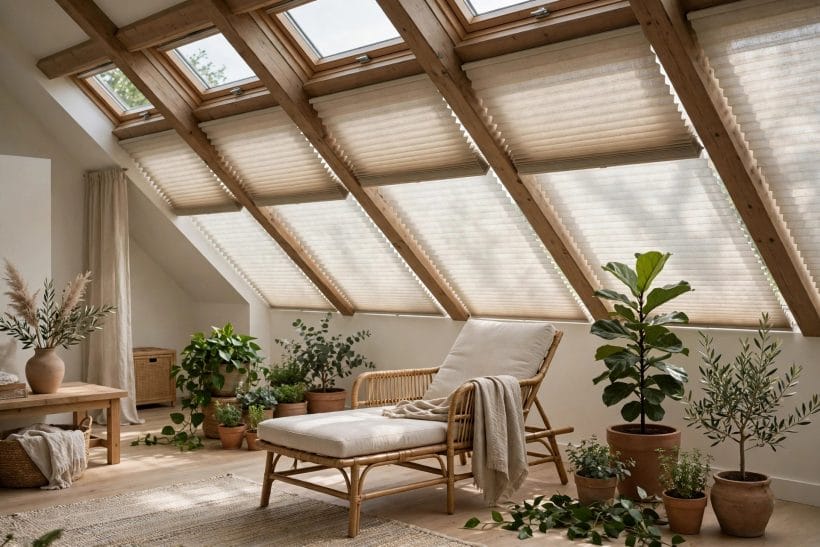
Roof glass is the part of a sunroom that most often gets forgotten, yet it can be the brightest surface in the room. Pleated shades are made to follow the shape of angled and sloping glass, folding neatly along the slope so the roof panels can be softened without hiding their shape. In a room with a glazed roof, they turn a wash of overhead light into something gentler, so a lounge chair or a reading spot below stays comfortable through the middle of the day.
The pleated look itself is quiet and tidy, with soft folds that echo the lines of the roof, and a pale fabric keeps the ceiling feeling light rather than heavy. Because roof glass faces the sky, its light changes with the weather as much as with the hour, and a shade that can be drawn across the brightest panels while leaving others open lets the room keep its airy feeling. Pleated shades also suit sunrooms where the roof is the main feature, since they follow its geometry instead of fighting it, and they work well alongside treatments on the walls, with the roof handled in its own way and the side glass dressed to match.
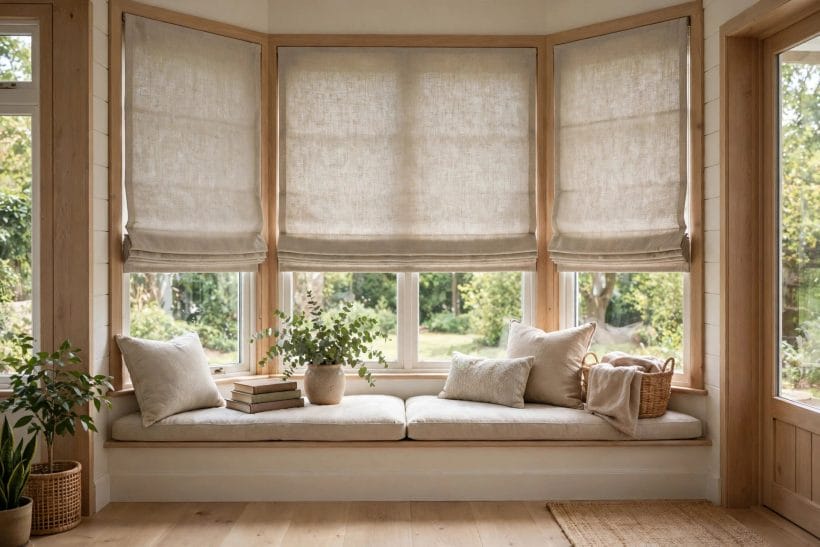
6. Roman Shades for a Tailored Bay Window
A bay window gives a sunroom one of its most loved spots, a seat or a shelf of cushions set into the glass itself, and Roman shades suit that shape particularly well. They fall in soft, even folds that sit neatly within each section of the bay, so the window seat keeps its shape and the treatment follows the angles of the bay instead of smoothing them away. A plain, neutral fabric keeps the effect tailored, and the folds add a gentle softness that suits a seat meant for reading and lingering.
Roman shades work well when the bay is used as a quiet corner, because they can be raised to open the view completely or lowered to soften the light on the seat. They also sit comfortably beside cushions and throws, which are often part of a bay, and they give the bay a finished look without the fullness of a curtain. For a sunroom where the bay is the centre of the room, a Roman shade in a tone picked up from the cushions or the floor ties the whole corner together, and the soft folds catch the light in a way that makes the bay feel inviting at any hour.
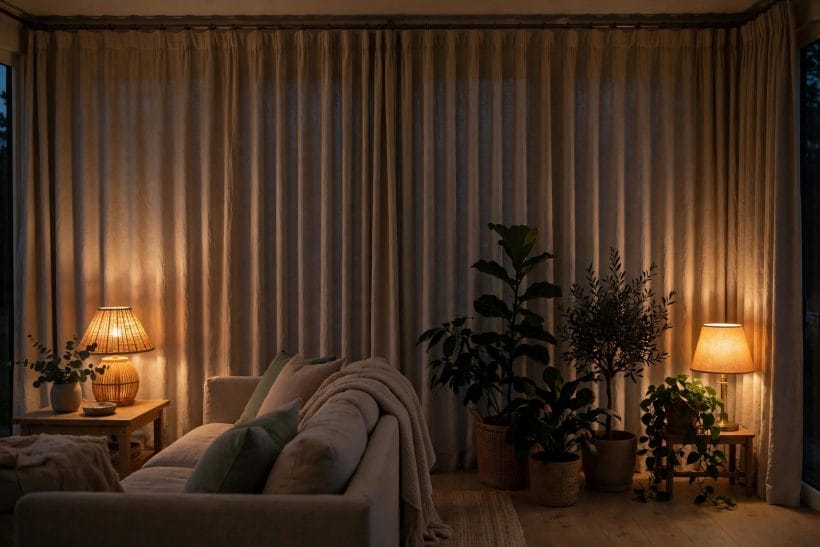
7. Layered Treatments for Evening Privacy
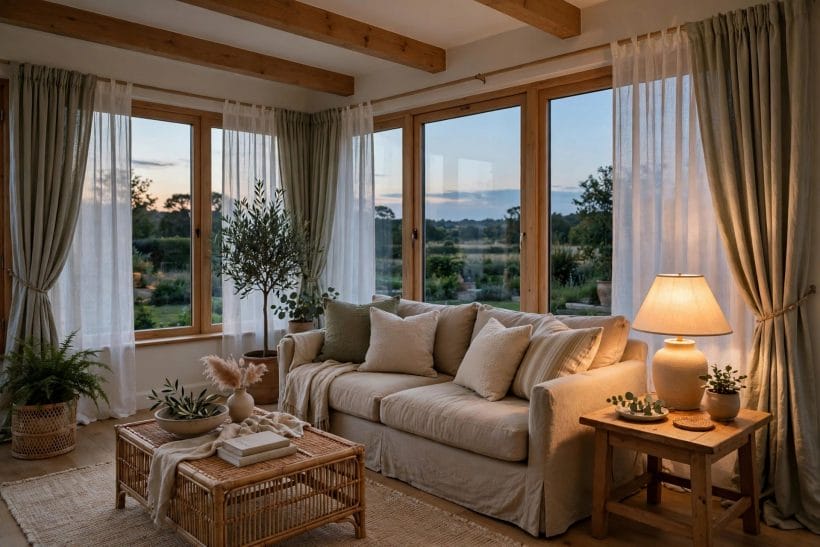
As daylight fades, a sunroom changes character. Glass that showed the garden all day now shows the lamplit room to anyone outside, and a single daytime layer may no longer feel like enough. Layering answers that change, with a sheer or a shade for the day and a fuller drape for the evening, so the room can shift from open to private without any fuss. During the day the sheer stays in place and the drape rests to the sides, framing the glass, and in the evening the drape draws across to give the room a cosy, enclosed feeling.
Layering also lets each layer do the job it does best. The sheer softens daylight and keeps the room bright, while the drape adds weight, warmth and privacy after dark, and together they give the windows a finished, considered look. A drape in a tone that echoes the sofa, the cushions or the rug ties the windows to the rest of the room, and the combination suits sunrooms used as evening sitting rooms, where comfort after dark matters as much as brightness by day. For the evening room itself, small living room ideas offer further ways to make a glass-walled sitting space feel warm and settled once the lamps are on.
8. Colours That Keep a Glass Room Calm
Colour behaves differently in a sunroom from anywhere else, because the light is stronger and the garden is always part of the view. Pale, natural tones tend to work best, since they keep the room feeling bright and let the greenery outside do the talking, while a treatment in a strong or busy pattern can quickly dominate a wall of glass. White, cream, soft grey, pale linen and gentle natural shades all sit quietly against glass, and they suit the plants and wooden furniture that fill most sunrooms.
That does not mean a sunroom must be colourless. A warmer tone picked up from the floor, a cushion or a rug can give the windows a sense of belonging, and a deeper tone on an evening drape can make the room feel cosier after dark. The key is restraint across a large area of glass, with one calm colour carried through the room rather than a different colour on every window. When the treatment colour matches the mood of the room, whether that mood is fresh and airy or warm and settled, the glass stops being a problem to solve and becomes the best feature of the room. The broader question of how colour shapes a small home is explored in tiny house design, where calm palettes help compact rooms feel generous.
9. Living With Sunroom Treatments Day to Day
A sunroom treatment earns its place by how it behaves on an ordinary day, not only by how it looks in a photograph. The treatments that work best are the ones people actually adjust, raising a shade when the sun swings round, tilting blinds for a reading chair, drawing a drape when evening comes, and opening everything again in the morning. Choosing treatments that are easy to reach and simple to move matters more in a sunroom than anywhere else, because there are more of them and they are used more often through the day.
Day-to-day care is part of the picture too. Sunrooms gather dust and pollen more readily than inner rooms, since their windows open to the garden and their plants shed and grow, so fabrics and slats that can be dusted or wiped down simply will stay looking fresh with less effort. Light, plain fabrics show dust less readily than dark ones, and smooth surfaces are quicker to care for than heavily textured ones. Plants deserve a thought as well, since a treatment that softens the harshest light is kinder to leaves that scorch in strong sun, while a treatment that can be raised fully still lets sun-loving plants have their bright hours. Living with the treatments, adjusting them through the day and keeping them clean in a simple routine, is what turns a pretty sunroom into a room that is genuinely used. The same daily-use thinking shapes tiny bedroom ideas, where treatments are also adjusted morning and evening and cared for as part of an ordinary routine.
10. Fitting, Seals and Weatherproofing
The last part of any sunroom treatment is the part that should not be improvised, which is how it is fitted and how the windows themselves seal against weather. Sunroom glass faces wind and rain more directly than ordinary windows, and a treatment fitted badly can pull, catch or hang unevenly, while a seal that has failed can let in draughts and damp no curtain can fix. Measuring a wall of glass, fitting across angled panels and bay sections, and judging whether a seal or a frame needs attention are all jobs for qualified professionals, and this post deliberately gives no fitting instructions, because getting this part wrong can damage the windows it is meant to dress.
What a homeowner can usefully notice is whether a treatment hangs evenly, whether a shade runs smoothly across its full width, whether a drape draws fully without catching, and whether any window shows signs of draught or damp around its edges. Those observations are worth passing to a professional, who can judge the fitting and the weatherproofing together, since the two are connected in a glass room. A well-fitted treatment, chosen for the shape of the glass and hung properly, will move smoothly for years, and it will make the room feel finished in a way no fabric alone can achieve.
Final Considerations
A sunroom asks for treatments that respect its glass, with sheers for soft daylight, roller shades for a clean line, wooden blinds for adjustable light, pleated shades for roof glass, Roman shades for a bay, and layered drapes for evening privacy, all in colours calm enough to let the garden stay part of the room. The best plan usually mixes more than one kind, with each window shape given the treatment that suits it and one calm colour carried through the whole room, so the sunroom feels like a single, settled space rather than a collection of separate windows.
Before settling any choice, it is worth reading the companion guide to porch and sunroom window checks, which covers the glazing, panels, screens, seals, measuring and fitting questions to settle before any change is made, since treatments and windows belong together in a glass room. Start with the sunniest glass, choose treatments that are easy to adjust through the day, keep the colours calm, and leave measuring, fitting and any structural or weatherproofing work to qualified professionals. Done that way, a sunroom keeps its brightness, gains comfort and privacy, and becomes a room that is used from the first light of morning to the last lamp of evening.



0 Comments