

The photograph is perfect, the price is tempting, and the chair in question is currently a thumbnail on a screen — everything between that click and a sound piece of furniture standing in the room is a chain of checks.
This guide is the chain, in order: what to verify before ordering home furnishings online, what to confirm about delivery, how to check condition on arrival, and how returns, remedies and guarantees actually work — all in general terms that hold for any seller.
Related Guide: Is It Safe To Buy Wall Art Online? Checks for Prints, Sellers and Delivery
1. Ordering Home Furnishings Online at a Glance
Buying furniture and furnishings online swaps the showroom’s evidence — the sit, the wobble, the true colour under real light — for a listing’s promises. The careful buyer’s craft is to rebuild that evidence from measurements, materials, terms and paperwork before any money moves, and to keep checking at delivery and unpacking, when the evidence finally becomes physical. Two neighbouring posts hold the adjacent ground: buying furniture online covers the choosing checks for the piece itself, and the furniture buying guide gathers the designers’ standing advice on fit and construction. This guide is the ordering half of the story: the transaction, the van, the doorstep and the paperwork.
| Question | Short answer |
|---|---|
| What should I check first? | Dimensions — the room, the piece, and the whole delivery route between the street and its place |
| How do I judge quality unseen? | Materials and construction as stated in the listing, samples where offered, and the guarantee’s length as a clue |
| What does delivery really include? | Only what the terms say: threshold or room, assembly or not, packaging removed or left — confirm each in writing |
| What do I do when it arrives? | Inspect before signing where possible; photograph packaging and any damage before moving or assembling |
| Can I return it if it disappoints? | Usually under stated terms that vary by seller and by whether the piece was made to order — read them before buying |
| What paperwork matters? | The order confirmation, delivery note, guarantee and care instructions — kept together for the piece’s whole life |
2. Before You Order: Measure the Room and the Route
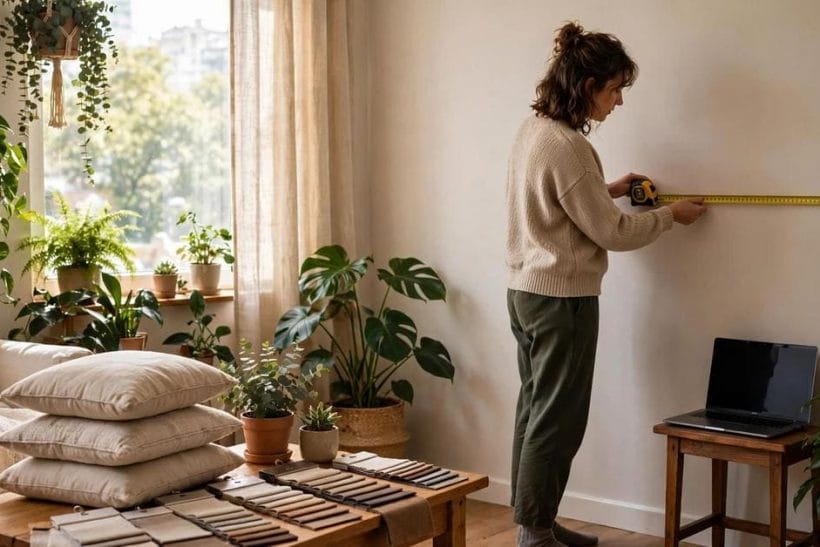
The feature scene is the whole first discipline: a tape against the wall, swatches on the table, the listing open on the laptop. More online furniture fails on measurement than on any other cause — a sofa two centimetres too grand for its wall, a cabinet that cannot turn the stair corner — and every one of those failures is knowable in advance with a tape and twenty honest minutes.
The room: footprint, height and walking space
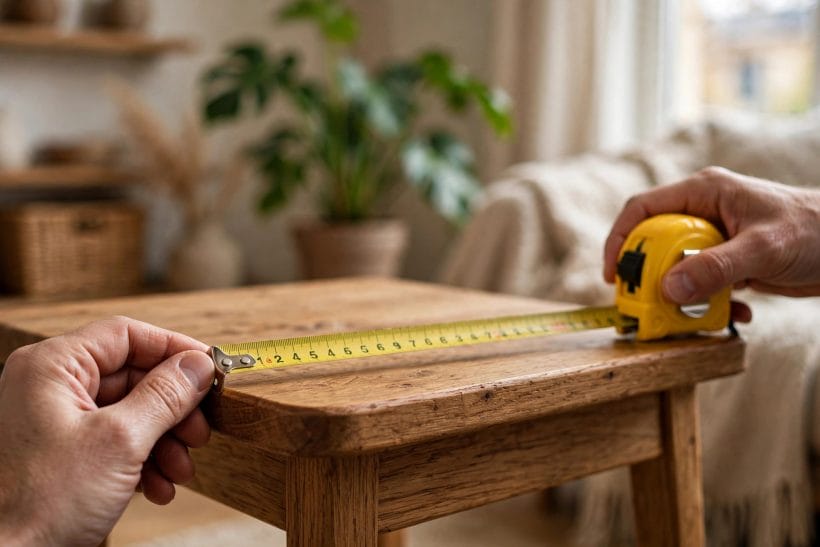
Measure the wall or floor the piece will occupy, then tape its footprint on the floor and live around the tape for a day. Check what the tape cannot show: ceiling height for tall pieces, the swing of doors and drawers, the radiator that shortens the wall, the socket the listing photograph assumes is somewhere else.
The route: the measurement everyone forgets
Walk the delivery route with the tape: front door, hall, turns, stairs, the room’s own door. The geometry of routes is its own subject — hallway width treats it directly — and it decides more online orders than taste does. A piece that cannot make the turn cannot be owned, however beautiful its thumbnail.
The piece: read dimensions like a sceptic
Use the stated dimensions, not the lifestyle photograph’s proportions, and note which are overall and which are seat, shelf or sleeping sizes. Where a dimension that matters is missing from the listing, ask the seller before ordering — the answer, or its absence, is information about the seller as much as the piece.
3. Reading the Listing Like a Contract

A listing is two documents wearing one coat: an advertisement, whose job is longing, and a specification, whose job is truth. The careful buyer reads the second one forensically and treats the first as decoration — because if anything is ever disputed, it is the specification, the terms and the confirmation email that will be read again.
What a complete specification states
Dimensions, materials by part — frame, fill, fabric, finish — construction method where relevant, care requirements, assembly state on arrival, and what is included: cushions, fixings, feet, shelves. Gaps in that list are not necessarily sins, but each one is a question to ask in writing while the asking is free.
Photographs: evidence and its limits
Good listings show the piece from several sides, the fabric close up, the finish in plain light. Styling photographs — the piece in a vast loft at golden hour — show scale dishonestly by design of the genre. Zoom on construction photographs where they exist; distrust any listing where the back, underside and joints are never shown.
Reviews: read for patterns, not stars
Independent reviews help most when read for repeated specifics — delivery conduct, colour accuracy, wobble, zip quality — rather than for the average score. A pattern of the same complaint across unconnected reviewers is evidence; a single furious paragraph, or a page of identical praise, is weather.
4. Materials, Construction and True Colour
What a piece is made of decides how it ages, and online, materials arrive as words. The buyer’s counter-moves are old ones: prefer listings that name specific materials over those that offer adjectives, order samples wherever samples exist, and remember that colour on a screen is a rumour until a swatch confirms it in the room’s own light.
Frames, fillings and fabrics in plain words
For upholstered pieces, the listing should say what the frame is, what fills the cushions, and what the cover is made of — including whether covers remove for cleaning. For timber pieces, solid or veneer, and which parts are which. Vague warmth in the description correlates poorly with substance in the object.
Samples: the cheapest insurance in the order
Fabric and finish samples, where a seller offers them, cost little and decide much: colour by the actual window, texture under the actual hand, and how the material behaves beside the room’s existing pieces. The household that skips samples to save a week sometimes spends a season negotiating a return instead.
Pre-owned pieces: the same checks, sharper
Ordering second-hand furnishings online sharpens every check in this guide — condition described and photographed honestly, dimensions confirmed, delivery and returns often thinner than retail’s. The world of vintage online furniture runs on exactly this discipline, with condition questions standing in for guarantees.
5. The Price You Actually Pay: Totals Without Surprises

No figures are quoted in this section, because the honest subject is not what furnishings cost but what an order’s total is made of — and how much of it hides below the headline price until the final screen. Read every order as a stack of line items and confirm each one before paying, in whichever currency and market the order is placed.
The line items to hunt for
The piece itself; delivery, and at what service level; assembly, if offered; removal of packaging; removal of the old piece, if offered; and any charge attached to the chosen payment method or to a failed delivery. None of these is improper — all of them belong in the buyer’s arithmetic from the start, not in a surprised email afterwards.
Made-to-order changes the terms
Pieces made or finished to the buyer’s specification commonly carry different return terms from stock pieces, for the understandable reason that they cannot simply be sold to the next customer. The listing and terms should say so plainly; where they do, the earlier checks in this guide double in importance, because the exit is narrower.
Offers and discounts: read the mechanics
Where a price is presented as reduced or time-limited, the checkable facts are the final total, the terms attached and the delivery window promised — not the size of the claimed saving, which no buyer can verify from a screen. Decide on the total and the terms; let the theatre around them entertain somebody else.
6. Delivery: What to Confirm Before the Van Arrives

Delivery is where an online order becomes a physical event in a real house, and most of its disappointments are scheduled in advance by unasked questions. The confirmations below cost one message each and prevent the classic failures: the van that cannot wait, the box abandoned on the drive, the piece that reaches the hall and goes no further.
Threshold, room or assembled: name the service level
Delivery can mean left at the door, carried to the room, or unpacked and assembled with packaging taken away — three different products wearing one word. Confirm which one the order includes, and what the crew will and will not do about stairs, narrow turns and the room’s obstacles on the day.
Timing, access and the failed-delivery clause
Confirm the delivery window, how notice is given, and what happens if nobody is home or the piece cannot be got in: a second attempt, a charge, a return to the warehouse. Check the access notes given to the crew match the house — the route measured in section two is only useful if its facts reach the people carrying the box.
Prepare the house before the day
Clear the route, protect floors where boxes will turn, decide where packaging will go, and keep a camera ready. None of this is fussiness: the doorstep minutes of a delivery are the one moment when condition evidence can be created calmly, and they pass quickly.
7. Condition Checks at the Doorstep and on Unpacking

The arrival check is the hinge of the whole guide: everything before it is prevention, everything after it is remedy, and its evidence is what remedies run on. Work it as a ritual — packaging first, piece second, paperwork throughout — and let politeness to the crew and thoroughness coexist; they are professionals, and a careful receiver is not an accusation.
Inspect the packaging before it opens
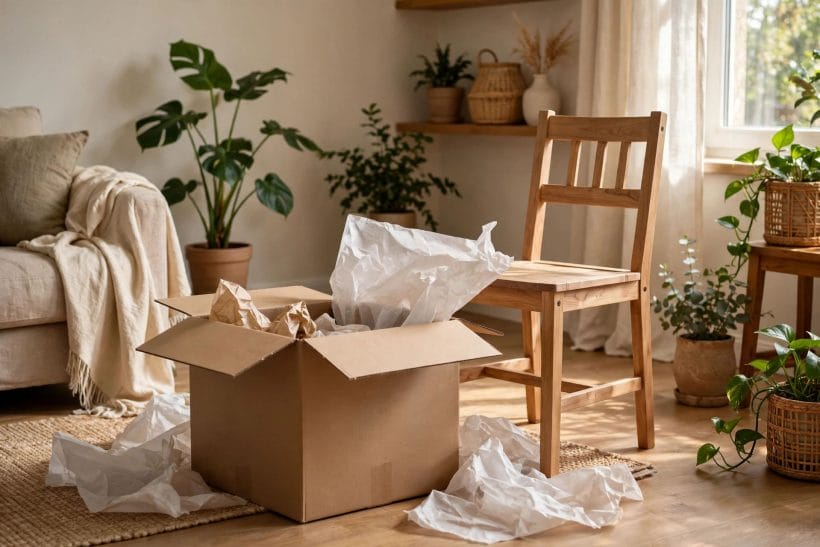
Crushed corners, punctures, water marks and re-taped seams tell the transit story before the piece is seen. Photograph anything amiss, from several angles, with the delivery paperwork in frame where that is practical — and note visible damage on the delivery record before signing, in plain factual words.
Unpack and check the piece itself
Where the service level allows, unpack on the spot; where it does not, open and inspect as soon as possible afterwards, within any window the seller’s terms specify for reporting damage. Check faces, edges, legs and moving parts; sit, open, level and load as the piece will be used. Photograph faults before assembly, never after a repair attempt.
Count parts and test assembly honestly
For self-assembly pieces, count components and fixings against the parts list before beginning, and stop at the first missing or damaged part rather than improvising around it. An improvised fix can convert the seller’s clear obligation into an argument about what the buyer did — patience at this stage is a legal instrument as much as a virtue.
8. Returns, Refunds and Remedies Read in Advance

Returns terms are part of the product: a generous, clear policy is a seller’s confidence made visible, and a vague one is information of the opposite kind. They vary by seller, by market and by whether the piece was stock or made to order, so this section states what to establish — from the actual terms of the actual seller — rather than what any particular policy promises.
The questions the terms must answer
How long is the return window, and from when does it run? Who arranges and who pays for collection? Must the piece be unused, unassembled, or in its packaging? How and when is money returned, and are delivery charges part of the refund or not? If any answer cannot be found in the terms, ask it in writing before ordering.
Changed-mind returns are not fault remedies
Most markets and sellers distinguish returning a sound piece because it disappoints from remedying a piece that arrives damaged or faulty — different windows, different costs, different obligations. Know which situation you are in before contacting the seller, and describe it factually: the remedy conversation goes better when nobody has to correct the premise.
Keep the packaging until the decision settles
Boxes and padding are return equipment as much as delivery equipment. Keep them, flattened if space demands, until the return window has closed and the piece has been lived with honestly — the household that loves the chair on day ten needs no box; the one negotiating a collection on day nine needs exactly that box.
9. Guarantees, Faults and the Paper Trail

A guarantee is a promise with a filing system. Its value over a piece’s life depends on three unglamorous things: what it actually covers, how a claim is made, and whether the household can produce the paperwork when the day comes. The same folder that holds the guarantee holds the whole biography of the purchase — and in the small-space homes this site serves, convertible furniture tiny house plans make the same point from the design side: multi-use pieces earn their keep longest when their mechanisms and guarantees are understood.
Read the guarantee’s exclusions, not its headline
Years are the advertisement; scope is the contract. Note what is covered — frame, mechanism, fabric, finish — what is excluded as wear or misuse, and what the remedy actually is: repair, part, replacement or refund, and who decides. A shorter guarantee with a clear remedy can be worth more than a longer one written in fog.
Report faults promptly, in writing, with photographs
When something fails, the first message matters: date, order reference, plain description, clear photographs, and what remedy the buyer is asking for. Keep the exchange in one thread where possible. Most sellers resolve most honest faults without drama; the paper trail is what makes drama unnecessary, not what creates it.
One folder for the life of the piece
Order confirmation, invoice, delivery note, guarantee, care instructions and the correspondence file — paper or digital, one place. It takes a minute per document and pays out years later, on the day a hinge fails, a house moves, or a piece is sold on with its provenance intact. Local shops still have their place in this ecology too — furniture stores near me is a starting point for readers who decide the piece in front of them beats the piece on the screen.
10. The Order-Ready Checklist: Costs as Drivers and Final Habits
The last section gathers the guide into the order a careful buyer actually performs it, and closes the cost question the way this series always closes it: with drivers, not figures. Furnishing prices, delivery models and consumer rules vary too widely by place and seller for any printed number to be honest — what transfers everywhere is the list of things that make up a total.
The checklist, in performance order
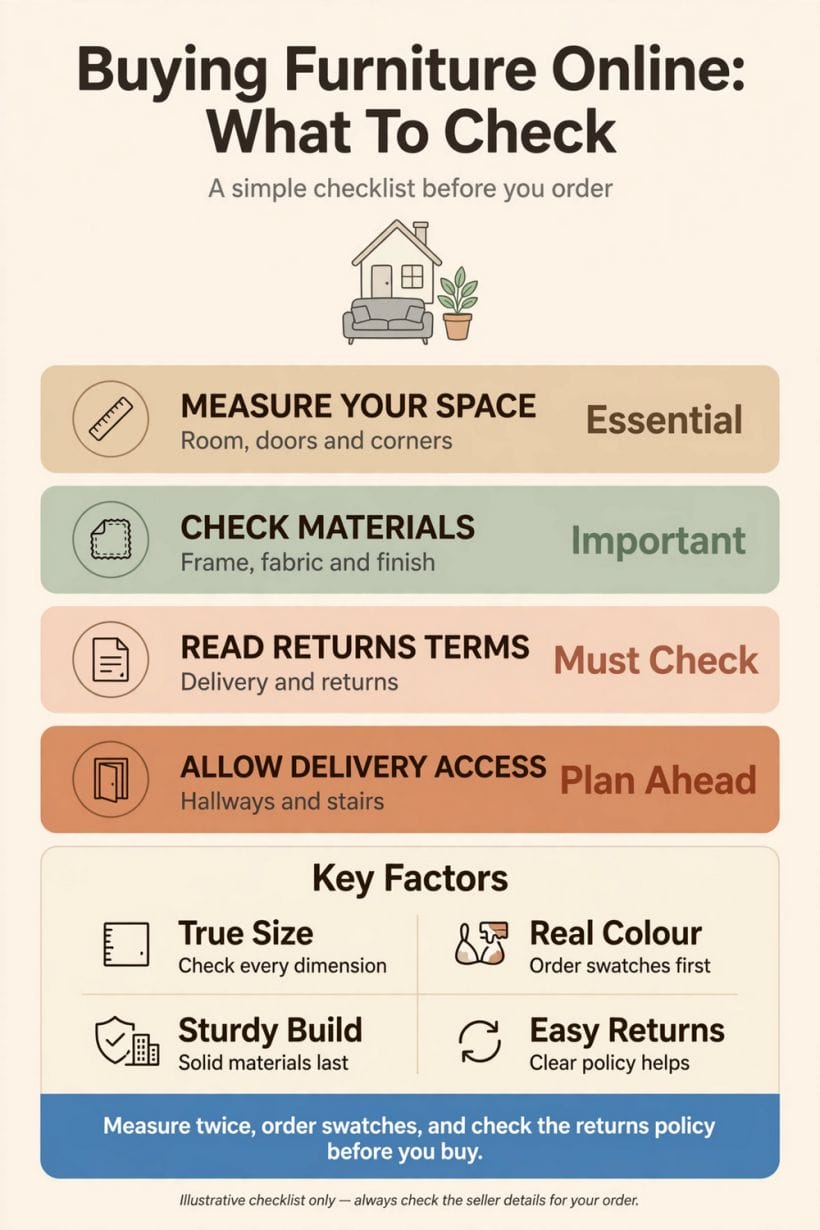
Measure the room and the route. Read the specification, not the styling. Confirm materials, and order samples. Establish the full total including delivery’s service level. Read the returns terms and the guarantee’s exclusions. Confirm delivery arrangements and prepare the house. Inspect, photograph and note at arrival. File the paperwork. Nine habits, none clever, all of them cheaper than their absence.
The drivers behind any total
The piece’s materials and making; its size and weight, which set delivery’s difficulty; the service level chosen, from threshold to assembled; distance and access; and the narrowness of the exit the terms allow. Judge an order by whether each driver has been seen and priced into the decision — an unsurprising total is the signature of a well-made order.
The habit that outlasts the checklist
Slowness, finally, is the master check: furnishings are bought in minutes and lived with for years, and nearly every regret in this guide’s territory was a fast order. The listing will still be there after the tape measure, the swatch and the terms have had their say — and if it is not, the room has lost a chair, not a fortune.
Final Considerations
Ordering home furnishings online is a chain of small verifications, and it breaks — as chains do — at its weakest link: the unmeasured route, the unread term, the unphotographed box. Run the checks in this guide in order and the chain holds from thumbnail to room: the piece fits, the colour is true, the delivery is the service that was paid for, the condition is evidenced, and the paperwork sleeps in its folder against a day that may never come. That is the whole of the craft — no seller named, no complaint repeated, just the standing discipline of the careful buyer.




0 Comments