
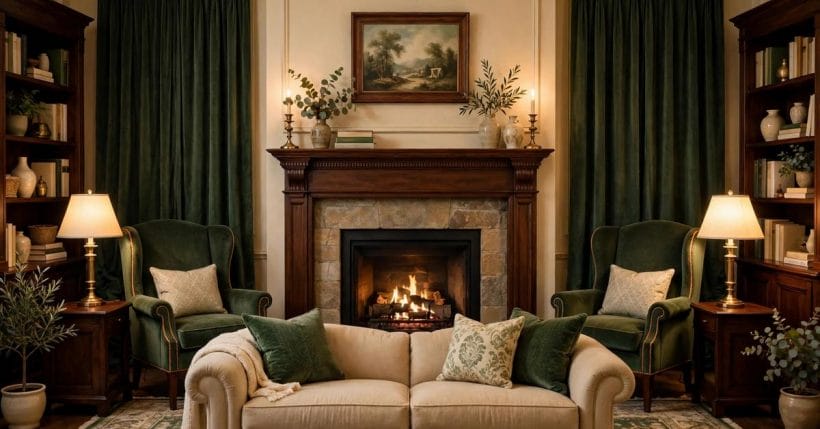
A traditional living room is easy to recognise and hard to rush. The seating faces the fireplace or the window, the curtains fall to the floor, the lamps come on before the ceiling light, and nothing in the room shouts for attention. This gallery guide walks through that look room by room, idea by idea, so you can borrow the parts that suit your own home and leave the rest behind.
Each section below looks at one part of the room in turn: the layout first, then the sofa, then colour, curtains and light, and finally the smaller pieces that make a formal room feel lived in. Read it in order for a full room plan, or dip into the section that matches the corner you are working on.
1. Start With the Focal Point
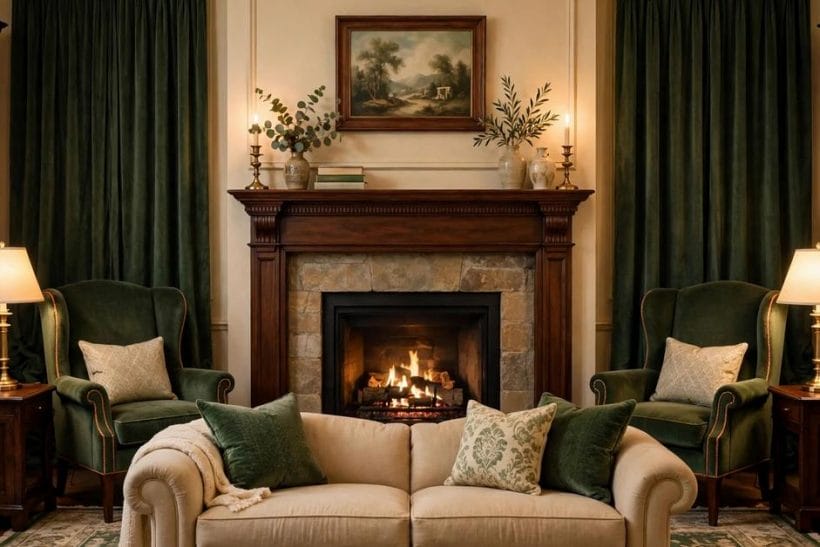
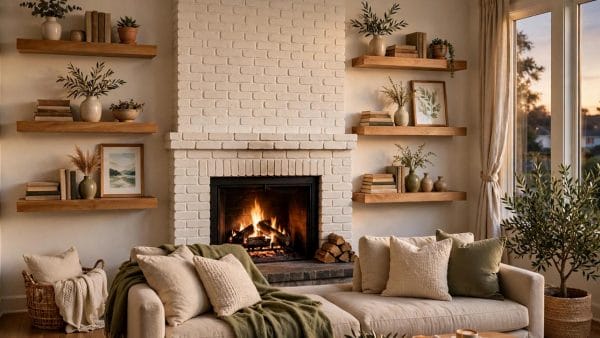
Every traditional room has a place the eye lands first. In many homes that place is the fireplace, with its mantel and chimney breast giving the whole wall a centre. In a room without a fireplace, a wide window, a large piece of artwork, or a pair of bookcases can do the same work. The choice matters less than the commitment: once the focal point is settled, the rest of the room can arrange itself around it.
Keep the wall around the focal point calm. A mantel with a mirror or a single framed picture above it reads more traditionally than a crowded shelf of small objects, and it leaves the fireplace itself as the hero of the wall. If the focal point is a window, the same rule holds: let the view and the curtains carry the wall, and keep the furniture near it low enough that the light still reaches into the room.
Symmetry helps here, and it does not need to be rigid. A chair on each side of the fireplace, a lamp on each end of a console, or a pair of pictures flanking a window all give the eye a sense of order. Small differences are welcome too: the two chairs need not match exactly, and the lamps need not be twins, as long as their size and presence feel balanced across the centre line.
2. Build a Balanced Layout
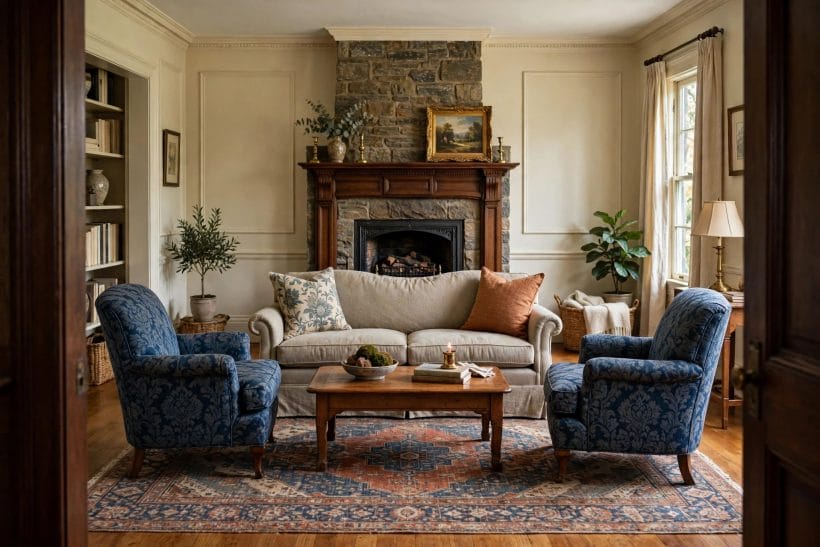
With the focal point settled, the seating can take its shape. A sofa facing the fireplace, with two chairs drawn up opposite or at an angle, forms the classic conversation group, and a low coffee table between the seats anchors the middle of the arrangement. The rug should sit under the front legs of the seating at least, so the group reads as one arrangement rather than separate pieces scattered across the floor.
Leave clear paths through the room. A walkway from the door to the window, and from the seating to the rest of the house, keeps the room comfortable to move through even when every seat is taken. Furniture pushed tight against the walls can make a room feel larger on paper and emptier in practice, so pull the seating a little way into the room and let the space breathe behind it.
This gallery stays with the look and layout of the room. The ordering half of furnishing a room — measuring the delivery route, checking condition at the doorstep, and reading the returns terms before you commit — is covered by the companion guide to ordering home furnishings online, and this post does not repeat that ground. Keeping the two halves separate makes each one easier to use when its turn comes.
3. Choose a Classic Sofa Shape
The sofa sets the tone for the whole room, so its shape deserves the first decision. Rolled arms, a deep seat, and a back that invites leaning rather than perching all belong to the traditional family, and they pair naturally with wood legs, turned feet, and a tailored skirt or a clean exposed base. A sofa in this shape can carry patterned cushions, plain throws, and a mix of textures without losing its calm outline.
Size matters more than style details. A sofa that fills its wall from end to end leaves no room for a side table or a lamp, while a sofa that floats too small in a large room makes the whole arrangement feel temporary. Measure the wall, the doorways the piece must pass through, and the rug it will sit on, and let those measurements narrow the choice before colour or fabric enters the conversation.
Wing chairs and club chairs make natural companions for a classic sofa. Their high backs and enclosed sides give a corner of the room a sense of shelter, and they work well angled toward the fireplace or toward the sofa itself. In a smaller room, a pair of armless slipper chairs can give the same traditional feeling without the visual weight of full wings.
4. Layer Cushions and Throws
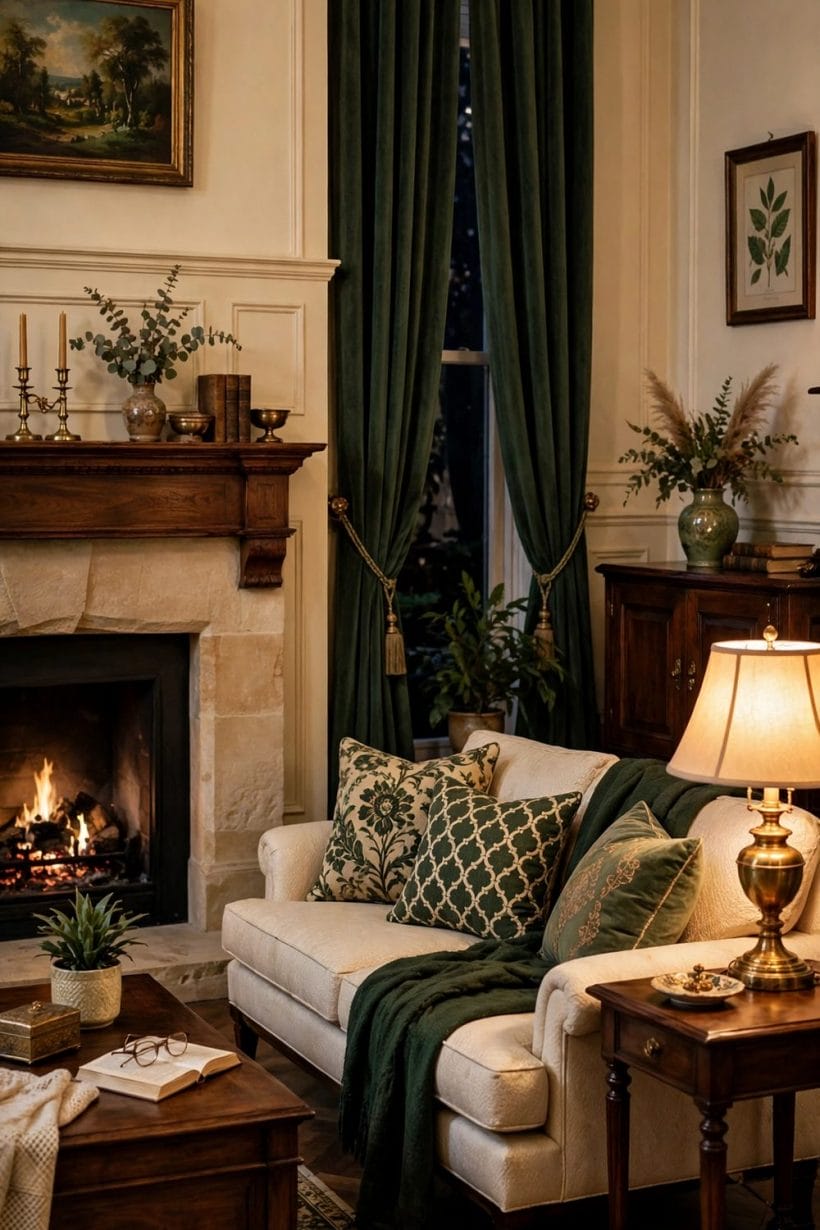
Cushions and throws are where a traditional room softens. Start with the sofa’s own cushions, then add a small number of extras in patterns that share a colour with the room rather than introducing a new one. A stripe, a small floral, and a plain texture together give variety without noise, and an odd count of cushions on each seat tends to look gathered rather than arranged.
Throws work best where they will actually be used: folded over one arm of the sofa, draped across the back of a chair, or kept in a basket near the seating. A wool throw in a deep tone suits the colder months, while a lighter cotton throw carries the same idea through the warmer part of the year. The point is comfort you can reach for, not a display that must stay untouched.
Change the layers with the seasons rather than rebuilding the room. Swap a heavy throw for a lighter one, trade a dark cushion cover for a paler one, and the room feels fresh without any larger change. This habit also protects the sofa itself, since the layers take the daily wear that would otherwise fall on the upholstery alone.
5. Set a Warm Colour Palette
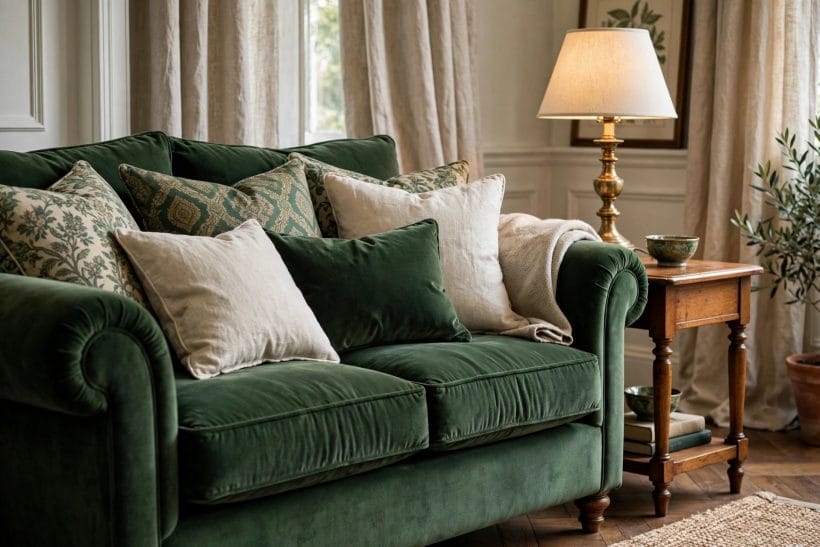
Traditional rooms lean warm. Cream and soft white walls give the room its light, deep green or burgundy upholstery gives it depth, and wood tones in the furniture and floors tie the two together. Gold and brass accents in frames, lamp bases, and picture lights add a quiet glow that suits lamplight in the evening.
Work from the largest surfaces down. Walls and floors set the background, the sofa and curtains set the middle tones, and cushions, artwork, and smaller objects add the accents. When the background is calm, even a strong accent colour stays easy to live with, because it appears in small amounts against a settled field rather than competing across the whole room.
For ideas about how wall colour behaves in a smaller footprint, the guide to tiny house interior paint colours shows the same warm palette at a different scale, and the principles carry back to a full-size room unchanged. Test any wall colour on the wall itself, in daylight and in lamplight, before committing to the whole room, since traditional colours shift more than expected between the two lights.
6. Dress the Windows Fully
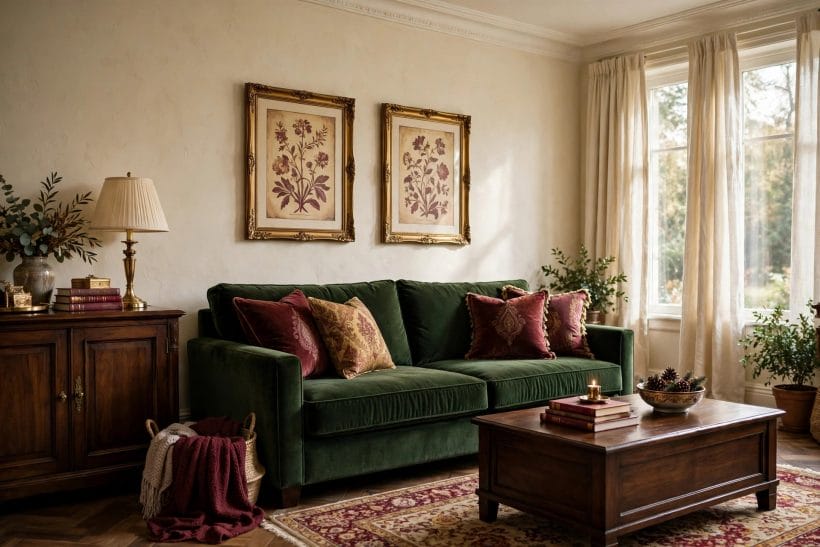
Curtains are one of the clearest markers of a traditional room. Full-length curtains that reach the floor, hung high and wide so the fabric stacks clear of the glass, make windows look taller and let the maximum daylight in when they are open. A lining gives the curtains weight and drape, and it helps them hang in soft folds rather than stiff pleats.
Choose a curtain fabric that relates to the rest of the room: a plain linen or cotton for a calm room, a subtle pattern where the upholstery is plain, or a deeper tone where the walls are pale. The curtain rod itself can be simple dark wood or brass, and finials in a classic shape finish the treatment without drawing attention away from the window.
Sheer panels behind the main curtains give a useful middle setting, softening daylight while keeping the room private. In rooms that face a street, this layer matters more than any other window treatment, because it lets the room stay bright during the day without feeling exposed. Draw the main curtains in the evening and the room gains a sense of enclosure that suits lamplight.
7. Layer the Lighting
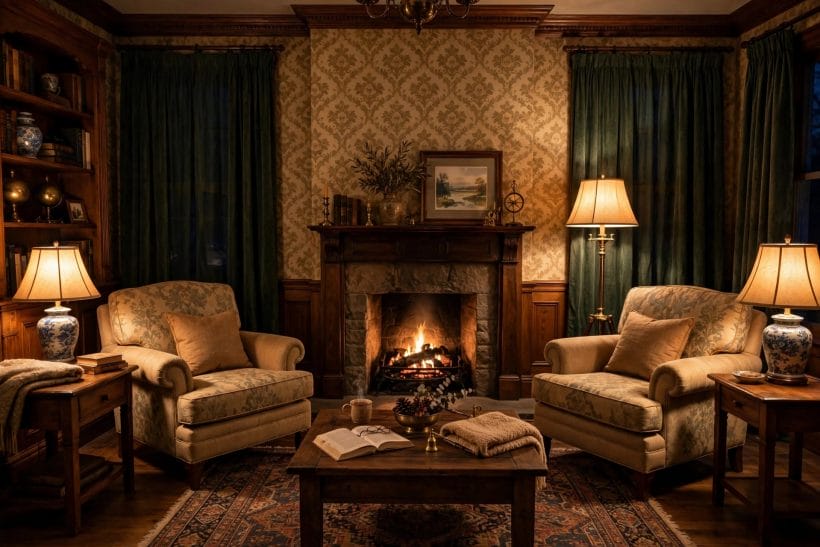
Layered lighting is the quiet skill behind a traditional living room. Three levels work together: a ceiling light or chandelier for general light, table lamps and floor lamps for pools of warm light at seating height, and small accents such as picture lights or a mantel lamp for glow. No single level should carry the whole room alone.
Table lamps beside the sofa and at the ends of a console do the most work in the evening. Their light falls at the height where people sit and talk, it flatters the room’s colours, and it leaves the corners softly dark rather than harshly lit. Choose lampshades in warm white or cream, which soften the light, and keep the lamp bases in proportion to the tables beneath them.
Any work that touches wiring, new circuits, or a new ceiling fitting belongs to a qualified professional, and this guide gives no instructions for that kind of work. The ideas here stay on the safe side of that line: choosing lamps, placing them well, and using the switches and dimmers already in the room. If a fitting needs moving or a circuit needs changing, a professional should be the one to do it.
8. Add Wood, Books and Collected Pieces
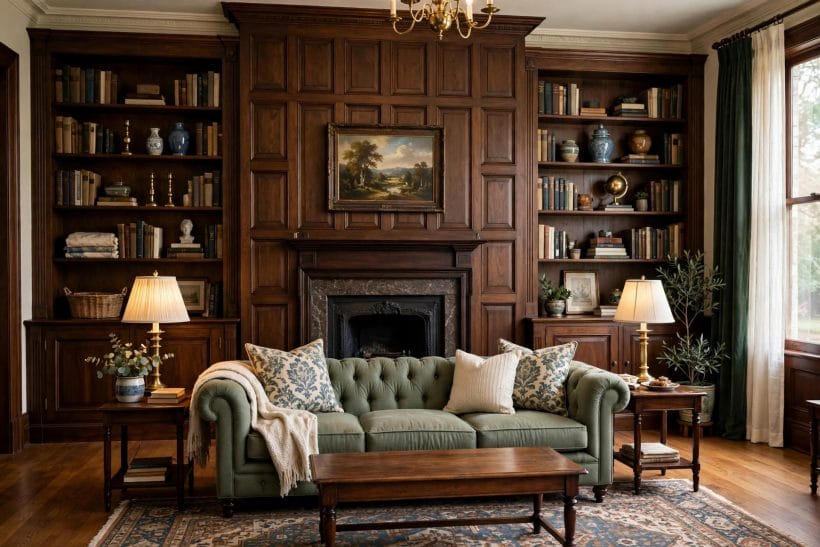
Dark wood gives a traditional room its backbone. Bookcases, a coffee table, side tables, and a mantel in walnut, mahogany, or a stained oak all carry the same message: the room is built from materials that age well. Keep the wood tones in the same family where you can, since a room full of unrelated finishes feels restless even when each piece is attractive on its own.
Books suit this room better than almost any other decoration. Shelves filled with books you have actually read, arranged upright with the occasional horizontal stack, give a wall life that ornaments alone cannot match. Leave a little breathing room on each shelf rather than packing it edge to edge, and let a small object or a framed photograph break the rows here and there.
Collected pieces should earn their place slowly. A framed print, a ceramic vase, a clock on the mantel, or a bowl found on a trip all belong when they carry a memory or a use. A room assembled in a single shopping trip rarely feels as settled as one gathered over time, so let the shelves fill gradually and edit as you go.
9. Keep the Room Comfortable Every Day
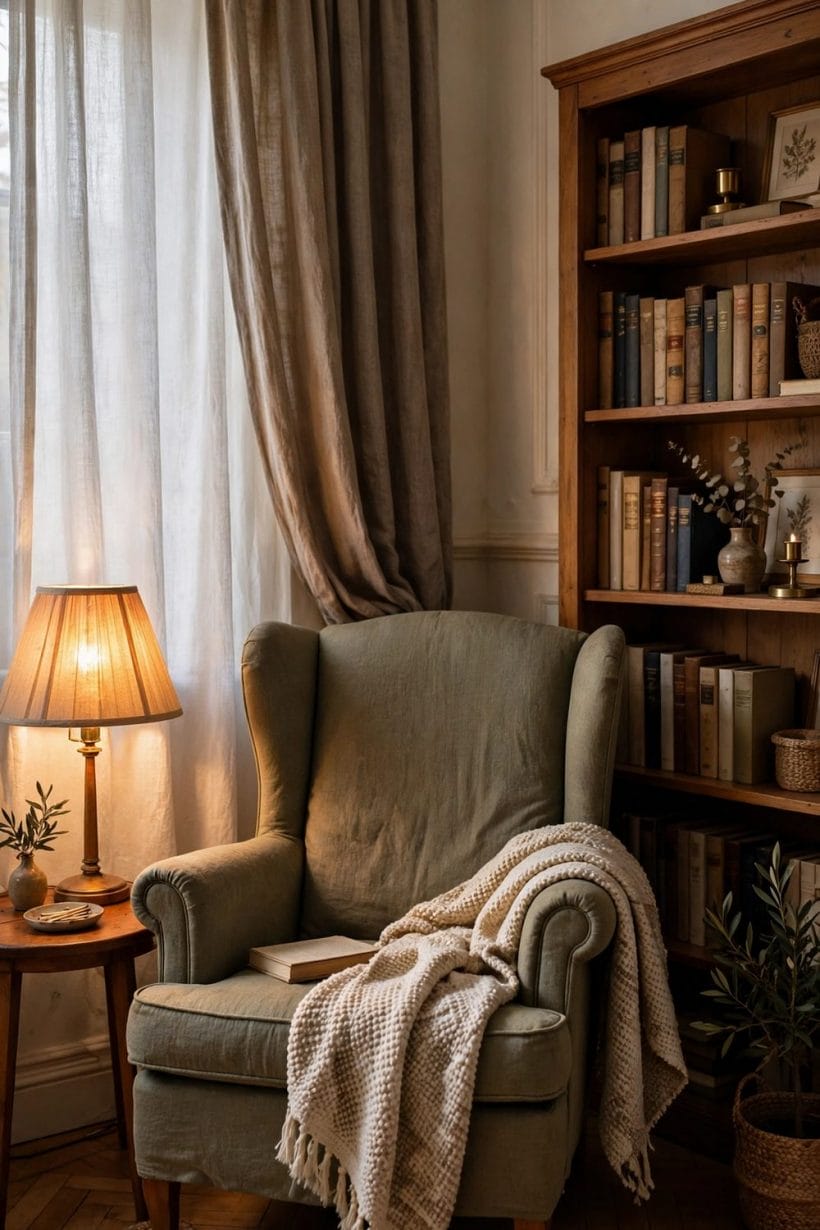
A traditional room should pass the everyday test, not just the photograph test. Seats need to be deep enough to curl up in, the coffee table needs to be within reach of every seat, and there should be a place to set a cup, a book, and a pair of glasses without hunting for a surface. If a room only works when nobody is using it, the layout still needs adjusting.
For the same comfortable feeling at a smaller scale, the ideas in tiny house living room ideas and small living room ideas show how the classic arrangement adapts when space is tight, and the guide to how to decorate a tiny living room carries the same seating-first thinking into the smallest rooms. The proportions change; the habit of putting comfort first does not.
Keep the room easy to tidy. A basket for throws, a tray on the coffee table for small objects, and a single drawer or box for remotes and chargers stop the surfaces from drifting into clutter. Ten minutes of putting things back at the end of the day keeps a formal room feeling welcoming rather than fussy.
10. Let Each Corner Earn Its Place
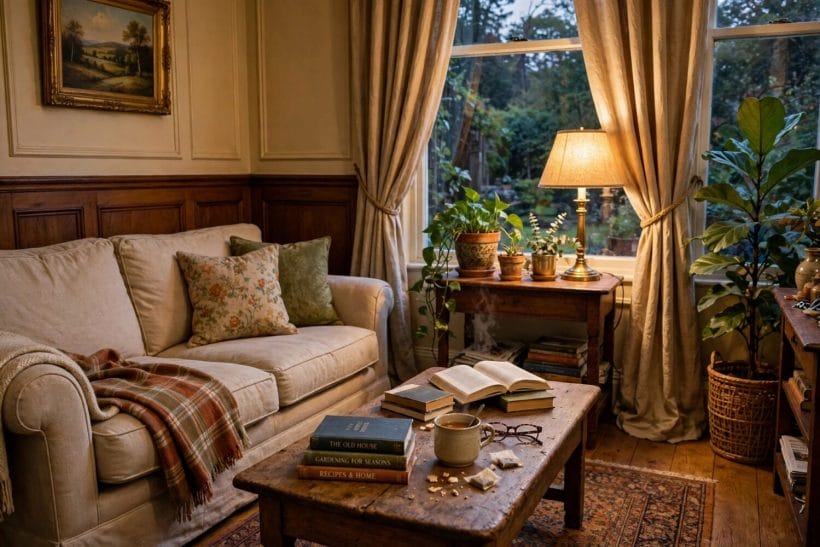
Finally, look at the corners. A reading chair with a lamp and a small table makes a corner into a destination, while an empty corner with a single tall plant can balance a heavier wall elsewhere in the room. Corners are also the right place for the pieces that do not fit the main arrangement: a writing desk, a display cabinet, or a chair kept for a guest.
The farmhouse version of this room shows how the same bones can wear a lighter finish, and the gallery of farmhouse living room ideas is a useful comparison when you want the traditional layout with paler wood and simpler fabrics. Likewise, the broader gallery of tiny living room ideas shows the arrangement working in rooms of every size, which helps when your own room sits between the examples.
Step back and look at the room as a whole before adding anything new. If the eye moves easily from the fireplace to the seating to the windows and back again, the room is close to done. The last additions should be small: a picture, a cushion, a plant. A room that feels finished is usually one where the owner stopped adding rather than one where every surface is filled.
Final Considerations
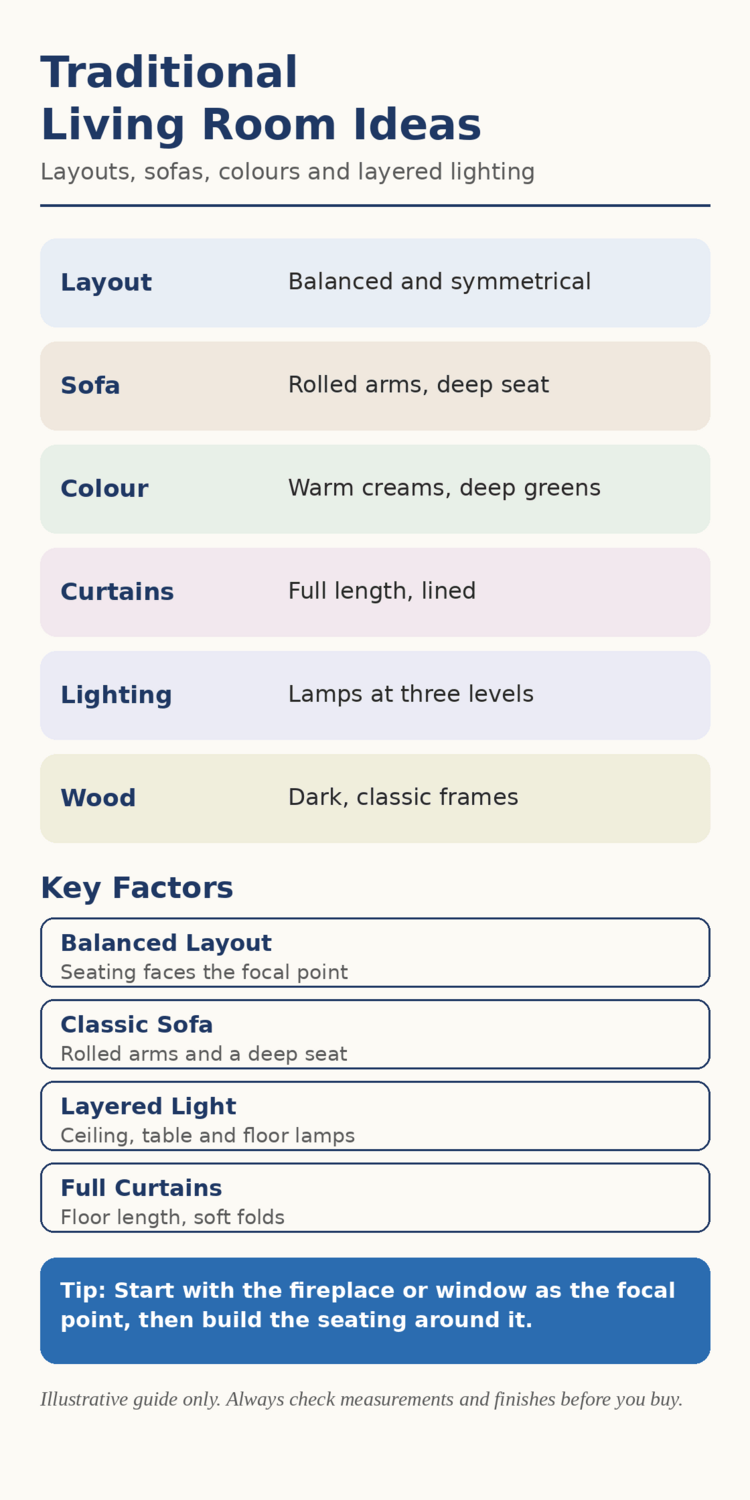
A traditional living room comes together from a short list of settled decisions: a focal point, a balanced layout, a classic sofa, warm colour, full curtains, and lamps at more than one level. Get those right and the smaller pieces — books, throws, pictures, and collected objects — have a calm frame to sit in.
Work through the room in that order, and give each decision time to settle before moving to the next. Measure twice where measurements matter, test colours in both lights, and keep the ordering questions with the ordering guide rather than mixing them into the design. A room planned this way stays comfortable long after the novelty of a new arrangement fades, which is the real test of a traditional room.


0 Comments