
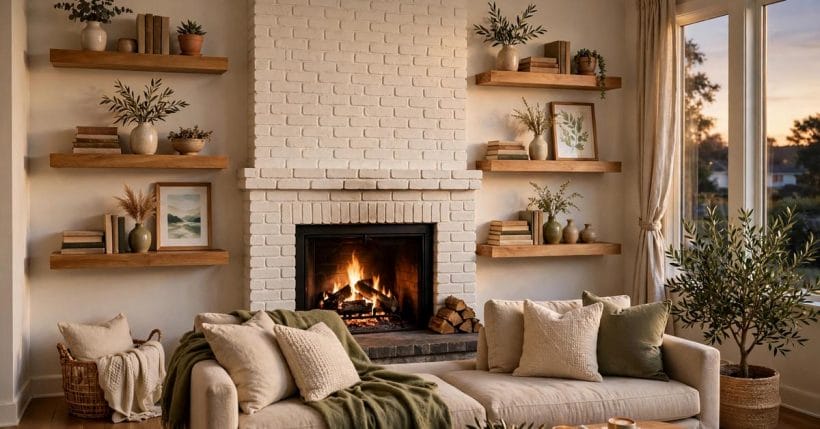
A fireplace already gives a living room its centre, and the wall on either side of it is often the hardest part of the room to get right. Leave it bare and the fire can look stranded; fill it with heavy furniture and the room loses its calm. Floating shelves offer a middle way. They give the wall purpose without giving it weight, because a floating shelf shows no brackets and no frame, only a clean board stepping out of the plaster. This guide gathers floating shelves fireplace ideas into one form, so the shelves, the fire and the seating read as a single wall rather than three features competing for attention.
The form matters more than any single board. A floating shelf works when its length answers the width of the chimney breast, when its timber answers the floor or the mantel, and when what stands on it leaves room for the eye to rest. Shelving here is not a place to store everything a household owns. It is a frame, and a good frame knows when to stay quiet. The companion guide to shelves next to a stone fireplace with a TV above looks at the fuller shelving arrangement around a stone fire and a screen; this guide stays with the floating shelf itself, its layouts, its timber and its styling.
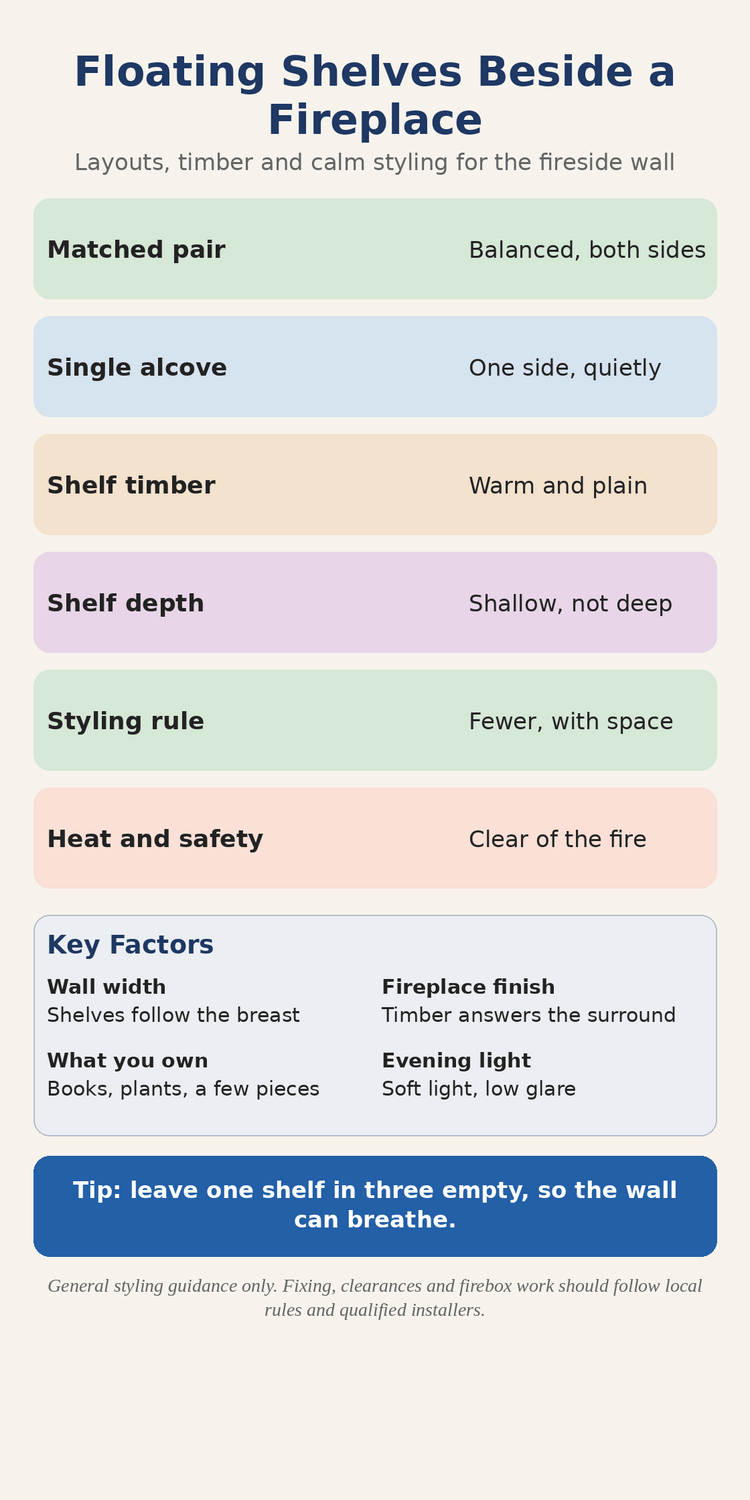
| Item | What it is |
|---|---|
| What Makes a Floating Shelf Different | A floating shelf hides its support inside the board or inside the wall, so the eye sees timber and air and nothing else. |
| The Matched Pair: Shelves on Both Sides | The classic arrangement puts floating shelves on both sides of the fire, matching in length, timber and number. |
| The Single Alcove: Shelving on One Side Only | Not every wall has room for a pair. |
| Choosing the Timber and Finish | Timber is the shelf's only material, so it carries the whole decision. |
| Styling the Shelves So the Fire Leads | Styling a floating shelf is mostly a matter of subtraction. |
| Books, Plants and Quiet Storage | Books suit floating shelves best when they lie flat. |
| Staggered Shelves and Broken Lines | Staggering breaks the strict stack and gives a fireside wall a more relaxed rhythm. |
| Light on the Shelves for Evening Rooms | Evening is when floating shelves earn their place, because firelight alone leaves the sides of the wall in shadow. |
| Small Rooms and Narrow Alcoves | Small rooms are where floating shelves shine, because they add storage and display without adding furniture that eats floor space. |
| Heat, Fixing and Everyday Care | Heat is the one subject beside a fireplace that must never be guessed at. |
1. What Makes a Floating Shelf Different
A floating shelf hides its support inside the board or inside the wall, so the eye sees timber and air and nothing else. That absence of visible brackets is the whole appeal beside a fireplace, where the fire already supplies drama and the wall does not need another hard line. A bracketed shelf adds rhythm of its own; a floating shelf adds almost nothing, which is why it suits rooms that already have stone, brick or a strong mantel to look at. The shelf becomes a quiet ledge for a few chosen things, and the wall behind it keeps its calm.
The same invisibility sets the shelf’s limits. A floating board carries its load on hidden fixings, so it suits books laid flat, plants, ceramics and framed prints rather than a dense run of heavy volumes standing upright. Households that love a full library wall will be happier with a different form, and the choice should be made honestly at the start rather than discovered when a board begins to sag. Think of the floating shelf as display with light storage, not as a bookcase without sides, and the wall will stay as crisp as the day it was finished.
Depth decides much of the effect. A shallow board keeps objects close to the wall, where they read as part of the fireside arrangement, while a deep board pushes things forward and turns the shelf into a ledge that crowds the room. Beside a fireplace, shallow is nearly always the better answer, because the chimney breast already steps into the room and the shelves should not step further. Let the breast lead, let the shelves follow, and let a hand’s breadth of clear plaster show above and below each board.
2. The Matched Pair: Shelves on Both Sides
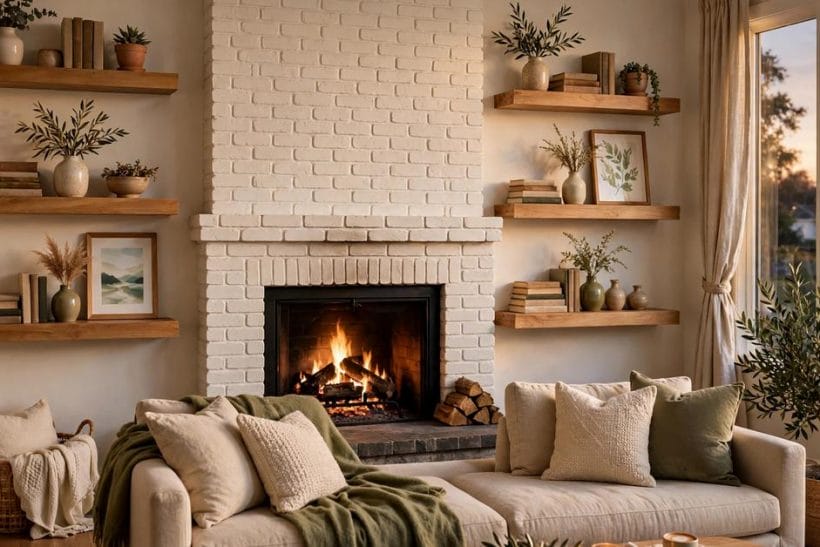
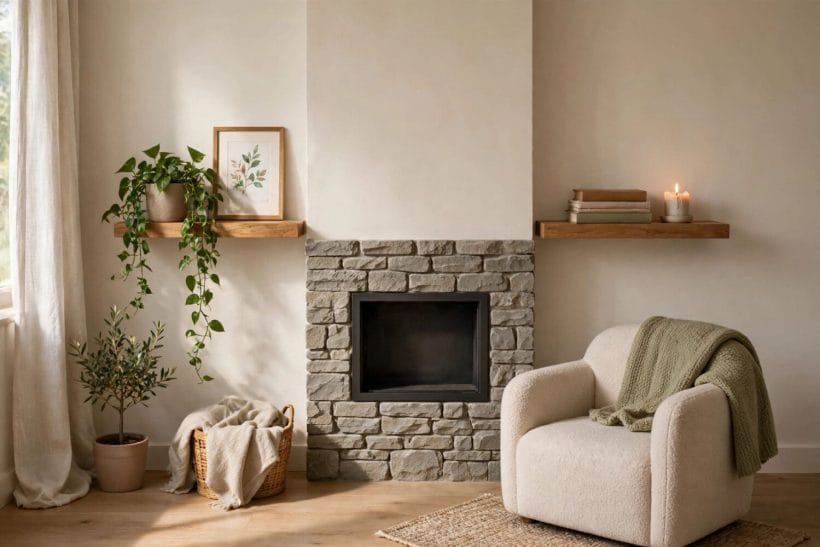
The classic arrangement puts floating shelves on both sides of the fire, matching in length, timber and number. Symmetry suits a generous wall, because the eye reads the two sides as one gesture and the fire sits in the middle of a balanced picture. Two or three boards on each side is usually enough; more than that and the wall starts to look like shelving with a fireplace in it, rather than a fireplace with shelves beside it. Keep the lowest board clear of the hearth and the highest board comfortably below the ceiling, so the arrangement has air at both ends.
Matching does not have to mean identical styling. The boards should match, but what stands on them can differ gently from side to side, a taller plant on the left answered by a taller stack of books on the right, so the wall feels lived in rather than staged. What matters is that the two sides carry a similar weight of colour and shape. If one side holds dark timber frames and the other holds only pale ceramics, the wall will lean, and the fire will seem to sit off centre even when it does not. Step back to the main seat and judge the pair from there, since that is the view the household lives with.
Stone fireplaces pair especially well with this arrangement, because the rough surface of stone asks for the plain warmth of timber, and floating boards supply it without adding another frame. The wider survey of stone fireplace ideas shows how fieldstone, slate and stacked stone each set a different temper for the room, and the shelf timber should answer that temper rather than argue with it. Pale oak sits easily against whitewashed stone, while a darker walnut holds its own against grey slate, and in both cases the shelves borrow their colours from the fire rather than introducing new ones.
3. The Single Alcove: Shelving on One Side Only
Not every wall has room for a pair. A door, a window or a narrow chimney breast may leave only one usable alcove, and a single run of floating shelves on that side can be the better answer. One side done well beats two sides squeezed in, because shelves that crowd a doorway or press against a window frame make the whole wall feel awkward. Treat the single alcove as a quiet companion to the fire rather than as half of a missing pair, and let the other side stay bare, hold a chair, or carry a single framed print.
Staggering suits the single alcove. Boards of different lengths, set at different heights, give a narrow space a sense of movement that a strict stack can lack, and they let tall objects sit where the ceiling allows while shorter objects gather lower down. The stagger should still look considered, with at least one line the eye can follow, such as boards that share a left edge or step down evenly toward the fire. Random heights without any shared line read as unfinished, and the wall deserves better than that.
Fuller shelving forms belong to a different guide. Where a household wants cabinets below and shelves above, or a complete bookcase wall wrapping the fire, the survey of bookcase around fireplace ideas covers that heavier furniture in its own terms. The floating shelf is the lighter cousin: it suits rooms where the fire should stay the largest thing on the wall, and where storage can live elsewhere, in a cupboard, a basket or another room entirely.
4. Choosing the Timber and Finish
Timber is the shelf’s only material, so it carries the whole decision. A plain board with a visible grain reads warm and honest beside a fire, while a painted board in the wall colour nearly disappears and lets the objects do the talking. Both are good answers, and the room should decide between them. A room with timber floors, a timber mantel or wooden furniture will welcome a timber shelf that echoes those tones. A pale, plastered room may prefer a painted shelf that keeps the wall one quiet colour from edge to edge.
Thickness gives the shelf its character. A slim board looks modern and light, almost like a line drawn on the wall, while a chunky board reads rustic and grounded, closer to a beam than a shelf. Beside a stone or brick fireplace, a chunkier board often sits more comfortably, because it matches the weight of the masonry. Beside a smooth plaster fireplace, a slimmer board keeps the wall’s clean temper. Either way, the boards on one wall should share a thickness, since mixed thicknesses draw attention to the shelves themselves rather than to what stands on them.
Built-in joinery is the contrast worth understanding before choosing. Cabinets and framed shelves bring storage and a finished furniture look, but they also bring shadow lines, doors and a heavier presence that a small room may not want. The survey of built-ins around a fireplace shows that fuller form at its best, with cupboards below and open shelves above. Floating shelves trade that storage for lightness, and households should make the trade with their eyes open, knowing what will live elsewhere once the wall is done.
5. Styling the Shelves So the Fire Leads
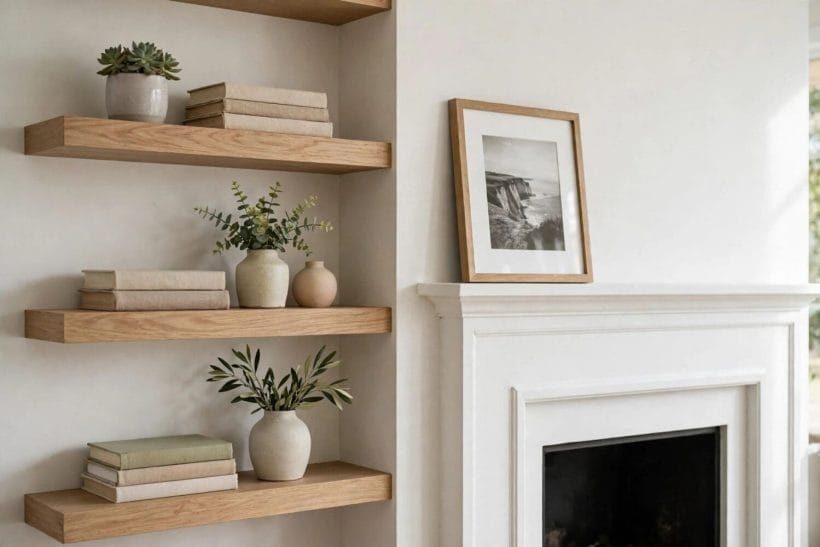
Styling a floating shelf is mostly a matter of subtraction. Start with fewer objects than feels natural, stand back, and add only what the wall seems to ask for. A good rule is to leave breathing room on every board, so each group of objects has clear plaster on at least one side. When boards are filled edge to edge, the eye cannot rest anywhere, and the fire, which should be the warmest thing in the room, has to compete with a crowded wall. Empty space is not wasted space here; it is what lets the fire lead.
Groups beat rows. Three books laid flat with a small vase on top read as one calm shape, while a long row of upright spines reads as a library that happens to be beside a fire. Mix heights within each group, a tall plant beside a low stack, a framed print leaning against the wall behind a small ceramic, so the shelf has a skyline rather than a flat line. Keep the tallest objects toward the outer ends of the boards and the lower ones toward the fire, so the arrangement rises away from the flames rather than crowding them.
The mantel line sets the shelf’s manners. Whatever stands on the mantel, a mirror, a clock, a pair of candlesticks, should not be repeated in miniature on every shelf, or the wall becomes an echo chamber. The survey of fireplace mantel ideas shows how the mantel itself is styled, from beams to stone surrounds, and the shelves should answer that styling in a quieter voice. If the mantel is spare, the shelves can carry a little more; if the mantel is full, the shelves should stay nearly empty, and the wall will hold together.
6. Books, Plants and Quiet Storage
Books suit floating shelves best when they lie flat. A flat stack is stable, it gives a vase or a small object a place to sit, and it breaks the upright rhythm that makes a shelf look like a bookcase. Keep the stacks low, two or three volumes high, and let their colours stay muted, since bright jackets in a row will pull the eye away from the fire. The books that live here should be the ones the household reaches for in the evening, not the whole collection, and the rest of the collection should have a proper home elsewhere.
Plants soften a fireside wall like nothing else, but they need choosing with care. Trailing plants suit the highest board, where their leaves can fall without brushing anything below, while compact plants in plain pots suit the lower boards. Keep plants well clear of the firebox and the flue, and remember that heat rises and dries the air near a fire, so a plant that struggles beside the hearth should be moved to a kinder spot rather than nursed where it cannot thrive. A plant that looks unhappy makes the whole wall look unhappy, and the shelf deserves a plant that enjoys its place.
Baskets and boxes give floating shelves their quiet storage, but only in small measure. A single low basket on the lowest board can hold throws or kindling tools neatly, while a row of boxes turns the shelf into a cupboard without doors. Choose natural materials that answer the timber, wicker, linen or plain wood, and keep the basket’s contents out of sight. The shelf’s job is to look calm; the basket’s job is to hide whatever would break that calm, and one basket per wall is usually enough.
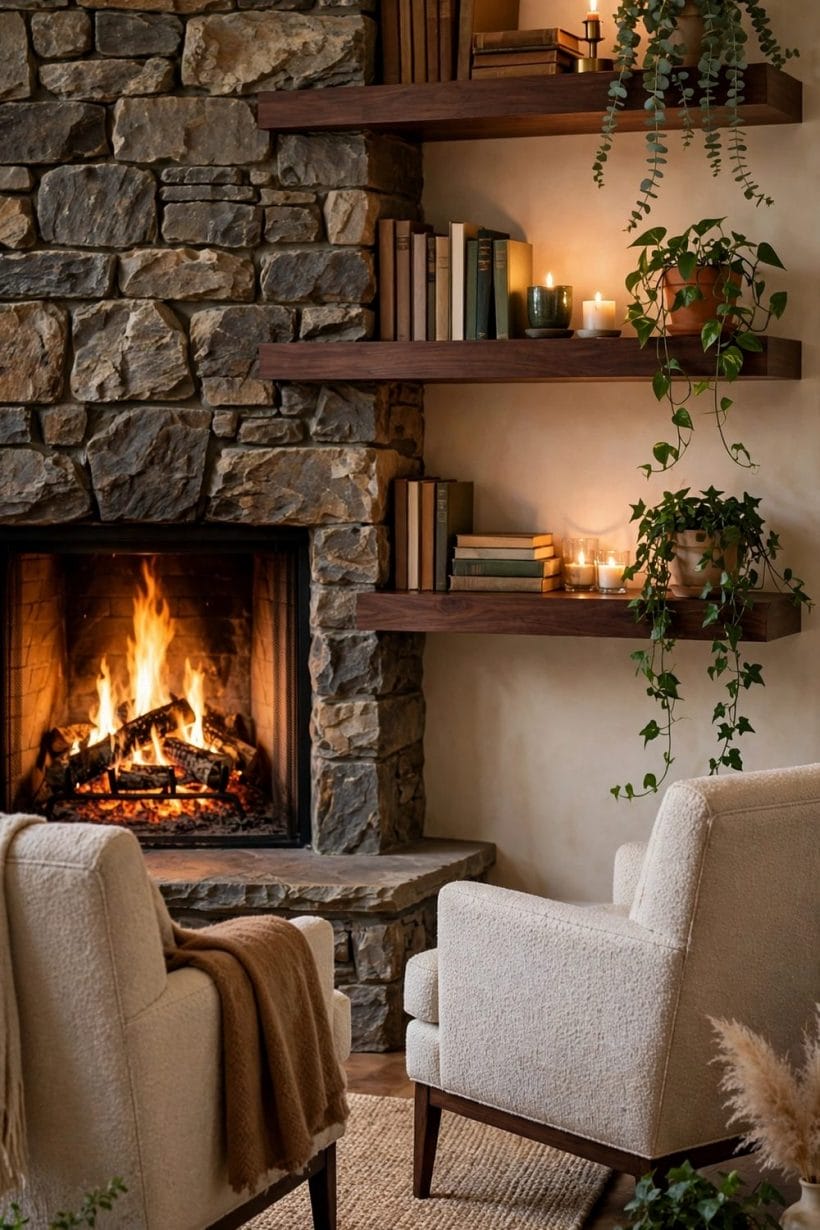
7. Staggered Shelves and Broken Lines
Staggering breaks the strict stack and gives a fireside wall a more relaxed rhythm. Boards of different lengths, set so their ends step in and out, suit rooms where the chimney breast is off centre or where a window interrupts one side. The trick is to stagger with a pattern the eye can follow, such as lengths that shorten as they rise, or boards that align on one edge while their other ends step freely. A stagger without any pattern looks accidental, and a fireside wall should never look accidental.
Broken lines also solve the problem of tall objects. A vase or a leaning print that is too tall for a tight stack can sit on a board with generous air above it, while shorter objects gather on the boards below. Plan the tallest object first, give it the board with the most headroom, and let the rest of the arrangement fall in around it. That single decision often settles the whole wall, because everything else can be lower, smaller and quieter than the one tall thing.
Asymmetry needs a counterweight. If the shelves run long on one side and short on the other, the wall can feel as though it leans, and a single strong object on the short side, a tall plant or a framed print, will restore the balance. The same balance applies to colour: a dark object on one side asks for a dark note on the other, even a small one, so the wall does not tilt. Stand in the doorway as well as in the main seat, since a staggered wall reads differently from an angle, and the doorway view is often the one guests see first.
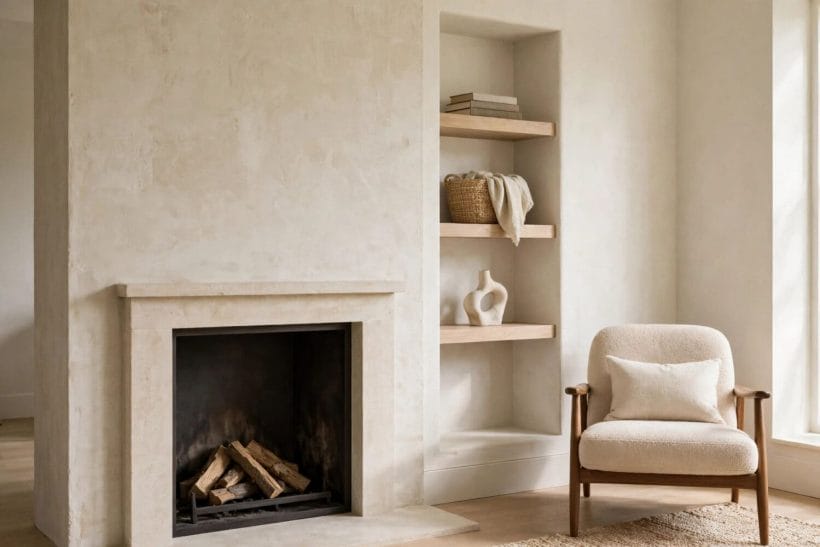
8. Light on the Shelves for Evening Rooms
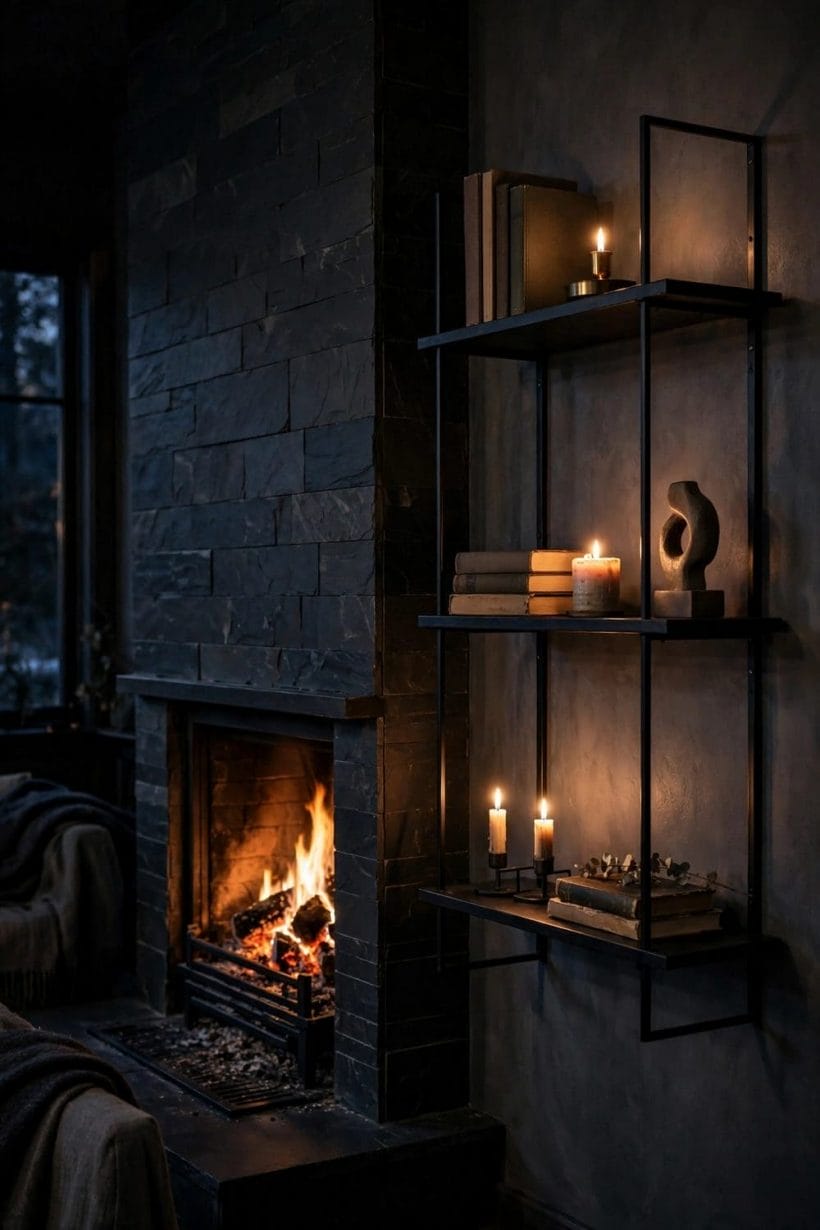
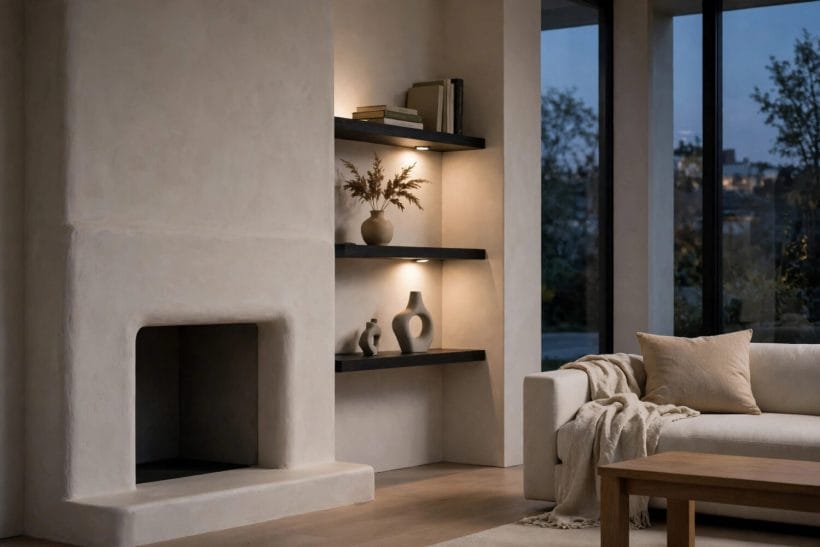
Evening is when floating shelves earn their place, because firelight alone leaves the sides of the wall in shadow. A small light under a board, or a lamp placed to wash the shelves gently, brings the objects back into the room without competing with the flames. The light should be soft and warm, and it should fall on the objects rather than glaring into the seating. Harsh light on a shelf makes ceramics look hard and books look stark, while a gentle wash makes the whole wall glow.
Candles belong on shelves only with care and clear distance from anything that could catch, and they should never sit where a curtain, a trailing plant or a stack of papers could reach them. Battery candles give the same flicker without the worry, and they suit the highest boards best, where real flames would be hard to tend. Where a screen sits above the fire, shelf light should stay low and steady, so it does not fight the screen for attention in the evening. The survey of TV above fireplace ideas covers that stacked arrangement, where the screen, the mantel and the shelves must share one wall without any of them shouting.
Daylight asks for a different kind of care. A shelf that faces a bright window will show dust and glare that an evening room hides, so pale objects and plain ceramics suit sunny walls better than dark, glossy ones. If the shelves catch direct sun for part of the day, keep heat-sensitive objects elsewhere and let the sun fall on timber and stone instead. The wall will look its best in the light it actually gets, not the light it gets in a photograph, so judge the shelves at noon as well as at dusk before settling the arrangement.
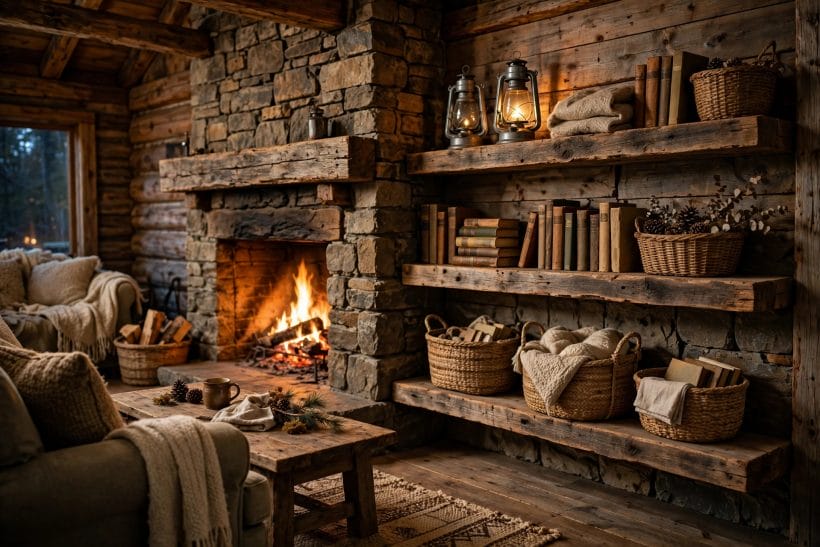
9. Small Rooms and Narrow Alcoves
Small rooms are where floating shelves shine, because they add storage and display without adding furniture that eats floor space. A narrow alcove that cannot hold a bookcase can hold two short boards, and those two boards can carry the books, the plant and the photograph that make the room feel finished. Keep the boards short in a small room, so they read as part of the wall rather than as furniture, and keep the objects on them small as well, since a large object on a short board looks crowded before anything else is added.
One board can be enough. In a truly tight corner, a single floating shelf at picture height, holding a plant and a framed print, gives the fireside wall a finished feeling without any risk of clutter. The temptation in a small room is to add more boards to gain more storage, but each added board takes wall space that the eye needs for rest, and the room ends up feeling smaller rather than better stored. Let the rest of the storage live in another room, and let the fireside wall stay calm.
Colour helps a small wall more than quantity. Boards painted the wall colour nearly vanish, leaving only the objects visible, which makes a narrow alcove feel wider than it is. Pale timber does nearly the same work, catching light without adding a dark line. Dark boards in a small room draw a hard line across the wall and shrink it, so they suit larger rooms better, where the wall can carry a stronger gesture. Choose the board that makes the room feel larger, not the board that makes the shelf feel important.
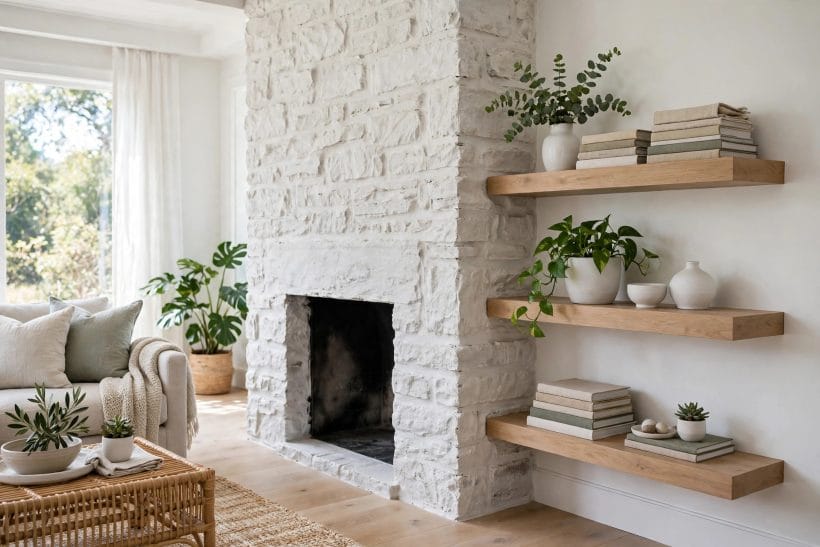
10. Heat, Fixing and Everyday Care
Heat is the one subject beside a fireplace that must never be guessed at. Keep heat-sensitive objects, candles, photographs and delicate plants well clear of the firebox, and follow the fireplace manufacturer’s guidance and local rules for clearances rather than copying a distance seen in a photograph. The firebox, the flue and the chimney belong to qualified professionals, and any work on them, or any question about how close a shelf may sit, should go to those professionals rather than to trial and error. A beautiful shelf is never worth a scorched board or a damaged wall.
Fixing follows the same rule. Floating shelves hide their supports, which means their fixings must be right even though they cannot be seen, and the wall behind a fireplace may hold masonry, plaster or a flue that changes what fixing is safe. Have the boards fixed by a qualified installer who can judge the wall, and ask that installer about the load the boards are meant to carry before loading them with books. Shelves that are fixed well and loaded lightly will stay level for years; shelves that are overloaded will sag, and a sagging board beside a fire draws the eye for all the wrong reasons.
Everyday care is simple. Dust the boards when the room is dusted, wipe ceramics with a dry cloth, and check the boards now and then for level, since a board that has slipped even slightly will show in the line of the wall. The hearth below deserves the same respect, kept clear of trailing throws and low baskets, and the wider survey of fireplace hearth ideas covers that floor-level arrangement, from aprons and materials to seating and styling. A wall that is checked gently and often will never need a sudden overhaul.
Final Considerations
The best fireside wall is the one that stops asking for attention and starts giving it back: a fire that warms the room, and shelves that hold what the household loves without shouting about it. Return to these floating shelves fireplace ideas whenever the wall starts to feel crowded, and take away more than is added until the fire leads again. A matched pair suits a generous wall, a single alcove suits a narrower one, and a staggered run suits a wall that refuses to be symmetrical, and each of them works only when the boards stay shallow, the objects stay few, and the heat stays respected.
Choose the arrangement that fits the wall as it is, not the wall as it appears in a photograph. Measure both alcoves, let a qualified installer judge the fixing, keep the firebox and the chimney in professional hands, and let the shelves earn their place one calm group at a time. The floating shelf is a small thing, and that is its strength: it asks little of the wall, it gives back a place for the objects that matter, and it leaves the fire exactly where it belongs, at the centre of the room.

0 Comments