
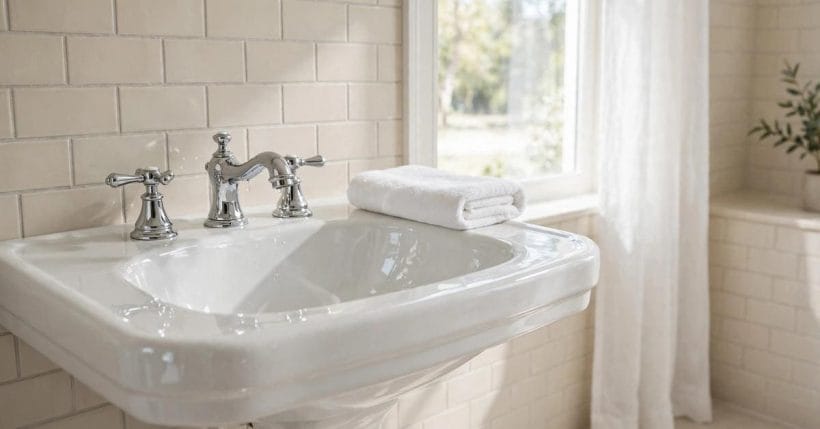
A porcelain sink that has lost its sparkle can still be a pleasure to use, and in many cases the dullness is sitting on the surface rather than in the material itself. Everyday use leaves a thin film behind, from soap, water, toothpaste, food and the general dust of a busy home, and that film scatters light instead of letting it bounce cleanly off the glaze. Learning how to restore shine to porcelain sink surfaces begins, then, not with a stronger product but with a closer look: what kind of dullness is it, where does it sit, and what has the sink already been through. This guide walks through that gentle assessment first, then through careful cleaning, rinsing, drying and daily habits, with the limits stated honestly along the way.
Porcelain earns its reputation for a reason. The glazed surface is smooth, hard and easy to wipe, and when it is clean it reflects light in a way that makes a whole bathroom or kitchen feel brighter. That same smoothness is also why dullness shows so plainly: anything left on the glaze, even a faint residue, breaks up the reflection. The good news is that surface film is often the easiest kind of dullness to deal with, and it usually responds to the mildest approach. The harder cases, worn glaze, fine scratching built up over years, or chips and cracks, are a different matter, and no cleaning routine can be promised to reverse them. Keeping those two kinds separate is the most useful habit in this whole guide, because it stops a gentle job turning into a harsh one.

1. What Shine Means on Porcelain
Shine on porcelain is mostly about the glaze, the smooth glass-like layer that covers the body of the sink. When the glaze is clean and undamaged, light reflects evenly and the surface looks bright and deep, almost wet even when it is dry. When something interrupts that surface, a film of soap, a faint mineral haze from water left standing, or a network of tiny scratches, the light scatters instead, and the eye reads the result as dullness. Understanding that distinction helps set expectations: cleaning can remove what sits on the glaze, but it cannot rebuild glaze that has worn thin or been scratched away.
It also helps to know that porcelain sinks age differently depending on how they are used. A bathroom sink that mainly sees water, soap and the occasional cosmetic will usually keep its glaze for a long time, while a kitchen sink that meets pots, cutlery and heavy dishes every day will gather fine marks sooner. Neither pattern is a fault in the sink, and neither is a reason to reach for something harsh. The aim of this guide is modest and practical: to help a sink look as good as its actual condition allows, by removing surface dullness carefully and by protecting what remains of the glaze.
One more point is worth making early. A sink does not need to look brand new to look cared for. A clean, even surface with a soft, consistent glow reads as well-kept even if a few faint marks from years of use remain visible on close inspection. Chasing a flawless finish with increasingly strong methods is how glaze gets damaged, so the approach here is deliberately restrained: start mild, look at the result, and only then decide whether anything more is needed at all.
2. Look First: Reading the Sink in Daylight
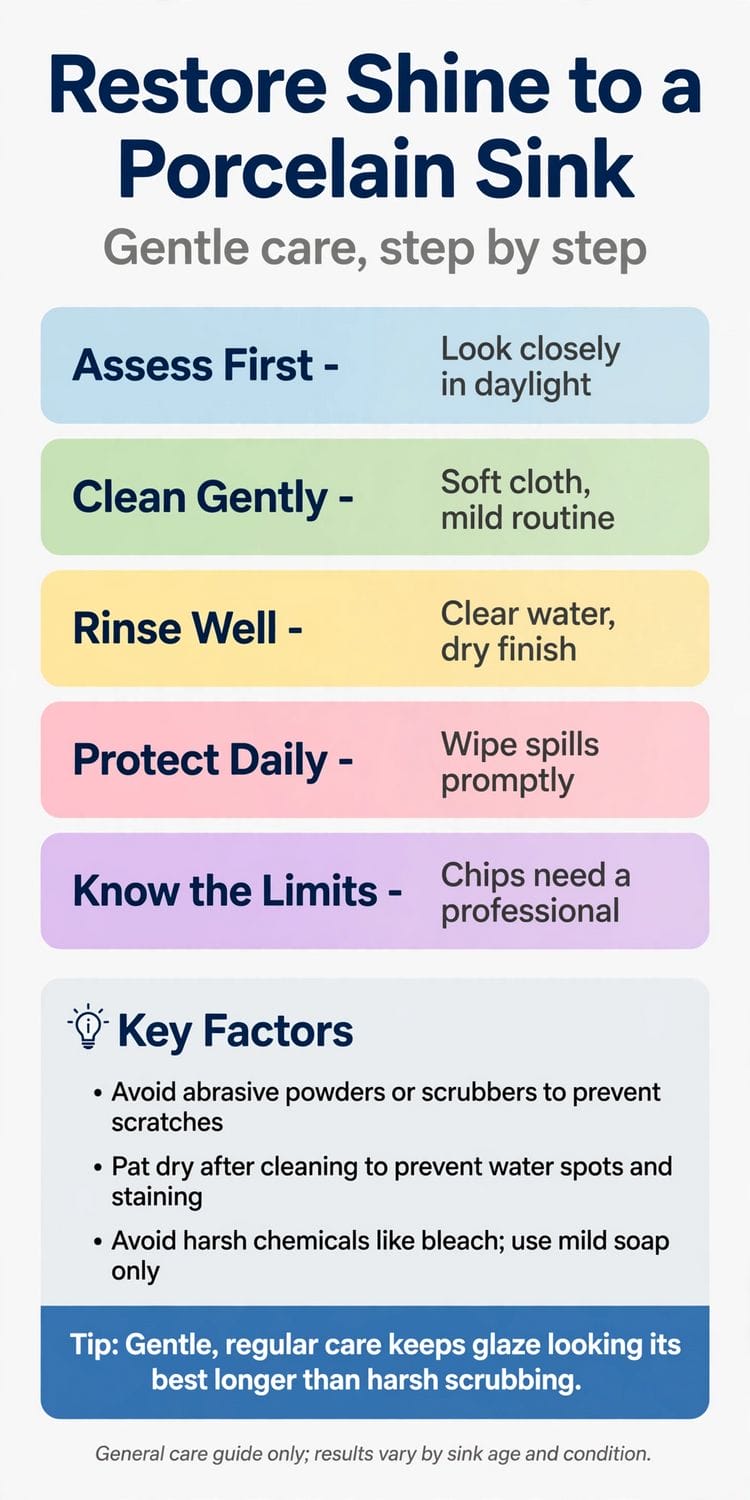
Before cleaning anything, take a proper look at the sink in daylight, or under the brightest light the room offers. Run a hand lightly over the basin, glance across the surface from a low angle, and notice where the dullness sits. Is it all over, or only around the drain, the tap base, or the places where water tends to pool? Is it a uniform haze, or does it follow the shape of splashes and drips? An even haze usually points to surface film, while dull patches in exactly the places that stay wet longest may point to mineral residue left behind as water dries.
Also look for the things cleaning cannot fix. Fine lines that catch a fingernail, small chips at the rim, hairline cracks, or areas where the glaze looks thin and greyish rather than white, are signs of wear or damage rather than dirt. Noting them now matters, because it changes the plan: a worn or chipped area should be treated even more gently than the rest of the sink, and a crack is a matter for professional advice rather than for cleaning at all. A quick look also tells you what to keep away from the sink during cleaning, such as a metal item that could knock the rim.
Finally, clear the sink and its surroundings before you begin. Remove dishes, bottles and toiletries, and give the basin a rinse with plain water so loose grit is washed away rather than dragged across the glaze. Grit is one of the quiet causes of fine scratching, and it often arrives unnoticed, in a rinsed cloth or on the base of an item set down in the sink. Starting with a clean, empty basin costs almost nothing and protects the very surface you are trying to improve.
3. A Gentle First Clean
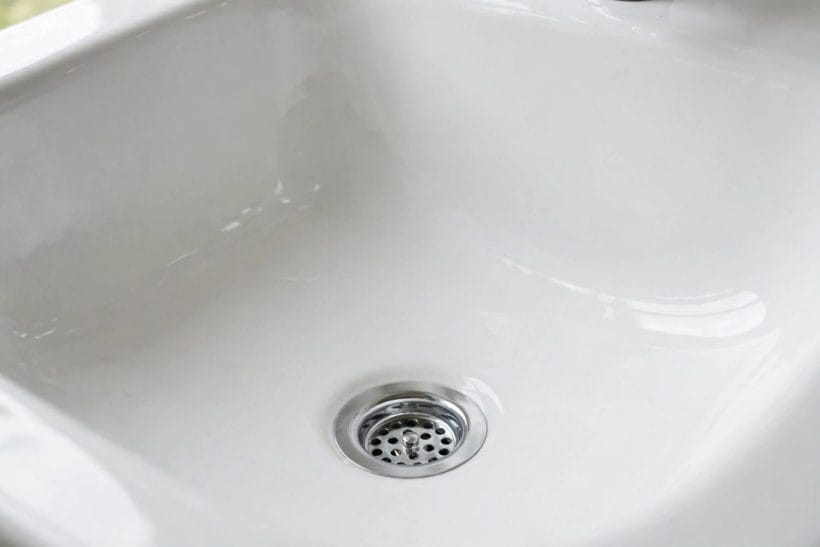
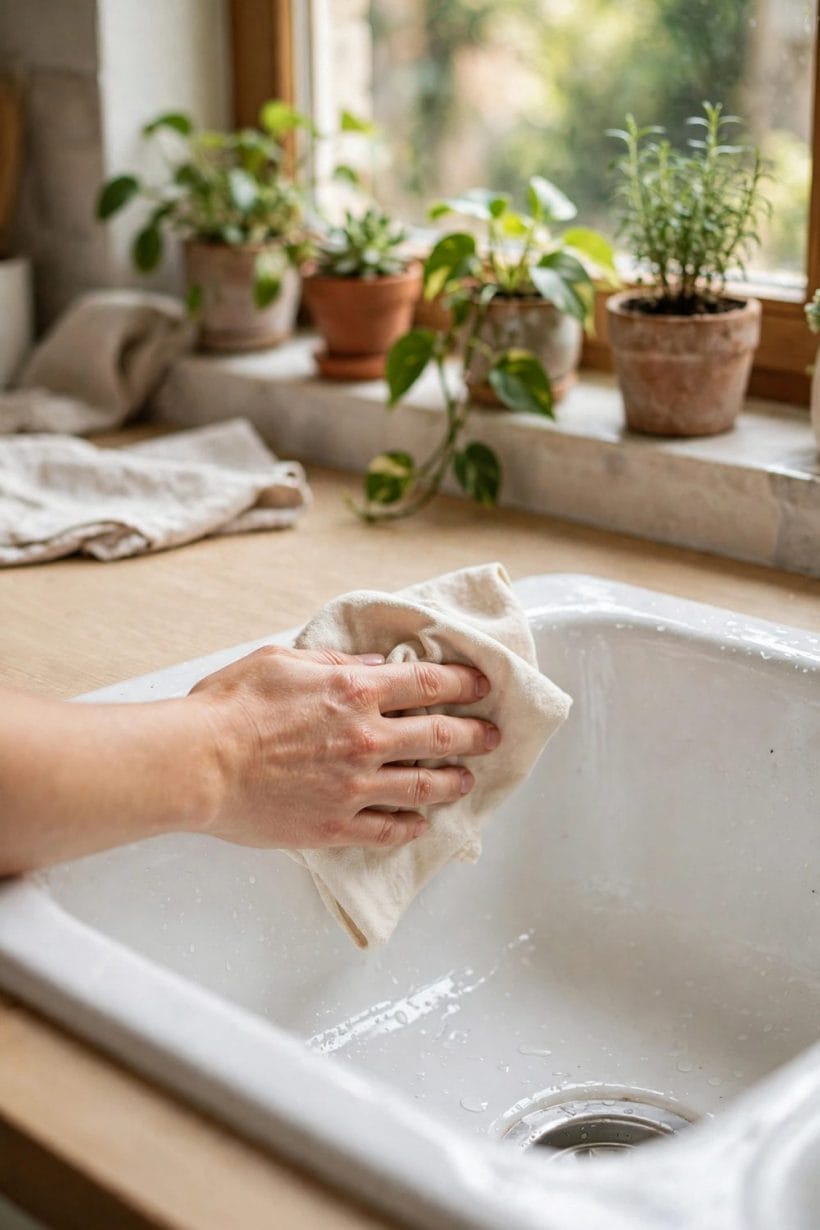
The first clean should be the mildest one that could plausibly work. Use a soft cloth or a soft sponge, plain water, and a small amount of a mild cleaner that is described as suitable for porcelain or for bathroom and kitchen surfaces generally, following whatever guidance comes with that product. Work in small sections, with light pressure and unhurried strokes, and let the cloth do the work rather than pressing hard. The point of this stage is to lift surface film, not to scour the glaze, and patience here usually achieves more than force.
Pay attention to the curves of the basin, where film tends to gather: around the drain, under the rim, and in the gentle hollow where water settles. These are also the places where a cloth naturally skips over, so slow down there and check your progress as you go. If a section looks clearer after a gentle pass, that is a good sign that the dullness was film rather than wear, and the rest of the sink will probably respond the same way. If a section looks unchanged after a careful, gentle pass, resist the urge to press harder; that patch may need a different kind of attention, or may simply be part of the sink’s age.
It is worth trying any cleaner you have not used on the sink before on a small, inconspicuous area first, and waiting to see the result before using it more widely. Porcelain finishes can vary, older sinks in particular, and a product that suits one sink may be too strong for another. This small test takes little time and can save a great deal of regret, especially on a sink you value. When in doubt, plain water and a soft cloth alone are a safe starting point, and they often achieve more than expected.
4. Rinsing and Drying for a Clear Finish
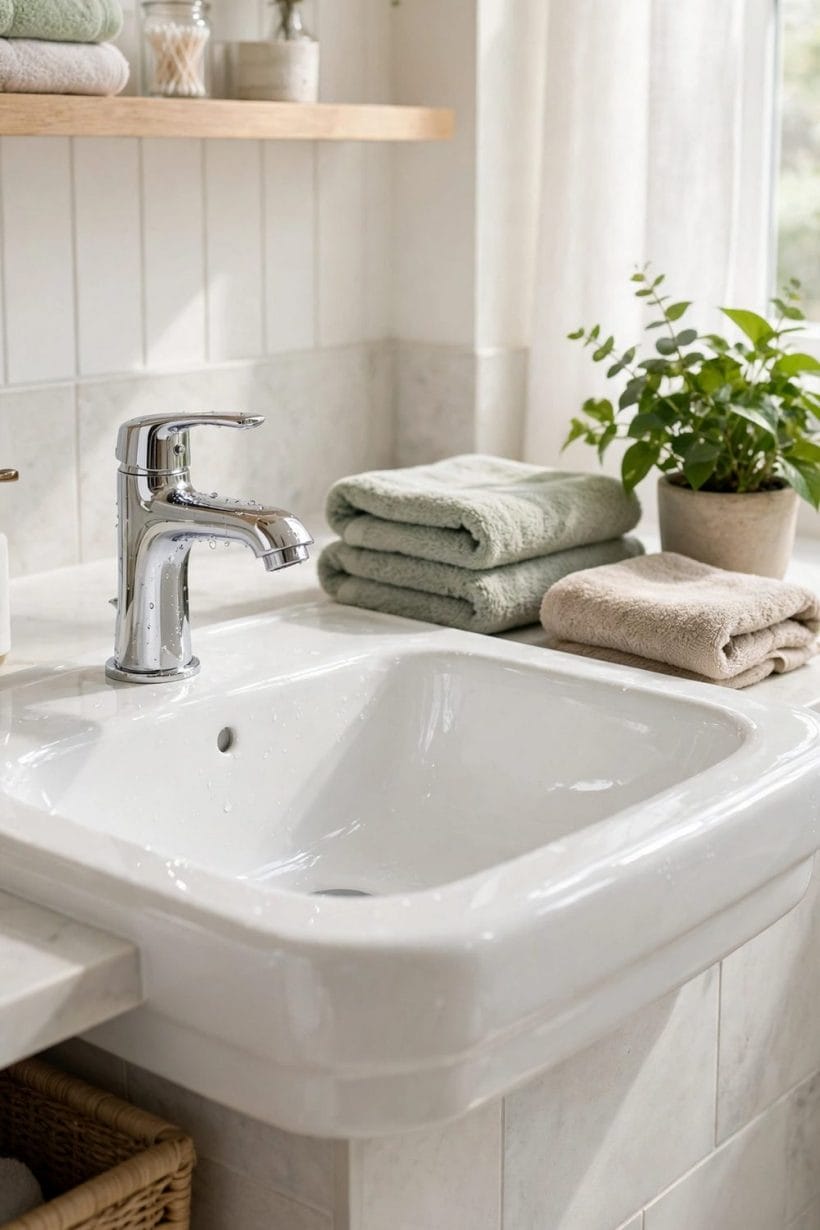
Rinsing matters as much as cleaning, and it is the step most often rushed. Any cleaner left on the glaze will dry into its own faint film, undoing the work just done, so rinse the whole basin thoroughly with clear water, including the rim, the overflow area where fitted, and the underside of the tap base where splashes collect. A jug of clear water or a gentle spray from the tap, followed by a wipe with a clean, damp cloth, will usually carry away the last traces. Take a moment to rinse the cloth itself as well, so you are not spreading residue back over a section you have already cleared.
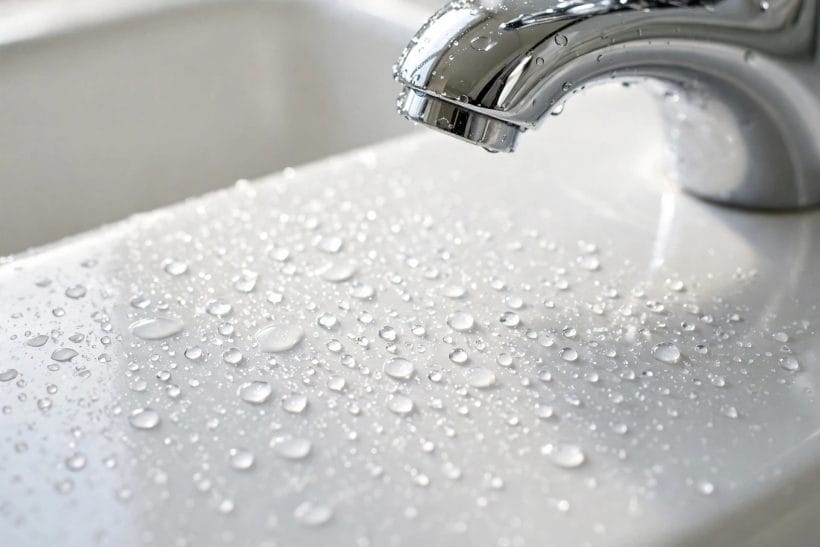
Drying is the quiet partner of rinsing. Water left standing on porcelain dries into spots and a faint haze, particularly in areas where the water is hard, and those marks can look very much like the dullness you set out to remove. A soft, dry cloth, used with light strokes over the basin and rim, leaves the surface clear and lets you see the true result of your work. It also gives you a second chance to notice anything you missed, a streak near the drain or a patch under the tap, while it is still easy to deal with.
This rinse-and-dry habit is worth keeping even after the deeper clean is finished. A quick wipe after the last use of the day, or after washing up, prevents the slow build-up that makes a sink look dull over time, and it takes far less effort than a full clean later. Sinks that are dried regularly tend to keep their glow with very little intervention, which is exactly the kind of low-effort care that suits a busy home.
5. Dullness That Comes From Build-Up
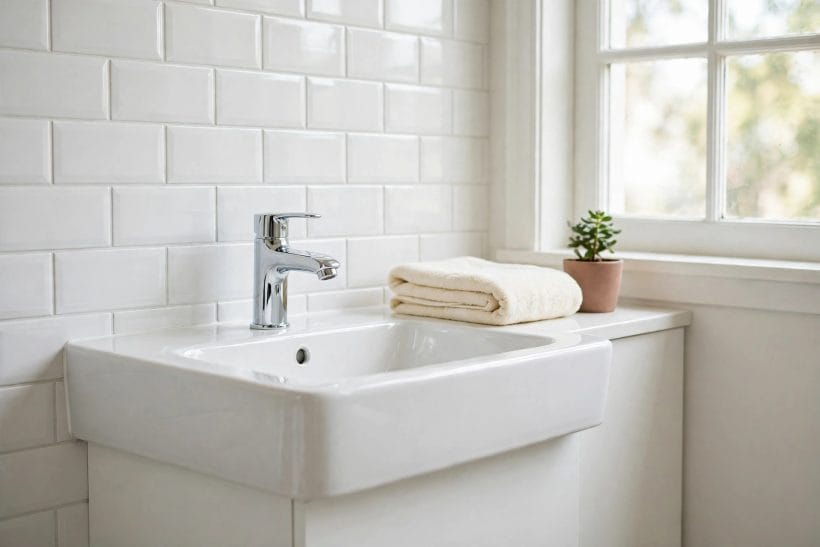
Some dullness builds up so gradually that it is hard to notice until the sink is compared with a cleaner surface nearby, such as the inside of a cupboard door or a less-used basin. This slow film usually comes from ordinary life: soap that is not fully rinsed, toothpaste splashes, food residue, and water that dries in place day after day. Each layer is thin, but layers add up, and together they soften the reflection that makes porcelain look bright. The reassuring part is that build-up of this kind is exactly what gentle, repeated cleaning is designed to remove.
If a single gentle clean does not fully clear a built-up area, repeating the same gentle process on another occasion is often wiser than escalating to something stronger. A second or third mild pass, with rinsing and drying between, can lift layers gradually without stressing the glaze. Think of it as persuading the film off rather than forcing it, and judge each pass by the result rather than by the effort. If the surface is improving slowly, the method is working, and patience will finish the job more safely than pressure would.
It can also help to change the conditions that created the build-up. A soap dish that drains, a tap that does not drip, and a habit of rinsing splashes away promptly will all slow the rate at which film returns. None of these is a dramatic change, but together they mean the sink spends less time coated in residue, and the glow you have restored has a better chance of lasting. Prevention, in this case, is simply the daily version of the same gentle care.

6. Marks, Stains and When to Leave Them Alone
Not every mark on a porcelain sink is surface film, and telling the difference saves both effort and glaze. A mark that sits on the surface and lightens with a gentle wipe is likely residue, while a mark that stays exactly the same after careful cleaning may be a stain that has settled into a worn area, a fine scratch, or a change in the glaze itself. Dark lines from metal, for example, can look alarming but often sit lightly on the glaze, while a greyish patch that never changes may be wear rather than dirt. The test is always the same: clean gently, look honestly, and accept what the result tells you.
There is no shame in leaving a mark alone once gentle cleaning has done what it can. A sink that is clean, even and well cared for can carry a few signs of its working life without looking neglected, and those signs are often invisible to anyone who is not looking closely. The alternative, scrubbing harder and harder at a mark that is part of the glaze, risks turning a small blemish into a larger dull patch, as the surrounding glaze is worn away in the attempt. Knowing when to stop is part of caring for porcelain, not a failure of it.
If a mark troubles you, or if you are unsure whether it is residue, wear or damage, it is worth asking someone experienced with porcelain or bathroom and kitchen fittings for an opinion before trying anything stronger. A professional eye can often tell at a glance what kind of mark it is, and whether anything further is advisable. That advice is especially valuable for older sinks, sinks with visible chips, or any sink where the glaze already looks thin, since those are the sinks most easily harmed by a well-meant but too-strong approach.

7. Daily Habits That Keep the Glaze Looking Bright
Once a sink looks its best, the goal shifts from restoring shine to keeping it, and the habits that do that are small ones. Rinsing the basin after use, wiping away splashes before they dry, and drying the rim and tap base when you notice water standing there, all prevent the film that dulls porcelain over time. None of these takes more than a moment, and together they are far more effective than an occasional deep clean, because they stop build-up before it has a chance to settle.
It also helps to be thoughtful about what is placed in the sink. Heavy or sharp items set down carelessly can chip a rim or scratch a basin, and grit, whether from a rinsed cloth, a muddy item or the base of a container, can mark the glaze if dragged across it. A soft mat or a careful habit of lifting rather than sliding items goes a long way, particularly in a kitchen sink that sees heavy daily use. These are not rules to worry over, just small courtesies toward a surface that rewards gentle treatment.
Finally, keep the area around the sink tidy in a way that supports the habit. A soft cloth kept within reach, a clear rim, and cleaning supplies stored where they are easy to find all make the quick wipe more likely to happen. When care is convenient, it happens; when it requires a search through a cupboard, it is put off, and the film builds up again. A sink that is easy to care for is a sink that stays bright with very little fuss.
8. Kitchen Sinks, Bathroom Sinks and Different Wear
Kitchen and bathroom porcelain sinks live different lives, and it shows in how they lose their shine. A kitchen sink meets food, grease, hot water and heavy cookware, so its dullness often comes from a combination of film and fine marks, spread widely across the basin. A bathroom sink, by contrast, mainly meets water, soap and personal care products, so its dullness is more often a light, even film, with marks concentrated near the tap and the drain. The gentle approach suits both, but the kitchen sink will usually need a little more patience, and the bathroom sink a little more attention to rinsing.
The surroundings matter too. A kitchen sink sits among worktops, boards and dishes, so it is worth checking that nothing stored beside it is scratching the rim or dripping onto the glaze. A bathroom sink sits among bottles and toiletries, some of which can leave coloured residue if spilled and left standing, so prompt wiping matters there. In both rooms, the principle is the same: notice what the sink meets every day, and remove the causes of dullness as well as the dullness itself.
Small rooms deserve a special note. In a compact bathroom or a tiny house, the sink is close to everything else, and it is seen from every angle, so its condition has an outsized effect on how the room feels. That is all the more reason to keep care gentle and regular: a small sink is quick to wipe, quick to rinse and quick to dry, and a few moments of attention keep it looking bright without any special effort. The same is true of a kitchen sink in a small home, where the sink often doubles as a work surface and is always in view.
9. What Not to Do to a Porcelain Finish
The most important guidance in this guide is negative: the things to avoid. Abrasive pads, scouring powders and harsh, gritty cleaners can scratch glaze, and once the glaze is scratched, the surface holds film more readily and looks duller, not brighter, over time. Strong chemical products, used without regard for the finish, can also damage glaze or discolour it, and mixing products together is never advisable. If a product does not describe itself as suitable for porcelain, or if its guidance warns against use on glazed surfaces, it is best left unused on the sink.
Metal tools and implements deserve the same caution. A metal scourer, a knife, or any hard object dragged across the basin can leave marks that no amount of gentle cleaning will remove, and a heavy item dropped into the sink can chip the rim. Porcelain is hard, but it is not indestructible, and its glaze is thinner than it looks. Treating the sink as a surface to be wiped rather than scrubbed, and as a basin rather than a workbench, will preserve it far longer than any cleaning product could restore it.
It is also worth avoiding the temptation to seal, coat or polish a porcelain sink with a product not made for that purpose, unless someone experienced with the material advises it. A coating applied over a dirty or worn surface can trap residue underneath, look uneven, and prove difficult to remove, leaving the sink worse than before. When a sink’s glaze is genuinely worn, the honest options are to accept its aged appearance, or to seek professional advice about repair or replacement, rather than to disguise the wear with an unsuitable finish.
10. When to Ask a Professional
There are times when the right next step is not another clean but a conversation with someone experienced. Chips, cracks, a loose or leaking fitting, a stain that may indicate damage beneath the glaze, or a sink whose glaze has worn thin across a wide area, are all matters for professional advice. A professional can judge whether a repair is sensible, whether the sink should be left as it is, or whether replacement is the wiser course, and can carry out any repair work safely. Plumbing and fitting work, in particular, should always be left to qualified people, and this guide offers no instruction for it.
It can also be worth seeking advice before making any change to an older or unusual sink. A sink with historic or decorative value, a coloured glaze, or a finish you cannot identify, may respond differently from a standard white porcelain basin, and a wrong approach could harm something that cannot be replaced. A brief conversation, with a clear description of the sink and its condition, is a small investment that can prevent a costly mistake, and most experienced fitters are happy to give an honest opinion about whether anything further is worth attempting.
Finally, remember that professional advice is not a sign that the gentle approach has failed. It is the natural next step when cleaning has done all it can, and it respects the sink for what it is: a fitted, plumbed part of the home, not a standalone object. A sink that has been cleaned carefully, assessed honestly and, where needed, referred to a professional, has been cared for properly, whatever its final appearance.
Final Considerations
Restoring a porcelain sink’s shine is, in the end, a quiet piece of housekeeping rather than a dramatic transformation. Learning how to restore shine to porcelain sink surfaces means learning to look first, to clean gently, to rinse and dry thoroughly, and to accept the difference between surface film, which usually lifts, and wear, which does not. Those four habits, practised regularly, will keep most sinks looking bright for years, and will protect the glaze far better than any forceful method.
Before you begin, look at your sink in good light and decide what kind of dullness you are dealing with. Start with the mildest clean that could work, rinse and dry carefully, and repeat gently rather than escalating if the first pass does not finish the job. Keep the daily habits small and easy, avoid abrasive tools and unsuitable products, and ask a professional when you meet chips, cracks or wear that cleaning cannot change. Treated that way, a porcelain sink will reward you with a soft, clear glow that suits the room it serves, and with a surface that stays pleasant to use for a long time to come.
Related reading: tiny bathroom ideas, kitchen ideas, tiny house storage ideas, light cabinets dark countertop, black floor bathroom ideas, painted bathroom cabinets, and soapstone countertops.




0 Comments