

A window without a treatment is a sentence without punctuation — the room still parses, but nobody lingers. The right dressing turns glass into architecture.
Seventy-five treatments placed here: drapes, shutters, sheers and layers, matched to window shapes and each room’s privacy bargain.
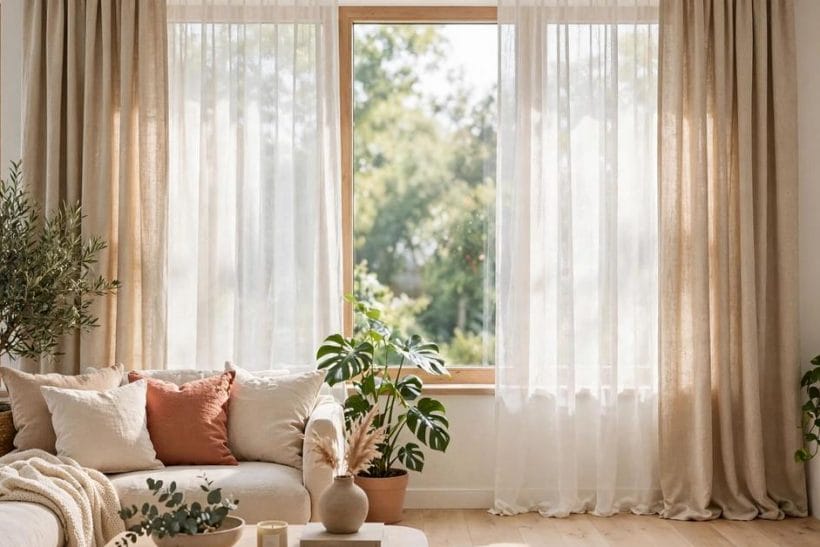
1. Window Treatment Images at a Glance
A window treatment is anything fitted at a window to govern light, privacy, warmth and looks: curtains and drapes, blinds, shutters, sheers and films, plus the tracks, rods and linings that serve them. Its attributes are its type, its fit — inside the reveal, over the frame, or ceiling-hung — its fabric or material, and its layering. This survey owns the treatment itself across the whole house; individual windows with their own architecture, like the bay, keep their own posts and are linked, not absorbed.
| Question | Short answer |
|---|---|
| What is the difference between curtains, blinds and shutters? | Curtains are fabric hung from above that draws sideways; blinds are slatted or rolled mechanisms fitted at the glass; shutters are hinged or fixed panels, usually timber. They solve the same problems with different fits, costs of effort and looks — and much of this survey is about choosing between them room by room. |
| Should treatments fit inside the window reveal or over it? | Inside fits are neat and show off good joinery; over-frame and ceiling fits make windows look larger, hide plain frames and let fabric stack off the glass. The photographs here note the fit in each case, because the fit is half the effect. |
| Do window treatments help with warmth? | In the general way any layer at cold glass helps — lined drapes and cellular blinds add a still, insulating layer, and shutters close a window down firmly. This survey states that generally and invents no figures; performance is the maker’s to state and yours to check. |
| How do I keep privacy without losing light? | Layer and split: sheers, café heights, top-down blinds and half shutters all cover the glass where eyes are and free it where the sky is. Privacy is placed, not total — the section on rooms strikes the bargain window by window. |
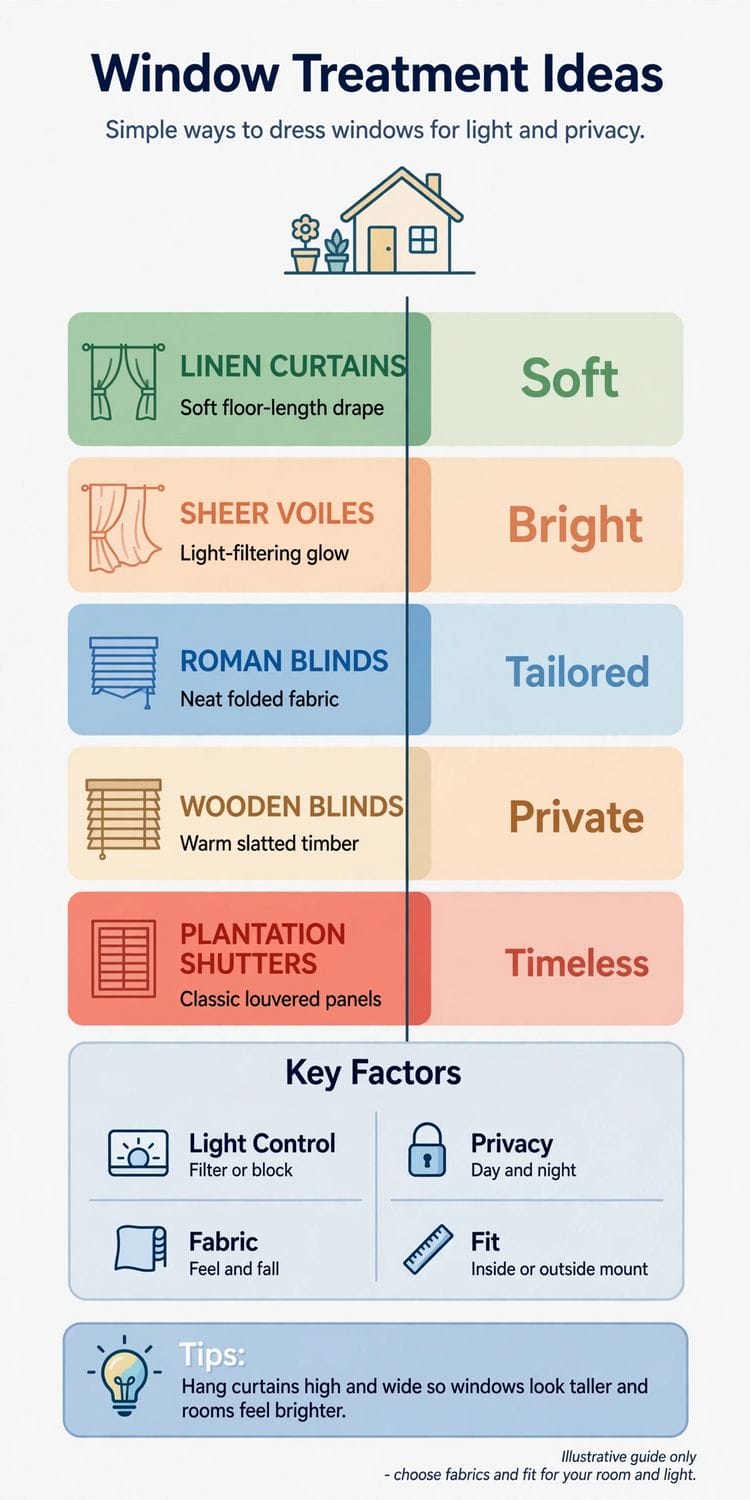
2. Curtains and Drapes: The Soft Architecture
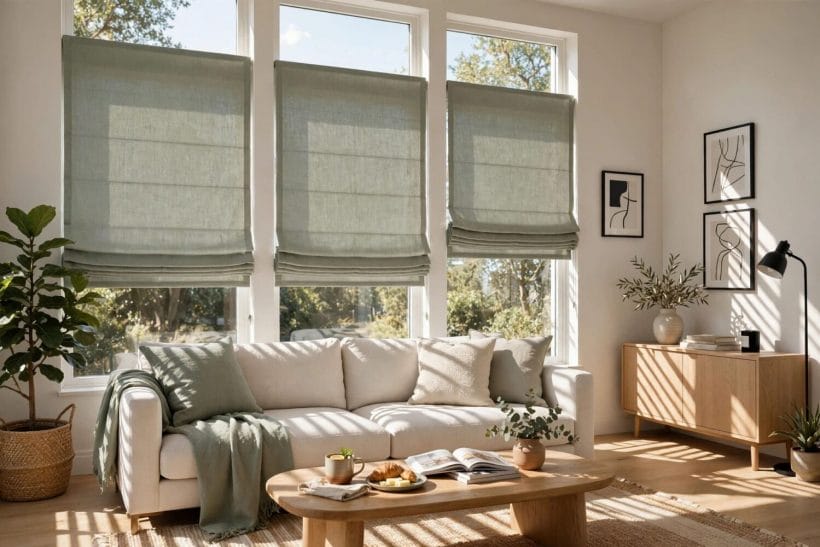
Curtains are the window treatment most of these photographs return to, because they do three jobs at once — privacy, light manners and the room’s softness — and because a pair of drapes hung well can make an ordinary window look designed. The tiny-house treatment of curtains at miniature scale lives in tiny house curtain ideas; this survey works at full-house scale.
1. Floor-length drapes, hung high
The stylist’s default for a reason: curtains hung close to the ceiling and just kissing the floor stretch a window’s height and a room’s with it. hang them a clear hand’s breadth beyond the frame on each side so the stack rests on wall, not glass, and the window keeps every inch of its daylight.
2. The puddled romantic drape
Extra length breaking gently on the floor reads luxurious in bedrooms and formal rooms.
3. Café curtains at half height
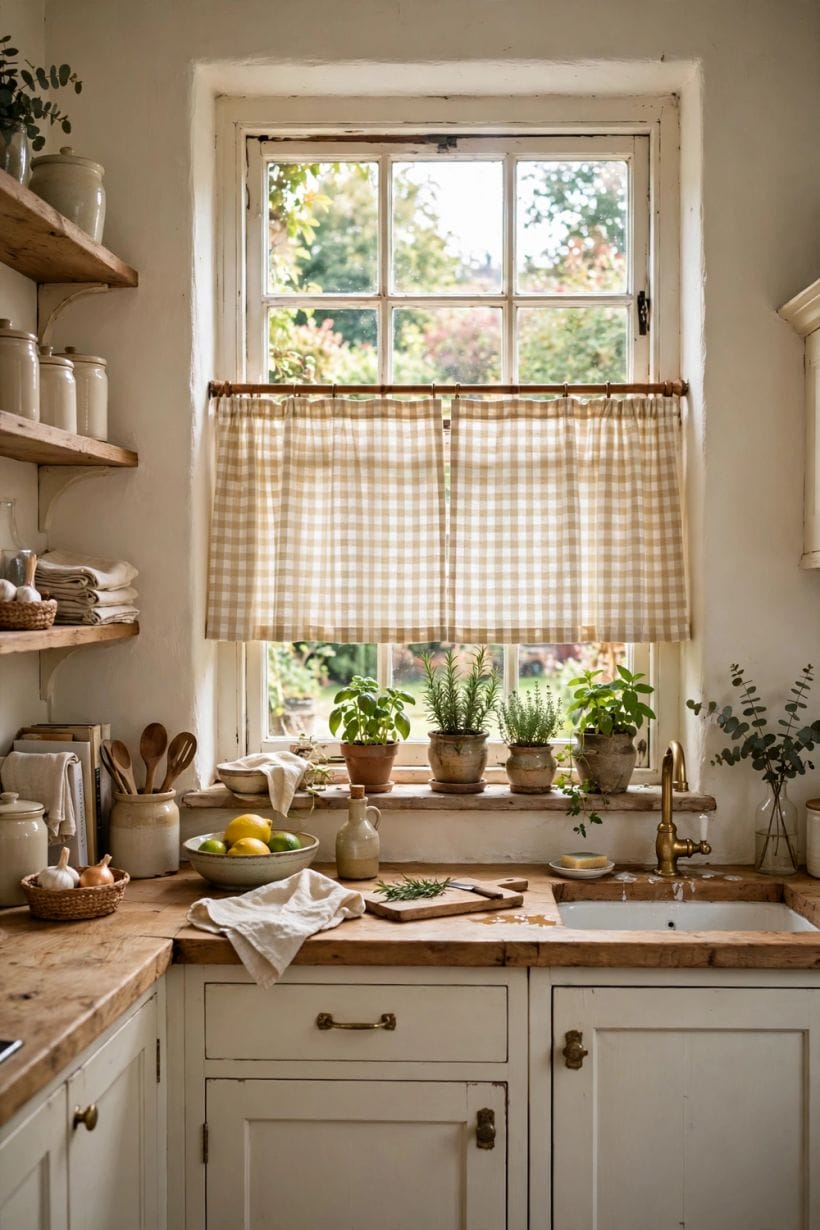
Covering only the window’s lower half, café curtains give kitchens and street-facing rooms their privacy while the top half keeps the sky. The oldest treatment in this survey and still among the most sensible.
4. Single-panel drapes for narrow windows
One panel drawn to one side serves narrow windows and pairs of windows in tight walls, where two stacks would crowd the glass they are meant to frame.
5. Sheer-backed drapes on a double track
A working pair: sheers for the day, lined drapes for the night, each on its own track. The layered answer most hotels use, translated home without the hotel look.
6. Linen drapes, unlined and easy
Unlined linen filters rather than blocks, wrinkles honestly and suits every room that faces a garden. Its softness is the point; readers wanting blackout should look to the lined sections below.
7. Velvet drapes for dark, warm rooms
Velvet eats light and sound together, which is why libraries, media rooms and winter sitting rooms love it. In a small or north-facing room it can swallow the window whole — proportion is everything.
8. Patterned drapes as the room’s picture
Where walls are plain, a bold curtain pattern becomes the room’s artwork, changed as easily as a picture and cheaper than most. Keep every other pattern in the room quieter than the drapes.
9. Plain drapes, interesting heading
Pleats, eyelets, goblet and cartridge headings give plain fabric its architecture. The heading is the drape’s joinery — invisible when right, obvious when wrong.
10. Tiebacks and holdbacks
A drape’s daytime shape is made by its tieback: high tiebacks lengthen the window’s look, low ones soften it. Brass holdbacks keep the gesture architectural; rope and tassel keep it romantic.
11. Drapes over a doorway or alcove
Fabric instead of a door — for a pantry, a dressing alcove or a draughty hall opening — is the treatment’s oldest trick, warming rooms that doors make cold and formal.
3. Blinds and Shutters: The Fitted Treatments
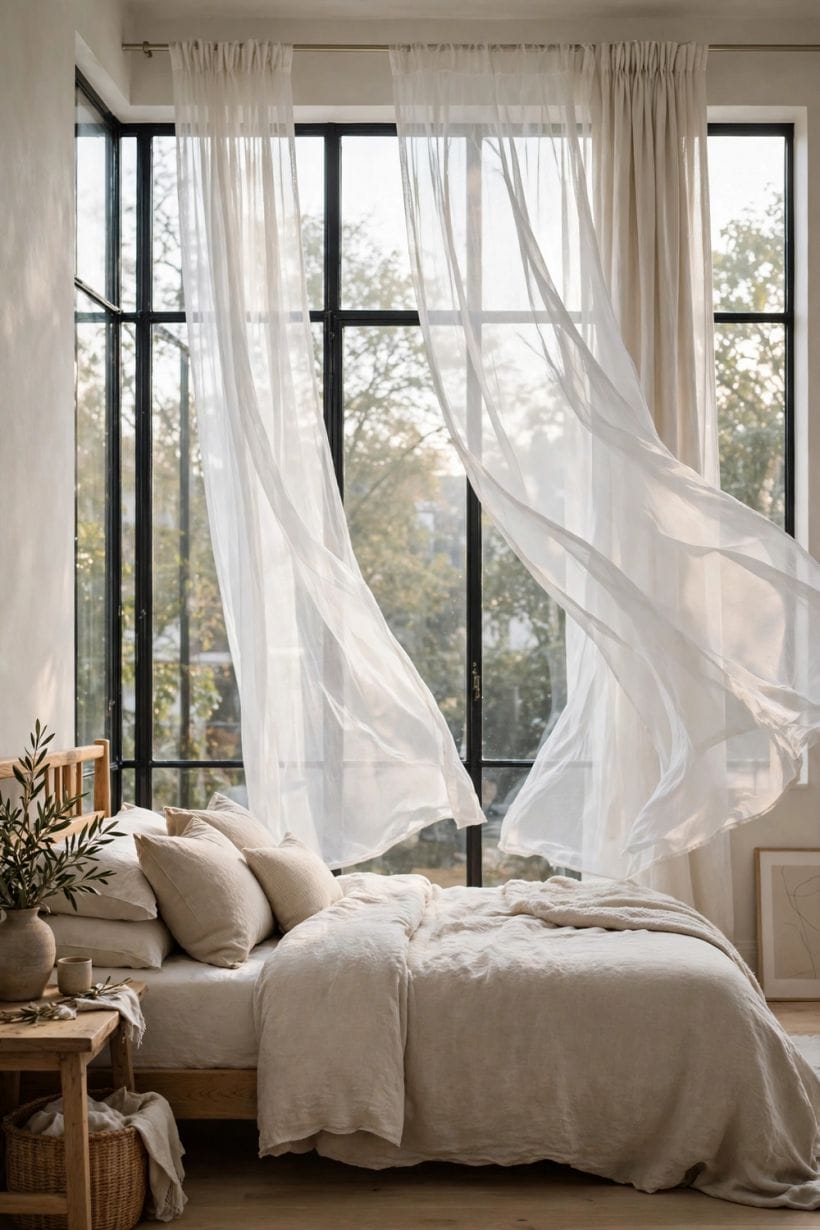
Where curtains drape, blinds and shutters fit. They live inside the window’s own geometry, answer to millimetres, and give the closest control of light of any treatment in this survey — the choice of kitchens, bathrooms, studies and every window a sofa or a bath stands close against.
12. Plantation shutters
Wide louvres in a fitted frame: shutters are furniture for windows, tilting from full light to full privacy without a cord in sight. They suit street-facing rooms best, where their control is used daily.
13. Café-style half shutters
Shutters on the lower half only — privacy below, daylight above — are the shutter family’s café curtain: the same sensible split, in timber instead of cloth.
14. Solid panel shutters
Boarded shutters fold back by day and close a room down like a cottage at night. In period houses they are often original; their insulation and darkness are the genuine article.
15. Roman blinds
Fabric that folds into soft horizontal pleats as it rises: the Roman blind is the drape’s tidier sibling, giving cloth’s warmth inside the reveal where full curtains would crowd.
16. Roller blinds, plainly done
A good roller blind disappears when open and flattens light when closed. Sheer rollers keep the view and cut the glare; blackout rollers are the bedroom’s honest workhorse.
17. Venetian blinds in timber
Wood-slat venetians warm the venetian’s geometry and tilt light with fingertip precision — the study and kitchen favourite, midway between shutter and blind in both cost and character.
18. Venetian blinds in metal
Slim aluminium slats suit bathrooms, kitchens and modern rooms, shrug off steam and wipe clean..
19. Vertical blinds, reconsidered
Long maligned, verticals remain the practical answer for wide sliders and patio doors, and in linen-look fabrics they read as drawing curtains rather than office kit.
20. Cellular and pleated blinds
Honeycomb and pleated fabrics trap a layer of still air at the glass — a gentle, general help with warmth and glare, and one of the few treatments that can fit shaped and skylight windows neatly.
21. Top-down blinds
Blinds that lower from the top as well as rise from the bottom let a bathroom or street-facing bedroom keep sky light while the lower glass stays covered — privacy placed exactly where it is needed.
22. Motorised blinds
A motor answers high, wide or simply many windows, and puts every blind on the same schedule.
4. Sheers, Voiles and Layering: Light With Manners
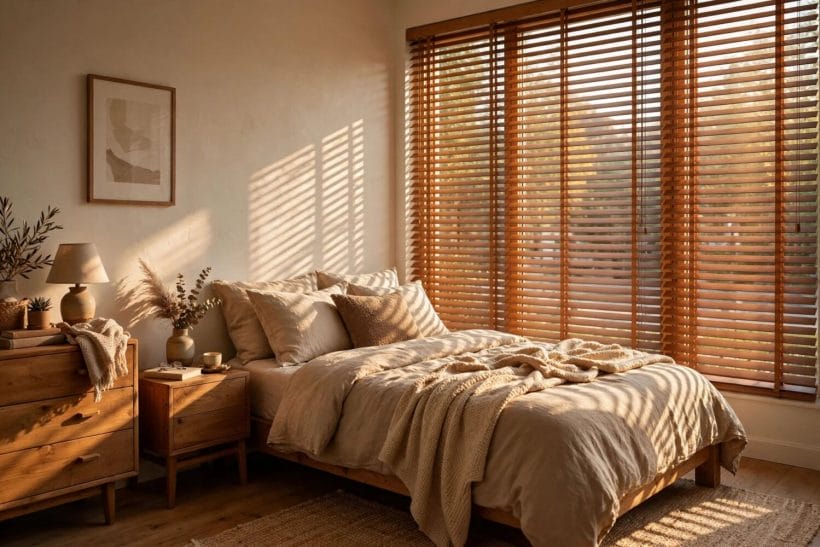
Between the naked window and the drawn curtain sits the sheer — the treatment that does the least and changes the most. Layering sheers with blinds or drapes is how most of the softest photographs in this survey were made, and the layering logic is simple enough to state once and use everywhere.
23. The classic full-length sheer
One wide voile across the whole window, gathered softly: daylight arrives filtered, silhouettes stay private, and the room gains the gentle brightness that makes pale schemes photograph kindly.
24. Sheers under drapes
The formal layer cake — sheers at the glass for the day, drapes at the sides for the evening — suits tall windows and traditional rooms, and lets each layer be plainer than it could be alone.
25. Sheers over a roller blind
Blind for business, sheer for beauty: the blind does privacy and darkness, the sheer softens its edges and hides its mechanism. A very forgiving combination for awkward windows.
26. Linen-look voiles
Slubbed, natural-looking sheers keep the cottage and coastal registers honest where shiny voile would glare. Their texture is visible exactly when the sun is behind them, which is when sheers matter.
27. Coloured sheers
A whisper of colour — smoke, blush, sage — in the sheer tints the room’s daylight itself. Keep it a whisper: the light will repeat the colour on every wall, all day.
28. Double-width and waveless headings
Modern sheer tracks with a wave heading give even, architectural folds from ceiling to floor — the contemporary sheer, tailored like a suit rather than gathered like a skirt.
29. Sheers as room dividers
A sheer hung in an open doorway or across a studio’s sleeping corner divides without darkening: the treatment leaves the window and becomes planning, in fabric.
30. Privacy film paired with sheers
Where a window faces a wall or a neighbour’s glass at close quarters, a plain frosted treatment on the glass itself plus a sheer for softness solves privacy permanently; the sheer restores what the film flattens.
31. The half-sheer on a tension wire
A short sheer on a wire or slim rod across the window’s lower third is the renter’s café curtain: no fixings into the frame, privacy where bodies pass, sky where they do not.
32. Blackout lining behind sheers by day
Bedrooms can run the layers in reverse — sheer look by day from inside, blackout doing the night’s work behind it — with the lining chosen for the room’s sleep, not its looks.
33. No treatment at all, deliberately
Some windows earn nakedness: a view of one’s own garden, high glass nobody overlooks, architecture too good to dress. Leaving a window bare is a treatment decision, and this survey honours it — with the caveat that glass at night becomes a mirror, and the room should be lit with that in mind.
5. Shaped and Special Windows: Bays, Arches and Glass Walls
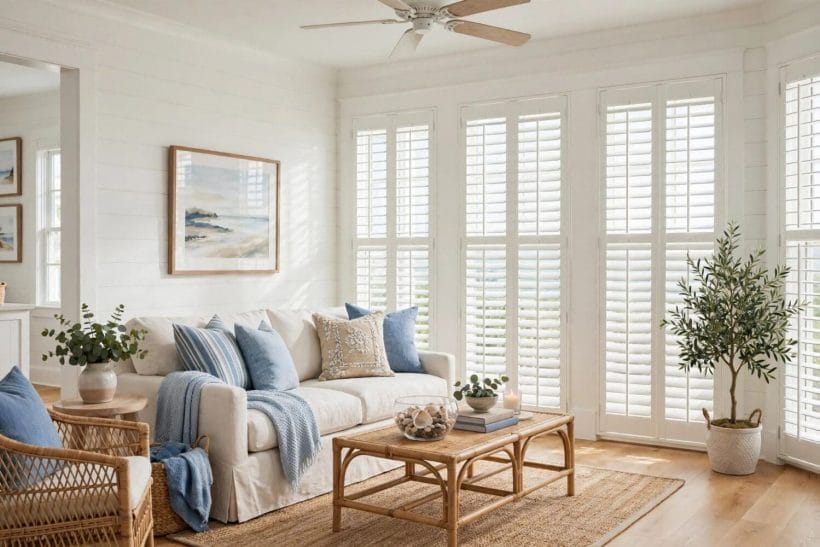
Ordinary rectangles are the easy case. The photographs that stop readers are the shaped ones — bays, arches, dormers, glass walls — where the treatment must follow geometry it did not choose. The bay as architecture has its own lane in bay windows; this section is about dressing such windows once they exist.
34. Drapes on a bay track
A bent track carrying one pair of drapes around the whole bay keeps the bay’s glass clear when open and wraps the seat in fabric when closed — the bay becomes a room within the room.
35. Individual blinds per bay facet
A blind in each facet follows the bay’s angles exactly and lets each facet answer its own sun. The fitted answer, and the one that leaves the window seat’s cushions in shifting, pleasant stripes.
36. Shutters shaped to the bay
Shutters made to the bay’s geometry are the tailored suit of treatments: costly in effort, exact in fit, and the finish most period bays were built expecting.
37. Arched windows, drapes to the sides
An arch wants its curve shown: hang drapes wide and low enough that the arch’s whole sweep stays visible, and let the fabric frame the shape rather than hide it.
38. Arched windows with a shaped blind
A blind or shutter made to the arch’s curve covers the whole glass when closed. It is specialist work; the photograph’s calm comes from the fit, and the fit comes from a template, not optimism.
39. Dormer and sloping windows
Dormer cheeks and sloping glass take pleated or roller blinds fixed at both ends, or short curtains on pivoting rods that swing with the window. Gravity is the design brief; everything else is taste.
40. Skylights with pleated blinds
Roof windows pour light straight down and need their own fitted blinds, ideally reachable or motorised, chosen for glare and heat manners stated generally — a skylight left bare is a lamp that cannot be dimmed.
41. Glass walls and wide sliders
Whole walls of glass take ceiling-tracked drapes, wide verticals or sheer waves that stack to almost nothing. The treatment must vanish completely when open, or it fights the architecture it serves.
42. Clerestory and high windows
High ribbon windows usually want nothing but a sheer or a simple blind for glare; their height is their privacy. Dressing them heavily mistakes their purpose, which is light without exposure.
43. Round and porthole windows
A small round window takes a shaped shutter, a gathered café disc of fabric, or — most often and most happily — nothing at all beyond a plant on the sill.
44. French doors and sidelights
Doors need treatments that move with them: fitted blinds, shutters fixed to the door, or drapes hung clear of the swing. Sidelights pair best with the door’s own treatment repeated slimly.
6. Privacy and Light, Room by Room
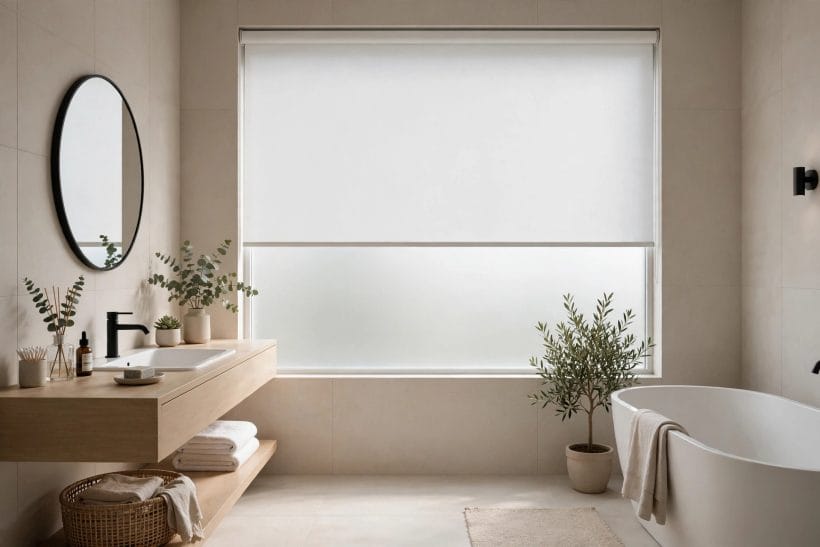
Every treatment is a negotiation between two goods — light in, eyes out — and each room strikes the bargain differently. This section walks the house striking them, with claims kept general and checkable: what a treatment can do is stated by type, never by invented performance figures.
45. Living rooms: layered by the hour
The sitting room’s answer is layering — sheer or blind for the day, drapes for the evening — because its hours span both. The site’s living room ideas pillar shows the rooms these layers land in.
46. Bedrooms: darkness is the brief
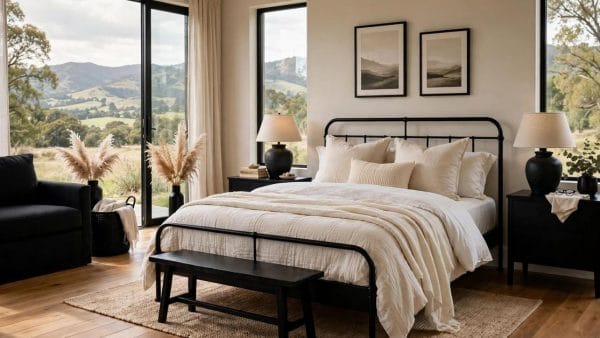
Sleep outranks view: blackout-lined drapes or blinds, fitted close to the glass so light cannot leak at the edges, with a sheer for the dressing hours. The treatment’s beauty matters at waking, not at midnight.
47. Bathrooms: privacy that survives steam
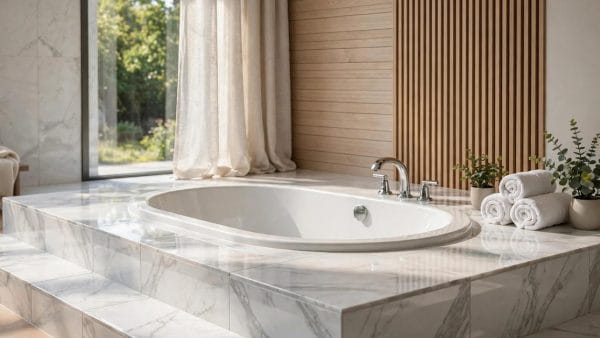
Fitted blinds, shutters or obscured glass answer the bathroom — the room whose full survey is bathroom ideas; fabrics must be chosen for damp air, and anything that mildews gracefully is lying. Ventilation matters as much as the treatment — the two are planned together.
48. Kitchens: washable and out of the way
Kitchen windows sit over sinks and steam — the kitchen ideas corpus shows the rooms around them: short blinds, café curtains and shutters win because they wash, wipe and keep clear of taps and flames.
49. Studies and screens: glare control
A working window must kill glare without killing light: venetians and sheer rollers earn their place here, tilting and filtering so a screen stays readable at noon. Position the desk first; the treatment follows the screen’s angle.
50. Children’s rooms: safety first, plainly
Cordless or fitted treatments are the plain, general rule wherever children sleep and play, and blackout earns its keep at summer bedtimes. This is stated as a principle, not a specification — follow the current guidance where you live and the maker’s instructions always.
51. Halls and landings: the overlooked windows
Stair and hall windows are passed a hundred times a day and looked at rarely; a simple sheer or blind keeps them mannerly and lets their light do its quiet work on the stairs.
52. Small rooms and tiny houses
In a small room the treatment must not eat the wall: fitted blinds and sheers keep the glass’s full measure, and drapes, if used, hang outside the frame’s width. The small living room ideas in the published corpus apply the same economy at room scale.
53. Street-facing rooms: the silhouette test
At night, a lit room behind a sheer shows silhouettes, not details — which is privacy enough for most, and not enough for some. The honest test is to stand outside after dark and look at your own window before deciding a sheer alone will do.
54. Garden-facing rooms: keep the view
Where the outlook is your own planting, the best treatment is the one that disappears: sheer rollers, top-down blinds and bare glass with good manners. Privacy here is the garden’s hedge, not the window’s fabric.
55. Renters’ windows: full effect, no holes
Tension rods, no-drill blind brackets, command-fixed tracks and sill-standing shutters give rented rooms nearly the whole survey without a single fixing the landlord must forgive — the treatment leaves with the tenant, and so does the deposit.
7. Colour, Pattern and Fabric: The Decorative Layer
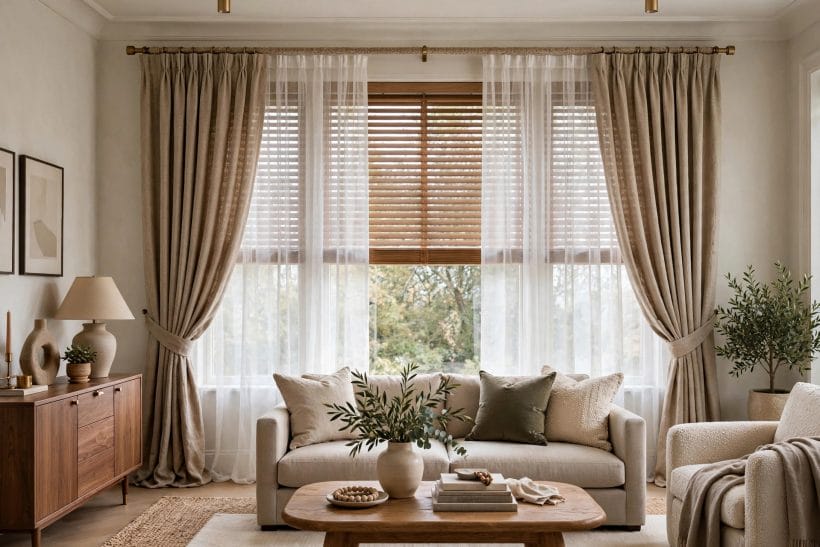
With function placed, the treatment becomes decoration — the largest area of pattern and colour most rooms contain. The discipline that keeps it kind is proportion: the bigger the window, the quieter the fabric must be, unless the curtain is consciously the room’s one loud voice.
56. Matching the wall, deepening the tone
Curtains a step deeper than the walls give a room tailored calm and let furniture carry the accents. This is the scheme behind most of the serene photographs in this survey.
57. The contrast drape
A deliberate contrast — deep green on pale walls, rust on grey — makes the window the room’s exclamation. It demands the rest of the room stay composed; two exclamations are an argument.
58. Stripes for height and width
Vertical stripes lift, horizontal bands widen, and both do it quietly in a woven texture rather than a printed shout. Stripe direction is the cheapest architectural lie a curtain can tell.
59. Botanical and garden prints
Leaf and flower prints belong where windows face greenery: the curtain continues the garden into the room. Scale the print to the window — small prints dissolve at distance, large ones hold.
60. Checks, plaids and country weaves
Woven checks suit kitchens, cottages and country rooms, and unlike prints they survive decades of fashion because they were never fashionable — merely right.
61. Sheer colour as daylight tint
Coloured sheers, taken up from the layering section, are the boldest decorative move per penny in this survey: they retint the room’s whole daylight. Choose them in the room, at noon, with the sun behind the fabric.
62. Natural fibres and honest slubs
Linen, cotton and wool blends wrinkle, fade and soften with the years in ways that read as patina; synthetics hold their line and colour with less romance and less fuss. The honest choice is the one whose ageing you will enjoy.
63. Blackout and thermal linings
Linings are the treatment’s hidden half: blackout for sleep, thermal layers that help a room’s warmth in the general, unmeasured way any extra layer at cold glass helps. Choose linings by the room’s need and the maker’s stated purpose, not by promise.
64. Trim, fringe and the finished edge
A contrasting border, a fringe, a bound edge: trim is the curtain’s tailoring, and a single well-chosen border can lift plain fabric into the bespoke-looking.
65. Repeating the fabric elsewhere
One cushion, one lampshade or one upholstered stool in the curtain’s fabric ties the window into the room. Repeat once, perhaps twice — a room dressed head-to-toe in one fabric is a showroom, not a home.
8. Tracks, Rods and the Finishing Hardware
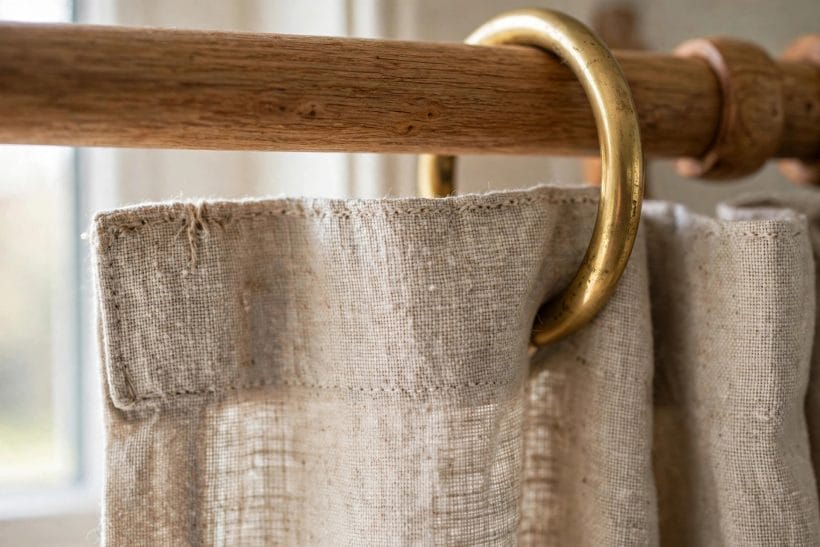
The hardware is the treatment’s skeleton: invisible when right, and the first thing blamed when beautiful fabric hangs badly. This closing section gives the poles, tracks and details their due, because half the photographs readers love are hardware decisions wearing fabric.
66. Ceiling tracks for the modern line
A track recessed or fixed at the ceiling gives floor-to-ceiling fabric without a pole’s interruption — the fitting behind the wave-sheer photographs, and the one that makes low rooms feel taller.
67. Timber and metal poles
A pole is furniture: turned timber for traditional rooms, slim black or brass metal for modern ones. Its finials should finish the sentence, not start an argument with the furniture.
68. Double tracks and double poles
Two parallel runs carry sheer and drape independently — the hardware form of layering, and worth its extra brackets wherever both layers will truly be used daily.
69. Bent and bay hardware
Tracks that bend, and poles jointed to an angle, are what let drapes follow a bay. Order from a template of the actual angles; bays forgive nothing estimated.
70. Rings, eyelets and silent gliders
How fabric meets hardware decides how it moves: rings swing freely, eyelets slide with a whisper of effort, gliders run silent. In bedrooms, silence is a specification, not a luxury.
71. Holdbacks, finials and tieback hooks
The small metalwork is the jewellery: matched to the room’s other metals, placed by the drape’s daytime shape, and fixed into something solid enough for a daily pull.
72. Pelmet and valance boxes
A pelmet hides the track, finishes the top and suits formal and period rooms; a soft valance does the same work in fabric. Both are due a revival wherever curtain tops look unfinished.
73. Motorisation and timers, plainly framed
Motors serve the high, the wide and the many — and, on timers, the house that should look lived-in while empty. A convenience plainly framed: welcome where reach is hard, unnecessary where a cord would do.
74. Cords, chains and their keepers
Loose cords are kept tidy and out of children’s reach as a plain household rule, with cleats and tensioners fitted and used. It is the least decorative line in this survey and the most important.
75. The sample-and-pilot rule for hardware
Buy one room’s hardware first, hang it, and live with its sound, its shadow line and its pull for a week. Hardware repeats through a house like a handrail — get the one room right and the rest is ordering.
9. Checks and Mistakes: Before the First Purchase or the First Stone
Measure before anything is ordered, and measure the window you have, not the window in the catalogue: width of the reveal, depth for a fitted blind, the swing of any door or casement, and where a stack of fabric will actually rest. Most treatment failures are measuring failures wearing prettier clothes.
Check the fixings with the same honesty as the fabric. Tracks and brackets must land in structure or sound masonry — a ceiling track carrying floor-length lined drapes is a real load — and in rented homes the no-drill and tension options in this survey exist precisely so the deposit survives the décor. Children’s rooms take cordless or fitted treatments as a plain rule, on current local guidance and the maker’s instructions.
The commonest mistakes are hanging drapes too low and too narrow, so the window shrinks; choosing fabric from a screen’s colours rather than a sample in the room’s light; and forgetting that at night the arrangement reverses — the pretty sheer becomes a stage backdrop for silhouettes. Stand outside your own lit window once, and you will never misjudge a sheer again.
Finally, treat one window completely before ordering for the house. Live with its fit, its light and its laundry for a week. Treatments repeat their successes and failures faithfully from room to room; the pilot window is the cheapest education in this survey.
10. Costs and Pulling It Together
Costs arrange themselves by fit and fabric, stated as this survey states everything — in order, not figures: a roller blind or a tension-wire sheer is the gentle end; made-to-measure drapes, lined and tracked, are the middle; shaped shutters and motorised systems are the serious end, paid for in templating and fitting as much as in material. The saving lives in choosing the right tier per room — shutters where control is used daily, simplicity where a sheer would have done.
Pull it together by the survey’s one rule: place privacy where eyes are, place light where the sky is, and let the treatment’s fit follow the window’s own geometry. Do that in every room and the house reads as considered from the street and calm from the sofa — all a window treatment ever promised.
Final Considerations
Windows are the rooms’ eyes, and treatments their expression: the same glass can look formal, sleepy, tailored or romantic by Friday, with nothing changed but cloth, slats and a track’s height.
Begin with the hardest room — the street-facing bedroom, the overlooked bathroom — and solve it properly with this survey’s layering. The easy windows will then dress themselves in an afternoon, and the whole house will feel completely intentional. The wider context for every room these windows light gathers under home design ideas.


0 Comments