

The living room is where a home spends its evenings — conversation, television, books, naps, guests, and the daily drift of everything that has no other room to go to.
These 75 living room ideas are organised the way a good room is built: layout first, then sofas, colour and layered lighting, with storage and texture doing the quiet work underneath.
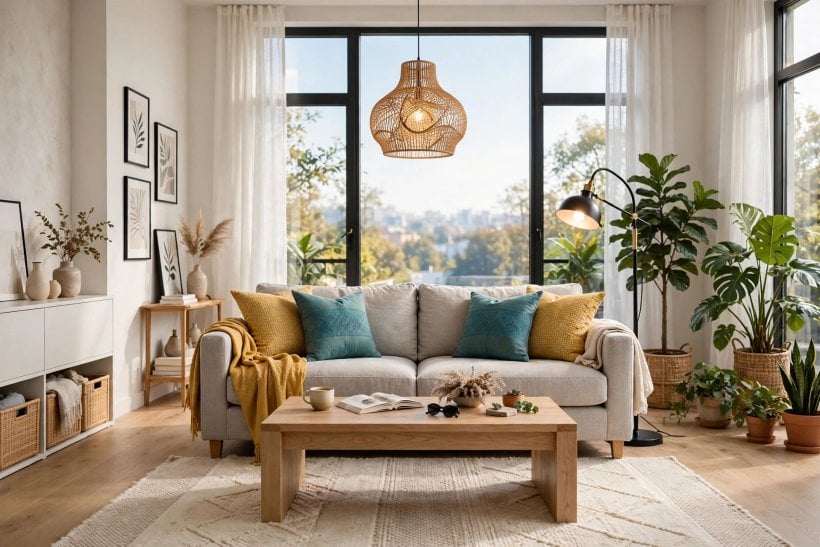
1. Living Room Ideas at a Glance
The central entity is the living room as the home’s shared living system: a layout arranged around how people actually sit and move, seating that anchors it, colour that sets its light, and layered lighting that carries it from morning to midnight. Its attributes — layout, sofas and seating, colour, lighting, storage, texture — are the sections of this guide, and the order matters: no sofa, paint or lamp can rescue a room whose furniture fights its shape.
| What should I decide first? | The layout: where people sit, what they face, and how they walk through. Furniture sizes, colours and lamps all follow from that plan. |
| What is the most important piece? | The sofa. It is the largest object, the visual anchor and the seat used most. Choose it for the room’s real dimensions and real habits, not a showroom’s. |
| How does colour change a living room? | Colour sets the room’s light temperature and mood. Pale walls borrow daylight; deep colours make evenings feel enclosed and calm. Test colour in the room’s own light before committing. |
| Why layer the lighting? | One ceiling light flattens everything. Ambient, task and accent layers let the room work at every hour — bright for cleaning, low and warm for evenings. |
| What makes a living room feel finished? | Clear surfaces, somewhere for everything, texture in the soft layer, and one or two personal things given room to breathe. |
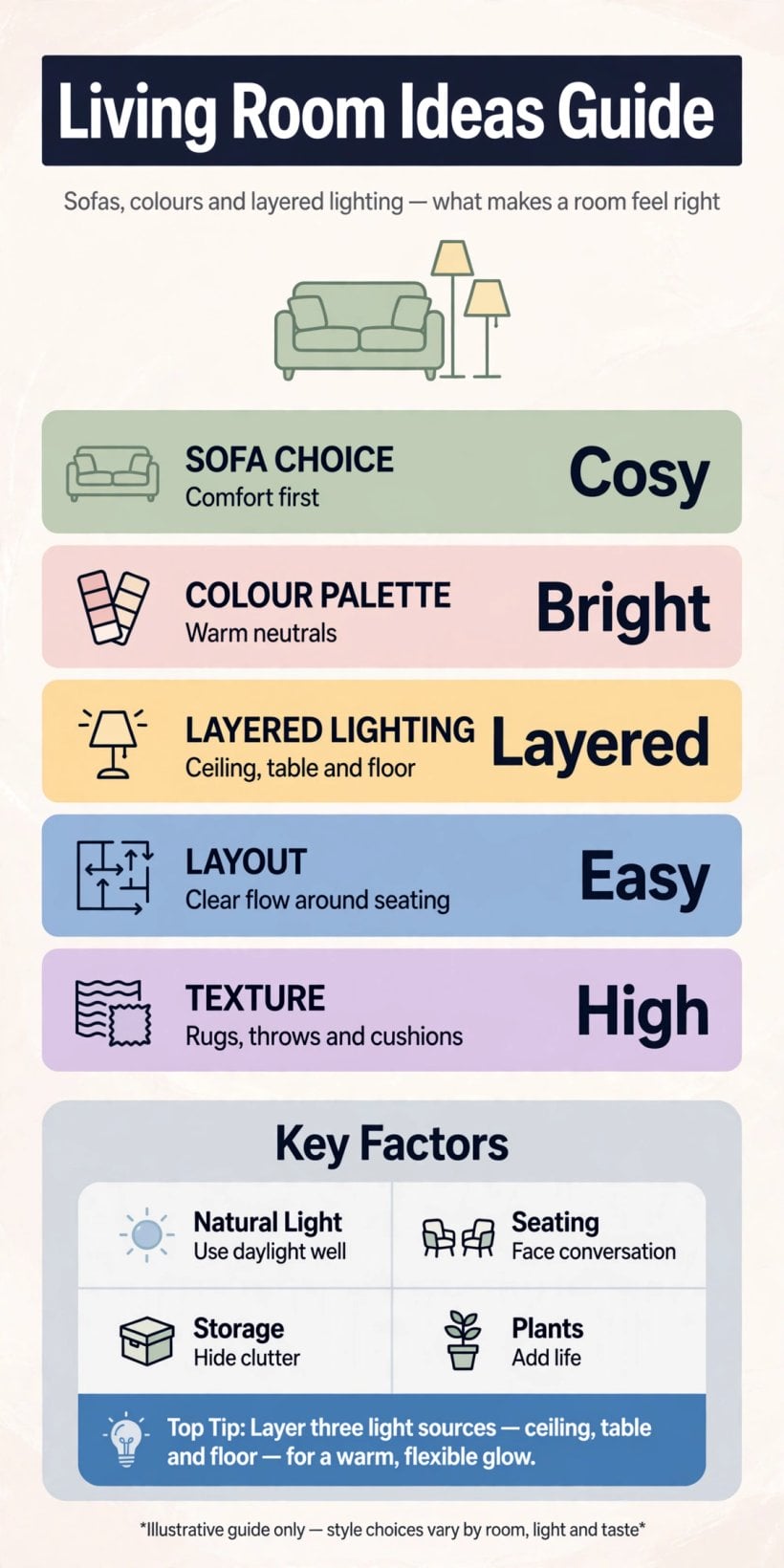
At a glance: layout before furniture, the sofa as anchor, colour tested in real light, lighting in layers, and texture carried by the changeable soft layer.
2. Layouts: Arranging the Room Around How You Live
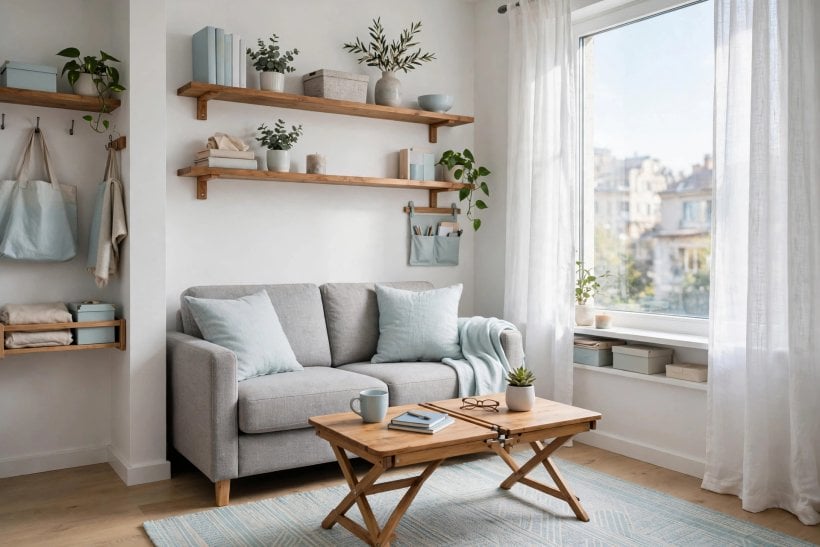
Every living room layout is a negotiation between the room’s shape, its doors and windows, and the way the household actually spends its evenings. The planning discipline in these small living room ideas scales to any size of room: arrange the conversation first, the television second, and the walkway always.
1. Arrange Seating for Conversation First
Chairs and sofas that face each other across a rug make a room social before they make it anything else. If people cannot talk without turning sideways or shouting across the room, the layout — not the furniture — is wrong.
2. Anchor the Arrangement on a Rug
A rug defines the room within the room. Size it so the front legs of every seat sit on it; a floating rug island makes even good furniture look temporary and the room feel unsettled.
3. Keep a Clear Walkway Through the Room
Map the route from door to door and protect it. Furniture that forces a sideways shuffle will be resented daily, and the room will always feel smaller than its measurements say.
4. Float the Sofa Away from the Wall in Larger Rooms
Pushing every seat against the walls strands the middle of a big room. Floating the sofa, with a console or low shelf behind it, creates a conversation core and a passage behind.
5. Use the Long Wall for the Long Sofa
In rectangular rooms the longest wall takes the longest piece. Fighting the room’s geometry with a sofa across its short axis chops the space and blocks its light.
6. Give the Television a Wall, Not the Room
A screen centred on one wall, seating angled toward it and each other, keeps television available without making it the room’s altar. Where the TV dominates every sightline, conversation loses.
7. Zone an Open Plan with Furniture, Not Walls
In open-plan spaces, the back of a sofa, a rug’s edge and a change of lighting mark the living zone. The room stays open; the territory is still clear.
8. Place the Coffee Table Within Reach of Every Seat
A table nobody can reach is a sculpture that collects apologies. Leave a comfortable gap from sofa edge to table — enough for legs, close enough for a mug.
9. Add a Reading Corner Where the Light Already Is
The chair by the window, with a small table and a lamp for after dark, becomes the room’s most fought-over seat. Build it deliberately rather than discovering it by accident.
10. Keep Symmetry Loose, Balance Tight
Matched pairs of lamps or chairs calm a formal room; most living rooms do better with balance instead — visual weight distributed evenly without mirror-imaging. Symmetry is a tool, not a rule.
11. Sketch the Room to Scale Before Buying Anything
Measure the room, the door swings and the furniture’s true footprints on paper or tape on the floor. The honest arithmetic in this guide to how to decorate a tiny living room applies at every scale: rooms forgive optimism less than any drawing suggests.
3. Sofas and Seating: The Anchor Pieces
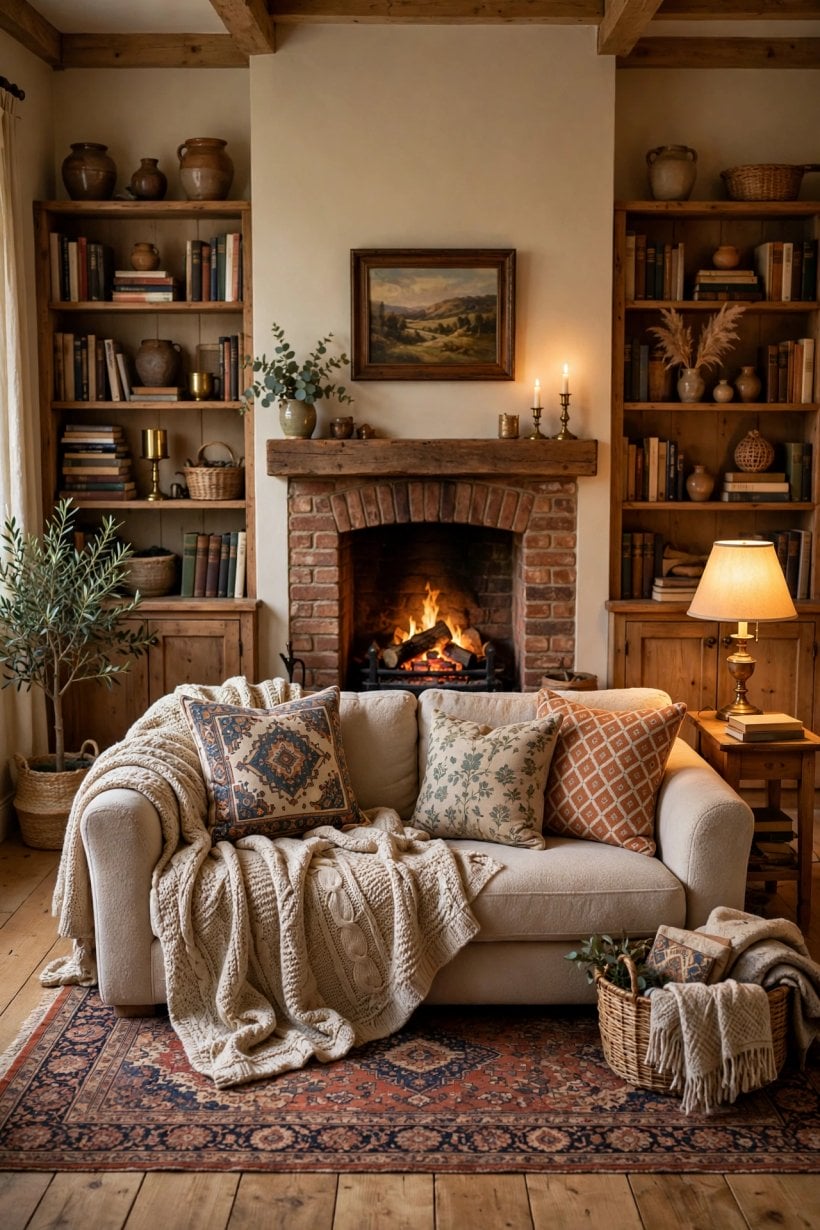
The sofa is the largest purchase, the most-used seat and the object every other decision orbits. Choose it like a decade-long commitment, because it is one.
12. Size the Sofa to the Room, Not the Showroom
Showrooms make every sofa look modest. Measure your wall, your door widths and your turning space at home, and tape the sofa’s footprint on the floor before ordering.
13. Choose Seat Depth for How You Actually Sit
Deep seats suit loungers and households that sit sideways with feet up; upright sitters and shorter legs need shallower seats and firmer cushions. Sit in it the way you sit at home.
14. Pick a Corner Sofa for Rooms That Host
A corner or L-shaped sofa seats the most people in the least floor space and defines a sociable core. In a small room, choose a compact chaise end rather than a full return.
15. Use Two Armchairs Instead of a Second Sofa
Armchairs move, angle and reconfigure in ways a second sofa never will. A pair of comfortable chairs opposite the sofa keeps conversation close and the layout flexible.
16. Add an Ottoman That Works as Table, Seat and Footrest
A large upholstered ottoman with a tray on top is three pieces of furniture in one footprint — the hardest-working object a living room can own.
17. Choose Upholstery for Your Household’s Real Life
Performance fabrics, washable covers and forgiving weaves suit homes with children, dogs and red wine. Pale linen in a busy family room is a cleaning contract, not a colour choice.
18. Keep One Seat with a View Out
A chair turned slightly toward the garden or the street gives the room a contemplative seat — the one people choose with morning coffee. Rooms need a place to look outward.
19. Mix One Formal Seat into a Relaxed Room
A single upright chair among soft seating gives guests who dislike deep sofas somewhere dignified, and keeps the room from reading as entirely a nap zone.
20. Test Cushions for Support, Not Just Softness
Feather-soft cushions feel wonderful for ten minutes and sag for ten years. A firmer core with a soft wrap keeps its shape and your back’s gratitude.
21. Let the Sofa Carry the Room’s Boldest Colour
One confident colour on the largest piece — deep green, ink blue, warm rust — anchors a calm room more surely than scattered bright cushions. Keep everything else quieter.
22. Add a Window Seat or Bench for Overflow
A low bench under the window or along a wall seats extra guests, holds books and trays, and never blocks light the way a high-backed chair would.
4. Colour: Walls, Accents and the Room’s Light
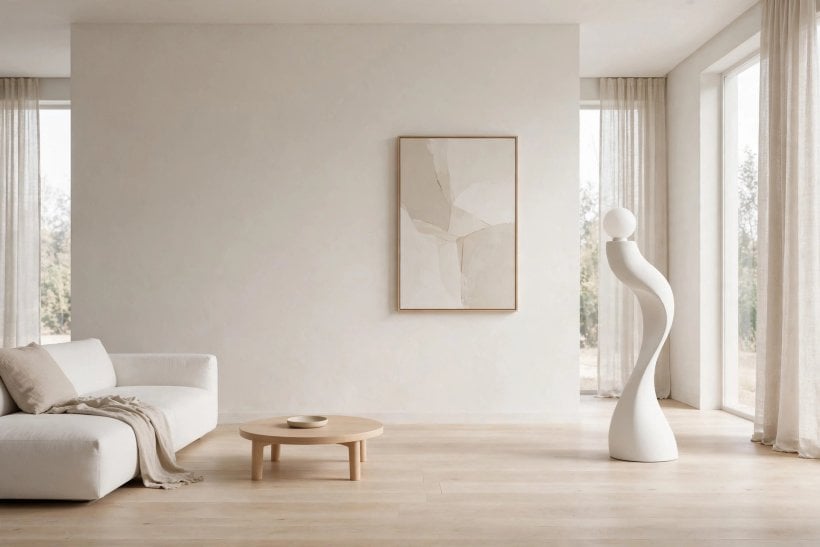
Colour is the fastest transformation a living room can have and the one most often chosen from a screen in the wrong light. The range in these tiny house interior paint colours shows how much a wall colour does; the checks below keep the choice honest.
23. Test Paint on the Wall, in Morning and Evening Light
A colour that sings at noon can turn grey or garish by lamplight. Paint a large patch, live with it through a full day, and judge it at the hour the room is used most.
24. Match the Palette to the Room’s Orientation
North-facing rooms cool every colour; warm whites and warm neutrals restore the balance. South-facing rooms can carry cooler, deeper tones without turning sombre.
25. Use One Deep Wall Instead of Four
A single deep-coloured wall behind the sofa or the shelves gives the room its mood without shrinking it. It is the commitment-shy route to a dramatic room.
26. Keep Ceilings and Woodwork in the Same Family
A ceiling a shade lighter than the walls and woodwork in a related tone make the room read as one composed space rather than a box with stripes at its edges.
27. Build the Scheme Around One Fabric or Rug
Start from something you love — a rug, a curtain fabric, a piece of art — and pull its colours into walls, upholstery and cushions. Rooms designed from a real object cohere.
28. Repeat Each Accent Colour at Least Twice
A colour used once looks like an accident; used two or three times across the room — cushion, throw, a book’s spine — it looks like a decision.
29. Use Dark Colours Low and Pale Colours High
Deep tones on sofas and rugs ground the room; pale walls and ceilings lift it. Reversing that weight makes ceilings press and rooms feel top-heavy.
30. Let Neutrals Have Undertones, Not Beige Flatness
Warm greys, stone, putty and soft whites with green or pink undertones give neutral rooms depth. Flat beige under flat light is how rooms become forgettable.
31. Paint the Bookcase or Alcoves a Shade Deeper
Alcoves and shelving painted one step deeper than the walls gain architectural depth for the price of a sample pot — the cheapest built-in look available.
32. Keep the Boldest Colour for the Changeable Layer
Cushions, throws and art can carry daring colour because they can leave. Walls and sofas should carry the colours you can live with for a decade.
33. Check Colour Against the Floor, Not a White Card
Every wall colour is in conversation with the floor’s tone. Lay samples on the floorboards or carpet they will live above, never against a white shop card.
5. Layered Lighting: Ambient, Task and Accent
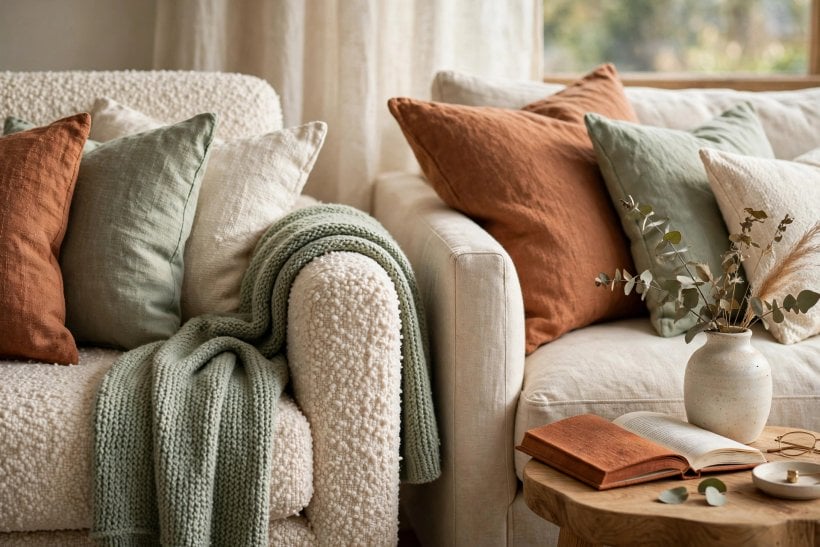
A living room lit by one central pendant is a room half designed. Layers — ambient for general light, task for reading and work, accent for mood and pictures — are what carry a room from breakfast to midnight, as the schemes in these modern living room interior design ideas for tiny houses demonstrate at small scale.
34. Put the Main Light on a Dimmer
The single highest-value electrical decision in the room. Full light for cleaning and games, low light for evenings — one fitting, two rooms.
35. Add a Floor Lamp Beside the Reading Chair
Reading light should come from beside and slightly behind the reader, at shoulder height when seated. A lamp across the room is decoration, not task light.
36. Use Table Lamps to Bring Light Down to Seat Level
Pools of lamplight at sitting height are what make evenings feel calm. Two table lamps on side tables do more for a room’s mood than any ceiling fitting.
37. Light the Pictures and the Shelves
A picture light or a small spotlight on shelving turns the room’s own objects into its evening scenery. Accent light is what makes a room look designed after dark.
38. Keep Light Temperatures Consistent
Mixed bulb temperatures — one cold, one amber — make a room feel accidental. Choose one warm temperature family for the whole room and buy bulbs to match.
39. Use Wall Lights Where Floor Space Is Tight
Sconces give layered light without consuming a centimetre of floor or table. In small rooms they are the difference between layered light and a single bulb.
40. Add a Low Light for the Television Zone
A dim lamp behind or beside the screen softens the contrast between a bright picture and a dark room, and is kinder to eyes through a whole film.
41. Choose Shades That Aim Light Where It Is Wanted
Opaque shades throw light up and down; translucent shades glow. Pick per lamp according to its job, and never leave a bare bulb at seated eye level.
42. Plan Sockets Where the Lamps Actually Stand
Lamp positions are decided by furniture, and sockets rarely agree. Extension leads across walkways are a layout failure made visible — plan the two together.
43. Layer Daylight with Sheers and Curtains
Sheers soften glare through the day; full curtains close the room down at night and add the soft layer’s colour and texture at the room’s largest scale.
44. Put One Lamp on a Timer for the Room’s Welcome
A lamp that lights the room before you come home changes how the house greets you. Small automation, disproportionate effect on winter evenings.
6. Storage and Surfaces: Keeping the Room Clear
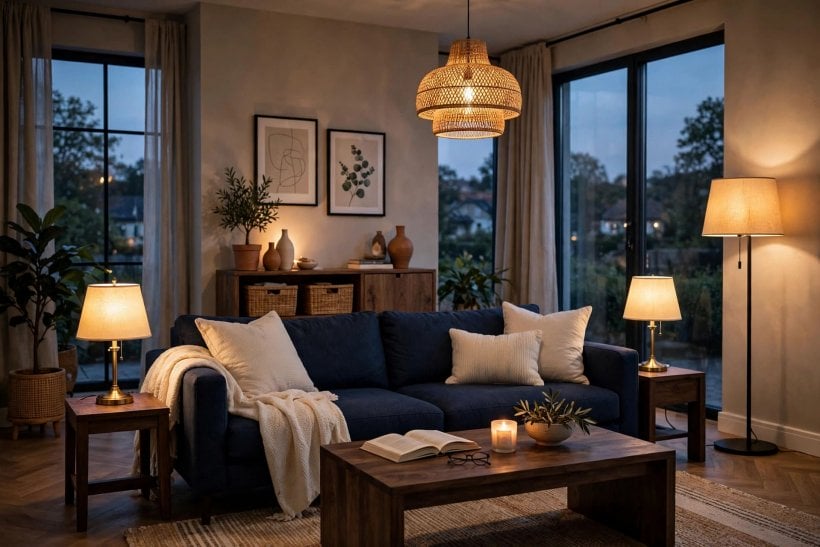
Living rooms accumulate: remotes, books, games, chargers, blankets, the household’s whole paper trail. The hidden-capacity thinking in these tiny house plans with hidden storage is the living room’s quiet salvation at any house size.
45. Give Every Object a Home Inside the Room
Clutter is usually a storage-design failure, not a tidiness failure. If the remotes, blankets and chargers have no assigned place within arm’s reach of their use, they will live on the sofa.
46. Choose a Coffee Table with a Shelf or Drawers
The table’s underside is the room’s most wasted volume. A lower shelf or drawer swallows books, games and the laptop without costing a centimetre of floor.
47. Use a Storage Ottoman or Bench for Blankets
Throws and cushions need a home at the hour they are not used. A lidded ottoman at the sofa’s side keeps them in the room but out of the picture.
48. Build Shelving into Alcoves and Dead Corners
The alcoves beside a chimney breast or fireplace are storage waiting to be carpentered. Shelves or a closed cupboard there convert the room’s awkwardness into its capacity.
49. Keep One Closed Cupboard for the Ugly Essentials
Routers, chargers, board games and the vacuum’s attachments: one closed cupboard hides the machinery of modern life so the open shelves can hold what deserves display.
50. Edit the Shelves: Books, Objects, Air
Shelves read best at about two-thirds full — books in runs, a few objects, deliberate empty space. A shelf packed edge to edge reads as storage, not display.
51. Add a Console Behind the Sofa
Where the sofa floats, a narrow console behind it holds lamps, books and drinks, and turns the sofa’s back from a barrier into a piece of furniture.
52. Corral the Small Things on Trays
A tray on the coffee table or ottoman gathers remotes, coasters and candles into one composed group. Corralled clutter reads as styling; scattered, it reads as mess.
53. Run Cables Once, Properly
Cable trunking, a basket for chargers, and leads routed behind furniture rather than across it: an hour’s work that removes the room’s most modern eyesore permanently.
54. Keep Surfaces at One-Third Occupied
A sideboard or mantel that is two-thirds clear looks calm and is usable. The one-third rule is the difference between a styled surface and a landing strip.
55. Store the Season Inside the Room’s Furniture
Winter throws, summer cushions, the games only played at holidays — the ottoman, the bench and the cupboard should absorb the room’s seasons without a trip to the attic.
7. Texture, Textiles and Finishing Touches
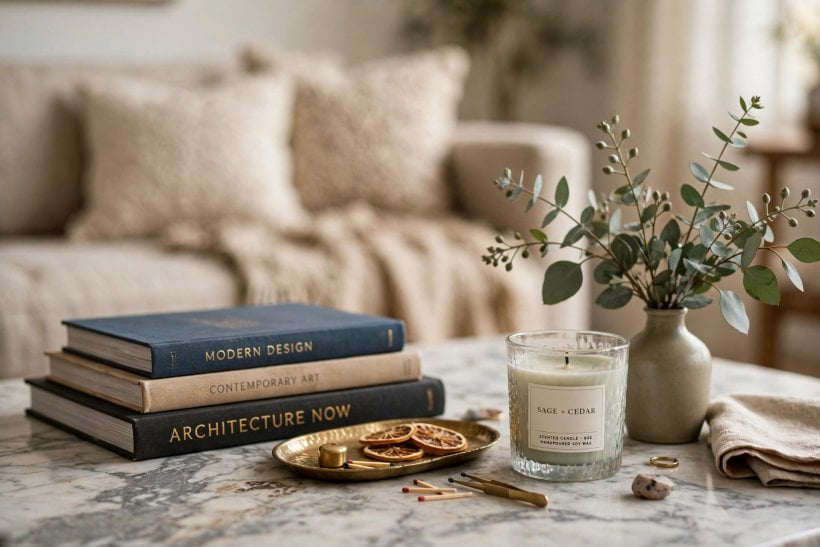
Rooms that photograph well and feel flat are missing texture. The soft layer — wool, linen, timber, leather, plants — is where a living room gains the warmth its hard surfaces cannot give.
56. Layer at Least Three Textures in Every Sightline
Smooth, rough and soft in each view: a linen sofa, a wool throw, a timber table. Texture is what the eye reads as comfort before the body confirms it.
57. Use Cushions in Odd Numbers and Mixed Sizes
Three or five cushions, varied in size and fabric, look composed; matched pairs of identical cushions look like a showroom. One should always be the bold one.
58. Add a Throw Where People Actually Sit
A throw folded over the arm of the most-used seat will be used nightly. Throws arranged on unused furniture are props, not comfort.
59. Hang Curtains High and Wide
Curtains hung above the window frame and wider than it make windows look generous and ceilings taller, and let the glass give its full daylight when open.
60. Bring One Piece of Real Timber into Every Scheme
A wooden table, stool or frame warms schemes that tile, metal and upholstery leave cold. Timber is the neutral that goes with everything except more timber in the same tone.
61. Use a Plant as the Room’s Living Object
One substantial plant — not a scatter of small pots — gives the room height, movement and a colour no paint matches. Place it where the light already works.
62. Hang Art at Seated Eye Level
Living room art is mostly viewed from sofas and chairs, so hang it lower than hallway art. Pictures floating near the ceiling belong to a different room’s sightlines.
63. Group Small Art into One Gallery Arrangement
Small pictures scattered singly look lost; grouped tightly, they read as one large work. Lay the arrangement on the floor first and photograph it before drilling.
64. Add a Mirror Where It Borrows Light or a View
A mirror opposite a window doubles the room’s daylight and view. A mirror reflecting a blank wall or the television doubles nothing worth having.
65. Finish with Books and One Personal Object
A stack of real books and one object with a story — the room’s signature. Rooms finished entirely from one shop’s catalogue have everything except a reason to remember them.
8. Small and Tiny Living Rooms: The Full Discipline
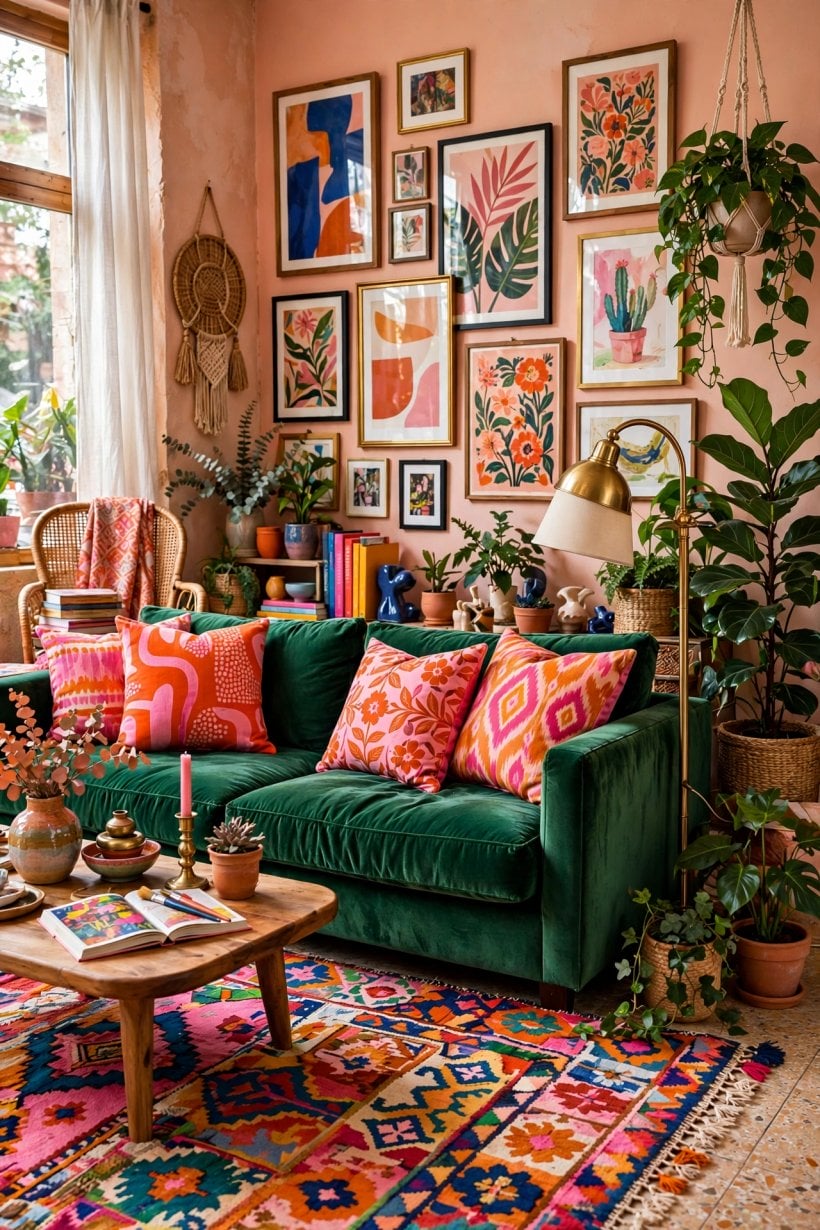
Everything above was written with ordinary rooms in mind; this section is for the genuinely small, where the discipline of these tiny living room ideas becomes the whole game and every piece must earn its footprint twice.
66. Choose a Compact Sofa with Raised Legs
Visible floor beneath furniture makes a small room read larger. A sofa on legs, with a low back and slim arms, gives full seating without the visual bulk.
67. Use One Rug, One Palette, One Statement
Small rooms fragment under variety. A single rug defining the zone, a tight colour palette and one statement piece read as calm rather than scarcity.
68. Make Every Piece Do Two Jobs
The ottoman is the table and the storage; the bench is seating and the bookcase; the sofa bed hosts the guests. In a small room, single-purpose furniture is a luxury tax.
69. Take Storage to the Ceiling
Tall, shallow shelving uses the one dimension a small room has spare. Daily things live low; the rarely used go to altitude.
70. Keep the Walkway Sacred
In a small room the route through is a measurable percentage of the floor. Furniture that narrows it makes the whole home feel congested, not just the room.
71. Use Wall Lights and Skip the Floor Lamp
Sconces and a lit picture give layered light with zero floor cost. Every square of floor a lamp base consumes is a square the room cannot use.
72. Choose Glass or Open Bases for Tables
A glass-topped or open-based coffee table occupies sightlines less than a solid block. The room reads its full size straight through the furniture.
73. Mount the Television and Lose the Stand
A wall-mounted screen returns the stand’s whole footprint to the room. Add a slim shelf beneath for the box and the soundbar, nothing more.
74. Fold, Stack and Nest the Occasional Pieces
Nesting tables, folding chairs and a stackable stool appear for guests and vanish after. Occasional furniture that lives permanently in the room is not occasional.
75. Keep One Luxury and Do It Properly
A truly comfortable sofa, one beautiful lamp, a rug with real wool — one luxury executed well makes a small living room feel chosen rather than endured.
9. Checks and Mistakes: Before the Big Purchases
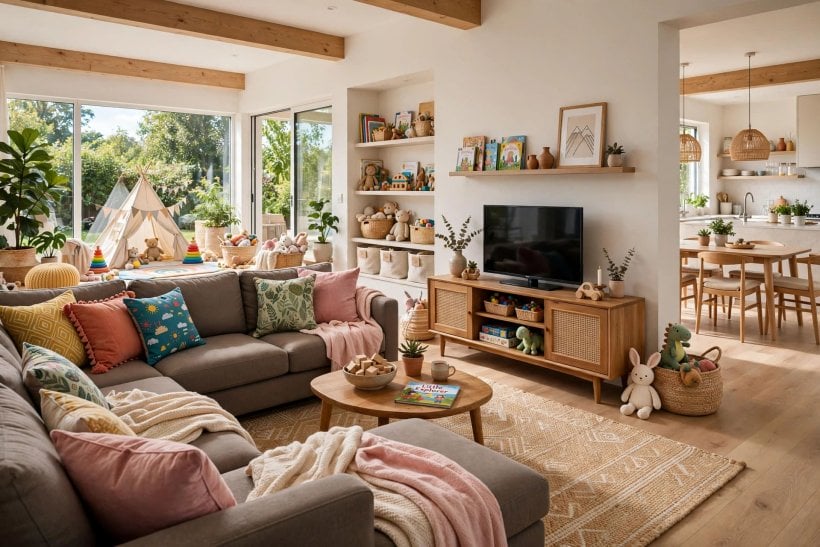
The expensive living room mistakes are consistent: buying the sofa before measuring the room and the doors it must pass through; choosing wall colour from a screen; lighting the room from a single ceiling point; and filling every surface until the room reads as storage with seating. The paint guidance in this look at living room paint in a tiny house generalises to every size of room: test in the real light, on the real wall, at the real hour.
Run the pre-purchase checks in order: room measured including door swings and radiator positions; furniture footprints taped on the floor and lived around for a day; sofa delivery route measured — hall, stairs, corners; and light checked at the room’s main hour of use. Living rooms are where households spend their waking home life; an hour of checking protects a decade of evenings.
10. Costs and Pulling It Together
Living room money divides into three bands. The anchor band — the sofa and the rug — rewards buying the best the budget allows, because both are used daily and dominate the room’s look and comfort for years. The structure band — paint, lighting and storage carpentry — is mid-priced and permanent, so it deserves planning rather than impulse. The soft band — cushions, throws, art and objects — is where style lives and savings are safest, because every item can change in an afternoon.
Pull the room together with the rule that opened this guide: layout first, anchors second, colour third, layers last. Choose one calm base, one confident accent, light in three layers, and let the soft layer carry the fashion as it changes. A living room built that way does not date; it simply keeps hosting the household’s evenings, comfortably, for years.
Final Considerations
A good living room is a machine for evenings disguised as a beautiful room. The disguise matters — colour, texture, lamplight — but the machine decides whether the room is loved in year five: an honest layout, a sofa that fits the room and the life, and somewhere for everything the evening brings.
Start with the plan, spend on the anchors, layer the light, and keep the soft layer changeable. Do that, and these living room ideas stop being a list and become the room the household chooses, every night, without thinking about why.

0 Comments