

Every house has one surface that hands know better than faces: the handrail of a wooden stair, polished by a thousand unthinking touches into the warmest object in the building.
Seventy-five interior wooden staircases follow: timbers and finishes, flight forms, balustrades as furniture, the space beneath, style lanes from cottage to contemporary, small-home flights, and the keeping of them — indoors, in wood, throughout.
1. Wood Staircases at a Glance
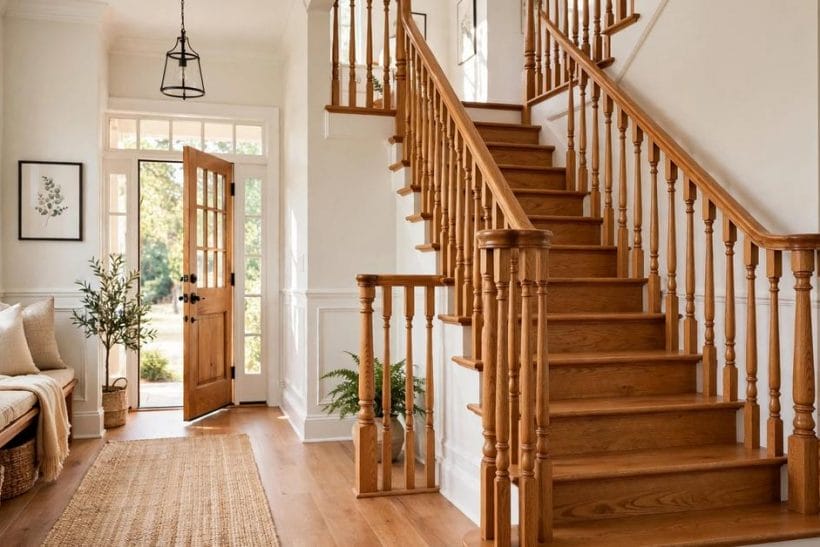
The central entity is the interior wooden staircase: a flight built principally of timber — treads, risers, strings, handrail and balustrade — together with its attributes of species, grain, finish, form, joinery and the understair space it creates. Wood’s attributes are warmth underfoot and underhand, quietness, repairability and a patina that deepens with use; its demands are sound structure, geometry and guarding set by professionals under local rules, and finishes chosen for grip as much as gloss, all stated generally in this survey. This post owns the interior wood lane of the staircase cluster: the pillar owns the whole stair field, the spiral and modern lanes own their forms, and the exterior stairs survey owns every outdoor step — each linked here as its own post and none absorbed.
| Question | Short answer |
|---|---|
| What defines a wooden staircase here? | An interior flight built principally of timber — treads, risers, strings, rail and balustrade in wood. |
| Which timbers lead the survey? | Oak first, then ash and pale hardwoods, walnut, pine and honest reclaimed timber, with engineered treads for crisp modern flights. |
| What is deliberately not covered? | Outdoor steps of any material — the exterior stairs survey owns them — and the spiral and modern forms, which own their own lanes. |
| What does a wooden stair ask? | Professional geometry and guarding under local rules, a finish chosen for grip, and a broom-and-oil keeping regime. |
2. The Timber Itself: Species, Grain and Finish
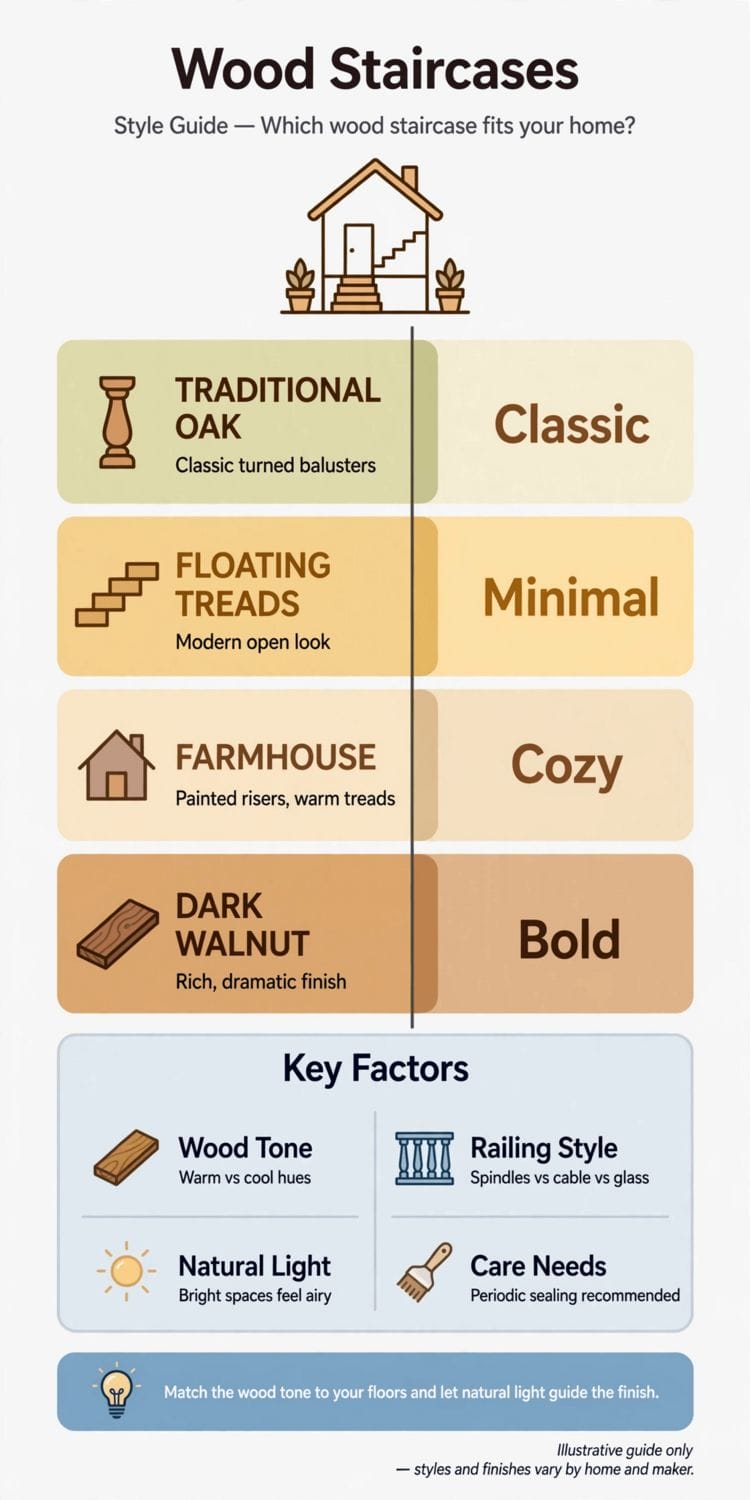
A wooden staircase begins as a choice of tree, and this survey stays inside the house and on that material throughout. The whole stair field is surveyed by the staircase ideas pillar; here the question is narrower: which timber, cut and finished how — because the same flight reads cottage, townhouse or gallery purely from the wood and what the maker did with it.
1. Oak: the default for good reason
Strong, openly grained and forgiving of daily wear, oak is the interior stair’s most proven timber. It takes stain evenly, repairs gracefully, and its grain hides the scuffs of family traffic better than any pale, plain wood can.
2. Ash and pale hardwoods for light stairs
Pale, lively-grained ash and its hard-wearing cousins brighten hallways that oak would darken. In small or north-facing houses a light stair can be the difference between a welcoming entry and a wooden cave.
3. Walnut for the dark, formal flight
Deep, chocolate-toned walnut makes the staircase a piece of furniture in its own right. It asks for good light to show its figure and rewards formal, quiet interiors where the stair is meant to be admired, not merely used.
4. Pine, painted or honest, for cottages
Softwood stairs are the cottage tradition: honest pine, worn pleasantly hollow by generations, or painted with a bare runner line of wood left showing. Pine dents more readily than hardwood — the cottage register counts those dents as biography.
5. Reclaimed timber, stairs with a past
Beams and boards reborn as treads bring nail holes, saw marks and a century of prior service into a new flight.
6. Engineered and laminated treads
Stable engineered treads resist the movement that makes solid wide boards cup and creak, and they suit modern, crisp flights. Quality varies widely; the honest versions declare their construction proudly and wear their veneer thick enough to refinish.
7. Grain direction as design
Running the tread grain with the flight, book-matching a landing’s boards, choosing quarter-sawn figure for the risers — grain is the wooden stair’s ornament. Makers who think in grain produce stairs that need no other decoration at all.
8. Oil finishes for a repairable surface
Hardwax oils soak in rather than sit on top, so scratches touch up invisibly and the wood keeps its tactile warmth.
9. Lacquer and varnish for the busy house
A hard surface finish shrugs off grit, dog claws and party shoes, and suits stairs in heavy commercial-hearted family use.
10. Painted risers, bare treads
The classic compromise: hard-wearing painted risers that can change colour with the hallway, and bare timber treads where the feet and the beauty are.
11. Ebonised and stained dark treads
Staining pale timber near-black gives the dramatic monochrome stair without walnut’s price. The darkness shows dust honestly and rewards houses that sweep often; on the right flight, with white risers, it is the sharpest look in this survey.
3. Flight Forms in Timber: Straight, Turned, Winding and Open
Form follows the house’s plan, and timber serves every form the planner can draw. This section reads the flight shapes in wood — with the standing caution that stair geometry, headroom and guarding are governed by local building rules and belong to professional designers and joiners, stated generally here throughout.
12. The straight flight, honestly built
One unbroken run is the simplest, strongest and most furniture-friendly stair there is.
13. The L-shaped turn with a landing
A quarter landing turns the flight within a squarer footprint and gives the climb a breathing place.
14. The U-shaped return flight
Two parallel runs and a half landing fold a full storey into a compact rectangle.
15. Winders where space is tight
Tapered winder treads turn a corner without a landing, saving precious floor area. Winders demand careful setting-out and honest advice — comfort and safety on tapered treads are professional judgements, and in many homes a small landing serves better.
16. The open-tread flight
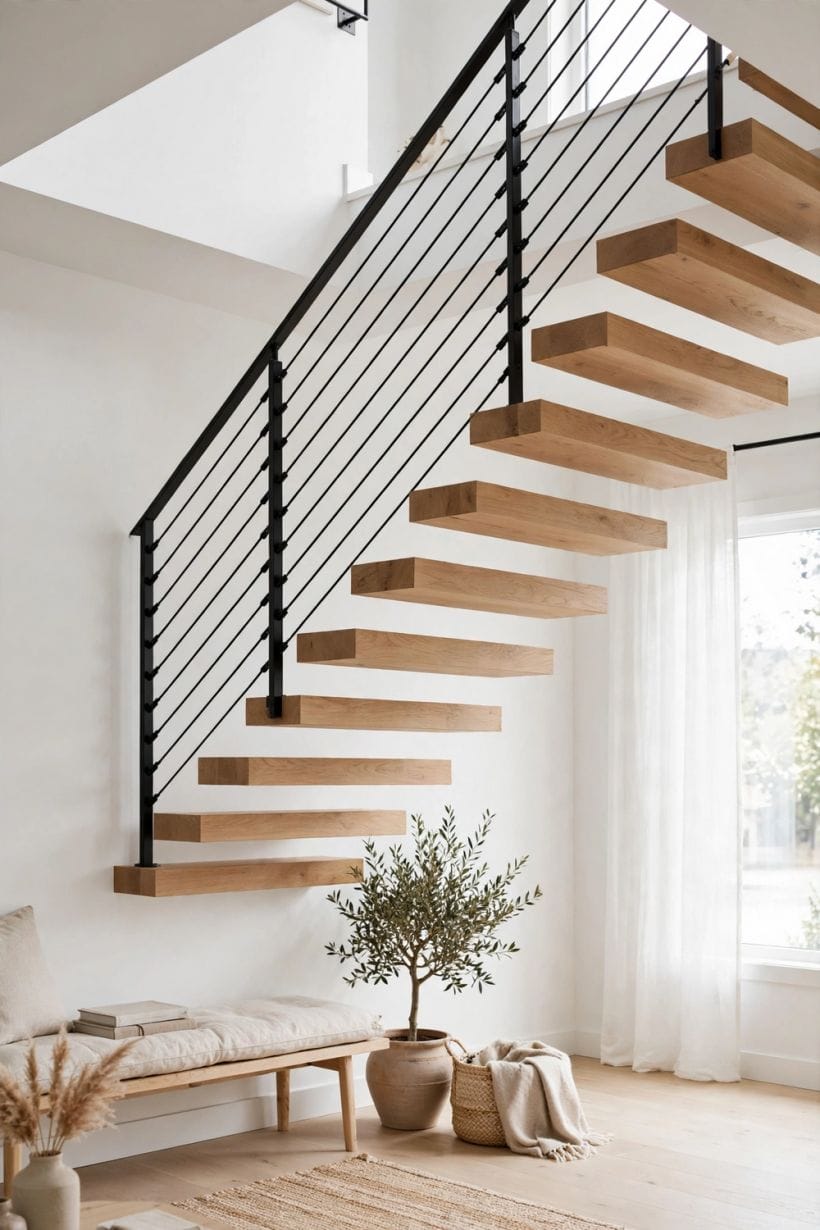
Risers omitted, treads cantilevered or strung between open strings: the modern wooden stair lets light and sightlines pour through the stairwell.
17. Closed risers for the classic house
Full risers give the traditional closed stair — quieter underfoot, safer-feeling for children and dogs, and hiding useful storage beneath. Most of this survey’s heritage photographs are closed flights, and the form shows no sign of retiring.
18. The spiral, in timber — its own lane
A wooden spiral is sculpture that climbs, and it owns a dedicated survey in this cluster: the spiral staircase ideas post composes that form in full. Here it is noted only as timber’s most theatrical flight, and the survey returns to the straight and turning mainstream.
19. The modern flight — its own lane too
Floating treads, frameless glass and hidden steel belong to the modern lane, whose full survey is the modern staircase ideas post. Timber appears there as warm treads on cool structure; this survey stays with the stair built principally of wood.
20. Split-level and half flights
Short runs between half-levels are where wooden stairs weave a house together — three treads to the kitchen, five to the garden room.
21. Attic and loft stairs in wood
The flight to a loft or attic is often the steepest and smallest in the house, and timber’s warmth civilises it.
22. The entrance flight as the house’s handshake
Where a stair rises directly from the entry, its timber, newel and first three treads are the interior’s first impression.
4. Balustrades, Handrails and Newels: The Timber Furniture of the Stair
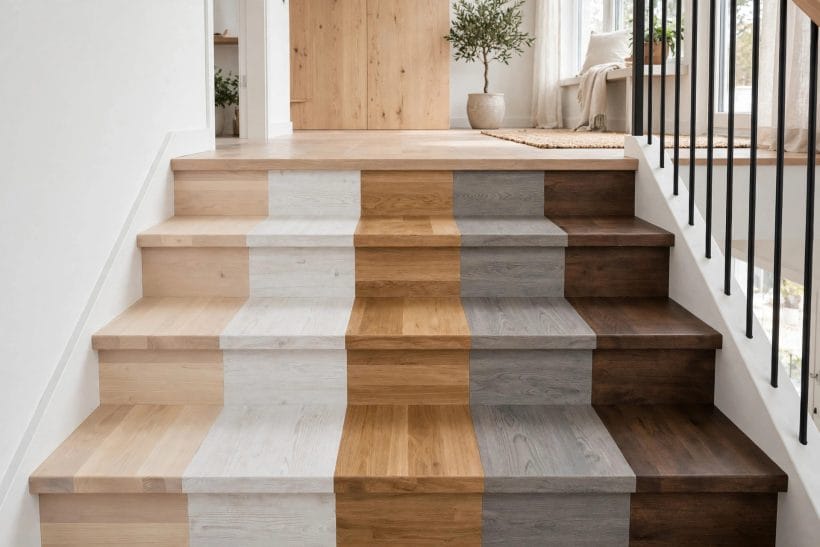
If treads are the stair’s floor, the balustrade is its furniture — the part hands know best. The railings field as a whole is surveyed by the stair railing ideas lane; this section stays on timber balustrades: spindles, rails and newels as joinery.
23. Turned spindles, the classic rhythm
Rows of turned balusters give the traditional stair its metronome beat. One elegant turning repeated thirty times is the whole classical effect — choose the profile in daylight, at hand height, because you will touch it ten thousand times.
24. Square balusters for the quiet house
Plain square spindles, chamfered or simply planed, suit Arts and Crafts, Shaker and modern-rustic halls. Their restraint flatters painted finishes and lets the tread timber star, and they are the honest choice for stairs in working farmhouses.
25. A continuous handrail, warm to the hand
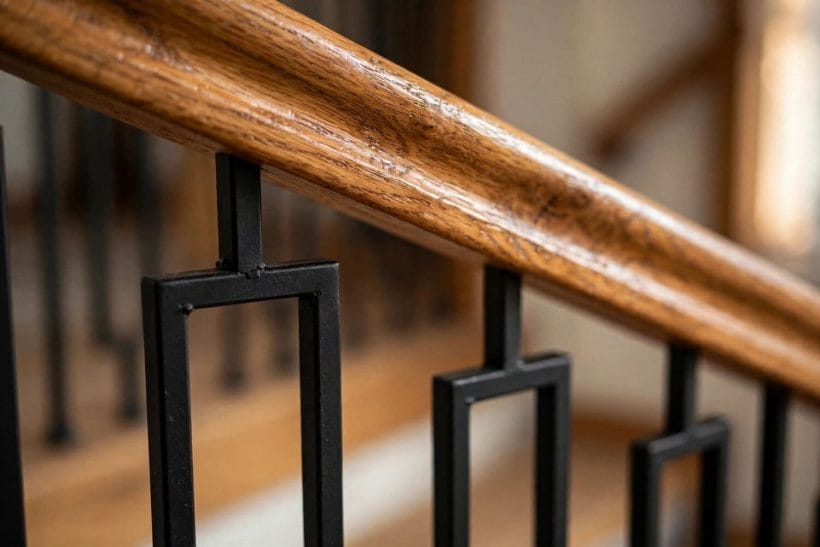
The handrail is the stair’s most-touched surface and timber is its supreme material — warm in winter, grippable, repairable.
26. The volute and the crafted newel
Where the rail curls into a volute over a turned newel, joinery becomes sculpture. One such gesture at the foot of the flight is enough; the rest of the balustrade should step back and let it sign the stair.
27. Boarded and panelled balustrades
Solid boarded sides — vertical or diagonal timber boarding instead of spindles — give cottage and contemporary stairs a calm, graphic face, and they hide stored clutter beneath flights better than any open balustrade can.
28. Timber rail on metal or glass, chosen knowingly
A warm timber handrail atop slim metal balusters or glass panels marries wood’s touch to modern openness.
29. Painted balustrade, timber treads
Painting spindles and newels while leaving treads and handrail bare is the great hallway compromise: light where the eye rests, wood where the hand and foot land.
30. Child and dog gates that respect the joinery
Gates at top and bottom are temporary; screw holes in a fine newel are forever.
31. The gallery landing’s balustrade
Where the flight arrives at an open gallery, the balustrade continues as the landing’s railing — same timber, same turning, one unbroken composition. Galleries are where wooden balustrades perform for an audience of everyone crossing the landing at night.
32. Refinishing an old balustrade
Decades of polish, wax and hand-oil give old handrails a depth no new finish matches.
33. Lighting the balustrade’s line
Low lights washing the treads and a lamp at the newel make the stair’s timber glow after dark and keep every tread legible.
5. Beneath and Beside: Storage, Light and the Space the Stair Makes
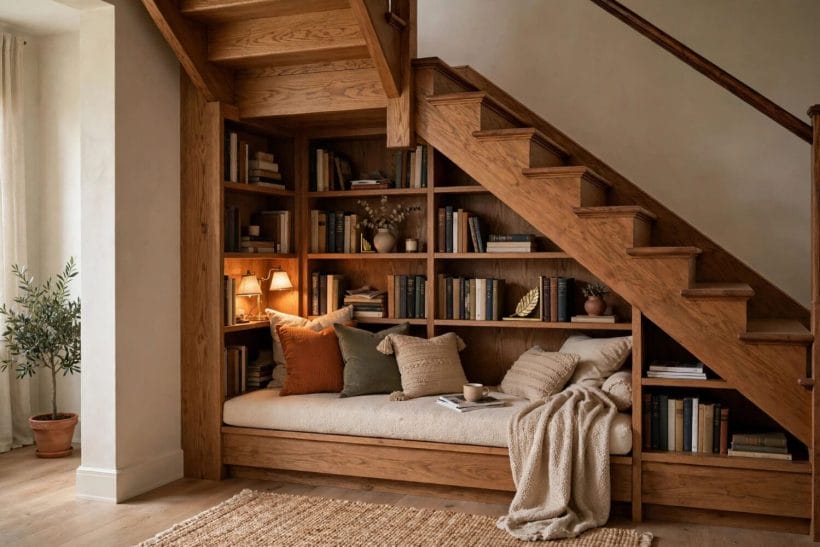
A wooden flight is also a piece of architecture dividing space, and the volume beneath and around it is the house’s most inventive territory. This section works that territory — cupboards, nooks, light and the understair room — in the joiner’s material.
34. Drawers built into the flight
Deep drawers sliding from the riser faces or the understair slope store shoes, tools and the household’s homeless objects exactly where they are used.
35. The understair cupboard, panelled in the stair’s timber
A flush, panelled door in matching wood turns the dead triangle into the house’s best cupboard and reads as panelling, not storage.
36. A reading nook under the turn
The half-landing’s underside or the flight’s low end makes a natural nook: cushion, lamp, one shelf of books. In timber-panelled houses the nook lined in the stair’s own wood feels carved from the same tree as the flight itself.
37. The home office tucked beneath
A desk fitted into the understair slope — joinery-built, cable-managed, with the slope’s line embraced rather than fought — is the small house’s classic bargain. Match its timber to the stair and the office reads as the stair’s own furniture.
38. Wine and pantry under the treads
The cool, dark understair triangle suits bottles and preserves as it suited them in farmhouses for centuries. Racking in the stair’s timber turns a storage fact into a cellar vignette glimpsed through a glazed or open panel.
39. A window washing the flight
A tall window beside the stair turns the climb into the house’s daily light-show and shows the timber’s grain at its best. Where a window is impossible, a borrowed-light opening or a glazed door at the landing does similar kindness.
40. The stairwell as gallery
The long wall above a wooden flight is the house’s natural picture gallery — the only wall seen slowly, daily, at close range.
41. Bookshelves climbing with the stair
Shelves built into the wall following the rake of the flight, or library steps integrated into the design, make readers of climbers.
42. A bench and hooks at the foot
Where the stair meets the hall, a timber bench, boot space and coat hooks turn the flight’s foot into the house’s airlock. Build them from the stair’s offcuts and the whole composition matches without trying.
43. Dogs, prams and the honest under-space
Not every understair needs joinery: a dog’s bed in the alcove, the pram’s parking bay, the toy basket’s home. Timber’s warmth makes even the unbuilt uses feel intentional — paint the triangle’s walls, lay a mat, and it serves.
44. The cellar stair in painted wood
Below the main flight, the cellar or basement stair in painted softwood continues the house’s timber story downward. Honest, grippy and repairable, it is a reminder that wooden stairs serve the whole house, not just its photographable storey.
6. Wooden Stairs in Style: Cottage, Townhouse, Farmhouse and Contemporary
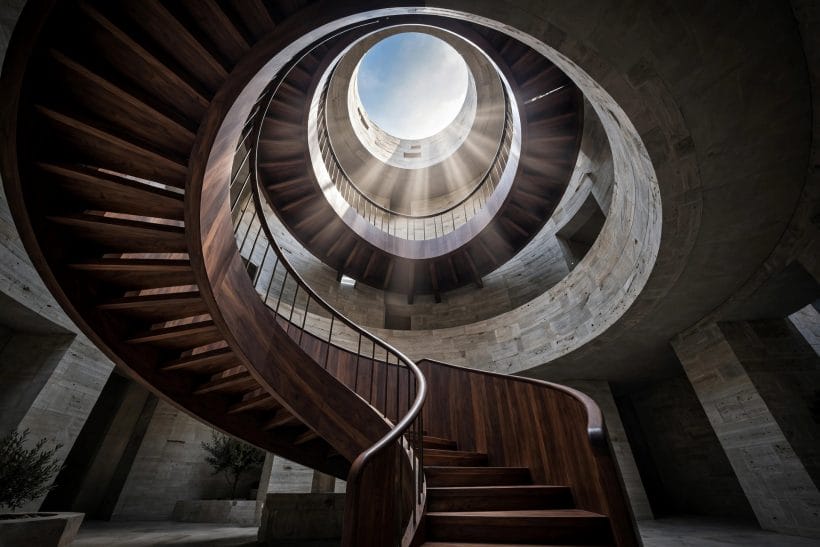
Timber serves every interior style by changing its cut, colour and company. This section reads the style lanes through their stairs — with two neighbours acknowledged plainly: the exterior flight belongs entirely to the exterior stairs survey, which owns outdoor steps in all weathers; nothing here leaves the house.
45. The cottage stair: steep, painted, beloved
Narrow, steep and unapologetic, the cottage stair in painted pine with a rope or slim rail is vernacular perfection. Its charm is its economy — every part works, nothing decorates — and its wear pattern is the cottage’s autobiography.
46. The townhouse stair: panelled and formal
Closed risers, a panelled stairwell wall, turned newels and a runner held by brass rods: the formal townhouse flight is interior architecture at its most composed. Dark treads against pale panelling is its signature lighting trick.
47. The farmhouse stair: wide and worn
Broad treads, a generous handrail, hooks and boots at its foot — the farmhouse stair is built for muddy, laden, many-times-daily use. Oak or pine, oiled not lacquered, it improves with every decade of exactly that use.
48. Arts and Crafts: square, honest, warm
Square spindles, chunky newels with pyramid caps, stained oak and a hatred of applied ornament: the Craftsman stair is joinery as ethics. It suits houses that prefer their craftsmanship visible in the joints rather than in the carving.
49. Scandinavian pale: ash, light and air
Pale timber, open risers, slim rails and white walls make the northern stair a shaft of light in the house’s middle.
50. Contemporary timber: the warm modern flight
Clean-lined closed flights in walnut or smoked oak, shadow gaps instead of skirting, a rail rebated into the wall — timber brings the warmth that pure minimalism lacks.
51. Industrial company: wood with black steel
Thick timber treads and rails against blackened steel strings and balusters give the loft register: warm where touched, tough where struck. It is the city cousin of the farmhouse stair, sharing its honesty and its appetite for wear.
52. Coastal timber: painted white and rope
White-painted stairs with bare tread centres and rope handrails make the seaside interior’s fresh signature. Everything is washable, salt-tolerant and sun-proof, and the timber underneath keeps the palette from turning clinical.
53. The runner, rods and painted border
A runner down a wooden stair’s centre — held by rods, edged by painted or polished tread margins — is the classic finish that serves bare feet, quietens the flight and lets the timber frame the textile.
54. Reviving a stair under carpet
Many fine timber stairs sleep under decades of carpet and paint.
55. Period revivals, handled with restraint
Victorian turned work, Georgian panelled strings, Queen Anne barley-twists — the revival stair borrows one period gesture and keeps the rest quiet.
7. Small Homes, Lofts and Tight Plans in Timber
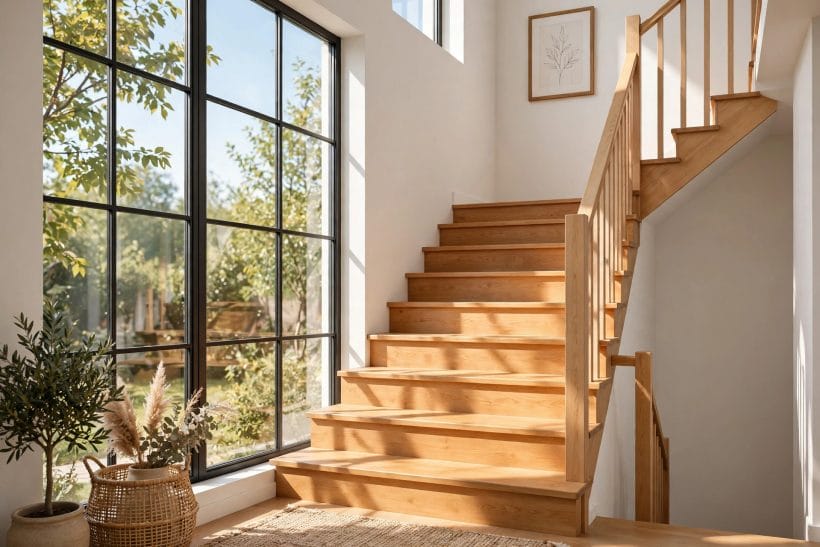
Wood is the small house’s best stair material: warm in narrow stairwells, workable on site to odd dimensions, and kind to the tight turns small plans demand. Space-saving geometry, guarding and headroom remain professional and local-rule territory, stated generally — this section is about the fits and the feelings.
56. The ship’s stair and the ladder’s dignity
Very steep stairs and companionway ladders serve lofts in the smallest homes, where a full flight would eat the living room.
57. Storage stairs: treads that are drawers
In tiny houses the flight doubles as the wardrobe: each tread a drawer, the landing a cupboard.
58. The stair as room divider
An open timber flight between kitchen and sitting area divides without darkening: storage on one face, display on the other, light through the risers. Small homes live by such double-duty architecture, and the wooden stair is its classic instrument.
59. Fold and space-saver forms, carefully
Hinged, sliding and alternating-tread space-savers exist for the very tightest lofts. They are specialist products with real limitations, chosen with professional guidance and honest expectations — and in timber they at least climb with grace.
60. A landing that works for its rent
In a small house the landing must earn its area: a desk niche, the linen cupboard, a window seat, the laundry basket’s bay. Timber panelling turns these micro-spaces into joinery, and joinery reads as luxury at any size.
61. Light timber for small stairwells
Pale ash, pine or painted finishes keep a narrow stairwell from becoming a well. Small spaces also amplify sound, and timber — especially with a runner — climbs more quietly than stone or steel ever will.
62. The bunk and loft edge in matching wood
Where the flight arrives at a sleeping loft, the guarding and the loft’s own edge in the stair’s timber complete the composition. In tiny interiors, matching the few materials ruthlessly is what makes smallness feel designed.
63. Under-stair WC and utility in miniature
The classic understair cloakroom fits more small houses than any other conversion. Lined and trimmed in the stair’s timber, even this smallest room keeps the house’s material story unbroken — a detail guests notice and owners enjoy daily.
64. One timber throughout the small house
Stair, floors, doors and shelves in one timber family unify a tiny interior more powerfully than any colour scheme. The discipline costs nothing extra; it is simply a refusal to introduce a fourth wood, repeated at every decision.
65. Borrowed classics: the cottage precedent
Small modern homes borrow their stairs from cottages, which solved these exact problems centuries ago — steep painted flights, understair cupboards, hooks at the foot.
8. Comfort, Quiet and Keeping: Living with a Wooden Stair
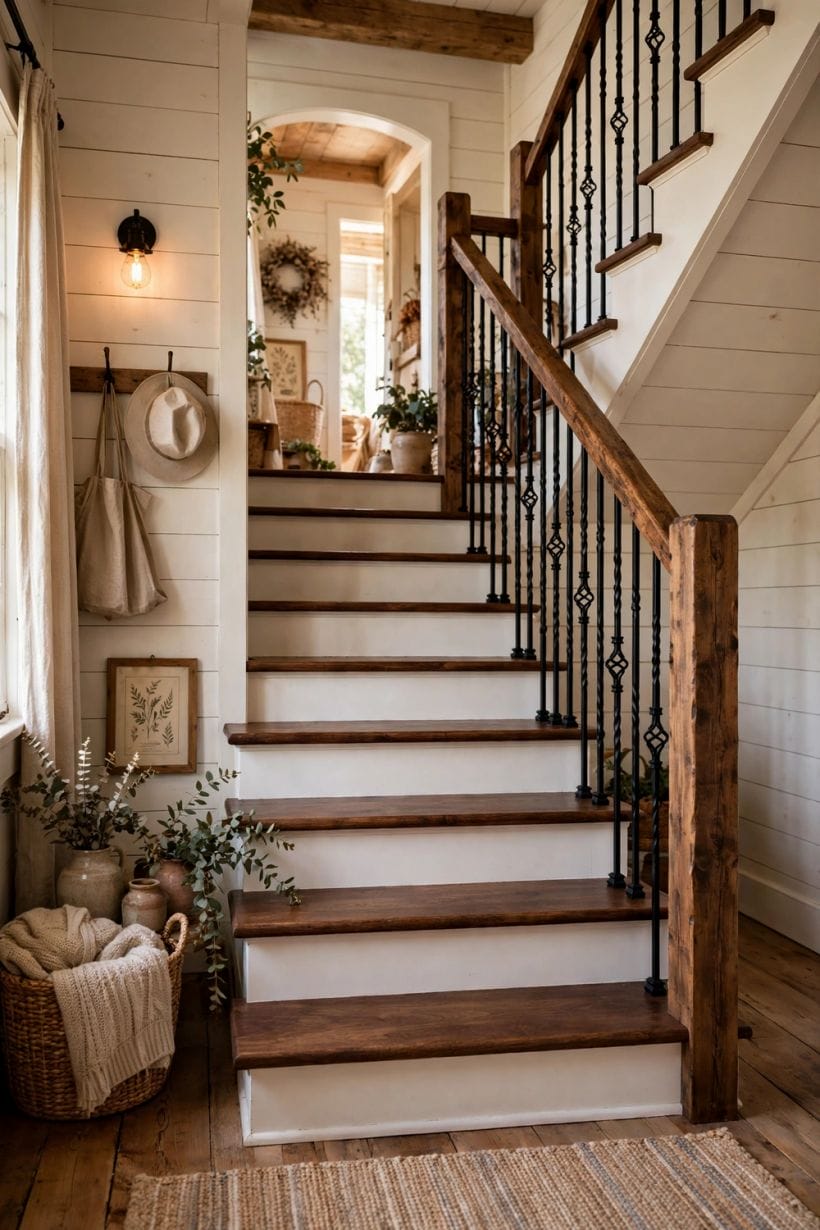
The survey closes on the long relationship: how a wooden stair feels, sounds and ages under daily traffic, and the simple keeping that lets it outlast the house’s other finishes. All of it is general household knowledge — structural questions remain, as throughout, for the professionals.
66. Warmth underfoot, all year
Timber is never cold to a bare foot in January nor hot in August — the tactile argument that ends more stair debates than any photograph.
67. Quietening the creaks
Every wooden stair talks a little; excessive creaking usually traces to movement between tread and string, often fixable from beneath with wedges, screws and glue blocks.
68. Grip, runners and the slip question
Polished treads in socks are the honest hazard of wooden stairs; the household answers are traditional: a runner, a matte finish, nosing profiles with real definition, and light that shows every tread’s edge.
69. Refinishing the traffic lane
Treads wear in their walking line, and timber’s glory is that the wear refinishes out: sand, re-oil or re-lacquer, and the flight is new without a single part replaced.
70. Dents, scratches and the lived-in standard
Hardwoods shrug off most insults; softwoods collect them as patina.
71. Cleaning: the broom’s favourite floor
Stairs gather dust at tread-and-riser corners where robots cannot go; a hand brush and a vacuum nozzle are the whole regime.
72. Sunlight and the maturing colour
Timber deepens and evens in colour over its first years, fastest where sun strikes the flight.
73. When a tread is damaged
A split or damaged tread is a joiner’s repair — spliced, reinforced or replaced in matching timber — not a new staircase. Keeping one spare board of the stair’s timber and finish from installation day makes every future repair invisible.
74. The handrail’s daily polish
Hands polish a timber handrail better than any cloth: the most-touched part of the stair literally improves with use. Feed it oil when it feels dry, and the rail will out-glow every other surface in the hallway for a century.
75. Wood’s closing argument
Stone is colder, steel is louder, carpet is shorter-lived and concrete is colder still — the wooden stair is the one climbed happily barefoot, repaired with hand tools, and loved at a hundred years old. For the interior flight, inside the whole field this site gathers under its home design ideas collection, timber remains the material the others are measured against.
9. Checks and Mistakes: Before the First Purchase or the First Stone
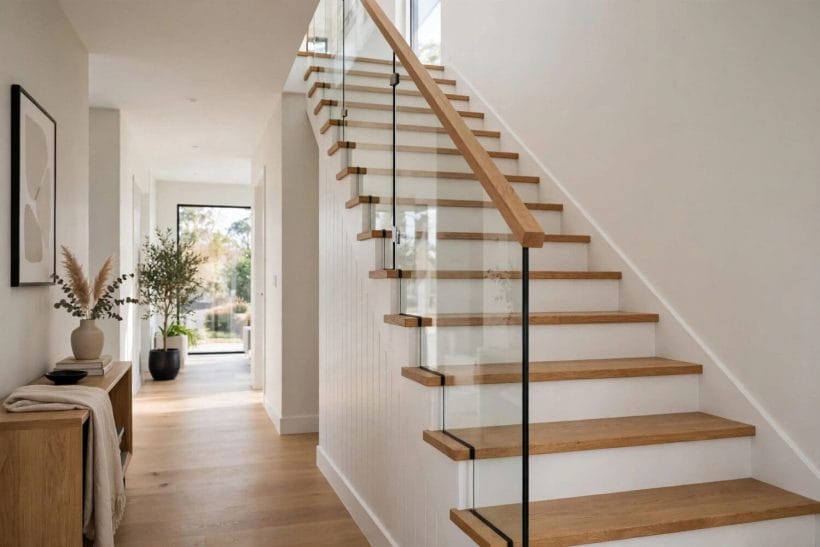
Check the structure before the style: an existing stair’s strings, fixings and floor openings decide what revival is possible, and a new stair’s geometry — rise, going, headroom, guarding — is set by local building rules and professional design. Every beautiful idea in this survey assumes those foundations are settled first by the people qualified to settle them.
Touch the timber and the finish together. A stair is climbed by hand as much as by foot: take sample boards home, oil one and lacquer another, and live with both for a week on the hallway floor. The right finish is the one your hands vote for daily, not the one in the showroom’s spotlight.
Plan the balustrade and the lighting with the flight, not after it. Spindle spacing, rail continuity and tread lighting are woven into a stair’s structure and wiring; retrofitting any of them costs multiples of designing them in. The maker’s drawing, checked at full size on the wall, settles what catalogues argue about.
Avoid the standing mistakes: painting over sound old timber without testing what lies beneath, choosing a tread finish for gloss rather than grip, blocking understair ventilation and access with sealed joinery, and letting gates, rugs or furniture narrow a flight’s safe line. Each is common, and each is far easier to avoid than to undo.
Respect the old stair’s evidence. Worn tread centres, polished rails and replaced spindles record the house’s real traffic; restoration that keeps the honest wear and repairs only the damage produces the stairs everyone loves. Total resurfacing makes a new stair — which is a fine choice, made knowingly, not by accident.
Keep the spares and the story: one tread board, the finish’s name, the maker’s details. Wooden stairs are repaired in pieces over centuries by people you will never meet; the board and the note you leave are how your stair stays itself in their hands.
10. Costs and Pulling It Together
Costs in timber follow the survey’s honest logic, stated without figures: softwood and paint sit at the gentle end, fine hardwoods and hand-turned balustrades at the deep end, and across the whole range the maker’s hours — setting out, joinery, finishing — are the larger story, so quotes should be read for craftsmanship and programme rather than timber price alone.
Spend first where the body meets the stair: treads, handrail and the bottom flight’s presence. Spindles can be plain, risers painted, upper flights simpler — the hand and the eye forgive those economies daily, while a mean tread or a cold, thin rail is felt on every single climb.
Pulling it together: choose the timber your house’s light flatters, finish it for the traffic it will actually carry, give its balustrade one crafted gesture, and let the space beneath work as hard as the flight above. Do that, and the most-used piece of joinery in the house becomes, as in every photograph in this survey, the most loved.
Final Considerations
A wooden staircase is the only part of a house that is simultaneously floor, furniture, sculpture and handrail — climbed a dozen times a day and judged, mostly unconsciously, on every climb. Timber is what lets one structure be all four things warmly.
Choose the tree your hallway’s light loves, have it made by hands that think in grain, and keep it with a broom and an oil cloth. The flight will repay you the way it has repaid households for centuries: quietly, warmly, and one uncreaking, sun-deepened tread at a time.

0 Comments