

Run a hand down a stair railing and you learn the house in one gesture — its age, its budget, its idea of itself. Of everything on a staircase, the railing is the part actually touched, every day, by every hand in the household. It deserves choosing like it matters, because it does.
These 75 stair railing ideas stay on the railing itself: every material, its handrail profiles, balusters and newels, finishes and upkeep. The staircase as a whole — flights, layouts and light — belongs to the pillar staircase ideas; this post is its railing child, materials only.
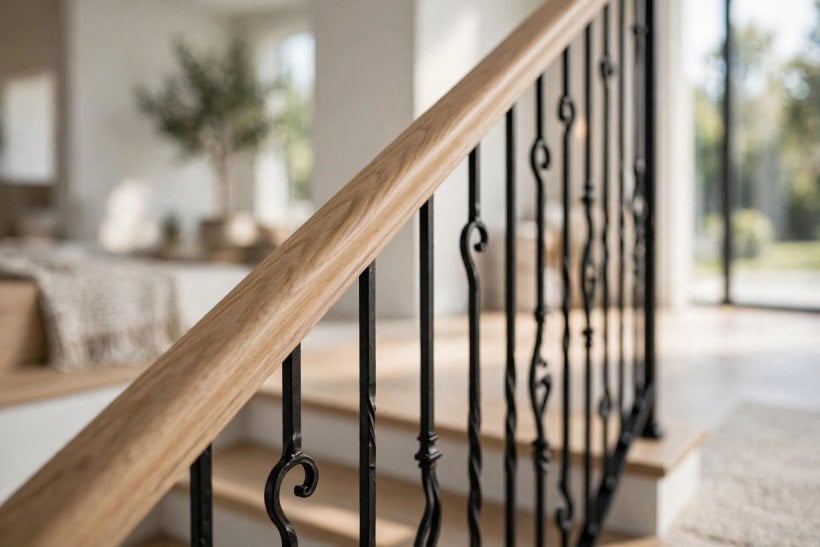
1. Stair Railing Ideas at a Glance
The central entity is the stair railing: the safety barrier and handhold along a flight, whose attributes are its material, its handrail profile, its balusters or infill, its newel posts, its finish, and its maintenance. It is judged by one test: how it feels in the hand and reads to the eye, thousands of journeys later. Safety rules and dimensions are governed by local building requirements — check yours with the relevant authority or professional; this post compares materials and looks, in general terms only.
| Question | Short answer |
|---|---|
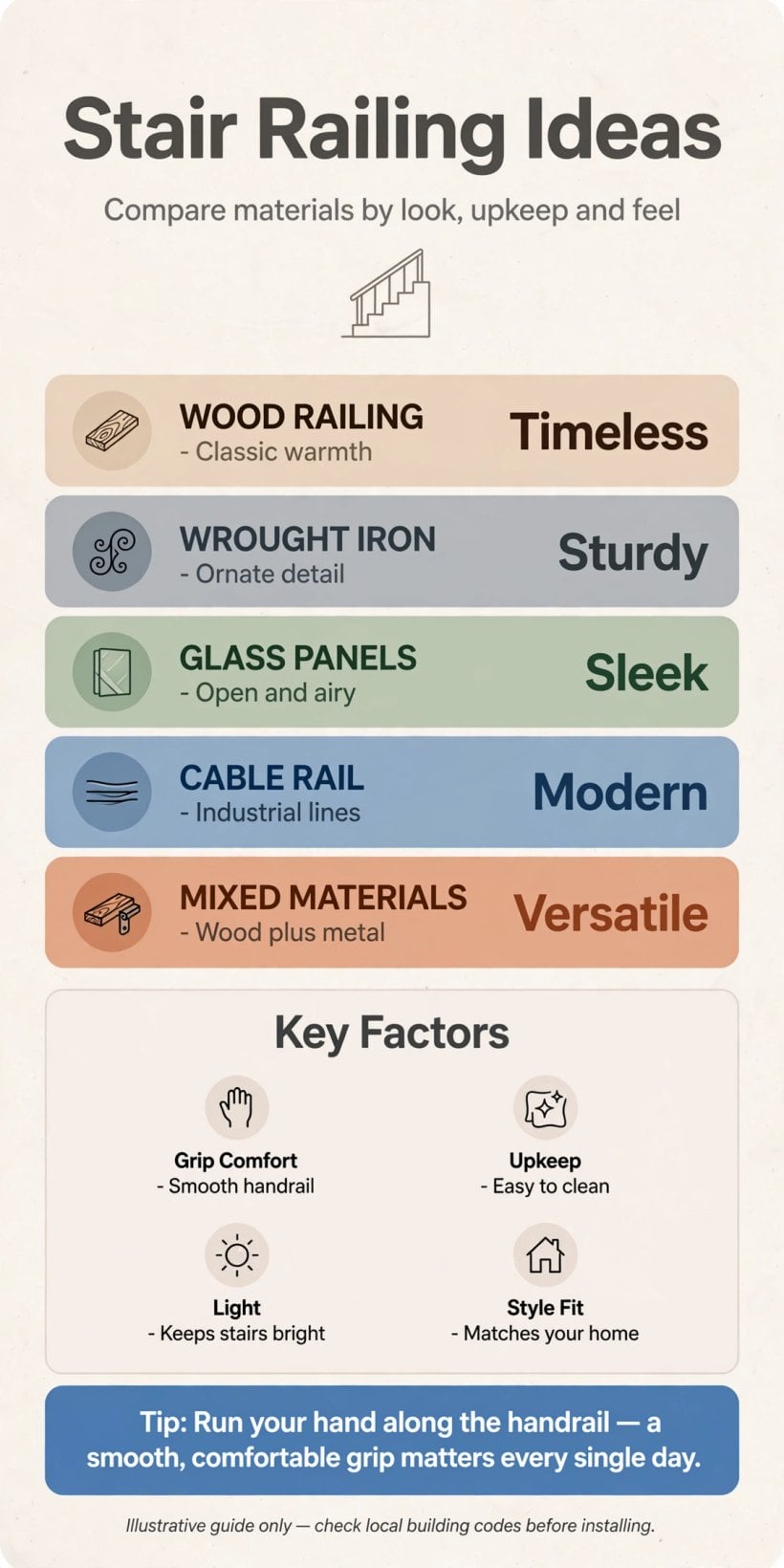
| What decides a railing’s character? | Material first — wood warms, iron draws lines, steel and cable modernise, glass disappears. |
| What matters most in daily use? | The handrail: its profile in the grip, its continuity, and a finish that stays kind in the hand. |
| Which material asks least upkeep? | Metal and glass ask for cleaning; wood asks for occasional refinishing; all ask less than neglect. |
| What is the biggest mistake? | Choosing from photographs alone — a railing is held, not just seen. |
2. Wood Railings: The Hand’s Old Friend
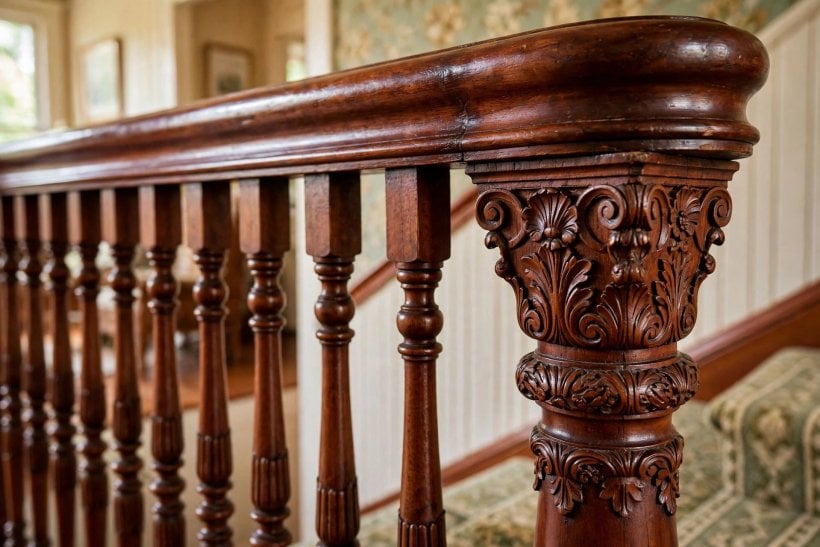
Wood is the railing material houses grew up with — warm in winter, forgiving to the grip, and repairable by ordinary skills. Its varieties run from cottage pine to formal mahogany-toned hardwoods, and its profiles carry most of the traditional staircase’s beauty.
1. Let Oak Be the Honest Default
Oak’s grain, strength and warmth suit almost every house that is not deliberately modern. Finished naturally, it deepens in colour with the years and forgives a household’s worth of rings, bags and banister slides.
2. Choose Pine Where the Budget and Cottage Style Agree
Pine paints beautifully and turns sweetly, making it the cottage and farmhouse choice. It dents more kindly than hardwoods — read as character in informal houses, as damage in formal ones.
3. Use Dark-Stained Hardwood for Formal Gravity
A deep-stained handrail and newels against pale balusters is the classic formal composition: the eye follows the dark line up the flight like a sentence. It asks for dusting and rewards it.
4. Let a Continuous Curved Handrail Be the Craft Showpiece
Where a flight turns, a handrail that flows around the bend in joined, curving sections is joinery at its highest. It is the most expensive wood idea here and the one visitors touch twice.
5. Pick Turned Balusters for Traditional Rhythm
Turned spindles give a staircase its heartbeat — repetition, shadow, craft. Keep the turning simple in small houses; elaborate profiles belong to generous halls.
6. Choose Square Balusters for Quiet, Shaker Calm
Plain square balusters in painted wood are the understated classic: less shadow-play, more architecture. They suit modern-traditional houses that want wood without nostalgia.
7. Mix a Wood Handrail With Painted Balusters
The two-tone composition — warm rail above, pale spindles below — lightens a heavy staircase and lets each material do its best work. It is also merciful to maintain, part by part.
8. Let Chunky Newel Posts Anchor a Country Stair
Oversized, simply capped newels give country and farmhouse stairs their handshake — solid at the start and turn of every journey. Scale them to the hall, not the catalogue.
9. Try a Live-Edge or Rustic Rail in Timber Houses
In cabins and rustic interiors, a rail with the wood’s natural edge left in the profile connects the staircase to the building’s bones. Keep the grip face smooth; rusticity stops at splinters.
10. Choose Bamboo or Light Woods for Bright, Coastal Stairs
Pale woods and bamboo-toned rails keep seaside and bright modern stairs feeling washed and airy. Pair with pale balusters or cable where the house leans contemporary.
11. Refinish Rather Than Replace a Sound Old Rail
Old wood railings are often better timber than new ones. Stripping, sanding and re-finishing a sound original preserves craft, saves money, and keeps the house’s handshake the one it grew up with.
3. Iron and Metal Railings: Line, Shadow and Strength
Metal draws with line where wood draws with mass. Iron and steel railings suit houses that want the staircase graphic — a dark calligraphy against pale walls — and households that want strength with the least visual weight after glass.
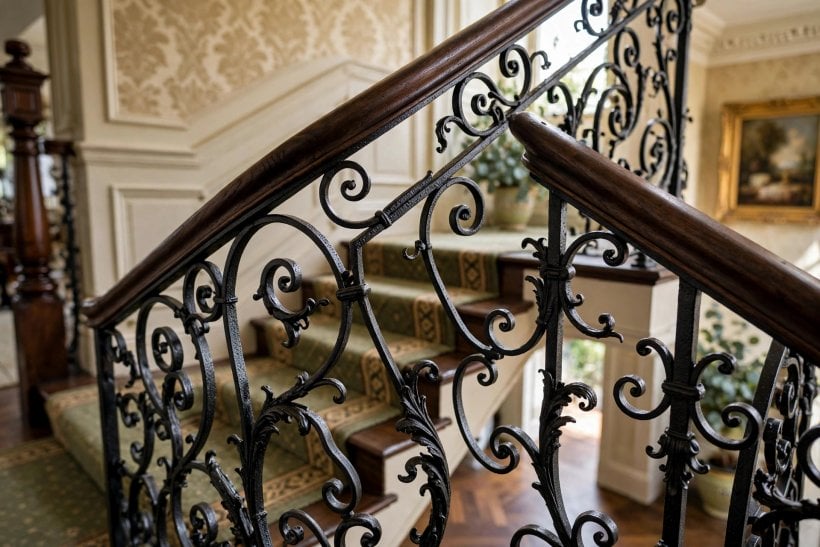
12. Let Wrought Iron Scrollwork Carry Traditional Drama
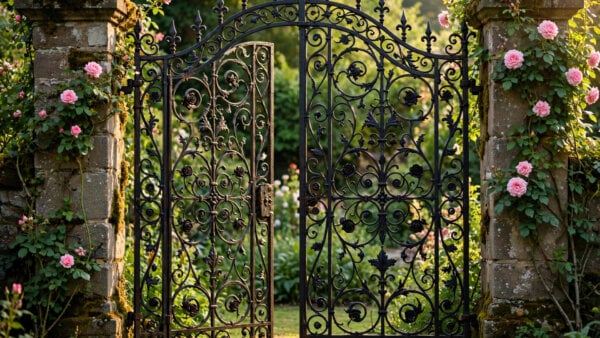
Hand-worked scrolls and twists are iron’s heritage language, glorious in period and Mediterranean-style houses. Keep the pattern’s scale honest; machine-thin scrollwork reads as imitation.
13. Choose Simple Iron Balusters for the Modern-Traditional Bridge
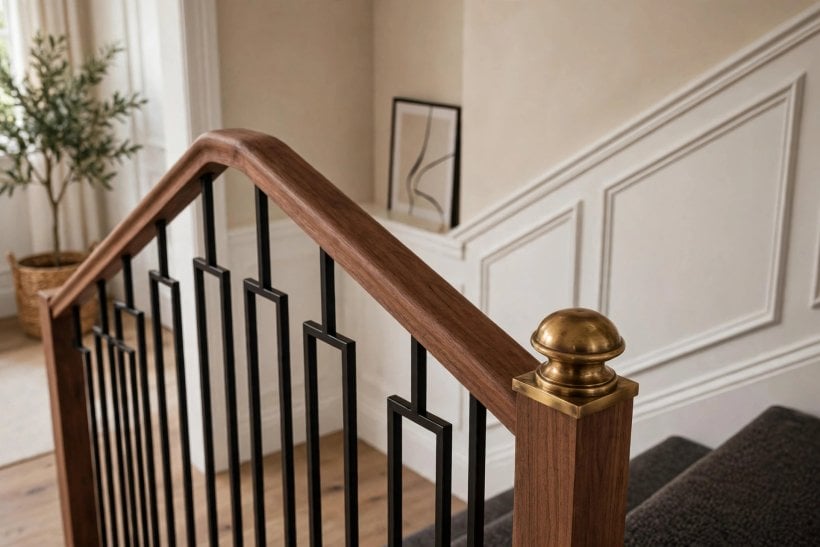
Straight or simply knuckled iron spindles under a wood handrail are this decade’s most-chosen composition — traditional bones, cleaner lines, and a handrail still warm to hold.
14. Run a Full Steel Railing Where the House Is Industrial
Blackened steel rails, balusters and newels in one material suit loft and industrial interiors completely. The whole staircase becomes a drawn object, furniture and architecture at once.
15. Use Horizontal Steel Bars for a Clean, Linear Run
Horizontal infill reads modern and opens sight lines along the flight. It must be detailed with local rules in mind — check requirements for infill patterns with a professional before choosing.
16. Let Brushed Stainless Steel Serve Coastal and Contemporary Homes
Stainless brings a soft, grey shine that suits bright, maritime and minimalist houses, and it shrugs off the household’s hands with a wipe. Pair it with pale wood or glass.
17. Choose Brass or Bronze Tones for Warmth With Metal’s Line
Aged brass and bronze rails give metal’s slimness a jeweller’s warmth — beautiful against dark wood stairs and deep wall colours. Living finishes will patina where hands travel.
18. Mix Metal Balusters With a Chunky Wood Newel
One strong wooden post at the foot, slim metal above: the handshake is warm, the climb is light. Mixed compositions like this let older houses modernise without amnesia.
19. Pick Powder-Coated Colour Where the House Plays
Metal takes colour honestly — a deep green, a soft white, a brave red on a back stair. Powder coating gives a durable, even finish that paint on wood rarely matches.
20. Let a Metal Handrail Run Solo on a Wall Side
Where one side of the flight is a wall, a single well-shaped metal handrail on brackets is the complete answer: minimal, strong, and kind to narrow stairs.
21. Keep Iron’s Maintenance Honest and Light
Iron asks for dusting, the occasional touch-up where paint chips, and dryness indoors. In return it outlasts fashion cycles — the scrolls in old houses are on their second century.
22. Choose Forged Texture Where Hands Will Notice
Hammered and hand-forged surfaces reward the grip with tiny variation that smooth tube never offers. On the handrail itself, that texture is felt on every single journey.
4. Glass, Cable and the Disappearing Railing
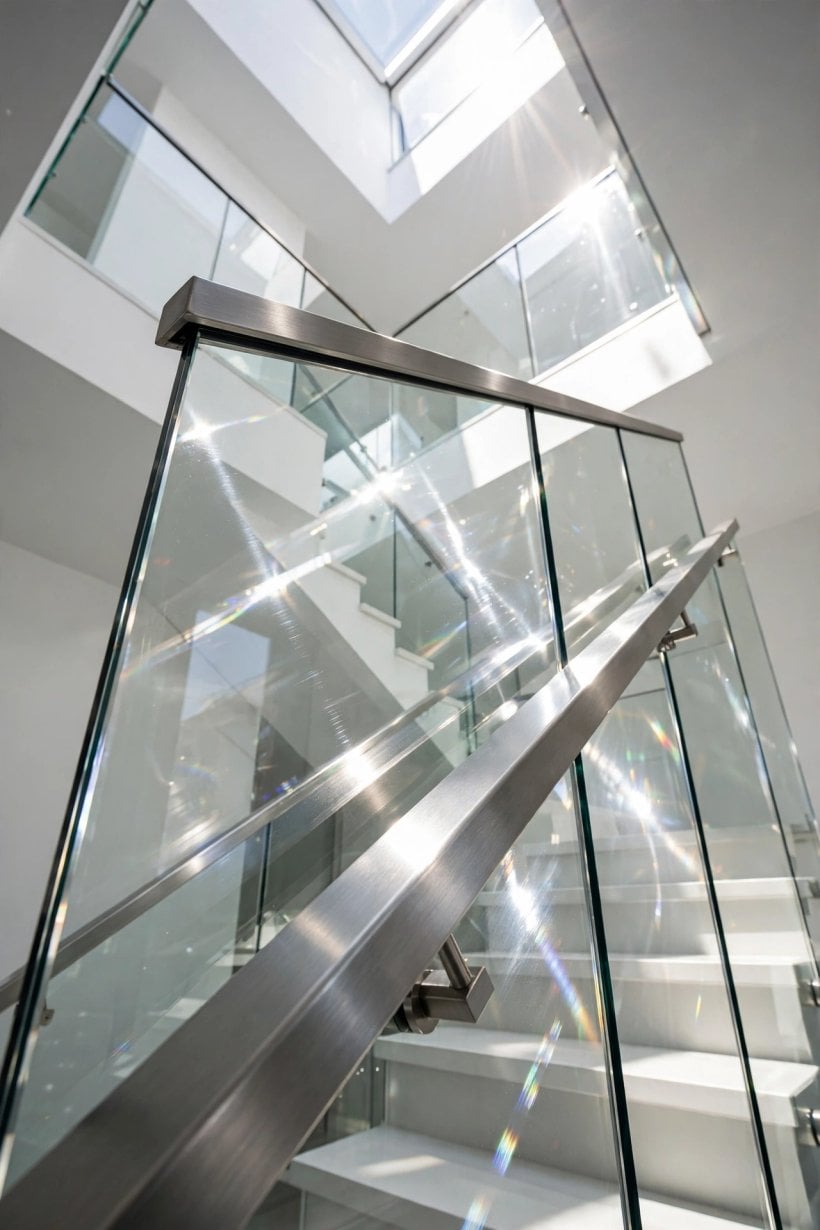
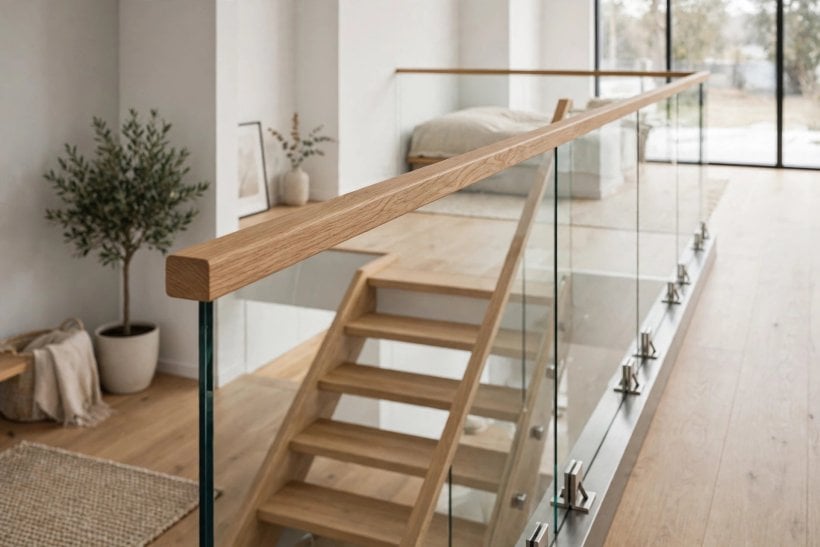
The modern railing’s ambition is absence: light passing, views opening, the staircase floating. Glass and cable achieve it by opposite means — one a solid transparency, one a drawn line — and both live or die by their detailing, as the bright halls in entryway ideas show.
23. Let Frameless Glass Panels Make the Stair Disappear
Panels held in a slim channel or on discreet fittings, with a slender handrail above, give the most open result of any material. The staircase becomes sculpture and daylight at once.
24. Frame Glass in Slim Metal for a Softer Modernity
A thin metal frame around each panel adds definition and a forgiving edge, suiting houses that are contemporary rather than stark. It also gives the eye a rhythm to climb with.
25. Cap Glass With a Warm Wood Handrail
Glass below, wood in the hand: the hybrid that modern houses choose most, because it keeps the view and returns the warmth exactly where the body asks for it.
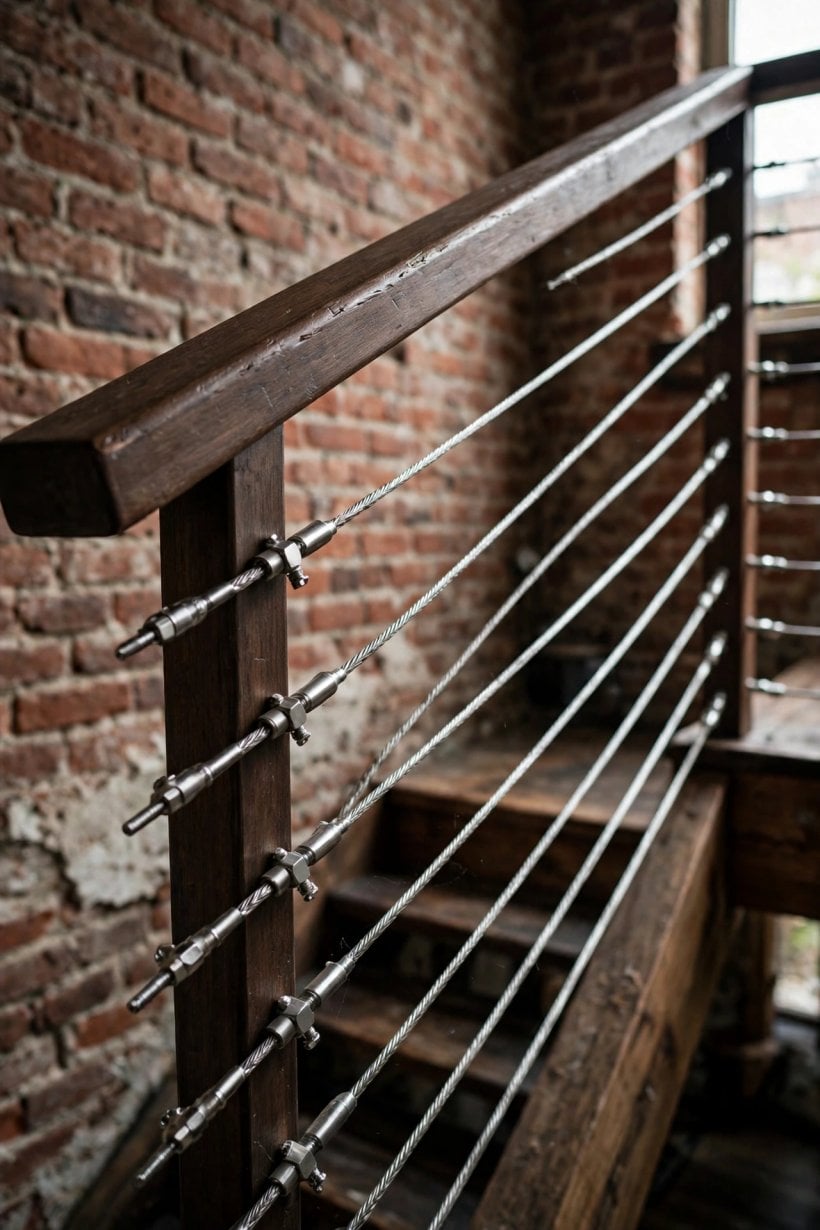
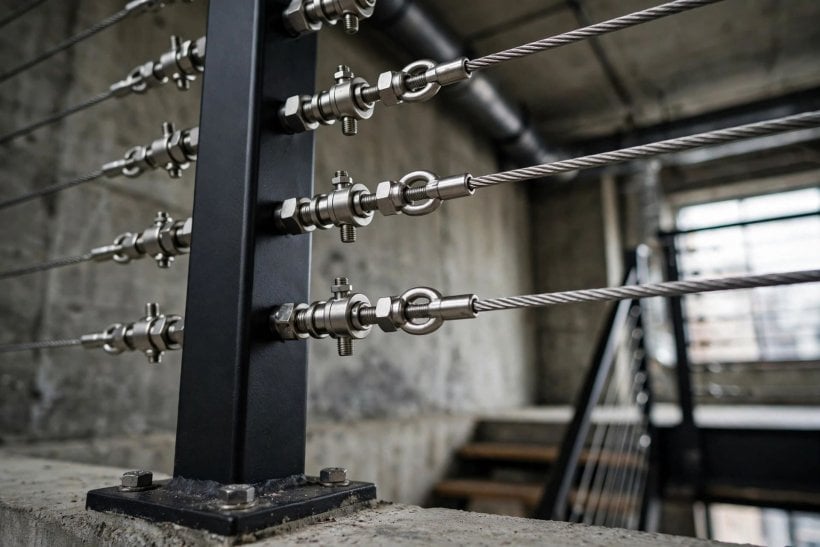
26. Run Stainless Cable for a Nautical, Airy Line
Tensioned horizontal cables read light, technical and faintly maritime — lovely in coastal and modern-rustic houses. Detailing and tensioning are professional work; check local rules on infill.
27. Choose Vertical Cable or Rod Where Lines Should Climb
Vertical rods echo balusters in a weightless accent, keeping the traditional rhythm while removing its mass. They photograph beautifully against light walls.
28. Let Acrylic or Polycarbonate Serve Where Weight Matters
Clear synthetic panels weigh less than glass and suit some loft and secondary stairs. Their surfaces scratch more easily — choose them where hands and bags pass gently.
29. Frost or Tint Glass Where Privacy Meets the Flight
Where a stair passes a bathroom or overlooks a neighbour, frosted or softly tinted panels keep the light and lose the view. The railing stays modern; the household keeps its dignity.
30. Keep Glass Honest About Its Cleaning
Glass shows every handprint at child height and every dust film in sun. Households at peace with a cloth and spray choose it happily; others should admire it in other houses.
31. Use Mesh or Perforated Metal for an Industrial Veil
Fine metal mesh infill is the industrial cousin of glass — it filters light and view rather than opening them, adds texture, and hides a multitude of fingerprints.
32. Let the Handrail Float on Glass With Hidden Fittings
The most refined glass detail: a slim rail apparently floating on the panels’ edge. It is engineering as jewellery, and it should be specified, not improvised.
33. Choose Openness Only Where the Household’s Life Allows
Open, minimal railings are adult architecture. Households with climbers-in-training should check every infill idea against local safety guidance and their own honest risk sense.
5. Handrails, Profiles and the Grip Itself
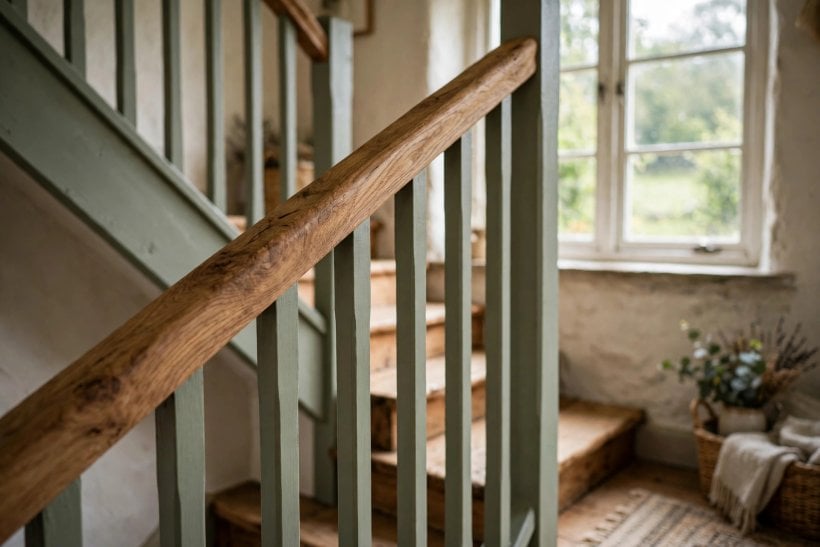
Balusters get the photographs; handrails get the hands. This section is the railing’s ergonomics — profile, continuity, ends and returns — the attributes felt ten thousand times and noticed only when they are wrong, in the spirit of the arrival details in foyer ideas.
34. Choose a Profile the Whole Hand Can Grasp
Round and oval profiles that fingers can wrap are the comfortable classics. Wide, flat rails look architectural and grip poorly — test any profile in the hand before the staircase commits to it.
35. Keep the Handrail Continuous Through Turns Where Possible
A rail the hand need never leave — flowing through landings and turns — is the mark of a well-made staircase. Breaks belong where structure forces them, not where planning got lazy.
36. End Rails With Returns or Volutes, Never Raw Cuts
How a rail ends is how it is judged: a volute’s scroll, a returned end meeting the wall, a clean cap on the newel. Raw cut ends snag sleeves and standards alike.
37. Give Wall-Side Hands a Rail Too
Wide flights and wall-side journeys deserve their own handrail on brackets. Guests, elders and children all travel the wall side; furnish it.
38. Match the Rail’s Finish to the Hand’s Year
Oiled and waxed wood warms and deepens under hands; lacquer can wear shiny in patches; metal stays itself. Choose the finish whose ageing you will enjoy watching.
39. Let Lighting Touch the Rail, Not Just the Treads
A wash of light along the handrail — from a landing window or a low fitting — models its profile and guides the night journey. The rail is the stair’s handline; light honours it.
40. Choose Contrast Where Eyes Need Help
A handrail that contrasts gently with its wall is found by the hand and the eye together — a kindness in dim halls and ageing eyes, achieved by tone rather than decoration.
41. Keep the Rail’s Underside as Finished as Its Top
Fingers travel underneath. A profile sanded, sealed and smooth on every face is the difference between joinery and carpentry, felt daily and mentioned never — which is the point.
42. Let a Rope Rail Serve the Playful and the Nautical
Thick rope on handsome brackets suits beach houses, children’s stairs and garden steps with real charm. It is a style choice with a grip like a handshake from a sailor.
43. Add a Lower Rail Where Children Travel Daily
Some households fit a second, lower handrail for small hands on the family stair. It is a temporary, kind addition that removes itself when the climbers grow.
44. Respect the Rail’s Height and Rules Without Guessing Them
Heights, spacings and load requirements for railings are set locally and matter. This post deliberately states none of them — take the figures from your building authority or stair professional, and design beautifully inside them.
The grip test deserves a household ritual of its own. Before any railing is ordered, have every member of the family hold the sample profiles — carrying a laundry basket, in socks, in the dark if the shop allows a dim corner. The rail chosen by eyes in a showroom is held by hands at home ten thousand times, and the hands’ verdict arrives within a week: a profile slightly too wide, a finish slightly too slick, an end that catches. Five minutes of honest holding is the cheapest design consultation in the whole staircase project.
6. Newels, Balusters and the Rhythm of the Run
A railing’s rhythm — post, baluster, baluster, post — is the staircase’s music. This section tunes it: newel design, baluster patterns, and the transitions where most staircases either sing or stumble.
45. Let the Foot Newel Be the Staircase’s Full Stop
The bottom newel is touched, leaned on and photographed more than any other part. Give it presence — a cap, a ball, a clean modern block — sized to the hall’s generosity.
46. Keep Baluster Spacing Even, Especially at Turns
Rhythm breaks are most visible where flights turn and meet landings. A maker who plans the spacing through the turn, rather than restarting it, gives the whole run its professional calm.
47. Pattern Balusters in Twos and Threes for Traditional Richness
Alternating a turned baluster with a plain one, or grouping patterns along the run, is the old formal trick for richness without cost. Subtle from the hall, delightful on the climb.
48. Let Landing Balustrades Echo, Not Copy, the Flight
The landing’s guard can simplify the flight’s pattern — same material, quieter profile — so the eye reads family resemblance rather than a repeated chorus.
49. Choose Box Newels for Clean, Modern-Traditional Lines
Square, panelled box newels bridge old and new houses gracefully and hide their fixings elegantly. Capped flat or with a shallow pyramid, they are the current classic.
50. Integrate Storage or a Seat Into a Generous Newel Landing
Wide landings forgive furniture: a small bench, a bookcase newel, a window seat at the turn. The railing’s posts frame these moments like punctuation in a longer sentence.
51. Keep Iron Baluster Patterns Restrained on Small Stairs
A narrow stair with busy scrollwork feels smaller and darker. Slim, simple iron on small flights is elegance; save the theatre for the hall that can hold it.
52. Let the Railing Continue as the Landing’s Guard Without a Seam
Where flight meets landing, materials and lines should hand over invisibly. A visible change of mind at the turn is the amateur’s signature on an otherwise fine stair.
53. Use Contrasting Newels to Mark a Modern Composition
Dark posts with pale everything else, or steel posts in a wooden run: deliberate contrast at the posts organises the eye’s climb and gives modern railings their graphic strength.
54. Give Outdoor and Porch Steps the Same Care
The railing language should continue to the porch and garden steps — weather-fit materials, the same profile family — the welcome the porch ideas pillar designs around.
55. Restore Old Balusters Before Replacing the Set
A few damaged spindles can be copied by any competent turner. Wholesale replacement of a characterful set to save a week’s effort is how houses lose their accents.
7. Finishes, Colour and Upkeep
Finish is where a railing’s material meets the household’s real life — sunlight, cleaning habits, rings and keys and a decade of hands. Choose it as maintenance policy, not just colour.
56. Paint Balusters Where Light Matters More Than Grain
Pale painted spindles multiply a hall’s light and hide a multitude of timber sins. The classic partner to a natural handrail, and the easiest finish to refresh in a weekend.
57. Stain the Handrail to Deepen With Touch
A stained and oiled rail records the household’s journeys as a gentle polish where hands travel. Many owners find this the most beautiful ageing any finish offers.
58. Choose Matte and Satin Over Gloss Almost Everywhere
High gloss shows every fingerprint and dates quickly. Matte and satin finishes flatter wood, metal and light alike, and forgive the staircase its daily life.
59. Let Black Be the Modern Neutral
Blackened steel, ebonised wood, iron painted near-black: the dark railing organises white halls and coloured walls alike and hides the week’s dust better than any pale finish.
60. Keep White Railings Where the House Is Bright and Traditional
All-white woodwork railings suit cottages and classic interiors completely — provided the household accepts the wiping they honestly require at hand height.
61. Protect Outdoor Railings for Their Actual Weather
Exterior rails need exterior systems: galvanised or stainless metal, weather-grade timber and finishes, detailed so water never sits. Indoor habits applied outdoors fail in two seasons.
62. Plan the Refinish Before It Is Needed
Wood rails will want refreshing on a long cycle; painted ones, touching up on a short one. Knowing which cycle you have bought — and keeping the paint’s name — is upkeep’s whole secret.
63. Clean Glass and Cable With the Right, Gentle Kit
Microfibre, mild cleaner, no abrasives: transparent infill stays transparent by kindness. Keep the kit at the landing and the chore takes minutes, monthly.
64. Let Patina Be a Finish You Choose, Not One You Suffer
Brass that darkens, copper that greens, iron that deepens: decide at purchase whether your household will polish patina away or celebrate it. Both are right; indecision looks like neglect.
65. Match the Railing’s Finish Family to the Door Furniture
Handles, hinges and the rail’s metal in one finish family ties hall and staircase together without a word of decoration. Small coherence, felt everywhere.
8. Small Stairs, Lofts and Tight Turns
Small houses make railings work harder: the flight is steeper in feel, the hall narrower, the railing closer to the eye and hand at all times. The loft stairs and tight turns of tiny houses — planned in Japanese genkan tiny house entryways‘ spirit of compact care — reward slim, continuous, honest railings — the same compact care the lounge-scale planning in living room ideas brings to the rooms these stairs serve, and the loft-access thinking in loft vs downstairs bedroom in a tiny house brings to sleeping above them.
66. Choose Slim Balusters to Keep a Narrow Stair Breathing
Thin spindles, cable or glass keep sight lines open in tight halls where chunky turned work would crowd. Slimness in small stairs is not minimalism; it is oxygen.
67. Let a Wall Rail Be the Only Rail Where Width Is Precious
On the narrowest flights, one excellent wall-side handrail can serve better than a balustrade that steals width. Check the arrangement against local guidance, and make the single rail superb.
68. Run the Rail Continuously Around Tight Winders
Winding turns are where hands most need the rail and where breaks most often occur. A continuous, well-joined rail through the winder is small-stair craftsmanship at its kindest.
69. Use Glass Where a Small Hall Needs the Light
A glass balustrade lets a small hall borrow the stairwell’s whole light. In dark, tight houses this single choice can change the ground floor’s mood.
70. Keep Loft Stair Railings Honest and Reachable
Loft access in tiny houses — steep, ships-ladder, alternating tread — needs a rail or grab run exactly where the climbing hand falls. Mock the climb before fixing anything.
71. Let the Railing Double as a Bookshelf or Divider Edge
In open-plan small homes, a balustrade whose base carries shelves or whose line defines a room’s edge earns its footprint twice — with safety detailing left to the professional’s check.
72. Choose Pale Finishes to Keep Tight Stairs Bright
On small flights, pale painted wood or slim steel keeps the shaft of the stair feeling like a window rather than a cupboard. Reserve dark drama for halls with light to spare.
73. Give the Under-Stair Its Door Without Fighting the Newel
Where the under-stair cupboard opens near the foot newel, plan the door’s swing and the newel’s position together. Small houses punish unplanned collisions daily.
74. Keep a Compact Stair’s Railing Repairable in Sections
Small, busy stairs take knocks. A railing built in replaceable sections — a baluster, a bracket, a rail length — turns accidents into errands instead of projects.
75. Let One Beautiful Detail Carry a Small Stair
A fine newel cap, a beautifully joined turn, a brass bracket run: one crafted moment gives a small staircase its pride. In tight spaces, concentration beats abundance every time.
9. Checks and Mistakes: Before the First Purchase
Check the rules first: railing heights, infill spacings and strength requirements are set by local building regulations and are not stated in this post — obtain them from your building authority or a stair professional and design within them. Check samples in the hand, on your own stairs, in your own light. Check fixings, lead times for curved and forged work, and whether the maker has fitted your stair’s exact turn before. Then the mistakes, which are reliable: choosing from photographs without holding the profile; a beautiful rail broken at every turn; glass ordered by a household that hates cleaning; scrollwork scaled for a mansion fitted in a cottage; and the wall side left bare because the balustrade looked complete. Hold it, check it, light it — the hand will deliver its verdict for years.
10. Costs and Pulling It Together
Costs divide into material, craft and finish. Material bands run from painted softwood and simple iron at the honest end, through hardwood and forged work, to frameless glass and continuously curved timber at the summit — with craft, not material, usually deciding the final figure. Curved, forged and glass work is priced by the maker’s hours; straight runs of standard components are the budget’s friend. Pull the project together in order: rules obtained, materials compared in the hand, profile chosen by grip, baluster rhythm planned through the turns, finish selected as a maintenance policy, and the wall-side rail remembered. Built that way, the railing stops being a component that was ordered and becomes what it should be — the staircase’s handshake, offered ten thousand times.
Final Considerations
Of all the choices in a house, the stair railing is the one the body votes on daily. Materials carry its character — wood’s warmth, iron’s line, glass’s light — but the verdict is always delivered the same way: by the hand, on the climb, in the dark, half asleep.
Choose with the hand first, let the pillar carry the staircase around it, and give the turns and endings the craft they quietly demand. A railing chosen that way will be thanked, silently, on every journey the house ever makes.

0 Comments