
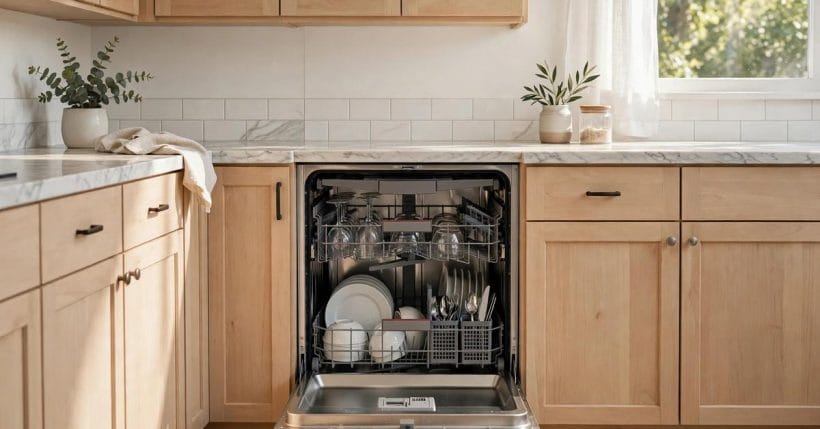
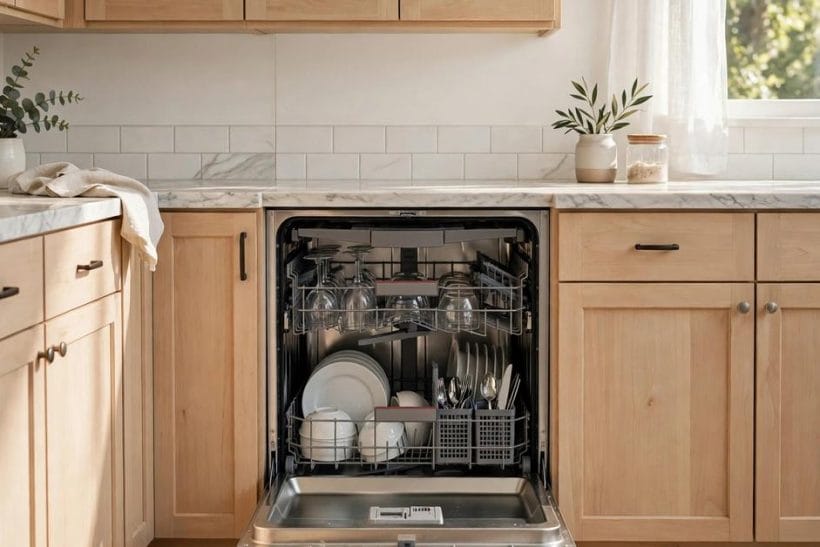
A compact dishwasher can be a sensible fit for a small kitchen, a single-person household, or a home where the available cabinet space is narrow, but the question behind it deserves a careful answer rather than a quick yes or no. People searching for 18 inch dishwasher reviews are usually not looking for a lecture on appliances in general; they want to know whether a smaller machine will suit their kitchen, their household, and their daily routine, and what to check before choosing one. This guide answers that question in general terms, without naming particular models, ranking machines, or offering verdicts on any maker.
The honest starting point is that a compact dishwasher is a trade-off, not a smaller version of everything a wider machine offers. It takes up less cabinet room, and that single fact shapes everything else: how much it holds, how its racks are arranged, how often it runs, and how it fits into the working triangle of sink, preparation area, and storage. A household that understands those trade-offs before choosing will be far happier than one that discovers them after the machine is fitted. The checks below walk through each one in turn, and they apply whether the kitchen is in a tiny home, a flat, or simply a smaller room in a larger house.
1. What a Compact Dishwasher Means for a Small Kitchen
A compact dishwasher is best understood as a machine sized for a smaller kitchen and a smaller daily load, rather than as a machine that does less. It washes, rinses, and dries in the same general way as any dishwasher, using spray, detergent, and heated water through a cycle of stages. What changes is scale: the tub is narrower, the racks hold fewer items, and the machine suits households whose washing-up rarely piles up beyond a modest daily load. For a single person or a couple, that scale can match everyday life well; for a large household that cooks big meals daily, it can mean running the machine more often, and that rhythm is worth picturing honestly before choosing.
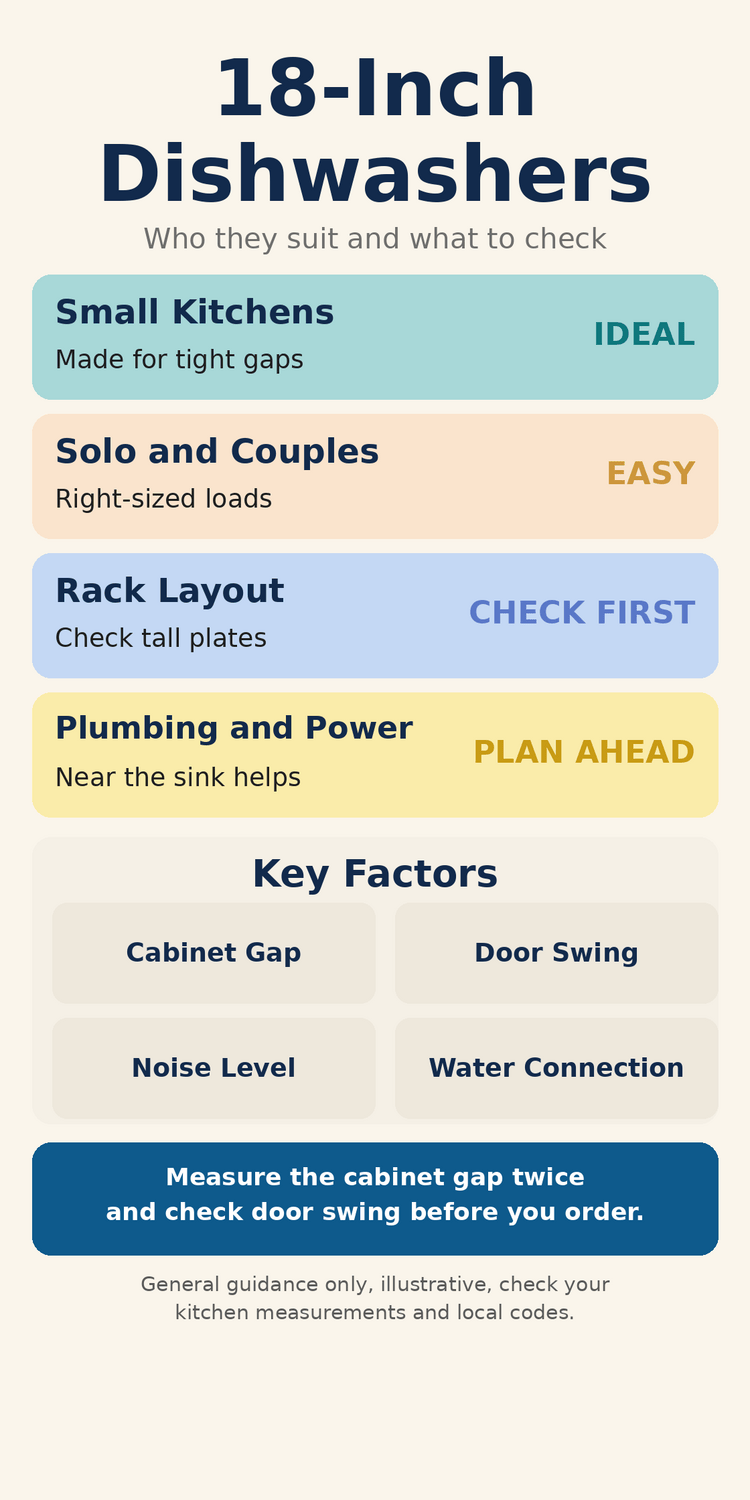
Space is the reason most people consider a compact machine in the first place, and space is also where the first check belongs. A smaller machine can fit into a gap that a wider machine cannot, which can preserve cabinet storage or keep a kitchen layout workable where every unit counts. The kitchen ideas elsewhere on this site show how tight kitchens balance appliances, worktops, and storage, and a compact dishwasher belongs in that same balancing act rather than being treated as an afterthought squeezed into whatever gap remains. Thinking of it as part of the layout, not as a leftover, leads to better decisions about where it sits and how it is used.
It also helps to think about the kitchen as a whole before falling in love with any single appliance. A dishwasher sits in a workflow that runs from cooking to clearing to putting away, and a compact machine changes that workflow in small ways that add up: dishes may need to go in sooner, the machine may run more often, and the cupboard for clean dishes should sit close by so unloading stays easy. None of that is a reason to avoid a compact machine, but all of it is a reason to plan around it. The rest of this guide works through those planning points one by one, so the decision rests on the household routine rather than on enthusiasm alone.
2. Start With the Space: Fit, Access and the Cabinet Around It
The most important check for any compact dishwasher is the space it will occupy, and that check has several parts, not just one. The cabinet gap matters, of course, but so does the door swing: a dishwasher door opens downward and outward, and it needs clear room in front of it to open fully, to let racks slide out, and to let someone load and unload without crouching around an obstacle. A gap that looks right on a plan can still feel wrong in use if the door meets a bin, a step, or a neighbouring cabinet door when it opens. Standing in the kitchen and picturing that swing, with the surrounding doors and drawers in mind, is a check worth making before anything is ordered.
Access for service matters just as much, and it is easy to overlook when a kitchen looks finished. A dishwasher connects to water, drainage, and electricity, and those connections need to be reachable if the machine ever needs attention. A machine boxed in so tightly that it cannot be pulled out, or hidden behind fixed panels with no way through, will turn a simple service visit into a cabinet-removal job. Asking how the machine will be reached, and leaving that access in the plan, is part of choosing well, and it is a question to raise with the professional who fits the machine rather than something to solve after the event.
The surrounding cabinets deserve a thought too. A compact machine placed beside the sink keeps the carry from sink to machine short, which is the daily habit that matters most, and it keeps the workflow tight in a small kitchen. The tiny house building and design ideas elsewhere on this site show how compact plans keep that sink-to-machine distance short, and the same principle serves any small kitchen. Where the machine sits relative to the sink, the preparation area, and the plate cupboard will shape daily use far more than any single feature of the machine itself.
3. Capacity in Everyday Terms: How a Smaller Load Shapes Daily Use
Capacity is where a compact dishwasher asks its household to be honest about its routine. A smaller tub holds fewer plates, bowls, glasses, and pieces of cutlery in a single load, which means a household that cooks large meals, entertains often, or leaves washing-up to build up across the day may find itself running the machine more often than it expected. That is not a fault in the machine; it is the nature of a smaller load. The useful question is not how much the machine holds in abstract terms, but how the household actually lives: how many place settings appear at a typical meal, how often cooking involves large pots and baking trays, and whether running a load daily, or even more often, feels acceptable.
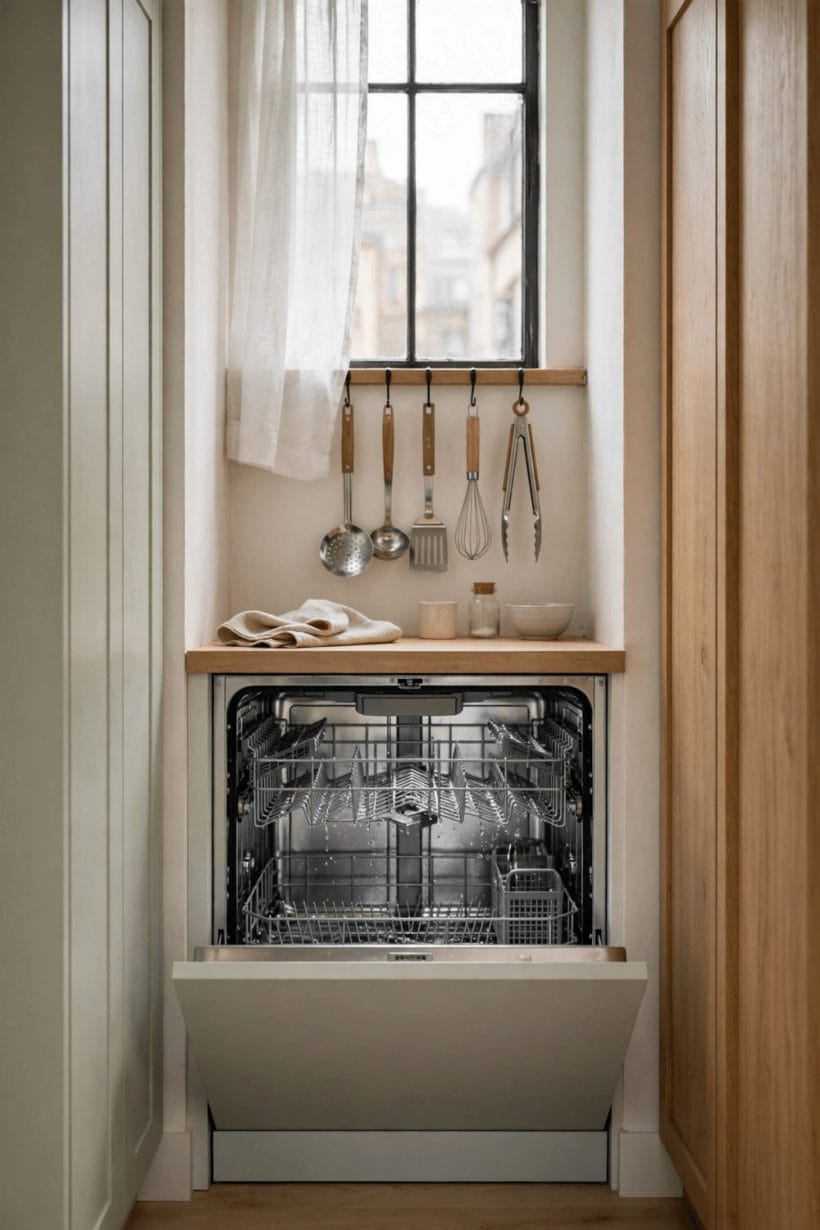
Daily rhythm is the practical way to judge this. A household that cooks lightly, eats simply, and clears as it goes may find a compact load perfectly matched to a day of washing-up, with the machine run once and unloaded the next morning. A household that cooks elaborately, uses many pans, and hosts guests regularly may find the same machine running twice, with dishes waiting between loads. Neither pattern is wrong, but the second one changes the value of the machine: it still saves hand washing, yet it asks for more attention, more loading, and more unloading across the week. Picturing a real week of meals, rather than an ideal one, gives the truest answer.
Storage planning helps a compact machine work well. Keeping everyday dishes close to the machine, so unloading is a short trip rather than a trek across the kitchen, makes a smaller load feel easy rather than fiddly, and the storage ideas for small homes elsewhere on this site show how tight kitchens keep that workflow short. A compact machine also rewards a habit of loading promptly rather than letting dishes stack beside the sink, because a smaller tub fills sooner. Small habits, repeated daily, are what make a compact machine feel generous rather than limiting.
4. Racks, Cutlery and Layout: What to Look for Inside
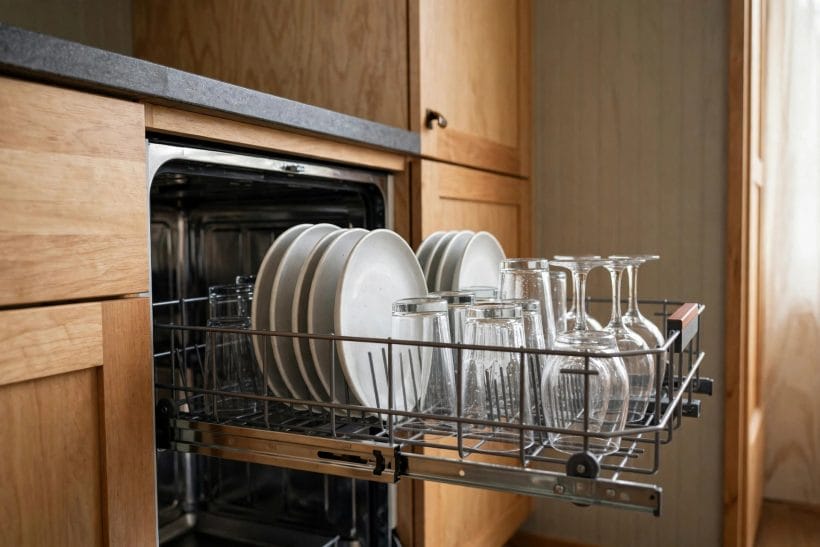
Inside a compact dishwasher, layout matters more than it does in a wider machine, because every part of the rack has to earn its place. The lower rack generally holds plates, bowls, and larger items, while the upper rack holds glasses, cups, and smaller pieces, and the way those racks are divided decides what fits comfortably. Adjustable or folding sections, where a machine offers them, can make room for tall glasses or awkward items, while fixed divisions suit a household whose dishes are uniform in shape. Looking inside, in person where possible, and picturing the household own dishes in those racks, is a far better check than any general description.
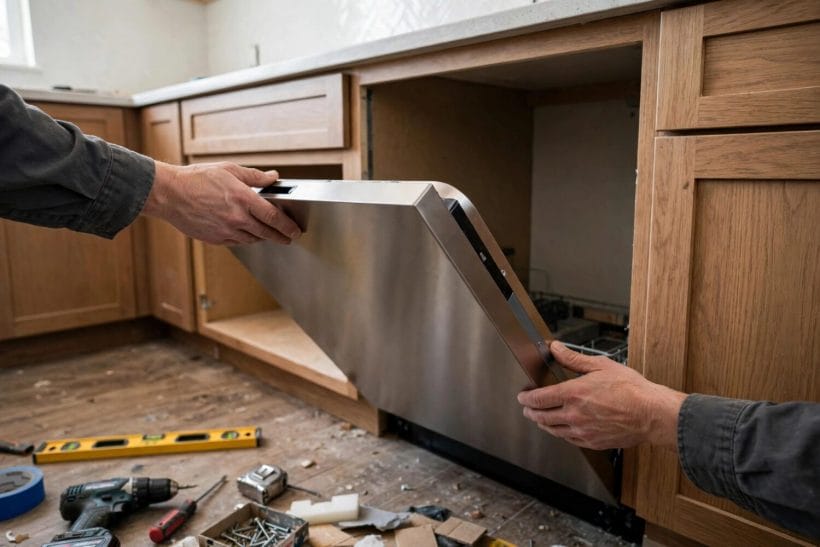
Tall and awkward items deserve special attention, because they are where a compact machine most often surprises its owner. Large dinner plates, tall glasses, deep bowls, chopping boards, and baking trays each test the rack layout in a different way, and an item that fits in a wider machine may not fit comfortably in a narrower one. It is worth gathering the largest plates and tallest glasses the household actually uses and checking, against the maker guidance for the machine, whether they fit with spray arms free to move. A spray arm blocked by a tall item cannot reach the load properly, and that single detail can matter more to cleaning results than any programme choice.
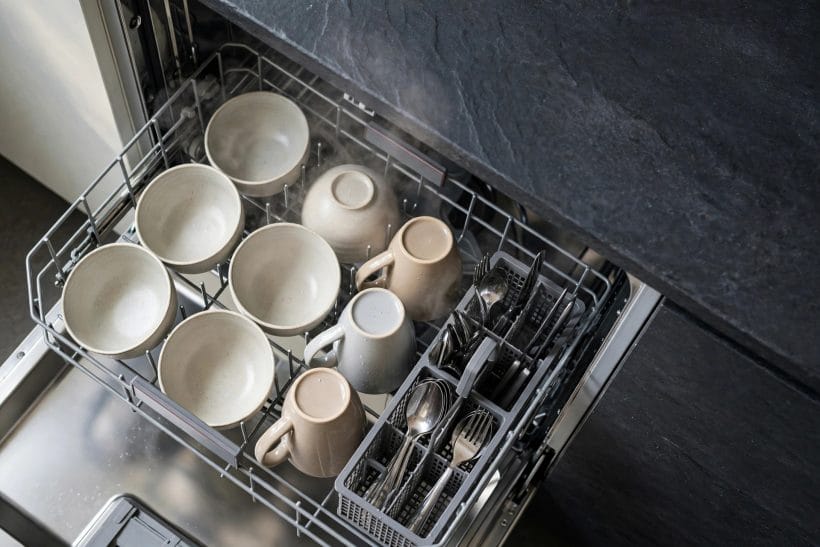
Cutlery storage is the quieter part of the same check. Some machines carry a cutlery basket that sits in a rack, while others offer a separate tray or shelf, and each arrangement suits different habits. A basket keeps cutlery together and is easy to lift out, while a tray can free rack space below. Households with many small utensils, or with long-handled tools, should think about which arrangement keeps those pieces separated so spray can reach them, because cutlery nested tightly together will not clean well however good the machine. The layout that suits the household dishes is the right layout, and it is a personal check rather than a universal ranking.
5. Wash Programmes and Everyday Cleaning, Explained Generally
Most dishwashers offer a range of programmes, from a light wash for lightly soiled everyday dishes to a heavier wash for pots and baked-on residue, with gentler options for glassware and delicate items. A compact machine follows the same general pattern, and the household job is to match the programme to the load rather than to run the heaviest option by default. A light programme suits everyday plates and glasses, while a heavier programme suits the aftermath of a roast or a baking session, and delicate items need the gentler approach the maker guidance describes. Choosing well here is a daily habit, not a technical skill, and it affects both cleaning results and how the machine feels to live with.
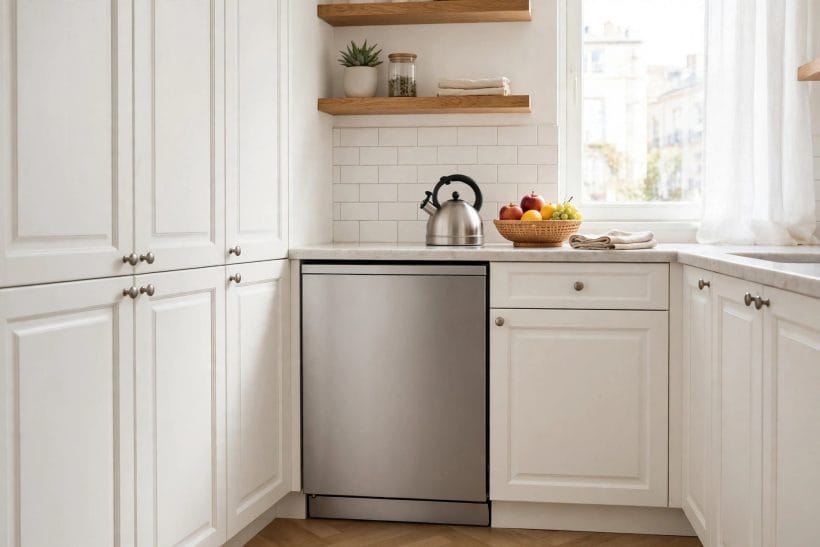
How a dishwasher cleans is worth understanding in general terms, because it explains why loading matters so much. The machine sprays water over the load, washes with detergent in the water, drains, and rinses, sometimes more than once, before moving toward drying. Heat plays a part throughout, helping detergent work and helping the final rinse leave dishes ready to dry, and the hot water explainer elsewhere on this site sets out that side of the topic in more depth. The practical point for a compact machine is the same as for any other: spray needs a path to every surface, so plates should face the spray, bowls should sit at an angle that lets water drain, and items should not be nested so tightly that water cannot reach inside them.
Programme length is another everyday consideration. Heavier programmes generally run longer, and a household that runs a compact machine more often will notice that time across the week. That is not a reason to choose the shortest programme regardless of the load, because a programme too light for the soil will leave residue, but it is a reason to load sensibly and to avoid running a half-empty machine on a heavy programme out of habit. The gentlest programme that still cleans the load, chosen load by load, is the sensible rule, and it keeps the machine feeling like a help rather than a chore.
6. Water, Drainage and Electrical Supply: Work for Qualified Tradespeople
A dishwasher is a water-using appliance with an electrical supply, and its connections belong firmly to qualified tradespeople. The machine needs a water supply and a drain, and both connections must be made properly, because a poor connection can leak quietly for a long time before anyone notices, damaging cabinets and floors. The electrical supply likewise needs to suit the machine and the kitchen circuit, and that judgement belongs to a qualified electrician. This guide deliberately gives no connection instructions, no wiring guidance, and no plumbing steps, because that work is not a household project however simple a connection may look from the outside.
Planning the connections early makes the whole job easier. Where the machine will sit relative to the sink shapes the supply and drainage arrangement, and raising those points with a qualified plumber at the planning stage, before cabinets are fixed, is far easier than retrofitting them afterwards. The same applies to the electrical point: asking an electrician whether the kitchen circuit suits the machine, and where the point should sit for safe access, avoids awkward compromises later. For a household building or remodelling a small kitchen, the building checklist for a tiny house elsewhere on this site sets out that kind of early planning, and its lesson applies to any compact kitchen.
Signs that belong to a professional from the start are worth knowing before the machine is ever used. Any leak, any smell of burning, any tripped circuit, any water where it should not be, and any damage to a hose or connection should be treated as a stop-and-call moment, not a watch-and-wait moment. Switching the machine off as the maker guidance directs, avoiding further use, and calling a qualified plumber or electrician as the sign suggests is the right response. A compact machine is no exception to that rule, and knowing it in advance means a household will act promptly rather than hesitantly if a sign ever appears.
7. Noise, Daily Living and Where the Machine Sits in the Home
Noise matters more in a small home than in a large one, because the kitchen often sits close to living and sleeping areas, and a dishwasher running in the evening will be heard. Compact machines vary in how much sound they make, and that variation is worth weighing alongside capacity and layout, especially for households that run the machine while relaxing, working, or sleeping nearby. Maker guidance describes the sound of a machine in general terms, and it is worth reading that guidance rather than assuming a smaller machine is automatically quieter or louder than a wider one, because size alone does not settle the question.
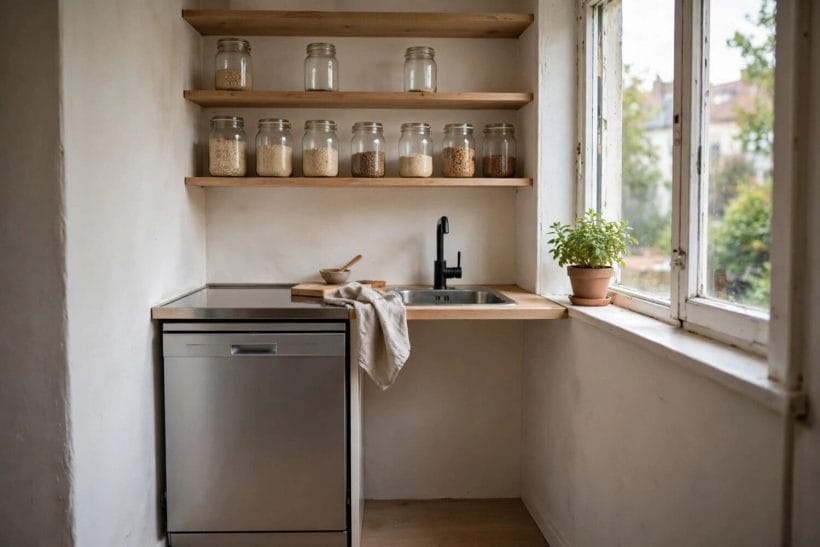
Where the machine sits in the home shapes how its sound is experienced. A machine in an open-plan kitchen will be part of the living space while it runs, while a machine behind a closed door will be heard less, and a household that runs loads overnight will feel the difference most. Thinking about when the machine will usually run, and who will be nearby at that hour, turns noise from an abstract concern into a practical one. The small living room ideas elsewhere on this site show how compact homes keep living areas comfortable, and placing a dishwasher with those shared spaces in mind belongs in the same planning.
Daily living around the machine includes smaller sounds and habits too: the clink of loading, the hum of a cycle, the beep that marks its end. None of these is dramatic on its own, but together they form the background of a small home, and a household sensitive to sound should weigh them honestly. Running the machine at a time that suits the household, rather than at a time that suits the washing-up alone, is a simple way to keep it agreeable, and it is one more reason to picture a real week of use before choosing.
8. Drying, Unloading and the Routine Around the Machine
Drying is the part of the cycle that households notice last and judge most, because it decides whether dishes can go straight into the cupboard or need a towel first. A warm final rinse leaves dishes warm, and warm dishes dry more readily once the door is opened or the drying stage runs, which is why a machine that washes well generally dries well too. Plastic items, which cool quickly, can hold droplets that look like poor drying even when the cycle has run properly, and that is a property of the material rather than a fault in the machine. Knowing that in advance prevents disappointment over what is, in truth, normal behaviour.
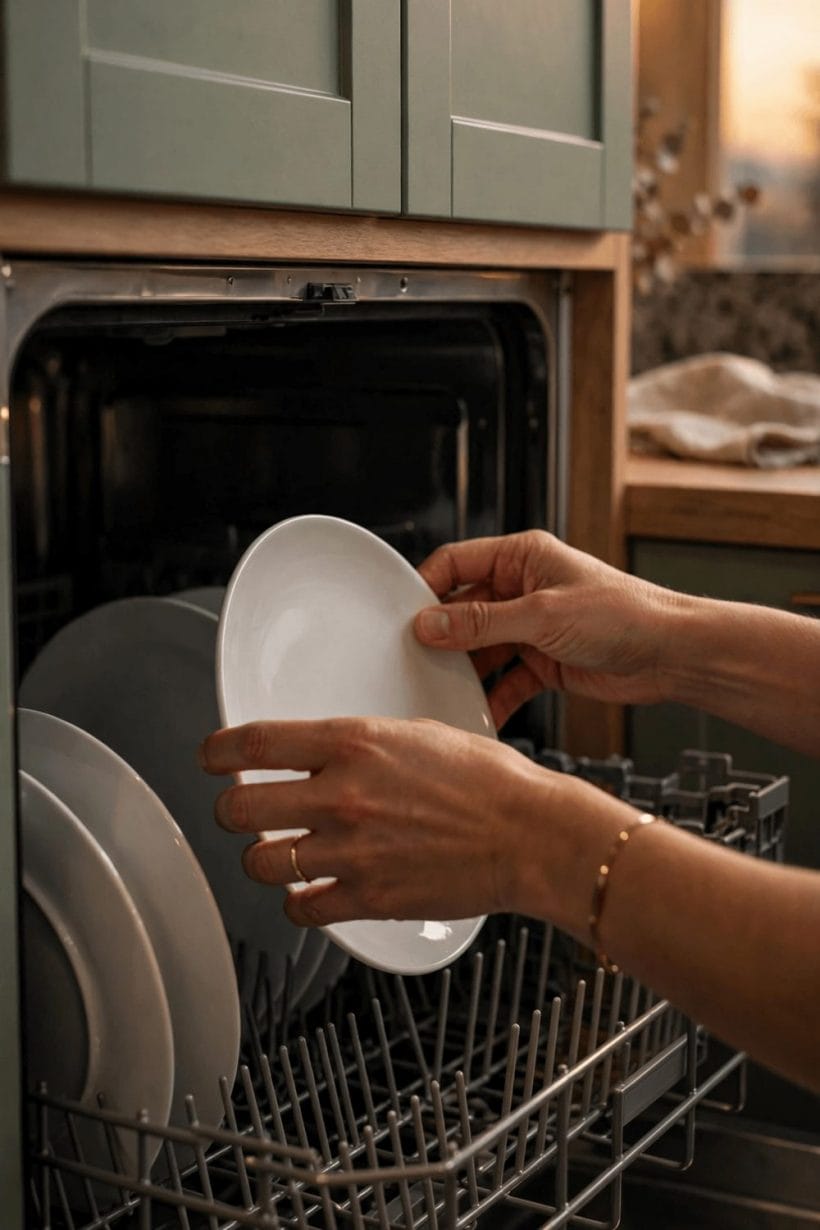
Unloading order is a small habit with a visible payoff. Taking items from the lower rack first, or letting the upper rack drip onto the lower one, can undo a good drying result, while a consistent order keeps clean dishes clean. Leaving the door ajar for a short while after the cycle, where the maker guidance allows it, can also help dishes finish drying, though the guidance for the machine in question should be followed rather than a general habit copied from elsewhere. These are household routines, not repairs, and they are safely within what a household can manage itself.
The routine around the machine extends to detergent and rinse aid, where a machine uses them. Amount and type should follow the maker guidance for the machine, because too little can leave residue and too much can leave its own film, and the right amount depends on the load and the programme chosen. Keeping those supplies close to the machine but out of the way, and keeping the cupboard for clean dishes nearby, shortens the whole loop from table to sink to machine to cupboard. The interior planning guides elsewhere on this site explore small-home workflow in more depth, and a compact dishwasher fits naturally into that way of thinking.
9. Care, Longevity and the Checks Worth Making Before You Buy
A dishwasher lasts longer and serves better when its everyday care is simple and regular. Clearing large food residue before loading, keeping spray arms free, and following the maker guidance on cleaning the filter and the interior are household tasks that keep the machine working as intended. Seals and hoses wear over time, and a machine that has served for many years may need a professional look even when it still runs, because a service visit can check the things a household cannot see. Regular professional attention, at intervals the maker suggests, is part of owning a water-using appliance, not a sign of failure.
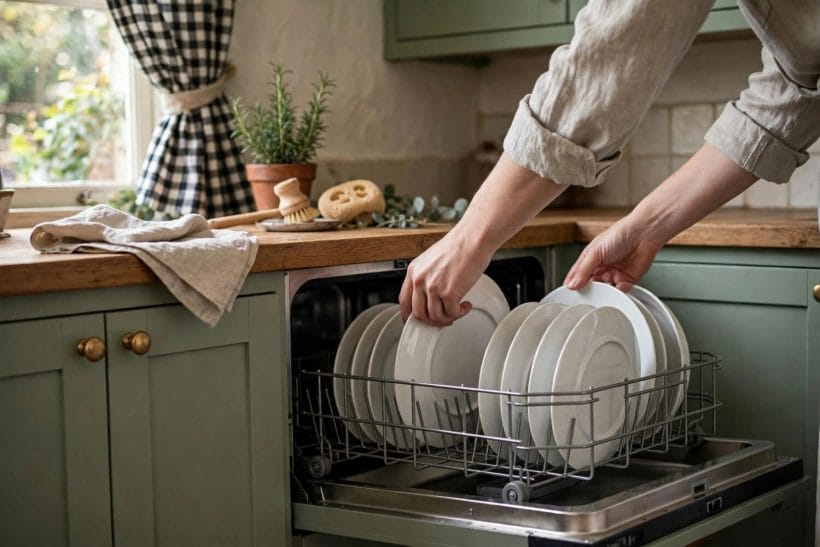
Before buying, a short checklist pulls the whole guide together. Check the cabinet gap and the door swing in the real kitchen, not just on a plan. Check the largest plates and tallest glasses against the rack layout and the maker guidance. Check the supply, drainage, and electrical arrangements with qualified tradespeople at the planning stage. Check the daily load honestly, picturing a real week of meals, and check where the machine will sit relative to living and sleeping areas. Each check is simple on its own, and together they prevent the commonest regrets: a machine that does not fit, does not hold the household dishes, or does not suit the household rhythm.
It is also worth checking what support surrounds the machine. Maker guidance should be read before first use, not after a problem appears, and it will list the checks the household can safely make as well as the signs that belong to a professional. Keeping that guidance somewhere accessible, rather than filed away with packaging, means answers are at hand when they are needed. A compact dishwasher chosen with those checks made, and that guidance read, starts its life on the best possible footing.
10. Questions to Ask Before You Choose
The most useful questions to ask before choosing a compact dishwasher are general ones, and they are best put to a retailer or a qualified tradesperson with the maker guidance in hand. What supply and drainage does this machine expect, and does it heat water internally or rely on the household supply? What access does it need for service, and where should its connections sit? How does its rack layout handle the household largest plates and tallest glasses, and how does its cutlery storage suit the utensils used daily? Answers taken from the maker guidance, rather than from general articles, are what should guide the final choice.
Questions about the household matter just as much as questions about the machine. How many people eat at home most days, and how elaborate is the cooking? How often will the machine realistically run, and at what hour, given living and sleeping areas nearby? Where will clean dishes go, and is that cupboard close enough to make unloading easy? A household that can answer those questions plainly will recognise its own machine when it sees it, because the choice will rest on routine rather than on a single feature or a passing enthusiasm.
Finally, it is worth asking what would make the household regret the choice, and working backwards from there. If the regret would be a machine that fills too soon, the answer lies in capacity and daily rhythm. If it would be a machine that cannot hold a favourite roasting tray, the answer lies in rack layout. If it would be a machine that disrupts quiet evenings, the answer lies in placement and running times. Naming the regret in advance turns a vague worry into a concrete check, and a concrete check is something a household can actually make before committing.
Final Considerations
The question that opened this guide, whether a compact dishwasher is a good idea, has no single answer, and that is precisely why the checks matter. For a smaller household, a smaller kitchen, or a home where cabinet space is precious, a compact machine can be a genuinely good fit, provided its load suits the daily routine, its racks hold the household dishes, and its connections are planned with qualified tradespeople from the start. For a household whose cooking and entertaining regularly outgrow a smaller load, the same machine can feel limiting, however well it is made. Searches for 18 inch dishwasher reviews usually end at that same fork in the road: not which machine wins, but which household the machine fits.
For a kitchen plan, the takeaways are practical. Measure the gap and picture the door swing. Look inside the racks with the household own dishes in mind. Ask qualified tradespeople about supply, drainage, and electrical arrangements early. Match the programme to the load, load with spray paths in mind, and treat leaks, electrical signs, and standing water as stop-and-call moments. A compact dishwasher chosen in that way, and looked after with simple regular care, is a quiet, useful part of a kitchen, and its smaller scale becomes a strength rather than a compromise.




0 Comments