
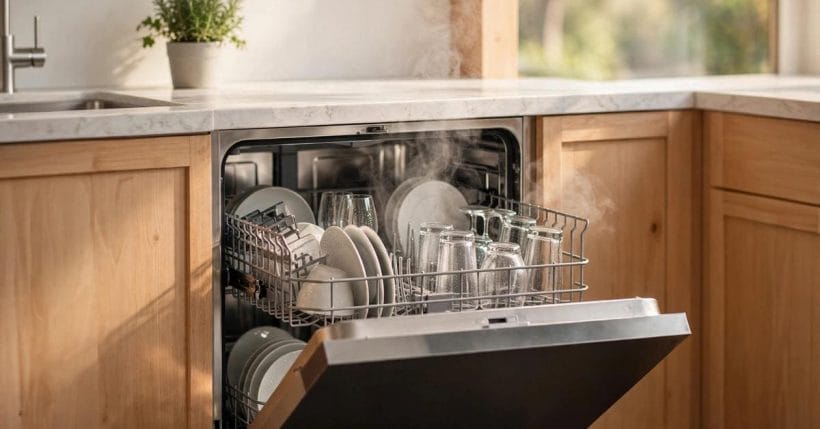
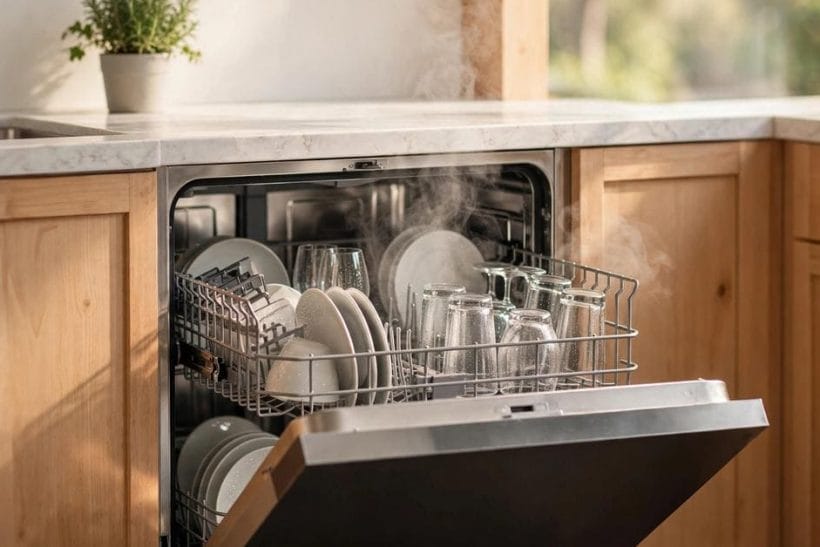
A dishwasher is one of the few kitchen appliances that most people use without ever thinking about where its water comes from, yet the question matters for anyone planning a kitchen, choosing an appliance, or wondering why dishes come out clean. The short answer is reassuring: a dishwasher washes with hot water, and it can also warm the water itself when the water arriving at the machine is not hot enough.
The question behind the question is worth asking too, because people who ask do dishwashers use hot water are usually really asking whether they need a hot-water connection, whether a cold feed is enough, and what happens inside the machine during a wash. This guide answers those questions in general terms, without installation instructions, and explains when a qualified plumber or electrician should be involved.
1. The Short Answer: Hot Water Does the Cleaning Work
A dishwasher cleans with hot water, detergent and spray, working together through a cycle of washing and rinsing. Heat helps loosen food residue and grease, helps detergent work as intended, and helps the final rinse leave dishes ready to dry. A machine filled only with cold water and never warmed would not clean in the way its maker designed it to clean, which is why heating is built into how dishwashers work.
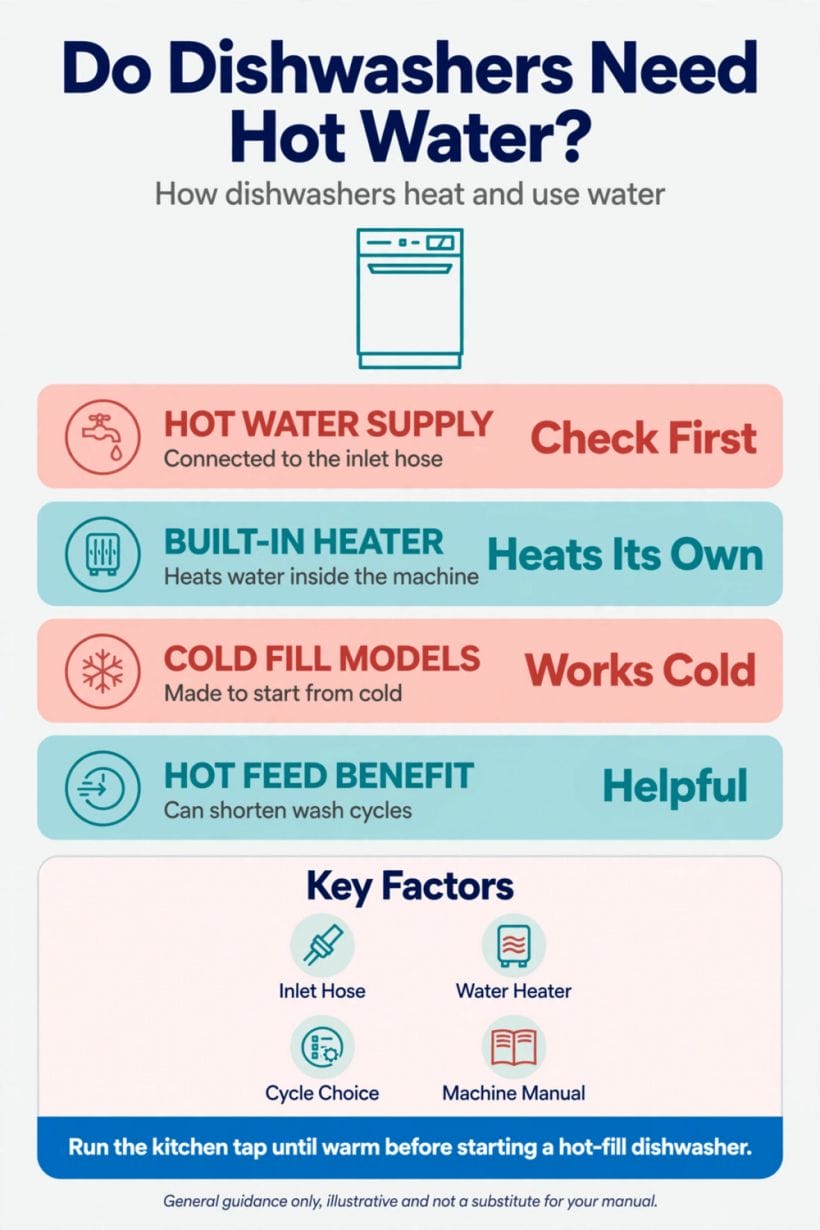
That does not mean the water arriving at the machine must already be hot. Most dishwashers are connected to a hot-water supply in the home, and many can also heat water internally when the incoming water is cooler than the wash needs. The two ideas work together: the home supplies water, and the machine brings that water to the warmth its cycle calls for. The exact behaviour varies by model, so the manual for the machine in question is the right place for model-specific detail.
For a household, the practical point is simple. Hot water is part of the cleaning process, not an optional extra, and a dishwasher that never reaches a proper wash warmth will show it in dull glasses, residue left behind, and dishes that feel less than clean. When that happens, the cause may sit with the machine, the supply, or the way it is loaded, and sorting out which one applies is a job for the maker guidance first and a professional second.
2. Where the Water Comes From: The Home Supply
In most homes a dishwasher draws its water from the household water supply through a connection made at installation. That connection is plumbing work, and it should be made by a qualified plumber, because a poor connection can leak quietly for a long time before anyone notices. The supply that feeds the machine is the same household system that feeds taps elsewhere in the home, and its warmth depends on the home water heater and on how far the water travels through pipes before it reaches the kitchen.
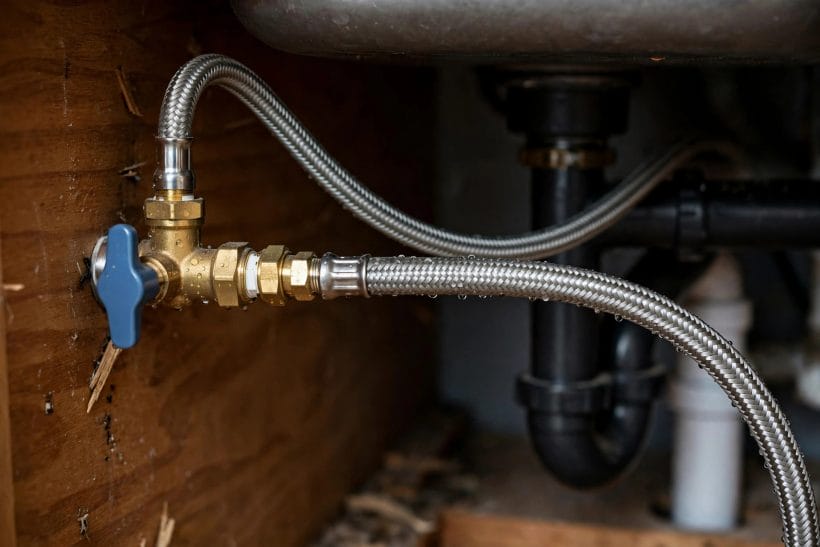
Distance matters in everyday use. Water standing in a pipe cools between uses, so the first water to reach the machine after a long pause may be cooler than the water that follows it. This is one reason a dishwasher that heats water internally is useful: it does not depend entirely on the pipe delivering water at full warmth from the very first moment. It also explains why running a nearby hot tap briefly before starting a cycle is a habit some households follow, though whether that helps a particular machine depends on its design and its manual.
Tiny homes and small kitchens deserve a note here, because space is tighter and pipe runs are often shorter. A shorter run can mean water arrives warmer sooner, but it does not remove the need for a proper connection or for professional advice about the supply. Planning a small kitchen around a dishwasher still means thinking about where the machine sits relative to the sink, the water supply and the drain, and leaving access for service. The kitchen ideas elsewhere on this site can help with the layout thinking, while the plumbing itself stays a professional job.
3. How a Dishwasher Heats Water Itself
Many dishwashers carry a heating element inside the tub, and that element warms the water during the wash. The machine fills, sprays, drains and refills through its cycle, and heating is part of that rhythm rather than a separate event. When the incoming water is already warm, the element has less warming to do; when it arrives cool, the element works longer to bring the wash to the warmth the cycle needs.
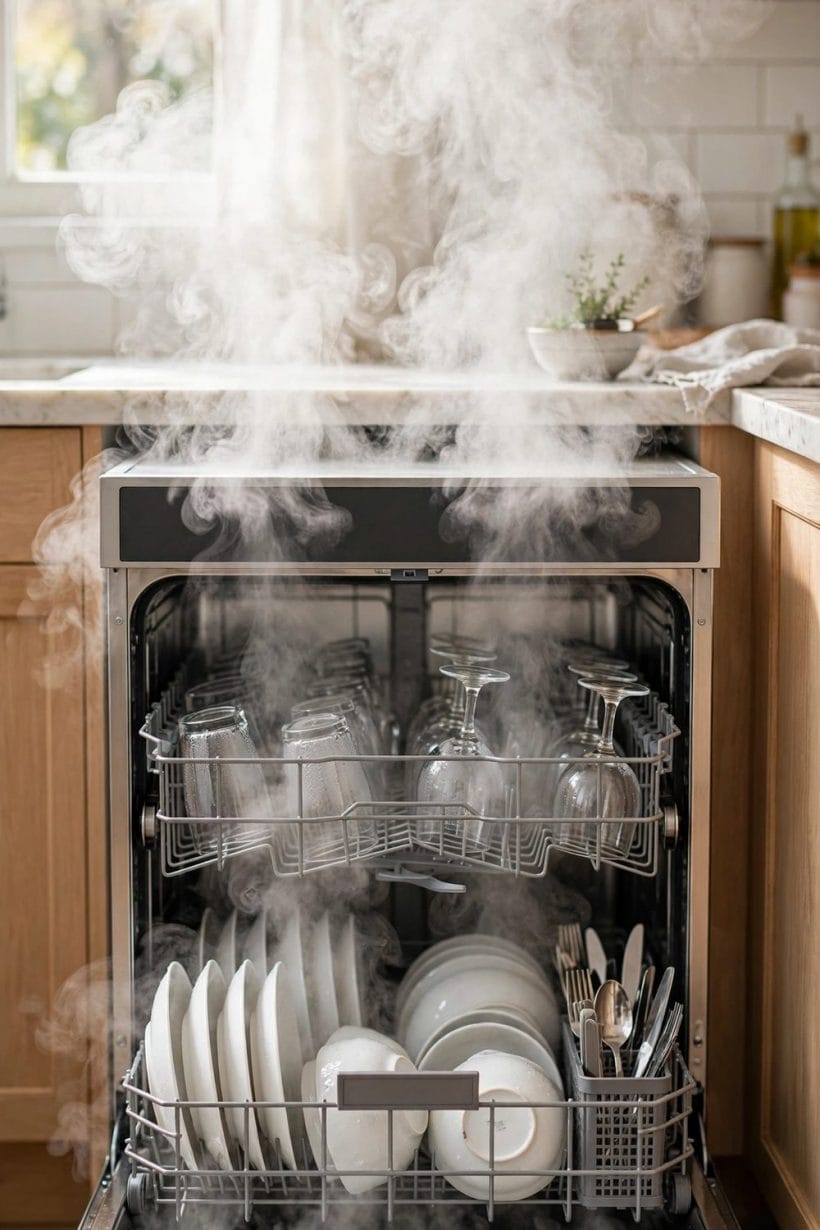
This internal heating is also why a cold-water connection is not automatically a problem for every model, and why a hot-water connection is not automatically the whole answer either. Some machines are designed to be connected to a cold supply and to heat from there, while others expect a hot supply and use their element mainly to hold or lift the warmth. The difference is a design choice made by the maker, and it is written in the installation guidance for that model. Guessing, or copying a neighbour setup, is not a safe substitute for reading that guidance and asking a professional.
Heating also touches drying. A warm final rinse leaves dishes warm, and warm dishes dry more readily once the door is opened or the drying stage runs. That link between wash warmth and drying is one reason a machine that washes cool can also seem to dry poorly, even when nothing is wrong with its drying stage as such. The whole cycle hangs together, and warmth runs through it from wash to rinse to dry.
4. What Happens During a Wash Cycle, Stage by Stage
A typical cycle moves through stages that are easy to picture even without technical detail. First the machine fills and begins spraying water over the load, loosening residue. Then it washes with detergent in the water, spraying from arms that reach around plates, bowls and glasses. After washing it drains, then rinses, sometimes more than once, to carry detergent and loosened residue away. Finally it moves toward drying, leaving dishes warm and ready to put away.
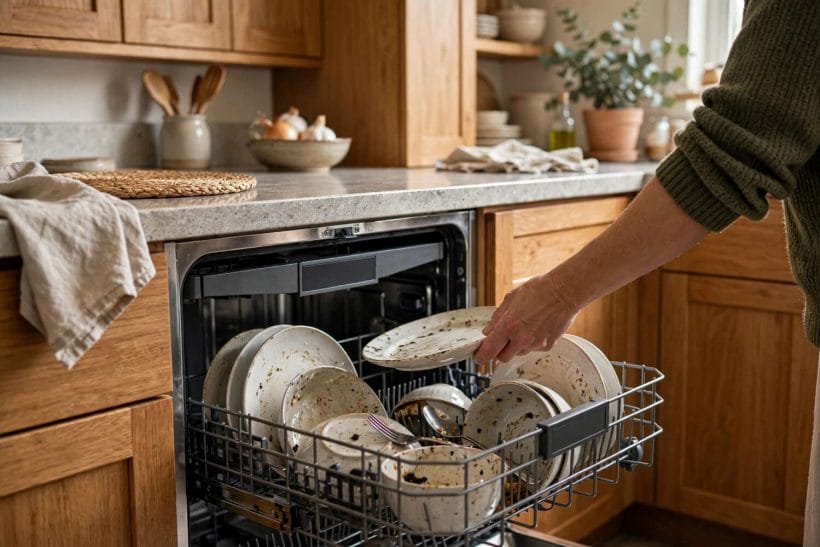
Heat is present across those stages in different ways. The wash stage uses warmth to help detergent and spray do their work. The rinse stage uses warmth to leave surfaces clean and ready to dry. A pre-wash or soak stage, where a model offers one, uses water to soften residue before the main wash begins. None of this requires the household to manage temperatures by hand; the machine follows its programme, and the household chooses the programme that fits the load.
Choosing a programme is a household decision, not a plumbing decision. A light programme suits lightly soiled everyday dishes, while a heavier programme suits pots and baked-on residue. Glassware and delicate items need a gentler approach, and the manual will say which programme fits which load. Overloading the machine, nesting bowls so spray cannot reach inside them, or blocking a spray arm with a tall item will matter more to the result than small differences in supply warmth, and those loading habits are worth getting right first.
5. Hot, Warm and Cold: Why Warmth Changes the Result
Warmth changes cleaning because it changes how grease behaves and how detergent works. Grease softens as water warms, and softened grease lifts from a plate more readily than cold, set grease. Detergent, likewise, is made to work in warm water, and a wash that stays cool can leave detergent underused and residue behind. This is not a claim about any particular product; it is the general reason dishwashers are designed around hot water at all.
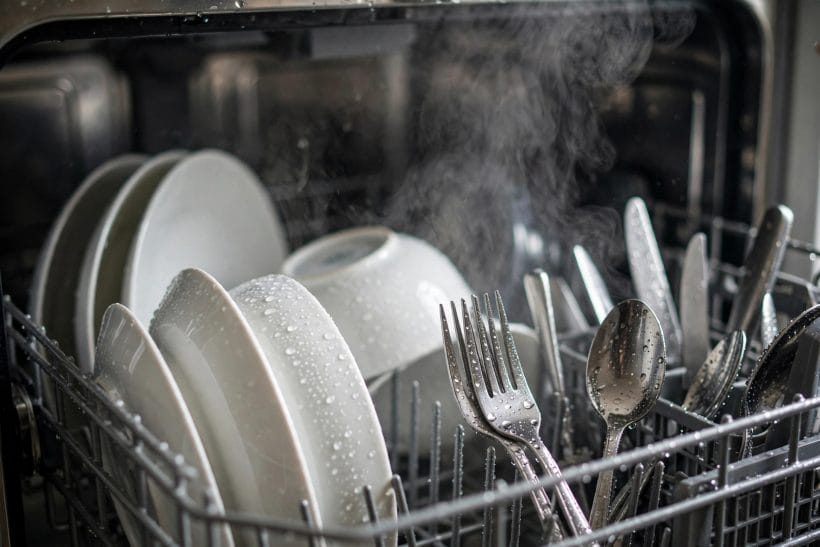
Warmth also changes what the household notices after the cycle. Glasses washed warm and rinsed warm tend to come out clearer, while a cool wash can leave a film that looks like poor rinsing. Cutlery can carry the same film, and plastic items, which cool quickly, can hold droplets that look like poor drying. None of these signs on their own diagnoses a fault; they are prompts to check loading, detergent dosing as the maker directs, and the machine guidance before assuming a repair is needed.
There is a balance here, and it is worth stating plainly. Hotter is not automatically better without limit, and a machine programme sets its own warmth for a reason. Delicate glassware, decorated items and some plastics suit gentler programmes, and the maker guidance for both the machine and the item should be followed. The household job is to match the programme to the load, not to chase extra heat.
6. Cold Feed, Hot Feed, and What Your Machine Expects
The most common source of confusion is the difference between what a machine can do and what a particular installation expects. A machine that heats internally can often work from a cold feed, warming the water itself. A machine designed around a hot feed may still heat, but it expects the supply to do part of the work. Neither arrangement is universally right, and the installation guidance for the model settles the question for that machine.
This is also where professional advice earns its keep. A plumber can say what supply a kitchen already has, whether a connection can be made safely, and what the maker guidance requires for that model. An electrician can say what electrical supply the machine needs and whether the kitchen circuit suits it. Those are separate trades with separate skills, and a dishwasher installation can involve both. A household should not treat plumbing or electrical work as a weekend project, however simple a connection may look from the outside.
For anyone buying or replacing a machine, the useful questions to ask a professional or retailer are general ones: what supply does this model expect, does it heat water internally, what does its manual say about connection, and what access does it need for service. Answers to those questions, taken from the maker guidance rather than from general articles, are what should guide the installation. This guide explains the topic; it does not replace that guidance.
7. Detergent, Rinse Aid and Loading: The Partners of Hot Water
Hot water does not clean alone. Detergent carries much of the cleaning work, and the amount and type should follow the maker guidance for the machine and the detergent. Too little can leave residue, too much can leave its own film, and the right amount depends on the load and the programme chosen. Rinse aid, where a machine uses it, helps the final rinse sheet away from dishes and supports drying, again as the maker directs.
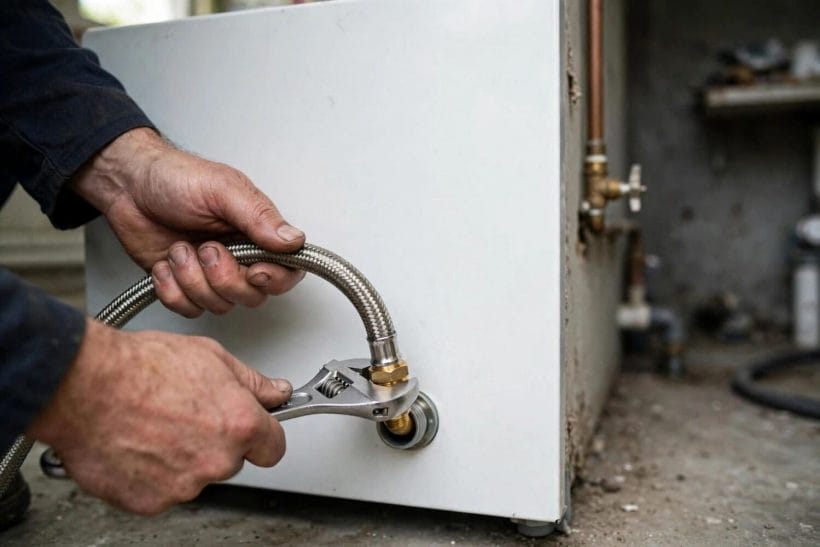
Loading is the partner that households control most directly. Spray needs a path to every surface, so plates should face the spray, bowls should sit at an angle that lets water drain, and tall items should not block a spray arm. Nesting items together defeats the spray, and overfilling defeats it further. A well-loaded machine with a suitable programme will outperform a poorly loaded machine on any programme, whatever the supply warmth.
Small kitchens add a loading lesson of their own. Compact machines and drawer models hold less, so loading discipline matters even more, and a second load is sometimes better than one crammed load. Storage planning around the dishwasher, keeping everyday dishes within easy reach of the machine, also helps, and the storage ideas for small homes elsewhere on this site show how a tight kitchen can still keep its workflow clear.
8. Tiny Kitchens and Small Homes: Space, Supply and Workflow
A dishwasher in a tiny home or a small kitchen is a workflow decision as much as an appliance decision, and the tiny house building and design ideas elsewhere on this site show how tight plans fit appliances in. The machine sits close to the sink, the preparation area and the storage, a layout question the island sink and dishwasher ideas explore for kitchens with an island, and every centimetre of that triangle is used daily. A compact model can fit where a full-size machine cannot, but compact does not mean careless: the supply, the drain and the electrical connection still need professional fitting, and access for service still needs to be planned.
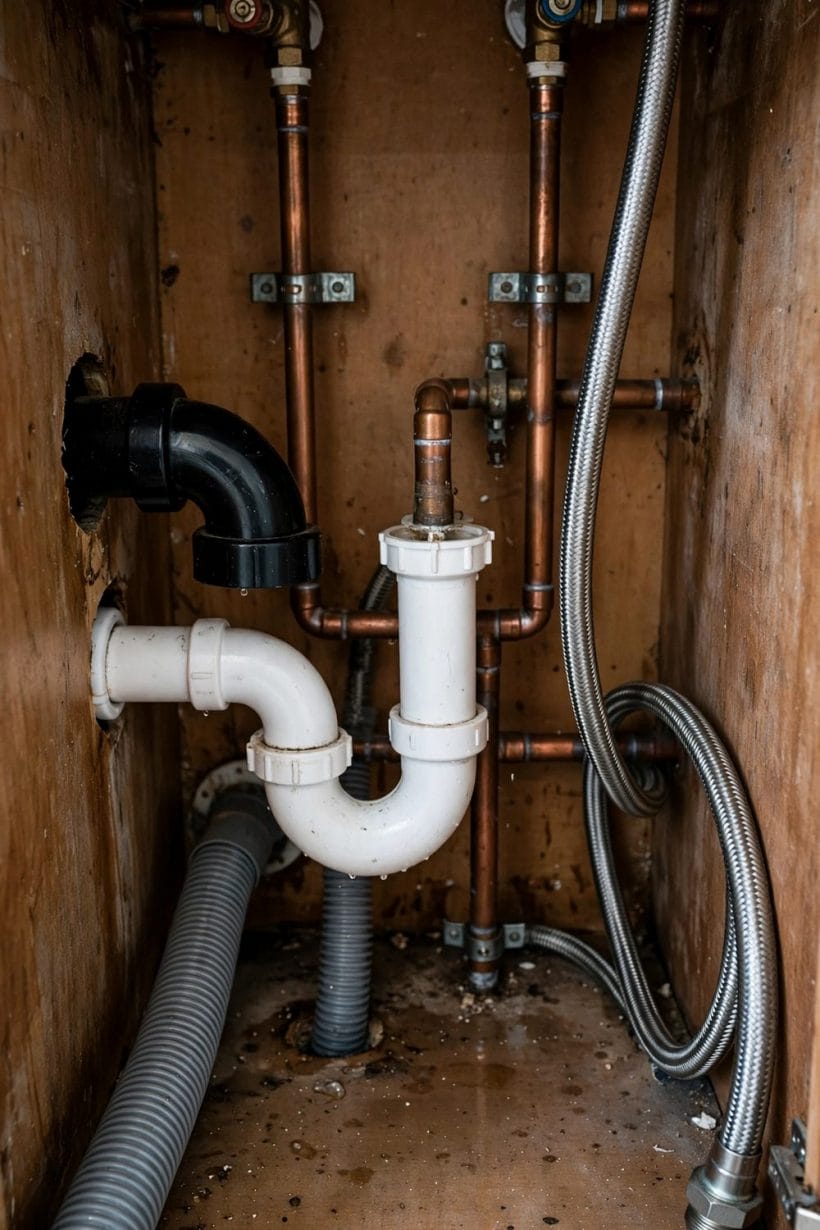
Workflow thinking helps more than appliance thinking here. Dishes move from table to sink to machine to cupboard, and a layout that shortens that loop makes the machine genuinely useful rather than a cupboard that happens to wash. Keeping the machine near the sink, keeping detergent and rinse aid close but out of the way, and keeping the cupboard for clean dishes near the machine all reduce handling, just as small living room ideas show storage kept close to where it is used. The interior planning guides elsewhere on this site explore small-home workflow in more depth, and they pair naturally with this hot-water explainer.
One more small-home point is worth making. A shorter pipe run in a compact home can mean warmer water arrives sooner, but it does not change what the machine expects or remove the professional from the installation. If a tiny-home build is still at the planning stage, as the building checklist for a tiny house sets out, raising the dishwasher supply and drainage with the plumber at that stage is far easier than retrofitting them after cabinets are fixed. Early planning, professional fitting, and a manual read through before first use cover most of what a small kitchen needs.
9. Signs Worth Noticing, and When to Call a Professional
Most dishwasher concerns show up as everyday signs rather than dramatic failures. Dishes that come out dull, residue left on plates, glasses that look filmed, water left in the base, or a machine that seems to run far longer than usual are all prompts to pause and check the simple things first: loading, programme choice, detergent dosing as the maker directs, and whether a spray arm is blocked. The manual for the machine is the first reference, and it will list the checks the household can safely make.
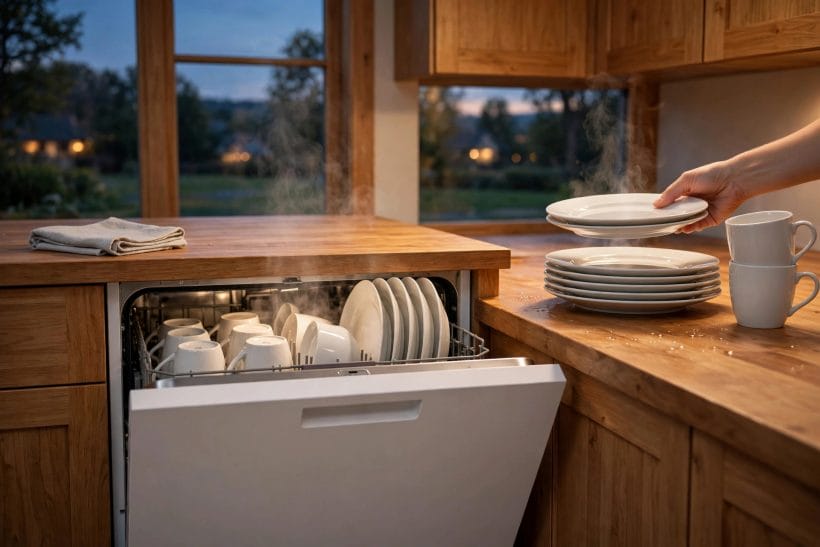
Some signs belong to a professional from the start. Any leak, any smell of burning, any tripped circuit, any water where it should not be, and any damage to a hose or connection should be treated as a stop-and-call moment, not a watch-and-wait moment. Plumbing leaks can damage cabinets and floors quietly, and electrical faults can be dangerous, so the right response is to switch the machine off as the manual directs, avoid using it, and call a qualified plumber or electrician as the sign suggests. This guide deliberately gives no repair instructions, because repair work on water and electricity belongs to people trained for it.
A final sign worth noting is age and wear. Hoses, seals and connections wear over time, and a machine that has served for many years may need a professional look even when it still runs. A service visit can check the things a household cannot see, and it can confirm whether the machine still heats as its programme intends. Regular professional attention, at intervals the maker suggests, is part of owning a water-using appliance, not a sign of failure.
10. Common Questions, Answered in General Terms
Does a dishwasher need hot water? Yes, in the sense that its wash works with hot water, whether that warmth comes from the household supply, from the machine heating element, or from both together. Does it need a hot-water connection specifically? That depends on the model and its installation guidance, and a professional can confirm it for the machine in question. Can a dishwasher heat cold water itself? Many can, through an internal heating element, but the design and the expected connection vary by model, so the manual settles it.
Will cold water damage the machine? A machine designed for a cold feed and built to heat from there is not damaged by cold water arriving, because heating from cold is its design. A machine designed around a hot feed that is connected to a cold supply may wash less well and run longer, which is a performance question to raise with a professional rather than a fault to diagnose at home. Will hotter water always clean better? Not without limit, and programmes set their own warmth for a reason, with gentler programmes for delicate loads.
What about energy and water use in general terms? A machine that heats water uses energy to do so, and a programme that warms more water or runs longer will use more of both than a light programme. Households that want to keep use down can choose the lightest programme that still cleans the load, load fully without overloading, and follow the maker guidance on detergent. No figures are offered here, because use varies by model, programme and load, and any number quoted without a model would be invented. The general principle, choose the gentlest effective programme, is the honest advice.
Is hand washing better or worse? That comparison depends on habits, load size and the machine, and this guide does not settle it with a verdict. A dishwasher used well, loaded fully and run on a suitable programme, is a practical kitchen tool, and hand washing suits small or delicate loads. The choice is a household one, and either approach benefits from hot water, suitable detergent and a sensible routine.
Final Considerations
The answer to the question that opened this guide is worth restating simply: do dishwashers use hot water, yes, and the warmth may come from the home supply, from the machine itself, or from both working together. That single idea explains most of what households notice, from cleaning results to drying, and it explains why installation guidance and professional fitting matter as much as the machine itself.
For a kitchen plan, the takeaways are practical. Read the manual for the model in question, ask a qualified plumber about the supply and drainage, ask a qualified electrician about the electrical supply, and plan access for service before cabinets close the machine in. Load with spray paths in mind, choose the gentlest programme that cleans the load, and treat leaks, electrical signs and standing water as stop-and-call moments. A dishwasher looked after in that way is a quiet, useful part of a kitchen, small or large, and its hot water, properly supplied and properly heated, does the work it was designed to do.




0 Comments