

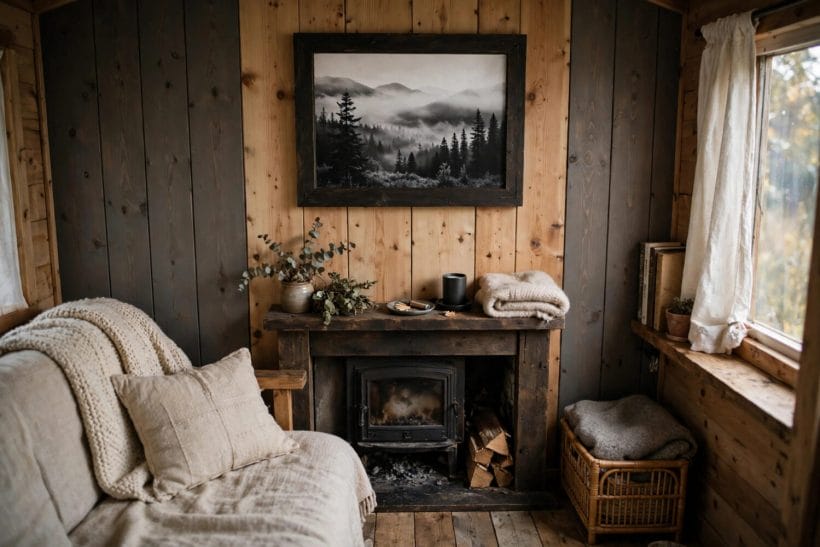
The wall above a fireplace draws the eye before anything else in the room does. It is the natural focal point, the place where guests look first and where the whole arrangement of furniture seems to point. That prominence is both the opportunity and the trap. A picture that suits the mantel can pull a living room together in a single glance, while one that fights the fireplace for attention can make even a well-furnished room feel unsettled. Getting it right is less about following a rigid formula and more about paying attention to scale, height, heat and the way the room is actually used.
This guide is about one thing only: placing art on the wall above a fireplace mantel, and doing it well. It covers size, height, safety, fixing, framing and styling, and it flags the mistakes that most often spoil an otherwise good arrangement. The subject here is artwork above fireplace mantel placement in the broad sense, not the fireplace itself. Anything involving the firebox, the chimney or the inner workings of the fire belongs to a qualified professional, and local rules should always be checked before any work is done around a fireplace. With that boundary respected, the mantel wall is a wonderfully forgiving place to hang art, provided each decision is made deliberately rather than on impulse.

1. Start With the Mantel, Not the Frame
The most common mistake above a fireplace is choosing the picture first and the position second. A beloved print, an inherited painting or a bargain find arrives home, and the mantel wall is expected to accommodate it regardless of its shape or size. The result is often a frame that looks lost above a wide mantel, or one that crowds the chimney breast and leaves the eye nowhere to rest. Starting from the mantel instead changes the whole decision. Look at the width of the mantel shelf, the height of the chimney breast and the amount of bare wall between the shelf and the ceiling, and let those measurements shape what kind of picture will sit comfortably there.
This does not mean the room should dictate taste. It means taste works better when it respects its setting. A wide, low mantel in a generous room can carry a broad landscape or a pair of matching frames, while a narrow mantel in a compact room usually suits a single upright piece or a modest group. Notice too how the mantel relates to the furniture below and beside it. A sofa placed opposite the fireplace sets the viewing distance, and the art should read clearly from that seat rather than only looking good from close up. Standing back and looking at the whole wall, furniture included, is the simplest test available, and it costs nothing.
It also helps to think about the mantel as part of a composition rather than as a shelf that happens to sit under a picture. The shelf, the fire opening, the wall above and the objects on the shelf all belong to one arrangement. When the art is chosen with that arrangement in mind, the eye travels calmly from the fire to the frame and back again. When it is chosen in isolation, the wall tends to look like two separate ideas competing for the same space. A little patience at this first stage saves most of the rehanging, repositioning and second-guessing that follows a hasty choice.
2. Get the Size Relationship Right
Scale is the single most visible decision in mantel art, and it is where most arrangements succeed or fail. A picture that is much narrower than the mantel can look apologetic, as though it wandered onto the wall by accident, while one that stretches almost the full width of the shelf can feel heavy and dominant. The comfortable middle ground is a piece, or a group, that relates clearly to the mantel width without matching it exactly. A single frame that spans a good portion of the shelf usually reads as intentional, and a grouping should be judged by its overall width rather than by the size of any one frame within it.
Height matters just as much as width, though it is easier to overlook. A tall, narrow picture above a low mantel can leave awkward gaps at the sides, while a short, wide picture above a tall chimney breast can leave a large stretch of empty wall above it that draws attention to itself. The aim is a balanced rectangle of attention: enough art to anchor the wall, enough breathing room around it that the wall itself still contributes. If the wall above the mantel is very tall, a taller piece, a stacked pair or a leaning arrangement can fill the space more gracefully than a single small frame ever will.
Related reading on wall decor for compact homes shows how the same scale thinking applies in smaller rooms, where every wall must work harder. The principle does not change with room size, only the tolerance for error shrinks. In a small room an oversized frame overwhelms quickly, and an undersized one disappears entirely. Testing with a paper template cut to the size of the intended frame is a practical way to judge scale before committing. Tape it up, step back to the usual seating position, and live with it for a day or two. What looks right in a shop or on a screen often reads very differently on the actual wall.
3. Set a Height That Suits Seated Viewing
Art above a fireplace is almost always viewed from a seated position, yet it is often hung as though everyone will admire it standing up. That mismatch is why so many mantel pictures feel oddly high, forcing the neck upward and disconnecting the art from the furniture below. The mantel itself sets a lower limit, since the frame must clear the shelf and anything standing on it, but within that constraint the goal should be a height that feels natural from the sofa or armchair where people actually sit. A picture hung for seated eyes tends to feel settled and approachable, while one hung too high can feel remote and formal even in a relaxed room.
There is no single correct height, because mantels vary, ceilings vary and seating varies. What matters is the relationship between the frame, the mantel shelf and the viewer’s eye line from the usual seat. A small gap between the shelf and the bottom of the frame usually looks more deliberate than a large one, because it ties the picture to the mantel rather than floating it in the middle of the wall. At the same time, the frame should not sit so close to the shelf that it crowds the objects there or risks being knocked when the shelf is dressed. A balanced gap keeps the composition connected without making it feel cramped.
Do not hang the picture and then arrange the furniture around it. Arrange the seating first, sit in it, and judge the height from there. If the room has more than one seating position, the main one, the place where people spend the longest, should take priority. Ideas for small living room layouts can help when the seating is close to the fireplace, since a short viewing distance makes height errors more obvious. A template on the wall, viewed from the seat over a day or two, will reveal more than any measurement taken in isolation.
4. Respect Heat and Soot Before You Hang
A fireplace is a source of heat, and heat is unkind to art. Paintings, prints and photographs can all suffer when they spend years above a working fire, and the damage often appears gradually: colours soften, paper becomes brittle, varnish dulls and frames warp. Soot adds its own problem, settling on glass and frames and dulling surfaces that were once bright. None of this means art can never hang above a fireplace, but it does mean the decision should be made with open eyes. The type of fire, how often it is used, how well the room is ventilated and how the chimney draws all affect how much heat and soot reach the wall above the mantel.
Before hanging anything of value, it is worth checking how warm the wall actually gets when the fire is in use, and whether soot is reaching the mantel area at all. A professional who understands fireplaces and framing can advise on whether a particular piece is suited to the spot, whether glazing or a different frame would protect it better, and whether the wall needs attention first. This is also the point at which local rules and the manufacturer’s guidance for the fireplace deserve a look, since they may set expectations about what should sit above the fire and how the area should be treated. General guidance can only go so far; the specific fire in the specific room is what matters.
The don’t here is simple: do not hang a precious, irreplaceable or delicate piece above a frequently used fire without advice. Prints, reproductions and sturdy framed pieces are often a wiser choice for this particular wall, and they can be enjoyed without anxiety. Rotating the art occasionally, keeping glass clean and checking the back of the frame from time to time are gentle habits that help any piece last longer above a fireplace. If the wall shows signs of heat damage or heavy soot, that is a signal to seek professional advice about the fireplace itself rather than simply choosing a tougher frame.
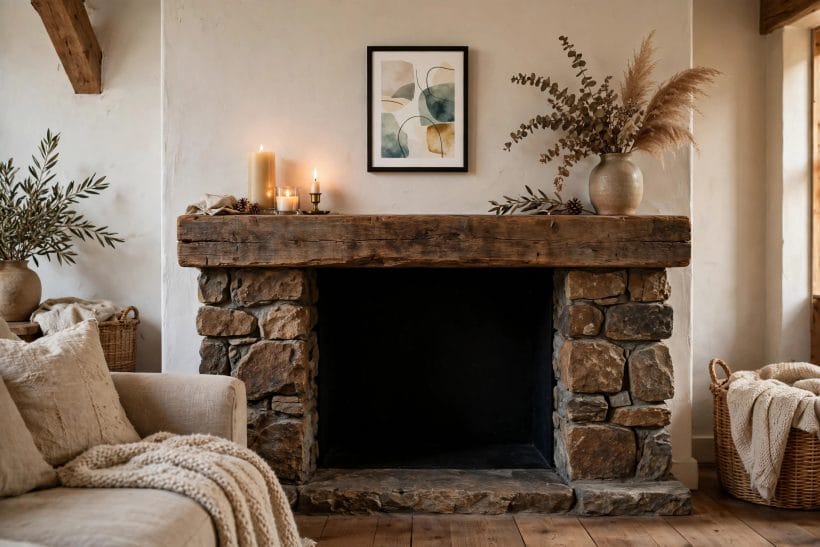
5. Choose a Fixing Suited to the Wall
A picture above a fireplace hangs over a mantel shelf, often over a hearth, and sometimes over the most used seat in the room. A fixing that fails there does more than damage a frame; it can damage the mantel, the hearth and anything below. The wall above a fireplace may be brick, stone, plaster or a panelled surface, and each behaves differently. Weight matters too, since a large glazed frame is considerably heavier than a small unglazed print, and the fixing should suit both the weight of the piece and the nature of the wall. This is not a detail to improvise.
For heavier pieces, and for any wall where the construction is uncertain, a professional is the right person to advise on and carry out the fixing. They can judge the wall, the load and the appropriate hardware, and they can spot problems, such as a surface that will not hold a fixing reliably, before anything is hung. Lighter pieces on a straightforward wall are less demanding, but the same principle applies: the fixing should be chosen for the actual wall and the actual weight, not borrowed from a different wall in a different room. A frame that feels secure when first hung should still feel secure months later, through changes in temperature and humidity that are common around a fireplace.
Leaning a large frame on the mantel, rather than hanging it, is sometimes presented as the easy alternative, and it has its own merits, which are covered later in this guide. Even a leaning frame needs a secure footing and a wall it can rest against safely, and it should never be balanced precariously where a bump could topple it. Whatever method is chosen, the test is the same: the art should stay exactly where it is put, through everyday life in the room, without worry. If there is any doubt about the wall or the weight, that doubt is best resolved by a professional before the picture goes up, not after it comes down.
6. Lean or Hang: Pick the Safer Display
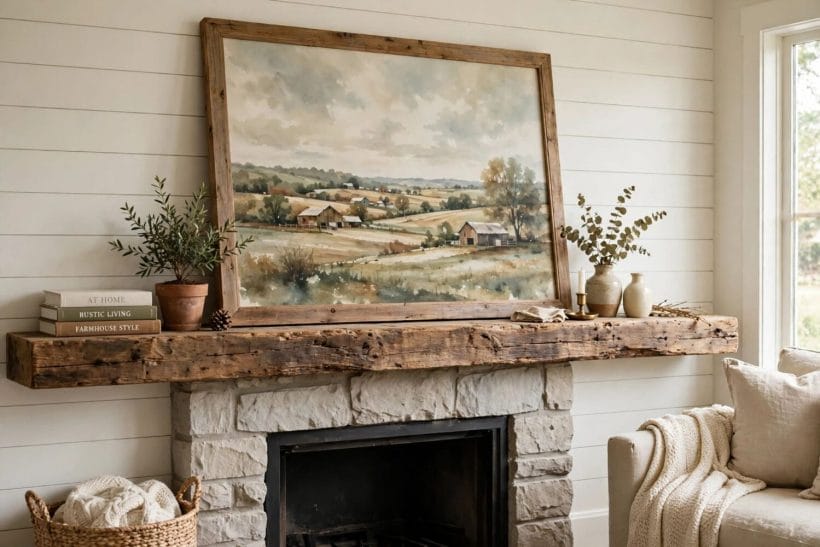
Leaning art on a mantel has become popular, and it is easy to see why. A large frame resting on the shelf looks relaxed and informal, it can be swapped without new holes in the wall, and it suits a layered, collected look. It also works well where hanging is difficult, for instance above a stone or brick chimney breast where fixings are more involved. A leaning piece can be the right answer, particularly for a single large artwork that would otherwise dominate the wall. But leaning is not automatically the safer or easier option, and it suits some rooms better than others.
The main consideration is stability. A leaning frame needs a deep enough mantel shelf to sit securely, a wall it can rest against without slipping, and a position where it will not be knocked by everyday activity around the fireplace. Homes with small children, lively pets or a mantel that doubles as a busy display shelf may find a hung frame more secure in practice. A hung frame also frees the shelf itself, leaving room for candles, plants or seasonal objects without crowding the base of the picture. The choice is therefore less about fashion and more about the household and the mantel in question.
There is also a middle path that many rooms use well: a hung main piece with smaller leaning pieces beside it, or a leaning main piece anchored by a hung smaller frame. Whatever combination is chosen, the arrangement should look deliberate rather than accidental. Frames that lean at slightly different angles, or that overlap awkwardly, can make the mantel look untidy rather than relaxed. Related ideas for tiny living room arrangements show how a single clear anchor piece, hung or leaned, usually calms a small wall more effectively than several competing frames. Choose one anchor, support it properly, and let the rest of the mantel follow its lead.
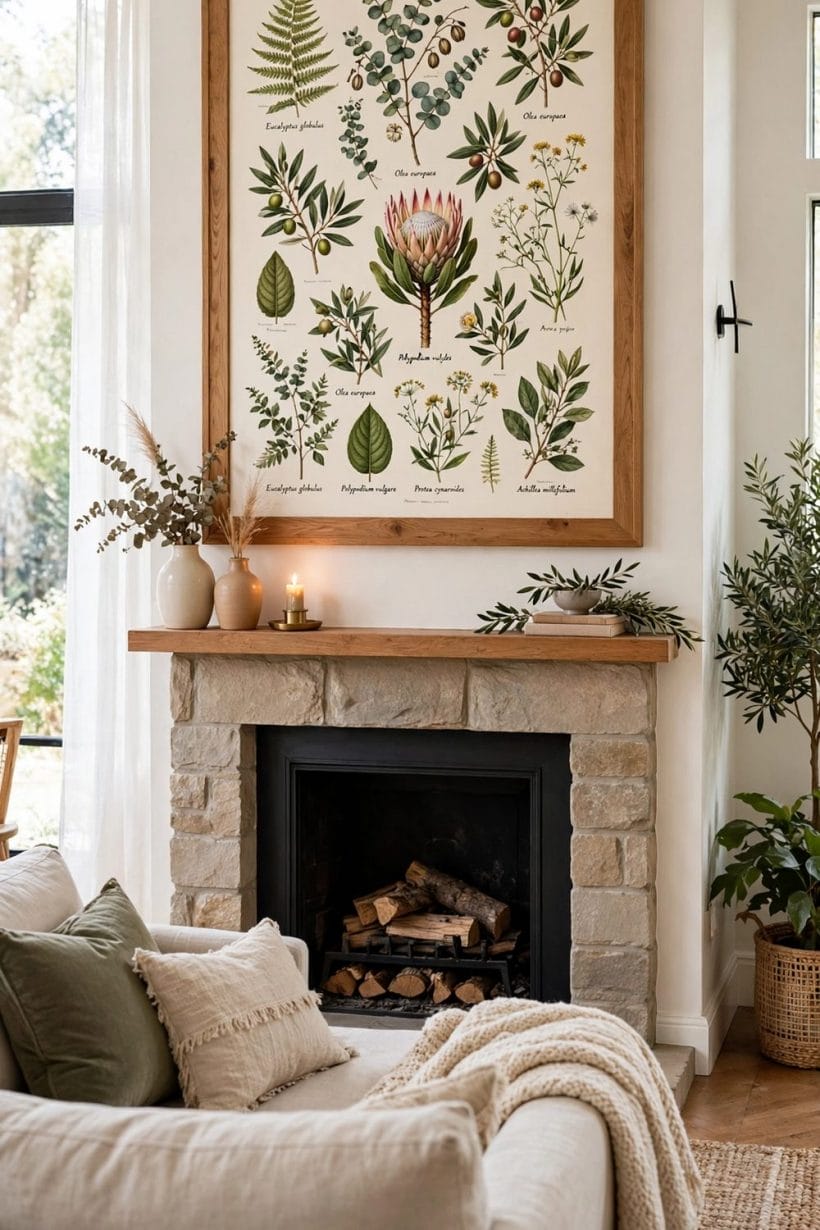
7. Style the Mantel Around the Art, Not Over It
Once the art is in place, the mantel shelf itself still needs attention, and the temptation is to fill it. Candles, vases, plants, books, ornaments and seasonal decorations all compete for the same narrow shelf, and the result is often a mantel that fights the picture above it rather than supporting it. The art should remain the clear focal point of the wall. Objects on the shelf should frame it, echo a colour within it or add a touch of life at its edges, but they should not climb up into its visual territory or distract from it. Less, in this particular spot, is almost always more.
A useful habit is to style the shelf in layers of height that stay well below the bottom of the frame. A pair of candlesticks at the ends, a low plant or a small stack of books can add warmth without challenging the picture. Symmetry is not required; in fact, a slightly informal arrangement often looks more inviting than a rigidly mirrored one. What matters is that the eye can rest on the art first and then wander pleasantly across the shelf, rather than being pulled in several directions at once. If removing an object improves the view, that object probably belongs elsewhere in the room.
Seasonal changes deserve the same restraint. A mantel dressed for a celebration can be delightful, but garlands and decorations that obscure the lower edge of the frame or crowd the shelf will undo the careful placement of the art. Keep decorations below the frame, keep the centre of the shelf relatively clear so the fire opening and the art stay connected, and let the picture carry the wall through the seasons. Farmhouse-style rooms, covered in farmhouse living room ideas, often get this balance right, pairing a single strong piece above the mantel with a spare, natural shelf below it. The lesson travels well beyond any one style.
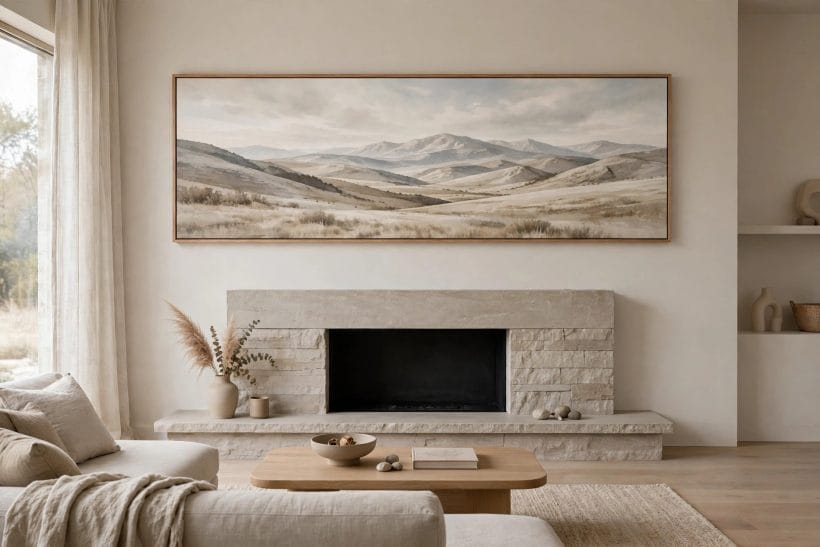
8. Build a Grouping Without Crowding the Wall
A single picture is not the only answer above a fireplace. A pair of matching frames, a trio of small prints or a short row of related pieces can suit a wide mantel or a tall wall better than one large frame, and groupings allow a collection to be shown together. The risk is that a grouping grows by accretion, one frame at a time, until the wall looks cluttered and the fireplace loses its calm focal role. A successful grouping is planned as a single shape, with consistent spacing, a shared visual thread and an overall outline that relates to the mantel below it.
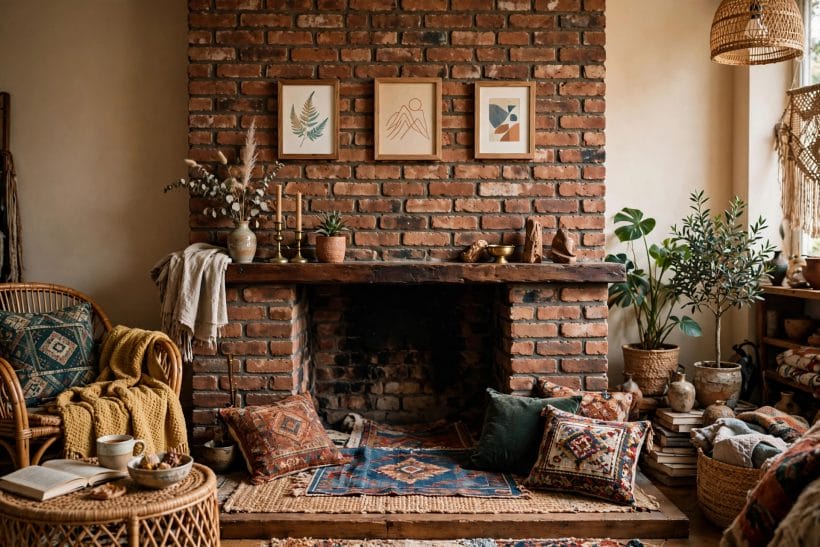
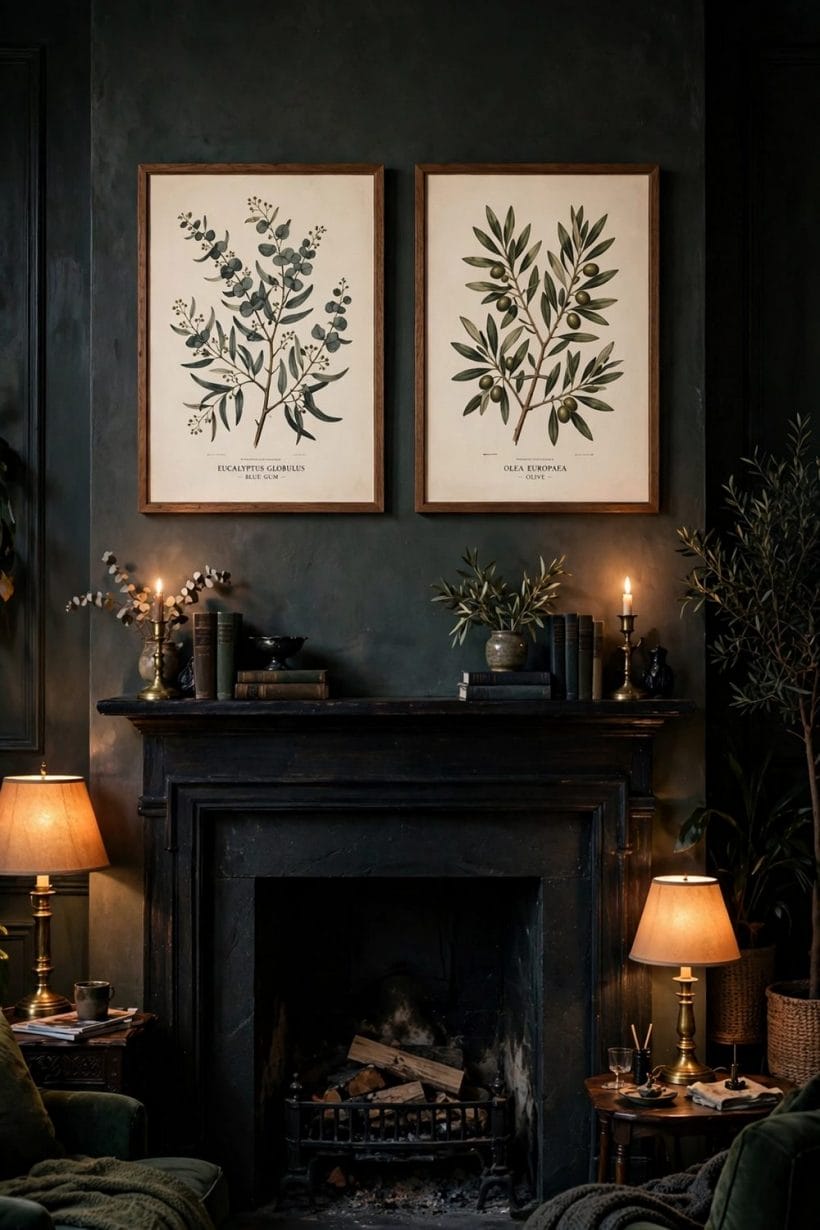
Consistency helps more than variety here. Frames that share a colour, a material or a mount style will read as a set even when the images differ, while a jumble of unrelated frames can look restless above a fireplace. Spacing should be even and generous enough that each piece has its own breathing room, and the group as a whole should sit centrally over the mantel rather than drifting to one side. A pair works beautifully when the two frames match in size and hang at the same height, flanking the centre of the mantel. A trio can be arranged in a row for a wide mantel, or as a gentle cluster when the wall is taller than it is wide.
Do not let a grouping creep beyond the width of the mantel. When the outer frames extend past the shelf ends, the arrangement starts to feel disconnected from the fireplace it is meant to crown. The same applies to height: a grouping that climbs too high up the chimney breast will pull the eye away from the fire and the seating below. Broader interior design ideas treat a mantel grouping as one composition with one job, to anchor the wall, and that discipline is worth borrowing. Start with the overall shape, choose pieces that serve it, and stop before the wall feels full.
9. Match Frame and Finish to the Room
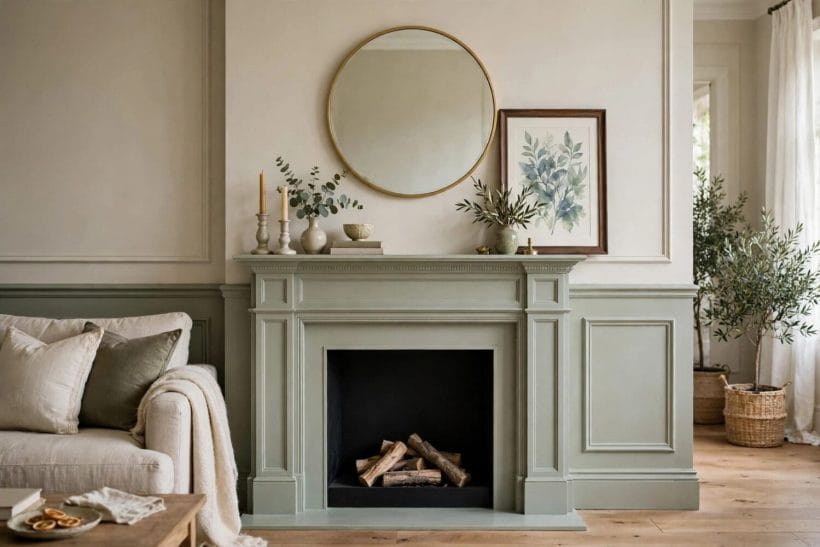
The frame is part of the picture above a fireplace, not merely a border around it. A heavy dark frame can anchor a traditional room and give weight to a light image, while a slim light frame can keep a modern room feeling open. A gilt frame brings warmth and formality, a natural wood frame brings softness, and a black frame brings crisp definition. The right choice depends on the room, the mantel material and the image itself, and the wrong choice can make even a beautiful picture feel like a visitor from another house.
Consider the mantel material first. A painted mantel often pairs well with a frame that echoes the paint or contrasts gently with it, while a stone or brick mantel can carry a warmer wood or a darker frame without the combination feeling harsh. The furniture and the other frames in the room matter too. A room that already mixes frame styles can absorb one more variation, but a room with a consistent framing language will usually look better if the mantel piece speaks the same language. Glazing is another practical choice: glass protects the image and suits most rooms, but it can reflect light from windows opposite the fireplace, so the viewing angle from the main seat is worth checking before settling on a highly reflective finish.
Do not overlook the mount and the finish of the image itself. A generous mount can give a small print presence above a wide mantel, while a print hung without a mount can feel thin in the same spot. Matte finishes tend to sit calmly above a fireplace, since they avoid glare, while glossy finishes can sparkle in a way that competes with the firelight. For broader context on how rooms pull these choices together, tiny house interiors offer a useful lesson in restraint: when space is limited, every finish must earn its place, and the mantel frame is no exception. Choose a frame that belongs to the room, and the art will look as though it always lived there.
10. Live With It, Then Adjust
Even a carefully chosen arrangement deserves a trial period. Art above a fireplace is seen daily, in changing light, from different seats and at different times of year, and impressions formed in the first hour are not always the ones that last. A picture that felt bold and exciting on hanging day can start to feel dominant after a week, while a quieter piece can grow on the household as it settles into the room. Giving the arrangement time, rather than judging it instantly, is one of the most practical dos in this whole guide.
During that trial period, notice how the art behaves across the day. Morning light from one side, evening lamplight and firelight all change how colours and frames read. Notice too whether the picture still feels right when the fire is lit and the room is at its cosiest, since that is when the mantel wall matters most. Small adjustments, a slight shift sideways, a change to the objects on the shelf, a different cushion colour on the nearest chair, can rebalance a wall without any need to rehang. If the picture still feels wrong after a fair trial, that is useful information, not a failure. It may mean the size, the height or the frame needs rethinking, and each of those is easier to change than a damaged wall or a spoiled piece.
Outdoor fireplaces follow the same spirit of patience, though the setting differs; patio fireplace ideas show how an outdoor hearth becomes a gathering place in its own right. Indoors, the equivalent lesson is to let the mantel wall settle before declaring it finished. Art is not a fixture like the mantel itself. It can be moved, swapped and revisited as the room evolves, and the best mantel arrangements are often the ones that have been adjusted gently over time rather than fixed once and never questioned again.
Final Considerations
The dos and don’ts of this wall can be summed up in a handful of habits. Do start from the mantel and judge scale against it. Do set the height for seated eyes. Do respect heat and soot, and seek professional advice about framing, fixing and anything to do with the fire itself. Do choose a fixing suited to the actual wall and weight, and do style the shelf sparingly so the art remains the focal point. Do not let a grouping creep past the mantel, do not hang a precious piece above a hard-working fire without advice, and do not rush a decision that will be lived with every day.
Above all, remember that the mantel wall rewards calm decisions. A single well-chosen piece, hung at a comfortable height, in a frame that belongs to the room, will do more for a living room than a crowded wall of fashionable frames ever will. Take time with the template, check the local rules, ask a professional where the wall or the fire raises a question, and then enjoy the result. The subject, after all, is artwork above fireplace mantel placement at its most practical: a picture, a wall and a fire, brought together in a way that feels natural every time the room is entered.

0 Comments