
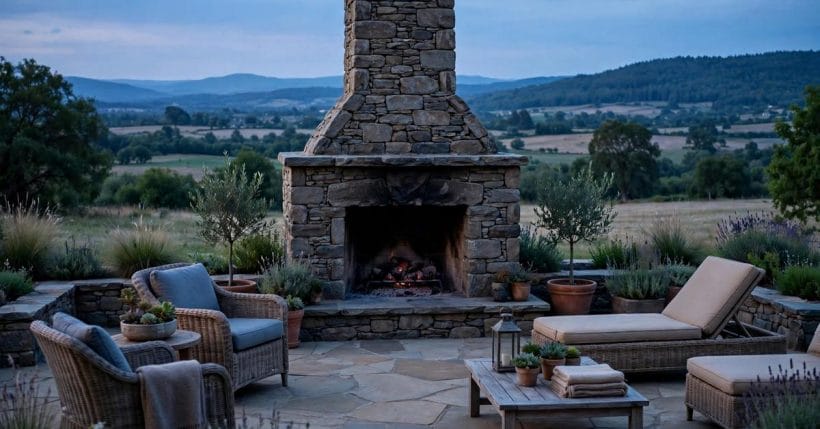
A patio with a fireplace turns an outdoor space into a room you use long after the sun goes down. The fire gives the patio a natural centre, a reason to gather and a source of warmth that stretches the outdoor season at both ends. But a patio fireplace is also a piece of construction that sits close to furniture, planting and people, so it deserves the same care as anything else you build outdoors: sound footing, sensible clearances from anything that can catch fire, and local rules checked before work starts. The ideas below cover the whole picture, from the shape of the fireplace itself to seating, shade, surfaces, lighting and planting, so you can plan a patio that feels welcoming and stays safe. Fireplace and chimney work belongs to qualified professionals, and clearances and local rules should be confirmed for your own home rather than assumed from anything written here.
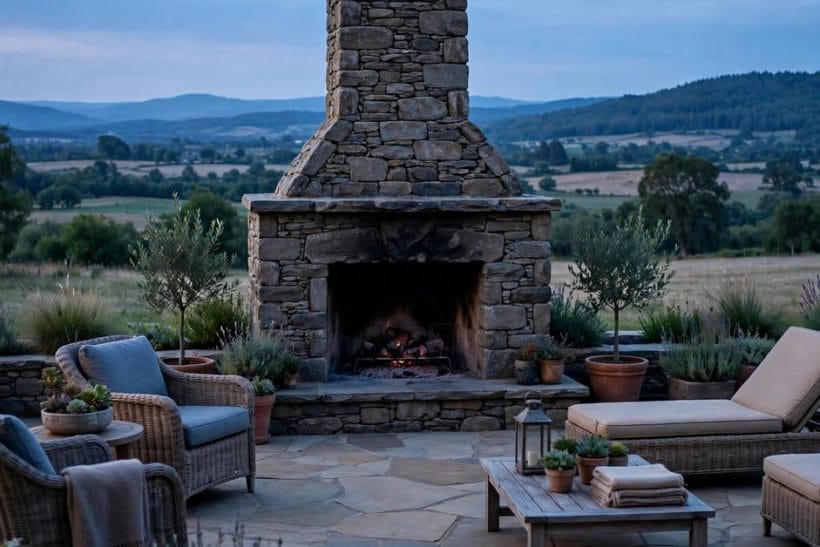
1. Patio Layouts That Put the Fire First
| Item | What it is |
|---|---|
| The Fireplace as the Anchor Wall | Build the fireplace into one end wall of the patio so the whole space faces it naturally, with seating arranged in a shallow arc that lets everyone see the flames without turning around. |
| A Central Fireplace Between Two Seating Zones | Place a freestanding fireplace between a dining zone and a lounging zone so both sides share the warmth, with a low wall or planting keeping the two areas distinct. |
| The Corner Fireplace for Narrow Patios | Tuck the fireplace into a corner to free the long edge of a narrow patio for a table and chairs, keeping the fire visible from the house without dominating the space. |
| A Fireplace Framing the Garden View | Set the fireplace to one side of the main view so the garden stays the backdrop and the fire becomes a foreground feature rather than a block in the middle of the sightline. |
| The Courtyard Patio With Fire at Its Heart | Enclose a small courtyard patio with walls or hedges and centre the fireplace so the space feels like an outdoor room, sheltered from wind and neighbours' sightlines. |
| A Long Patio With the Fire at the Far End | Draw people through a long patio by placing the fireplace at the far end, using the walk itself as part of the evening ritual and keeping the near end open for dining. |
| The Fireplace Beside the House Door | Keep the fireplace close to the door from the house so stepping outside on a cool evening feels easy, with a clear path that never forces guests to squeeze past the fire. |
| A Split-Level Patio With Fire on the Lower Tier | Use a step down to a lower lounging tier with the fireplace built into the retaining wall, giving the fire zone its own level while the upper tier stays open for dining. |
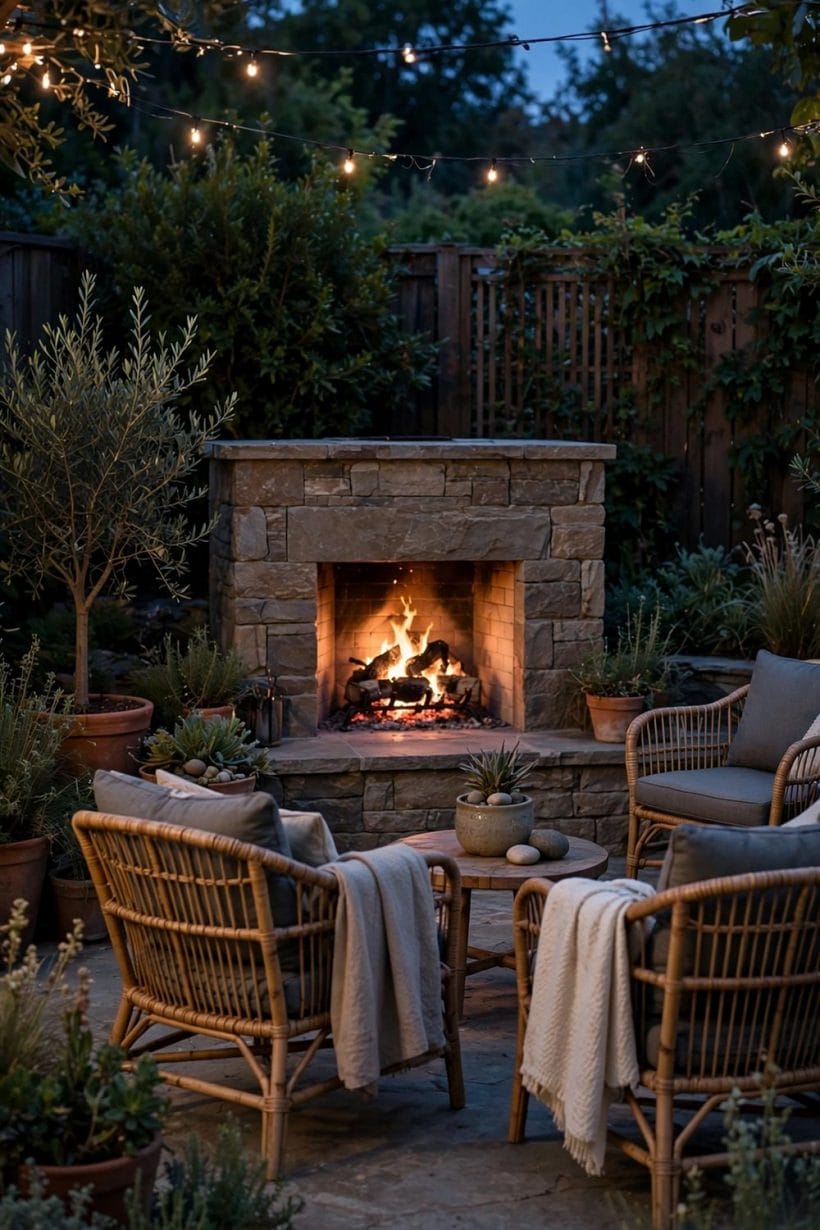
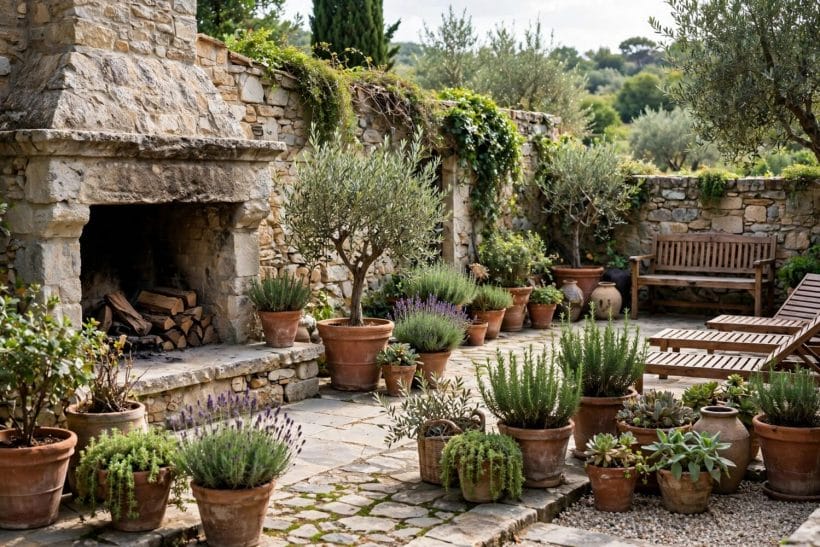
| The Classic Stone Fireplace | A full stone fireplace suits a traditional garden and ages gracefully, with natural variation in the stone that keeps the structure interesting even when the fire is unlit. |
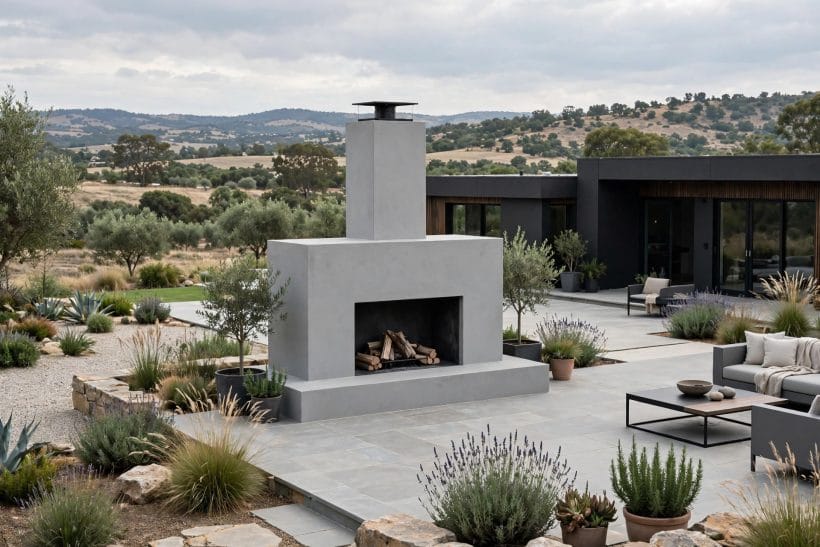
| A Slim Modern Rendered Fireplace | A rendered fireplace with clean lines suits a contemporary patio, keeping the profile slim so the structure reads as architecture rather than as a bulky addition. |
| The Rustic Brick Fireplace | Brick brings warmth and a handmade feel to a patio fireplace, pairing well with timber furniture and planting that softens the edges of the structure. |
| A Fireplace With a Raised Hearth Seat | Extend the hearth into a wide ledge at seat height so it doubles as extra perching space, giving the patio flexible seating without adding more furniture. |
| The Double-Sided Fireplace | A fireplace open on two sides serves two seating areas at once, working well between a dining terrace and a lounge corner where both groups want the glow. |
| A Fireplace With Built-In Log Storage | Build niches for logs into the sides of the fireplace so fuel is close at hand and neatly stored, turning a practical need into part of the design. |
| The Compact Fireplace for Small Patios | Choose a compact fireplace form for a small patio, keeping the footprint tight and the height modest so the structure never overwhelms the space it serves. |
| A Fireplace With a Chimney That Matches the House | Match the chimney's material and proportions to the house so the fireplace reads as part of the home rather than as an unrelated garden structure. |
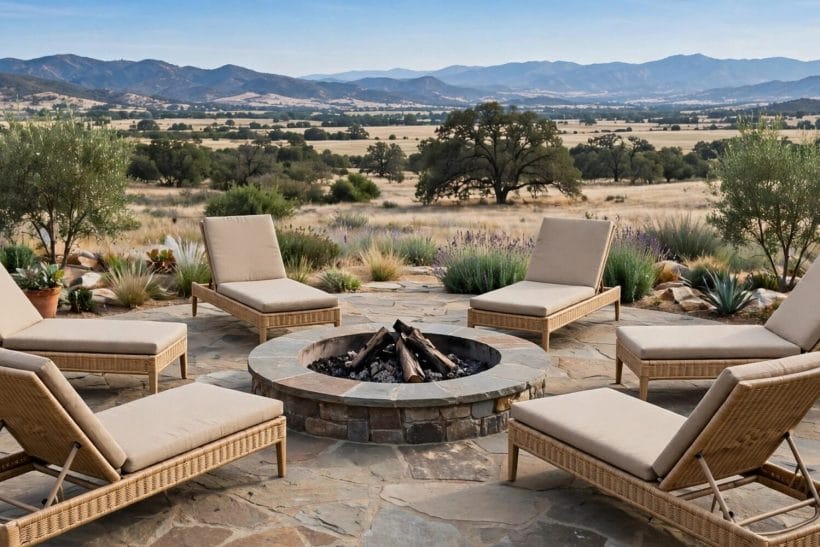
| Deep Lounge Chairs in a Circle | Arrange deep lounge chairs in a loose circle around the fireplace, leaving enough room between chairs for side tables and for people to move without stepping over feet. |
| A Curved Built-In Bench | Build a curved bench facing the fireplace so seating is always available, with cushions stored nearby to keep the bench comfortable and the patio tidy. |
| The Outdoor Sofa Facing the Flames | Place a weatherproof outdoor sofa directly facing the fireplace, with the coffee table between them at a distance that keeps feet warm without crowding the hearth. |
| Swivel Chairs for Flexible Evenings | Use swivel chairs around the fire so guests can turn between the flames, the table and the garden without dragging furniture across the patio. |
| A Hanging Chair at the Edge of the Glow | Hang a chair at the edge of the fire's glow for a quiet corner within the gathering, giving one person a retreat that still belongs to the group. |
| Floor Cushions for Casual Gatherings | Keep a stack of weatherproof floor cushions for casual evenings, letting larger groups gather around the fire without filling the patio with chairs. |
| A Daybed Near the Fireplace | Place a daybed within sight of the fireplace for long, lazy evenings, dressed with outdoor cushions and a throw that can be brought inside after use. |
| Bar Stools at a Hearth-Side Counter | Run a low counter along one side of the fireplace zone with bar stools, giving guests a place to set a drink while they watch the fire. |
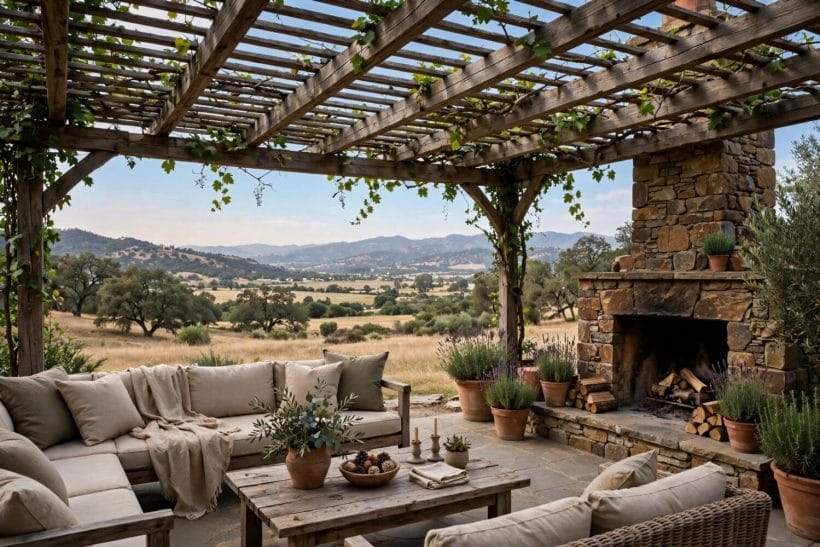
| A Pergola Over the Seating Area | Build a pergola over the seating area but keep it clear of the fireplace and chimney, so the shade structure and the fire never compete for the same airspace. |
| A Retractable Awning for Daytime Shade | Fit a retractable awning over the lounging zone so the patio is shaded by day and open to the sky by evening, when the fire becomes the focus. |
| A Sail Shade Angled Away From the Chimney | Angle a sail shade away from the chimney so it shelters the seating without sitting above the fire, keeping fabric well clear of heat and sparks. |
| A Solid Roof Over the Dining End Only | Roof only the dining end of the patio and leave the fireplace end open to the sky, so smoke and heat rise freely while diners stay dry. |
| Tall Planting as a Windbreak | Plant tall, dense shrubs on the windward side of the patio to calm the air around the fire, since wind makes flames unpredictable and smoke hard to live with. |
| A Glass Screen Against the Breeze | Fit a low glass screen on the exposed side of the seating area to cut the breeze without blocking the view, keeping the fire steady and the conversation comfortable. |
| A Movable Screen for Flexible Shelter | Use a movable outdoor screen that can be shifted as the wind changes, giving the fire zone adaptable shelter without any permanent structure near the flames. |
| Stone Flags That Stay Cool Underfoot | Lay natural stone flags around the fireplace, since stone handles heat well and stays comfortable underfoot on warm days when the fire is unlit. |
| A Non-Combustible Hearth Apron | Extend a non-combustible apron around the hearth in stone or tile, giving the fire a safe, easy-to-clean zone that also marks the seating boundary. |
| Gravel for a Relaxed Fire Patio | Use compacted gravel beyond the hearth apron for a relaxed, permeable surface that drains well and suits a rustic fireplace setting. |
| Large-Format Tiles for a Modern Patio | Choose large-format outdoor tiles for a modern fireplace patio, keeping grout lines few and the surface smooth under lounge furniture. |
| A Rug That Can Live Outdoors | Layer a weatherproof outdoor rug over the hard surface to soften the seating zone, keeping it well clear of the hearth apron and easy to bring inside in bad weather. |
| Brick Paving in a Basket Weave | Lay brick paving in a basket weave around the fireplace for a traditional feel, with the pattern giving the patio texture even in the off-season. |
| A Level Surface for Safe Movement | Keep the whole fire zone level and free of trip edges, since people move around a fireplace in low light and a step nobody notices by day becomes a hazard at night. |
| Low Wall Lights That Never Compete With the Fire | Fit low, warm wall lights around the patio at a gentle brightness so the fire stays the brightest thing in view and the lighting simply keeps paths safe. |
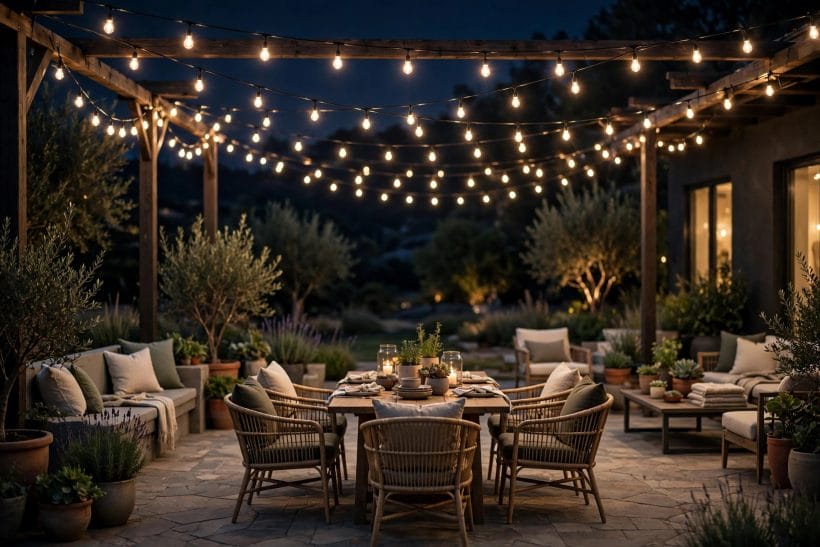
| String Lights Over the Seating Zone | Hang string lights over the seating zone, well away from the chimney, to give the patio a festive glow that complements rather than outshines the flames. |
| Uplights on Trees Behind the Fireplace | Place uplights at the base of trees behind the fireplace so the garden glows behind the fire, giving depth to the evening view. |
| Step Lights Along the Patio Edges | Fit step lights along any level changes near the fire zone so guests can move safely after dark without harsh overhead light spoiling the mood. |
| Lanterns on the Table and Hearth Edge | Set lanterns on the table and on the outer hearth edge, away from the fire itself, for a soft, movable light that can be adjusted as the evening goes on. |
| A Dimmer on the Fixed Patio Lights | Put fixed patio lights on a dimmer so the whole space can be turned down once the fire is lit, letting the flames take over as the main light source. |
| Solar Markers Along the Garden Path | Place solar markers along the path from the house to the fire patio so guests find their way in the dark without needing bright lights everywhere. |
| Candlelight in Hurricane Shades | Use candles in hurricane shades on side tables for a flickering light that echoes the fire, keeping naked flames sheltered from the breeze. |
| Scented Planting Near the Seating | Plant scented shrubs near the seating so the evening air carries fragrance alongside woodsmoke, choosing varieties that thrive in your climate and soil. |
| Grasses That Move in the Evening Breeze | Use ornamental grasses at the patio edges for movement and softness, keeping them well back from the fireplace and trimmed so dry growth never accumulates near the fire. |
| Climbers on the Pergola Away From the Chimney | Grow climbers over the pergola on the seating side only, never over or near the chimney, so the planting frames the space without creating a fire risk. |
| Potted Trees for Flexible Greenery | Place trees in large pots around the patio so the greenery can be rearranged with the seasons, giving shade by day and structure by night. |
| A Herb Border Beside the Dining Zone | Plant a herb border beside the dining end of the patio so cooks can snip fresh herbs during outdoor meals, keeping the planting useful as well as pretty. |
| Evergreens for Year-Round Structure | Use evergreen shrubs as the backbone of the planting so the fire patio looks composed in winter too, when the fire gets its heaviest use. |
| Ground Cover Instead of Bare Soil | Cover bare soil around the patio with ground cover plants to keep dust down and the space feeling finished, choosing varieties that suit the light and foot traffic. |
| A Long Table Within Sight of the Flames | Place a long dining table where diners can see the fireplace, so the meal and the fire belong to the same evening rather than feeling like separate events. |
| A Built-In Grill Station at the Patio Edge | Site any cooking equipment at the patio edge, away from the fireplace and seating, with its own clearances and surfaces, so cooking and lounging never crowd each other. |
| A Sideboard for Outdoor Dining Essentials | Keep a weatherproof sideboard near the dining zone for plates, glasses and throws, so everything for the evening is close at hand and the table stays clear. |
| A Fire-Friendly Table Centrepiece | Dress the table with a low, stable centrepiece that never blocks sightlines to the fire, keeping candles and decorations well away from anything flammable. |
| Warm Throws on Every Chair | Drape a warm throw over every dining chair on cool evenings so guests can stay outside comfortably long after the meal ends. |
| A Drinks Station Near the Fire Zone | Set up a small drinks station near the fire zone so hosts are not constantly going inside, keeping the gathering together around the flames. |
| A Breakfast Table in the Morning Sun | Place a small table where the morning sun falls so the fire patio earns its keep by day too, becoming a breakfast spot long before the evening fire is lit. |
| A Firewood Store That Stays Dry | Build a covered log store near the fireplace but not against it, keeping fuel dry and accessible while respecting the clearances the fire needs. |
| A Basket of Throws by the Door | Keep a basket of outdoor throws by the door from the house so anyone stepping out on a cool evening can grab warmth without thinking about it. |
| A Plan for Smoke on Still Nights | Accept that still nights bring smoke down into the seating area, and plan the seating so guests can shift upwind rather than sitting in the smoke's path. |
| A Cover for the Fireplace in Winter | Cover the fireplace opening in the off-season to keep out rain, leaves and nesting creatures, removing the cover fully before any fire is lit. |
| A Routine for Ash and Cleaning | Let ash cool completely before handling it, and keep a metal container with a lid for ash disposal, since ash can hold heat far longer than it appears to. |
| Lighting the Fire Safely Every Time | Light the fire with the maker's recommended method and dry fuel only, never with flammable liquids, and keep the fire attended while it burns. |
| A Wind Check Before Every Fire | Check the wind before lighting: strong or gusty wind makes a patio fire hard to manage and pushes smoke and sparks where they are not wanted. |
| An End-of-Evening Shutdown Habit | Build a shutdown habit into every evening: fire fully out, ash safely contained, cushions covered or brought in, and the patio left tidy for the next use. |
| A Wall-Mounted Fire Feature for Tiny Patios | On a tiny patio, consider a slim wall-mounted fire feature that gives the glow and warmth without the footprint of a full fireplace structure. |
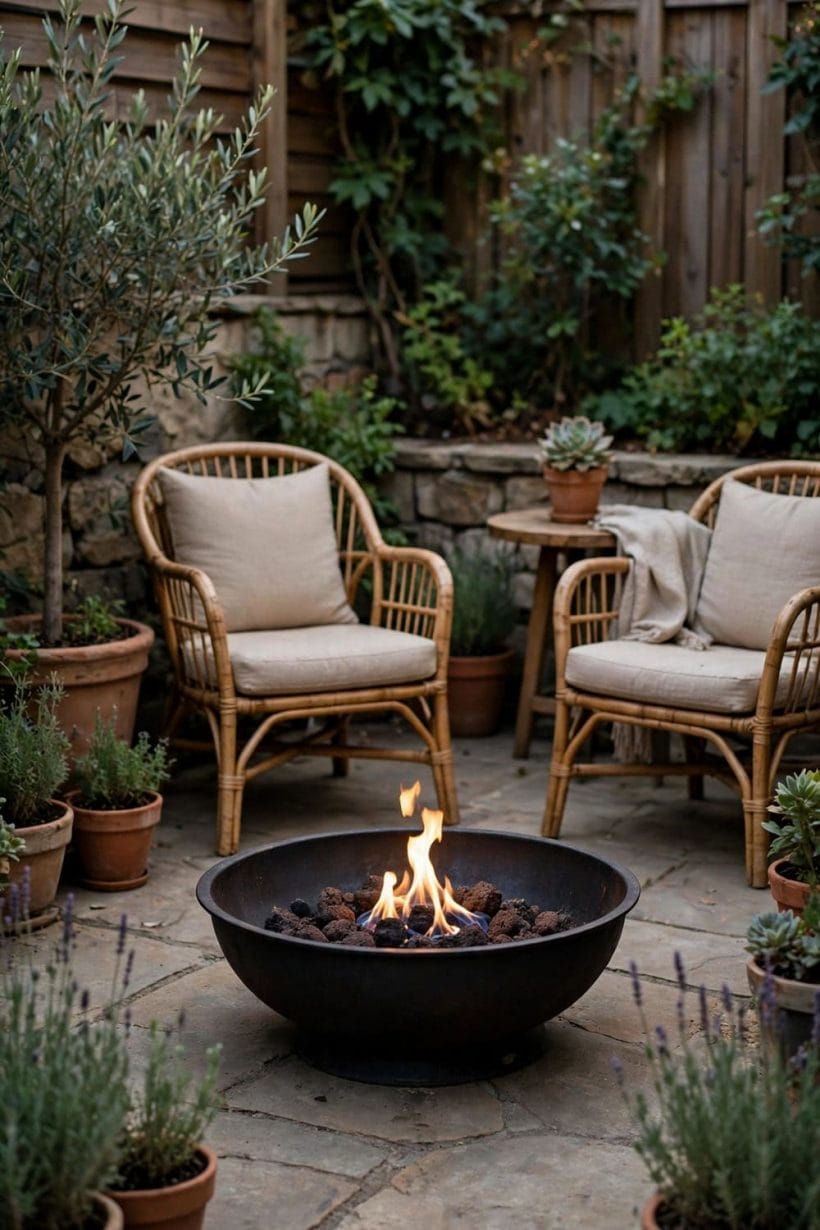
| A Fire Bowl as the Centrepiece | Use a fire bowl as the centrepiece of a small patio table arrangement, keeping it on a non-combustible surface with clear space around it. |
| A Fireplace Shared With the Neighbouring Wall | On a boundary patio, build the fireplace against a suitable existing wall where local rules allow, saving space while keeping the structure sound. |
| Foldable Furniture for a Flexible Fire Patio | Choose foldable chairs and a folding table for a small fire patio so the space can switch between an open courtyard by day and a fire gathering by night. |
| Vertical Planting to Save Floor Space | Grow planting vertically on walls and trellises around a small fire patio, keeping the floor free for seating and movement. |
| A Mirror to Double the Glow | Hang a weatherproof mirror on the wall opposite the fire to double the glow visually, making a small patio feel larger and warmer. |
| One Hero Piece Instead of Many | On a small patio, let the fireplace be the single hero piece and keep everything else quiet, so the space feels deliberate rather than crowded. |
1. The Fireplace as the Anchor Wall
Build the fireplace into one end wall of the patio so the whole space faces it naturally, with seating arranged in a shallow arc that lets everyone see the flames without turning around.
2. A Central Fireplace Between Two Seating Zones
Place a freestanding fireplace between a dining zone and a lounging zone so both sides share the warmth, with a low wall or planting keeping the two areas distinct.
3. The Corner Fireplace for Narrow Patios
Tuck the fireplace into a corner to free the long edge of a narrow patio for a table and chairs, keeping the fire visible from the house without dominating the space.
4. A Fireplace Framing the Garden View
Set the fireplace to one side of the main view so the garden stays the backdrop and the fire becomes a foreground feature rather than a block in the middle of the sightline.
5. The Courtyard Patio With Fire at Its Heart
Enclose a small courtyard patio with walls or hedges and centre the fireplace so the space feels like an outdoor room, sheltered from wind and neighbours’ sightlines.
6. A Long Patio With the Fire at the Far End
Draw people through a long patio by placing the fireplace at the far end, using the walk itself as part of the evening ritual and keeping the near end open for dining.
7. The Fireplace Beside the House Door
Keep the fireplace close to the door from the house so stepping outside on a cool evening feels easy, with a clear path that never forces guests to squeeze past the fire.
8. A Split-Level Patio With Fire on the Lower Tier
Use a step down to a lower lounging tier with the fireplace built into the retaining wall, giving the fire zone its own level while the upper tier stays open for dining.
When you plan the layout, think about how the patio will be used on an ordinary evening rather than on a special occasion. The fireplace should be visible from the seats people actually choose, not just from the centre of the patio, and the path from the house to those seats should feel natural in the dark. Consider where guests will stand while they wait for a seat, where children will play, and where the firewood and throws will live, since all of these small decisions shape whether the patio feels effortless or awkward. A layout that works for a quiet evening for two and for a larger gathering is worth more than one designed around a single party.
2. Fireplace Forms and Materials
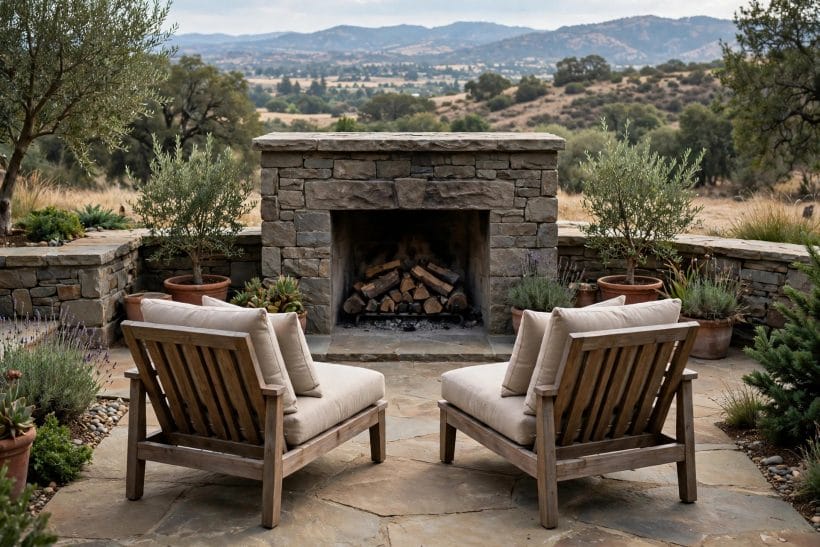
9. The Classic Stone Fireplace
A full stone fireplace suits a traditional garden and ages gracefully, with natural variation in the stone that keeps the structure interesting even when the fire is unlit.
10. A Slim Modern Rendered Fireplace
A rendered fireplace with clean lines suits a contemporary patio, keeping the profile slim so the structure reads as architecture rather than as a bulky addition.
11. The Rustic Brick Fireplace
Brick brings warmth and a handmade feel to a patio fireplace, pairing well with timber furniture and planting that softens the edges of the structure.
12. A Fireplace With a Raised Hearth Seat
Extend the hearth into a wide ledge at seat height so it doubles as extra perching space, giving the patio flexible seating without adding more furniture.
13. The Double-Sided Fireplace
A fireplace open on two sides serves two seating areas at once, working well between a dining terrace and a lounge corner where both groups want the glow.
14. A Fireplace With Built-In Log Storage
Build niches for logs into the sides of the fireplace so fuel is close at hand and neatly stored, turning a practical need into part of the design.
15. The Compact Fireplace for Small Patios
Choose a compact fireplace form for a small patio, keeping the footprint tight and the height modest so the structure never overwhelms the space it serves.
16. A Fireplace With a Chimney That Matches the House
Match the chimney’s material and proportions to the house so the fireplace reads as part of the home rather than as an unrelated garden structure.
The material of the fireplace also sets the maintenance story for years to come. Stone weathers gracefully and needs little more than occasional cleaning, while rendered finishes may need repainting or repair if they crack, and brickwork benefits from periodic checks of mortar joints. Ask the builder how each material ages in your climate and what upkeep it expects, since a fireplace that looks perfect on completion day but demands constant attention will disappoint. The right material is the one whose ageing you will enjoy and whose maintenance you will actually do.
3. Seating Arranged Around the Fire
17. Deep Lounge Chairs in a Circle
Arrange deep lounge chairs in a loose circle around the fireplace, leaving enough room between chairs for side tables and for people to move without stepping over feet.
18. A Curved Built-In Bench
Build a curved bench facing the fireplace so seating is always available, with cushions stored nearby to keep the bench comfortable and the patio tidy.
19. The Outdoor Sofa Facing the Flames
Place a weatherproof outdoor sofa directly facing the fireplace, with the coffee table between them at a distance that keeps feet warm without crowding the hearth.
20. Swivel Chairs for Flexible Evenings
Use swivel chairs around the fire so guests can turn between the flames, the table and the garden without dragging furniture across the patio.
21. A Hanging Chair at the Edge of the Glow
Hang a chair at the edge of the fire’s glow for a quiet corner within the gathering, giving one person a retreat that still belongs to the group.
22. Floor Cushions for Casual Gatherings
Keep a stack of weatherproof floor cushions for casual evenings, letting larger groups gather around the fire without filling the patio with chairs.
23. A Daybed Near the Fireplace
Place a daybed within sight of the fireplace for long, lazy evenings, dressed with outdoor cushions and a throw that can be brought inside after use.
24. Bar Stools at a Hearth-Side Counter
Run a low counter along one side of the fireplace zone with bar stools, giving guests a place to set a drink while they watch the fire.
Seating comfort around a fire is about distance as much as furniture. Sit in each seat position and check whether the heat feels pleasant or overpowering, whether smoke drifts into faces when the wind shifts, and whether everyone can join the conversation without raising their voices. Movable chairs earn their keep here, since they let guests adjust their own distance as the fire grows or dies down. Fixed benches look tidy but lock people into one distance, so pair them with at least some movable seating for flexibility.
4. Shade and Shelter Over the Fire Zone
25. A Pergola Over the Seating Area
Build a pergola over the seating area but keep it clear of the fireplace and chimney, so the shade structure and the fire never compete for the same airspace.
26. A Retractable Awning for Daytime Shade
Fit a retractable awning over the lounging zone so the patio is shaded by day and open to the sky by evening, when the fire becomes the focus.
27. A Sail Shade Angled Away From the Chimney
Angle a sail shade away from the chimney so it shelters the seating without sitting above the fire, keeping fabric well clear of heat and sparks.
28. A Solid Roof Over the Dining End Only
Roof only the dining end of the patio and leave the fireplace end open to the sky, so smoke and heat rise freely while diners stay dry.
29. Tall Planting as a Windbreak
Plant tall, dense shrubs on the windward side of the patio to calm the air around the fire, since wind makes flames unpredictable and smoke hard to live with.
30. A Glass Screen Against the Breeze
Fit a low glass screen on the exposed side of the seating area to cut the breeze without blocking the view, keeping the fire steady and the conversation comfortable.
31. A Movable Screen for Flexible Shelter
Use a movable outdoor screen that can be shifted as the wind changes, giving the fire zone adaptable shelter without any permanent structure near the flames.
Shelter over a fire zone deserves a second thought about rain as well as sun. A roof or awning that keeps diners dry can also trap smoke if it extends over or near the fireplace, so keep overhead cover clear of the fire and chimney and let smoke rise freely. If the patio must be usable in rain, consider a layout where the sheltered dining area and the open fire area are distinct zones, so no one has to choose between staying dry and enjoying the fire. Good drainage under the shelter matters too, since water pooling near seating quickly ruins an evening.
5. Surfaces Underfoot Around the Fire
32. Stone Flags That Stay Cool Underfoot
Lay natural stone flags around the fireplace, since stone handles heat well and stays comfortable underfoot on warm days when the fire is unlit.
33. A Non-Combustible Hearth Apron
Extend a non-combustible apron around the hearth in stone or tile, giving the fire a safe, easy-to-clean zone that also marks the seating boundary.
34. Gravel for a Relaxed Fire Patio
Use compacted gravel beyond the hearth apron for a relaxed, permeable surface that drains well and suits a rustic fireplace setting.
35. Large-Format Tiles for a Modern Patio
Choose large-format outdoor tiles for a modern fireplace patio, keeping grout lines few and the surface smooth under lounge furniture.
36. A Rug That Can Live Outdoors
Layer a weatherproof outdoor rug over the hard surface to soften the seating zone, keeping it well clear of the hearth apron and easy to bring inside in bad weather.
37. Brick Paving in a Basket Weave
Lay brick paving in a basket weave around the fireplace for a traditional feel, with the pattern giving the patio texture even in the off-season.
38. A Level Surface for Safe Movement
Keep the whole fire zone level and free of trip edges, since people move around a fireplace in low light and a step nobody notices by day becomes a hazard at night.
Surfaces around a fireplace take more abuse than the rest of the patio: dropped food, ash, wet feet and the occasional spark all land there. Choose a surface for the hearth zone that can be swept and washed easily, and keep any rug or soft furnishing well outside the apron where sparks or ash could reach it. Check that the surface stays safe when wet, since evening dew and spilled drinks make smooth tiles treacherous, and keep the route from the seating to the house free of loose gravel or uneven edges that catch feet in low light.
6. Lighting the Patio After Dark
39. Low Wall Lights That Never Compete With the Fire
Fit low, warm wall lights around the patio at a gentle brightness so the fire stays the brightest thing in view and the lighting simply keeps paths safe.
40. String Lights Over the Seating Zone
Hang string lights over the seating zone, well away from the chimney, to give the patio a festive glow that complements rather than outshines the flames.
41. Uplights on Trees Behind the Fireplace
Place uplights at the base of trees behind the fireplace so the garden glows behind the fire, giving depth to the evening view.
42. Step Lights Along the Patio Edges
Fit step lights along any level changes near the fire zone so guests can move safely after dark without harsh overhead light spoiling the mood.
43. Lanterns on the Table and Hearth Edge
Set lanterns on the table and on the outer hearth edge, away from the fire itself, for a soft, movable light that can be adjusted as the evening goes on.
44. A Dimmer on the Fixed Patio Lights
Put fixed patio lights on a dimmer so the whole space can be turned down once the fire is lit, letting the flames take over as the main light source.
45. Solar Markers Along the Garden Path
Place solar markers along the path from the house to the fire patio so guests find their way in the dark without needing bright lights everywhere.
46. Candlelight in Hurricane Shades
Use candles in hurricane shades on side tables for a flickering light that echoes the fire, keeping naked flames sheltered from the breeze.
Lighting design around a fire patio is a balancing act between safety and atmosphere. Paths, steps and level changes need enough light to be safe, but every fixed light competes with the fire for attention. The trick is to keep fixed lighting low, warm and indirect, and to let the fire provide the main glow once it is lit. Test the lighting at night with the fire burning before finalising it, since a scheme that looks right in daylight can feel harsh or dim once flames become the brightest thing in view.
7. Planting That Suits a Fire Patio
47. Scented Planting Near the Seating
Plant scented shrubs near the seating so the evening air carries fragrance alongside woodsmoke, choosing varieties that thrive in your climate and soil.
48. Grasses That Move in the Evening Breeze
Use ornamental grasses at the patio edges for movement and softness, keeping them well back from the fireplace and trimmed so dry growth never accumulates near the fire.
49. Climbers on the Pergola Away From the Chimney
Grow climbers over the pergola on the seating side only, never over or near the chimney, so the planting frames the space without creating a fire risk.
50. Potted Trees for Flexible Greenery
Place trees in large pots around the patio so the greenery can be rearranged with the seasons, giving shade by day and structure by night.
51. A Herb Border Beside the Dining Zone
Plant a herb border beside the dining end of the patio so cooks can snip fresh herbs during outdoor meals, keeping the planting useful as well as pretty.
52. Evergreens for Year-Round Structure
Use evergreen shrubs as the backbone of the planting so the fire patio looks composed in winter too, when the fire gets its heaviest use.
53. Ground Cover Instead of Bare Soil
Cover bare soil around the patio with ground cover plants to keep dust down and the space feeling finished, choosing varieties that suit the light and foot traffic.
Planting near a fire patio needs the same clearances mindset as furniture. Keep dry, flammable growth well away from the fireplace, prune regularly so dead material never accumulates near the fire, and choose plants that suit the heat and light conditions of the spot rather than fighting them. Scented plants earn their place near seating, but avoid anything with highly flammable oils close to the fire zone. A planting plan that is easy to maintain will stay safe, while one that demands constant cutting back near a fireplace will eventually be neglected.
8. Dining Beside the Fire
54. A Long Table Within Sight of the Flames
Place a long dining table where diners can see the fireplace, so the meal and the fire belong to the same evening rather than feeling like separate events.
55. A Built-In Grill Station at the Patio Edge
Site any cooking equipment at the patio edge, away from the fireplace and seating, with its own clearances and surfaces, so cooking and lounging never crowd each other.
56. A Sideboard for Outdoor Dining Essentials
Keep a weatherproof sideboard near the dining zone for plates, glasses and throws, so everything for the evening is close at hand and the table stays clear.
57. A Fire-Friendly Table Centrepiece
Dress the table with a low, stable centrepiece that never blocks sightlines to the fire, keeping candles and decorations well away from anything flammable.
58. Warm Throws on Every Chair
Drape a warm throw over every dining chair on cool evenings so guests can stay outside comfortably long after the meal ends.
59. A Drinks Station Near the Fire Zone
Set up a small drinks station near the fire zone so hosts are not constantly going inside, keeping the gathering together around the flames.
60. A Breakfast Table in the Morning Sun
Place a small table where the morning sun falls so the fire patio earns its keep by day too, becoming a breakfast spot long before the evening fire is lit.
Evenings around a patio fire also benefit from thinking about who will actually use the space. A patio designed only for large gatherings can feel empty and exposed for a couple on a quiet night, while one designed only for two cannot stretch when friends visit. The answer is usually a core seating arrangement that feels complete with two people, plus flexible extras — a bench, floor cushions or folding chairs — that appear when the group grows. This way the patio never feels either crowded or abandoned, whatever the evening brings.
9. Evenings, Seasons and Practical Comfort
61. A Firewood Store That Stays Dry
Build a covered log store near the fireplace but not against it, keeping fuel dry and accessible while respecting the clearances the fire needs.
62. A Basket of Throws by the Door
Keep a basket of outdoor throws by the door from the house so anyone stepping out on a cool evening can grab warmth without thinking about it.
63. A Plan for Smoke on Still Nights
Accept that still nights bring smoke down into the seating area, and plan the seating so guests can shift upwind rather than sitting in the smoke’s path.
64. A Cover for the Fireplace in Winter
Cover the fireplace opening in the off-season to keep out rain, leaves and nesting creatures, removing the cover fully before any fire is lit.
65. A Routine for Ash and Cleaning
Let ash cool completely before handling it, and keep a metal container with a lid for ash disposal, since ash can hold heat far longer than it appears to.
66. Lighting the Fire Safely Every Time
Light the fire with the maker’s recommended method and dry fuel only, never with flammable liquids, and keep the fire attended while it burns.
67. A Wind Check Before Every Fire
Check the wind before lighting: strong or gusty wind makes a patio fire hard to manage and pushes smoke and sparks where they are not wanted.
68. An End-of-Evening Shutdown Habit
Build a shutdown habit into every evening: fire fully out, ash safely contained, cushions covered or brought in, and the patio left tidy for the next use.
Dining beside a fire works best when the practical side is planned as carefully as the atmosphere. Keep serving space close enough that food stays warm and hosts stay part of the gathering, but far enough from the fire that serving never means reaching across flames or hot surfaces. Plan for plates, glasses and leftovers: a sideboard or trolley near the dining zone saves endless trips inside and keeps the table clear for conversation. And remember that a fire patio is used in all seasons, so storage for cushions, throws and tableware should be weatherproof and close at hand.
10. Small Patios With a Fireplace
69. A Wall-Mounted Fire Feature for Tiny Patios
On a tiny patio, consider a slim wall-mounted fire feature that gives the glow and warmth without the footprint of a full fireplace structure.
70. A Fire Bowl as the Centrepiece
Use a fire bowl as the centrepiece of a small patio table arrangement, keeping it on a non-combustible surface with clear space around it.
71. A Fireplace Shared With the Neighbouring Wall
On a boundary patio, build the fireplace against a suitable existing wall where local rules allow, saving space while keeping the structure sound.
72. Foldable Furniture for a Flexible Fire Patio
Choose foldable chairs and a folding table for a small fire patio so the space can switch between an open courtyard by day and a fire gathering by night.
73. Vertical Planting to Save Floor Space
Grow planting vertically on walls and trellises around a small fire patio, keeping the floor free for seating and movement.
74. A Mirror to Double the Glow
Hang a weatherproof mirror on the wall opposite the fire to double the glow visually, making a small patio feel larger and warmer.
75. One Hero Piece Instead of Many
On a small patio, let the fireplace be the single hero piece and keep everything else quiet, so the space feels deliberate rather than crowded.
Seasonal care keeps a fire patio inviting rather than letting it drift into disrepair. At the start of the outdoor season, check the fireplace structure for cracks or loose mortar, clear the chimney of nests and debris, and inspect seating and surfaces for winter damage before the first fire. At the end of the season, cover furniture or store cushions, clean the hearth thoroughly, and cover the fireplace opening against rain and creatures. These two short routines, spring and autumn, protect the investment and mean the patio is ready whenever the weather turns fine.
Final Considerations
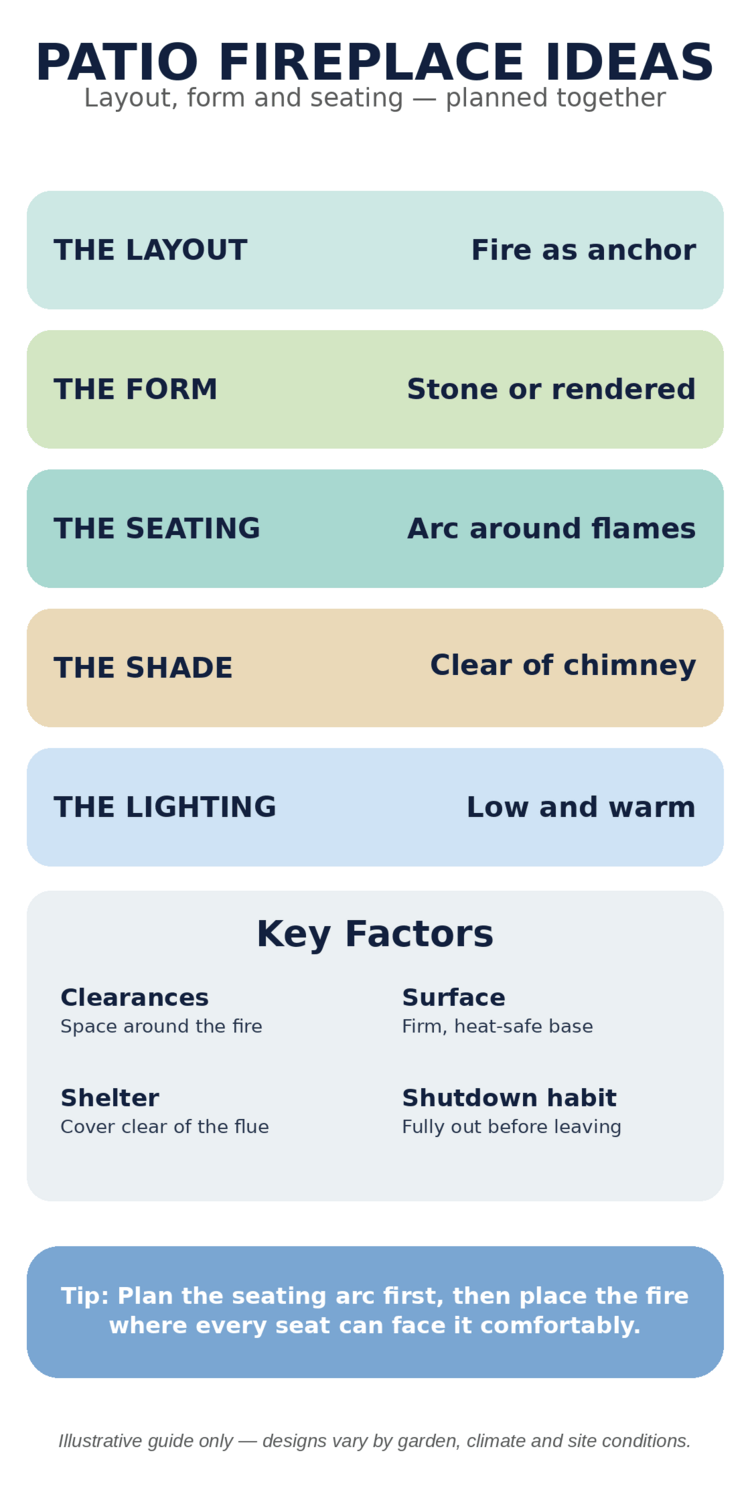
A patio with a fireplace works when the fire, the seating and the space around them are planned together. Give the fireplace a sound structure and sensible clearances, arrange seating so everyone can enjoy the flames comfortably, and layer in shade, lighting, planting and practical storage so the patio earns its keep across the seasons. Check local rules before building, keep fireplace work with qualified professionals, and treat the fire itself with the respect it deserves: attended while it burns, fully out before the evening ends, and never lit in conditions that make it hard to manage. Done that way, the patio becomes the place everyone heads to when the day cools, and the fireplace becomes the heart of the garden rather than just another feature in it. For related ideas, see fireplace wall designs, fireplace photos, linear electric fireplace, mediterranean pool ideas, exterior entryway, tiny house designs and interior design ideas.
Finally, remember that a patio fireplace is a long-term feature of the garden, not a single-season purchase. The structure will outlast the furniture, the planting will mature around it, and the way you use the space will change as children grow and habits shift. Choose a fireplace form and a layout that can grow with those changes rather than one tied to a single moment: movable seating, planting that can be reshaped, and surfaces that can be refreshed without rebuilding. A fire patio planned with that kind of patience becomes a permanent part of home life rather than a passing project.




0 Comments