
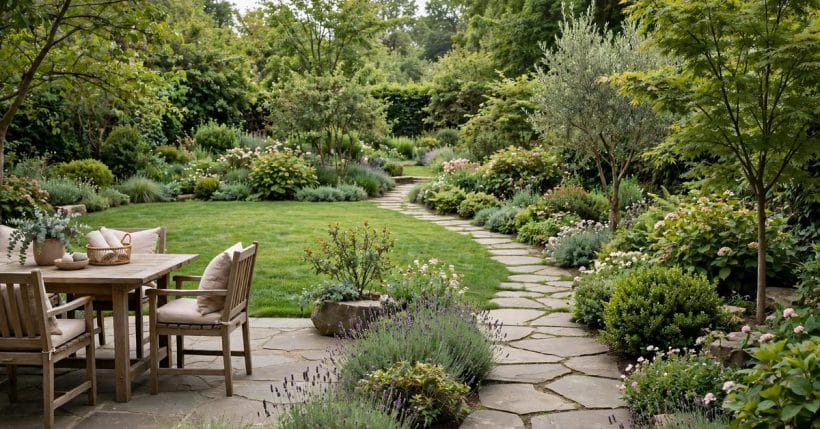
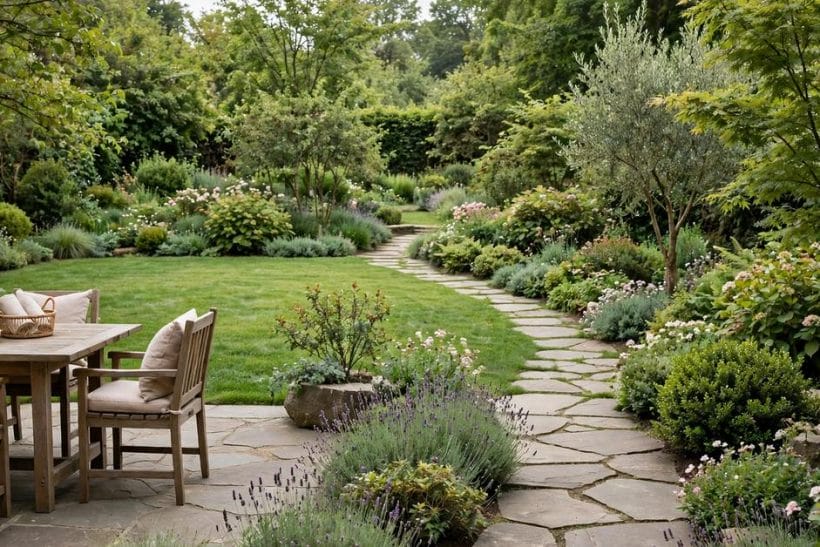
A backyard is the room outside the back door, and a good one earns its keep in every season: a place to eat slowly, to sit quietly, to play, to grow things and to welcome friends as the light changes. This gallery gathers seventy-five backyard ideas that cover the whole space, from the shape of the ground to the planting, the shade, the seating and the evenings, so you can picture the mood that suits your home and talk about it clearly with professionals. The ideas stay with backyard design in the general sense, the look and feel of the place itself, and the broader backyard landscaping guide sits alongside this gallery for the planting-led view.
Building work, drainage, retaining structures, plumbing, gas and electrical work appear throughout this gallery only in general terms, and they should always be left to qualified professionals, with local rules checked before any building begins. No part of this gallery is a set of building instructions, and nothing here should be read as a specification for structure, depth or safety systems. Read the ideas as a way to picture your backyard, and let professionals settle every technical question.
1. Shaping the Layout
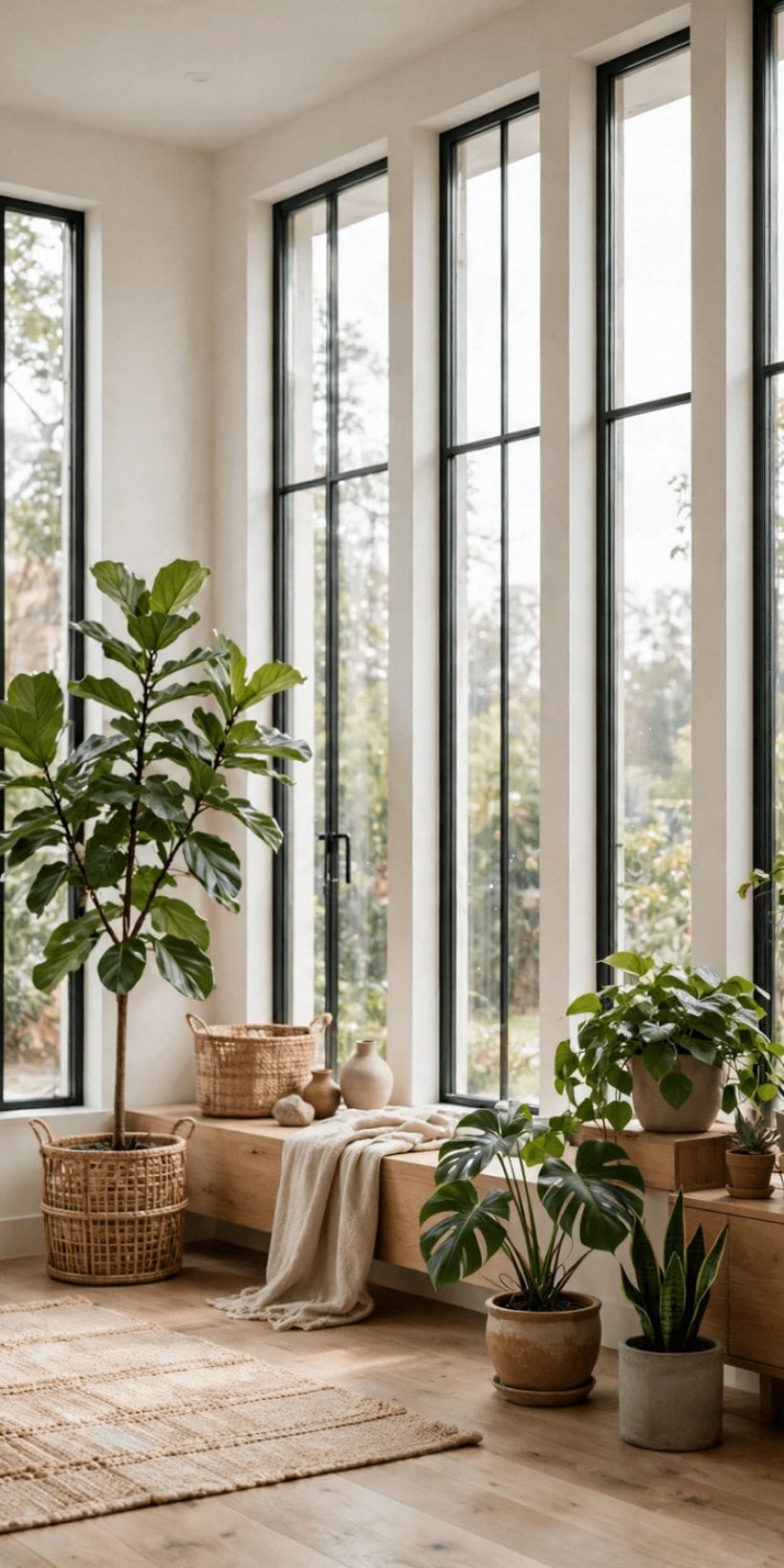
The shape of a backyard does most of the talking before a single plant goes in. A clear layout gives every activity a home, keeps paths obvious and leaves the eye somewhere pleasant to rest, so the sections that follow start with the ground plan and the way the space is divided.
| Item | What it is |
|---|---|
| A Lawn That Leaves Room for Everything Else | Let the lawn be generous but not greedy, a clear green centre that leaves room for beds, paths and seating around its edges. |
| A Clear Path From the Back Door to the Garden | Give the journey from the back door into the garden a path that is obvious, firm and pleasant to walk, so nobody has to pick their way across wet grass. |
| Zones That Read as Rooms Without Walls | Divide the backyard into loose zones for eating, sitting, playing and growing, using planting, surfaces and low screens rather than solid walls. |
| A Sunny Corner and a Shady Corner on Purpose | Plan one corner for sun lovers and one for shade seekers, so the garden suits different people at different times of day. |
| A View Framed From the Main Sitting Spot | Sit in the main seating spot and look at what the eye meets, then frame that view with planting, a low hedge or a simple arch of greenery. |
| A Gentle Curve Instead of a Straight Run | Let beds and paths curve gently rather than running in straight lines, so the garden reveals itself slowly instead of all at once. |
| A Focal Point at the Far End of the Garden | Place something worth walking towards at the far end of the garden, such as a seat, a water feature or a striking tree, so the whole space gains a destination. |
| Space Left Empty for Games and Gathering | Resist filling every corner, and leave one stretch of open ground where games, gatherings and improvised play can happen. |
| A Stone Patio That Anchors the House Edge | Lay a stone patio beside the house as the firm anchor of the backyard, a place where chairs sit level and feet stay dry after rain. |
| Timber Decking That Warms the Seating Area | Use timber decking to warm the main seating area, giving bare feet a friendly surface and the garden a natural tone that suits planting. |
| Gravel Paths That Crunch Softly Underfoot | Lay gravel paths where a softer, quieter surface suits the garden, such as routes into planting beds or around a shady corner. |
| Stepping Stones Set Among Low Planting | Set stepping stones among low planting for paths that feel like discoveries rather than highways, each stone a small pause in a sea of green. |
| A Brick Apron Beside the Back Door | Give the back door a brick apron, a hardworking threshold where muddy shoes, wet paws and garden tools meet the house without bringing the garden indoors. |
| Grass Paths Between Planting Beds | Let grass paths run between planting beds in the growing parts of the garden, so the walk among plants feels soft and green underfoot. |
| A Firm, Level Base Beneath Every Chair | Make sure every chair, bench and table in the garden stands on a firm, level base, because wobbling furniture ruins long sits and careful meals. |
| Edges That Keep Surfaces and Soil Apart | Give every surface a clean edge where it meets soil, lawn or planting, so materials stay where they belong and mowing stays simple. |
| Layered Planting From Ground Cover to Canopy | Plant in layers, with ground cover at ankle height, shrubs at waist height and trees overhead, so the garden feels full from every angle. |
| A Flowering Hedge That Changes With the Seasons | Grow a flowering hedge that changes its mood through the year, with blossom in spring, green fullness in summer and colour again as leaves turn. |
| Climbers Softening a Plain Wall | Let climbers soften a plain wall or fence, turning a hard surface into a green backdrop that changes with the seasons. |
| Scented Planting Beside Paths and Seats | Place scented plants beside paths and seats, where brushing past them releases fragrance without any effort at all. |
| Evergreen Structure for the Quiet Months | Keep evergreen shrubs and small trees in the garden so it holds its shape through the quiet months, when flowering plants rest. |
| Grasses That Move and Catch the Light | Plant ornamental grasses where they can move in the breeze and catch low light, giving the garden motion even when nothing else stirs. |
| Pots That Let You Rearrange the Garden | Use pots and planters where flexibility matters, such as beside the back door, on a patio or in a corner that changes with the seasons. |
| A Kitchen Garden Corner Near the Back Door | Keep a kitchen garden corner near the back door, where herbs and salad leaves are within easy reach of the kitchen. |
| A Pergola That Filters the Midday Sun | Build a pergola over the main seating area to filter the midday sun into dappled shade, giving the garden a roof of light rather than a ceiling of gloom. |
| A Shade Sail Over the Main Seating Area | Hang a shade sail over the main seating area for light, flexible shade that can be taken down when the seasons change. |
| A Leafy Tree Planted for Afternoon Shade | Plant a leafy tree where its afternoon shade will fall on seating rather than on the vegetable beds, so its canopy earns its keep through the warm months. |
| A Covered Corner for Rainy Afternoons | Keep one covered corner in the garden for rainy afternoons, where a roof or canopy lets you sit outside and listen to rain without getting wet. |
| Breezy Open Sides Instead of a Closed Box | Keep shelter open at the sides wherever possible, so breezes pass through and the garden never feels boxed in. |
| A Warm Throw and Cushion Store by the Door | Keep a store for throws and cushions by the back door, so evening sitters can grab warmth without a trip indoors. |
| Shade That Follows the Sun Through the Day | Plan shade that follows the sun through the day, with morning shade in one corner and afternoon shade in another, so there is always a comfortable seat somewhere. |
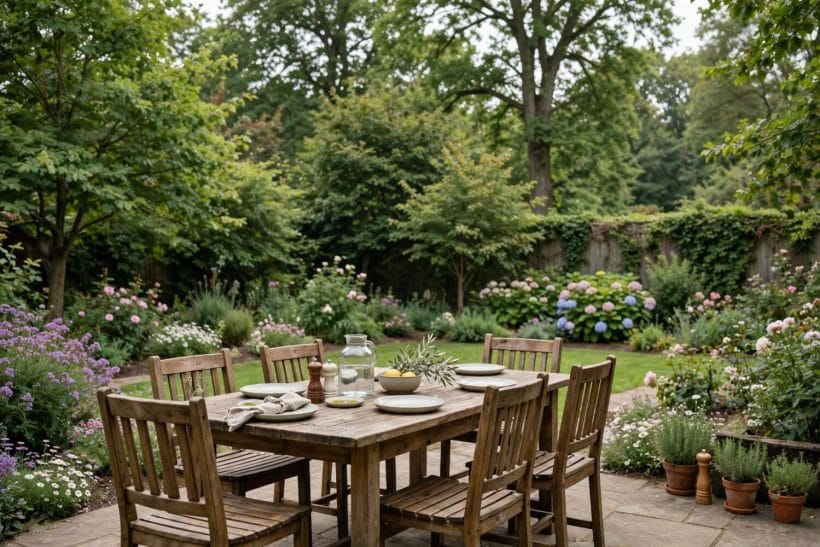
| A Long Table for Slow Weekend Lunches | Set a long table where weekend lunches can stretch unhurried, with room for dishes in the middle and elbows at the sides. |
| A Deep Seating Corner for Evening Talk | Arrange deep seating in a corner where evening talk can linger, with chairs angled towards each other rather than lined up in a row. |
| A Breakfast Spot That Catches the Morning Sun | Find the spot that catches the morning sun first, and place a small table and chairs there for breakfast. |
| A Reading Chair Tucked Into Green Shade | Tuck a reading chair into green shade, where planting surrounds the sitter without enclosing them completely. |
| A Bench on the Path for Pausing | Place a bench on the path where walkers naturally pause, such as beside a favourite plant, a view or a turn in the route. |
| A Swing Seat Under a Sturdy Frame | Hang a swing seat under a sturdy frame where gentle motion can soothe sitters of every age. |
| Dining Chairs That Slide Easily on the Surface | Choose dining chairs that slide easily on the surface beneath them, so guests can sit and rise without scraping, tipping or dragging. |
| A Low Table Within Reach of Every Seat | Place a low table within reach of every seat in the seating area, so drinks, books and snacks never require a stretch or a stand. |
| A Grill Station Set Apart From Seating | Set the grill station apart from seating, with its own firm base and clear space around it, so cooks can work without smoke drifting straight into diners faces. |
| A Pizza Oven Corner for Gathering Nights | Give a pizza oven its own corner where gathering nights can centre on fire, dough and shared toppings. |
| A Simple Outdoor Kitchen Bench and Wash Spot | Keep an outdoor kitchen bench with a wash spot near the cooking area, so preparation and clearing up never require endless trips indoors. |
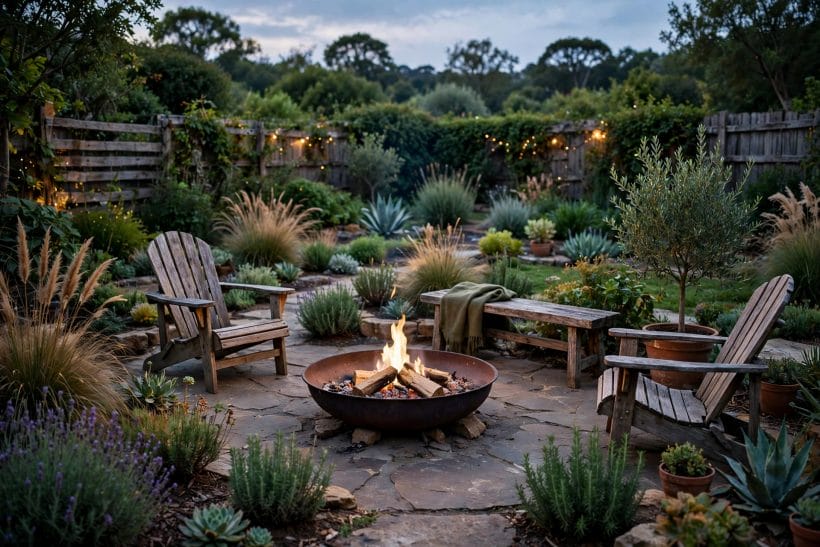
| A Fire Bowl as the Evening Centrepiece | Place a fire bowl as the evening centrepiece, with seating drawn around it in a circle that invites talk and stargazing. |
| A Drinks Table Kept in the Shade | Keep a drinks table in the shade, where bottles and glasses stay cool and guests can help themselves without crossing the cooking area. |
| A Serving Ledge Between Kitchen and Garden | Build a serving ledge between kitchen and garden, such as a wide sill or a pass-through shelf, so dishes travel a short distance from stove to table. |
| A Gathering Circle With Room for Everyone | Arrange seating in a gathering circle with room for everyone, so nobody sits outside the conversation or behind another guest. |
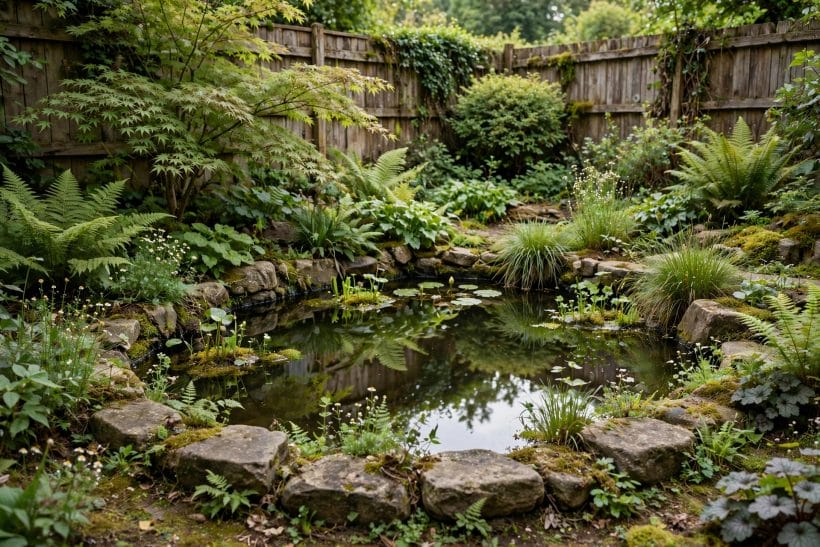
| A Still Pond That Reflects Sky and Leaves | Dig a still pond where it can reflect sky and leaves, giving the garden a quiet mirror that changes with weather and seasons. |
| A Bubbling Water Feature for Gentle Sound | Add a bubbling water feature where gentle sound can mask street noise and soothe sitters nearby. |
| A Shallow Splash Spot for Hot Afternoons | Keep a shallow splash spot for hot afternoons, where children can cool off and adults can dangle feet in moving water. |
| A Pool Corner Planned as Part of the Garden | Plan a pool corner as part of the garden rather than as a separate world, with planting, shade and seating that tie the water to the rest of the backyard. |
| A Play Lawn Kept Open and Soft | Keep a play lawn open and soft, where games can happen without dodging furniture, pots or planting. |
| A Sand Corner for Small Hands | Set a sand corner where small hands can dig, build and pour, with a cover to keep it clean between play sessions. |
| A Pet Corner With Shade and Water | Give pets their own corner with shade, fresh water and a comfortable resting spot, so animals can enjoy the garden without claiming the dining table. |
| A Wildlife Corner Left a Little Wild | Leave a wildlife corner a little wild, with dense planting, a log pile and a water dish, so birds, insects and small creatures can find shelter. |
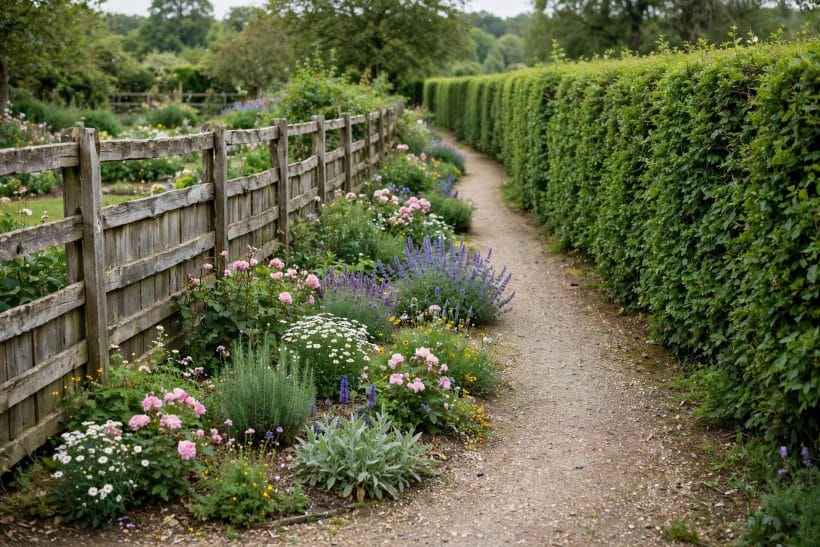
| A Hedge Boundary That Softens the Edges | Grow a hedge boundary that softens the edges of the garden, giving privacy with green rather than with solid walls. |
| A Timber Fence That Frames the Garden | Use a timber fence to frame the garden, giving it a clear edge that suits planting and weathers gracefully. |
| A Trellis Screen With Climbing Plants | Fix a trellis screen where privacy is needed without blocking light and air, and let climbing plants soften it through the seasons. |
| A Gate That Welcomes and Closes Softly | Hang a gate that welcomes visitors and closes softly, with hinges and a latch that work smoothly in every season. |
| A Boundary Planted on Both Sides | Plant the boundary on both sides where possible, so the edge of the garden looks generous from inside and kind from outside. |
| Screening That Keeps Seating Private | Add screening where seating needs privacy, using planting, trellis or light panels that shield sitters without shutting out the sky. |
| A Neighbourly Gap for Light and Air | Leave a neighbourly gap where light and air need to pass, such as beside a shared boundary or between tall screens. |
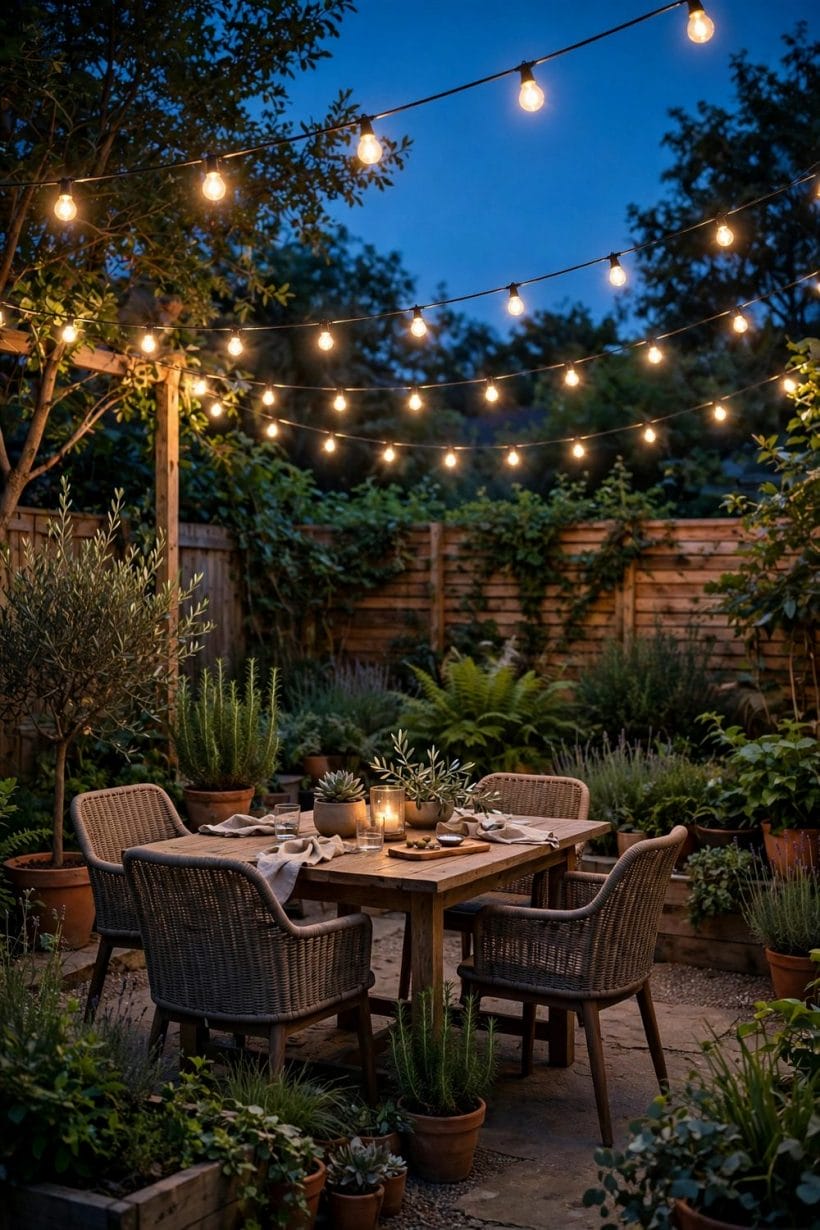
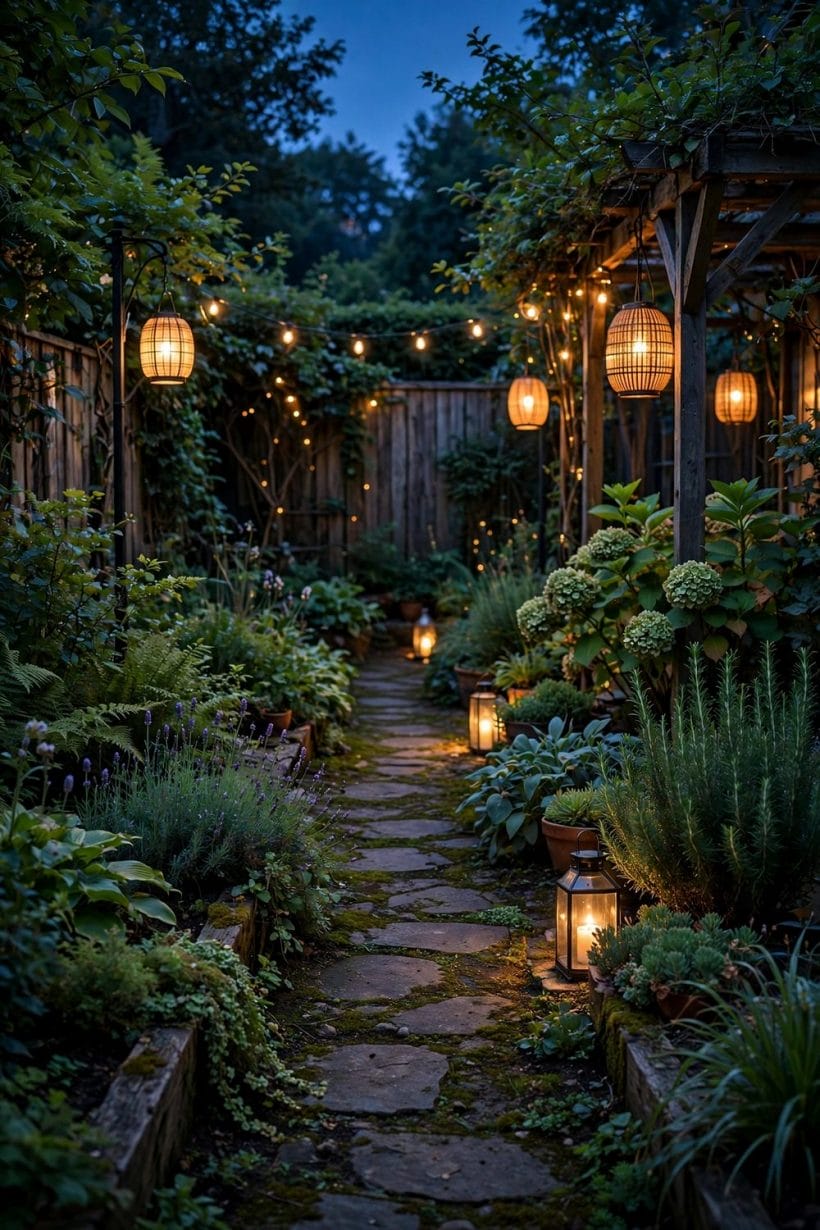
| String Lights That Warm the Whole Garden | Hang string lights where they can warm the whole garden, such as over seating, along a pergola or across a small courtyard. |
| Lanterns Along the Path Home | Place lanterns along the path home, so the walk from the gate to the back door feels guided and welcoming after dark. |
| Uplights That Shape Trees After Dark | Set uplights at the base of trees where they can shape canopies after dark, turning familiar trees into evening sculptures. |
| Soft Light Over the Dining Table | Hang soft light over the dining table, where it can flatter food and faces without glaring into eyes. |
| A Lit Water Feature for Evening Calm | Light a water feature for evening calm, so moving water glows and ripples after dark. |
| Motion-Sensitive Light by the Back Door | Fit motion-sensitive light by the back door, so arrivals are greeted with light and the garden stays dark when nobody is there. |
| Candlelight Corners Sheltered From Wind | Create candlelight corners sheltered from wind, where flames can burn steadily and evenings can glow without fuss. |
| Spring Colour That Arrives in Waves | Plan spring colour that arrives in waves, with early blossom followed by later flowers so the garden never has a single brief peak. |
| Summer Shade Checked Before the Heat | Check summer shade before the heat arrives, walking the garden at midday to see where shadows fall and where seating needs help. |
| Winter Structure That Holds the Garden Together | Keep winter structure that holds the garden together, with evergreen shrubs, bare branches, fences and paths that look handsome even without leaves. |
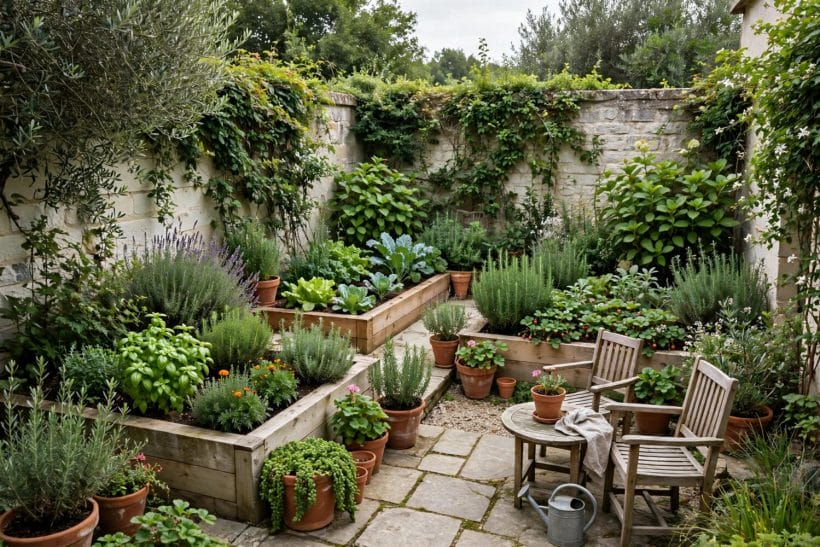
| A Small Backyard Planned Like a Courtyard | Plan a small backyard like a courtyard, with one clear seating area, planting at the edges and a focal point that draws the eye. |
| A Sloping Garden Terraced in Gentle Steps | Terrace a sloping garden in gentle steps, so each level becomes a usable space rather than a hillside to struggle with. |
1. A Lawn That Leaves Room for Everything Else
Let the lawn be generous but not greedy, a clear green centre that leaves room for beds, paths and seating around its edges. An open middle gives children space to play and adults space to gather, while planting at the margins keeps the garden feeling full without crowding the centre. Mow lines and bed edges that follow one gentle line will make the whole space read as calm and cared for.
2. A Clear Path From the Back Door to the Garden
Give the journey from the back door into the garden a path that is obvious, firm and pleasant to walk, so nobody has to pick their way across wet grass. A path that curves slightly feels more inviting than a harsh straight line, and it can pass a scented plant or a favourite seat on the way. Keep the route clear of pots and clutter so it works in the dark as well as in daylight.
3. Zones That Read as Rooms Without Walls
Divide the backyard into loose zones for eating, sitting, playing and growing, using planting, surfaces and low screens rather than solid walls. Each zone can have its own mood while still feeling part of one garden, and the gaps between zones give the eye places to rest. A zone that is too small for its job will feel cramped, so let the busiest zone take the most room.
4. A Sunny Corner and a Shady Corner on Purpose
Plan one corner for sun lovers and one for shade seekers, so the garden suits different people at different times of day. The sunny corner suits morning coffee and drying laundry in the breeze, while the shady corner suits long afternoon conversations. When both corners exist by choice rather than accident, nobody has to chase comfort around the garden.
5. A View Framed From the Main Sitting Spot
Sit in the main seating spot and look at what the eye meets, then frame that view with planting, a low hedge or a simple arch of greenery. A framed view can be as modest as a flowering shrub or as grand as a distant tree, and it gives every sit-down a small pleasure. Remove anything that blocks the frame, and let the best view do the talking.
6. A Gentle Curve Instead of a Straight Run
Let beds and paths curve gently rather than running in straight lines, so the garden reveals itself slowly instead of all at once. A curve can hide a seat around a bend or open suddenly onto a sunny lawn, and it softens the hard rectangle of most plots. Keep curves generous and easy to mow around, or they will become a chore instead of a charm.
7. A Focal Point at the Far End of the Garden
Place something worth walking towards at the far end of the garden, such as a seat, a water feature or a striking tree, so the whole space gains a destination. A focal point pulls the eye through the garden and makes even a modest plot feel deeper than it is. Keep the approach clear and the surroundings simple, so the destination stands out without shouting.
8. Space Left Empty for Games and Gathering
Resist filling every corner, and leave one stretch of open ground where games, gatherings and improvised play can happen. Empty space is not wasted space in a backyard, because it is the part that adapts to birthdays, ball games and quiet evenings alike. A garden with nowhere to spread out will always feel smaller than one with a generous open heart.
2. Ground Surfaces Underfoot
What sits underfoot sets the tone of the whole backyard, from the firm area by the back door to the softer paths that wander into planting. Surfaces should feel pleasant to walk on, stay clear of clutter and suit the way each part of the garden is used, and the dedicated backyard patio guide looks closely at the paved room behind the house.
9. A Stone Patio That Anchors the House Edge
Lay a stone patio beside the house as the firm anchor of the backyard, a place where chairs sit level and feet stay dry after rain. Pale stone keeps the area feeling bright, while rougher stone suits a cottage mood, and planting at the patio edge softens the meeting of hard and soft ground. Keep the patio clear of clutter so it can change from breakfast spot to evening gathering without a rearrangement.
10. Timber Decking That Warms the Seating Area
Use timber decking to warm the main seating area, giving bare feet a friendly surface and the garden a natural tone that suits planting. Decking can step gently between house and garden levels, and its boards can run towards the view to draw the eye outward. Let professionals settle any structure, support and drainage questions, and keep the surface clear of leaves so it stays pleasant underfoot.
11. Gravel Paths That Crunch Softly Underfoot
Lay gravel paths where a softer, quieter surface suits the garden, such as routes into planting beds or around a shady corner. Gravel drains freely and crunches gently underfoot, and its colour can echo stone elsewhere in the garden. Edge the gravel well so it stays on the path, and rake it occasionally to keep the surface even and welcoming.
12. Stepping Stones Set Among Low Planting
Set stepping stones among low planting for paths that feel like discoveries rather than highways, each stone a small pause in a sea of green. Stones should sit firm and level, with planting that brushes softly against them rather than swallowing them. Such paths suit quiet corners and side routes, while the main routes of the garden deserve a firmer, wider surface.
13. A Brick Apron Beside the Back Door
Give the back door a brick apron, a hardworking threshold where muddy shoes, wet paws and garden tools meet the house without bringing the garden indoors. Brick warms the entrance and suits both cottage and town gardens, and its pattern can echo paths elsewhere. Keep the apron clear and well drained, so it works as a welcome rather than a bottleneck.
14. Grass Paths Between Planting Beds
Let grass paths run between planting beds in the growing parts of the garden, so the walk among plants feels soft and green underfoot. Grass paths suit gardens where the beds do the talking, and they can curve gently to reveal one planting area after another. Mow them regularly and keep their edges tidy, or they will blur into the beds they are meant to separate.
15. A Firm, Level Base Beneath Every Chair
Make sure every chair, bench and table in the garden stands on a firm, level base, because wobbling furniture ruins long sits and careful meals. A level base can be stone, timber or another firm surface, and it should extend far enough that chairs can slide back without tipping onto soft ground. Test each seating spot by sitting in it, and adjust the ground before the furniture settles in for the season.
16. Edges That Keep Surfaces and Soil Apart
Give every surface a clean edge where it meets soil, lawn or planting, so materials stay where they belong and mowing stays simple. Edges can be stone, timber or metal strips, and they should sit neatly without tripping walkers. A tidy edge is one of the quiet details that makes a whole backyard look cared for, even when the planting itself is allowed to grow a little wild.
3. Planting That Frames the Space
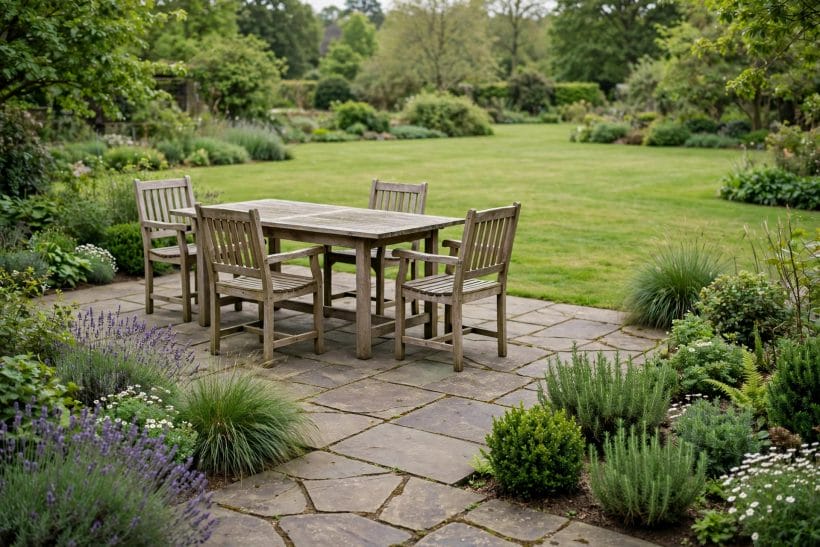
Planting is what turns a yard into a garden, softening edges, giving shade and scent, and changing the view as the seasons turn. Layers matter more than any single plant, and the small-home garden guide shows how the same layering works when space is tight.
17. Layered Planting From Ground Cover to Canopy
Plant in layers, with ground cover at ankle height, shrubs at waist height and trees overhead, so the garden feels full from every angle. Layered planting gives birds shelter, gives the eye depth and softens fences and walls without hiding the garden entirely. Choose plants that suit your soil and light, and give them room to grow into their layers rather than crowding them at planting time.
18. A Flowering Hedge That Changes With the Seasons
Grow a flowering hedge that changes its mood through the year, with blossom in spring, green fullness in summer and colour again as leaves turn. A hedge that earns its keep in several seasons feels alive rather than merely functional, and it can screen a boundary while feeding pollinators. Trim it as maker and local guidance suggest, and let it grow dense enough to feel like a green wall.
19. Climbers Softening a Plain Wall
Let climbers soften a plain wall or fence, turning a hard surface into a green backdrop that changes with the seasons. Climbers can carry scent, flowers or evergreen leaves, and they suit walls that would otherwise dominate the garden. Give them a support to climb, keep them clear of gutters and roofs, and prune them as guidance for the plant suggests so they stay handsome rather than unruly.
20. Scented Planting Beside Paths and Seats
Place scented plants beside paths and seats, where brushing past them releases fragrance without any effort at all. Scent suits narrow places where people pass close, and it can turn an ordinary walk to the back gate into a small daily pleasure. Choose scents you love rather than scents you think you should love, and plant them where evening sitters will catch them on the breeze.
21. Evergreen Structure for the Quiet Months
Keep evergreen shrubs and small trees in the garden so it holds its shape through the quiet months, when flowering plants rest. Evergreen structure gives winter its backbone, framing paths and seating with green even on grey days. Mix evergreen forms with looser flowering plants, so the garden never feels stiff, and let the evergreens carry the quiet season with dignity.
22. Grasses That Move and Catch the Light
Plant ornamental grasses where they can move in the breeze and catch low light, giving the garden motion even when nothing else stirs. Grasses suit sunny corners and gravel gardens, and their seed heads can glow through autumn into winter. Cut them back as guidance for the plant suggests, and let their movement soften the edges of paths and patios.
23. Pots That Let You Rearrange the Garden
Use pots and planters where flexibility matters, such as beside the back door, on a patio or in a corner that changes with the seasons. Pots let you rearrange colour and scent without digging, and they suit plants that need shelter or special soil. Water them as the plants require, since pots dry faster than open ground, and group them in clusters rather than scattering single pots everywhere.
24. A Kitchen Garden Corner Near the Back Door
Keep a kitchen garden corner near the back door, where herbs and salad leaves are within easy reach of the kitchen. A small raised bed or a cluster of pots can supply daily pickings through the growing season, and the corner will smell wonderful on warm evenings. Grow only what you enjoy eating, tend it little and often, and accept that some seasons will be generous and others modest.
4. Shade, Shelter and Comfort
Shade decides whether a backyard gets used through the warm part of the day, and shelter decides whether it gets used when the weather turns. The ideas in this section play with filtered light, covered corners and breezes, so sitting outside stays pleasant rather than something to endure.
25. A Pergola That Filters the Midday Sun
Build a pergola over the main seating area to filter the midday sun into dappled shade, giving the garden a roof of light rather than a ceiling of gloom. Climbers can grow over the frame in time, and the structure itself gives the seating area a sense of place. Let professionals settle structure and fixing questions, and keep the pergola open at the sides so breezes can pass through.
26. A Shade Sail Over the Main Seating Area
Hang a shade sail over the main seating area for light, flexible shade that can be taken down when the seasons change. Sails suit gardens where a permanent roof would feel heavy, and their gentle curves add a modern line to the space. Fixings and tension belong to professionals, and the sail should sit high enough that nobody ducks beneath it.
27. A Leafy Tree Planted for Afternoon Shade
Plant a leafy tree where its afternoon shade will fall on seating rather than on the vegetable beds, so its canopy earns its keep through the warm months. A well placed tree can transform a hot patio into a cool retreat, and its leaves will colour the garden through autumn. Choose a tree that suits the size of your plot, and give it room to grow without crowding walls or neighbours.
28. A Covered Corner for Rainy Afternoons
Keep one covered corner in the garden for rainy afternoons, where a roof or canopy lets you sit outside and listen to rain without getting wet. A covered corner extends the garden into weather that would otherwise send everyone indoors, and it suits reading, talking and watching storms. Keep the covered area open at the sides so it never feels like an indoor room that happens to be outside.
29. Breezy Open Sides Instead of a Closed Box
Keep shelter open at the sides wherever possible, so breezes pass through and the garden never feels boxed in. Open sides suit warm climates and summer evenings, when air movement matters more than enclosure, and they keep the shelter feeling part of the garden. Add screens or planting for privacy rather than solid walls, and let the breeze do the cooling work.
30. A Warm Throw and Cushion Store by the Door
Keep a store for throws and cushions by the back door, so evening sitters can grab warmth without a trip indoors. A simple chest or bench with storage turns cool evenings into comfortable ones, and it keeps cushions dry between uses. Choose covers that suit outdoor life, and bring precious fabrics indoors when storms are expected.
31. Shade That Follows the Sun Through the Day
Plan shade that follows the sun through the day, with morning shade in one corner and afternoon shade in another, so there is always a comfortable seat somewhere. A garden with shade in only one place forces everyone to follow the shadows, while a garden with shade in several places lets people choose. Notice where shadows fall at different hours, and place seating to meet them.
5. Places to Sit and Eat
Seating is where a backyard becomes a habit rather than a view, and a table is where it becomes a gathering. The ideas here cover long lunches, quiet corners and places to pause on a walk, and the small-home patio guide shows how seating works when the paved area is compact.
32. A Long Table for Slow Weekend Lunches
Set a long table where weekend lunches can stretch unhurried, with room for dishes in the middle and elbows at the sides. A long table suits gatherings that grow by one or two guests without a rearrangement, and it looks generous even when only a few people sit at it. Place it where shade falls at midday, and keep the route from the kitchen clear so carrying dishes stays easy.
33. A Deep Seating Corner for Evening Talk
Arrange deep seating in a corner where evening talk can linger, with chairs angled towards each other rather than lined up in a row. Deep seats invite people to settle rather than perch, and a low table within reach holds drinks and books. Add soft light and a throw store nearby, and the corner will become the garden spot everyone drifts towards as dusk falls.
34. A Breakfast Spot That Catches the Morning Sun
Find the spot that catches the morning sun first, and place a small table and chairs there for breakfast. A breakfast spot needs little more than sun, a firm base and a view worth waking up to, and it will earn its keep every fine morning. Keep it close to the back door so the journey with trays and cups stays short.
35. A Reading Chair Tucked Into Green Shade
Tuck a reading chair into green shade, where planting surrounds the sitter without enclosing them completely. A reading chair needs quiet, dappled light and a small surface for a cup, and it suits a corner that is too shady for sunbathing but perfect for pages. Choose a chair that suits long sits, and let the garden provide the soundtrack of leaves and birds.
36. A Bench on the Path for Pausing
Place a bench on the path where walkers naturally pause, such as beside a favourite plant, a view or a turn in the route. A bench on the path invites short rests and long looks, and it suits gardens where the walk itself is part of the pleasure. Keep the bench clear of overhanging branches that drip after rain, and give it a firm base so it never wobbles.
37. A Swing Seat Under a Sturdy Frame
Hang a swing seat under a sturdy frame where gentle motion can soothe sitters of every age. A swing suits a shady corner or a lawn edge, and its slow rhythm pairs beautifully with evening light and quiet talk. Fixings and frame strength belong to professionals, and the swing should have clear space around it so nobody bumps into planting or furniture.
38. Dining Chairs That Slide Easily on the Surface
Choose dining chairs that slide easily on the surface beneath them, so guests can sit and rise without scraping, tipping or dragging. Chairs that move smoothly suit stone and timber alike, and they make long meals more comfortable for everyone. Test chairs on your own surface before settling on a set, and keep the dining area clear of loose gravel that catches chair feet.
39. A Low Table Within Reach of Every Seat
Place a low table within reach of every seat in the seating area, so drinks, books and snacks never require a stretch or a stand. Low tables suit deep seating and long evenings, and they can be moved to follow the shade through the day. Keep the table surface clear enough for its job, and let it anchor the seating group rather than clutter it.
6. Cooking and Gathering Outdoors
Cooking outside turns a backyard into an evening destination, and a gathering circle turns it into a shared memory. Fire, grills and ovens bring warmth and ritual, and they also bring rules and safety questions that professionals and local guidance should settle before anything is built or lit.
40. A Grill Station Set Apart From Seating
Set the grill station apart from seating, with its own firm base and clear space around it, so cooks can work without smoke drifting straight into diners faces. A separate station keeps the cooking theatre visible without making it intrusive, and it gives the cook room to move. Gas, fuel and safety questions belong to professionals and local guidance, and the station should sit clear of overhanging branches and fences.
41. A Pizza Oven Corner for Gathering Nights
Give a pizza oven its own corner where gathering nights can centre on fire, dough and shared toppings. An oven corner suits evenings when cooking becomes the entertainment, and it pairs beautifully with a long table nearby. Building, fuel and safety questions belong to professionals, and the oven should sit on a firm base with clear space around it.
42. A Simple Outdoor Kitchen Bench and Wash Spot
Keep an outdoor kitchen bench with a wash spot near the cooking area, so preparation and clearing up never require endless trips indoors. A bench at working height, a wash spot with proper drainage and storage for tools will make outdoor cooking feel like a real kitchen rather than a picnic. Plumbing and drainage belong to qualified professionals, and local rules should be checked before anything is connected.
43. A Fire Bowl as the Evening Centrepiece
Place a fire bowl as the evening centrepiece, with seating drawn around it in a circle that invites talk and stargazing. A fire bowl gives autumn and spring evenings a warm heart, and its glow flatters faces and gardens alike. Fuel, placement and safety belong to professionals and local guidance, and the bowl should sit clear of overhanging plants, fences and anything that could catch.
44. A Drinks Table Kept in the Shade
Keep a drinks table in the shade, where bottles and glasses stay cool and guests can help themselves without crossing the cooking area. A shaded drinks table suits long gatherings, and it can sit beside the seating area rather than in the middle of it. Stock it simply, keep it clear of clutter, and let guests gather around it as naturally as they gather around a kitchen counter indoors.
45. A Serving Ledge Between Kitchen and Garden
Build a serving ledge between kitchen and garden, such as a wide sill or a pass-through shelf, so dishes travel a short distance from stove to table. A ledge suits homes where the kitchen opens onto the patio, and it turns serving into part of the gathering rather than a chore. Keep the ledge clear, level and easy to wipe, and let it carry the traffic of every outdoor meal.
46. A Gathering Circle With Room for Everyone
Arrange seating in a gathering circle with room for everyone, so nobody sits outside the conversation or behind another guest. A circle suits firelight, storytelling and long evenings, and it works on lawn, stone or timber alike. Leave a gap in the circle for arrivals, and keep the centre clear enough for a low table or a fire bowl to anchor the group.
7. Water, Play and Pets
Water, play and pets give a backyard its liveliness, from still reflections to splashing, games and animals at ease. The ideas here keep each of these pleasures in its own corner so they never crowd each other out, and the dedicated backyard pool guide and its tropical pool gallery look closely at pools themselves, which this gallery only touches in passing.
47. A Still Pond That Reflects Sky and Leaves
Dig a still pond where it can reflect sky and leaves, giving the garden a quiet mirror that changes with weather and seasons. A pond suits a corner away from the main play areas, where its calm can be enjoyed from a bench or a path. Water, depth and safety questions belong to professionals, and local guidance should be checked, especially where small children visit.
48. A Bubbling Water Feature for Gentle Sound
Add a bubbling water feature where gentle sound can mask street noise and soothe sitters nearby. Moving water suits seating areas and shady corners, and its sound can make a small garden feel like a retreat. Pumps and electrical work belong to qualified professionals, and the feature should be easy to reach for care without wading into planting.
49. A Shallow Splash Spot for Hot Afternoons
Keep a shallow splash spot for hot afternoons, where children can cool off and adults can dangle feet in moving water. A splash spot suits sunny corners near seating, so grown-ups can watch comfortably while children play. Water safety and drainage belong to professionals, and the spot should be easy to empty and clean between uses.
50. A Pool Corner Planned as Part of the Garden
Plan a pool corner as part of the garden rather than as a separate world, with planting, shade and seating that tie the water to the rest of the backyard. A pool that sits comfortably among beds and paths feels like a garden feature rather than an intrusion, and its surroundings matter as much as the water itself. Structure, water systems and safety belong to qualified professionals, and local rules should be checked before any building begins.
51. A Play Lawn Kept Open and Soft
Keep a play lawn open and soft, where games can happen without dodging furniture, pots or planting. A play lawn suits the centre of the garden or a sunny side strip, and its grass should be tough enough for regular use. Mow it a little longer than a show lawn, keep it clear of toys between games, and let it be the part of the garden that is allowed to look lived in.
52. A Sand Corner for Small Hands
Set a sand corner where small hands can dig, build and pour, with a cover to keep it clean between play sessions. Sand suits a sunny spot near seating, so grown-ups can watch while children create, and its edge can be timber or stone that doubles as seating. Keep the sand clean, cover it when not in use, and place it where spilled sand will not drift onto paths.
53. A Pet Corner With Shade and Water
Give pets their own corner with shade, fresh water and a comfortable resting spot, so animals can enjoy the garden without claiming the dining table. A pet corner suits a quiet side of the garden, with a firm surface for bowls and planting that is safe for the animals who use it. Check plant choices for pet safety, and keep the corner clean and shaded through the warm months.
54. A Wildlife Corner Left a Little Wild
Leave a wildlife corner a little wild, with dense planting, a log pile and a water dish, so birds, insects and small creatures can find shelter. A wild corner suits the far end of the garden, where its informality will not disturb formal seating areas. Let the corner grow with minimal interference, and enjoy watching visitors arrive through the seasons.
8. Boundaries, Privacy and Neighbours
Boundaries decide how private a backyard feels and how kindly it sits beside its neighbours. A good boundary screens without shutting out light and air, and the dedicated backyard fence guide walks the whole boundary in detail, while this section keeps to the ideas that shape privacy and welcome.
55. A Hedge Boundary That Softens the Edges
Grow a hedge boundary that softens the edges of the garden, giving privacy with green rather than with solid walls. Hedges suit gardens where softness matters more than instant screening, and they can carry flowers, scent or autumn colour as well as shelter. Trim them as guidance for the plants suggests, and keep them clear of paths and neighbours boundaries so they stay a pleasure rather than a dispute.
56. A Timber Fence That Frames the Garden
Use a timber fence to frame the garden, giving it a clear edge that suits planting and weathers gracefully. Timber suits cottage, town and country gardens alike, and its colour can be left natural or painted to suit the house. Fixings, height and boundary ownership should be checked against title documents and local rules, and neighbours deserve a conversation before any boundary work begins.
57. A Trellis Screen With Climbing Plants
Fix a trellis screen where privacy is needed without blocking light and air, and let climbing plants soften it through the seasons. Trellis suits seating areas that overlook neighbours, side passages and sunny walls, and its open pattern keeps the garden feeling airy. Keep climbers clear of gutters and roofs, and prune them as guidance suggests so the screen stays green without becoming heavy.
58. A Gate That Welcomes and Closes Softly
Hang a gate that welcomes visitors and closes softly, with hinges and a latch that work smoothly in every season. A gate suits the entrance to the garden from the street or the side passage, and its style can echo the fence or hedge beside it. Keep the gate clear of planting that catches it, and make sure it closes properly so pets and children stay safely inside.
59. A Boundary Planted on Both Sides
Plant the boundary on both sides where possible, so the edge of the garden looks generous from inside and kind from outside. Planting on both sides softens fences and walls, gives birds shelter and makes the boundary feel like a shared green edge rather than a barrier. Agree planting plans with neighbours where the boundary is shared, and keep growth clear of paths and sight lines.
60. Screening That Keeps Seating Private
Add screening where seating needs privacy, using planting, trellis or light panels that shield sitters without shutting out the sky. Screening suits dining areas and reading corners that face neighbouring windows, and it works best when it is tall enough to shield seated people but low enough to let light through. Keep screening in proportion to the garden, or it will dominate the space it is meant to protect.
61. A Neighbourly Gap for Light and Air
Leave a neighbourly gap where light and air need to pass, such as beside a shared boundary or between tall screens. A gap suits gardens where solid screening would darken a neighbours garden or block a valued breeze, and it shows that privacy and kindness can share the same boundary. Talk with neighbours about boundaries early, and let the garden be a good neighbour as well as a private retreat.
9. Light After Dark
Light after dark is what stretches a backyard into the evening, turning paths into invitations and trees into silhouettes. The ideas here stay soft and low, lighting people and paths rather than flooding the garden, and electrical work belongs to qualified professionals throughout.
62. String Lights That Warm the Whole Garden
Hang string lights where they can warm the whole garden, such as over seating, along a pergola or across a small courtyard. String lights suit evenings when the garden becomes a gathering place, and their warm glow flatters planting and faces alike. Electrical work belongs to qualified professionals, and lights meant for outdoor use should be chosen and fitted as maker guidance directs.
63. Lanterns Along the Path Home
Place lanterns along the path home, so the walk from the gate to the back door feels guided and welcoming after dark. Lanterns suit paths that curve through planting, and their low light keeps the garden feeling intimate rather than floodlit. Keep lanterns clear of dry leaves and overhanging plants, and choose flames or lights that suit the setting and local guidance.
64. Uplights That Shape Trees After Dark
Set uplights at the base of trees where they can shape canopies after dark, turning familiar trees into evening sculptures. Uplights suit specimen trees and tall shrubs, and their upward wash gives the garden depth when daylight fades. Electrical work belongs to qualified professionals, and lights should be aimed at planting rather than into neighbours windows or the night sky.
65. Soft Light Over the Dining Table
Hang soft light over the dining table, where it can flatter food and faces without glaring into eyes. Soft light suits long evening meals, and it can hang from a pergola, a branch or a simple frame. Keep the light low and warm, shield it from direct view, and let the table become a pool of brightness in a darker garden.
66. A Lit Water Feature for Evening Calm
Light a water feature for evening calm, so moving water glows and ripples after dark. Lit water suits seating areas where evenings stretch late, and its reflections can double the beauty of nearby planting. Pumps and electrical work belong to qualified professionals, and the feature should be easy to reach for care without disturbing the lighting.
67. Motion-Sensitive Light by the Back Door
Fit motion-sensitive light by the back door, so arrivals are greeted with light and the garden stays dark when nobody is there. Motion light suits entrances, side passages and storage areas, where safety matters more than atmosphere. Electrical work belongs to qualified professionals, and the sensor should be aimed at the path rather than at neighbours gardens or passing traffic.
68. Candlelight Corners Sheltered From Wind
Create candlelight corners sheltered from wind, where flames can burn steadily and evenings can glow without fuss. Candlelight suits small seating groups and quiet corners, and its flicker flatters gardens in a way no other light can match. Keep candles clear of dry planting, fabrics and anything that could catch, and never leave them burning unattended.
10. Seasons, Upkeep and Small Plots
Seasons and small plots ask the same question in different ways: how does this backyard keep its charm when conditions change or space runs short? The ideas here follow the year and then turn to compact gardens, slopes and a simple rhythm of care.
69. Spring Colour That Arrives in Waves
Plan spring colour that arrives in waves, with early blossom followed by later flowers so the garden never has a single brief peak. Waves of colour suit beds, pots and hedges alike, and they give the garden something new to notice every week through spring. Choose plants that suit your soil and light, and let each wave hand over to the next without a gap.
70. Summer Shade Checked Before the Heat
Check summer shade before the heat arrives, walking the garden at midday to see where shadows fall and where seating needs help. A shade check in late spring lets you add a sail, move a chair or grow a climber before the hottest days, rather than reacting to discomfort. Notice which seats stay pleasant through the afternoon, and plan the summer around them.
71. Autumn Leaves Gathered for the Beds
Gather autumn leaves for the beds, where they can shelter soil and feed the garden as they break down. Leaves suit beds and wildlife corners, and gathering them turns a chore into a gift for next seasons planting. Keep paths and drains clear of deep drifts, and let the beds enjoy the blanket that autumn provides.
72. Winter Structure That Holds the Garden Together
Keep winter structure that holds the garden together, with evergreen shrubs, bare branches, fences and paths that look handsome even without leaves. Winter structure suits gardens where the quiet months are long, and it gives the eye something to rest on through grey days. Prune and tidy as guidance suggests, and let the bones of the garden carry the season with quiet confidence.
73. A Small Backyard Planned Like a Courtyard
Plan a small backyard like a courtyard, with one clear seating area, planting at the edges and a focal point that draws the eye. A courtyard plan suits compact plots, where every corner must earn its keep, and it can make a tiny garden feel generous rather than cramped. Keep surfaces simple, planting layered and furniture in proportion, and let the small space shine.
74. A Sloping Garden Terraced in Gentle Steps
Terrace a sloping garden in gentle steps, so each level becomes a usable space rather than a hillside to struggle with. Terraces suit slopes where lawn, beds and seating need level ground, and their edges can carry planting that softens the steps. Retaining structure and drainage belong to qualified professionals, and local rules should be checked before any ground is moved.
75. A Simple Upkeep Rhythm Through the Year
Keep a simple upkeep rhythm through the year, with small regular tasks that prevent big seasonal rushes. A rhythm suits busy gardeners, because little and often keeps beds, paths and furniture in good shape without consuming weekends. Note what needs attention each month, share the tasks among the household, and let the garden be enjoyed as much as it is tended.
Final Considerations
A backyard that works is rarely the one with the most features, and it is almost always the one where the layout is clear, the planting is layered, the shade falls where people sit and the evenings have soft light. Walk your own space with these seventy-five ideas in mind, notice where the sun falls, where the breeze comes from and where you naturally pause, and let those observations shape the conversation with professionals. That is the heart of backyard design as a lived place rather than a picture: a garden that suits the people who use it, in every season, for years of ordinary days.
Start with the ground plan, then the surfaces, then the planting and shade, and let seating, water, boundaries and light follow in that order, so each choice supports the next. Keep structural, drainage, plumbing, gas and electrical questions with qualified professionals, check local rules early, and treat planting as a living experiment that may surprise you rather than a promise. A backyard planned that way stays flexible, welcoming and easy to love, whatever its size.



0 Comments