

A house’s back door opens onto two different places: a yard, or a room. The difference is a floor, a boundary and somewhere to sit, and it is smaller than most households fear.
These backyard patio ideas build that room in its own setting: ground, zones, shade and planting behind the house, down to the keeping that lets it age well.
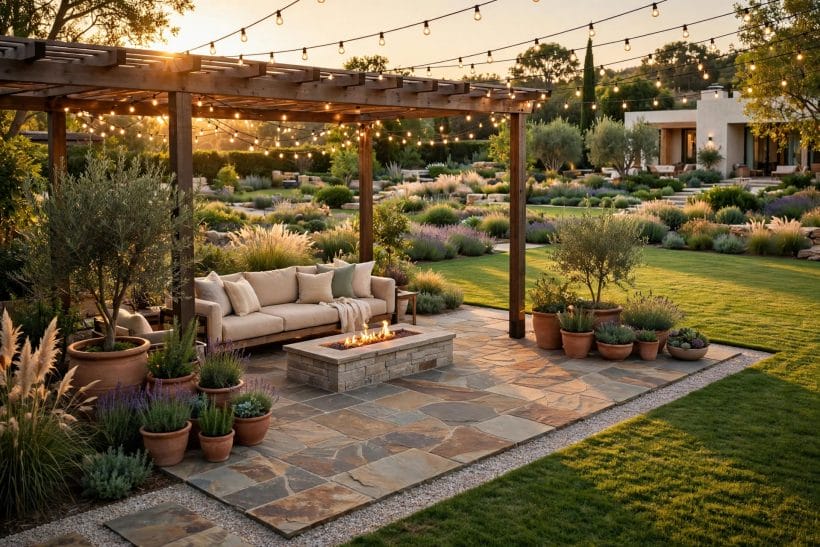
1. Backyard Patio Ideas at a Glance
The central entity is the backyard patio: the paved outdoor room behind the house, running from the back door to where the garden takes over. Its attributes are its position against the house, its surface and the base beneath it, its zones for eating, sitting and cooking, its shade and screening from overlooking neighbours, its planting at the edges, and its evening life of fire, water and low light. The entity itself, the patio behind the house, carries this post, which stays in that backyard setting throughout, linking the wider patio family rather than repeating it.
| Question | Short answer |
|---|---|
| How is this different from the patio pillar? | The pillar surveys patios everywhere; this post stays behind the house, on the terrace between the back door and the garden, with its neighbours, fences and evening use. |
| What decides a backyard patio’s life? | The invisible base and its drainage, then the route across it. Surfaces and furniture are judged daily, but ground and water decide for years. |
| Which shade works soonest? | Structure: a pergola, a sail or a covered bay. A tree is the best shade eventually and should be planted early, but it pays out over years. |
| What makes it feel like a room? | A legible far edge, zones for distinct uses, light at sitting height after dark, and planting softening every hard boundary. |
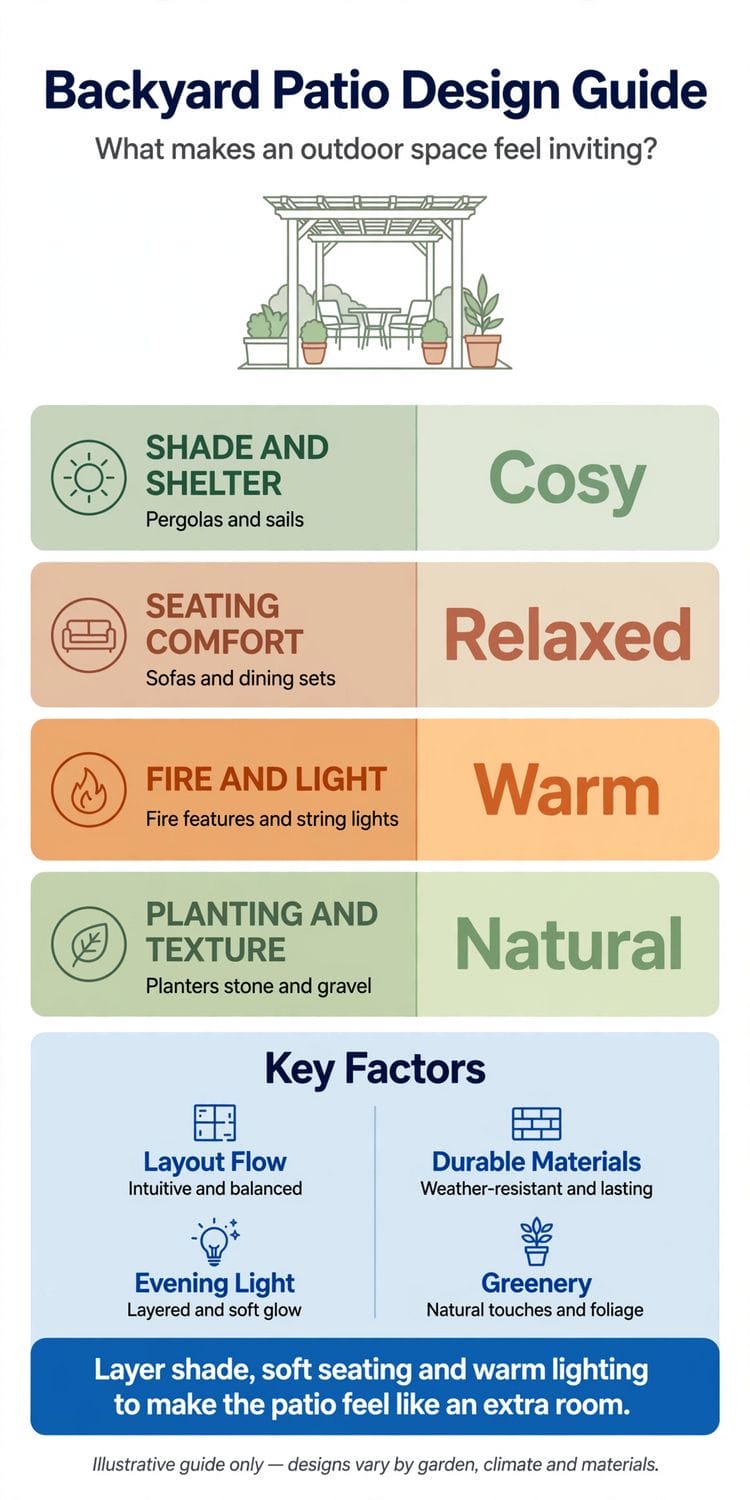
2. The Backyard Patio Itself: Position, Shape and Scale
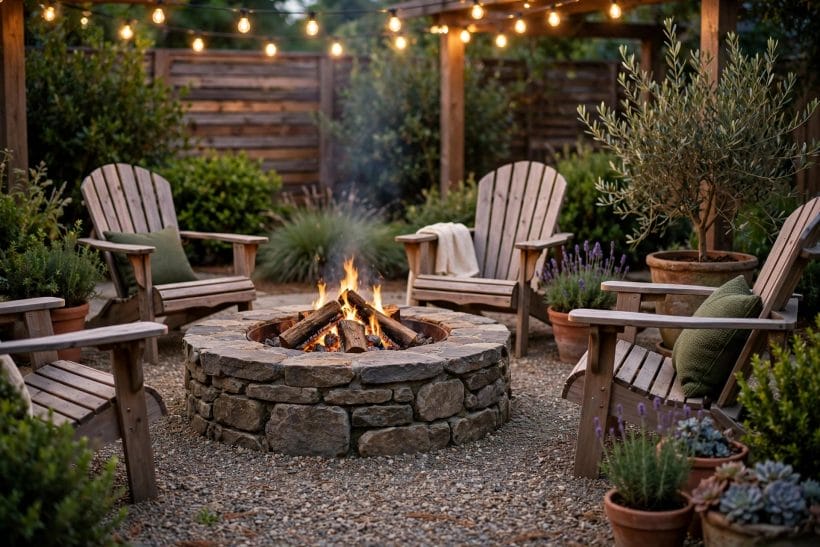
A backyard patio is the outdoor room behind the house: not the garden’s ornament but its floor, the hard, level, drained ground from which the rest of the backyard is used. The whole patio family is surveyed in the patio ideas pillar; this post stays in the backyard setting only, on the terrace that begins at the back door and ends where the garden takes over.
1. Start at the Back Door and Work Outward
Every backyard patio is read from the door: the first step out decides whether the room beyond is used daily or admired occasionally.
2. Give the Patio the House’s Width Where You Can
A terrace running along the back wall borrows the house’s shelter, its light and its services, and reads as the building’s outdoor storey.
3. Let Shape Follow the Plot, Not the Catalogue
Rectangles suit most backyards because houses and fences are rectangular. Where the plot turns or a tree commands its ground, let the patio’s edge turn with it rather than fighting the garden into a diagram.
4. Size the Patio by Its Furniture, Honestly Chalked
Tables, chairs, loungers and the route between them claim real ground. Chalk their footprints on the grass, walk the routes with a tray in hand, and let the body fix the patio’s dimensions.
5. Keep One Route Across the Patio Always Clear
To the gate, the shed, the bins and the garden beyond: a backyard is a working place, and its through route should never require moving furniture. Plan the corridor first and furnish around it.
6. Step Down Into the Garden in Broad, Shallow Treads
Where the plot falls away, broad steps make the change of level a feature and a seat. A patio that negotiates its slope gracefully is used more than one that pretends the slope away.
7. Anchor the Far Edge So the Room Has an End
A low wall, a planted bank, a change of surface: the patio needs a legible far edge or it leaks into the lawn. Rooms, indoors or out, are made by their boundaries.
8. Borrow the Garden’s Best View as the Patio’s Picture
Align the main seats toward whatever the backyard does best, a tree, a border at its peak, the evening sky. A patio facing a fence when a view exists has wasted its first asset.
9. Leave the Trees Their Ground
Build around established trees with a proper unpaved collar and room for roots to work. A patio that girdles its shade tree is spending the very asset it was built to sit under.
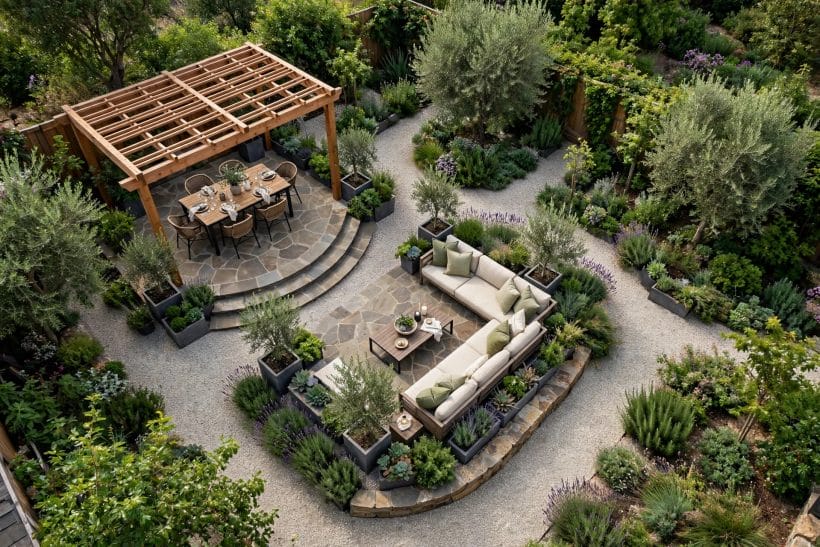
10. Plan the Whole Backyard in Zones From the Start
Patio, lawn, planting, work corner: even a modest backyard reads as designed when each use has its ground. The patio is the first zone to fix, because every other zone is reached across it.
11. Let the Patio Be Smaller Than the Dream and Better Built
An honest terrace, soundly based and well drained, beats a vast one laid thin. Ground can be added in a later season; a failed base must be dug out at full price and full mess.
3. Surfaces and Ground: What the Backyard Stands On
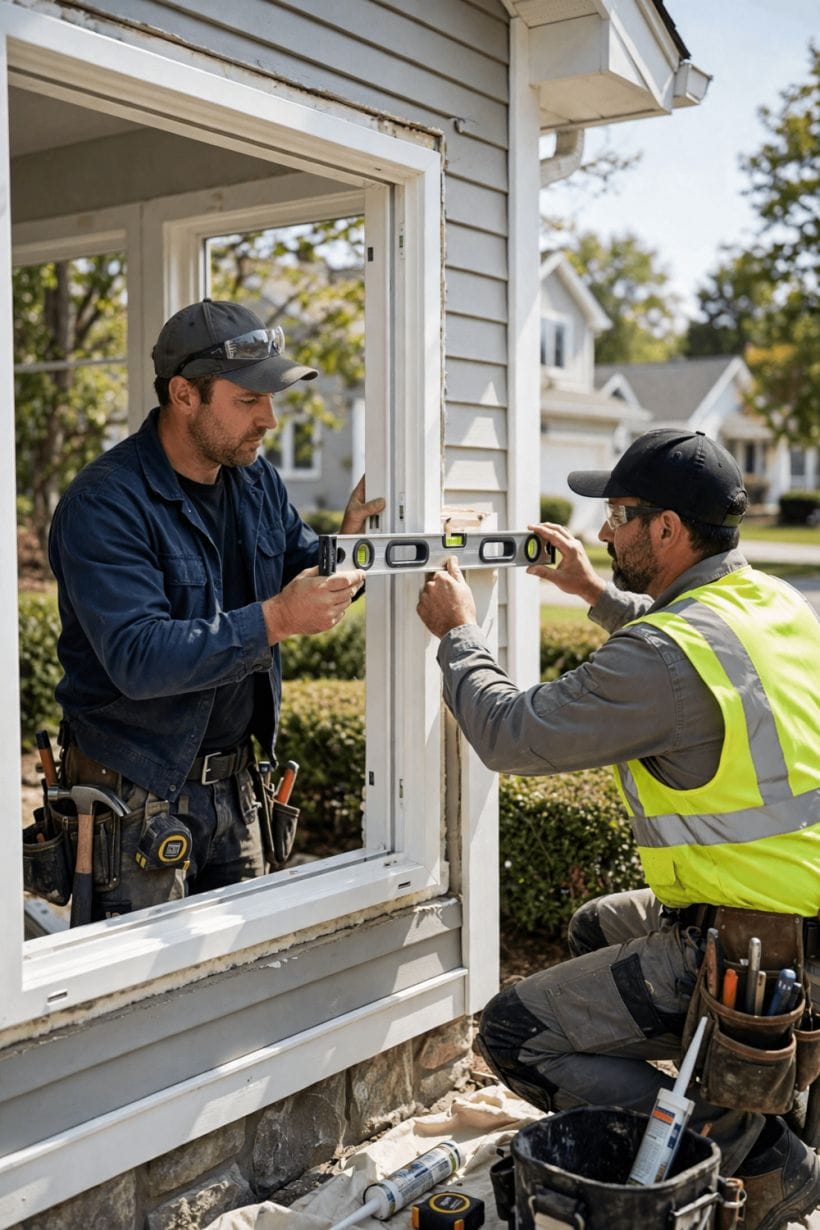
The surface choices for a backyard terrace, poured, unit-laid or loose, are each owned by their own posts; the poured slab is worked in concrete patio ideas and the liftable unit field in concrete paver patio ideas. This section keeps to the backyard’s ground truths that every surface shares.
12. Choose the Surface for the Life It Must Carry
Dining weight, dancing feet, a hot tub’s honest load, a dog’s daily patrol: surfaces fail where life was underestimated. Name the patio’s hardest use first and let it arbitrate between the candidates.
13. Respect the Base Beneath Every Surface
Whatever shows, what lasts is the excavation, the compacted foundation and the fall that sheds water. Money spent under a backyard patio is invisible and decisive; money spent only on its face is neither.
14. Give Rain a Planned Way Off and Away
A patio should shed its water to a border, a drain or a permeable edge, never toward the house and never into puddles that stand for days.
15. Keep Grip Where the Route Is Walked Wet
The doorstep landing, the step treads and the shaded corner stay damp longest and are walked most. Textured finishes belong there by function, whatever the field’s smoother areas may wear.
16. Mix Two Surfaces to Mark the Zones
Paving for the rooms, gravel for the margins, decking boards for one warm corner: a change of surface is the cheapest wall a backyard owns, and the eye reads it instantly.
17. Let Loose Gravel Serve the Quiet Margins
Gravel suits the patio’s edges, its planting pockets and the routes walked least, where its give and its crunch are virtues. Keep it out of the dining zone, where chair legs vote against it daily.
18. Mind the Threshold Between House Floor and Patio
The step between inside and outside floors is crossed a thousand times a year, with trays, children and dogs. Keep it shallow, even and honestly lit, and the house and its patio become one dwelling.
19. Plan for Roots, Buried Lines and Honest Surprises
Backyards hide services, old paths and the roots of vanished trees. A careful first dig, and a contingency in the budget for what it finds, is the grown-up way to start any terrace.
20. Edge Every Surface as if the Lawn Were Watching
Borders restrain unit fields, finish slabs and give the mower a clean line. An unedged patio unravels visually long before it unravels physically, and the remedy costs more later than sooner.
21. Test the Surface Barefoot Before Committing
Patios are summer rooms walked in bare feet. Heat, texture and grit underfoot are facts no brochure carries; walk the samples at midday and let the soles vote alongside the eyes.
22. Leave a Way Back In for Future Repairs
Services cross under backyards, and surfaces that can be lifted in a panel or a patch forgive the future.
4. Zones Behind the House: Eating, Sitting and Cooking Out
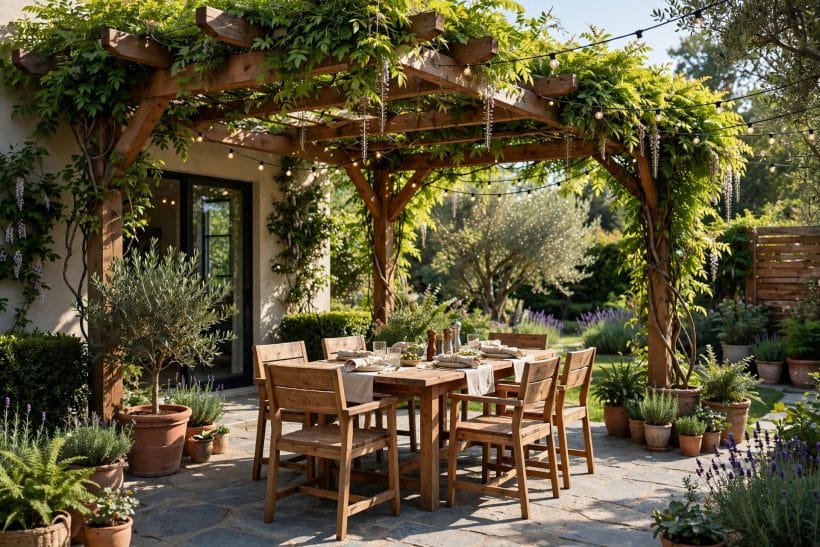
A backyard patio earns its size as a set of outdoor rooms, and its raised rival, the boarded platform, is compared throughout deck ideas. This section zones the paved ground: where the household eats, sits and cooks, in the order those things happen on a summer evening.
23. Give Dining the Flattest Ground and the Shortest Carry
The dining zone wants level paving and a short, safe route from the kitchen door, because every course makes that journey. Distance and slope are taxes paid in dropped dishes and abandoned plans.
24. Set the Sitting Zone Where Evening Light Lingers
Afternoon sun leaves a backyard in its own order. Watch where it rests last, and put the sitting chairs there; the evening room should inherit the day’s final warmth.
25. Keep the Grill Downwind and at the Field’s Edge
A working strip for the grill, its tools and a heat-proof landing belongs at the patio’s edge, screened by one planter. Smoke should visit the cook briefly and the guests not at all.
26. Make a Morning Corner Distinct From the Evening One
A small seat catching early sun, with room for one mug and one newspaper, serves a different household hour than the evening’s circle. Two small zones beat one large compromise.
27. Give Children Ground Within Sight and Out of the Route
A smooth corner visible from the sitting zone, fenced by planters rather than walls, becomes the children’s parish of the backyard. Wheels, chalk and bare knees all vote for the fine finish there.
28. Plan a Quiet Seat for One, Deliberately
Every backyard should hold one seat meant for solitude: the early riser, the gardener resting, the teenager telephoning. A patio that only performs for company misses half its household.
29. Keep the Working Backstage Honest and Screened
Bins, store boxes, the watering station and the compost run are the backyard’s backstage. Give them their paved strip behind a hedge or a screen, and the show side stays serene.
30. Let One Zone Stay Empty on Purpose
A paved court with every corner furnished reads as a showroom. One deliberately empty space, for a rug, a game, a dance or nothing, is the luxury that proves the rest was designed.
31. Connect the Zones With a Route That Reads at a Glance
Guests should never have to ask the way across a patio. A plainer bond, a gravel strip or a line of lights can draw the route without a single sign or step.
32. Furnish Each Zone to Its Own Scale
Dining chairs at the sitting zone’s low table, loungers crowding the dining route: mismatched furniture is how zones dissolve. Let each room keep its own pieces, and the backyard stays legible.
33. Borrow the Lawn for the Largest Gatherings
When the whole clan descends, the patio should serve as the gathering’s hearth while the lawn takes the overflow. Design the edge between them as a step and a seat, and the two grounds cooperate.
5. Shade, Shelter and Privacy From the Neighbours
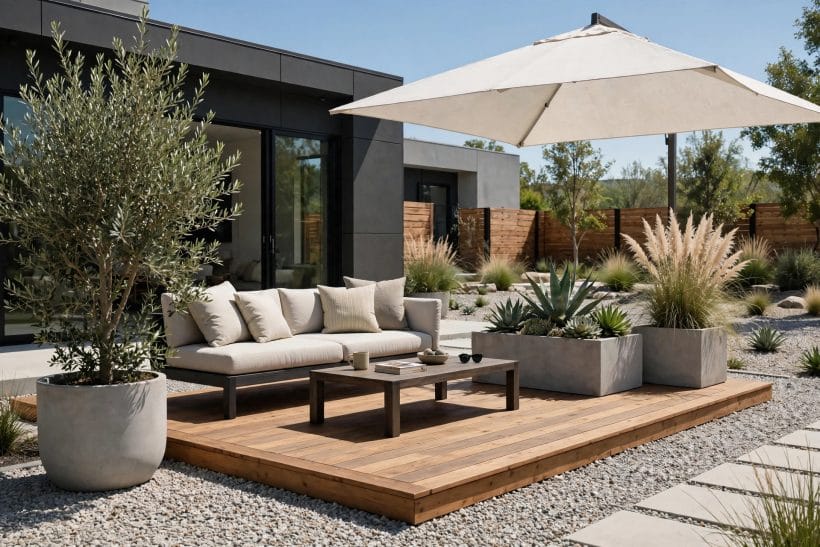
A backyard patio is overlooked by its nature: neighbours’ windows, the street’s end, the house’s own upper floors. The structure that shades best is toured in pergola ideas; this section keeps to the backyard’s shade, shelter and screening as one problem of comfort.
34. Map the Sun Before Planting a Single Post
Shade is a moving asset. Spend days watching where it falls at breakfast, at midday and at the evening hour before deciding what structure, tree or sail earns its place.
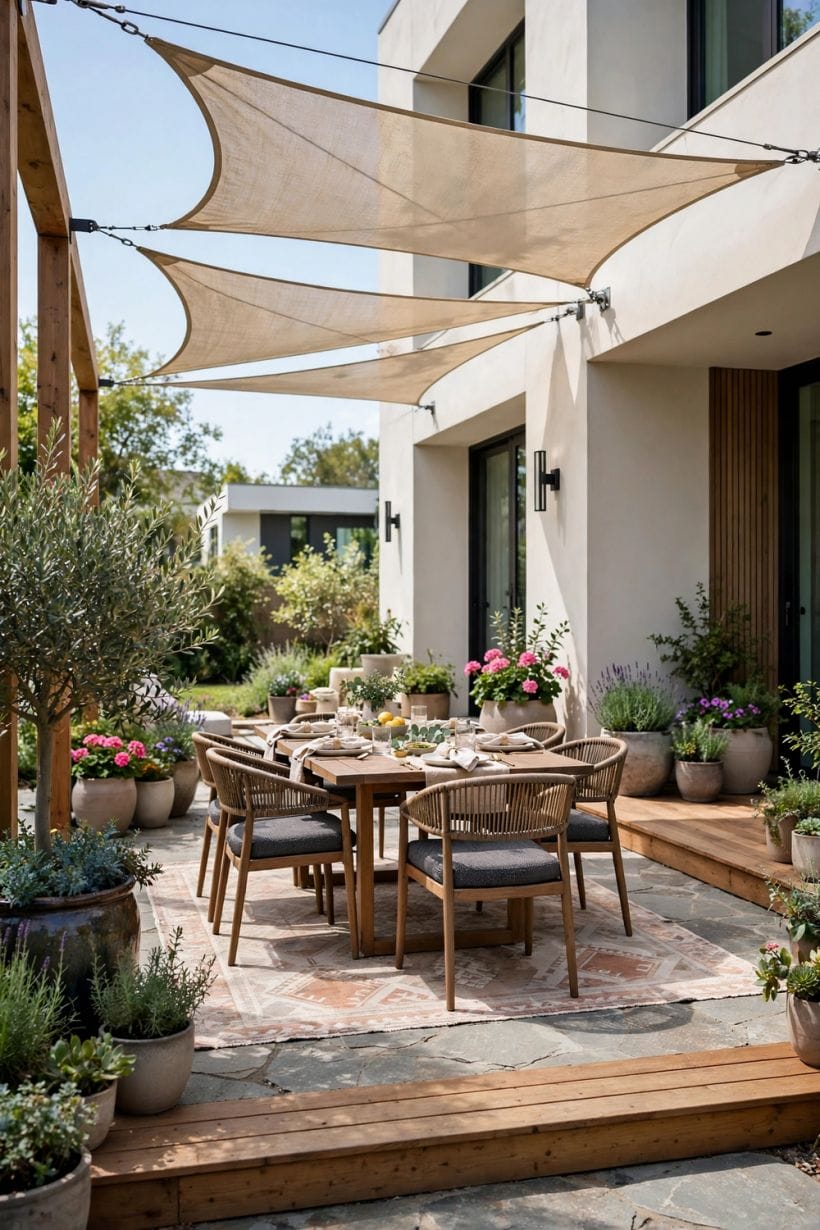
35. Use a Pergola Where Shade Must Arrive on Schedule
A planted tree takes years to give what a pergola gives in a season. Over the dining zone, where shade is an appointment, structure beats hope, and climbers can soften it in time.
36. Let a Sail Serve Where Posts Cannot Stand
A tensioned sail shades ground where foundations are impractical and comes down when the season turns. It asks for honest fixings and a house wall or posts that can truly take the pull.
37. Plant One Tree for the Decade, Not the Season
The best backyard shade is eventually a tree’s. Plant it early, at its proper distance, in the corner the sun’s path argues for, and let the patio’s interim shade be frankly temporary.
38. Screen the Sightlines That Actually Look In
Privacy is needed from specific windows, not from the sky. Stand in the patio, note which glass truly overlooks it, and screen those lines with a panel, a hedge or a pleached row.
39. Use Planting as the Kindest Screen
A layered border of shrubs and small trees softens a fence, feeds the birds and never looks like a fortification. Living screens grow into their job while built ones only age toward it.
40. Give the Sitting Zone a Roofed Corner for Uncertain Days
One covered bay, under a lean-to, an awning or the house’s own overhang, keeps the patio in use through the season’s doubtful weather. British and northern backyards alike are won by this single bay.
41. Break the Wind Where It Funnels
Gaps between house and fence act as wind’s corridors, and a patio seated in one is a patio abandoned.
42. Keep Shade Off the Whole Patio
A terrace entirely in shadow is a terrace used in coats. Shade the sitting and dining hours, and leave honest sun for the lounger, the herbs and the household’s winter mood.
43. Light the Screen, Do Not Flood It
Evening privacy is kept by gentle light at sitting height, not by a floodlight that silhouettes the household for the street. Low, warm and local is the rule for a backyard after dark.
44. Let Boundaries Be Neighbourly as Well as Private
Screens that respect the neighbours’ light and outlook keep the peace a backyard depends on. Check the local rules for heights and structures before building, and talk to the fence’s other side early.
6. Planting, Borders and the Garden Beyond
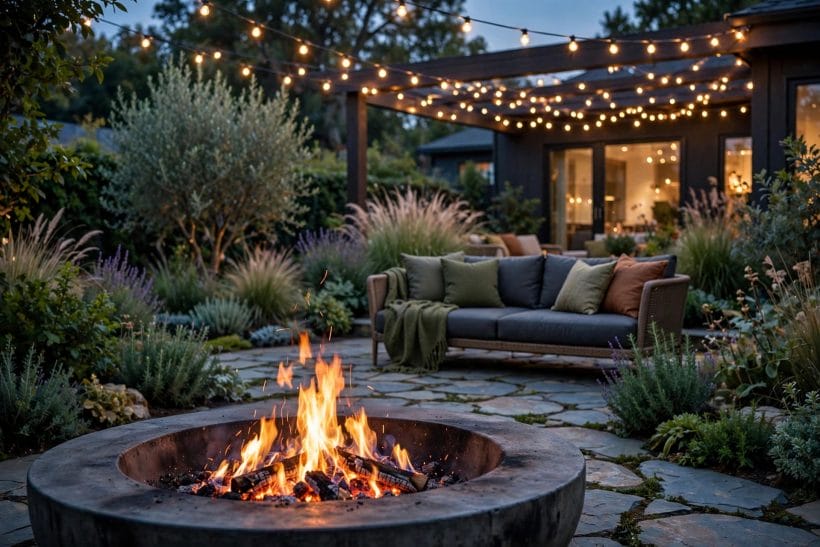
The patio is the garden’s floor, but planting is its walls, and the whole backyard’s planting at landscape scale is worked in backyard landscaping ideas. This section keeps to the planting that belongs to the patio itself: its edges, its pockets and its pots.
45. Soften Every Hard Edge With Green
A border, however narrow, between paving and fence turns a yard into a garden. Even a hand’s width of planting along the patio’s rim changes how the whole space is judged.
46. Leave Planting Pockets Inside the Field
Squares of soil left unpaved and planted with a small tree, a herb mound or a grass clump break the paving’s dominance and give the patio a living centre.
47. Use Pots Where the Ground Cannot Open
On a fully paved backyard, pots are the planting: group them in odd numbers at the corners and the door, large enough to hold moisture, and move them as the seasons argue.
48. Grow Herbs Within the Cook’s Reach
A planter of herbs beside the grill and the kitchen door is used at every outdoor meal. Proximity is the whole trick; herbs planted at the garden’s far end are herbs admired, not eaten.
49. Climb the Fences and the Pergola
Climbers turn boundaries into curtains and earn their ground at no cost to the floor. Choose for the aspect each fence offers, and give every climber its support from the first season.
50. Plant for Scent Where People Sit
Scent belongs at sitting height beside sitting places: a rose by the bench, jasmine near the evening chairs, lavender along the sunny route. The patio’s perfume is designed at nose distance or not at all.
51. Keep One Border Honest and Easy
A low-maintenance border of shrubs and grasses that asks an annual tidy rather than a weekly one keeps the backyard kind to busy households. Ambition in planting should match the gardener who actually lives there.
52. Let Planting Mark the Seasons at the Door
A pot changed through the year, bulbs, then summer bedding, then winter stems, gives the daily threshold a calendar. Small, near and changed often beats grand, far and permanent.
53. Screen the Bins and the Store With Green
A hedge panel or a trellis of climbers before the working corner keeps the backyard’s backstage out of its portraits. Green screens work all year only if evergreen thinking goes into them.
54. Water Planting as Part of the Patio’s Plan
Borders and pots near paving dry fast and are forgotten often.
55. Leave the Lawn’s Edge Crisp Against the Paving
The line where patio meets lawn is the backyard’s most judged detail. A mowing edge of setts, a flush border or a steel strip keeps that line drawn sharply with almost no effort.
7. Fire, Water and the Evening Backyard
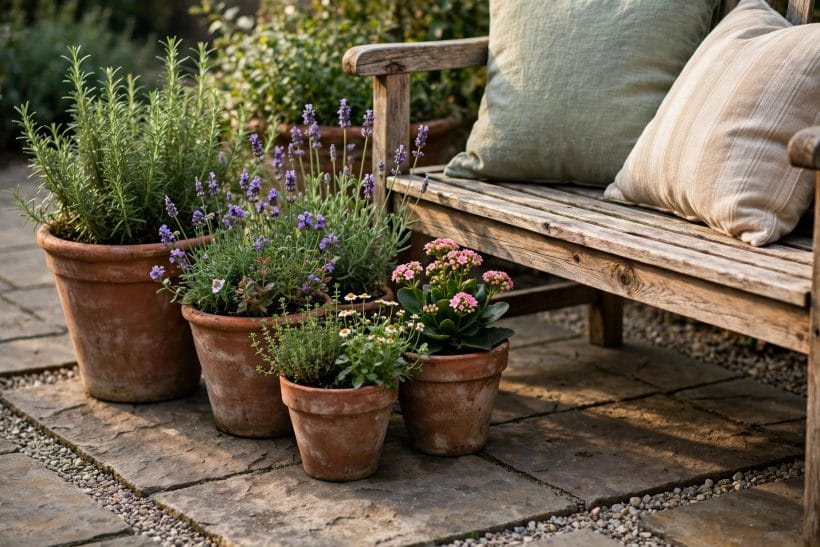
A backyard patio’s second life begins at dusk, and its wettest neighbour, the pool terrace, is gathered in backyard pool ideas. This section keeps to the paved backyard’s own evening: its fire, its small water and its light.
56. Give the Patio a Fire Bowl as Its Evening Hearth
A fire bowl or a small built hearth gives the sitting zone a centre after dark and stretches the patio’s season at both ends.
57. Keep Fire Honest About Smoke and Neighbours
Evening smoke drifts where it will, and washing lines and open windows live downwind. Use dry fuel, modest fires and neighbourly hours, and the hearth stays a pleasure rather than a grievance.
58. Add a Small Water Sound Near the Sitting Zone
A modest fountain or a bubbling pot masks the street’s hum and cools the air’s feeling on hot evenings. Small water, honestly recirculated and easily cleaned, suits a backyard better than grand features.
59. Light the Route, the Steps and the Threshold First
Evening light earns its keep where feet go: the doorstep, the step edges and the route to the gate.
60. Layer Low Lights at Sitting Height
Lights set low, in borders, under benches and along the sitting zone’s edge, flatter faces and leave the sky dark. Avoid glare at eye level; a backyard lit like a car park entertains nobody.
61. Use Lanterns and Candles for the Table’s Own Light
A table lit from within its own circle, by lanterns or candles in jars, gathers its company kindly. Keep flames in stable holders, away from cushions and climbers, and tended as the living things they are.
62. Warm the Evening With Textiles Kept Outdoors
Outdoor cushions and a stored throw extend the sitting zone’s hours more cheaply than any heater. Keep a dry store at the patio’s edge so the soft layer is a moment’s work, not an expedition.
63. Plan Power Honestly for the Evenings You Want
Music, a projector night, a string of festoon lights: each asks for power placed safely and properly for outdoor use. Have outdoor electrics installed by a qualified electrician to local rules, and the evenings stay carefree.
64. Let the Patio Host the Night Sky on Purpose
One corner kept deliberately dark, with a reclined chair and no light of its own, gives the backyard a observatory. Not every pleasure needs building; some need only the lights left off.
65. Store the Evening Kit Where the Evening Happens
Matches, lanterns, the throw and the fire’s tools belong in the patio’s own store box, not the house’s far cupboard. Rituals survive when their tools live within reach of their hour.
8. Keeping a Backyard Patio: Seasons, Stains and Small Repairs
A backyard terrace is kept, not finished: it lives outdoors in all weathers and is judged by how gracefully it does so. This closing section is the keeping that protects everything the earlier sections built.
66. Sweep Little and Often Rather Than Deep and Rarely
Leaves and grit left standing stain surfaces and feed the joints’ weeds. A light broom’s regular pass, especially under trees and after storms, is the cheapest maintenance a patio will ever receive.
67. Wash the Surface as Its Maker Directs
Different surfaces take washing differently, and enthusiasm with the wrong method scars faces and joints alike. Follow the maker’s guidance for the material you own, and test any cleaner on a hidden corner first.
68. Keep Joints Topped and Edges Honest
Unit fields live by their jointing and their restraints. Top up joints as they settle, reset any edge that creeps, and small attentions now prevent the relaid corner later.
69. Lift and Relay the Dipped Corner Early
The mercy of unit paving is repair: a dipped patch can be lifted, re-bedded and relaid in an afternoon. Do it while the patch is small, with the spare units kept from the build.
70. Treat Stains by Their Kind, Promptly
Oil, leaf tannin, rust and barbecue fat each answer to different treatment, and all answer better fresh. Keep the maker’s advice with the house papers, and resist the strongest chemical as a first resort.
71. Put the Patio to Bed for Winter Deliberately
Furniture stored or covered, pots gathered from the frost’s worst, water features drained as their makers direct, and the surface swept clean: a backyard closed kindly reopens kindly in spring.
72. Check Falls and Drains After the Hardest Rain
Once a year, in real weather, watch where the water actually goes. Puddles that have moved house since the build are the patio telling you, cheaply and early, where it needs attention.
73. Keep the Spares From Every Batch and Build
Spare units, a note of the surface’s maker and blend, and the installer’s name belong in the house file. Repairs made from the same batch disappear; repairs from memory announce themselves.
74. Let Age Read as Character, Not Neglect
A settled patio, tones weathered together, edges softened by planting, is more beautiful than a new one. Keeping means defending that patina from dirt and damage, not polishing the years away.
75. Walk the Whole Backyard Once a Season With Fresh Eyes
From the gate, from the door, from the sitting chair: a slow seasonal inspection finds the creeping joint, the failing light and the border outgrowing its place while each is still a small, cheap mercy.
9. Checks and Mistakes: Before the First Purchase or the First Stone
Walk the backyard at the hours the patio will serve before fixing its shape: morning, the glare of midday and the evening’s last light, noting where shade falls, where the wind funnels and which neighbours’ windows truly look in. A patio planned from the kitchen window alone is planned from the one place it will never be used.
Chalk the furniture and the through route on the grass and live with the chalk for days, moving chairs, carrying trays, letting children and dogs vote with their feet. Ground, once paved, argues back expensively; chalk is the cheapest consultation in the whole project.
Check the local rules for structures, screens and fires before building, and talk early to the neighbours whose light and outlook your screens will touch. A backyard is a shared acoustic and visual space, and its diplomacy is part of its construction.
10. Costs and Pulling It Together
Costs gather in plain families: the ground (excavation, base and drainage, the invisible family that decides the patio’s life), the surface itself, any shade or screen structure, and the furnishing and planting that make it a room. Keep every figure general, take quotes family by family, and distrust any total whose ground family is missing or mysteriously small, because that is where cheap patios are manufactured and expensive ones are repaired.
Pull the backyard together in this post’s order: position and route first, ground and water second, zones third, shade and green last. A backyard patio built that way does not need to be grand to become what it reliably becomes: the room the household lives in all summer, and looks out on with pleasure all winter.
Final Considerations
A backyard patio is the house turned kindly outward: the same instincts that make a good room, floor, walls of green, light, a place for every hour, applied under the sky. Build its ground honestly, zone it for the life actually lived, and keep it with small regular mercies, and the back door will open, for years, onto the best room the house owns in fine weather.


0 Comments