

A great playset turns the garden into the destination: no packing, no driving, just a door opened and childhood happening. These 75 ideas cover layout, equipment, colour, costs and the practical details that keep play safe and gardens sane.
Mix the sections freely — a climbing family and a water-play family will build very different yards from the same list.
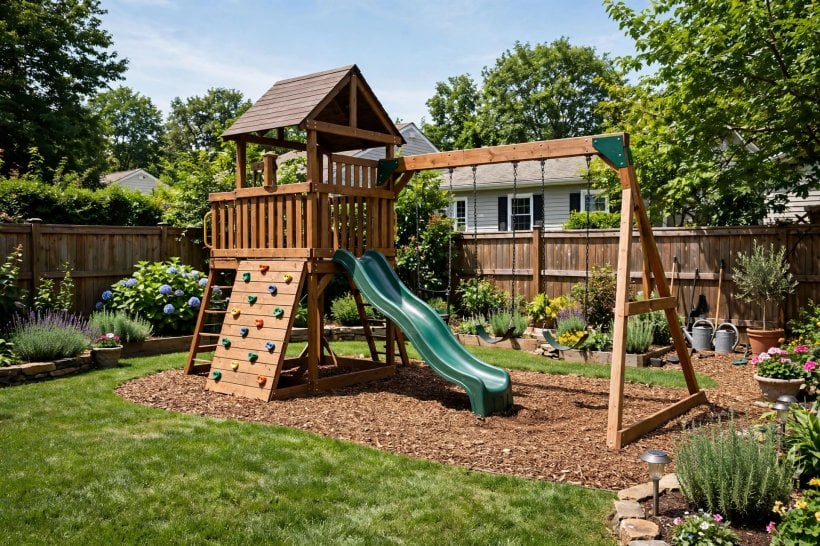
1. Layouts and Zones That Make Play Flow
Before choosing equipment, zone the garden. The most-loved backyard playground ideas start with a map: active play where it can be seen, quiet play in shade, and a clear route between them that no swing arc crosses. Families planning compact plots will recognise the zoning discipline in these home interior design ideas.
| At a Glance | What It Means for a Playset |
|---|---|
| Best suited to | Family gardens with children roughly toddler to pre-teen |
| Biggest challenge | Balancing fall space, shade, sightlines and lawn peace |
| First thing to fund | Groundworks and surfacing, before the tallest structure |
| Layout sweet spot | Play clustered where adults naturally sit and watch |
| Colour strategy | Natural timber and greens, with colour in accessories |
| Budget approach | One anchor structure, then add zones season by season |
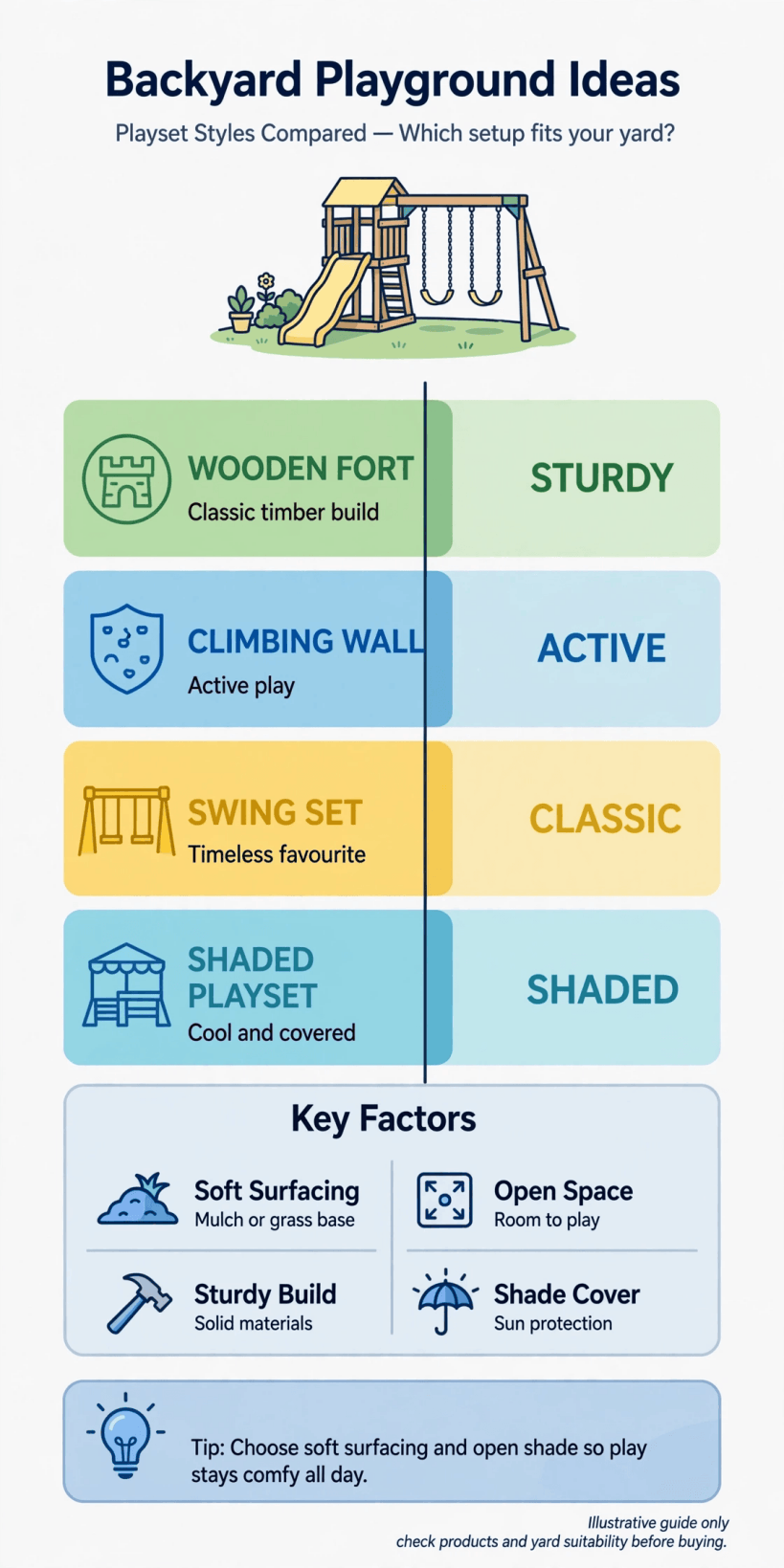
A quick-reference summary of zones, surfacing, colours and costs for a family play garden.
Idea 1 — Sightline-first placement
Position the main structure where kitchen and patio sightlines naturally land, so supervision happens from everyday seats rather than a dedicated watch post by the fence.
Idea 2 — Active and quiet halves
Split the yard mentally in two: swings and climbing on the active half, sand, shade and dens on the quiet half, so moods never collide.
Idea 3 — Central lawn, play at edges
Keep the middle lawn open for ball games and picnics, anchoring structures along the edges where they frame the garden instead of filling it.
Idea 4 — Corner command post
A corner fort uses two fences as ready-made walls, feels bigger inside than it looks, and leaves the rest of the garden feeling open.
Idea 5 — Shaded-afternoon rule
Map where shade falls at peak playtime and put slides and seating inside it; metal slides in full afternoon sun retire themselves every summer day.
Idea 6 — Loop path for wheels
Run a simple loop path around the play zone for bikes, scooters and running games, and the whole garden gains a racetrack children use daily.
Idea 7 — Grown-up landing pad
Reserve one bench or deck corner with a small table inside the play zone; adults who can sit comfortably supervise longer and join in more.
Idea 8 — Room-to-grow margin
Leave one empty patch beside the main structure for the next phase — trampoline, bigger climber or teen hangout — so today’s plan never boxes tomorrow in.
2. Swings, Slides and Climbing
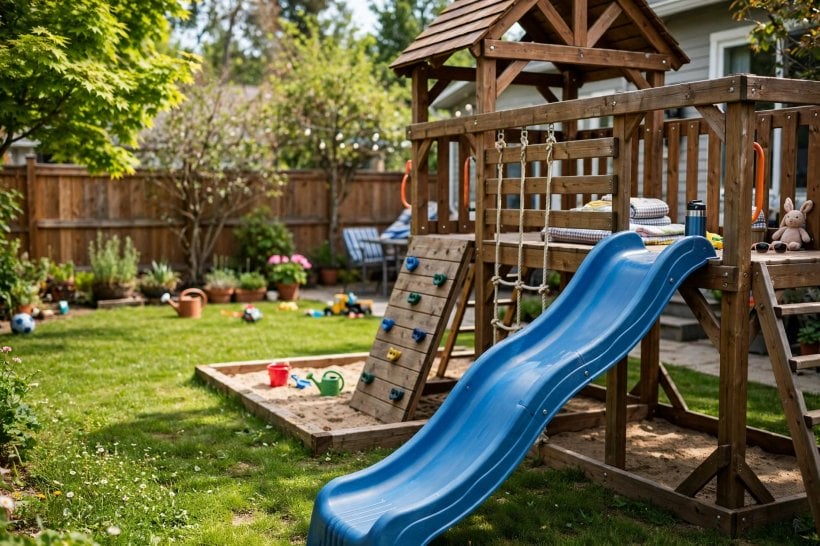
Movement is the main event. Choose fewer, sturdier motion pieces and install them exactly to maker guidance; the variety children crave comes from combining basics cleverly, not from crowding every catalogue item into one frame.
Idea 9 — Two swings, different seats
Pair a classic belt seat with a toddler bucket or a disc seat on one beam and siblings of different ages share the same game.
Idea 10 — Glider for two
A two-person glider teaches cooperation timing better than any lecture, and gives the swing set a social centrepiece smaller children can manage together.
Idea 11 — Straight slide with a gentle run-out
Choose slide length for your fall space, aim the exit away from paths and fences, and keep the landing zone soft, clear and visible.
Idea 12 — Wave or scoop slide for smaller gardens
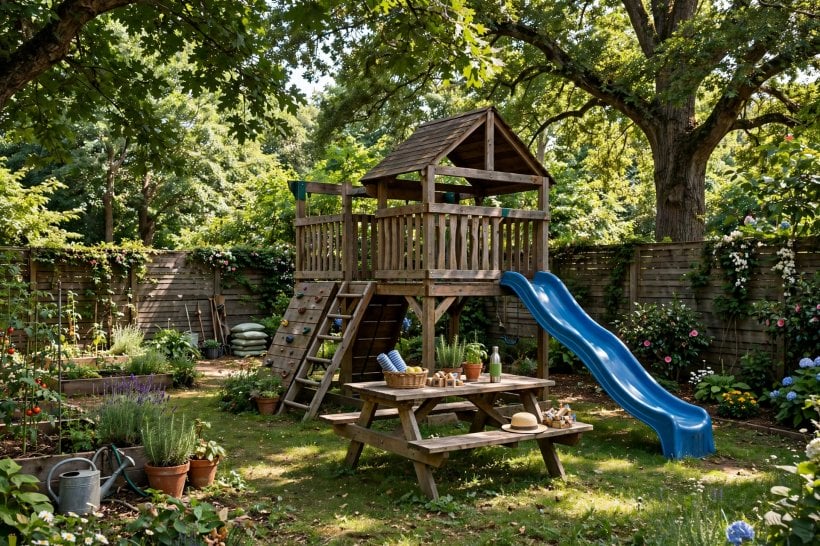
A shorter, shaped slide delivers the thrill in less run-out distance, suiting compact plots where a long straight slide would eat the lawn.
Idea 13 — Climbing wall panel
One angled climbing panel with proper holds builds strength and confidence progressively, and doubles as the fort wall it is attached to.
Idea 14 — Rope ladder and cargo net
Flexible climbing challenges balance in ways rigid rungs cannot; secure every fixing point and check ropes for wear at the start of each season.
Idea 15 — Monkey bars at honest height
Overhead ladders are the pre-teen favourite; set the height for the oldest child, over the softest surfacing you have, with clear space beneath.
Idea 16 — Firefighter pole exit
A vertical pole gives the fort a second, thrilling exit, spreads traffic away from the ladder, and takes almost no ground space at all.
3. Playhouses, Forts and Dens
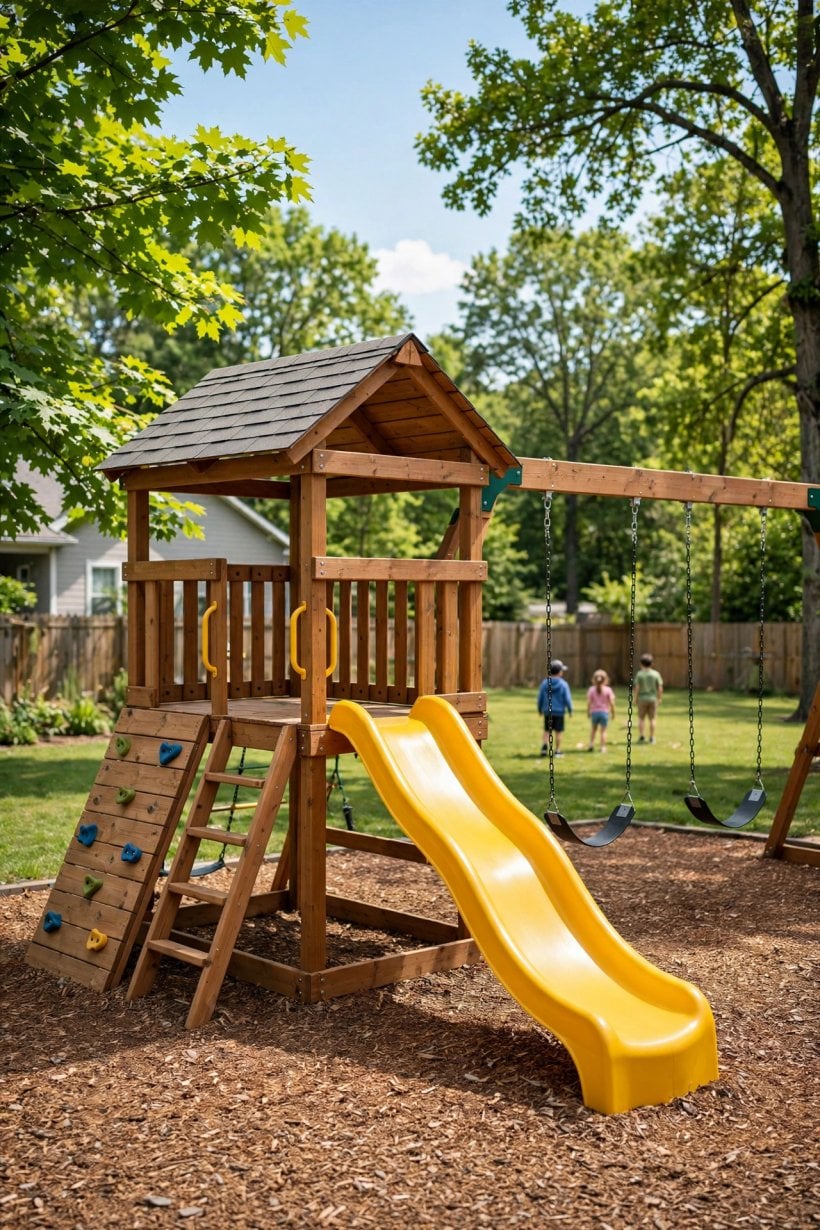
Every play garden needs somewhere to be someone else: shopkeeper, captain, chef, explorer. A roof, real or imagined, turns equipment into a world, much like the small-space worlds in these small living room interior design ideas.
Idea 17 — Raised fort with a real roof
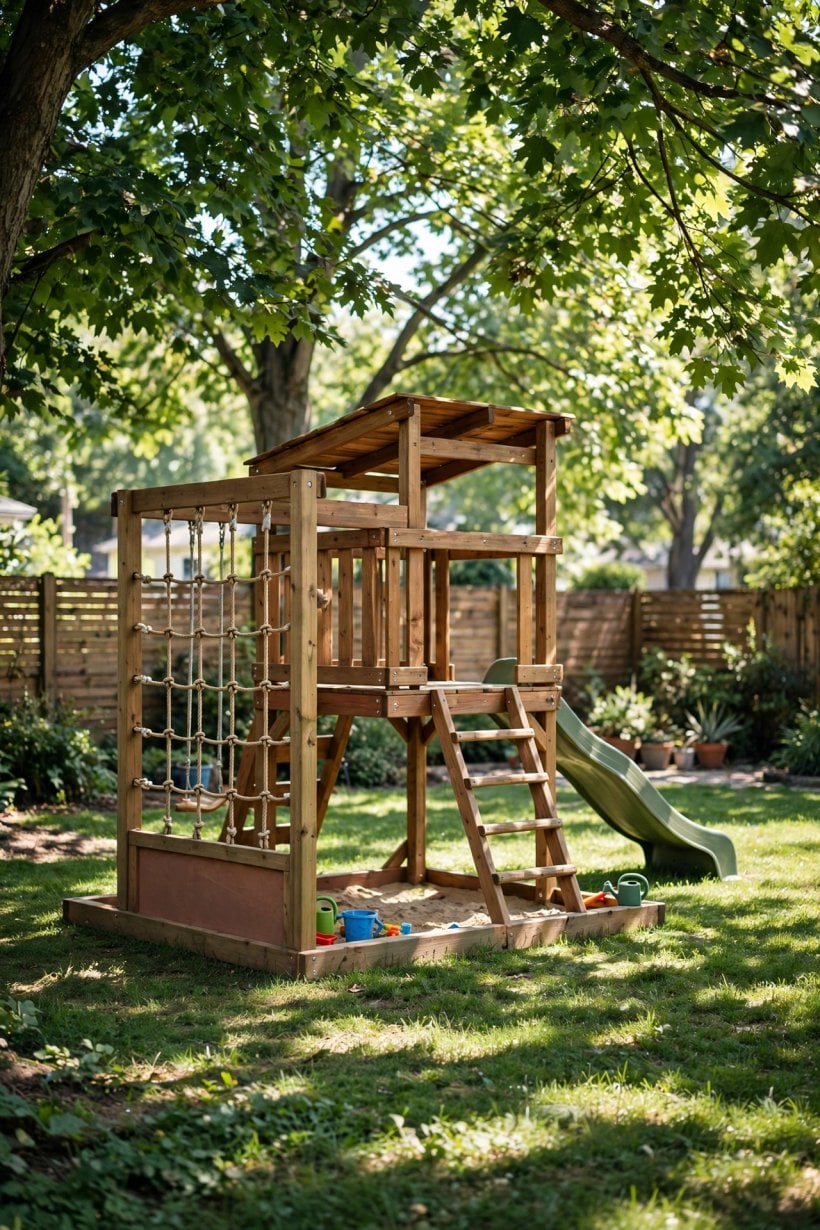
A covered platform fort becomes headquarters for everything: lookout, shop, spaceship; the roof earns its cost in rainy-day play alone.
Idea 18 — Ground-level playhouse
For toddlers, a ground-level house with a door they can work themselves gives independence without height, and converts to a garden store years later.
Idea 19 — Shop-counter window
One wide opening with a shelf counter creates endless café, market and ticket-office games; add a chalkboard menu and the business renews itself daily.
Idea 20 — Den under the platform
The shaded space beneath a raised fort is a free second room: hang a curtain, add cushions, and it becomes the den older children guard fiercely.
Idea 21 — Bridge between structures
A clatter bridge or steady plank walkway linking two platforms doubles the adventure and gives circuits for chase games that never cross the lawn.
Idea 22 — Telescope and steering wheel
Simple mounted accessories — wheel, telescope, periscope — steer imaginative play for years and cost a fraction of another climbing structure.
Idea 23 — Flag and name board
A personalised name board and a hoistable flag make the fort a place with an identity; expect the name to change with every new obsession.
Idea 24 — Willow or planting den
A living den of willow, sunflowers or tall grasses gives shade, secrecy and a season of watching it grow before the first tea party inside.
4. Sports, Games and Active Play
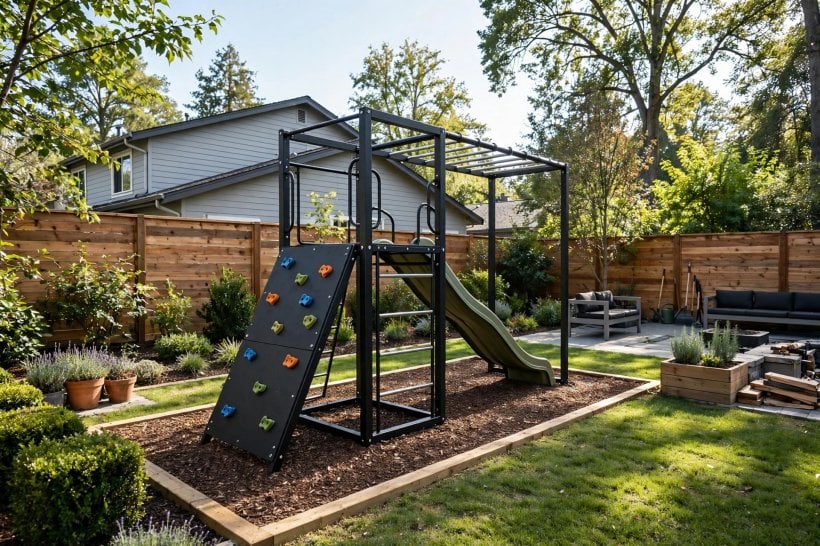
Beyond the structure, lawns earn their keep with games that scale from one child to a birthday crowd. Keep equipment portable where you can, so the garden can be a stadium on Saturday and a quiet green room on Sunday.
Idea 25 — Mini hoop on the fort or fence
A height-adjustable hoop grows with its players and gives the pre-teen years a reason to stay in the garden as tastes change.
Idea 26 — Rebound net corner
A rebound net turns solo ball practice into a game in any corner, and folds away when the garden hosts grown-up evenings.
Idea 27 — Balance beam trail
Low beams and stepping logs in a wandering line build balance for little ones and an obstacle course for older ones at zero running cost.
Idea 28 — Climbing dome
A geodesic dome is climber, den frame and goalpost in one; anchor it per maker guidance and give it the fall space it deserves.
Idea 29 — Zip line, professionally judged
Where garden length and trees or posts genuinely suit it, a zip line is the headline ride — and the one most worth professional assessment first.
Idea 30 — Trampoline, sunk or netted
In-ground trampolines blend into the garden and simplify access; above-ground models need their net and pads maintained like the safety kit they are.
Idea 31 — Slackline between strong trees
A low slackline with tree protectors challenges tweens and adults alike; set it low, over soft ground, and store it dry between sessions.
Idea 32 — Giant lawn games kit
Oversized skittles, hoops and a parachute live in one weatherproof box by the fort, ready for parties, cousins and long summer evenings.
5. Water, Sand and Sensory Play
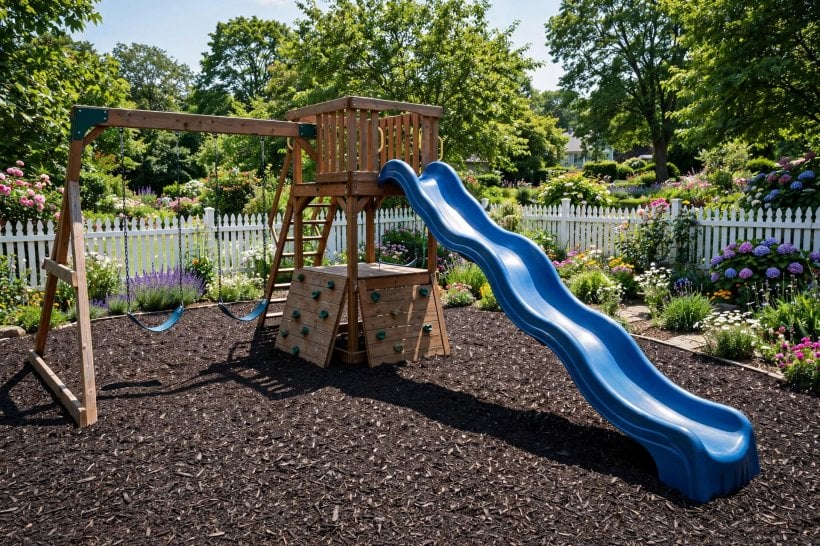
The quiet half of the garden runs on texture: sand, water, mud and things that pour. These stations hold younger children longest and cost least, borrowing the small-budget ingenuity of these tiny house kitchen design ideas.
Idea 33 — Lidded sandpit within sight
A generous sandpit with a real lid keeps cats and rain out and play in; place it in partial shade and within the main sightline.
Idea 34 — Raised sand and water table
For toddlers and small patios, a sturdy table-height tray brings the beach to standing height and empties without a digger’s effort.
Idea 35 — Mud kitchen station
An old bench, a bowl sink and thrifted utensils create the mud kitchen — the single most absorbing station most gardens ever host.
Idea 36 — Paddling and splash zone
Designate one hard-surface corner for paddling pools and splash mats, near a drain and a tap, away from the slide landing zone.
Idea 37 — Water run on the fence
Gutters, funnels and wheels mounted at child height turn one bucket of water into an engineering lesson that resets itself all afternoon.
Idea 38 — Sensory planting border
Lamb’s ear, grasses, herbs and rustling bamboo along the play edge give fingers and noses a garden of their own between climbs.
Idea 39 — Digging patch, officially allowed
One sanctioned digging corner with tools and a bucket saves every other flower bed in the garden and satisfies the archaeology phase completely.
Idea 40 — Bubble and chalk station
A washable chalkboard panel on the fort and a bubble shelf nearby create the reset activity children drift to between bigger adventures.
6. Ground Surfaces and Shade
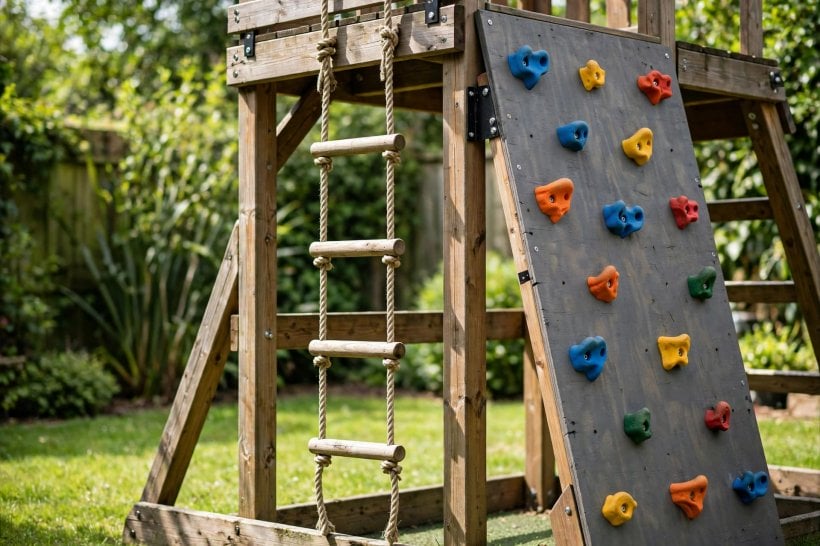
Surfacing is the unsung budget line that decides how the garden feels underfoot and how falls end. Match depth and type to the equipment above it, and plan shade as seriously as any structure.
Idea 41 — Grass, honestly assessed
Healthy grass suits low equipment and looks best; where traffic kills it into mud, admit defeat early and surface the busy zones properly.
Idea 42 — Bark or wood fibre zones
Loose-fill bark under climbers cushions well and reads natural; budget for topping up and raking it back from edges as play scatters it.
Idea 43 — Rubber mulch or tiles at landings
Put the highest-spec surface exactly where feet land — slide exits, swing arcs, climbing bases — and simpler surfaces everywhere else.
Idea 44 — Artificial grass play lawn
Quality artificial turf gives year-round green with no mud, a real kindness in wet climates; choose a grade made for active play.
Idea 45 — Shade sail over the hub
A well-anchored shade sail over the main structure cools the whole zone and protects surfaces and small heads through the middle of the day.
Idea 46 — Pergola shade at the sandpit
Slow play needs slow shade: a small pergola or a leafy climber frame over sand and den areas keeps the quiet half comfortable.
Idea 47 — Decked parent-and-toddler terrace
A low deck edge gives clean sitting, pram parking and a stage for performances; keep its surface barefoot-friendly and slip-aware.
7. Colour, Themes and Personal Touches
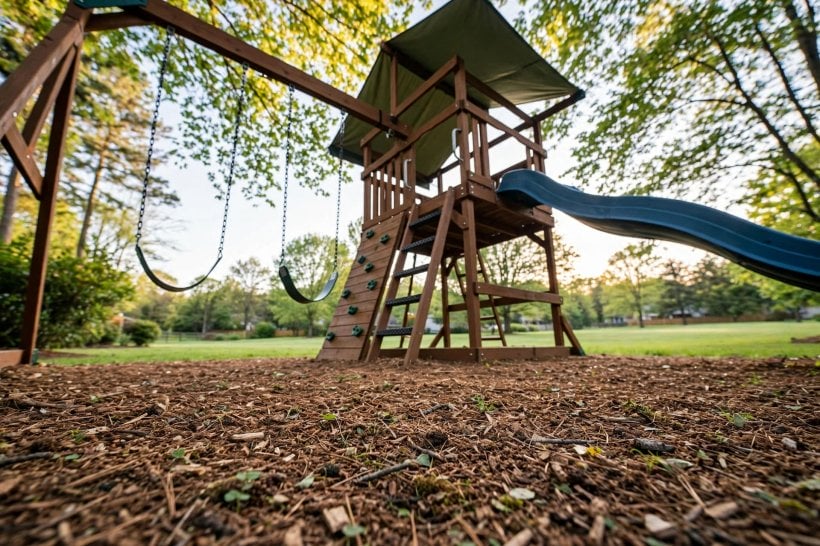
Play gardens photograph loud but live better calm: a natural base with colour in the movable layers keeps neighbours, parents and future buyers calm too, echoing the restraint in these modern living room interior design ideas.
Idea 48 — Natural timber base
Let structures weather to silver or keep them honeyed with oil; either way, timber against planting is the backdrop every other colour enjoys.
Idea 49 — One accent colour rule
Pick a single accent — red, teal, sunshine yellow — for the slide, door and accessories, and the whole set suddenly looks designed.
Idea 50 — Rainbow, carefully rationed
Full rainbow works in painted details — fence panels, stepping stones, bunting — where it can be repainted as tastes grow up.
Idea 51 — Theme by accessories only
Pirate, jungle or castle themes live in flags, signs and props that unclip in minutes, so the structure itself never dates.
Idea 52 — Painted fence backdrop
A deep green or charcoal fence makes planting and pale timber glow, hides scuffs, and gives the play zone a theatre backdrop.
Idea 53 — Bunting and festoon lights
Weatherproof bunting and evening festoon lights stretch play into dusk for parties and make the set a garden feature after bedtime.
Idea 54 — Stepping-stone art
Hand-painted stepping stones, one per child per summer, build a path of family history through the play zone at pocket-money cost.
8. Safety, Sightlines and Practical Details
Good safety is mostly habits and honest checks, not fear. Build them into the calendar the way these basement interior design ideas build moisture checks into a renovation.
Idea 55 — Fall space kept sacred
Measure the clear zones around swings and slides and defend them from planters, bikes and storage creep every single month of the year.
Idea 56 — Anchoring checked seasonally
Ground anchors, bolts and fixings get a hands-on check each spring and autumn; timber moves, soil shifts, and children test everything daily.
Idea 57 — Gates that latch themselves
Self-closing, self-latching gates between play and any drive, road or pond are the highest-value hardware in the whole garden, full stop.
Idea 58 — Splinter and edge patrol
Run a hand along timbers each season; a quick sand of rough spots and a check of caps and covers prevents the commonest minor injuries.
Idea 59 — Sun and hydration station
Hang the hats, sunscreen and water bottles on hooks at the play zone gate so the routine survives the excitement of the first run outside.
Idea 60 — Evening lights on paths
Low path lights between house and play zone help evening tidying, party supervision and the retrieval of beloved toys left out at dusk.
Idea 61 — Neighbour-aware placement
Site the noisiest joys — trampolines and glider swings — thoughtfully within your plot, and goodwill will outlast any single summer of squeals.
9. Costs, Kits Versus DIY and Phasing
Money talk, kept honest: complete sets span a very wide range, from simple flat-pack frames to bespoke timber builds, and installation, surfacing and shade typically matter as much as the structure price. Think in phases and buy the best anchor you can, because children test quality daily.
Idea 62 — Anchor first, accessories later
Spend the first budget on the main frame and its surfacing; wheels, flags and telescopes make perfect birthday-list additions for years afterwards.
Idea 63 — Kit versus bespoke, honestly
Kits bring instructions, rated parts and predictable cost; bespoke builds fit awkward plots beautifully but repay experienced carpentry and patience.
Idea 64 — DIY the ground, not the structure
Leveling, edging and surfacing are satisfying DIY; the tall structure itself deserves either professional assembly or your most careful, unhurried weekend.
Idea 65 — Second-hand, inspected hard
Quality timber sets resell well; inspect for rot, cracks and complete fixings, and budget for new bolts and a full sand-and-seal revival.
Idea 66 — Phase by age, not by sale
Buy for the child you have: toddler pieces now, climbing height later; a phased yard always fits its players instead of waiting for them.
Idea 67 — Surfacing in the same budget line
Quote surfacing, edging and shade inside the same decision as the set; discovering them afterwards is how good projects stall half-built.
Idea 68 — Tool and fixings library
Keep the set’s tools, spare caps and touch-up finish in one labelled box in the shed and every seasonal check becomes a ten-minute job.
10. Growing With Them: Ages, Upkeep and Storage
The best play gardens are designed to be outgrown gracefully. Swappable seats, removable themes and one eye on the teenage years keep the investment working, much like the flexible homes in this tiny house community profile and the adaptable rooms in these living room interior design ideas.
Idea 69 — Swappable swing seats
Bucket to belt to disc to a porch-style bench seat: one beam, four childhoods, provided fixings stay rated and inspected throughout.
Idea 70 — Fort to hangout conversion
When the fort years end, the platform becomes a reading deck, a homework escape or a garden cinema base with cushions and a screen.
Idea 71 — Seasonal deep clean
One spring wash, sand and oil session for timber, plus a mould check on fabrics, returns the whole set to birthday-party standard.
Idea 72 — Weatherproof toy storage
A lidded bench or deck box inside the play zone ends the nightly toy migration and keeps small pieces out of the lawn mower’s path.
Idea 73 — Guest and party mode
Know your party layout: where the queue forms, where drinks sit beyond the swing arc, and which gate stays latched all afternoon.
Idea 74 — Night garden for grown-ups
When play ends, festoon lights, the fort deck and the quiet lawn give adults an evening garden that justifies every nail of the build.
Idea 75 — The annual photo test
Take one photo from the same spot every summer; it shows what to repair, what they have outgrown, and how much joy the yard is returning.
Final Considerations
Zone the garden first, anchor one quality structure on honest surfacing, keep fall space and gates sacred, and let themes live in things that unclip. Reviewed each season and grown in phases, backyard playground ideas like these turn a patch of lawn into the place childhood actually happens — and leave you a beautiful garden when it quietly grows up.


0 Comments