

Few pieces of furniture change a house the way a swing changes a porch: it slows the pace, gives the view a rhythm, and turns waiting for the kettle or the kids into the best seat at home.
These fifty ways cover classics, swing beds, garden seats and the practical details that keep them swaying safely for years.
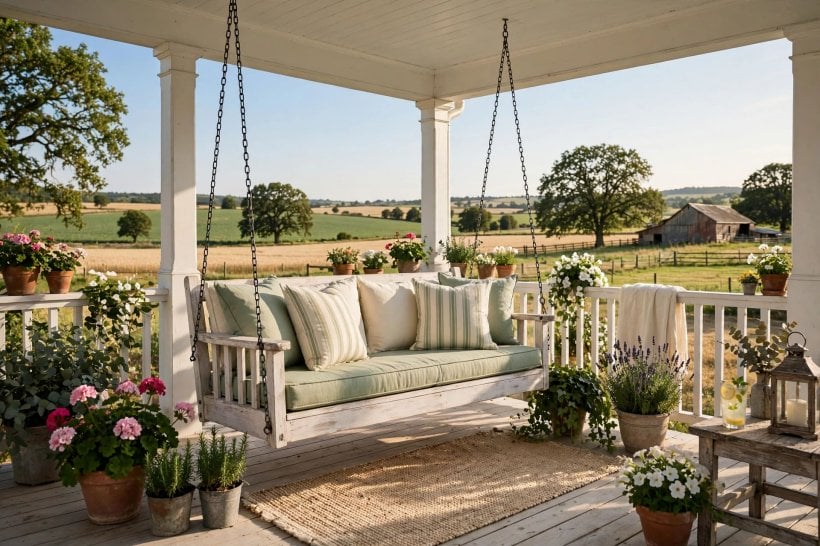
1. Classic Front-Porch Swings
Start with the shapes that made the porch swing beloved. The best patio swing ideas respect the architecture in front of them: a traditional house wants honest timber and gentle proportions, and the swing should look as though it has always hung there, like the welcoming fronts in these home interior design ideas.
| At a Glance | What It Means for a Porch Swing |
|---|---|
| Best suited to | Front porches, verandas, pergolas, garden rooms and decks |
| Biggest challenge | Finding structure strong enough to hang from, safely |
| First thing to check | Joists, beams and clearance before choosing any style |
| Comfort sweet spot | Seat depth you can curl into, back height that supports shoulders |
| Style strategy | Match the house first, then express yourself in cushions |
| Budget approach | Hardware and hanging done properly; cushions can evolve |
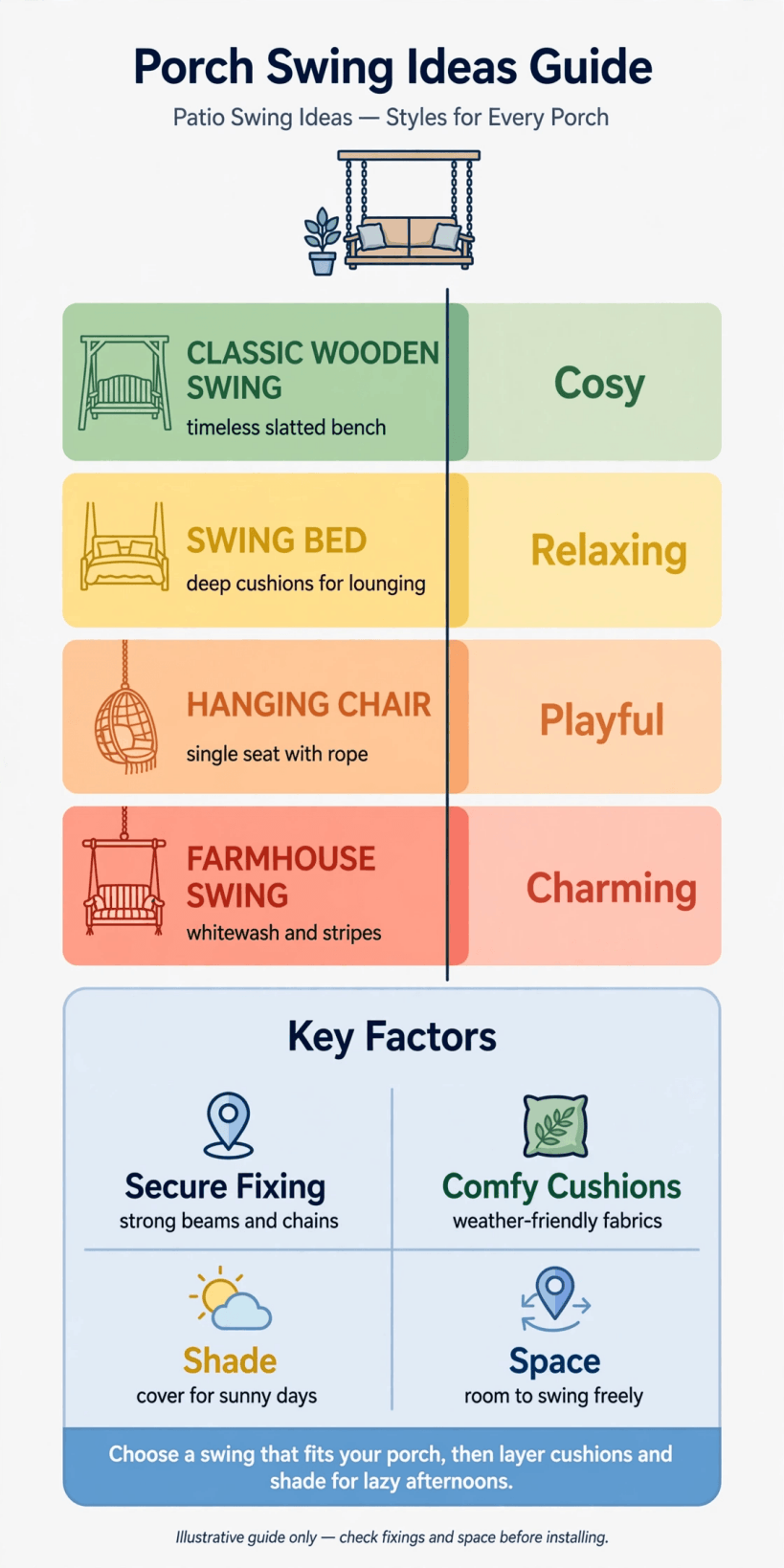
A quick-reference summary of swing styles, hanging checks and styling priorities for porches and gardens.
Way 1 — Traditional slatted bench swing
The timeless slatted bench, hung level and centred on the front windows, suits almost every house style and ages gracefully with nothing more than an occasional coat of oil or paint.
Way 2 — Wraparound corner swing
On an L-shaped veranda, hang the swing across the corner so sitters face two views at once; the corner position also shelters the seat from the prevailing breeze.
Way 3 — White-painted classic
A white swing against weatherboard or brick is the postcard image for a reason: crisp, bright and happy with any cushion colour you rotate through the seasons.
Way 4 — Swing with a canopy top
A fixed or tilting canopy shades midday readers and keeps light rain from ending the session, a practical kindness in climates where showers arrive without asking.
Way 5 — Twin swings, side by side
Two single swings hung a conversation apart let each person set their own rhythm, and look charmingly symmetrical flanking a front door or garden path.
2. Swing Beds and Daybed Swings
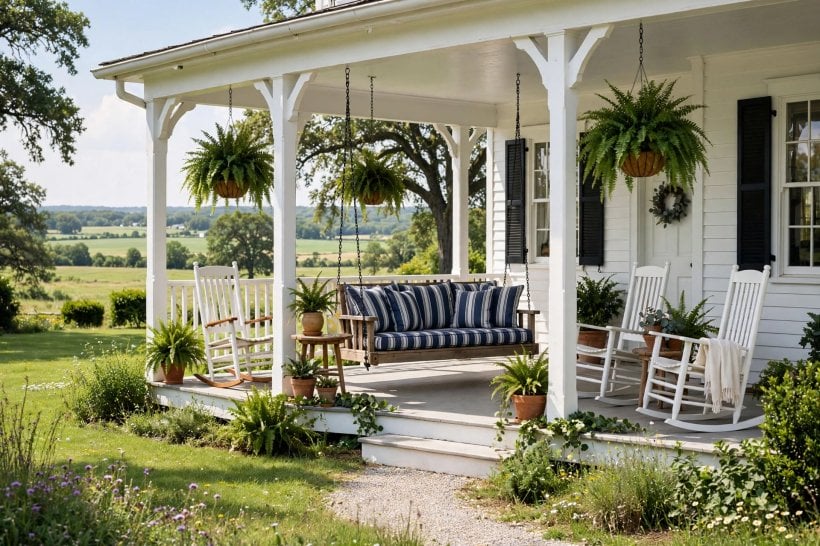
Scale a swing up to bed width and the porch gains a second living room. Swing beds ask for stronger structure and honest carpentry, and repay it with naps, reading marathons and guest accommodation on summer nights.
Way 6 — Hanging daybed with a real mattress
A twin-size mattress on a sturdy framed platform, dressed with outdoor-rated covers, delivers the full daybed experience; keep spare throws in a basket within arm’s reach.
Way 7 — Deep swing sofa
Deeper than a bench and softer in the back, a swing sofa with loose cushions seats three across or one person lying diagonally, book in hand.
Way 8 — Framed pallet-style bed
A simple, strongly built slatted frame in a pallet-inspired style gives a relaxed, informal bed swing; sand every edge and finish it for outdoor life.
Way 9 — Swing bed with bolsters
Long bolster cushions along both ends turn a daybed swing into a chaise in either direction, so the view, the sun or the company decides where heads rest.
Way 10 — Low-slung lounge swing
Hang a wide seat lower than usual with a gently reclined back and the swing becomes a lounge chair for two, made for long evenings and slow drinks.
3. Garden, Pergola and Freestanding Swings
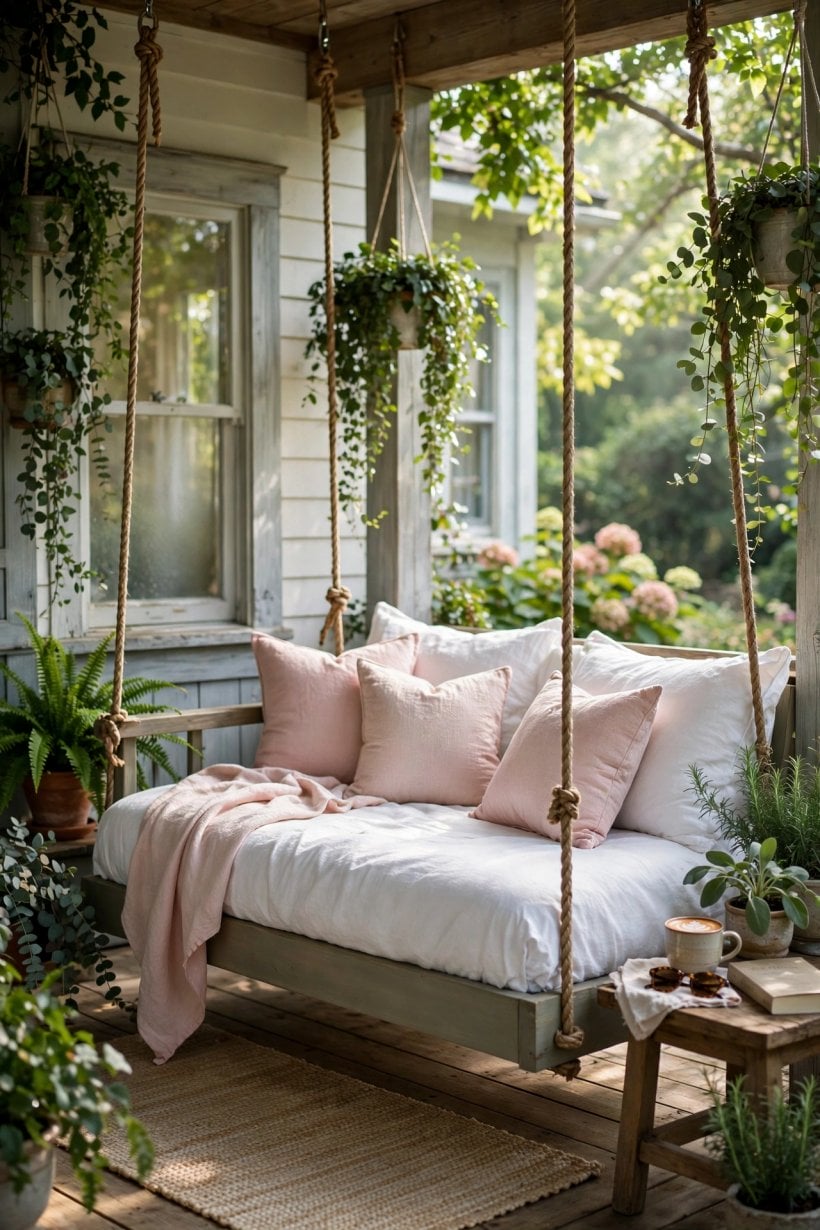
No porch, no problem: a swing can live anywhere a structure can be built or verified. Garden swings create destinations at the end of paths, which is the oldest trick in landscape design, as these basement interior design ideas show for indoor journeys too.
Way 11 — Pergola-hung swing seat
A pergola beam carries a bench swing beautifully and the posts invite climbers; within a few seasons the seat sits inside a green room of leaves and scent.
Way 12 — Arbor swing gateway
Build the swing into a garden arch between two beds or rooms of the garden, and passing through becomes an invitation to sit rather than a corridor.
Way 13 — Tree swing, properly checked
A mature, healthy branch can carry a simple swing, but have the tree assessed first and inspect straps and branch health every season without exception.
Way 14 — Freestanding A-frame swing
An A-frame stand frees the swing from buildings entirely: place it facing the best view, level the feet on slabs, and move it as the garden matures.
Way 15 — Swing under climbers
Train jasmine, roses or a vine over any garden swing structure and you gain shade, privacy and perfume — the three luxuries no cushion can provide.
4. Modern and Minimal Swings
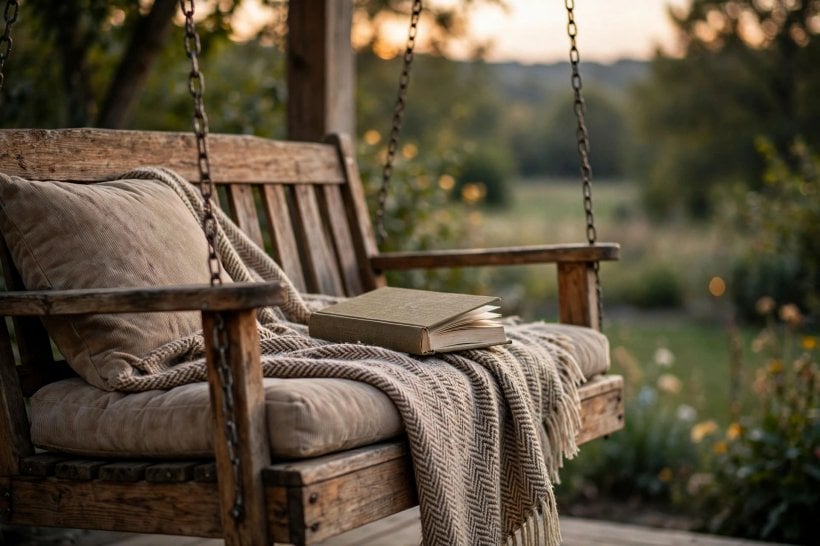
Contemporary houses want swings with quieter lines: flat slats, hidden fixings and a restrained palette. The restraint reads as confidence, echoing the edited calm of these modern living room interior design ideas.
Way 16 — Flat-slat minimalist bench
Wide, flat slats with slim gaps and no ornament make a swing that suits glass-and-timber architecture and lets a single sculptural cushion carry the colour.
Way 17 — Matte black metal frame
A powder-coated black frame disappears against planting and shadows, feels cool to the touch, and pairs with pale timber slats for a monochrome classic.
Way 18 — Cantilever stand swing
A curved cantilever stand arcs over the seat with no front legs to trip on, delivering the floating effect modern gardens love in one engineered gesture.
Way 19 — Cable-hung floating bench
Swap chains for slim steel cables and the bench appears to hover; the hardware nearly vanishes and the seat becomes a quiet line in the view.
Way 20 — Monochrome cushion scheme
Dress a simple swing entirely in one colour family — charcoal, stone or olive — and let texture, not pattern, provide the interest and the calm.
5. Rustic and Farmhouse Swings
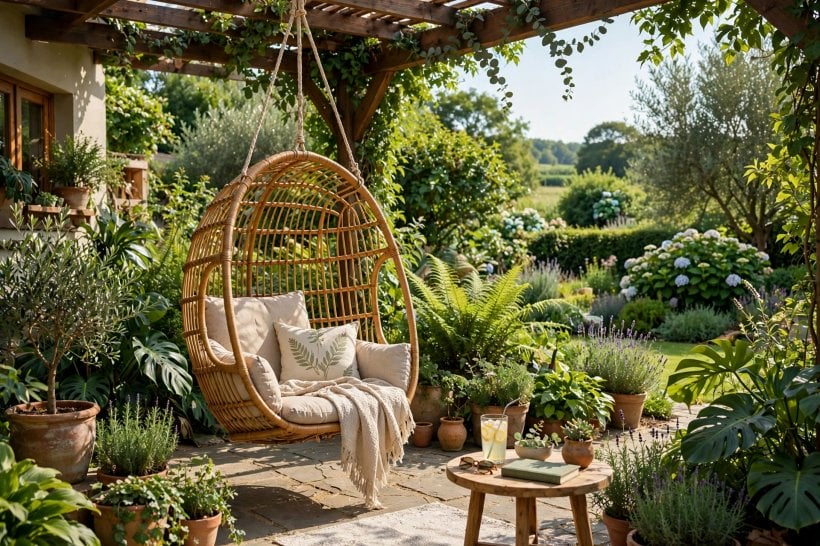
Rustic swings wear their making proudly: chunky timber, visible rope, hardware that looks forged rather than machined. They belong on farmhouses, cabins and any porch that prefers boots to formality.
Way 21 — Chunky reclaimed-look timber
Thick, characterful boards with saw marks left visible give instant history; seal them well and the swing will outlast several changes of cushion fashion.
Way 22 — Rope-and-plank farmhouse swing
Natural rope through generous planks is the farmhouse archetype — warm, repairable and honest; choose rope rated for the load and the weather, and check it seasonally.
Way 23 — Wagon-wheel accent sides
Decorative wheel-style side panels nod to country heritage without a full themed commitment; keep the seat itself simple so the gesture stays charming, not costume.
Way 24 — Distressed painted finish
A rubbed-back paint finish in sage, cream or faded blue suits porches that collect antiques, and it hides the knocks of busy family life kindly.
Way 25 — Galvanised hardware on show
Exposed galvanised chains, bolts and eye plates give rustic swings their workshop honesty and shrug off weather that would shame polished fittings.
6. Small-Porch and Compact Swings
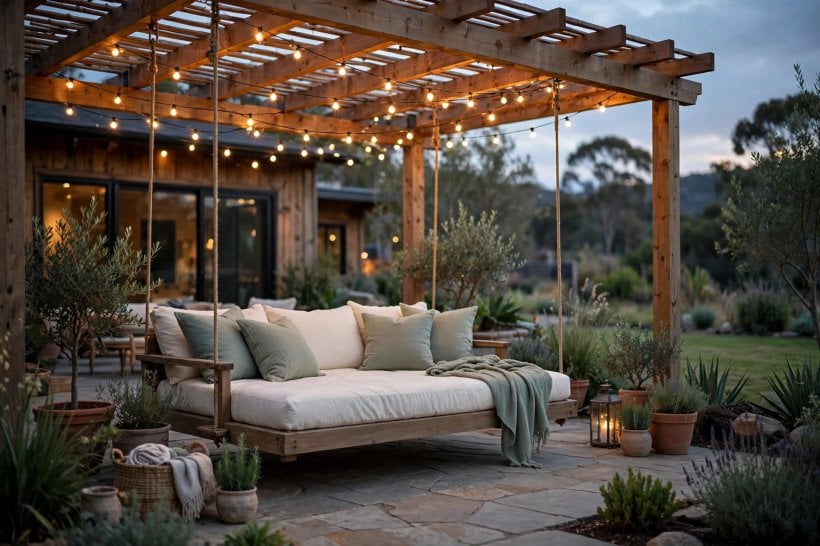
A narrow porch still deserves a swing; it just needs honest sizing and clear floor around it. Compact thinking mirrors the discipline in these small living room interior design ideas — measure first, then fall in love.
Way 26 — Single swing chair
A one-person hanging chair gives a small porch its swing moment with a footprint a bench could never manage, and it turns corners into reading nooks.
Way 27 — Compact two-seater
Shorter two-seat swings exist for exactly this problem; choose the narrowest honest size and keep the swing path clear of planters and door swings.
Way 28 — Corner-angled swing
Hang a small swing diagonally across a corner and it gains swing room the straight-on position lacks, while facing the sitter toward the street at a sociable angle.
Way 29 — Fold-away swing seat
A seat designed to lift and secure flat against the wall returns the whole porch for gatherings, then drops back down for the everyday ritual.
Way 30 — Hanging egg chair
The cocooning egg chair, porch-sized, gives shelter from breeze and a sense of privacy on even the most overlooked small veranda in the street.
7. Materials That Last Outdoors
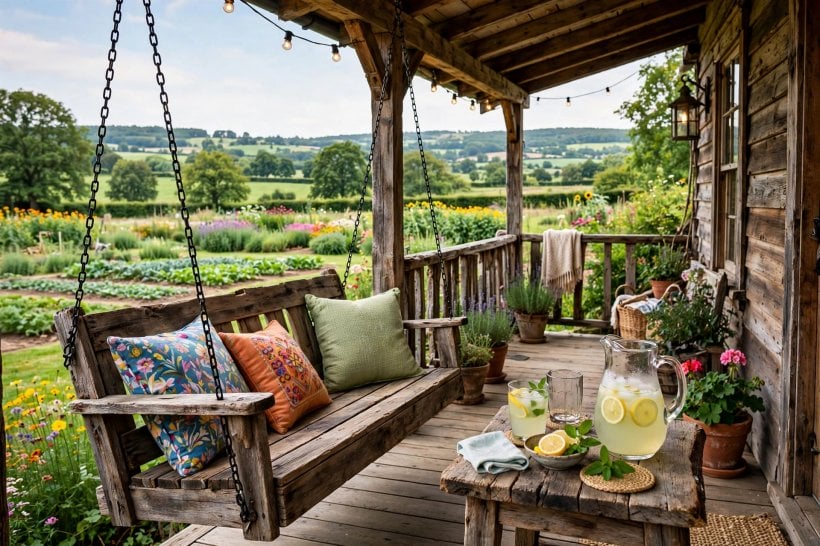
A swing lives outdoors through every season you do. Choose materials for your climate and your appetite for maintenance, the same honesty test used for the hard-working surfaces in this tiny house kitchen design guide.
Way 31 — Naturally durable hardwood
Dense hardwoods chosen for outdoor use resist rot and insects gracefully, silvering softly if left unoiled or staying rich if you feed them seasonally.
Way 32 — All-weather woven seat
Synthetic woven seats shrug off rain, dry fast and feel kind in summer heat; they suit coastal and rainy climates where timber demands constant attention.
Way 33 — Powder-coated steel
Steel frames with a quality powder coat give slim strength and modern lines; touch up chips promptly and the finish protects for many seasons.
Way 34 — Recycled-plastic lumber
Boards made from recycled plastic never need painting, laugh at splinters and hose clean in spring — a forgiving choice for busy households and rental homes.
Way 35 — Softwood with a sealing routine
Budget-friendly softwood swings happily if you commit to an annual wash, sand and seal; treat the ritual as the first porch day of spring.
8. Cushions, Colour and Styling
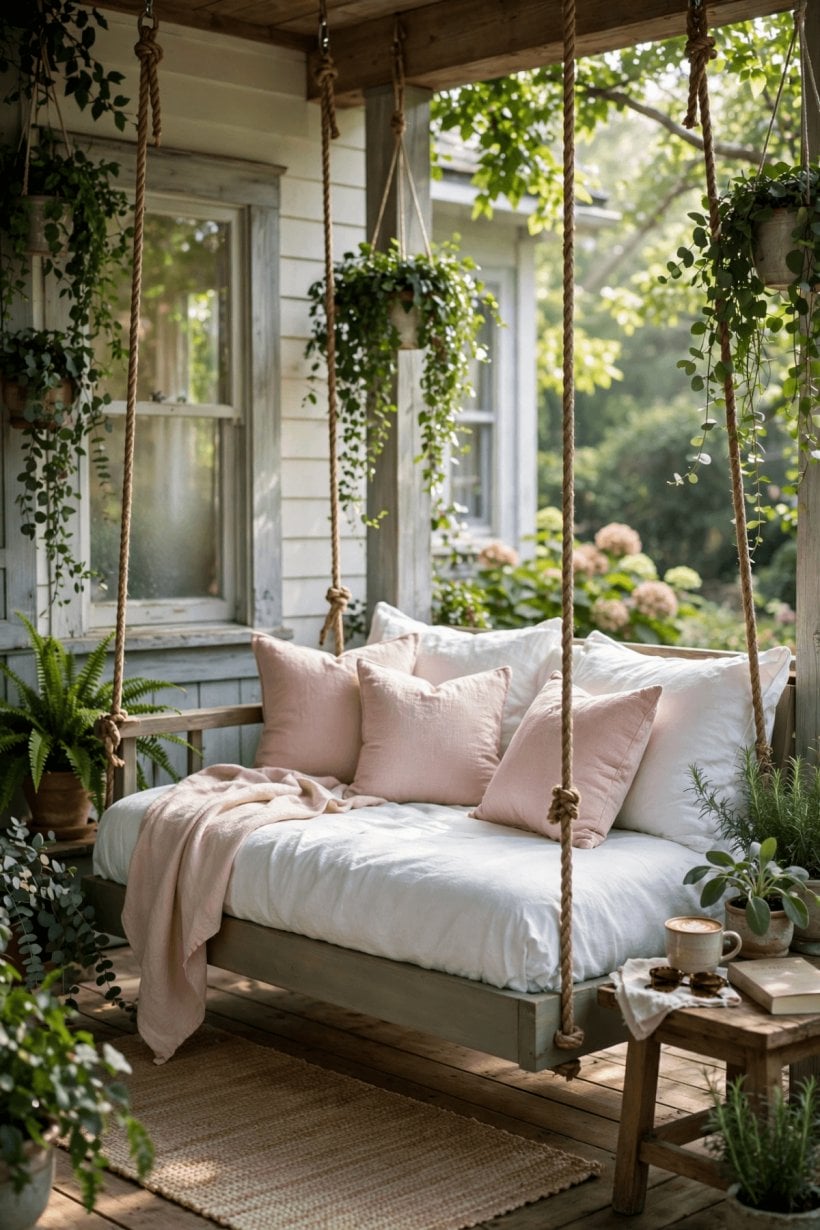
The swing is the furniture; the cushions are the wardrobe. Outdoor fabrics have become so good that styling a swing now resembles styling a sofa, with the same layering instincts as these living room interior design ideas.
Way 36 — Classic stripes
Awning-stripe cushions in navy, green or red against a white or timber swing deliver instant porch nostalgia and hide everyday dust with grace.
Way 37 — Layered throws for evenings
Keep two washable throws folded over the swing back; evenings stretch longer, guests stay later, and the porch becomes the house’s evening room.
Way 38 — Bolster and lumbar pairing
One long bolster plus two small lumbar cushions support real sitting — upright for coffee, sideways for reading — better than a drift of scatter cushions.
Way 39 — Colour-pop painted swing
Paint the swing itself the bold colour — coral, teal, mustard — and keep cushions neutral; the architecture carries the joy and textiles stay interchangeable.
Way 40 — Rug beneath the swing zone
An outdoor rug under the swing defines its territory on a long porch, softens the landing for bare feet and absorbs the gentle scuff of shoes.
9. Hanging, Safety and Practical Details
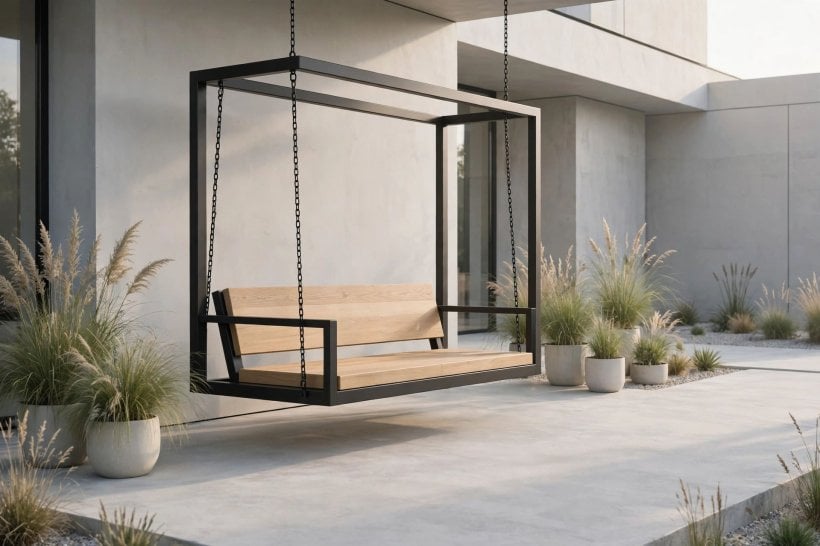
Beauty hangs from structure, literally. This section is the least photogenic and the most important in the whole list, so read it before the catalogue, not after the delivery.
Way 41 — Find the joists first
Porch ceilings hide their joists; locate and verify them before buying hardware, and if the structure is doubtful, a qualified builder’s opinion is the bargain of the project.
Way 42 — Rope versus chain, chosen honestly
Chain is set-and-forget and suits traditional benches; rope is warmer and quieter but needs seasonal inspection and eventual replacement — choose with your climate in mind.
Way 43 — Clearance behind and below
Leave generous space behind the swing for its arc and nothing stored beneath it; most swing disappointments are geometry, not joinery, wearing a disguise.
Way 44 — Rated hardware, always
Use eye bolts, hangers and connectors rated for swinging loads with people aboard, from reputable makers, and keep the receipts and ratings with the house documents.
Way 45 — Professional help for beds and beams
Swing beds and long spans multiply loads; professional installation or at least verification is money spent on sleep, yours and your guests’, for years.
10. Evening Ambience and Seasonal Care
A swing earns its keep across the whole day and the whole year when light, warmth and a small care routine are planned in. Houses that gather well, like those in this tiny house community profile, treat outdoor seats as real rooms.
Way 46 — String lights overhead
A soft canopy of festoon lights above the swing stretches the porch season nightly; warm bulbs flatter faces, food and every cushion colour you own.
Way 47 — Lanterns at dusk
Two lanterns, real or battery, flanking the swing give the low, flickering light that makes conversation slow down and stay a while longer.
Way 48 — Seasonal cushion rotation
Two sets of covers — bright for summer, deep for autumn — refresh the whole porch for the price of fabric, and spare sets solve laundry-day gaps.
Way 49 — Winter cover and check routine
A breathable cover, an autumn hardware check and a spring wash keep timber, rope and fabric young; swings die of neglect, rarely of use.
Way 50 — The morning-coffee setup
Finish with ritual: a small side table at elbow height, a hook for a mug, and the swing facing the day’s first light — the simplest of all patio swing ideas, and the one you will use most.
Final Considerations
Choose the swing your structure can carry, size it for the porch you have, and hang it with rated hardware into verified beams. Then dress it kindly, light it warmly and keep the small seasonal rituals. Fifty patio swing ideas reduce, in the end, to one good habit: a seat that moves gently, in the place you love most, ready every single day.

0 Comments