

A good bar cart earns its floor space twice: once as a serving station when friends arrive, and once as a styled piece of furniture every other day of the week.
These bar cart ideas focus on layout, colour and the practical details that separate a cart that merely looks pretty from one that pours smoothly, rolls quietly and suits the room it lives in.
1. Bar Cart Ideas at a Glance: Size, Tiers and Budget Basics
Start with the honest basics before falling for a finish. Measure the footprint where the cart will live, then measure the route it must travel: doorways, rug edges and the swing of nearby chairs all matter more than catalogue photos suggest. Most home carts sit comfortably on two tiers, which is enough for bottles below and glassware above, while three tiers suit keen hosts who entertain often and need a separate level for tools, napkins and a small ice bucket. Height matters too; the top shelf should sit near counter height so pouring feels natural rather than stooped. Decide early whether the cart is a fixed station that only rolls out for parties or a daily fixture that holds coffee gear on weekday mornings. That single answer shapes size, wheel quality and how much styling it must carry. Hosts working with compact floor plans will recognise the logic used in tiny house living room ideas, where every piece must justify its footprint in more than one way. The table below gathers the quick checks worth making before you buy, build or restyle a cart, and the rest of this article works through each of them in a calmer, fuller way.
| Detail | What to check | Why it matters |
|---|---|---|
| Footprint | Floor space plus the route it rolls along | A cart that cannot reach the room is furniture, not a bar |
| Tiers | Two for most homes, three for frequent hosts | Separates bottles, glassware and tools so nothing crowds |
| Frame | Metal for slim strength, wood for warmth | Sets the cart’s weight, look and how it ages |
| Shelves | Glass, mirror, wood or tray tops | Affects grip, cleaning and how light moves through the cart |
| Wheels | Large, smooth casters, ideally with a lock | Quiet rolling protects floors, bottles and nerves |
| Rails | Raised edges or gallery rails on each tier | Keeps bottles upright when the cart is on the move |
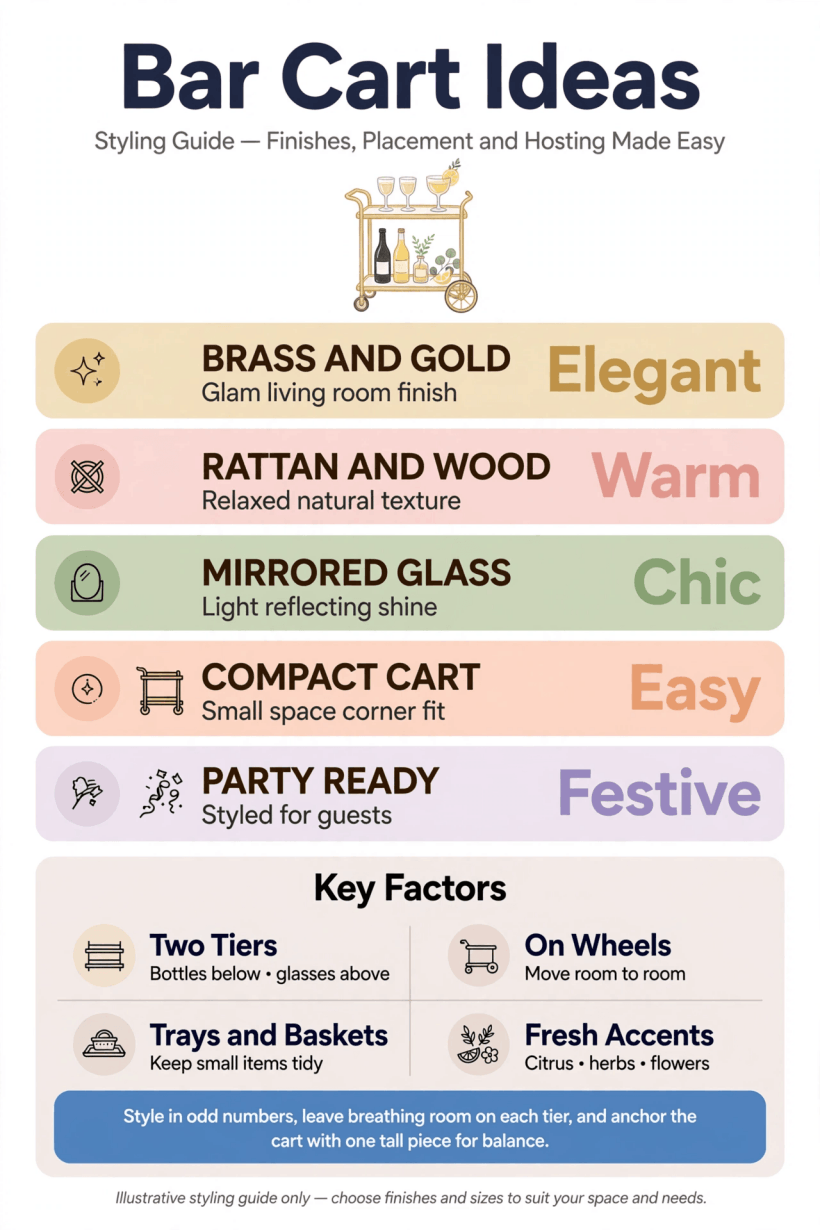
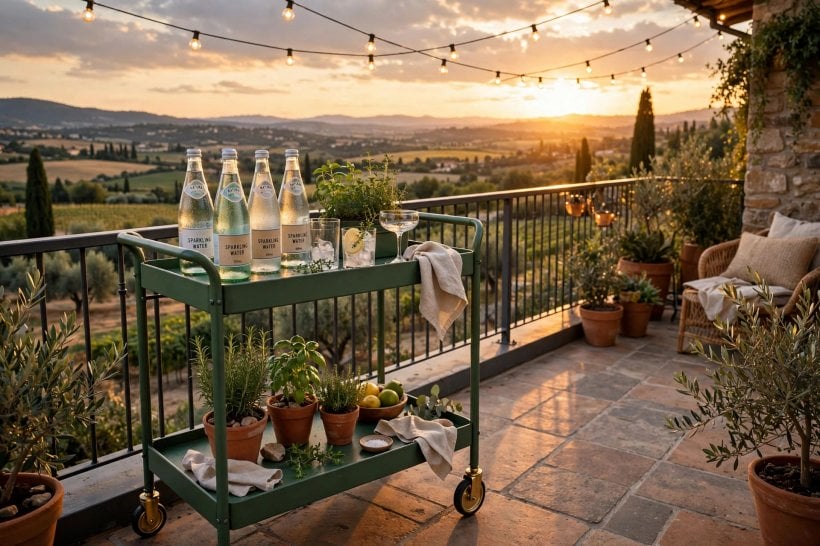
A quick visual guide to cart sizes, tiers and the details worth checking before you buy.
2. Choosing the Right Cart Shape for Your Room
Rectangular carts are the workhorses: they sit flat against a wall, slide into the gap beside a sofa, and give you long, easy shelves that line bottles up like a small shop display. Round carts soften a boxy room and work beautifully in corners or beside a curved accent chair, though their shelves hold fewer bottles and ask for more careful arranging. Oval and kidney shapes split the difference, offering a gentle profile with most of the storage of a rectangle. Narrow console-style carts suit hallways and dining-room walls where depth is limited, while chunky trolley styles with a handle at one end feel purpose-built for moving between kitchen and terrace. Think about how the cart will be approached: a serving station needs access from one long side, while a party cart parked in the middle of a gathering should look and work well from every angle. Shape also decides the styling; long carts take a low, spread arrangement, round carts prefer a centred cluster with height in the middle. If your room already mixes many shapes, let the cart repeat one of them, so it feels collected rather than random, much like the furniture echoes people plan in colourful tiny house interiors where each piece answers another across the room.
3. Brass, Gold and Warm Metal Finishes
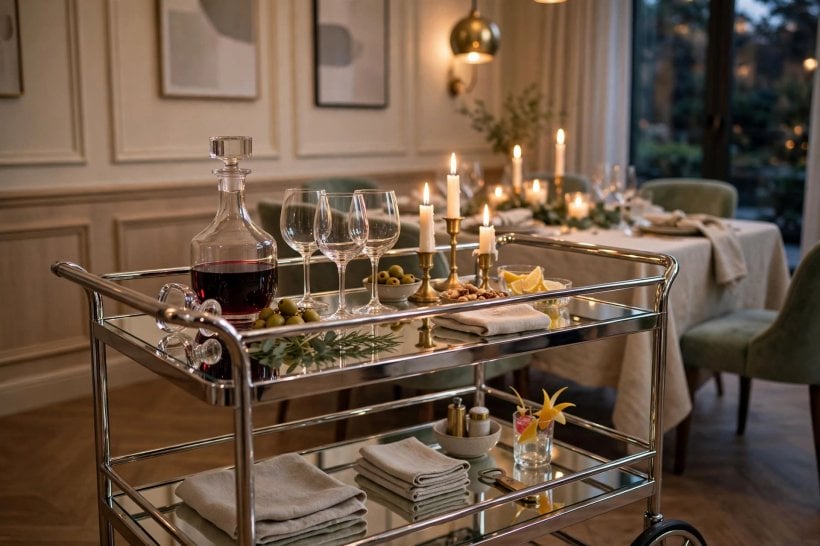
Warm metals remain the classic bar cart language, and for good reason. Brass and brushed gold catch lamplight the way candlelight catches glass, making even a modest collection of bottles look considered. An antique or brushed finish hides fingerprints and water spots far better than mirror-polished metal, which shows every touch and demands constant buffing. Warm frames pair easily with walnut, leather, deep green and navy, and they can lift a neutral room without shouting. To keep the look grown-up rather than glitzy, balance the shine: let the frame glow, then choose matte or textured pieces on top, such as a stone tray, linen napkins or frosted glass. Mixed metals work when one finish leads and the other appears in small accents, perhaps brass for the cart and blackened steel for the tools. Warm metal also ages gracefully outdoors-adjacent spots like sunrooms, though it should still live inside and be wiped dry after any spill of citrus or tonic, both of which can mark unlacquered surfaces. If your cart will sit near a window, expect the finish to become part of the room’s daylight story, bright at noon and mellow by evening, which is exactly the charm that keeps this finish at the top of so many wish lists.
4. Black, Matte and Moody Carts
A black cart brings structure. Matte black frames read modern and calm, outline the shelves like a drawn line, and let coloured bottles and amber spirits do the decorative work. This is the finish to choose when the room already has plenty of pattern or colour and needs one quiet anchor. Gloss black feels more formal and reflects light in sharper highlights, suiting dining rooms and evening spaces. Black pairs naturally with chrome, smoked glass and white marble-style trays, and it hides the visual clutter of labels, caps and mixed bottle shapes better than pale finishes do. The practical side is friendly too: dust shows, but so it does on every finish, and a quick microfibre pass restores the crispness. For a softer take, look at charcoal or oil-rubbed bronze, which keep the moody depth while borrowing a little warmth. Style a black cart with one bright accent, such as a bowl of citrus, a green plant or a stack of art books on the lower tier, and the whole arrangement feels intentional. In open-plan rooms that blend kitchen, dining and lounge zones, a dark cart can quietly mark the drinks corner without a rug or screen, a zoning trick as handy as any in small-plot layout planning where every zone must be clear at a glance.
5. Wood, Rattan and Relaxed Natural Carts
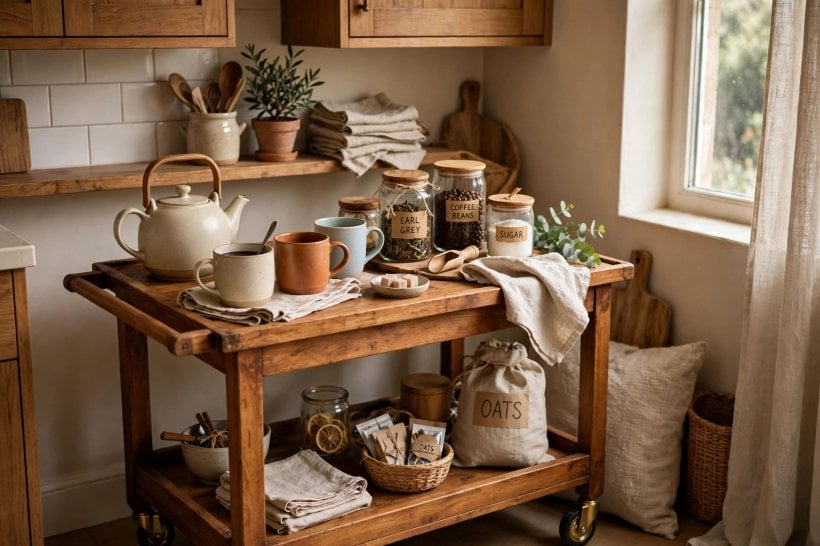
Wooden carts trade sparkle for warmth, and many rooms are better for it. A mid-tone timber frame suits houses that lean on texture: linen sofas, woven rugs, houseplants and unglazed ceramics all sit happily beside it. Rattan and cane panels add a holiday softness that works from spring through late summer, and they hide the lower tier’s clutter behind a gentle screen. Bamboo trolleys are light to move and suit renters who rearrange often. With natural materials, construction details matter most: check that joints feel tight, shelves sit level, and any woven panel is firmly edged so bottles cannot tip against a flexible surface. Wood asks for coasters and prompt wiping, because standing water can leave rings on unsealed shelves; a fitted tray on the top tier solves this neatly and looks deliberate. These carts style best with an easy hand: a couple of bottles, a small stack of glasses, a plant trailing from the top corner and a folded cloth. They also double beautifully as plant stands, tea trolleys or bedside tables in a guest room, a flexibility that fans of tiny barn house interiors will appreciate, since hardworking furniture that changes jobs with the season is the backbone of small-home living.
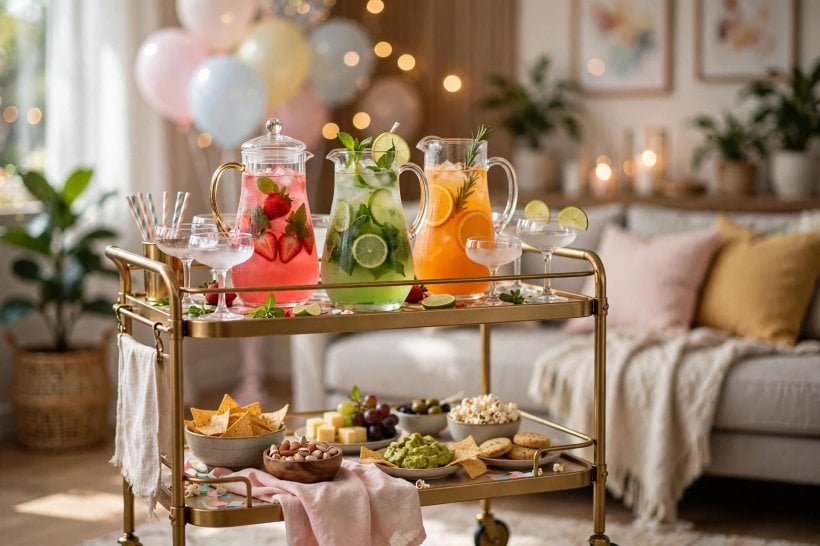
6. Glass, Mirror and Glamorous Shelves
Shelf material changes a cart’s whole character. Clear glass keeps the frame’s lines open and lets light pass through, which is kind in small or dark rooms where a solid cart would feel heavy. Mirrored shelves bounce lamplight upward through bottles, creating the jewel-box effect that makes vintage carts so photogenic, but they show every drip and fingerprint and need a wipe after each use. Smoked or tinted glass sits between the two, glamorous but more forgiving. Wooden shelves feel warmer and grip bottles better; stone and marble-style shelves feel cool and formal and handle condensation calmly, though they add weight. Whatever the material, look for a raised rail or lip: bottles slide on glass, especially when a cart rolls over a rug edge, and a slim gallery rail is cheap insurance. Tempered glass is the safer choice for shelves that will carry heavy bottles, and replacement should be easy to source if the cart is vintage. Pair clear shelves with coloured glassware to keep the arrangement lively, or keep everything crystal and chrome for a pared-back hotel feel. The right shelf is the one whose cleaning routine you will actually keep, because a sparkling cart always looks more expensive than a dusty one at twice the price.
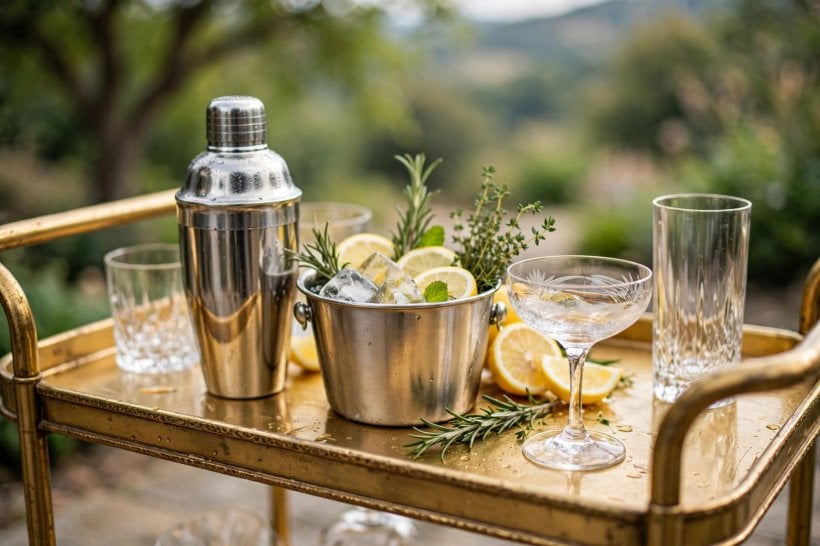
7. Stocking the Cart: Bottles, Glassware and Tools
A well-stocked cart follows a simple rule: a short, versatile line-up, stored where hands expect to find it. Keep the bottles you reach for most on the top tier if the cart serves as a fixed station, or down low if it travels, since weight near the wheels keeps it stable. A sensible core covers one or two base spirits, something bitter, something sweet, citrus, and a non-alcoholic option that still feels grown-up, with mixers stored nearby rather than crowding the shelves. Glassware earns its place by variety, not volume: a set of tumblers, a few stemmed glasses and one or two coupes handle nearly everything, and storing glasses upside down keeps dust out of the bowl. Tools live best in a small container or on a tray so they move as one unit: jigger, bar spoon, strainer, bottle opener, a small knife and board for citrus, plus napkins and a towel for the inevitable drip. Leave breathing room; a cart packed edge to edge is slow to use and easy to knock. Restock in one pass after a gathering, the way you would reset a kitchen, and rotate bottles forward so nothing ages forgotten at the back. Hosts who enjoy compact, everything-in-reach setups will find the same satisfaction here as in a well-planned tiny house bathroom, where a small space works because each item has a chosen home.
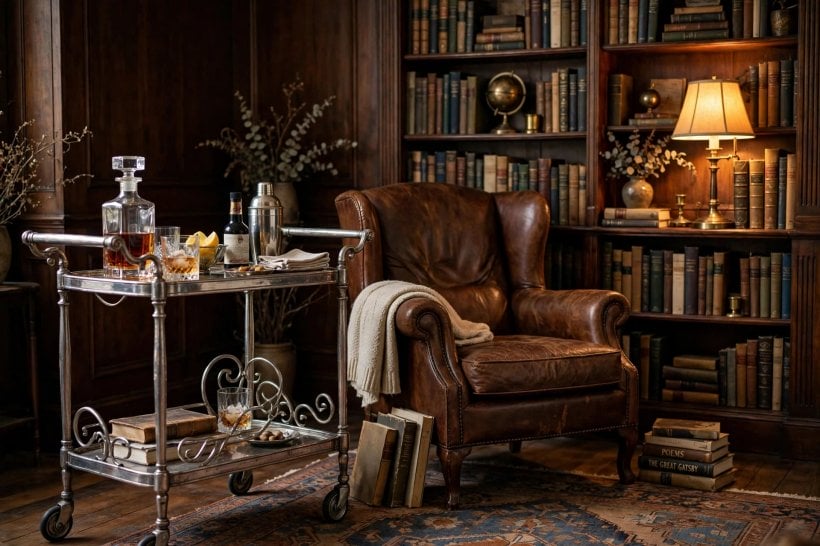
8. Styling Tricks: Height, Colour and Greenery
Styling a cart is mostly arranging heights and leaving gaps. Start with the tallest bottle or a vase at the back corner, step down through mid-height bottles and glasses, and finish low at the front with a bowl of citrus, a candle or a small stack of books. Odd numbers group more comfortably than pairs, and one repeated colour, perhaps green glass or amber, ties mixed bottles together. A plant earns its spot honestly: trailing pothos softens hard frames, a small olive or herb pot adds life to wooden carts, and a single stem in a bud vase suits the most formal mirrored trolley. Art can join in too; lean a small framed print behind the top tier when the cart stands against a wall, and the station becomes part of the room’s gallery rather than an appliance. Keep one clear working patch on the top tier, roughly the size of a dinner plate, where a drink can actually be built; styling that leaves nowhere to set a glass has missed the point. Refresh the styling with the seasons, swapping citrus for berries, linen for velvet ribbon, or adding a small string of warm lights in winter. The goal is a cart that looks composed in a photograph and still pours the first drink in under a minute.
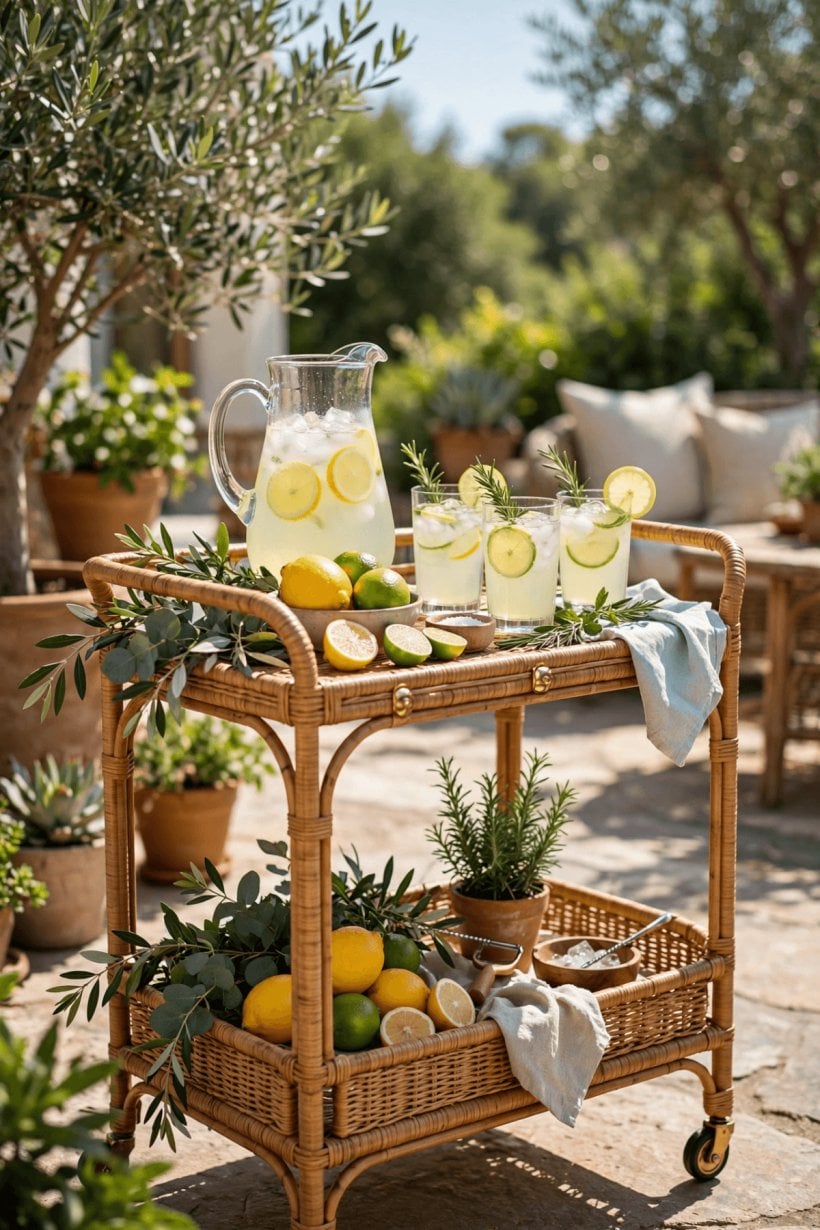
9. Small-Space and Corner Layouts That Still Serve Well
Small rooms do not rule out a bar cart; they simply reward the compact kind. A narrow two-tier trolley can live in the dead gap between a sofa arm and the wall, in a wide hallway, or in the corner of a dining room where a sideboard would overwhelm. Corners deserve special mention: a round or triangular-front cart turns an unused angle into a destination, especially with a picture light or sconce above it. In studio flats, let the cart hold its ground between lounge and kitchen zones, or choose a folding or nesting design that opens for guests and tucks away after. Wall-mounted fold-down shelves with a small trolley beneath can serve the same role where floor space is truly scarce. Keep walkways honest; if guests must turn sideways, the cart is in the wrong spot, however charming it looks. Renters can lean on carts precisely because they ask for no drilling and leave with you. The small-space mindset behind these layouts is the same one explored in bedroom interiors for tiny houses: measure first, choose pieces that move, and let one flexible item do the work of three fixed ones. A little cart, well placed, often hosts better than a large one marooned across the room.
10. Care, Wheels and Safety Details for Everyday Use
The details that never appear in styled photos decide whether a cart stays loved. Wheels should roll straight, turn without shuddering, and suit your floors; larger casters cross rug edges and thresholds calmly, while small hard wheels chatter and can mark timber. A locking caster or two keeps a loaded cart steady on sloping floors and around enthusiastic dogs and children. Tighten handles and shelf screws every few months, because rolling works fixings loose over time. Wipe spills as they happen, especially tonic, citrus and red wine, which can mark metal, wood and stone alike, and lift bottles rather than dragging them across mirrored or glass shelves. Load heavy bottles low and centred, keep the cart’s total weight within what its shelves feel happy carrying, and never let anyone sit or lean on it, however sturdy it looks. Store the cart away from direct heat and strong sun, which can warm spirits and fade wooden frames, and keep matches, lighters and anything sharp on the tool tray out of small hands’ reach. A five-minute monthly reset, dust, tighten, restock, keeps the cart ready for the doorbell, and a ready cart is the whole pleasure of owning one: hospitality at walking pace, with nothing to hunt for.
Final Considerations
Choose the cart that fits your room, your floors and the way you actually host, then stock it lightly and style it with a little air around each piece. Warm metal glows, black anchors, wood relaxes and glass lightens, and every finish works when the size and wheels are right. Start simple, live with the cart for a few gatherings, and let experience, rather than a shopping list, tell you what to add next.



0 Comments