
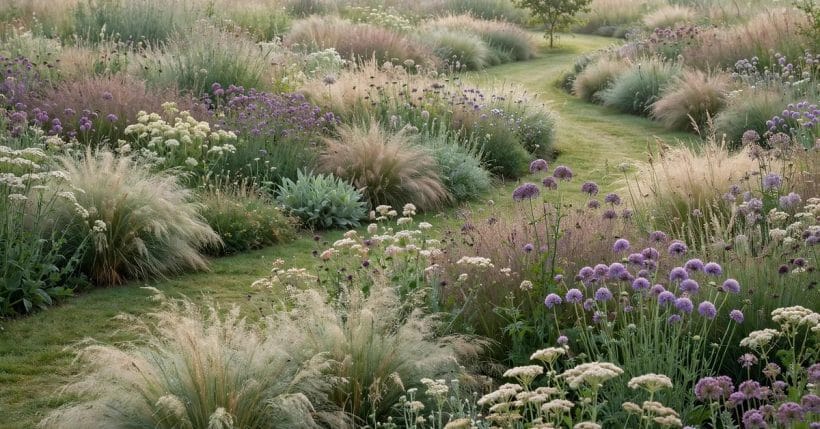
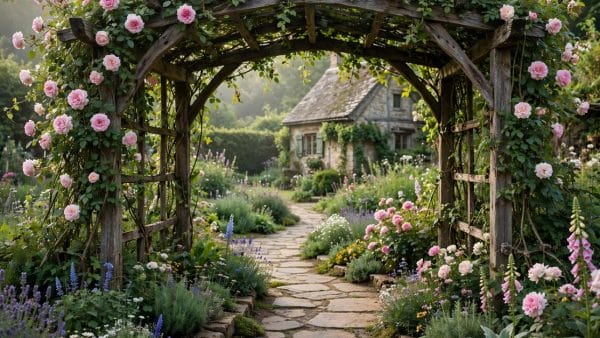
A garden in the natural style does not look arranged, and that is precisely the point. It looks as though the planting found its own way there: grasses leaning into the path, flowers scattered in loose groups, edges that blur instead of ending in a hard line. The effect is calm rather than showy, and it invites you to walk slowly and look closely, the way you would on a country walk rather than in a formal garden.
This post is about that style alone: how naturalistic planting is composed, how it changes through the seasons, and how to keep it looking intentional rather than neglected. It is not a guide to building garden structures or laying surfaces; those are separate decisions, and where they touch this style they are noted only in passing. What follows is a practical way of thinking about a natural landscape, written for ordinary plots and ordinary gardeners.
1. Natural Garden Style at a Glance
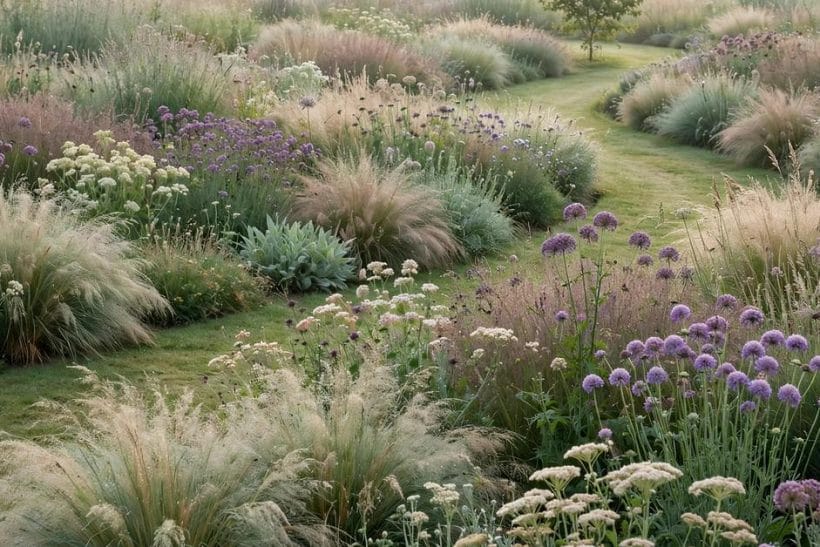
A natural garden style is recognised first by its planting, not by its furniture or its boundaries. The plants are grouped in flowing drifts, the shapes are soft, and the garden is allowed a visible seasonal life: fresh growth, full flower, seed heads, and a quiet winter skeleton. Nothing in it demands perfection at any single moment, because the interest is spread across the whole year rather than saved for one brief display.
| Element | What it looks like | What to watch |
|---|---|---|
| Planting | Loose drifts and layers | Groups that read as one sweep |
| Shape | Soft, flowing edges | Edges that blur, not hard lines |
| Colour | Muted, seasonal tones | Colour that comes and goes |
| Structure | Grasses and seed heads | Form that lasts into winter |
| Care | Seasonal and light-touch | Editing rather than constant tidying |
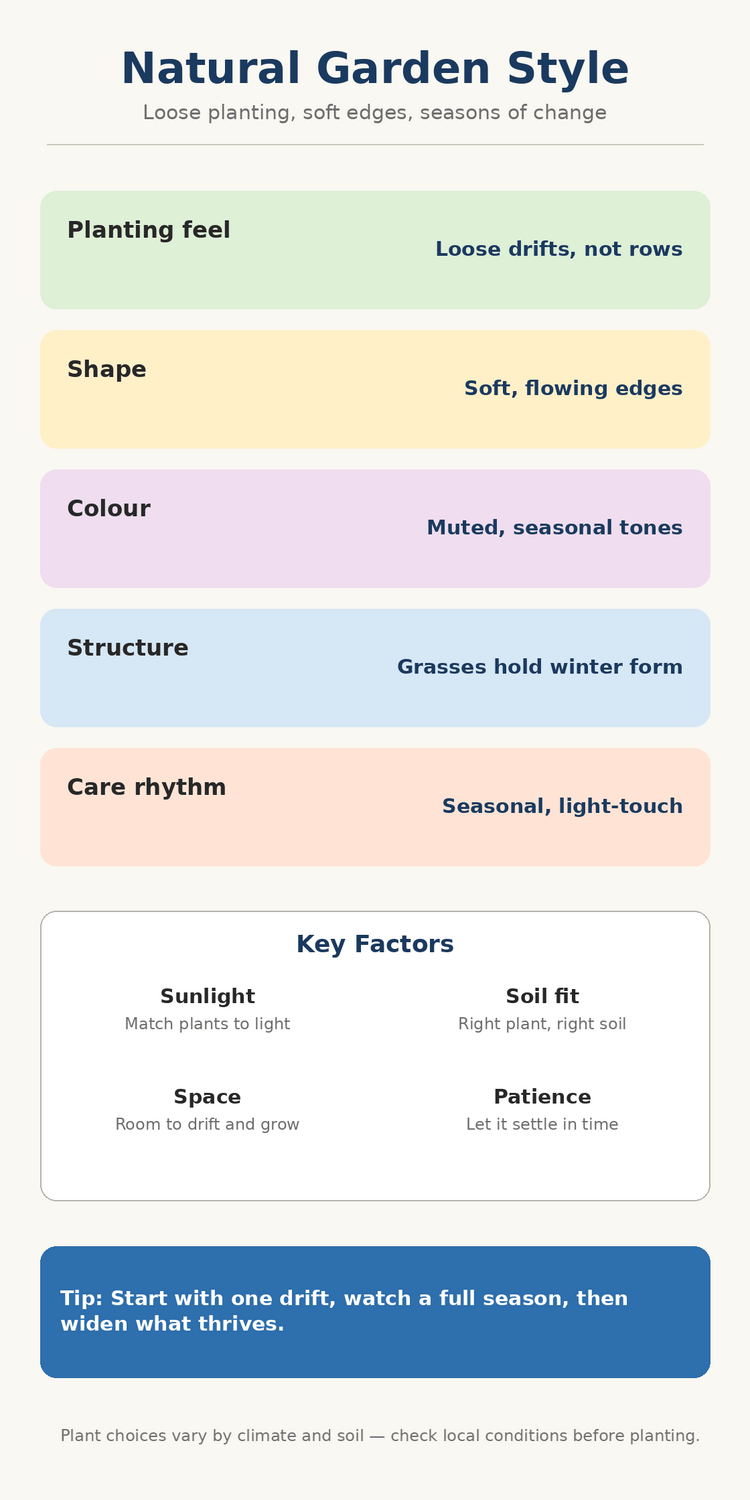
The table above is the whole post in miniature. If a garden reads as a set of flowing plant groups with soft edges and something of interest in every season, it is already most of the way there. The sections below unpack each element in turn, beginning with what the word natural actually means when it is used about a garden, and how that meaning differs from simply leaving a plot alone. For the wider context of shaping an outdoor space, backyard landscaping ideas covers the broader ground this style sits within.
2. What Natural Means in a Garden
Natural, in this style, does not mean untouched. A genuinely untouched plot tends to be dominated by whichever plants are strongest there, and the result can be monotonous rather than beautiful. A naturalistic garden is designed, but the design borrows its manners from wild places: plants grouped as they might grow together, heights mixed rather than stepped in ranks, and no plant standing alone as a specimen to be admired from a distance.
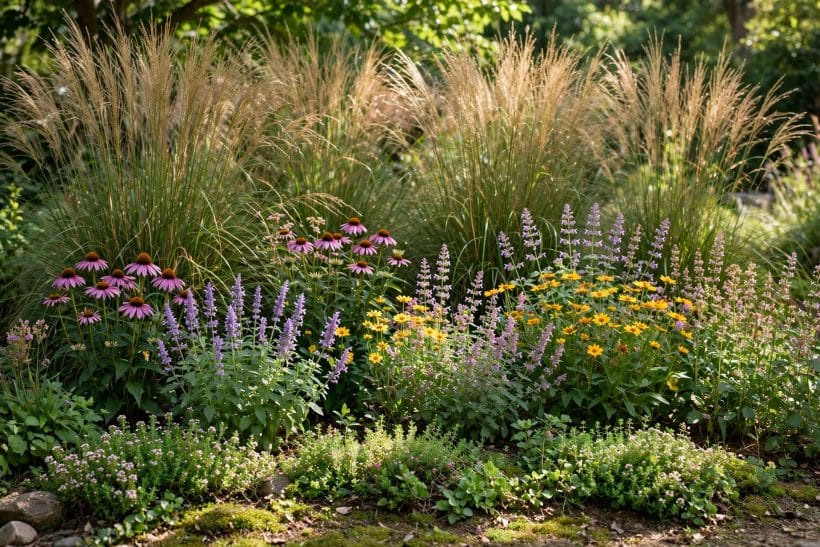
The distinction matters because it sets the gardener’s job. In a formal garden the job is control: straight lines kept straight, shapes kept clipped, every plant in its allotted place. In a naturalistic garden the job is closer to editing. You choose plants that suit the place, you plant them in generous groups, and then you watch, removing what crowds too hard, adding where a gap stays empty, and letting the planting settle into its own rhythm over time.
That rhythm is part of the appeal. A naturalistic garden is rarely at its best in a single week. It has a spring of fresh green growth, a summer of flower and movement, an autumn of seed heads and changing leaf colour, and a winter in which grasses and stems hold a pale, quiet structure. Judged only at midsummer it may look no better than any other style; judged across the year, it often gives more, for less fuss, than a garden built around one season.
It also helps to be honest about what this style is not. It is not a wildflower meadow, though it may borrow meadow plants. It is not a cottage garden, though it may share some of the same flowers. And it is not a shortcut: the loose look takes thought at planting time, and a garden planted without thought will usually look like exactly that. The looseness is the result of the design, not the absence of it.
3. Planting in Drifts and Layers
The basic unit of naturalistic planting is the drift: a group of one kind of plant, repeated across a bed in a flowing shape, so that the eye reads a sweep of colour or texture rather than a collection of individuals. Drifts are what make the style legible. A single plant here and a single plant there reads as a mixed border; the same plants gathered into drifts reads as a landscape in miniature.
Layers work with drifts, not against them. Tall grasses and taller perennials sit toward the back or the middle of a bed, mid-height flowers fill the centre, and low groundcover plants knit the front edge together. The layers should overlap rather than stack in neat tiers: a tall grass leaning forward over a mid-height flower is part of the look, not a fault to be corrected. The aim is depth, so that a bed rewards a second look as well as a first.
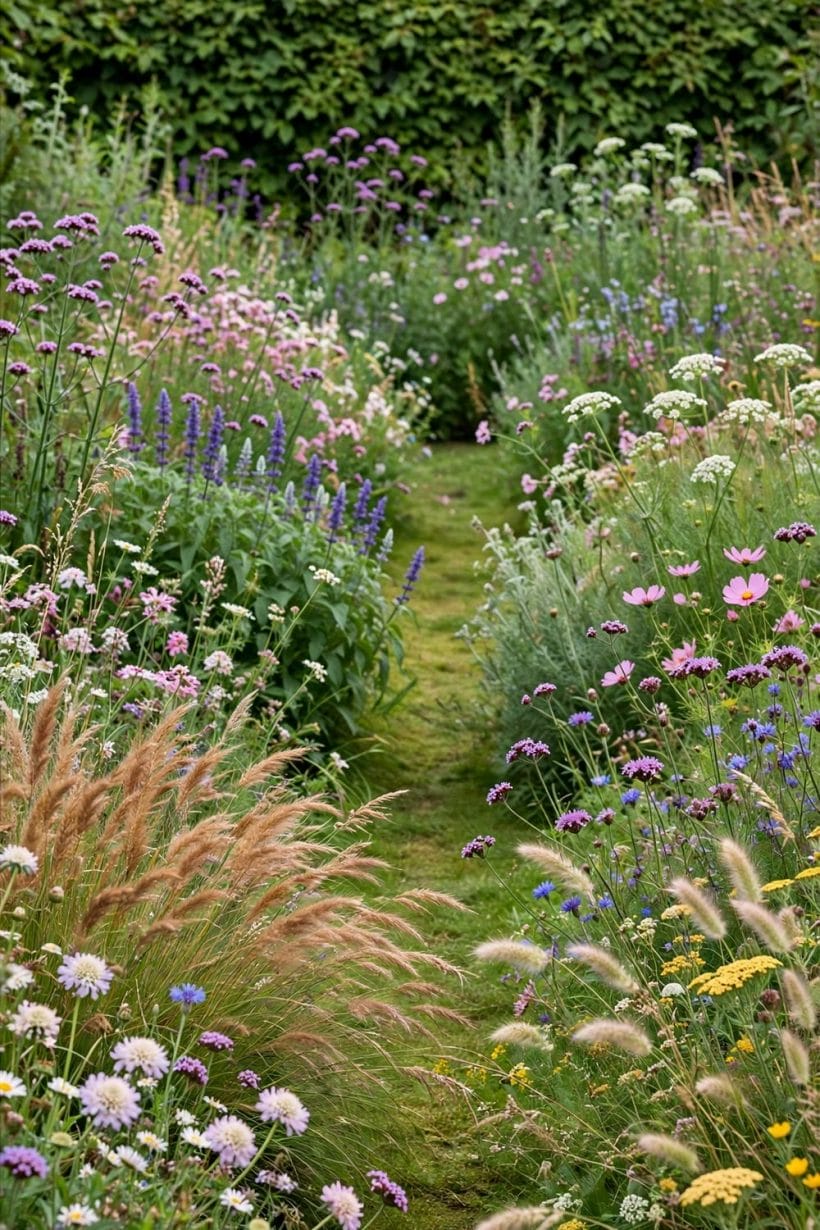
Repetition is what holds drifts together. When a plant appears in several places across a garden, the garden starts to feel like one place rather than several beds that happen to share a boundary. This does not mean planting the same thing everywhere; it means letting a handful of reliable plants recur, so that the eye finds familiar notes as it moves through the space. A garden with a different plant at every step can feel busy even when every plant is beautiful on its own.
Spacing deserves the same unhurried thinking. Plants set too far apart can leave a bed looking thin for a long time, while plants set too close together may crowd each other before they have had a chance to establish. Local nursery advice and the experience of neighbouring gardens are usually more useful here than any general rule, because growth habits vary so much with soil and climate. Planting a little, watching a season, and then filling gaps tends to give a better result than trying to finish a bed in a single weekend.
For gardeners working in pots and small containers, the same drift idea can be tried at a smaller scale, with a few plants grouped to read as one loose arrangement rather than a row of separate pots. Container garden ideas explores that smaller-scale approach in its own right.
4. Shape and Edges: Soft Lines That Read as Planned
Edges decide whether a naturalistic garden looks designed or merely overgrown, so they deserve more attention than they usually get. A bed edge that curves gently, a grass path that widens and narrows as it goes, and planting that is allowed to spill a little over a path all soften the geometry of a plot. The softness should look deliberate: a curve that has a reason, such as going around a tree or opening out to a sunny sitting place, reads far better than a wobble drawn for its own sake.
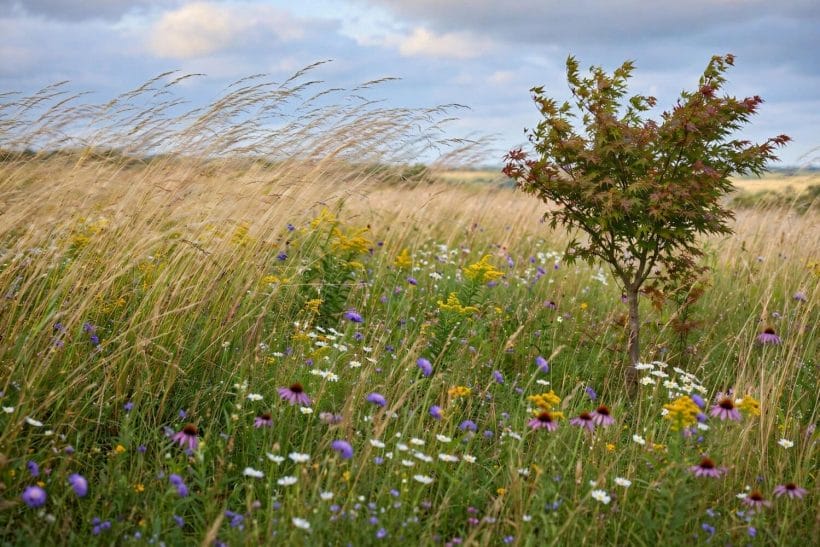
Paths matter here too, and in this style they are usually part of the planting rather than a separate feature. A mown grass path through drifts of planting, or a simple earth path worn by walking, keeps the garden feeling continuous. A path that is too wide or too straight can cut a naturalistic garden in half; a path that follows the planting, bending where the planting bends, tends to feel like it belongs. The path is the way you experience the garden, so its line is worth walking and re-walking before it is settled.
Boundaries are a separate question from planting, and they are best settled on their own terms. Where a boundary is needed for privacy or for keeping a garden contained, the choice of material and form belongs to a different discussion from the style of the planting inside it. For one warm, timber option, cedar fence ideas looks at that boundary material in detail, as a future companion to this style post rather than as part of it.
Inside the garden, the most useful test of an edge is a simple one: stand at the point from which the garden is most often seen, usually the house or the main sitting place, and look. If the eye travels comfortably across the planting without snagging on a straight line or an awkward corner, the edges are doing their job. If something jars, it is usually an edge that needs softening, or a gap that needs a plant, rather than a whole bed that needs rethinking.
5. Colour Through the Seasons
Colour in a naturalistic garden is rarely loud. The palette tends toward muted greens, soft creams, dusty purples, pale pinks and the straw and copper tones of grasses and seed heads. Bright colour has its place, but it usually works best as an accent within a quieter ground, a drift of stronger colour among grasses rather than a bed built entirely from bright flowers competing with each other.

Seasonal change is the real colour story. Spring brings fresh greens and early flowers; summer brings the fullest flower and the richest green; autumn brings seed heads, berries where plants carry them, and foliage turning to gold and russet; winter brings the pale architecture of grasses and stems, often beautiful in frost. A planting plan that considers all four seasons will usually outlast one that chases a single summer peak, and it gives the garden a reason to be visited in months when other gardens look finished.
It is worth thinking about colour in terms of duration as well as hue. Some flowers pass in a week or two; grasses and seed heads may hold their form for months. A garden weighted too heavily toward short-lived flower may look spectacular briefly and empty afterwards, while a garden with a good backbone of grasses and long-lasting structure keeps its shape between flowerings. The balance between the two is a matter of taste and of how much change a gardener enjoys watching.
Foliage colour carries a surprising amount of the work. Silver leaves, dark green leaves, grasses that shift from green to straw: these give a bed its tone even when nothing is in flower. When choosing plants, looking at leaf colour and form with the same care as flower colour usually pays off, because leaves are present for far longer than flowers are.
6. Texture, Movement and Light
If colour is the first thing a visitor notices, texture is often what they remember. Naturalistic planting is rich in texture: feathery grass heads, flat flower heads, spires, daisies, broad leaves, fine leaves, seed heads that catch the light. Mixing textures is what keeps a quiet palette from looking flat. Two plants of the same colour but different textures will read as distinct; two plants of different colours but the same texture may blur together.
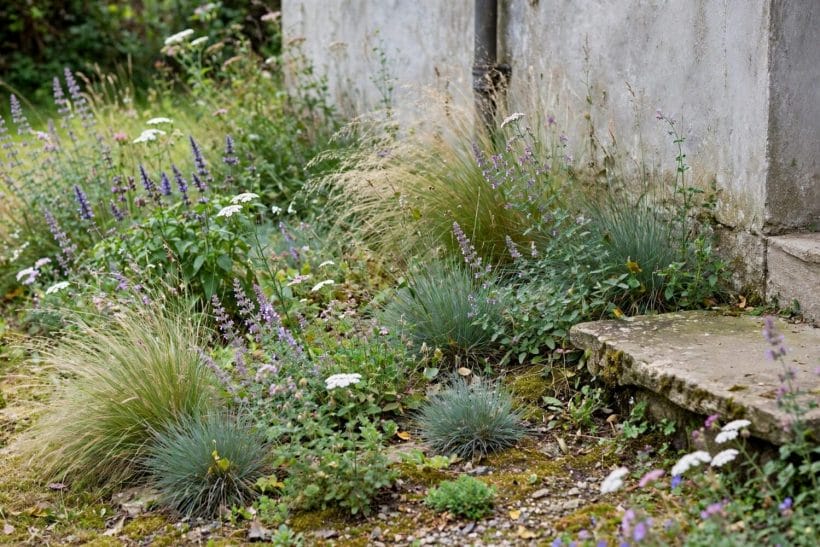
Movement is the style’s signature pleasure. Grasses sway, tall perennials bend in a breeze, seed heads nod. A garden that moves feels alive in a way that a still garden does not, and it is one reason naturalistic planting suits open, breezy plots so well. Sheltered gardens can still use movement, but the plants that give it need choosing with the local wind in mind, since a plant that is constantly battered will rarely look its best.
Light transforms the whole effect through the day. Morning light raking across grass heads, evening light turning seed heads to gold, overcast light softening every colour: the same bed can look like a different garden at different hours. This is one reason to spend time looking at a garden before planting it, noting where the light falls and when, rather than planting first and discovering the light afterwards. A bed that catches low evening light, for example, may be the best place in the garden for grasses, whose translucent heads glow in it.
For contrast, it is useful to see how a very different ground treatment changes the same outdoor space. Rock landscaping ideas shows a harder, more mineral approach, and comparing the two helps clarify whether the soft, planted look is really what a particular plot wants.
7. Reading Your Site: Sun, Shade, Soil and Water
Every naturalistic garden begins with reading the site, and the reading should come before the plant list. Sun and shade are the first facts: which parts of the garden are sunny for most of the day, which are shaded by buildings or trees, and which change through the seasons as the sun’s path shifts. Plants chosen against their light preferences may survive but rarely thrive, and a drift that struggles will always look less natural than one that grows easily.
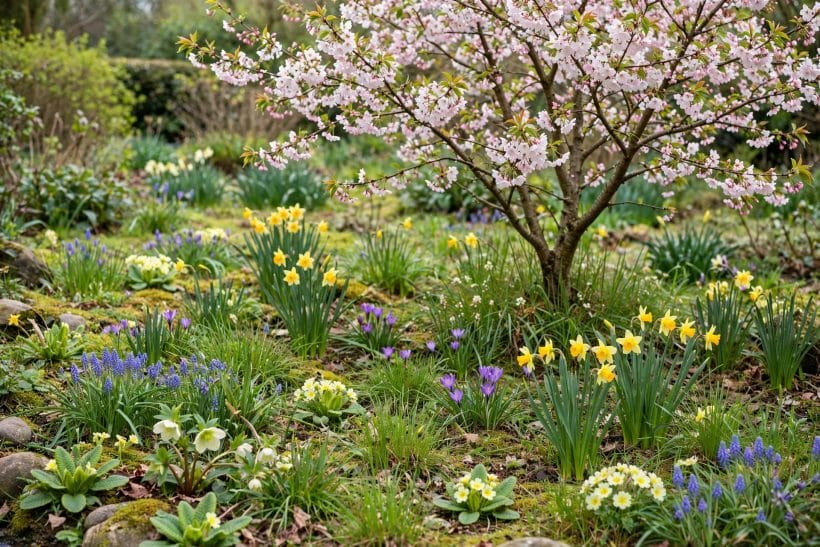
Soil is the second fact, and it is worth getting to know before buying plants. Some soils hold water, some drain freely, some are rich and some are thin, and plants have preferences that are not always obvious from looking at them. Local gardeners, nurseries and gardening groups can often say what grows well nearby, which is usually a better guide than a plant label written for a different climate. Soil can be improved over time, but working with what is there, at least at first, tends to give quicker and more reliable results.
Water, both too much and too little, shapes what is possible. A low corner that stays damp after rain, a dry strip beside a wall, a slope that sheds water quickly: each of these suits different plants, and each can become a feature rather than a problem if it is planted accordingly. Damp ground, for instance, may suit lush, moisture-loving planting that would struggle elsewhere, while a dry, sunny bank may suit the grasses and herbs that prefer lean conditions. The site’s quirks, read honestly, often suggest the planting better than any wish list does.
Small plots deserve the same reading, and they can carry this style well. A small garden planted as one or two generous drifts, rather than divided into many tiny beds, often feels larger than a small garden broken into fragments. Tiny backyard ideas looks at small outdoor spaces in general, and its lessons about keeping a small plot simple apply directly to naturalistic planting.
8. Starting Small: One Drift at a Time
The most forgiving way to begin is small: one drift, in one bed, watched for a full season before anything is widened. This has several advantages. It limits the cost and the work of a first attempt, it lets a gardener learn what grows well in their own soil, and it produces a finished-looking patch quickly, rather than a whole garden that is half-planted and waiting. A single drift done well teaches more than a large planting done in a hurry.
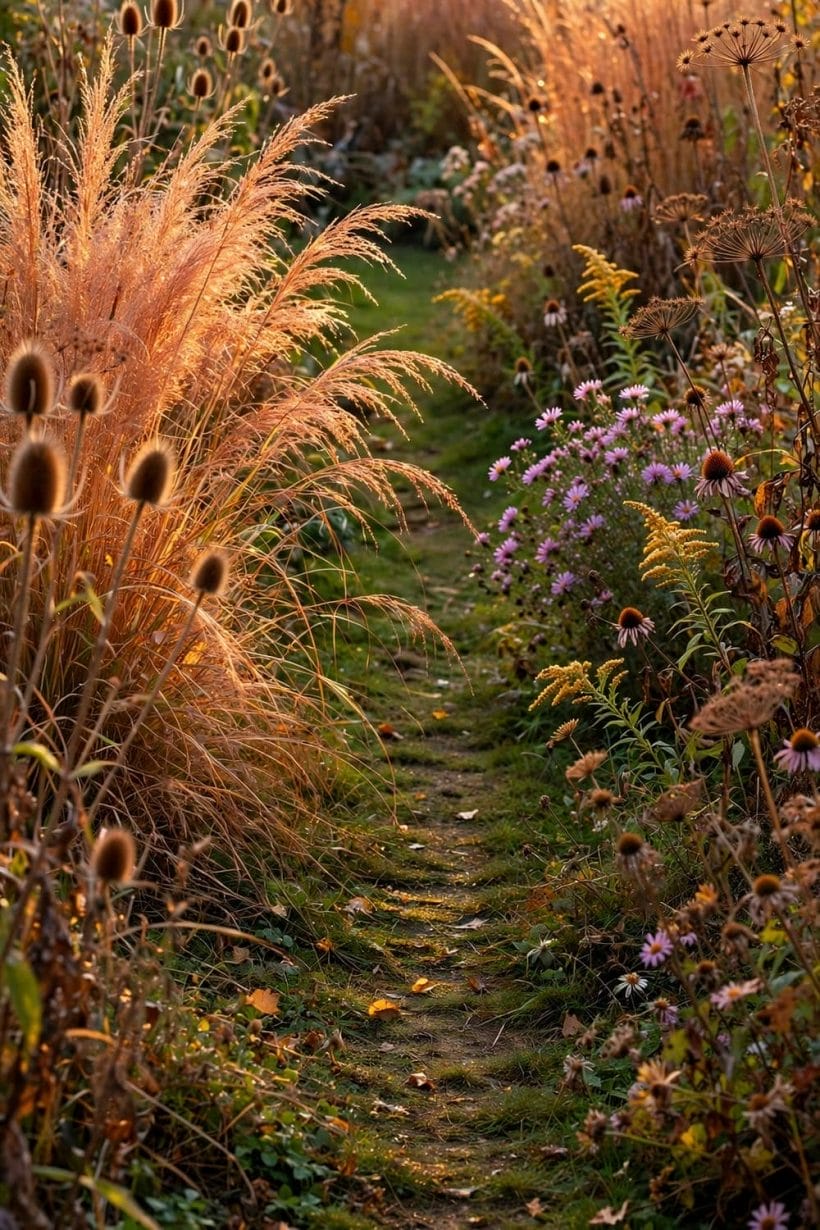
Choosing the first drift is a matter of picking a plant group that suits the sunniest or most visible part of the garden, and planting it generously enough to read as a drift rather than a row. It helps to plant in an irregular shape, wider in the middle and tapering at the ends, and to let the drift’s edge be soft, with a few plants straying beyond the main group. A drift that is too regular in shape will read as a formal bed, however loose the plants themselves are.
After a season of watching, the next step usually suggests itself. A drift that thrived can be widened or repeated elsewhere; a gap that stayed empty may want a different plant; a corner that was overlooked may turn out to be the best place in the garden. This slow, observational way of building a garden suits the style itself: the garden grows the way natural places grow, gradually and in response to conditions, rather than arriving finished in a single weekend.
The sitting and living spaces beside the planting are part of the same picture. A patio or seating area that opens directly onto drifts of planting lets the garden be enjoyed at close quarters, and the planting in turn softens the hard edges of the paved area. Tiny house patio ideas covers those adjoining outdoor living spaces, which frame the planting without competing with it.
9. Living With It: Care Across the Year
Care in a naturalistic garden is seasonal and light-touch, but it is not absent. The main tasks are editing and tidying at the right moments: cutting back dead growth when the time is right for the plants concerned, removing plants that are crowding their neighbours too hard, and dealing with unwanted seedlings before they establish. Done at the right time of year, these jobs are modest; left for years, they can become a major clearance.
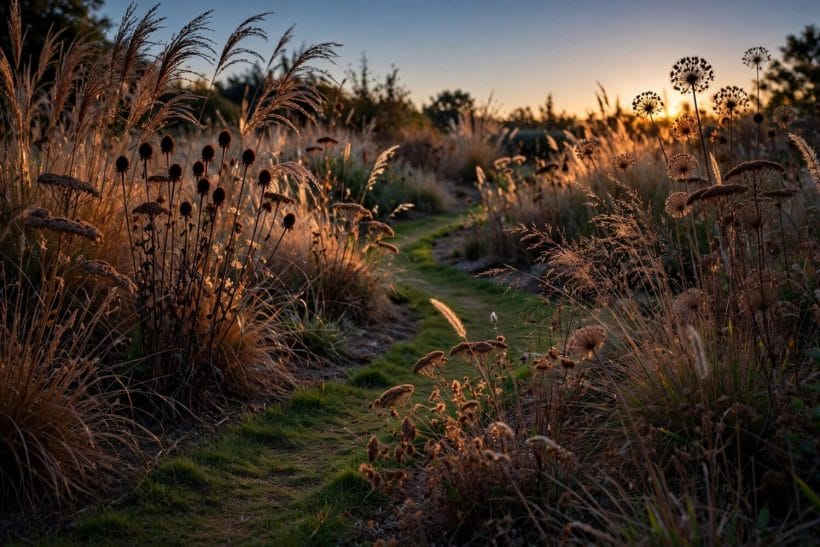
Winter care deserves a particular note, because it is where this style most differs from tidier styles. Many gardeners cut everything back in autumn, but in a naturalistic garden the seed heads and grass skeletons are part of the winter display, and they may also offer shelter and food for wildlife through the colder months. Leaving them standing until late winter or early spring, then cutting back before new growth starts, usually keeps both the look and the wildlife value. Local conditions and the plants concerned should guide the exact timing, and a gardener who is unsure can try leaving part of a bed standing and compare the result.
Wildlife is often mentioned as a benefit of this style, and it should be talked about honestly. A garden planted with a variety of flowers, grasses and seed heads may attract pollinators and birds, and it may offer them food and shelter, but no planting can promise particular visitors, and results vary with the surrounding area, the season and the wider landscape. The honest claim is a modest one: a varied, lightly managed garden tends to be more welcoming to wildlife than a garden of bare soil and hard surfaces, and that welcome is a good reason in itself to garden this way.
Weeds, it should be said, are not part of the style. A naturalistic garden is not an excuse for letting aggressive weeds take over, and a bed full of them will look neglected rather than natural. The difference between a weed and a welcome self-seeder is a judgement every gardener makes, and it is worth making it early, while unwanted plants are still easy to remove. A garden that is edited regularly, even lightly, keeps its loose look without sliding into neglect.
Where a garden includes a damp hollow or a stream edge, crossing it is again a structure question rather than a planting one, and it is treated as such in its own post. Backyard bridge ideas, a future companion post, covers garden bridges as structures, while this post stays with the planting they might cross.
10. Mistakes That Break the Look
Several mistakes recur in naturalistic gardens, and most of them come from habits learned in tidier styles. The first is over-tidying: cutting back seed heads too early, removing every fallen leaf, and trimming every plant into shape. Each act of tidying removes a little of the texture and seasonal interest that the style depends on, and a garden that is tidied too hard can end up looking like a formal garden that has lost its nerve.
The second mistake is planting one of everything. A garden full of single specimens, however beautiful each one is, rarely reads as naturalistic, because wild places do not grow that way. If a plant is worth having, it is usually worth having in a group; if it is not worth grouping, it may be worth leaving out. Restraint in the plant list, with repetition of the plants that work, almost always gives a calmer result than a long list of novelties.
The third mistake is ignoring the seasons beyond summer. A garden planned only for its summer peak can look empty for much of the year, and the disappointment is often blamed on the style rather than on the plan. Checking a planting plan against each season, and asking what will be interesting in winter and early spring as well as in summer, usually reveals the gaps before they are planted.
The fourth mistake is planting against the site: sun-lovers in shade, moisture-lovers in dry soil, vigorous plants in a small space where they will crowd everything else. This is the most expensive mistake, because it tends to reveal itself only after a season or two of struggling plants. Reading the site first, as described earlier, is the cheapest insurance against it, and it is worth more than any amount of aftercare.
The final mistake is impatience. Naturalistic planting takes time to settle: drifts need seasons to knit together, grasses need time to reach their full height, and a garden that looks thin in its first year may look generous in its third. Judging a new planting too early, and replanting it in frustration, can restart the clock each time. Patience is not just a virtue in this style; it is part of the method.
Final Considerations
A natural garden style is, in the end, a way of letting a garden behave a little like a landscape: drifts instead of rows, soft edges instead of hard lines, seasons instead of a single moment. It asks for thought at the start, observation as it grows, and a lighter hand than tidier styles. In return it offers a garden that changes through the year, moves in the wind, and feels restful to be in rather than impressive to look at.
Start with the site, start small, and let one good drift teach you what the rest of the garden wants. If the first drift thrives and the edges feel soft rather than ragged, the style is working, and widening it is a pleasure rather than a gamble. A garden grown this way may never look finished in the formal sense, and that is not a fault. It is the point: a garden that keeps growing, keeps changing, and keeps rewarding the gardener who walks through it slowly.

0 Comments