

A good vanity quietly makes every morning easier, while a poor one frustrates you daily. If you are hunting for unique bathroom vanity ideas, start with the features professionals check first, long before colour or handles.
These ten practical details separate a vanity that merely looks smart on day one from one that still works beautifully years later.
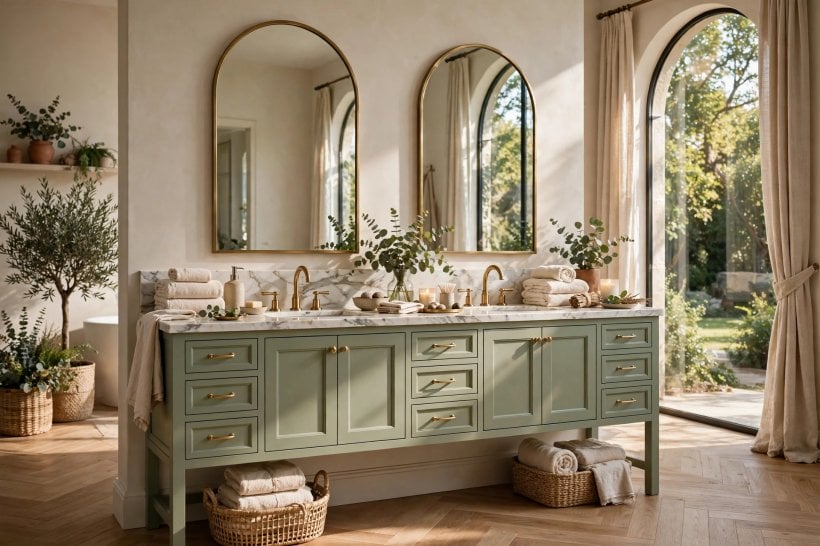
1. Soft-Close, Full-Extension Drawers
| Feature | Why pros rate it | How to check it |
|---|---|---|
| Soft-close, full-extension drawers | Full access to the back of the drawer, with no slamming | Pull a drawer fully out and let it close on its own |
| Plumbing-friendly storage | Drawers shaped around pipework waste no space | Measure trap and supply positions before ordering |
| Hard-wearing worktop and basin | Daily water, heat and toiletries test surfaces hard | Ask how the surface is cleaned and whether it can be resealed |
| Moisture-resistant build | Bathrooms are steamy rooms and materials must cope | Check edges, backs and interiors, not just the fronts |
| Maintenance access | Valves and traps eventually need attention | Confirm panels or drawers can be removed without damage |
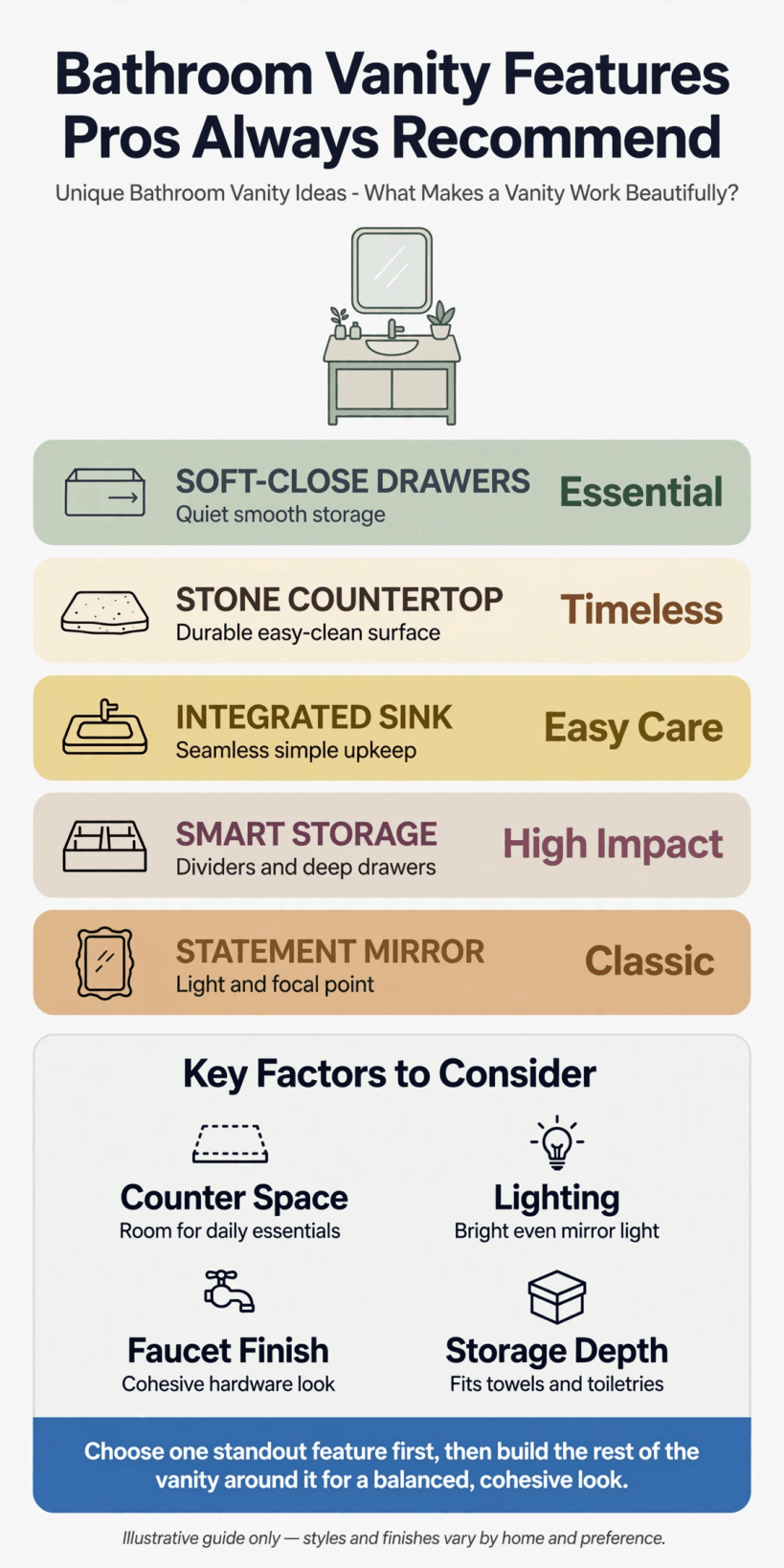
The ten vanity features professionals look for first, from drawer action to maintenance access.
Ask any experienced installer which single feature clients thank them for most, and soft-close, full-extension drawers come up again and again. A drawer that travels its full depth lets you see and reach items stored right at the back, instead of losing small bottles in a dark half-open box. The soft-close action then draws it home quietly, protecting fingers, contents and the drawer box itself from years of small impacts.
Judge the action in person whenever you can. A good drawer feels steady when loaded, runs without rocking from side to side, and closes the final stretch under its own gentle pull. In a shared or family bathroom, that quiet close matters early in the morning and late at night, and in a compact room it also stops stored items rattling around. It is a small mechanical detail, yet it shapes how premium the whole vanity feels every single day.
2. Built-In Drawer Organisers
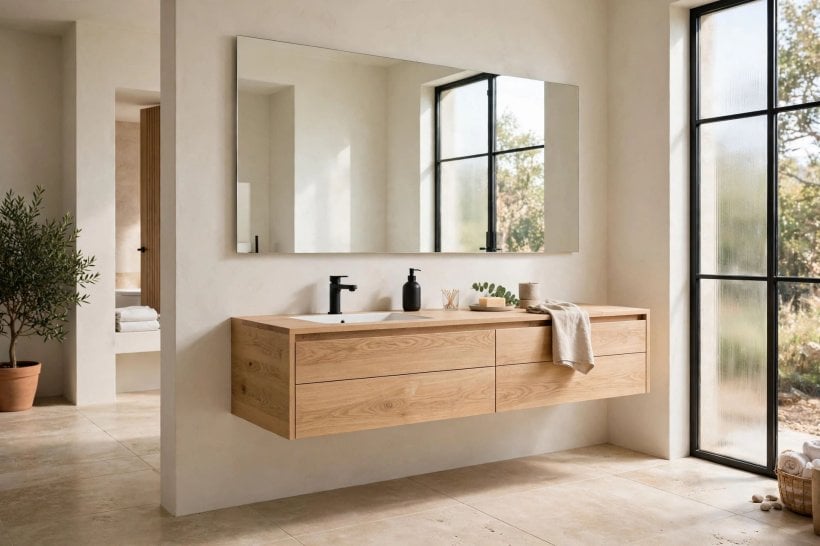
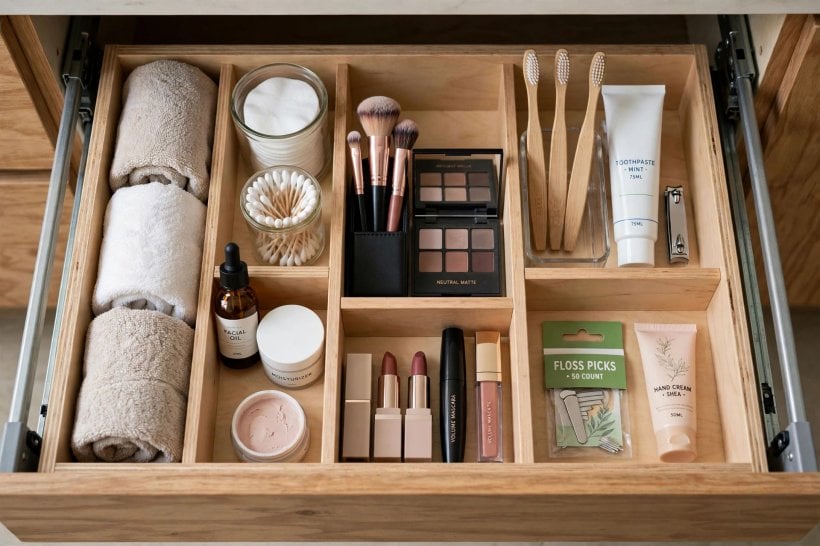
Deep drawers are only useful if their contents stay findable, which is why pros rate built-in organisers so highly. Fixed or adjustable dividers give toothbrushes, cosmetics, medicines and grooming tools a defined home, so the drawer opens onto order rather than a sliding jumble. Shallow top drawers suit everyday items, while a deeper drawer below can stand bottles upright where they are far less likely to leak across everything else.
Look for dividers you can reposition as your routine changes, and for inserts that lift out for wiping, because bathroom drawers collect toothpaste, powder and hair. The layout ideas in bathroom interior ideas for tiny houses show how even a narrow vanity can be zoned sensibly. If a vanity has no fitted organisers, measure the drawer interiors carefully before buying loose trays, and leave a flexible open section for bulkier items. Storage that adapts will always outlast a rigid layout designed around products you may stop using next year.
3. Drawers That Work Around the Plumbing
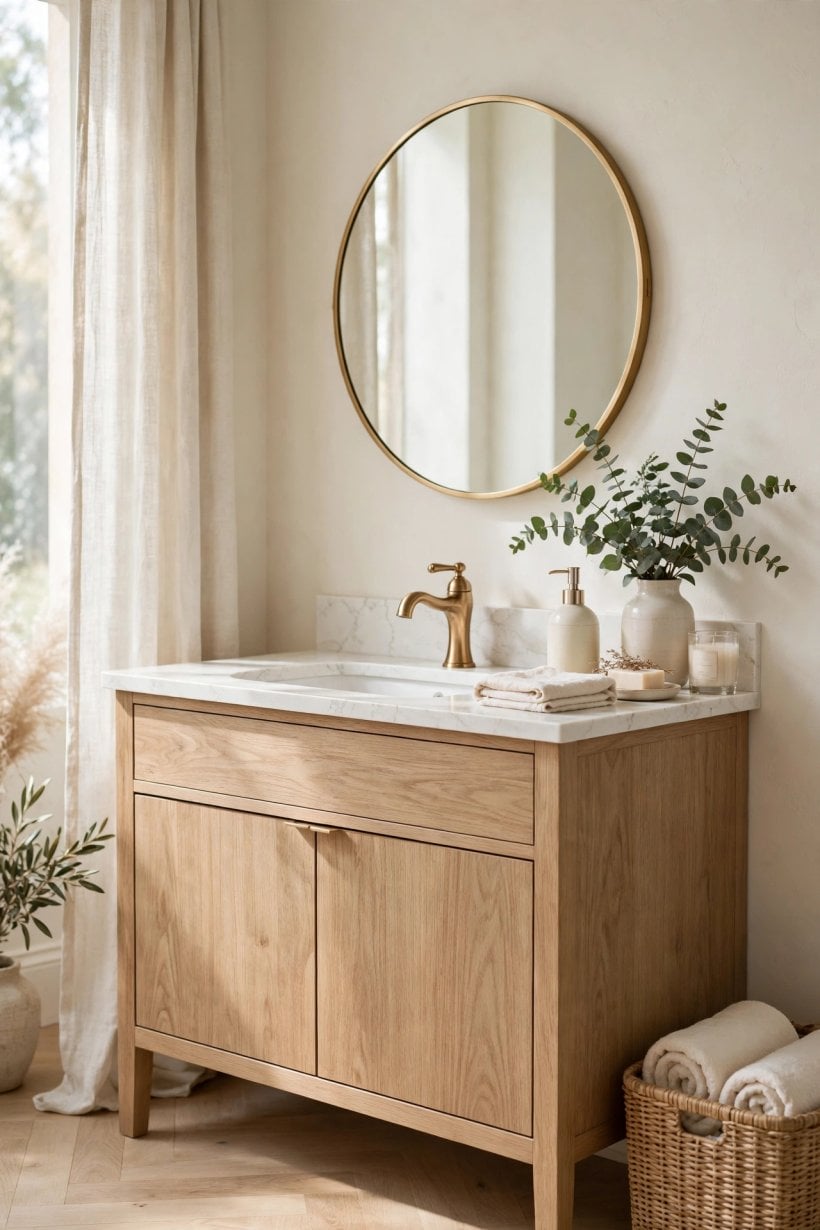
The space directly under a basin is where storage is most often wasted, because the trap and supply pipes sit exactly where a normal drawer wants to travel. U-shaped or notched drawers solve that neatly, wrapping storage around the pipework so you keep two usable zones instead of one awkward cupboard. Professionals measure the trap position, the supplies and the waste outlet before recommending a unit, because a few centimetres either way decides whether the drawer fits at all.
Before ordering, sketch your basin outlet position and check it against the drawer cut-out, and confirm there is still room to reach shut-off valves by hand. The same measure-first habit runs through good bathroom interior design ideas for tiny houses, where every hidden centimetre counts. Avoid forcing a drawer past pipework or trimming parts on site unless the maker allows it, since a bodged cut weakens the box and can complicate returns. Done properly, plumbing-friendly drawers turn the most awkward part of the vanity into some of its hardest-working storage.
4. In-Drawer Power for Styling Tools
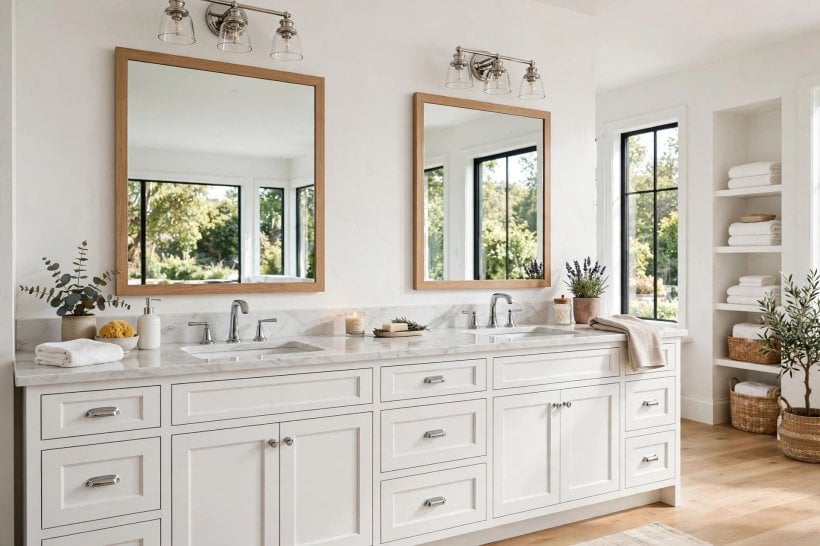
Hair dryers, straighteners and electric toothbrushes all compete for worktop space and sockets, so a vanity drawer designed to hold powered tools can transform a cramped routine. A dedicated in-drawer outlet, fitted and certified by a qualified electrician as part of the installation, keeps appliances plugged in, stored out of sight and ready to use, with cables contained instead of trailing across a wet worktop towards a distant wall socket.
Treat this feature with proper respect. Only use products and fittings intended for bathroom use in your location, have any electrical work carried out by a qualified professional, and never leave heated tools switched on inside a closed drawer. A heat-resistant lining or a separate open docking area is worth asking about, as is ventilation for items that stay warm after use. If in-drawer power is not practical in your home, a nearby, safely positioned socket and a heatproof mat inside the drawer still deliver much of the same tidiness without altering the vanity.
5. A Worktop That Shrugs Off Daily Use
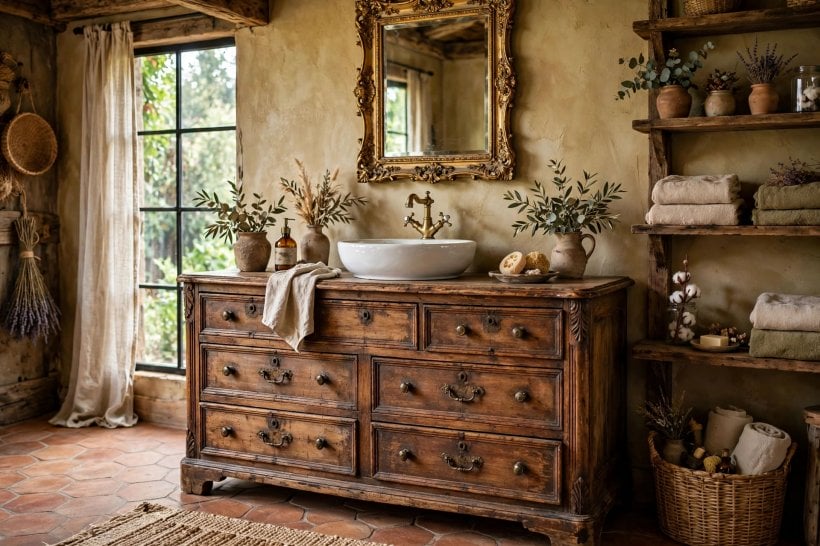
The worktop takes more punishment than any other vanity surface: standing water, hot styling tools, toothpaste, cosmetics and cleaning products all land on it daily. Professionals therefore favour materials and finishes known for coping with moisture and wiping clean easily, and they will always ask how you actually use the room before steering you. A surface that suits a careful adult ensuite may struggle in a busy family bathroom, so honesty about habits matters more than showroom shine.
Ask how the worktop should be cleaned, whether it needs periodic sealing, and how it handles a hot tool set down briefly. Check the edges and the cut-out around the basin, because those are the places moisture finds first. The calm, practical approach in tiny house and small-space interior design applies here too: choose the surface you can maintain happily, not the one needing the most vigilance. A slightly plainer worktop that still looks good after years of wiping will beat a delicate statement surface every time.
6. An Easy-Clean Basin Shape
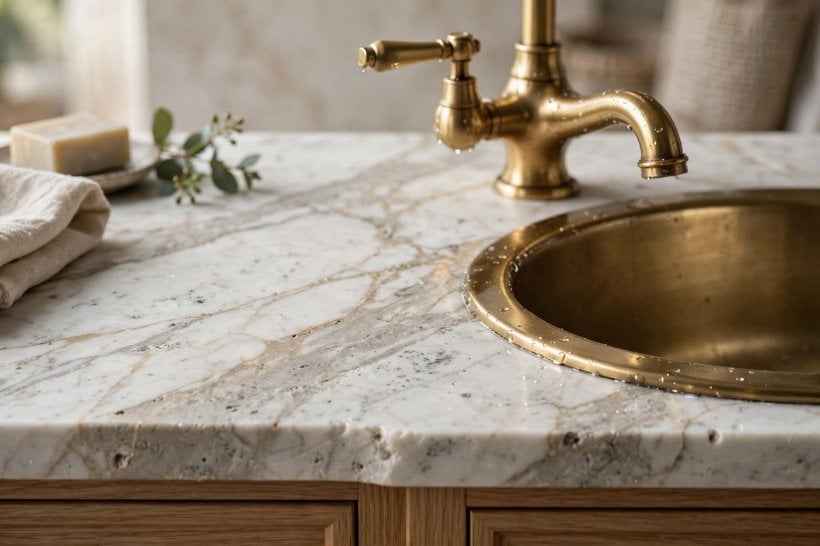
Basin choice is usually led by looks, yet pros quietly steer clients towards shapes that clean easily. An undermount or integrated basin removes the raised lip where water, paste and grime collect, so the worktop wipes straight into the bowl in one movement. Gently sloped internal sides also rinse more cleanly than sharp internal corners, which tend to hold onto residue and need scrubbing in exactly the spot a brush reaches worst.
Think about depth and splash as well as style. A very shallow bowl can splash the worktop and your clothes, while a deeper bowl contains daily washing more comfortably. Check tap reach against the basin too, so hands wash under the stream rather than against the back of the bowl. Storage lessons from tiny house kitchen design carry over surprisingly well: in hard-working small rooms, smooth, wipeable, well-proportioned fittings save effort every day. The basin you barely notice cleaning is usually the one that was chosen best.
7. Storage That Continues Into the Mirror
A vanity does not work alone, and professionals plan it together with the mirror above. A mirrored cabinet, especially a recessed one, puts daily medicines, skincare and contact lens supplies at eye level in shallow storage where nothing can hide at the back. That frees the drawers below for larger items and keeps the worktop clearer, which in turn makes the whole room feel calmer and larger than its measurements suggest.
Check the cabinet depth against your tallest bottles, confirm the door swing clears the tap and your head, and look at internal shelving you can adjust. In very small rooms, the planning mindset behind unique bathroom vanity ideas matters most: treat the vanity, mirror and lighting as one storage wall rather than three separate purchases. If a cabinet is not possible, a simple mirror plus a shallow wall shelf still helps, provided it sits where steam and splashes cause the least trouble. Good eye-level storage is the feature clients rarely request, then quickly say they could not give up.
8. Moisture-Resistant Construction
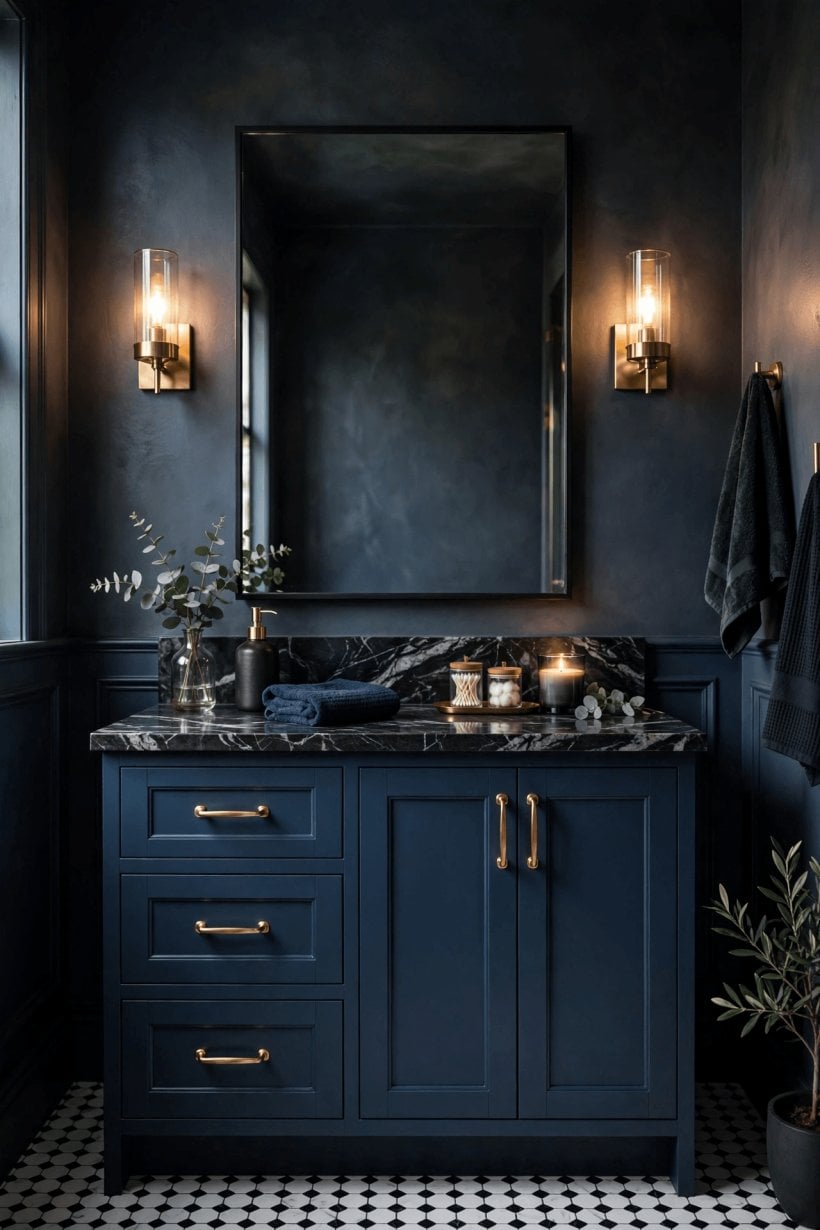
Bathrooms are warm, steamy rooms, and a vanity lives closer to water than almost any other furniture in the home. Pros therefore look past the showroom fronts and check how the carcass, drawer boxes, edges and backs are made and sealed. Moisture-resistant materials and well-finished edges cope far better with years of steam and splashes, while raw or poorly sealed edges are where swelling and peeling usually begin.
Open the drawers and look inside. Check the underside of the worktop, the plinth or legs, and the area around the basin cut-out. Ask what happens if water sits under the unit after a small leak, and how the finish is repaired if it chips. Planning a whole room, as in designing your own tiny house, teaches the same habit: the hidden construction decides how long the visible design lasts. Good ventilation in the room itself supports all of this, so make sure steam can leave rather than settling on every surface daily.
9. Faucet Fit Checked Before You Buy
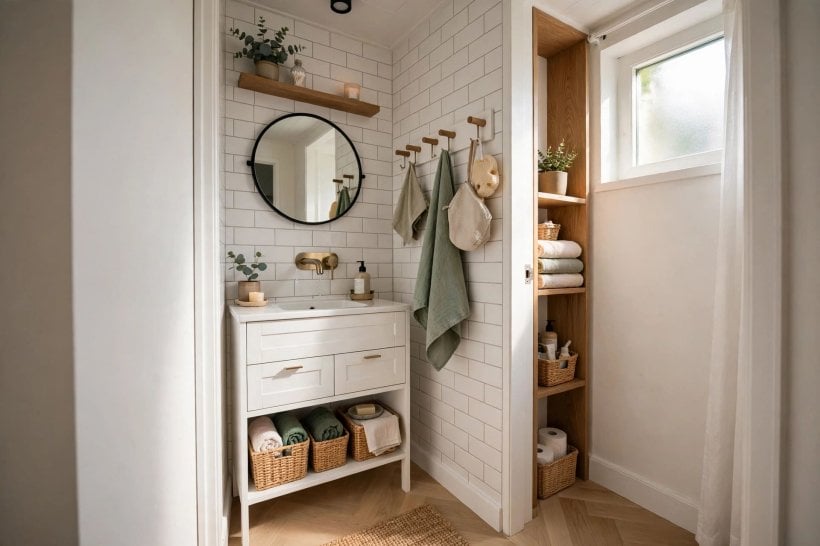
Mismatched taps are one of the most avoidable vanity mistakes, and one of the most common. Vanities and worktops may come pre-drilled or undrilled, basins may need deck- or wall-mounted fittings, and tap reach, height and handle movement all have to suit the bowl and the wall behind it. Professionals confirm the complete combination on paper before anything is ordered, because a beautiful tap that clonks its lever against the wall or drips onto the worktop will annoy you daily.
Make a simple checklist: number and spacing of holes, spout reach over the basin, clearance for handles, and room to clean behind the fitting. If you are keeping an existing tap, measure it and tell the supplier before choosing the top. The step-by-step mindset in how to build your own tiny house is a useful reminder that small measurements made early prevent expensive corrections later. A few minutes with a tape measure protects the whole purchase.
10. Easy Access for Future Maintenance
The final feature is invisible on showroom visits, yet plumbers and installers value it highly: straightforward access to everything underneath. Traps block, valves stiffen and supplies occasionally need replacing, so a vanity that lets a professional reach those parts without dismantling half the unit saves time, money and damage. Removable drawers, a sensible access panel and reachable shut-off valves are all signs of a design that expects real life.
Before buying, ask how the top drawer comes out, whether the back panel is open or removable, and where the valves will sit once installed. Keep a simple note of those details with your household paperwork, along with the maker and finish names, so any future repair starts informed. Avoid sealing a unit in so completely that the first small leak becomes a demolition job. A vanity designed for maintenance also tends to be better made overall, because someone thought carefully about what happens after installation day, not just about the photograph taken on it.
Final Considerations
None of these ten features is glamorous on its own, and together they explain why some vanities feel effortless for years while others disappoint within months. Drawers that glide and divide well, storage shaped around real plumbing, surfaces that clean easily, construction that tolerates steam, and honest access for repairs will serve you far longer than a fashionable finish chosen in isolation. Use the table as a shopping checklist, measure your own pipework and tap combination before ordering, and judge every candidate by a normal busy morning rather than a quiet showroom.
Finally, match ambition to the room and the household. A family bathroom may prize indestructible, wipeable storage above all, while a small ensuite might gain most from mirrored storage and plumbing-friendly drawers. Whichever features lead your list, buy the best drawer action and construction your budget allows, because those are the parts you will touch every day and the hardest to upgrade later. Chosen that way, your vanity becomes quiet background help, which is exactly what great bathroom furniture should be.


0 Comments