
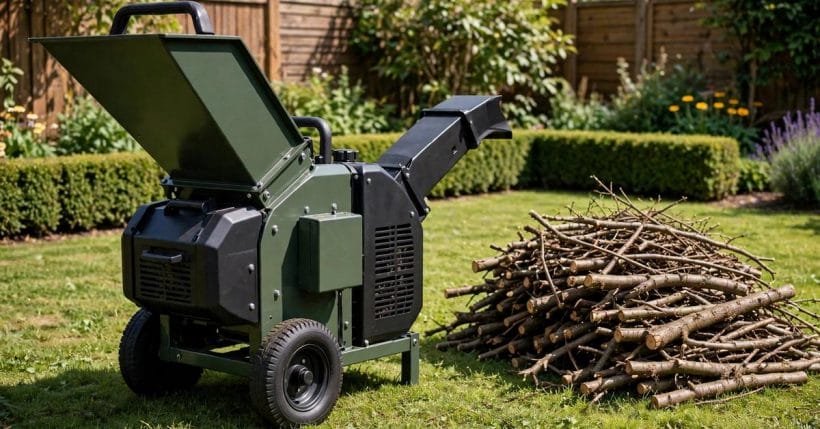
A garden that grows well also produces a steady stream of prunings, fallen branches and leafy trimmings, and a chipper shredder is the machine many gardeners turn to when that material starts to pile up. In simple terms, it takes garden waste in at one end and turns it into smaller pieces at the other, which are easier to carry, easier to store and easier to spread around the garden. These chipper and shredder checks are meant to help you look at a machine with clear eyes before any work begins, so that the machine you consider fits your garden, your space and the way you actually garden.
This guide stays general on purpose. Machines differ from one maker to another, and the manual that came with your own machine is the final word on what it can handle, how it should be placed and what its safety features do. Nothing here names a maker, compares makers or recommends a particular machine, and nothing here asks you to open the machine, change a part or put right a fault yourself. Anything involving blades, moving parts, electrical parts or engine parts belongs with a qualified professional, and any sign of damage or unusual behaviour is a reason to stop and seek professional help rather than to carry on.
A useful way to think about the whole subject is to separate the machine from the job. The job is your garden: the kind of material you produce, the amount of it, the space you have to work in and the space you have to store both the machine and its output. The machine is only a good match when it suits that job, when its safety features are clear and complete, when its noise suits your surroundings and when its care is something you can realistically keep up. The sections below walk through those points one by one, in the order most gardeners find helpful, from the material itself through to long-term care. For a small home, where garden space and storage space are both limited, the fit matters even more, and the same thinking that shapes tiny house building design ideas applies here too: a small space rewards careful choices and clear storage, not extra equipment.
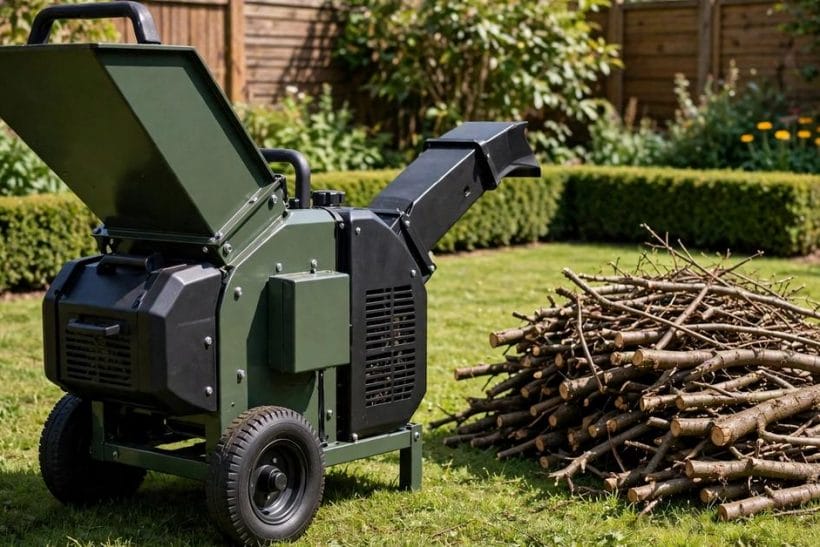
1. Check the Material You Plan to Feed
Start with what your garden actually produces, not with what a machine promises in general. Some gardens produce mostly soft, leafy trimmings and slim, green shoots after regular pruning, while others produce tougher woody branches after seasonal cutting back, storm clearance or the removal of an overgrown shrub. Leafy material behaves very differently from woody material, and damp material behaves differently again from dry material, so a machine that copes comfortably with one kind of garden waste may struggle with another. Look at your own piles over a season and notice the mix: how much is leafy, how much is woody, how much is damp after rain and how much is dry and brittle.
Also notice what should never go near a machine of this kind. Treated timber, painted wood, wire, string, stones, soil and garden waste mixed with household rubbish do not belong in a chipper shredder, and feeding the wrong material can damage a machine and create a hazard for anyone nearby. A careful gardener sorts material before work begins, keeps the feed pile clean and separate from other garden waste, and sets aside anything doubtful for another route, such as a green waste collection or advice from a local garden service. When you are unsure whether a particular item is suitable, the maker manual for your own machine is the place to look, and a qualified professional can advise where the manual leaves doubt.
Size matters in general terms as well, even without figures. A slim twig and a thick limb are different jobs, and a machine described for light garden trimmings is not the same kind of machine as one described for heavier woody work. Think about the thickest material your garden usually produces and whether that material appears often or only rarely, because a machine chosen for a rare, heavy job may be unnecessarily large for everyday work, while a machine chosen for light work may be asked to do more than it was made for. Matching the machine to the usual material, rather than to an occasional extreme, keeps work steadier and kinder to the machine.
2. Check the Feed Opening and the Way Material Is Fed
The feed opening is where you meet the machine, so its shape and size deserve a close look. A wide, open hopper suits leafy, bulky material that needs room to settle, while a narrower opening suits straighter branches fed in a controlled way. Think about how you will actually hold and offer material: whether you can stand in a comfortable, stable position, whether you can see what you are doing, and whether the opening keeps your hands well away from anything moving inside. A machine that forces an awkward stance or a hurried movement is a poor match, however tidy it looks when parked.
Feed method is the other half of this point. Some machines rely on gravity and the weight of the material itself, while others use a powered feed that draws material in. Each approach feels different in use, and each asks for a different kind of attention from the person feeding it. In general terms, a powered feed asks for steadier handling and a clearer understanding of how to stop the machine quickly, while a gravity feed asks for patience and for material to be offered in a calm, even way rather than pushed. Whichever kind you consider, the maker manual describes how feeding should be done for that machine, and that description should be read before any work, not learned by trial.
Clearance around the feed area matters too. Keep the ground around the machine free of loose material, tools and trailing leads or hoses, and keep other people, children and pets well away from the working area. A tidy feed pile, a clear path to the machine and a clear space around it all help you work without rushing or reaching. Material that comes from regular garden work, such as the prunings and trimmings discussed in backyard landscaping ideas, is easier to handle when it is sorted and stacked before feeding begins, with the feed pile close enough to reach comfortably and far enough from the machine to keep the working area clear.
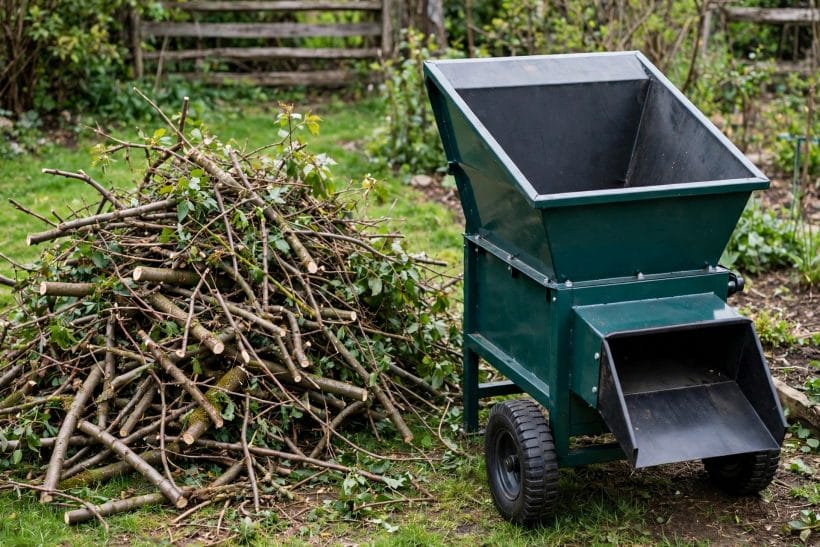
3. Check Capacity in General Terms
Capacity is a word that gets used loosely, so it helps to pin down what it means for your garden. In plain terms, it covers how much material a machine can take in a session, how large that material can be and how long the machine can keep working before it needs a rest. A garden that produces a large pile after a single seasonal clearance asks a different question from a garden that produces a small bundle after each routine pruning. Think about your usual session: how much material you expect to process, how often you expect to do it and whether you prefer to work through a large pile in one go or to spread the work across several shorter sessions.
Overloading is the habit to watch for, and it usually shows itself before any damage is done, in the form of slower working, labouring sounds or material backing up at the feed opening. Those signs are a reason to stop, let the machine rest and reassess the pile, not a reason to push harder. A machine that is regularly asked to do more than it was made for will not serve a garden well over time, and a machine that is far larger than the garden needs can be awkward to move, awkward to store and awkward to place. The comfortable middle is a machine whose usual workload matches your usual garden output, with some room to spare for a heavier session now and then.
It also helps to think about capacity in terms of output as well as input. Chipped and shredded material still has to go somewhere, whether that is a collection bag, a bin, a wheelbarrow or a pile for spreading, and a large input pile can produce a surprisingly large output pile. Before work begins, decide where the output will go and how it will be moved, so that you are not left with a heap blocking a path or a working area. A machine that suits your garden is one whose input you can feed steadily and whose output you can handle comfortably, without rushing either end of the job.
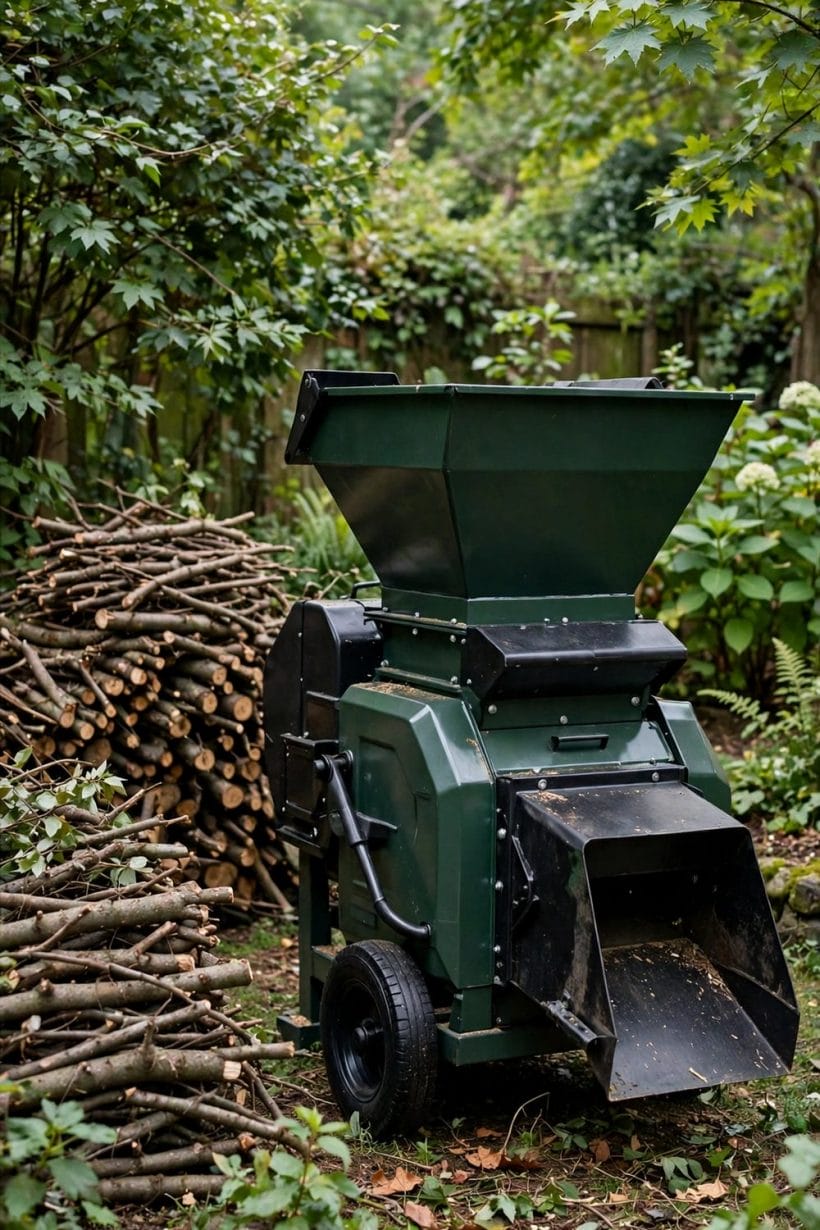
4. Check Safety Features Before Any Use
Safety features are not extras on a machine of this kind; they are central to whether it should be used at all. Look for guards that cover moving parts, for a feed arrangement that keeps hands away from the working mechanism, and for a clear, reachable way to stop the machine quickly. The maker manual for your own machine describes what those features are and how they should be checked before use, and any guard that is missing, loose or damaged means the machine should not be used until a qualified professional has looked at it. Never work with a guard removed, and never reach into a feed opening or an output chute, whether the machine is running or has just stopped.
Personal protection belongs in the same conversation. Eye protection, hearing protection, sturdy gloves and firm footwear are the usual items for garden machinery work, and they should be worn for the whole session, not put on halfway through. Loose clothing, jewellery and long, loose hair should be kept well away from the machine, and the working area should be kept clear of bystanders, children and pets. These are not formalities; they are the habits that keep a loud, fast-moving machine at a safe distance from the person using it, and they deserve the same attention as the machine itself.
Finally, think about who will actually use the machine. A chipper shredder is not a machine for casual or unsupervised use, and it is not a suitable job for a young helper or for someone who has not read the maker manual and understood the safety features. If more than one person will use it, each person should read the manual and understand the stopping arrangement before their first session. Where any part of the safety picture is unclear, or where a feature does not behave as the manual describes, stop and seek advice from a qualified professional rather than working around the doubt.

5. Check Noise and Neighbour Considerations
A chipper shredder is a loud machine, and that loudness shapes when and where it can reasonably be used. Think about your surroundings before you think about a session: how close your neighbours are, whether their windows face your garden, whether anyone nearby works from home or rests during the day, and whether your garden is enclosed by walls and planting or open to the street. A machine that is acceptable in a large, enclosed garden may be a real disturbance in a small, overlooked garden, and a short, well-timed session is usually kinder to neighbours than a long session that drags on.
Timing is the simplest courtesy and often the most effective one. Mid-morning or early afternoon on a weekday is usually less disruptive than early morning, late evening or a quiet weekend morning, and a brief word with neighbours beforehand can prevent a great deal of friction. Local rules may also shape what is acceptable, so checking any local guidance is sensible on noisy garden work before planning a session, rather than discovering a restriction after work has begun. Hearing protection for the operator is essential regardless of timing, and it should be worn even for a short session, because loud machinery work adds up over time.
Also consider how noise affects your own working habits. A very loud machine can make it harder to hear a warning shout, a change in the sound of the work or someone approaching the working area, which is another reason to keep bystanders away and to work in a calm, unhurried way. If noise is a major concern for your garden, that concern may point towards using a professional garden service for larger clearance work instead, since a service can often complete heavy work in a shorter, planned visit. The aim is not silence, which no machine of this kind offers, but a level of disturbance that you, your household and your neighbours can all live with.
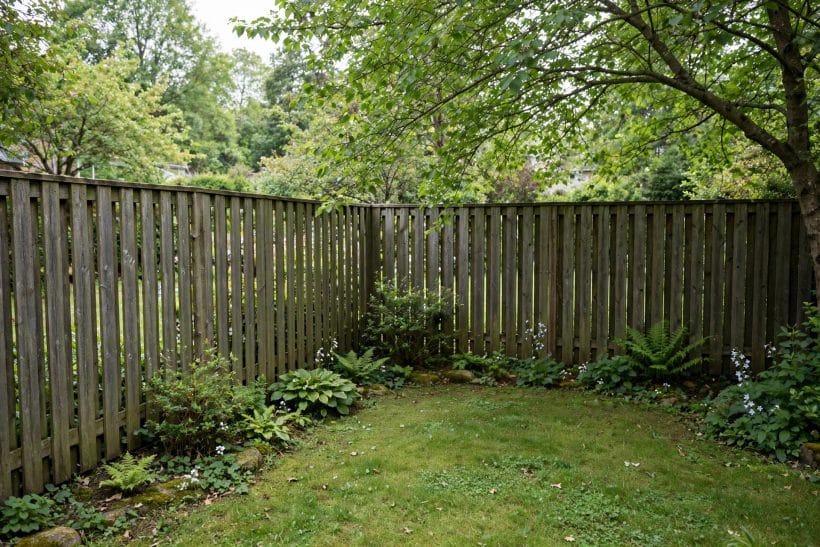
6. Check the Power Source and Placement
Power source shapes where a machine can work and what kind of care it needs. Some machines run on mains electricity, which suits a garden with a nearby outdoor supply and a safe route for a lead, while others run on an engine, which suits a larger garden or a garden without a nearby supply but brings fuel, exhaust and engine care into the picture. Each kind has its own demands, and the maker manual describes them for your own machine, including where it should be placed, how it should be ventilated and what should be checked before starting. Electrical work and engine work both belong with a qualified professional when anything is faulty or unclear.
Placement is just as important as power. A chipper shredder should stand on firm, level ground, outdoors, with clear space around it and good ventilation, well away from dry leaves, stored fuel and anything flammable. A slope, a soft lawn that gives under weight, or a cramped corner that forces you to work at an awkward angle all make the job harder and less safe. Think about the route to the working spot as well: whether gates and paths are wide enough, whether the ground is firm enough to move the machine, and whether the output can be carried away without crossing the feed area.
Weather deserves a mention here too. Wet ground, wet material and wet electrical parts do not mix well, and high wind can blow light material around a working area. A calm, dry day with good light is the sensible setting for machinery work, and a session that starts in good conditions should be paused if conditions turn. None of this needs specialist knowledge; it needs the same ordinary judgement that governs any outdoor work, applied with a little extra care because the machine involved is powerful and fast-moving.
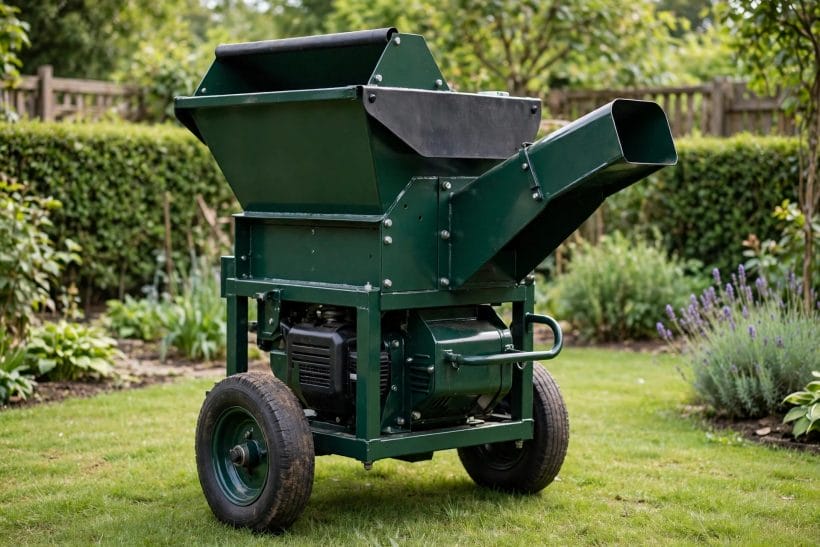
7. Check Output and Collection
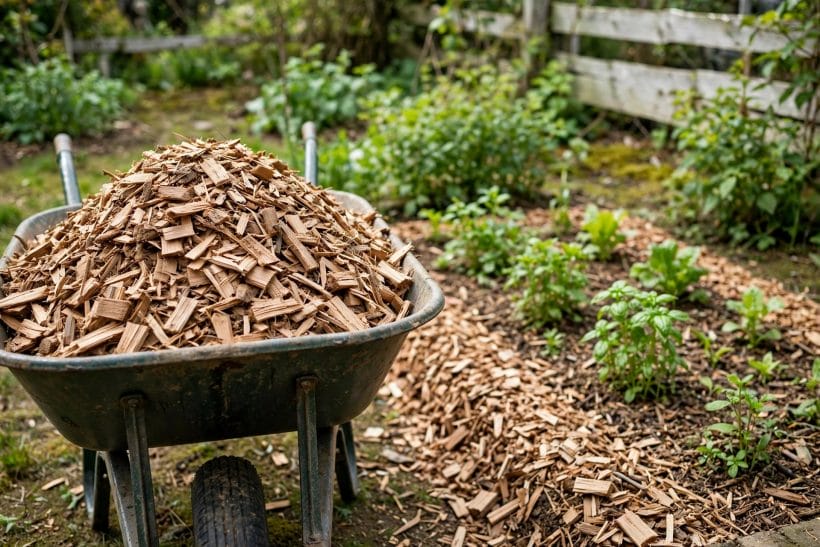
What comes out of a chipper shredder deserves as much thought as what goes in. Output may be fine and shred-like, or coarser and chip-like, depending on the material and the machine, and each kind suits different garden uses. Fine material breaks down more readily and suits composting or a surface covering on beds, while coarser chips last longer on the surface and suit paths or a decorative covering. Think about what you actually want the output for before work begins, because that answer shapes how you collect it, where you store it and how quickly you need to use it.
Collection itself needs a plan. A collection bag or bin that fills quickly will interrupt work often, while a large pile left loose on a lawn can smother grass and block a path. A wheelbarrow or a sturdy container placed to catch output cleanly, with a clear route to carry it away, keeps the working area tidy and the session steady. Damp output is heavier and bulkier than dry output, and leafy output is lighter and looser than woody output, so the same machine can produce very different loads from different garden waste. A little thought about containers before starting saves a great deal of shifting and tidying afterwards.
Use of the output in the garden also deserves a pause. Fresh chips and shreds can be spread around beds and borders, added to a compost heap in layers with other garden material, or used to cover bare soil, and each use has its own rhythm across the seasons. Garden beds that mix planting with stone or gravel, such as those shown in rock landscaping ideas, can also benefit from a tidy, covered surface, and chipped material can help keep such beds looking cared for. Whatever you plan, let the output settle and dry where needed, keep it away from plant stems in a thick, damp layer, and ask a local garden adviser or a qualified professional if you are unsure about a particular use.
8. Check Storage Space and Access
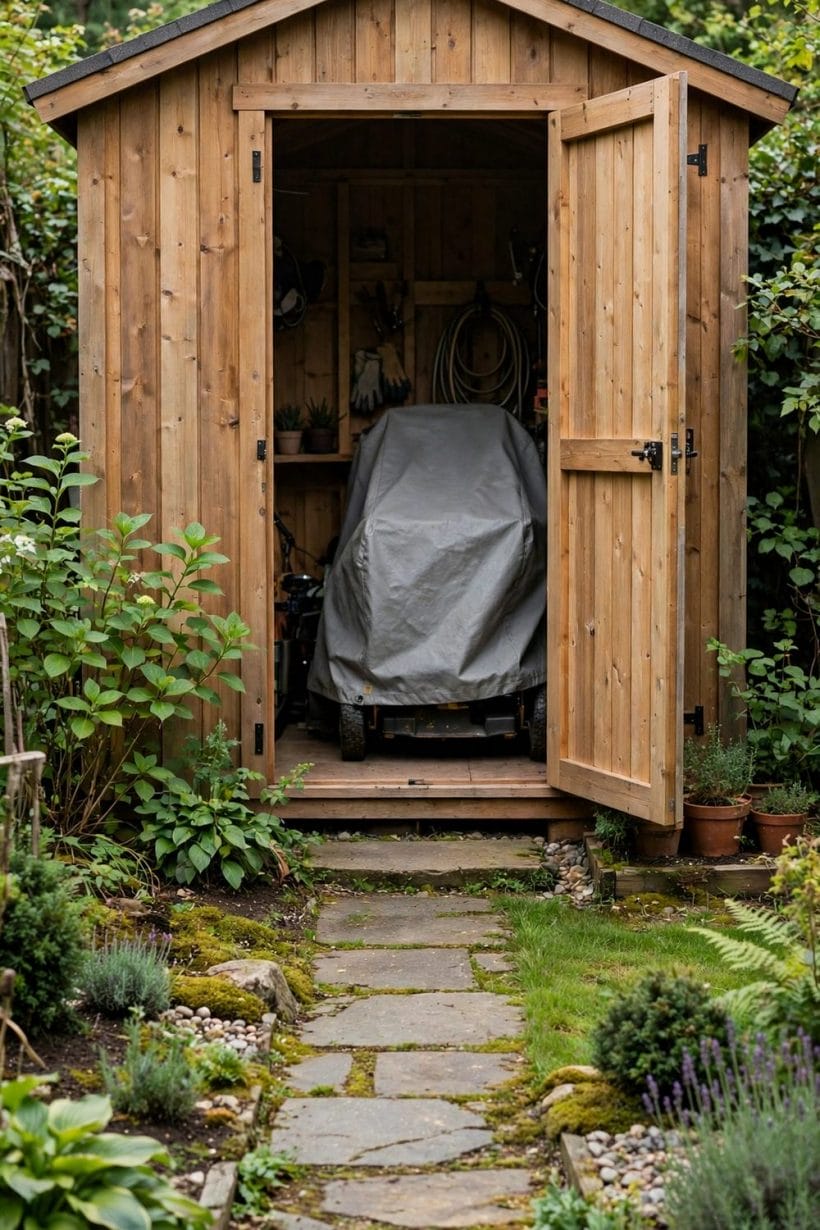
A chipper shredder spends far more of its life stored than working, so storage deserves as much attention as performance. Measure the space you actually have, not the space you wish you had: the floor area, the headroom, the width of the door and the width of the path to that door. A machine that cannot pass through a garden gate or a shed door without a struggle will be a burden every time it is used, and a machine stored in a damp, cramped corner will be harder to check, harder to move and harder to keep in good order. Dry, covered storage under a roof, with the machine protected from damp and dust, is the sensible aim.
The kind of store matters as well. A solid garden shed gives protection from weather and keeps the machine out of sight, and garden shed ideas show how a well-planned shed can hold a machine alongside tools and containers without becoming cluttered. A metal shed can offer similar protection with a different kind of care, and metal sheds ideas may suit a garden if a sturdy, low-upkeep store suits your garden. Whichever store you use, leave enough room to walk around the machine, to check it visually and to move it out without dragging it past other stored items.
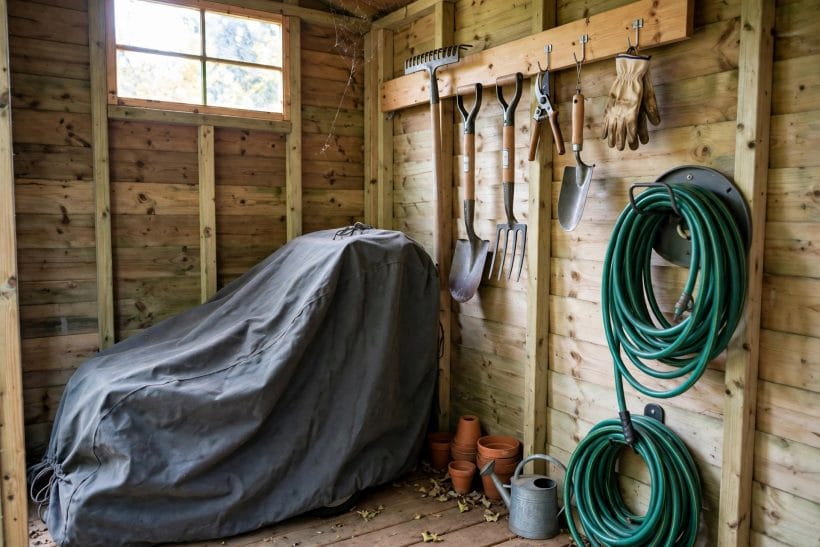
Access for servicing is the part of storage that is easiest to overlook. A qualified professional who services the machine needs to reach it, and you need to be able to move it to a vehicle or a working area without a major rearrangement of the shed. Keep the route from store to working spot clear, keep the machine covered when stored, and keep the manual with the machine or in a known place nearby, so that safety information and servicing notes are easy to find. A machine that is easy to store, easy to reach and easy to move is a machine that will actually be looked after, rather than left to deteriorate in a corner.
9. Check Cleaning and Routine Care
Routine care after a session is mostly about observation and tidiness, not about taking a machine apart. Once the machine has stopped and cooled, and once the power source has been made safe exactly as the maker manual describes, loose debris can be brushed from outer surfaces and the working area can be tidied, with the collection container emptied and the feed area left clear. A visual look over the machine at this point is valuable: guards in place, no visible damage, no loose fixings, no debris packed around vents or openings. Anything that looks damaged, loose or unusual should be left alone and reported to a qualified professional, not investigated by opening panels or removing parts.
Seasonal care follows the same principle. Before a period of storage, the machine should be clean, dry and covered, with the manual consulted for any storage guidance that applies to your own machine, such as fuel or battery care where relevant. After a period of storage, the same visual look applies before any use, along with a fresh read of the safety section of the manual. Blades, moving parts, electrical parts and engine parts are not matters for home attention; sharpening, adjustment and replacement belong with a qualified professional who has the tools and the knowledge to do the work safely. A machine that is cared for in this limited, careful way will stay safer and more reliable than one that is either neglected or opened up without the right skills.
Keeping a simple record of care can help as well. A note of when the machine was last serviced by a professional, when it was last used and anything unusual noticed during use gives a professional a clearer picture at the next service, and it helps you notice patterns, such as a machine that is being used more often than its storage or servicing routine comfortably allows. The record need not be elaborate; a few lines in a garden notebook are enough, and they keep the history of the machine in one place rather than relying on memory.
10. Check Servicing, Support and Long-Term Fit
The final point to weigh is the long term: servicing, support and whether owning a machine still fits your garden in a year or two. A machine that can be serviced locally by a qualified professional, with support and guidance available from the maker when needed, is a far more practical possession than one that must travel a long way for every service. Before committing, asking how servicing is arranged is sensible, what the maker manual says about service intervals in general terms, and whether local help is available for the kind of machine you are considering. Support that is easy to reach makes routine care far more likely to happen.
Long-term fit also covers how your garden may change. A garden that is being reduced in size, a household that is spending less time on heavy garden work, or a move to a smaller home may all change the amount of garden waste a household produces, and a machine that suited a large garden may no longer suit a smaller one. In such cases, using a professional garden service for occasional heavy clearance, or sharing arrangements where they exist locally, may suit the household better than owning a machine outright. There is no single right answer here; the right answer is the one that matches the garden, the household and the work, honestly assessed.
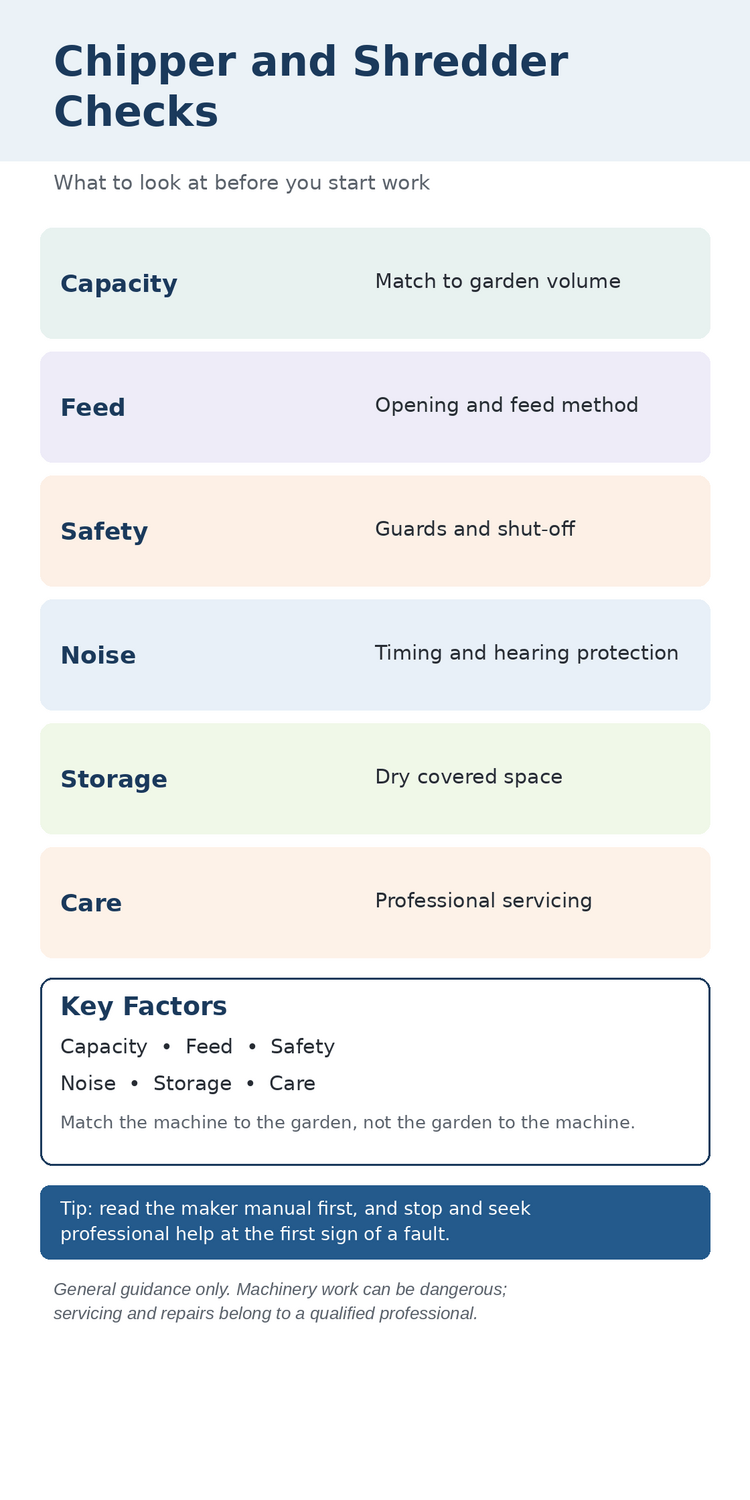
Finally, weigh the whole picture together rather than any single feature in isolation. Capacity without safety, a generous feed opening without storage space, or a machine that is easy to buy but hard to service are all unbalanced choices. A balanced choice is one where material, feed, capacity, safety, noise, power, output, storage, care and servicing all point the same way, towards a machine that fits the garden and can be looked after properly. When those points align, garden work becomes steadier and more enjoyable; when they do not, the mismatch will show itself every time the machine is used, stored or serviced.
Final Considerations
These chipper and shredder checks come down to a simple habit: look before you work. Look at the material, look at the feed opening, look at the safety features, listen for the noise question, think about power and placement, plan for output and storage, and keep care and servicing with qualified professionals. A machine that passes those looks is one that is more likely to serve your garden well, and a machine that fails any of them deserves a pause and a second thought, not a workaround.
If any part of this guide leaves you unsure, that uncertainty is itself useful information. A qualified professional, a local garden service or the maker manual for your own machine can answer questions that a general guide cannot, and asking before work begins is always wiser than discovering a problem during work. Small homes and small gardens can benefit greatly from chipped and shredded material, and keeping tools and storage tidy in a compact home is part of the same discipline, as shown in tiny house storage ideas. With a clear-eyed look at the machine, a tidy working area and professional help for anything beyond ordinary care, garden clearance becomes a calmer, safer and more satisfying part of looking after a garden.




0 Comments