
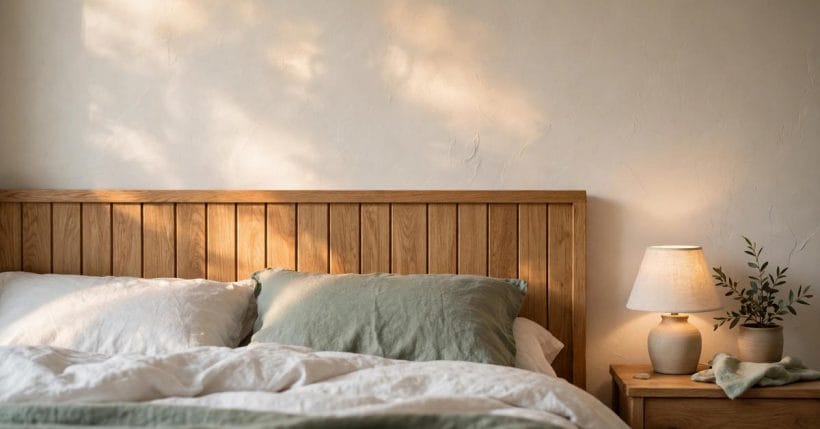
The wall behind your bed does more for a bedroom than any other surface in the room. It is the first thing you see when you wake and the backdrop to every quiet evening, yet it is often left plain while the bedding and furniture get all the attention. A considered bedroom wall treatment changes that balance, giving the room a centre, a texture and a mood without crowding it.
This guide gathers seventy-five ideas for bedroom walls, from painted plaster and timber boards to wallpaper, storage walls and small-room fixes. Each idea stays inside the bedroom, each finish is described in plain colour names, and the whole survey is written so you can compare treatments side by side before choosing one for your own room.
1. Choosing a Treatment That Suits the Room
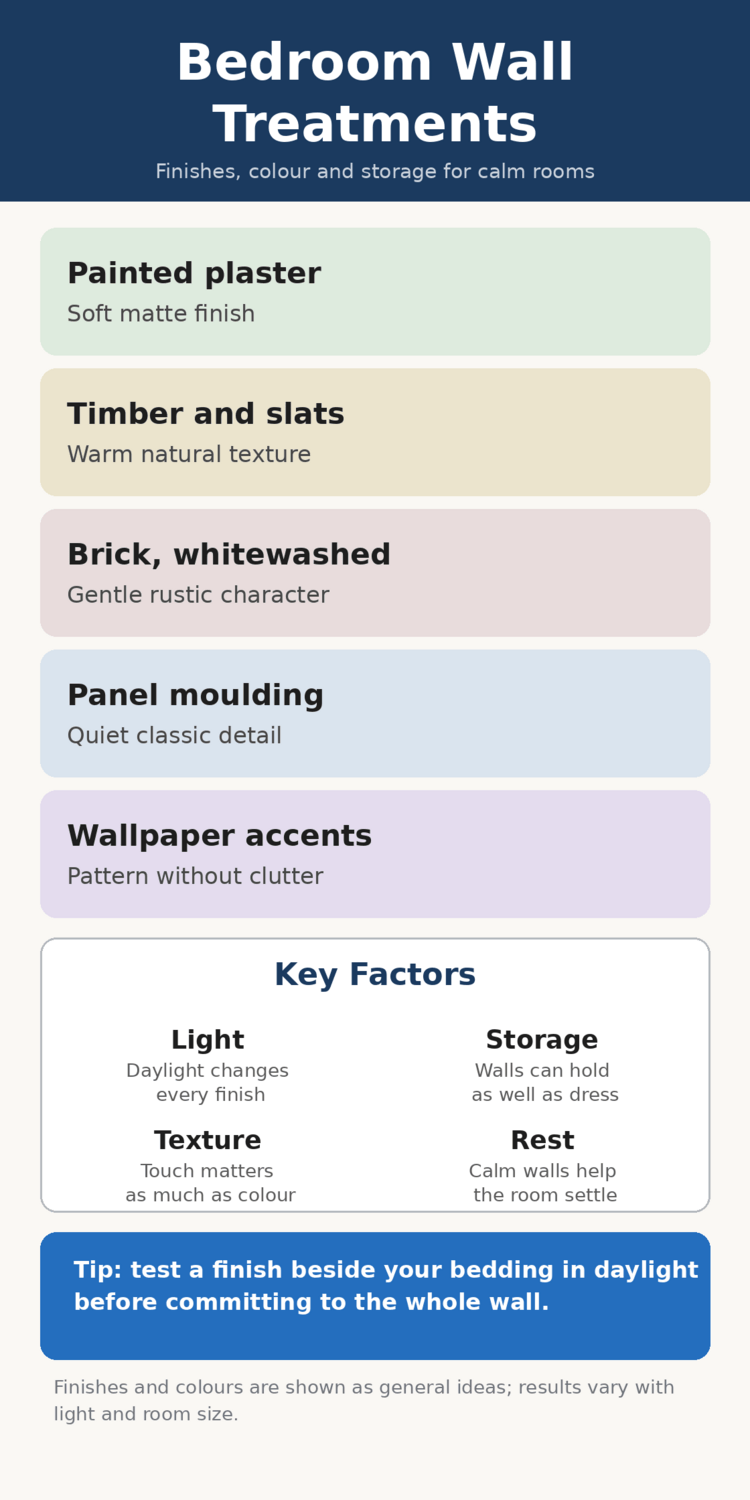
Start with the room you actually have, not the room in a photograph. Light, size, ceiling shape and the bed itself all change how a treatment reads, so the best choice is the one that flatters your walls in daylight and still feels calm at night. The table below gives a quick way to compare the big families before you read the ideas.
| Family | What it gives the room |
|---|---|
| Paint and plaster | Colour and soft texture, easy to change later |
| Timber and boards | Warmth and rhythm, suits bed walls especially |
| Brick and stone looks | Character and weight, best on one wall |
| Wallpaper and pattern | Pattern and personality without new furniture |
| Storage walls | Useful walls that hold clothes, books and bedding |
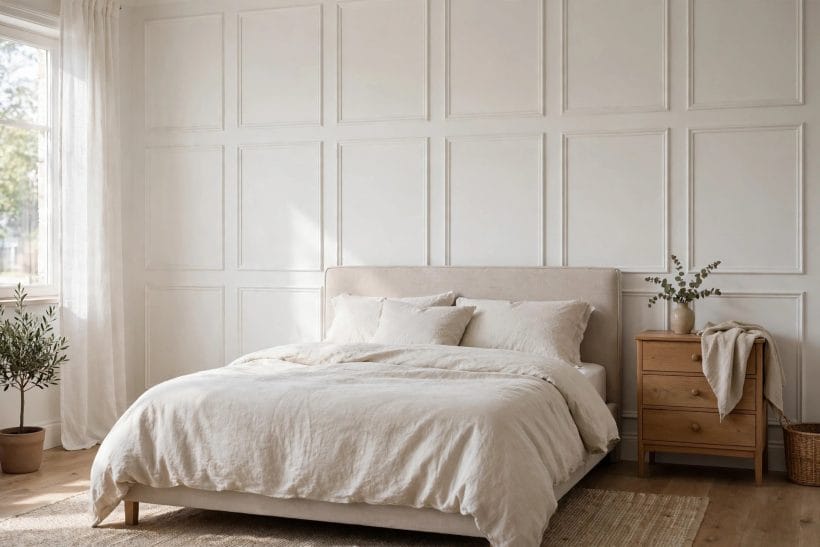
1. A matte warm-white bed wall
A soft warm white in a matte finish is the gentlest way to give a bed wall presence. It catches daylight without glare, lets bedding colours stand out, and suits rooms of every size. Keep the finish matte rather than shiny, so the wall reads as soft, not stark, and pair it with natural wood for warmth.
2. Soft sage painted walls
Sage green sits between grey and green, which makes it restful in both bright and dim rooms. Painted on the bed wall with paler walls elsewhere, it frames the bed like a quiet picture. Cream bedding and oak furniture keep the green feeling fresh rather than heavy.
3. A dusty blue-grey accent wall
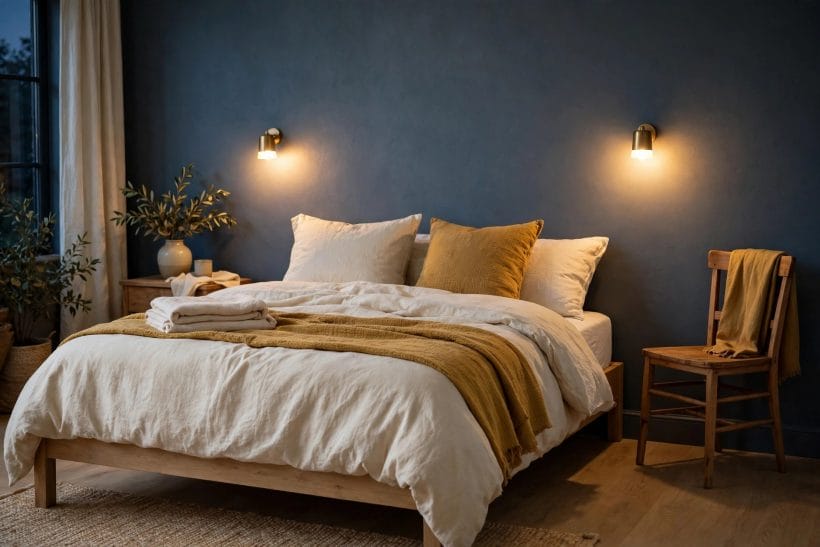
Dusty blue-grey brings evening calm to a bedroom, especially behind the bed where lamplight warms it. Use it on one wall only and keep the other walls pale, so the room stays bright by day. White pillows and a mustard or ochre throw lift the colour without fighting it.
4. Warm clay on a single wall
Warm clay tones make a bedroom feel sheltered, like late afternoon light. One clay wall behind the bed is enough; the rest of the room can stay in cream or soft white. Linen bedding and woven baskets echo the earthy tone and keep the look natural.
5. Limewash texture for soft movement
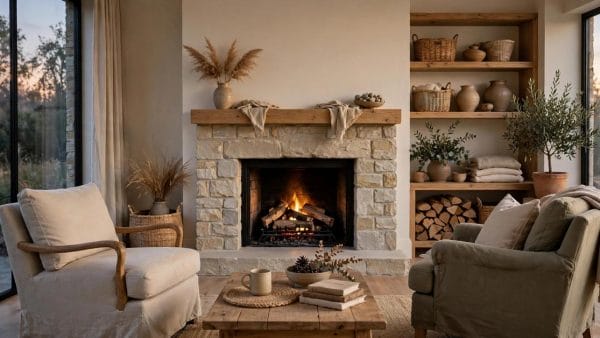
Limewash gives a wall a cloudy, hand-finished texture that changes subtly as light moves across it. It suits bedrooms because the surface never looks flat or hard, and pale shades keep small rooms feeling open. Choose a soft neutral and let the texture, not a strong colour, do the work.
6. A two-tone split at dado height
Painting the lower part of the wall a deeper tone and the upper part a paler one adds structure without any joinery. The split line draws the eye along the room and makes tall walls feel more settled. Keep both tones in the same colour family so the divide feels calm, not striped.
7. A painted arch behind the bed
A painted arch frames the bed like a headboard drawn on the wall, and it costs nothing but paint and patience. A soft arch in a tone slightly deeper than the wall gives focus without bulk, and it suits rooms where a large headboard would crowd the space. Keep the arch simple and centred on the bed.
8. Colour-drenched corners for a cocoon feel
Carrying one soft colour around a corner, across two adjoining walls, wraps the sleeping area in a gentle cocoon. This works best in muted tones such as sage, dusty blue or warm grey, where the wrap feels cosy rather than dark. Leave the ceiling pale so the room still feels tall.
2. Timber, Boards and Panelling
Timber brings warmth that paint alone cannot match, and boards add a rhythm that suits the long wall behind a bed. Fitted board and panelling work is best left to professionals, who can fix boards level, hide fixings neatly and handle any wiring or uneven walls safely. The ideas below survey the family at a glance; for a deeper look at one board style, see the brick wall bedroom ideas survey and the shiplap wall bedroom ideas survey, both members of this bedroom-wall family.
9. Horizontal timber boards
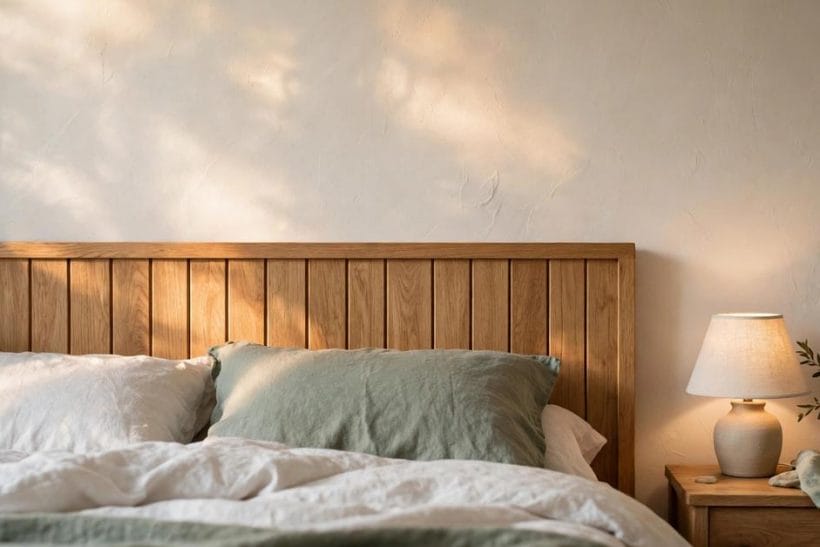
Horizontal boards stretch a wall visually, which helps a narrow bedroom feel wider. Natural or whitewashed boards both work; natural timber warms the room, while a pale wash keeps it light. Run the boards behind the bed only, so the treatment frames the sleeping area rather than boxing the room in.
10. Vertical timber slats
Vertical slats draw the eye upward and suit rooms with low ceilings, giving a sense of height without any structural change. A slatted bed wall in warm timber pairs well with grey or cream bedding and a low platform bed. Leave small gaps between slats so the wall reads as texture, not as a solid block.
11. Classic panel moulding
Applied panel moulding gives a plain wall a quiet, tailored look that suits both traditional and modern bedrooms. Painted the same colour as the wall, the panels read as shadow and shape rather than decoration. Keep the panel size generous and the layout symmetrical around the bed.
12. Beadboard for a cottage feel
Beadboard, with its narrow vertical grooves, brings a gentle cottage character to a bed wall. Painted soft white or pale sage, it feels fresh rather than rustic, and it suits bed walls, dressing corners and small rooms alike. Pair it with simple bedding so the grooved texture stays the star.
13. Reclaimed-look timber boards
Boards with varied tones and visible grain give a bed wall instant character, especially in rooms that otherwise feel new and plain. Mix light and mid-toned boards rather than going very dark, so the wall stays warm without dominating the room. This is a survey idea only; the full timber treatment is covered by its own family post.
14. Painted panelling in a soft colour
Panelling painted in a soft colour, such as pale blue or muted green, adds both texture and colour in one step. The painted finish unifies boards of different ages and makes the wall easy to clean. Keep bedding pale so the coloured panelling can carry the room’s colour story.
15. A timber picture ledge wall
A slim timber ledge fixed along the bed wall lets you lean framed prints and small objects against the wall without hanging rows of hooks. The ledge itself becomes part of the treatment, adding a warm horizontal line. Change the pictures with the seasons and the wall feels refreshed without repainting.
16. Half-height panelling with a painted upper wall
Panelling that stops partway up the wall, with paint above, gives a bedroom structure at bed level and lightness above. This suits rooms where full-height boards would feel heavy, and it protects the lower wall from scuffs. Paint the upper wall a paler tone from the same family for a calm finish.
3. Brick and Stone Looks
Brick and stone give a bed wall weight and history, but they need restraint: one treated wall is usually enough, and the rest of the room should stay soft. Any heavy cladding or structural fixing belongs to professionals, who can check the wall can carry it and finish edges safely. In a bedroom the goal is character that still lets you sleep, not a feature that shouts.
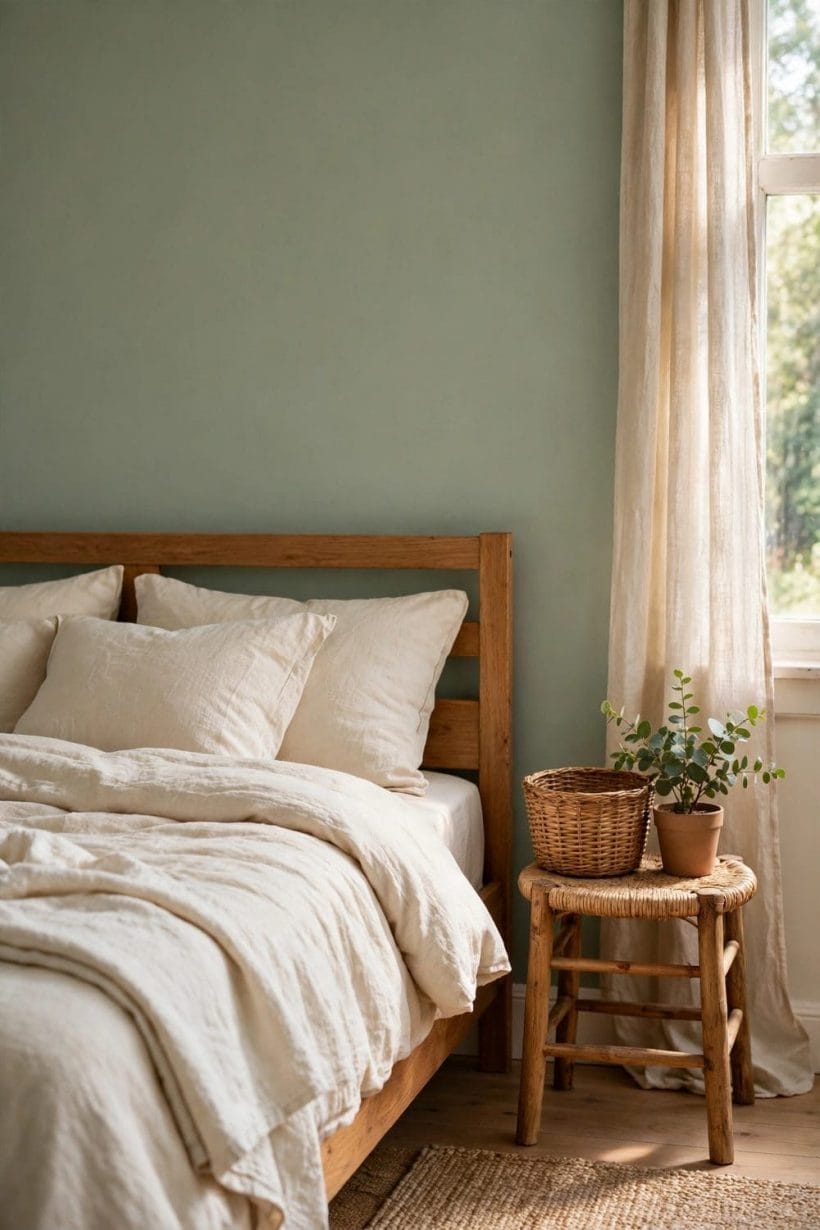
17. Whitewashed brick behind the bed
Whitewashing softens brick so its texture shows through a pale veil, giving warmth without darkness. Behind a wooden bed with white bedding, it reads as gentle and lived-in. Keep the rest of the walls plain and pale so the brick wall holds the focus.
18. Exposed brick on one wall only
A single exposed brick wall adds instant character, especially in rooms with simple furniture. Let the brick be the only strong texture in the room, and balance it with soft bedding and a plain rug. If the brick is very dark, add warm lamplight so the wall glows in the evening rather than looming.
19. A brick chimney breast as a feature
Where a bedroom has a chimney breast, its brick or plastered face can become the natural bed wall. Centring the bed on the breast gives the room an anchor, and the recesses either side suit bedside tables or shelves. Keep the breast’s finish simple so it frames the bed rather than competing with it.
20. Stone cladding for a quiet accent
Flat stone cladding in pale tones brings a natural, grounded feel to a bed wall. Used on one wall and paired with wood and linen, it feels calm rather than rugged. Choose small, even stones over large dramatic ones if the bedroom is small, so the wall does not overwhelm the bed.
21. Painted brick in a soft neutral
Painting brick in a soft neutral keeps its texture while letting the wall join a pale colour scheme. This suits bedrooms where raw brick would feel too strong, and it brightens rooms with small windows. A matte finish preserves the brick’s surface character best.
22. Brick with a limewash veil
A limewash veil over brick softens the colour while leaving the joints and texture visible, a gentler cousin of full whitewash. It works well in bedrooms because the finish looks hand-done and slightly uneven, which feels restful. Pair it with cream bedding and natural wood for a calm, collected room.
23. A stone ledge shelf on the bed wall
A slim stone or timber ledge on a brick or plastered wall gives a place for a book, a small plant or a clock without a bedside table. The ledge becomes part of the wall treatment, adding a useful horizontal line. Keep what sits on it to a few calm objects so the wall stays restful.
24. Brick paired with soft drapery
Long curtains beside a brick wall soften its hard edges and add movement to the room. Sheer or linen curtains in a pale tone let the brick show through while warming the whole corner. This pairing suits bedrooms especially, where softness matters as much as character.
4. Wallpaper and Pattern
Wallpaper is the quickest way to put pattern on a bed wall, and the safest rule is one patterned wall at a time. A single accent wall gives the room personality while the other walls stay quiet, which keeps the bedroom restful. Small-scale patterns suit small rooms, while larger motifs need space to breathe.
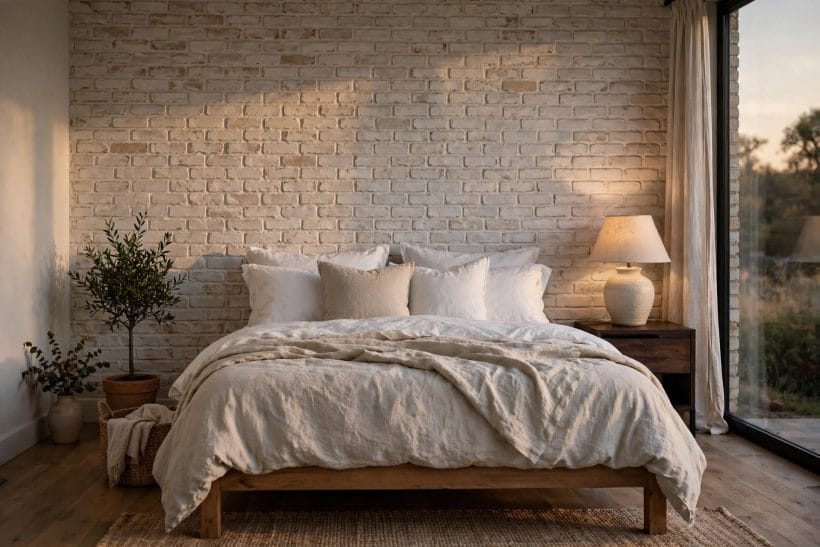
25. A botanical accent wall
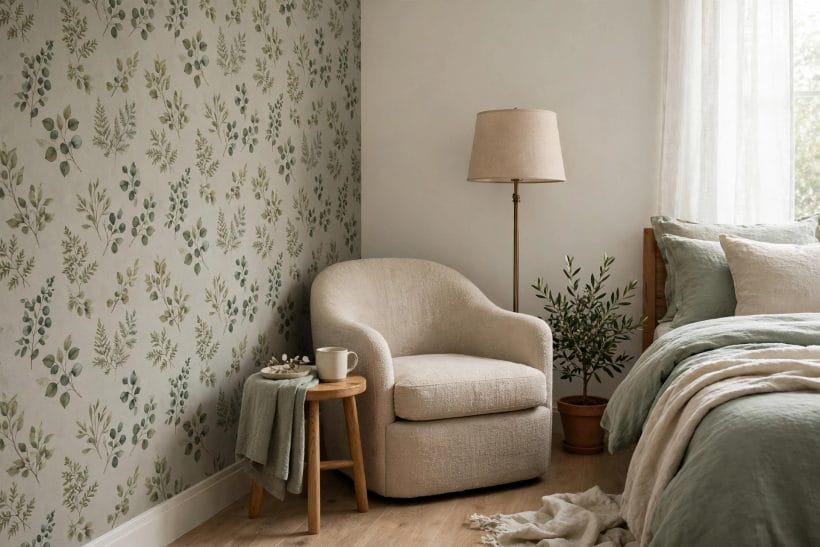
Botanical wallpaper with leaves or stems in muted greens brings the garden indoors without strong colour. Behind the bed, it acts like a headboard of foliage, and it pairs naturally with cream bedding and wooden furniture. Keep the pattern’s background pale so the room stays light.
26. Subtle stripes for height
Fine vertical stripes in two close tones add height and quiet order to a bed wall. They suit narrow rooms and low ceilings, where the vertical lines lift the eye. Choose tones that are near-neighbours, so the stripes read as texture rather than a bold statement.
27. A grasscloth-look textured paper
Textured paper that mimics woven grass gives a wall a natural, tactile surface in a plain colour. It adds depth without pattern, which makes it ideal for bedrooms where you want interest without busyness. Pair it with linen bedding and the room feels layered and calm.
28. A woodland mural on the bed wall
A woodland mural turns the bed wall into a soft landscape of trees and mist, best in muted tones rather than bright greens. It suits a plain room where the mural can be the single decoration. Keep bedding and curtains plain so the mural is not fighting other patterns.
29. Quiet geometric pattern
Small geometric shapes in soft tones give a bed wall a modern rhythm without restlessness. Dots, arches or fine lines in cream, grey and one muted accent work well behind a bed. The key is scale: small and regular reads as calm, large and contrasting reads as loud.
30. A toile-style scenic paper
Scenic toile-style paper, with delicate drawn landscapes in one colour on a pale ground, brings a gentle traditional feel. It suits a single accent wall in a calm bedroom, especially paired with white bedding and simple furniture. Keep the rest of the room plain so the scene can breathe.
31. Pattern on one wall only
Restricting pattern to the bed wall is the simplest way to enjoy wallpaper without overwhelming a bedroom. The patterned wall becomes the room’s picture, while plain side walls keep the space restful. This rule holds for strong and subtle patterns alike.
32. A wallpapered alcove
Papering just an alcove or recess, such as a reading nook or a wardrobe recess, adds a surprise of pattern in a small dose. It suits renters and cautious decorators, since the area is small and easy to change. Choose a pattern that echoes the room’s bedding colours for a joined-up look.
5. Colour-Led Walls
Colour is the most flexible treatment of all, and the most forgiving: it can be repainted when tastes change. The trick is choosing depth carefully, because a colour that looks perfect on a small sample can feel very different across a whole wall. Test generous samples beside your bedding in daylight, and remember that the site’s tiny house colour palette guide shows how muted colour families sit together in small rooms.
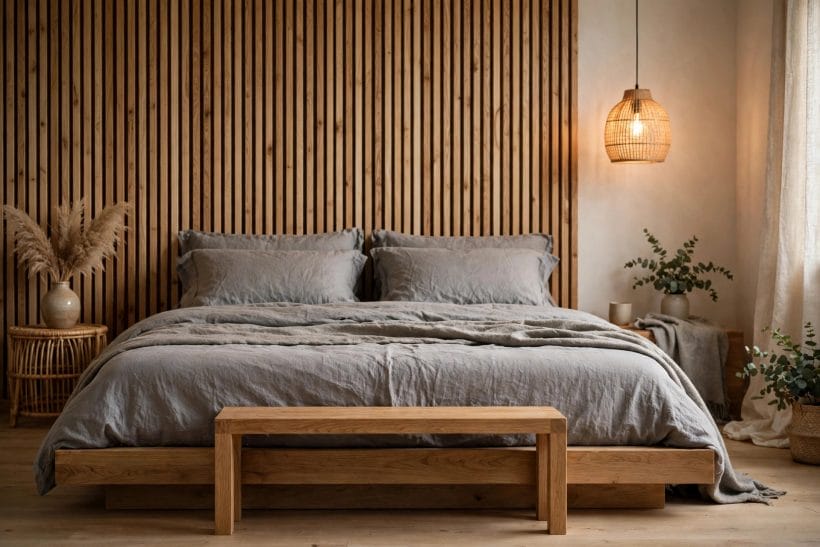
33. A deep green cocoon wall
Deep green on the bed wall wraps the sleeping area in a calm, woodland feeling, especially with warm lamplight. Keep the other walls pale and the bedding cream or oat, so the green feels like a shelter rather than a cave. Wooden furniture warms the green further.
34. A navy bed wall with warm lamps
Navy brings evening drama to a bedroom, and warm lamps stop it feeling cold. One navy wall behind the bed, with white bedding and brass or wood accents, feels both smart and restful. Avoid navy on all four walls unless the room is large and bright.
35. Blush softness for a gentle room
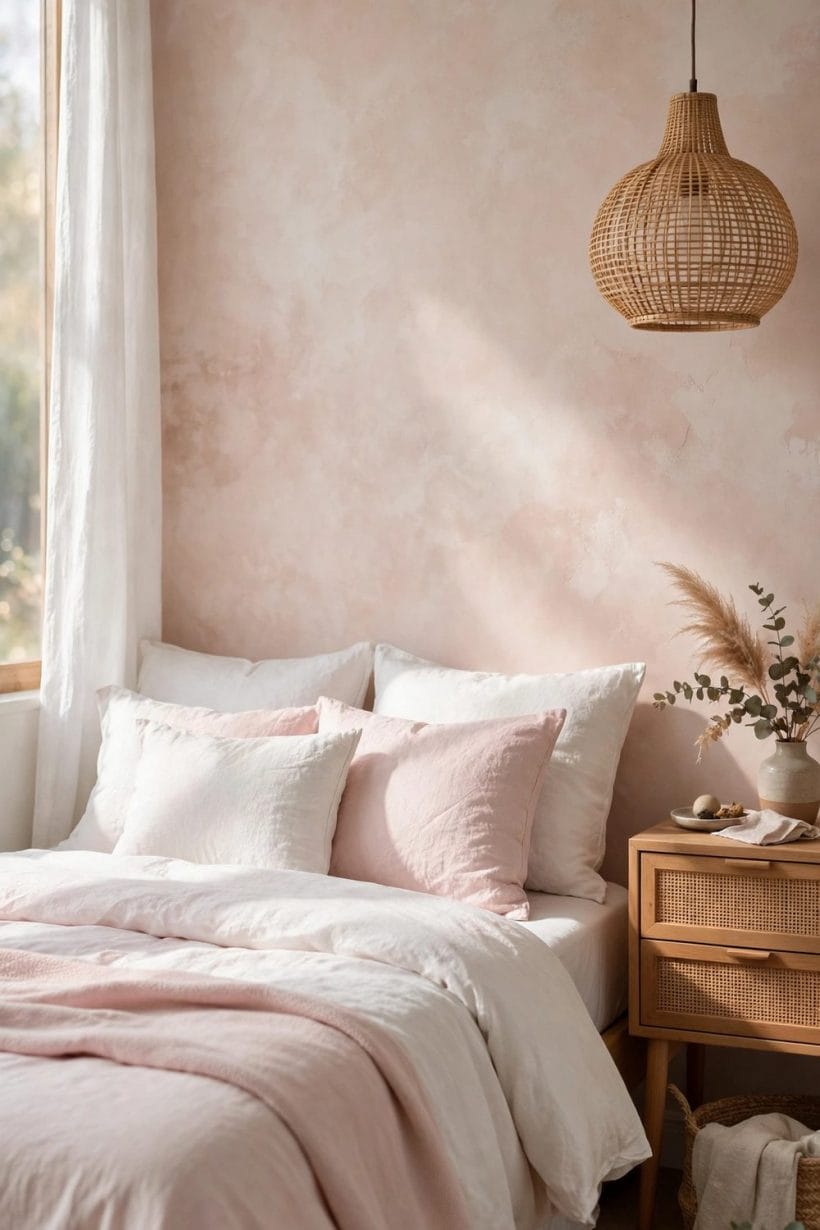
Blush pink in a soft, muted tone makes a bedroom feel tender without becoming sugary. It pairs beautifully with white, cream and light wood, and it flatters morning light. Keep the blush pale and matte, and let texture from linen and wool carry the room’s warmth.
36. Terracotta warmth on one wall
Terracotta adds sun-baked warmth to a bedroom, especially in rooms that get little direct sun. One wall is enough, paired with cream bedding and natural fibres. The colour suits wooden furniture and plants, giving the room an easy, Mediterranean calm.
37. Charcoal with warm light
Charcoal walls can be deeply restful when paired with warm lamps and pale bedding, because the dark surface makes light feel precious. Use charcoal on the bed wall only, and keep ceilings and side walls pale so the room does not feel enclosed. A soft rug underfoot completes the cocoon.
38. An ochre accent for morning energy
Ochre, a muted golden yellow, brings gentle morning energy to a bedroom without the sharpness of bright yellow. Behind the bed it catches lamplight beautifully, and it pairs well with cream, grey and natural wood. Keep it to one wall so the energy stays welcoming, not restless.
39. Two colours in quiet partnership
Pairing two muted colours, such as sage with cream or dusty blue with soft grey, gives a bed wall depth without pattern. Use the deeper tone on the bed wall and the paler tone elsewhere, so the room has a clear focus. The partnership should feel like one colour family, not two competing ideas.
6. Texture and Fabric Walls
Texture works on the senses that colour cannot reach: a wall you can feel changes how a room feels even in dim light. Fabric and plaster textures suit bedrooms particularly well, because they soften sound and hard edges. Keep textured walls clean and simple, since dust and clutter show more on a tactile surface.
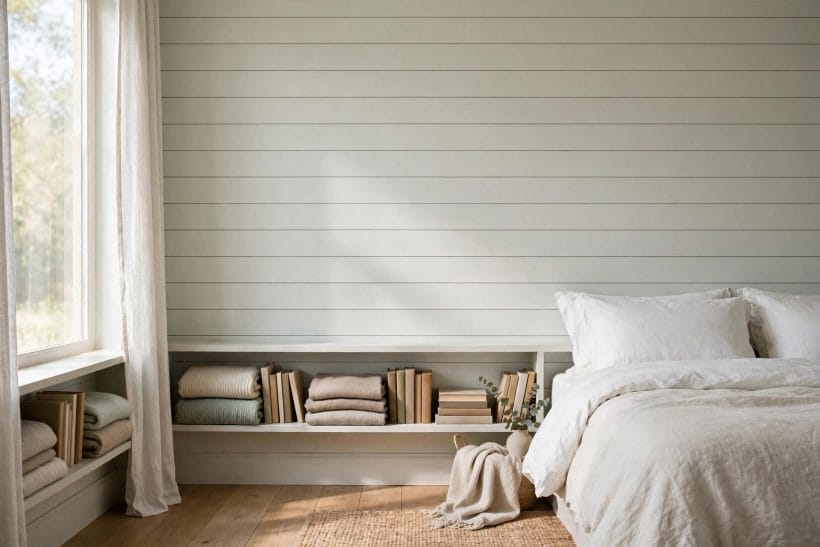
40. An upholstered headboard wall
Padding the wall behind the bed in fabric turns the whole bed wall into a soft headboard, perfect for readers who sit up in bed. Choose a plain, washable fabric in a muted tone, and keep the padding shallow so the bed does not lose floor space. This treatment adds comfort as well as looks.
41. Woven wall hangings as soft art
A large woven hanging softens a plain wall with texture and craft, without the permanence of a fixed treatment. It suits bedrooms because it absorbs sound and adds warmth, and it can be moved when the room changes. Hang it centred over the bed for a calm, handmade focus.
42. Plaster relief for shadow play
Plaster relief, whether combed, swirled or gently ridged, gives a wall a surface that changes with the light through the day. In a bedroom, a soft relief in a pale colour adds interest without colour or pattern. Keep furniture simple so the shadows on the wall can be enjoyed.
43. Lime plaster in a pale tone
Lime plaster’s chalky, matte surface suits bedrooms because it never looks harsh, even in strong sunlight. A pale lime plaster wall feels old and calm at once, pairing well with wood, linen and stone. Let the plaster’s natural variation show rather than chasing a perfectly even finish.
44. Fabric panels for sound softening
Fabric-covered panels on the bed wall soften both sound and appearance, making a bedroom feel quieter and more enclosed. Choose plain panels in a muted tone and space them evenly, so the wall reads as orderly rather than padded all over. This suits light sleepers and busy households alike.
45. A textured paint effect
Textured paint, such as a fine sand or suede effect, adds grip and depth to a plain wall without any boarding. Applied in a pale colour, it gives the bed wall a subtle richness that plain paint lacks. Keep the effect fine and even, so it reads as texture rather than roughness.
46. Cork-look panels for warmth
Panels with a cork-like appearance bring natural warmth and a soft, matte surface to a bed wall. They suit a reading corner or a bed wall, where their texture adds interest without pattern. Pair them with cream bedding and wood furniture for an easy, natural room.
7. Storage Walls and Fitted Walls
A wall that stores is a wall that earns its place, and in bedrooms storage walls solve the two biggest problems at once: clutter and empty walls. Fitted wardrobes, alcoves and niches should be planned and installed by professionals, who can fix heavy units safely, level them on uneven walls and handle any electrics nearby. The tiny house storage ideas guide shows how storage can stay calm rather than crowded.
47. A full wardrobe wall
Running wardrobes along one wall turns storage into the room’s architecture, giving a clean, fitted look. Keep fronts plain and pale, with simple handles, so the wall reads as calm panelling rather than a row of cupboards. A wardrobe wall suits small bedrooms because it removes the need for separate chests.
48. Alcove shelves beside the bed
Shelves fitted into wall alcoves beside the bed give books and small objects a home without bedside tables. Paint the alcoves the same colour as the wall so they feel built-in, and keep the shelves to a few calm items. Alcove shelves suit older rooms with existing recesses especially well.
49. Niches in the bed wall
Recessed niches in a thickened bed wall create display space and a soft glow when lit, without taking floor space. Use them for a small plant, a framed print or a clock, and keep each niche to one or two objects. Niches work best when planned into a wall treatment from the start.
50. Floating shelves as a wall feature
Floating shelves arranged in a calm row or grid turn a plain wall into useful display space. They suit bedrooms because they hold books and keepsakes without bulky furniture, but they need restraint: leave breathing space between objects so the wall does not look like a shop shelf.
51. A book wall for readers
A wall of books, whether on shelves or in a fitted bookcase, gives a bedroom a library calm that suits evening reading. Keep the shelving simple and the books organised by size or colour family, so the wall feels restful rather than busy. A reading lamp nearby completes the corner.
52. A dressing wall with a mirror
Combining a mirror with a dressing table along one wall turns that wall into a practical dressing area. A large mirror also bounces light around the room, which helps small bedrooms feel bigger. Keep the dressing surface tidy and the mirror’s frame simple so the wall stays calm.
53. A hidden-door wall
A door painted or panelled to match the wall disappears into the treatment, giving a bed wall a clean, uninterrupted look. This suits rooms where a door breaks the bed wall’s symmetry, and it works with paint, panelling or wallpaper alike. Keep the handle discreet so the illusion holds.
8. Small Bedrooms and Awkward Walls
Small and awkward bedrooms benefit most from a thoughtful wall, because the wall can solve problems that furniture cannot. The aim is always the same: keep the treatment light, keep it to the walls that need it, and let the bed and window do the rest. The tiny bedroom ideas guide covers small-room layouts in full; here the focus stays on the walls themselves.
54. A sloped-ceiling wall kept pale
Under a sloped ceiling, the wall treatment should stay pale and simple, so the slope feels like shelter rather than a squeeze. A soft white or pale sage on the slope and the low wall keeps the room open, while the bed wall can carry a slightly deeper tone for focus. Avoid strong pattern on a slope, where it can feel restless.
55. Narrow-room boards running across
In a narrow bedroom, horizontal boards or stripes running across the short bed wall make the room feel wider. Keep the treatment to that one wall and the side walls pale, so the widening effect is not cancelled out. This is a small change with an outsized effect in tight rooms.
56. A mirror wall to borrow light
A large mirror on the wall opposite the window borrows daylight and doubles the sense of space in a small bedroom. Keep the mirror’s frame simple and the wall behind it plain, so the reflection, not the frame, does the work. A mirror wall suits box rooms and windowless corners alike.
57. Light walls in a box room
A very small bedroom, sometimes called a box room, needs walls that disappear: pale paint, minimal texture and no strong pattern. One soft accent, such as a pale sage bed wall, is enough personality. Everything else, from bedding to curtains, should stay light so the room breathes.
58. A corner bed wall for tight layouts
Where the bed must sit in a corner, treat both corner walls in the same soft tone so the bed feels tucked in rather than pushed aside. A corner treatment turns an awkward layout into a deliberate nook, especially with a wall light on each side. Keep bedding pale so the corner stays bright.
59. Making the door wall work
The wall that holds the bedroom door is often wasted, but a slim treatment, such as painted panelling or a shallow shelf, can make it part of the room. Keep the treatment clear of the door’s swing and the handle’s arc, and choose a finish that matches the bed wall so the room feels joined up.
60. Balancing the window wall
A bed wall dominated by a window needs a treatment that frames rather than fights the glass: pale paint, simple curtains and a restrained colour on the surrounding wall. Avoid strong pattern beside a large window, where daylight will make it shout. Let the view and the light be the decoration.
61. Low-ceiling calm with vertical calm
Low ceilings suit vertical treatments used gently, such as fine stripes or narrow boards in pale tones, which lift the eye without busyness. Keep the ceiling itself pale and the wall treatment soft, so the room feels taller than it is. Dark or heavy treatments on a low wall will press the ceiling down.
9. Light, Art and Styling on Treated Walls
A wall treatment is only half the story; light and art decide how it looks at different times of day. Wall lights, pictures and plants should flatter the treatment, not hide it, so place them with the wall’s texture and colour in mind. The tiny house wall decor guide covers hanging and grouping in detail.
62. A picture rail for flexible art
A picture rail along the bed wall lets you hang and swap art without new holes, which suits renters and frequent changers alike. Paint the rail to match the wall so it reads as part of the treatment. Hang pictures in a calm row or a small group, and leave space around them so the wall still shows.
63. Sconce-lit walls for evening calm
Wall sconces beside the bed wash the wall with warm light, showing off texture and colour in the evening. They suit treated walls especially well, because the light grazes boards, plaster or panelling and brings out their relief. Choose warm-toned bulbs and shades that soften rather than spotlight.
64. Art centred above the bed
One large picture or a calm pair centred above the bed anchors the wall treatment and gives the room a finished look. The art should be wider than a cushion but narrower than the bed, and hung so its centre sits at eye level when standing. Let the wall colour show around the frame.
65. Plants against a plain wall
Trailing or upright plants against a plain painted wall add life and softness without any fixed treatment. A plant on a bedside table or a hanging planter near the bed wall brings green into the room, which pairs well with every wall colour in this survey. Keep plants healthy and contained so the wall stays clean.
66. Wall washers for textured walls
A light that washes down or up a textured wall, rather than pointing at the bed, shows off plaster, boards or brick to their best. This suits evening bedrooms, where a soft wash of light feels calmer than a bright ceiling light. Any fixed lighting work belongs to a qualified electrician.
67. A framed textile as a soft focus
A framed piece of textile, such as a woven panel or an embroidered cloth, gives a bed wall a soft, handmade focus. It suits plain walls where a painting might feel cold, and it echoes the bedding’s fabrics. Choose muted colours so the textile calms rather than competes.
68. A seasonal swap wall
Keeping one wall deliberately easy to change, with a picture ledge or a plain painted surface, lets the bedroom change with the seasons. Swap prints, hang a wreath of dried stems in autumn or a light textile in summer, and the room feels renewed without repainting. The wall treatment underneath should stay neutral to welcome every swap.
10. Care, Change and Restful Finishing
The best wall treatment is one you can live with and look after. Finishes near a bed take scuffs from pillows, headboards and daily use, so choose surfaces that clean easily and touch up well. A restful bed wall is not the most dramatic wall, but the one that still pleases you on an ordinary morning a year later.
69. A washable finish near the bed
The wall behind the bed takes more contact than any other, so a washable paint finish there saves repainting. Washable matte finishes look as soft as ordinary matte but wipe clean, which suits family bedrooms and light sleepers alike. Keep a small amount of the same paint for touch-ups.
70. A scuff-wise lower wall
The lower part of a bed wall takes the most knocks, from furniture feet to passing bags, so a tougher finish or panelling there pays for itself. A painted lower wall in a slightly deeper tone hides marks gracefully, while the upper wall stays pale. This practical split also adds structure to the room.
71. Removable panels for renters
Removable panels, leaning boards or fabric hangings give renters a treated wall without permanent change. Leaned boards behind the bed, fixed with no damage, or a large hanging can transform a plain room and move with you. Check your tenancy terms before fixing anything, and keep the treatment light.
72. A repaint rhythm that stays easy
Choosing a wall treatment you can repaint easily, such as plain paint or painted boards, keeps the bedroom fresh over the years. A single accent wall repaints in an afternoon, while a full patterned room takes far longer. Plan for change from the start and the room will never feel stuck.
73. Patching and touching up well
Small marks are part of living in a bedroom, so keep touch-up paint, a small brush and a note of the finish for every treated wall. Touching up promptly keeps a wall looking intentional, while neglected marks make even a beautiful treatment look tired. For boarded or panelled walls, keep a spare board or moulding offcut if you can.
74. A quiet wall for better sleep
The wall you face as you fall asleep matters: a calm, uncluttered wall helps the mind settle, while a busy wall keeps it working. If your bed faces a treated wall, choose the quietest treatment in the room for that side, with soft colour and minimal pattern. Rest is the bedroom’s first job, and the walls should serve it.
75. The final restful check
Before committing, stand at the bedroom door in daylight and again at night, and ask whether the wall feels calm, whether the bed still leads the room, and whether anything shouts. A good treatment passes that check twice: it adds character by day and settles the room at night. If it fails, simplify one thing, colour, pattern or texture, and check again.
Final Considerations
A survey like this one is a starting point, not a prescription: the right bedroom wall for your room is the one that suits its light, its size and the way you actually live in it. Compare a few treatments from different families, test samples beside your bedding, and give fitted or electrical work to professionals. For a deeper look at timber walls in particular, the wood wall bedroom ideas survey carries the timber angle in full, while this post stays a survey of all treatments.
Keep the room’s purpose in view as you choose. Bedrooms are for rest first and display second, so the calmest wall is usually the best wall, and a treatment that still pleases you on an ordinary morning is worth more than a dramatic one that tires quickly. Start with one wall, live with it a while, and let the rest of the room follow.


0 Comments