
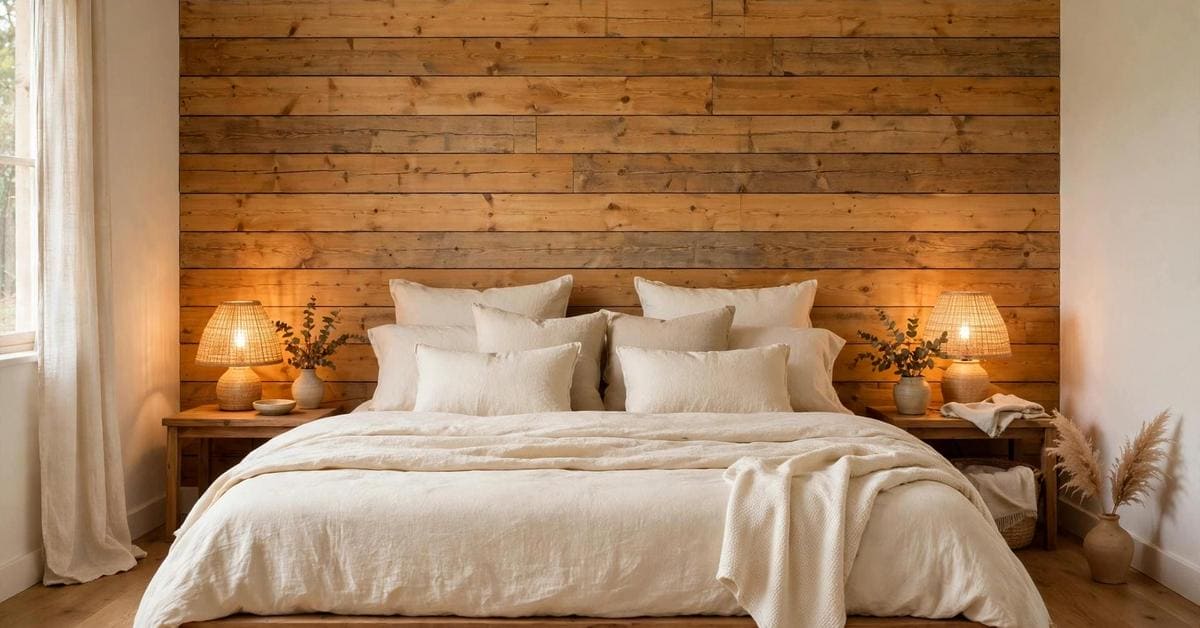
A wood wall brings warmth, texture and a sense of shelter to the room where rest matters most. The boards add rhythm without shouting, grain without clutter, and a calm backdrop that lets bedding, timber furniture and lamplight do the gentle work. Whether the wall sits behind the bed, frames a reading corner or runs along the longest stretch of the room, the same rule holds: keep the boards calm, keep the rest of the room softer still, and let the bedroom feel like a place to unwind rather than a display.
This guide gathers ideas for every kind of sleeper and every kind of bedroom, from small rooms that need light and breathing space to generous rooms that can carry a darker wall with ease. Each idea stays with the bedroom itself, and with the wall as the focus, so you can borrow one detail or combine several into a room that still feels restful at the end of a long day. A timber wall works best when it is treated as a backdrop, not as the whole room, and the ideas below follow that balance throughout.
If you are planning a wider bedroom refresh, it helps to look at how small sleeping spaces are put together as a whole. The guide to tiny bedroom ideas shows how layout, storage and colour work together in compact rooms, and many of those lessons translate directly to a room with a timber wall. For the two closest relatives of this post, see the brick wall bedroom gallery and the shiplap wall bedroom gallery, which share this post’s layout and restful-styling approach with different wall materials.
Timber Bedroom Layouts That Put the Bed First
The bed anchors the room, so the wood wall should serve it first. These layouts place timber where it frames sleep, guides the eye gently across the room, and leaves clear space for moving, dressing and waking up slowly.
| Item | What it is |
|---|---|
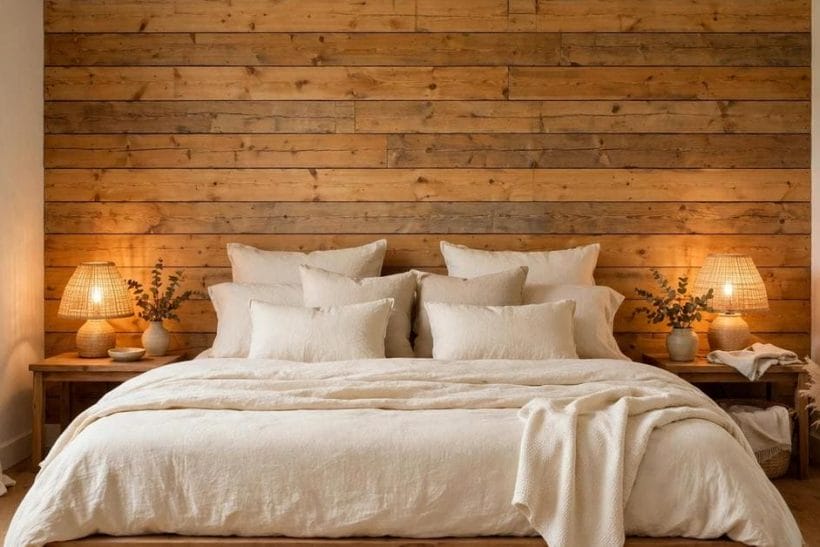
| A Single Wood Wall Behind the Bed | Keep the timber to the wall behind the bed and leave the remaining walls plain. |
| The Bed Centred on the Longest Wall | Place the bed in the middle of the longest wood wall so the boards run evenly on either side. |
| A Wood Wall Running the Full Width of the Room | Let the wood run from corner to corner behind the bed, with no break for pictures or shelves. |
| Timber on the Wall Opposite the Door | Put the wood wall where you see it first when you walk into the bedroom. |
| A Reading Corner Framed by Timber | Run wood along the wall behind a reading chair and a small lamp, creating a quiet corner apart from the bed. |
| The Bed Tucked Into a Wood-Lined Alcove | Where the bedroom has a recessed nook, line the back and sides of the nook with wood to turn it into a sheltered sleeping alcove. |
| Wood Beside a Window Wall | Place the bed on a wood wall that sits beside, rather than under, the window. |
| Two Wood Walls in a Corner Arrangement | Run timber along two adjoining walls so the bed sits into a corner of wood. |
| Natural Honey Timber Left Unpainted | Leave the wood in its natural honey tone so the grain does the talking. |
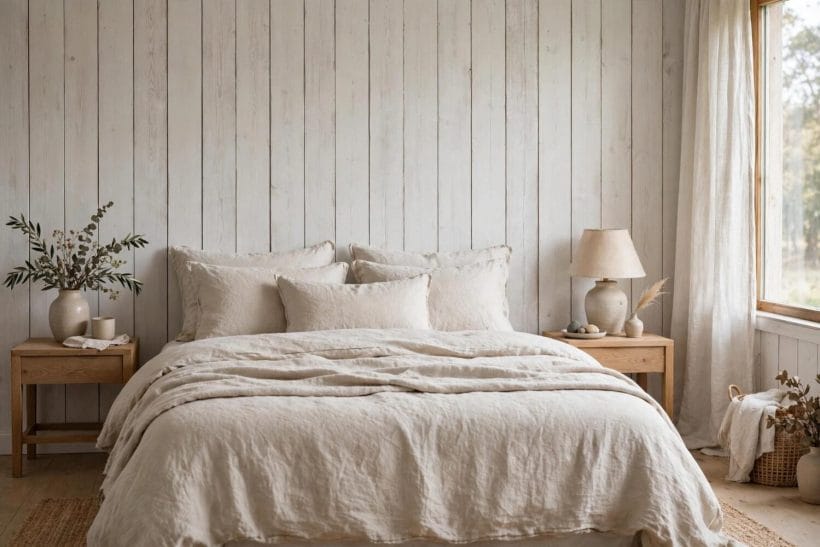
| Whitewashed Boards for a Bright Room | A whitewash lets the grain show through a veil of pale colour, which suits bedrooms that need brightness. |
| Soft White Paint Over the Grain | Painting the boards a soft white keeps their texture while reflecting light around the room. |
| Warm Grey Wash for Quiet Neutrality | A warm grey wash gives the bedroom a calm, grown-up neutrality without turning cold. |
| Sage Green Boards for a Garden Calm | Sage green boards bring the hush of a garden into the bedroom, especially when paired with natural linen and wooden bedside tables. |
| Dusty Blue for Evening Rest | Dusty blue boards lend the bedroom a dusk-like calm, as if the room is already winding down. |
| Warm Walnut Tones for a Cocooning Room | Deep walnut-toned boards turn the bedroom wall into a cocoon, particularly behind a bed dressed in crisp white bedding. |
| Two Soft Tones, One Calm Room | Pair a soft timber tone with a paler tone on the remaining walls, keeping both colours in the same quiet family. |
| Timber as the Headboard Itself | Let the wood wall stand in place of a headboard, with pillows resting against the boards on a soft cushion layer. |
| A Low Timber Headboard Against the Boards | Place a low timber headboard in front of the wood wall so the boards rise above it like a panel. |
| An Upholstered Headboard on a Wood Wall | Set a softly upholstered headboard against the timber for a bedroom that prizes comfort at bedtime. |
| Timber Rising Above the Headboard | Run the boards higher than the headboard so a band of timber shows above the bed like a picture rail of texture. |
| A Framed Panel of Timber Behind the Bed | Frame a panel of boards with plain trim so the timber reads as a deliberate artwork behind the bed. |
| One Picture Hung on the Timber | Hang a single picture on the wood wall above the bed and leave the rest of the boards bare. |
| A Pair of Pictures Balanced on the Boards | Hang a pair of matching pictures above the bed, spaced evenly so the timber lines run undisturbed between them. |
| No Art at All on the Headboard Wall | Leave the timber headboard wall completely bare and let the boards themselves be the decoration. |
| Horizontal Boards for a Wider Feeling | Horizontal boards draw the eye across the wall and can make a bedroom feel wider than it is. |
| Vertical Boards for a Taller Feeling | Vertical boards draw the eye upward and can make a bedroom feel taller. |
| Herringbone Timber for Quiet Pattern | A herringbone arrangement turns the wall into a subtle pattern that rewards a closer look. |
| Wide Planks for a Calm, Modern Wall | Wide planks reduce the number of visible joints, which gives the wall a calmer, more modern feeling. |
| Narrow Boards for Cottage Character | Narrow boards bring a cottage rhythm to the wall, with many fine lines that feel handcrafted and warm. |
| Reclaimed Timber for History and Texture | Reclaimed boards carry marks, knots and varied tones that give the wall a story. |
| Smooth Sanded Boards for a Refined Wall | Smooth, finely finished boards give the wall a refined, almost furniture-like quality. |
| Pale Timber in a Tiny Room | Pale boards are the safest timber choice for a small bedroom, because they add warmth without absorbing light. |
| Wood on One Wall Only | In a small room, restrict timber to a single wall and keep every other surface plain and pale. |
| A Wood Wall Behind a Daybed | A daybed against a wood wall turns a small bedroom into a room that works by day as well as by night. |
| Timber With Built-In Bedside Shelves | Fix small shelves into the wood wall beside the bed so books and a glass of water have a home without bedside tables. |
| A Wood Wall in a Loft Bedroom | In a loft bedroom tucked under the roof, timber on the bed wall ties the sleeping space to the roof structure above. |
| Mirror and Timber Together | A mirror hung on or beside the wood wall bounces light back into a small bedroom and doubles the sense of space. |
| Light Bedding Against Mid-Tone Boards | When the boards are mid-toned rather than pale, choose bedding in white or cream to restore the balance. |
| Fold-Down Furniture on a Timber Wall | A fold-down desk or dressing table fixed to the wood wall gives a small bedroom a second function without a second room. |
| Shallow Shelves Across the Timber | Run a single shallow shelf across the wood wall above the bed for books and a small plant. |
| Floating Bedside Tables on the Boards | Fix floating bedside tables directly to the wood wall so the floor beneath stays clear. |
| A Wardrobe Wall in Matching Timber | Carry the same timber across wardrobe doors on an adjoining wall, so storage reads as architecture rather than furniture. |
| Open Cubbies Framed by Boards | Set open cubbies into the timber wall for folded clothes, books and baskets. |
| Hooks and Pegs on the Timber | A row of pegs on the wood wall holds robes, hats and tomorrow's clothes without any furniture at all. |
| A Bench With Storage Beneath the Wall | Place a low storage bench against the wood wall at the foot of the bed for spare bedding and seasonal clothes. |
| Hidden Storage Behind Flush Panels | Flush timber panels can conceal shallow storage while keeping the wall looking like plain boards. |
| Warm Wall Lights Washing the Boards | Wall lights that wash softly across the timber show the grain and shadow lines to their best effect. |
| Bedside Lamps Against Dark Timber | Against dark boards, bedside lamps in warm tones keep the room welcoming after dusk. |
| Fairy Lights Draped Softly on the Wall | A single strand of soft fairy lights draped along the top of the wood wall adds a gentle sparkle for evenings. |
| Linen Bedding for a Natural Pairing | Natural linen bedding is the easiest partner for a wood wall, because its soft texture echoes the grain without competing with it. |
| Layered Throws in Soft Tones | Layer two throws in soft, related tones across the foot of the bed to add depth without colour noise. |
| White Bedding as a Bright Counterpoint | Crisp white bedding against any timber tone creates a clean counterpoint that keeps the room fresh. |
| Cushions That Echo the Timber Tone | Choose one or two cushions in a tone drawn from the boards themselves, such as warm tan or soft bark brown. |
| A Dark Accent Throw on Pale Boards | On pale boards, a single dark accent throw adds depth and stops the room from feeling washed out. |
| Timber and Soft Stone Accents | Pair a wood wall with soft stone accents, such as a stone lamp base or a small stone tray, for a grounded, natural room. |
| Timber and Woven Baskets | Woven baskets beside the bed echo the natural character of the boards while hiding clutter. |
| Timber and Soft Wool Rugs | A soft wool rug under the bed warms the floor to match the wall, so the room feels wrapped in natural texture. |
| Timber and Brushed Metal Details | Brushed metal details, such as lamp stems, picture frames or drawer pulls, add a cool counterpoint to warm boards. |
| Timber and Glass for Lightness | Glass details, such as a glass lamp base or a small glass vase on a shelf, bring lightness to a timber room. |
| Timber and Velvet for Evening Luxury | Velvet cushions or a velvet bench against a wood wall add evening luxury to the bedroom. |
| Timber and Greenery on the Wall | A small trailing plant on a shelf against the timber brings living green into the room and softens the boards. |
| Rustic Timber With Quilts and Timber Furniture | Rustic style pairs rough-sawn boards with quilts, timber furniture and woven textures for a room that feels like a countryside retreat. |
| Modern Timber With Clean Lines | Modern style pairs smooth boards in an even tone with clean-lined furniture and uncluttered surfaces. |
| Coastal Timber With Pale Blues and Whites | Coastal style pairs whitewashed boards with pale blue and white bedding, light curtains and natural textures. |
| Farmhouse Timber With Checked Bedding | Farmhouse style pairs painted or natural boards with checked bedding, simple timber furniture and a few vintage touches. |
| Scandinavian Timber With Pale Tones | Scandinavian style pairs pale boards with white bedding, light timber furniture and an almost empty room. |
| Bohemian Timber With Layered Textiles | Bohemian style pairs warm boards with layered textiles, patterned throws and collected objects from travels. |
| Traditional Timber With Panelled Elegance | Traditional style pairs rich-toned boards with panelled details, classic furniture and tailored bedding. |
| A Calm Colour Palette Across the Room | Hold the whole room to a calm palette of three soft tones plus the timber itself. |
| Curtains That Soften the Timber | Soft curtains in a pale, natural fabric soften the straight lines of the boards and frame the window gently. |
| A Rug That Anchors the Bed | A rug large enough to anchor the bed ties the timber wall to the floor and completes the room. |
| Bedside Tables Kept Clear | Keep bedside tables almost clear, holding only a lamp, a book and a glass of water. |
| Art in Soft, Natural Subjects | Choose wall art in soft, natural subjects, such as landscapes or botanical prints, for the walls beside the timber. |
| A Scent That Matches the Room | A gentle natural scent, such as cedar or lavender from a simple diffuser, completes the sensory calm of a timber bedroom. |
| Seasonal Swaps That Keep Timber Fresh | Swap throws, cushions and art with the seasons while leaving the timber wall untouched. |
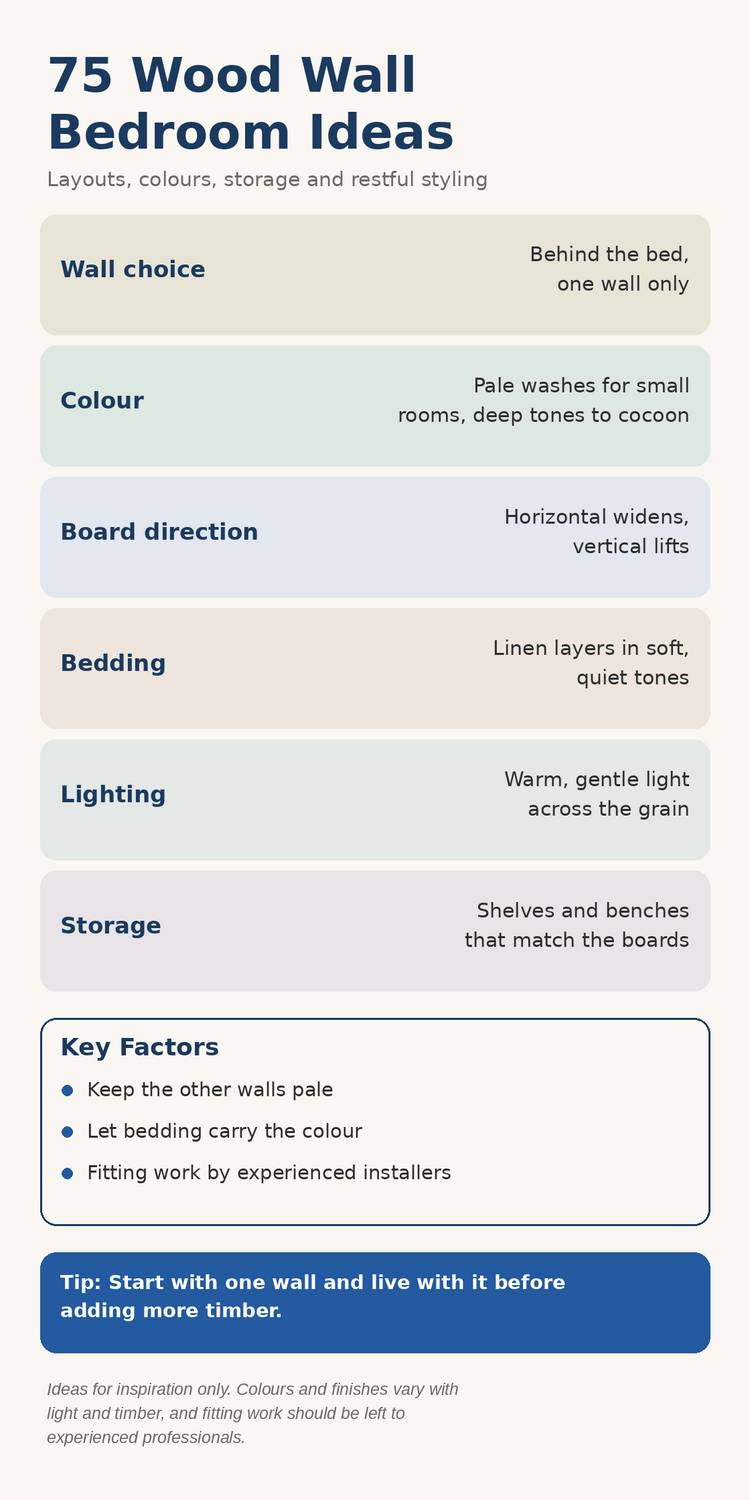
1. A Single Wood Wall Behind the Bed
Keep the timber to the wall behind the bed and leave the remaining walls plain. The boards become a natural backdrop for the headboard, the room stays calm, and the bed reads as the clear centre of the space. Plain side walls keep the look restful rather than busy, and bedding in soft tones can carry the colour while the wood carries the warmth.
2. The Bed Centred on the Longest Wall
Place the bed in the middle of the longest wood wall so the boards run evenly on either side. Symmetry brings a settled feeling to the room, and matching lamps or small tables on each side reinforce that balance. The eye travels along the grain rather than stopping at an awkward corner, which helps a bedroom feel composed even when it is simply furnished.
3. A Wood Wall Running the Full Width of the Room
Let the wood run from corner to corner behind the bed, with no break for pictures or shelves. The unbroken lines give the room a tailored finish and make the wall feel intentional rather than added as an afterthought. Keep furniture low and bedding uncluttered so the long rhythm of the boards stays visible and the room keeps its sense of calm.
4. Timber on the Wall Opposite the Door
Put the wood wall where you see it first when you walk into the bedroom. The timber greets you with warmth, and the bed placed against that wall becomes the natural destination of the room. This arrangement suits rooms where the door sits on a side wall, because the view into the room feels finished from the very first step inside.
5. A Reading Corner Framed by Timber
Run wood along the wall behind a reading chair and a small lamp, creating a quiet corner apart from the bed. The boards give the corner its own character without needing a separate room, and a soft throw plus a small stack of books completes the invitation to sit. Keep the corner lightly furnished so it stays a retreat rather than another storage spot.
6. The Bed Tucked Into a Wood-Lined Alcove
Where the bedroom has a recessed nook, line the back and sides of the nook with wood to turn it into a sheltered sleeping alcove. The boards wrap the bed in warmth, the nook feels cosy rather than cramped, and a simple curtain panel can close the space softly at night. Keep bedding light so the enclosed feeling stays welcoming.
7. Wood Beside a Window Wall
Place the bed on a wood wall that sits beside, rather than under, the window. Daylight falls across the boards and shows their grain gently through the day, while the window itself stays free for curtains and morning light. This layout suits rooms where the window wall is too broken up for boards, yet the bedroom still benefits from timber close to the light.
8. Two Wood Walls in a Corner Arrangement
Run timber along two adjoining walls so the bed sits into a corner of wood. The wraparound feeling is sheltering without being dark, provided the remaining walls stay pale and the bedding stays light. This layout suits generous rooms best, where the extra timber reads as architecture rather than as decoration filling every surface.
Wall Colours That Keep a Timber Room Restful
Colour changes the whole mood of a wood wall, even though the boards themselves stay the same. Soft washes keep the room light and restful, deeper tones add drama, and the right partner colours in bedding and curtains keep the wall feeling like part of the bedroom rather than a separate feature.
9. Natural Honey Timber Left Unpainted
Leave the wood in its natural honey tone so the grain does the talking. The warmth suits bedrooms with pale bedding and woven textures, and it never competes with the colours you change with the seasons. Natural timber also forgives a change of bedding colour later, since almost any soft tone sits comfortably against it.
10. Whitewashed Boards for a Bright Room
A whitewash lets the grain show through a veil of pale colour, which suits bedrooms that need brightness. The wall feels light and airy, pairs easily with linen and pale timber furniture, and keeps a small room from feeling closed in. Whitewashed boards are a kind choice when the bedroom faces away from strong daylight.
11. Soft White Paint Over the Grain
Painting the boards a soft white keeps their texture while reflecting light around the room. It suits bedrooms that need brightness above all, pairs easily with any bedding colour, and gives the wall a clean, tailored finish. The shadow lines between boards still show, so the wall keeps its timber character even under paint.
12. Warm Grey Wash for Quiet Neutrality
A warm grey wash gives the bedroom a calm, grown-up neutrality without turning cold. It sits well with white bedding, grey throws and pale timber, and it softens strong daylight into a muted glow. Grey-washed boards are forgiving too, since they hide the small marks of daily life better than a bright white wall.
13. Sage Green Boards for a Garden Calm
Sage green boards bring the hush of a garden into the bedroom, especially when paired with natural linen and wooden bedside tables. The colour feels restful rather than bold, and it works beautifully with cream bedding and simple greenery on a windowsill. Sage suits sleepers who want colour in the room without giving up calm.
14. Dusty Blue for Evening Rest
Dusty blue boards lend the bedroom a dusk-like calm, as if the room is already winding down. White and pale blue bedding keep the look airy, while timber furniture stops the blue from feeling chilly. This colour is a kind choice for bedrooms used for reading and resting in the evening, because the wall itself seems to lower the light.
15. Warm Walnut Tones for a Cocooning Room
Deep walnut-toned boards turn the bedroom wall into a cocoon, particularly behind a bed dressed in crisp white bedding. The dark timber makes the bed glow by contrast, and warm lamplight softens the depth of the colour. Keep the remaining walls pale and the room lightly furnished, so the dark wall feels like shelter rather than weight.
16. Two Soft Tones, One Calm Room
Pair a soft timber tone with a paler tone on the remaining walls, keeping both colours in the same quiet family. The contrast is gentle enough to let the boards stand out, yet the room still reads as one calm space. This approach suits bedrooms where a single colour throughout would feel flat, but a strong contrast would disturb the restful mood.
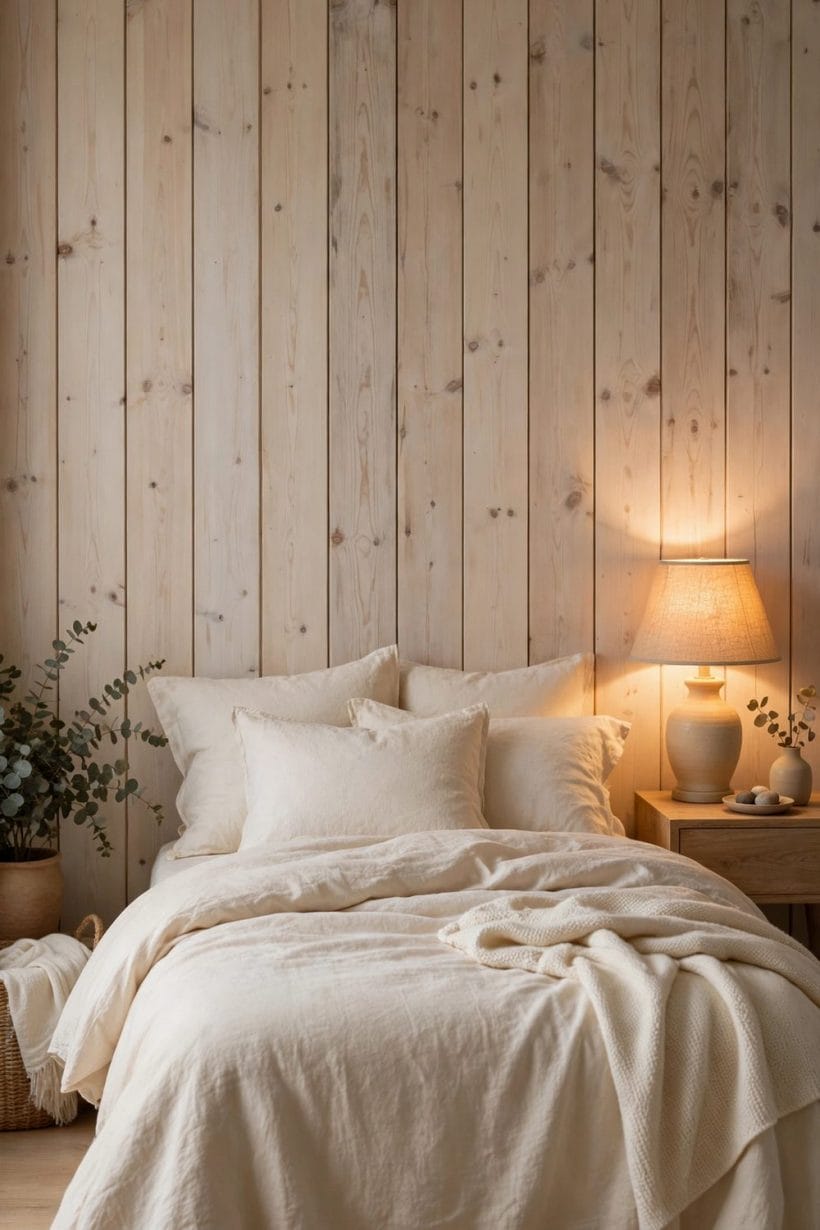
Headboard Walls: Timber Behind the Bed
The wall behind the bed carries more attention than any other wall in the bedroom, so it deserves the most care. These ideas treat the headboard wall as a composition in itself, balancing boards, bedding, lighting and art so the bed feels framed rather than crowded.
17. Timber as the Headboard Itself
Let the wood wall stand in place of a headboard, with pillows resting against the boards on a soft cushion layer. The lines of the timber give the bed a finished look without extra furniture, and the arrangement suits simple bedrooms where fewer pieces make the room feel calmer and easier to keep tidy.
18. A Low Timber Headboard Against the Boards
Place a low timber headboard in front of the wood wall so the boards rise above it like a panel. The layering adds depth, the headboard gives pillows a firm resting place, and the two timber surfaces should differ slightly in tone so they read as layers rather than one flat surface. Keep the headboard simple in shape so the wall remains the main texture.
19. An Upholstered Headboard on a Wood Wall
Set a softly upholstered headboard against the timber for a bedroom that prizes comfort at bedtime. The fabric softens the straight lines of the boards, invites leaning back with a book, and adds a touch of quiet luxury. Choose upholstery in a tone close to the bedding so the headboard blends into the bed rather than cutting the wall in half.
20. Timber Rising Above the Headboard
Run the boards higher than the headboard so a band of timber shows above the bed like a picture rail of texture. The extra height draws the eye upward and makes the bedroom feel taller, while the headboard itself anchors the lower part of the wall. This works well in rooms with generous ceiling height, where the boards have room to breathe.
21. A Framed Panel of Timber Behind the Bed
Frame a panel of boards with plain trim so the timber reads as a deliberate artwork behind the bed. The frame gives the wall a tailored edge, the panel stays centred on the bed, and the surrounding plain wall keeps the room calm. This idea suits bedrooms where full-wall boards would feel too much, yet a plain wall would feel unfinished.
22. One Picture Hung on the Timber
Hang a single picture on the wood wall above the bed and leave the rest of the boards bare. The picture gains presence against the lined texture, the wall keeps its rhythm, and the bedroom avoids the clutter of a crowded gallery. Choose a calm subject and a simple frame so the art complements the boards rather than fighting them.
23. A Pair of Pictures Balanced on the Boards
Hang a pair of matching pictures above the bed, spaced evenly so the timber lines run undisturbed between them. The pairing brings symmetry to the headboard wall, and the gap between the frames lets the boards show through as part of the composition. Keep the frames alike in size and tone so the wall feels considered rather than assembled in haste.
24. No Art at All on the Headboard Wall
Leave the timber headboard wall completely bare and let the boards themselves be the decoration. The clean lines, the grain and the soft colour carry the whole wall, and the bedroom feels calmer for the restraint. This choice suits sleepers who wake to visual noise elsewhere in life and want the first thing they see to be quiet.
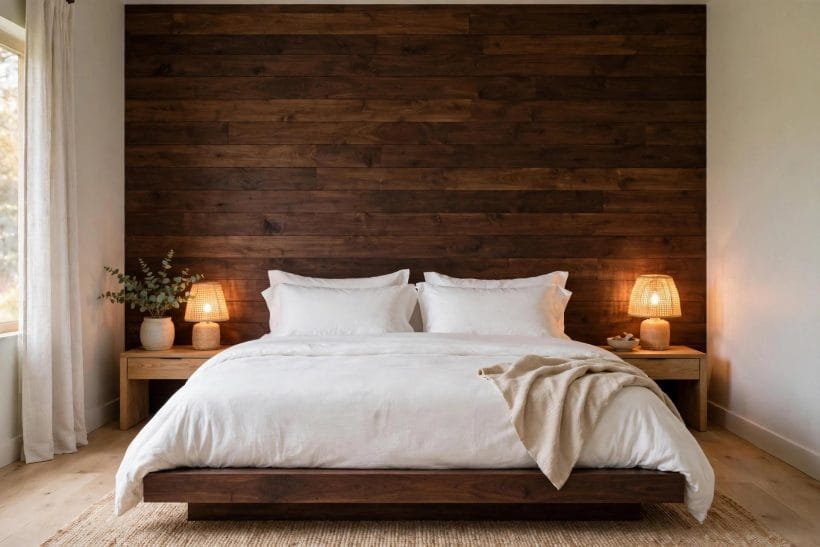
Board Direction, Finish and Texture
How the boards run, how they are finished, and how much of their timber character shows all change the feeling of the room. These ideas explore direction and finish as design choices in their own right, so the wall suits the shape of the bedroom and the mood you want at rest.
25. Horizontal Boards for a Wider Feeling
Horizontal boards draw the eye across the wall and can make a bedroom feel wider than it is. The long lines suit rooms where the bed wall is generous, and they pair naturally with low, wide furniture. Keep the boards calm in tone so the horizontal rhythm reads as restful rather than busy.
26. Vertical Boards for a Taller Feeling
Vertical boards draw the eye upward and can make a bedroom feel taller. They suit rooms with lower ceilings or a narrow bed wall, where height is the quality most wanted. Pair vertical boards with a low headboard so the upward lines stay visible above the bed.
27. Herringbone Timber for Quiet Pattern
A herringbone arrangement turns the wall into a subtle pattern that rewards a closer look. The angled pieces catch light differently through the day, so the wall changes gently from morning to evening. Keep the timber tone even across the pattern, so the geometry stays quiet rather than loud.
28. Wide Planks for a Calm, Modern Wall
Wide planks reduce the number of visible joints, which gives the wall a calmer, more modern feeling. The broad surfaces show off the grain, and the wall reads as a single sweep of timber rather than a busy grid. Wide planks suit bedrooms where simplicity is the whole point of the design.
29. Narrow Boards for Cottage Character
Narrow boards bring a cottage rhythm to the wall, with many fine lines that feel handcrafted and warm. The busier texture suits rooms with plain bedding and simple furniture, where the wall can carry the detail. Keep colours pale with narrow boards, so the many joints do not darken the room.
30. Reclaimed Timber for History and Texture
Reclaimed boards carry marks, knots and varied tones that give the wall a story. Each board differs slightly, so the wall feels collected rather than manufactured, and the texture invites touch. Balance reclaimed timber with plain bedding and pale walls elsewhere, so the wall feels rich rather than rough.
31. Smooth Sanded Boards for a Refined Wall
Smooth, finely finished boards give the wall a refined, almost furniture-like quality. The grain shows softly without roughness, light glides across the surface, and the wall pairs well with tailored bedding and crisp curtains. This finish suits bedrooms that lean modern and calm rather than rustic.
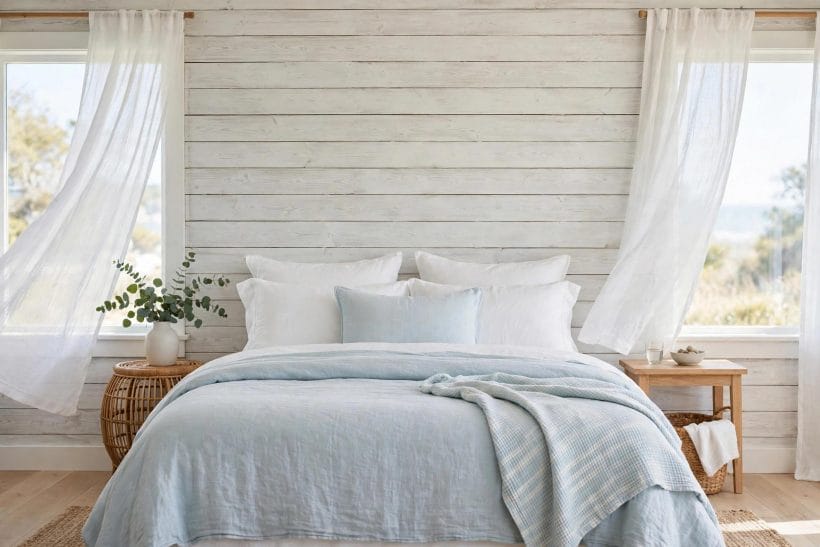
Small Bedrooms With a Wood Wall
A small bedroom benefits enormously from a timber wall, provided the boards are kept light and the rest of the room stays simple. These ideas keep the wall as the single strong feature, so a compact room gains warmth without losing breathing space.
32. Pale Timber in a Tiny Room
Pale boards are the safest timber choice for a small bedroom, because they add warmth without absorbing light. Pair them with white bedding and a single bedside table, and let the wall be the only patterned surface in the room. The result is a room that feels warm yet still open.
33. Wood on One Wall Only
In a small room, restrict timber to a single wall and keep every other surface plain and pale. The discipline stops the room from feeling boxed in, and the one wood wall gains impact precisely because it stands alone. This is the single most useful rule for compact bedrooms with timber walls.
34. A Wood Wall Behind a Daybed
A daybed against a wood wall turns a small bedroom into a room that works by day as well as by night. The boards give the daybed a finished backdrop, cushions along the wall make it a sofa by day, and bedding in a single soft colour keeps the dual role calm. This arrangement suits guest rooms and studio bedrooms alike.
35. Timber With Built-In Bedside Shelves
Fix small shelves into the wood wall beside the bed so books and a glass of water have a home without bedside tables. The shelves save floor space, keep the room tidy, and look intentional when their timber matches the wall. Keep the shelves shallow and few, so the wall keeps its calm rhythm.
36. A Wood Wall in a Loft Bedroom
In a loft bedroom tucked under the roof, timber on the bed wall ties the sleeping space to the roof structure above. The boards warm a space that can otherwise feel stark, and pale bedding keeps the low, sloping room feeling open. Keep furniture low under the slope, so the room stays easy to move around in.
37. Mirror and Timber Together
A mirror hung on or beside the wood wall bounces light back into a small bedroom and doubles the sense of space. The reflection softens the timber, shows the grain from a second angle, and makes a compact room feel less enclosed. Keep the mirror simple in frame, so it reads as light rather than decoration.
38. Light Bedding Against Mid-Tone Boards
When the boards are mid-toned rather than pale, choose bedding in white or cream to restore the balance. The light bedding glows against the timber, the room keeps its warmth, and the contrast makes the bed the clear focus. Add a single soft throw for texture, and leave the rest of the palette quiet.
39. Fold-Down Furniture on a Timber Wall
A fold-down desk or dressing table fixed to the wood wall gives a small bedroom a second function without a second room. Folded away, the wall reads as plain timber; folded down, it serves work or dressing. This idea suits bedrooms that must also serve as a study, provided the folding piece is kept light and simple.
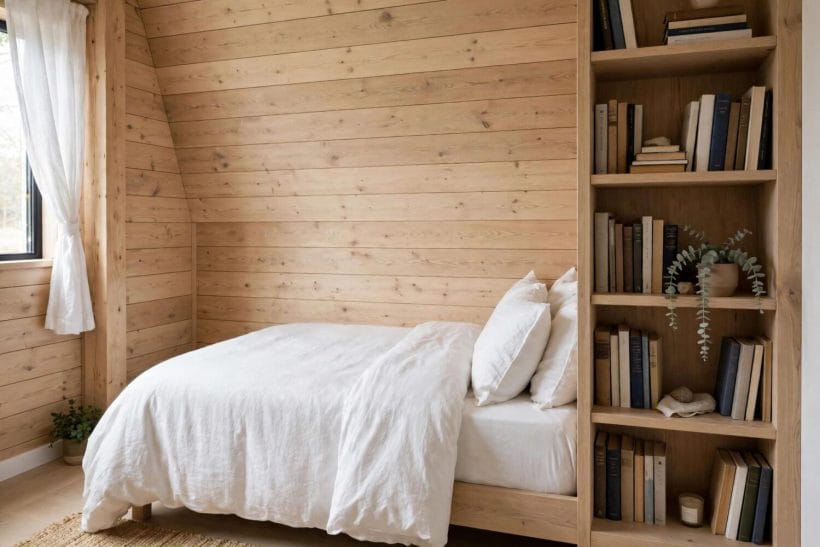
Storage That Lives on the Wood Wall
Storage and timber can share a wall happily, provided the storage is planned with the boards rather than bolted on as an afterthought. These ideas keep the wall calm while giving everything in the bedroom a proper home.
40. Shallow Shelves Across the Timber
Run a single shallow shelf across the wood wall above the bed for books and a small plant. The shelf follows the line of the boards, holds only a few chosen objects, and keeps bedside tables free. Restraint matters here: a crowded shelf undoes the calm the timber creates.
41. Floating Bedside Tables on the Boards
Fix floating bedside tables directly to the wood wall so the floor beneath stays clear. The floating pieces look light, make cleaning easier, and let the boards run visibly behind them. Keep the tables small and their timber close in tone to the wall, so they read as part of it.
42. A Wardrobe Wall in Matching Timber
Carry the same timber across wardrobe doors on an adjoining wall, so storage reads as architecture rather than furniture. The room gains a unified sweep of wood, the wardrobes disappear into the wall, and the bedroom feels tailored. This idea suits fitted storage planned with the wall from the start, and fitting work of this kind is best left to experienced installers.
43. Open Cubbies Framed by Boards
Set open cubbies into the timber wall for folded clothes, books and baskets. The cubbies give the wall a practical rhythm, baskets hide clutter, and the open sections display only what is worth seeing. Keep basket tones natural and even, so the storage wall stays calm.
44. Hooks and Pegs on the Timber
A row of pegs on the wood wall holds robes, hats and tomorrow’s clothes without any furniture at all. Pegs suit small bedrooms and dressing corners, keep daily clothes visible and easy to reach, and add a cottage warmth to the boards. Space the pegs evenly and keep the row short, so the wall stays tidy.
45. A Bench With Storage Beneath the Wall
Place a low storage bench against the wood wall at the foot of the bed for spare bedding and seasonal clothes. The bench gives the room a place to sit while dressing, hides bulky items, and anchors the timber wall with a useful piece of furniture. Choose a bench in a tone that sits quietly against the boards.
46. Hidden Storage Behind Flush Panels
Flush timber panels can conceal shallow storage while keeping the wall looking like plain boards. The hidden sections hold items used less often, the wall keeps its unbroken rhythm, and the bedroom stays serene. Panel and storage work of this kind is best planned and fitted by experienced installers, so the panels sit true and open smoothly.
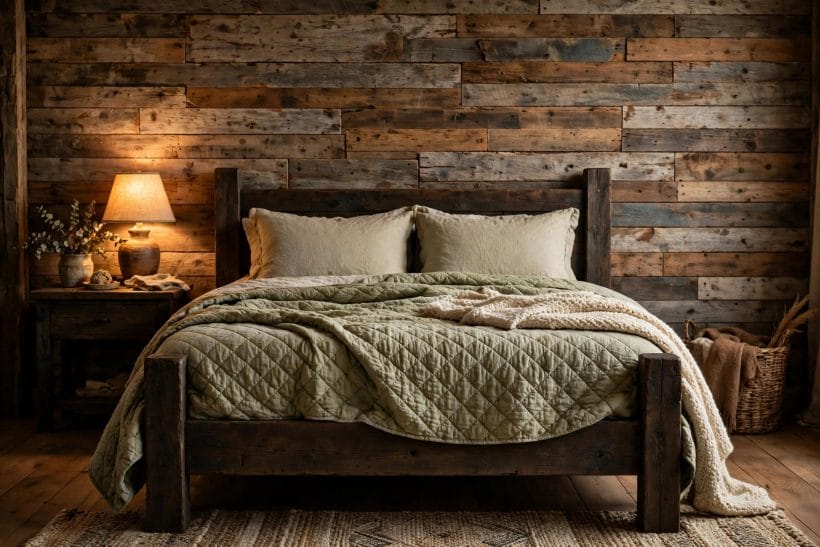
Lighting and Bedding Layers for Timber Walls
Light and bedding decide whether a wood wall feels warm or heavy. Soft light shows the grain gently, layered bedding keeps the bed inviting, and the two together turn timber from a daytime feature into an evening retreat.
47. Warm Wall Lights Washing the Boards
Wall lights that wash softly across the timber show the grain and shadow lines to their best effect. The light should be warm and gentle, never harsh, so the boards glow rather than glare. Place lights to either side of the bed, so the wall is lit evenly and reading light falls where it is needed.
48. Bedside Lamps Against Dark Timber
Against dark boards, bedside lamps in warm tones keep the room welcoming after dusk. The lamps create pools of light that soften the timber, make the bed glow by contrast, and give the room its evening mood. Choose lamp bases in natural materials, so they sit comfortably against the wood.
49. Fairy Lights Draped Softly on the Wall
A single strand of soft fairy lights draped along the top of the wood wall adds a gentle sparkle for evenings. The lights should be warm, few and loosely hung, so the effect stays dreamy rather than festive. This idea suits bedrooms used for winding down, where a little magic at bedtime is welcome.
50. Linen Bedding for a Natural Pairing
Natural linen bedding is the easiest partner for a wood wall, because its soft texture echoes the grain without competing with it. Choose linen in cream, white or a soft muted tone, let it fall naturally rather than pressed flat, and the bed will look relaxed against the boards. Linen also suits the breathable, restful mood a timber bedroom promises.
51. Layered Throws in Soft Tones
Layer two throws in soft, related tones across the foot of the bed to add depth without colour noise. The layering gives the bed a finished look, invites the sleeper in, and lets the timber wall stay the strongest texture in the room. Keep throw colours within one quiet family, so the bed complements the boards.
52. White Bedding as a Bright Counterpoint
Crisp white bedding against any timber tone creates a clean counterpoint that keeps the room fresh. The white lifts darker boards, brightens pale ones, and gives the bed a hotel-like calm. White bedding also makes it easy to change the room’s accent colour with a single throw or cushion.
53. Cushions That Echo the Timber Tone
Choose one or two cushions in a tone drawn from the boards themselves, such as warm tan or soft bark brown. The echo ties the bed to the wall, the room feels composed, and the palette stays restrained. Keep cushion numbers small, so the bed invites sleep rather than display.
54. A Dark Accent Throw on Pale Boards
On pale boards, a single dark accent throw adds depth and stops the room from feeling washed out. The throw draws the eye to the bed, grounds the pale wall, and gives the room a focal point beyond the timber. Keep the rest of the bedding pale, so the single dark note stays deliberate.
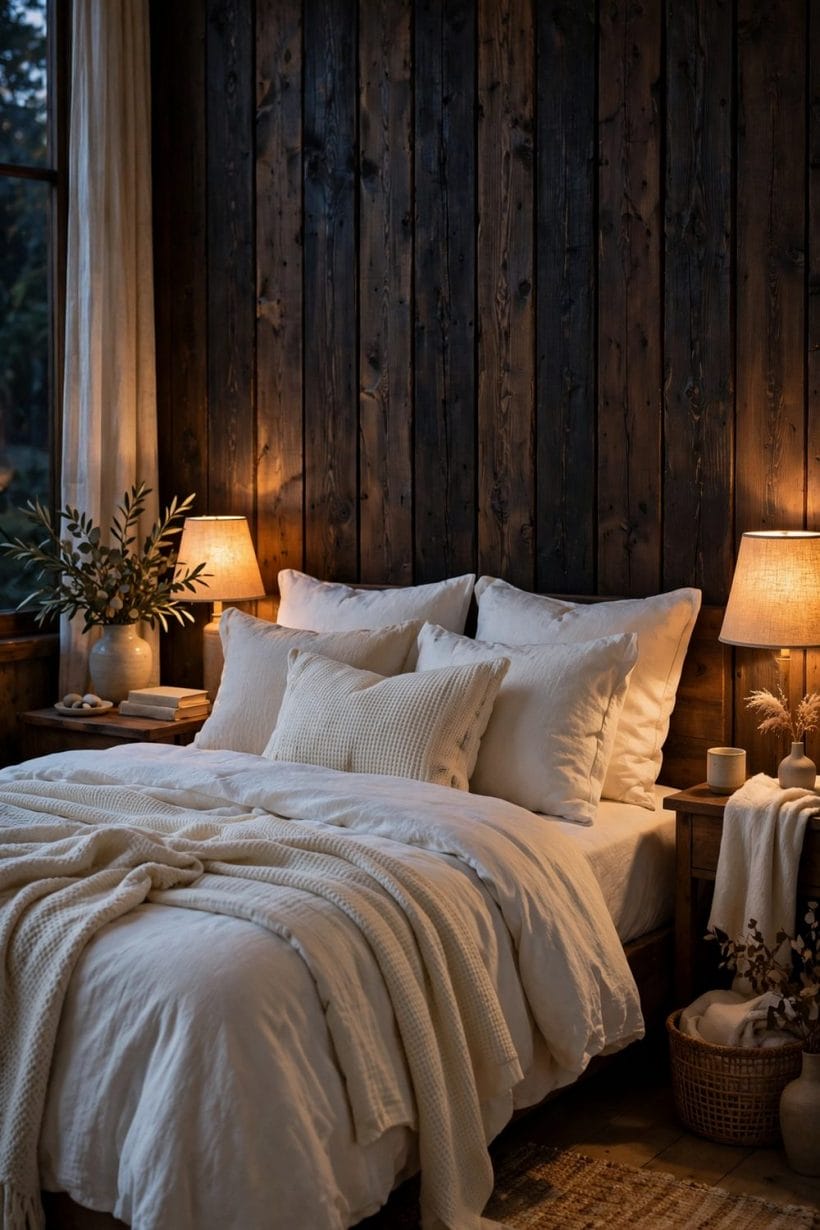
Timber Paired With Other Bedroom Materials
Wood rarely stands alone in a bedroom, and its partners decide the character of the room. These pairings keep the timber as the lead material while letting stone, fabric, metal and glass play supporting roles.
55. Timber and Soft Stone Accents
Pair a wood wall with soft stone accents, such as a stone lamp base or a small stone tray, for a grounded, natural room. The cool stone balances the warm timber, the textures contrast gently, and the room feels collected from nature rather than decorated. Keep stone pieces few, so the timber stays the lead.
56. Timber and Woven Baskets
Woven baskets beside the bed echo the natural character of the boards while hiding clutter. Their woven texture sits comfortably against timber, their tones stay in the same warm family, and they add a handmade feeling to the room. Use baskets for spare throws, magazines and the small items that otherwise gather on surfaces.
57. Timber and Soft Wool Rugs
A soft wool rug under the bed warms the floor to match the wall, so the room feels wrapped in natural texture. The rug should be large enough to step onto from either side of the bed, in a pale or muted tone that does not compete with the boards. Wool adds quiet luxury underfoot and softens the acoustics of the room.
58. Timber and Brushed Metal Details
Brushed metal details, such as lamp stems, picture frames or drawer pulls, add a cool counterpoint to warm boards. The metal should be muted rather than shiny, so it reads as a quiet accent rather than a competing feature. This pairing suits bedrooms that lean contemporary while keeping their timber warmth.
59. Timber and Glass for Lightness
Glass details, such as a glass lamp base or a small glass vase on a shelf, bring lightness to a timber room. The transparency breaks up the solidity of the boards, catches light, and keeps the room feeling open. Keep glass pieces simple and few, so the wall remains the dominant texture.
60. Timber and Velvet for Evening Luxury
Velvet cushions or a velvet bench against a wood wall add evening luxury to the bedroom. The deep pile of velvet contrasts beautifully with the flat grain of the boards, and the pairing feels rich without being formal. Choose velvet in a muted tone, so the luxury stays restful rather than showy.
61. Timber and Greenery on the Wall
A small trailing plant on a shelf against the timber brings living green into the room and softens the boards. The plant should be modest in size, in a simple pot, and placed where it can be reached for watering without disturbing the bed. Greenery suits timber walls particularly well, since both belong to the same natural family.
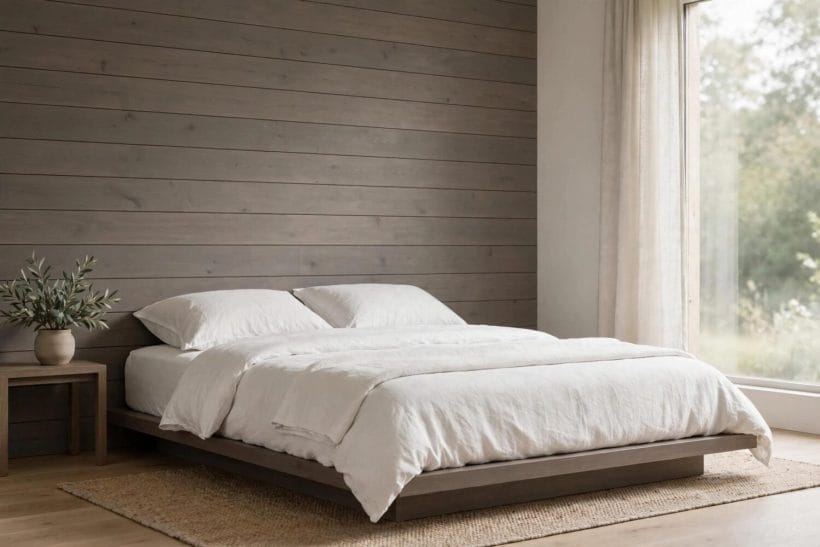
Timber Bedroom Styles From Rustic to Modern
A wood wall adapts to almost any bedroom style, because the boards themselves can be rustic or refined, pale or dark, plain or patterned. These styles show how the same idea changes character with its companions.
62. Rustic Timber With Quilts and Timber Furniture
Rustic style pairs rough-sawn boards with quilts, timber furniture and woven textures for a room that feels like a countryside retreat. The boards show knots and varied tones, the bedding stays soft and simple, and the room invites rest without formality. Keep the palette warm and the furniture sturdy, and the rustic room will feel honest rather than themed.
63. Modern Timber With Clean Lines
Modern style pairs smooth boards in an even tone with clean-lined furniture and uncluttered surfaces. The wall becomes a calm architectural feature, bedding stays crisp and plain, and nothing in the room competes for attention. Modern timber bedrooms suit sleepers who want warmth without ornament.
64. Coastal Timber With Pale Blues and Whites
Coastal style pairs whitewashed boards with pale blue and white bedding, light curtains and natural textures. The room feels breezy and bright, the timber recalls driftwood and beach houses, and the palette stays cool and restful. Coastal timber suits bedrooms that catch good daylight and need to feel airy.
65. Farmhouse Timber With Checked Bedding
Farmhouse style pairs painted or natural boards with checked bedding, simple timber furniture and a few vintage touches. The room feels welcoming and lived in, the boards give it structure, and the checked pattern adds homely charm. Keep the checks soft in colour, so the room stays calm rather than busy.
66. Scandinavian Timber With Pale Tones
Scandinavian style pairs pale boards with white bedding, light timber furniture and an almost empty room. The restraint is the point: every object earns its place, light is treasured, and the timber adds the only strong warmth. This style suits small bedrooms beautifully, where simplicity keeps the room open.
67. Bohemian Timber With Layered Textiles
Bohemian style pairs warm boards with layered textiles, patterned throws and collected objects from travels. The timber grounds the layering, the textiles add colour and story, and the room feels personal rather than decorated. Keep the base palette warm and the layers soft, so the room stays restful beneath its richness.
68. Traditional Timber With Panelled Elegance
Traditional style pairs rich-toned boards with panelled details, classic furniture and tailored bedding. The wall feels like part of the architecture of the house, the room carries a quiet formality, and the palette stays deep and warm. Traditional timber suits generous bedrooms where the wall can be given room to breathe.
Restful Styling Details for a Timber Bedroom
The final details decide whether a timber bedroom feels finished or merely furnished. These small choices keep the room restful, personal and easy to live in, long after the boards are up.
69. A Calm Colour Palette Across the Room
Hold the whole room to a calm palette of three soft tones plus the timber itself. The discipline stops the boards from competing with bedding, curtains and rugs, and the room reads as one restful composition. When in doubt, remove a colour rather than adding one, and let the timber carry the warmth.
70. Curtains That Soften the Timber
Soft curtains in a pale, natural fabric soften the straight lines of the boards and frame the window gently. The fabric should fall simply, without heavy pattern, so the window complements the wall rather than rivalling it. Curtains also muffle sound and darken the room for sleep, which matters as much as their looks.
71. A Rug That Anchors the Bed
A rug large enough to anchor the bed ties the timber wall to the floor and completes the room. The rug should sit in a quiet tone, with a soft texture underfoot, and extend beyond the bed on both sides. Without a rug, a timber room can feel hard; with one, it feels finished.
72. Bedside Tables Kept Clear
Keep bedside tables almost clear, holding only a lamp, a book and a glass of water. The restraint lets the timber wall be the visual interest of the room, and the clear surfaces make mornings calmer. Clutter migrates quickly to bedside tables, so a nightly reset keeps the room restful.
73. Art in Soft, Natural Subjects
Choose wall art in soft, natural subjects, such as landscapes or botanical prints, for the walls beside the timber. The subjects echo the natural character of the boards, the colours stay muted, and the room feels coherent. Keep art few and well spaced, so the walls breathe.
74. A Scent That Matches the Room
A gentle natural scent, such as cedar or lavender from a simple diffuser, completes the sensory calm of a timber bedroom. The scent should be faint rather than strong, so it greets rather than overwhelms, and it pairs naturally with the woody character of the wall. Scent is the quietest styling tool, and the most easily overdone, so use it lightly.
75. Seasonal Swaps That Keep Timber Fresh
Swap throws, cushions and art with the seasons while leaving the timber wall untouched. Lighter linen in warm months and heavier wool in cold months change the room completely, and the constant boards anchor every version. Seasonal swaps keep a timber bedroom feeling fresh for years without any new building work.
Storage planning makes the biggest difference in a bedroom with a feature wall, and the guide to tiny house storage ideas shows how to keep everyday items close without cluttering the room. Wall styling beyond the boards themselves is covered in the tiny house wall decor guide, while rustic tiny house interiors and the tiny house colour palette guide help pair timber tones with the rest of the room.
Final Considerations
A wood wall bedroom succeeds when the timber is treated as a backdrop for rest, not as a display in its own right. Choose boards in a tone that suits the light of the room, keep the remaining walls pale, and let bedding and lamplight do the softening work. Fixing boards, fitting panels and any work near wiring or sockets is best left to experienced professionals, so the finished wall is safe as well as beautiful. Start with one wall, live with it through a change of bedding, and add further timber only if the room still asks for it.
Above all, let the bedroom stay a place for sleep first and styling second. The best timber wall is the one you stop noticing during the day and feel grateful for at night, when lamplight catches the grain and the room settles into quiet. Borrow one idea or combine several, but keep the palette calm, the surfaces clear and the bed inviting, and the wall will reward you with warmth for years.

0 Comments