

A shiplap bedroom wall brings quiet order to the room where rest matters most. The boards add rhythm without shouting, texture without clutter, and a calm backdrop that lets bedding, timber and lamplight do the gentle work. Whether the wall sits behind the bed, frames a reading corner or runs along the longest stretch of the room, the same rule holds: keep the boards calm, keep the rest of the room softer still, and let the bedroom feel like a place to unwind rather than a display.
This guide gathers ideas for every kind of sleeper and every kind of bedroom, from small rooms that need light and breathing space to generous rooms that can carry a darker wall with ease. Each idea stays with the bedroom itself, and with the wall as the focus, so you can borrow one detail or combine several into a room that still feels restful at the end of a long day. Such a wall works best when it is treated as a backdrop, not as the whole room, and the ideas below follow that balance throughout.
If you are planning a wider bedroom refresh, it helps to look at how small sleeping spaces are put together as a whole. The guide to tiny bedroom ideas shows how layout, storage and colour work together in compact rooms, and many of those lessons translate directly to a room with a shiplap wall.
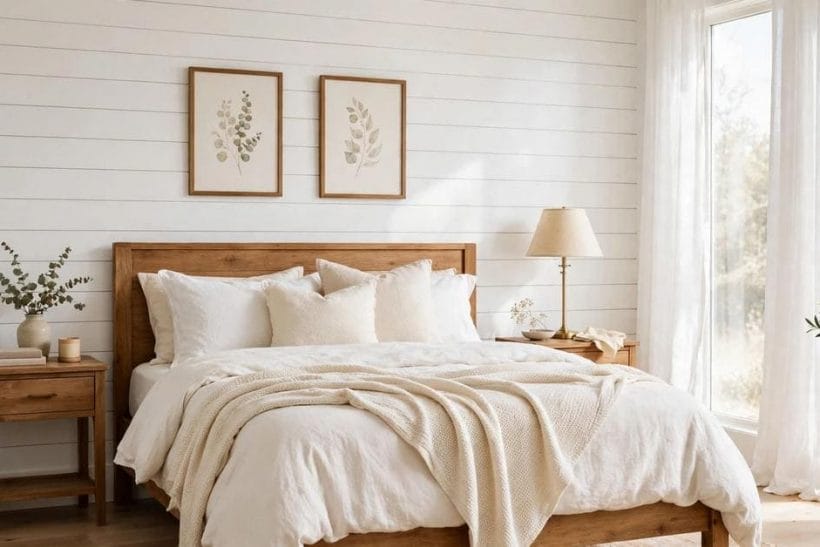
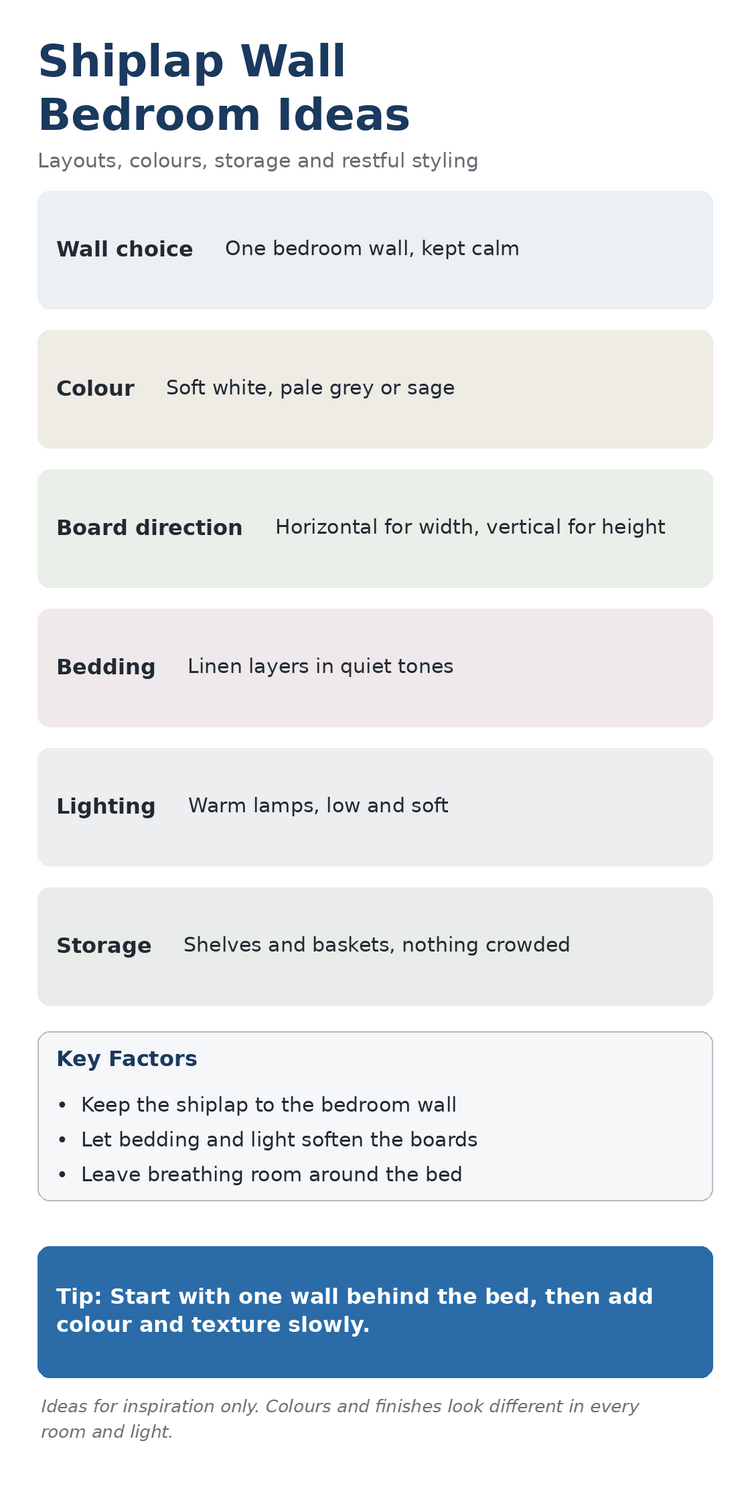
Shiplap Bedroom Layouts That Put the Bed First
The bed is the anchor of the room, so the shiplap wall should serve it first. These layouts place the boards where they frame sleep, guide the eye gently across the room, and leave clear space for moving, dressing and waking up slowly.
| Item | What it is |
|---|---|
| A Single Wall Behind the Bed | Keep the shiplap to the wall behind the bed and leave the remaining walls plain. |
| The Bed Centred on the Longest Wall | Place the bed in the middle of the longest shiplap wall so the boards run evenly on either side. |
| A Wall That Runs the Full Width of the Room | Let the shiplap run from corner to corner behind the bed, with no break for pictures or shelves. |
| Shiplap on the Wall Opposite the Door | Put the shiplap on the wall you see first when you walk into the bedroom. |
| A Reading Corner Framed by Shiplap | Run shiplap along the wall behind a reading chair and a small lamp, creating a quiet corner apart from the bed. |
| The Bed Tucked Into a Shiplap Alcove | Where the bedroom has a recessed nook, line the back and sides of the nook with shiplap to turn it into a sheltered sleeping alcove. |
| Shiplap Beside a Window Wall | Place the bed on a shiplap wall that sits beside, rather than under, the window. |
| Soft White for a Bright, Airy Room | Soft white shiplap is the gentlest starting point, because it adds texture while reflecting light around the room. |
| Warm White for a Softer Glow | Warm white shiplap brings a faint honeyed tone to the boards, which suits rooms with timber floors and warm lamplight. |
| Pale Grey for Quiet Neutrality | Pale grey shiplap gives the bedroom a calm, grown-up neutrality without turning cold. |
| Sage Green for a Garden Calm | Sage green shiplap brings the hush of a garden into the bedroom, especially when paired with natural linen and wooden bedside tables. |
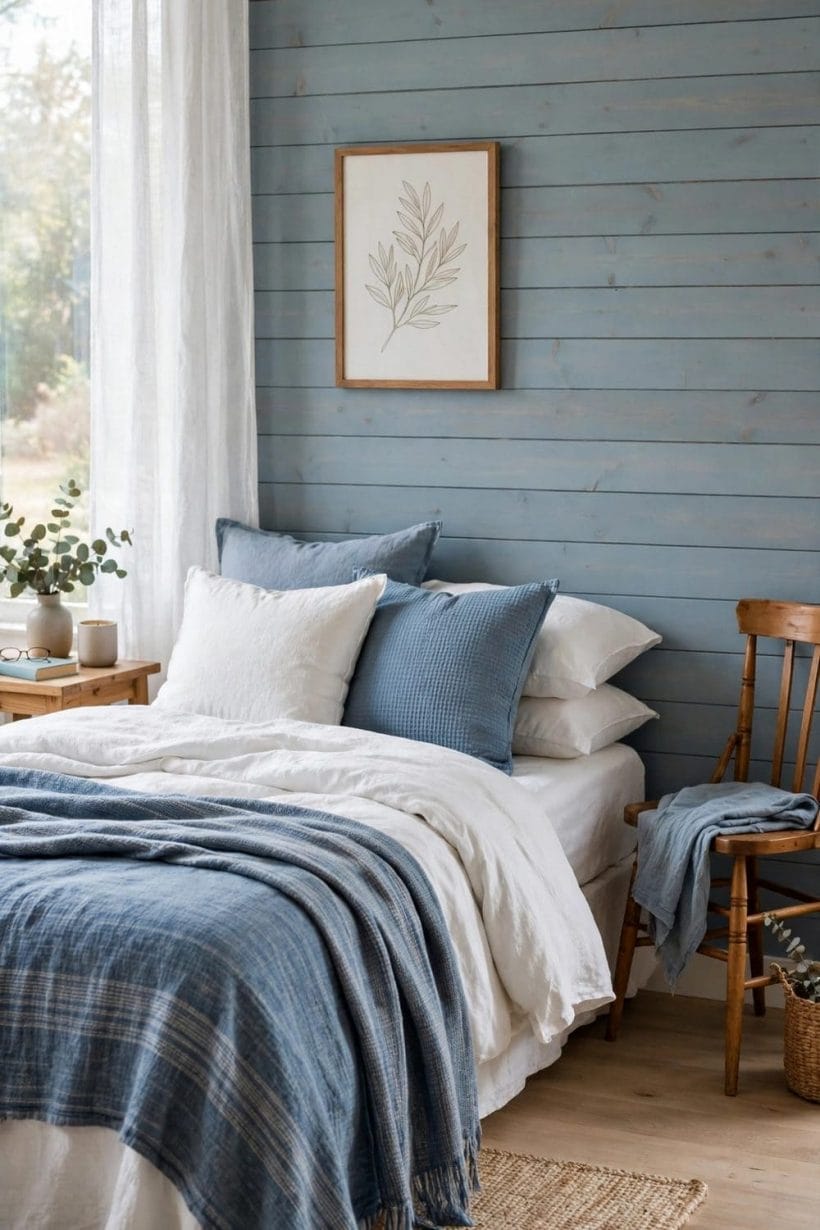
| Dusty Blue for Evening Rest | Dusty blue shiplap lends the bedroom a dusk-like calm, as if the room is already winding down. |
| Blush for Gentle Warmth | A blush shiplap wall adds warmth without sweetness, especially when the blush is muted and dusty rather than bright. |
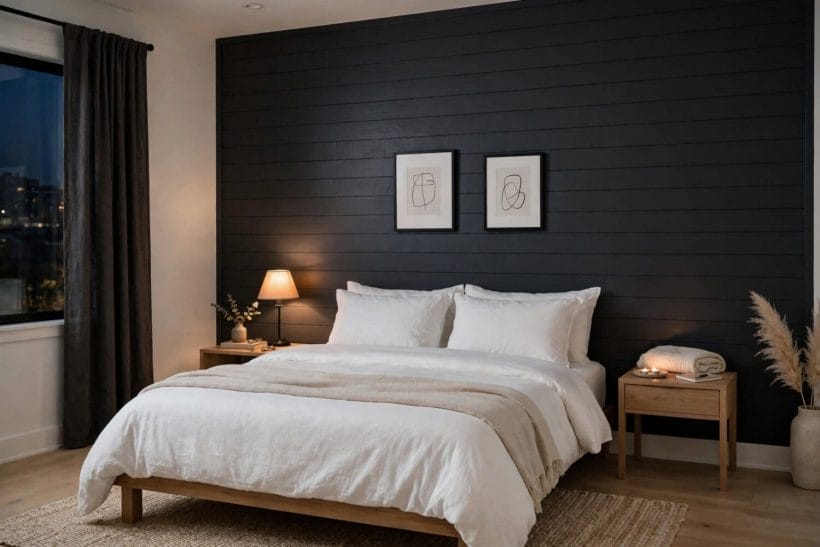
| Charcoal for a Cocooning Bedroom | Charcoal shiplap turns the bedroom wall into a cocoon, particularly behind a bed dressed in crisp white bedding. |
| Two Soft Tones, One Calm Room | Pair a soft shiplap colour with a paler tone on the remaining walls, keeping both colours in the same quiet family. |
| Shiplap as the Headboard Itself | Let the shiplap wall stand in place of a headboard, with pillows resting directly against the boards. |
| A Low Timber Headboard Against Shiplap | Place a low timber headboard in front of the shiplap wall so the boards rise above it like a panel. |
| An Upholstered Headboard on a Shiplap Wall | Set a softly upholstered headboard against the shiplap for a bedroom that prizes comfort at bedtime. |
| Shiplap Rising Above the Headboard | Run the shiplap higher than the headboard so a band of boards shows above the bed like a picture rail of texture. |
| A Framed Panel of Shiplap Behind the Bed | Frame a panel of shiplap with plain trim so the boards read as a deliberate artwork behind the bed. |
| One Picture Hung on the Shiplap | Hang a single picture on the shiplap wall above the bed and leave the rest of the boards bare. |
| A Pair of Pictures Balanced on the Boards | Hang a pair of matching pictures above the bed, spaced evenly so the shiplap lines run undisturbed between them. |
| No Art at All on the Headboard Wall | Leave the shiplap headboard wall completely bare and let the boards themselves be the decoration. |
| Horizontal Boards for a Wider Feeling | Horizontal shiplap draws the eye sideways across the wall, which helps a bedroom feel wider and more settled. |
| Vertical Boards for a Taller Feeling | Vertical shiplap draws the eye upward, which helps a bedroom with a low ceiling feel a little taller and lighter. |
| Wide Boards for a Calm, Modern Wall | Wider boards mean fewer lines across the wall, which gives the shiplap a calmer and more modern character. |
| Narrow Boards for a Cottage Feeling | Narrow boards bring a busier, more cottage-like rhythm to the wall, with many fine lines catching the light. |
| A Smooth Painted Finish | A smooth painted finish lets the shape of the boards show while keeping the surface easy on the eye. |
| A Whitewashed Finish That Shows the Grain | Whitewash lets the timber grain show faintly through the pale colour, giving the wall a soft, weathered character. |
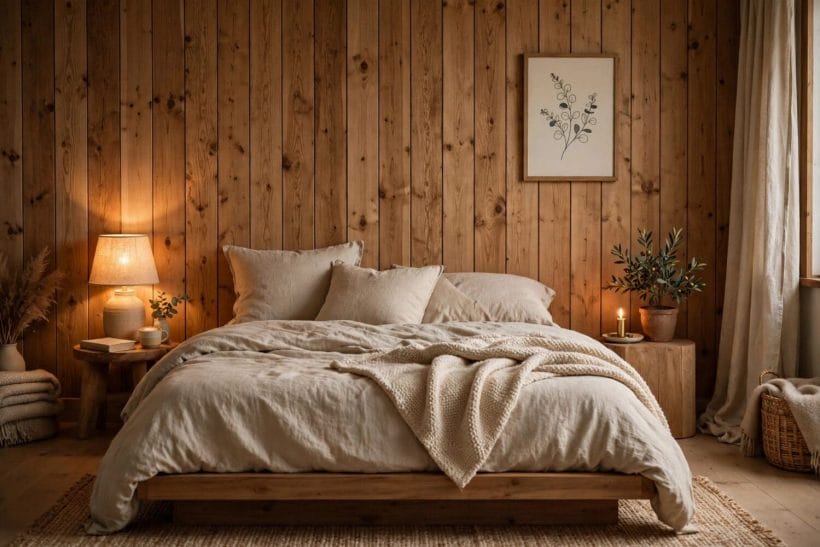
| Natural Timber Left Unpainted | Natural timber shiplap, left in its own warm tone, brings the character of wood directly into the bedroom. |
| A Matte Finish for Soft Light | A matte finish on shiplap absorbs light gently instead of reflecting it, which helps a bedroom feel soft in the evening. |
| One Pale Wall in a Small Room | In a small bedroom, keep the shiplap to a single pale wall and leave the rest plain and light. |
| Shiplap Behind a Bed in a Corner Room | Where the bed sits in a corner, run shiplap along the wall behind the pillows and keep the side wall plain. |
| Horizontal Boards to Stretch a Narrow Room | In a narrow bedroom, horizontal boards along the short wall behind the bed help the room feel less tunnel-like. |
| Vertical Boards Beside a Tall Window | In a small room with a tall window, vertical boards on the neighbouring wall echo the window's height and lift the whole space. |
| A Shiplap Wall With No Furniture Against It | Leave a stretch of shiplap wall free of furniture apart from the bed, so the boards can breathe in a small room. |
| Light Bedding Against Light Boards | Pair light shiplap with light bedding in a small bedroom so the bed and the wall blend into one soft expanse. |
| A Mirror Hung on the Shiplap Wall | Hang a mirror on the shiplap wall in a small bedroom to bounce light and give a sense of depth. |
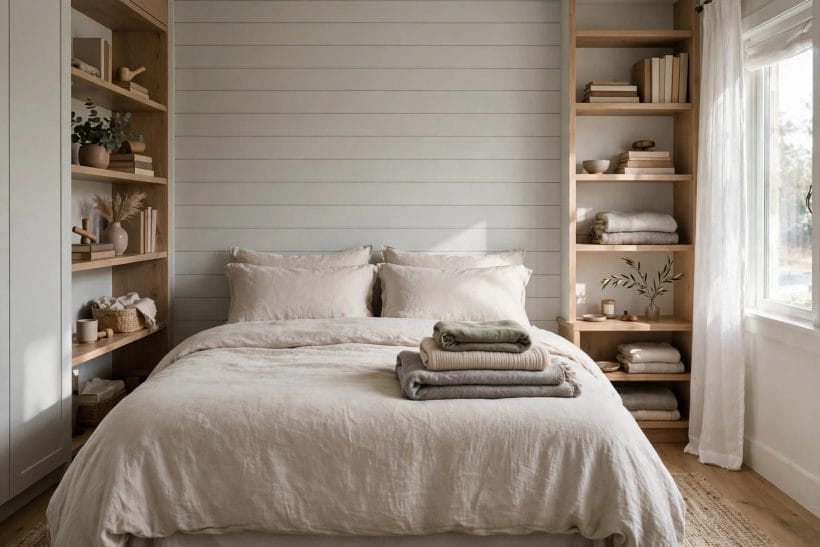
| Floating Shelves on the Shiplap Wall | Fix a floating shelf or two to the shiplap wall beside the bed for books, a lamp or a small plant. |
| A Low Dresser Beneath the Boards | Place a low dresser against the shiplap wall, away from the bed, so the boards rise above it like a backdrop. |
| Baskets at the Foot of the Bed | Set woven baskets at the foot of the bed for blankets, spare pillows or laundry, keeping storage soft and movable. |
| A Bench With Storage at the Foot of the Bed | A bench at the foot of the bed offers a place to sit, a surface for a throw, and hidden storage inside. |
| Bedside Tables That Match the Wall Tone | Choose bedside tables in a tone close to the shiplap so they blend into the wall rather than standing out against it. |
| A Wardrobe on the Plain Wall, Not the Shiplap | Keep large wardrobes on a plain wall and leave the shiplap wall for the bed and lighter pieces. |
| Hooks on the Shiplap for Robes and Hats | Fix a few simple hooks to the shiplap wall near the door side of the bedroom for robes, hats or a light jacket. |
| Under-Bed Storage Hidden by a Long Throw | Use the space beneath the bed for storage boxes, then let a long throw drape over the foot of the bed to soften the view. |
| A Lamp Either Side of the Bed | Place a lamp on each bedside table so the shiplap wall is lit evenly from both sides. |
| Wall Lights Fixed to the Shiplap | Fix wall lights directly to the shiplap on either side of the bed to free the bedside tables and add a tailored finish. |
| A Soft Wash of Light From Above | Let a soft ceiling light wash gently down the shiplap wall, showing the boards' rhythm without harsh shadows. |
| Morning Light Across the Boards | Arrange the room so morning light falls across the shiplap rather than directly onto the bed. |
| Candlelight Warmth in the Evening | In the evening, a candle on a bedside table or dresser gives the shiplap wall a flickering warmth that electric light cannot quite match. |
| Fairy Lights Draped Softly, Not Brightly | Drape a string of warm fairy lights loosely along a shelf or picture on the shiplap wall for a gentle evening glow. |
| No Overhead Glare Over the Bed | Avoid a harsh overhead light directly over the bed, which flattens the shiplap and makes the room feel clinical. |
| Linen Bedding Against Painted Boards | Linen bedding, with its soft wrinkles and natural drape, sits beautifully against painted shiplap. |
| A Chunky Throw Across the Foot of the Bed | Drape a chunky knitted throw across the foot of the bed to add warmth and a second texture beside the boards. |
| Cushions in Tones Taken From the Wall | Choose cushions in tones drawn from the shiplap wall itself, whether that is soft white, sage or dusty blue. |
| A Woven Rug to Warm the Floor | Lay a woven rug beside the bed to warm the floor and echo the natural texture of the boards. |
| Sheer Curtains That Soften the Whole Room | Hang sheer curtains at the bedroom window to diffuse daylight across the shiplap wall. |
| Greenery on the Windowsill, Not the Wall | Keep plants on the windowsill or a bedside table rather than hanging them on the shiplap wall. |
| A Quiet Corner for Morning Coffee | Set a small chair and a tiny table in a corner of the shiplap bedroom for slow mornings. |
| Bare Boards, Soft Everything Else | When the shiplap wall is left bare, soften everything else in the room: bedding, curtains, rugs and throws all in gentle textures. |
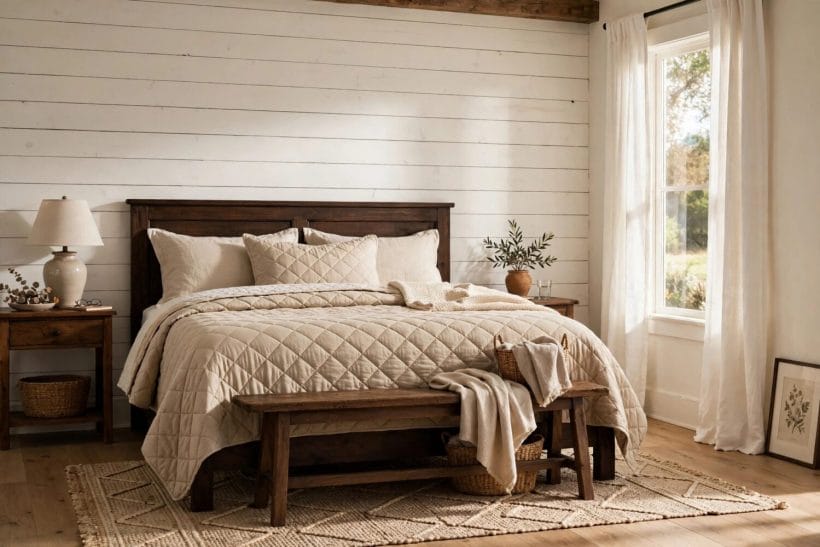
| A Farmhouse Bedroom With White Shiplap | White shiplap, a timber bed frame and quilted bedding make the classic farmhouse bedroom, warm and unpretentious. |
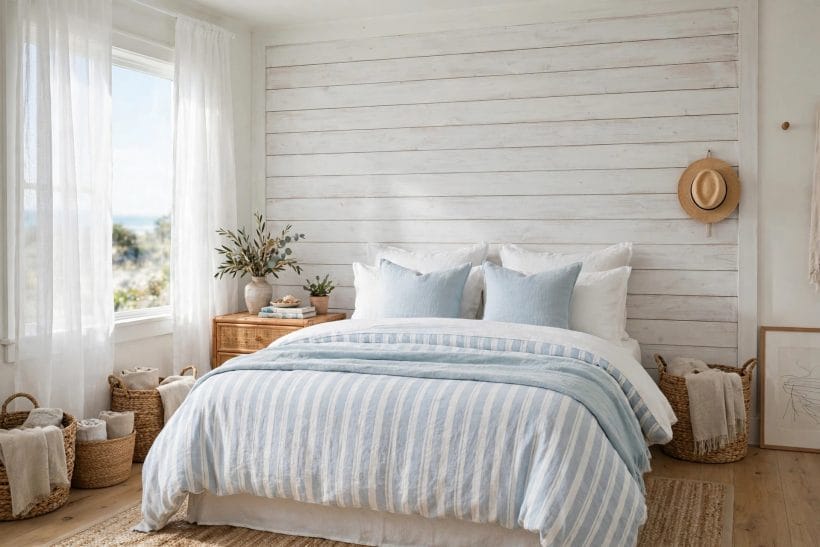
| A Coastal Bedroom With Whitewashed Boards | Whitewashed shiplap, pale blue bedding and woven baskets create a coastal bedroom that feels like a sea breeze. |
| A Rustic Bedroom With Natural Timber Boards | Natural timber shiplap, wool throws and a simple wooden bed make a rustic bedroom that feels gathered over time. |
| A Modern Bedroom With a Dark Shiplap Wall | A dark shiplap wall, crisp white bedding and minimal furniture make a modern bedroom that feels calm and grown-up. |
| A Scandinavian Bedroom With Pale Boards | Pale shiplap, light timber, white bedding and a single plant make a Scandinavian bedroom that feels bright and uncluttered. |
| A Bohemian Bedroom With Layered Texture | Layered throws, woven baskets, plants and soft white shiplap make a bohemian bedroom that feels collected and relaxed. |
| A Classic Bedroom With Shiplap and Soft Tailoring | Shiplap painted in a soft neutral, a tailored bed with a simple headboard, and classic bedside lamps make a timeless bedroom. |
1. A Single Wall Behind the Bed
Keep the shiplap to the wall behind the bed and leave the remaining walls plain. The boards become a natural headboard backdrop, the room stays calm, and the bed reads as the clear centre of the space. Plain side walls keep the look restful rather than busy, and bedding in soft tones can carry the colour while the boards carry the texture.
2. The Bed Centred on the Longest Wall
Place the bed in the middle of the longest shiplap wall so the boards run evenly on either side. Symmetry brings a settled feeling to the room, and matching lamps or small tables on each side reinforce that balance. The eye travels along the boards rather than stopping at an awkward corner, which helps a bedroom feel composed even when it is simply furnished.
3. A Wall That Runs the Full Width of the Room
Let the shiplap run from corner to corner behind the bed, with no break for pictures or shelves. The unbroken lines give the room a tailored finish and make the wall feel intentional rather than added as an afterthought. Keep furniture low and bedding uncluttered so the long horizontal rhythm stays visible and the room keeps its sense of calm.
4. Shiplap on the Wall Opposite the Door
Put the shiplap on the wall you see first when you walk into the bedroom. The boards greet you with texture and warmth, and the bed placed against that wall becomes the natural destination of the room. This arrangement suits rooms where the door sits on a side wall, because the view into the room feels finished from the very first step inside.
5. A Reading Corner Framed by Shiplap
Run shiplap along the wall behind a reading chair and a small lamp, creating a quiet corner apart from the bed. The boards give the corner its own character without needing a separate room, and a soft throw plus a small stack of books completes the invitation to sit. Keep the corner lightly furnished so it stays a retreat rather than another storage spot.
6. The Bed Tucked Into a Shiplap Alcove
Where the bedroom has a recessed nook, line the back and sides of the nook with shiplap to turn it into a sheltered sleeping alcove. The boards wrap the bed in texture, the nook feels cosy rather than cramped, and curtains or a simple curtain panel can close the space softly at night. Keep bedding light so the enclosed feeling stays welcoming.
7. Shiplap Beside a Window Wall
Place the bed on a shiplap wall that sits beside, rather than under, the window. Daylight falls across the boards and shows their shadow lines gently through the day, while the window itself stays free for curtains and morning light. This layout suits rooms where the window wall is too broken up for boards, yet the bedroom still benefits from texture close to the light.
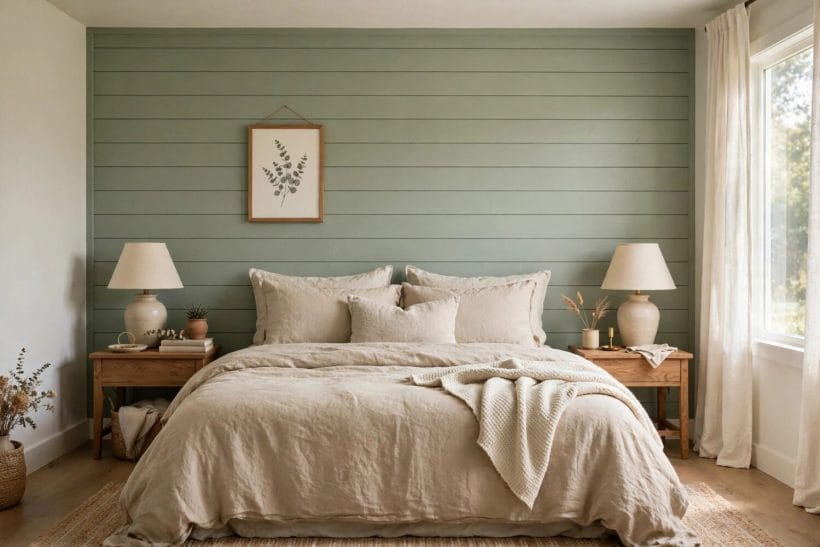
Wall Colours for Calm Mornings and Quiet Nights
Colour changes the whole mood of a shiplap wall, even though the boards themselves stay the same. Soft tones keep the room light and restful, deeper tones add drama, and the right partner colours in bedding and curtains keep the wall feeling like part of the bedroom rather than a separate feature.
8. Soft White for a Bright, Airy Room
Soft white shiplap is the gentlest starting point, because it adds texture while reflecting light around the room. It suits bedrooms that need brightness, pairs easily with linen, timber and woven baskets, and never competes with the bedding. White boards also forgive a change of bedding colour later, since almost any soft tone sits comfortably against them.
9. Warm White for a Softer Glow
Warm white shiplap brings a faint honeyed tone to the boards, which suits rooms with timber floors and warm lamplight. The wall feels welcoming rather than stark, and cream bedding blends into the same gentle family of tones. This is a good choice when a bedroom faces away from strong daylight and needs warmth more than brightness.
10. Pale Grey for Quiet Neutrality
Pale grey shiplap gives the bedroom a calm, grown-up neutrality without turning cold. It sits well with white bedding, grey throws and pale timber, and it softens strong daylight into a muted glow. Grey boards are forgiving too, since they hide the small marks of daily life better than a bright white wall while still keeping the room light.
11. Sage Green for a Garden Calm
Sage green shiplap brings the hush of a garden into the bedroom, especially when paired with natural linen and wooden bedside tables. The colour feels restful rather than bold, and it works beautifully with cream bedding and simple greenery on a windowsill. Sage suits sleepers who want colour in the room without giving up the calm that a bedroom needs.
12. Dusty Blue for Evening Rest
Dusty blue shiplap lends the bedroom a dusk-like calm, as if the room is already winding down. White and pale blue bedding keep the look airy, while timber furniture stops the blue from feeling chilly. This colour is a kind choice for bedrooms used for reading and resting in the evening, because the wall itself seems to lower the light.
13. Blush for Gentle Warmth
A blush shiplap wall adds warmth without sweetness, especially when the blush is muted and dusty rather than bright. Cream bedding, pale timber and soft grey throws keep the room grounded, and the wall feels like a warm backdrop rather than a statement. Blush suits bedrooms that need a little tenderness in their palette while staying calm and adult.
14. Charcoal for a Cocooning Bedroom
Charcoal shiplap turns the bedroom wall into a cocoon, particularly behind a bed dressed in crisp white bedding. The dark boards make the bed glow by contrast, and warm lamplight softens the depth of the colour. Keep the remaining walls pale and the room lightly furnished, so the dark wall feels like a shelter rather than a weight on the room.
15. Two Soft Tones, One Calm Room
Pair a soft shiplap colour with a paler tone on the remaining walls, keeping both colours in the same quiet family. The contrast is gentle enough to let the boards stand out, yet the room still reads as one calm space. This approach suits bedrooms where a single colour throughout would feel flat, but a strong contrast would disturb the restful mood.
Headboard Walls: Shiplap Behind the Bed
The wall behind the bed carries more attention than any other wall in the bedroom, so it deserves the most care. These ideas treat the headboard wall as a composition in itself, balancing boards, bedding, lighting and art so the bed feels framed rather than crowded.
16. Shiplap as the Headboard Itself
Let the shiplap wall stand in place of a headboard, with pillows resting directly against the boards. The horizontal lines give the bed a finished look without extra furniture, and a soft cushion layer protects both the boards and the sleeper. This approach suits simple bedrooms where fewer pieces make the room feel calmer and easier to keep tidy.
17. A Low Timber Headboard Against Shiplap
Place a low timber headboard in front of the shiplap wall so the boards rise above it like a panel. The layering adds depth, the timber warms the painted boards, and the headboard gives pillows a firm resting place. Keep the headboard simple in shape so the boards remain the main texture and the two surfaces do not compete.
18. An Upholstered Headboard on a Shiplap Wall
Set a softly upholstered headboard against the shiplap for a bedroom that prizes comfort at bedtime. The fabric softens the straight lines of the boards, invites leaning back with a book, and adds a touch of quiet luxury. Choose upholstery in a tone close to the bedding so the headboard blends into the bed rather than cutting the wall in half.
19. Shiplap Rising Above the Headboard
Run the shiplap higher than the headboard so a band of boards shows above the bed like a picture rail of texture. The extra height draws the eye upward and makes the bedroom feel taller, while the headboard itself anchors the lower part of the wall. This works well in rooms with generous ceiling height, where the boards have room to breathe.
20. A Framed Panel of Shiplap Behind the Bed
Frame a panel of shiplap with plain trim so the boards read as a deliberate artwork behind the bed. The frame gives the wall a tailored edge, the panel stays centred on the bed, and the surrounding plain wall keeps the room calm. This idea suits bedrooms where full-wall boards would feel too much, yet a plain wall would feel unfinished.
21. One Picture Hung on the Shiplap
Hang a single picture on the shiplap wall above the bed and leave the rest of the boards bare. The picture gains presence against the lined texture, the wall keeps its rhythm, and the bedroom avoids the clutter of a crowded gallery. Choose a calm subject and a simple frame so the art complements the boards rather than fighting them.
22. A Pair of Pictures Balanced on the Boards
Hang a pair of matching pictures above the bed, spaced evenly so the shiplap lines run undisturbed between them. The pairing brings symmetry to the headboard wall, and the gap between the frames lets the boards show through as part of the composition. Keep the frames alike in size and tone so the wall feels considered rather than assembled in haste.
23. No Art at All on the Headboard Wall
Leave the shiplap headboard wall completely bare and let the boards themselves be the decoration. The clean lines, the shadow gaps and the soft colour carry the whole wall, and the bedroom feels calmer for the restraint. This choice suits sleepers who wake to visual noise elsewhere in life and want the first thing they see to be quiet.
Board Direction, Finish and Texture
How the boards run, how they are finished, and how much of their timber character shows all change the feeling of the room. These ideas explore direction and finish as design choices in their own right, so the wall suits the shape of the bedroom and the mood you want at rest.
24. Horizontal Boards for a Wider Feeling
Horizontal shiplap draws the eye sideways across the wall, which helps a bedroom feel wider and more settled. The lines echo the line of the bed itself, so the room feels grounded and calm. Horizontal boards are the classic choice for a reason, and they suit almost any bedroom where width and restfulness matter more than height.
25. Vertical Boards for a Taller Feeling
Vertical shiplap draws the eye upward, which helps a bedroom with a low ceiling feel a little taller and lighter. The upright lines give the wall a quiet formality, and they pair well with tall curtains and a simple bed frame. Vertical boards suit rooms where height is the quality most worth emphasising at the end of the day.
26. Wide Boards for a Calm, Modern Wall
Wider boards mean fewer lines across the wall, which gives the shiplap a calmer and more modern character. The texture stays present but quieter, and the bedroom feels less busy as a result. Wide boards suit sleepers who like the idea of shiplap but want its presence to whisper rather than speak loudly.
27. Narrow Boards for a Cottage Feeling
Narrow boards bring a busier, more cottage-like rhythm to the wall, with many fine lines catching the light. The effect is charming and handmade, especially in a bedroom with soft bedding and woven textures. Narrow boards suit rooms where cosiness matters most, and where the wall is meant to feel gathered rather than sleek.
28. A Smooth Painted Finish
A smooth painted finish lets the shape of the boards show while keeping the surface easy on the eye. The wall reads as tailored and clean, dust settles less visibly, and bedding colours stay true against it. Smooth paint suits bedrooms that aim for a polished calm, where texture is wanted but roughness is not.
29. A Whitewashed Finish That Shows the Grain
Whitewash lets the timber grain show faintly through the pale colour, giving the wall a soft, weathered character. The boards feel more natural and less newly made, which suits coastal and cottage bedrooms beautifully. Whitewash pairs well with linen, basket textures and pale timber, and it keeps the room light while adding depth.
30. Natural Timber Left Unpainted
Natural timber shiplap, left in its own warm tone, brings the character of wood directly into the bedroom. The grain, knots and colour variation make the wall feel alive, and the room gains warmth without any added colour. Natural boards suit bedrooms with simple bedding and plain walls elsewhere, so the timber can be the room’s main warmth.
31. A Matte Finish for Soft Light
A matte finish on shiplap absorbs light gently instead of reflecting it, which helps a bedroom feel soft in the evening. The boards look velvety rather than shiny, lamplight spreads evenly across them, and the wall never glares in morning sun. Matte suits restful rooms where light should feel diffused and kind.
Small Bedrooms With Shiplap Walls
Small bedrooms benefit enormously from shiplap, provided the boards are used with restraint. Light colours, a single wall and uncluttered bedding keep the texture from crowding the room, and the wall can even make a compact bedroom feel more finished than a plain one.
32. One Pale Wall in a Small Room
In a small bedroom, keep the shiplap to a single pale wall and leave the rest plain and light. The boards add character without closing the room in, and the pale colour reflects whatever daylight the room receives. This restraint is what makes shiplap work in compact spaces, where every surface must earn its place.
33. Shiplap Behind a Bed in a Corner Room
Where the bed sits in a corner, run shiplap along the wall behind the pillows and keep the side wall plain. The boards define the sleeping spot clearly, the corner feels intentional rather than leftover, and the room keeps an open side for moving around the bed. Light bedding prevents the corner from feeling enclosed.
34. Horizontal Boards to Stretch a Narrow Room
In a narrow bedroom, horizontal boards along the short wall behind the bed help the room feel less tunnel-like. The sideways lines widen the view, the bed anchors the short wall, and the long side walls stay plain so the eye is not pulled endlessly down the room. Soft colours keep the widening effect gentle.
35. Vertical Boards Beside a Tall Window
In a small room with a tall window, vertical boards on the neighbouring wall echo the window’s height and lift the whole space. The upright rhythm balances the window, the room feels taller than its footprint suggests, and light bedding keeps the effect airy. This pairing works well where floor space is limited but ceiling height is generous.
36. A Shiplap Wall With No Furniture Against It
Leave a stretch of shiplap wall free of furniture apart from the bed, so the boards can breathe in a small room. The empty texture becomes a visual pause, the room feels less crammed, and the bed itself gains prominence. This idea asks for discipline, but the calm it brings to a compact bedroom is worth the empty space.
37. Light Bedding Against Light Boards
Pair light shiplap with light bedding in a small bedroom so the bed and the wall blend into one soft expanse. The lack of contrast makes the room feel larger, the texture of the boards still shows, and the overall effect is serene. Add warmth through a throw or a timber tray rather than through a dark colour that would break the expanse.
38. A Mirror Hung on the Shiplap Wall
Hang a mirror on the shiplap wall in a small bedroom to bounce light and give a sense of depth. The mirror’s reflection doubles the daylight, the boards frame it with texture, and the room feels more open without any structural change. Keep the mirror simple and unadorned so it reads as a light-giving tool rather than decoration.
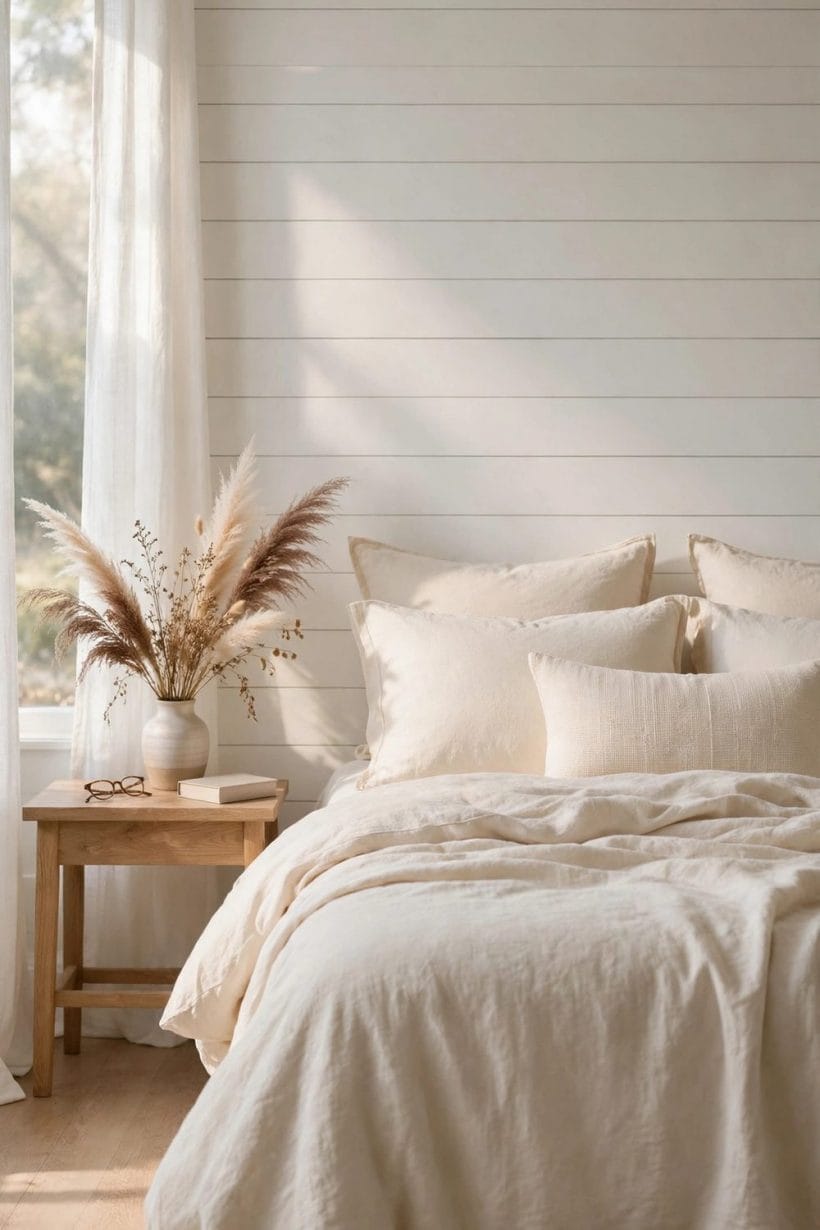
Storage That Sits Neatly Against Shiplap
Storage and shiplap can live together happily when the storage is quiet, low and well placed. The boards provide the texture, the storage provides the order, and neither should crowd the other. These ideas keep the bedroom tidy without hiding the wall that gives the room its character.
39. Floating Shelves on the Shiplap Wall
Fix a floating shelf or two to the shiplap wall beside the bed for books, a lamp or a small plant. The shelves sit lightly on the boards, their shadows add depth, and the wall remains visible around them. Keep what sits on the shelves to a few calm objects, so the shelves serve the room rather than becoming another surface to fill.
40. A Low Dresser Beneath the Boards
Place a low dresser against the shiplap wall, away from the bed, so the boards rise above it like a backdrop. The dresser gains character from the texture behind it, the wall stays visible, and the room keeps a clear horizontal line. Choose a dresser in a tone that sits quietly against the boards rather than competing with them.
41. Baskets at the Foot of the Bed
Set woven baskets at the foot of the bed for blankets, spare pillows or laundry, keeping storage soft and movable. The baskets echo the natural texture of the boards, the floor stays clear, and the bedroom keeps a relaxed, lived-in calm. Baskets suit shiplap rooms because both materials speak the same quiet, natural language.
42. A Bench With Storage at the Foot of the Bed
A bench at the foot of the bed offers a place to sit, a surface for a throw, and hidden storage inside. The bench frames the bed without blocking the shiplap wall, and its timber or upholstered top adds a second texture to the room. Keep the bench low so the sightline to the boards stays open from the doorway.
43. Bedside Tables That Match the Wall Tone
Choose bedside tables in a tone close to the shiplap so they blend into the wall rather than standing out against it. The room feels unified, the boards remain the star, and the tables quietly hold lamps, books and water. Matching tones is a gentle way to make a bedroom feel designed without adding any visual noise.
44. A Wardrobe on the Plain Wall, Not the Shiplap
Keep large wardrobes on a plain wall and leave the shiplap wall for the bed and lighter pieces. The boards stay visible, the wardrobe does not break the rhythm of the lines, and the room’s layout feels deliberate. This division of labour between walls is one of the simplest ways to keep a shiplap bedroom calm.
45. Hooks on the Shiplap for Robes and Hats
Fix a few simple hooks to the shiplap wall near the door side of the bedroom for robes, hats or a light jacket. The hooks are practical, the boards behind them add texture to an otherwise plain corner, and the items hung there stay within easy reach. Keep the hooks few and the items light so the wall never looks like a hallway.
46. Under-Bed Storage Hidden by a Long Throw
Use the space beneath the bed for storage boxes, then let a long throw drape over the foot of the bed to soften the view. The bedroom stays tidy, the shiplap wall stays the focus, and the storage disappears into the calm of the room. This idea suits sleepers who want order without visible containers breaking the restful mood.
For more on keeping a small sleeping space orderly, the guide to tiny house storage ideas offers storage thinking that sits well beside a shiplap wall, from hidden compartments to calm, closed-away tidiness.
Lighting the Boarded Wall
Light is what makes shiplap come alive, because the shadow gaps between boards change through the day. Soft, warm and low lighting suits a bedroom best, letting the texture show without glare and helping the room wind down in the evening.
47. A Lamp Either Side of the Bed
Place a lamp on each bedside table so the shiplap wall is lit evenly from both sides. The paired glow softens the boards, frames the bed symmetrically, and gives each sleeper their own light for reading. Choose shades that diffuse the light rather than directing it harshly, so the wall glows instead of glaring.
48. Wall Lights Fixed to the Shiplap
Fix wall lights directly to the shiplap on either side of the bed to free the bedside tables and add a tailored finish. The fittings sit neatly against the boards, their light washes down the lines, and the tables below stay clear for books and water. This idea suits bedrooms where table space is precious and a clean look matters.
49. A Soft Wash of Light From Above
Let a soft ceiling light wash gently down the shiplap wall, showing the boards’ rhythm without harsh shadows. The wall becomes a quiet backdrop in the evening, the room feels evenly lit, and the bed stays the warm centre. Dimming the light, where possible, lets the same wall shift from daytime brightness to nighttime calm.
50. Morning Light Across the Boards
Arrange the room so morning light falls across the shiplap rather than directly onto the bed. The boards catch long, gentle shadows, the room wakes gradually, and the sleeper is not dazzled on waking. Sheer curtains help here, softening the light while keeping the texture of the wall visible through the morning.
51. Candlelight Warmth in the Evening
In the evening, a candle on a bedside table or dresser gives the shiplap wall a flickering warmth that electric light cannot quite match. The boards glow softly, the room feels sheltered, and the mood turns toward rest. Keep candles away from curtains and bedding, and treat them as an occasional evening ritual rather than everyday lighting.
52. Fairy Lights Draped Softly, Not Brightly
Drape a string of warm fairy lights loosely along a shelf or picture on the shiplap wall for a gentle evening glow. The tiny lights pick out the boards’ texture, the room feels cosy, and the overall light stays low enough for winding down. Use them sparingly, since a wall covered in lights stops being restful and starts being festive.
53. No Overhead Glare Over the Bed
Avoid a harsh overhead light directly over the bed, which flattens the shiplap and makes the room feel clinical. Instead, rely on lamps and wall lights that graze the boards sideways, keeping shadows soft and the mood calm. The wall looks better in sideways light, and the sleeper rests better without glare from above.
Restful Styling: Bedding, Texture and Quiet Corners
Once the wall is in place, styling should soften it rather than compete with it. Natural fibres, muted tones and a few well-chosen textures turn a boarded wall into a bedroom that invites rest, and the calmest rooms are usually the ones with the least on display.
54. Linen Bedding Against Painted Boards
Linen bedding, with its soft wrinkles and natural drape, sits beautifully against painted shiplap. The fabric’s texture answers the boards’ lines without matching them, and the bed looks inviting rather than staged. Choose linen in a tone close to the wall or gently contrasting with it, and let the bedding’s softness lead the room.
55. A Chunky Throw Across the Foot of the Bed
Drape a chunky knitted throw across the foot of the bed to add warmth and a second texture beside the boards. The throw breaks the flatness of the bedding, invites an afternoon rest, and can be folded away easily when the bed is made. Keep the throw’s colour within the room’s quiet palette so it warms rather than interrupts.
56. Cushions in Tones Taken From the Wall
Choose cushions in tones drawn from the shiplap wall itself, whether that is soft white, sage or dusty blue. The cushions tie the bed to the wall, the room feels coordinated without effort, and changing the cushions later refreshes the whole bedroom cheaply and simply. A small number of cushions keeps the bed easy to make each morning.
57. A Woven Rug to Warm the Floor
Lay a woven rug beside the bed to warm the floor and echo the natural texture of the boards. The rug softens footsteps in the morning, adds a handmade feeling to the room, and balances the straight lines of the wall with its own weave. Natural fibres suit shiplap rooms best, since both materials share an honest, unpolished character.
58. Sheer Curtains That Soften the Whole Room
Hang sheer curtains at the bedroom window to diffuse daylight across the shiplap wall. The light turns gentle, the boards’ shadows soften, and the room gains a dreamy morning quality. Sheers also give privacy without shutting out the day, which suits a bedroom that is used for resting as well as sleeping.
59. Greenery on the Windowsill, Not the Wall
Keep plants on the windowsill or a bedside table rather than hanging them on the shiplap wall. The greenery softens the room, the boards stay clean and visible, and the plants benefit from the window light. A trailing plant on a sill adds life to the bedroom without turning the feature wall into a garden display.
60. A Quiet Corner for Morning Coffee
Set a small chair and a tiny table in a corner of the shiplap bedroom for slow mornings. The corner gives the room a purpose beyond sleep, the boards behind the chair add texture to the view, and the ritual of sitting there makes the bedroom feel like a retreat. Keep the corner minimal so it stays a pause, not a project.
61. Bare Boards, Soft Everything Else
When the shiplap wall is left bare, soften everything else in the room: bedding, curtains, rugs and throws all in gentle textures. The contrast between the structured boards and the soft furnishings is what makes the room feel restful, and nothing competes for attention. This balance is the simplest styling rule for any shiplap bedroom.
Wall styling beyond the boards themselves benefits from restraint too. The guide to tiny house wall decor ideas shows how small walls are styled without crowding them, a lesson that applies directly to keeping a shiplap wall calm.
Shiplap Bedroom Styles, From Farmhouse to Coastal Calm
Shiplap adapts to many bedroom styles, because the boards themselves are neutral and the styling around them does the talking. These ideas show how the same wall can feel farmhouse, coastal, rustic or modern, depending on the furniture, bedding and light you pair with it.
62. A Farmhouse Bedroom With White Shiplap
White shiplap, a timber bed frame and quilted bedding make the classic farmhouse bedroom, warm and unpretentious. The boards give the room its farmhouse honesty, the timber adds weight, and the quilt adds a handmade softness. Keep decoration simple and useful, since farmhouse calm comes from practicality rather than ornament. The farmhouse tiny house interior ideas show the same warmth working in compact rooms.
63. A Coastal Bedroom With Whitewashed Boards
Whitewashed shiplap, pale blue bedding and woven baskets create a coastal bedroom that feels like a sea breeze. The boards’ weathered finish suggests driftwood, the light colours keep the room airy, and natural textures complete the seaside feeling without any themed decoration. Coastal calm comes from light and texture, not from ornaments. For a wider coastal palette, see coastal tiny house decor.
64. A Rustic Bedroom With Natural Timber Boards
Natural timber shiplap, wool throws and a simple wooden bed make a rustic bedroom that feels gathered over time. The boards’ grain is the decoration, the wool adds warmth, and the room avoids anything shiny or new-looking. Rustic styling suits shiplap particularly well, because both celebrate timber honestly. The rustic tiny house interiors carry the same timber warmth into small spaces.
65. A Modern Bedroom With a Dark Shiplap Wall
A dark shiplap wall, crisp white bedding and minimal furniture make a modern bedroom that feels calm and grown-up. The boards add texture to an otherwise simple room, the dark colour gives the bed a strong backdrop, and the lack of clutter keeps the modern feeling intact. Modern shiplap works because the texture replaces decoration entirely.
66. A Scandinavian Bedroom With Pale Boards
Pale shiplap, light timber, white bedding and a single plant make a Scandinavian bedroom that feels bright and uncluttered. The boards add just enough texture to keep the pale room from feeling empty, and the light timber warms the whiteness. Scandinavian calm depends on leaving space empty, so let the shiplap wall breathe without pictures or shelves.
67. A Bohemian Bedroom With Layered Texture
Layered throws, woven baskets, plants and soft white shiplap make a bohemian bedroom that feels collected and relaxed. The boards provide a calm backdrop for the layers, the textures do the talking, and the room feels personal rather than decorated. Bohemian styling suits shiplap because the boards stay neutral while the layers change with the seasons.
68. A Classic Bedroom With Shiplap and Soft Tailoring
Shiplap painted in a soft neutral, a tailored bed with a simple headboard, and classic bedside lamps make a timeless bedroom. The boards add quiet structure, the tailoring adds polish, and the room avoids trends entirely. Classic styling is a safe home for shiplap, since both the boards and the furniture aim for longevity rather than novelty.
Practical Details and Gentle Upkeep
Such a wall should be easy to live with, not only beautiful on the first day. These practical ideas cover fitting the boards thoughtfully, keeping them clean, and making small changes over time without redoing the whole room.
69. Start With the Wall You See Most
If you are unsure where to begin, start with the wall you see most from the bed and from the doorway. That wall gives the greatest return for the effort, the room feels transformed even though only one wall has changed, and you can decide later whether another wall needs boards at all. Beginning small also keeps the bedroom usable while the work is done.
70. Keep the Boards Clear of the Floor Line
Let the shiplap stop cleanly above the skirting or floor line so the wall has a tidy edge and cleaning stays simple. A clean bottom edge keeps dust from gathering in an awkward gap, the floor line reads clearly, and the room feels finished rather than improvised. The detail is small, but tidy edges are what make a boarded wall look considered.
71. Dust the Boards With a Soft Cloth
Dust shiplap boards with a soft, dry cloth, working along the lines rather than across them. The grooves between boards gather dust gently over time, and a light regular wipe keeps them clean without any harsh cleaning. This simple habit keeps a painted wall looking fresh and a natural timber wall looking warm, with very little effort.
72. Touch Up Paint in the Same Soft Tone
Keep a small amount of the wall’s paint tone aside for touching up scuffs from furniture or daily life. A quick touch-up restores the wall’s calm, the boards keep their even colour, and the bedroom avoids the slow accumulation of marks that makes a wall look tired. Touching up early, while marks are small, keeps the job tiny.
73. Move Furniture Gently Against the Boards
When moving a bed or a table against the shiplap wall, lift rather than drag so the boards are not scored. Timber and painted finishes both mark more easily than a plain plaster wall, and a scored groove draws the eye. Gentle handling protects the wall’s lines and keeps the bedroom’s calm surface intact for years of use.
74. Change the Bedding Before Changing the Wall
When the bedroom starts to feel stale, change the bedding, throws and cushions before considering a new wall colour. Bedding changes the whole feeling of the room against the same boards, the wall’s texture stays as the constant, and the refresh is simple and reversible. The tiny house colour palettes offer gentle colour families that pair well with a shiplap wall when a refresh is due.
75. Let the Wall Age Gracefully
Allow the shiplap wall to age gracefully, accepting the soft wear that comes from living in a bedroom. Timber deepens, paint settles, and the boards gain a patina that suits a sleeping room. A wall that is allowed to age feels more like home than one kept pristine, and the bedroom grows calmer as the boards grow more familiar.
Final Considerations
A shiplap bedroom wall succeeds when the bedroom still feels like a bedroom: a place for sleep, quiet mornings and slow evenings. The boards should add texture and calm, never noise or clutter, and the best rooms in this guide share the same discipline. One wall, soft colour, gentle light, bedding that invites rest, and storage that stays out of the way will carry almost any shiplap bedroom further than a room full of competing features.
Before you settle on a look, live with the idea for a little while. Picture the wall in morning light and in lamplight, imagine the bedding you already own against it, and consider whether the room needs more texture or more emptiness. It is a backdrop for daily life, so it should suit the way you actually sleep, read and wake, not only the way a photograph looks. Choose the version that makes the room feel restful to you, keep the rest of the room soft, and let the boards do their quiet work behind the bed.


0 Comments