
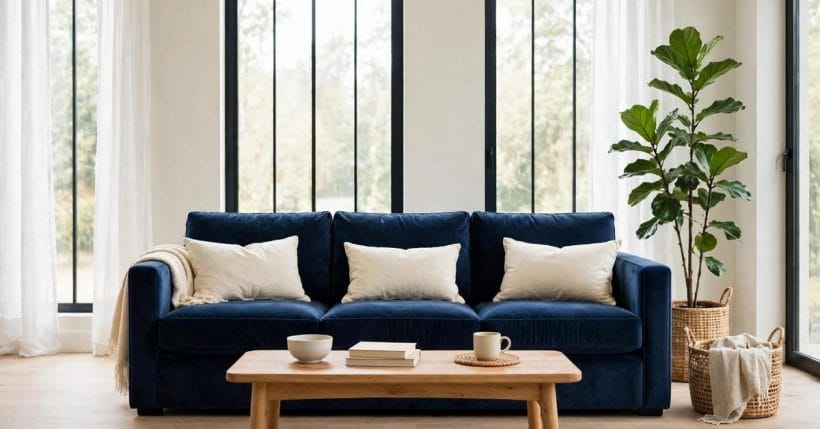
A blue couch is one of the easiest ways to give a living room a clear identity. It is bold enough to be noticed the moment you walk in, yet calm enough to live with every day, provided the rest of the room is chosen to support it rather than compete with it. The shade matters, the fabrics around it matter, and the light in the room matters just as much. Get those three things right and a blue sofa stops being a risk and becomes the most reliable piece in the room. This guide gathers blue sofa living room ideas in one place, as a colour and style survey only: ten ways to dress a blue couch, from pale coastal rooms to deep navy evening rooms, with no single project held up as the model to copy.
Throughout, the rule is simple. Let the sofa carry the strongest colour, and let everything else sit a step quieter. Walls stay pale, wood stays warm, cushions add texture rather than noise, and the rug grounds the whole arrangement. When blue is repeated, it is repeated sparingly, in a cushion, a throw, or a piece of art, so the room feels considered rather than matched to within an inch of its life. The ten ideas below follow that rule in different rooms and different moods, so you can find the version that suits the light and the size of the room you have.
1. Start With the Shade of Blue
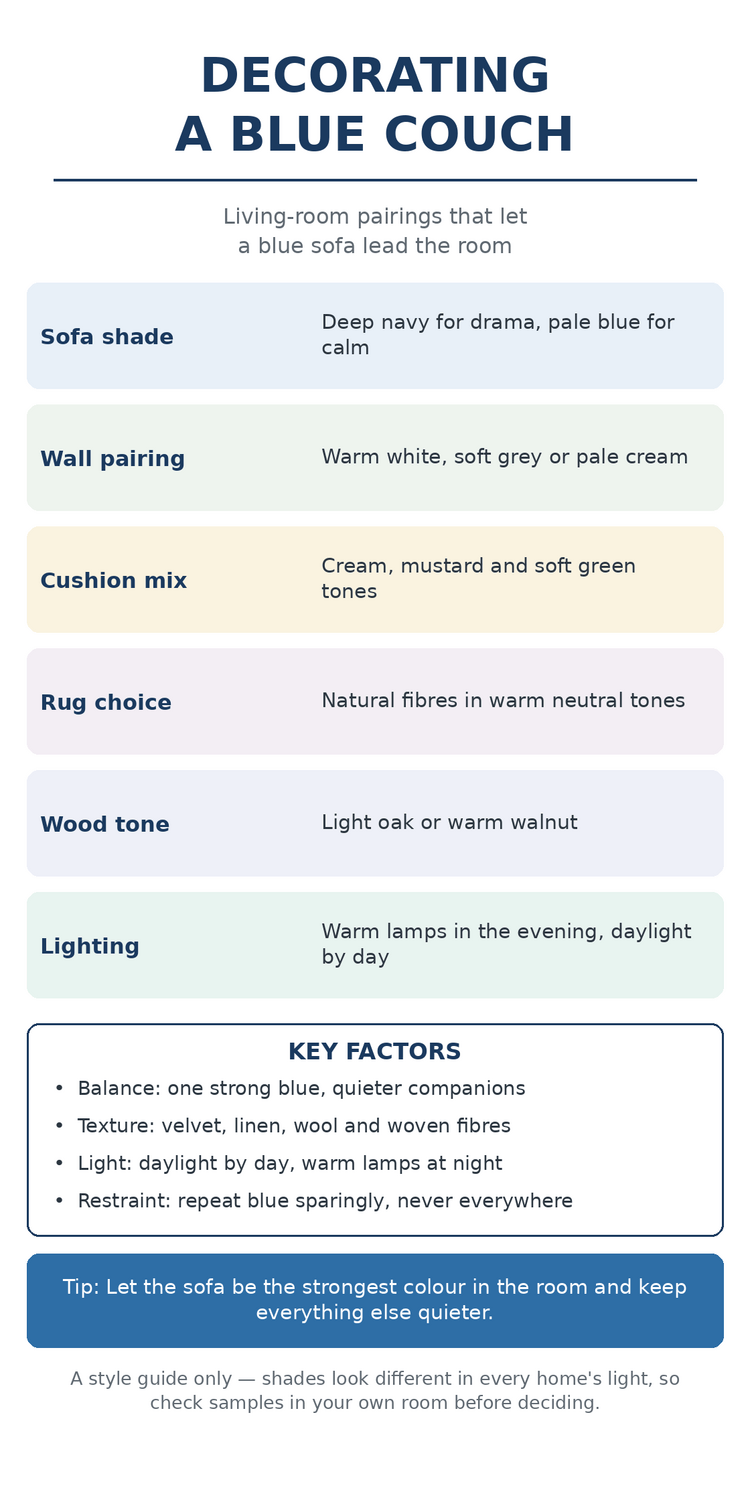
Blue is not one colour in a living room. A deep navy sofa reads as furniture with presence: it anchors a room, suits darker evenings, and pairs best with warm whites and natural wood. A mid-blue sofa feels easier and more everyday, the kind of seat that suits a family room where cushions get rearranged and throws get used. A pale blue sofa, by contrast, barely reads as a colour statement at all. It lightens a room, suits white walls and pale floors, and works where a stronger blue would feel too heavy.
Choose the shade by the light your room actually gets. A north-facing or shaded room can make a deep navy sofa look darker than expected, so it needs warm lamps and pale surroundings to keep it friendly. A bright, sunlit room can carry navy easily, and can also carry a pale blue sofa without it washing out, because the daylight gives even a soft shade some definition. Stand back and look at the whole wall, not just a small fabric sample, since a large sofa fills far more of your view than any sample ever will.
Fabric changes the shade as much as light does. Velvet deepens blue and gives it a soft sheen in lamplight, which suits a navy sofa in an evening room. Linen and cotton keep blue matte and relaxed, which suits pale and mid-blue sofas in daytime rooms. A smooth leather or a tight weave reads smarter and cooler, while a loose, textured weave reads softer and more casual. None of these is better in itself; the right one is the one that matches how the room is used, and how much wear the seat will honestly get.
2. Pale Blue for Small, Bright Rooms
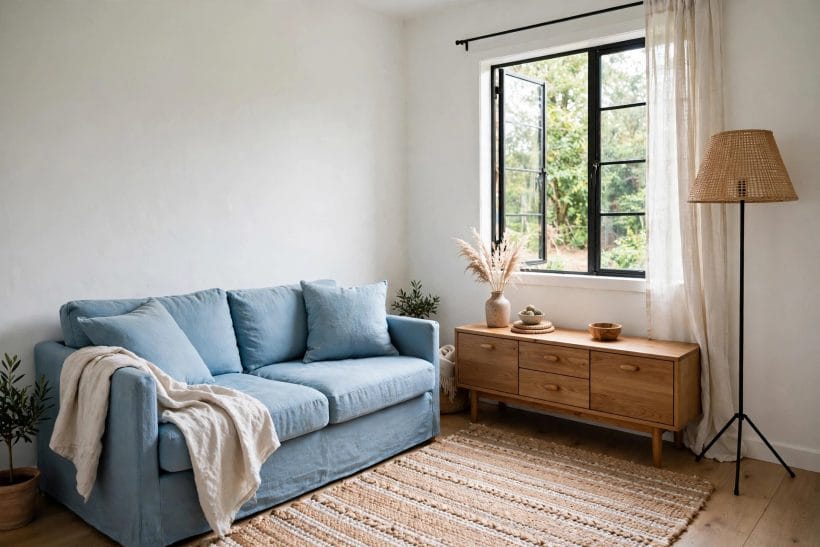
A pale blue sofa is a kind friend to a small living room. It gives the room a colour to build around without darkening the walls or closing the space in, and it sits happily against white walls, light floors and sheer curtains. In the room pictured here, the pale linen sofa, the woven rug and the low wooden sideboard all keep the same light, calm register, so the room feels larger than its floor area. Nothing shouts, and nothing needs to be hidden.
Keep the companions pale too, but not identical. A cream throw, a natural woven rug and light wood furniture give a pale blue sofa enough contrast to be seen, without introducing a second strong colour. If everything is exactly the same pale tone, the sofa can disappear into the walls. A slightly warmer cream, a touch of natural wood grain, or a green plant is enough to separate the layers and give the eye something to rest on.
Small rooms also benefit from keeping the sofa low and simple. A low back, plain arms and a single row of cushions in the same pale blue keep the shape quiet, while a tall, fussy sofa would dominate the wall. Leave a little breathing room at each end of the sofa where you can, even if it is only the width of a plant pot or a small side table. A pale sofa in a small room works because it is calm, and calm needs a little space around it.
3. Cushions That Soften a Strong Sofa
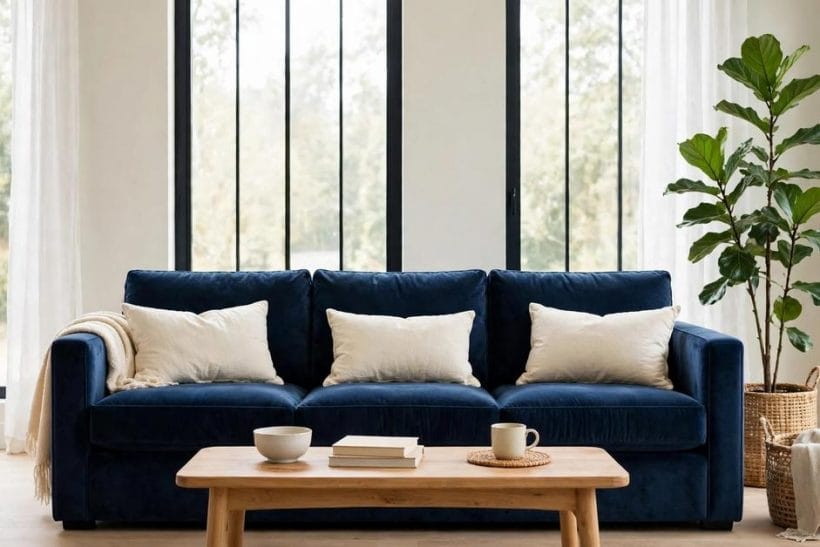
Cushions are where a strong blue sofa becomes comfortable to look at. Cream and off-white cushions are the safest first step: they lift a navy sofa, soften its edges, and make the seat look inviting rather than formal. Two or three generous cushions in a soft, natural fabric are usually enough. More than that, and the sofa starts to look like a cushion display rather than a place to sit.
Once the cream base is in place, one warmer accent can be added without upsetting the room. A mustard cushion, a soft green cushion, or a patterned cushion that picks up both blue and cream will warm a navy sofa and stop the room feeling cold. Keep the accent to one or two cushions, and let the rest stay quiet. The accent works because it is the exception, not because it competes with the sofa for attention.
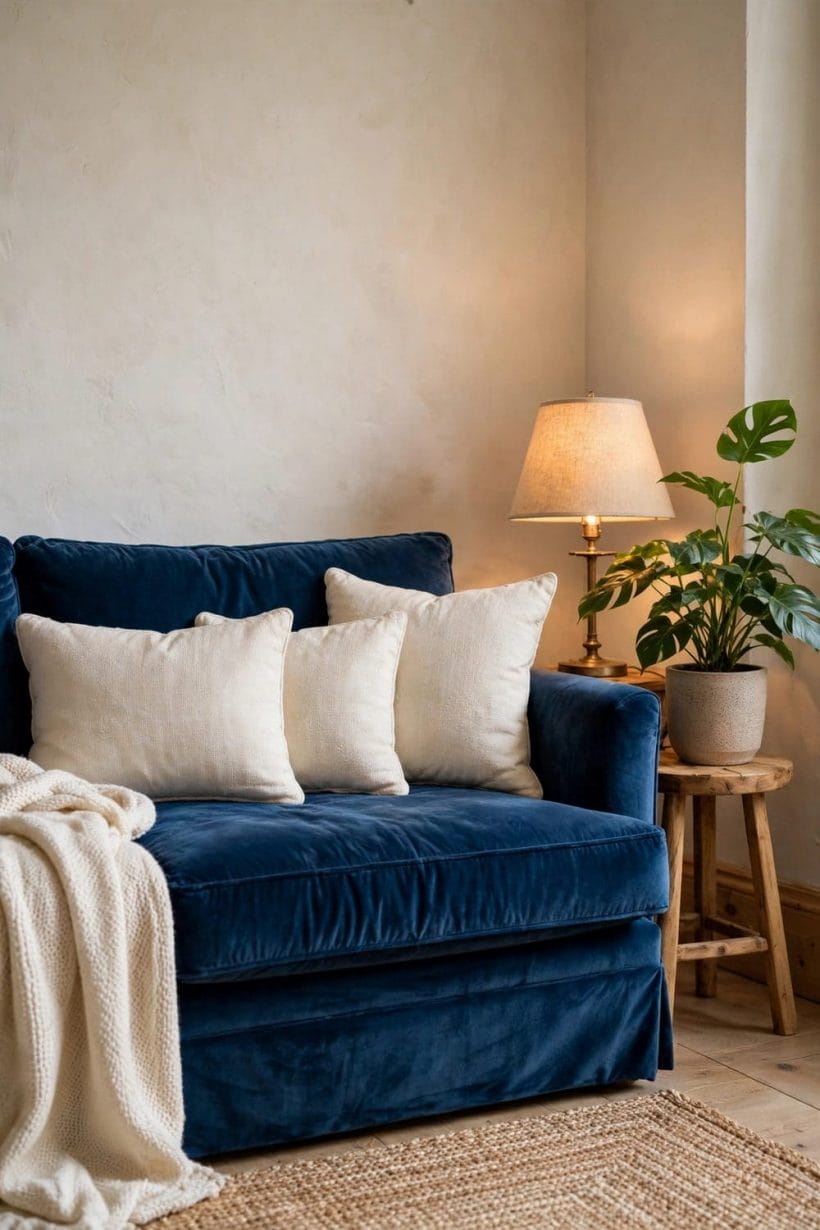
Texture matters as much as colour here. A knitted throw, a linen cushion and a smooth velvet seat cover give the eye different surfaces to enjoy, even when the colours stay within a narrow range. In the corner pictured here, the cream cushions, the chunky throw and the soft velvet of the sofa itself do exactly that work. Mix textures freely, but keep the colours close, and a navy sofa will feel cosy rather than severe.
4. Teal and Mustard: A Warmer Blue
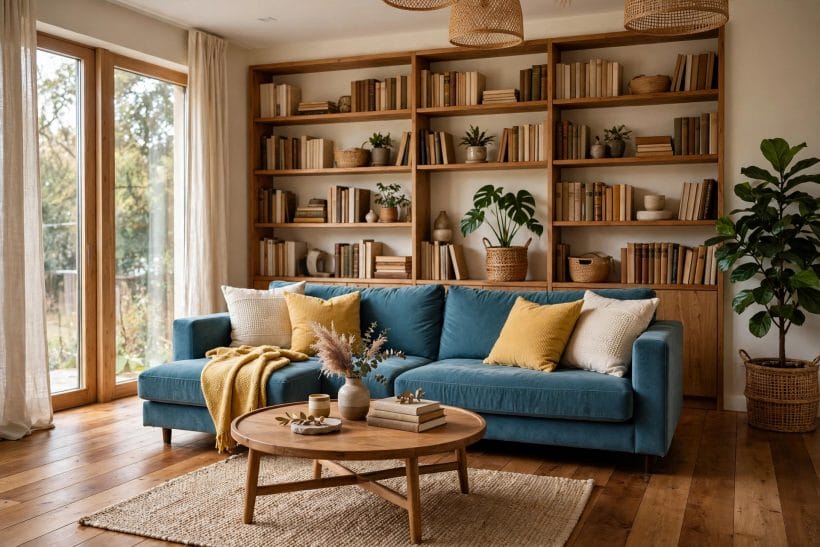
Teal sits between blue and green, and it brings a warmth that pure navy does not. A teal sofa suits rooms with plenty of wood, since the green undertone in the fabric echoes the warmth of timber floors, bookshelves and coffee tables. Mustard cushions are the natural partner here: they are warm, sunny and strong enough to stand beside teal without clashing, and they keep the room feeling lived-in rather than staged.
The trick is proportion. Let the teal sofa be the main colour, let mustard appear in cushions and a throw, and let cream cushions bridge the two. In the room pictured here, the mustard throw and cushions warm the teal seat, while the cream cushions and the natural rug stop the pairing from feeling too rich. Wood does the rest of the work, grounding both colours in a material that feels honest and familiar.
This pairing suits rooms that are used through the day, since teal and mustard both look good in daylight and in lamplight. It also suits rooms with books, plants and collected objects, because the colours are forgiving: a new cushion, a different throw or a plant added later will usually sit happily beside them. If you like a room that grows gradually rather than being finished in one weekend, teal and mustard are a forgiving place to start.
5. Coastal Calm With a Pale Blue Sofa
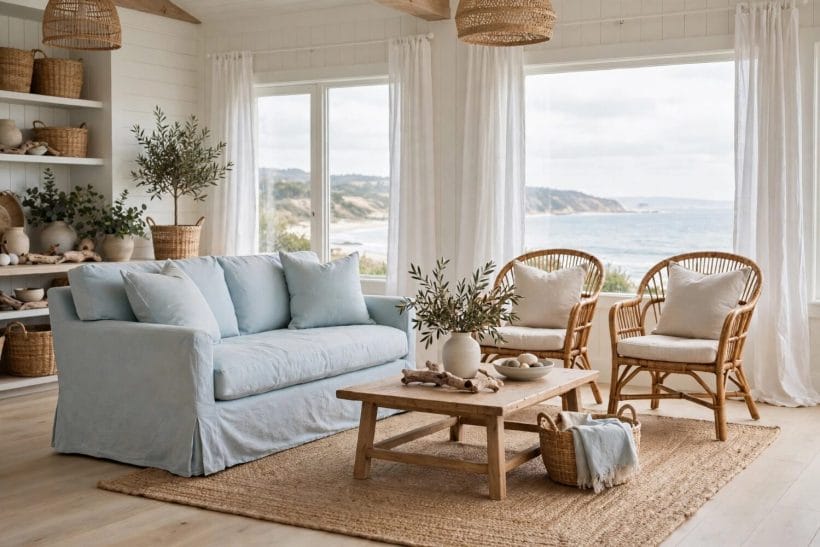
A coastal living room is really a pale blue sofa allowed to be itself. White walls, sheer curtains, rattan chairs and a jute rug all point in the same direction: light, air and natural texture, with the pale blue sofa as the only real colour in the room. The result feels restful because nothing is fighting for attention, and the view through the window, where there is one, becomes part of the decoration.
Natural materials do the heavy lifting in a coastal room. Rattan, woven baskets, light wood and linen all share a matte, sun-bleached quality that suits pale blue perfectly. Avoid glossy finishes and sharp, dark metals here, since they break the soft mood. A wooden coffee table with a slightly weathered surface, a woven basket for throws, and a plant or two are all a coastal room needs beyond the sofa itself.
Keep the blue restrained even in a coastal room. One pale blue sofa, perhaps echoed in a single throw or a cushion, is enough. If blue appears on the walls, the rug and the curtains as well, the room stops feeling coastal and starts feeling themed. The coastal look works because it suggests the seaside gently, through light and texture, rather than spelling it out in every object in the room.
6. Evening Rooms Around a Navy Sofa
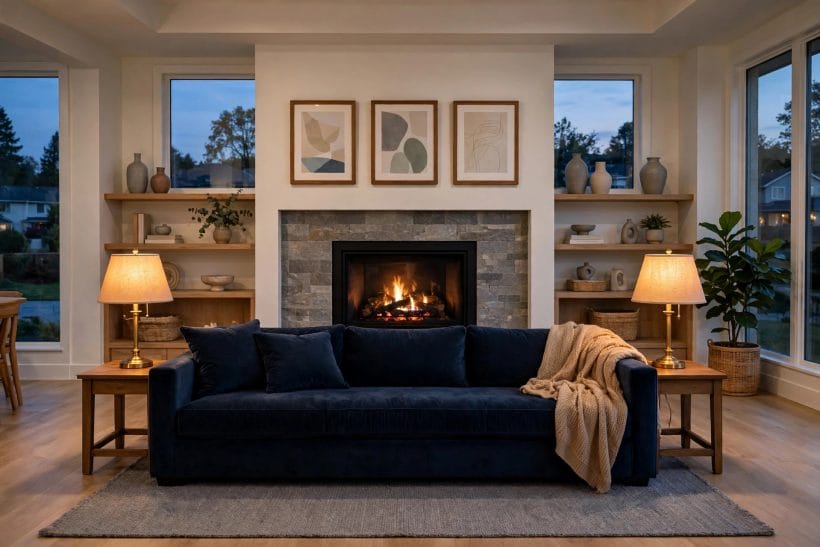
A navy sofa comes into its own in the evening. In lamplight, the deep blue softens, the velvet catches the light, and the room gathers around the sofa in a way that a pale sofa never quite manages. The room pictured here shows the formula: a navy sofa facing a fireplace, warm table lamps on either side, a grey rug underfoot, and framed art on the wall above. Nothing is bright, and nothing needs to be.
Warm light is essential in an evening room. Cool, harsh lighting can make navy look flat and cold, while warm lamps make it look rich and welcoming. Two lamps, one at each end of the sofa, give an even, flattering light and avoid a single bright spot in the middle of the room. If the room has a fireplace, its glow does similar work, and the sofa becomes the natural place to sit and watch it.
Keep the rest of the evening room quiet and warm. A grey or natural rug, wooden side tables, and a soft throw over one arm are enough. Dark walls can work with a navy sofa in a large room, but in most living rooms pale or warm neutral walls are kinder, since they reflect the lamplight back into the room. The navy sofa provides the depth; the walls and the lamps provide the warmth around it.
7. Modern Rooms, Pattern and Plants
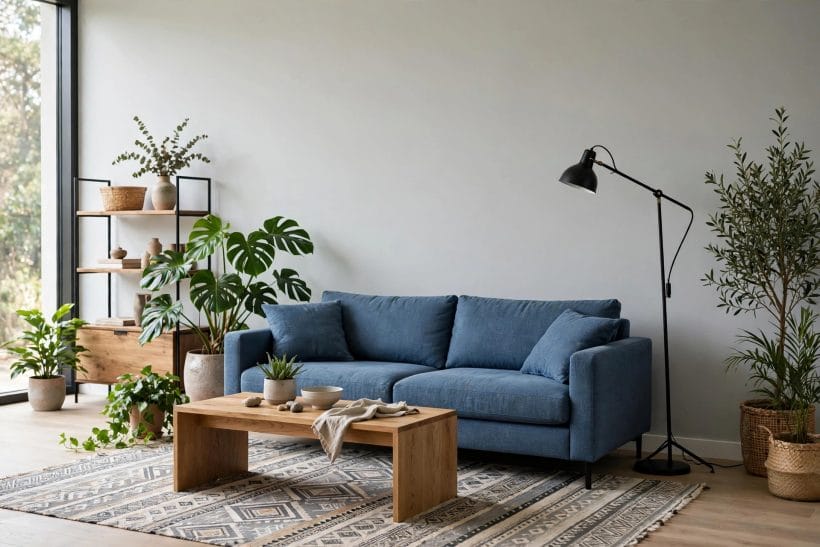
A mid-blue sofa suits a modern living room because it is a colour that does not demand a traditional setting. Against a plain pale grey wall, with a patterned rug, a black floor lamp and plenty of plants, the sofa reads as a calm, contemporary choice rather than a period piece. The pattern in the rug and the green of the plants both stop the blue from feeling flat, while the plain wall behind keeps the room from feeling busy.
Pattern is best kept to one place in a modern blue room. A patterned rug, a single patterned cushion, or a piece of patterned art is enough. If the rug, the cushions and the curtains are all patterned, the sofa gets lost in the noise. Choose the rug as the pattern carrier, since it sits under the sofa and frames it, and keep the cushions in plain blue, cream or soft grey.
Plants are a modern blue room’s best friend. Green sits beside blue naturally, and a large leafy plant softens the straight lines of a modern sofa and a plain wall. One tall plant in a corner and one or two smaller plants on a shelf or a side table are plenty. The plants also give the room life in a way that no object can, and they suit a mid-blue sofa in every season, since green and blue never fall out of step.
8. Light, Sheer Curtains and a Pale Sofa
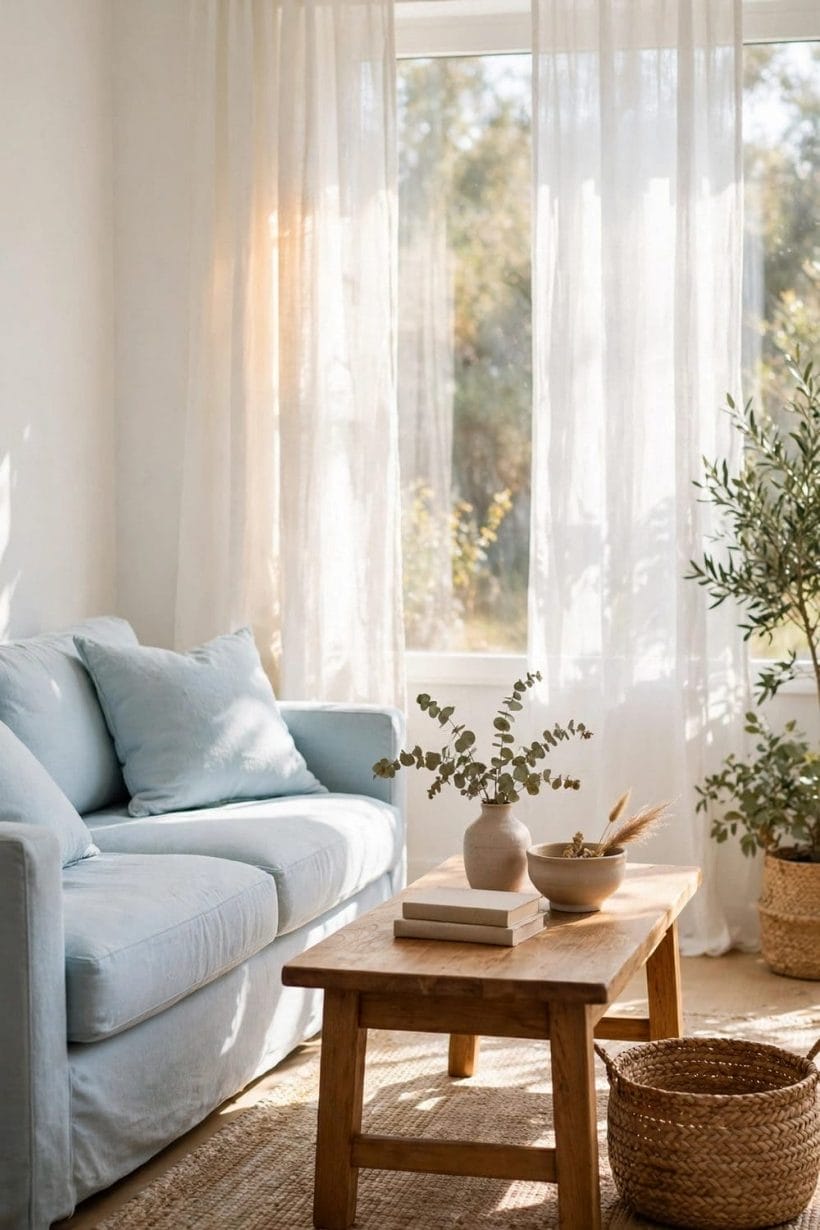
Sheer curtains and a pale blue sofa are a natural pairing, because both are about light. Sheer curtains soften daylight without blocking it, so a pale sofa is lit gently through the day and never looks washed out or harsh. In the room pictured here, sunlight falls through the sheers onto the pale sofa, the wooden coffee table and the woven rug, and the whole room glows without any single object demanding attention.
Choose curtain fabric with the sofa in mind. White or cream sheers suit a pale blue sofa best, since they keep the room’s palette light and let the blue be the only cool colour. Heavier curtains in a strong colour would compete with the sofa and darken the window wall, which defeats the purpose of a pale, light room. If privacy matters, a sheer layer behind a plain curtain gives both softness by day and cover at night.
Keep the furniture in a sheer-curtained room light as well. A wooden coffee table, a woven basket and a natural rug all suit the soft light, while dark, heavy furniture would sit awkwardly against it. The pale blue sofa, the sheers and the light wood together make a room that feels calm in the morning, bright at midday, and gentle in the evening, which is exactly what a living room should do.
9. Open-Plan Living and Dining Rooms
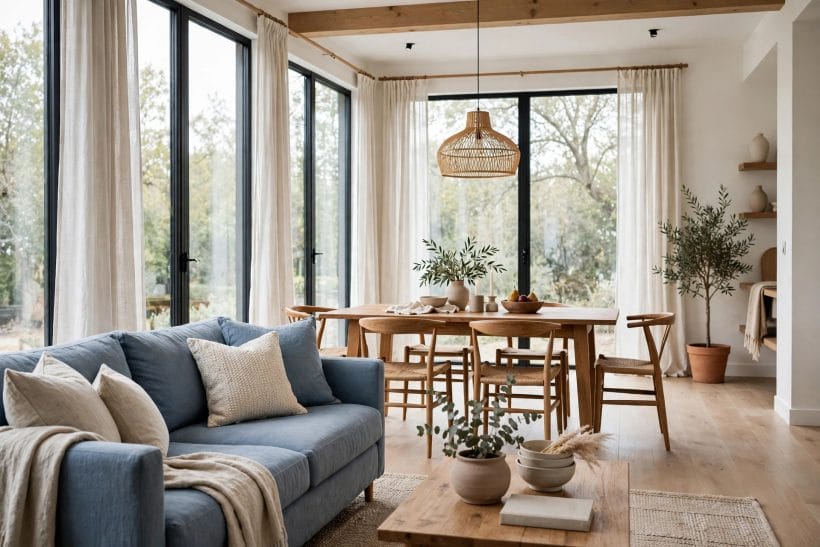
In an open-plan room, a blue sofa can mark the living zone without any wall being built. Place the sofa with its back to the dining area, or at an angle that faces the living side of the room, and the colour itself tells you where sitting ends and eating begins. A dusty blue sofa works well here, since it is strong enough to mark the zone but soft enough not to dominate the dining table behind it.
Repeat the living room’s materials, not its colour, in the dining zone. Wooden dining chairs, a wooden table and the same light floor tie the two zones together, while the blue stays on the living side. If blue is repeated at the dining table, keep it to a single small touch, such as a cloth or a vase, so the zones stay distinct. The room should feel like one space with two moods, not two rooms pushed together.
Tall windows help an open-plan blue room enormously, since they give both zones daylight and a shared view. Light curtains, kept the same on every window, tie the long wall together, and a rug under the sofa alone marks the sitting zone on the floor. The dusty blue sofa, the wooden dining set and the tall glazing together make an open-plan room feel generous, because each zone has its own character and the whole room still reads as one.
10. Walls, Wood and Finishing Touches
When the sofa, the cushions and the rug are settled, the walls and the wood finishes decide whether the room feels finished. Warm white walls are the safest companion for any blue sofa, from pale to navy, since they reflect light and let the blue stand out. Soft grey walls suit mid-blue and navy sofas well, especially in rooms with good daylight, while pale cream walls warm a navy sofa in a room that gets less sun.
Wood tone is the second finishing decision. Light oak suits pale and mid-blue sofas, since it keeps the room bright and casual. Warm walnut suits navy and teal sofas, since it adds richness without darkening the room too far. Whichever wood you choose, keep it consistent across the coffee table, the side tables and the shelving where you can, so the room reads as one considered space rather than a collection of separate purchases.
Finishing touches should be few and quiet. A piece of art that picks up the blue, a plant, a throw folded over one arm, and a lamp that gives warm evening light are enough. Resist the urge to add blue to every surface: a blue vase, blue curtains, a blue rug and a blue sofa together will tire the eye quickly. One strong blue, supported by pale walls, warm wood and soft texture, is the whole recipe, and it is enough.
Final Considerations
A blue couch rewards restraint. Choose the shade for the light your room gets, keep the walls pale, warm the sofa with cream cushions and natural wood, and repeat the blue only sparingly. Pale blue suits small, bright and coastal rooms; mid-blue and teal suit everyday family rooms; deep navy suits evening rooms where lamplight can soften it. Each version follows the same rule, and each version leaves the room calm enough to live in.
Before settling, look at your sofa in your own room’s light, morning and evening, since blue changes more than most colours between daylight and lamplight. If the shade still pleases you at both times of day, the rest of the room will fall into place around it with pale walls, warm wood, soft cushions and a rug that grounds the arrangement. A blue couch chosen that way is not a gamble; it is a room with a clear, calm centre, and a colour you will still like years from now.
Related reading: small living room ideas, tiny living room ideas, tiny house living room ideas, farmhouse living room ideas, tiny house interior paint colours, tiny house loft ideas, and tiny bedroom ideas.

0 Comments