
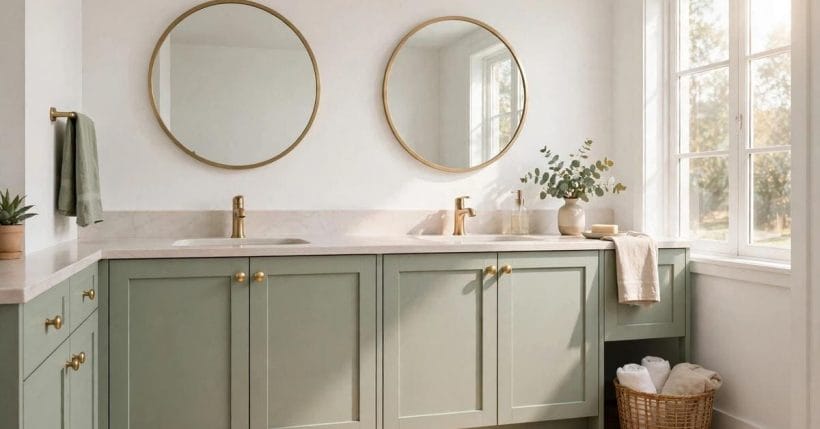
A bathroom cabinet is one of the few pieces of furniture you touch every single day, and its painted finish sets the mood of the whole room. A freshly painted vanity can make a tired bathroom feel calm and cared for, while a peeling or yellowing finish drags the room down no matter how tidy the rest of it is. Paint is also forgiving: it lets you change the character of a bathroom without replacing the cabinetry, and it lets a plain cabinet look deliberate rather than leftover.
This guide stays with that one subject, the painted finish of bathroom cabinets and vanities, and nothing else. It looks at how different finishes behave in a steamy room, which colours flatter small and large bathrooms, how door profiles and hardware change the look of the paint, and how to keep a painted finish sound over time. If you are gathering painted bathroom vanity ideas for a refresh, the ten ideas below cover the finish from every angle that matters, so you can choose a colour and a sheen with confidence rather than guesswork.
1. Reading a Painted Finish: Matte, Satin and Gloss
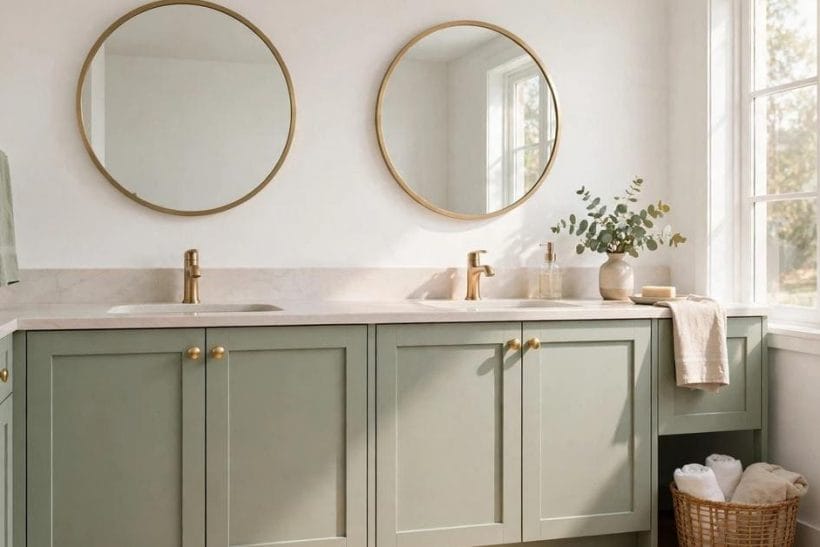
The finish you choose matters as much as the colour, because it decides how light moves across the cabinet doors and how easily the surface wipes clean. A matte finish has almost no shine, so it softens a room and hides small marks kindly, which suits bathrooms where the light is gentle and the mood is quiet. It does show water spots and fingerprints a little more readily than shinier finishes, so it asks for a soft cloth and a prompt wipe when splashes land. In a bathroom used mainly by adults, that small habit is easy to keep, and the calm look of matte paint rewards it.
A satin finish sits in the middle, with a gentle sheen that catches the light without glaring, and it is the easiest of the quiet finishes to keep clean. Damp cloths glide over it, toothpaste splashes lift without a fight, and the surface still looks soft rather than shiny. For a family bathroom or a room where the cabinet doors get touched often, satin is usually the most forgiving choice, since it balances a calm appearance with practical cleaning. Eggshell is a close cousin, slightly softer in sheen, and it behaves much the same way in daily use.
A gloss finish is the boldest of the three, with a bright shine that bounces light around the room and makes colours look deeper and richer. It suits a bathroom with good daylight, where the shine reads as crisp rather than harsh, and it wipes cleaner than any other finish. Its one demand is honesty: gloss shows every ripple, brush mark and dent in the door beneath it, so the surface underneath needs to be smooth before painting begins. If the doors are already smooth, gloss gives a polished, tailored result; if they are rough, satin will flatter them far better.
2. Soft White and Warm Cream: The Quiet Classics
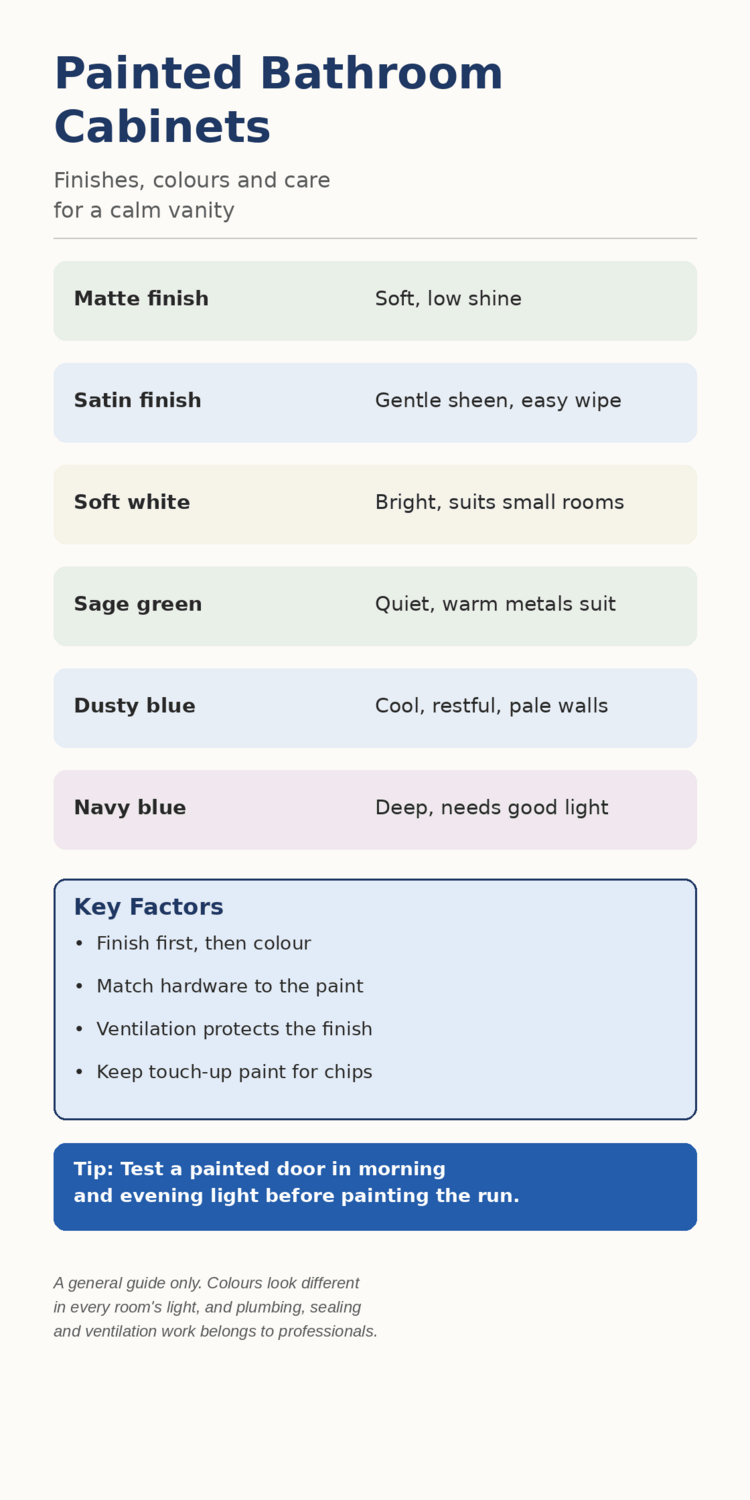
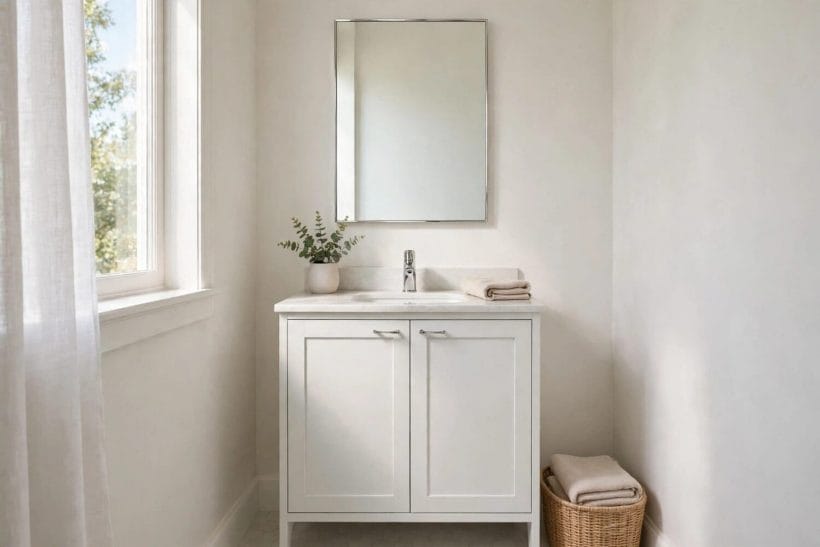
Soft white is the safest painted colour for a bathroom cabinet, and it earns that reputation honestly. It brightens the room, suits any wall colour, and makes a small bathroom feel larger than it is, since the cabinetry blends with pale walls instead of breaking the room into blocks. A soft white with a warm undertone feels welcoming rather than clinical, while a cooler white feels crisp in a bathroom with plenty of daylight. Hold a painted door or a large swatch against the wall in your own bathroom before deciding, since white shifts with the light in the room.
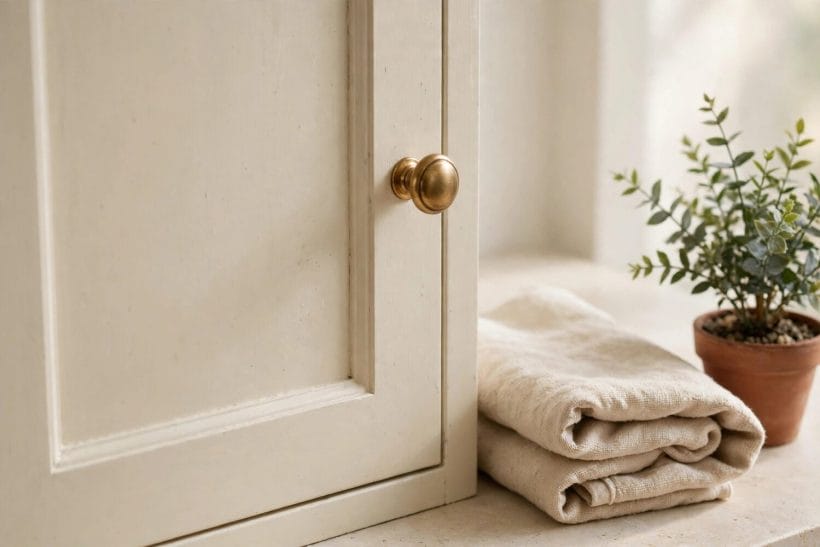
Warm cream goes one step further toward cosiness, and it suits bathrooms with wooden floors, brass fittings, or warm-toned towels. Cream softens the contrast between the cabinet and the wall, so the room feels layered rather than stark, and it flatters skin tones in the mirror in a way that stark white sometimes does not. It pairs beautifully with brushed brass knobs and with plants, both of which warm the room further. In a bathroom with little daylight, cream can feel kinder than white, since it never looks cold or grey in dim light.
Both colours share one practical advantage: touch-ups are simple. A small chip in a white or cream cabinet is easy to disguise with a dab of matching paint, and the repair rarely shows, since pale colours hide edges well. Keep a small labelled pot of the exact paint used, and note the colour name on the pot, so a future touch-up matches rather than guessing. Pale cabinets do show dust and splashes sooner than dark ones, but a quick wipe keeps them fresh, and the brightness they give back is worth that small habit.
3. Sage Green and Dusty Blue: Colour With Calm
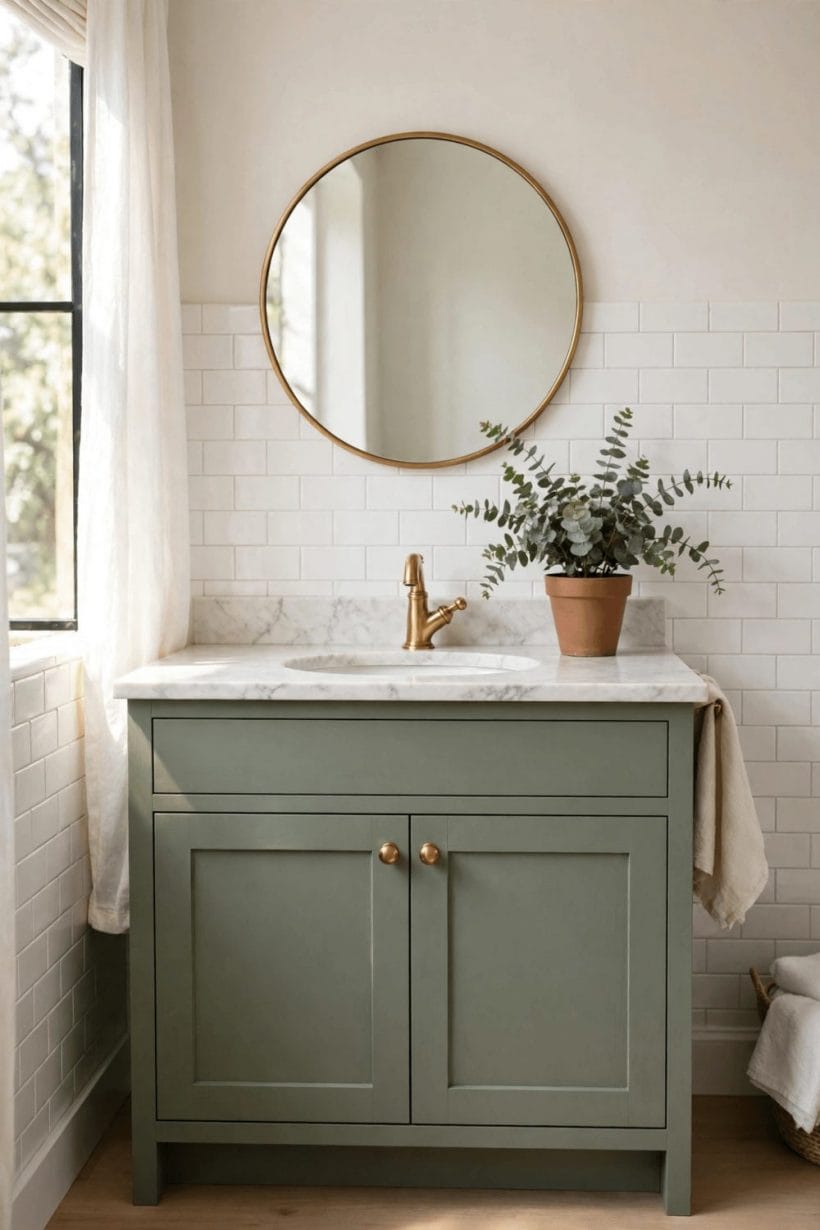
Sage green has become a favourite for painted bathroom cabinets because it brings colour into the room without raising the temperature of it. It is a muted, grey-green shade that feels restful in the morning and gentle in the evening, and it pairs naturally with warm metals, pale counters, and plants. A sage green vanity turns a plain bathroom into a room with a point of view, yet it never shouts, which is why it suits both traditional rooms and simple modern ones. In a bathroom with a window, sage green changes softly through the day, greener in daylight and greyer in lamplight.
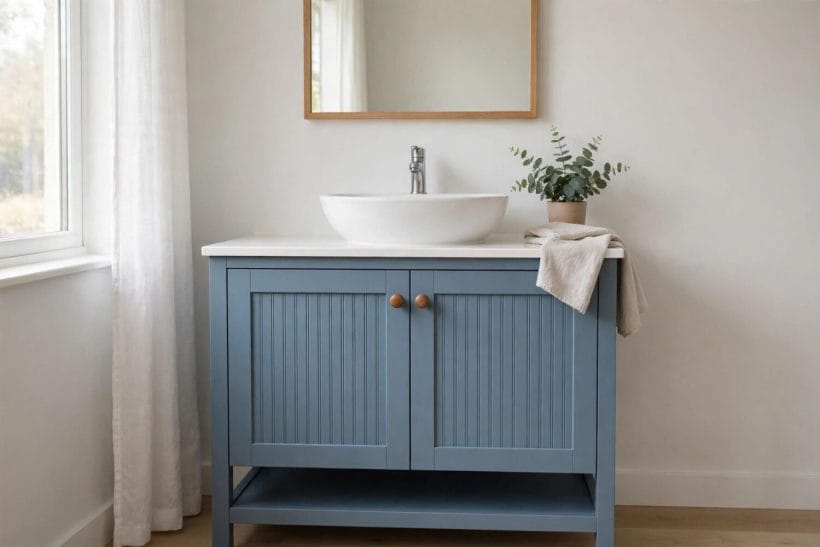
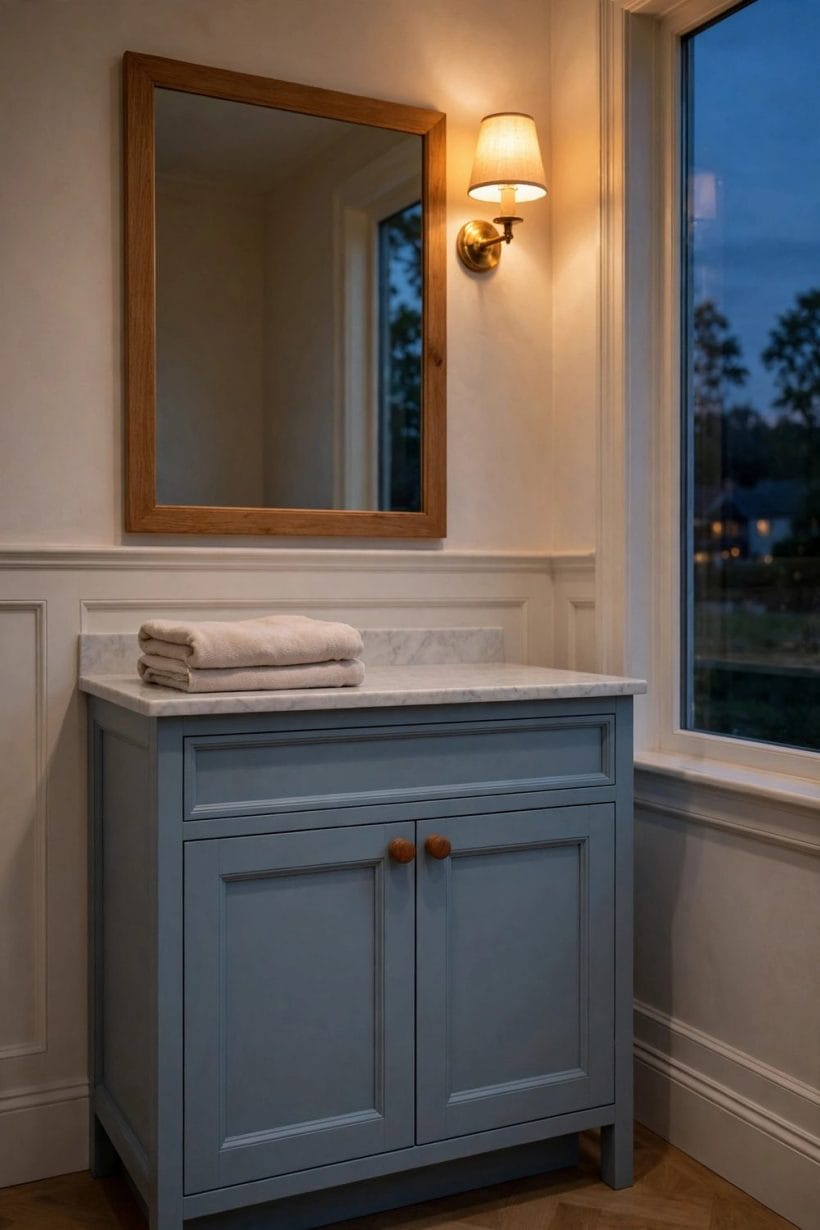
Dusty blue works in a similar register, cool where sage is warm, and it suits bathrooms with pale walls and chrome or nickel fittings. It reads as calm and clean, and it flatters white basins and pale towels, which keep the room feeling fresh rather than cold. A dusty blue cabinet with wooden knobs feels cottage-like and relaxed, while the same colour with sleek pulls feels tailored and contemporary, so the hardware you choose steers the mood. Like sage, it is forgiving in small rooms, since muted colours recede rather than crowding the walls.
Both colours reward a little restraint elsewhere in the room. When the cabinet carries the colour, the walls can stay pale, the towels can stay simple, and the room still feels finished. If the walls are already coloured, a muted cabinet colour still works, provided the two colours share a similar softness rather than fighting for attention. Test the colour on a single door first, and live with it for a few days in the room’s real light before painting the whole run, since muted colours are the ones most changed by lamplight.
4. Navy Blue and Charcoal: Deep Colour, Done Neatly
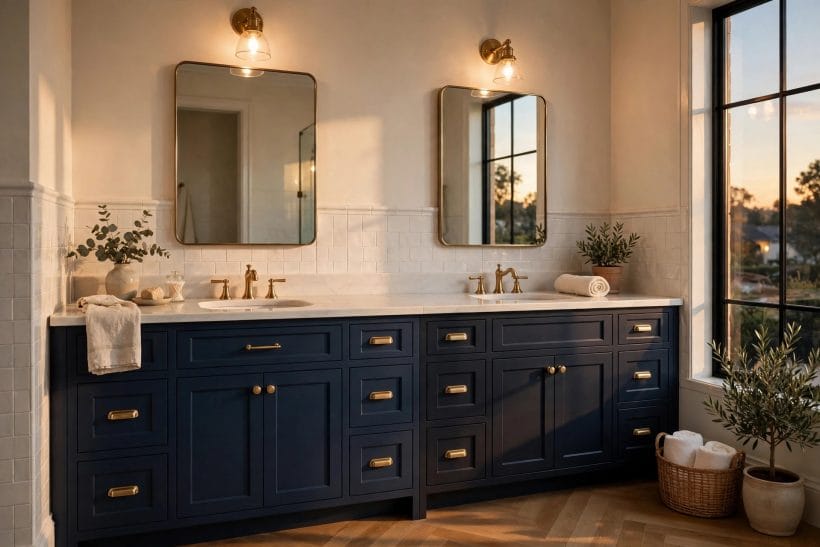
Deep colours make a bathroom cabinet feel like furniture rather than fitment, and navy blue is the most reliable of them. A navy vanity anchors the room, gives pale walls something to lean against, and looks particularly handsome with brass pulls and a pale countertop. It suits larger bathrooms best, where the dark mass of the cabinet has room to breathe, but it can work in a smaller room too, provided the walls stay pale and the lighting is generous. Navy reads as tailored and confident, and it hides everyday marks better than pale colours do.
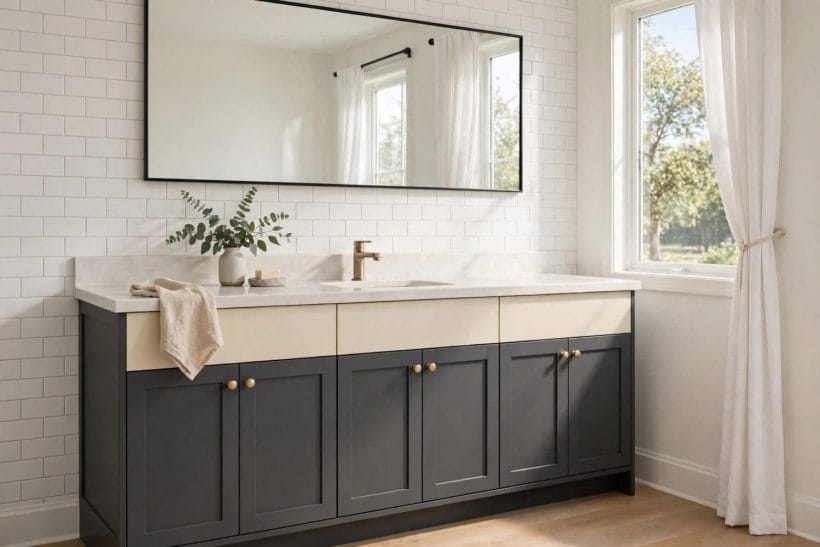
Charcoal is navy without the blue, a deep grey that feels modern and quiet, and it pairs with almost any metal finish, from chrome to brass to black. A charcoal cabinet with warm cream drawers above it, or with a pale countertop, avoids feeling heavy, since the pale element lifts the dark one. Charcoal also suits rooms where the walls are warm white, since the contrast is strong but not stark, and it gives towels and plants a calm backdrop. Like navy, it asks for good light, so a dim bathroom may need an extra lamp or a brighter mirror light before going dark.
Deep colours demand neat edges, since a dark door shows a wobbly paint line far more plainly than a pale one. Take time over the edges where the door meets the frame, and let each coat dry fully before adding the next, since rushed coats show as ridges in dark paint. The reward for that patience is a cabinet that looks made rather than painted, with a depth of colour that pale finishes cannot match. If you are unsure about going dark, paint one door first and judge it in the room for a few days.
5. Shaker, Slab and Beadboard Doors: How Profile Changes the Paint
The profile of a cabinet door changes how paint reads on it, and the three common profiles each flatter paint in a different way. A shaker door, with its simple recessed panel and clean frame, is the most forgiving profile for paint, since the frame catches a soft shadow that gives the door depth without fuss. Painted shaker doors suit almost any bathroom, from cottage to contemporary, and they look equally good in pale and deep colours. The recessed panel also hides small imperfections, which makes shaker the kindest choice for cabinets being repainted.
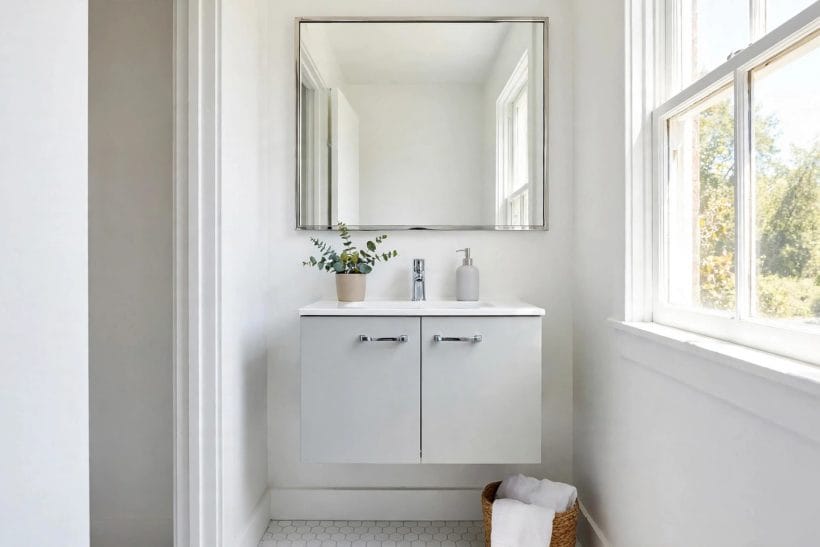
A slab door, flat and frameless, gives paint its cleanest canvas, and it suits modern bathrooms where the look is calm and unbroken. Flat doors show colour most purely, since nothing interrupts the surface, but they also show every flaw, so the door needs to be smooth before painting. Slab doors in soft white or pale grey look serene and spacious, while the same doors in navy or charcoal look bold and architectural. Keep the hardware simple on slab doors, since the flat surface is the feature, and busy handles fight it.
Beadboard doors, with their narrow vertical grooves, bring texture under paint, and the grooves catch light and shadow in a way that flat doors never do. Painted beadboard feels cottage-like and handmade, and dusty blue or sage green suit it especially well, since the colour settles into the grooves and gives the door a lived-in softness. The grooves do collect dust, so a soft brush now and then keeps them fresh, and the paint needs to reach into each groove evenly. For a bathroom that wants character without colour drama, beadboard in a pale shade is a gentle answer.
6. Two-Tone Vanities: A Light Top and a Dark Base
A two-tone painted vanity, with one colour on the drawers and another on the doors below, is a simple way to make a bathroom cabinet feel designed rather than assembled. The usual arrangement puts the lighter colour on top, where it catches the light, and the darker colour below, where it grounds the cabinet and hides scuffs from feet and cleaning. Warm cream drawers over charcoal doors, for instance, give a room both brightness and depth, while soft white over sage green feels fresh and calm. The split breaks a long run of cabinetry into two bands, which suits wide double vanities especially well.
The key to a two-tone finish is a clear, straight line where the colours meet, since a wavy join spoils the whole effect. Mask the edge carefully, and let the first colour dry fully before painting the second, so the masking does not lift the paint beneath it. Keep the two colours related rather than clashing: neighbours on the colour family, or a pale shade with its deeper version, sit together far more happily than two unrelated brights. When the colours share a similar softness, the cabinet reads as one piece with two tones, not two cabinets stacked.
Hardware can either underline the split or soften it. Matching knobs across both colours ties the two tones together, while different metals on each tone can feel fussy and unsettled. Brass knobs suit most two-tone combinations, since warm metal flatters both pale and deep paint, and a single style of knob across the whole cabinet keeps the eye calm. If the two tones already give the cabinet plenty of character, let the hardware stay quiet and let the paint do the talking.
7. Hardware That Flatters Paint
Hardware is the jewellery of a painted cabinet, and the right knobs and pulls can lift a simple paint job into something that looks considered. Brushed brass knobs warm up almost any painted colour, from sage green to navy, and they suit traditional and relaxed bathrooms alike. Chrome and nickel pulls feel cooler and crisper, and they suit pale cabinets and modern rooms, where their shine echoes the mirror and the taps. Wooden knobs soften a painted cabinet and suit cottage bathrooms, especially in dusty blue or cream, where they add a handmade touch.
Size matters as much as finish. A small knob can look lost on a wide drawer, while an oversized pull can overpower a narrow door, so hold the hardware against the door before fixing it and judge it at arm’s length. Pulls suit drawers, since they give a comfortable grip for a heavier drawer, while knobs suit doors, where a single point of grip is enough. Keep one style across the whole cabinet run, since mixed hardware styles make a painted cabinet look unsettled, even when each piece is handsome on its own.
Hinges deserve a thought too, since they frame the painted door every time it opens. If the hinges are visible, choose a finish that matches the knobs, so the metal reads as one family rather than a collection of leftovers. If the hinges are hidden, the choice is simpler, and the paint itself carries the look. When repainting old cabinets, new hardware is often the cheapest transformation of all, since fresh knobs on a freshly painted door make the whole cabinet feel new, even when nothing else has changed.
8. Keeping Paint Sound in a Steamy Room
A bathroom is a hard home for paint, since steam, splashes, and damp towels all work against it, and a painted cabinet needs a little routine care to stay sound. Wipe splashes promptly with a soft cloth, since water left sitting on a painted edge can soften the finish over time, especially near the basin where splashes land daily. Avoid harsh scouring pads, which dull the sheen and scratch the surface, and choose a gentle cloth and mild cleaning instead. A cabinet that is wiped when splashed stays fresh far longer than one that is scrubbed hard once in a while.
Ventilation is the quiet protector of painted cabinetry, since steam that lingers in the room settles on every surface, including the cabinet doors. Opening a window after a shower, or running the room’s ventilation until the mirror clears, lets the paint dry between uses rather than staying damp. If the room’s ventilation is weak or the fan is noisy and unused, ask a qualified professional to look at it, since fitting or fixing ventilation is work for a professional, not a casual adjustment. Dry air between showers is the single kindest thing you can give a painted finish.
Watch the edges most of all, since paint fails at edges before it fails in the middle. The bottom edge of a door near the floor, the edge beside the basin, and the corners of drawers are the places where chips and lifting begin, and catching them early keeps a small repair small. A dab of matching paint on a fresh chip, applied when the surface is clean and dry, blends in well and stops damp reaching the wood beneath. If paint is lifting widely or the cabinet beneath feels soft or swollen, that is a sign of damp behind the finish, and a professional should judge the cabinet before more paint goes on.
9. Repainting Cabinets You Already Own: Prep, Patience and Touch-Ups
Repainting existing bathroom cabinets is one of the most rewarding refreshes a bathroom can have, and the result depends far more on preparation than on the painting itself. Start by cleaning the doors thoroughly, since grease and old cleaning residues stop new paint gripping, and let the doors dry fully before any further work. A light sanding gives the new paint something to hold onto, and wiping away the dust afterwards keeps the finish smooth. Remove the doors and hardware where you can, since painting a door flat on a bench gives a far neater result than painting it upright in place.
Thin coats are the secret to a professional-looking repaint, since thick coats sag, ridge, and take far longer to harden. Let each coat dry fully before adding the next, and resist the urge to judge the colour until the second coat is on, since the first coat always looks patchy. A primer suited to the cabinet surface helps the paint grip and evens out the colour, especially when painting over a dark finish with a pale one. Work in good light, and check each door from an angle as well as straight on, since angled light shows ridges that head-on light hides.
Some jobs belong to a professional even in a repaint. Moving pipework or taps to suit a new cabinet layout is plumbing work, and sealing around a basin where water can reach the cabinet is work where a poor seal can cause hidden damp, so both belong to qualified professionals if they are needed at all. A straightforward repaint of doors in place, with no plumbing or sealing changes, is a different matter, and it rewards patience more than skill. Keep the leftover paint labelled and stored well, since touch-ups a year later only match when the paint is the same.
10. Small Bathrooms and Painted Cabinets
In a small bathroom, the painted cabinet is often the largest block of colour in the room, so its colour carries more weight than it would in a large room. Pale colours are the natural choice here, since soft white, pale grey, and warm cream keep the cabinet from pressing in on the room, and they reflect what light the room has. A single pale vanity against pale walls can almost disappear, which is a strength in a tiny room, since the eye travels past it to the mirror and the window instead of stopping at a dark block.
That does not mean a small bathroom must be colourless. A muted colour like sage green or dusty blue can work beautifully in a small room, provided the walls stay pale and the rest of the room stays simple. The trick is to let the cabinet be the one coloured thing in the room, with towels, walls, and fittings kept quiet around it. A small room with one confident colour feels designed, while a small room with several competing colours feels crowded, so restraint is the small bathroom’s best friend.
Scale matters as much as colour in a tiny room. A compact single vanity suits the room better than a wide double one squeezed against the walls, and slab or shaker doors keep the look calm where fussy profiles would crowd it. Keep the countertop clear, with only the everyday essentials on show, since clutter on top of a painted cabinet breaks the clean line of the paint. A plant, a folded towel, and clear space around the basin let the painted finish breathe, and a small room that breathes feels larger than its measurements suggest.
Final Considerations
Choosing a painted finish for a bathroom cabinet comes down to three quiet decisions: a sheen that suits how the room is used, a colour that suits the room’s light and size, and hardware that ties the two together. Satin suits most bathrooms, pale colours suit small ones, deep colours suit rooms with generous light, and muted colours suit rooms that want character without drama. This guide to painted bathroom vanity ideas has kept to the finish itself, since the finish is what you live with every day, and getting it right makes the whole room feel considered.
Before painting, test the colour on a single door in the room’s real light, morning and evening, and live with it for a few days. Check the ventilation, keep the leftover paint for touch-ups, and ask a professional about any plumbing, sealing, or ventilation work the refresh might need. A painted cabinet rewards that unhurried approach with years of calm service, and a bathroom that feels cared for every time you walk into it.
Related reading: tiny bathroom ideas, gray cabinet bathroom ideas, blue cabinet bathroom ideas, black cabinet bathroom ideas, built-in bathroom vanity, bathroom vanity buying guide, and tiny house designs.

0 Comments