

Custom curtains change a room more quietly and completely than almost any other purchase. If you are thinking of ordering through calico corners or a similar custom fabric retailer, a few calm checks first will protect the result.
This guide lists exactly what to measure, sample, ask and get in writing, so the drapes you imagine are the drapes that arrive.
1. At a Glance: Quick Questions and Honest Answers
Most ordering mistakes happen before any fabric is cut: a measurement taken once instead of twice, a colour judged only under shop lighting, a quote that sounded complete but quietly left out lining or fitting. The table below gathers the questions experienced buyers ask first. Treat every answer as something to confirm with the retailer for your own order, because fabrics, services and policies vary and no guide can speak for a specific store’s current terms.
| Question | What to check |
|---|---|
| Should I measure myself or book a measuring service? | Ask whether the retailer offers measuring, what it covers, and who is responsible if a measurement proves wrong. |
| Can I take samples home first? | Ask how samples are ordered, how large they are, and whether you can see the fabric in your own light before committing. |
| What does the quote include? | Ask for an itemised written quote: fabric, lining, heading, hardware, making, delivery and any fitting, each listed separately. |
| How long will it take? | Ask for the current estimated lead time in writing, and what could extend it, such as fabric arriving from a supplier. |
| What if the fabric has a flaw or the colour differs? | Ask how variations, flaws and dye-lot differences are handled, and what you should inspect when the order arrives. |
| How do I care for the finished curtains? | Ask for written care guidance for your exact fabric and lining combination before you order, not after. |
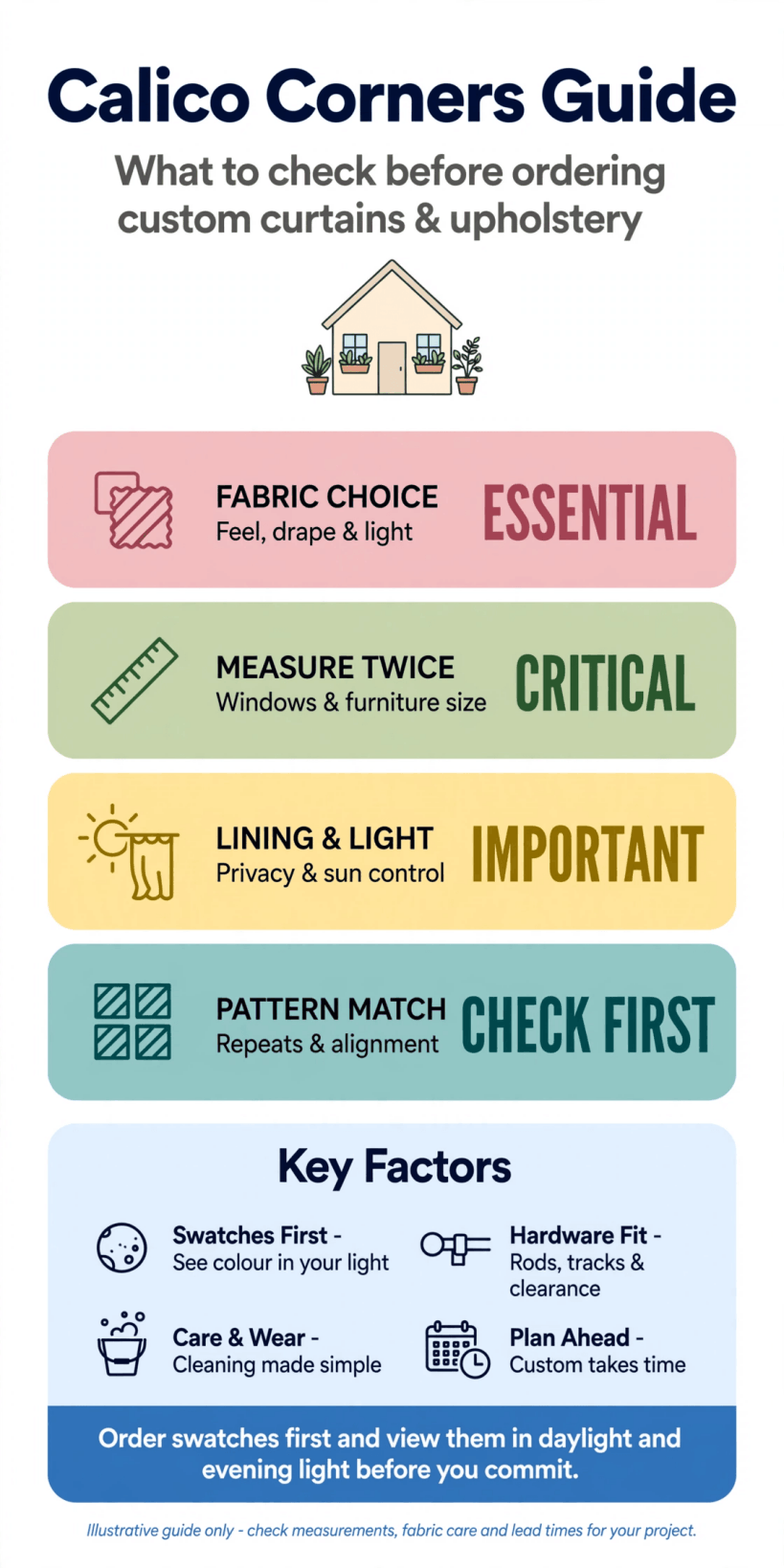
The pre-order checks that matter most, gathered on one page.
Notice that none of these questions is about taste. Taste you already have. They are about process, and process is what decides whether beautiful fabric becomes beautiful curtains. Windows are the eyes of the rooms discussed in Living Room Interior Design Ideas for Tiny Houses, and made-to-measure dressings are how small rooms in particular get a finished, deliberate look without bulky furniture doing the work.
2. Before You Fall for a Fabric: The First Checks
Begin with the window itself, not the swatch book. Photograph every window you plan to dress, straight on and from the side, and note what sits nearby: radiators, skirting, furniture that cannot move, and doors that swing into the curtain’s space. A fabric that behaves beautifully as a flat sample can pool onto a radiator or fight a door every day in real life, and spotting that now costs nothing.
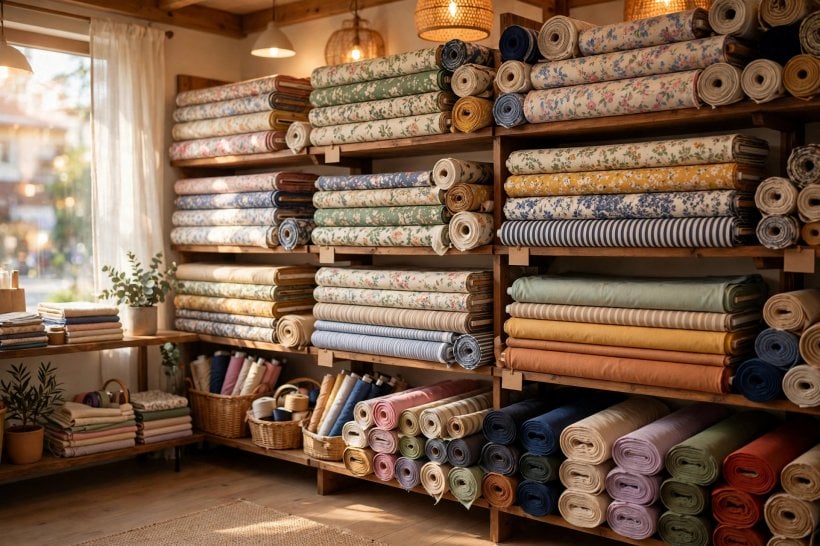
Next, decide the job the curtains must do before choosing how they look. Blackout for a bedroom, privacy without darkness for a bathroom or street-facing room, insulation for a draughty bay, or pure softness for a living room each point to different fabrics and linings. Write the job in one sentence per window. It becomes your filter for every later decision and your reference if a recommendation seems to drift. This purpose-first habit is the same one that makes Kitchen Ideas for Tiny Houses and Small Spaces work: function written down, beauty chosen to serve it.
- Photograph each window and its surroundings before visiting or ordering.
- Write one sentence per window describing the curtain’s main job.
- Note radiators, vents, doors and furniture the fabric will meet.
- Decide which windows are the priority if the budget needs staging.
3. Measuring: The Numbers Everything Else Depends On
Measuring is the least glamorous and most consequential step. Measure the width of the track or pole, not just the window, and decide how far beyond the glass the curtains should extend so daylight is not stolen when they are open. Measure the drop from where the track or pole will sit to where the fabric should finish: sill, below sill, floor, or a deliberate gentle puddle. Take each measurement twice, ideally at different times of day when you are fresh, and write the numbers down rather than trusting memory.
Ask the retailer exactly how they want measurements supplied, in which units, and whether their making allowances are added by them or expected within your figures. If the retailer offers a measuring visit, ask what it includes and whether using it changes who carries responsibility for accuracy. Keep your original notes and any sketches with measurements labelled; if two sets of numbers ever disagree, the labelled sketch is the one that settles arguments calmly. In compact homes the same discipline appears throughout Smart Tiny House Design Ideas: measure the reality, then design inside it.
4. Fabric Choices: Fibre, Weight and Light
Fabric behaviour matters as much as fabric beauty. Natural fibres like cotton and linen bring a soft, matte, lived-in quality and can relax or crease with humidity, while synthetics often hold colour and shape with less fuss and can suit busy or sunny rooms. Blends try to offer both. None is automatically better; the honest question is which behaviour suits your room’s sun, moisture and traffic, and a good retailer will talk you through the trade-offs for the specific fabrics you are considering.

Hold samples up to the window and look through them at different hours. A fabric that glows warmly at noon may look flat by lamplight, and a colour that sings in the shop can grey in a north-facing room. Check the weight in your hand: very light fabrics float and billow, heavier ones hang in calm folds and usually need sturdier hardware. Ask about pattern repeat if you are drawn to a print, because matching a repeat across wide curtains can use more fabric than a plain cloth, which affects the quantity to order. The layered colour thinking in Colorful Tiny House Interior Ideas applies here too: test bold choices in the real light before committing a whole room to them.
5. Linings, Headings and Hardware: The Hidden Half
Lining is not an upsell; it is half the curtain. A standard lining protects the face fabric from sunlight and gives body to the hang. Blackout lining serves bedrooms and media rooms. Thermal or interlined options add insulation and a plush, quiet drape that suits older, colder houses. Ask what lining the quote assumes, what alternatives exist for your fabric, and how each choice changes the finished look and the care instructions.
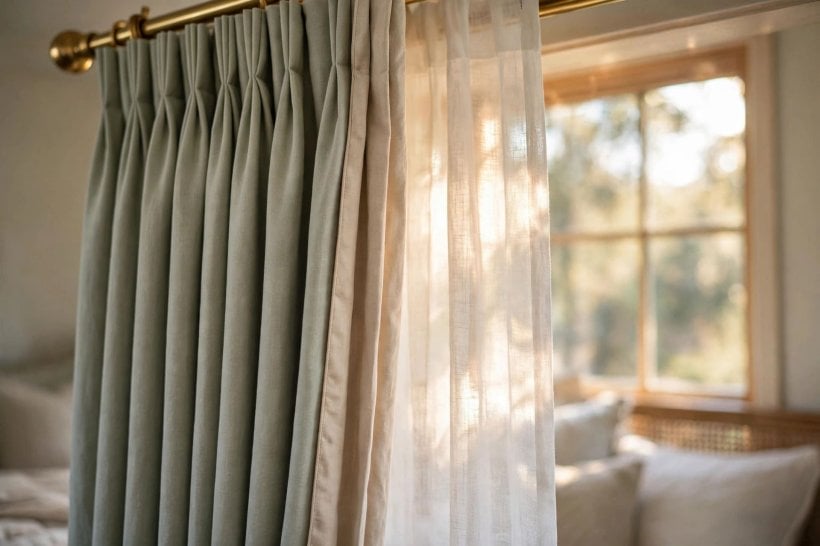
Headings shape the curtain’s personality: pencil pleats gather softly and suit many tracks, eyelets thread onto a pole in bold folds, pinch pleats look tailored and formal, and simple rod-pocket or tab styles lean relaxed. Check which headings suit your chosen fabric’s weight and your existing or planned hardware, and whether new poles, tracks, finials, brackets and fitting are part of the conversation or a separate purchase. Ask to see a made-up example of your shortlisted heading if you can; headings are much easier to choose in three dimensions than in a photograph, a lesson Tiny House Kitchen Design Ideas teaches about handles and finishes as well.
6. The Quote: Getting It Clear and in Writing
Ask for the quote in writing and itemised, so you can see what you are paying for line by line: fabric by quantity, lining, heading treatment, making, hardware, delivery and fitting if included. Prices vary with fabric, size and options, so compare like with like rather than chasing a single total. If one quote looks far lighter than another, the difference is usually a missing line rather than a miracle, and the itemised version tells you which line it is.

Confirm the practical terms while you are at it: how payment is staged, what the current estimated lead time is, how delivery is arranged, and what the process is if something arrives damaged or not as specified. Ask politely and directly; a professional retailer expects these questions and answers them plainly. Keep the final quote, your measurements and any emails together in one folder. If you are ordering fabric only, for your own making or an independent maker, confirm the exact quantity recommended and whether pattern matching has been allowed for, since fabric-only orders are usually cut to your instruction and harder to adjust later.
7. Samples and Swatches: Deciding at Home
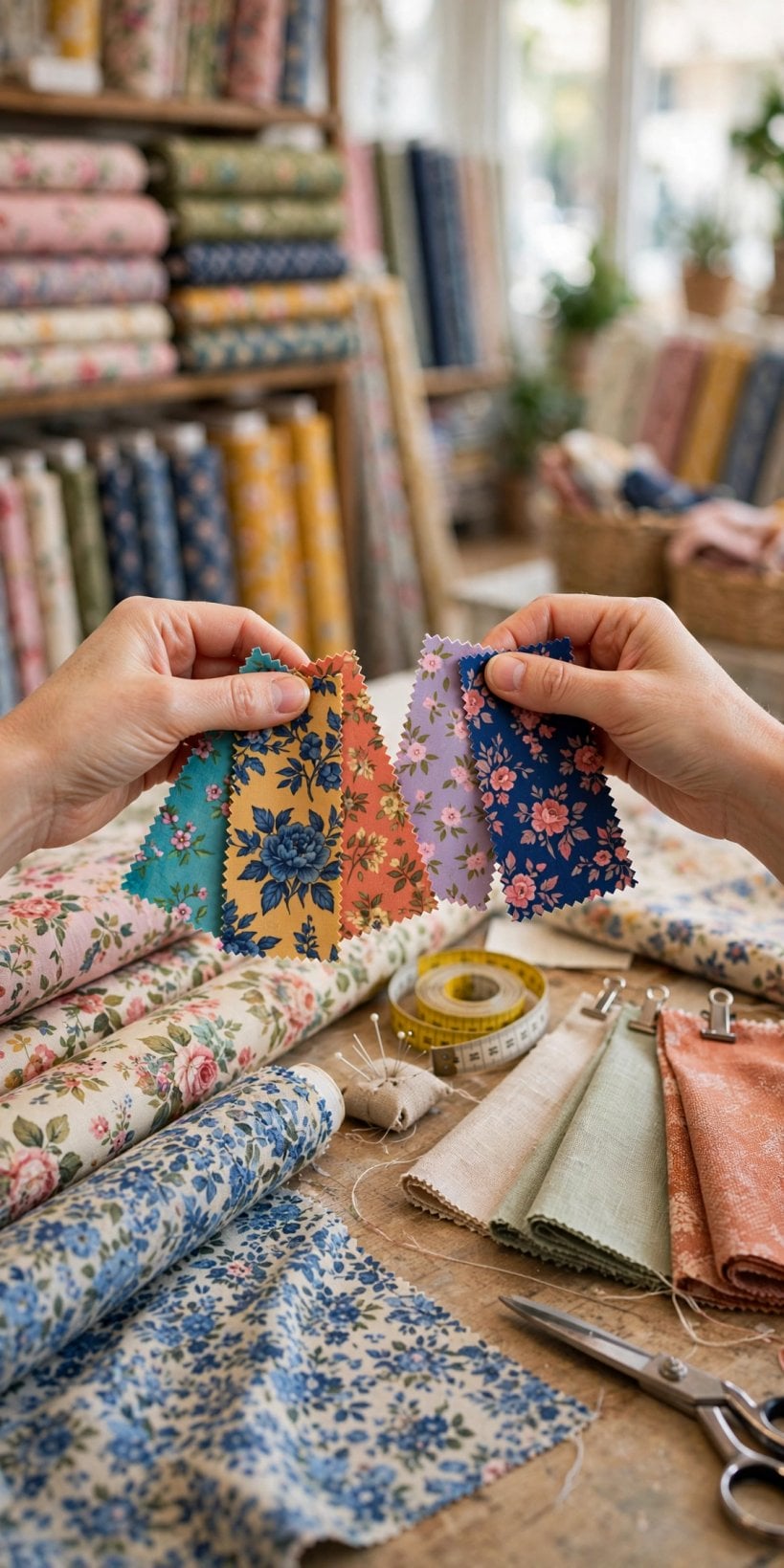
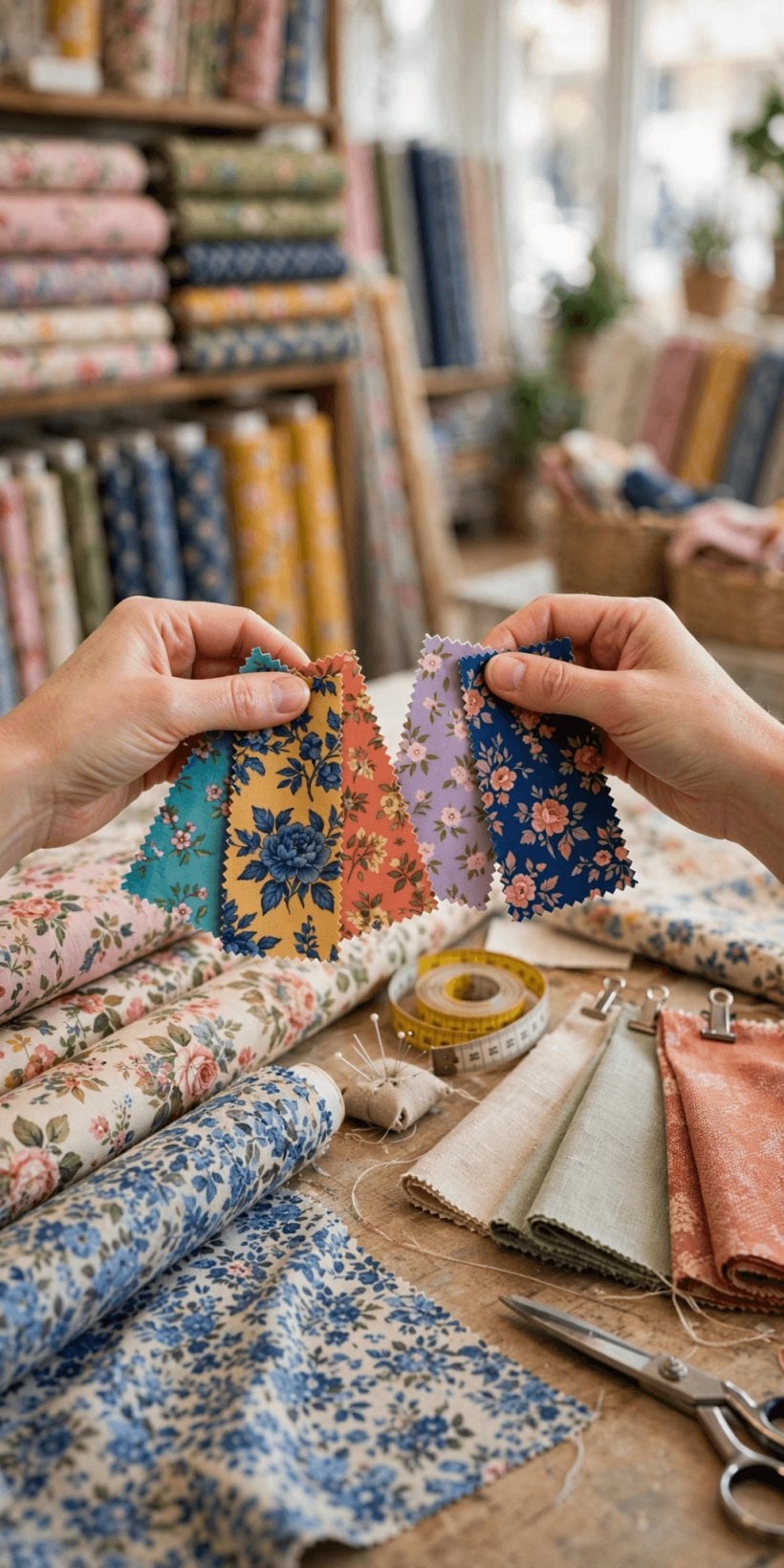
Never fall in love under retail lighting alone. Order or borrow samples of your shortlist and live with them for several days: pin them at the window, watch them at breakfast and by lamplight, and place them beside the sofa, rug, paint and wood they will actually live with. Colours are relationships, not absolutes, and a sample is the cheapest way to learn the relationship before several metres of fabric make it permanent.
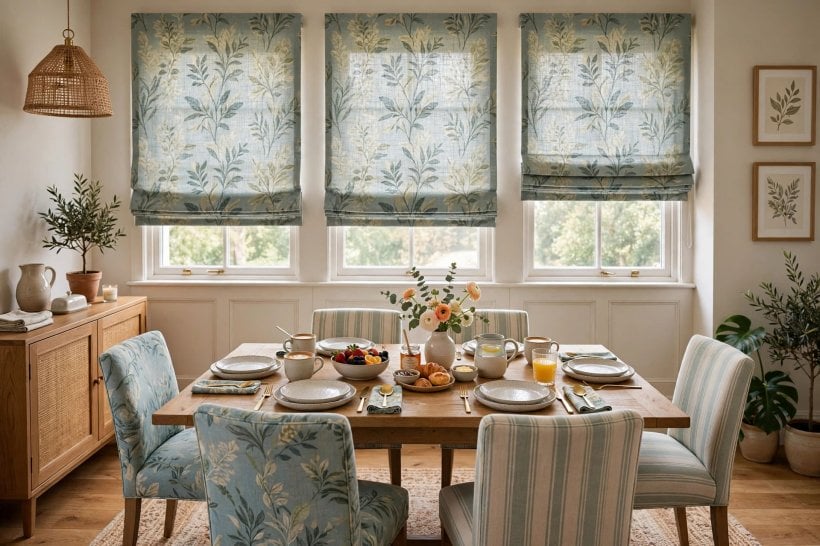
Check texture at arm’s length and across the room, because weave reads differently at distance. Rub the sample, crease it, and see how it recovers; hold it against the light to judge privacy honestly. If you are choosing fabric for upholstery or cushions as well, ask about durability guidance for that use and whether the same design is available in a suitable weight. Keep the winning sample, labelled with its full name and colour, until the finished curtains are hanging and approved; it is your reference for any colour conversation later. This test-at-home patience mirrors the approach in Home Interior Design Ideas for Tiny Houses, where small samples settle big decisions.
8. Lead Times, Delivery and Fitting Questions
Custom work takes the time it takes, and the right question is not how fast, but how predictable. Ask for the current estimated timeframe in writing, what stages it includes, and how you will be updated if fabric delivery or workroom schedules shift. If your curtains are tied to a deadline — guests, a move, a renovation finish — say so at the start, not the end, so the retailer can tell you honestly whether it is achievable.
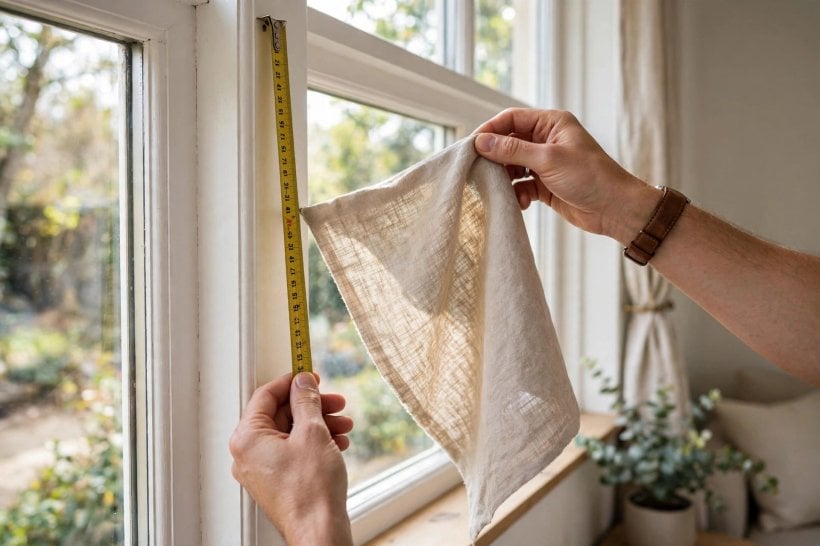
Clarify delivery and fitting arrangements in the same conversation: how the finished curtains arrive, whether fitting is offered for your order, what access or preparation your home needs on fitting day, and who disposes of packaging. When the curtains arrive, inspect them promptly against your sample and paperwork: check the fabric, the drop, the heading and the lining before they are hung if possible, and raise anything unexpected straight away while details are fresh. Keep the room ready for the result you planned back in the measuring stage, the way the finished spaces in Tiny House and Small-Space Interior Design Guide are photographed only after every practical layer is in place.
9. Care, Guarantees and Keeping the Paperwork
Ask how your exact fabric and lining combination should be cleaned before you order, because some fabrics prefer professional cleaning, some tolerate gentle washing, and some linings behave differently from their face fabrics. Get that guidance in writing and keep it with the curtains’ paperwork rather than relying on memory in two years’ time. Sunlight is the long-term enemy of most fabrics, so ask whether your chosen cloth is recommended for very sunny windows, and consider lining and blinds as protection where the sun is strong.
Also ask what the retailer says about workmanship: what they will put right if a seam, heading or hem falls short of the agreed specification, and how you would raise it. Keep your itemised quote, final measurements, the labelled winning sample and care notes together; together they are the complete story of your order and they make any later conversation — a repair, a matching extra curtain, a second room — vastly easier. Treat the paperwork as part of the purchase, because for custom goods it genuinely is.
10. A Calm Pre-Order Checklist
Run this list in the final day before you commit, and only order when every line can be ticked or consciously accepted. Photographs of every window taken and saved. The job of each curtain written in one sentence. Measurements taken twice, labelled on a sketch, and supplied in the format the retailer requested. Samples lived with at home in morning and evening light. Lining and heading chosen for the fabric’s weight and the room’s needs, with hardware accounted for.
Then the paperwork lines: an itemised written quote you understand line by line. Payment stages and the estimated lead time confirmed in writing. Delivery and fitting arrangements clear, including what happens if something arrives not as specified. Care guidance for your fabric and lining obtained. The winning sample labelled and kept. If a line cannot be ticked, that line — not the whole project — is what to resolve before ordering. One unresolved line handled early is a conversation; the same line found after delivery is a dispute, and the whole point of checking first is to keep your project in conversation territory.
Final Considerations
Ordering custom curtains is a pleasure when the checking is done early and lightly. Measure twice, sample honestly, choose lining and heading as carefully as the face fabric, and keep every promise in writing, and an order with calico corners or any custom fabric retailer becomes a calm, predictable path to windows that finish your rooms properly. The fabric will do the beautiful part. Your checklist simply makes sure the beautiful part is also the right size, the right colour in your light, and cared for in the right way for years.




0 Comments