

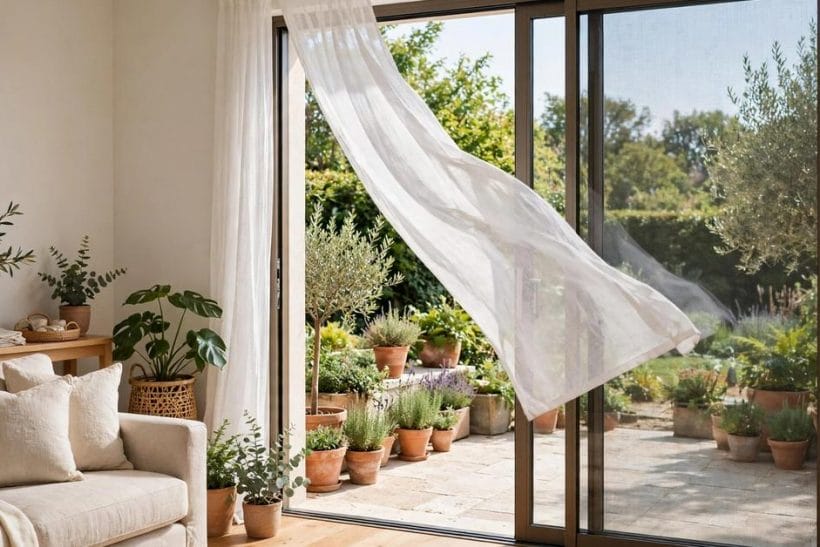
1. The Inside-Screen Door at a Glance
Most sliding doors carry their fly screen on the outside rail, which is why a sliding glass door with screen on inside stops people mid-scroll: it looks like the door was hung backwards. It was not. Some systems are designed with the screen running on the room side of the glass — and some households ask for it deliberately, for weather, for pets, for the way they actually use the door. This guide explains how the configuration works, what it genuinely does better and worse, and what to check before ordering or judging one, in general terms: systems vary by maker, and no brand names or invented specifications are needed to understand the choice.
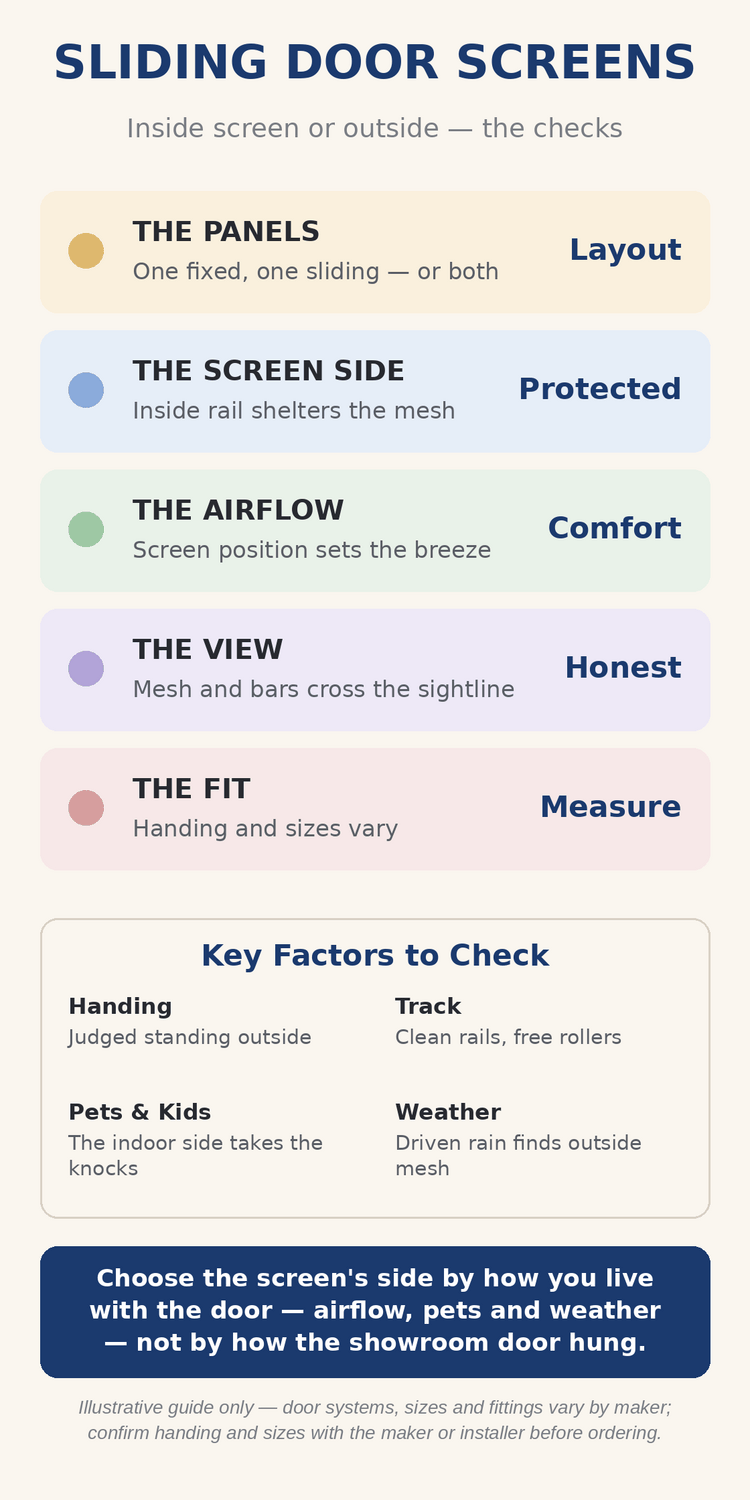
| Part | What It Covers | Why It Matters |
|---|---|---|
| THE PANELS | One fixed, one sliding — or both | Layout |
| THE SCREEN SIDE | Inside rail shelters the mesh | Protected |
| THE AIRFLOW | Screen position sets the breeze | Comfort |
| THE VIEW | Mesh and bars cross the sightline | Honest |
| THE FIT | Handing and sizes vary | Measure |
Choose the screen’s side by how you live with the door — airflow, pets and weather — not by how the showroom door hung. The sections below take the parts in order: how the door is built, what the inside screen changes, and the checks that decide between the two arrangements.
2. How a Sliding Door Is Put Together
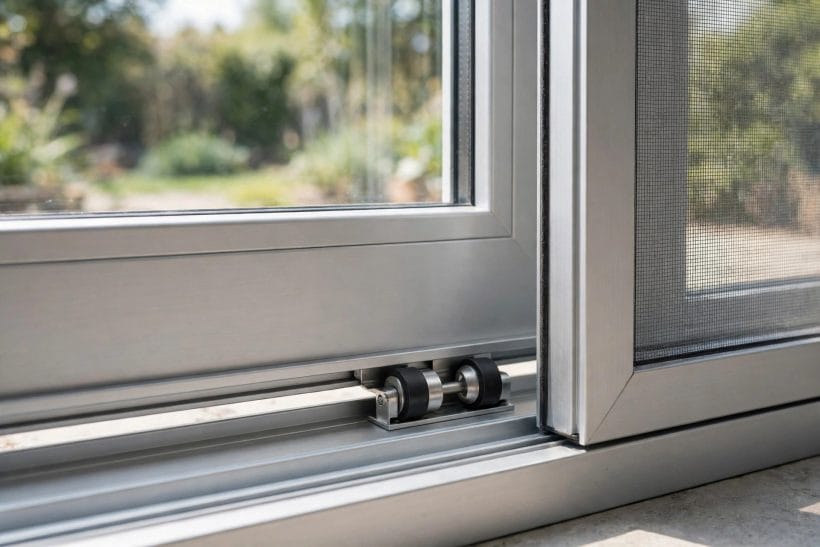
A sliding door is a set of panels running in a shared frame: at least one panel is fixed, at least one slides, and each panel — glass or screen — rides its own rail in the track. The close view below shows the working heart of it: the bottom track, the rollers under a panel, and the separate channel the screen occupies. Which channel the screen rides in is the whole subject of this post, and it is decided by design, not by whoever fitted the door. The wider security picture of a glass wall is its own subject, covered in the guide to securing sliding glass doors.
Panels also decide the opening: a standard two-panel door opens half its width; wider sets stack or part to open more. The screen follows the same logic — it covers the opening when the glass is open, and parks against the fixed panel when it is not. Understanding that much makes the inside-versus-outside question a simple one: identical mechanics, different rail, different daily life.
One more piece of anatomy matters before judging any configuration: the meeting point. Where the sliding panel closes against the frame or its partner panel, seals and brushes do the quiet work of keeping weather and insects honest — and the screen has its own lighter version of the same meeting. A door whose panels meet badly will underperform in every configuration, screen side regardless, which is why the ordering checks in section 8 begin with fit rather than features.
3. The Screen’s Two Homes
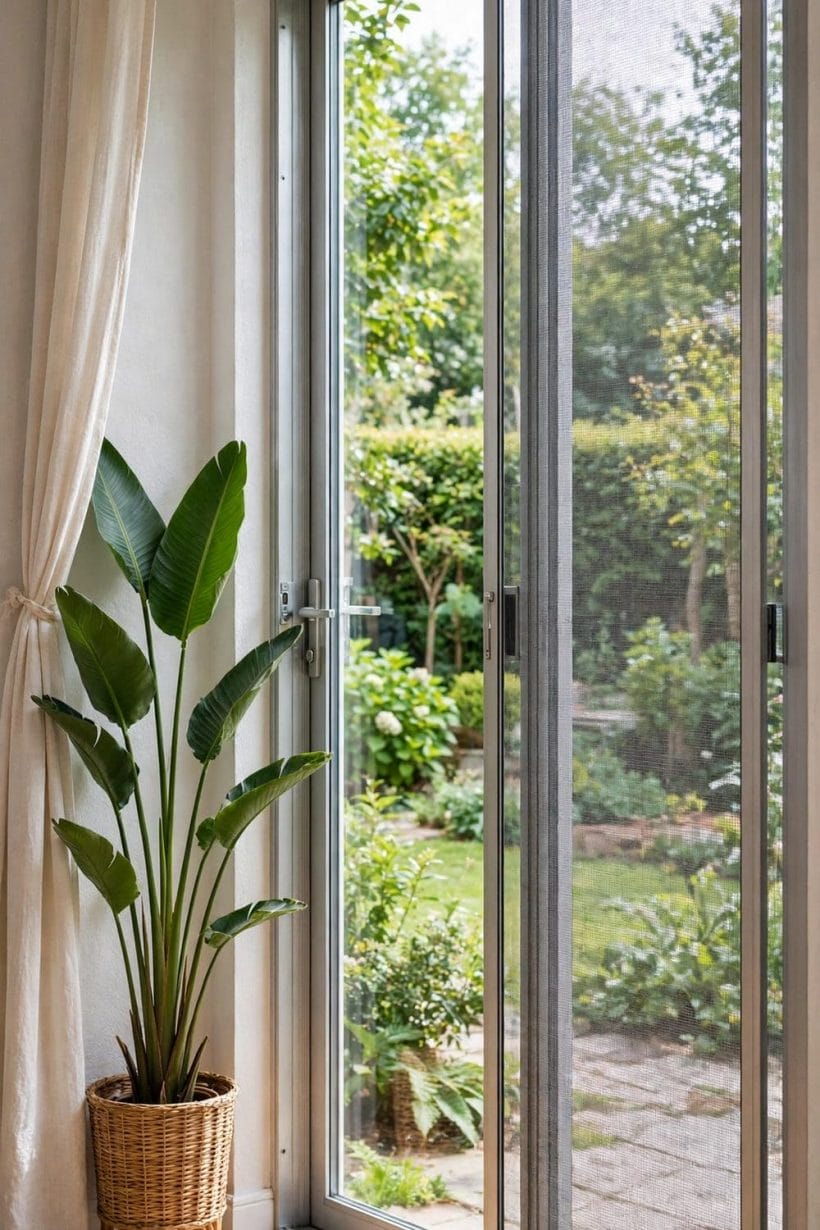
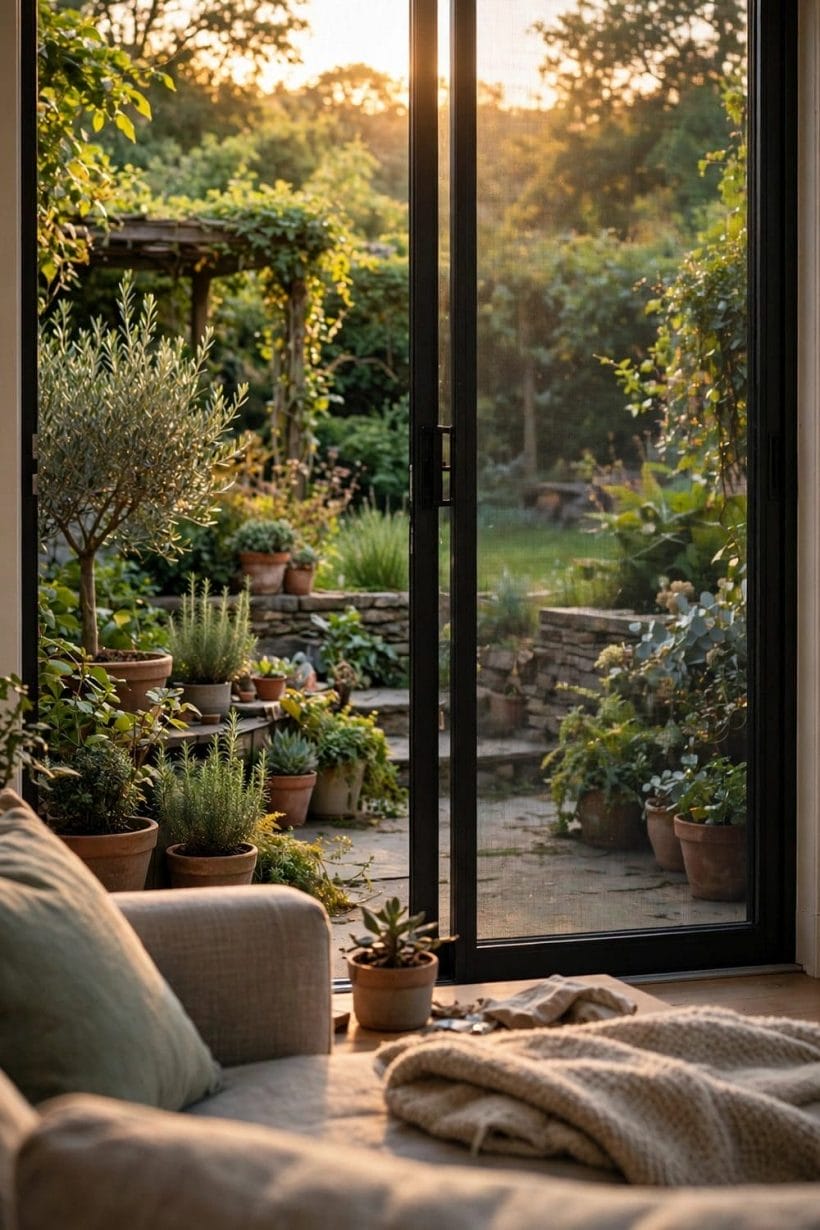
On the conventional door, the screen rides the outer rail: from the garden you meet mesh first, then glass. On the inside-screen door, the order reverses: the glass faces the weather and the screen runs in the room, so from the sofa you meet mesh first. Neither is a mistake; they are two designs with different consequences, and makers offer both, sometimes within the same range. The tall door in the photograph runs its screen inside — the giveaway is the mesh panel standing in the room, in front of the garden view, with the glass beyond it.
What does not change is the screen’s job: to close the opening against insects while the glass stands open. Both arrangements do it. Everything else — weather exposure, wear, cleaning, the view, the feel of the room — is where they part company, and the next four sections take those in turn.
4. Mesh, Materials and the Close View
Look at a screen closely and it stops being a grey blur: a woven mesh, fine enough to stop insects, open enough to pass air, held in a light frame that runs in the track. Mesh materials differ — standard fibreglass-type meshes, tighter weaves sold for tiny insects, tougher weaves sold for pet households — and the honest summary is that fineness trades against airflow and visibility, while toughness trades against fineness. Which weaves a given door system accepts is a maker’s question; the choice itself is a household one.
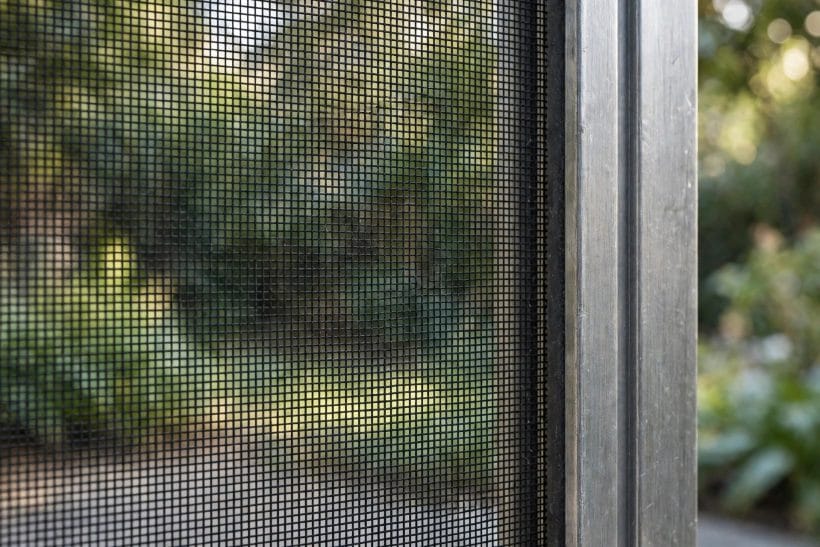
The frame holding the mesh matters as much as the mesh: corners work loose, rollers wear, and a screen that rattles or binds gets left open, which defeats it. Whatever side your screen rides, its rollers and rails want the same simple care — kept clean, kept straight — covered in section 9.
Pet-grade thinking deserves one honest sentence here, before section 10 returns to it: a tougher mesh resists claws better, but no screen mesh is a pet door, a child gate or a security barrier, and treating it as any of those — on either side of the glass — is how screens and pets both come to grief. The screen’s contract is insects and air, nothing more.
5. Airflow and the Breeze Test
The screen’s side quietly rearranges how air moves. With the glass open and the screen closed, the breeze arrives filtered wherever the mesh is; but the inside-screen door changes the intermediate state: slide the glass open from inside and the room’s air meets the mesh immediately, with no panel of glass standing open between you and it. Households that live with doors open all summer feel the difference daily. The rain side of ventilation — which openings shed weather and which invite it — is argued thoroughly in the comparison of awning and sliding windows, and its logic extends to doors.
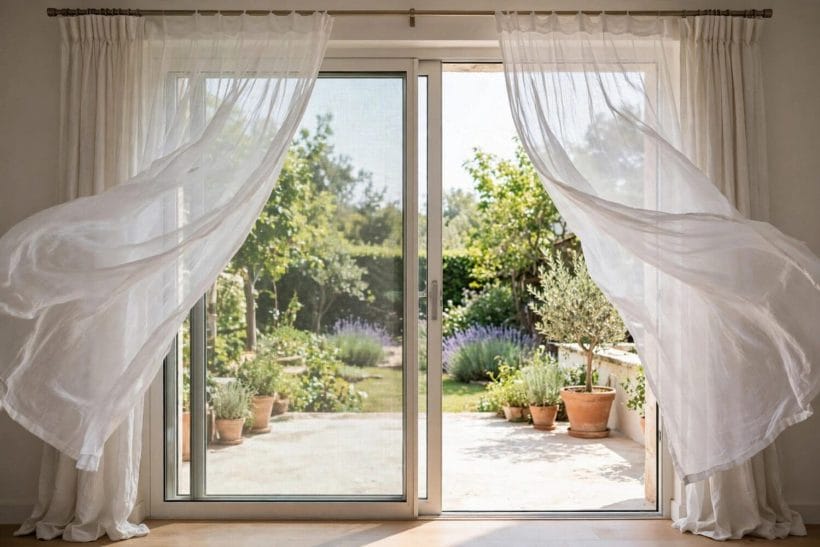
Judge by the photograph’s test: curtains lifting in a through-breeze, the room aired without being opened to every passing insect. Either arrangement can achieve it; the inside screen simply puts the control — mesh position, glass position — on the same side as the people, which many households find themselves using more.
6. Thresholds, Tracks and the Step Over
Every sliding door is crossed at its track, and the threshold is where the configuration debates end and daily life begins: a low, drained sill that tiles meet inside and decking meets outside, crossed a hundred times a week with shopping, children and bare feet. Track design — how many rails, how the water that inevitably reaches the outer channels is drained away — is a maker’s engineering, stated generally here because it varies by system; what the buyer checks is simpler. Step over the showroom door. Feel the rail heights underfoot. Ask how the track drains and how it is cleaned.
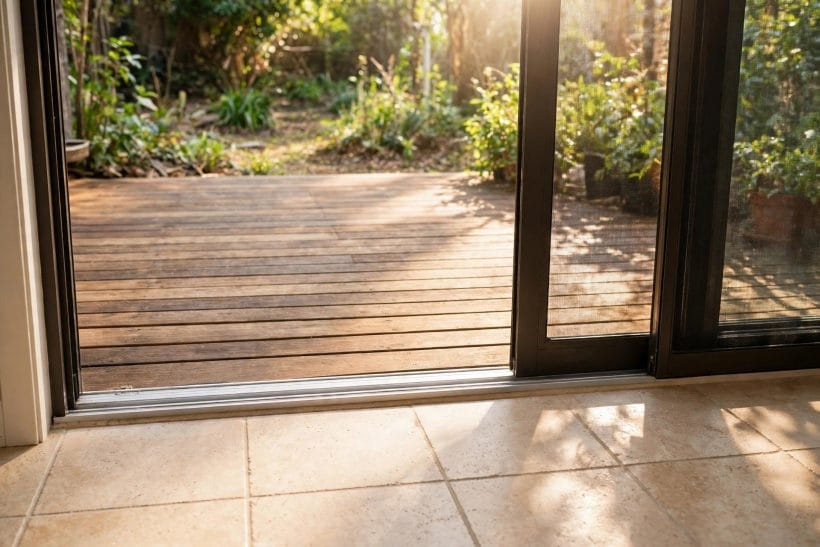
The threshold is also where the inside screen shows a practical face: the mesh panel’s rail sits on the dry side of the system, out of the driven rain and the grit that gardens blow against doors — which leads directly to the wear question in section 8. Houses built around screened outdoor rooms take the same thinking further, as the tiny house plans with screened porches show.
7. The View, the Light and the Blind Question
An inside screen spends its parked life standing in the room’s sightline, and its working life between your eyes and the garden. Mesh dims and textures the view slightly — honest cost, worth naming: the garden through mesh is the garden softened, and meeting bars cross it at panel divisions. Whether that matters is personal; photographers of their own gardens notice, loungers mostly do not. Light behaves the same way: a fine mesh shaves a little brightness, no more.
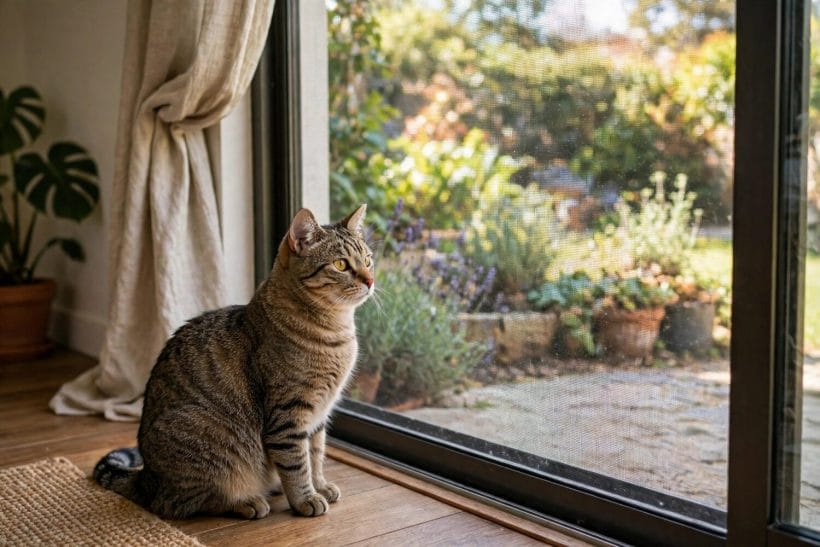
The cat in the photograph is demonstrating the view from the inside — and posing the blind question. Curtains and blinds share the room side with an inside screen: tracks, cords and fabric must clear the screen’s frame and travel, which is a fitting conversation to have before ordering either. The alternative that sidesteps the layering entirely is glass with the blind sealed inside it, covered in the guide to windows with built-in blinds.
8. Ordering Checks: Handing, Sizes and Systems
Most sliding-door regret is ordering regret, and it is avoidable with a short list of checks, all general because systems differ. Handing first: which panel slides, and to which side, is described from a stated viewpoint — commonly standing outside looking in — and the showroom’s left is not automatically your left; confirm it in the maker’s own terms, in writing. Sizes second: the structural opening, the frame and the panel sizes are three different numbers in most systems, and finished floor levels on both sides change what fits. Screen side third: establish whether the system you are buying even offers the inside-rail arrangement, since it is a design feature, not a fitting preference that can be flipped later.
Then the household checks: door furniture and locks that both sides can use, a track the household’s feet accept, and — if the door is a retrofit into an existing opening — an honest survey of the opening’s squareness and levels. The same measure-twice culture governs every door in the house; the worked example for an interior opening is the guide to bathroom door size, and its discipline transfers whole.
9. Living With the Screen Side You Chose
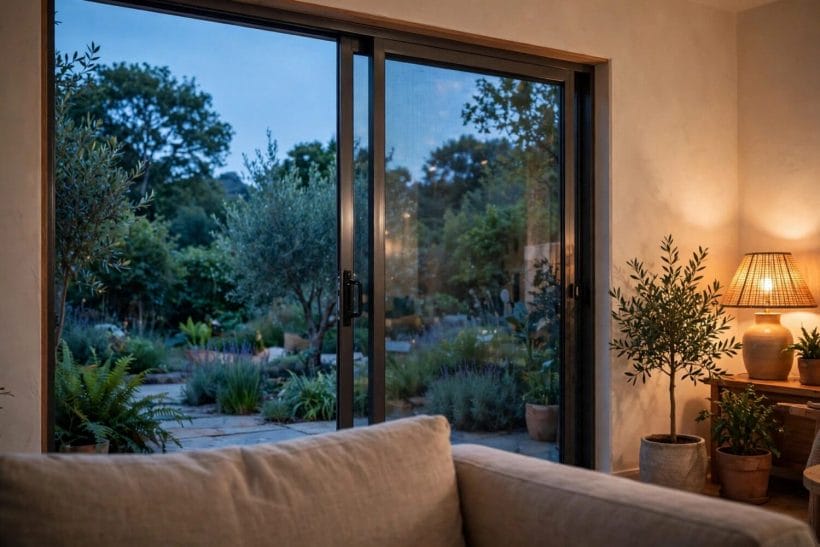
Whichever side won, the living is similar: keep the tracks swept and washed, because grit in a rail is what grinds rollers flat; lift panels only as the maker directs when cleaning them; and expect mesh to collect dust on the room side and pollen on the weather side — a soft brush and mild soapy water are the general care, with the maker’s word final. An inside screen collects indoor dust and the occasional paw print where it can be reached and cleaned without going out in the rain; an outside screen collects the weather where it can be hosed without wetting the room. The door in the photograph, lamplight inside and dusk beyond, is the arrangement working as intended.
Small habits protect any screen: open and close by the handle rather than the mesh, teach children the same, and keep pet enthusiasm in the section-10 conversation. Screens are the lightest-moving part of the door and the most often damaged — almost always by hands and paws, not weather. A screen that does tear is not a door condemned: mesh can be re-splined into its frame and frames themselves are replaceable parts in most systems, which is one more reason the maker’s identity and the system’s age are worth recording when you move in or order new.
10. Pets, Weather and the Honest Verdict
Pets argue for the inside screen in one way and against it in another. For it: the mesh is out of the garden weather and the mud, and a dog’s joyful arrival meets glass first. Against it: the mesh is within reach of every claw and nose indoors, all day. Pet-toughened meshes exist for exactly this, and the maker of your system is the source for whether yours accepts them. Renters and second-hand buyers inherit the choice rather than making it, and for them the verdict simplifies further: either arrangement, kept clean and running true, serves well — judge an inherited door by its condition and fit, not by which rail its screen rides.
Weather argues more simply: driving rain and wind-blown grit age an outside screen faster, while an inside screen lives the sheltered life — one reason the arrangement suits exposed, coastal and high-rise doors. The verdict, honestly: an inside screen is neither a defect nor an upgrade. It is a configuration with a personality — sheltered mesh, same-side controls, a softened view — that suits some households and sites better than the convention. Set within the whole opening’s design, alongside the patio ideas outside and the exterior home ideas framing the house’s face, it is simply one more deliberate choice — which is what good doors are.
Final Considerations
If a door with its screen on the inside caught your eye, you now know what you are looking at: a designed arrangement, not a mistake. Check the handing in the maker’s terms, confirm the system truly offers the configuration, weigh weather and pets honestly, and choose by the life the door will actually live — its exposure, its traffic, its animals, its winters and its summers. The breeze in the photograph does not care which rail the mesh rides — but you, living with it daily, will be glad you chose on purpose.




0 Comments