

A two-panel slider gives you half a doorway and a daily squeeze past wet glass. A three-panel door folds its stack into a third of the opening — and hands you back the wide, easy access a bath is supposed to offer.
This guide covers 3 panel bathtub sliding doors in full: how the triple-panel layout works, how to size and measure for one, and the glass, track and installation checks to settle before you buy.
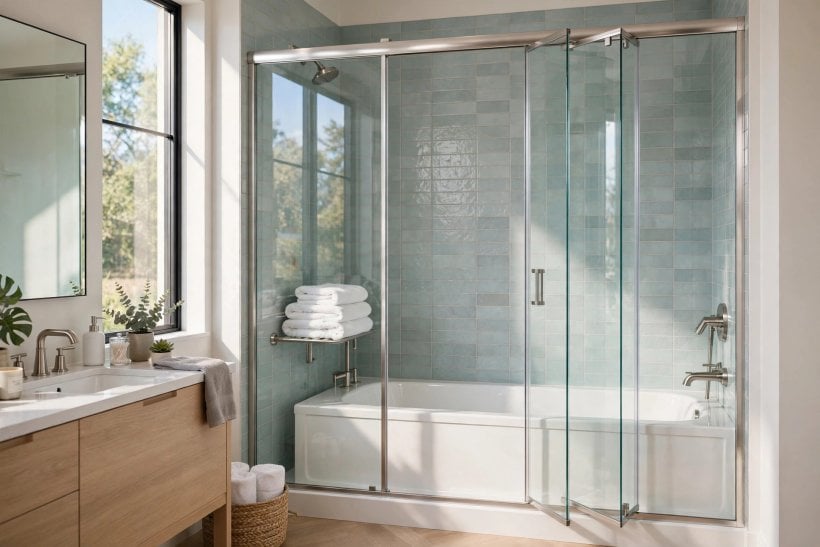
1. Triple-Panel Bathtub Sliding Doors at a Glance
The central entity is a bathtub door system made of three glass panels that slide on parallel tracks and stack over one another at one end of the tub opening — also sold as triple-panel or “trifold” sliders. Its defining attribute is access: where a conventional two-panel bypass door always covers half the opening, a three-panel stack covers roughly a third, leaving a wider entry for bathing children, cleaning the tub, or simply getting in and out without a sideways shuffle. Everything else in this guide — sizing, glass, frames, tracks, seals — is an attribute of that three-panel arrangement and how well a given model executes it.
| How is a triple-panel door different from a standard slider? | It uses three narrower panels on (usually) a double or triple track instead of two wide panels on a double track. The panels telescope over each other and park at one end, opening up about two-thirds of the tub front. |
| What opening sizes do they fit? | They are made for standard alcove tub openings — most alcove tubs are around five feet long — with the door’s stated width range needing to cover your measured opening. Measure first; models differ in how much overlap adjustment they allow. |
| Is the glass safe? | Bathroom door glass should be tempered safety glass, which is far stronger than ordinary glass and crumbles into small blunt pieces if it ever breaks. Check the product’s own safety marking and specification rather than assuming. |
| Do three panels leak more? | Not when they are overlapped and sealed correctly — but there are more panel edges and a busier track, so overlap depth, bottom guiding and seals deserve more scrutiny than on a two-panel door. |
| Are they hard to install? | Comparable to any framed sliding tub door: a level head track, two wall jambs and a bottom guide. The extra panel adds assembly care rather than a new skill. Confident DIYers do fit them; straight, plumb walls make it far easier. |
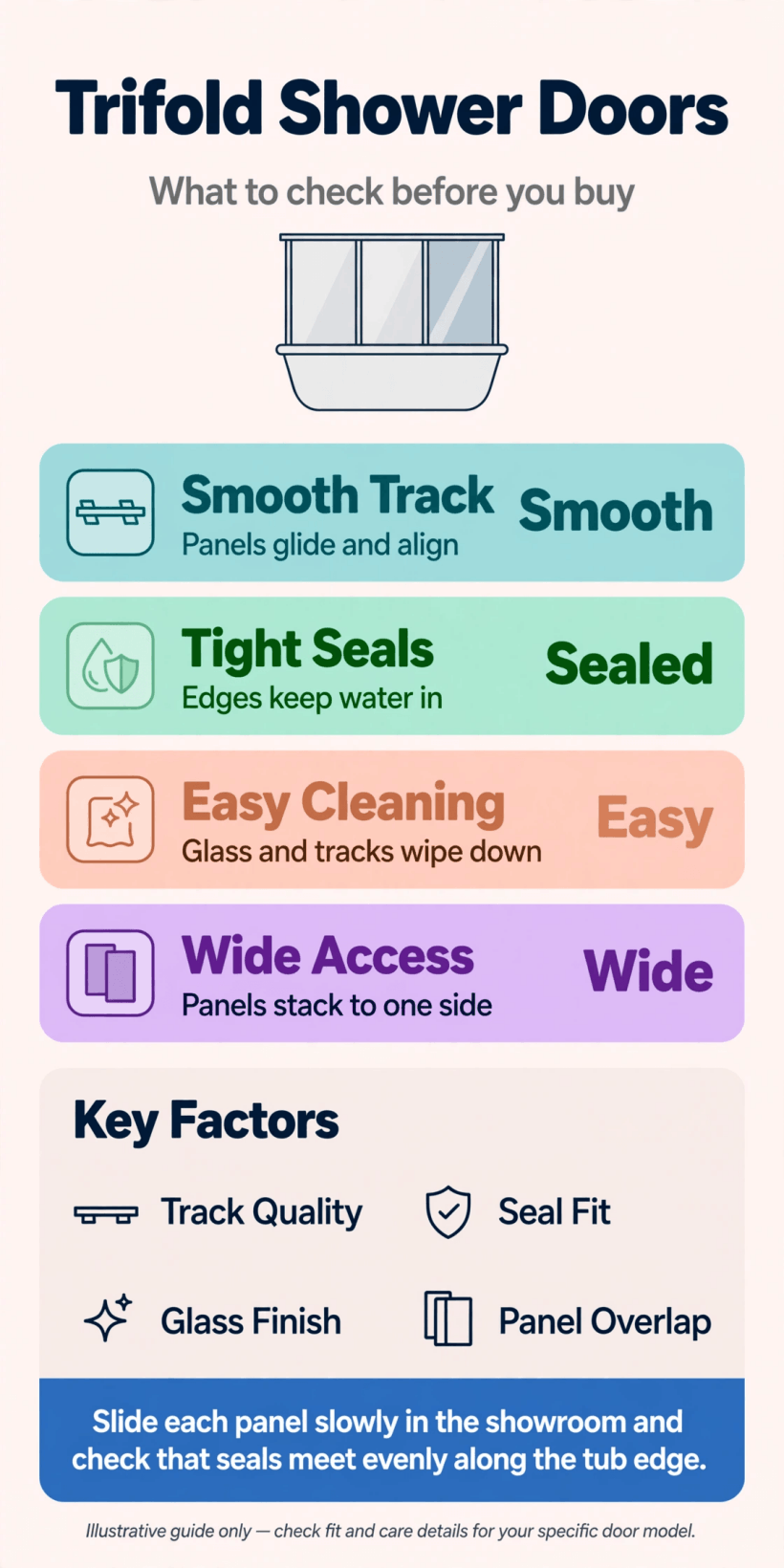
At a glance: three sliding panels that stack to one side for a wider opening — judge any model by its overlap, its track and its glass, in that order.
2. How a Triple-Panel Slider Works
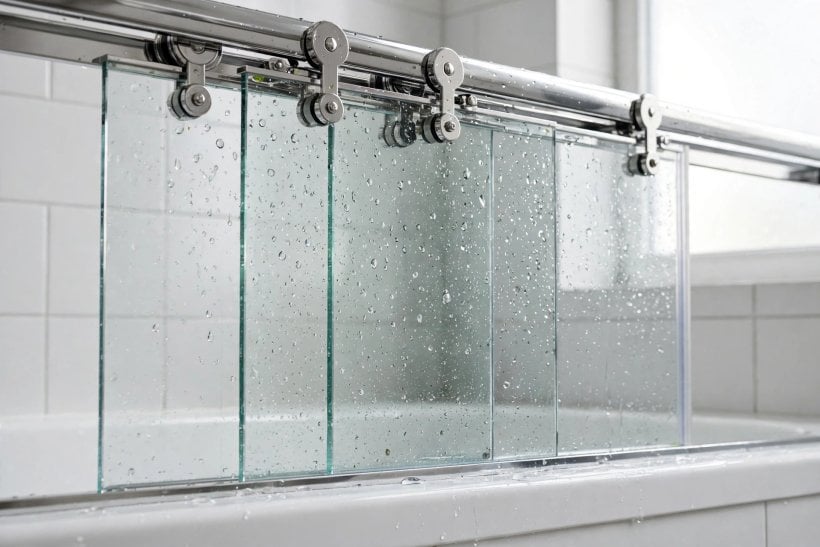
Each panel hangs from rollers running in an overhead track and is steadied at the bottom by a guide. Because the panels are narrower than the two of a bypass door, they can overlap almost completely, parking as a neat stack over roughly one third of the opening. Slide the stack apart and the panels spread across the whole front, overlapping slightly at each meeting edge to shed water back into the tub.
The practical difference shows up in daily routines. Bathing a child, washing a dog, scrubbing the far end of the tub or stepping in with limited mobility all stop being reach-around exercises. The same sliding logic governs the full-height doors in this look at sliding glass doors and the wall of glass — panels that travel rather than swing never steal floor space, which is precisely the virtue a small bathroom needs. The layouts in these tiny house bathroom designs rely on the same principle: in a compact room, a door that needs no swing arc is worth more than a door that merely looks good.
Which End the Stack Parks At
Most systems let you choose during installation which end the panels stack towards. Park the stack away from the shower controls and the end you climb in at: you want the open two-thirds to include the taps and the natural entry point, and the closed stack over the part of the tub you rarely need to reach.
3. Sizes and Measuring: The Checks That Decide Everything
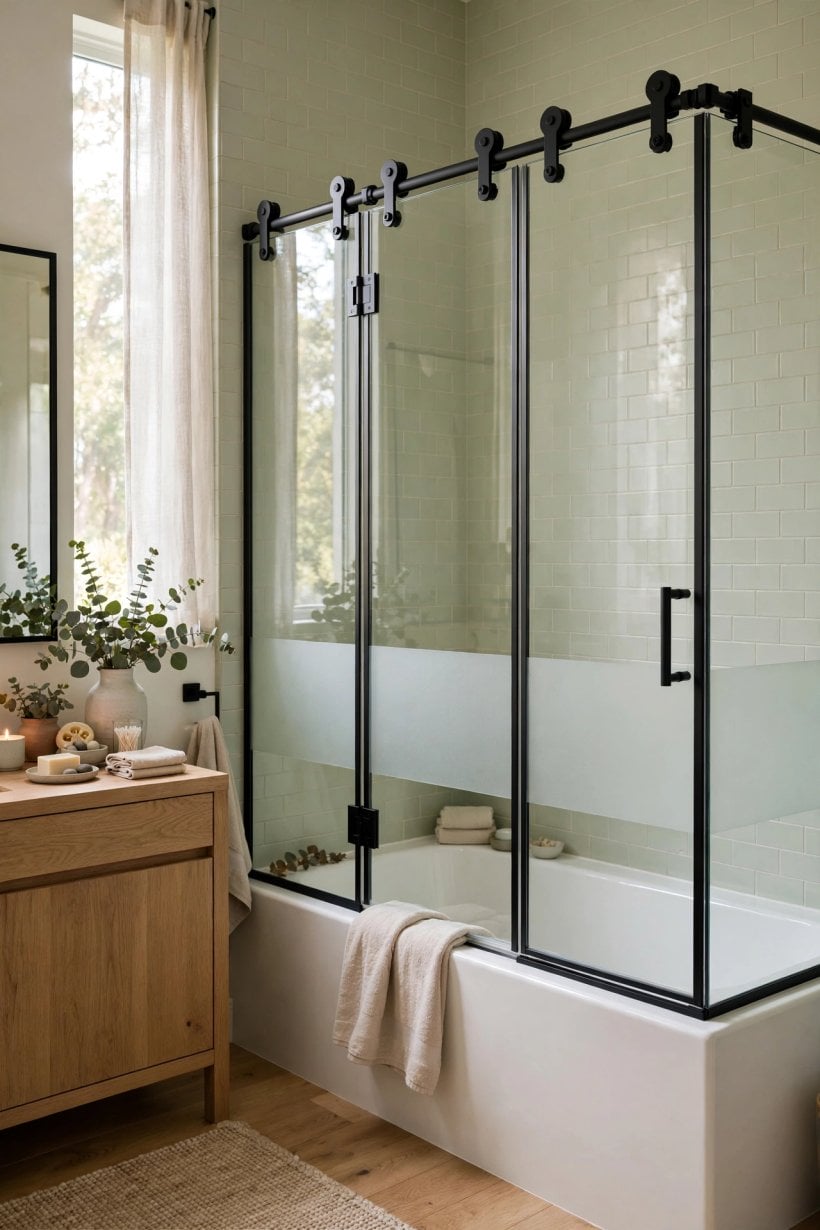
Door problems are almost always measuring problems that were discovered too late. Measure the opening width at three heights — top, middle and just above the tub ledge — because tiled walls are rarely perfectly parallel, and the door must suit the widest reading with its jambs covering the narrowest. Measure the height from the tub ledge to where the head track will sit, and confirm the model’s stated height fits with the track’s own depth included.
The Tub Ledge and the Bottom Track
The bottom guide or track sits on the tub’s top ledge, so that ledge needs enough flat width to carry it in a continuous bed of sealant. Narrow, steeply curved or textured ledges are the commonest reason a door that “fits” on paper disappoints in the room — check the ledge profile against the maker’s stated requirement before ordering. The dimension discipline here is the same one used in these tiny house bathroom layouts: in bathrooms, centimetres are load-bearing.
Out-of-Plumb Walls
Sliding doors forgive less than curtains and more than hinged doors. Modest out-of-plumb can be absorbed by the wall jambs’ adjustment; severe lean shows up as panels that drift open or closed on their own, gaps at one end of a panel, and rollers working at an angle. Check plumb with a long level on both walls, and treat anything badly out as a wall problem to fix first, not a door problem to buy around.
4. Glass: Tempering, Thickness and Finishes
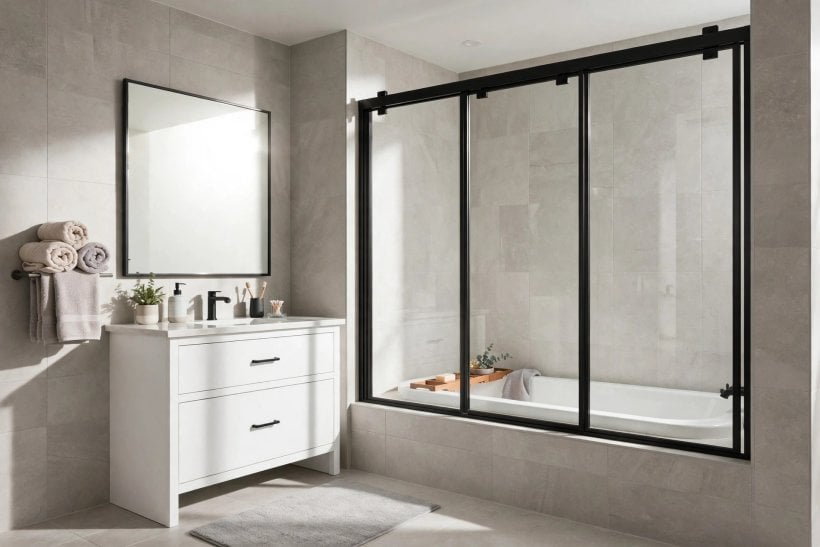
The glass in a tub door is a safety component before it is a style choice. It should be tempered — heat-treated so it resists impact far better than ordinary glass and, if it ever fails, breaks into small, relatively blunt granules rather than shards. The reasoning is identical to the rule set out in this guide to selecting windows for road safety and the tempered glass rule: anywhere people can fall against glass, tempering is the standard to verify, on the product’s markings and specification sheet — not a feature to take on a salesperson’s word.
Thickness and Frame Style
Framed and semi-frameless doors use thinner glass, with the frame supplying stiffness; frameless designs use substantially thicker glass and heavier hardware to do the same job. On a triple-panel door, framed and semi-frameless are the common forms — three thick frameless panels would be heavy, costly and hard on their rollers. Judge thickness together with the frame system, not as a number to maximise.
Clear, Frosted and Patterned
Clear glass shows the tile, opens the room visually and shows every water spot — the honest trade. Frosted and obscure glass give privacy in shared bathrooms and hide limescale longer, at the price of light and the view of good tile. Patterned and fluted options sit between. In a small or windowless bathroom, clear glass with a protective easy-clean coating is usually the working household’s best answer.
5. Frames, Finishes and Hardware

The frame is the door’s skeleton: head track, wall jambs, bottom guide and the rails around each panel. Anodised or powder-coated aluminium is the usual material — light, corrosion-resistant and stiff enough for the span. Check that corners are mitred or cleanly butted, that the finish is even inside the track where you will actually see wear, and that the stated finish matches your taps and shower hardware closely enough that the two read as one scheme.
Handles and Towel Bars
Sliding panels need something to pull, and on tub doors that is often a through-glass handle or an integrated towel bar on the outer panel. A towel bar earns its place — it is the most-used handle and it keeps a towel off the floor — but confirm it does not foul the neighbouring panel as the stack slides: on a three-panel door, clearances are tighter, and a proud handle on the wrong panel will collide.
6. Tracks, Rollers and Seals: Where Water Escapes
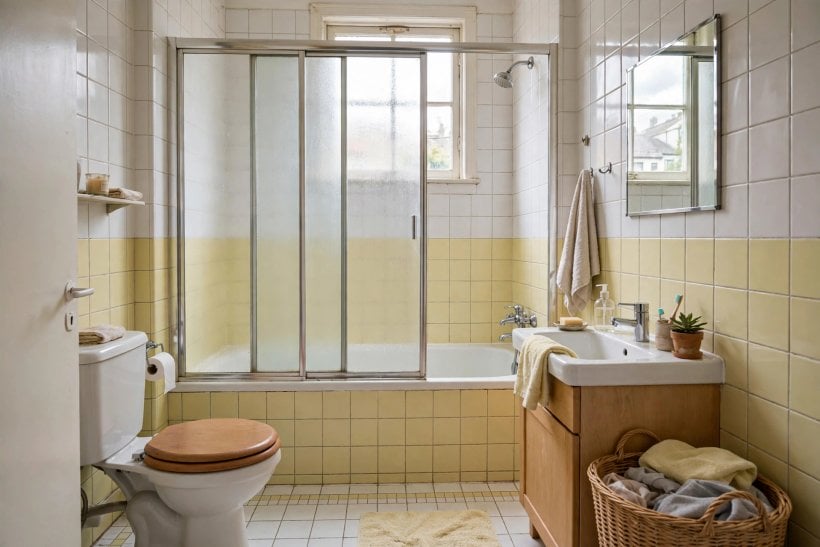
Water leaves a sliding tub door in three places: under the bottom guide, through insufficient overlap where panels meet, and off the bottom edge of a panel that ends short of the tub ledge. A sound design answers all three — a bottom track or guide with a proper sill and sealant bed, generous panel overlap with soft edge seals or astragals where panels meet, and panels long enough to shed water inside the tub line.
Rollers and Travel
Rollers decide how the door feels for a decade. Look for rollers that are adjustable (so a panel can be levelled after fitting), shrouded or sealed against water and hair, and replaceable without removing the whole frame. Travel should be silent and even: any grinding, clicking or tight spot on a showroom door will be worse at home. The full wet-room discipline in this guide to a waterproof tiny house bathroom wet bath is the standard to hold the junction details to — doors manage water; they do not waterproof, and the tiling and sealing behind them still have to be right.
The Cleaning Reality of Multi-Track Systems
Three panels mean more track channels, and track channels collect soap, hair and limescale. Designs with a smooth, open bottom guide clean far easier than deep multi-channel sills. Before buying, picture the weekly clean: if you cannot get a cloth or old toothbrush into every channel from outside the tub, the door will slowly stop sliding sweetly whatever the brochure promises.
7. Installation Checks: Fitting, Fixing and Levels
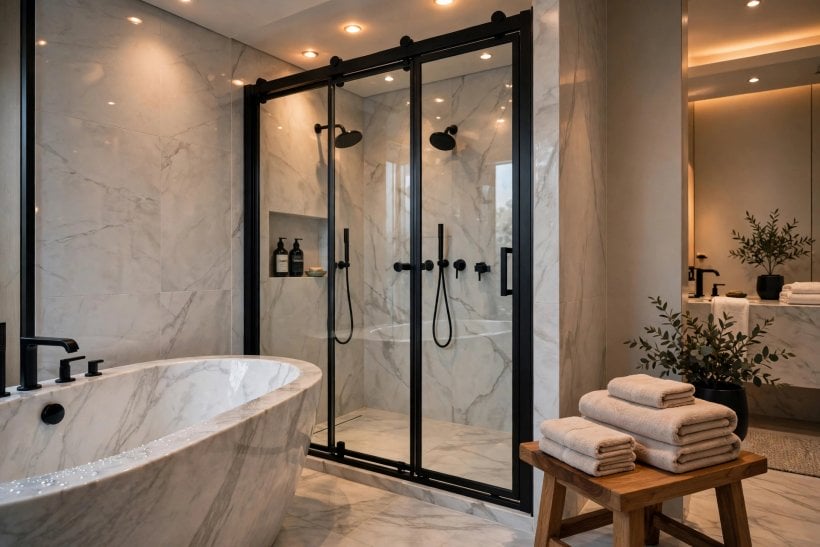
Fitting follows the same sequence as any framed tub door, with the stakes raised by a third panel. The wall jambs are fixed plumb to the tiled walls — which means finding sound fixing behind tile, using the right plugs for the substrate, and sealing every penetration. The head track is cut to length and set dead level: a track that slopes even slightly becomes a door that creeps. The bottom guide is bedded in sealant along the ledge, panels are hung and adjusted on their rollers until each travels silently and meets its neighbour evenly, and only then are seals and stops finalised.
DIY or Professional?
A careful DIYer with a level, a tile drill and a helper for the glass can fit one of these in a day; the glass is the argument for the helper, since panels are awkward rather than heavy and most damage happens in the carrying, not the fixing. Choose a professional when walls are badly out of plumb, when the ledge profile is non-standard, or when the tiling is expensive — the cost of fitting is small next to the cost of a door removed and refitted. Either way, the checks in §3 are the ones to sign off before the first hole is drilled.
8. Cleaning and Care: Keeping Three Panels Sliding Sweetly
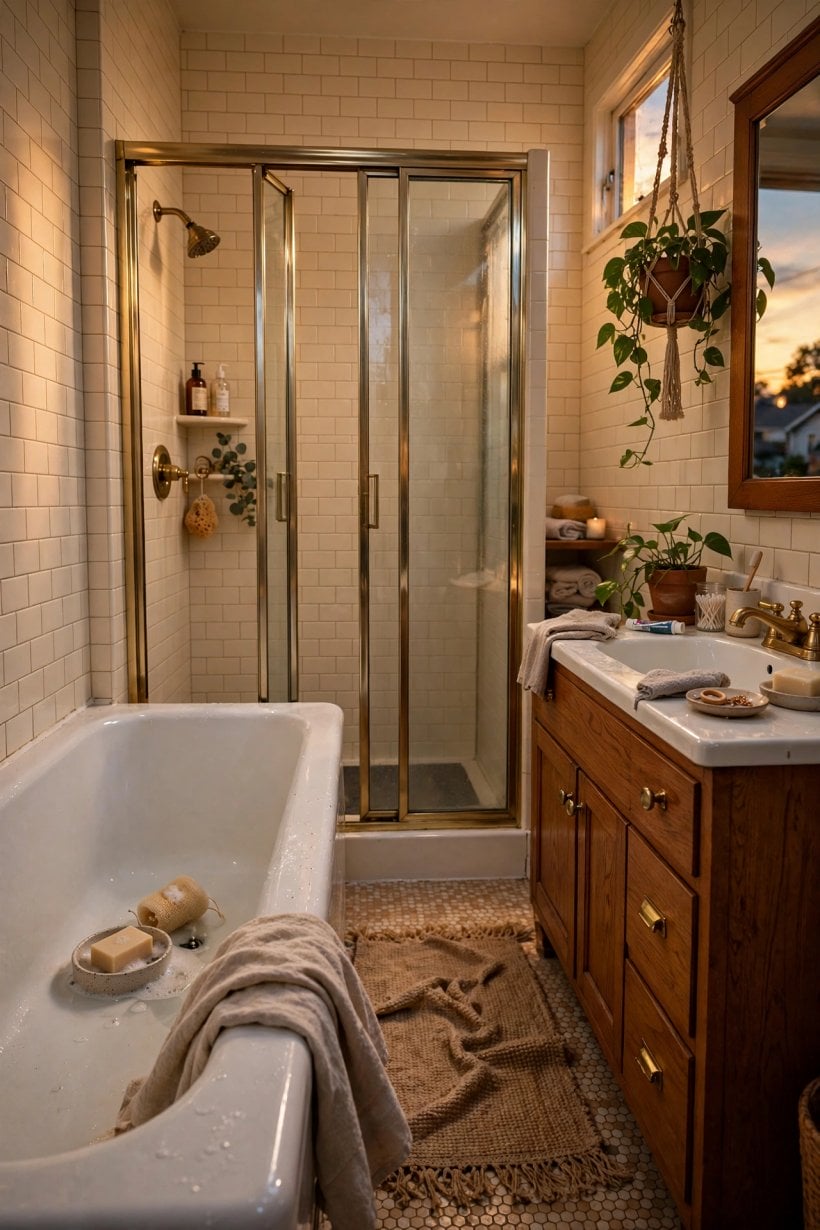
Daily care is a squeegee’s worth of effort: a quick pass over the panels after showering prevents most limescale, and it matters more on a three-panel door because the overlaps give deposits more edges to start from. Weekly, wash glass with a non-abrasive bathroom cleaner, clear the bottom guide of hair and grit, and check the panel edge seals are still seated. Monthly, a drop of the lubricant the maker specifies — only that — on the roller axles keeps travel quiet.
Avoid abrasive pads and powders on glass and frames alike, keep vinegar soaks off anodised finishes unless the maker allows them, and treat an easy-clean coating as a renewable layer: it wears, and reapplying the maker’s treatment on schedule is cheaper than scrubbing scale off unprotected glass. Rollers and seals are consumables in the long run — a door whose maker sells spares will outlive a sealed-for-life bargain by years.
9. Small Bathrooms and Tiny Homes
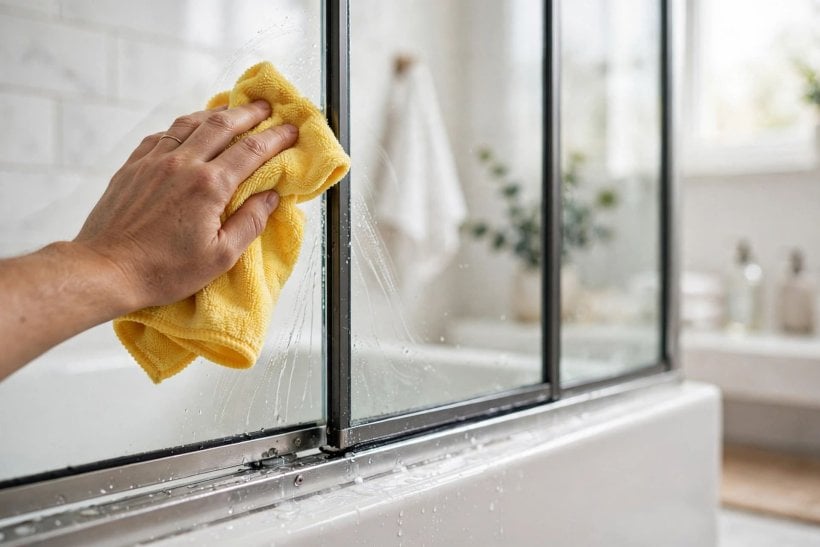
The triple-panel layout is almost designed for compact bathrooms. It needs no swing space, gives wide access in rooms where a carer or a parent needs to stand close to the tub, and its stacked panels keep the room feeling open when the door is parked. In the small bathrooms in these bathroom interior design ideas for tiny houses, the tub is often also the shower, the laundry soak and the dog wash — exactly the multi-duty life a wide-opening door serves best.
Two compact-room cautions apply. First, clear glass keeps a small room visually whole; obscure glass chops it. Second, mind the towel bar and handle clearances doubled: in a tiny room the door stack parks where a tall unit or the basin may already be claiming the wall, so plan the park end against the actual furniture layout, not the empty-room drawing.
10. Alternatives — and Who Should Pick Which
The honest comparison set is small. A two-panel bypass slider is simpler, cheaper to keep clean and entirely adequate if you never need more than half the opening — most people, most days. A bifold door opens wide too, but swings its fold into the room or the tub and its hinges live in the wet zone. A pivot or hinged door gives the widest clear opening and needs swing space and a disciplined drip routine. A fixed glass screen is the minimal, elegant option that accepts some spray escape as the price. A curtain remains the cheapest, softest and most forgiving answer of all, and the one every glass option is really competing with. The wider context for weighing them sits in these interior design bathroom ideas for tiny houses.
So who should pick the triple-panel? Households that bathe children or dogs, anyone who finds the half-opening squeeze genuinely difficult, cleaners who want to reach the whole tub standing in one spot, and small bathrooms where the tub works several jobs. Who should not: anyone whose walls are badly out of true and staying that way, anyone who knows the track will never be cleaned, and anyone whose real problem is a curtain’s look — a two-panel door solves that for less. Decide on your routine, not the showroom glide.
Final Considerations
A triple-panel tub door earns its extra panel in a single currency: access. Two-thirds of the opening, no swing arc, no squeeze — provided the sizing is measured honestly, the glass is verified tempered safety glass, the overlaps and seals are generous, and the track is one you can actually clean.
Run the checks in order — measure, glass, track, seals, spares — and a set of 3 panel bathtub sliding doors will slide quietly and shed water properly for years. Skip them, and the third panel becomes a third source of rattles. The design is sound; the buying discipline decides whether you get the design.




0 Comments