
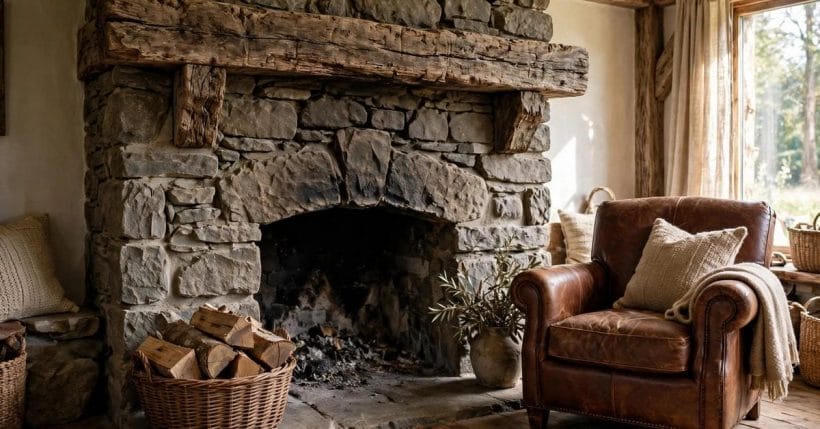
A rustic fireplace is a room’s memory of the countryside: rough stone, heavy timber, iron blackened by use, and a hearth dressed with logs and woven things. It is a styling language, not a building project — these 36 ideas cover the surrounds, mantels, hearths, dressing and light that create the look, and they stay firmly on that side of the fire. Anything touching clearances, flues, chimneys or carbon monoxide is framed throughout the way it should be in real life: generally, and governed by the maker’s instructions and local code, with qualified professionals doing the work.
The rustic effect itself obeys one rule: let one material be the hero. Stone at full volume with a quiet beam, or timber dramatised against a plainer surround — when both shout, the room reads themed rather than rustic. The sections below take the elements one at a time.
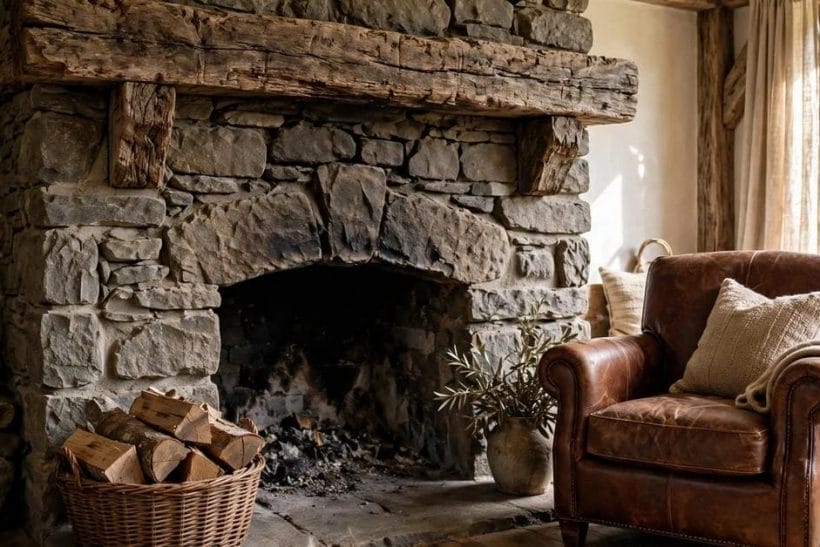
1. Rustic Fireplace Ideas at a Glance
Five elements make the rustic fireplace: the stone of the surround, the timber of the mantel, the hearth as its stage, the dressing that warms it, and the light that finishes it. The table below is the post in miniature.
| Element | What it brings | In a word |
|---|---|---|
| The Stone | Rubble, fieldstone or ledgestone | Texture |
| The Timber | A beam mantel with a past | Character |
| The Hearth | Raised, flush or extended | The stage |
| The Dressing | Logs, iron and woven texture | Warmth |
| The Light | Firelight plus low lamps | Glow |
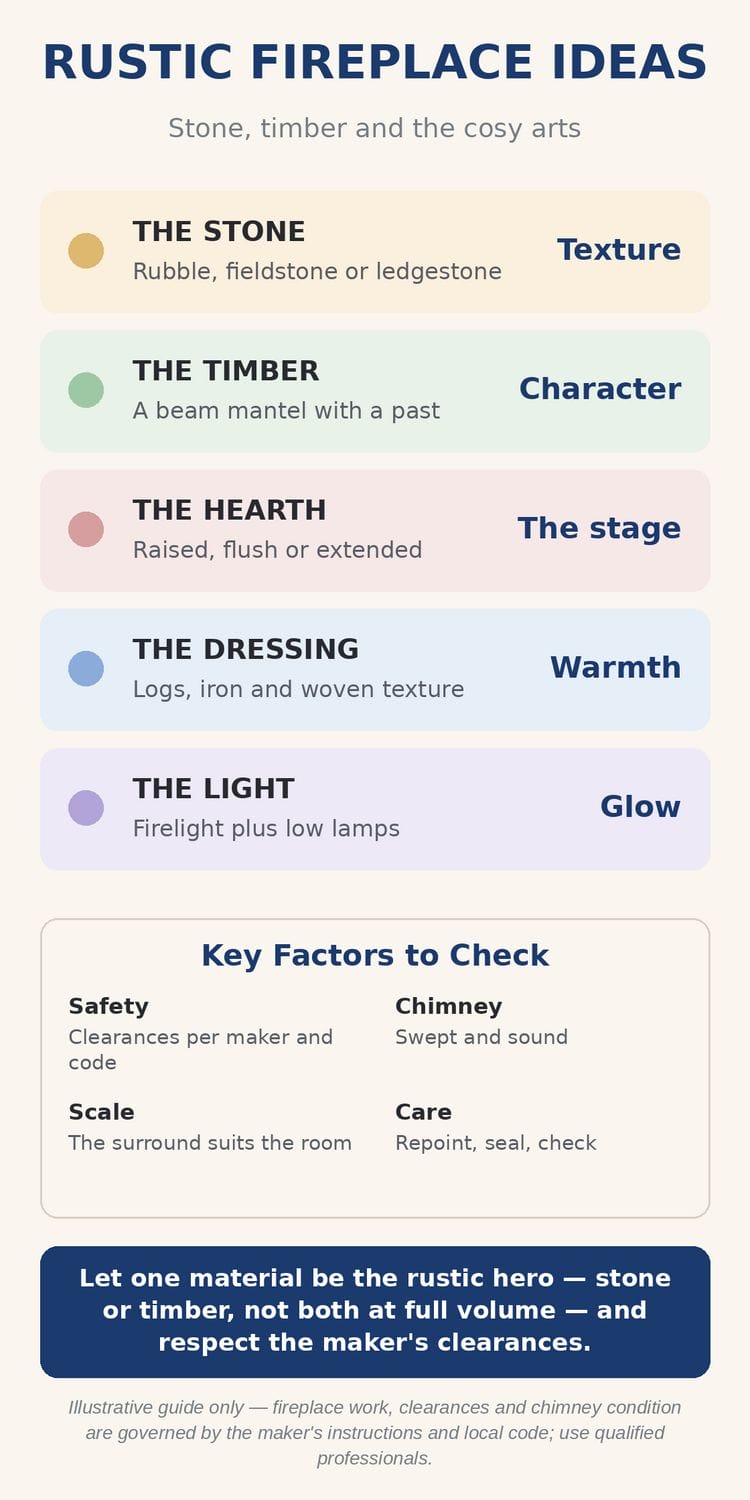
Four factors run under every idea: safety, because clearances follow the maker’s instructions and local code before any styling begins; the chimney, which must be swept and sound whatever the surround looks like; scale, since a surround should suit its room rather than overwhelm it; and care — repointing, sealing and checking — the quiet maintenance that keeps stone and timber honest.
Let one material be the rustic hero — stone or timber, not both at full volume — and respect the maker’s clearances. Hold those two, and the thirty-six ideas below can be mixed freely without the room ever tipping into theme-park.
2. Stone Surrounds: The Rustic Foundation
Stone is the rustic fireplace’s first language, and the wider fire family is gathered in the fireplaces in the living room pillar. Four cuts of stone set four different rooms.
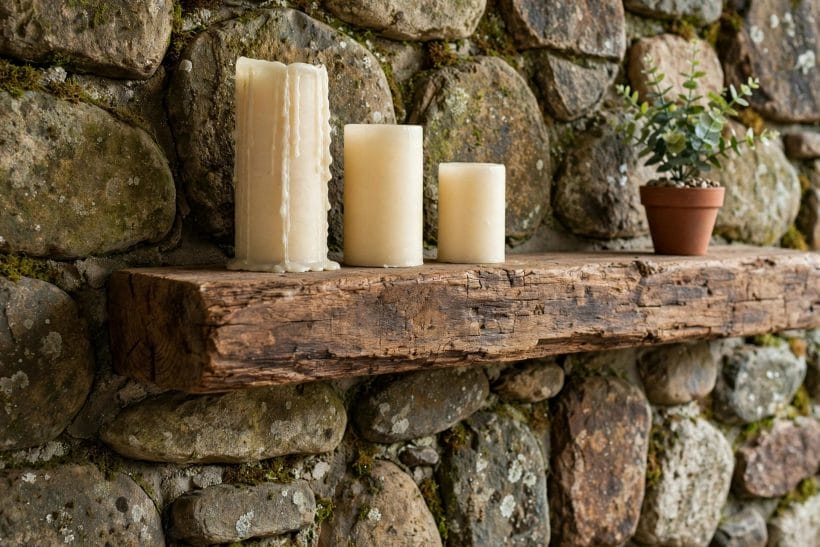
1. Rubble Stone, the Wildest Texture
Irregular rubble stone, deeply jointed, is the rustic maximum: a surround that looks gathered from the land itself. It suits large rooms and simple furniture — the stone is doing so much that everything else should quieten down.
2. Fieldstone, Rounded and Weathered
Rounded fieldstone softens the rustic look toward the cottage: the stones’ water-worn shapes and mixed tones feel gathered rather than quarried. It is the friendliest stone for family rooms and the easiest to live beside.
3. Ledgestone, the Neat Rustic
Stacked ledgestone keeps the texture but tidies the geometry — thin horizontal courses that suit rustic-modern rooms where the fireplace must converse with clean-lined furniture. The compromise stone, and often the right one.
4. Stone Carried to the Ceiling
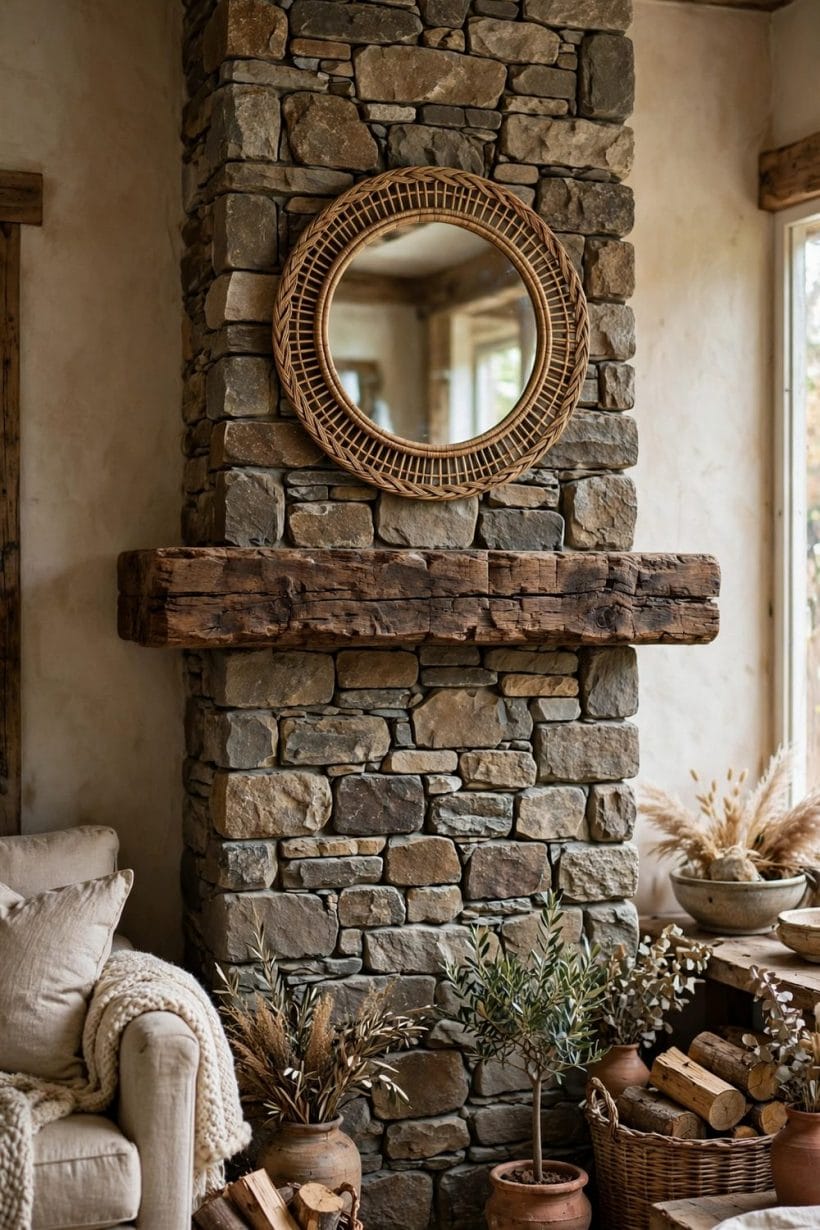
Taking the stone up the full chimney breast turns the fireplace into the room’s architecture rather than its furniture. The gesture suits tall rooms best; in low ones, stop the stone at the mantel and let the breast above stay plaster and paint.
One stone decision deserves care before any of these looks is copied: weight and heat are engineers’ and installers’ territory, not stylists’. These sections describe how surrounds read — their texture, tone and proportion. How any real surround is built, supported and kept safe belongs to the professionals named in the closing section.
3. Timber and Mantels
If stone is the body, timber is the voice. The renovation side of mantels and surrounds — the before-and-after work — lives in fireplace makeovers; here, four timber treatments style the existing fire.
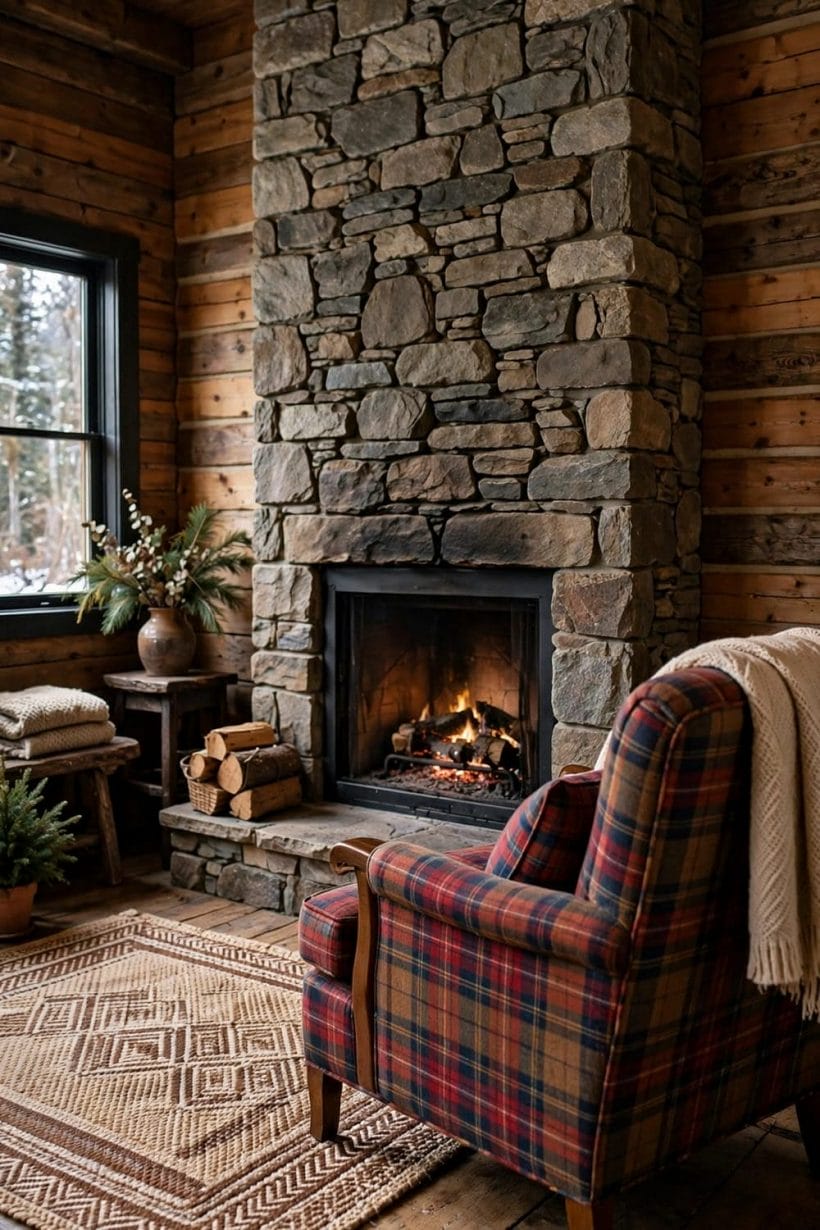
5. The Reclaimed-Look Beam Mantel
A single heavy beam — weathered, checked and full of grain — is the rustic mantel at its purest. Its charm is its past: saw marks, old nail holes and sun-silvered faces are features to keep, not defects to plane away.
6. A Mantel Shelf Deep Enough to Use
A mantel earns its keep as a shelf: deep enough for candles, a clock, a plant and the season’s small objects, it becomes the room’s altar of display. Keep the arrangement loose and low; a crowded mantel fights the stone.
7. Timber Legs Framing the Opening
Carrying timber down the sides as legs frames the firebox in wood and warms the stone’s coolness at exactly the point where eyes rest. The treatment suits beam-and-stone surrounds in cabins and lodges best.
8. The Bare Opening: No Mantel at All
The boldest rustic statement deletes the mantel: a plain stone opening, a hearth slab and nothing above but the breast itself. It suits minimalist-rustic rooms and lets a single large picture or mirror do the mantel’s work on the wall.
Timber and stone negotiate one boundary everywhere in this post: heat. Where a beam may sit, how close wood may come to an opening — those distances are set by the maker and the code for the specific fireplace, and the styling in these pages always assumes they have been honoured first.
4. Hearths: The Stage
The hearth is the fireplace’s stage — the slab where the room’s fireside life is set down. Four forms cover the staging.
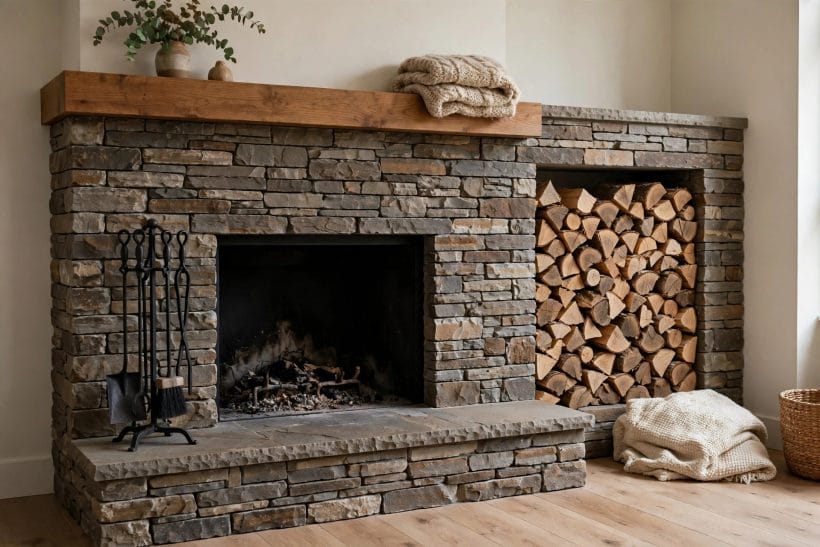
9. The Raised Hearth as a Seat
A raised hearth at sitting height becomes the warmest seat in the house — a perch for warming backs, drying mittens and setting down mugs. In family rooms it is used daily and loved accordingly.
10. The Flush Hearth for Small Rooms
Where floor space is precious, a flush hearth keeps the stage without stealing the room: a single plane of stone or slate at floor level, the surround rising straight from it. Small cabins and snug rooms suit it best.
11. The Extended Hearth as a Platform
Stretching the hearth slab sideways creates a platform for the log basket, the tool stand and a stack of books — the fireplace’s whole supporting cast on one stone. It grounds large surrounds and gives the composition its base line.
12. Slate and Flagstone Hearth Slabs
The hearth’s material speaks more quietly than the surround’s but matters as much: riven slate and worn flagstone carry the rustic register, their uneven faces catching firelight in a way polished stone never will.
The hearth also sets the fireside’s manners: it is the line guests read instinctively, the boundary between the room’s soft life and the fire’s working zone. Keep that line visible and uncluttered — cushions and baskets belong beside it, never drifting across it.
5. The Firebox as Styling
Between fires, the firebox itself is part of the picture — its heating cousins are styled in a living room with a wood stove. Four treatments dress the opening without touching its workings.
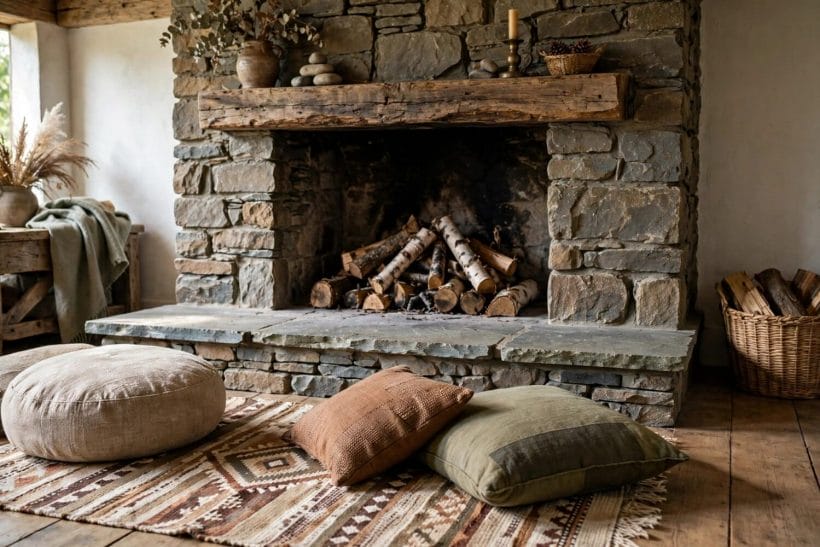
13. The Dressed Summer Firebox
Out of season, the empty firebox wants dressing: a stack of logs, a potted fern in cool climates, a basket of pinecones. A dressed opening keeps the fireplace the room’s focus all year instead of its black hole.
14. A Screen as the Fireplace’s Face
A fire screen is the opening’s jewellery as much as its guard: blackened iron mesh, a simple framed panel, or a decorative screen for the unlit months. Choose its finish to rhyme with the tools and the log basket.
15. Andirons and Ironwork
Andirons, tool stands and log holders in black iron are the rustic fireplace’s native metal. Their silhouettes against the firebox give the hearth its crafted detail; keep them honest iron, never chrome-bright.
16. The Log-Filled Opening
The simplest dressing of all: the opening filled with a neat stack of logs, bark outward. It promises a fire without lighting one, warms the room visually in every season, and stores the fuel exactly where it will be wanted.
A word on dressing discipline: the firebox is styled only when the fireplace is cold and out of use, and everything placed in or near the opening for a photograph returns to its safe distance before the next fire is lit. The look is for the room; the working fire keeps its own clear space.
6. Dressing the Mantel and Hearth
Dressing is where rustic style is renewed each season — the room around it often borrows from farmhouse living room ideas. Four habits keep the composition warm rather than cluttered.
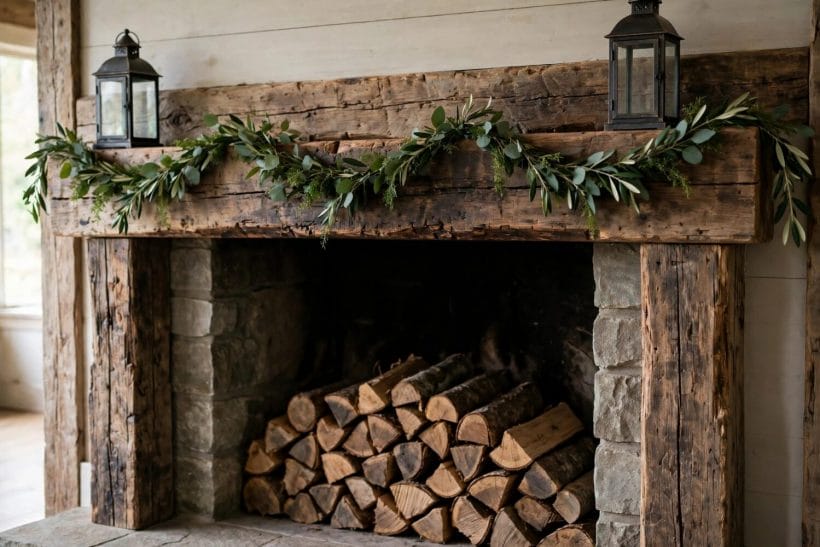
17. Garlands of Green
A loose garland of green — real in winter, dried or faux the rest of the year — softens the beam’s hard line and marries the stone to the season. Keep it clear of the opening itself; decoration belongs on the mantel, never near the fire’s working space.
18. Candles in Odd Numbers
Candles are the unlit fireplace’s stand-in flame: groups of three or five, varied heights, plain wax. On the mantel or the hearth’s edge — always stable, always attended, and always away from anything that burns as decoration.
19. A Mirror or Picture Above
One generous piece above the mantel anchors the composition: a round mirror to bounce the firelight, or a landscape in a plain frame. Scale it to the breast, not the mantel — the whole chimney wall is the canvas.
20. The Seasonal Mantel Swap
Rustic dressing stays alive by rotation: greenery and cones in winter, dried grasses and pottery in summer, a bowl of fruit in autumn. The stone and beam never change; the still life on them tells the household’s seasons.
The mantel’s still life has one more rule: height. Keep the arrangement below the line where it would compete with the picture or mirror above, and let one taller piece — a branch, a candlestick, a jug of dried grasses — carry the vertical accent alone.
7. Beside the Fire: Furniture and Texture
The fireside’s furniture completes the styling; the small-room end of the arrangement echoes tiny house living room ideas. Four companions belong beside a rustic hearth.
21. The Log Basket, Always Full
A generous basket of logs is furniture, fuel store and still life in one. Wicker, canvas or iron — its material sets the fireside’s tone, and a full basket makes any room feel provided for.
22. The Reading Chair at the Corner
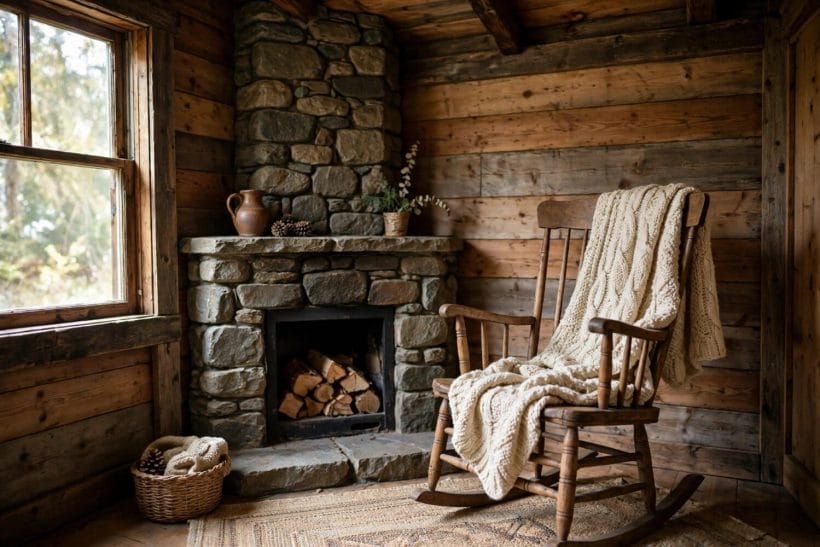
One deep chair angled at the fireplace’s corner is the rustic room’s throne: leather or plaid wool, a cushion at the back, a lamp within reach. Everything else in the room arranges itself around this seat.
23. Throws and Cushions in Woven Texture
The soft layer speaks the same language as the stone: chunky knits, plaid wool, woven stripes and honest linen. Texture, not pattern, is the rustic textile rule — the materials should feel made by hands.
24. A Small Table for Tea and Books
A small, sturdy side table — a stool, a slice of trunk, a plain farmhouse piece — holds the fireside’s working objects: the book, the mug, the reading glasses. The rustic fireside is a working corner, not a photograph.
Distance is the fireside’s quiet organiser: the chair near enough for warmth, the basket within arm’s reach, the textiles clear of the opening by the margins the maker sets. Arranged that way, the corner feels generous rather than crowded — closeness everywhere except where the fire needs its room.
8. Light Around the Fire
Rustic rooms are lit warm or not at all — and the compact end of the craft is practised in small living room ideas. Four lighting ideas finish the atmosphere.
25. Firelight as the Main Light
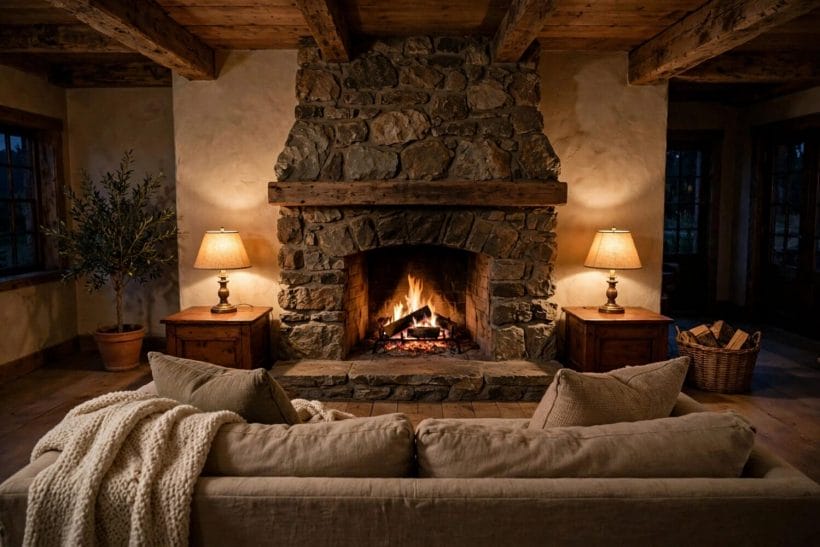
On fire nights, let the flames lead: dim or darken the room’s other lights and the stone surround performs as it has for centuries. The rustic palette — stone, timber, wool — was designed by firelight and still looks best in it.
26. Low Lamps at Hearth Height
Table lamps set low, near the hearth’s height, layer with the fire instead of competing from the ceiling. Warm-toned shades in linen or parchment keep the glow in the same family as the flames.
27. Candles When the Fire Is Cold
When no fire is lit, candles on the hearth and mantel return the fireplace’s focal warmth at a smaller scale. Group them as the fireside’s second fire — attended, stable and set away from the dressing.
28. Deep Wall Colours Around the Glow
Muted, deep wall colours — clay, forest, charcoal-plaster — make a rustic fireplace glow by contrast, where bright white walls flatten it. The stone breast can stay natural; the walls around it carry the mood.
Notice what none of the lighting ideas uses: the ceiling centre light, switched on full. Rustic rooms live at lamp height and flame height. If a room with a stone fireplace feels stark, the cure is almost never more stone — it is lower, warmer light around the stone it already has.
9. Small Rooms and Cabins
Rustic fireplaces shrink gracefully — the full cabin context is toured in cabin interior ideas. Four scalings keep the language in small rooms.
29. The Corner Fireplace in a Small Cabin
A corner setting borrows the room’s least useful angle and gives the fire two walls to warm the eye. In small cabins it is often the only placement that leaves the room’s centre free.
30. Scale Down the Surround, Keep the Beam
Small rooms take a narrower surround and slimmer stone, but the beam mantel can stay generous — its proportion to the opening, not its absolute size, carries the rustic note.
31. The Fireplace as the Room’s Only Event
In a very small room, let the fireplace be the single decorated surface and keep everything else plain. One strong stone-and-timber composition outshines a roomful of small rustic gestures.
32. Storage Built Around a Small Fireplace
Niches and shelves flanking a small fireplace store its logs and the room’s books in the same composition — the rustic answer to small-space storage, built into the chimney breast’s shoulders.
And in small rooms the fireplace repays its space in kind: it is heater, lamp, furniture and view in a single square of wall. No other element in a cabin earns its footprint four ways — which is why the rustic language, born in small rooms, still fits them best.
10. Care and Safety, in the Right Order
The closing section is the honest one: styling is the last step, and these four points stand in front of every idea above — stated generally, as they should be, because the specifics belong to the fireplace’s maker and to local code.
33. Clearances Are the Maker’s Word
How far furniture, textiles and decoration must stand from a fireplace is not a styling judgement: it is set by the appliance’s or fireplace’s maker and by local code. Read them before dressing anything near the opening, and let them — never the photograph — place the chair and the basket.
34. The Chimney: Swept and Sound
Any fireplace in use depends on a chimney that is swept, sound and drawing properly. Have it inspected and swept by qualified professionals on the schedule they advise; no surround styling is worth a thing over a chimney that is not right.
35. Guards, Sparks and Common Sense
Screens and guards earn their place whenever a fire is lit, and doubly with children, pets and rugs nearby. Carbon monoxide is the invisible part of every fire appliance: working alarms, fitted and tested as their makers direct, are part of the fireside’s furniture.
36. When the Professionals Take Over
Flues, liners, chimney structure, hearth construction and anything involving the firebox itself are professional territory, full stop. The rustic look in this post is deliberately all surface — stone dressing, timber, textiles and light — because the working fire beneath it belongs to the people qualified to keep it safe.
Small rooms also teach the rustic palette’s portability: stone, beam, iron, wool and firelight compose at any scale, because the language is materials rather than dimensions. A cabin fireside six paces wide can hold the same atmosphere as a hall — a truth the holiday-let photographs prove every winter.
Final Considerations
A rustic fireplace is the easiest room-anchor to love and the simplest to keep honest: choose your hero material, dress the mantel with the seasons, set the chair at the corner — and leave the fire itself, its clearances and its chimney to the maker’s word, the local code and the professionals. Style the surface generously; respect the workings absolutely. That division of labour is the whole rustic secret.

0 Comments