
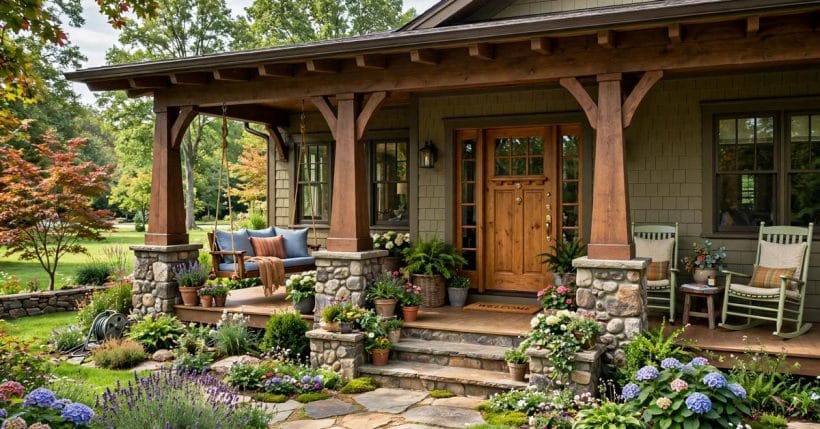
The craftsman porch is the house’s handshake: tapered columns on stone piers, a low sheltering roof, joinery that shows its making, and a swing that has nowhere to be.
These seventy-five ideas build the porch whole — its bones, furniture, light and threshold, its earth-tone colour and its planting — and finish with the seasonal keeping that turns a well-built porch into a well-loved one.
1. Craftsman Porch Ideas at a Glance
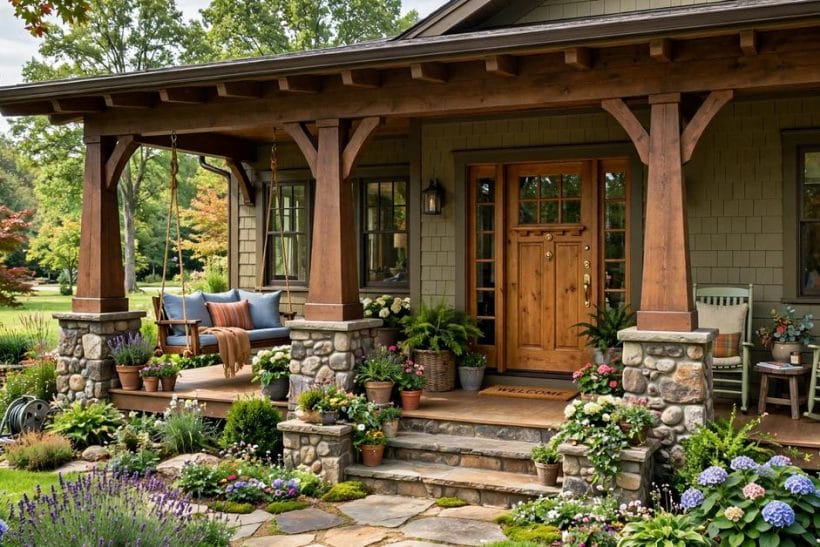
A craftsman front porch is a roofed outdoor room in the arts-and-crafts register: tapered timber columns on masonry piers, a low-pitched roof with exposed rafter tails, a timber or beadboard ceiling, and heavy slatted furniture.
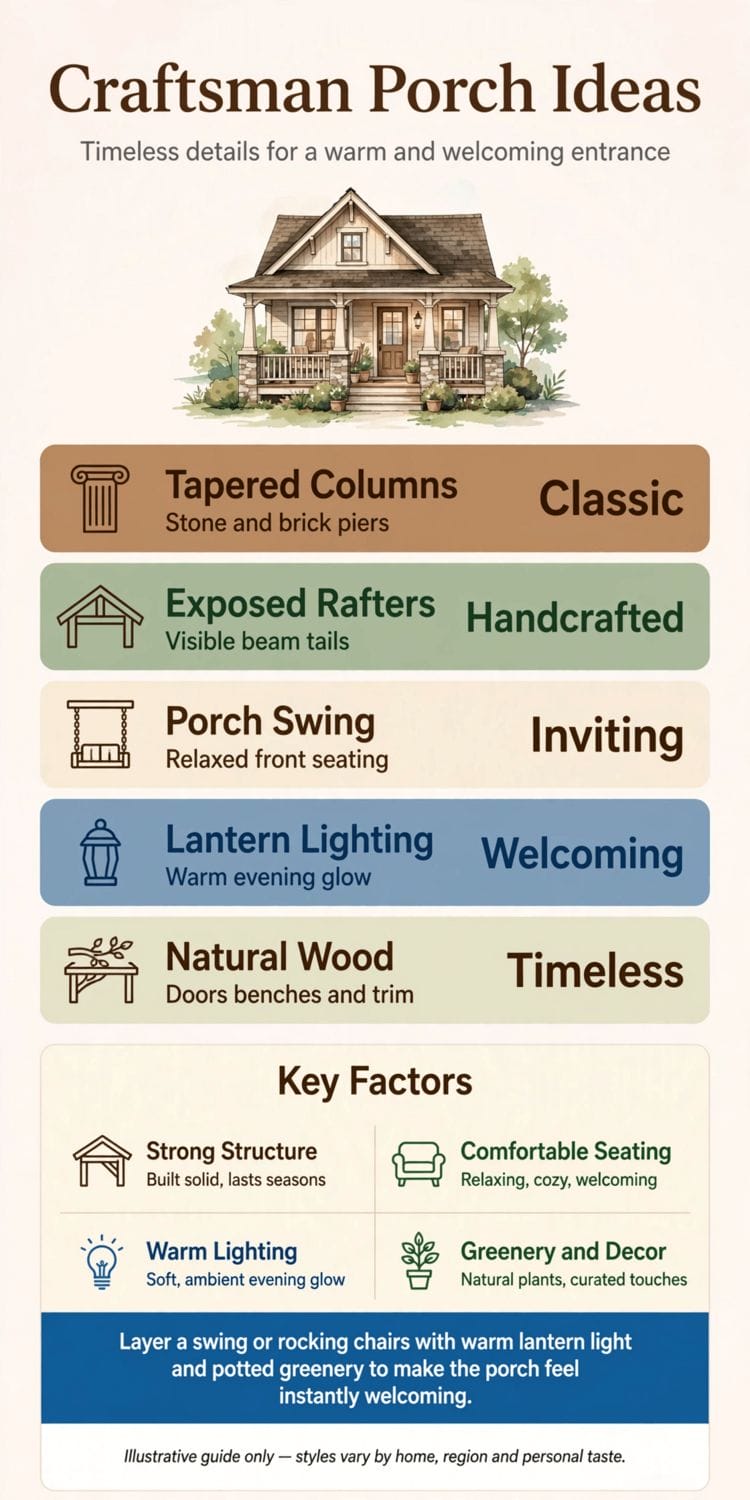
| Question | Short answer |
|---|---|
| What makes a porch ‘craftsman’? | Its structure: tapered columns on stone or brick piers, exposed rafter tails, visible joinery and a low, wide roofline — decoration that comes from how the thing is built. |
| What furniture suits it best? | Heavy, slatted, mission-style pieces in dark timber — a swing as the anchor, rockers in pairs, a built-in bench — dressed with cushions in earth-tone outdoor cloth. |
| What colours belong on it? | The landscape’s own: deep greens, warm browns, stone greys, with the ceiling painted pale and one warm accent confined to cushions and pots. |
| How should it be lit? | Warmly and in layers: a bold lantern at the door, sconces beside it, a ceiling fixture where the roof allows, and lanterns at the steps — never a single cold floodlight. |
| What is the porch for, exactly? | Sitting — at length, facing the street and garden. Every decision in this post serves that one use: shade, comfort, a view, and welcome practised daily. |
2. The Bones: Columns, Piers and the Low Roofline
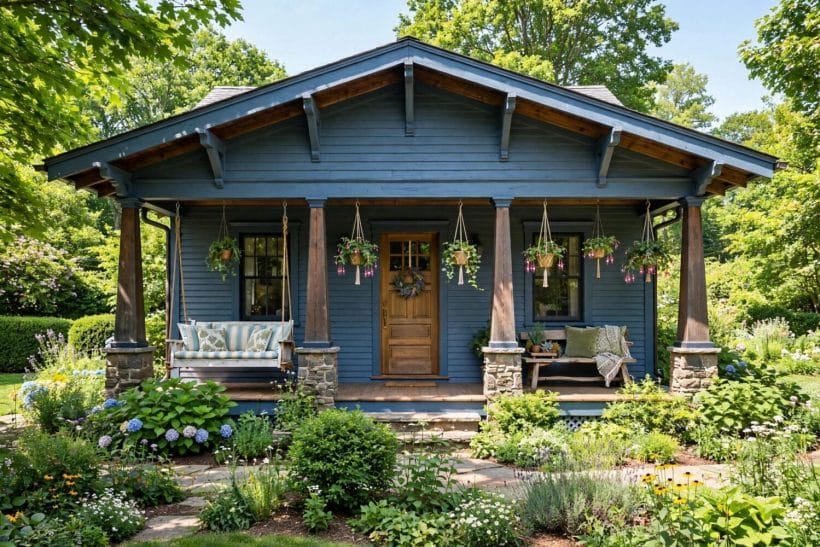
A craftsman porch is recognised by its structure before its furniture: tapered columns on masonry piers, a low sheltering roof, joinery left visible. The column itself — its taper, cap and pier — is treated in depth in porch columns; this post composes the whole porch around that signature.
1. Set tapered columns on masonry piers as the signature
The craftsman column narrows as it rises and sits on a pier of stone or brick that grounds it.
2. Pair or triple the columns where the porch is wide
Wide porches group their columns — pairs at the corners, triples at a long span — in the manner of the old pattern books. Grouping keeps the bays rhythmic and the roofline honest about its span.
3. Expose the rafter tails under the roof’s edge
The cut ends of the rafters, left visible under a low-pitched roof, are the craftsman eave’s signature. Painted or stained with the trim, they turn structure into the porch’s cornice.
4. Keep the beam ends visible and honest
Where the porch roof’s beams meet the columns, the joinery shows: pegged, bracketed, unashamed. A porch that hides its workings has missed the style’s first principle — that how a thing is made is part of how it looks.
5. Build a half-wall rail with a cap wide enough to lean on
Many craftsman porches close their bays with a low solid rail rather than balusters. A broad cap on it serves as shelf, seat-back and leaning rail in one — furniture the architecture provides.
6. Tie the piers’ masonry to the house
Stone piers on a stone house, brick on brick: the porch grounds itself by speaking the house’s own material.
7. Make the steps wide, with treads deep enough to sit on
Craftsman steps are a place, not a passage: wide enough for two abreast, deep enough to sit on with a drink. The step choreography connects to the wider thinking in exterior stairs — the porch begins at the garden, not at the door.
8. Ceil the porch in beadboard or timber
A timbered or beadboard ceiling closes the porch’s room: warmer than plaster, kinder to sound, and the natural home for the pendant and the fan.
9. Hold the palette of materials to earth and timber
Stone, brick, stained wood, painted timber in earth tones — the bones should use nothing the landscape would reject. Materials that weather grey and brown keep the porch settled into its garden as it ages.
10. Keep the proportions low, wide and grounded
The craftsman porch hugs the house: a roof pitched low, bays wider than they are tall, nothing soaring. Its welcome is the welcome of shelter, and the proportions should say so before a single chair is placed.
11. Let the front door read through the columns
Compose the bays so the door is framed, not hidden, from the street. The porch is the door’s setting; a column planted dead-centre of the door’s view is the one arrangement the style never makes.
3. Furniture: The Swing, the Rockers and the Long Sit
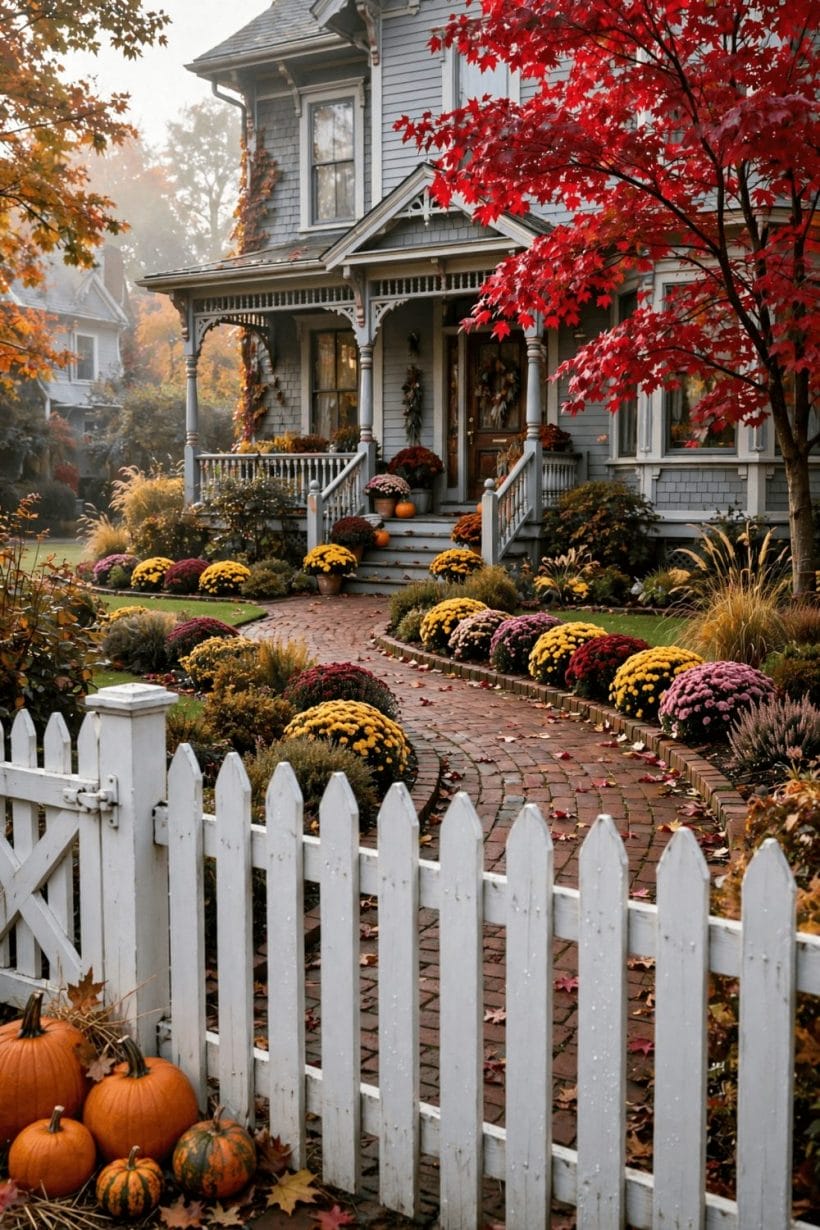
A craftsman porch is furnished as an outdoor room with one purpose: sitting, at length, facing the world. Its furniture is heavy, slatted and made to be left out in — the porch’s answer to the garden seating arranged in patio ideas, but roofed, shaded and turned toward the street.
12. Anchor the porch with a swing
The porch swing is the style’s hearth: hung at one end or across a bay, sized for two and a sprawl. Everything else on the porch arranges itself in attendance on the swing’s slow arc.
13. Set rocking chairs in pairs, angled to talk
Rockers belong in conversation, not in a row facing forward like a waiting room. Two chairs angled toward each other across a small table is the porch’s basic social unit — repeat it if the porch is long.
14. Build a bench in along the rail
A built-in bench under the rail or against the house wall seats the overflow, stores cushions in its box, and never blows over or wanders. Built-ins are the craftsman answer to furniture that must earn its place.
15. Choose mission-style slatted furniture in dark timber
Slatted, square-shouldered furniture in stained timber is the porch’s native dress: it matches the joinery, weathers honestly and looks better at ten years than at one. Cushions carry the comfort; the frames carry the style.
16. Dress cushions in outdoor cloth with an indoor pattern
The porch is a room, and its cushions should read as furnishing, not camping gear: woven-look stripes, checks and earth-tone prints in weather-worthy cloth. Pattern is where the porch takes its colour risks safely.
17. Give every seat a table within reach
A porch where drinks must be held or floor-parked is unfinished. A low table by the swing, a ledge by the rockers, a stump or crate that serves — every seat deserves its surface.
18. Hang the swing on chains with room to sway
Chains, not ropes, are the swing’s honest hardware, and the swing needs clear air behind and before it.
19. Soften the joinery with wicker accents
One or two wicker pieces — a chair, a basket, a tray — take the edge off the slatted geometry and bring the garden’s texture onto the porch.
20. Stretch a deep porch with a daybed swing
On a genuinely deep porch, a daybed swing — part bed, part sofa, all afternoon — is the style’s licensed indulgence. Dressed with cushions and a throw, it is the first seat claimed and the last vacated.
21. Keep the walking line through the porch clear
However furnished, the route from steps to door must stay a clear, gracious lane. A porch that makes guests thread a furniture maze has confused a room with a warehouse.
22. Scale the furniture generously to the porch’s depth
Shallow, skimpy furniture on a deep porch looks apologetic. The style’s pieces are broad, low and settled — buy the size the porch’s depth flatters, and group rather than scatter.
4. Lighting: Lanterns, Pendants and the Amber Hour
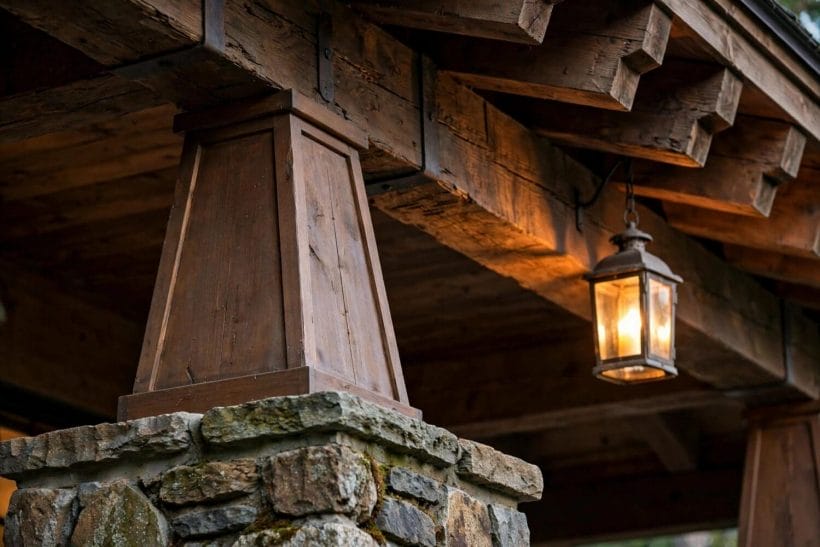
Craftsman light is warm, low and lantern-minded: fixtures with a maker’s hand in them, hung where faces and doorways need them.
23. Hang a pendant or lantern at the door, sized boldly
The door’s fixture is the porch’s face after dark and is almost always hung too small. Choose a lantern with presence — visible from the street, in proportion to the door — and the whole porch gains its evening centre.
24. Flank the door with sconces in the same metal family
A pair of sconces frames the door and lights faces evenly for arrivals. Their metal should match the pendant’s — one family across the porch, as with every craftsman detail.
25. Keep the light warm, always
The style reads amber: warm-toned bulbs in every fixture, no exceptions. Cold white light on a craftsman porch is the single fastest way to make fine joinery look like a service yard.
26. Set lanterns on the steps for the evening path
A lantern at the steps’ foot and head lights the climb and draws the eye home. Real flame in glass hurricanes or their electric kin — what matters is the low, local glow at foot level.
27. Use the ceiling fixture where the roof allows
A porch with a proper ceiling earns a central fixture or fan-light at its heart. It lights the room generally, leaving the door’s lantern to do the honours — layers, as indoors.
28. Add candles in glass for evenings that linger
Hurricane glasses on the table and along the rail take over when the electric light feels too capable. Candlelight is the porch’s oldest fitting and still its most flattering.
29. Light the house number so it reads from the street
Numbers lit kindly — by the door lantern’s spill or a small dedicated light — serve guests, deliveries and emergencies alike. In the craftsman manner, the numbers themselves should be bold, plain and mounted with care.
30. Downlight the columns to show their taper at night
A soft wash down a column’s face shows the taper and the pier’s masonry after dark — the porch’s architecture, lit like the exhibit it is. Keep it gentle; the porch glows, it does not glare.
31. Light in zones: door, seats, steps
One source per zone, each modest, layers the porch the way a room is lit. A single floodlight flattens everything it touches; three small lights compose a scene.
32. Put the porch lights on a switch you will actually use
Porch light lives or dies by its switch: by the door, obvious, perhaps on a timer or sensor for the homecoming hours. The best-lit porch is simply the one whose lights are on.
33. Test the porch’s glow from the street at dusk
Judge the lighting from where the world sees it — the pavement at dusk. The porch should read as a warm room floating at the house’s face; adjust wattage and shades until the street view composes.
5. The Door, the Screen and the Threshold
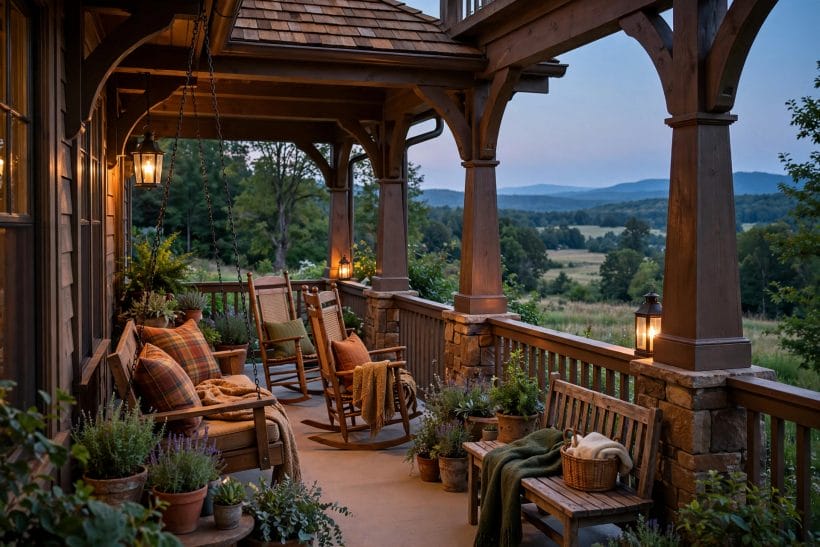
Between porch and house stands the threshold, and the craftsman style lavishes its craft there: a door with glass in its upper reaches, hardware with weight, a number with a face.
34. Choose a door with divided lights in its upper third
The craftsman door’s signature is glass above, panels below — light for the hall, privacy for the room, and a pattern of small panes that echoes the porch’s grids. Frosted or clear, the proportion is the style.
35. Borrow hall light with sidelights or a transom
Where the doorway allows, glass beside or above the door doubles the threshold’s light and its ceremony. The porch’s lantern and the hall’s glow meet in that glass at dusk — the house’s warmest square metre.
36. Hang a timber screen door that matches the trim
A screen door in painted or stained timber, with a proper handle and a gentle closer, keeps the insects out and the character in. It should look made for the doorway, because in this style it is.
37. Fit hardware with weight and a dark finish
Handles, hinges and letter plates in dark, simple metal — chosen heavy in the hand. The door’s furniture is touched daily; in a maker’s style, its making should be felt.
38. Lay a deep welcome mat and keep a boot scraper by the steps
The porch’s working threshold: a mat deep enough for two full steps of wiping, and a scraper or brush where the garden’s mud is surrendered. Practical, unglamorous, and the reason the hall stays clean.
39. Mount the house numbers on a pier or plaque
Numbers given their own small architecture — a plaque on the pier, a board by the door — read from the street and age with the porch.
40. Match the mailbox to the house’s metal
Where post lives at the porch, its box should join the metal family of lantern and handle. One finish across the small metal objects is the cheapest coherence the porch can buy.
41. Shade the sun side with curtains or a blind
A porch blinded by afternoon sun sits empty at its best hour. Simple outdoor curtains or a woven blind on the sun side, drawn and tied back with the same plainness, return the hour to the sitters.
42. Keep a bench or shelf by the door for parcels and boots
Modern thresholds receive deliveries; a bench or sturdy shelf by the door receives them gracefully instead of the doorstep’s puddle. It doubles as the boot seat — the porch’s small utility, styled in.
43. Sweep the threshold and straighten the mat
The porch’s daily sentence: swept boards, a straight mat, leaves gone from the corners. Five minutes of keeping is what separates a porch that welcomes from one that merely fronts.
44. Keep signs and plaques to one, well made
A single plaque — the house’s name or number, made properly — carries the porch’s whole message. A gallery of signs turns craft into clutter; the style’s confidence is in the singular.
6. Colour and Materials: The Earth-Tone Register
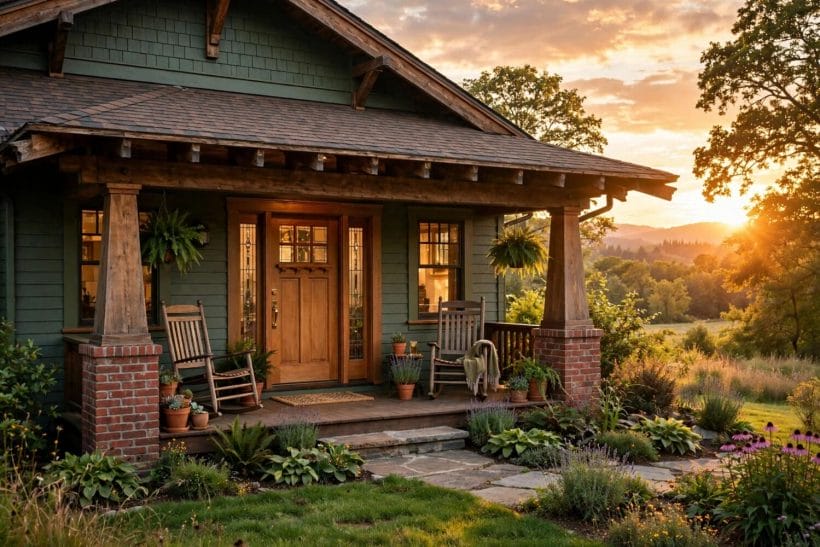
Craftsman colour is landscape colour: the greens, browns, stones and clays of the plot the house stands on. It is the same discipline that governs the whole exterior in exterior home ideas, narrowed here to the porch’s few walls, floor and columns.
45. Build the palette from deep greens, warm browns and stone greys
The classic triad never strays far from the garden it overlooks. Paint, stain and cushion drawn from it cannot clash with the planting, the sky or each other — the palette is the porch’s peace treaty with its setting.
46. Paint the porch ceiling a pale, soft tone
Porch tradition paints the ceiling pale — a soft sky or mist tone — to lift the low roof and borrow the feeling of open air.
47. Stain the door’s timber rather than painting it
A stained door shows its grain and its making — the craftsman virtues — and warms the whole threshold.
48. Distinguish pier and column with two tones
Masonry left natural below, column painted or stained above: the two-tone column states the construction honestly and draws the eye along the taper.
49. Floor the porch in what forgives mud
Painted timber, stone or tile in a mid, mottled tone hides the week’s footprints between sweepings and suits wet boots. Gloss and pale plainness are the porch floor’s two enemies; matte and mid-tone are its friends.
50. Repeat the house’s trim colour on the rails and caps
Tying the porch’s painted parts to the house’s trim makes porch and house one composition. A porch in its own colours reads as an addition; a porch in the house’s reads as a birthright.
51. Lay natural fibre underfoot: runners and mats
Coir, jute and woven cotton bring the garden’s textures across the threshold and take the scrape of boots gracefully. In the earth palette they disappear into correctness — which is the point.
52. Carry one dark metal through every fitting
Lantern, handle, numbers, swing chains, mailbox: one dark finish, everywhere. As with the bathroom’s metal thread, consistency across small objects is what reads as design at street distance.
53. Let one accent colour live in the cushions and pots
Rust, ochre, faded red — one warm accent, repeated in cushion and planter only, seasons the earth palette without breaking it. Accents confined to the changeable objects can be re-seasoned with the years.
54. Take the cushion colours from the garden’s own planting
When the soft furnishings need a colour story, borrow it from the beds below the porch: the green of the hedge, the rust of the late roses, the grey of the path stone.
55. Let materials weather honestly rather than gleam
Timber silvering, stone darkening, metal mellowing — the craftsman porch ages in public and is designed to. Finishes that fight the weather lose visibly; finishes that accept it improve.
7. Planting and Planters: The Garden Comes Up the Steps
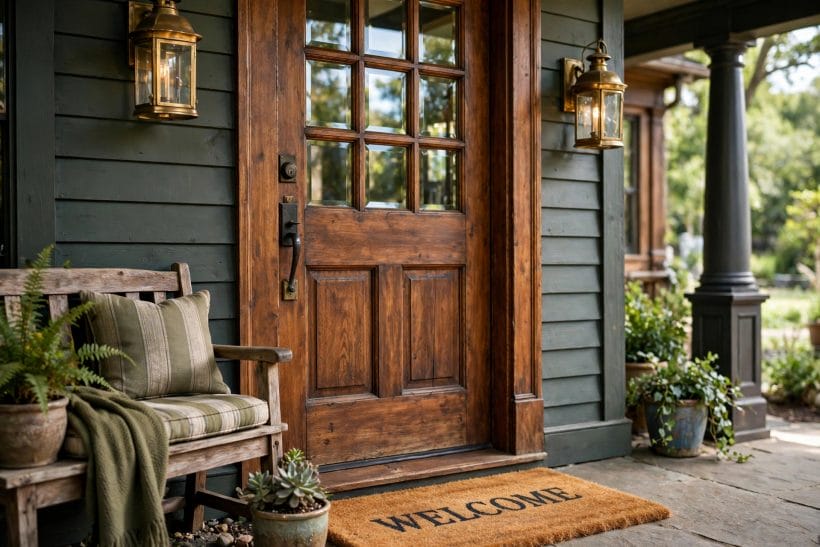
The porch sits between house and garden, and its planting is the negotiation between them — structured enough for architecture, soft enough for the garden. Around its feet, the wider ground belongs with farmhouse home design ideas‘ whole-homestead planting mood; the porch itself keeps its green in planters, boxes and one climber.
56. Plant low and dense at the piers’ feet
Ground planting at the piers grounds the whole structure: low shrubs and perennials that hide the junction of masonry and earth. The porch should look grown into its bed, not parked on the lawn.
57. Flank the steps with a matching pair of planters
The classic porch punctuation: two planters, identical, one each side of the steps. Their symmetry does the welcoming before a word is read, and their contents can change with every season.
58. Fill deep shade under the roof with ferns and foliage
The porch’s own shadow is its microclimate: ferns, hostas and foliage plants in pots thrive where flowers sulk. A green, shaded porch corner is a feature — cool at noon, lush at dusk.
59. Run a window box or rail planter along the front
A box along the rail puts flowers at the sitter’s elbow and the street’s eye level at once. Trailing plants soften the rail’s line; upright ones make a low screen of green.
60. Train one climber up a single column
One column given to a climber — a rose, a clematis, a jasmine where climate allows — dresses the architecture without swallowing it. One dressed column is a composition; every column dressed is a thicket.
61. Rotate seasonal pots through the year
Spring bulbs, summer colour, autumn foliage, winter evergreen: a rotation of pots keeps the porch’s planting always at its best week. The out-of-season pots retire to the side path, not the compost of good intentions.
62. Keep herbs in pots by the kitchen-side steps
A pot of herbs at the porch’s kitchen end is picked daily and perfumes the sitting air between pickings. It is the porch’s smallest garden and often its most used.
63. Keep the view from the swing open through the planting
Planting should frame the swing’s view, never fill it: low in the sightline, taller at the edges. The porch exists to look out from; a green wall at eye level wastes its whole purpose.
64. Build evergreen structure so winter still reads furnished
When the annuals go, evergreen pots and shrubs at the piers keep the porch composed through the bare months. A porch that holds its shape in January is dressed all year.
65. Water the pots from a can kept on the porch
Pots dry fast under a roof that sheds the rain elsewhere. A handsome can living on the porch — refilled at the garden tap — makes watering a round of the evening sit rather than a hose-dragging expedition.
8. Seasonal Dressing and the Welcoming Details
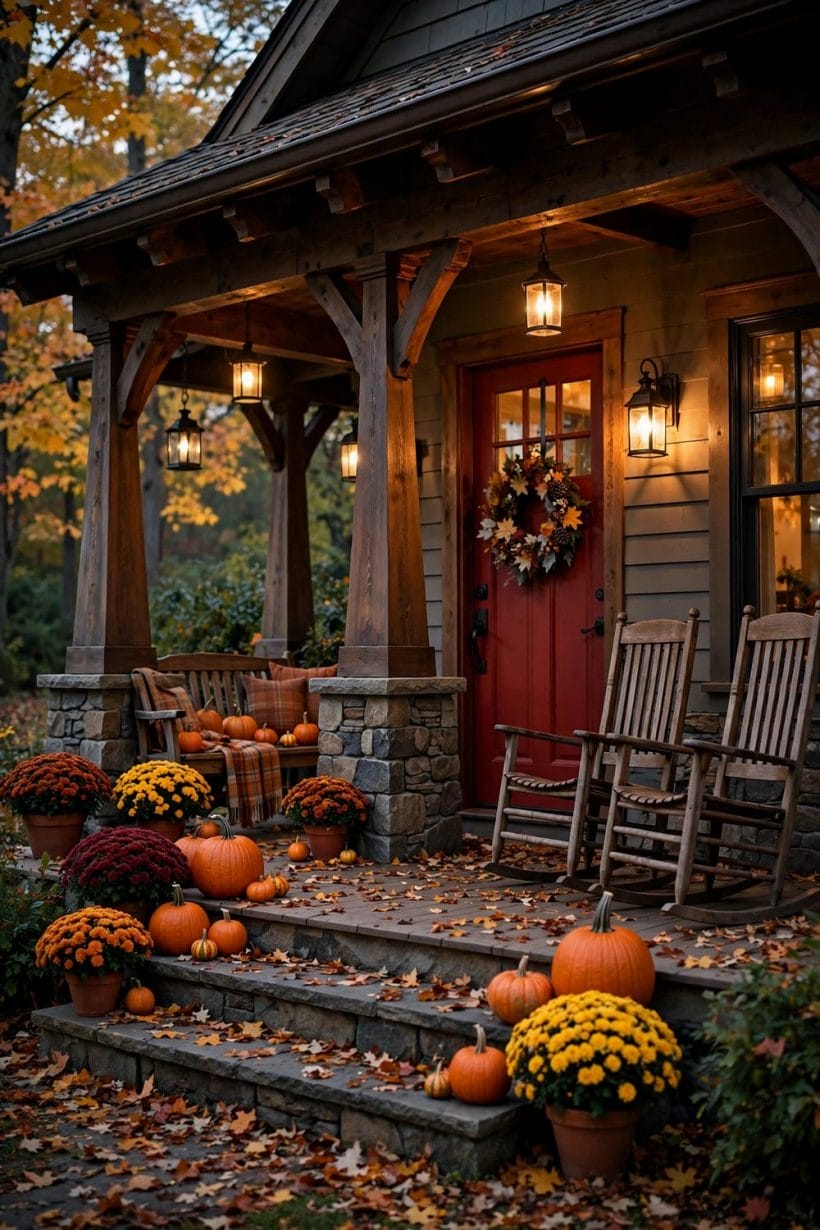
A craftsman porch is never finished, only kept: dressed lightly with the seasons, stocked for lingering, and run — like the whole home surveyed in home design ideas — on the principle that welcome is a practice, not a purchase.
66. Dress the porch for the season in one gesture
One move per season — spring pots, a summer blind, autumn’s wreath, winter greenery — keeps the porch current without theatrical redressing. Restraint is the style; the season whispers rather than shouts.
67. Hang a wreath on the door and change it with the year
The door’s wreath is the porch’s calendar: green in spring, woven in harvest, plain evergreen in the deep of winter. One wreath, honestly changed, beats a cupboard of decorations rotated by obligation.
68. Throw a blanket over the swing for cool evenings
A folded throw on the swing extends the porch’s season at both ends of the year. It is also the porch’s most eloquent signal: someone sits here, at length, on purpose.
69. Keep a basket of cushions and throws by the door in autumn
As the evenings cool, a basket of warmth by the door keeps the porch in use weeks longer. Indoors-outdoors hospitality, staged where it is needed — the threshold itself.
70. Set a bird feeder in view of the swing
The porch’s entertainment is the garden itself: a feeder placed in the swing’s sightline brings the cast to the audience. It costs little, asks weekly filling, and repays every sit.
71. Give the porch a reading light and a place for books
A shaded lamp at reading height and a small shelf or crate of books declare the porch a room of the house. Evening reading outdoors is the porch’s highest use and its easiest to equip.
72. Welcome neighbours at the rail, on purpose
The craftsman porch was designed as the house’s social frontier — close enough to the street for a conversation, roofed enough for a long one. A seat facing outward is an invitation the whole street can read.
73. Keep music low and the porch’s sound natural
Wind in the planting, the swing’s chains, birds at the feeder: the porch’s soundtrack is mostly provided. Anything added should sit under the conversation, not over it.
74. End the day on the porch with a final round
The porch’s last ritual is the evening sit: pots checked, cushions plumped, the street’s quiet taken in. A porch used last thing is a porch kept — the details in this post are mostly that habit, itemised.
75. Let the porch be the house’s slowest room
Every house needs one room with no screen, no errand and no clock governing it. Dressed simply, lit warmly and planted softly, the craftsman porch was invented to be that room — keep it slow, and it will keep the household.
9. Checks and Mistakes: Before the First Purchase or the First Fitting
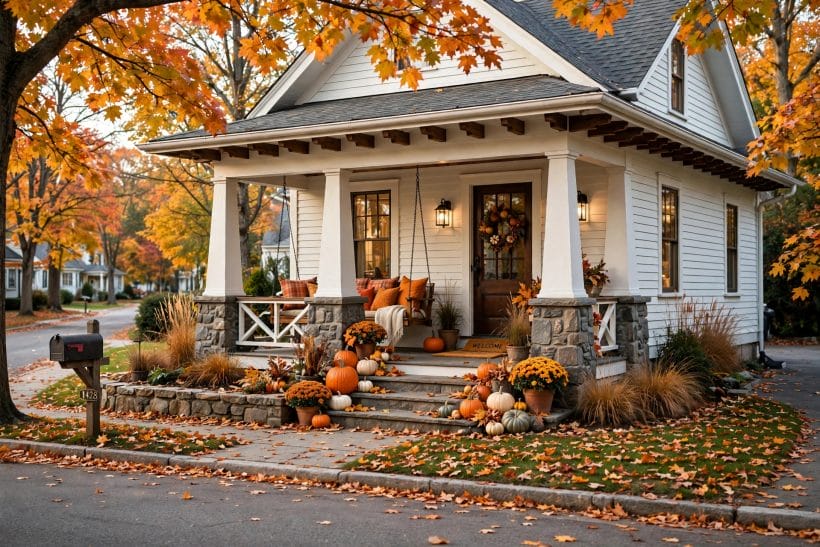
The porch’s classic mistakes are failures of proportion and patience: columns too thin for their piers, a swing hung where its arc strikes the rail, furniture scaled for a balcony.
Safety deserves its plain sentences: porch steps and any change of level need lighting and, where local rules require them, handrails; swings and their fixings must be rated for the load and inspected as seasons turn; and outdoor electrics belong to their proper fittings and a qualified installer.
Finally, furnish a porch you have sat on at three times of day. Morning glare, noon heat and the dusk hour each expose a different want — a blind, a fan’s breeze, a lamp — and the porch will tell you its own finishing list if it is used before it is decorated.
10. Costs and Pulling It Together
Costs follow the same order as the work: structure is the one real build, furniture is a few considered pieces bought to last decades, and everything after — cushions, pots, wreaths, throws — is small money spent seasonally.
Pull it together by repeating two decisions everywhere: one dark metal across every fitting, and the earth palette across every surface.
Final Considerations
A craftsman porch succeeds when the street can read its welcome at a glance and the household feels it every evening: shade, shelter, a swing in motion and a door lit warm behind the columns.
Start with the columns and the swing, and the rest of the porch tends to fall into place behind them.

0 Comments