
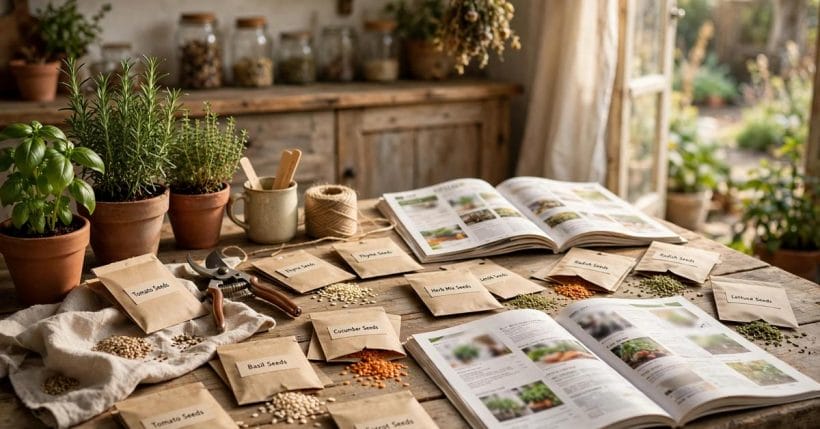
Every good garden is grown twice: once at the kitchen table in winter, in the pages of the seed catalogues, and once in the ground in spring. The catalogue is where the year’s herbs, vegetables and fruit are chosen, compared and arranged — and gardeners who learn to read one properly grow better gardens from the same beds.
This guide treats the seed catalogue as the planning instrument it is: what it contains, how gardeners get hold of one, how to read a variety listing’s fields with a sceptic’s pencil, and how to turn choices into a sowing plan, an order and a set of records that make next year’s planning easier than this year’s.
1. Planning a Herb and Vegetable Garden with Seed Catalogues at a Glance
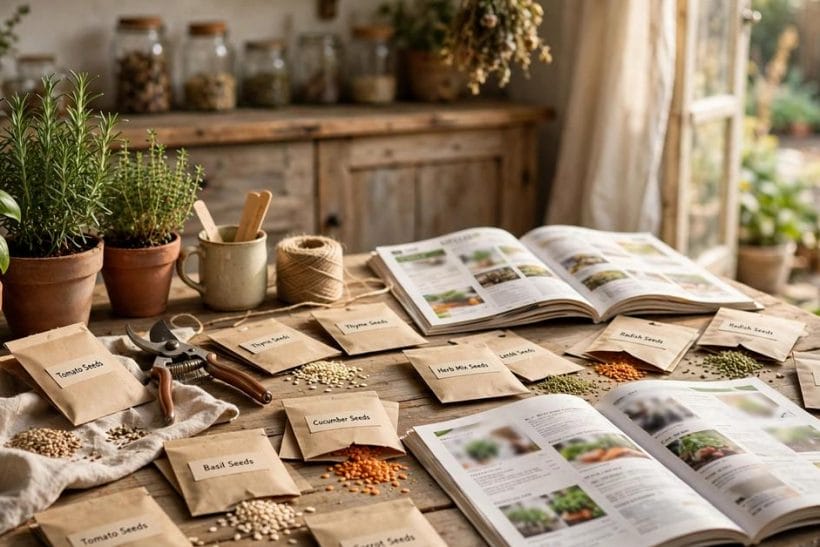
A seed catalogue is a seed house’s annual published list of the seed it offers — herbs, vegetables, fruit and flowers — with each variety described by its habit, season, flavour and demands, and the whole supported by growing notes and sowing calendars. Used as a planning tool, it is where a garden’s year is designed: varieties compared on their printed evidence, beds assigned on a map, sowings ordered into a succession, and the final order placed once, against the plan.
| Question | Short answer |
|---|---|
| What is a seed catalogue for? | Planning, before it is for buying: comparing varieties on their described habit, season and use, and arranging the year’s herbs, vegetables and fruit into beds and sowings before a single packet is ordered. |
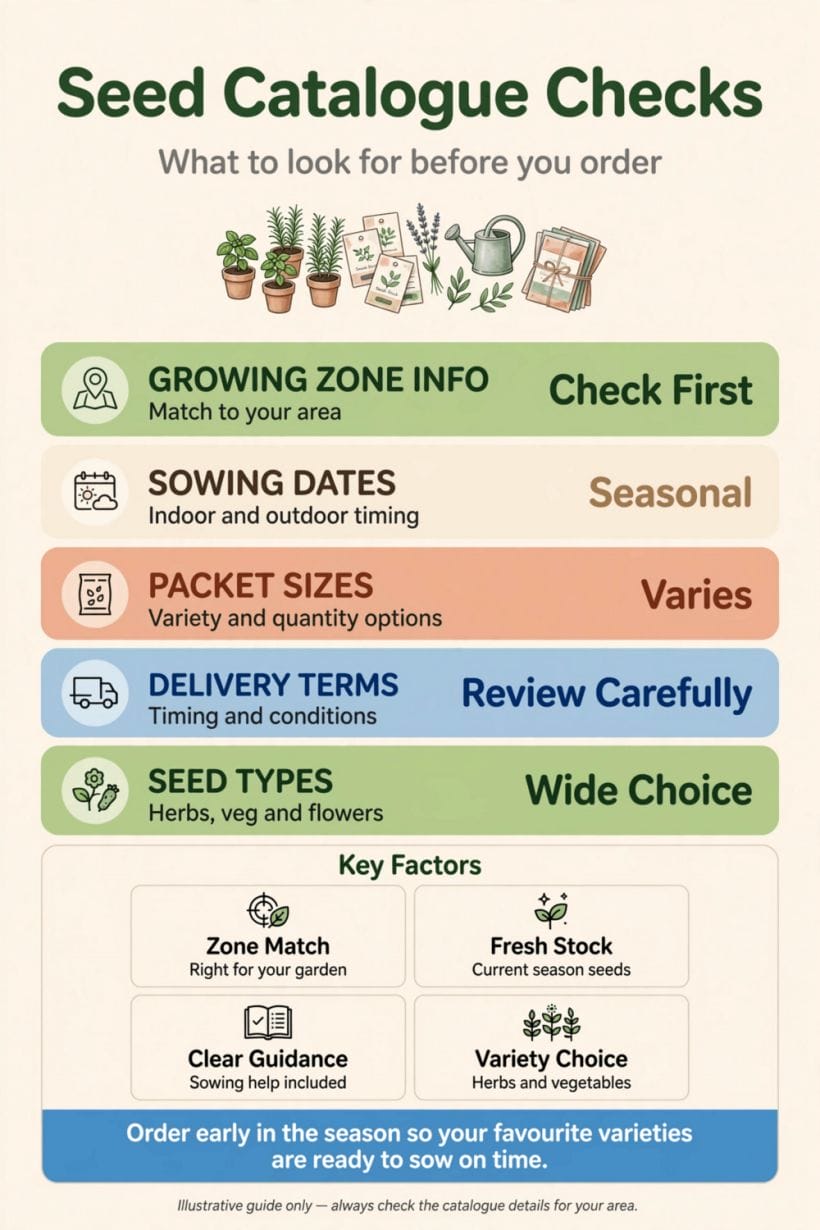
| How do gardeners get catalogues? | By requesting them from seed houses through their usual channels, picking them up at garden centres, nurseries and shows, reading the digital editions, and borrowing or swapping them through societies and other gardeners. |
| What should I look for in a variety listing? | The habit and eventual size, the season and quoted timing read comparatively, the resistance and reliability marks, and the flavour and kitchen use — the fields that decide spacing, siting and whether the crop earns its bed. |
| How many varieties should a plan include? | As many as the beds and the table justify: chosen from what the household eats, spread across the season on purpose, with a small reserve for failures and one wild card for learning. |
| What makes next year’s planning easier? | Records: a page per season noting what was sown where, what cropped and what disappointed — plus seed stored cool, dry and dark, and old packets tested before they are trusted. |
2. What a Seed Catalogue Is and What It Contains
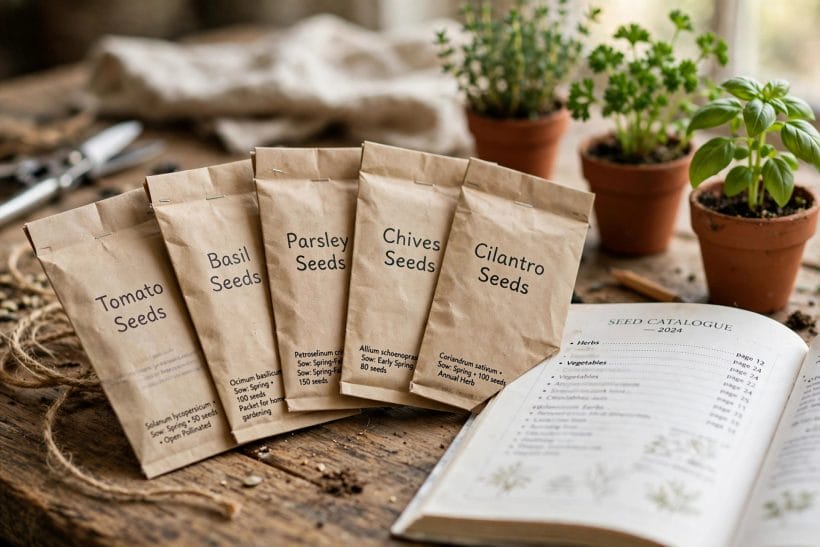
A seed catalogue is a seed house’s annual argument for your garden: part shop window, part instruction manual, part almanac. The printed ones arrive with the winter and are read like novels by gardeners who plan; the digital editions carry the same contents in searchable form. Either way, the catalogue — not the seed packet — is where a garden is actually designed.
The variety listings
The heart of every catalogue is its listings: each variety of herb, vegetable and fruit seed described, pictured and characterised. A good listing tells you the plant’s habit, its flavour or use, its season and its demands — the raw material of every decision in this guide.
The growing notes
Around the listings sit the notes gardeners underrate: sowing guidance, spacing and timing advice, explanations of the house’s terms and symbols. Read them once and every listing afterwards makes more sense; the catalogue’s front pages are its instruction manual.
The calendar matter
Most catalogues carry the year’s rhythm in some form — sowing charts, season planners, reminders of what goes in when. It is general guidance, written for a broad readership, and the wise gardener treats it as a first draft to be adjusted to their own plot’s microclimate.
This guide uses the catalogue the way its makers intend: as a planning instrument. The beds it plans for are the real ones in the garden — their layout thinking sits with gravel patio ideas and the paths and edges of the working plot — and every claim it makes for a variety is read as a claim, weighed against the gardener’s own ground and records.
3. Getting Catalogues: The General Routes
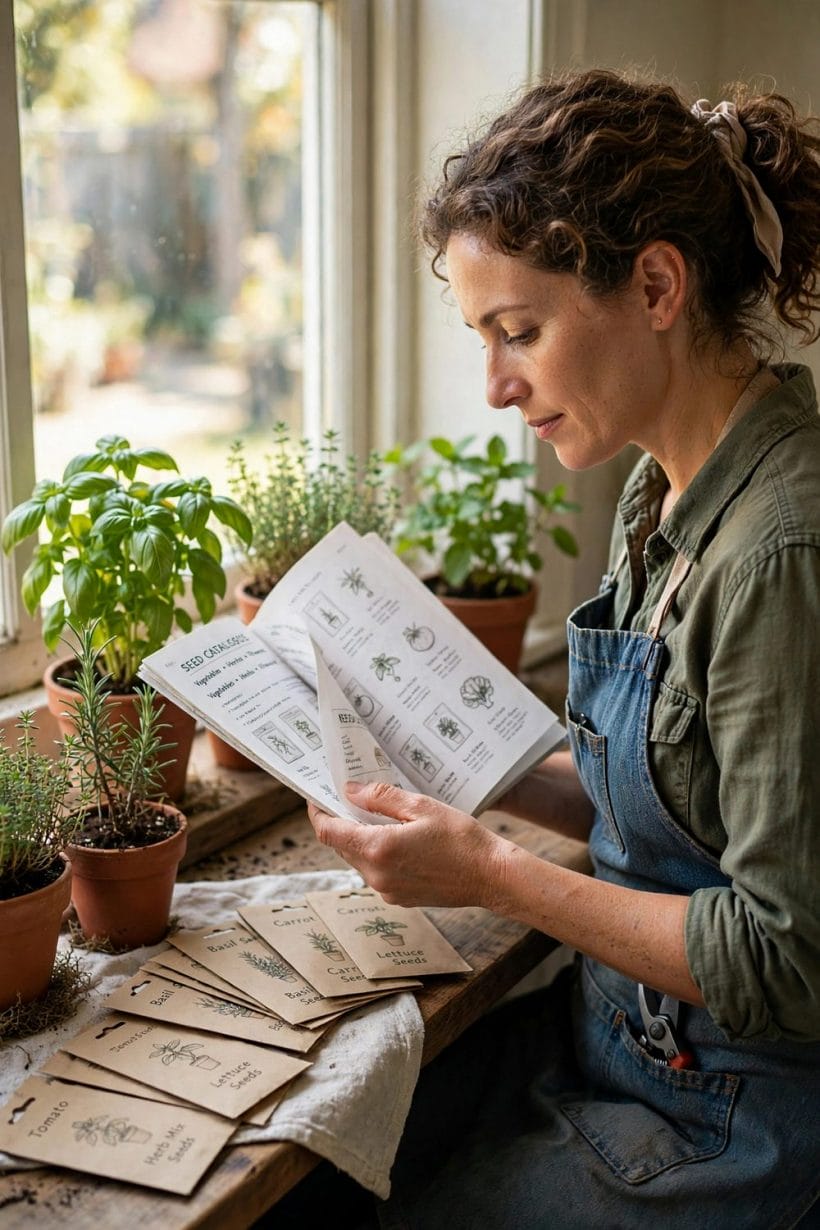
Seed catalogues exist to be read, and seed houses distribute them accordingly. The routes are general knowledge among gardeners and worth stating plainly, because the planning season is short and the pile of catalogues on the table is the gardener’s winter library.
Request one from the seed house
The classic route: seed companies invite requests for their catalogues through their usual channels — an order form, a request card, their published contact routes — and send them out ahead of the sowing season. Gardeners who ordered seed in past seasons commonly find the new catalogue arriving with the winter post as a matter of course.
Pick them up where gardeners gather
Garden centres, nurseries and flower and produce shows traditionally stock the season’s catalogues for customers to take away and browse. The show copy, thumbed by a hundred gardeners before you, is often the one whose dog-ears tell you what the district is actually growing.
Read the digital editions
Most seed houses now publish their catalogue as a digital edition or an online shop with the same listings, notes and charts. The digital route suits gardeners who plan at a screen, search by variety name, and keep their records in files rather than notebooks.
Borrow, swap and keep back numbers
Gardening societies, allotment associations and public libraries keep catalogues as reference, and gardeners swap duplicates like seed itself. Last year’s edition, kept with your notes in its margins, is a planning document no new catalogue can replace — it remembers what you meant to grow.
A word of proportion: catalogues are marketing as well as manuals. Their photographs are grown in good soil in kind seasons, and their superlatives are a house style. None of that diminishes their use — it defines it. The catalogue proposes; the gardener’s plot, records and appetite dispose.
4. Reading a Variety Listing: The Fields That Matter
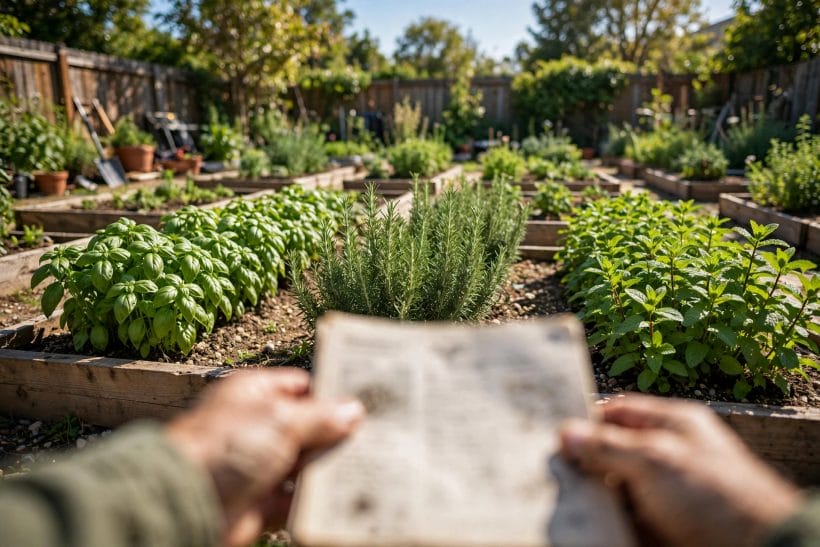
Every listing compresses a plant’s biography into a few lines and symbols. Learning to unpack them — sceptically, comparatively, with a pencil — is the core skill of catalogue planning, and it transfers to every seed house’s house style within an evening.
Days and seasons, read as promises with conditions
Listings quote the time from sowing or transplanting to harvest. Treat the figures as the variety’s performance in the seed house’s trial conditions — a ranking between varieties more than a promise to your plot. Comparing two lettuces’ quoted days tells you truly which is earlier; believing either absolutely is optimism.
Habit and size, read against your beds
The listing’s account of the plant’s height, spread and habit is the field that decides your spacing and your bed plan. A courgette’s sprawl and a pea’s climb are in the small print; gardeners who skip it spend June discovering it.
The symbols and abbreviations
Catalogues mark varieties with a shorthand of awards, resistances, heritage status and growing recommendations. The key sits in the front matter — read it before the listings, or half of what you are comparing is invisible. Disease-resistance marks in particular are real information, stated in general terms and worth weighing for crops your plot struggles with.
Flavour and use, read as the point
Amid the agronomy, the listing’s few words on flavour and kitchen use are the ones the harvest is for. A tomato described for salads and one described for cooking are different plants wearing one name; the catalogue tells you which — if you read for it.
5. Choosing Herbs for the Kitchen Garden
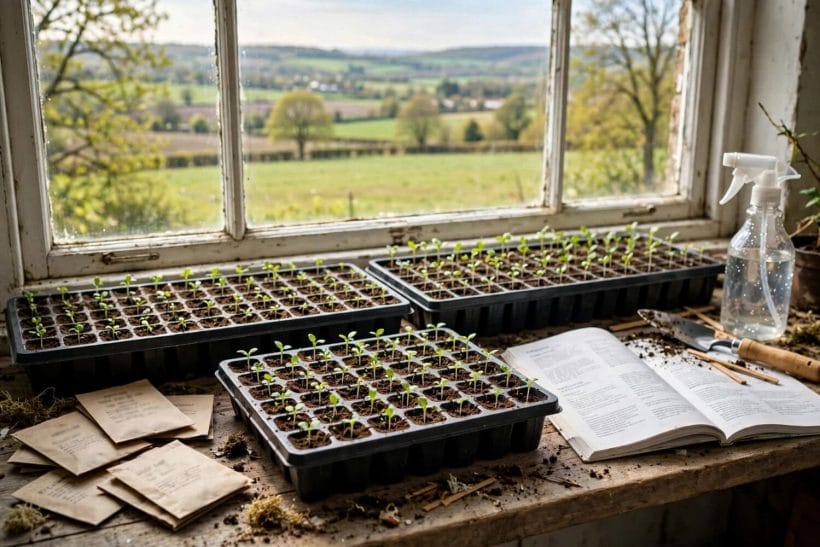
Herbs are the catalogue’s most rewarding pages for a small garden: the plants are compact, the harvests are daily, and a few packets transform a kitchen. Choose them by the cooking the household actually does — the catalogue will happily sell you a herb garden for a cuisine you never cook.
The perennial backbone
Rosemary, thyme, sage, chives and their hardy kin are planted once and picked for years. Give them the catalogue’s full attention — variety differences in hardiness and habit matter for a decade — and a settled, sunny, drained place in the plan; the raised, well-drained ground of the herb bed is their natural home.
The annual leaves
Basil, coriander, dill and parsley in its sowing year are the catalogue’s succession game: varieties chosen for slow bolting, sowings planned in waves. Their listings reward comparison — the difference between a coriander that runs to seed and one that stands is printed in the description, for gardeners who read it.
The teas, scents and garnish herbs
Beyond the kitchen’s core list sit the pleasure herbs — for teas, for scent at the path’s edge, for the garnish that finishes a dish. A catalogue plan that includes two or three chosen purely for pleasure is a plan that will be walked to daily, which is the secret of every well-kept herb bed.
6. Choosing Vegetables by Space, Season and Appetite
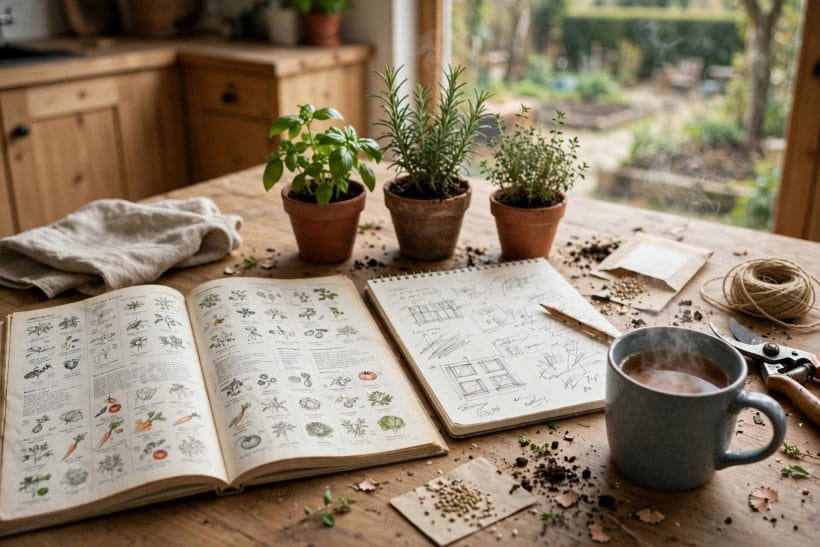
The vegetable pages are where catalogues dream largest and plots push back hardest. The discipline is threefold: the space the beds truly have, the season your district truly gives, and the appetite the household truly brings. The beds themselves — their size, soil and siting — are the ground this planning stands on, and their design is covered where the garden’s water features are in pond ideas‘ wider garden frame; here the seed is the subject.
Start from the table, not the catalogue
List what the household eats weekly, in season, before opening the catalogue. Varieties of the eaten crops deserve deep comparison; crops nobody eats deserve none of your beds, however photogenic their listing. The catalogue’s order of temptation is not your garden’s order of value.
Match the variety to the space honestly
Many vegetables now come in lines bred for containers, small beds and balconies alongside their field-scale cousins — the listing states the habit. Choosing the compact line for a small plot is not a compromise; it is the correct variety, and the harvest difference is printed in the description for those who compare.
Spread the season on purpose
Early, mid and late varieties of the same crop — peas, beans, salads, potatoes in their classes — turn a fortnight’s glut into a season’s supply. The catalogue groups them helpfully by season; the planner’s job is to buy across the groups rather than within one.
Weigh the resistance and reliability notes
For crops your plot historically struggles with, the listing’s resistance and reliability marks are the most valuable words on the page. A slightly less glamorous variety that crops beats a famous one that fails, every year it is tried.
7. Fruit from the Catalogue: Soft Fruit and the Orchard Pages
Fruit occupies the catalogue’s patient pages: plants and seed bought once and cropped for years. The planning questions differ from vegetables’ — site commitment replaces rotation — and the listings answer them with rootstocks, seasons and pollination notes that repay slow reading.
Soft fruit from seed and plant
Strawberries, currants and cane fruit appear as seed, runners, canes and bushes depending on the house. The listing states the form and the fruiting season; the planner weighs the form against their patience — seed is the slow, cheap road, plants the fast one — and plans the bed’s years accordingly.
Reading pollination and season notes
Fruit listings carry the fine print that decides harvests: whether a variety fruits alone or needs a partner, when it crops, how it keeps. These notes are the least decorative words in the catalogue and the most consequential; a fruit bed planted without them is a lottery ticket in perennial form.
Fruit for small gardens
The catalogue’s compact and trained forms — dwarfing rootstocks, cordons, patio lines — are described in their listings’ habit fields. They let a small plot carry orchard fruit honestly, provided the planner reads the eventual size in the listing rather than the photograph’s framing.
8. Making the Sowing Plan: Order, Timing and Succession
With varieties chosen, the catalogue becomes a calendar. The plan that emerges — what is sown, where, and in what order — is the gardener’s real winter crop, and it is made at the table with the catalogue, the plot’s map and last year’s notebook in a row.
Turn the choices into a bed map
Assign every chosen variety its ground before ordering: which bed, which row, what it follows and what it neighbours. The map exposes the plan’s lies instantly — the third courgette with nowhere to go, the herb bed promised to two tenants — while they are still pencil, not plants.
Order the sowings by the catalogue’s calendar, adjusted
Take the catalogue’s sowing guidance as the frame and adjust it by your plot’s known behaviour — the bed that warms early, the corner the frost finds. Gardeners’ own records, kept season by season, are the correction table no catalogue can print; the storage and record end of the system lives naturally with garden shed ideas.
Plan the successions, not just the sowings
For the fast crops, the plan is a rhythm: little and often, each sowing dated as it is chosen. Write the second and third sowings into the plan now, at the catalogue table — in the press of spring they will otherwise be the sowings that never happen, and the glut-and-gap summer is their monument.
Keep a reserve and a wild card
Every order should hold a small reserve of the staples against a failed sowing, and one wild card — a variety grown purely to see. The wild card is how gardens learn; several of any experienced gardener’s staples began as the packet bought on a whim from a catalogue’s back pages.
9. Ordering, Storing Seed and Keeping Records

The plan becomes an order, the order becomes seed in hand, and the seed becomes next year’s garden or next year’s disappointment depending on how it is kept. The catalogue’s role ends here; the gardener’s systems take over — the same working-plot order that coastal landscaping ideas brings to the garden’s bones, applied to a shoebox of packets.
Order once, against the plan
A single order against the bed map keeps the seed bill honest and the plan intact. The catalogue will invite additions at every page turn; the map is the answer. Gardeners who order in driblets across the winter end with three packets of one lettuce and none of another.
Store seed cool, dry and dark
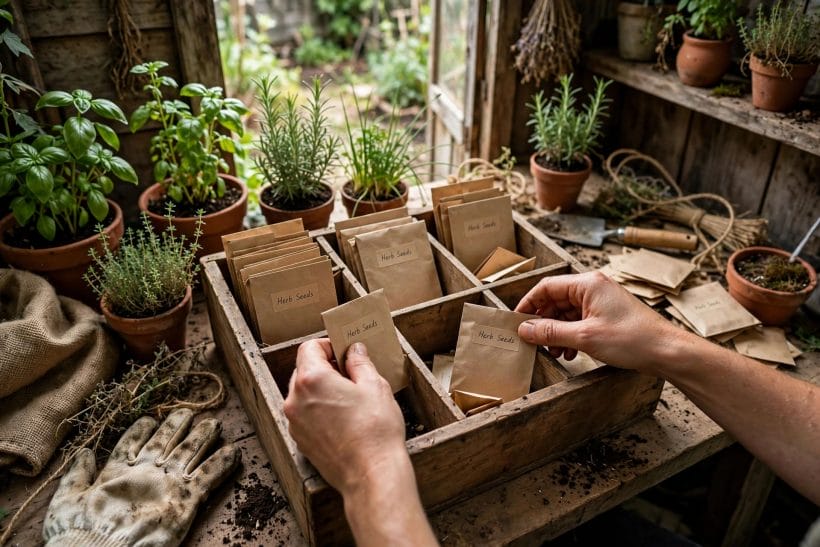
Seed is alive and spends itself with warmth and damp. A sealed box in a cool, dry, dark place — with a desiccant packet if the house is humid — keeps most vegetable and herb seed true for several seasons. Label everything with its year; memory is the one storage medium that always fails.
Keep the germination habit: test the old packets
Before the season, a few seeds of each older packet on damp paper tell you whether the packet is still a plan or a memory. The catalogue’s new edition is at hand for replacements; the test costs a week and saves a bed.
Save seed from the plants that earned it
The final turn of the catalogue cycle is becoming, in a small way, your own seed house: saving seed from the open-pollinated plants that thrived in your soil adapts the variety to your garden year by year. The catalogue taught the variety’s name and nature; your saved seed teaches it your address.
Records close the loop. A page per season — what was sown, where, what cropped, what disappointed — turns next winter’s catalogue reading from browsing into editing. The gardener with records reads a listing and knows; the gardener without them reads the same listing and hopes. The planning habit extends outdoors, too, into the contained growing of container garden ideas and the gated, ordered plot entered through garden gates — one system, from the catalogue table to the harvest basket.
10. Costs and Pulling It Together
Costs in catalogue planning are refreshingly plain: the reading matter itself is the seed houses’ own publishing, the seed order is sized by the bed map rather than by appetite at the page, and the expensive mistakes are the unplanned ones — three packets of one crop, none of another, a perennial bed planted from a photograph. The plan is the saving.
Pull it together by keeping the system in one place: catalogues, bed map, sowing plan, seed box and season records together, at the table where winter planning happens. A garden planned from one tidy pile, year after year, compounds like interest — each season’s records making the next season’s choices cheaper, surer and better fed.
Final Considerations
The seed catalogue’s promise is abundance, and its honest use is discipline: varieties weighed on their printed evidence, beds assigned before packets are ordered, sowings spread across the season, and records kept so the argument improves every year. None of it requires a bigger garden — only a better-read catalogue.
Start with the pile on the winter table and a pencil, and the spring garden is already half grown.




0 Comments