
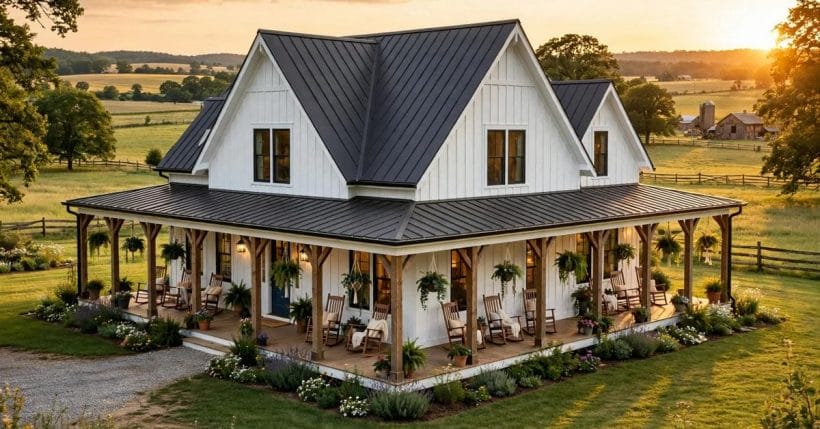
Farmhouse style is the most imitated look in home design and the least understood: strip away the signs and slogans and what remains is a discipline — plain forms, honest materials, rooms built around work and gathering, and comfort that improves with use instead of expiring with fashion.
These seventy-five ideas build the farmhouse as a whole home: bones and porch, the kitchen at its centre, living and dining rooms tuned to its key, quiet rooms upstairs, and the colour and materials discipline that holds it all together — in old farmhouses, new builds and small homes alike.
1. Farmhouse Home Design Ideas at a Glance
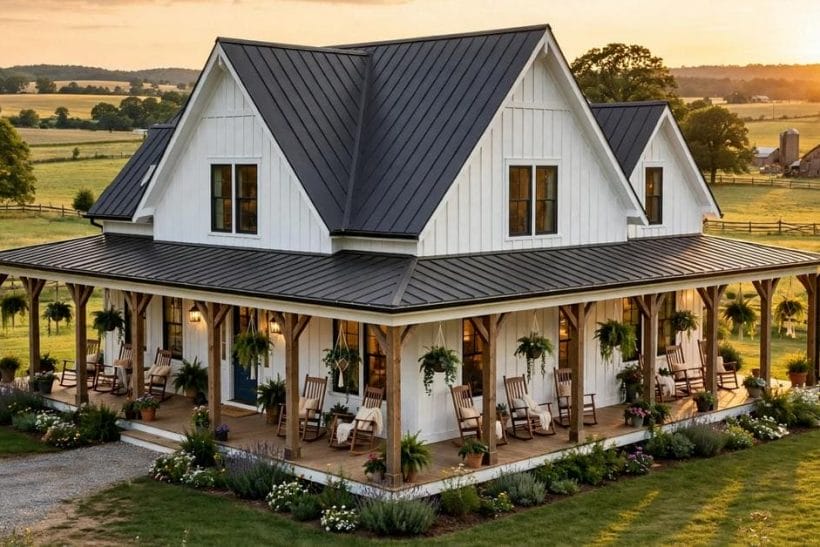
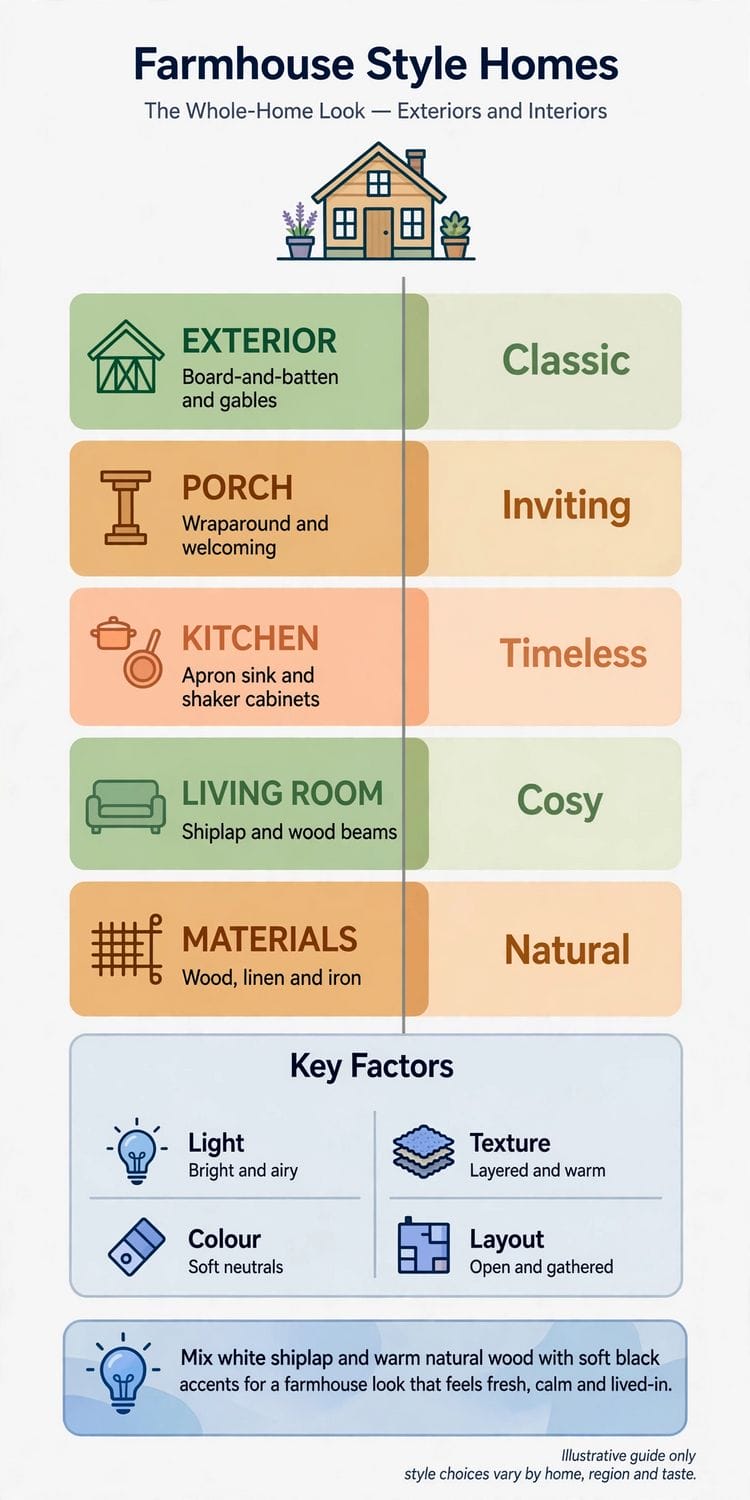
Farmhouse style is a whole-home design language descended from working farm buildings: simple rectangular forms, steep plain roofs, deep porches, and interiors organised around a central kitchen, a long table and materials — timber, stone, iron, linen, painted wood — that are natural, repairable and better for being used.
| Question | Short answer |
|---|---|
| What makes a home farmhouse style, in one line? | Plain forms and honest materials arranged around working, gathering rooms — a discipline of building and furnishing, not a collection of rustic ornaments. |
| Does it need an old farmhouse? | No. Cottages, new builds and tiny homes all take the style when its principles are scaled by proportion: real wood, plain joinery, a working kitchen, natural cloth. |
| What is the kitchen’s role? | The headquarters: a big central table, an apron-front sink, open shelves for daily things, a larder, and light pooled over the table where the household actually lives. |
| What colours define it? | Warm whites on the walls, wood tones in the middle, black on the iron and hardware, and soft colours — sage, dusty blue, faded red — admitted through textiles and painted furniture. |
| What ruins the style fastest? | Imitation materials and themed ornaments: printed rustic patterns on synthetic surfaces, and decoration with no job to do. The style forgives wear; it cannot carry faking. |
2. The Farmhouse Bones: Form, Roof and Porch
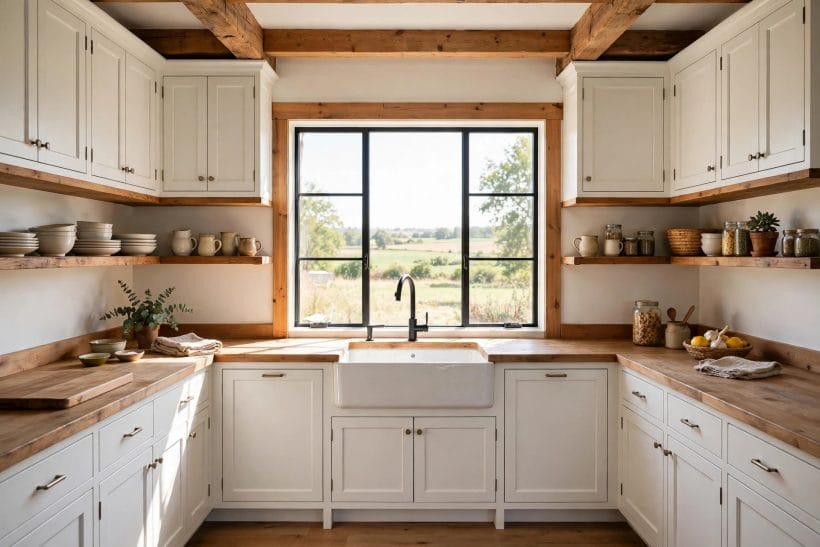
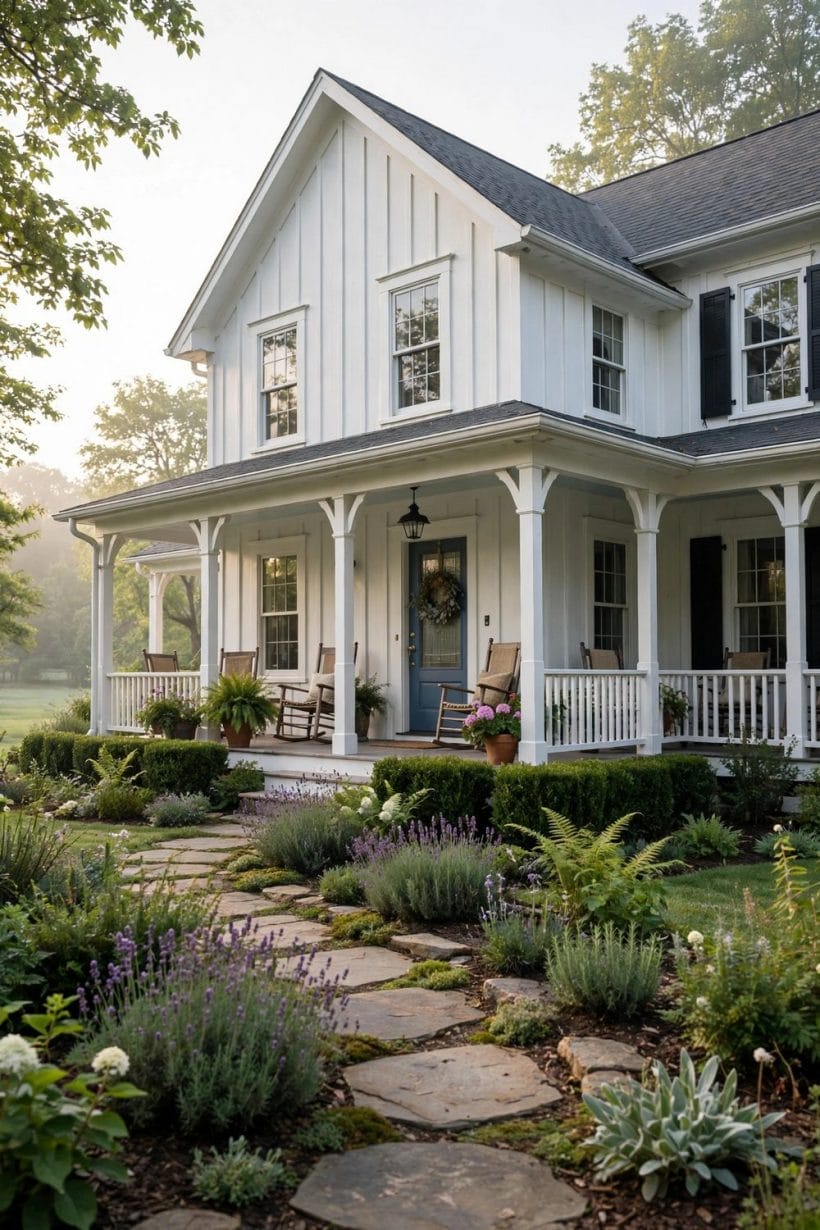
Farmhouse style begins outside, in the architecture: a plain, well-proportioned house, a honest roof and a porch that works for a living. The facade-wide view in exterior home ideas covers every form; these ideas stay with the farmhouse’s bones and how they announce the rooms inside.
1. Start with a simple, symmetrical-leaning form
The farmhouse silhouette is a rectangle with good manners: a clear main block, a steep honest roof, additions that look added over time rather than designed by committee.
2. Give the house a porch that is a room, not a gesture
A farmhouse porch is deep enough for chairs, a swing and the day’s pause, roofed by the house’s own roof where possible.
3. Keep the roof plain, steep and well-eaved
One main pitch, honest eaves, minimal interruption — the farmhouse roof is a hat, not a sculpture. Dormers and cross-gables should arrive like later chapters of the house’s life, in the same material and manners.
4. Use siding that runs the way the weather taught it
Horizontal boards or vertical board-and-batten, in the region’s tradition, give the walls their farmhouse grammar. The material matters less than the discipline: one siding language per volume, detailed plainly at the corners.
5. Let windows be tall, regular and unpretentious
Farmhouse windows are working windows: tall, evenly spaced, trimmed simply in white or the trim colour. Grids belong where the era and the house support them; the rhythm matters more than the muntins.
6. Set the house on a visible foundation with steps to the door
A raised floor, a few honest steps and a foundation that shows ground the house in its plot like the working buildings it descends from. Skirting the base into invisibility makes a farmhouse float, and farmhouses never float.
7. Paint the exterior in the style’s short palette
White or soft off-white walls, a darker roof, one accent at the door — the farmhouse palette is short because it is a working palette.
8. Add outbuildings and fences in the house’s language
A shed, a fence or a gate in the house’s own materials extends the farmstead feeling across the plot. One language for every structure is what separates a farmhouse from a house with farmhouse cushions.
9. Keep chimneys and vents honest and few
The farmhouse skyline carries one good chimney and the minimum of vents. A roof scattered with pipes and boxes loses the plain silhouette the whole style depends on.
10. Light the porch like a room that is used
A pendant or lantern at the door, a warm glow at seating height, the path lit low — the porch at dusk should look inhabited, because in a farmhouse it usually is.
11. Let the plot stay a little bit working
A vegetable bed, a wood pile, a boot scraper by the door: the farmhouse exterior keeps its working evidence visible and tidy. Total polish reads suburban; the style asks for competence, not cosmetics.
3. Kitchens at the Centre of the House
In a farmhouse the kitchen is not a service room, it is the house’s headquarters — cooking, eating, homework, accounts and conversation all at one address. The full room treatment lives in kitchen ideas; here the kitchen is tuned to the farmhouse key.
12. Centre the room on a table that works
The farmhouse kitchen’s true island is a table: prep surface by day, dining table by night, desk and workshop between. A big honest table in the middle of the room is the style’s founding furniture decision.
13. Choose an apron-front sink without apologising
The deep farmhouse sink earns its place daily — roasting pans, garden produce, the dog’s bowl — and its exposed apron is the kitchen’s signature.
14. Run open shelves where the everyday things live
A run of open shelves for the daily plates, bowls and jars keeps the working kitchen honest and quick.
15. Let cabinets be simple-framed and painted
Shaker-plain doors in a painted finish — white, cream, a soft colour — are the farmhouse kitchen’s native cabinetry. The finish should accept knocks and repainting gracefully; this kitchen is a workshop that feeds people.
16. Use wood where hands touch, stone where heat lands
Timber worktops or a timber table for the working surfaces, something heat-proof by the cooker: the material map follows the work. Uniform luxury surfaces everywhere belong to a different house’s story.
17. Hang a rail for the tools of the day
Pans, ladles and the good knife on a rail by the cooker keep the work visible and reachable. The farmhouse kitchen does not hide its trade; it organises it beautifully.
18. Give the cooker its presence
A range cooker or a plain generous hob is the kitchen’s hearth. It does not need to be a statement in chrome — it needs to be big enough for the harvest, the feast and the preserving pan.
19. Keep a larder or a larder cupboard sacred
Farmhouse cooking is stored cooking: preserves, flour, the garden’s glut. A cool larder, a deep pantry cupboard or a curtained alcove keeps the stores in the room’s life instead of exiled to a garage shelf.
20. Light the table like the room’s hearth
One pendant or a pair over the central table, on a dimmer, is the kitchen’s evening soul. Working light matters at the counters, but the table’s glow is what the family actually gathers under.
21. Floor it for mud and mercy
The farmhouse kitchen floor meets boots, dogs and dropped jars: stone, tile, sealed boards or good washable surfaces, in a tone that forgives the day. Precious floors make nervous kitchens.
22. Keep one window over the sink, looking at something alive
The classic arrangement survives because it is kind: washing up facing the garden beats facing a wall. Where the view is a fence, plant the fence’s base — the window deserves its picture.
4. Living Rooms in the Farmhouse Key
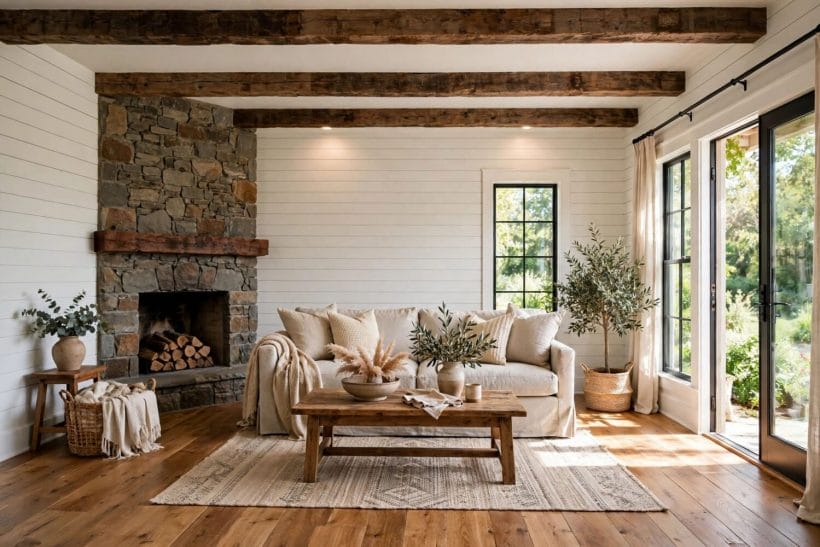
The farmhouse living room is the kitchen’s quieter sibling: still sociable, still hard-wearing, but built around rest — a fire or a stove, deep seats and materials that improve with the family’s use. The general room craft is in living room ideas; the tuning here is the farmhouse’s own.
23. Build the room around a real heat source
A wood stove or an open fire is the farmhouse living room’s natural centre — heat, light and gathering point in one.
24. Choose sofas for sprawling, in cloth that forgives
Deep seats, loose covers that wash, natural fabrics that wear in rather than wear out. The farmhouse sofa is judged after a year of dogs, children and harvest suppers, not in the showroom’s first minute.
25. Let wood carry the room’s warmth
Beams where the house honestly has them, timber floors, a wooden mantel and furniture with its grain showing: wood is the farmhouse living room’s main colour, and it should be real wherever hands and eyes linger.
26. Layer textiles like the seasons will change
Wool throws, linen cushions, a rug with a pattern that hides a life — textiles do the room’s softening and its seasonal changing. Keep the palette in the house’s colours and let texture do the variety.
27. Keep the walls calm and the pictures personal
Soft whites and warm neutrals on the walls, with the interest hung on them: family photographs, plain landscapes, the children’s best work framed properly. The farmhouse wall is a background that loves its foreground.
28. Use a big low table as the room’s second hearth
A coffee table that takes feet, books, games and a harvest of mugs is the living room’s working centre. Farmhouse rooms are used in the middle, not admired from the edges.
29. Give books and music a visible home
A bookcase wall or a deep shelf run, the record player or the piano where the house has one — the farmhouse living room displays its pastimes as proudly as its pictures.
30. Light low, warm and from several places
Table lamps at sitting height, a lamp by the reading chair, the fire’s own glow: the farmhouse evening is lit like a face, not like a showroom. Overhead glare is the style’s one true enemy indoors.
31. Keep a basket for the evening’s clutter
Throws, knitting, the dog’s toys, the newspapers — one generous basket gathers the room’s soft overflow and empties the floor in a minute when guests arrive. Every farmhouse room needs its gathering basket.
32. Let the room smell faintly of its life
Woodsmoke, beeswax, the kitchen’s supper arriving early — the farmhouse living room’s welcome is partly scent. Keep it real and faint; the room should smell of being lived in well.
33. Leave one chair that is somebody’s
Every farmhouse living room has the chair — by the fire, fitted with its cushion and its lamp — that belongs to one person’s evenings.
5. Dining Rooms and the Long Table
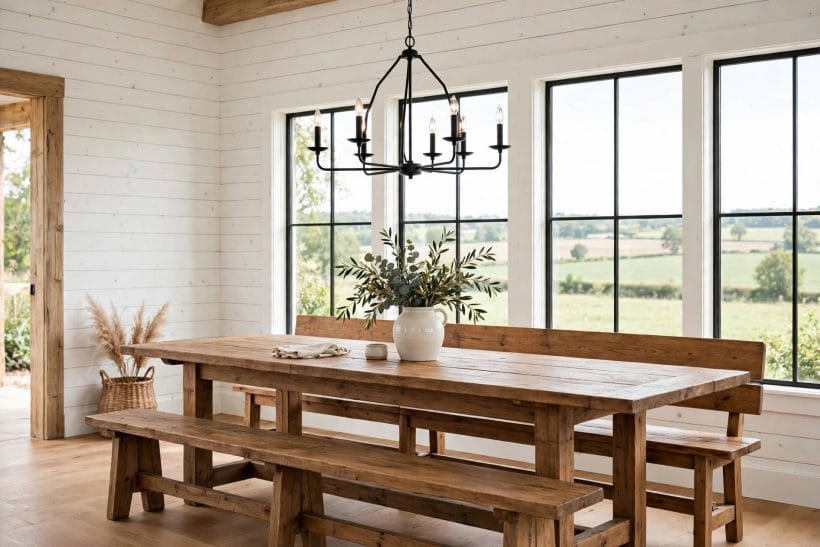
Farmhouse dining is a culture before it is a room: long meals, many people, food made steps away. The dedicated room treatment is the sibling post farmhouse dining room; this section keeps the whole-home view — how dining sits in the farmhouse’s plan.
34. Make the table longer than your everyday need
The farmhouse table seats the family along its sides and the whole world at its ends. Benches along one side solve the arithmetic of guests, children and the neighbour who stays for pudding.
35. Choose chairs that mix without quarrelling
A set is not required; a family of chairs in one wood tone or one paint colour reads as gathered over time, which is the truth of every real farmhouse.
36. Hang the light low over the table’s centre
A pendant or a run of pendants low over the table makes the dining pool of light the room organises around. Dimmable, warm and centred — the rest of the room can fall gently dark.
37. Keep serving space in the room, not the kitchen
A sideboard, a dresser or a serving shelf in the dining space keeps the meal’s traffic out of the cooking zone. The farmhouse dresser, plates racked and jugs in a row, is storage performing as decoration.
38. Dress the table in layers that wash
A runner or cloth that launders, mats that wipe, napkins of real cloth — the farmhouse table is set for use, and its beauty is in the layers’ honesty rather than in anything precious.
39. Give the room one big picture or a plate wall
Dining walls suit the style’s collections: plates, plain prints, a single generous landscape. One strong wall lets the other three stay calm, and gives the long meal something to rest its eyes on.
40. Floor dining for chairs that move
Chairs scrape, slide and carry people mid-conversation: the dining floor should take it without complaint — boards, stone or a flat rug that chairs can travel over without folding its edges.
41. Store the feast gear near the feast
The big platters, the extra chairs’ cushions, the celebration cloth — dining storage belongs in the dining room’s dresser or the kitchen’s larder, not in a distant cupboard that makes hosting an expedition.
42. Let dining flow to the porch or garden
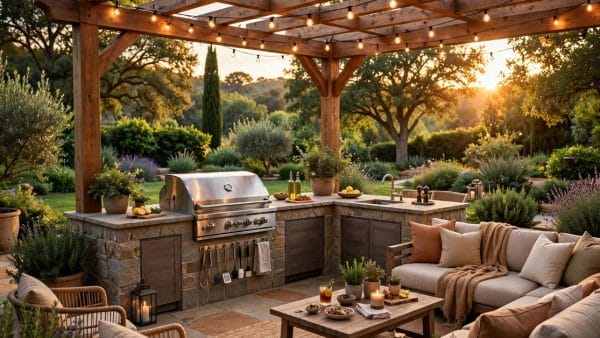
Where the plan allows, dining that opens to the porch doubles the room for half the year. The farmhouse meal migrates with the weather; doors and a second table outside make the migration easy.
43. Seat the cook within the conversation
In open farmhouse plans the cook works inside the party, not exiled from it. A table end near the kitchen’s work zone, or the kitchen table itself, keeps the person feeding everyone inside the room’s life.
44. Keep the room usable on ordinary Tuesdays
A dining room that only performs at Christmas is a wasted room. Homework, laptops, sewing and the jigsaw all belong on the long table between feasts — the farmhouse dining room is a daily room with occasional grandeur.
6. Bedrooms, Baths and the Quiet Rooms
Upstairs, the farmhouse style turns private: bedrooms in iron, linen and painted wood, bathrooms that borrow the kitchen’s honesty. The bedroom detail lives in farmhouse bedroom ideas; here the quiet rooms take their place in the whole-home composition.
45. Let the bed be iron, wood or upholstered plainly
The farmhouse bed is a frame with a presence: black iron, honest timber or a simple upholstered head, dressed in layers rather than in a matched set. It should look inherited even when it is new.
46. Dress beds in natural layers that wash and age well
Linen and cotton, a wool blanket folded at the foot, a quilt with a history or the promise of one. The farmhouse bed is made for sleeping in, and its beauty is rumpled by morning honestly.
47. Paint bedroom woodwork and let floors stay timber
Painted skirting, doors and wardrobes against natural floorboards is the upstairs farmhouse grammar. It keeps rooms light above and grounded below, and it repaints easily as the years change the room’s owner.
48. Keep wardrobes plain, deep and preferably built in
Farmhouse bedrooms store in furniture with manners: a big plain wardrobe, a chest of drawers that has served before. Built-in cupboards in the same painted finish give the room its calm, fitted wall.
49. Give the bathroom the kitchen’s material honesty
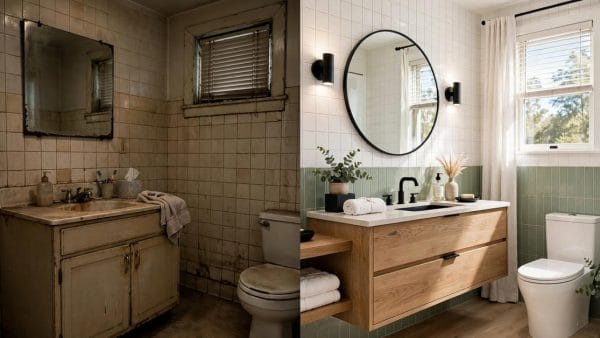
Tiles like the kitchen’s, a plain deep bath, taps with crossheads or honest levers, a wooden stool and a mirror without theatre — the farmhouse bathroom is a working room made beautiful by the same rules as the kitchen.
50. Choose a bath you can soak in and a shower that works
The farmhouse bathroom privileges the long soak, but the shower must still perform on workday mornings. Where both will not fit grandly, fit both plainly — function first is the style’s oldest rule.
51. Use tongue-and-groove where walls take splashes and knocks
Painted boarding on bathroom and bedroom walls alike takes the knocks, warms the surface and carries the farmhouse’s joinery language upstairs. It is also mercifully easy to repaint when fashions or children change.
52. Keep window dressings simple and washable
Plain curtains, linen blinds, shutters where the house suits them — the quiet rooms’ windows dress like the rest of the house: natural cloth, honest hardware, nothing that cannot be washed or wiped.
53. Light bedrooms for reading and early mornings
A lamp each side of the bed at book height, a gentle ceiling light for dark mornings, blackout where sleep demands it. The farmhouse bedroom’s luxury is rest, and rest is a lighting decision.
54. Give the landing and stairs the same language
Runner on the stairs, pictures up the wall, the hall’s palette continuing — the quiet rooms begin at the stair foot.
55. Keep one spare room ready at an hour’s notice
The farmhouse ethic is hospitality: a guest bed that can be made up kindly in an hour, towels that live in the room, a hook for a guest’s coat.
7. Colour, Wood and Honest Materials
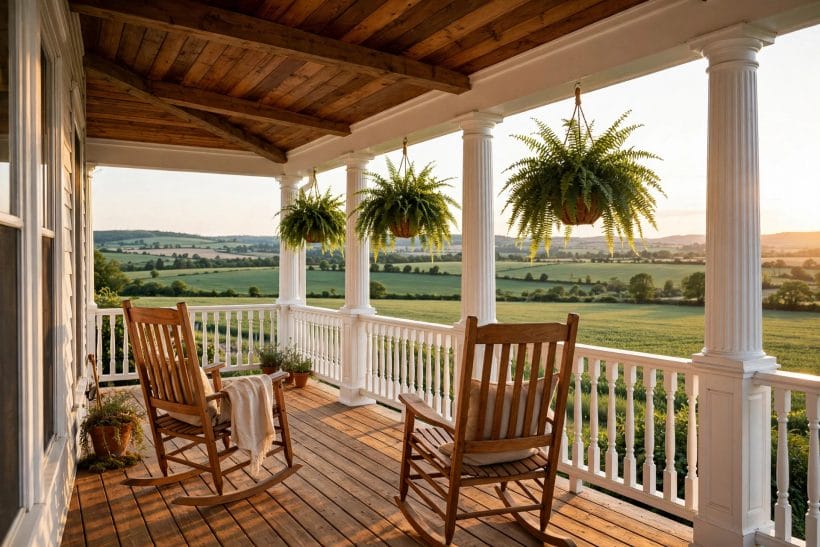
Farmhouse style is a materials discipline wearing a colour palette. Get the materials honest and the colours quiet, and the style survives any furniture; reverse the order and it becomes a theme.
56. Build the palette on whites that are warm, not blue
The farmhouse white has warmth in it — cream, chalk, linen tones — because it must sit happily against timber, wool and firelight. Blue-whites belong to coastal and clinical rooms; they chill the farmhouse’s whole register.
57. Let wood tones supply the middle of the palette
Floors, tables, beams and frames in natural timber give the palette its warm middle between the white walls and the darker accents. One wood family, repeated, keeps the house coherent from porch to bedroom.
58. Use black the way the style uses cast iron
Black belongs on the hard, working things: the stove, the bed frame, the hardware, the lantern by the door. As an accent it is structure; spread on walls and textiles it turns the farmhouse into a different, moodier house.
59. Admit soft colours as the palette’s guests
Sage, dusty blue, faded red, ochre — the farmhouse admits colour in its textiles, doors and painted furniture, always in softened, work-worn registers. They should look sun-touched, not showroom-fresh.
60. Keep metals aged, brushed or blackened
Brass that will patina, iron that is black, tin and enamel with a job to do — the farmhouse’s metals are working metals. Mirror-chrome belongs to the city; this house’s hardware should age in public, gracefully.
61. Choose stone, brick and tile with texture showing
The hearth’s brick, the kitchen’s stone floor, tiles with a handmade wobble — surfaces that show their making are the style’s luxury. Perfectly flat, perfectly printed imitations are the one thing the farmhouse cannot carry.
62. Let textiles be natural and visibly woven
Linen, cotton, wool and ticking, with the weave readable at arm’s length. Natural cloth ages into the house; synthetic sheen stays a visitor forever, however farmhouse its printed pattern claims to be.
63. Paint furniture rather than replacing it
The painted dresser, the repainted chairs, the cupboard in the palette’s soft colour — farmhouse rooms are improved in place across generations. A coat of the house’s paint is the style’s standard act of renewal.
64. Keep patterns small, traditional and few
Ticking stripes, small checks, a plain floral — one pattern family per room, at modest scale. The farmhouse pattern discipline is rural common sense: patterns were expensive, so they were used with respect.
65. Test every material at arm’s length
The farmhouse test is touch: does the handle feel made, the cloth feel woven, the wood feel warm? Materials that pass at arm’s length compose the style; those that only photograph well build a set, not a home.
8. Small Homes, New Builds and the Modern Blend
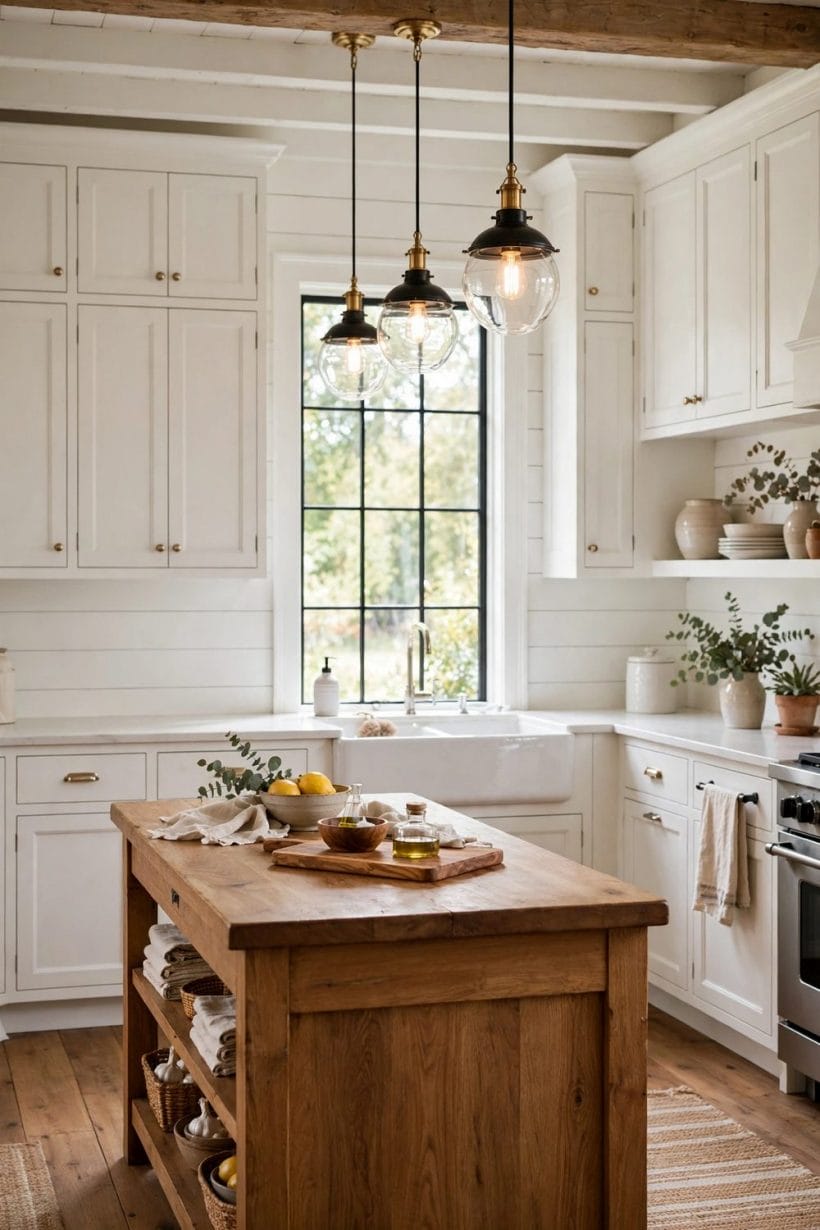
Farmhouse style is not reserved for old farmhouses. Small cottages, new builds and tiny homes take the style gladly when its principles — plain forms, honest materials, working rooms — are scaled rather than miniaturised, as the blend explored in modern farmhouse ideas shows.
66. Scale the furniture, keep the principles full-size
In a small home the farmhouse table may seat four instead of ten, but it should still be a real table of real wood. The style scales by proportion, never by pretending — dollhouse farmhouse helps nobody.
67. Use the porch principle on any threshold
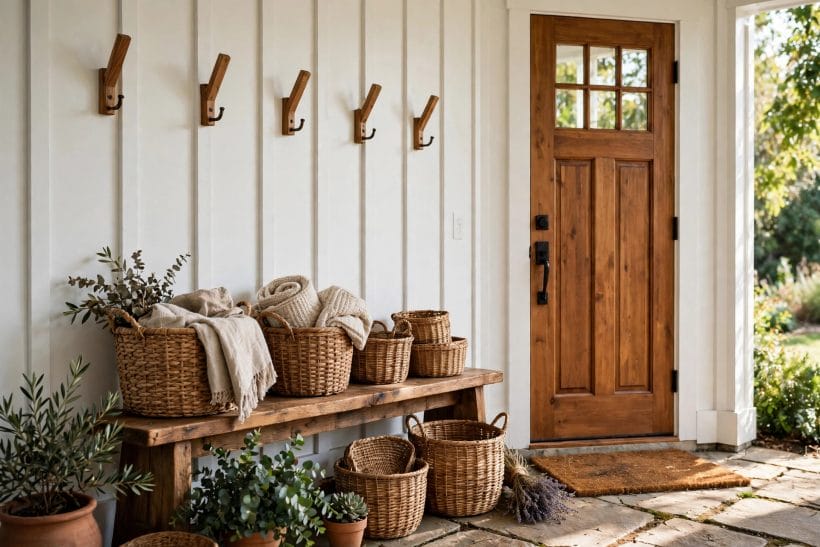
A bench, a lantern and a mat with manners give even a flat’s doorway the farmhouse’s arrival ritual. The porch is an idea — a pause between world and home — before it is a structure.
68. Let one room carry the style in a small home
In a tiny space, farmhouse the kitchen-diner fully — table, shelves, painted units, natural cloth — and let the sleeping corner stay simple. One composed room carries the whole home’s character further than a thin spread everywhere.
69. In new builds, add the age with materials, not ornaments
New houses take the style through timber floors, plain joinery, honest hardware and working fireplaces or stoves — the bones’ materials. Applied ornaments on a new build read as costume; materials read as character.
70. Keep modern comforts, hide their manners
Radiators painted into the walls’ colour, appliances behind plain doors, screens that can close away — the modern farmhouse keeps every comfort and declines every gadget’s visual noise. The style is not a re-enactment; it is a discipline.
71. Blend with modern lines at the edges
A cleaner profile here, a black-framed glazed door there — the modern blend works when the farmhouse supplies the materials and the modern supplies the restraint. Let each style do what it is good at.
72. Use shiplap and boarding where they have a job
Boarded walls earn their place at splash zones, boot rooms and stair walls — anywhere knocks and water live. Boarding applied to every wall as wallpaper is the style’s cliché arriving; give it work and it stays honest.
73. Keep the garden in the composition
The farmhouse home includes its plot: herbs by the kitchen door, a bench under the tree, the woodpile stacked like it matters.
74. Let the style welcome the house’s real life
Muddy boots, harvest gluts, dogs, projects, guests — the farmhouse is designed for a working household’s traffic. A version too precious for its own life has missed the style’s entire point.
75. Buy slowly and let the house accumulate
The deepest farmhouse quality is accumulation: furniture with previous lives, quilts with stories, the dresser that arrived with the house. A home assembled in one delivery can borrow the palette, but only time delivers the style’s soul.
9. Checks and Mistakes: Before the First Purchase or the First Fitting
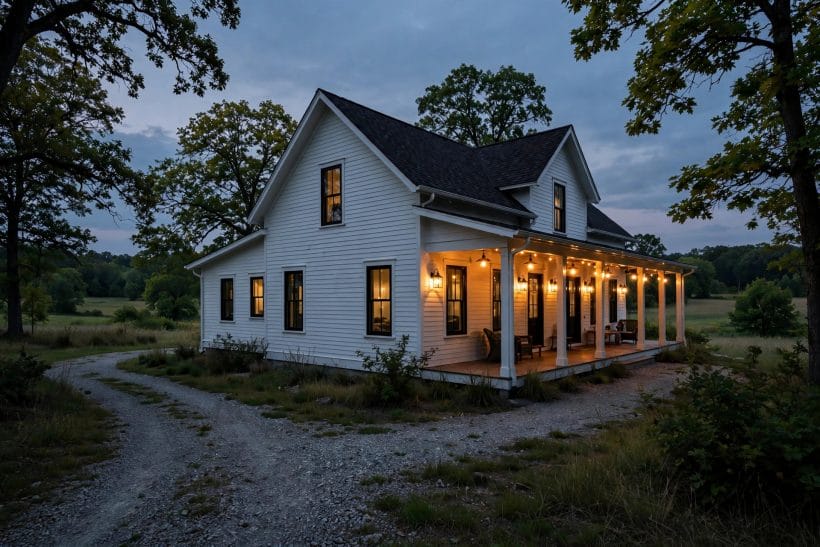
The farmhouse’s characteristic mistakes are theatrical: signs announcing sentiments nobody needs announced, distressing applied by machine to furniture nobody has used, and rustic ornaments gathered faster than the rooms they decorate.
The structural cautions are the ordinary ones, stated plainly: real fires and stoves need their flues and clearances kept under local rules and professional care, old timbers should be checked before they are asked to carry new loads, and porches and additions belong inside local planning and building requirements.
Finally, judge the style at the end of a wet week, not at the photoshoot: boots by the door, supper on the table, dogs asleep by the stove.
10. Costs and Pulling It Together
Costs in a farmhouse follow its own ethic: the expensive things are the honest materials and the few big pieces — floors, the table, the stove, the bed — while paint, textiles and patience do the rest across years.
Pull it together by holding the short palette and the materials discipline in every room, and let each space take the style at its own depth. The house-wide picture, and how farmhouse sits among its neighbouring styles, is gathered in home design ideas.
Final Considerations
A farmhouse home succeeds when it looks less designed than decided: every material there because it works, every room there because it is used, the whole house ageing in public with grace.
Start with the kitchen table and the porch light. The farmhouse grows from those two decisions outward, one honest room at a time.

0 Comments