
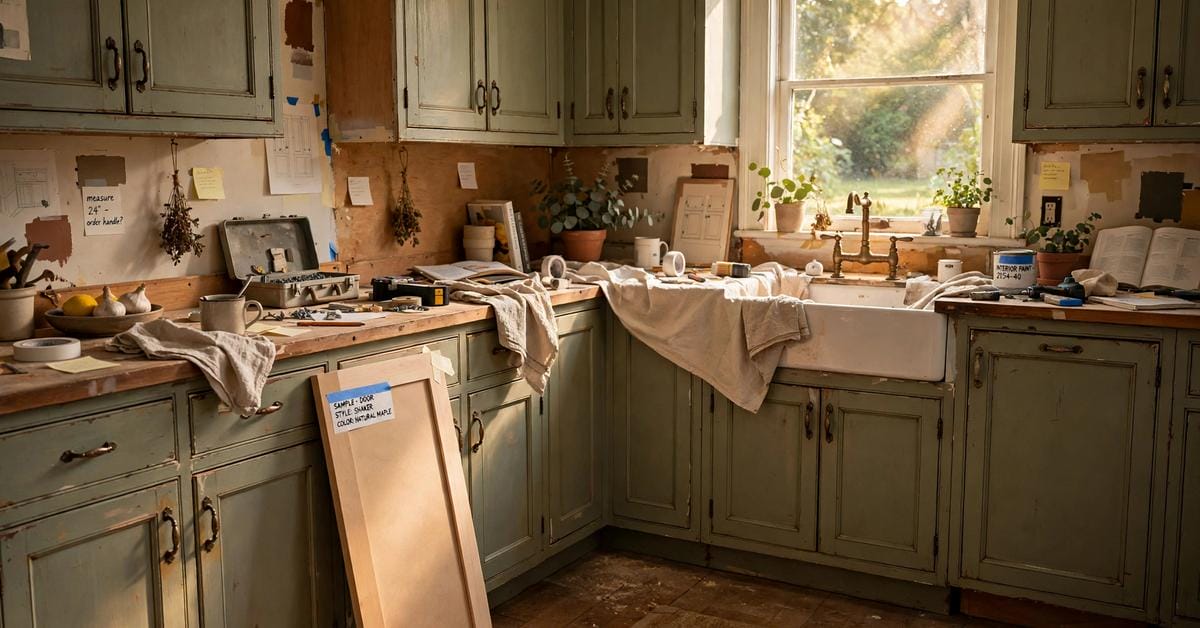
The letter, the showroom shrug, the discontinued stamp — however the news arrives, it lands the same way: the cabinets you need to match, extend or repair are no longer made. A door warps, a run needs extending, a kitchen needs three more units, and the line is gone.
Discontinued is not the same as impossible. The visible layer of a kitchen — doors, drawer fronts, finish — can be matched, blended or replaced independently of the boxes behind it. This guide works through the honest options in general terms, in order of how much of your kitchen they disturb.
1. Discontinued Kitchen Cabinets at a Glance
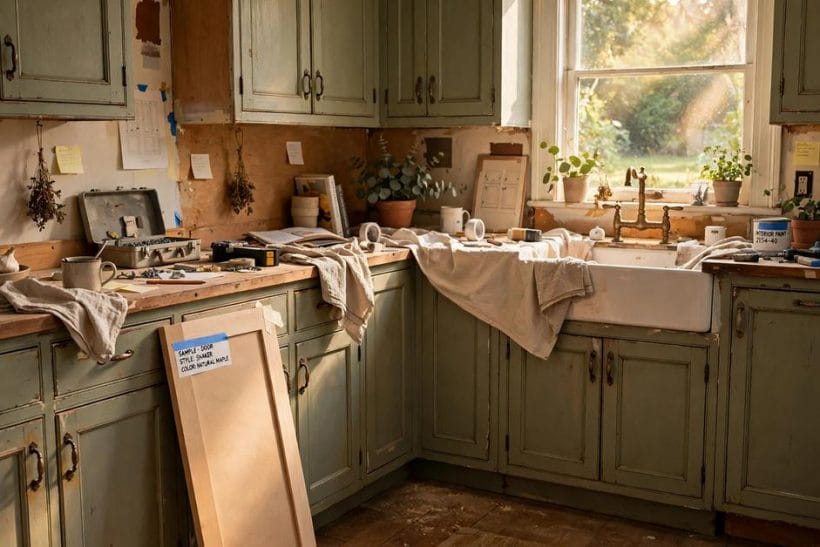
The central entity is the orphaned kitchen: a cabinet run whose manufacturer line has ended, where the carcasses are usually sound and the problem lives in the visible layer of doors, fronts and finish. The wider kitchen survey lives in the kitchen ideas pillar; this guide is the repair-and-remodel companion, concerned with what can still be done when buying the matching unit is no longer one of the options.
| Question | Short answer |
|---|---|
| Am I stuck with a mismatched kitchen? | No — the usual routes are refacing the whole run, replacing some units and blending the rest, or repainting everything into unity; all are worked through below |
| Can an exact match be found? | Sometimes a close one, via independent makers working from a sample — but never promise yourself an invisible one before a sample exists |
| What should I never rely on? | An exact colour or profile match guaranteed sight-unseen, or a discontinued line “coming back” — both are covered in the what-not-to-believe section |
| Does the whole kitchen need replacing? | Rarely for this reason alone — full replacement is the last resort in this guide, not the first answer |
2. First, Work Out What You Actually Have
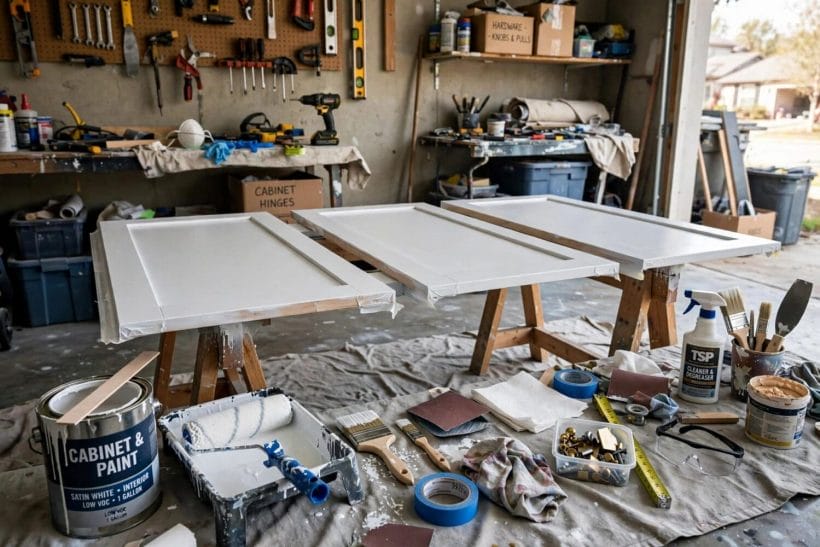
Every route below starts from the same evidence: what your cabinets actually are, measured and photographed. Makers can work wonders from a sample and nothing from a description — gather the evidence first.
One more piece of evidence costs nothing and pays repeatedly: the name and any paperwork from the original installation, if it survives — an old invoice, a delivery note, a photograph from fitting day. It will not resurrect the line, but it gives a maker the construction details and the original finish family, and it shortens every conversation in this guide.
1. Identify the construction
Establish whether your cabinets are framed or frameless, and whether the doors are slab, shaker-style or raised-panel. Construction decides which matching routes are even open: a flat slab door is simple to reproduce, a routed profile takes a maker with the right cutters.
2. Measure one door precisely
Take one representative door and record its height, width, thickness and the hinge positions, in writing, with the door in front of you. Matching work runs on measurements, and the ones taken from memory are the ones that come back wrong.
3. Photograph profiles and hardware
Photograph the door’s edge profile close up — the shape of the routing is the fingerprint a maker matches against. Add the handle’s fixing spacing and the hinge type; hardware dimensions are the dull facts that decide whether a plan survives contact with the real kitchen.
4. Keep one door as the master sample
Choose the least-needed door or drawer front — a rarely opened unit, a spare from the garage — and designate it the master sample. It will travel to workshops, sit beside trial finishes, and anchor every match decision. Guard it accordingly.
3. The Honest Options, Ranked by Disruption
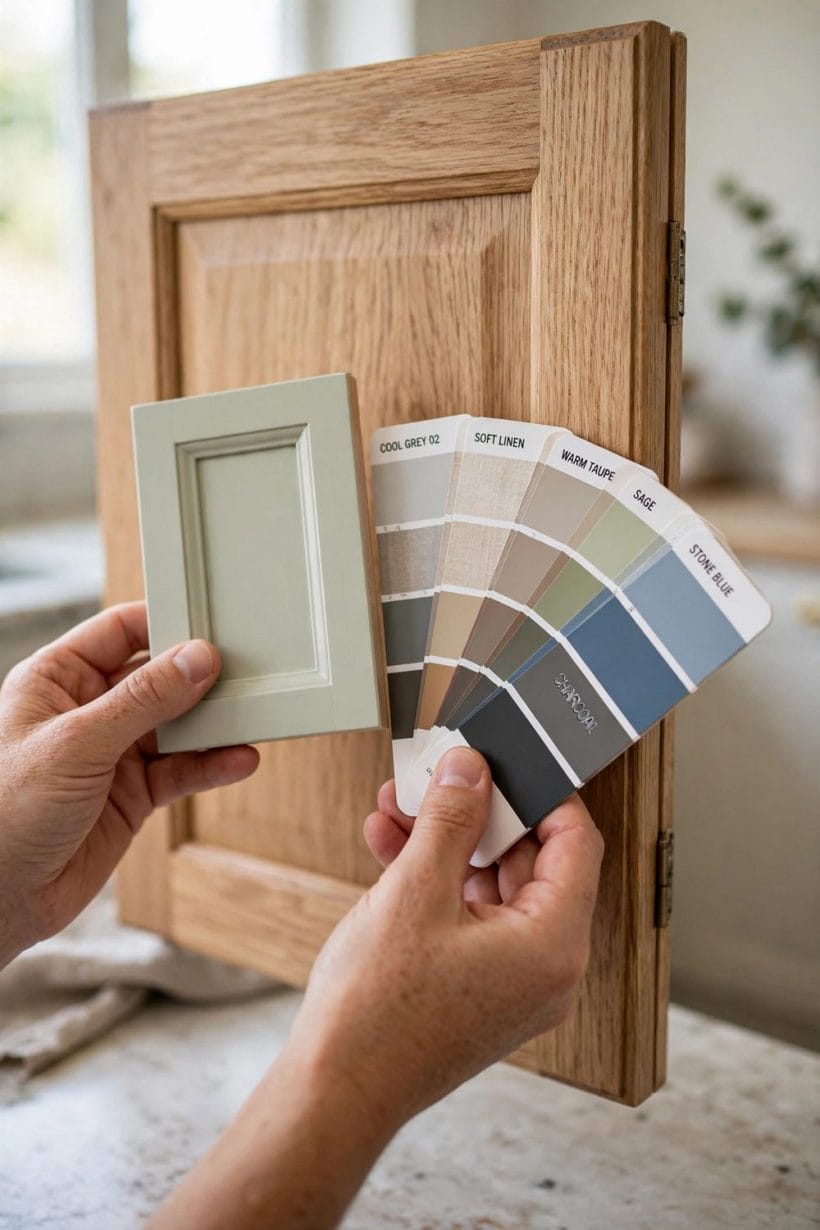
Four routes cover nearly every discontinued-cabinet problem, from least to most disruptive. Work down the list and stop at the first route that honestly solves your problem.
5. Reface: new fronts on kept carcasses
Refacing replaces every door and drawer front with new ones in a single chosen style and finish, while the sound boxes stay. Because every visible surface is new, the discontinued line stops mattering entirely — unity is total, and the kitchen reads as one deliberate design.
6. Replace only the failed units
Where one or two units have failed — water damage under a sink is the classic — a maker can build copies to sit within the existing run, matched as closely as a sample allows. The smallest intervention, and the one where the match matters most.
7. Replace one run and blend the rest
Sometimes a whole elevation has suffered — sun, steam or a style you cannot live with. Replacing that run completely, in a finish chosen to sit well beside the survivors rather than imitate them, turns a match problem into a two-tone design.
8. Full replacement, honestly framed
Full replacement is the answer when the carcasses themselves are failing, the layout is wrong, or you were already planning a new kitchen and the discontinued news is the nudge. It is the most disruptive and most expensive route — honest guides put it last, salespeople put it first.
4. Matching Colour and Finish
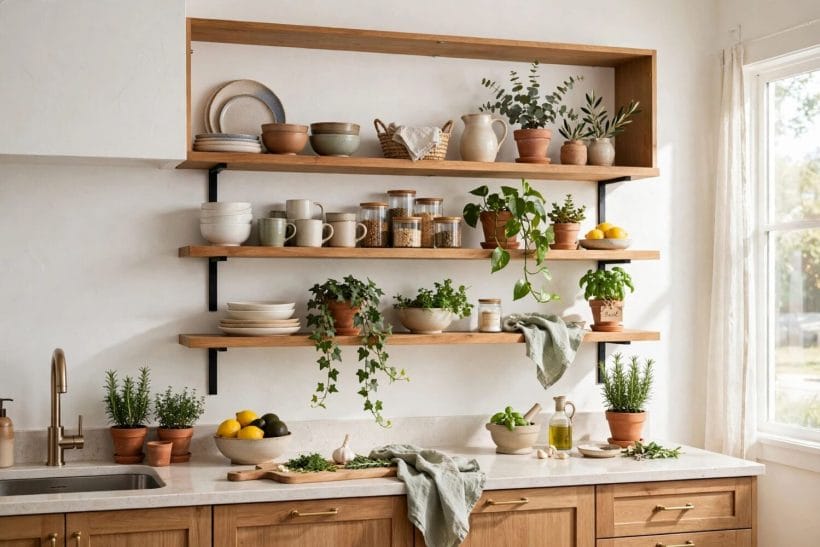
Colour is where matches live and die — and where expectations need the most care. These three points keep the finish conversation honest.
9. Match from the sample, never the catalogue
A colour matched on screen or from a catalogue chip is a guess wearing confidence. Real matching happens with your master sample beside the trial piece, in your kitchen’s light, at morning and evening — because finishes shift under different light like everything else in design.
10. The repaint-everything unifier
The great leveller: have the old doors and any new ones painted together in one finish. When exact matching fails, unity by repainting succeeds — old and new become indistinguishable because they literally share a surface. It is the route behind many kitchens that look “original” but are quietly part-adopted.
11. Sheen matters as much as colour
Two doors can share a colour and still disagree — one matte, one satin — and the eye reads the difference instantly under raking light. Specify the sheen alongside the colour in every conversation with a maker, and check trial pieces at a low angle.
5. Matching Profiles and Hardware
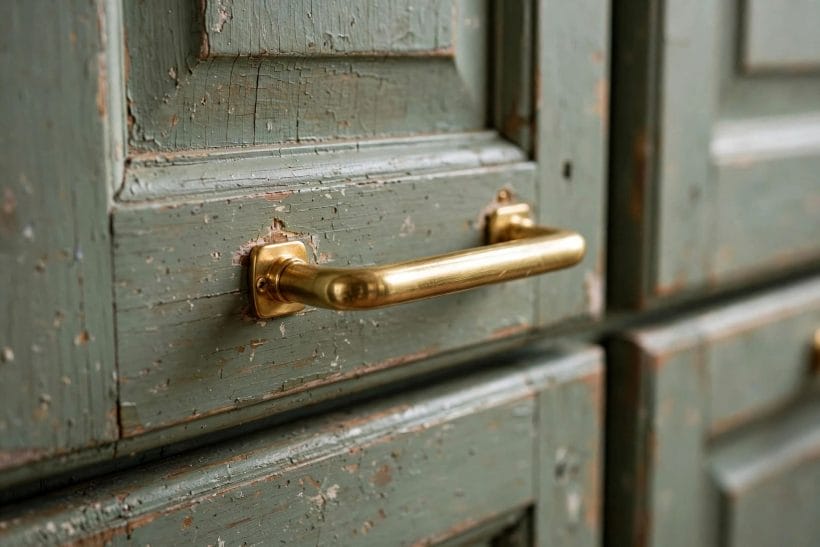
Profiles — the shaped edges and panels of doors — are the harder half of matching. Hardware is the easier half, and the cheat that often makes profiles stop mattering.
12. Independent makers and profile matching
Cabinet makers and joinery workshops routinely reproduce door profiles from a sample, routing or ordering cutters to suit. This is craft work, priced like craft work — but for a handful of doors it is very often the difference between an orphaned kitchen and a whole one.
13. Simplify: the quieter profile
Where an exact profile cannot be matched, a simpler new profile — a plain slab or a soft shaker — placed consistently can sit quietly beside the original, especially if it is given its own zone: the island, say, or the new run. Simplicity reads as intention; a near-miss reads as error.
14. Hardware: replace the whole set
Handles are the match you control completely. Replacing every handle in the kitchen with one new set erases the most visible old-versus-new clue at the smallest cost — hands and eyes both go to hardware first, and unity there forgives small differences elsewhere.
6. Blending Old and New on Purpose
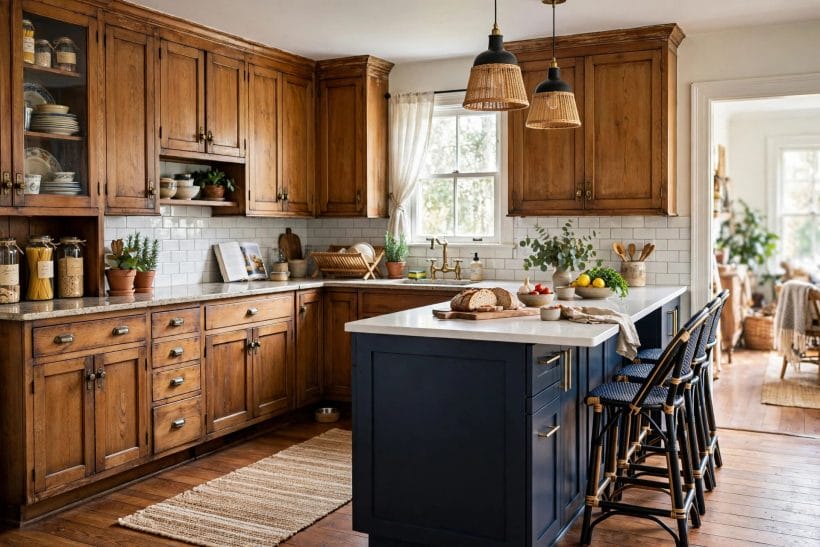
The deepest trick in this guide: stop trying to hide the join. Kitchens that declare their two chapters — original run, later addition — read as designed; kitchens that nearly match read as mistakes.
15. Make the difference a design
Give the new units a finish that is clearly related and clearly different — the same family, a different depth; the same colour, a different sheen. Deliberate contrast is judged as design, while a ninety-per-cent match is judged as failure, by exactly the same eyes.
16. Glass fronts and open shelves as the break
A section of glazed doors or open shelving between the old run and the new acts as a visual paragraph break — the eye accepts a change of chapter across it. It is also genuinely useful: the display section every kitchen wants, placed where it does the most diplomatic work.
17. Worktops and splashbacks as the bridge
One continuous worktop and a single splashback running across both old and new units tie the two chapters into one sentence. Where the eye travels along an unbroken surface, it forgives the doors beneath changing their story — the same bridge a well-chosen tile makes in our subway tile backsplash inside corners guide.
7. When One Cabinet Fails
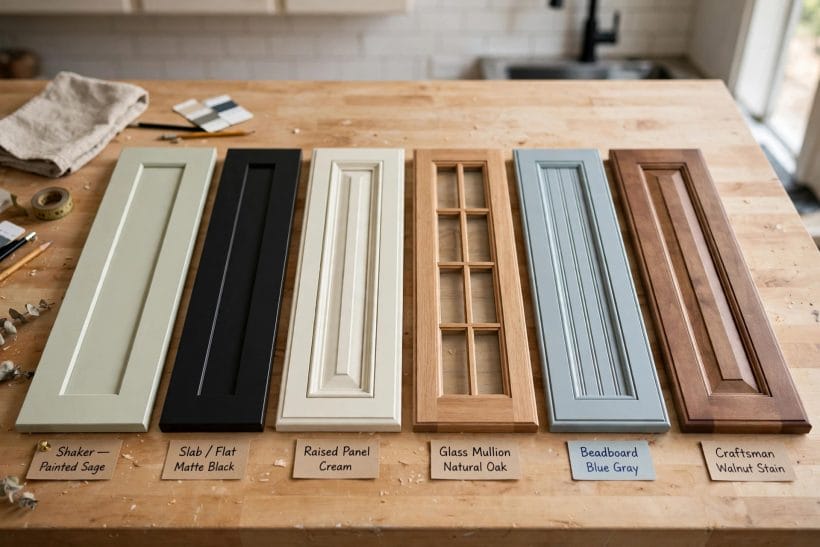
Not every discontinued problem is a remodel — sometimes it is one cabinet, failing quietly. Three rescue patterns cover the usual emergencies.
The single-cabinet rescue has one discipline of its own: photograph the failing unit in place before anything is removed, including the doors hanging open and the gaps around it. Copies are built to fit a hole, and the hole’s truth — racked, damp, a millimetre out of square — is easiest to capture before the old unit leaves it.
18. The water-damaged sink unit
The under-sink cabinet lives the hardest life in the kitchen and fails first. A carpenter can rebuild its carcass — base, sides, back — as a copy fitted into the existing run, keeping the original door so the visible kitchen never changes.
19. A door beyond repair: copy it from its twin
Most kitchens repeat door sizes, which means a wrecked door usually has a healthy twin elsewhere in the run. That twin becomes the template for a copy — profile, dimensions and drilling all read from the survivor rather than guessed.
20. Cannibalise the least-seen unit
Where a copy is not feasible, consider robbing the least-visible unit — the corner cabinet’s door, the one behind the bin store — to repair the one everyone sees, and give the donor spot the simpler replacement. Kitchens, like orchestras, can spare the back desk more easily than the front.
8. Working with Trades and Makers
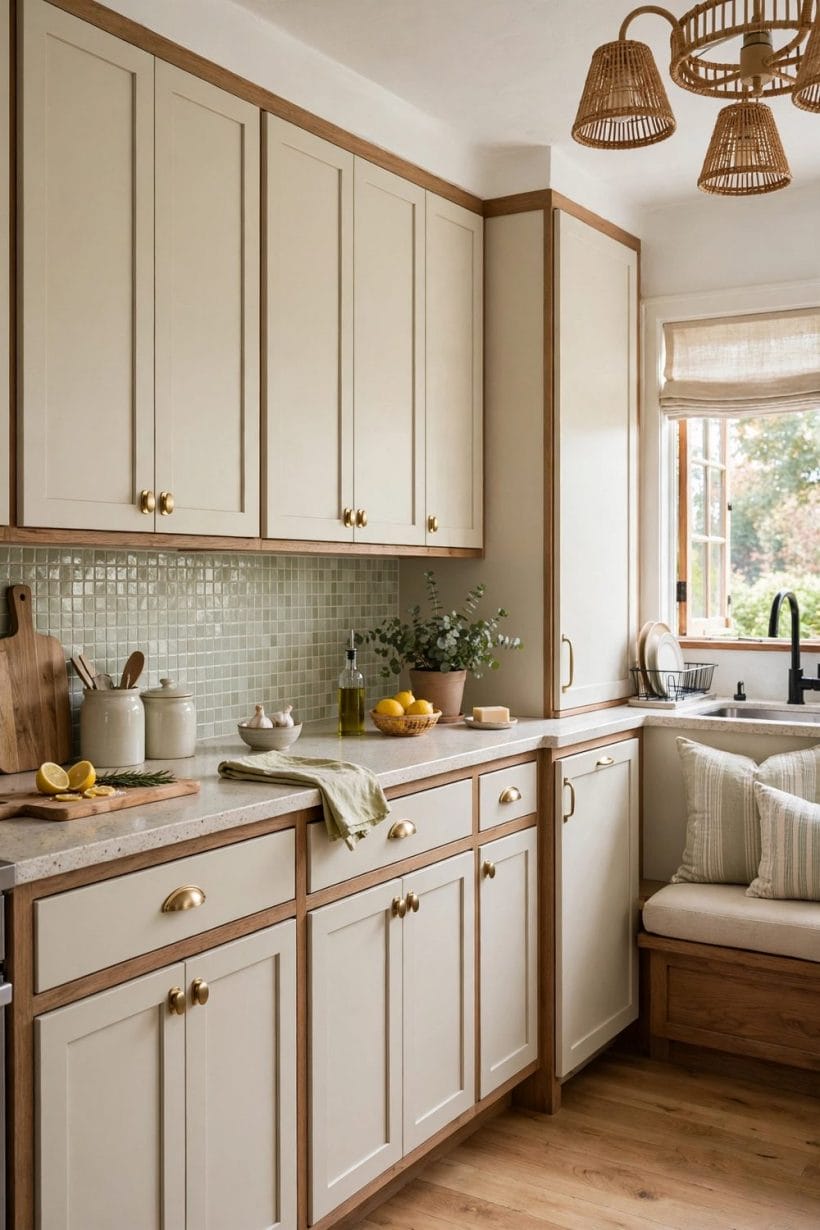
Discontinued-cabinet work belongs to makers more than to retailers. These three points get the collaboration right from the first conversation.
Expect the good makers to be booked ahead, and treat that as a reassuring sign rather than an obstacle: the workshops with waiting lists are the ones whose samples other people’s kitchens are judged by. A discontinued kitchen is rarely an emergency measured in days — the exception is active water damage, which deserves the fastest pair of hands you can find.
21. Who to ask
Start with cabinet makers and joinery workshops, refacing specialists, and the carpenters kitchen fitters call for their own problems. The question to open with is not “can you match this line” but “can you work from a sample” — the second is the craft you are actually buying.
22. What to bring
Bring the master sample door, your written measurements and the profile photographs from the evidence-gathering stage. Makers quote honestly from evidence and vaguely from descriptions — the quality of what you bring decides the quality of what you hear.
23. Approve a sample before the run
Whatever the route — matched doors, a refaced run, a blended addition — have one finished sample made and approved in your kitchen’s light before the rest are produced. The transformation side of this story, doors replaced across a whole kitchen, is told in our replacing kitchen cabinet doors before and after post, this guide’s pair.
9. What Not to Believe
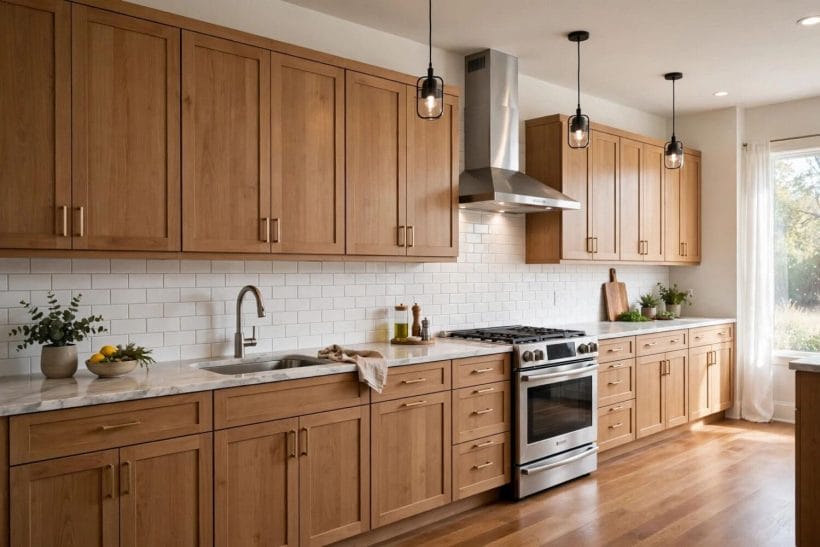
Discontinued cabinets attract confident nonsense, because worried owners are a receptive audience. Three claims deserve permanent scepticism — and smaller kitchens, covered by our tiny kitchen ideas and tiny house kitchen design guides, face the same claims with even fewer units to hide a mistake in.
24. “Exact match, guaranteed”
No honest maker guarantees an invisible match before a sample exists, because wood, board and finish all age at their own rates. A guarantee offered sight-unseen is a sales line; a sample offered for approval is a professional one. Believe the sample.
25. “That line is coming back”
Discontinued lines occasionally inspire rumours of revival, usually from someone holding old stock to sell. Plan on the evidence — the line is not available — and treat any genuine return as a pleasant surprise, never as the plan.
26. “Discontinued means worthless”
The opposite is closer to the truth: your cabinets’ value was never in the catalogue, it is in the boxes on your wall, which are usually sound for decades. The discontinued stamp removes a shopping option, not the kitchen — everything in this guide exists because the bones outlast the brochure.
10. Costs as Conversations, and Choosing Well
Costs in discontinued-cabinet work are driven by which route you take, and the drivers are worth naming plainly. Refacing prices turn on how many fronts are replaced and in what finish; matched copies turn on a maker’s time, which is why two doors cost sense and twenty approach refacing money; blending turns on the same finish decisions as any two-tone kitchen. Full replacement stands apart, priced like the new kitchen it is. The same driver logic governs surfaces — our trending kitchen countertops survey treats material choice the same way, as habit and scope rather than headline numbers.
Choose by the honest question underneath: how long will you live with this kitchen? A few years argues for the unifying repaint or the blended run; a decade argues for refacing or the maker’s copies done properly. There is also a sequencing answer worth knowing: routes can be staged — rescue the failed unit now, reface the run when the budget or the calendar allows — because each route in this guide leaves the others open rather than foreclosing them.
The discontinued notice feels like the end of the kitchen’s story. Handled with a sample, a maker and a little design nerve, it is usually just the chapter where the kitchen became yours rather than the catalogue’s.
Final Considerations
Start with evidence, stop at the least disruptive route that honestly works, and let samples — not promises — make every match decision. A discontinued line closes one door, literally the one in the catalogue; the doors on your wall remain open to every route in this guide.
And keep the master sample even after the work is done. Kitchens outlive product lines as a matter of course, and the household that keeps one door, its measurements and its photographs is the household that never has to start this story from the beginning again.



0 Comments