
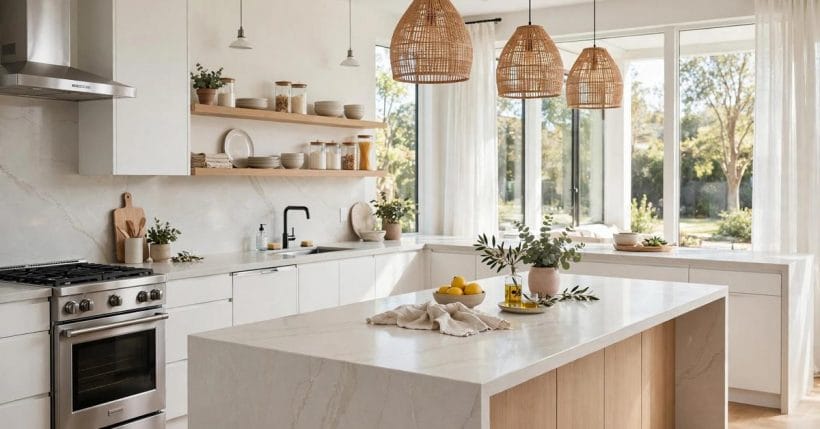
One missing letter, two different worlds. Type “quarts” into a search about kitchens and you will be offered measuring jugs; type “quartz” and you get one of the most chosen countertop materials in modern kitchens. The confusion is common, harmless — and worth clearing properly, because the word you want names a material worth understanding.
This explainer does both jobs: it untangles the spelling first, then explains the stone itself — what a quartz countertop is, how it is made, and how it honestly differs from granite, from quartzite and from the other surfaces it competes with, all in general terms.
1. Quartz at a Glance
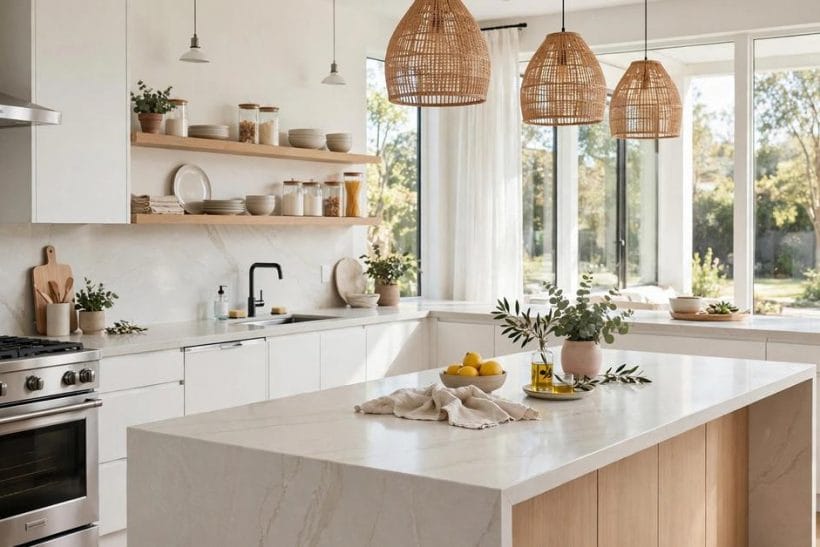
The central entity is the quartz countertop: an engineered stone worktop, manufactured from natural quartz crystals bound in resin, and one of the standard choices in the wider kitchen ideas survey. This guide is its plain-language explainer — definitions first, comparisons second, and no performance figures anywhere, because honest comparison of surfaces is possible without borrowed numbers.
| Question | Short answer |
|---|---|
| What is a quartz countertop? | An engineered stone surface — quartz crystals and resin, manufactured into slabs; what it is made of is covered fully below |
| Is quartz the same as quartzite? | No — quartzite is a quarried natural stone; quartz worktops are made, not quarried, and one section below is devoted to separating the twins |
| Quarts or quartz — which word do I want? | If it measures liquid, it is the unit; if it surfaces a kitchen, it is the stone — the next section untangles the spelling for good |
| Should I trust hardness league tables? | Treat published performance figures with care — this guide compares the surfaces in general terms, which is how the real differences are actually felt |
2. First, the Word Itself: Quart, Quartz, Quartzite
Three similar words, three different things. Sorting them is not pedantry — it is the difference between ordering a countertop and ordering a measuring jug.
1. The quart: a unit of volume
A quart is a measure of volume — its name tells its story, since a quart is a quarter of a gallon. It belongs to recipes, paint tins and milk bottles, and it has no opinion about your kitchen surfaces. If the page in front of you is discussing capacity, you are reading about the unit, however you arrived there.
2. Quartz: the mineral and the material
Quartz is a mineral — one of the commonest on earth, found in sand, rock and crystal form — and, in kitchen language, the name of the engineered stone made from it. When a worktop is called quartz, the word is doing its material job: crystals, bound and manufactured into a surface, as the next section explains.
3. Quartzite: the natural stone twin
Quartzite is a natural stone in its own right — sandstone transformed by heat and pressure deep in the earth until it hardened into a quartz-rich rock, then quarried in slabs like granite or marble. The near-identical name causes real confusion in showrooms, which is why the twins get a full comparison section below.
3. What a Quartz Countertop Actually Is
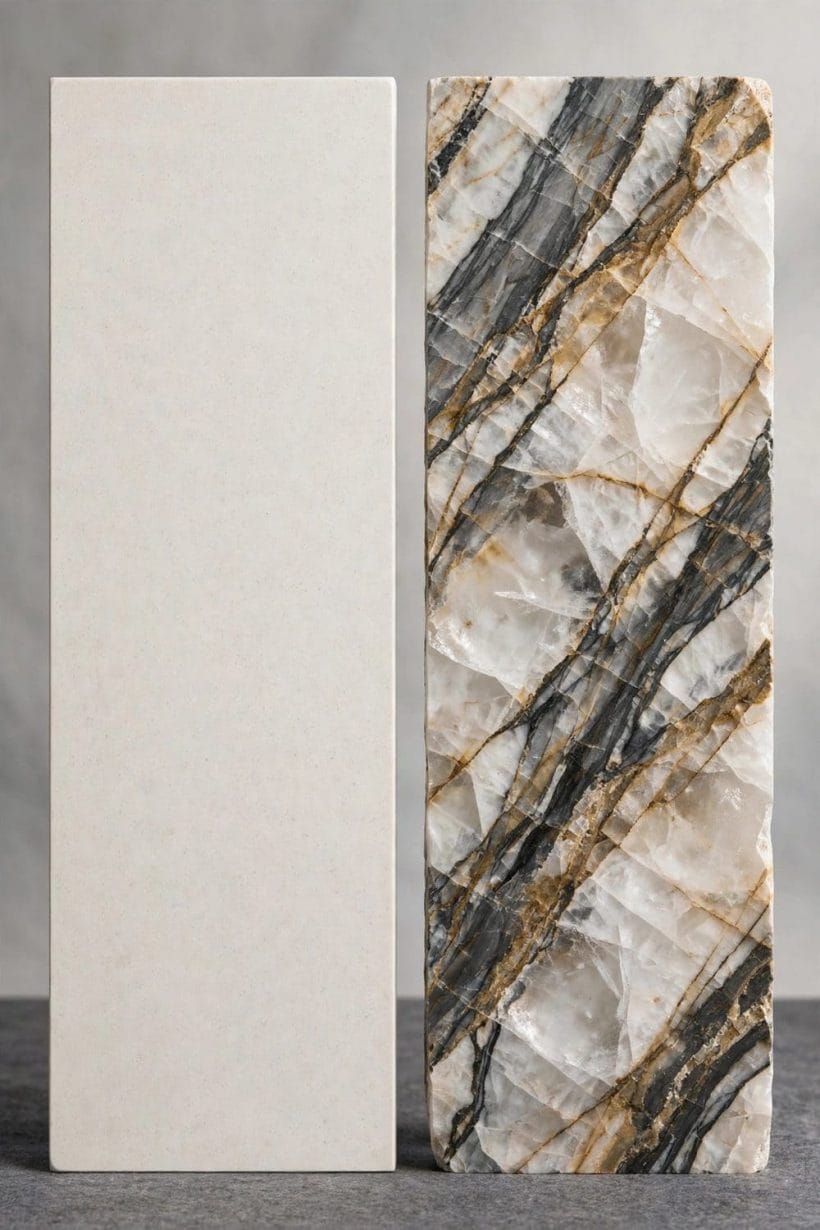
Understanding quartz starts with accepting what kind of thing it is: not a stone that was found, but a stone that was made — and made, specifically, to solve the problems natural stone brings to kitchens.
4. Crystals plus resin, made not quarried
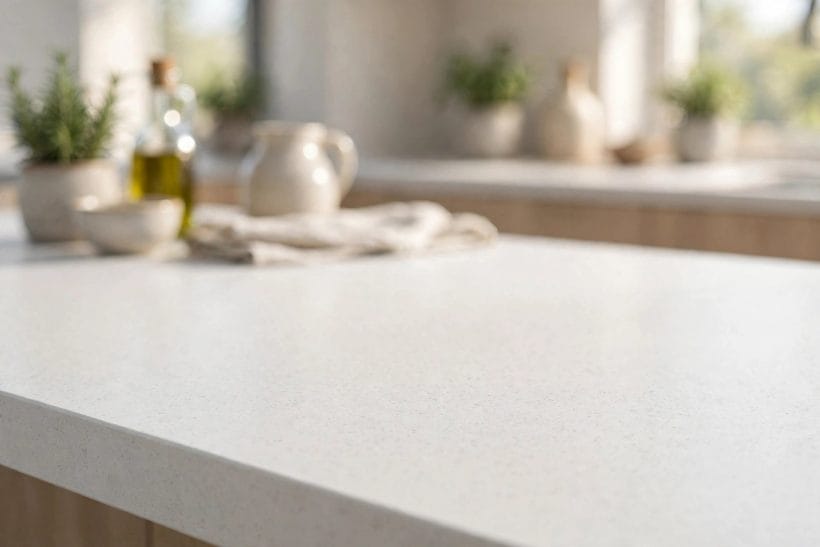
A quartz worktop begins as ground quartz crystals, mixed with resins that bind them and pigments that colour them, then formed under pressure into slabs and cured hard. The recipe is the point: because the material is manufactured, its makers control its colour, its pattern and its consistency in ways no quarry can.
5. Pigment and pattern are designed in
The veining in a quartz slab was drawn, in effect, by its designers — placed to imitate marble, softened to suggest concrete, or kept plain. That is why two slabs of the same quartz design genuinely match, and why a sample corner in a showroom can honestly represent the whole.
6. Slabs, templating and fitting
Like other stone surfaces, quartz is templated from your actual cabinets, cut to the template — sink and hob openings included — and fitted as finished pieces. Edges are profiled to order. The process is a stone process, with a manufactured material at its heart; fitters treat it as stone because, in the hand, it is.
Reading a showroom with this in mind changes the visit: the displays are recipes, not rocks. When every slab of a design is the same by intention, your questions shift from “which slab will I get” to “is this the design I want at full-kitchen scale” — a calmer question, and the one the rest of this guide keeps answering.
4. Quartz and Granite
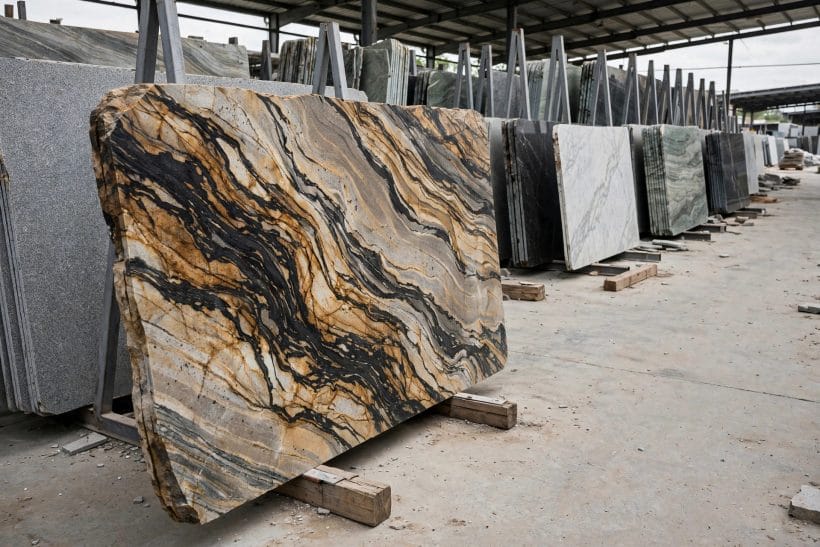
Granite is quartz’s oldest rival: the quarried classic against the engineered challenger. The honest differences are about pattern, predictability and temperament — stated generally, as they should be.
7. Pattern: designed consistency, quarried character
Granite’s pattern was made by geology, so every slab is a one-off — magnificent, and occasionally surprising when the delivered slab shows a vein the sample never mentioned. Quartz’s pattern was made by people, so the slab you chose is the slab that arrives. Neither is better; they suit different appetites for surprise.
8. Colour range
Because pigment is part of its making, quartz offers colours nature never cut — even whites, soft greys, deep charcoals, consistent across a whole kitchen. Granite’s range is the earth’s range: wider in drama, narrower in plain colours, and never twice the same.
9. Seams, edges and the finished look
Both materials are joined in seams on long runs and profiled at edges, and both reward a good fitter. The visible difference is consistency: quartz’s colour holds across a seam more predictably, while granite asks the fitter to book-match nature — a skill, and a pleasure, of its own.
Most households choose between these two by temperament rather than by test results. The cook who wants the sample to be a promise chooses quartz; the cook who wants the kitchen to own a piece of geology chooses granite. Both instincts are honourable, and the surfaces have coexisted in showrooms for years precisely because neither instinct is wrong.
5. Quartz and Quartzite
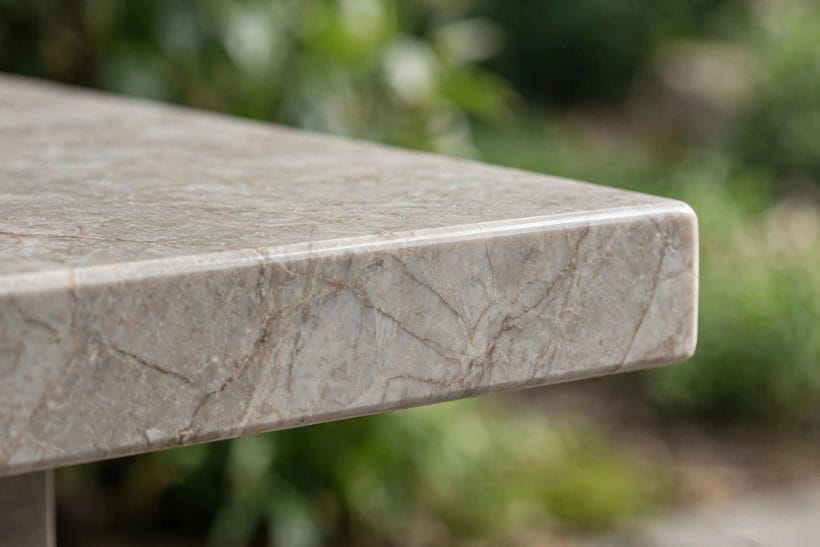
The twins deserve their own section because the names are close enough to be confused at the exact moment money is committed. Here is the separation, plainly.
10. The name twins
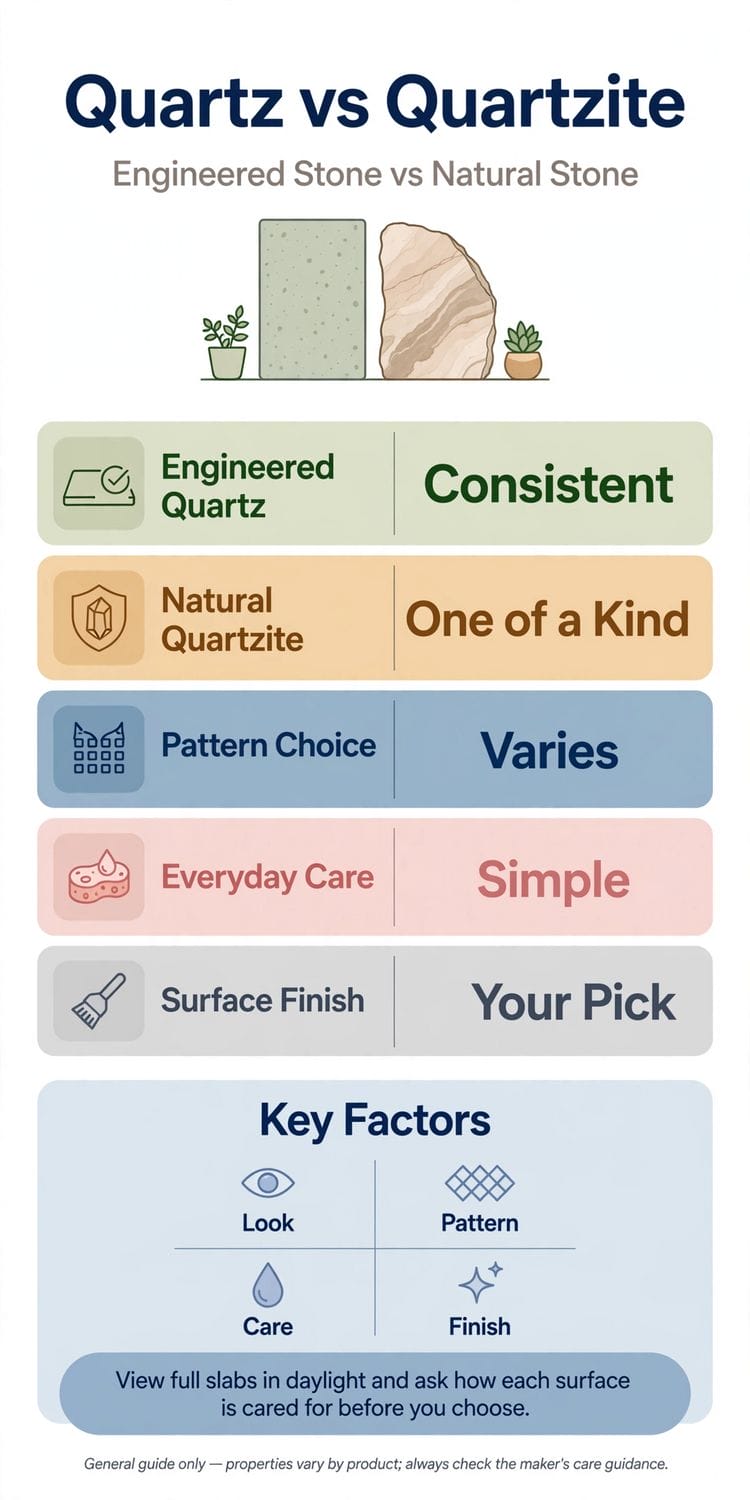
Quartz and quartzite share a root because both are rich in the quartz mineral — the natural stone is named for what the earth made of it, the engineered one for what it is mostly made from. Shared ancestry, different things: one is manufactured, the other is quarried, and everything else follows from that.
11. Made versus quarried
Quartzite leaves the ground as a slab of solid natural stone, its veining laid down by geology — which means its pattern varies, its slabs are individual, and its character is nature’s. Quartz leaves a factory, its pattern designed and repeatable. Choosing between them is choosing between a found material and a made one.
12. How to tell which you are being sold
Ask the direct question — is this engineered quartz or natural quartzite — and read the label on the slab rather than the brochure’s headline. Showrooms are not usually trying to deceive; the names genuinely blur, prices and care expectations differ between the twins, and the minute spent asking is the cheapest in the whole project.
A second tell lives in the pattern itself: hold the design up against its neighbour slab. Engineered quartz repeats its design from slab to slab — that repeatability is its selling point — while quartzite’s veining wanders as geology left it. Neither behaviour is a fault; each is a fingerprint, and reading fingerprints is most of what choosing between the twins involves.
6. Quartz and the Other Surfaces
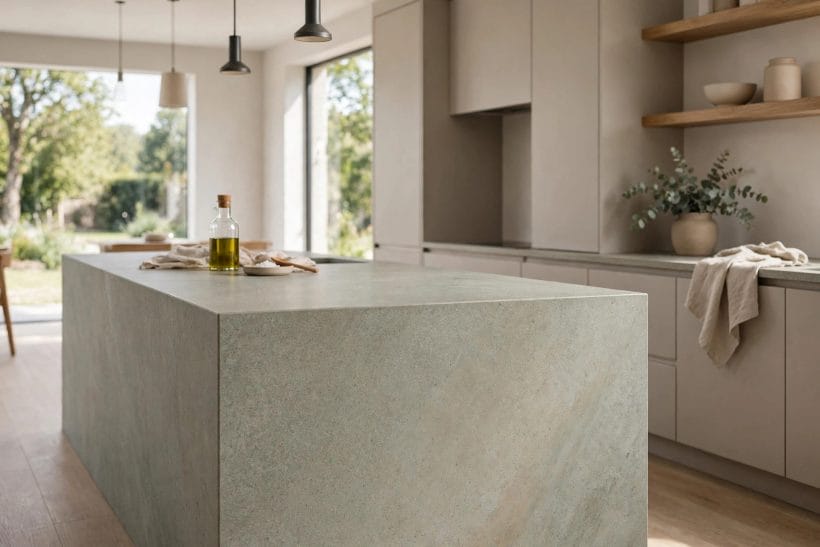
Beyond the stone family, quartz competes with timber, laminate and solid-surface materials. The comparisons stay general, because temperament — how a surface lives — matters more than league tables.
13. Butcher block and timber
Timber worktops are warm, kind to dropped glasses and renewable by sanding — and they ask for oiling and vigilance around water in return. Quartz asks for almost nothing and gives back a cooler, more formal surface. The two are paired head-to-head for small kitchens in our butcher block vs quartz tiny kitchen comparison.
14. Laminate and solid surface
Modern laminates imitate stone at a gentler cost and a lighter weight, with seams and edges that need kinder treatment; solid-surface materials offer moulded, seamless runs and integrated sinks. Quartz sits above both in weight, presence and price family — the honest framing is a ladder of budgets and expectations, not a verdict.
15. Tile and stone-look alternatives
Tiled worktops and stone-look porcelain surfaces answer the same desire — stone’s appearance — with grout lines or printed patterns as the trade. They suit some kitchens genuinely well. Quartz’s answer is the material itself rather than the picture of it, which is either its whole appeal or an extravagance, depending on the cook.
7. Living with Quartz: Care in General Terms
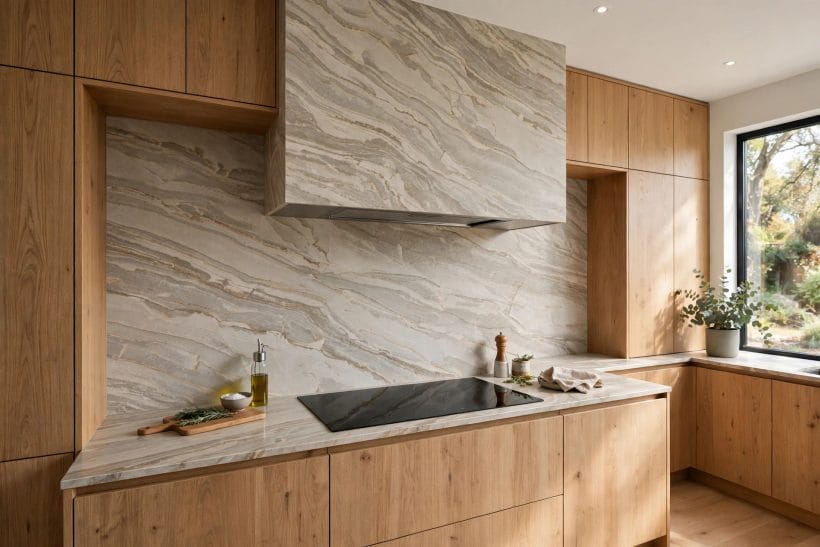
Quartz’s reputation is easy living, and the reputation is broadly fair — with the ordinary good habits every good surface deserves. Stated generally, as care should be.
16. Daily care
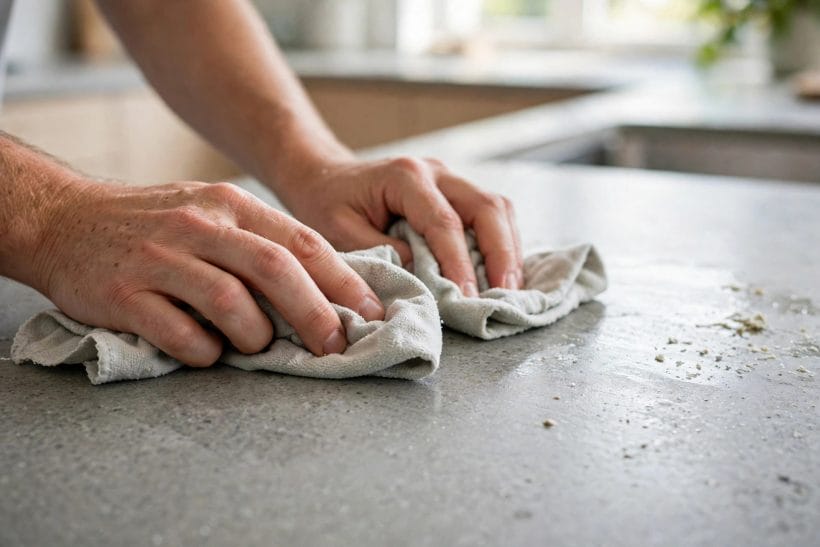
Wipe spills as they happen, clean with mild soap and water, and keep abrasive scouring for the pans rather than the surface. That is close to the whole of it — quartz was engineered, more than anything, to make this section short.
17. Heat and knives: boards and trivets
Use trivets under hot pans and boards under knives — not as a concession to quartz, but as the universal etiquette of worktops. Resin-bound surfaces and direct heat are not friends, and no surface yet made is improved by being chopped on. The habits protect every material in this guide equally.
18. Stains and sunlight, in general terms
Strongly coloured spills are best wiped promptly on any surface, and prolonged harsh sunlight can shift the tone of pigmented materials over time — kitchen designers place all pigmented surfaces with windows in mind. General truths, honestly labelled as such, serve a buyer better than borrowed laboratory numbers.
8. Colour and Pattern
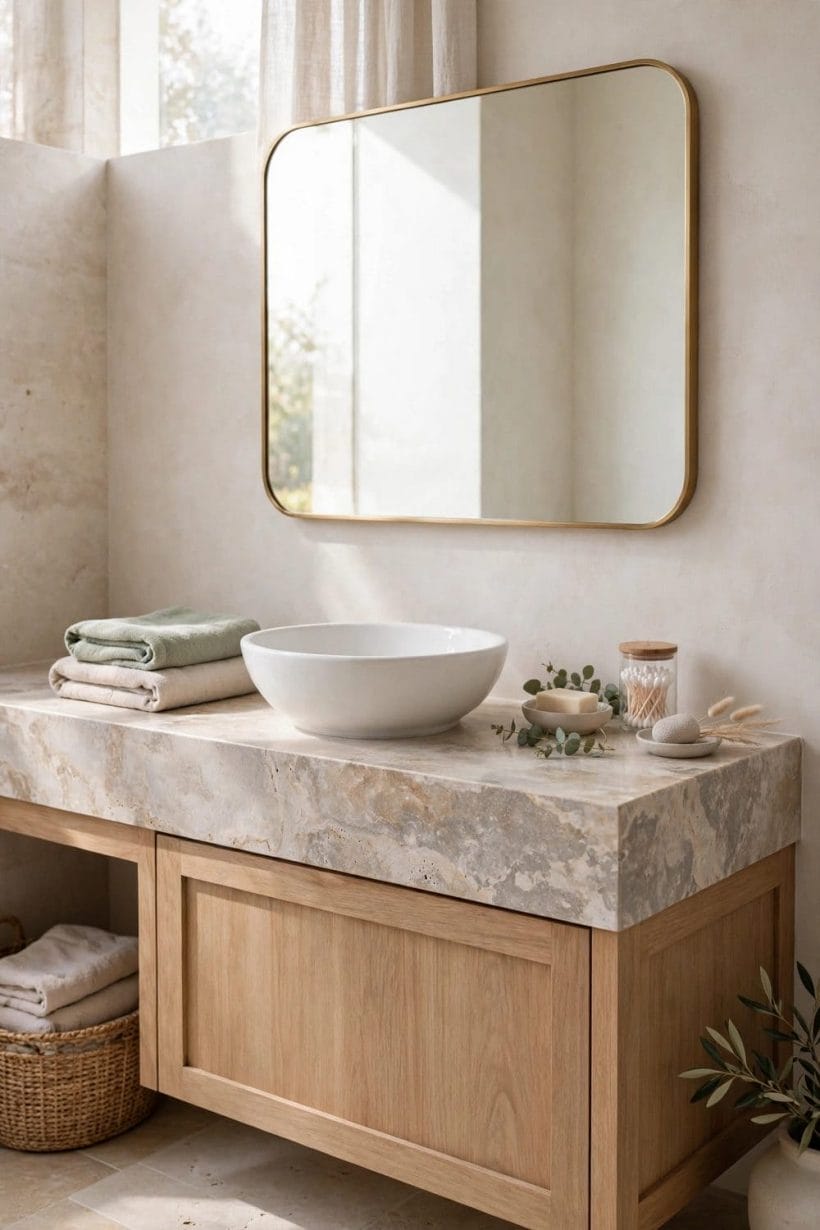
Because its pattern is designed, quartz’s colour conversation is a designer’s conversation: which fiction do you want the stone to tell, and how loudly?
19. Veined designs that imitate marble
The most chosen quartz designs borrow marble’s flowing veins on white or soft grey grounds — the classic look, with a manufactured material’s predictability beneath it. Vein scale matters: bold veins suit islands and long runs, fine veins suit small kitchens where a big pattern would shout.
20. Plain, concrete-look and dark designs
At the other end sit the plains: even whites, soft greys, concrete-look mid-tones and deep charcoals that behave like a neutral and let cabinets, tiles and handles do the talking. Plain quartz beside a patterned splashback is a composed kitchen — the pairing questions are worked through in our subway tile backsplash inside corners guide.
9. Costs as Drivers
Quartz pricing is driven by choices, not mysteries, and the drivers are worth naming without inventing figures. The design family chosen — plain colours generally sit below elaborate veined designs — the slab’s thickness and edge profile, the number of cut-outs for sinks and hobs, and the templating and fitting of a heavy material by specialists: those are the levers. The same driver thinking runs through our trending kitchen countertops survey, where surfaces are compared by habit and scope rather than headline numbers.
One driver deserves its own sentence: consistency has value in a kitchen you will look at daily for years, and quartz’s predictability — the slab matches the sample — is part of what its price buys. Whether that predictability is worth more than natural stone’s one-off character is the real question the budget is answering.
10. Questions to Ask Before You Commit
Small kitchens concentrate every one of these questions — the runs are short, the surfaces are all in view, and there is nowhere for a mistake to hide — which is why our tiny kitchen ideas and tiny house kitchens guides treat surface choice as a first-order decision. Three questions close the explainer.
21. Ask what the slab actually is
Engineered quartz or natural quartzite? The twins of the earlier section part company on price, pattern and care expectations, and the answer should be in writing on the order. It is the single question this whole guide exists to make you ask.
22. Ask to see the largest sample available
A small sample chip flatters every material and misleads about veined designs in particular. Ask for the largest sample, a full-slab photograph, or a showroom kitchen in the same design — pattern is a whole-slab experience, and the decision should be made at whole-slab scale.
23. Ask about care in writing
Every surface arrives with care guidance; ask for it before the fitting, not after the first spill. The honest version is short for quartz — which is rather the point of the material — and having it in writing keeps the guarantee conversations simple for years.
Final Considerations
The word is quartz — with a Z, naming a mineral, an engineered stone, and one of the most practical countertop choices a kitchen can make. The quart can go back to the recipe book, where it measures something else entirely.
Choose quartz when you want stone’s presence with a designed pattern and an easy life; choose its rivals when you want nature’s one-off character, timber’s warmth, or a lighter budget’s honesty. The surfaces are all defensible — what this explainer hopes you now own is the vocabulary to defend your choice.

0 Comments