
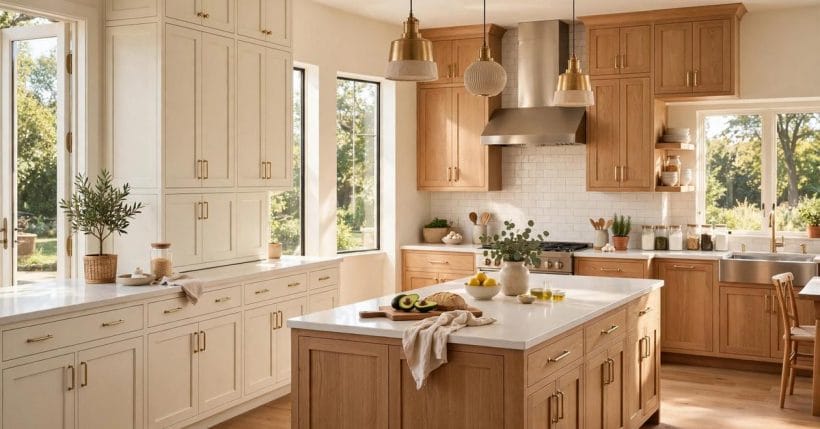
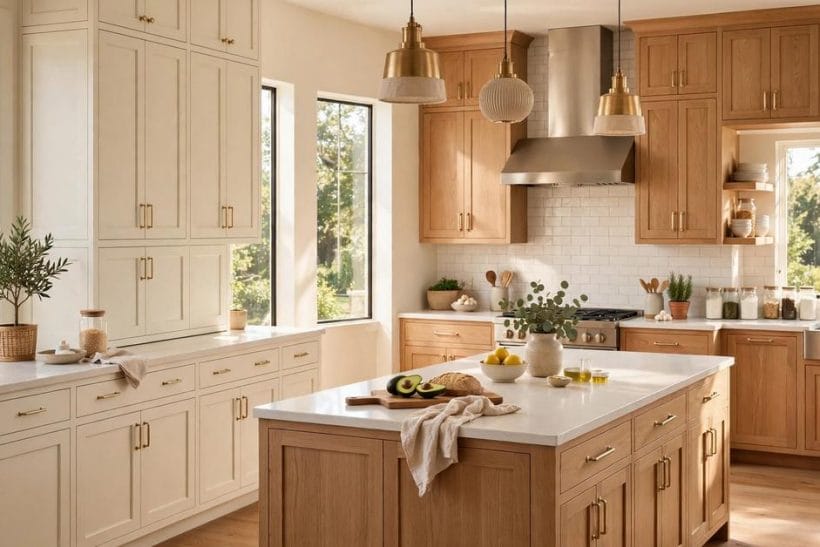
Same boxes. Same layout. Same kitchen, standing in the same light — and yet the room in the second photograph feels years younger, because everything the eye actually reads has changed.
This article walks through three kitchens transformed by refaced cabinet doors — what each looked like before, what the work involved, and what the after honestly owes to the doors, the veneer and the hardware rather than to any rebuilding.
1. Refaced Cabinet Doors at a Glance
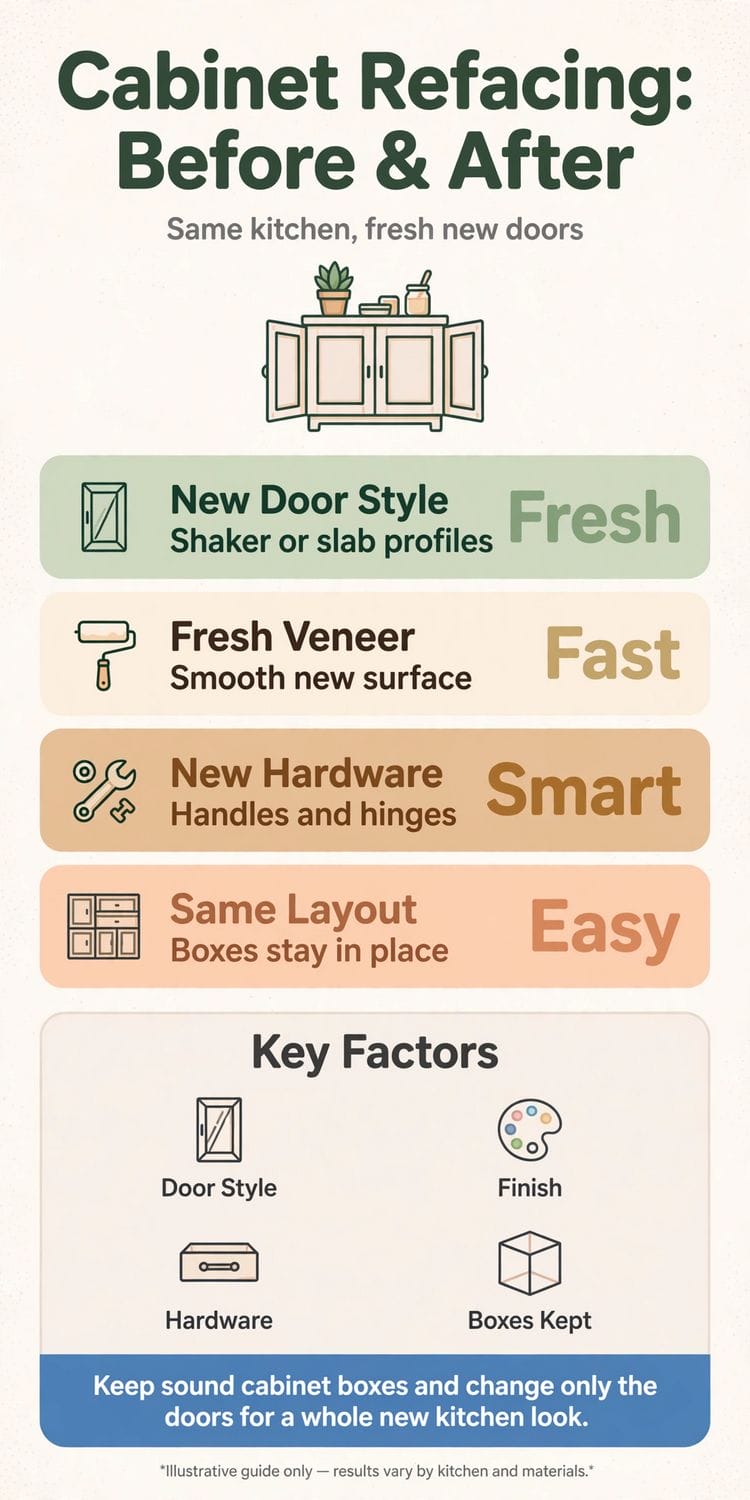
Refacing keeps a kitchen’s cabinet boxes, layout and plumbing exactly where they are, and replaces everything visible: doors, drawer fronts, the veneer or finish on the frames, and usually the handles and hinges. It is the transformation available when the bones of a kitchen are sound but its face has dated, darkened or simply stopped pleasing the people who cook in it. The wider kitchen family — layouts, storage and full remodels — lives in kitchen ideas; this article is the refacing story alone, told through three representative kitchens whose before-and-after logic any reader can test against their own.
| Question | Short answer |
|---|---|
| What is cabinet refacing? | New doors and drawer fronts, frames re-veneered or refinished to match, boxes and layout untouched |
| When does it make sense? | When the boxes are sound, the layout works, and only the look and the hardware have failed |
| What changes most? | The door style and colour — the two things the eye reads as “the kitchen” from the doorway |
| What does not change? | Storage volume, appliance positions, worktop runs and the room’s underlying plan |
| How disruptive is it? | Far less than a refit — the kitchen is usually usable through much of the work |
| What decides the cost? | Door count and material, finish, hardware quality and how much frame veneering the run needs |
2. What Refacing Changes — and What It Leaves Alone
Understanding a before-and-after honestly means knowing which layer the photographs are actually showing. A kitchen reads as its doors: their style, their colour, their handles and the shadows between them account for nearly everything a visitor notices. The boxes behind those doors — shelves, carcasses, the geometry of storage — are invisible in both photographs, which is precisely why refacing can produce an after that looks like a new kitchen while changing so little of the old one’s substance.
The visible layer is the whole illusion
Doors and drawer fronts cover the great majority of a kitchen’s front elevation; frames and end panels are veneered or finished to match, so no stripe of the old finish survives to betray the trick. Change the style from arched to shaker, the colour from honeyed oak to pale paint, and the handles from knobs to bars, and the room’s apparent age moves by decades — while the cupboards hold the same mugs in the same places.
What stays exactly as it was
The layout, the worktop, the sink position, the appliance slots and the storage volume are untouched, for better and for worse. A kitchen whose plan frustrates its cooks will frustrate them identically after refacing, in a prettier colour — the honest limit that the three kitchens below all respected, because all three plans already worked.
The condition that cannot be faked
Refacing asks the old boxes to carry new doors for years, so boxes must be sound: dry, square, firmly fixed, with frames that will take new veneer and hinges that will hold their screws. Sagging, soaked or crumbling cabinets are not a refacing candidate at any price of door — they are a replacement conversation, and a good fitter says so at the survey.
3. Kitchen One: Dated Doors to a Pale, Calm Room
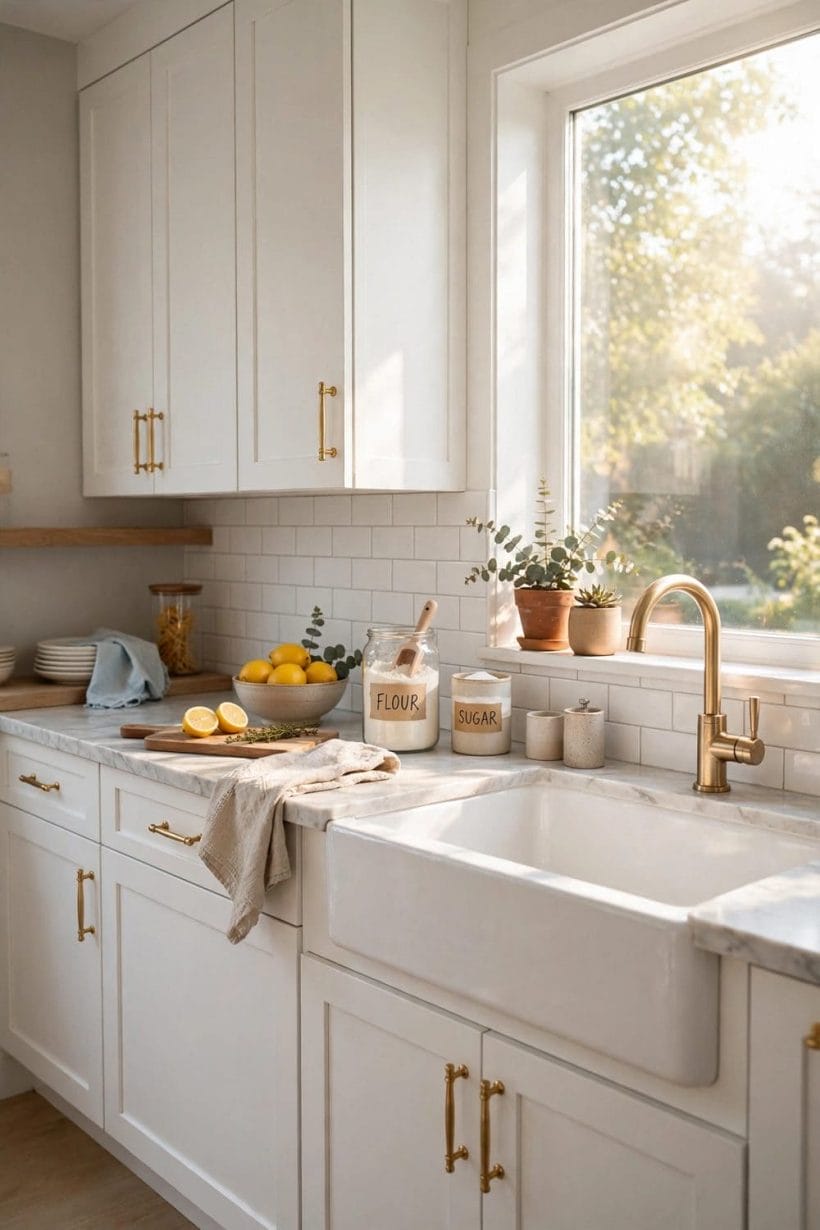
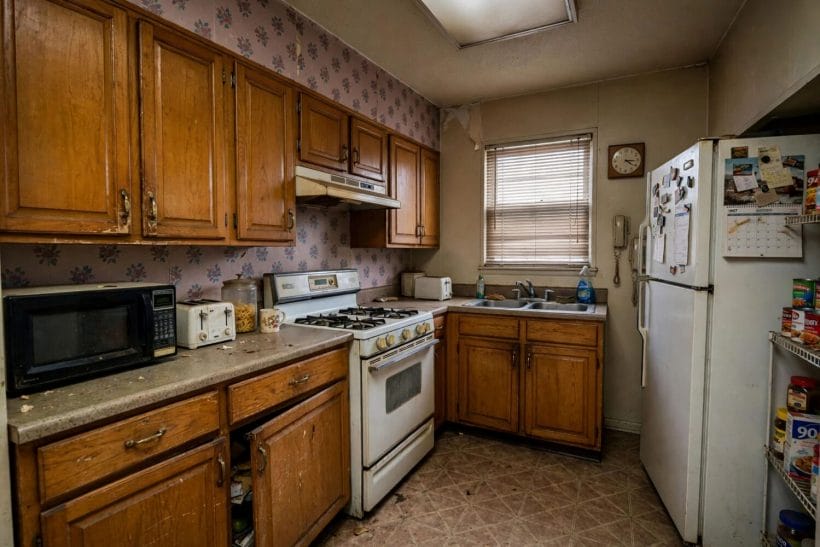
The first kitchen is the commonest starting point of all: a sound, well-planned room wearing the heavy, arched, honey-toned doors of an earlier fashion. Nothing in it was broken. Everything in it felt tired — the classic case for replacing kitchen cabinet doors before and after photographs that seem to show two different houses.
Before: dark, arched and glossy
The old doors carried a raised arch profile, a glossy varnish that had yellowed unevenly, and small dark knobs that disappeared against the finish. The room faced a garden and had good light, yet felt dim by afternoon, because the cabinet fronts drank the daylight and returned it as amber. The boxes, checked at survey, were dry, square and solid — the ideal candidate profile.
The work: shaker doors in a pale painted finish
The new doors were simple shaker style — a flat centre panel in a plain frame — finished in a soft, warm off-white. Frames and end panels were veneered and finished to match exactly, drawer fronts followed the doors, and the hinges were renewed with soft-close versions so the pale doors would never slam their paintwork against the frames.
After: the same room, returned to daylight
The after reads as a different kitchen chiefly because it is a lighter one: pale fronts bounce the garden light around instead of absorbing it, the shaker profile’s plain shadows replace the arches’ fuss, and the room’s own proportions — always good — finally show. Nothing about the storage changed; everything about the mood did.
Why it worked
The transformation succeeded because the diagnosis was right: the kitchen’s problem was purely its face. Where a compact room needs the same discipline in miniature, tiny kitchen ideas apply the same pale-front logic at a smaller scale — light finishes earn their keep hardest where space and daylight are both limited.
4. Kitchen Two: Dark and Heavy to Warm Timber Light
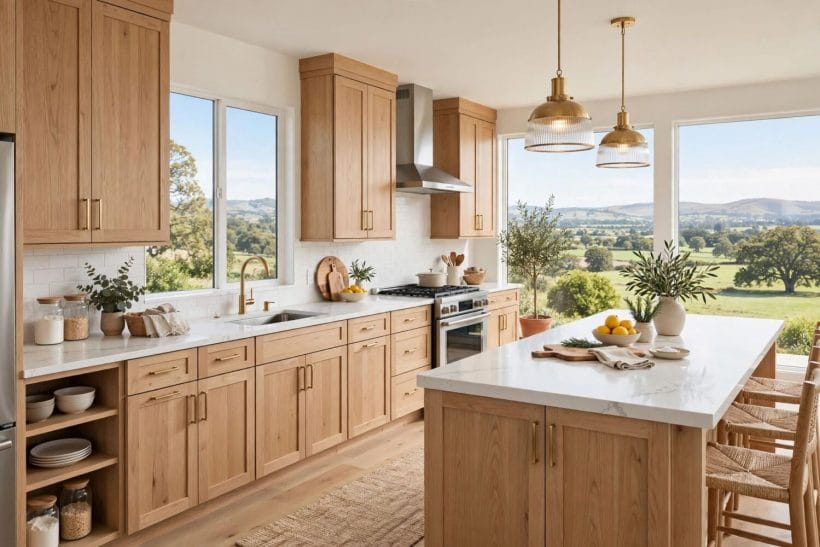
The second kitchen started at the opposite pole: not dated, exactly, but dark — a full run of deep-stained doors under low light, in a room the household loved for its size and avoided for its gloom. The answer here was not paint. It was a lighter timber, honestly grained, that kept the room’s warmth and returned its light.
Before: sound, spacious and cave-like
The old doors were flat, dark and heavily varnished, with handles worn bright at their centres from years of hands. The layout was generous and the boxes excellent — over-built, if anything — but the fronts turned a big room into a brown one, and the lighting, planned for a paler kitchen, could not rescue it.
The work: flat doors in a light natural veneer
The new doors were plain slab fronts in a light oak-look finish, the grain running vertically to lift the room’s sense of height. Frames were re-veneered to match, long bar handles in a brushed finish replaced the worn knobs, and the few glazed doors in the run were re-glazed to clear glass so the interior shelving could share its light.
After: warmth without the cave
The after keeps everything the household loved — timber, warmth, substance — and removes only the darkness. Pale grain reflects the windows instead of swallowing them; the long handles give the flat fronts their one deliberate line of jewellery; the room finally looks as large as it always was.
Why it worked
Paint would have fought this room’s character; lighter timber joined it. The lesson generalises: a reface should argue with a kitchen’s faults, not with its virtues. Older kitchens that carry their years proudly — the kind gathered in vintage kitchens — often need exactly this restraint: new doors that respect the room’s original material story.
5. Kitchen Three: A Mixed, Tired Run to a Two-Tone Scheme
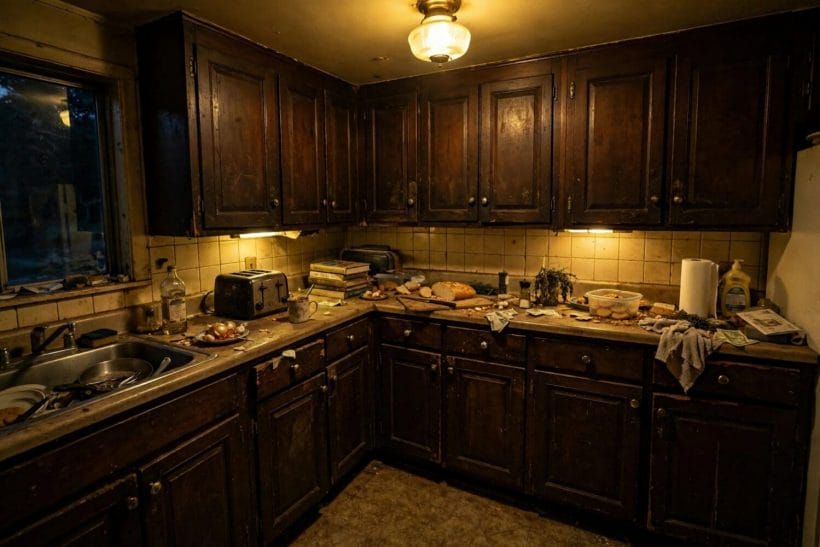
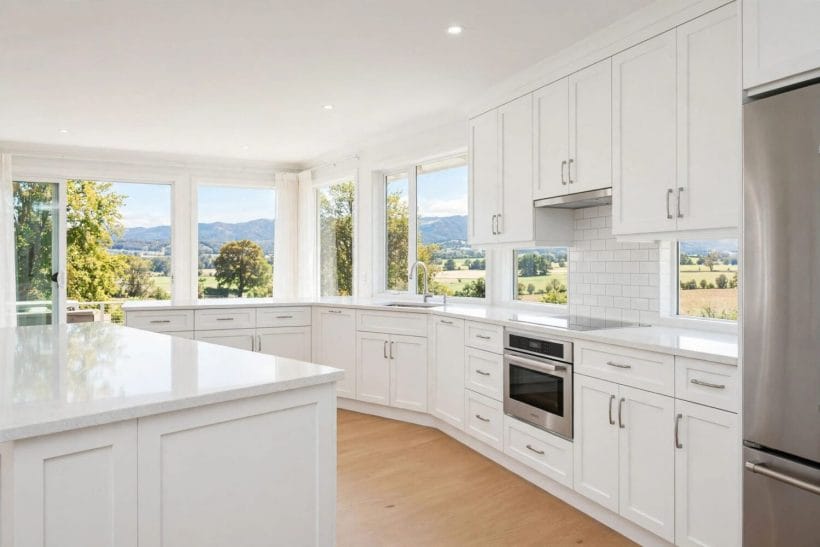
The third kitchen was the honest muddle most real kitchens become: doors replaced piecemeal over the years, two styles and three finishes sharing one run, a drawer front that matched nothing. Its feature-photograph reface — pale cabinets above, warm timber below — shows the scheme that unified it, and two-tone is the natural peacemaker for a mixed run because it makes variety deliberate.
Before: a patchwork that pleased nobody
Each past repair had been sensible alone and chaotic together: one door too glossy, one too orange, handles from three different decades. The boxes behind them were a similar patchwork but sound where it mattered — frames true, interiors dry — so the survey passed the run for refacing with a clear conscience.
The work: one style, two finishes, no exceptions
Every door and drawer front was replaced in a single style, without exception — the patchwork’s cure is total replacement of the visible layer, since one surviving old door keeps the whole story untold. Wall cabinets took the pale finish, base units the warm timber, and one handle design, in one finish, ran the full length of the kitchen for the first time in its life.
After: variety that looks chosen
The two-tone after reads as intention: light above where the eye wants air, timber below where hands and scuffs live, the contrast line running level around the room like a dado. Visitors assume the kitchen was designed this way in one commission, which — at the visible layer — it finally was.
Why it worked
Unity, not novelty, was the transformation. Small kitchens reach the same unity by discipline rather than scale, and the storage thinking in tiny kitchen storage hacks pairs naturally with a reface: new fronts outside, honest order inside, and a room that feels commissioned rather than accumulated.
6. Choosing the New Doors: Style, Material and Finish
Three kitchens, three different answers — but the choosing process behind them was identical, and it is the part of refacing a reader can copy exactly. Style first, because it sets the room’s apparent age; material second, because it sets the maintenance; finish third, because it sets the light.
Door styles: shaker, slab, glazed and traditional
Shaker doors — framed, flat-panelled — are the great translators, at home in period and modern rooms alike. Slab doors are the minimalist’s single plane, dependent on material quality for their effect. Glazed doors lighten a run and display what deserves displaying. Deeply moulded traditional styles restore period character where a house demands it — and date a room deliberately when it does not.
Materials: timber, veneer and modern laminates
Solid timber doors can be repainted and repaired for decades and feel accordingly substantial. Veneered doors give real grain at a calmer price and weight. Modern laminate and wrapped finishes offer the hardest-wearing painted looks. None is the correct answer in the abstract; the correct answer is the one whose care regime the household will genuinely keep.
Finishes: painted, stained and natural
Painted finishes maximise light and hide mixed substrates completely — the patchwork kitchen’s salvation. Stains and clear finishes keep grain visible and demand better timber beneath. Whatever the choice, order the largest sample available and live with it against the actual cabinets, in morning and evening light, before the full set is made.
The one-door trial
Where a maker allows it, a single finished door — or at minimum a full-size sample — hung on the existing run for a week tells more truth than a brochure. Colour beside the room’s own walls and floor is the only colour that matters; all three kitchens above were chosen this way, and none regretted the delay.
7. Drawer Fronts, Veneer and the Boxes Themselves
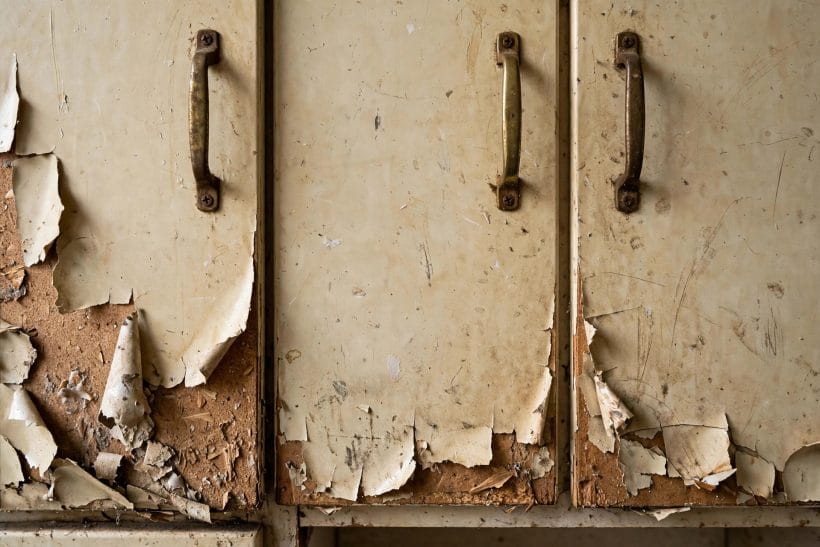
The doors get the photographs, but the supporting work decides whether a reface looks commissioned or improvised. Drawer fronts, frame veneer and small repairs to the boxes are where the craft hides — and where careless work betrays itself within a year.
Drawer fronts must follow the doors
A new door beside an old drawer front is the classic half-reface, visible from across the room. Fronts are replaced with the doors, in the same style and finish, and deep drawers may gain new boxes behind their new faces if the old runners have worn — the one internal upgrade worth its money at reface time.
Veneering the frames to match
The frames between doors are stripped, prepared and covered with veneer or finish matched to the new doors, and end panels are treated the same way. The match is judged in daylight, at the seam between door and frame — a mismatch there undoes the entire illusion the reface exists to create.
Small repairs the survey should catch
Hinge screw-holes re-drilled or plugged, a water-softened shelf edge replaced, a frame joint re-glued: the survey’s small print. None of it photographs, all of it decides whether the new doors hang true in five years. Budgeting a reface without this line is how good doors end up on failing boxes.
Interiors: the optional honesty
Cabinet interiors can be cleaned, lined or painted during a reface, and open or glazed units should be — their insides are on show. Closed interiors are the household’s own business, but a reface is the one convenient moment to mend the shelf that has sagged since the previous decade.
8. Hardware, Hinges and the Finishing Details
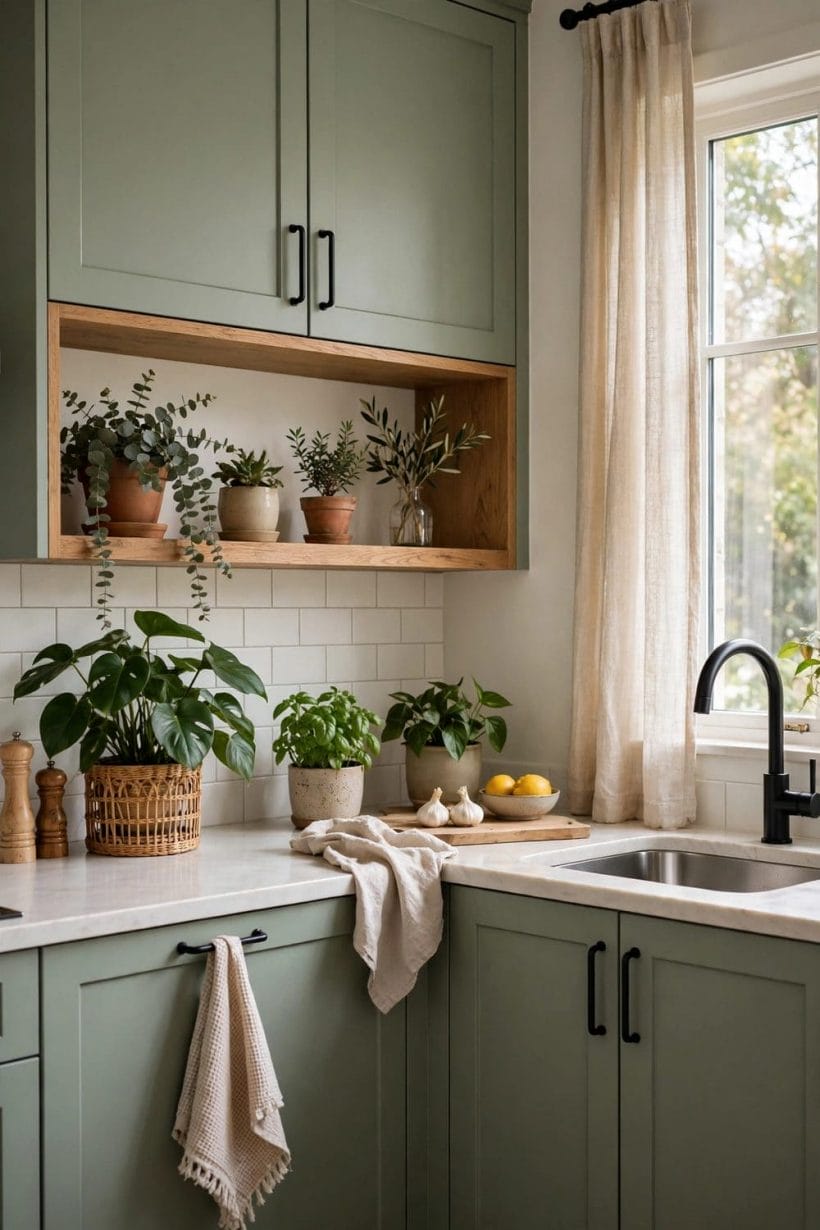
If doors are a kitchen’s face, hardware is its jewellery and hinges are its joints — and in all three kitchens, the hardware change contributed more to the after than its share of the bill suggests. It is also the layer where small, dark, poky kitchens gain disproportionately, as tiny kitchen makeover budget projects have long understood: handles are cheap theatre.
Handles: the highest-value change in the room
Swapping knobs for bars, or dark ironmongery for brushed or brass finishes, redraws every door’s proportions. Longer handles suit larger doors and modern styles; knobs keep traditional doors company. One design, one finish, everywhere — the patchwork kitchen’s third cure, after unity of style and finish.
Hinges: soft-close as standard kindness
New doors deserve new hinges, and soft-close mechanisms protect both the doors’ finish and the household’s nerves. Concealed hinges keep the fronts clean; exposed butt hinges in a matching finish serve period schemes. Either way, hinges are fitted and adjusted as a full set, never mixed old with new.
The finishing details nobody lists
Matching plinth and cornice where the design carries them, touch-in of the one frame corner the veneer could not reach, felt pads where doors meet frames — the last hour of a good reface is spent on things no photograph will ever show and every hand will feel. Ask who does this hour before signing anything.
9. The Sequence of Work: Survey to Final Adjustment
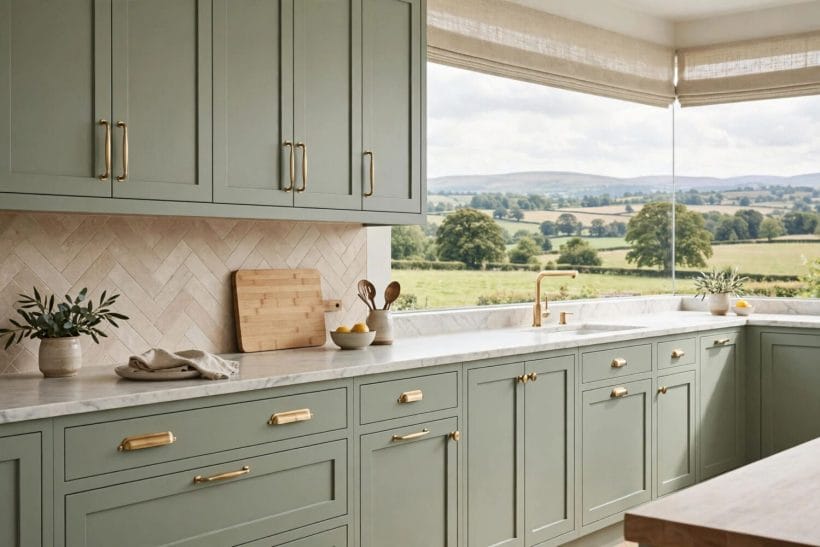
Refacing is orderly work, and its order is worth knowing before the first door comes off — partly to judge a fitter’s professionalism, mostly so the household can plan its cooking around the days that matter. The sequence below is the general shape of good practice, in the order careful fitters perform it.
Survey and measurement
Every door and front is measured, every box tested for soundness, squareness and dryness, and the frame’s readiness for veneer confirmed. This visit decides whether refacing is honest work for this kitchen at all — a fitter who will not say no at survey will not say it later, when it costs more.
Making and finishing off-site
Doors and fronts are made and finished away from the kitchen, which is why the disruptive part of a reface is measured in days rather than the weeks of a refit. The household cooks on throughout this stage; only the calendar is busy, not the room.
Fitting: frames first, doors second
On site, frames are prepared and veneered first, then doors and fronts are hung, aligned and adjusted, hardware last. The kitchen is typically usable in the evenings through most of this — drawers and cupboards empty one run at a time, never all at once, if the fitter plans kindly.
Final adjustment and the snagging walk
The work ends with alignment: gaps even, doors level, soft-close tuned, handles checked for tightness. Walk the room with the fitter in daylight and lamplight both, opening everything — the snagging walk is a normal, expected part of the craft, not an accusation.
10. Costs as Drivers, Care and Honest Limits
No figures appear in this section, deliberately: door counts, materials and regions move refacing prices too widely for a printed number to be honest. What can be stated exactly are the drivers — the things that push a quote up or down — the care the new fronts ask for, and the limits beyond which refacing stops being the right answer.
The drivers that set the price
The count of doors and drawer fronts, the material and finish chosen, the quality of hinges and handles, and the amount of frame veneering and box repair the run needs. A long run of simple slab doors and a short run of handmade glazed doors can trade places on price entirely — which is why drivers, not averages, are the only honest currency here.
Care: kinder than the old doors asked
New fronts want mild cleaning, prompt wiping of spills at joints and handles, and no abrasive pads on painted or veneered faces. The discipline is lighter than the scrubbing the old glossy doors demanded, and it is the whole maintenance story — refaced kitchens do not ask for rituals.
When the old line is discontinued
Refacing is also the practical answer when a kitchen’s original door line no longer exists: new fronts are made to the room, not ordered from a catalogue of the past. Matching a discontinued finish exactly is its own careful business of samples and judgement — a neighbouring topic with its own honest treatment elsewhere in this series, stated here only so the option is not missed.
The honest limits, stated plainly
Refacing cannot move a sink, widen a worktop, add a cupboard or rescue rotten boxes, and it should never be sold as though it could. Its promise is narrower and, kept honestly, remarkable: the same good kitchen, wearing a new face, at a fraction of a refit’s disruption. Households whose plans have failed them need the other conversation — the layout thinking in tiny house kitchen floor plans shows how much plan, not finish, decides a small kitchen’s happiness.
Final Considerations
Three kitchens, three faces: pale shaker calm, light timber warmth, and a two-tone peace treaty for a patchwork run. None of them moved a wall, a pipe or a cupboard — all three were transformed by the layer the eye actually reads, replaced completely and chosen carefully. That is the whole craft of refacing: sound boxes, honest survey, doors chosen in the room’s own light, frames veneered to match, hardware renewed as a set. Judge your own kitchen by the same order, and the before-and-after your kitchen can honestly achieve will be the one it gets.




0 Comments